
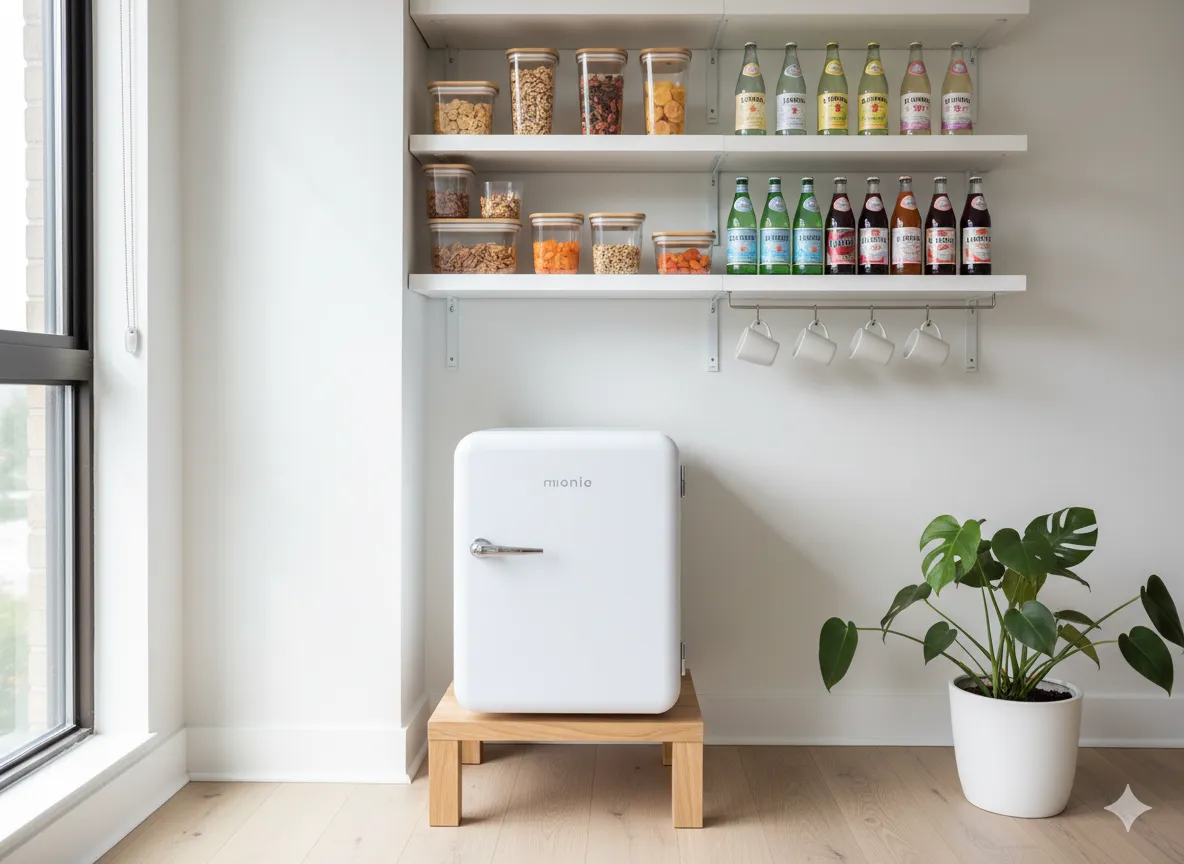
11+ Creative Mini Fridge Stand Ideas
When space comes at a premium in your living area, finding smart storage solutions becomes essential. A mini fridge might be compact, but placing it directly on the floor wastes valuable vertical space and makes accessing your favorite snacks unnecessarily difficult. The right mini fridge stand transforms this small appliance into an organized station that maximizes every square inch of your room while adding functional style to your space.
Whether you live in a college dorm, studio apartment, home office, or simply want to create a beverage station in your entertainment area, the perfect stand can elevate your setup both literally and figuratively. From simple industrial metal frames to custom-built wooden cabinets, the options span every budget, skill level, and aesthetic preference. This comprehensive guide explores creative mini fridge stand ideas that solve storage challenges while complementing your existing decor.
Multi-Tier Baker’s Rack Stand
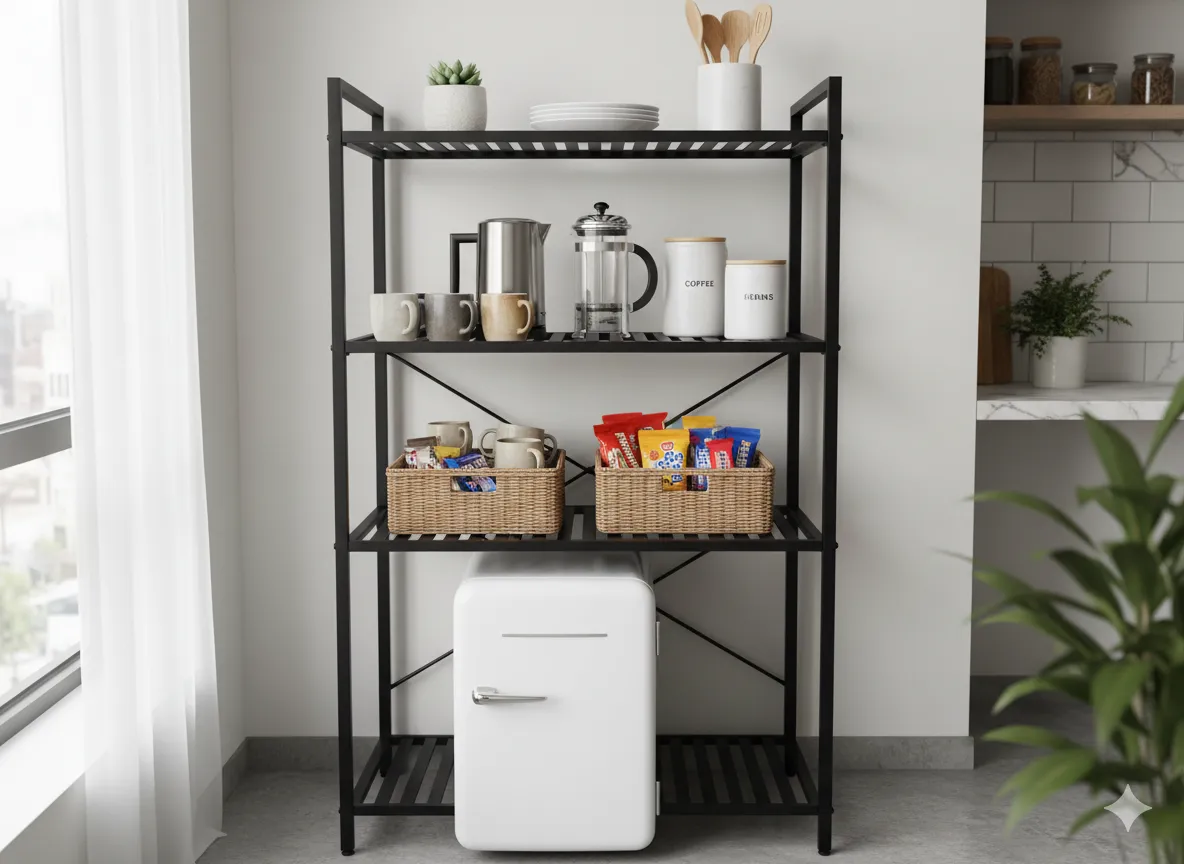
Baker’s racks have evolved far beyond their original kitchen purpose to become versatile storage champions for compact refrigerators. These multi-level stands typically feature four to six adjustable shelves, creating a complete organization station around your mini fridge. The bottom tier accommodates the refrigerator itself, while upper shelves provide homes for mugs, snacks, small appliances, and kitchen essentials.
The open design maintains visual lightness in small spaces, preventing the bulky appearance that closed cabinets can create. Metal construction ensures durability while supporting substantial weight, with most quality units handling over 150 pounds across all shelves. The adjustable nature means you can customize shelf heights to fit everything from tall bottles to compact storage bins. For college students managing limited dorm space, this configuration creates an entire kitchenette in just a few square feet.To know more about the sturdy dorm shelving ideas do visit Dormco
Rolling Cart with Locking Wheels
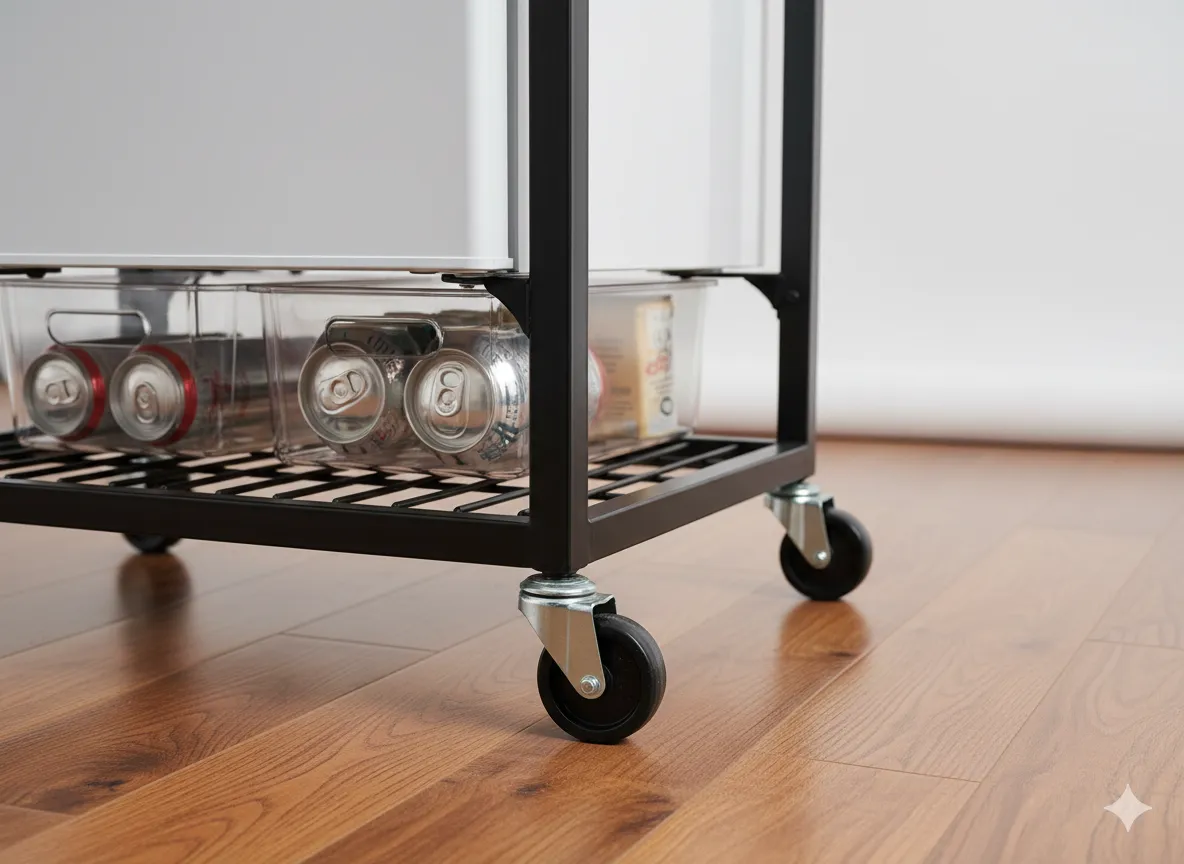
Mobility changes everything when it comes to cleaning, rearranging, or accessing the back of your refrigerator. A rolling stand equipped with locking caster wheels delivers flexibility without sacrificing stability. This design particularly shines in rental situations where furniture arrangements might change or when you need to move the fridge for deep cleaning sessions.
The locking mechanism ensures your refrigerator stays firmly planted during normal use, preventing unwanted movement when opening the door. Four-wheel configurations distribute weight evenly, protecting floors from damage while enabling smooth gliding across carpet or hardwood. Many rolling designs incorporate lower storage shelves or baskets, transforming the stand into a mobile kitchen cart that can relocate from garage to patio for outdoor entertaining.
Farmhouse-Style Wooden Cabinet
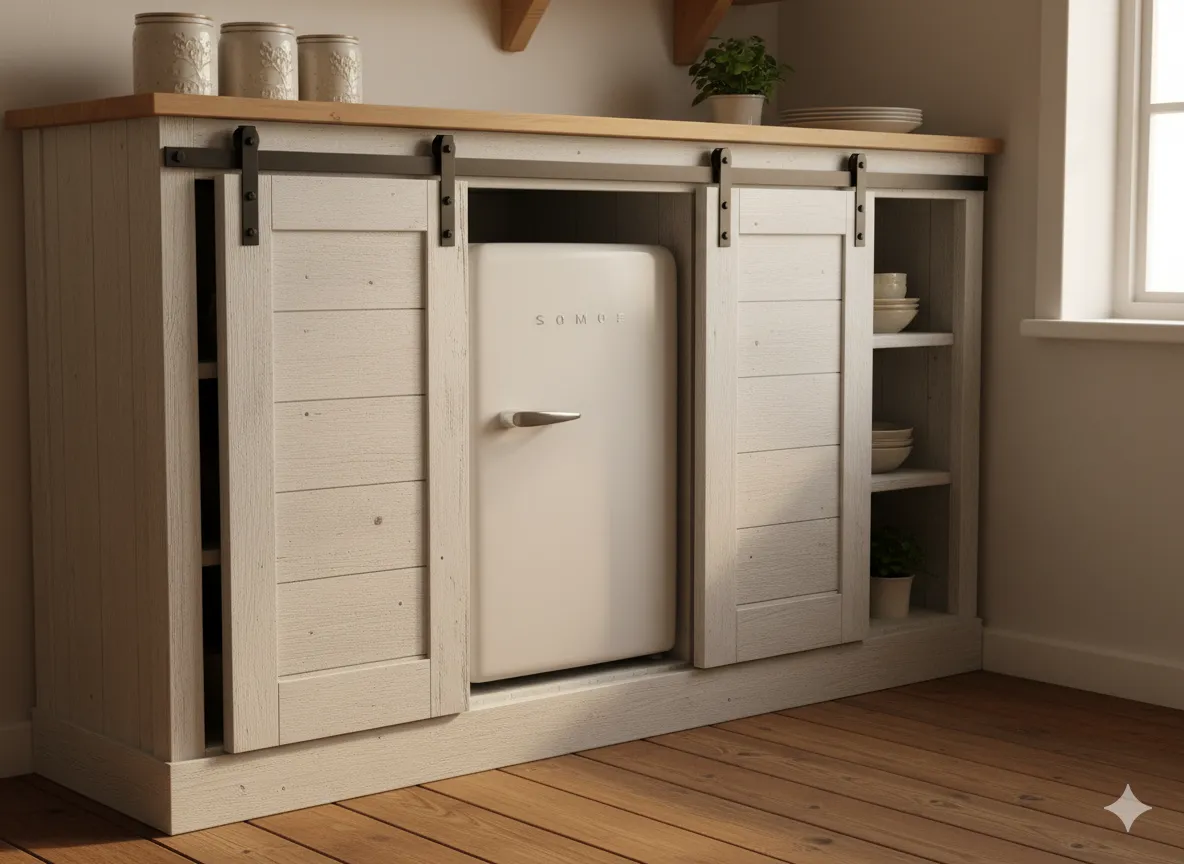
For those prioritizing aesthetics alongside function, a farmhouse-style wooden cabinet conceals the mini fridge behind charming doors while providing substantial storage. These stands often feature barn door sliders, shiplap detailing, or distressed finishes that complement rustic and modern farmhouse interiors. The enclosed design hides the refrigerator completely, creating a cohesive look that resembles traditional furniture rather than appliance storage.
Interior shelving maximizes the cabinet space, offering room for dishes, glassware, or pantry items alongside the fridge. Some designs incorporate wine racks, stemware holders, or drawer units for utensils and napkins. This approach works beautifully in open-concept living spaces where the kitchen flows into dining or living areas. The natural wood construction adds warmth and character while the enclosed format reduces compressor noise for quieter operation.
Industrial Pipe Frame Stand
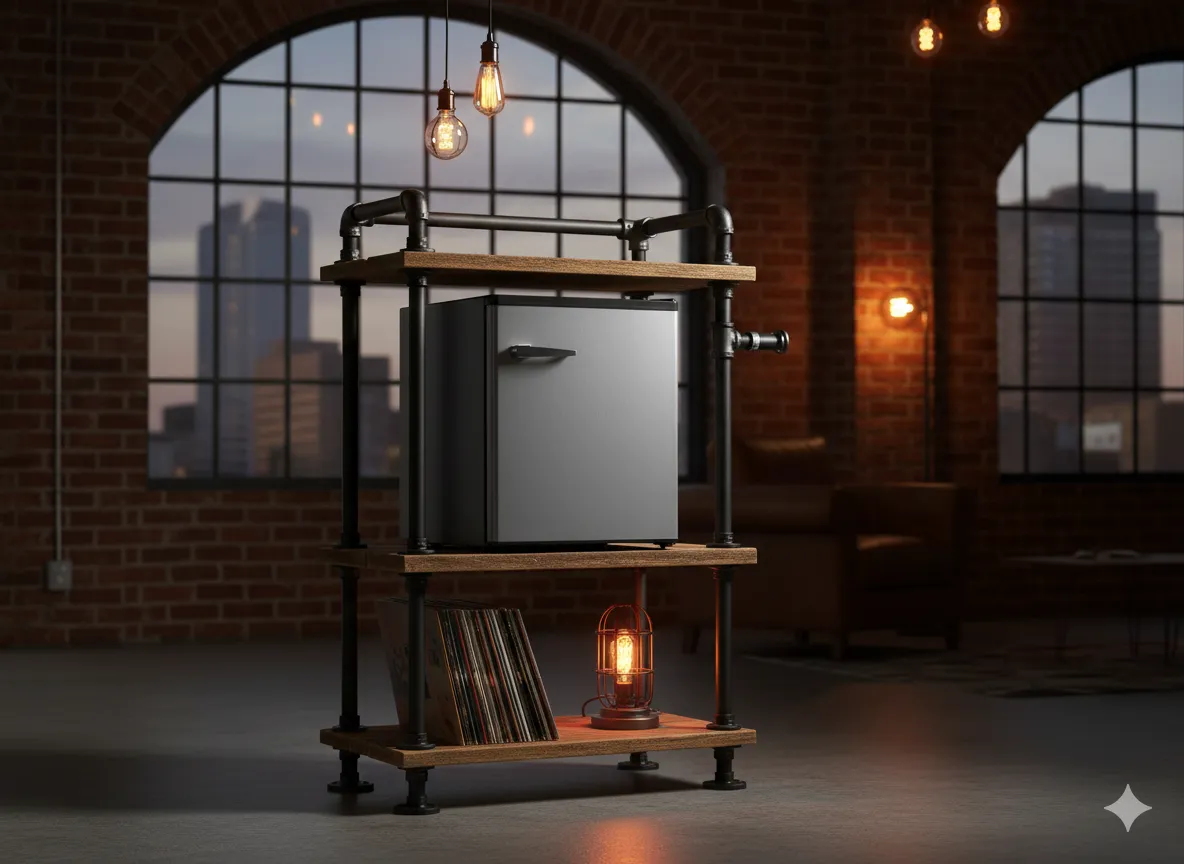
The industrial aesthetic continues to captivate design enthusiasts, and pipe frame mini fridge stands deliver that raw, urban edge with practical benefits. Constructed from black iron pipes and reclaimed wood planks, these stands combine strength with visual interest. The exposed pipe structure creates an intentionally unfinished appearance that pairs perfectly with loft apartments, man caves, or modern industrial kitchens.
Building a custom pipe stand allows complete dimensional control, ensuring a perfect fit for your specific refrigerator model. The sturdy construction easily supports the weight of the fridge plus additional items on upper shelves. Wood shelving can be stained or painted to match existing furniture, while the pipe frame maintains its signature black or metallic finish. This design particularly appeals to those who appreciate visible craftsmanship and architectural elements in their decor.
Compact Nightstand Conversion

Creative repurposing turns unexpected items into functional mini fridge stands. Standard nightstands, end tables, or small dressers can be converted into refrigerator stands with minimal modification. This approach works especially well in bedroom setups where a mini fridge serves as a personal beverage and snack station.
The conversion process typically involves removing interior shelving to accommodate the fridge height while maintaining drawer functionality for storage. Some projects incorporate ventilation holes in the back panel to ensure proper airflow around the refrigerator compressor. The result resembles purposeful bedroom furniture rather than a makeshift solution. For college students in dorm rooms or young professionals in studio apartments, this disguised approach maintains a cohesive bedroom aesthetic while delivering refrigeration convenience.
Coffee Bar Station Stand

Coffee enthusiasts can transform their mini fridge into the foundation of a complete coffee bar experience. Specialized coffee bar stands position the refrigerator at the base while upper shelves display coffee makers, espresso machines, mugs, and supplies. Many designs incorporate power outlets directly into the frame, eliminating the need for extension cords and creating a clean, integrated appearance.
The station setup organizes everything needed for your morning routine in one convenient location. Store milk, creamer, and cold brew in the fridge, keep coffee beans and sweeteners on middle shelves, and position the coffee maker on the countertop surface. Some elaborate versions include hooks for hanging mugs, small drawers for coffee pods or tea bags, and designated wine rack sections. This specialized stand essentially creates a functional coffee shop corner in your home kitchen or office.
Over-the-Toilet Shelf Adaptation
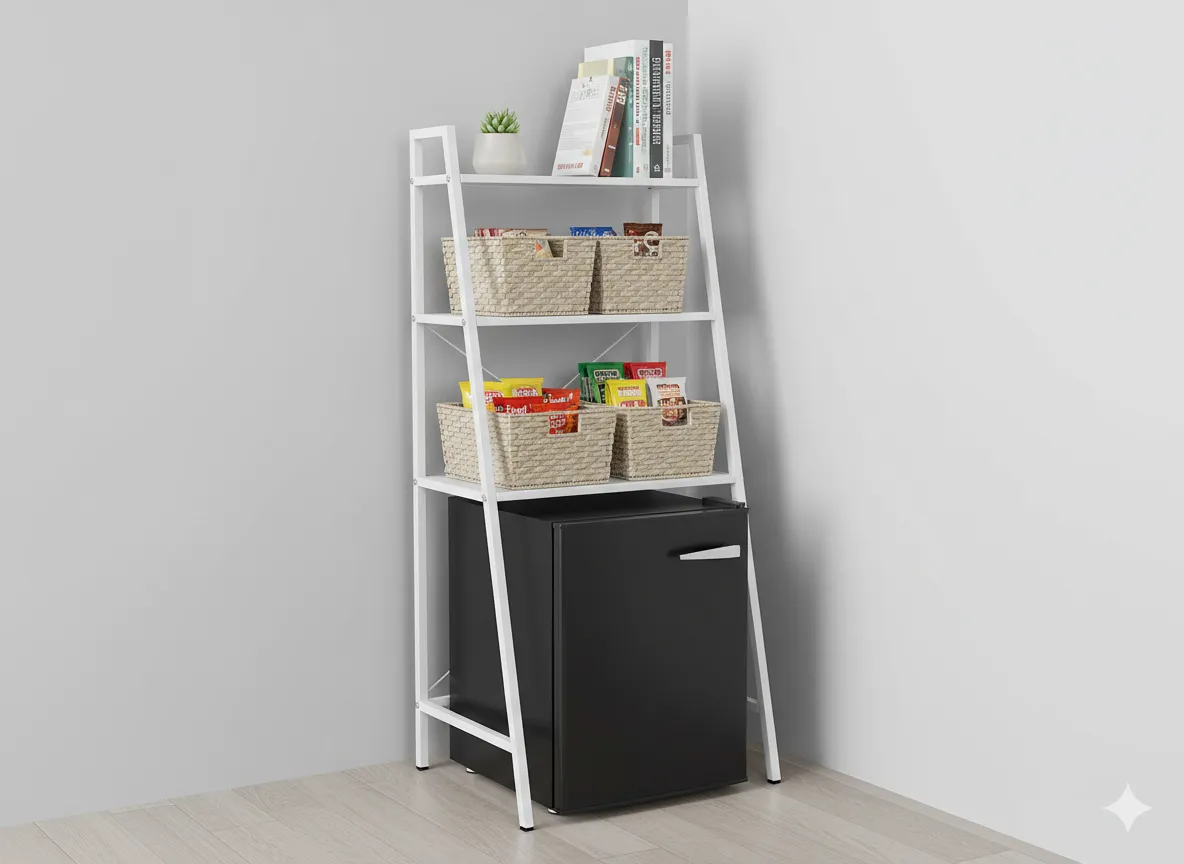
Budget-conscious shoppers discovered an ingenious hack that repurposes bathroom furniture for refrigerator storage. Standard over-the-toilet shelving units, designed to maximize bathroom vertical space, adapt surprisingly well as mini fridge stands. These units typically feature a lower open section that perfectly accommodates compact refrigerators, with two or three shelves above for storage.
The narrow footprint suits tight spaces where traditional stands might overwhelm the area. Metal or wooden construction options match various decor styles, and the freestanding design requires no installation or wall mounting. This economical solution often costs significantly less than purpose-built fridge stands while delivering comparable functionality. The upper shelves organize snacks, dishware, or pantry staples, creating a complete refreshment station from an unlikely furniture piece.
Custom Built-In Cabinet Integration
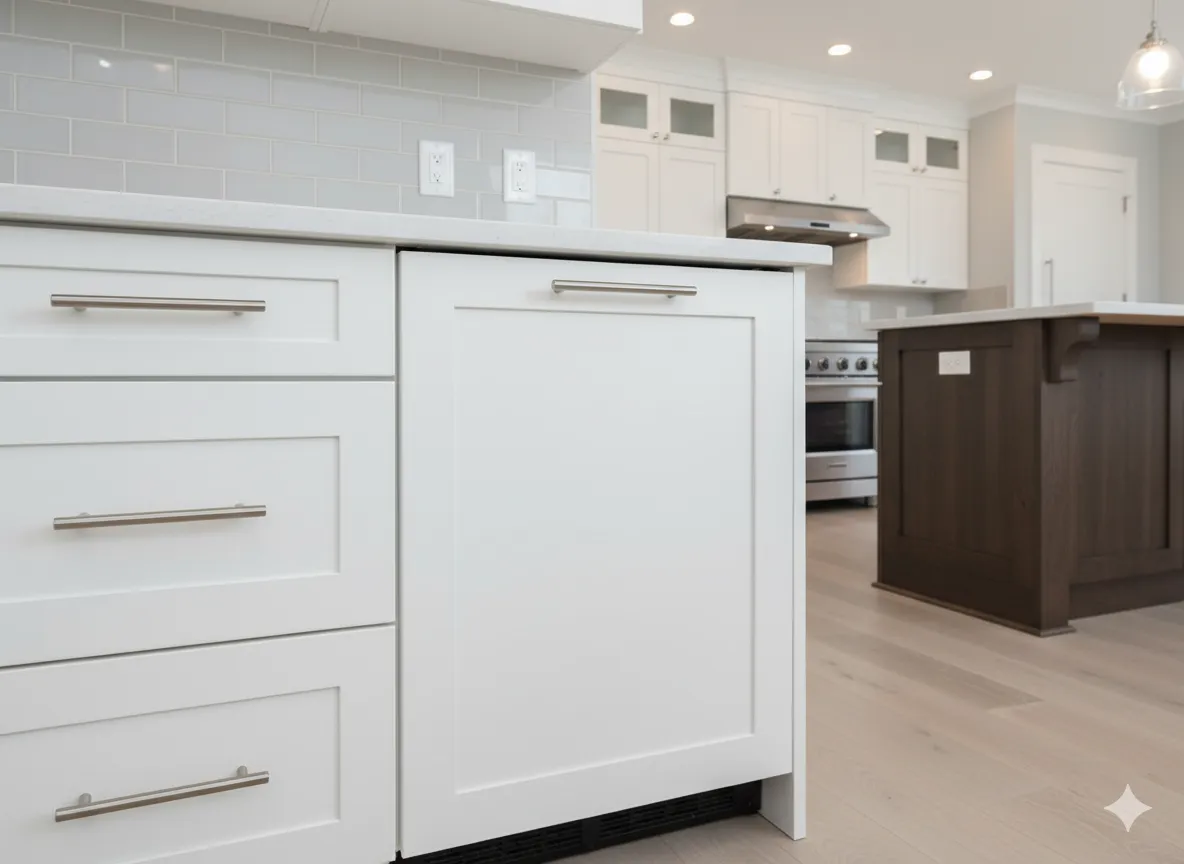
For permanent solutions that blend seamlessly with existing cabinetry, custom built-in designs create a polished, professional appearance. This approach involves constructing a cabinet unit that matches your kitchen or home bar cabinetry, with a dedicated compartment sized precisely for your refrigerator model. The integrated design maintains consistent door styles, hardware, and finishes throughout the space.
Professional installation ensures proper ventilation, electrical access, and structural support for the appliance weight. The surrounding cabinetry provides substantial storage for beverages, glassware, bar tools, or food items. While this represents the most expensive option on this list, it also adds the greatest value to your home and creates a truly custom appearance. Built-in solutions work particularly well in finished basements, wet bars, or kitchen pantries where the mini fridge supplements the main refrigerator.
Pallet Wood DIY Project
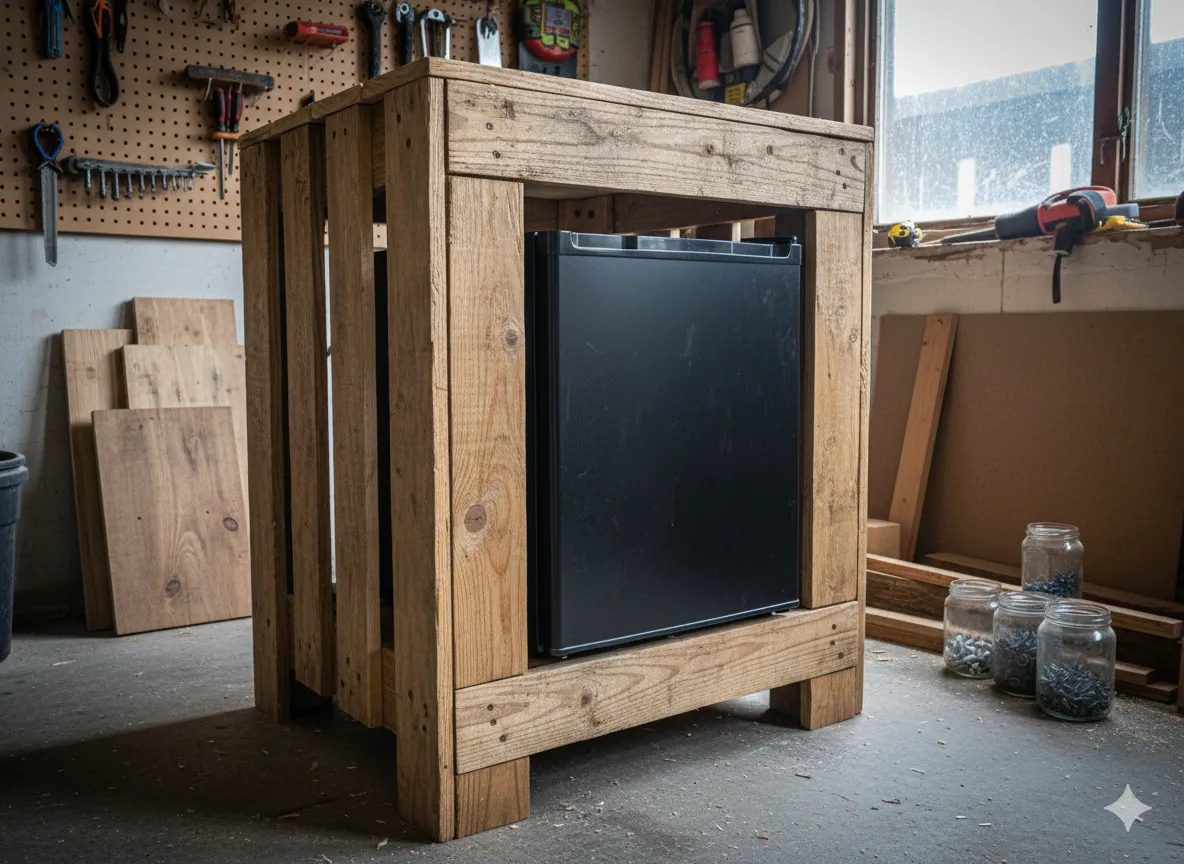
Reclaimed pallet wood offers an eco-friendly, budget-friendly material for crafting unique fridge stands. The rustic character of pallet boards creates charming, one-of-a-kind pieces that cost little more than time and basic tools. Pallet projects range from simple platform bases with wheels to elaborate cabinet designs with multiple storage levels.
The construction process involves disassembling pallets, cleaning and sanding boards, then reassembling them into your desired configuration. Reinforcement with screws or wood glue ensures stability under the refrigerator’s weight. Finishing options include natural wood stains that highlight the grain, painted surfaces that coordinate with room colors, or clear sealers that preserve the weathered appearance. For those who enjoy hands-on projects, pallet stands deliver personalized results while keeping materials out of landfills.
Metal Wire Grid System
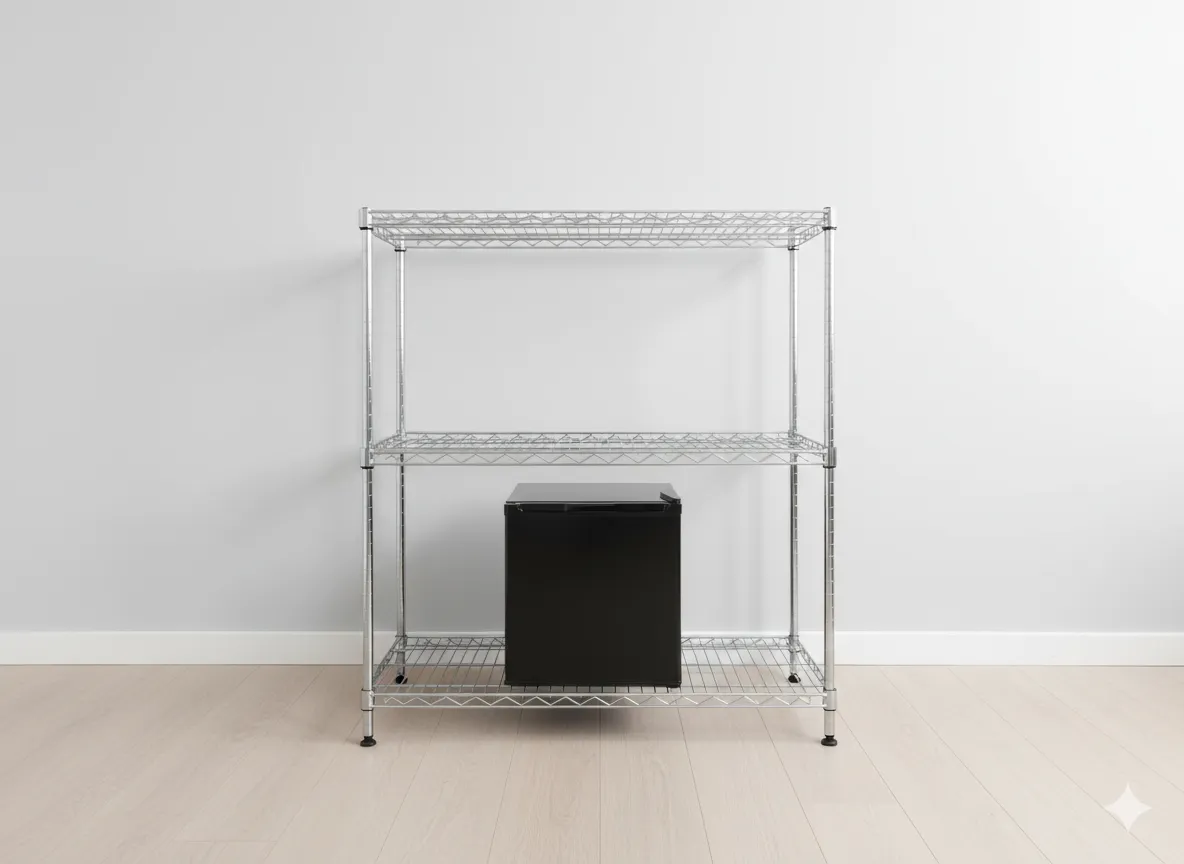
Contemporary and minimalist spaces benefit from the clean lines of metal wire grid stands. These lightweight yet sturdy frames feature open wire construction that maintains visual transparency while providing solid support. The gridded design allows air circulation around the refrigerator, promoting efficient cooling and preventing heat buildup.
Chrome, black, or white finishes integrate with modern kitchens, offices, or dorm rooms. The open format makes cleaning simple since dust and debris fall through rather than accumulating on solid shelves. Wire baskets can attach to grid sections for additional storage without tools or permanent modifications. This stand style particularly suits those who prefer industrial, Scandinavian, or contemporary minimalist aesthetics where furniture should be functional yet nearly invisible.
Corner Space Maximizer
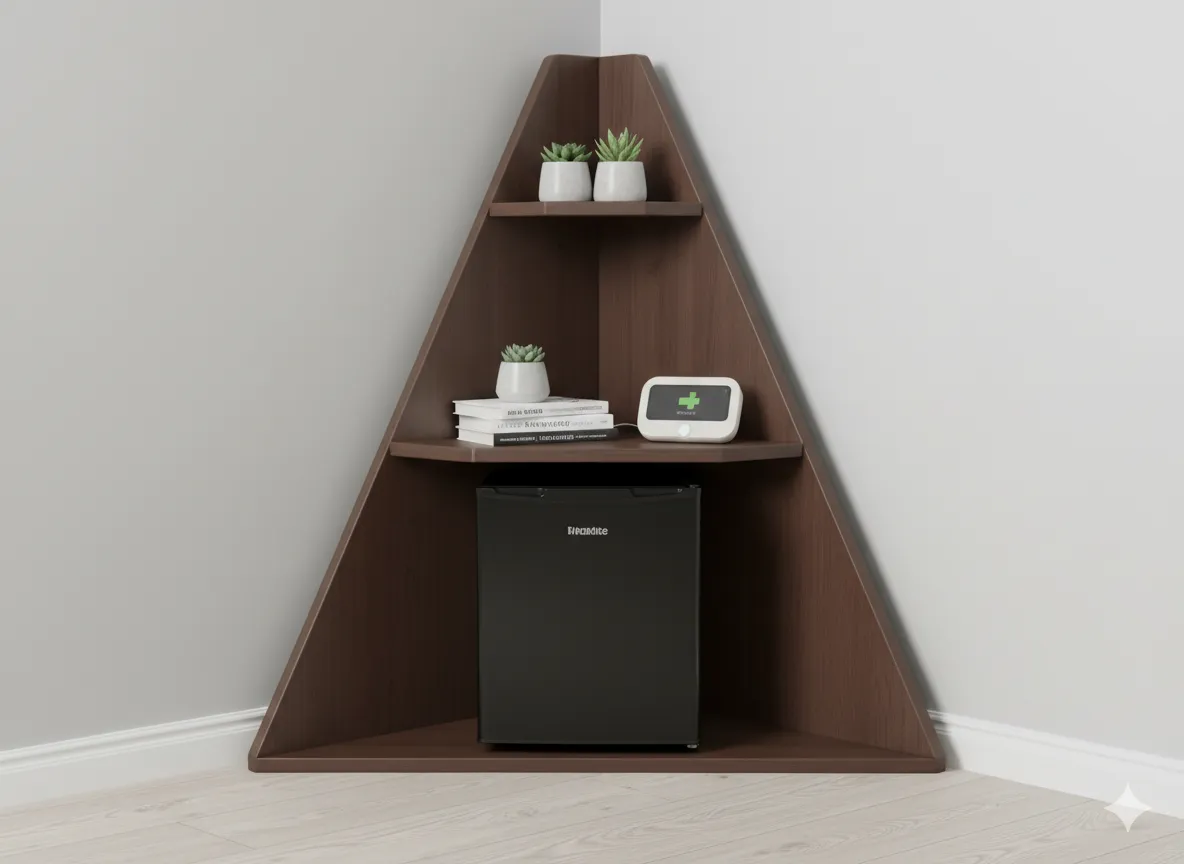
Corners represent one of the most underutilized areas in small spaces. Triangle or wedge-shaped stands designed specifically for corner placement nestle the mini fridge into otherwise wasted floor space. This configuration opens up the center room area while still providing easy refrigerator access.
Corner stands typically feature angled shelving that follows the triangular footprint, creating graduated storage that’s both practical and space-efficient. The design works particularly well in studio apartments, dorm rooms, or home offices where every square foot matters. Some versions incorporate rotating lazy Susan mechanisms on shelves for easy access to items stored toward the back. Placing the fridge in a corner can also reduce noise impact since walls help buffer compressor sounds.
Adjustable Height Platform Stand
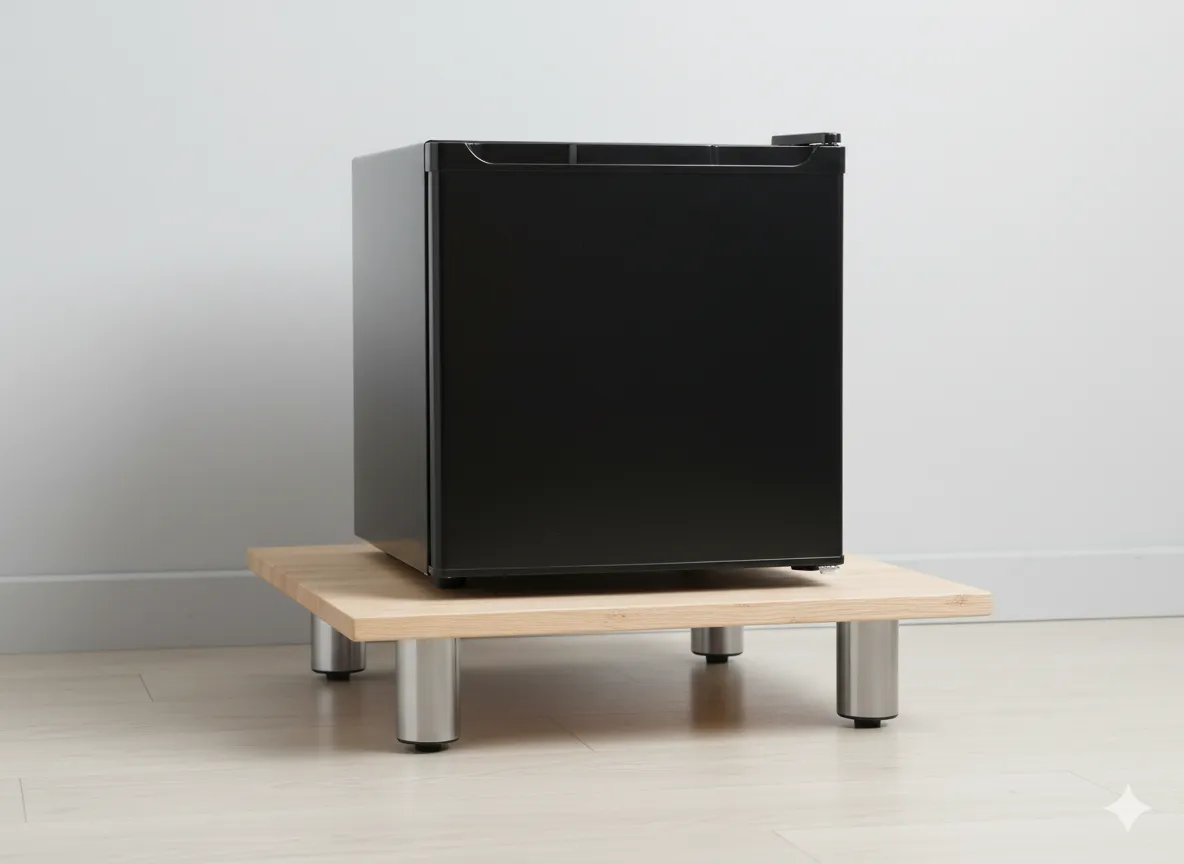
Simple doesn’t mean ineffective. Basic platform stands elevate the mini fridge to a comfortable height without additional storage features. These minimalist designs focus on ergonomics, raising the appliance so users can access items without excessive bending. The raised position also improves air circulation beneath the refrigerator, promoting better cooling efficiency and extending appliance life.
Adjustable feet allow leveling on uneven floors while protecting surfaces from moisture and scratches. Wooden platforms can be stained to match furniture, while metal options offer industrial appeal. The compact size means the stand takes up minimal additional space beyond the refrigerator’s footprint. For those seeking purely functional elevation without shelving or storage, platform stands deliver at the lowest price point.
Material Considerations for Durability
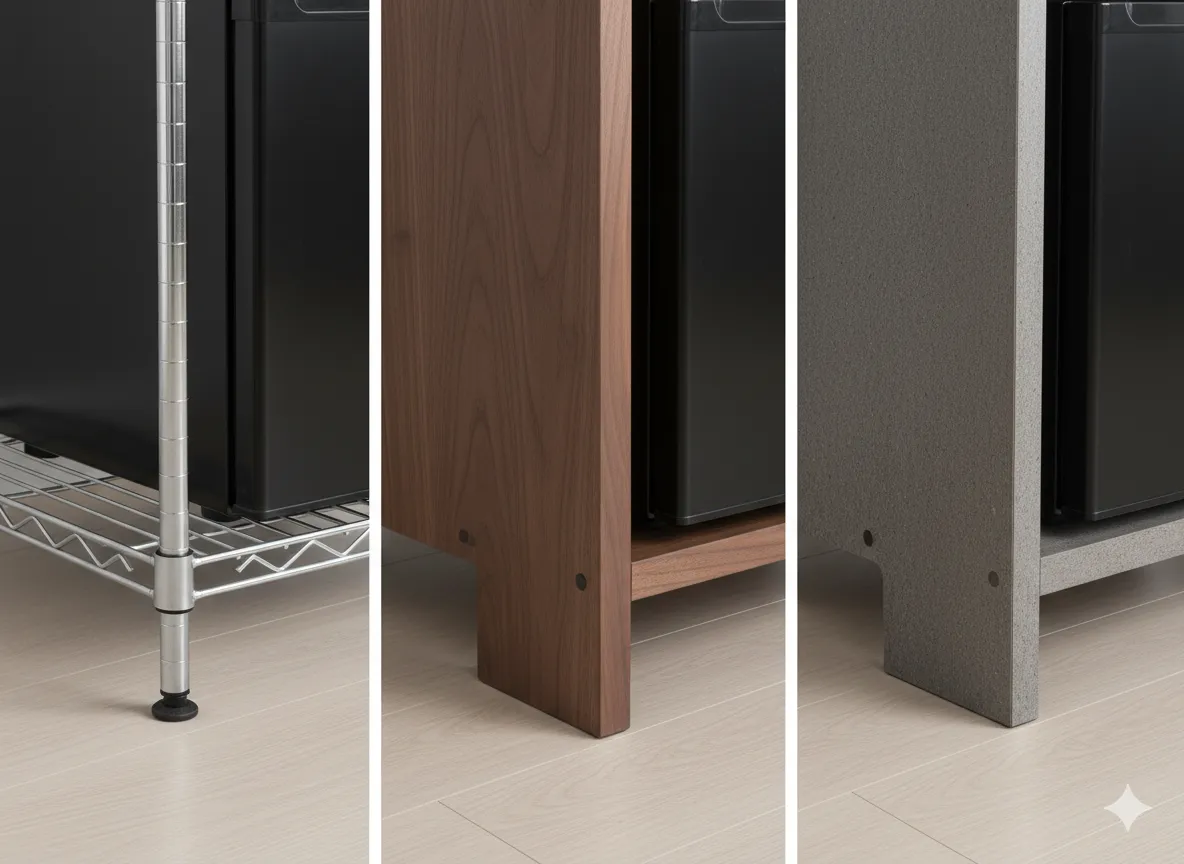
The longevity and performance of your mini fridge stand depend heavily on material selection. Metal frames constructed from steel or iron provide maximum weight capacity and resistance to damage. Powder-coated finishes protect against rust and scratches while offering color variety. Metal stands excel in high-humidity environments like basements or garages where wood might warp.
Solid wood construction offers natural beauty and substantial strength, particularly hardwoods like oak, maple, or walnut. Wood provides warmth and traditional appeal while supporting considerable weight when properly constructed. However, wood requires occasional maintenance and can be vulnerable to water damage. Engineered wood products like plywood or MDF reduce costs while maintaining stability, though they typically cannot support as much weight as solid wood or metal.
Composite materials combine durability with affordability, often featuring waterproof surfaces and easy cleaning. These modern options resist staining and damage while offering contemporary styling. When selecting materials, consider your environment’s humidity levels, the stand’s weight requirements, and your aesthetic preferences to find the optimal balance.
Space Planning and Measurements
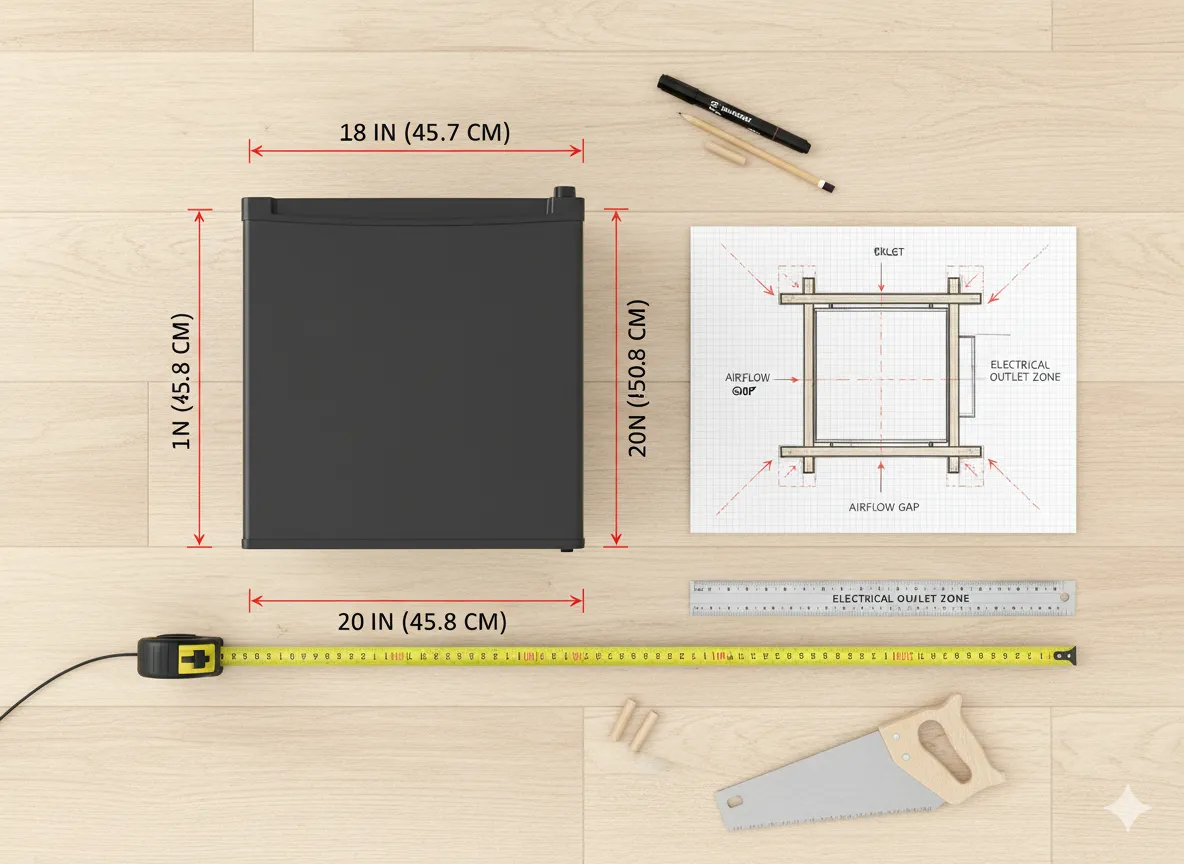
Successful stand selection begins with accurate measurements. Measure your mini fridge’s height, width, and depth, then add several inches to each dimension for clearance. Refrigerators require space around them for proper ventilation, typically two to three inches on all sides and at least four inches at the back for air circulation.
Measure your available floor space, accounting for door swings and traffic patterns. Consider the stand’s total height with the refrigerator in place to ensure it fits beneath counters, shelves, or other overhead obstacles. For multi-tier stands, measure existing items you plan to store to verify shelf spacing accommodates everything comfortably. Creating a simple floor plan sketch helps visualize how the stand fits into your overall room layout.
Weight capacity matters more than many buyers realize. Calculate your refrigerator’s weight when empty, then add the weight of food and beverages when fully stocked. Quality stands list maximum weight limits for each shelf. Always choose a stand rated well above your needs to ensure safety and longevity.
Assembly and Installation Tips
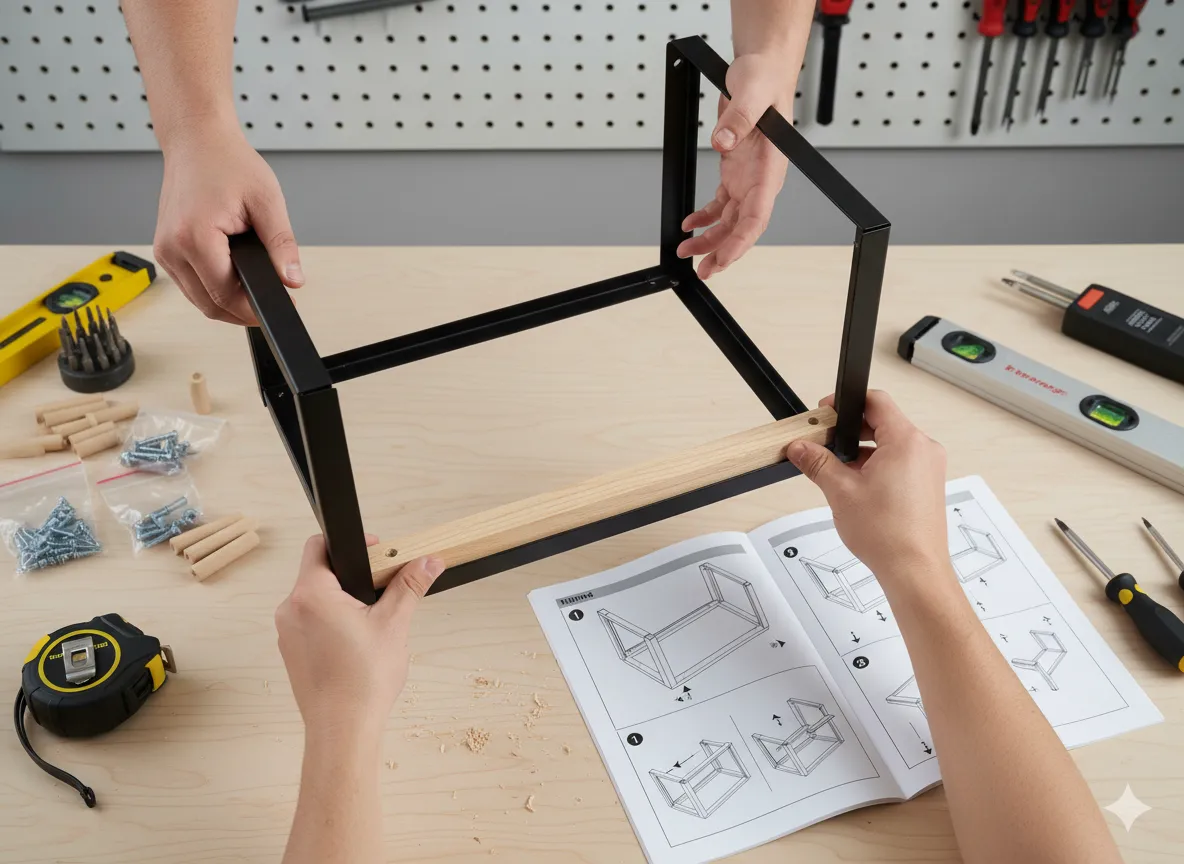
Most mini fridge stands arrive requiring assembly, which typically takes 30 to 90 minutes depending on complexity. Read instructions completely before beginning, and organize all hardware and components. Having a helper makes the process smoother, particularly when aligning larger pieces or holding components in position.
Use the correct tools for assembly, even if basic screwdrivers or wrenches suffice. Power drills with adjustable clutches speed the process while preventing stripped screws. Level each component as you build to ensure the finished stand sits evenly. An unlevel stand can cause refrigerator doors to swing open or prevent proper closure.
Position the assembled stand in its final location before placing the refrigerator on it. Moving a loaded stand risks damage to both the stand and your floors. Once positioned, use a level to verify the stand sits flat. Adjust leveling feet if included, or use shims beneath legs to correct any wobble. A stable foundation protects your investment and ensures quiet, efficient refrigerator operation.
Maintenance and Care Guidelines

Regular maintenance extends the life of both your stand and refrigerator. Clean the stand monthly using appropriate products for its material. Wood stands benefit from occasional furniture polish, while metal requires only damp cloth cleaning. Check connections and fasteners periodically, tightening any that have loosened from vibration or use.
Keep the area around the refrigerator clean and clear for optimal air circulation. Vacuum or wipe the refrigerator’s condenser coils quarterly to maintain cooling efficiency. Inspect the stand for signs of wear, rust, or damage, addressing small issues before they become major problems. Protect wood surfaces from water rings and spills by using coasters and quickly cleaning up any moisture.
For stands with wheels, inspect casters regularly and clean debris from wheel mechanisms. Lubricate moving parts annually to maintain smooth rolling. Replace damaged wheels immediately to prevent uneven weight distribution that could compromise stability.
Creating Your Ideal Setup
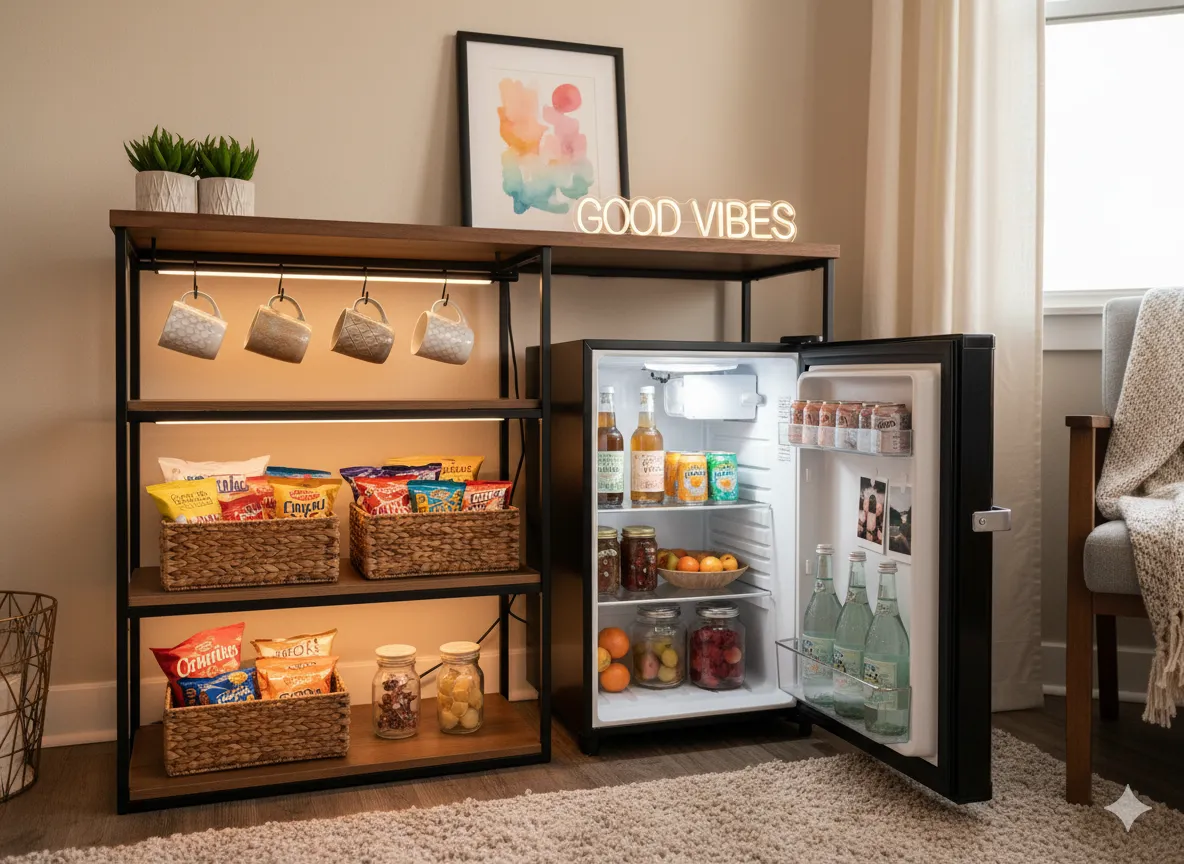
Your mini fridge stand should enhance your daily routine while fitting seamlessly into your space. Consider how you use the refrigerator and what items you access most frequently. Position those items on the most convenient shelves at comfortable reaching height. Group similar items together, creating zones for beverages, snacks, or meal prep supplies.
Use storage baskets or bins to contain small items and create visual organization. Label containers for quick identification, especially in shared spaces like offices or dorm rooms. Add personal touches through decorative items, plants, or artwork displayed on upper shelves. The stand becomes more than functional storage when thoughtfully arranged.
Lighting can transform the utility of your stand. Battery-operated LED strips under shelves illuminate contents while creating ambiance. This proves particularly useful in dim corners, basements, or areas without overhead lighting. Some enthusiasts install mini spotlights to showcase beverage collections or create coffee bar atmosphere.
Conclusion
The right mini fridge stand solves multiple challenges simultaneously, elevating your appliance to a comfortable height, maximizing storage potential, and enhancing your space’s overall appearance. From budget-friendly DIY pallet projects to sophisticated built-in cabinetry, options exist for every situation, skill level, and design preference. The creative solutions explored in this guide demonstrate that practical storage can be beautiful, personalized, and perfectly suited to your unique needs.To see some more compost storage ideas for your home visit Homeliaa.
Whether you choose an industrial metal baker’s rack for your dorm room, a farmhouse cabinet for your home kitchen, or build a custom wooden stand from reclaimed materials, the investment in proper refrigerator storage pays dividends in organization, convenience, and aesthetic satisfaction. Take accurate measurements, consider your specific requirements, and select a stand that will serve you well for years to come. Your mini fridge deserves better than sitting directly on the floor, and your space deserves the optimized storage that the right stand provides.
Frequently Asked Questions
What height should a mini fridge stand be?
The ideal height depends on your comfort and space constraints. Most stands elevate fridges 12 to 24 inches off the floor, creating comfortable access without excessive bending while providing storage space underneath. Measure from floor to your hip level as a starting reference point for ergonomic access.
Can I build my own mini fridge stand?
Absolutely. DIY stands can be constructed from wood, metal pipes, or reclaimed pallets using basic tools. Ensure your design supports at least 150 pounds, allows proper ventilation around the fridge, and sits level on your floor. Simple platform designs work well for beginners, while experienced builders can create elaborate cabinet systems.
Do mini fridges need ventilation space on stands?
Yes, mini refrigerators require air circulation for efficient cooling and compressor longevity. Leave 2 to 3 inches of clearance on the sides and top, plus 4 to 6 inches at the back. Open-frame stands naturally provide ventilation, while enclosed cabinets may need drilled ventilation holes in the back panel.
What weight capacity do I need for a mini fridge stand?
Calculate your refrigerator’s empty weight plus the weight of stored food and beverages when fully stocked. Most mini fridges weigh 40 to 60 pounds empty, and loaded weight can reach 100 pounds or more. Choose stands rated for at least 150 to 200 pounds to ensure safety and stability with a comfortable margin.
Can I use a TV stand for my mini fridge?
Many TV stands work well as mini fridge stands since they offer similar dimensions and weight capacities. Verify the stand can support your refrigerator’s weight and provides adequate ventilation space. Remove or adjust shelving as needed to accommodate the fridge height, and ensure the surface is level and stable before placing the appliance.