12+ Charming Perler Bead Flower Pattern Ideas
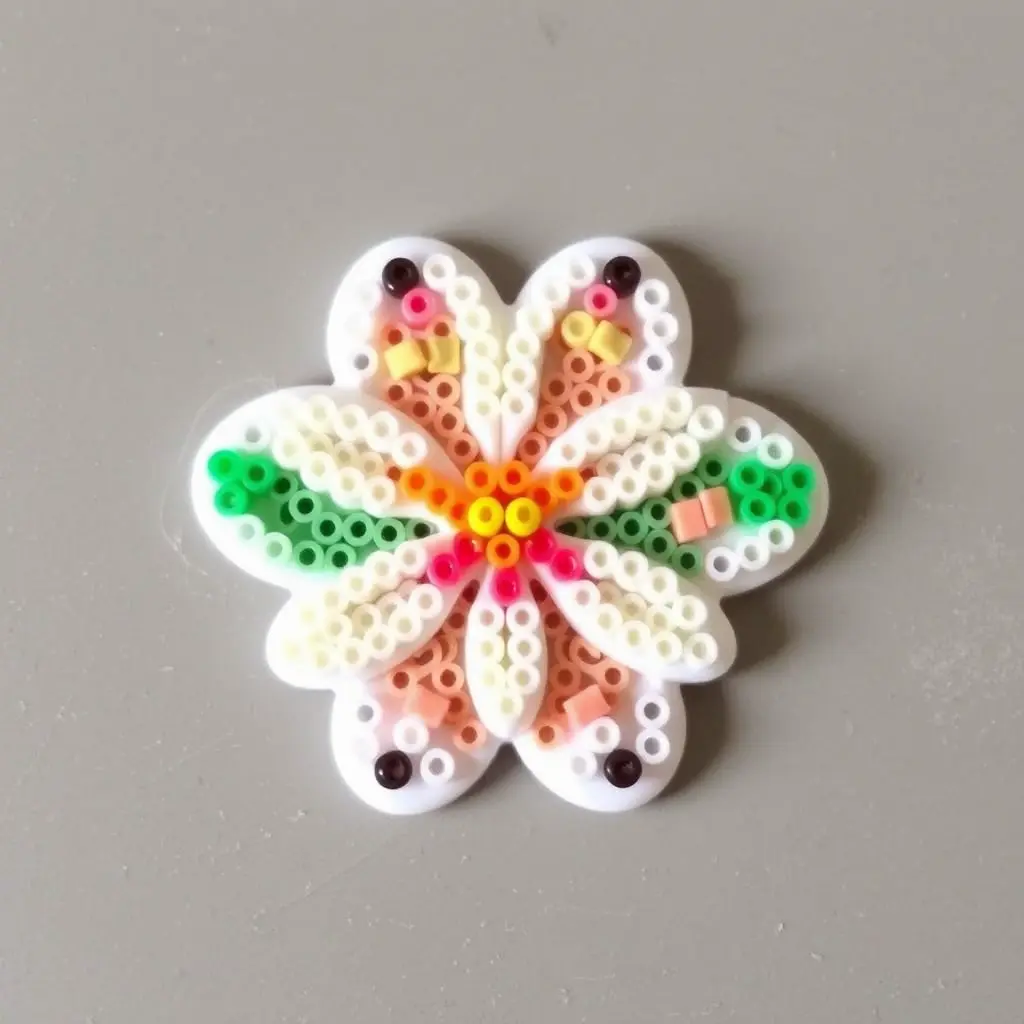
Perler bead crafts have captured the imagination of creative minds for decades, and flower patterns remain among the most beloved designs in the crafting community. These colorful plastic beads, arranged on pegboards and fused together with heat, offer an accessible entry point for beginners while providing endless possibilities for experienced crafters. Whether you’re looking to brighten up your living space, create thoughtful handmade gifts, or simply enjoy a relaxing creative activity, perler bead flower patterns deliver both satisfaction and stunning results.
The appeal of flower patterns lies in their versatility and timeless beauty. Unlike trends that come and go, flowers remain universally appreciated symbols of nature’s artistry. When translated into the pixelated medium of perler beads, these botanical designs take on a charming, retro aesthetic that resonates across generations. From simple daisies that beginners can complete in minutes to intricate rose designs that challenge even skilled crafters, flower patterns accommodate every skill level and time commitment.
This comprehensive guide explores over twelve distinctive perler bead flower pattern ideas that will inspire your next crafting session. You’ll discover classic designs, innovative variations, and practical applications for your finished creations. Whether you’re crafting with children, preparing decorations for spring celebrations, or seeking a meditative hobby, these patterns offer something special for everyone.
Understanding Perler Bead Basics
Before diving into specific flower patterns, establishing a solid foundation in perler bead fundamentals ensures successful projects. Perler beads, also known as fuse beads, melty beads, or Hama beads, are small cylindrical plastic beads with holes in their centers. These beads come in an extensive color palette, allowing crafters to recreate virtually any design with remarkable accuracy.
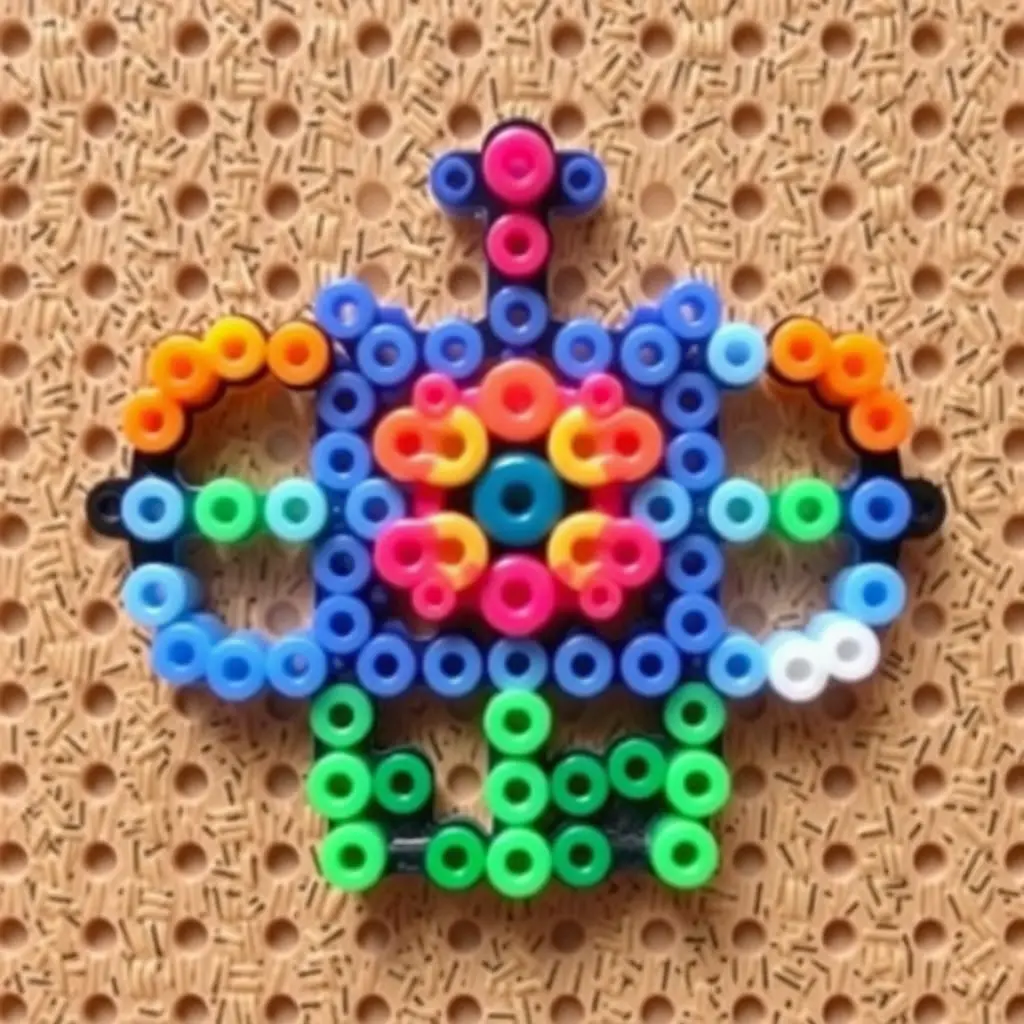
The crafting process involves placing individual beads onto a specialized pegboard following a pattern or design. Once the arrangement is complete, a household iron melts the beads together, fusing them into a permanent structure. The heat causes the plastic to soften and merge, creating a cohesive piece that can be removed from the pegboard once cooled.
Success with perler bead flowers requires several essential supplies. A pegboard serves as your canvas, with square, hexagonal, and circular options each offering unique advantages for different flower designs. Standard household irons work perfectly for fusing beads, though temperature control matters significantly. Parchment paper or specialized ironing paper protects both your iron and the beads during the melting process. Finally, tweezers help with precise bead placement, particularly for adults or when working on detailed patterns.
The beauty of perler bead crafting lies in its forgiving nature. Mistakes can be corrected before ironing simply by removing and replacing beads. This flexibility makes it an ideal activity for children developing fine motor skills while remaining engaging enough for adults seeking creative outlets.
1. Classic Daisy Design

The classic daisy pattern represents an excellent starting point for perler bead beginners. This simple yet charming design requires minimal beads and can be completed in under fifteen minutes. A traditional daisy uses white or light-colored beads for petals arranged in a circular pattern around a yellow center, creating an instantly recognizable flower that brings brightness to any project.
The basic daisy typically requires only seven to twenty beads depending on size preferences. Start by placing a single yellow bead in the center of your pegboard, then surround it with white or pastel beads to form petals. This straightforward approach makes daisies perfect for children’s first perler bead projects or for crafters wanting to use up leftover beads from other projects.
One delightful variation involves creating tiny daisies using small hexagonal pegboards. These miniature versions work wonderfully as embellishments for greeting cards, gift tags, or even as components in larger floral arrangements. Multiple small daisies can be arranged together on houseplants, attached to pencils, or incorporated into jewelry designs like earrings or pins.
Advanced crafters can elevate the basic daisy by experimenting with color gradients in the petals, adding shading with darker tones toward the base of each petal, or creating three-dimensional versions where petals curve upward slightly. Some crafters create entire daisy chains by connecting multiple flowers with green stem beads, producing charming garlands perfect for seasonal decorations.
2. Elegant Rose Patterns
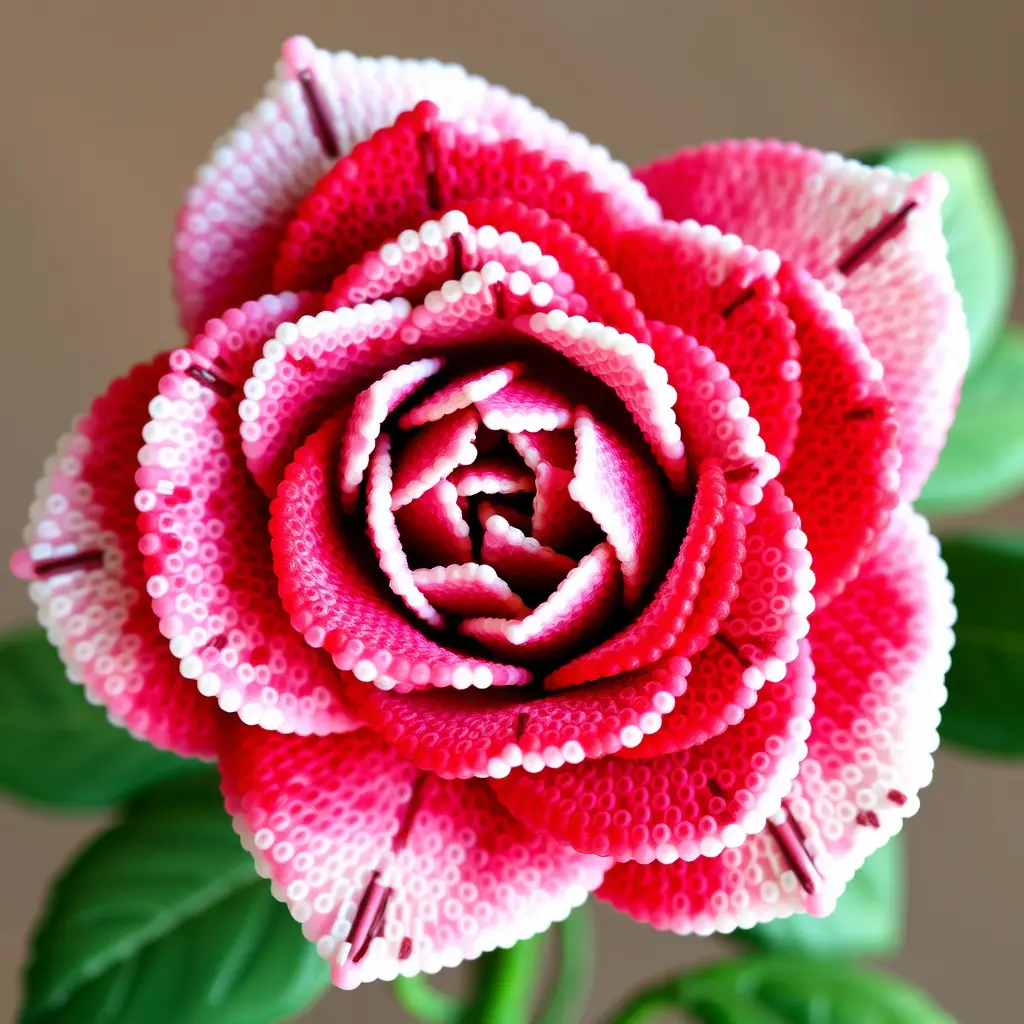
Roses command attention with their intricate beauty, and perler bead versions capture this elegance surprisingly well. Rose patterns range from simplified designs suitable for intermediate crafters to complex, detailed versions that challenge experienced artists. The pixelated nature of perler beads lends roses a unique aesthetic that blends classic floral beauty with modern, geometric charm.
Creating a perler bead rose typically involves layering different shades of red, pink, or other rose-appropriate colors to suggest depth and dimension. Starting from the center, crafters build outward, using darker tones in the interior and gradually transitioning to lighter hues on outer petals. This color gradation technique produces surprisingly realistic results despite the medium’s inherent limitations.https://casolia.com/perler-bead-flower-pattern-ideas/
Simple rose patterns might use only two or three shades across thirty to fifty beads, while elaborate designs can incorporate six or more colors and require several hundred beads. Some patterns include stems and leaves, creating complete rose presentations suitable for framing or displaying as standalone art pieces. These comprehensive designs work beautifully for Mother’s Day gifts, Valentine’s Day decorations, or year-round décor in bedrooms and living spaces.
Three-dimensional rose projects represent the pinnacle of perler bead flower crafting. These designs require multiple separately-ironed components that are then assembled into sculptural pieces. While more time-intensive, 3D roses make stunning centerpieces and demonstrate impressive crafting skills. They stand upright in specialized bases or can be mounted on wire stems for remarkable realism.
3. Cheerful Sunflower Creations
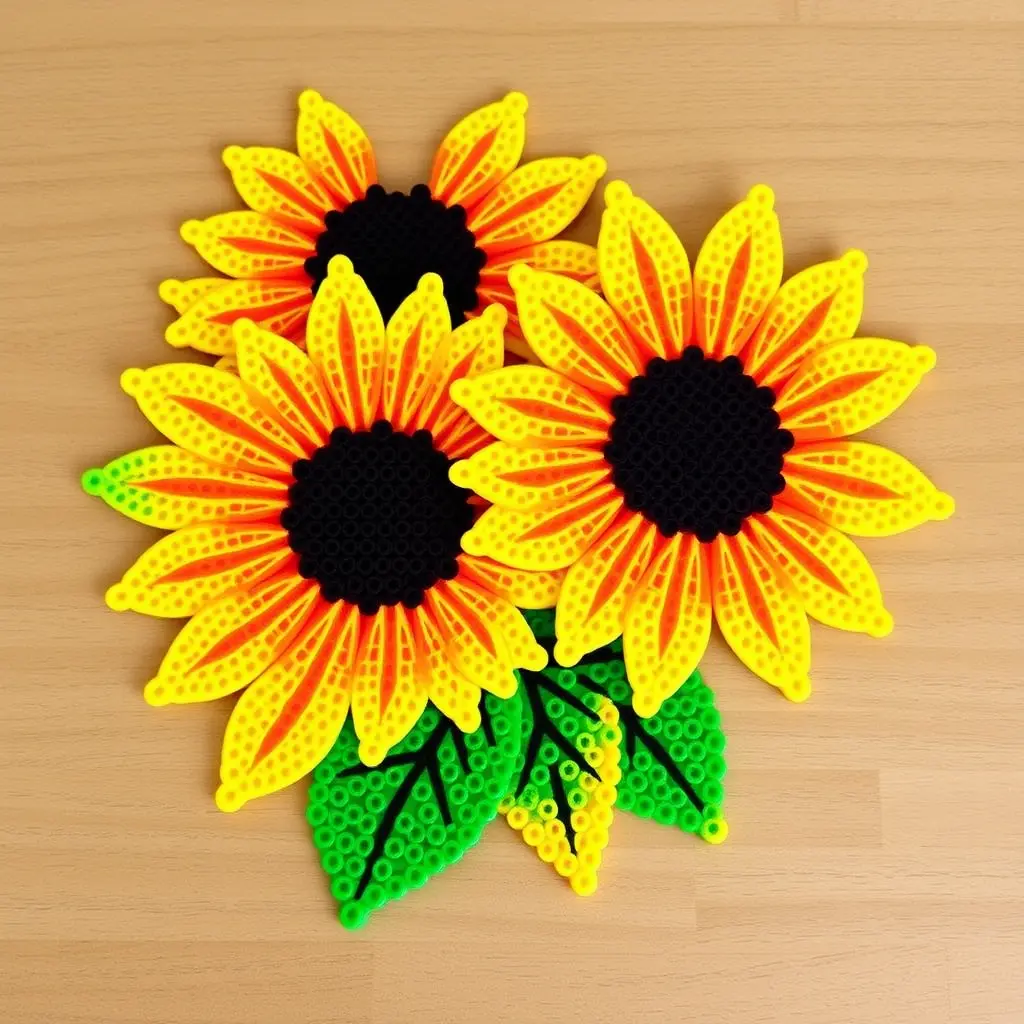
Sunflowers bring instant joy with their bold yellow petals and striking dark centers. Perler bead sunflower patterns capture this cheerfulness perfectly, making them popular choices for summer crafts, kitchen decorations, and gifts that spread happiness. The high contrast between bright yellow petals and dark brown or black centers creates visually impactful pieces that stand out in any setting.
Basic sunflower patterns work well on round or hexagonal pegboards, where the board’s shape naturally suggests the flower’s circular form. A typical sunflower design uses golden yellow or bright yellow beads for petals radiating from a central disk of dark beads. Some crafters add detail by alternating yellow shades or incorporating orange accents, creating depth and visual interest.
Medium-sized sunflowers make excellent coasters, requiring just enough beads to create functional pieces while remaining quick enough to produce multiple units for a matching set. The natural symmetry of sunflowers means patterns are forgiving and easy to follow, reducing frustration for less experienced crafters. This makes sunflowers ideal for group crafting activities or classroom projects where multiple participants work simultaneously.
Advanced sunflower patterns might include multiple rows of petals in varying lengths, creating a more naturalistic appearance. Some designs incorporate green leaves and thick stems, producing complete sunflower plants rather than just bloom heads. These larger projects work wonderfully as wall art or can be attached to actual plant pots, bringing whimsical touches to indoor gardens.
4. Delicate Tulip Arrangements
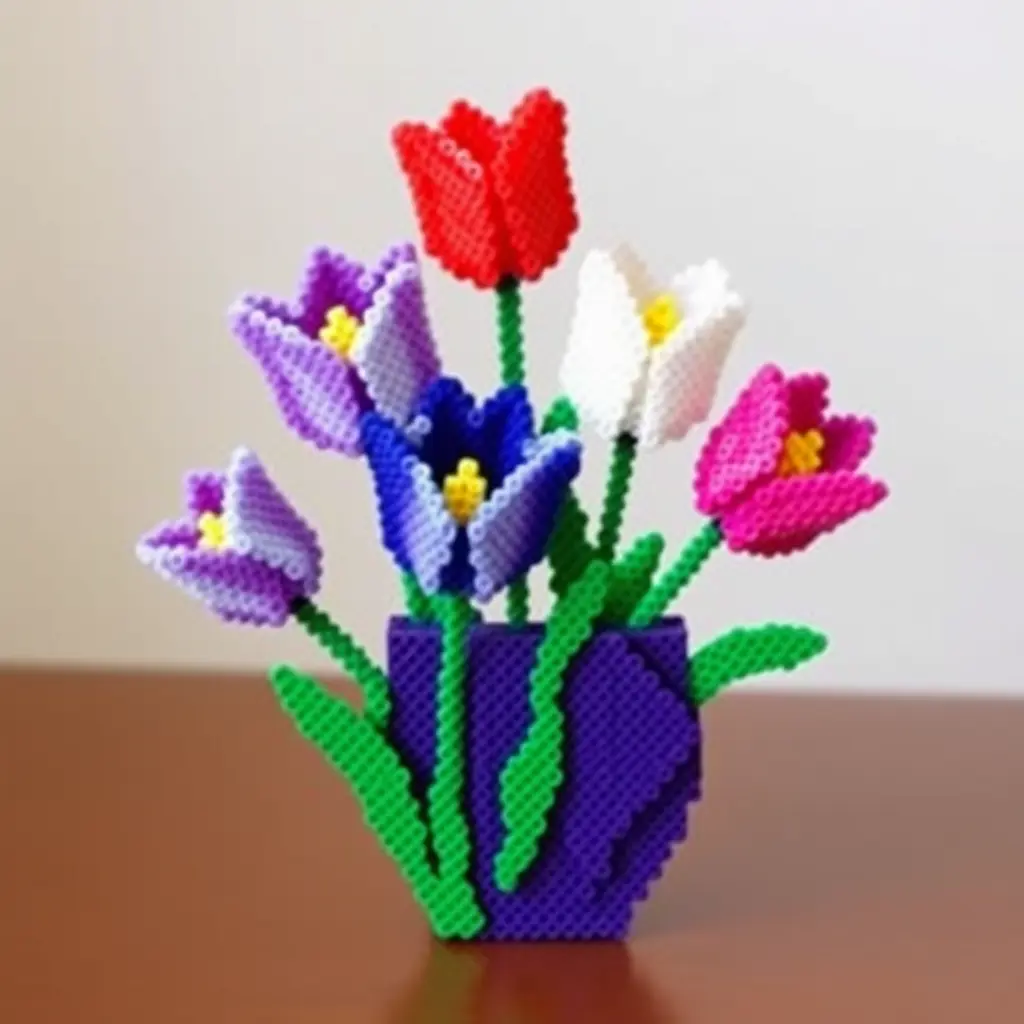
Tulips embody spring’s arrival with their simple elegance and graceful form. Perler bead tulip patterns capture this delicate beauty while remaining accessible to crafters of various skill levels. The cup-shaped bloom translates well into perler bead form, with patterns ranging from single flowers to entire arrangements in decorative vases.
Simple tulip designs require only two colors for the most basic versions, with one shade forming the bloom and green creating the stem and leaves. These minimalist patterns work quickly and make excellent projects when time is limited. However, crafters should note that single-bead-wide stems require careful handling and benefit from being ironed on both sides for stability.
More elaborate tulip patterns incorporate color gradients within petals, using two or three shades to suggest light and shadow. Some designs show tulips at different stages of blooming, from tightly closed buds to fully opened flowers, adding variety to arrangements. Combining multiple tulips in different colors creates vibrant bouquets that celebrate the diversity found in actual tulip gardens.
Tulip patterns particularly shine when displayed in perler bead vases. These combined designs show flowers arranged in containers, creating complete decorative pieces. The vase portion allows for creative experimentation with patterns, textures, and colors, while the flowers provide the focal interest. These comprehensive projects make thoughtful gifts and serve as charming home décor throughout the spring season.
5. Tropical Hibiscus Flowers
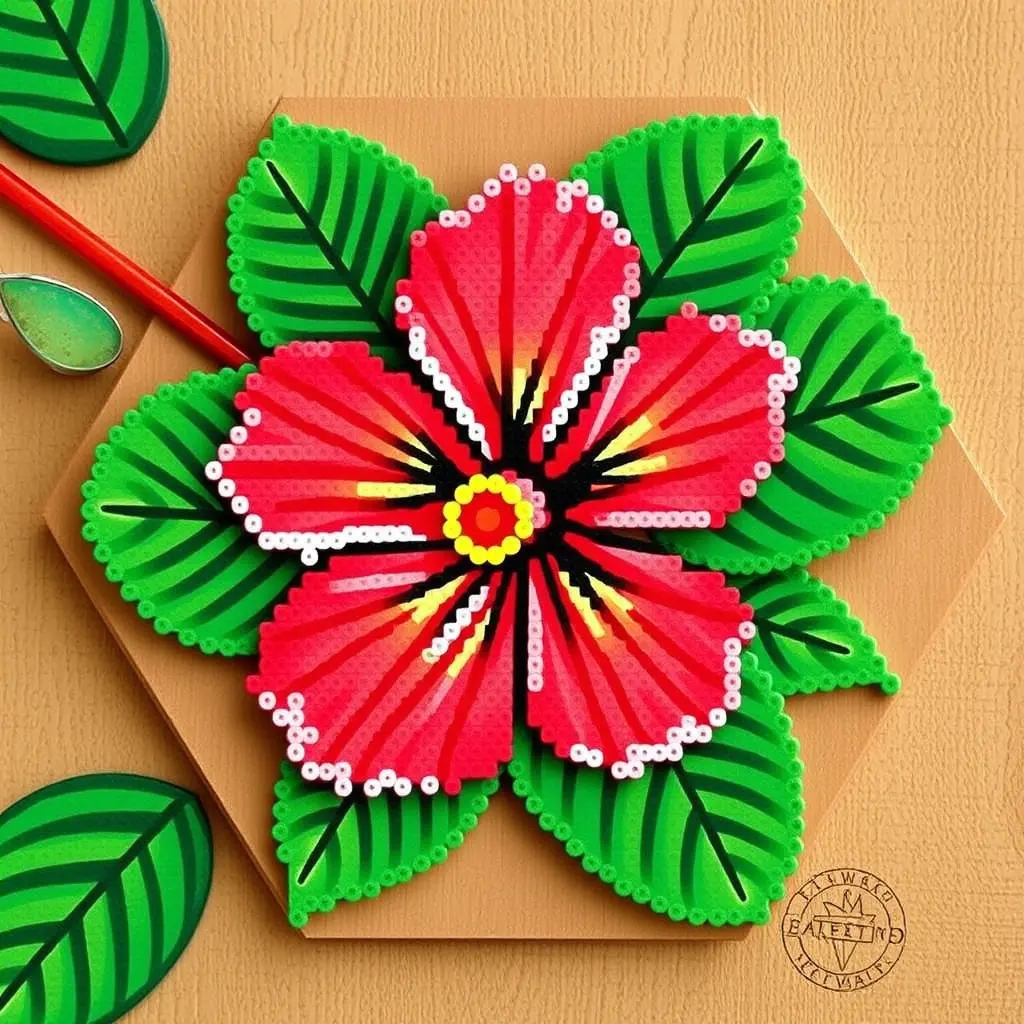
Hibiscus flowers bring exotic flair to perler bead collections with their distinctive large petals and prominent stamens. These tropical beauties work exceptionally well in perler bead form, as their bold, simple petal shapes translate cleanly into the medium’s geometric nature. Hibiscus patterns allow crafters to work with vibrant colors like hot pink, coral, orange, and red, creating eye-catching pieces that evoke warm, tropical vibes.
The five-petaled structure of hibiscus flowers provides natural symmetry that makes pattern-following straightforward. Each petal typically requires a single color or a simple two-tone gradient, keeping the design manageable while producing impressive results. The central stamen structure adds an interesting detail element without overwhelming complexity, usually rendered with yellow and red or orange beads extending from the flower’s core.
Hexagonal pegboards work particularly well for hibiscus patterns, as their shape naturally accommodates the flower’s radiating petal arrangement. Crafters can adjust petal size and shape by varying how many beads constitute each petal section, allowing for customization based on available board size and desired finished dimensions.
Hibiscus designs pair beautifully with complementary tropical elements like palm leaves or beach scenes. Some crafters create entire tropical-themed collections, combining hibiscus flowers with other exotic blooms, creating vibrant display pieces perfect for summer parties, beach house décor, or bringing warm-weather cheer to spaces year-round. These patterns also work wonderfully in jewelry applications, with smaller hibiscus designs making distinctive pendants or earrings.
6. Charming Wildflower Medleys
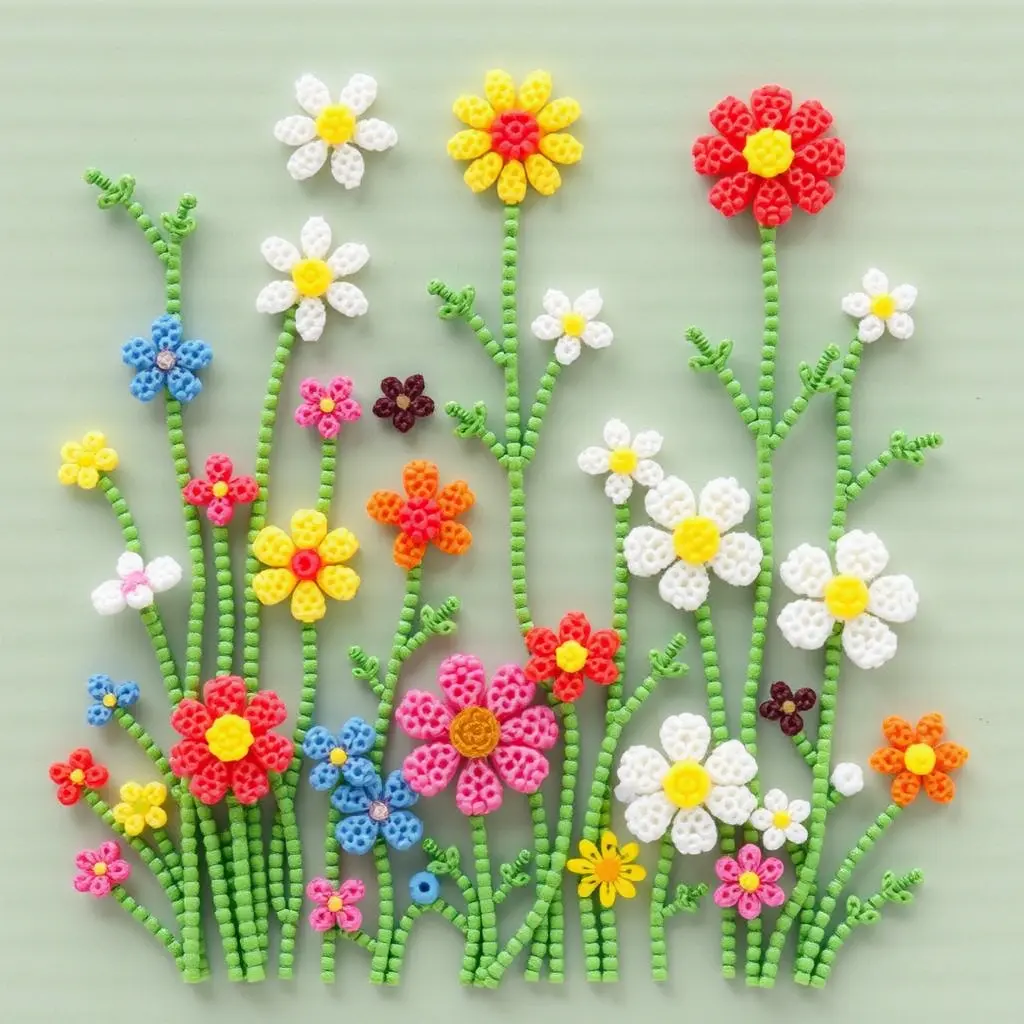
Wildflower patterns celebrate nature’s casual beauty, featuring collections of small, diverse blooms that capture the informal charm of meadows and roadsides. These designs typically combine several different flower types in one composition, creating visually interesting pieces that tell stories of natural abundance. Wildflower medleys offer excellent opportunities for using up small quantities of various colored beads left over from other projects.
The beauty of wildflower patterns lies in their forgiving nature. Unlike formal garden flowers that require specific, recognizable forms, wildflowers embrace variety and imperfection. This makes them perfect for beginners who might feel intimidated by more structured patterns. Crafters can experiment freely with color combinations, flower sizes, and arrangements without worry about matching exact specifications.
Typical wildflower compositions include multiple small blooms, ranging from three to ten different flowers combined with grassy stems and leaves. Some patterns arrange flowers in linear rows suggesting a picked bouquet, while others scatter blooms across the pegboard in a naturalistic distribution. This variety means no two wildflower projects need to look identical, encouraging personal creativity and expression.
Wildflower patterns work beautifully in rectangular or square formats, allowing for horizontal arrangements that suggest flowers growing together in fields. These designs make wonderful pieces for framing and hanging as wall art. Their casual, cheerful nature suits children’s rooms, craft spaces, or anywhere a touch of whimsical natural beauty enhances the environment.
7. Three-Dimensional Standing Flowers
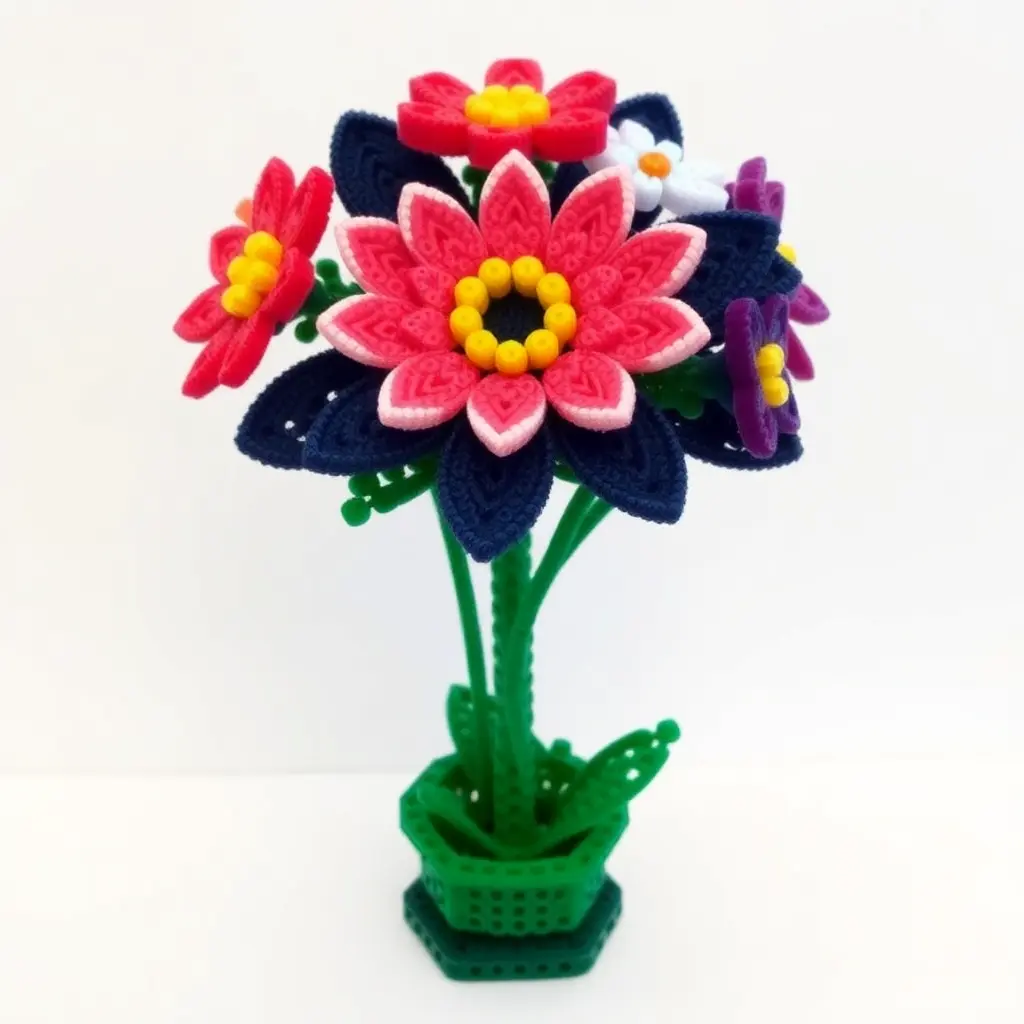
Three-dimensional perler bead flowers represent an advanced crafting technique that produces stunning, sculptural results. Unlike flat patterns ironed on both sides, 3D flowers consist of multiple components assembled into freestanding structures. These impressive creations make remarkable gifts, centerpieces, and decorative pieces that showcase serious crafting skills.
The basic principle behind 3D flowers involves creating separate flower heads, stems, and bases that fit together to form complete standing structures. The flower head typically receives limited ironing, melting beads just enough to hold together while maintaining the center opening. This allows the flower to slide onto a stem base, which is more thoroughly fused for stability.
Creating 3D flowers requires careful attention to ironing times and temperatures. The flower head needs delicate handling, as over-ironing eliminates the center hole necessary for mounting. The base component, usually consisting of concentric circles of green beads, requires full fusing on both sides to provide stable support. Some crafters add wire or pencil stems within the base structure for additional height and stability.
These projects demand more time and patience than flat patterns but reward crafters with truly impressive results. A collection of 3D flowers in a small vase creates a permanent bouquet that never wilts, making it perfect for those who love fresh flowers but lack the time or ability to maintain them. The dimensional quality adds depth and interest that flat designs cannot match, elevating perler bead crafting from simple craft to genuine art form.
8. Miniature Flower Collections
Miniature perler bead flowers prove that impressive results don’t require large designs. These tiny creations, often using fewer than ten beads each, pack remarkable charm into compact forms. Their small size makes them incredibly versatile, serving as embellishments, jewelry components, or collectible items that demonstrate crafting skill despite minimal time investment.

The simplest miniature flower requires only seven beads arranged on a small hexagonal pegboard. Six beads form petals around a single central bead, creating an instantly recognizable flower that takes mere minutes to complete. Despite their simplicity, these tiny flowers look adorable and can be produced in quantity quickly, making them perfect for projects requiring multiple identical pieces.
Miniature flowers excel in applications where full-sized patterns would overwhelm. They work beautifully as decorations on greeting cards, gift wrap, or scrapbook pages. Crafters frequently attach them to hair accessories, creating custom barrettes, headbands, and clips. Multiple miniature flowers can be strung together into necklaces or charm bracelets, providing personalized jewelry with handmade appeal.
Collections of miniature flowers in various colors create satisfying sorting and organizing opportunities. Some crafters make entire sets representing different flower types or color families, displaying them in small containers or shadow boxes. These collections work wonderfully as teaching tools for children learning colors, counting, or pattern recognition. The quick completion time means young crafters experience success rapidly, building confidence for attempting more complex projects.
9. Flower Bracelets and Wearable Designs
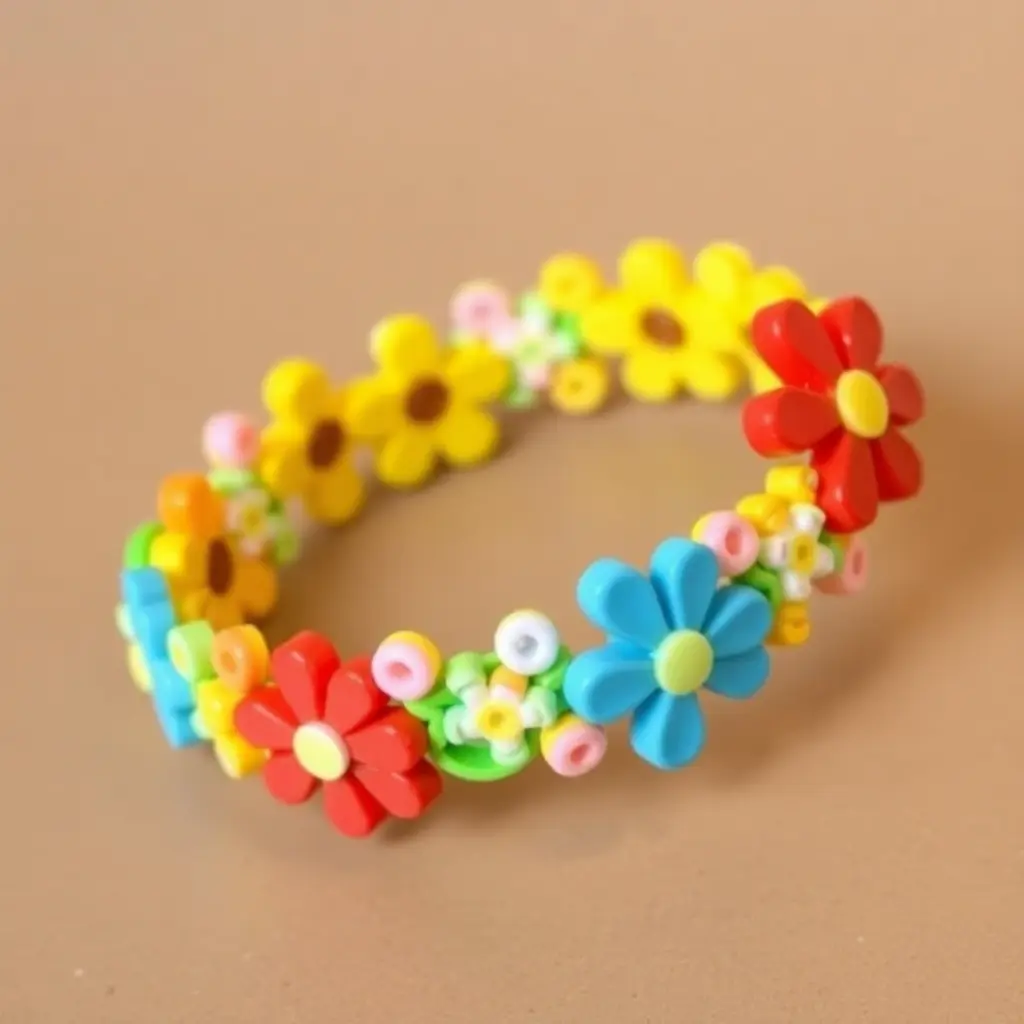
Perler bead flower bracelets transform flat patterns into fashionable wearable art. By creating elongated flower designs that can be gently curved while still warm from ironing, crafters produce unique accessories that combine the satisfaction of crafting with the joy of personal adornment. These bracelets make excellent gifts for friends, teachers, or family members who appreciate handmade items.
Creating a flower bracelet begins with designing a pattern that incorporates multiple small flowers connected in a line or curve. The pattern needs sufficient length to wrap around a wrist comfortably, typically requiring measurements taken beforehand. Flowers might be identical or varied, spaced evenly or clustered, depending on the desired aesthetic. Some designs include leaf or vine elements between flowers for additional visual interest.
The critical step in bracelet creation involves shaping the warm perler bead creation immediately after ironing. The plastic remains slightly flexible for a brief period, allowing gentle bending into curved forms. This must be done carefully to avoid cracking or breaking the fused beads. Some crafters use cylindrical objects like bottles or jars as guides, wrapping the warm piece around them until cool enough to hold its shape.
Finished bracelets can be worn as-is, with the natural oval shape fitting over hands, or enhanced with additional components. Some crafters add elastic cord through the bead holes, creating adjustable sizing. Others incorporate jump rings and clasps for more traditional jewelry closures. Beyond bracelets, similar techniques create headbands, rings, or decorative bands for water bottles and other cylindrical objects.
10. Seasonal Flower Patterns
Seasonal flower patterns allow crafters to celebrate specific times of year through appropriate bloom choices and color palettes. Spring patterns might feature pastel tulips, daffodils, and cherry blossoms, while summer designs showcase bright sunflowers and tropical hibiscus. Fall brings warm-toned mums and asters, and winter holidays inspire poinsettias and amaryllis patterns. This seasonal rotation keeps crafting fresh and provides timely decorations throughout the year.

Spring flower patterns emphasize soft colors and delicate designs that reflect the season’s gentle renewal. Pastel pinks, yellows, lavenders, and blues dominate these patterns, creating pieces that feel fresh and hopeful. Popular spring flowers include tulips, daffodils, hyacinths, and crocuses, all of which translate well into perler bead form. These designs work wonderfully as Easter decorations, Mother’s Day gifts, or general springtime décor.
Summer patterns embrace bold, saturated colors and robust flower forms that withstand the season’s heat and intensity. Bright yellows, hot pinks, vivid oranges, and deep purples create energetic pieces that celebrate summer’s exuberance. Sunflowers dominate summer collections, but roses, daisies, and zinnias also feature prominently. These designs suit outdoor party decorations, picnic accessories, or bringing summer cheer to indoor spaces.
Autumn and winter seasonal patterns adapt flower themes to cooler months. Fall designs incorporate warm rust tones, golden yellows, and deep burgundies, featuring chrysanthemums and autumn asters. Winter holiday patterns often include poinsettias in traditional red and white or modern pink and gold variations. These seasonal adaptations ensure flower patterns remain relevant year-round, providing ongoing crafting inspiration regardless of the calendar.
11. Flower and Vase Combinations
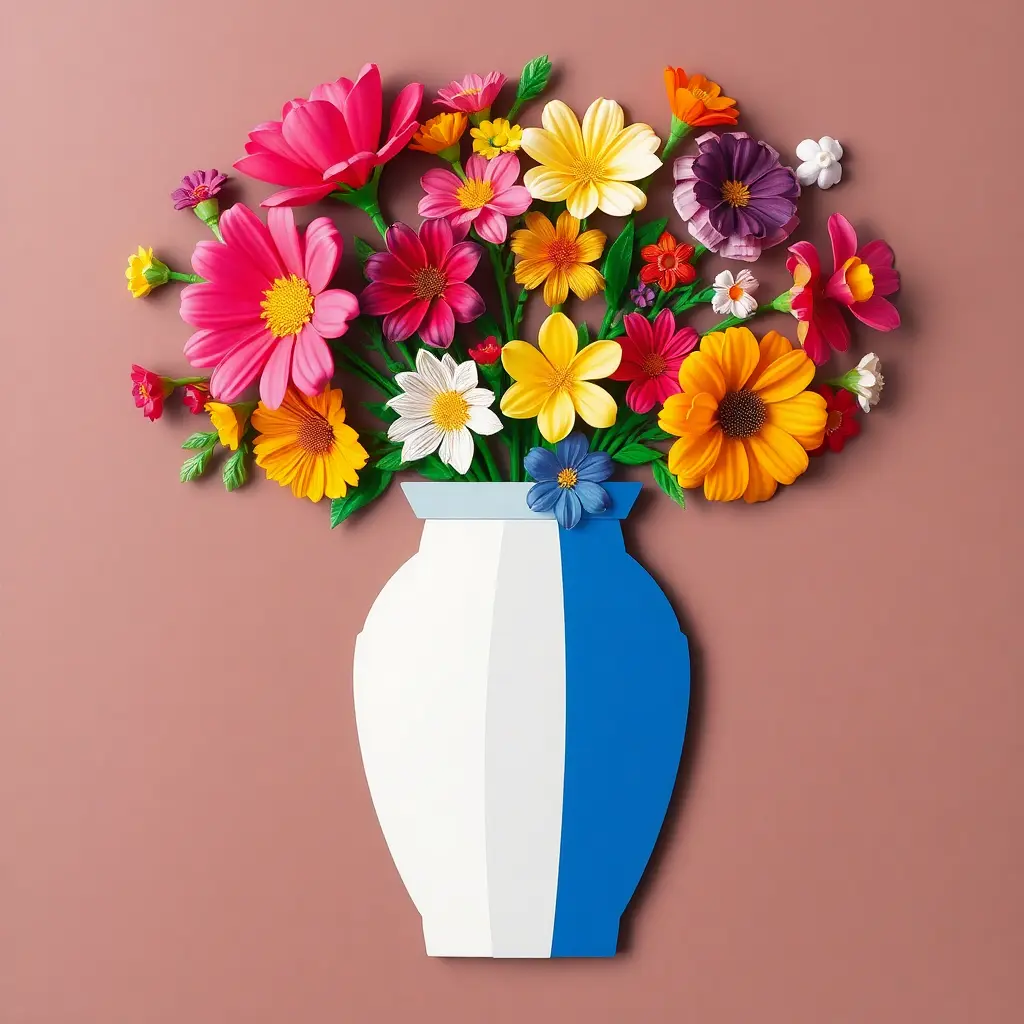
Combined flower and vase patterns create complete decorative compositions that function as standalone art pieces. These designs integrate floral elements with container representations, producing balanced, finished works that require no additional framing or mounting. The vase portion grounds the composition while flowers provide colorful focal interest, resulting in pieces that work beautifully as gifts or personal décor items.
Simple vase patterns might use basic geometric shapes rendered in solid colors, serving as understated platforms for elaborate floral arrangements above. More complex vase designs incorporate patterns, textures, or decorative elements that complement rather than compete with the flowers. Some crafters create recognizable vase styles, from classic urns to modern minimalist containers, adding personality and style to compositions.
The flower portion of these combinations can range from single dramatic blooms to abundant bouquets featuring multiple flower types. Some designs show flowers at various stages, with buds, partially opened blooms, and fully open flowers creating natural variety. Including leaves, stems, and filler elements produces fuller, more realistic arrangements that capture the abundance of fresh flower bouquets.
These combined patterns work exceptionally well on larger pegboards or multiple boards connected together, as they require sufficient space to accommodate both vase and flower elements adequately. The vertical orientation suits display on shelves, mantels, or walls where height creates visual interest. Seasonal variations allow crafters to create sets representing different times of year, swapping displays as seasons change.
12. Garden Scene Compositions
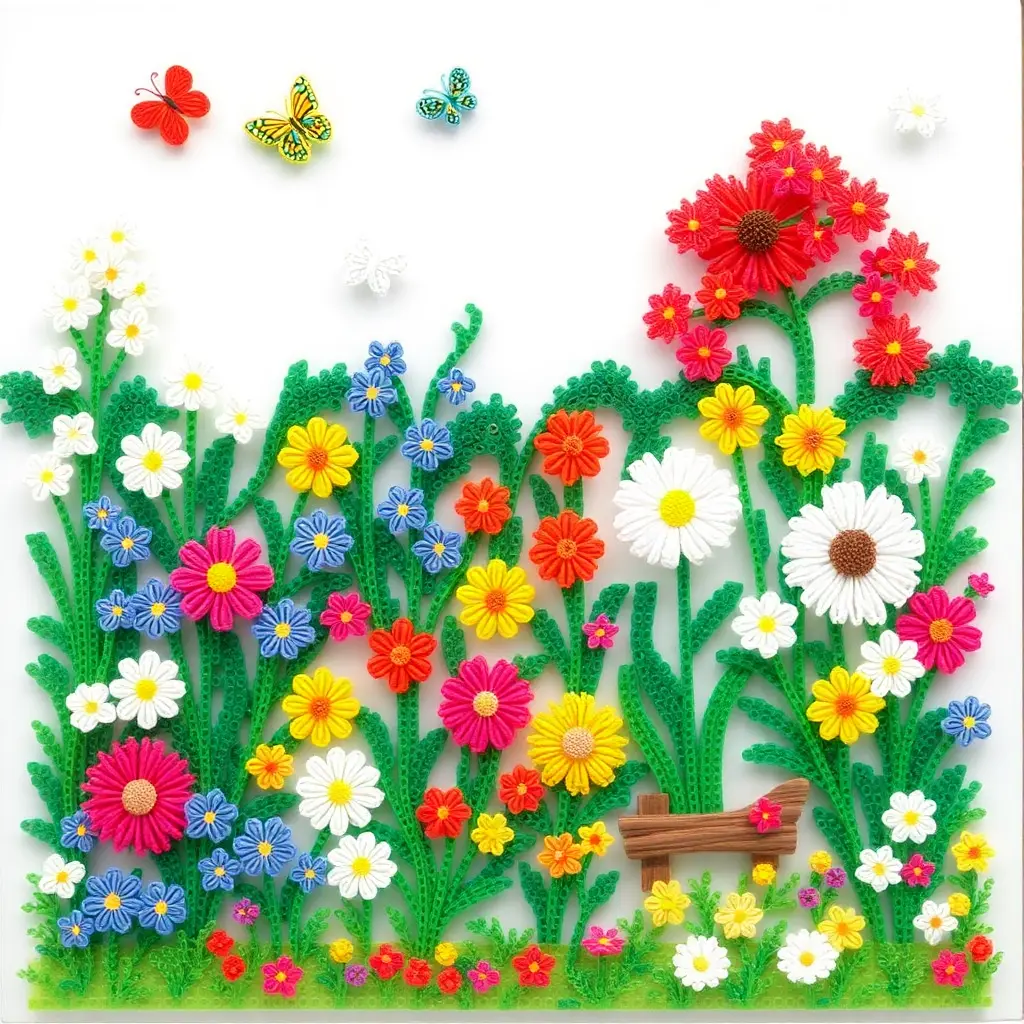
Garden scene patterns expand beyond individual flowers to create entire landscape compositions. These ambitious projects combine multiple flower types with additional elements like butterflies, bees, grass, garden tools, or decorative features, producing complex works that tell visual stories. Garden scenes represent advanced crafting projects that showcase skill development and creative vision.
These compositions typically require large pegboards or multiple boards connected together to provide adequate space for all elements. Planning becomes crucial, as crafters must consider how different components relate spatially and color-wise. Some crafters sketch designs before beginning bead placement, ensuring balanced compositions that flow naturally from element to element.
Garden scenes allow for remarkable creative freedom. Some designs create formal gardens with organized rows and symmetrical plantings, while others embrace cottage garden chaos with flowers scattered naturally throughout. Including wildlife elements like butterflies, birds, or insects adds life and movement to static designs. Garden accessories such as watering cans, seed packets, or small fences provide charming details that enhance the overall narrative.
These comprehensive projects make impressive display pieces suitable for framing and prominent placement. They work wonderfully in craft rooms, gardening sheds, or anywhere celebrating the joy of growing things. The investment of time and beads produces pieces with genuine artistic merit that transcend simple craft projects, becoming treasured handmade art that reflects both skill and passion.
Essential Tips for Success
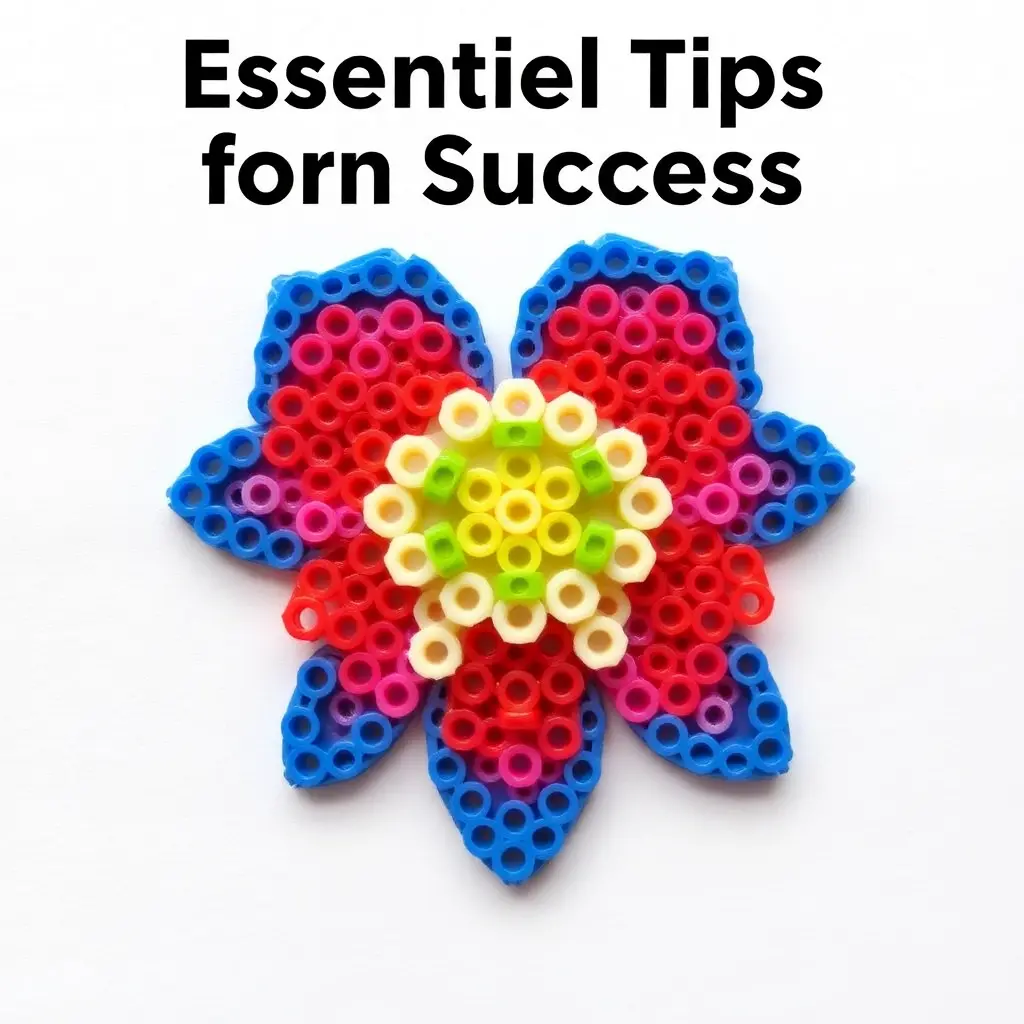
Achieving excellent results with perler bead flower patterns requires attention to several key factors. Temperature control during ironing dramatically affects finished piece quality. Medium heat settings typically work best, with no steam. Too much heat melts beads excessively, causing them to lose their characteristic holes and potentially creating uneven surfaces. Insufficient heat leaves beads improperly fused, resulting in fragile pieces that fall apart easily.
Ironing technique matters as much as temperature. Circular motions distribute heat more evenly than static pressing. Consistent movement prevents hot spots that can over-melt sections while leaving others underfused. Most patterns require approximately fifteen to twenty seconds per side, though checking progress after ten seconds helps prevent over-ironing. The parchment paper should stick slightly to properly melted beads, requiring gentle peeling when cool.
Color selection significantly impacts finished appearance. Using multiple shades of a single color family creates depth and visual interest that single-color designs lack. Many crafters keep color-coordinated bead collections organized by shade families, making it easy to grab appropriate hues when starting new projects. Don’t feel bound by pattern color suggestions, as personal color preferences and available bead supplies should guide choices.
Starting from the pattern center generally produces better results than working from edges inward. This approach ensures proper placement of central elements, with outer areas adapting as needed. For flower patterns, beginning with the bloom center guarantees correct focal positioning, allowing petals to radiate naturally outward. This technique reduces counting errors and makes pattern following more intuitive.
Creative Applications and Project Ideas
Beyond creating standalone decorative pieces, perler bead flowers offer numerous practical and creative applications. Coasters represent one popular functional use, with flower patterns sized appropriately to protect furniture from beverage condensation. Creating matching sets of four to six coasters makes thoughtful housewarming gifts or personal table accessories. The heat resistance of fused perler beads makes them suitable for this purpose, though extremely hot beverages should still use additional protection.
Magnets transform flower patterns into functional refrigerator art. Attaching small adhesive magnets to the backs of completed designs allows them to hold notes, photos, or children’s artwork on metal surfaces. These personalized magnets make excellent small gifts, party favors, or craft fair items. Their compact size means multiple designs can be created quickly, building inventory for selling or gifting occasions.
Jewelry applications extend beyond bracelets to include pendants, earrings, pins, and keychains. Smaller flower patterns work beautifully as jewelry components, with jump rings, clasps, and chains converting perler bead creations into wearable accessories. These items appeal particularly to younger audiences who appreciate handmade, unique accessories that express personal style.
Seasonal decorations benefit from perler bead flower additions. Spring wreaths adorned with perler daisies and tulips, summer centerpieces featuring sunflowers, or holiday arrangements incorporating poinsettias all utilize flower patterns in larger decorative contexts. These applications demonstrate how perler bead crafts integrate with traditional decorating, bridging craft and interior design realms.
Conclusion
Perler bead flower patterns offer endless opportunities for creative expression, skill development, and simple enjoyment. From the simplest seven-bead daisy to complex garden scenes incorporating dozens of elements, these designs accommodate every skill level and interest. The accessible nature of the craft, combined with relatively low cost and minimal supplies, makes perler bead flowers an ideal hobby for individuals and families seeking screen-free activities that produce tangible results.
The versatility of flower patterns ensures they never become boring. Seasonal variations, different flower types, color experiments, and diverse applications provide constant opportunities for exploration and growth. Beginners gain confidence through quick, successful projects before advancing to more challenging designs. Experienced crafters continue finding new techniques and ideas that push creative boundaries and showcase developing skills.
Whether you craft for relaxation, gift-giving, decoration, or artistic expression, perler bead flower patterns deliver satisfaction and beauty. The meditative quality of placing individual beads, the anticipation during ironing, and the joy of revealing finished pieces create rewarding experiences that extend beyond the final products themselves. These charming creations brighten spaces, delight recipients, and provide crafters with a fulfilling creative outlet that celebrates both nature’s beauty and human ingenuity.
Start with simple patterns that build confidence, experiment with color combinations that reflect personal taste, and gradually attempt more ambitious designs as skills develop. The journey from first hesitant bead placement to confidently creating complex compositions offers growth, learning, and countless charming flowers along the way.
Frequently Asked Questions
What is the best pegboard size for flower patterns?
Hexagonal pegboards in small to medium sizes work exceptionally well for most flower patterns. The hexagon shape naturally accommodates the radial petal arrangements common in flowers. Small square pegboards suffice for simple designs, while larger projects requiring multiple flowers or added elements benefit from large square boards or connecting multiple boards together. Round pegboards excel for designs emphasizing circular symmetry.
How long does it take to complete a perler bead flower?
Completion time varies dramatically based on pattern complexity and crafter experience. Simple miniature flowers requiring seven beads can be finished in under five minutes, while elaborate multi-colored roses or garden scenes might demand several hours. Average single-flower patterns typically take fifteen to thirty minutes for bead placement, plus several minutes for ironing and cooling. Creating multiple identical pieces speeds up as familiarity with the pattern increases.
Can I use regular printer paper instead of parchment paper for ironing?
Regular printer paper should not substitute for parchment paper when ironing perler beads. Standard paper lacks the non-stick properties essential for this application and will stick permanently to melted plastic, ruining both the paper and your project. Parchment paper or specialized ironing paper designed for perler beads provides the necessary heat resistance and non-stick surface. In emergencies, wax paper can work, though it is less ideal than proper parchment paper.
What should I do if my flower pattern breaks after ironing?
Minor breaks in perler bead creations can often be repaired by carefully reheating the affected area. Place the broken piece back on the pegboard with the break aligned, cover with parchment paper, and apply gentle heat until beads re-fuse. For significant breaks, consider the piece a learning experience and start fresh, applying lessons about proper ironing time and temperature. Ensure future projects receive adequate ironing on both sides for maximum strength.
Are perler bead flowers safe for young children to make?
Perler beads are officially recommended for ages six and up due to small part choking hazards for younger children. The bead placement activity itself suits children in this age range perfectly, developing fine motor skills and pattern recognition. However, the ironing step requires adult supervision and handling, as hot irons pose burn risks. Younger children can participate in design and placement with appropriate supervision, while adults manage the heating process to ensure safety.