12+ Inspiring Fern Terrarium Ideas to Try
Creating a fern terrarium transforms any living space into a miniature ecosystem that brings the tranquility of nature indoors. These self-contained gardens showcase the delicate beauty of ferns while requiring minimal maintenance, making them perfect for both experienced plant enthusiasts and those just beginning their indoor gardening journey. Whether you envision a lush woodland scene or a sleek modern display, fern terrariums offer endless possibilities for creative expression.
Ferns have been terrarium favorites since the Victorian era, and for good reason. Their natural preference for humid environments makes them ideally suited to the enclosed conditions that terrariums provide. Unlike many houseplants that struggle with inconsistent watering or dry indoor air, ferns thrive in the moist, stable atmosphere created within glass containers. The variety of textures, colors, and growth patterns available among fern species means you can design anything from a dramatic tropical display to a subtle, minimalist arrangement.
The appeal of fern terrariums extends beyond their aesthetic value. These living displays purify indoor air, create focal points in room design, and offer a meditative hobby that connects us with the natural world. Each terrarium becomes a unique piece of living art, evolving and growing over time while maintaining its essential character. The process of selecting plants, arranging elements, and watching your creation flourish provides satisfaction that few decorative items can match.
Classic Woodland Fern Terrarium
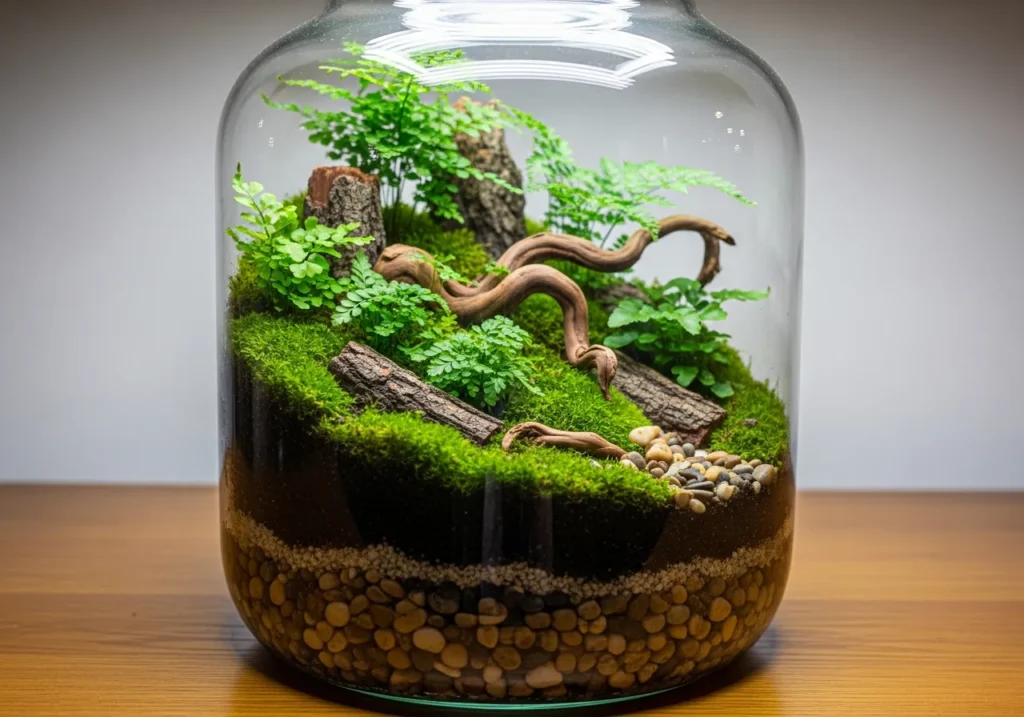
The woodland terrarium captures the essence of a forest floor in miniature form. This design emphasizes natural materials and a wild, untamed aesthetic that brings the outdoors inside. Start with a medium to large glass container that provides ample room for vertical growth and air circulation.
Layer the bottom with river rocks for drainage, followed by activated charcoal to prevent fungal growth and maintain freshness. Use a substrate mix rich in organic matter, combining coco coir, earthworm castings, and orchid bark to create the perfect balance of moisture retention and aeration. This foundation supports healthy root development while preventing waterlogging.
For plant selection, combine several fern varieties to create textural interest. Blue Star Ferns provide dramatic, structured fronds that serve as focal points, while Fluffy Ruffles Ferns add softness and movement. Incorporate mood moss throughout to create the windswept appearance of a natural forest floor. Add pieces of weathered bark, small stones, or driftwood to enhance the wilderness aesthetic and provide natural climbing surfaces for spreading varieties.
The key to success with woodland terrariums lies in replicating the layered complexity found in nature. Position taller ferns toward the back or center, with lower-growing species cascading forward. Leave some substrate visible between plants rather than filling every space, as this creates a more naturalistic appearance and allows room for growth.To see more terrarium woodlan ideas do visit Terrarium Tribe.
Miniature Button Fern Display
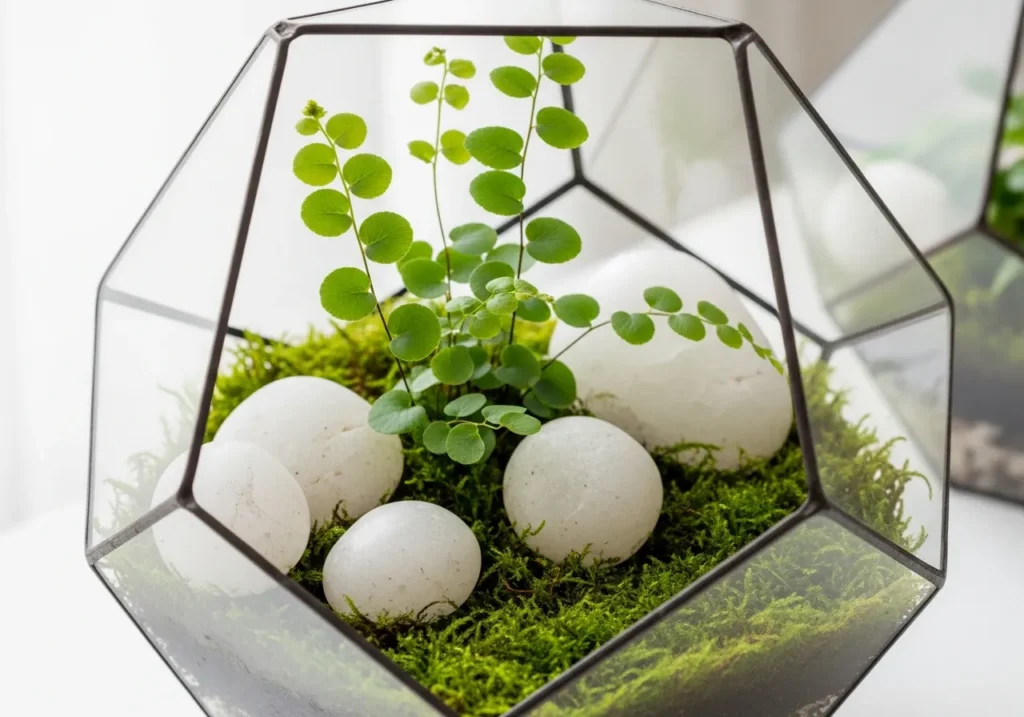
Button ferns represent the perfect choice for compact terrarium designs. These diminutive plants feature small, round leaflets that create a refined, almost architectural appearance. Their slow growth rate and naturally petite size make them ideal for small containers or terrariums where space is limited.
A button fern terrarium works beautifully in a vintage apothecary jar, fishbowl, or geometric glass container. The clean lines of button fern fronds complement modern design aesthetics while maintaining the organic quality essential to successful terrarium displays. These ferns rarely exceed twelve inches in height, ensuring your terrarium maintains its intended scale for years. To see some fishbowl Terrarium ideas do visit Homeliaa.
Create visual interest by combining button ferns with contrasting textures. Sheet moss provides a soft counterpoint to the structured fern fronds, while small pieces of white quartz or river stones add mineral accents. Consider placing a single interesting piece of driftwood or a small ceramic element to serve as a focal point without overwhelming the delicate ferns.
Button ferns tolerate lower light conditions better than many fern varieties, making them suitable for offices, bathrooms, or rooms without abundant natural light. This adaptability expands placement options and ensures your terrarium thrives in various indoor environments.
Hanging Maidenhair Fern Terrarium
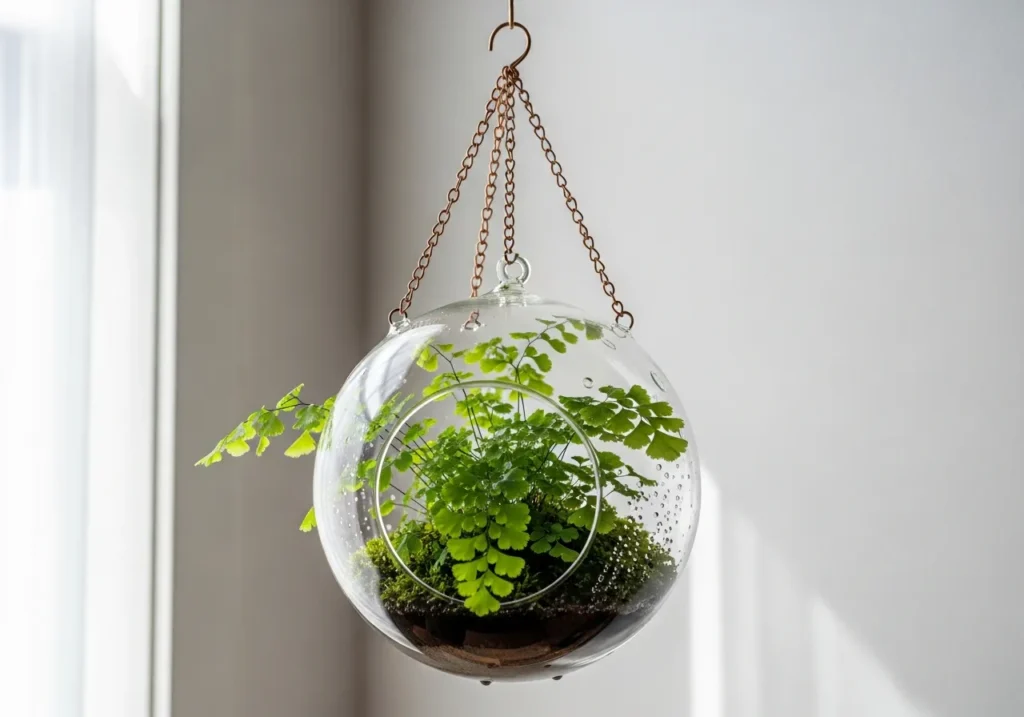
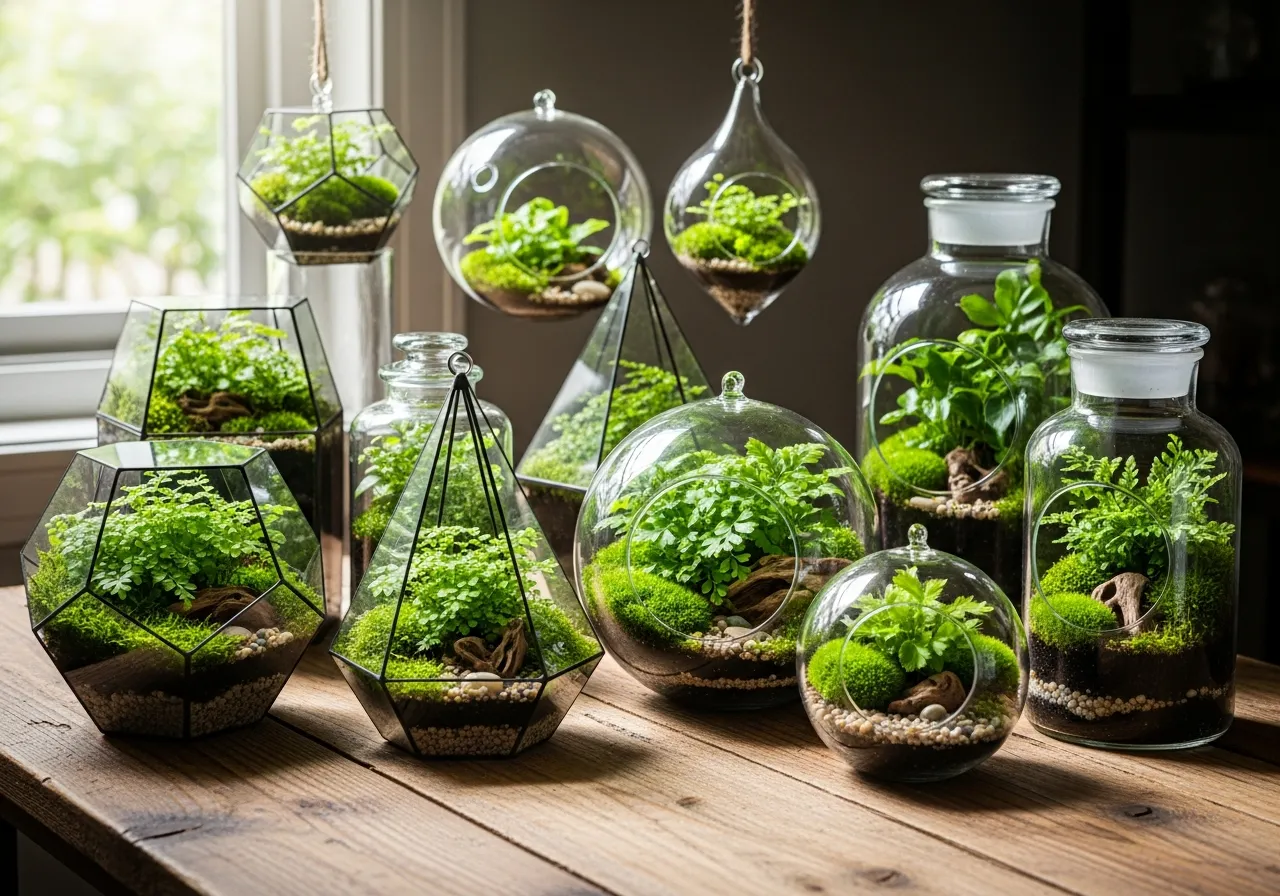
Maidenhair ferns bring exceptional delicacy and grace to terrarium designs, though they require attentive care. Their lacy, fan-shaped fronds create an almost ethereal quality when displayed in hanging glass globes or suspended containers. The cascading growth habit of maidenhair ferns makes them particularly striking in elevated positions where their fronds can be viewed from multiple angles.
Select a hanging terrarium with a wide opening to facilitate planting and maintenance, as maidenhair ferns can be sensitive to disturbance. Use a moisture-retentive substrate mix and maintain consistent humidity levels, as these ferns react poorly to drying out. The enclosed environment of a terrarium actually makes maidenhair ferns easier to grow than in typical indoor conditions, where low humidity often proves challenging.
Pair maidenhair ferns with companion plants that share similar moisture requirements. Small varieties of creeping fig or variegated ficus can provide textural contrast while maintaining the delicate aesthetic. Limit decorative elements to small, natural materials that enhance rather than compete with the fern’s refined appearance.
Position hanging maidenhair fern terrariums in areas with bright, indirect light. Near north-facing windows or in bathrooms with good natural light, these terrariums create living sculptures that bring movement and life to empty vertical spaces.
Tropical Rainforest Terrarium
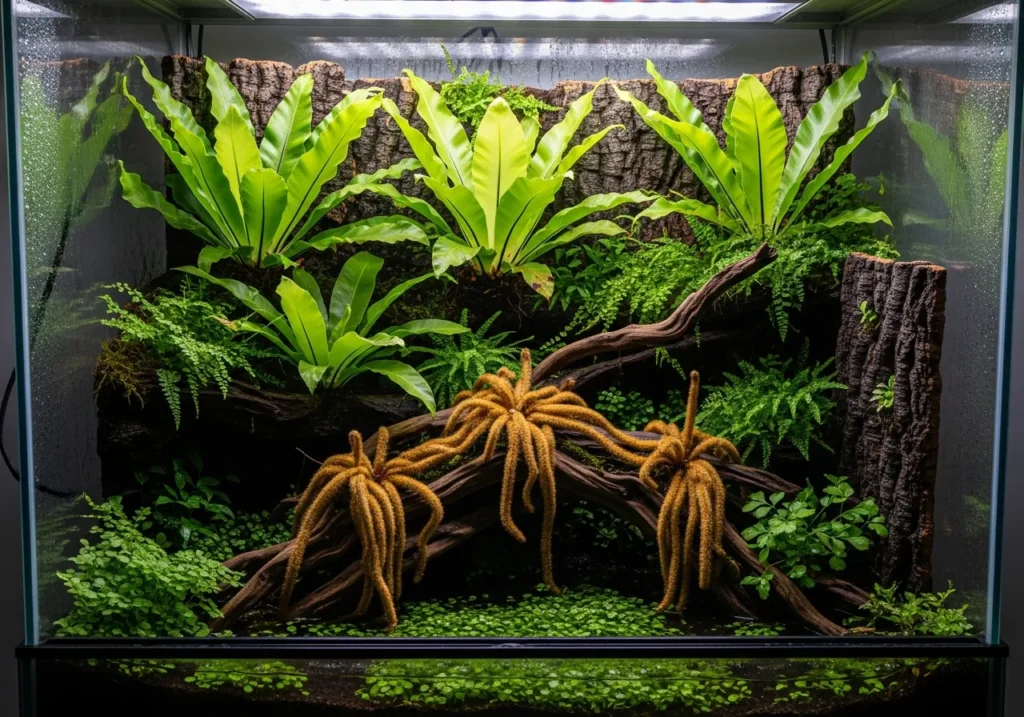
A tropical rainforest terrarium celebrates lush abundance and dramatic foliage. This design style accommodates larger fern varieties and creates a dense, jungle-like atmosphere within the container. Choose a spacious glass vessel, such as a large jar, aquarium, or custom-built case that provides room for multiple plant layers.
Combine different fern species with varying heights and textures to replicate rainforest structure. Bird’s Nest Ferns provide bold, architectural presence with their glossy, strap-like fronds forming a central rosette. Though larger specimens may eventually outgrow smaller containers, young plants offer months or years of growth before requiring division or relocation.
Include epiphytic ferns that naturally grow on trees in their native habitats. Rabbit’s Foot Ferns, with their distinctive fuzzy rhizomes, can be mounted on pieces of cork bark or driftwood, creating vertical interest and showcasing their unique growth pattern. These rhizomes crawl across surfaces, producing new fronds as they spread, adding dynamic movement to the display.
Layer the substrate with varied elevations, creating hills and valleys that add depth and visual interest. Incorporate larger decorative elements like substantial pieces of driftwood, interesting rocks, or even small water features if working with a particularly large container. The tropical style embraces complexity and density, allowing you to experiment with abundant plantings and elaborate compositions.
Minimalist Single-Species Terrarium
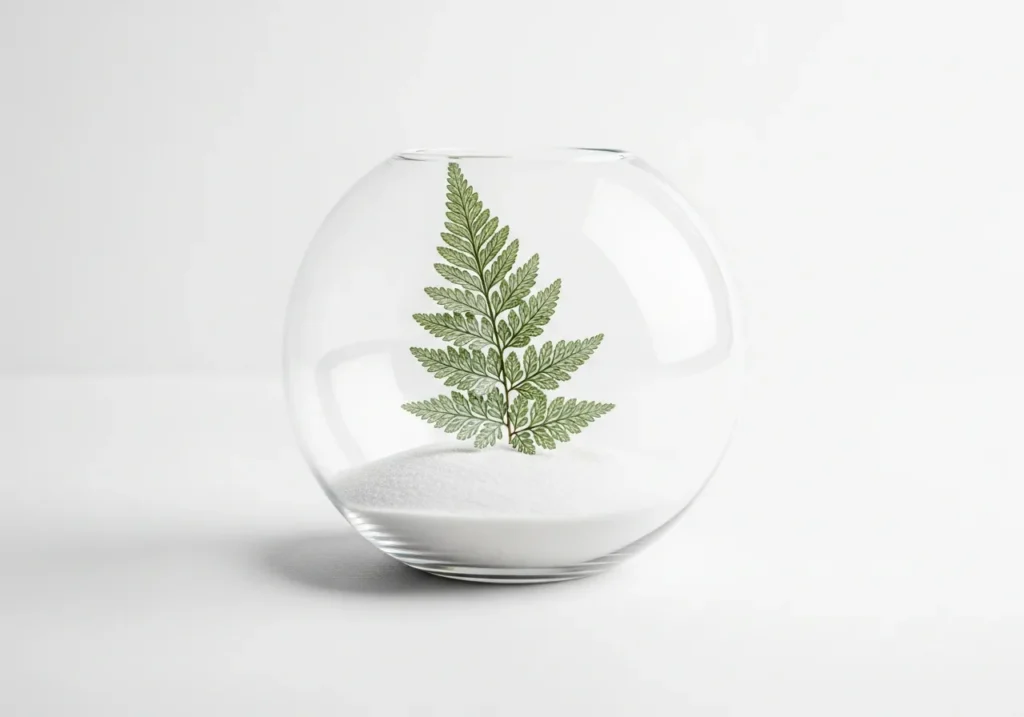
Sometimes simplicity creates the strongest impact. A minimalist terrarium featuring a single fern species against clean, uncluttered backgrounds emphasizes the plant’s inherent beauty without distraction. This approach works particularly well with ferns that possess distinctive forms or unusual characteristics.
Silver Lace Ferns, with their delicate, silvery foliage, make stunning solo subjects. Their lacy appearance and compact growth suit minimal presentations where every frond receives attention. Place the fern slightly off-center in a clear glass sphere or geometric container, surrounded by a simple layer of fine gravel or white sand that creates negative space and highlights the plant’s form.
The minimalist approach extends to substrate presentation. Rather than creating complex layering visible through the glass, use a single uniform substrate layer topped with a thin covering of decorative sand or fine gravel. This clean presentation focuses attention on the fern itself while simplifying maintenance and care.
Minimalist terrariums suit contemporary interiors and spaces where design cohesion requires restraint. They offer the benefits of living plants without visual clutter, making them appropriate for professional environments, modern homes, or any setting where understated elegance is valued.
Cottage Garden Fern and Moss Composition
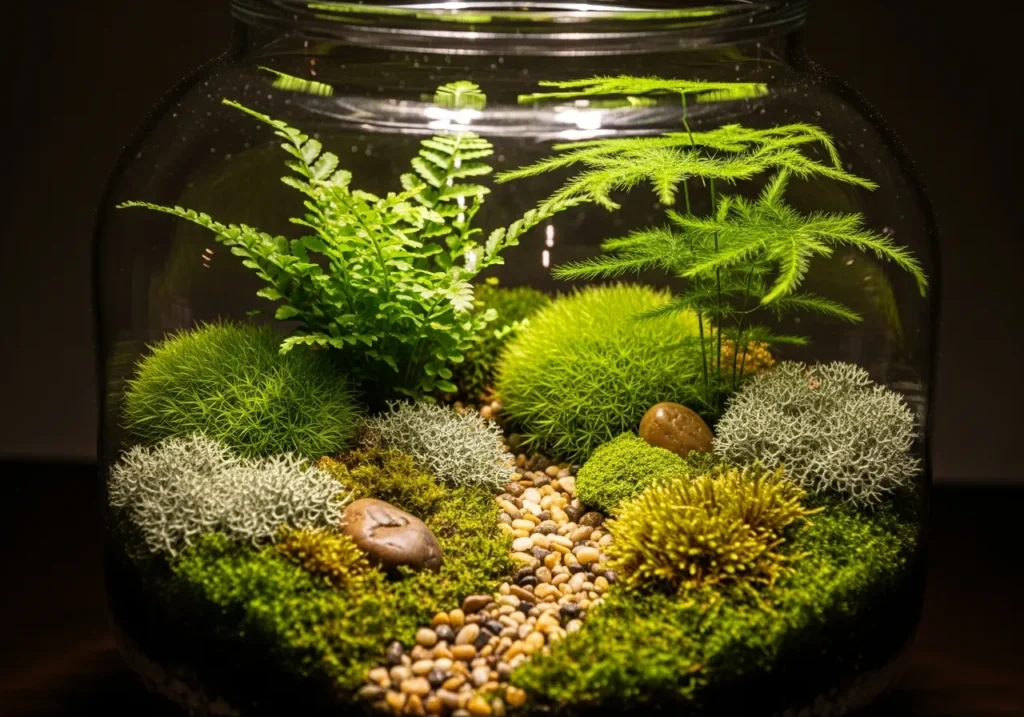
The cottage garden aesthetic brings informal charm and romantic appeal to fern terrariums. This style emphasizes soft textures, gentle colors, and a sense of organic abundance without the density of tropical designs. The result feels curated yet natural, like discovering a perfect corner of an overgrown garden.
Choose ferns with soft, frilly fronds such as Boston Ferns or Asparagus Ferns. While not true ferns, Asparagus Ferns blend beautifully with authentic fern species and share similar care requirements. Their feathery foliage adds textural variety and fills spaces with graceful, arching growth.
Incorporate multiple moss varieties to create a tapestry effect across the substrate surface. Cushion moss provides soft mounds, while mood moss adds height variation and a wispy quality. Allow moss to grow naturally between and around ferns, creating the impression of an established garden where plants have found their own balance.
Add delicate touches like small pebble pathways, tiny ceramic houses, or miniature garden accessories if desired. The cottage style welcomes whimsical elements that tell a story and create personality, though these should enhance rather than overwhelm the living elements.
Desert Oasis Fern Combination
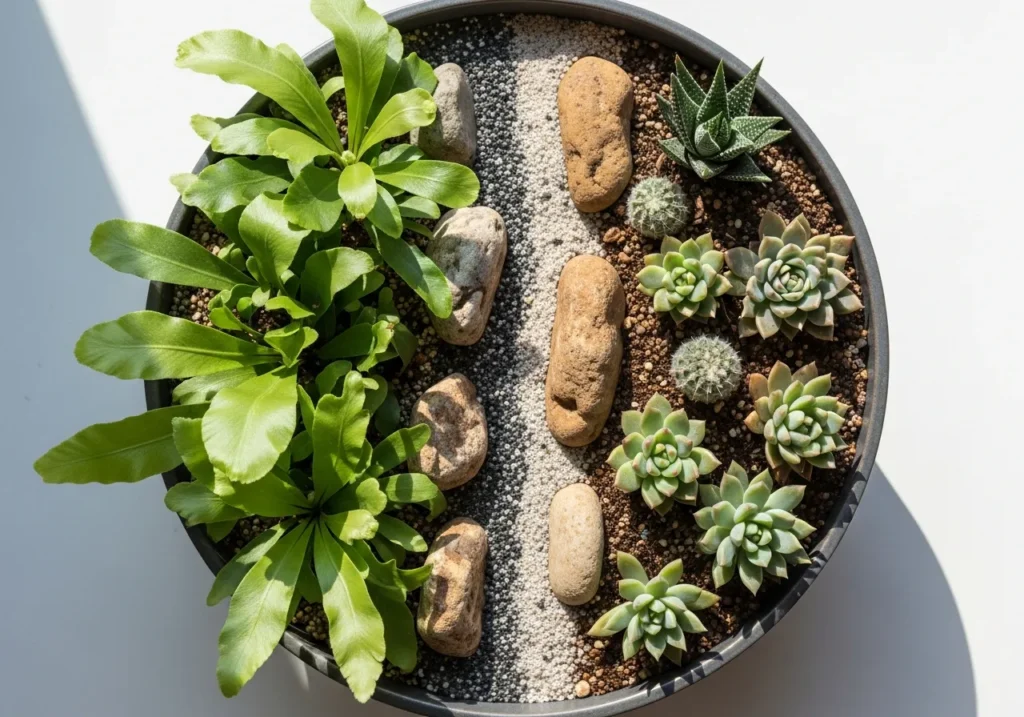
While ferns are typically associated with moisture and shade, certain species adapt to drier conditions and can coexist with drought-tolerant plants in open terrariums. This unexpected combination creates striking contrasts and expands the creative possibilities for terrarium design.
Silver Ribbon Ferns tolerate drier conditions better than most fern varieties, making them suitable for open terrariums with reduced humidity. Pair these with small succulents or air plants, creating a composition that bridges multiple plant families and growing conditions. The key is selecting ferns that won’t suffer from the increased air circulation and lower moisture levels present in open containers.
Use a well-draining substrate mix appropriate for both fern and succulent requirements. Layer the bottom with substantial drainage material, as open terrariums require careful water management to prevent root rot without the benefit of a sealed environment’s humidity retention. Top the substrate with decorative gravel or sand that complements both plant types.
This design works well in shallow, wide containers that showcase the horizontal spread of the composition. Position drought-tolerant ferns near one edge, with succulents or cacti on the opposite side, and use stones or driftwood to create natural divisions between the different plant zones.
Vintage Container Fern Garden
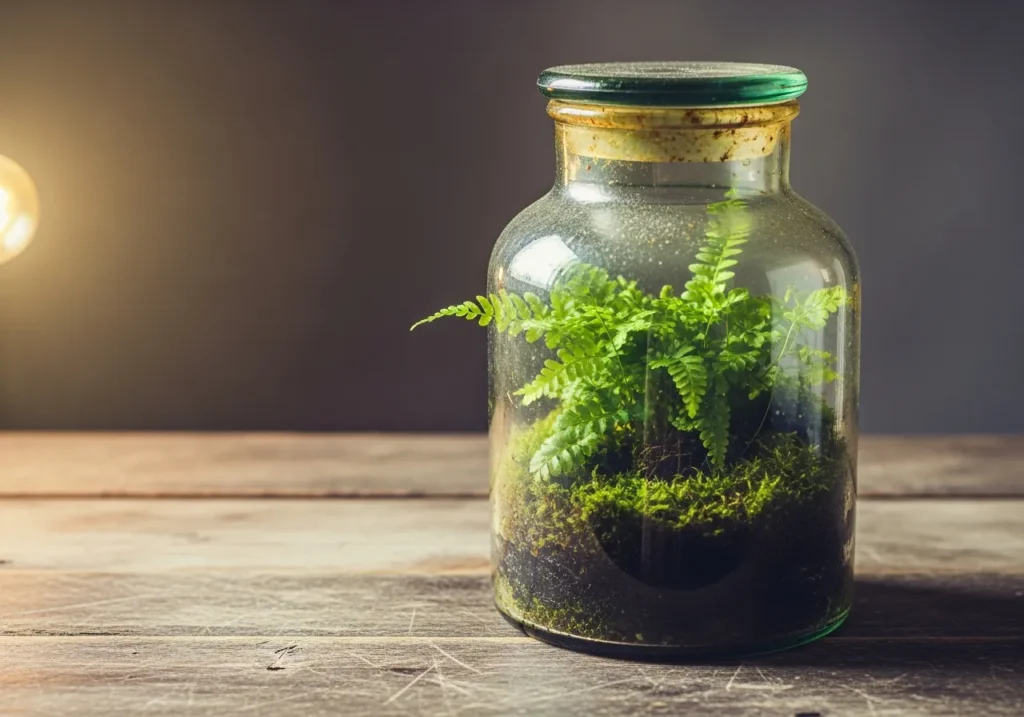
Repurposing vintage containers for fern terrariums adds character and sustainability to your indoor garden. Antique glass vessels, old apothecary jars, vintage milk bottles, or even teacups can become unique terrarium homes that blend nostalgia with natural beauty.
The irregular shapes and varied sizes of vintage containers create distinctive displays that mass-produced terrarium vessels cannot match. A narrow-necked bottle challenges your planting skills while creating an intriguing conversation piece. Wide-mouthed cookie jars provide ample space for elaborate compositions while maintaining vintage appeal.
Scale your fern selection to match container dimensions. Small varieties like Lemon Button Ferns work perfectly in compact vintage vessels, while larger jars accommodate fuller displays with multiple plant species. The patina and character of aged glass complements the timeless quality of ferns, creating displays that feel simultaneously old and new.
When working with vintage containers, ensure they are thoroughly cleaned and check for cracks or weak points that might compromise the terrarium’s integrity. Some vintage glass may have slight discoloration or imperfections that add to the aesthetic appeal while functioning perfectly for terrarium use.
Geometric Glass Terrarium Showcase
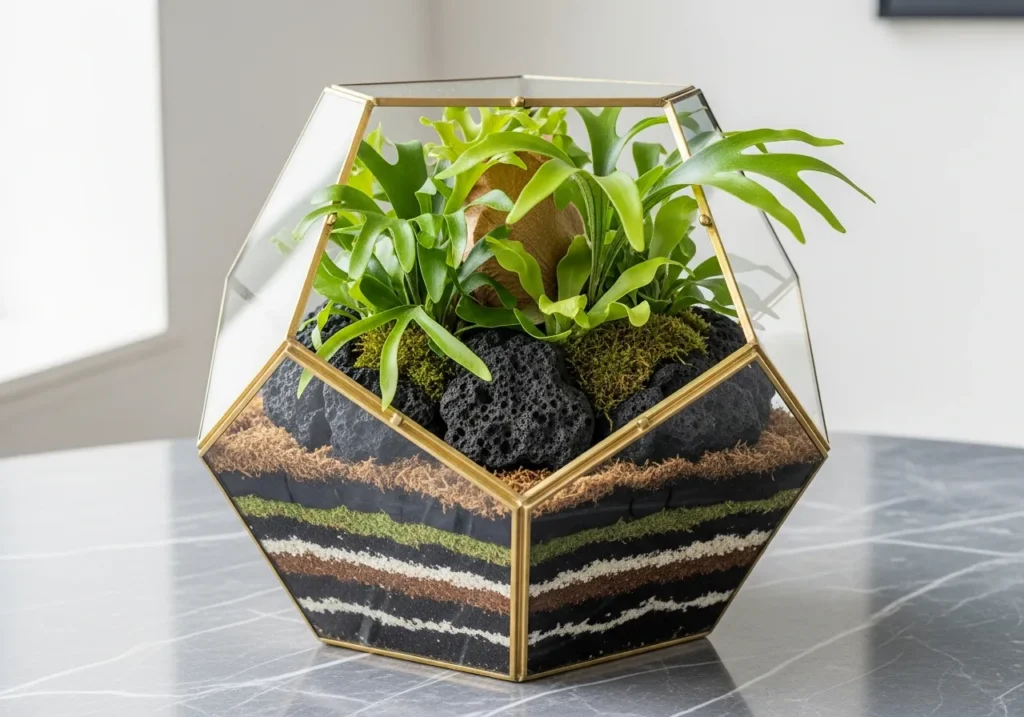
Modern geometric terrariums feature clean lines, angular shapes, and architectural presence that suits contemporary interiors. These metal-framed glass containers come in various forms, from simple pyramids to complex dodecahedrons, creating sculptural displays that function as both planters and decorative objects.
The defined structure of geometric terrariums benefits from deliberate plant placement that respects the container’s architecture. Position ferns to interact with the frame lines, using them as visual guides for composition. A single dramatic fern frond extending toward a corner creates tension and movement, while clustered low-growing ferns emphasize the container’s base geometry.
Pair geometric containers with ferns that possess strong structural qualities themselves. The rigid, upright fronds of Bird’s Nest Ferns echo the angular lines of modern terrarium frames, creating visual harmony between plant and container. Alternatively, use soft, flowing ferns like maidenhair varieties to create deliberate contrast against the rigid geometry.
Keep substrate layers visible through the glass sides, as the geometric style celebrates transparency and the terrarium’s construction. Use materials with clean color palettes, such as black volcanic rock, white sand, or uniform pebbles that complement the minimalist aesthetic without introducing visual chaos.
Terrarium Garden with Water Feature
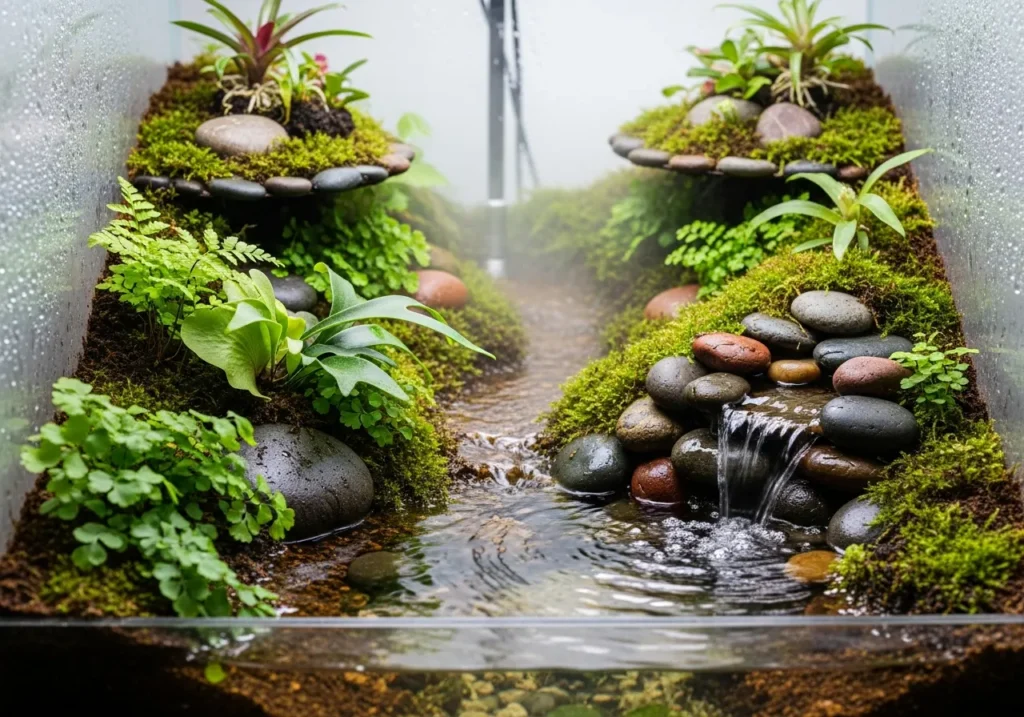
Adding a water element to larger fern terrariums creates movement, sound, and increased humidity that benefits moisture-loving fern varieties. This advanced terrarium design requires more substantial containers and careful construction but rewards the effort with a truly living ecosystem.
Create a small pool or stream using waterproof materials integrated into the terrarium landscape. Position water-loving ferns like Silver Lace or certain maidenhair varieties near the water feature where they benefit from elevated humidity and occasional splashing. Use a small recirculating pump to maintain water movement, preventing stagnation while creating the soothing sound of flowing water.
The substrate near water features requires extra drainage to prevent waterlogging. Create elevated planting areas using rocks or terracing, allowing water to collect in designated pools without saturating the entire soil volume. This approach mimics natural streamside environments where ferns thrive on banks above water level.
Water feature terrariums demand more maintenance than standard designs, requiring regular water level monitoring, pump cleaning, and potential algae management. However, the resulting display creates an authentic ecosystem that supports diverse plant life and provides exceptional visual and auditory appeal.
Wall-Mounted Fern Terrarium Display
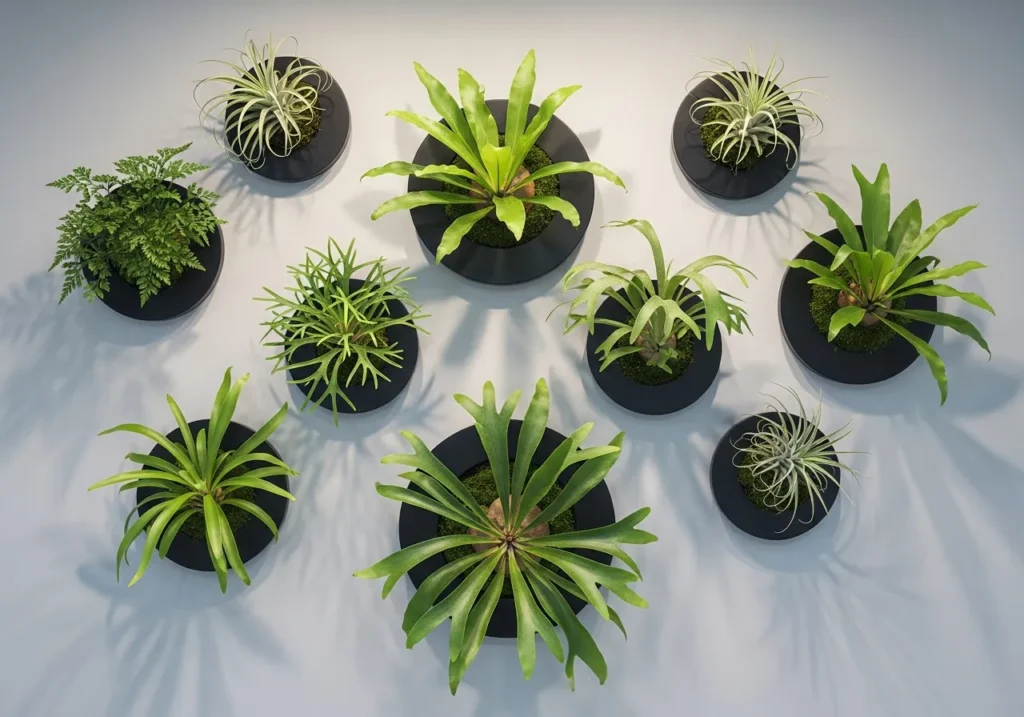
Vertical terrarium displays transform unused wall space into living art. Wall-mounted terrariums range from single frames to elaborate multi-panel arrangements that create green walls on a manageable scale. This approach suits small living spaces where floor and surface area is limited but vertical space remains available.
Select shallow terrarium containers designed for wall mounting, ensuring they include secure hanging mechanisms that support the weight of soil, plants, and water. Epiphytic ferns work particularly well in vertical orientations, as their natural growth habit involves attaching to vertical surfaces like tree trunks.
Plant selection for wall terrariums should emphasize varieties that maintain attractive appearance when viewed straight-on. Avoid ferns with strongly upright or downward-cascading habits that look awkward from a frontal perspective. Instead, choose species with fronds that fan outward from the center, creating full, circular growth patterns visible from the front.
Consider creating a gallery wall of multiple small terrariums rather than one large installation. This approach allows for plant variety, makes individual maintenance easier, and creates visual interest through repetition and variation. Arrange terrariums in geometric patterns or organic clusters depending on your aesthetic preference.
Educational Ecosystem Terrarium
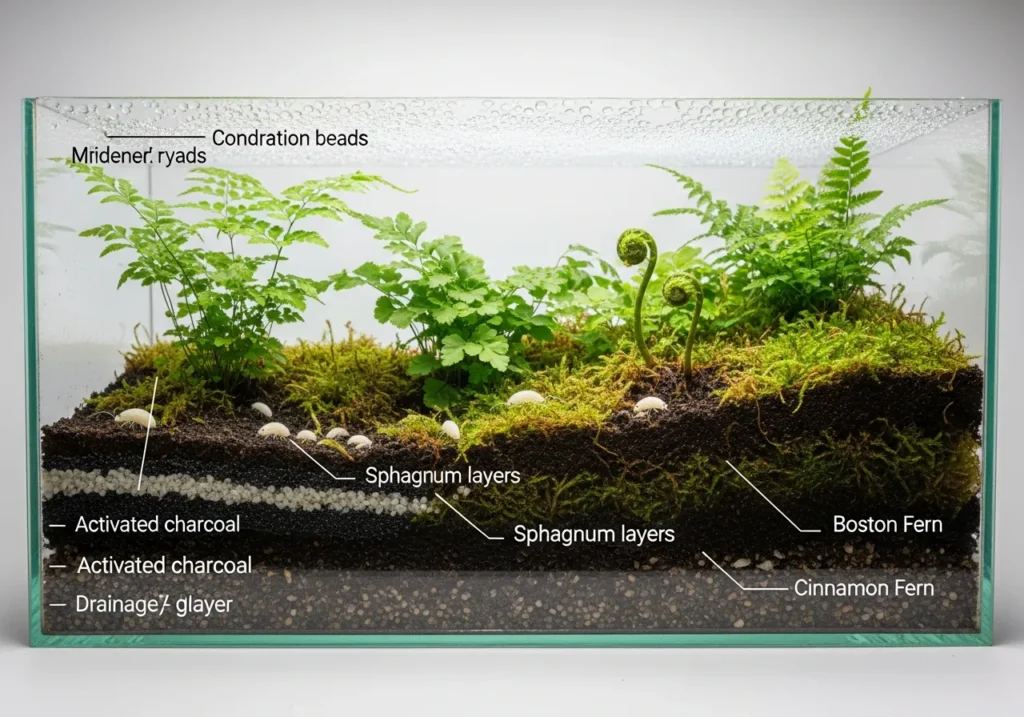
An educational terrarium serves dual purposes as both attractive display and learning tool, making it ideal for families, classrooms, or anyone interested in understanding ecosystem dynamics. This design emphasizes visibility of terrarium layers and processes while creating an environment where observation reveals how closed systems function.
Use a clear container where all substrate layers remain visible, creating cross-sectional views of the terrarium’s foundation. Label different layers if desired, or maintain a journal documenting changes, growth patterns, and maintenance activities. Include different fern species with varied growth rates to illustrate how plants compete for resources and light.
Introduce beneficial organisms like springtails or isopods that help maintain terrarium health by consuming decaying plant matter and preventing mold. These tiny creatures demonstrate decomposition cycles and nutrient recycling in action, teaching ecological principles while performing practical maintenance functions.
Monitor and document the water cycle within your terrarium, noting how condensation forms, runs down container sides, and returns to the substrate. This visible demonstration of evaporation, condensation, and precipitation illustrates fundamental natural processes in miniature, making abstract concepts tangible and observable.
Seasonal Fern Terrarium Transitions
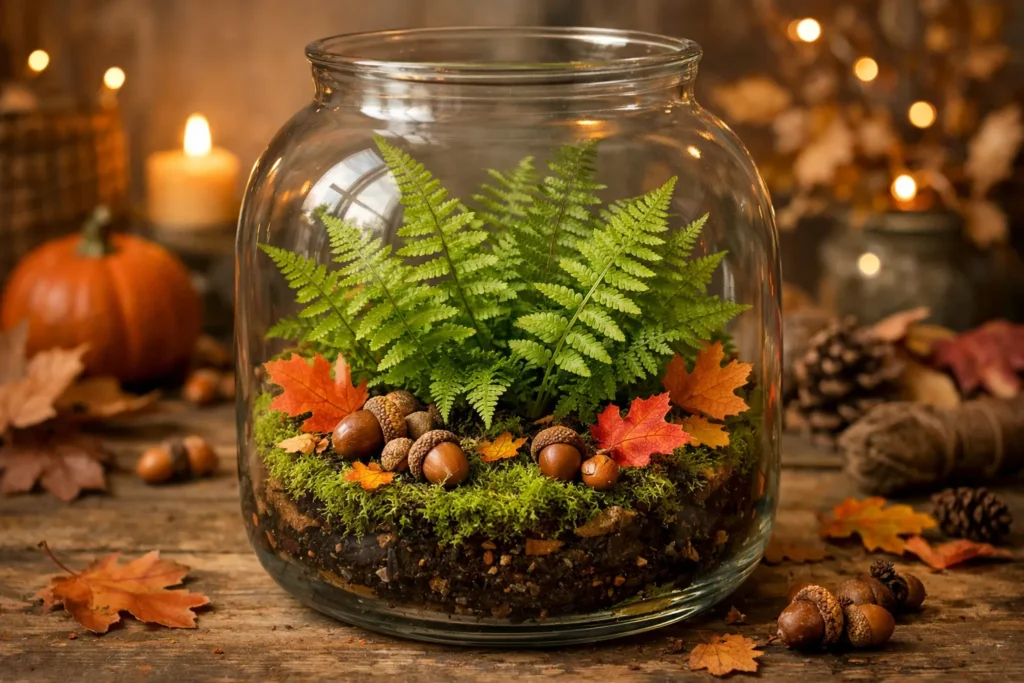
While ferns remain green year-round, terrariums can incorporate seasonal elements that celebrate changing times without disrupting the core plant display. This approach keeps your terrarium feeling fresh and relevant throughout the year while maintaining the stable growing conditions ferns require.
During autumn, introduce preserved leaves, small acorns, or miniature pumpkins as temporary decorative accents around your ferns. These elements add seasonal color without interfering with plant health and can be easily removed when the season changes. Winter displays might include tiny pinecones, white pebbles suggesting snow, or small evergreen sprigs tucked between fern fronds.
Spring and summer offer opportunities to highlight your ferns’ growth by temporarily adding fresh flowers in small water tubes hidden within the substrate. Choose blooms that complement your fern varieties’ green tones without overwhelming them. This technique adds temporary color while keeping the permanent planting focused on sustainable, long-term species.
Seasonal transitions should remain subtle, enhancing rather than transforming your terrarium. The ferns themselves provide continuity and stability, while accessories and accents mark time’s passage and keep the display engaging throughout the year.
Conclusion
Fern terrariums offer remarkable versatility for indoor gardening enthusiasts at every skill level. From simple single-species displays to complex ecosystem designs, these miniature gardens bring natural beauty into our homes while requiring less maintenance than traditional houseplants. The self-regulating humidity and stable conditions within terrarium environments create ideal growing situations for ferns, plants that might otherwise struggle in typical indoor settings.
The creative possibilities within fern terrarium design are nearly limitless. Whether your style tends toward minimalist modern aesthetics, romantic cottage garden abundance, or educational ecosystem demonstration, ferns adapt to your vision while maintaining their essential grace and beauty. Each terrarium becomes a unique expression of personal taste and a living artwork that evolves over time.
Success with fern terrariums comes from understanding basic principles: appropriate container selection, proper layering for drainage and nutrition, choosing fern varieties suited to your container size and light conditions, and maintaining appropriate moisture levels without overwatering. These fundamentals remain consistent across design styles, providing a foundation for experimentation and creativity.
As you develop your terrarium skills, you will discover preferred fern species, container types, and design approaches that resonate with your aesthetic sensibilities and fit your lifestyle. The forgiving nature of terrarium environments means even beginners can achieve beautiful results while learning through experience. Start with a simple design using readily available materials and ferns, then expand your collection as confidence and knowledge grow.
Fern terrariums reconnect us with nature in meaningful ways, creating small pockets of wilderness within our living spaces. They offer opportunities for creativity, learning, and the simple pleasure of nurturing living things. Whether displayed alone as focal points or grouped in collections, these miniature gardens enrich our indoor environments and remind us of the beauty and resilience of the natural world.
Frequently Asked Questions
What are the best ferns for beginners starting their first terrarium?
Button ferns and lemon button ferns are excellent choices for beginners due to their compact size, slow growth rate, and forgiving nature. These varieties tolerate minor care mistakes and adapt well to various terrarium conditions. They rarely outgrow their containers and maintain attractive appearances with minimal intervention, making them ideal for learning basic terrarium maintenance.
How often should I water a closed fern terrarium?
Closed terrariums typically require watering only every few months or even less frequently once the ecosystem stabilizes. Watch for condensation on the glass walls, which indicates proper moisture levels. If condensation disappears and the substrate appears dry, add water sparingly using a spray bottle. The self-contained environment recycles moisture, reducing watering needs dramatically compared to potted plants.
Can I place my fern terrarium in direct sunlight?
Direct sunlight should be avoided, as it can overheat the enclosed environment and burn delicate fern fronds. Position terrariums in locations with bright, indirect light such as near north-facing windows or several feet from south or west-facing windows. Consistent, moderate light levels promote healthy growth without the risks associated with intense, direct sun exposure.
Why is my terrarium developing mold or fungus?
Excess moisture is the primary cause of mold and fungal growth in terrariums. If you notice these issues, remove the terrarium lid for several days to allow excess moisture to evaporate. Reduce watering frequency, ensure adequate drainage layers were included during construction, and consider adding springtails, which consume mold and help maintain balance in the ecosystem.
How do I manage ferns that are growing too large for my terrarium?
Regular pruning maintains appropriate plant size within terrariums. Use clean, sharp scissors to trim overgrown fronds at their base, removing entire leaves rather than cutting them partway. Some fern species can be divided when they outgrow their space, allowing you to refresh your terrarium design or create new displays with the divisions. Replace excessively large plants with smaller specimens when pruning becomes too frequent.