13+ Bright Stairwell Lighting Ideas to Transform Your Space
Staircases serve as functional pathways between floors, but they also present unique opportunities to enhance your home’s aesthetic appeal and safety. The right stairwell lighting can transform a mundane passage into a stunning architectural feature while ensuring every step is clearly visible. Whether you’re working with a grand double-height entryway or a compact residential staircase, strategic illumination creates atmosphere, improves navigation, and adds significant value to your property.
Poor stairwell lighting poses genuine safety risks. Dimly lit steps can lead to missteps and falls, particularly during nighttime hours or for elderly family members and guests. Beyond safety concerns, inadequate lighting wastes the visual potential of your staircase architecture. The proper fixtures highlight design elements like handrails, wall textures, and architectural details that might otherwise go unnoticed.
This comprehensive guide explores over thirteen proven stairwell lighting ideas that balance functionality with design excellence. From energy-efficient LED solutions to statement chandeliers, you’ll discover practical approaches suited to various budgets, architectural styles, and technical skill levels. Each option addresses specific lighting challenges while offering distinct aesthetic benefits that can completely reimagine how your stairwell looks and feels.
Understanding Stairwell Lighting Fundamentals
Before selecting specific fixtures, understanding basic lighting principles helps ensure successful results. Stairwell lighting serves multiple purposes simultaneously. Primary lighting illuminates the entire space for safe passage, while accent lighting highlights architectural features and creates visual interest. Task lighting focuses on specific areas like individual steps or landing zones.
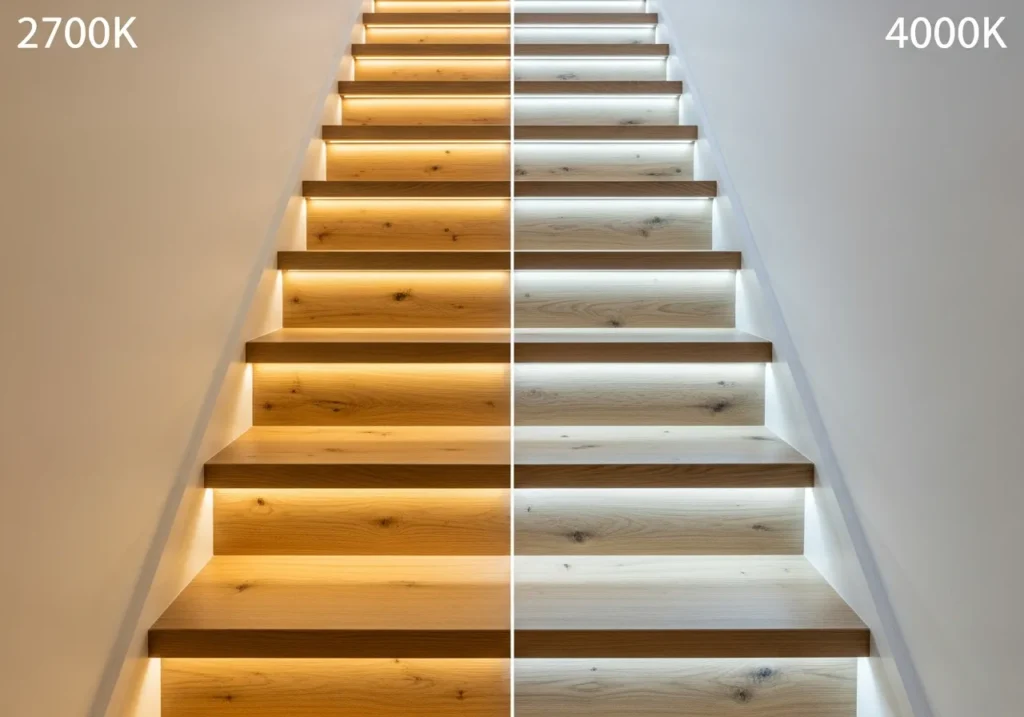
Color temperature significantly impacts the atmosphere your stairwell creates. Measured in Kelvin, lower temperatures around 2700K to 3000K produce warm, inviting glows suitable for residential settings. These warmer tones create cozy environments that feel welcoming. Neutral white temperatures between 3500K and 4000K offer versatility for both residential and commercial applications, balancing warmth with clarity. Cooler temperatures above 4000K provide bright, alert ambiance preferred in commercial stairwells where visibility takes priority.
Brightness levels require careful consideration. Overlighting creates harsh glare that causes discomfort and shadows that obscure steps. Insufficient lighting leaves dangerous dark spots. The goal is uniform illumination across all stair sections without overwhelming brightness. Motion sensors and dimming controls add flexibility, allowing light intensity adjustments based on time of day or occupancy.
LED Strip Lights Create Modern Floating Effects
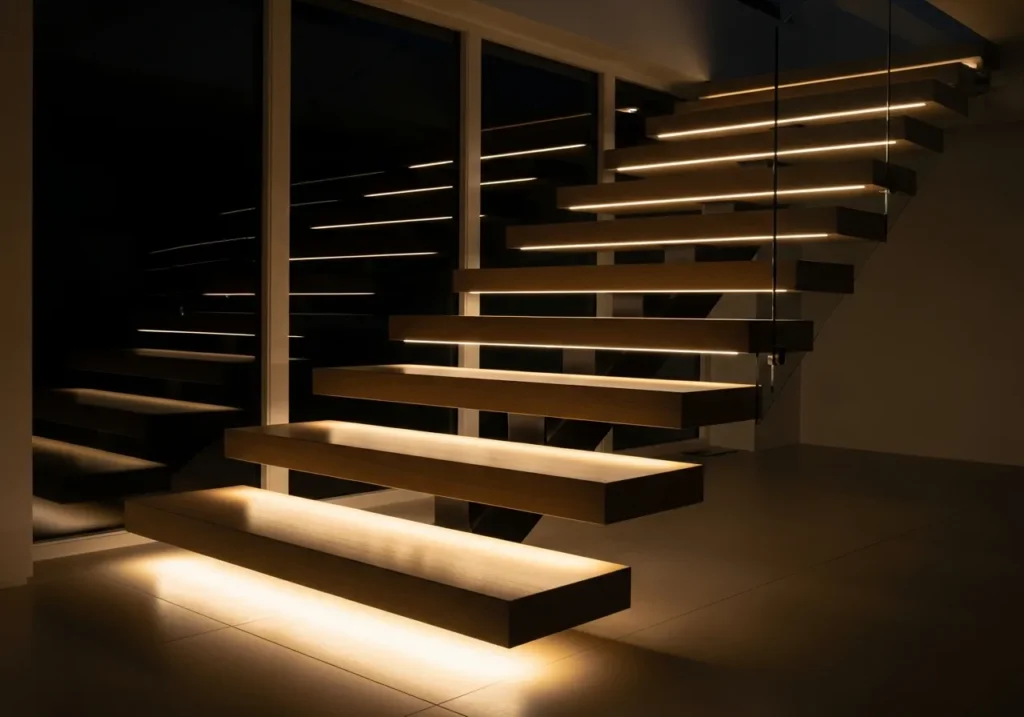
LED strip lights rank among the most popular contemporary stairwell lighting solutions. These flexible, adhesive-backed strips install beneath stair treads, along handrails, or within wall recesses to create stunning floating effects. When mounted under each step’s overhang, LED strips cast gentle downward glows that illuminate risers while keeping the light source hidden from direct view.
The installation process is relatively straightforward for homeowners comfortable with basic electrical work. Clean surfaces ensure proper adhesion of the strip’s backing. Measure each step carefully before cutting strips to length at designated cut points. Many LED strips connect in series, allowing a single power source to illuminate an entire staircase run. For staircases exceeding sixteen feet, splitting the installation between two power supplies prevents voltage drop that can cause uneven brightness.
Aluminum channels elevate LED strip installations from basic to professional grade. These extrusion profiles house the strips while providing diffusion through frosted lens covers. The result is smooth, even light distribution without visible individual LED points. Channels also protect strips from foot traffic when installed on stair treads. Various profile shapes suit different installation locations, including recessed options for walls, under-tread mounting, and handrail integration.
Color-changing RGB and RGBW strips add dynamic possibilities. Program these strips to shift colors based on mood, season, or special occasions. Some systems integrate with smart home platforms for voice control and scheduling. Imagine your stairwell automatically transitioning from energizing blue tones in the morning to relaxing amber hues in the evening.
Recessed Wall Lighting Provides Subtle Guidance
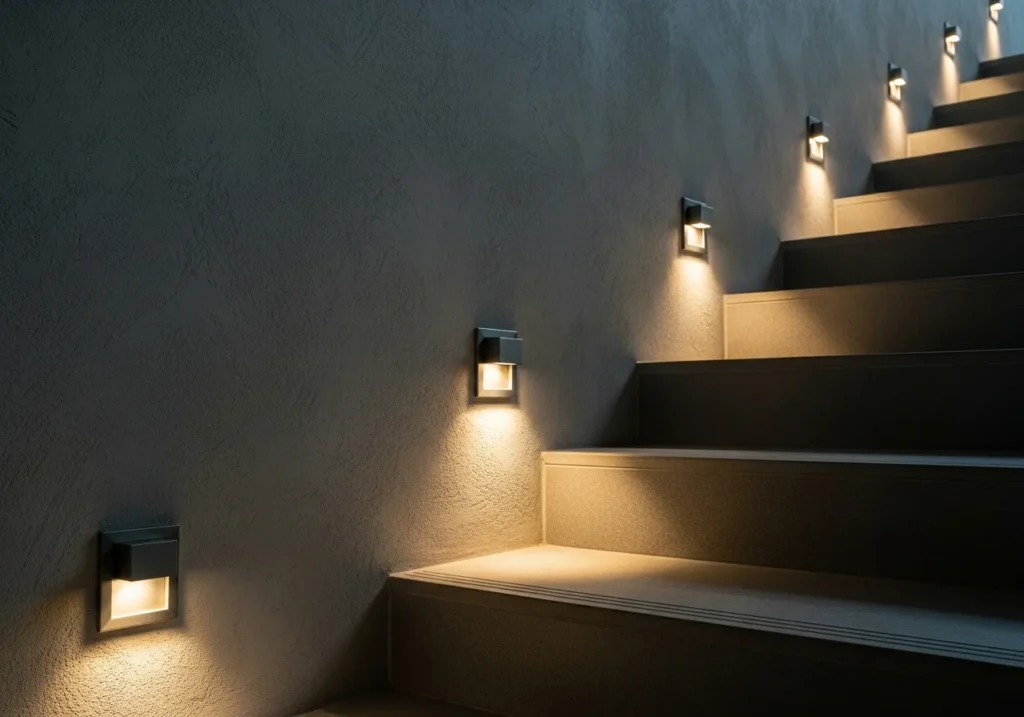
Recessed wall lights installed at regular intervals along stairwell walls offer practical illumination with minimal visual intrusion. These low-profile fixtures mount flush with wall surfaces, creating discrete pools of light that guide movement without dominating the space. Positioning lights near each step ensures consistent visibility across the entire staircase.
Modern recessed stair lights come in square, round, and rectangular configurations. Finishes ranging from brushed nickel to matte black allow coordination with existing hardware and decor. The key lies in proper spacing and placement. Installing lights at consistent heights and intervals creates rhythm and predictability. For standard residential stairs, placing one light per tread at about six inches above each step provides effective coverage.
The installation process requires cutting into wall surfaces to create recesses for the fixtures. This makes recessed lighting more suitable for new construction or major renovation projects rather than quick updates. However, the clean, integrated appearance justifies the additional effort. The fixtures virtually disappear into walls during daylight hours while providing essential guidance after dark.
Some recessed stair lights incorporate directional features that allow you to angle the light beam. Adjustable units can wash light across wall textures, highlight artwork, or focus illumination directly onto step treads. This versatility makes recessed lighting highly adaptable to changing design preferences without replacing fixtures.
Statement Chandeliers Command Attention
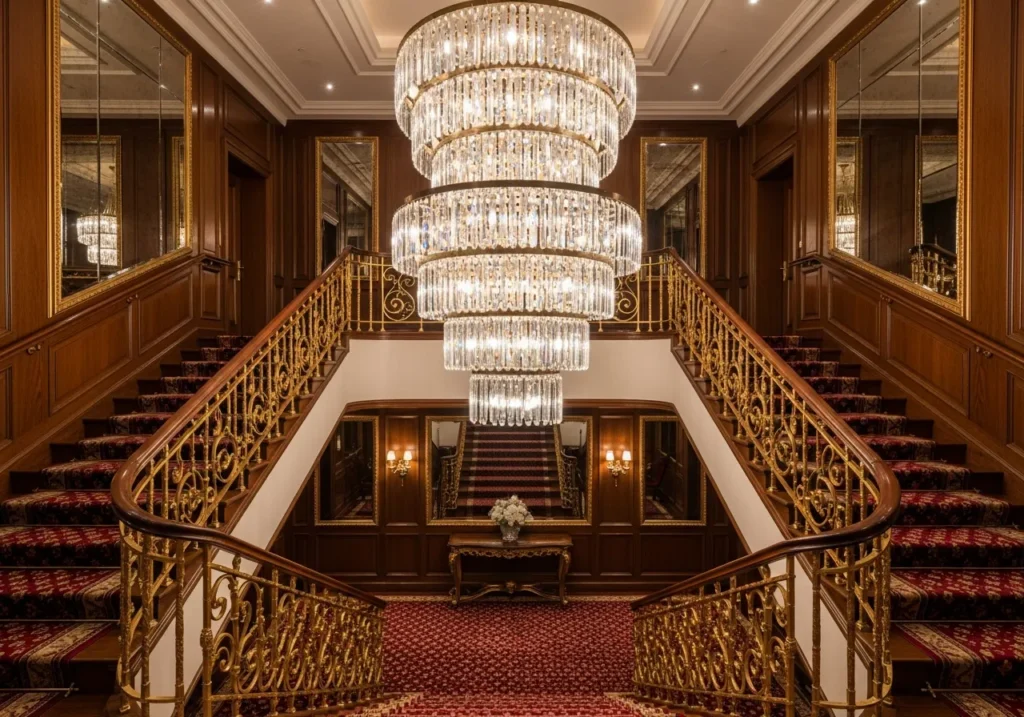
Grand staircases deserve equally impressive lighting fixtures. Statement chandeliers designed specifically for stairwells make bold architectural declarations while providing substantial illumination. These fixtures excel in double-height entryways, spiral staircases, and open floor plans where the staircase serves as a central focal point.
Selecting the right chandelier size requires understanding proportion. The general guideline suggests fixture lengths between two and a half to three inches per foot of ceiling height. A stairwell with twenty feet of vertical space pairs well with a fifty to sixty inch chandelier. Width considerations depend on stairwell dimensions. Narrow passages work best with vertical spiral designs or linear raindrops that fill height without requiring wide footprints. Wider openings accommodate multi-cluster arrangements and traditional tiered styles.To see some more ceiling lighting ideas do visit Lightopia.
Installation height matters tremendously. Maintain at least seven feet of clearance above walking areas and landings to prevent head injuries. For multi-level homes where the chandelier is visible from both floors, longer fixtures generally read better than short ones because they maintain visual presence from multiple vantage points.
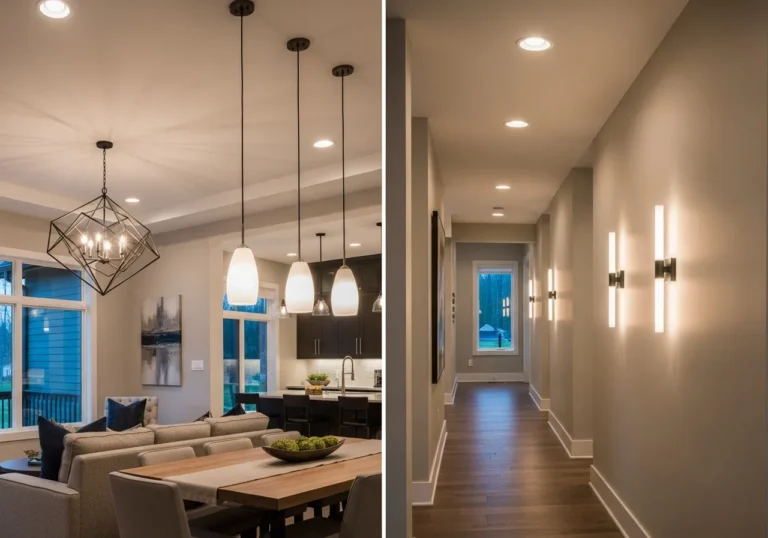
Material choices range from classic crystal that sparkles in light to contemporary metal and glass combinations. Brass candelabra chandeliers with crystal droplets offer modern interpretations of traditional elegance. Cascading designs with multiple drops create tall profiles with softer light distribution across levels. The chandelier style should complement rather than compete with the staircase’s architectural character.
Pendant Lights Offer Flexible Configurations
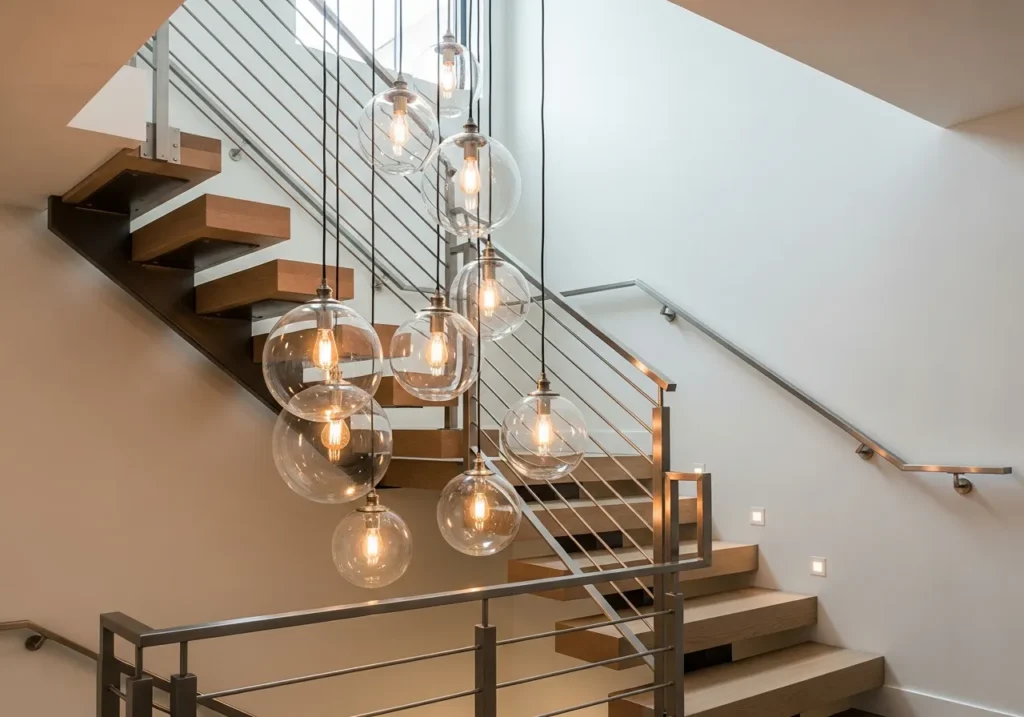
Pendant lights provide versatile alternatives to traditional chandeliers while maintaining dramatic impact. Single large pendants work beautifully in compact stairwells where chandelier width would overwhelm the space. Multi-pendant clusters create customizable lighting compositions that adapt to your stairwell’s specific architecture.
The beauty of multi-pendant installations lies in individualized cable length adjustments. Stagger heights to follow the staircase slope, creating visual flow that feels aligned from bottom to top. This layered approach adds depth and dimension while ensuring even light distribution across vertical space. Modern pendant designs range from industrial metal shades to handcrafted ceramic and delicate glass globes.
Placement strategies vary based on stairwell layout. Center pendants over the main stair run or position them above the most visible portion. For staircases with landings, placing pendants directly over landing zones creates natural focal points. The key is ensuring pendants hang high enough that people pass underneath without striking fixtures.
Pendant materials and finishes should coordinate with other home elements. Bronze finishes suit traditional and rustic interiors, while brushed nickel and chrome complement contemporary spaces. Clear or frosted glass allows maximum light transmission, while colored glass or patterned shades create interesting shadow play on surrounding walls.
Under-Handrail Lighting Combines Safety with Style
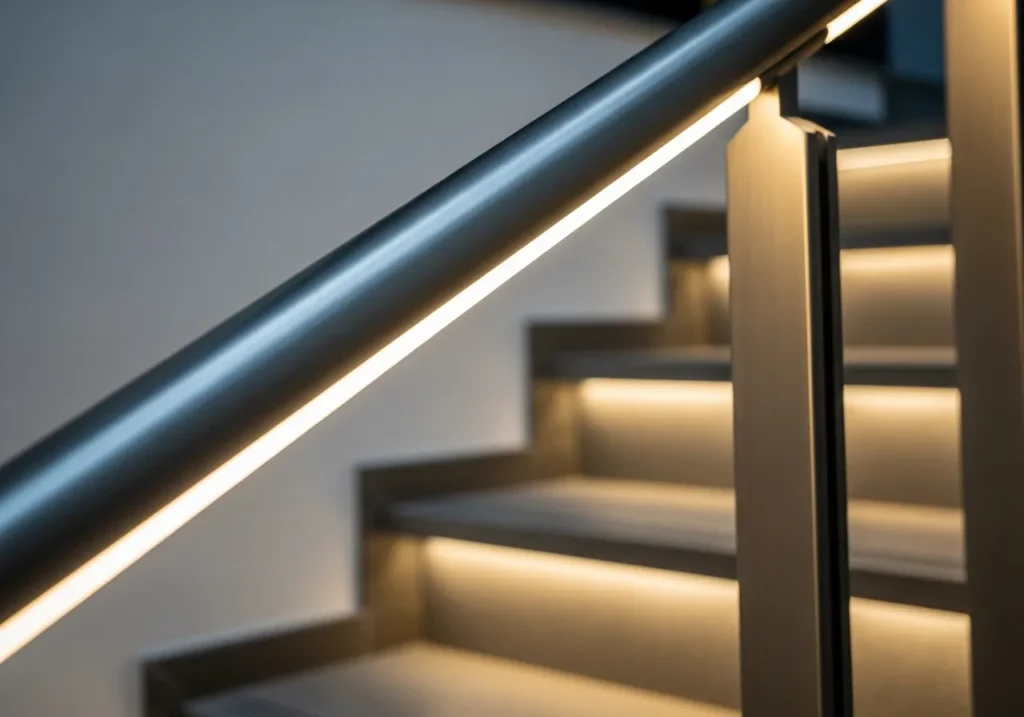
Installing lighting directly beneath or within stair handrails serves dual purposes. This approach illuminates the handrail itself for secure gripping while casting light onto steps below. The technique works particularly well with modern floating staircases or glass balustrades where traditional wall-mounted fixtures might interrupt clean sightlines.
LED strips designed for handrail installation come in slim profiles that fit within standard rail dimensions. Some manufacturers produce specialized handrail systems with integrated lighting channels that completely conceal wiring and LED strips. The resulting effect appears seamless, with light emanating from the handrail structure itself.
Stainless steel handrails with LED integration offer contemporary aesthetics suited to modern architecture. Wood handrails can incorporate groove channels that house LED strips beneath decorative caps. The installation requires careful planning during handrail construction or modification, making this option more suitable for new builds or complete staircase renovations.
The practical benefits extend beyond aesthetics. Illuminated handrails remain visible in low light conditions, encouraging people to use them for support. This feature particularly benefits households with elderly residents or young children who require extra stability. Motion sensors can activate handrail lighting automatically, ensuring illumination appears exactly when needed.
Wall Sconces Add Traditional Elegance
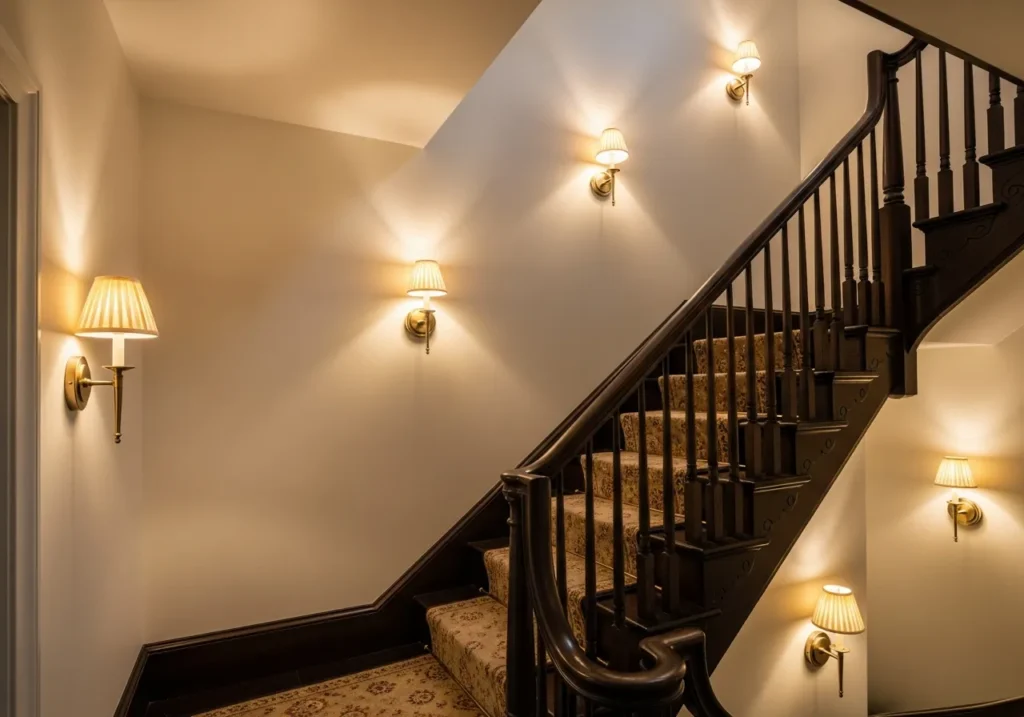
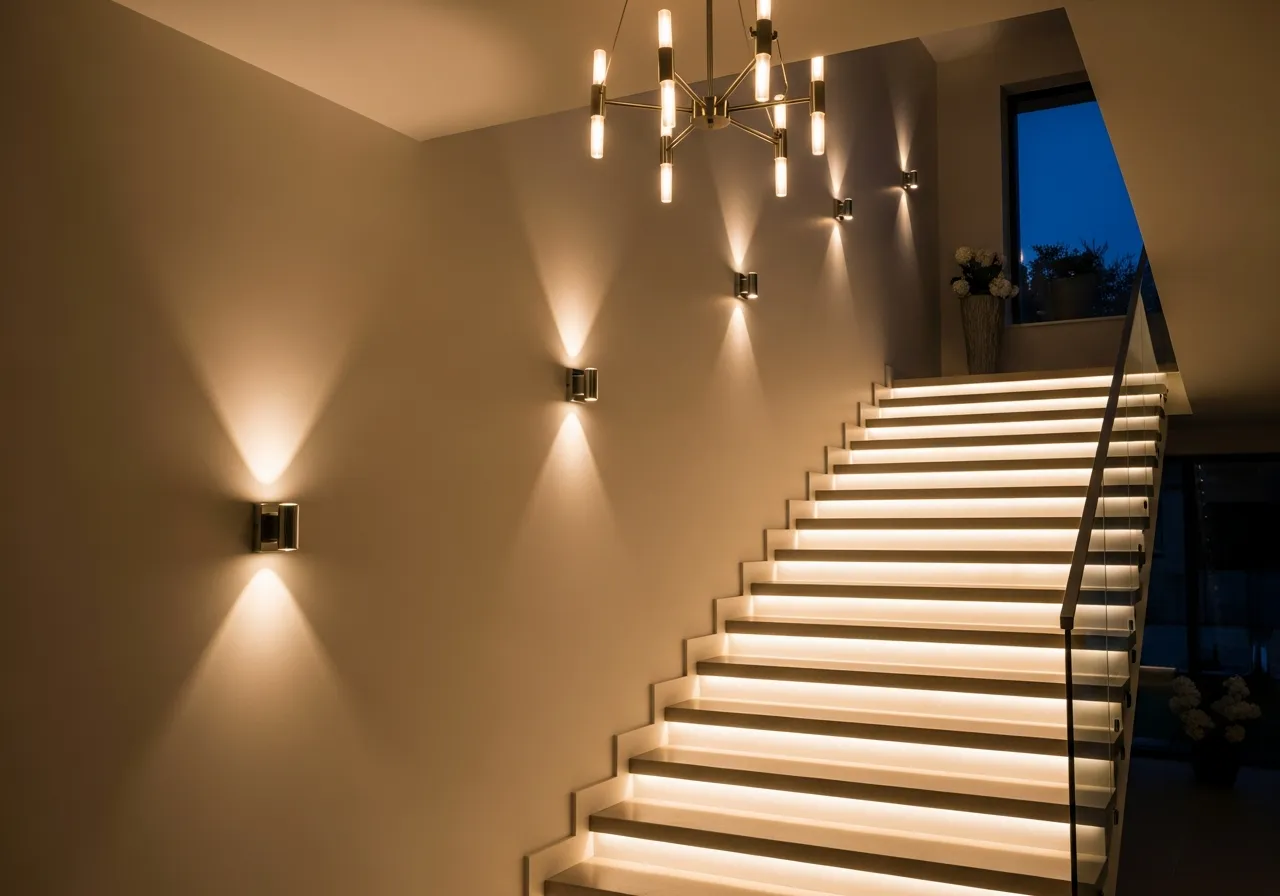
Wall sconces mounted at intervals along stairwell walls provide classic lighting solutions that have stood the test of time. These fixtures project from walls, casting light upward, downward, or in multiple directions depending on design. Traditional sconces with fabric shades create warm, diffused illumination perfect for residential settings. Contemporary sconces with exposed bulbs or geometric metal work suit modern aesthetics.
Spacing wall sconces requires balancing adequate illumination with visual appeal. Installing sconces at every other landing or every few steps prevents overcrowding while maintaining consistent light levels. The fixtures should align with architectural features like molding or wall panels to create cohesive compositions.
Sconce placement height typically ranges from sixty to seventy inches from step level. This positioning provides eye-level illumination that feels comfortable and welcoming. For staircases with particularly high ceilings, higher mounting creates better light distribution. Always ensure sconces don’t protrude so far from walls that they pose collision hazards.
Modern LED sconces offer energy efficiency without sacrificing style. Dimmable versions allow atmosphere adjustments for different times of day or occasions. Some designs incorporate directional features that let you angle light precisely where needed. The variety of available styles means finding sconces that complement your home’s character remains straightforward.
Floor Washer Lights Create Minimalist Ambiance
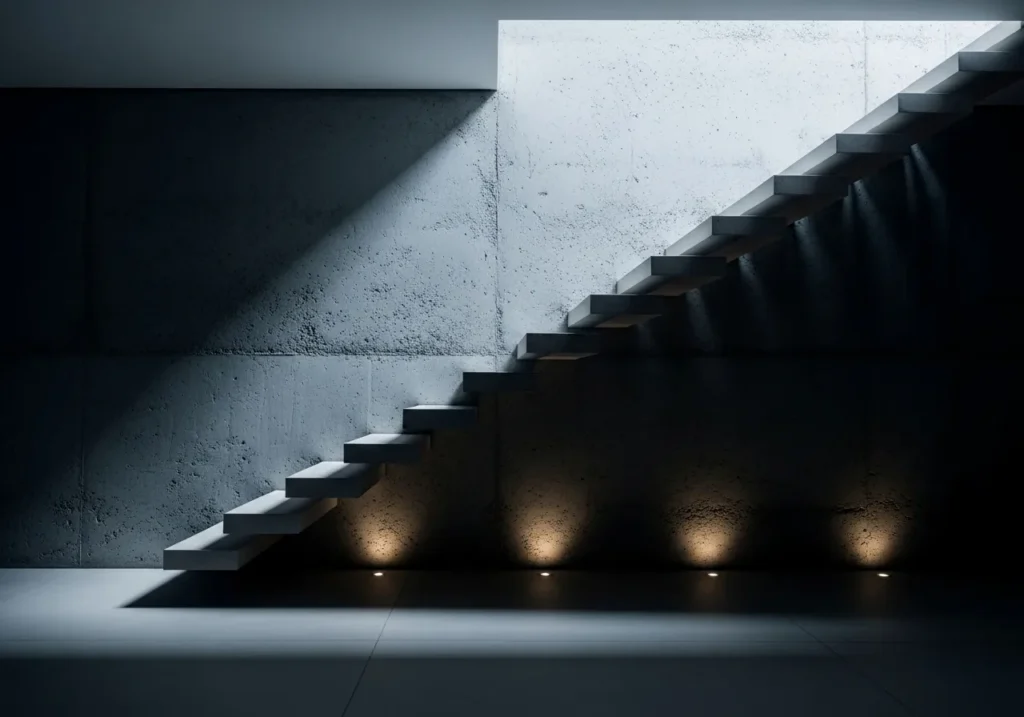
Floor washer lights represent the ultimate minimalist approach to stairwell illumination. These discrete fixtures mount at floor level, washing light upward across steps and walls. The technique creates dramatic shadow play while maintaining clean, uncluttered appearances particularly suited to contemporary architecture.
Installation requires precision placement to achieve desired effects. Fixtures positioned too close to walls create tight beams that miss steps, while placement too far from walls wastes light. The optimal position typically sits just inches from the wall base, allowing light to graze surfaces at shallow angles that emphasize texture and dimension.
Floor washers work exceptionally well with textured wall materials like stone, brick, or decorative plaster. The grazing light reveals surface variations that overhead fixtures would wash out. This technique transforms ordinary walls into dynamic visual elements that change character as you move through the space.
The fixtures themselves must withstand potential foot traffic, requiring robust construction and proper ratings. Low-profile designs minimize tripping hazards while providing necessary protection for LED components. Some floor washers incorporate directional adjustments that allow fine-tuning beam angles without repositioning fixtures.
Niches with Integrated Lighting Display Decorative Objects
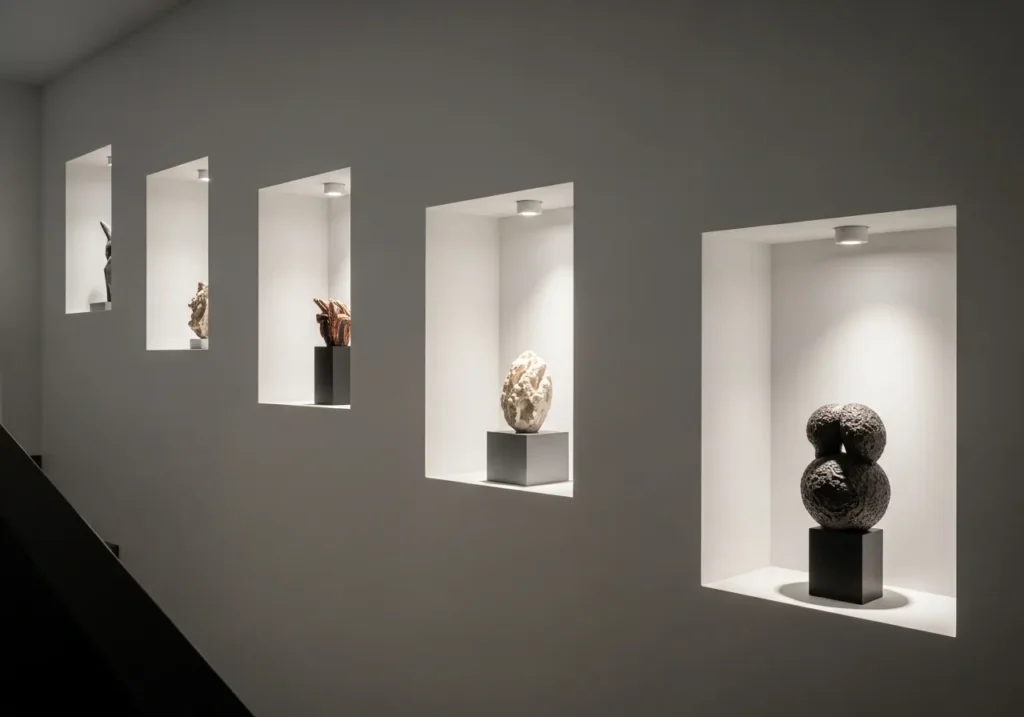
Creating illuminated niches within stairwell walls serves multiple purposes. These recessed alcoves provide display spaces for artwork, sculptures, or decorative objects while contributing ambient lighting to the overall space. The combination adds visual interest that breaks up long expanses of blank walls common in many stairwells.
Building niches requires structural considerations best addressed during construction. The recesses must fit between wall studs without compromising structural integrity. Standard niche depths range from four to six inches, sufficient for most decorative objects while maintaining reasonable wall thickness. Width and height vary based on intended display items and overall wall proportions.
Lighting niches effectively requires careful fixture selection. Miniature recessed downlights mounted in niche ceilings cast focused beams onto displayed objects. Adjustable fixtures allow precise aiming to eliminate shadows and highlight specific features. Some designers incorporate LED strips around niche perimeters, creating glowing frames that emphasize displayed items.
The layered effect of combining niche lighting with step lights or other fixtures creates sophisticated illumination schemes. Niches add sculptural depth to flat walls while the integrated lighting ensures they remain visible and impactful regardless of ambient light conditions. This approach particularly suits homes with art collections or treasured objects deserving special presentation.
Motion-Activated Systems Enhance Convenience
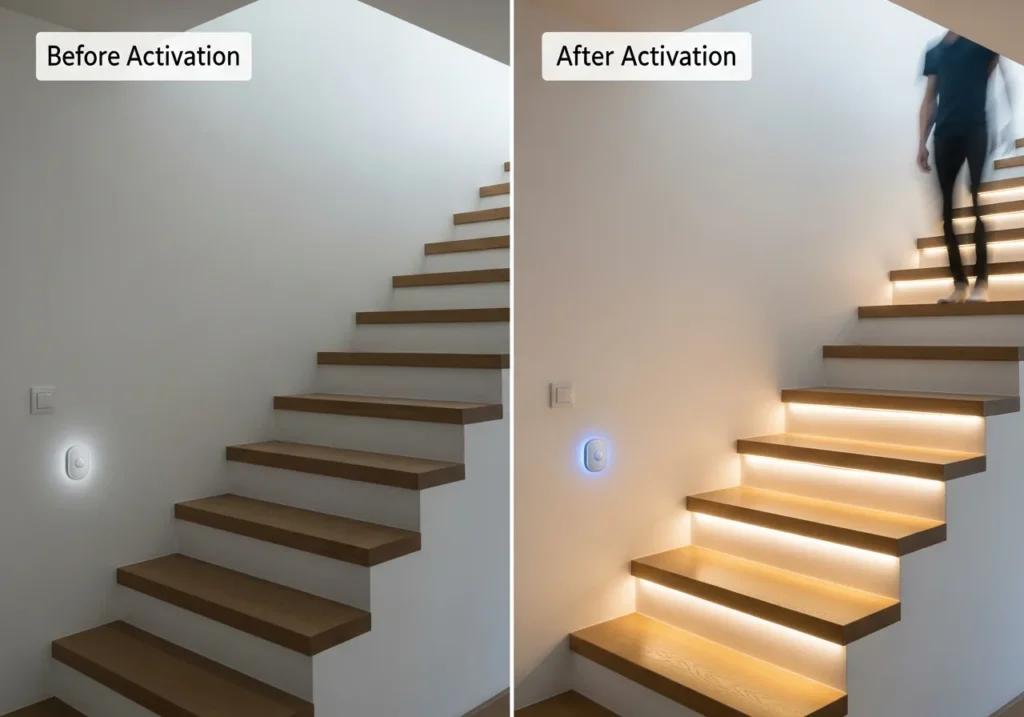
Motion-activated lighting systems bring modern convenience to stairwell illumination. Passive infrared sensors detect movement and automatically trigger lights, ensuring illumination appears exactly when needed. This automation eliminates fumbling for switches in darkness while providing significant energy savings by preventing lights from staying on unnecessarily.
Sensor placement requires strategic planning. Position sensors to detect movement at stairwell entrances from both upper and lower levels. Adjustable sensitivity settings prevent false triggers from pets or passing shadows while ensuring reliable activation for people. Some systems incorporate ambient light sensors that prevent daytime activation when natural light provides sufficient visibility.
The technology integrates seamlessly with various fixture types. LED strips, recessed lights, sconces, and overhead fixtures can all connect to motion detection systems. Delayed shutoff timers keep lights on long enough for safe passage before automatically extinguishing. Advanced systems allow programming different light levels for day versus night activation.
Motion-activated stairwell lighting particularly benefits households with children, elderly residents, or anyone carrying items that occupy both hands. The automatic illumination eliminates one more concern when navigating stairs, contributing to overall household safety. Energy-conscious homeowners appreciate the reduction in wasted electricity from lights left on indefinitely.
Smart Lighting Integration Provides Total Control
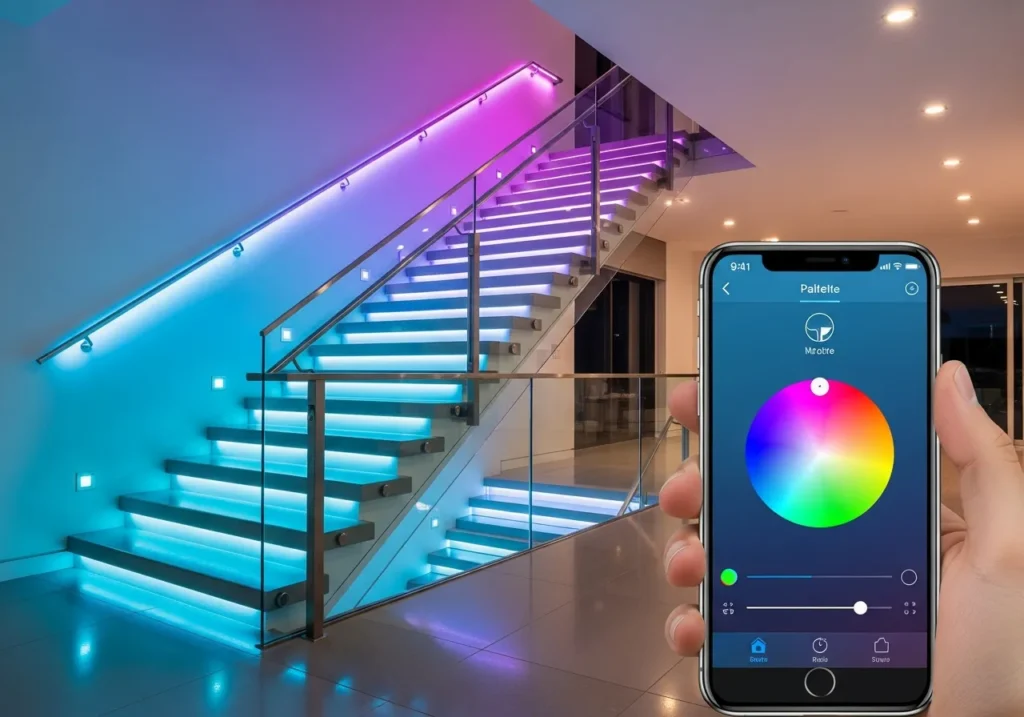
Smart home technology transforms stairwell lighting from static installations into dynamic, programmable systems. Connecting fixtures to smart hubs enables control via smartphone apps, voice commands, or automated schedules. Program lights to gradually brighten in the morning or dim in the evening, supporting natural circadian rhythms.
Color-changing smart bulbs allow instant atmosphere transformations. Host a party and bathe your stairwell in festive colors. Create calming blue tones for bedtime or energizing whites for morning routines. Geofencing technology can automatically activate stairwell lights when you arrive home, greeting you with welcoming illumination.
Integration with whole-home systems enables sophisticated automations. Link stairwell lights with security systems so they flash during alarms. Connect them to weather apps for automatic brightness increases on overcast days. The possibilities expand continuously as smart home ecosystems evolve.
Initial setup requires compatible fixtures and a smart home hub. Many LED bulbs and fixtures now include built-in smart capabilities, eliminating the need for complex retrofitting. The investment in smart technology pays dividends through enhanced convenience, energy savings, and the pure enjoyment of customizable lighting that adapts to your lifestyle.
Highlighting Architectural Features
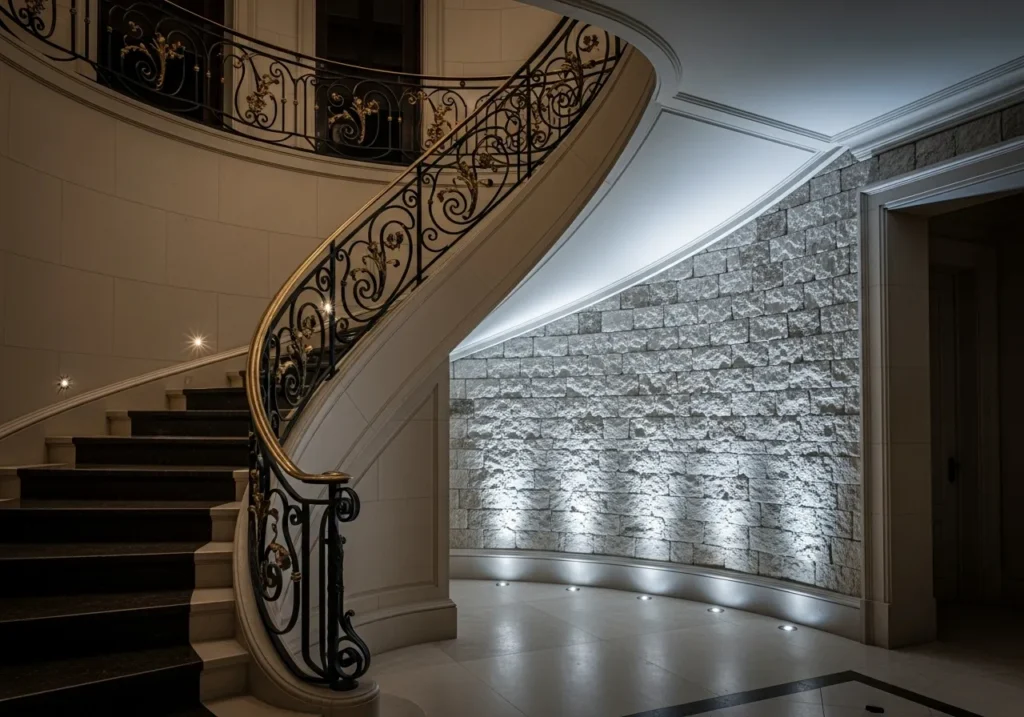
Staircases often incorporate interesting architectural elements that deserve emphasis. Curved walls, decorative railings, interesting angles, and unique materials all benefit from thoughtful illumination that draws attention to these features. Strategic lighting placement transforms these elements from background details into celebrated focal points.
Uplighting emphasizes ceiling details, crown molding, and upper wall treatments. Position fixtures at floor level to cast light upward, creating dramatic shadows that accentuate texture and dimension. This technique works beautifully with coffered ceilings, exposed beams, or ornate plasterwork often found in traditional homes.
Grazing light across textured surfaces reveals subtle variations invisible under flat illumination. Stone walls, brick, wood paneling, and decorative plaster all come alive when light strikes at shallow angles. Linear LED strips or narrow-beam fixtures create these grazing effects most effectively.
Accent lighting on railings, newel posts, and balustrades celebrates craftsmanship. Small spotlights or directional recessed fixtures can highlight ornate metalwork or beautiful wood grain. For glass staircases or modern cable railings, backlighting creates ethereal glowing effects that make the stairwell feel open and airy.
Combining Multiple Lighting Layers
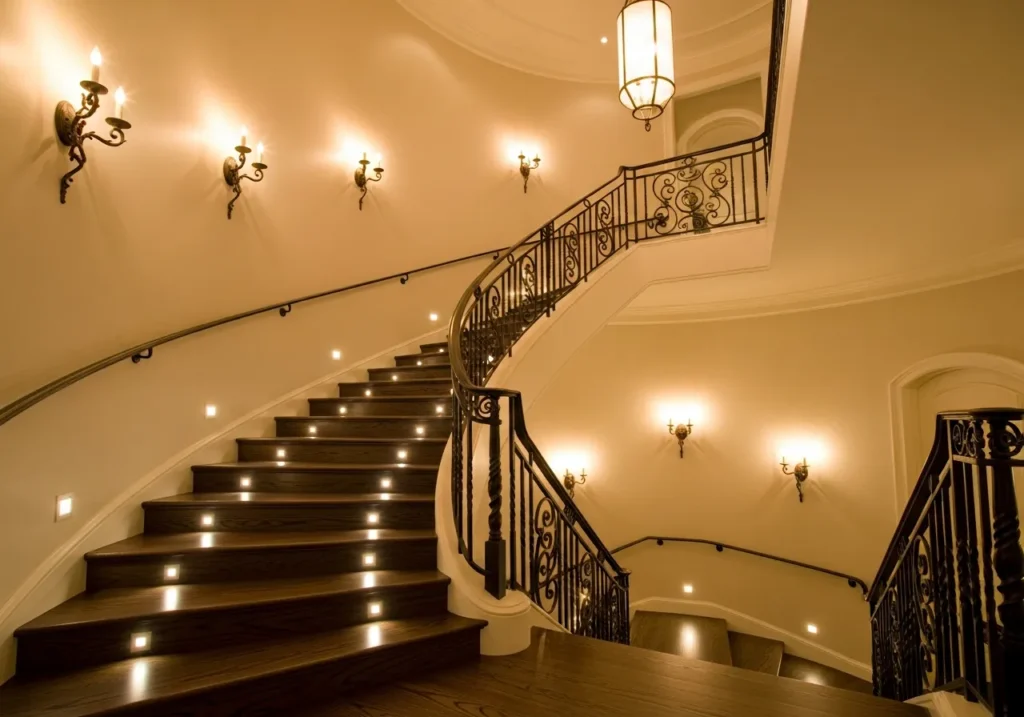
Professional lighting designers rarely rely on single fixture types. Instead, they layer different lighting approaches to create depth, functionality, and visual interest. A well-designed stairwell might incorporate recessed step lights for safety, a statement chandelier for drama, and wall sconces for ambient warmth.
The layering principle involves combining three lighting types: ambient, task, and accent. Ambient lighting provides overall illumination through chandeliers, pendants, or ceiling fixtures. Task lighting focuses on specific functional needs like step visibility through recessed lights or LED strips. Accent lighting highlights architectural features or decorative elements using directional spotlights or uplights.
Creating successful layered schemes requires planning all elements together rather than adding fixtures piecemeal. Consider how different light sources interact and avoid conflicts where fixtures compete rather than complement each other. Use consistent color temperatures across all fixtures to maintain cohesive appearance.
Separate switching for different lighting layers provides maximum flexibility. Control ambient lighting independently from accent lights, allowing atmosphere adjustments without compromising safety illumination. Dimming capabilities add another dimension of control, enabling fine-tuned adjustments for various occasions and times of day.
Outdoor Stairwell Lighting Considerations
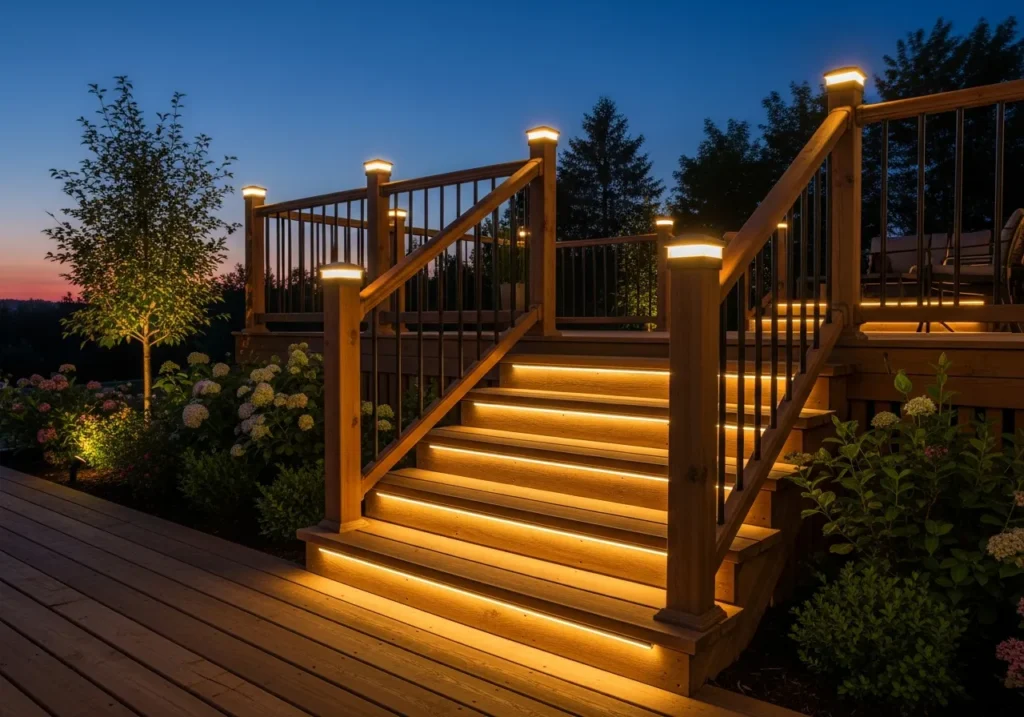
Outdoor staircases connecting decks, patios, or garden levels require lighting solutions designed for weather exposure. Fixtures must withstand rain, snow, temperature extremes, and humidity while maintaining reliable operation and appearance. Proper ratings ensure safety and longevity in challenging conditions.
IP ratings indicate protection levels against moisture and solid particles. Outdoor stairwell fixtures should carry minimum ratings of IP65, ensuring complete protection against dust and water jets from any direction. Higher ratings provide even greater protection for installations in particularly harsh environments.
LED technology suits outdoor applications perfectly due to energy efficiency, longevity, and resistance to frequent switching. Solar-powered options eliminate wiring challenges in remote locations, though they require sufficient sunlight exposure for reliable charging. Low-voltage systems offer safety advantages while providing ample illumination.To see more outdoor step lighting ideas visit Homeliaa.
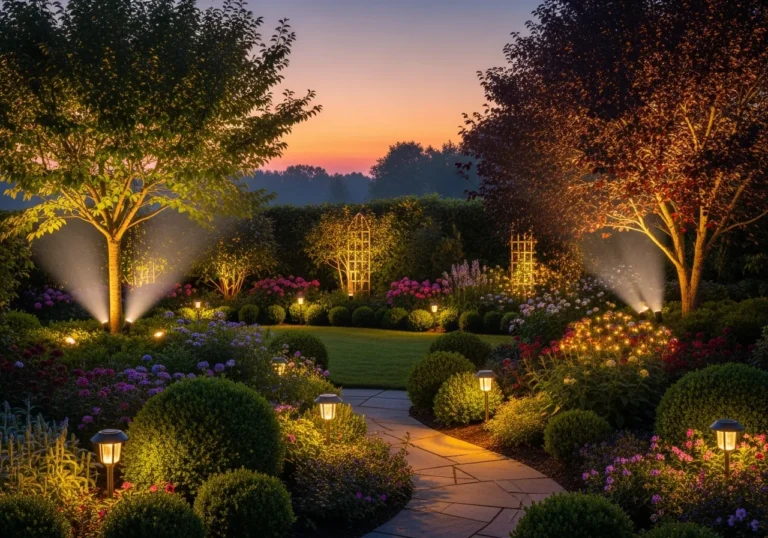
Outdoor stairwell lighting should emphasize safety through clear step visibility while creating welcoming nighttime ambiance. Recessed step lights built into risers provide excellent illumination without protruding into walkways. Post cap lights on railings mark staircase edges while adding decorative interest. Path lighting flanking stairs extends visibility beyond the immediate staircase area.
Practical Installation and Maintenance Tips
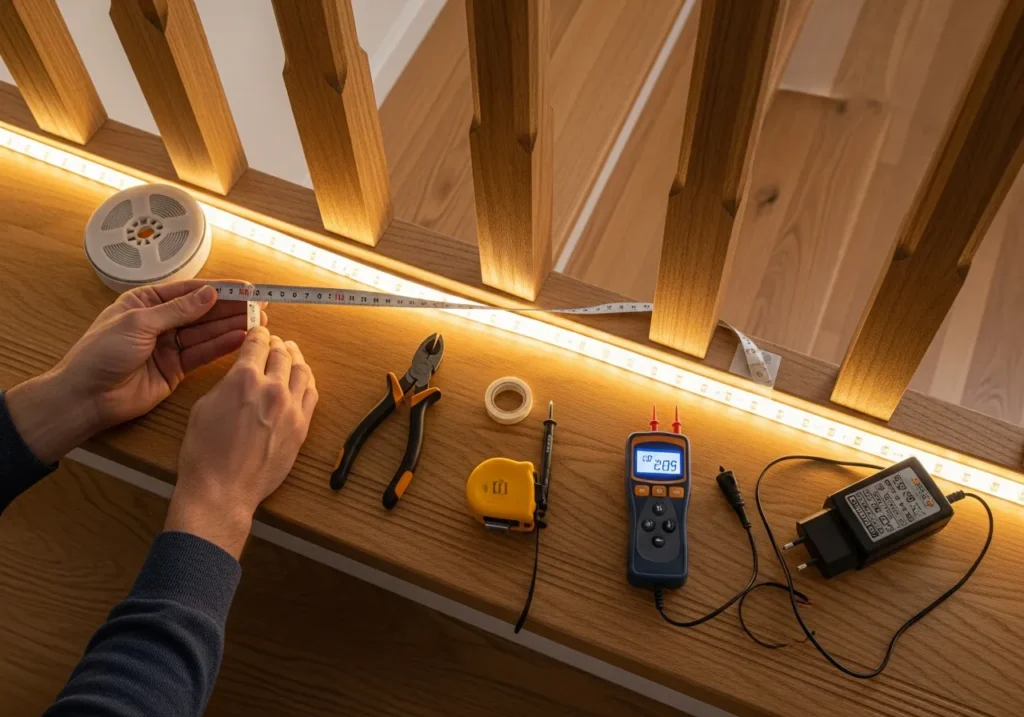
Successful stairwell lighting installations require proper planning and execution. Begin by assessing your electrical capacity and existing junction boxes. Major installations may require electrician assistance to ensure proper wiring and code compliance. Understanding your limitations prevents safety hazards and costly mistakes.
For DIY installations, always shut off power at the breaker before working with electrical systems. Test circuits with a voltage tester to confirm power disconnection. Follow manufacturer instructions precisely, paying special attention to weight limits for ceiling fixtures and proper mounting techniques for wall fixtures.
LED fixtures require minimal maintenance compared to traditional lighting. However, periodic cleaning maintains optimal light output and appearance. Dust accumulation on fixtures and lenses reduces brightness and creates dingy appearances. Clean glass and metal components with appropriate cleaners, avoiding abrasive materials that scratch finishes.
Bulb replacement becomes necessary eventually, even with long-lived LEDs. Keep spare bulbs on hand matching your fixture specifications. For high ceiling installations where access requires ladders or scaffolding, consider LED bulbs rated for extended lifespans to minimize maintenance frequency. Some homeowners appreciate hiring professional services for high-access maintenance rather than attempting dangerous ladder work.
Conclusion
Transforming your stairwell through thoughtful lighting creates safer passage while elevating your home’s entire aesthetic. The thirteen-plus ideas explored here demonstrate the remarkable range of possibilities available to homeowners. From sleek LED strips creating floating step effects to grand chandeliers commanding attention in soaring spaces, the right lighting solution exists for every stairwell type, budget, and design preference.
Remember that effective stairwell lighting balances multiple priorities. Safety remains paramount, requiring adequate illumination for secure navigation regardless of time or conditions. Aesthetic impact transforms functional spaces into celebrated architectural features that reflect personal style. Energy efficiency ensures responsible resource use while reducing operating costs.
Whether you implement a single dramatic chandelier, layer multiple fixture types, or embrace cutting-edge smart technology, the investment in proper stairwell lighting pays dividends daily. Every time you or your guests navigate those steps, the improved visibility, enhanced beauty, and thoughtful design create positive experiences. Take time to assess your specific needs, explore various options, and select solutions that will serve you well for years to come. Your stairwell deserves lighting that makes every ascent and descent safer, more comfortable, and infinitely more beautiful.
Frequently Asked Questions
What is the best type of lighting for a stairwell?
The best stairwell lighting combines multiple approaches. LED strip lights under treads provide excellent step visibility with modern aesthetics. Recessed wall lights offer subtle guidance without visual clutter. For grand spaces, chandeliers or pendant lights add drama while providing ambient illumination. The ideal choice depends on your stairwell dimensions, architectural style, and budget.
How do you calculate how much light a stairwell needs?
Stairwell lighting should provide approximately three to five foot-candles of illumination at step level for safe navigation. Measure your stairwell’s square footage and multiply by five to estimate total lumens needed. Divide this by the lumen output of your chosen fixtures to determine quantity. Layer different fixture types rather than relying on single bright sources for better light distribution.
Can I install LED strip lights on stairs myself?
Yes, LED strip light installation is suitable for confident DIY enthusiasts. Clean surfaces thoroughly before applying adhesive-backed strips. Measure carefully and cut only at designated points. Connect strips to appropriate power supplies, ensuring voltage matches strip requirements. For runs exceeding sixteen feet, use multiple power supplies to prevent voltage drop. Consider aluminum channels for professional results and added durability.
How far apart should stairwell lights be spaced?
For recessed wall lights, install one fixture per stair tread at consistent heights approximately six inches above each step. Wall sconces typically space every other landing or every three to four steps. The goal is uniform illumination without dark gaps. Test spacing with temporary lighting before permanent installation to ensure adequate coverage throughout the stairwell.
Are motion-activated lights worth it for staircases?
Motion-activated stairwell lights provide excellent value through enhanced safety and energy savings. Automatic illumination eliminates the need to locate switches in darkness, particularly beneficial for nighttime navigation. Lights only operate when needed, reducing electricity waste from lights left on constantly. The convenience especially benefits households with children, elderly residents, or anyone frequently carrying items on stairs.