
13+ Creative Plaster Hand Ideas for Your Home
Plaster hand ideas have emerged as one of the most versatile and visually striking decorative elements in contemporary home design. These sculptural pieces blend artistic expression with functionality, offering homeowners an affordable way to introduce gallery-worthy aesthetics into their living spaces. Whether you’re drawn to minimalist Scandinavian design or eclectic bohemian style, plaster hand sculptures adapt seamlessly to various interior themes while providing practical storage solutions.
The beauty of plaster hand projects lies in their accessibility. Unlike complex art installations that require specialized skills, creating plaster hand molds is a straightforward process that yields professional-looking results. With basic materials like plaster of Paris, latex gloves, and simple household items, you can craft custom pieces that reflect your personal style. The tactile nature of these sculptures adds depth and dimension to flat surfaces, creating visual interest that photographs and paintings alone cannot achieve.
Beyond their decorative appeal, plaster hands serve multiple functional purposes throughout the home. From organizing jewelry in bedrooms to holding kitchen utensils or displaying air plants, these versatile pieces prove that art and utility need not exist separately. The current trend toward sustainable, handmade decor has further elevated plaster hand crafts, as they represent thoughtful, personalized alternatives to mass-produced accessories.
This comprehensive guide explores over thirteen inspired ways to incorporate plaster hands into your home environment. We’ll examine practical applications, styling techniques, and creative variations that transform simple plaster casts into statement pieces worthy of any interior design magazine.
Jewelry and Accessory Organization
One of the most popular applications for plaster hands centers on jewelry storage and display. The natural shape of fingers provides ideal resting places for rings, while extended palms can hold bracelets, watches, and necklaces. Creating a dedicated jewelry holder eliminates the frustration of tangled chains and misplaced earrings while transforming daily organization into an artistic moment.
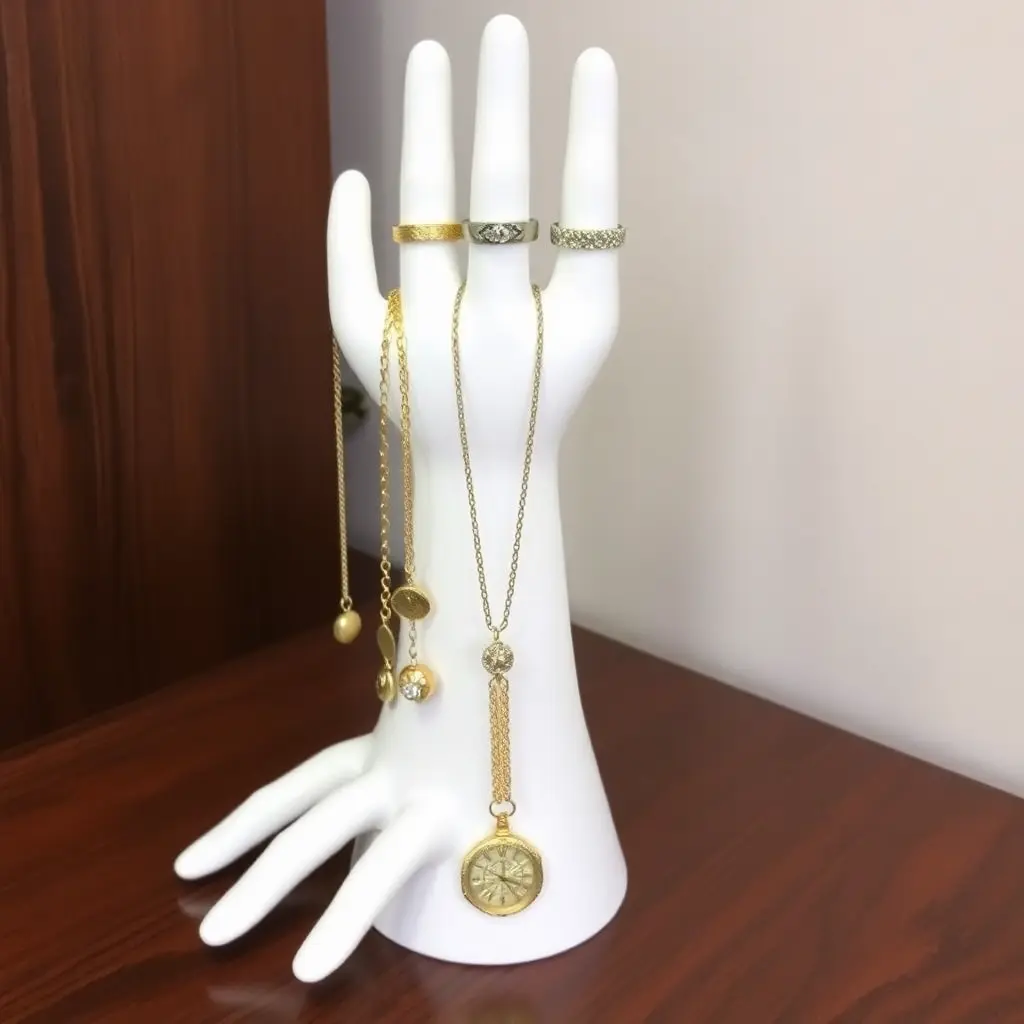
Position a plaster hand on your dresser or vanity table with fingers slightly curved upward. This configuration allows you to slide rings onto individual fingers, drape delicate necklaces across the palm, and loop bracelets around the wrist area. The vertical presentation keeps chains separated and prevents the knotting that occurs in traditional jewelry boxes. For those with extensive collections, consider crafting multiple hands in different poses or sizes to accommodate various accessory types.https://mossandtwine.com/blog/plaster-for-art-ideas/
The aesthetic appeal extends beyond mere function. A white plaster hand against a dark wooden dresser creates stunning contrast, while painted or gilded versions introduce metallic accents that complement gold or silver jewelry. Some crafters enhance their pieces with textured finishes, applying crackling medium or antiquing wax to achieve vintage charm. These personalized touches ensure your jewelry holder reflects individual taste while maintaining its organizational purpose.
Sculptural Candle Holders
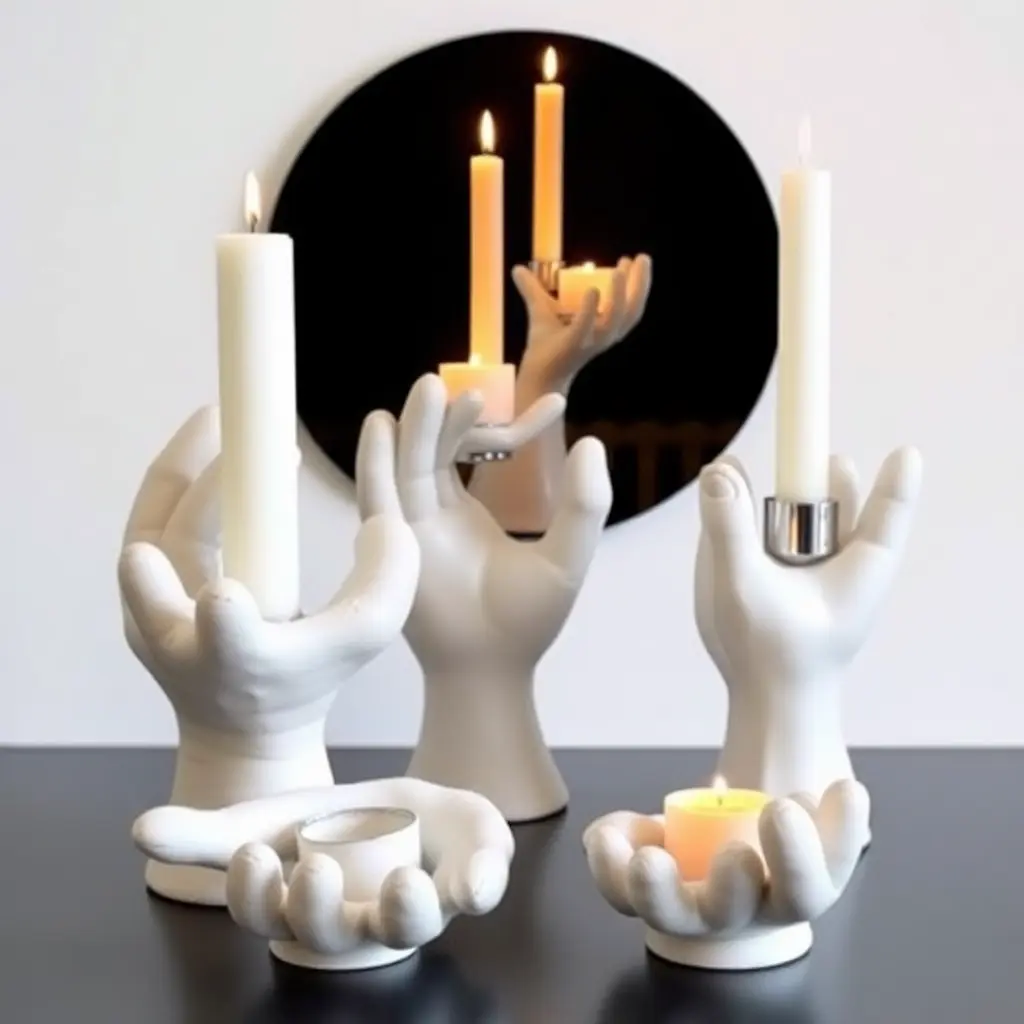
Transform plaster hands into sophisticated candle holders that command attention as centerpieces or accent lighting. The open palm configuration naturally cradles pillar candles, while upward-facing hands can support taper candles when fitted with appropriate holders. This application merges ambient lighting with sculptural art, creating focal points that elevate dining tables, mantels, or console displays.
When designing candle-holding hands, consider the safety aspects alongside aesthetics. Ensure the plaster is fully cured and sealed to prevent heat damage. Position candles securely within the palm, using a small amount of museum putty to prevent tipping. For taper candles, insert a metal candle cup into the plaster while still wet, creating a stable base that accommodates standard candle widths.
The interplay between flickering candlelight and plaster’s matte surface generates captivating shadow patterns on surrounding walls. This effect intensifies during evening gatherings, where the hands appear to offer light as a welcoming gesture. Grouping multiple hand candle holders at varying heights produces layered visual interest, particularly when using candles of different sizes or colors that complement your room’s palette.
Air Plant and Succulent Displays
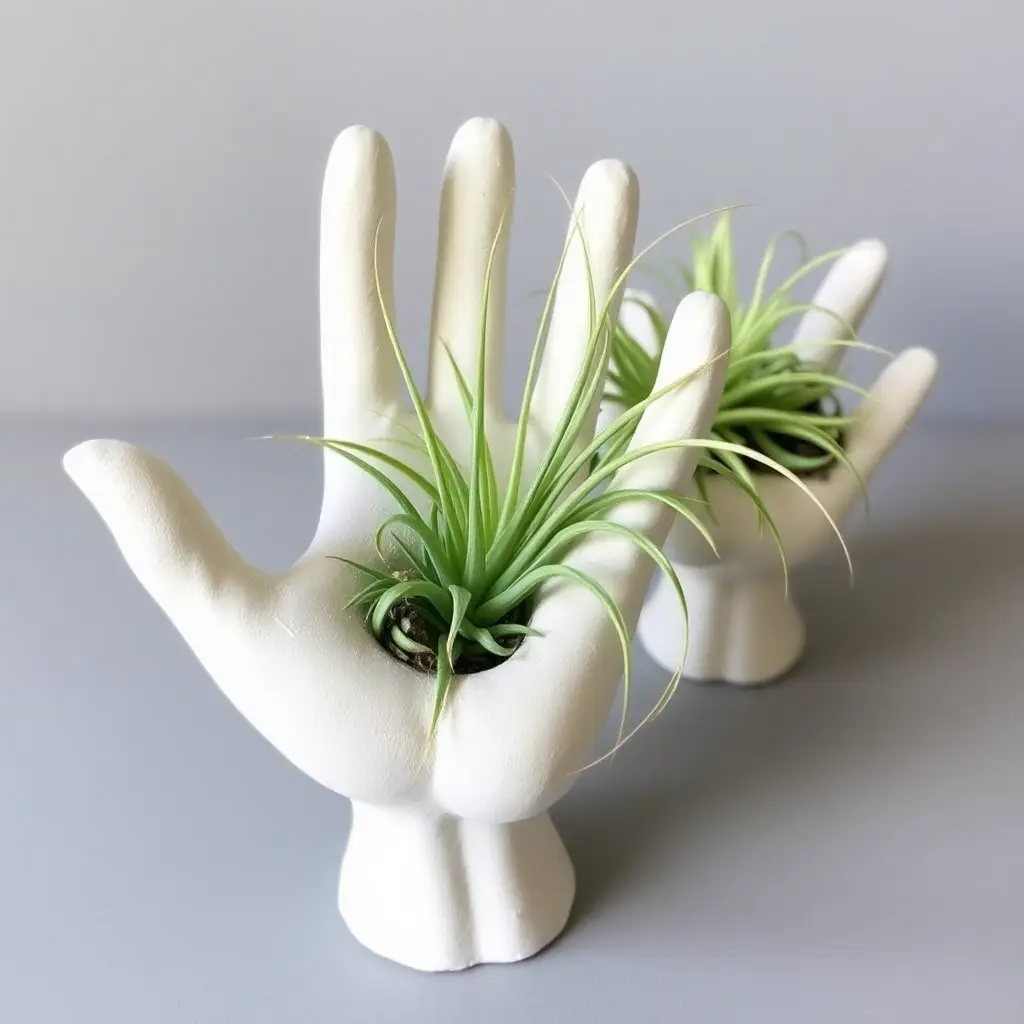
Plaster hands provide unexpected vessels for showcasing air plants and small succulents. The sculptural quality of the hand enhances the organic forms of Tillandsia species, creating a striking juxtaposition between human-made art and natural growth. Unlike traditional planters, hand-shaped displays introduce narrative elements that spark conversation and add personality to plant collections.
The moisture-wicking properties of unsealed plaster make these holders particularly suitable for air plants, which thrive without soil and require only occasional misting. Simply nestle air plants within curved fingers or rest them in the palm depression. For succulents requiring soil, apply a waterproof sealant to the interior surfaces before adding drainage material and potting mix. This preparation prevents moisture damage while maintaining the plaster’s exterior texture.
Position plant-filled hands on windowsills, bookshelves, or bathroom counters where they benefit from appropriate light conditions. The elevated presentation showcases trailing varieties like String of Pearls or Burro’s Tail, whose cascading growth patterns complement the hand’s vertical orientation. Rotate your display seasonally, swapping plants to reflect changing light availability and growth cycles while keeping the sculptural element constant.
Ring and Watch Display Stands
Dedicated ring and watch displays elevate everyday accessories into collectible presentations worthy of boutique showcases. By crafting hands in specific gestures, you can create customized stands that accommodate particular collection sizes and styles. A hand with extended index and middle fingers perfectly displays statement rings, while a gently closed fist with exposed wrist serves watch collectors.
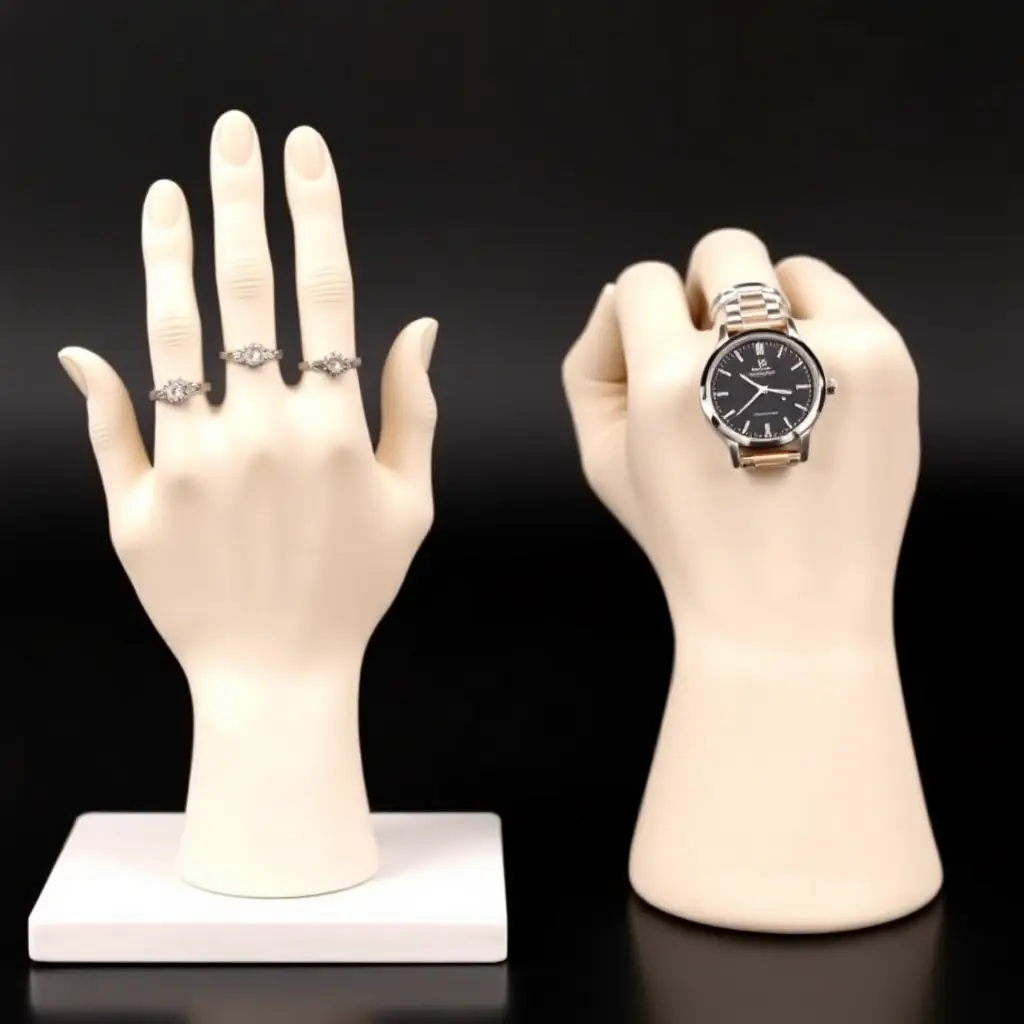
The key to effective ring displays lies in finger positioning during the molding process. Slightly separate fingers to prevent rings from sliding together, and ensure adequate space between each digit for larger cocktail rings or wide bands. Some crafters create angled displays by propping the mold during the curing process, resulting in hands that tilt toward viewers for optimal visibility.
For watch enthusiasts, design hands with wrists positioned prominently. The natural taper of the forearm provides graduated sizing that accommodates different watch band widths. This presentation method protects watch faces from scratching while keeping automatic movements visible. Cluster multiple watch-displaying hands to create a gallery wall effect, particularly effective in dressing rooms or walk-in closets where accessories receive dedicated display space.
Business Card and Mail Holders
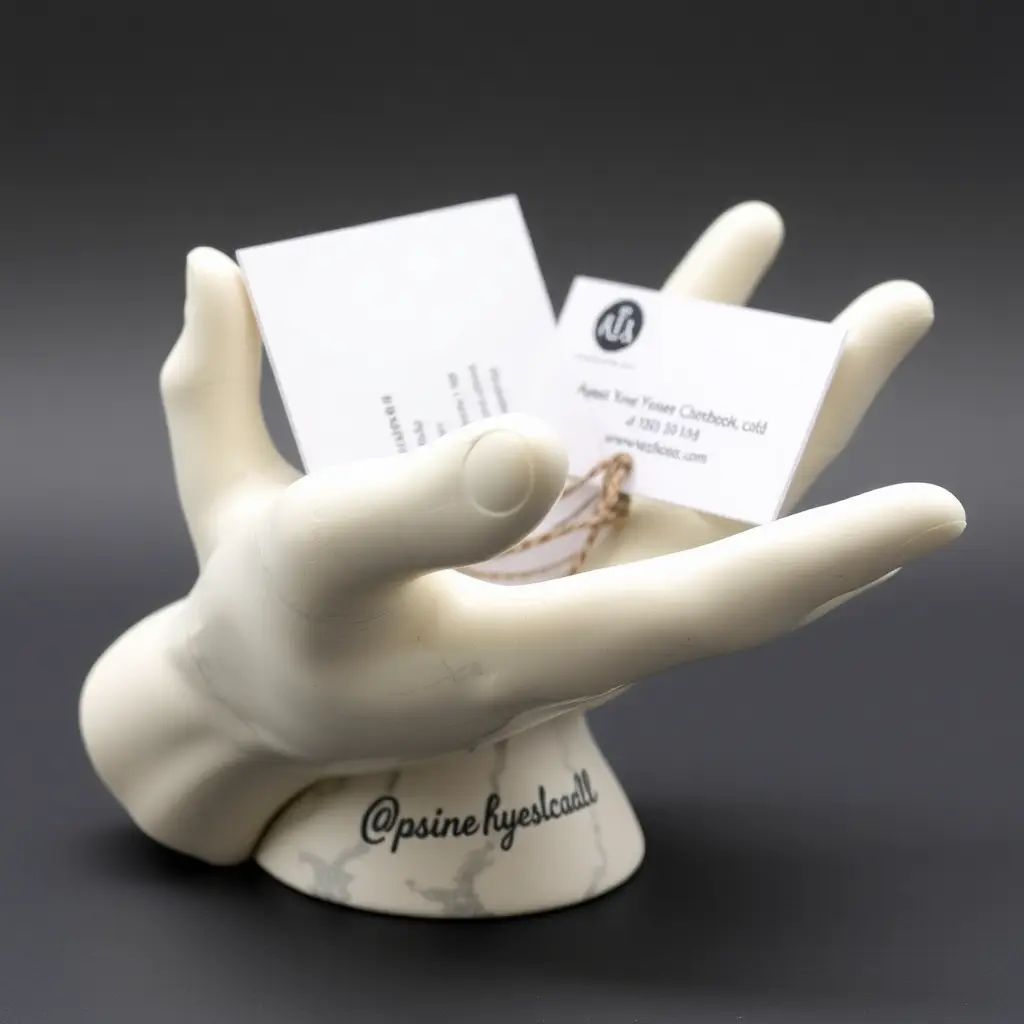
Functional office accessories benefit from artistic reimagining, and plaster hands excel as business card holders or mail organizers. A hand positioned with fingers together and palm slightly cupped creates a natural receptacle for business cards, outgoing mail, or even car keys. This practical application introduces sculptural interest to entryways, home offices, or reception areas while maintaining organizational efficiency.
The size and positioning determine capacity. Larger hands with deeply curved palms hold substantial mail stacks, while smaller versions suit business card presentation on desks or counters. Consider the viewing angle when positioning these holders. Hands angled slightly backward allow card text to remain visible, transforming functional storage into an interactive display that encourages engagement.
Professional environments particularly benefit from refined finishes. Concrete-gray plaster exudes modern sophistication appropriate for contemporary offices, while marble-effect techniques introduce luxury without excessive cost. These holders serve double duty as conversation starters during client meetings, reflecting attention to aesthetic detail that extends beyond core business functions.
Decorative Catchalls for Small Items
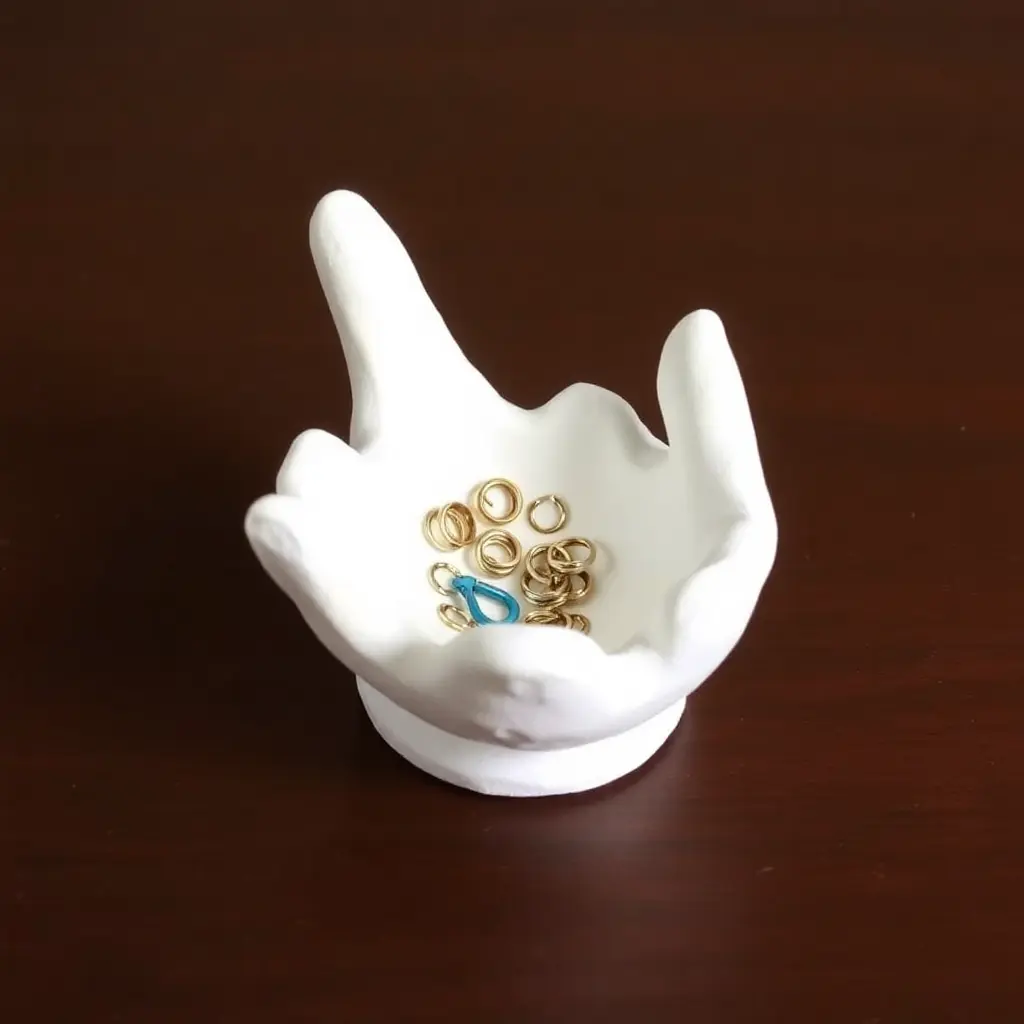
Every home accumulates small objects that lack designated storage: coins, paper clips, hair accessories, or safety pins. Plaster hand catchalls provide charming solutions that consolidate these items while contributing to room decor. Unlike generic bowls or trays, hand-shaped vessels inject personality into mundane organization, transforming necessary storage into deliberate design choices.
Strategic placement maximizes utility. Position catchall hands near doorways for keys and sunglasses, on bedside tables for earrings and hair ties, or in bathrooms for bobby pins and cotton swabs. The tactile quality encourages interaction, making it more likely household members will use these designated spots rather than creating random clutter piles.
Customization enhances both function and appearance. Paint the interior in contrasting colors to highlight the storage area, or apply metallic leaf for glamorous accents. Some crafters embed magnets in the base, allowing the hand to secure metal items like scissors or tweezers, expanding organizational capabilities beyond simple collection.
Bookends with Artistic Flair
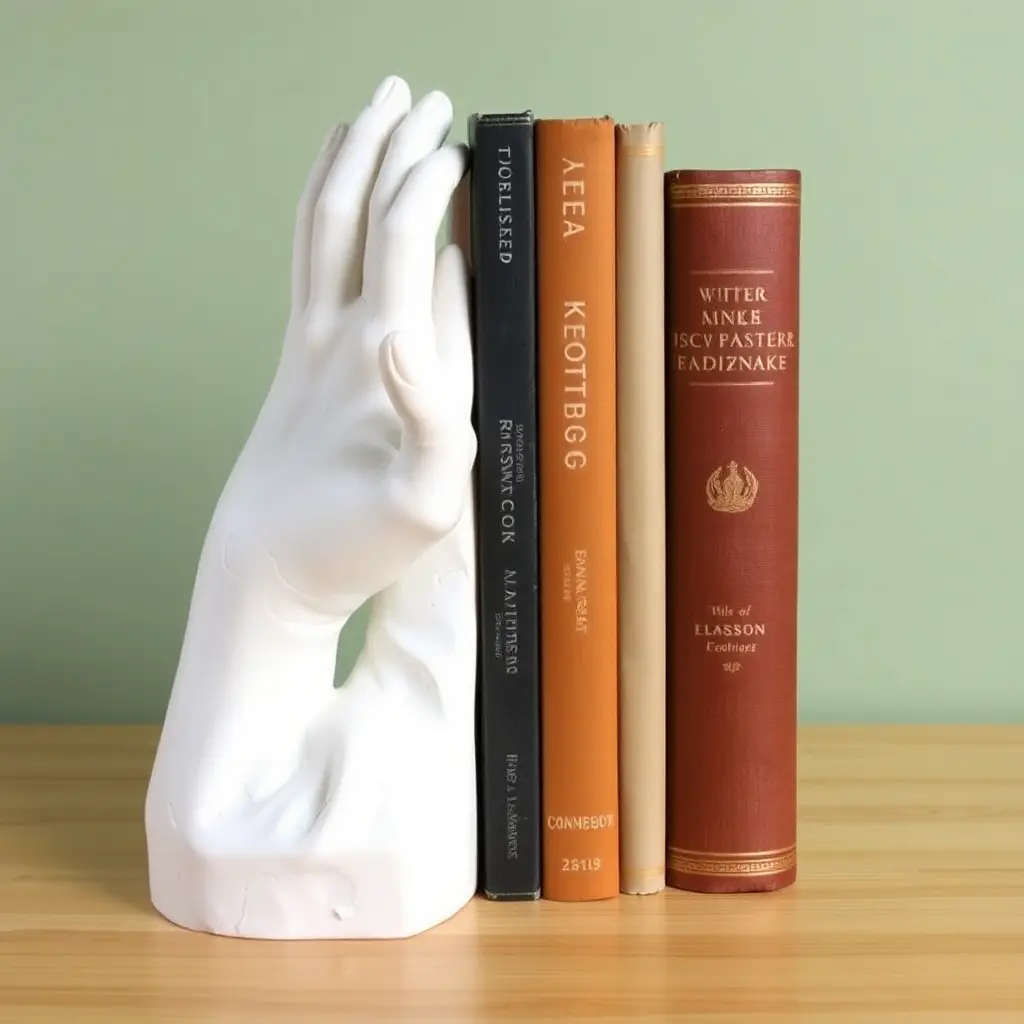
Plaster hands reimagined as bookends merge literary passion with sculptural art. A pair of hands positioned as if gently pressing books together creates visual narrative while providing practical support for leaning volumes. This application works particularly well in home libraries, reading nooks, or office spaces where books form essential decor elements.
Creating effective bookends requires attention to weight distribution and stability. Fill the base with additional plaster or insert weighted materials before final curing to ensure sufficient heft for supporting book rows. Position hands at complementary angles so they appear engaged in the shared task of book support, enhancing the interactive quality of the display.
The symbolic gesture of hands protecting knowledge resonates with book lovers, transforming functional items into meaningful representations of reading’s value. Finish these bookends to complement your library’s aesthetic. Aged bronze effects suit traditional spaces filled with leather-bound volumes, while clean white plaster aligns with minimalist contemporary collections.
Wall-Mounted Art Installations
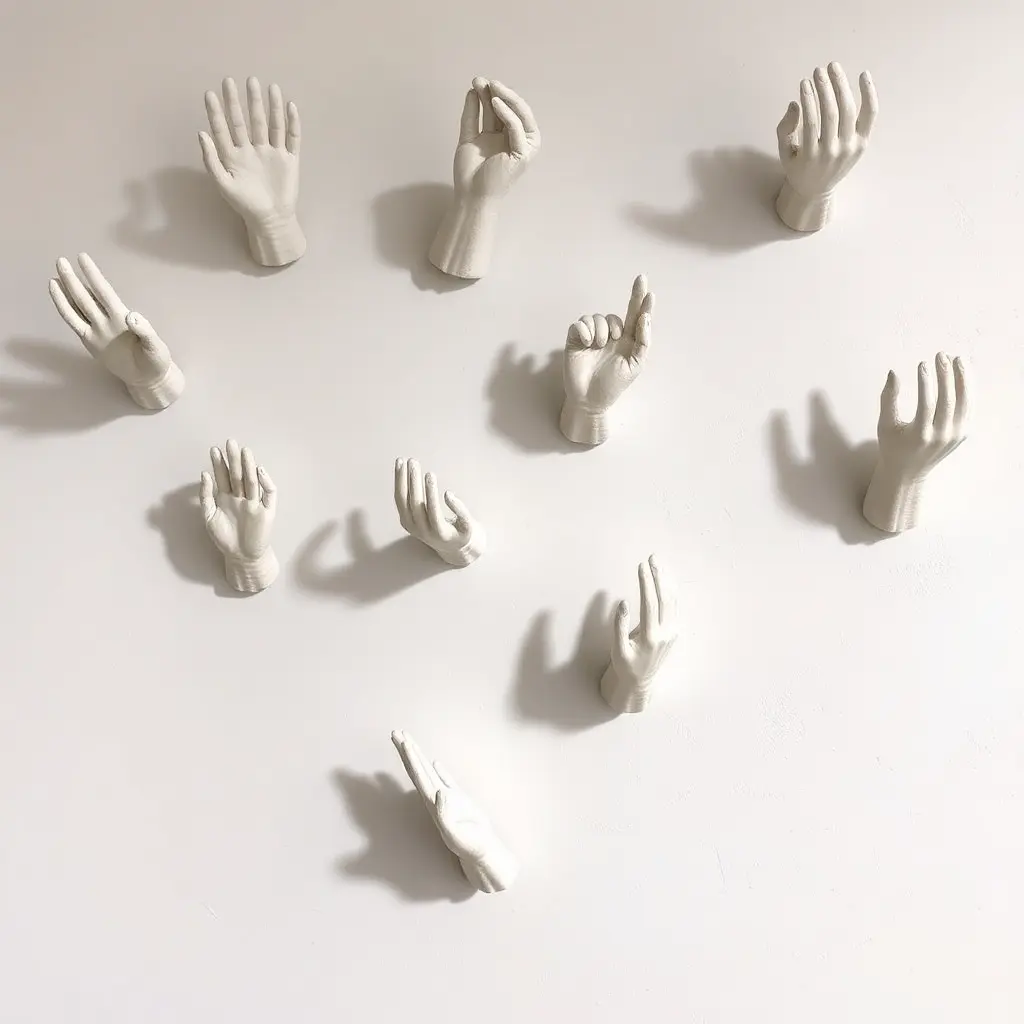
Elevate plaster hands from tabletop accessories to wall-mounted art installations that command attention as focal points. Mounting hands at various heights and angles creates dynamic compositions that guide eye movement across walls, introducing three-dimensional interest to otherwise flat surfaces. This approach particularly suits gallery walls or statement walls in living rooms and bedrooms.
Secure mounting requires proper hardware suited to plaster’s weight. Install sturdy picture hangers or French cleats that distribute weight evenly, preventing damage to both the sculpture and wall surface. Consider the narrative created by hand positioning. Reaching hands suggest aspiration, while protective cupped hands convey security. Grouping multiple hands in choreographed arrangements tells visual stories that evolve as viewers move through the space.
Lighting dramatically affects wall-mounted installations. Position spotlights or picture lights to cast shadows that amplify the sculptural qualities, creating depth that changes throughout the day. This technique transforms static art into dynamic displays that respond to natural and artificial light variations.
Bathroom Soap and Toiletry Holders
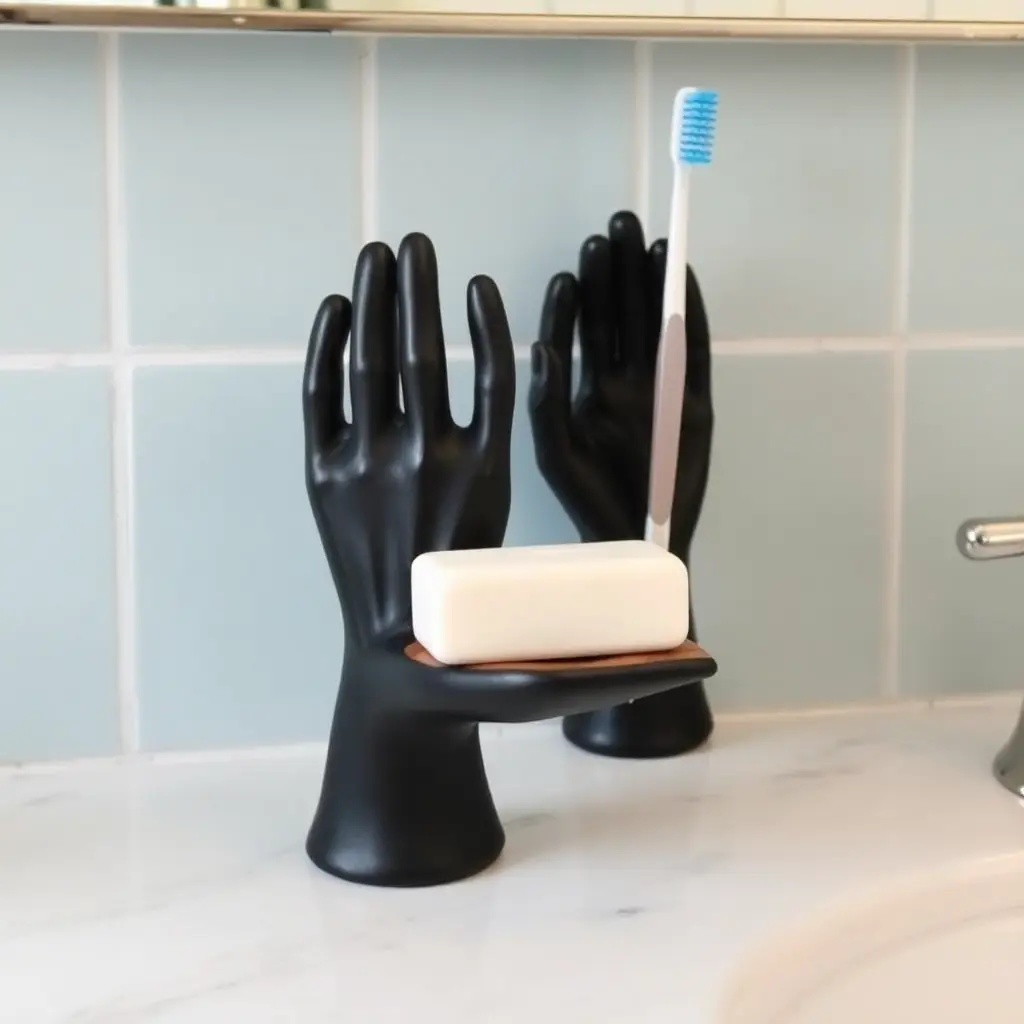
Bathrooms benefit from plaster hand holders designed specifically for soap bars, toothbrushes, or cotton ball storage. The moisture-rich environment requires sealed plaster to prevent degradation, but properly treated hands withstand bathroom conditions while introducing spa-like elegance. Position hands near sinks to hold bar soap, creating elevated presentations that allow proper drainage and drying.
The key to bathroom applications lies in thorough waterproofing. Apply multiple coats of clear acrylic sealer, paying special attention to crevices and detailed areas where moisture might penetrate. Test the seal by placing the hand in water overnight before introducing it to daily bathroom use. This preparation ensures longevity despite constant humidity exposure.
Design choices should complement bathroom aesthetics. Coastal bathrooms pair well with hands in sandy beige or driftwood gray, while modern spaces benefit from stark white or matte black finishes. Consider sizing appropriate to available counter space, ensuring the holder provides function without overwhelming limited bathroom surfaces.
Kitchen Utensil and Tool Holders
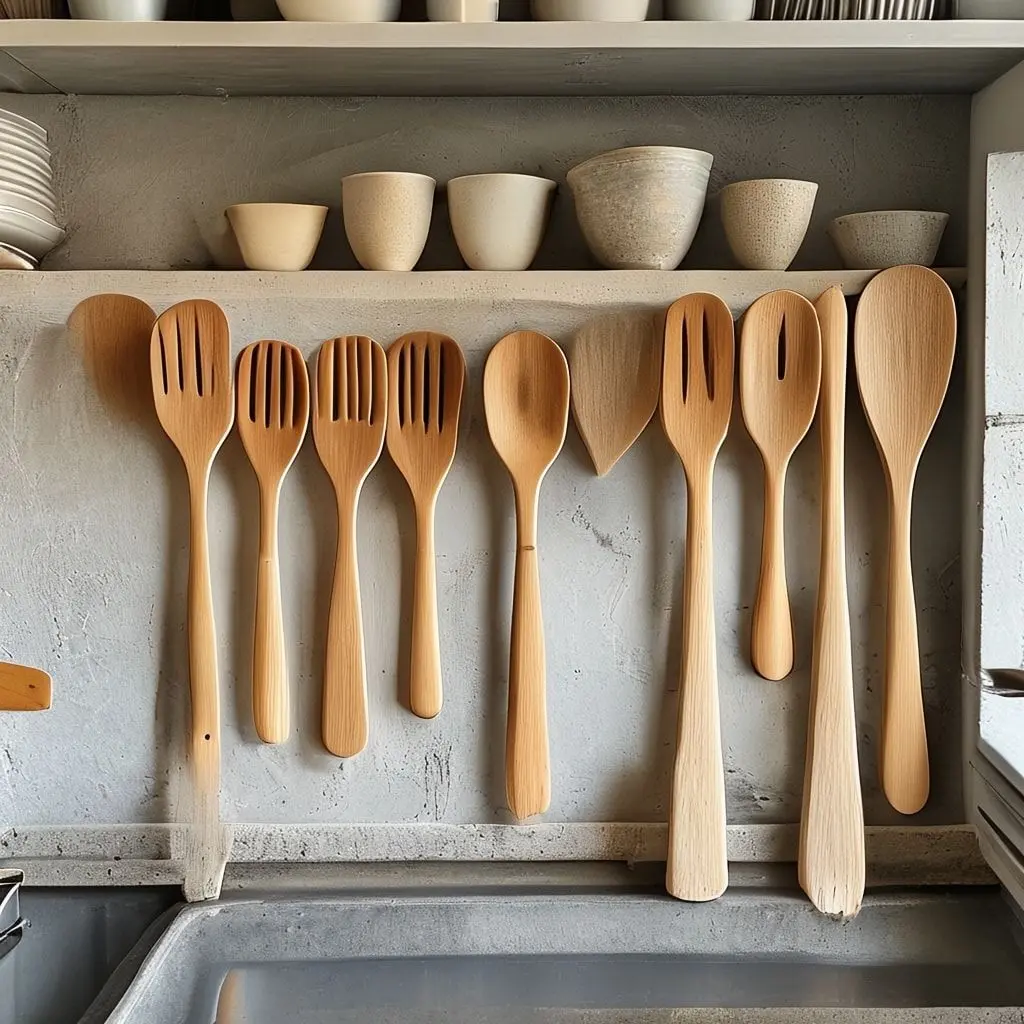
Kitchens gain unexpected character through plaster hand utensil holders positioned near cooking areas. These holders accommodate wooden spoons, whisks, spatulas, and other frequently used tools, keeping essentials within reach while adding sculptural interest to functional spaces. The heat-resistant properties of cured plaster make these holders suitable for stovetop-adjacent placement.
Creating kitchen-appropriate holders requires considerations beyond standard decorative pieces. Ensure adequate depth and palm width to accommodate bulky utensil handles. Seal the plaster thoroughly to resist food splatter and facilitate easy cleaning. Some crafters apply food-safe sealants to interior surfaces, though keeping utensils in protective sleeves provides additional sanitation.
The contrast between utilitarian kitchen tools and artistic hand sculptures creates appealing visual tension. This juxtaposition elevates everyday cooking tasks, transforming routine meal preparation into activities surrounded by thoughtful design. Position these holders as countertop statements that reflect your commitment to aesthetics in every home area.
Seasonal and Holiday Displays
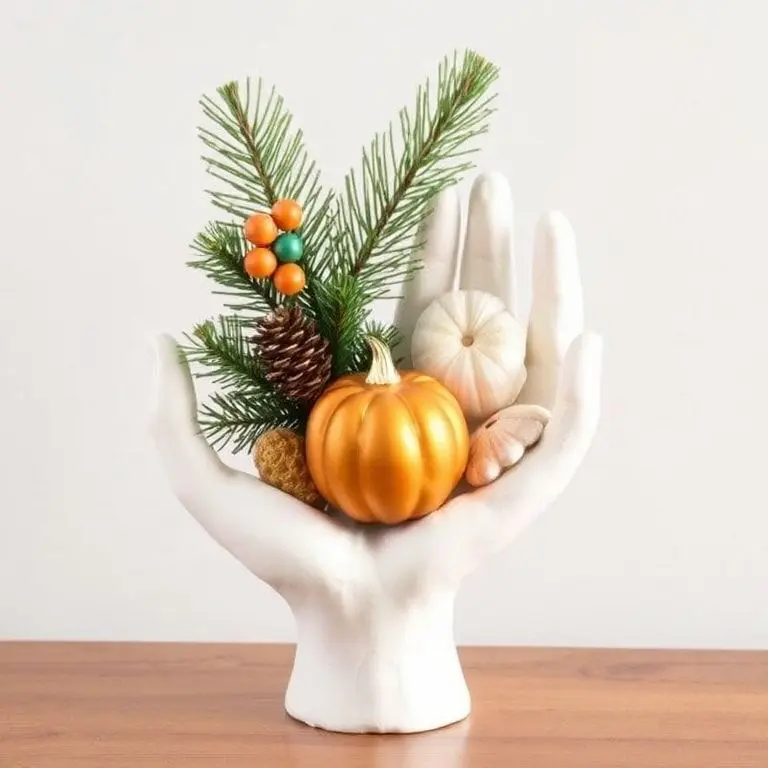
Plaster hands adapt beautifully to seasonal decoration, serving as armatures for holiday-specific displays that change throughout the year. During autumn, position hands holding miniature pumpkins or fall foliage. Winter transforms hands into snow-dusted sculptures cradling ornaments or evergreen sprigs. Spring and summer welcome flower arrangements or seashell collections in waiting palms.
This versatility maximizes investment in each plaster hand piece. Rather than purchasing season-specific decor that sits unused for months, adaptable hand sculptures earn their display space year-round through strategic styling changes. Store seasonal elements separately, swapping them as holidays approach to maintain fresh, timely presentations.
The neutral base of white or natural plaster allows seasonal elements to claim visual focus while the hand provides sophisticated support. This approach creates cohesive seasonal displays that avoid the cluttered appearance sometimes associated with holiday decorating. The sculptural quality ensures even simple additions like a single ornament or flower stem appear intentionally curated.
Personalized Gift Presentations
Handcrafted plaster hands make exceptional personalized gifts that communicate thoughtfulness and creativity. Creating custom hands for specific recipients allows you to tailor sizing, finishing, and intended use to individual preferences. A jewelry-loving friend appreciates a ring holder in her favorite color, while a plant enthusiast values a succulent-ready display piece.
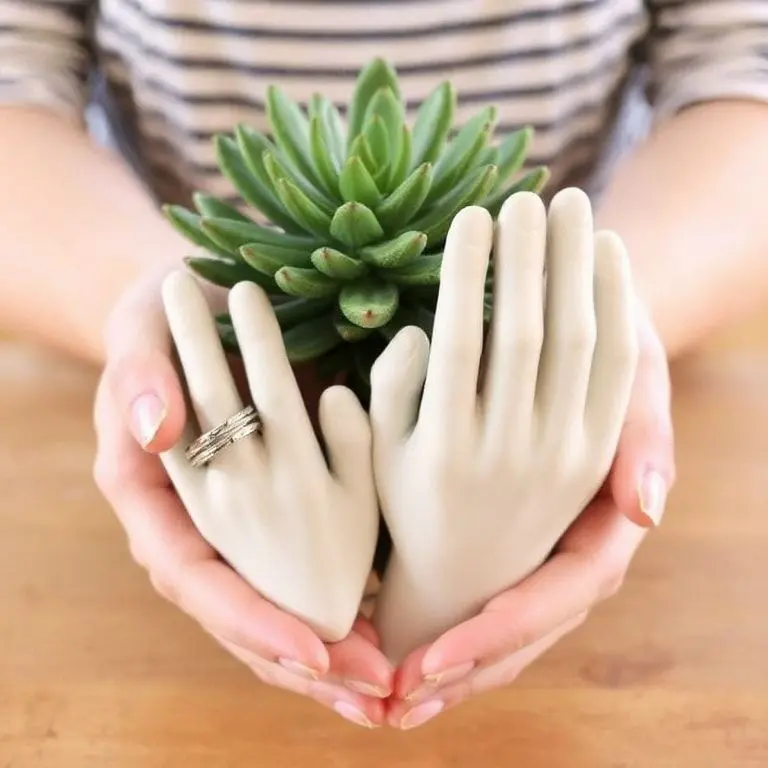
The personal investment in creating these gifts elevates them beyond typical store-bought items. Recipients recognize the time and effort involved in molding, curing, and finishing each piece, adding sentimental value that manufactured gifts lack. Document the creation process through photos to include with the gift, sharing the journey from materials to finished artwork.
Presentation enhances impact. Package plaster hands with complementary items that suggest intended use: include rings with jewelry holders, air plants with botanical displays, or scented candles with candle-holding hands. This complete gift experience provides immediate functionality while showcasing the versatility you’ve built into the design.
Abstract Sculptural Decor
Beyond functional applications, plaster hands serve as pure sculptural statements that anchor room designs through artistic presence alone. Position these pieces on pedestals, shelving units, or coffee tables where they command attention as focal points. The human hand’s universal recognition creates immediate connection, while the plaster medium’s classical associations introduce timeless elegance.
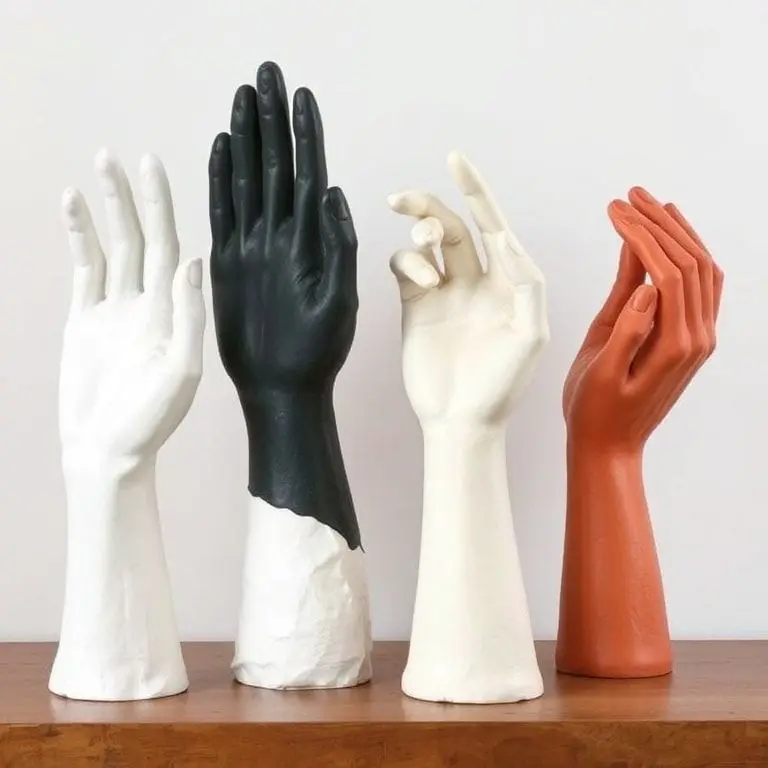
Abstract presentations benefit from creative finishing techniques that emphasize form over function. Experiment with unexpected colors like deep navy, forest green, or terracotta that challenge conventional white plaster associations. Textural treatments including distressing, layered painting, or embedded materials transform simple casts into complex artworks worthy of gallery consideration.
Grouping multiple hands in varied poses creates narrative compositions that invite interpretation. A collection of hands in different gestures suggests movement, communication, or emotional expression. This curatorial approach to display transforms individual pieces into cohesive installations that reflect sophisticated design sensibilities.
Tips for Creating Perfect Plaster Hands
Achieving professional results requires attention to specific techniques that differentiate amateur attempts from polished final products. Begin with high-quality plaster of Paris mixed according to manufacturer specifications. Consistency matters tremendously; plaster should pour smoothly without lumps but maintain enough body to capture fine details like fingerprints and knuckle creases.
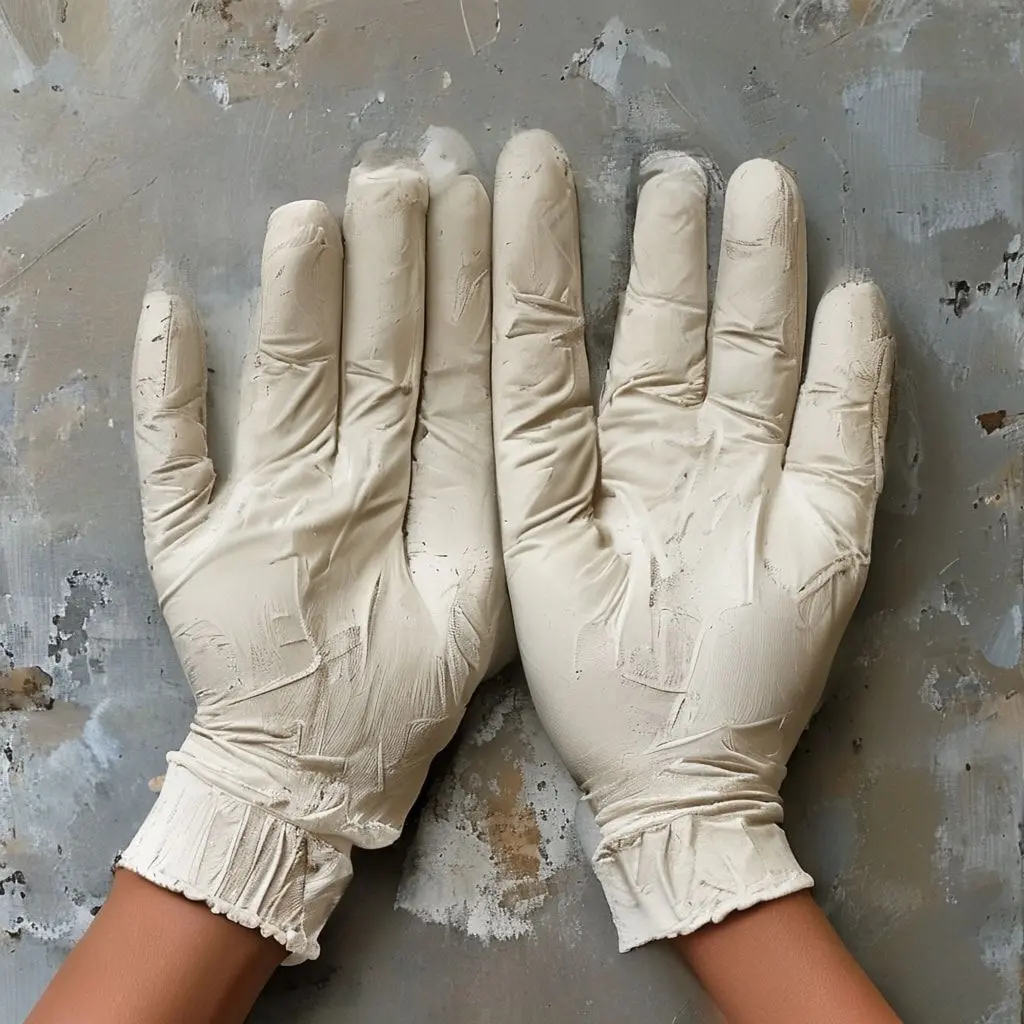
Glove selection impacts final appearance. Latex gloves produce smoother surfaces ideal for modern aesthetics, while textured rubber gloves create interesting patterns. Ensure gloves fit properly to capture accurate hand proportions and natural finger positioning. Support gloves during filling and curing using sand, rice, or dedicated armatures that maintain desired poses until plaster fully sets.
Patience during curing prevents common problems. Resist removing molds prematurely, which causes surface imperfections and structural weakness. Allow full curing time, typically twenty-four to forty-eight hours depending on plaster thickness and ambient humidity. Once demolded, sand rough edges carefully and apply sealers appropriate to intended use, whether decorative or functional.
Conclusion
Plaster hand sculptures represent the perfect intersection of artistic expression and practical functionality in home decor. These versatile pieces adapt to countless applications, from organizing daily essentials to serving as pure artistic statements that elevate interior design. The accessibility of materials and straightforward creation process democratizes sculptural art, allowing anyone to craft gallery-worthy pieces regardless of previous artistic experience.
The enduring appeal of plaster hands lies in their ability to introduce human elements into designed spaces. In an era dominated by mass production and digital experiences, these tactile sculptures reconnect us with handmade traditions and physical artistry. Each piece carries the imprint of its creator, whether that’s the texture of the original hand or the finishing choices that personalize the final product.
As design trends continue emphasizing sustainability, personalization, and meaningful objects, plaster hand crafts position themselves as relevant, timeless additions to thoughtful homes. They challenge the notion that beautiful decor requires significant financial investment, proving that creativity and basic materials can produce results rivaling expensive designer pieces. Whether displayed individually as striking focal points or grouped in curated collections, plaster hands transform living spaces into personalized galleries that reflect individual style and creative spirit.
Frequently Asked Questions
What materials do I need to make plaster hands?
You need plaster of Paris powder, water, latex or rubber gloves, a mixing container, and support materials like sand or rice to hold the glove shape while curing. Optional items include sealers, paints, and sandpaper for finishing. Most materials are available at craft stores or online for minimal cost.
How long does plaster take to cure completely?
Plaster of Paris typically requires twenty-four to forty-eight hours for complete curing, though it may feel dry to touch within a few hours. Full strength develops only after thorough drying. Factors like humidity, plaster thickness, and room temperature affect curing time. Patience ensures structural integrity and prevents cracking.
Can I use plaster hands outdoors?
Unsealed plaster deteriorates rapidly outdoors due to moisture exposure and temperature fluctuations. However, thoroughly sealed plaster hands can withstand covered outdoor areas like porches or patios. Apply multiple coats of outdoor-grade sealer and avoid direct rain exposure. Concrete-based alternatives offer superior outdoor durability for garden displays.
How do I prevent air bubbles in my plaster hands?
Mix plaster slowly and thoroughly to minimize air incorporation. Tap the filled glove gently against your work surface to encourage bubbles to rise and escape. Pour plaster in a steady stream rather than splashing it into the glove. Some crafters use vibrating tools to help release trapped air during the filling process.
What’s the best way to clean plaster hand holders?
Sealed plaster hands clean easily with damp cloths and mild soap. Avoid soaking or submerging unsealed pieces, which absorbs moisture and causes deterioration. For stubborn marks, use gentle erasers or fine-grit sandpaper on sealed surfaces. Regular dusting prevents buildup that requires more aggressive cleaning methods.