17+ Creative Painted Concrete Bench Ideas
Painted Concrete Bench Ideas ,Concrete benches offer durability and functionality but often lack the visual appeal that makes outdoor spaces truly inviting. A fresh coat of paint transforms these utilitarian fixtures into striking focal points that reflect your personal style while maintaining their structural integrity. Whether you have existing concrete benches looking tired and dated or you’re planning new installations, painted finishes provide endless creative possibilities that elevate ordinary seating into artful landscape features.
The process of painting concrete benches combines practical surface preparation with artistic vision, resulting in furniture that withstands weather conditions while making bold design statements. Unlike wood or metal benches that deteriorate over time, properly painted concrete maintains its appearance for years with minimal maintenance. From vibrant modern colors that energize contemporary gardens to soft pastels that complement cottage landscapes, painted concrete benches adapt to any aesthetic preference. The key lies in selecting appropriate materials, preparing surfaces correctly, and applying creative techniques that transform simple concrete into personalized outdoor art.
Classic Solid Color Transformations
Single solid colors create clean, sophisticated looks that anchor outdoor spaces with confident design choices. This approach works particularly well for modern landscapes where simplicity and bold statements take priority over ornate decoration. Deep charcoal gray provides contemporary elegance that coordinates with most architectural styles and plant palettes. Navy blue offers rich color without overwhelming smaller gardens, while crisp white creates fresh, timeless appeal suitable for traditional and coastal settings.
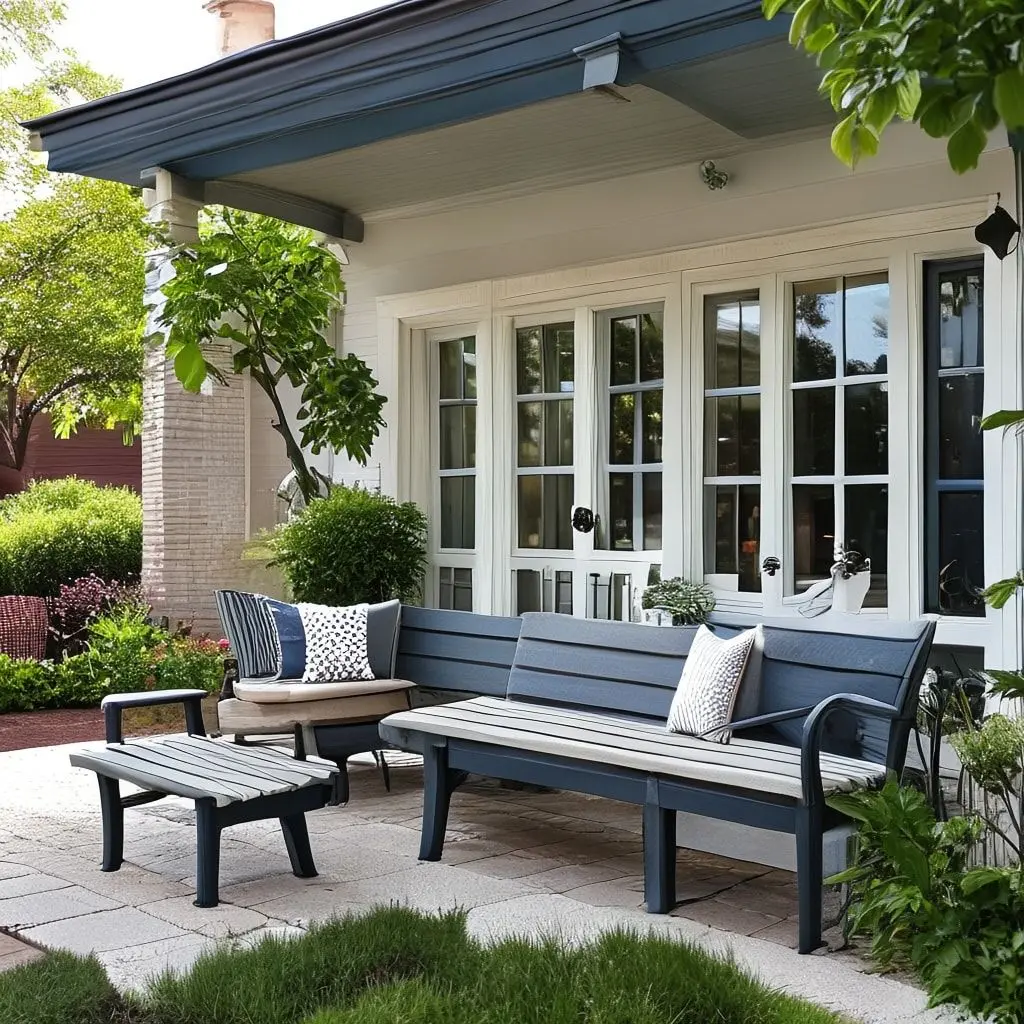
The success of solid color applications depends heavily on proper surface preparation and quality paint selection. Concrete surfaces must be thoroughly cleaned, any cracks repaired, and a quality concrete primer applied before the topcoat. Exterior-grade masonry paint formulated specifically for concrete provides the best adhesion and weather resistance. Apply multiple thin coats rather than one thick application to prevent peeling and ensure even coverage.
Consider your bench’s surroundings when selecting colors. Benches positioned against green foliage benefit from colors that provide contrast such as burgundy, slate blue, or warm terracotta. Those placed on patios or decks should coordinate with home exteriors and existing outdoor furniture. Solid colors also serve as excellent backgrounds for later embellishments if you decide to add stenciled designs or patterns in subsequent seasons.
Two-Tone Contemporary Designs
Dividing benches into two distinct color zones creates visual interest while maintaining clean modern aesthetics. This technique works by painting the seat one color and the legs or base another, establishing clear definition between structural elements. Popular combinations include white seats with black bases for striking contrast, gray seats with natural concrete-colored legs for subtle sophistication, or complementary colors like sage green seats with cream bases for softer appeal.

The division line between colors requires careful taping to achieve crisp, professional results. Use painter’s tape designed for outdoor use, pressing edges firmly to prevent paint bleeding. Consider the bench’s proportions when deciding where to place the color break. Generally, painting the seat and upper portion in the lighter shade while using darker tones below creates balanced compositions that feel grounded.
Two-tone designs offer practical advantages beyond aesthetics. Darker colors on bases and legs hide dirt and wear better than lighter shades, while lighter seat colors remain cooler in direct sunlight, improving comfort during warm weather. This approach also allows you to incorporate both neutral and accent colors, satisfying desires for both restraint and personality in your outdoor design.
Vibrant Geometric Patterns
Geometric patterns transform concrete benches into contemporary art pieces that energize outdoor spaces with dynamic visual movement. Chevron stripes, hexagonal honeycomb designs, triangular compositions, and linear patterns create modern sophistication suitable for urban gardens and contemporary landscapes. These designs require careful planning and precise execution but deliver stunning results that become conversation pieces.

Creating geometric patterns begins with detailed sketching and measurements. Map your design on paper first, calculating dimensions to ensure patterns remain proportional across the bench surface. Use painter’s tape to block out shapes, working systematically from one section to the next. Multiple colors can be incorporated by completing all areas of one color before moving to the next, allowing adequate drying time between applications.
Bold color combinations work particularly well for geometric designs. Contrasting pairs like black and yellow, navy and coral, or emerald and gold create maximum impact. For subtler effects, choose analogous colors that sit near each other on the color wheel, such as various shades of blue or a progression from yellow through orange to red. The repetition inherent in geometric patterns provides cohesion even when using multiple colors.https://casolia.com/painted-concrete-bench-ideas/
Ombre and Gradient Effects
Ombre techniques create smooth color transitions that add depth and artistic flair to concrete benches. This sophisticated painting method involves gradually blending from one color to another, typically from dark to light or through a spectrum of related hues. The effect works beautifully on bench backs and seats, creating focal points that draw the eye while maintaining elegant simplicity.
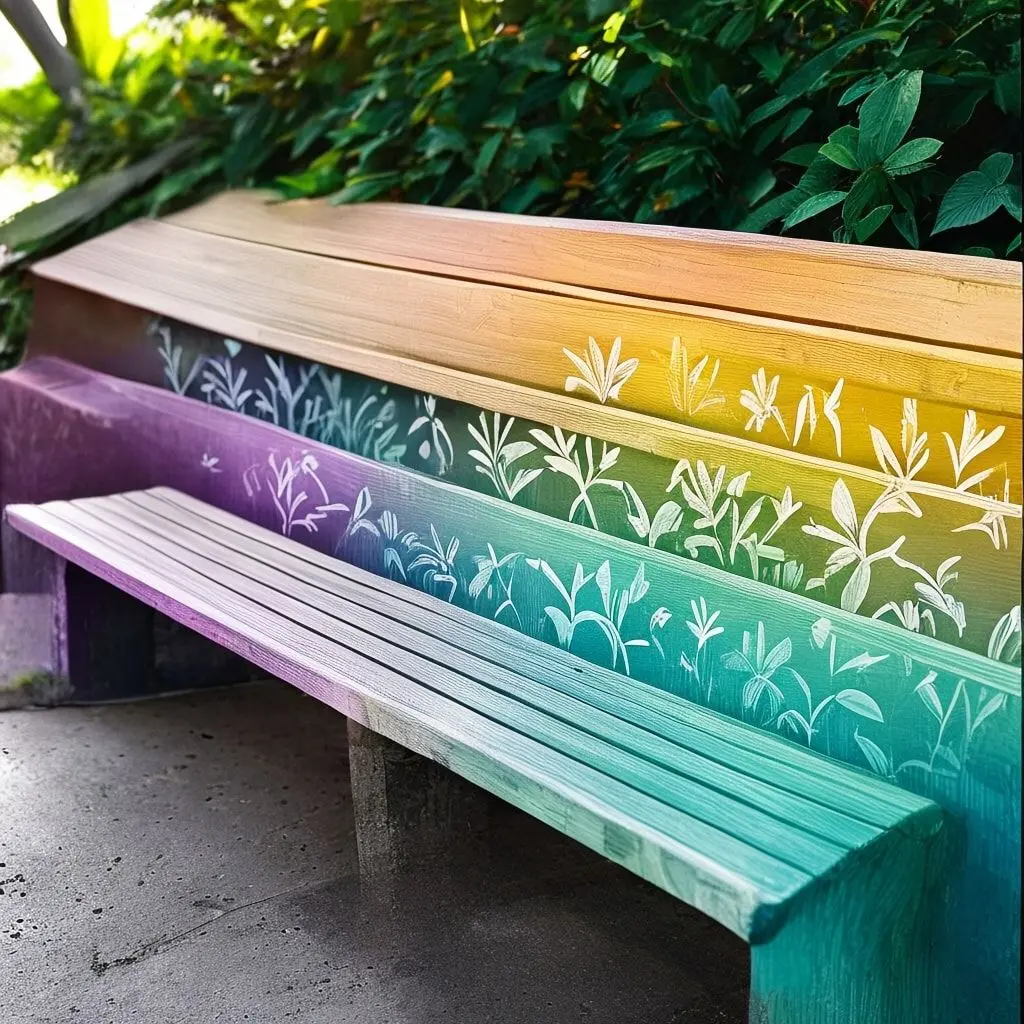
Achieving convincing ombre effects requires working quickly with wet paint, blending where colors meet before they dry. Start with your darkest color at one end, applying it heavily. Add your lighter color at the opposite end, then use a dry brush or sponge to blend the meeting point with overlapping strokes. Multiple thin layers build up gradual transitions more successfully than attempting dramatic shifts in single applications.
Color choices significantly impact the mood ombre benches create. Ocean-inspired gradients from deep navy through turquoise to pale aqua evoke coastal serenity. Sunset palettes moving from deep purple through pink to pale yellow bring warmth and energy. Monochromatic ombres using various shades of one color provide sophistication without overwhelming smaller spaces. This technique suits both modern and eclectic garden styles depending on color selections.
Stenciled Floral and Nature Motifs
Stenciling allows those without freehand painting skills to add intricate designs to concrete benches. Floral patterns, leaves, vines, and nature-inspired motifs suit garden settings beautifully, creating cohesive connections between furniture and surrounding plantings. Ready-made stencils are available in countless designs, or you can cut custom patterns from stencil material for truly unique results.
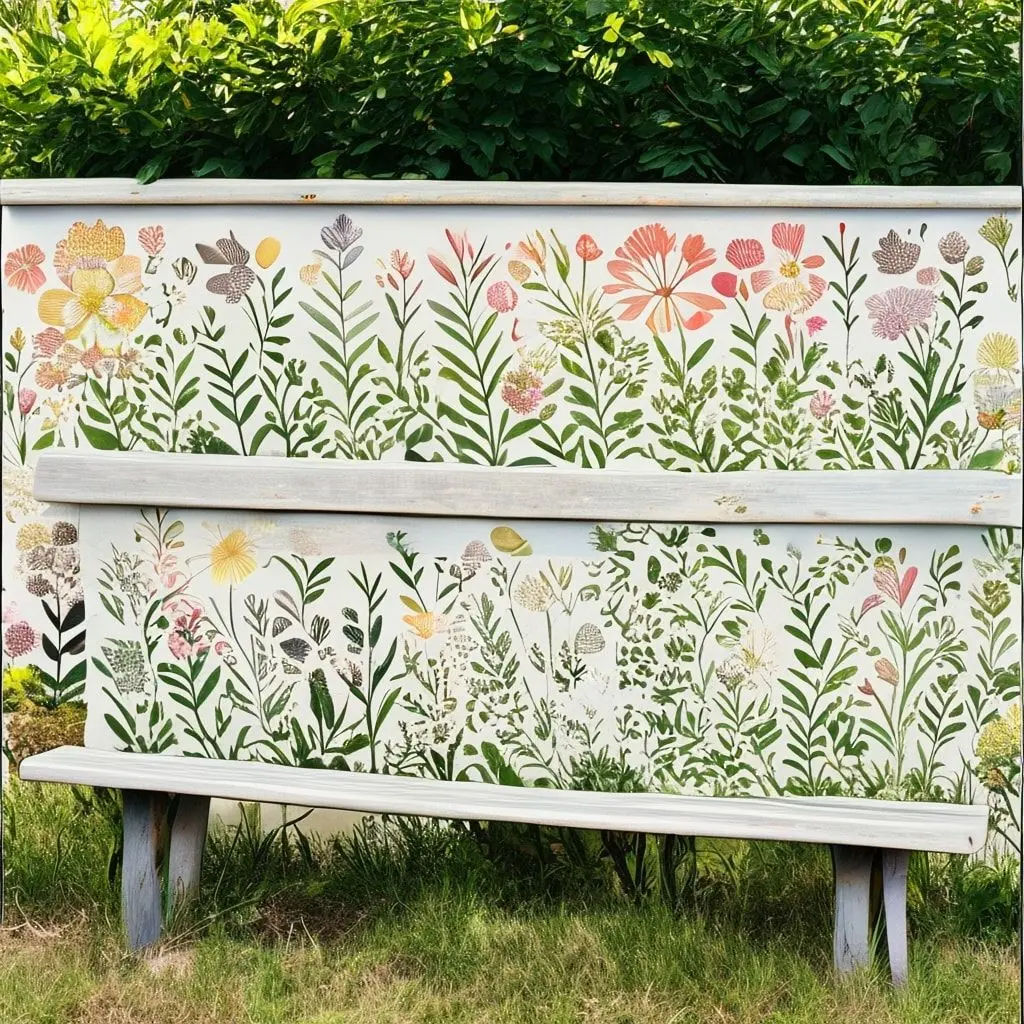
Position stencils carefully on cleaned, primed, and base-coated benches, securing them with spray adhesive or tape to prevent shifting during application. Use stencil brushes or sponges with minimal paint, building color gradually through multiple light applications rather than heavy single coats that cause bleeding under stencil edges. Metallic paints in gold, silver, or copper create elegant effects over solid base colors.
Consider scale when selecting stencil designs. Large benches accommodate bigger, bolder patterns while smaller pieces suit delicate, intricate designs. Repeating patterns across the entire bench creates cohesive looks, while single statement designs on seat backs provide focal points. Combining stenciled elements with solid painted sections balances decorated and plain areas, preventing visual overload.
Distressed and Weathered Finishes
Creating intentionally aged appearances gives new concrete benches character and charm that suits cottage gardens, farmhouse landscapes, and shabby chic outdoor spaces. Distressing techniques involve applying multiple paint layers then selectively removing top coats to reveal colors beneath, mimicking natural wear patterns. The result looks authentically weathered rather than freshly painted.
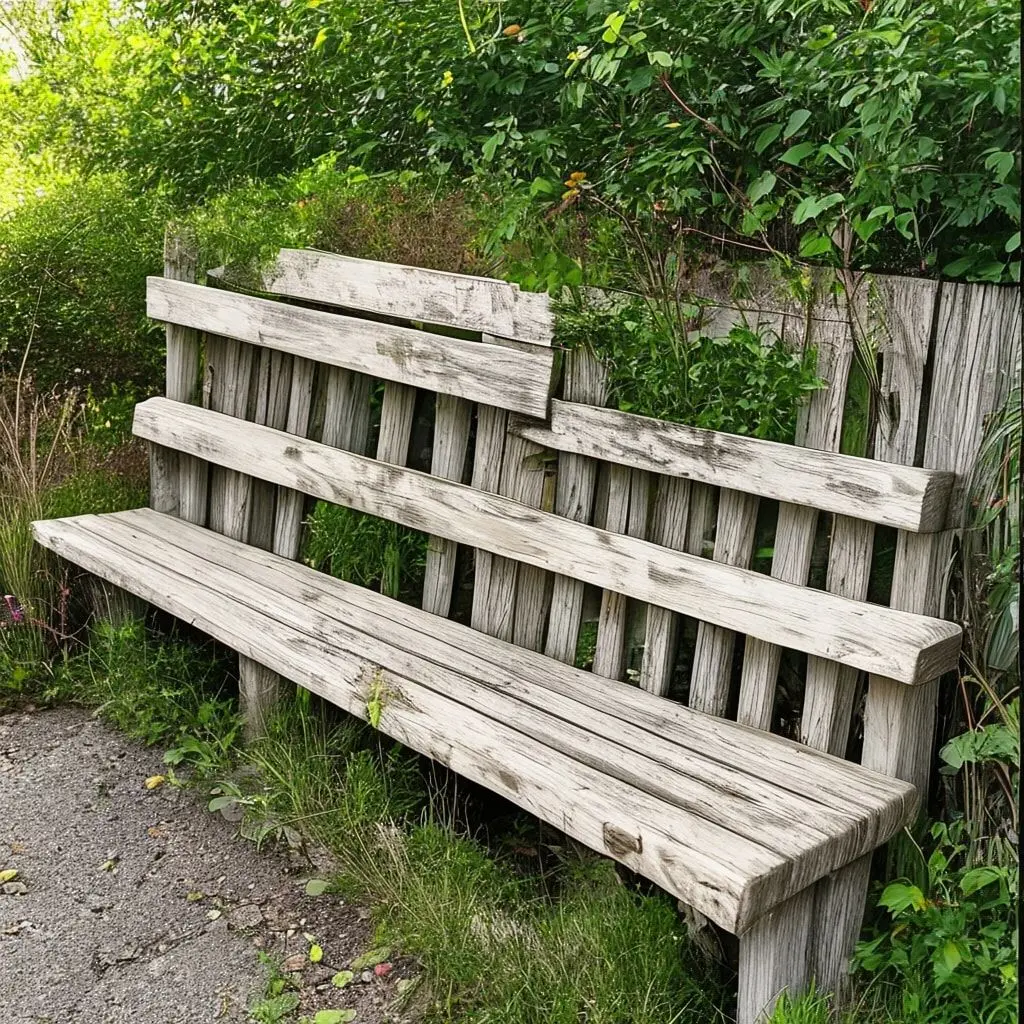
Begin with a base coat in your desired underlayer color, often brown, gray, or darker shades. Once dry, apply your top coat in a contrasting lighter color such as white, cream, or soft pastels. After the top coat dries but before it fully cures, use sandpaper to gently remove paint from edges, corners, and areas that would naturally experience wear. Focus on raised details and points that would contact clothing or weather exposure.
Varying the distressing intensity creates realistic effects. Remove more paint from high-traffic areas like seat edges and armrests while leaving flatter surfaces more intact. Some artists add deliberate chips and dings using wire brushes or chains for enhanced authenticity. Seal distressed finishes with matte or satin topcoats rather than glossy varieties, as shine diminishes the aged appearance you’ve worked to create.
Moroccan and Mediterranean Tile Patterns
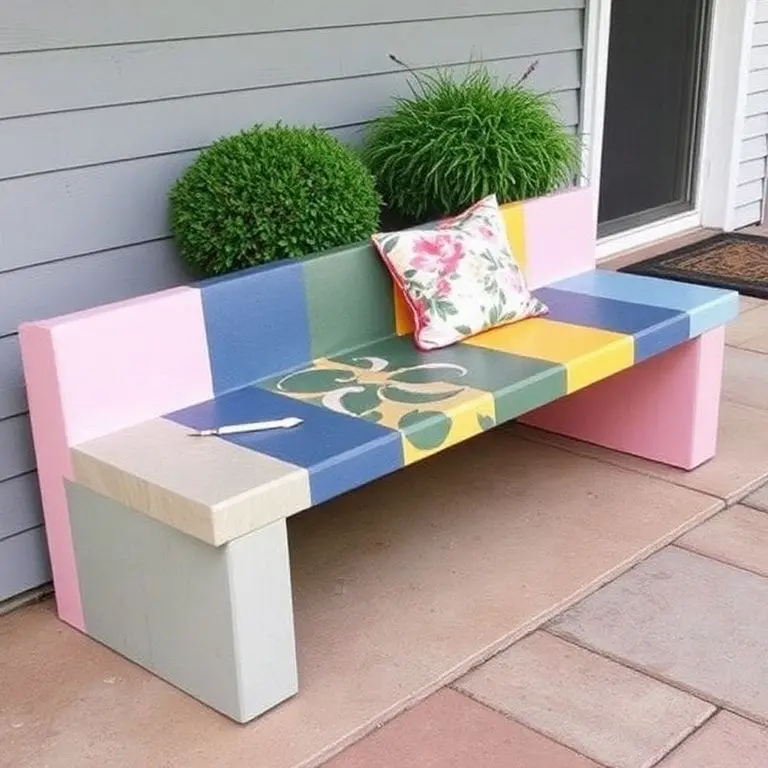
Drawing inspiration from colorful tilework found in Mediterranean and Moroccan architecture transforms concrete benches into exotic focal points. These intricate patterns typically feature repeated geometric or floral designs in vibrant color combinations including cobalt blue, sunny yellow, terracotta orange, and emerald green against white or cream backgrounds.
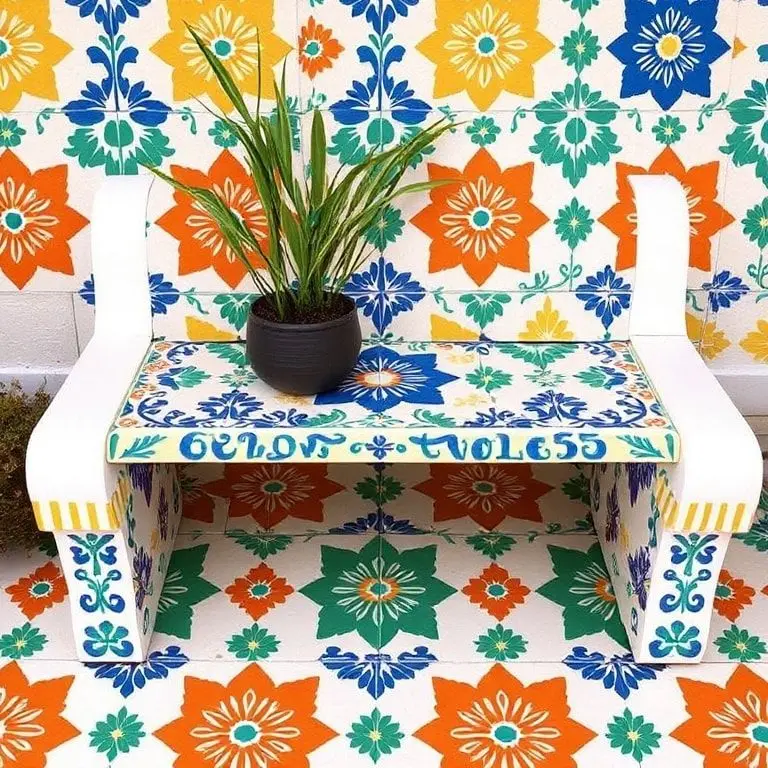
Creating tile pattern effects requires patience and precision. Begin by dividing the bench surface into a grid that mimics individual tiles. Paint the base color first, typically white or cream, allowing it to dry completely. Use stencils or hand-paint your chosen motif within each grid section, working methodically to maintain pattern consistency. Small artist brushes help achieve the fine details characteristic of tile designs.
This style suits outdoor spaces with Spanish, Mediterranean, or eclectic themes particularly well. The ornate nature of these patterns makes them ideal for benches positioned as garden focal points rather than those intended to blend subtly into landscapes. Consider limiting tile patterns to seat backs or specific sections rather than covering entire benches to prevent visual overwhelm.
Chalkboard Paint Functionality
Chalkboard paint turns concrete benches into interactive surfaces where messages, drawings, and seasonal decorations can change regularly. This practical approach particularly appeals to families with children, teachers creating outdoor classrooms, or anyone who enjoys frequently updating their outdoor decor. Chalkboard finishes are available in traditional black plus contemporary colors including green, blue, and gray.
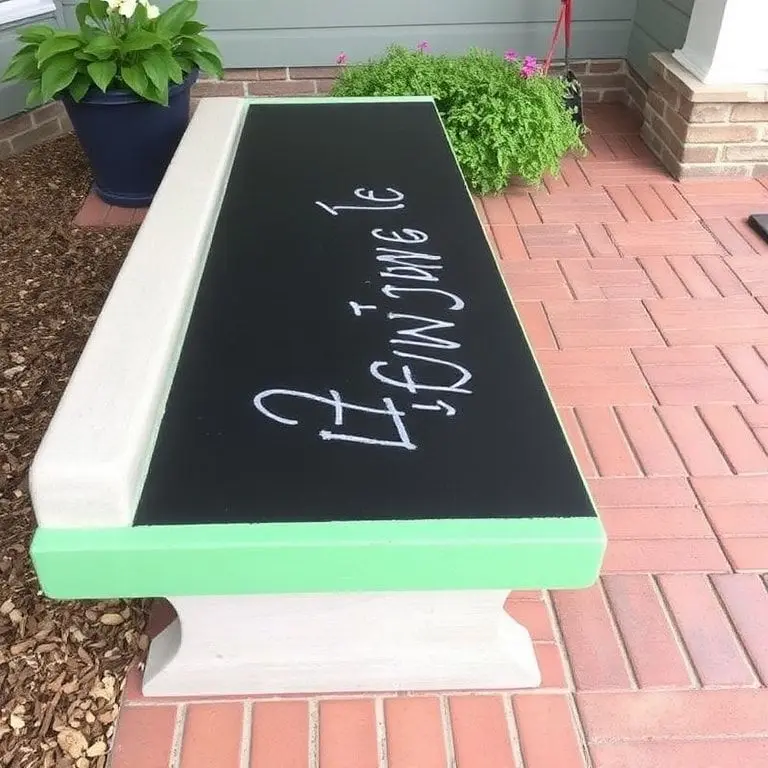
Apply chalkboard paint following manufacturer instructions, typically requiring multiple coats for proper coverage and functionality. Season the surface before first use by rubbing chalk over the entire area then erasing it, which prevents permanent ghosting of initial drawings. The finish creates matte surfaces that resist weather while maintaining their writeable quality.
Use chalkboard benches to display welcome messages, seasonal greetings, garden plant labels, or allow children creative freedom for temporary art projects. The ability to change designs keeps outdoor spaces feeling fresh without permanent commitment. Seal around the edges where chalkboard paint meets other finishes to prevent moisture infiltration that could cause peeling.
Nautical and Coastal Themes

Coastal-inspired paint schemes bring breezy seaside charm to gardens regardless of proximity to actual beaches. Classic nautical combinations include navy and white stripes, crisp white with rope detailing painted in tan, or combinations of turquoise, coral, and sandy beige. These palettes create relaxed atmospheres perfect for outdoor entertaining and leisure.
Striped patterns particularly suit nautical themes, whether horizontal stripes across seat backs or vertical stripes on legs. Anchor motifs, rope designs, or subtle wave patterns can be stenciled or hand-painted as accent elements. Keep designs relatively simple to maintain the clean, uncluttered aesthetic associated with coastal style.
Finish coastal benches with high-quality sealers that protect against moisture and UV exposure, as these light colors show weathering more readily than darker tones. Consider adding actual rope wrapped around legs or arms as three-dimensional embellishment that enhances the nautical theme while providing interesting texture.
Bohemian Multi-Color Designs
Bohemian style embraces color fearlessly, combining multiple hues in playful, eclectic compositions. Painted concrete benches in boho style might feature rainbow progressions, mixed patterns combining stripes with florals, or collages of different design elements united by a cohesive color palette. This approach suits creative personalities and gardens filled with diverse plantings and decorative elements.
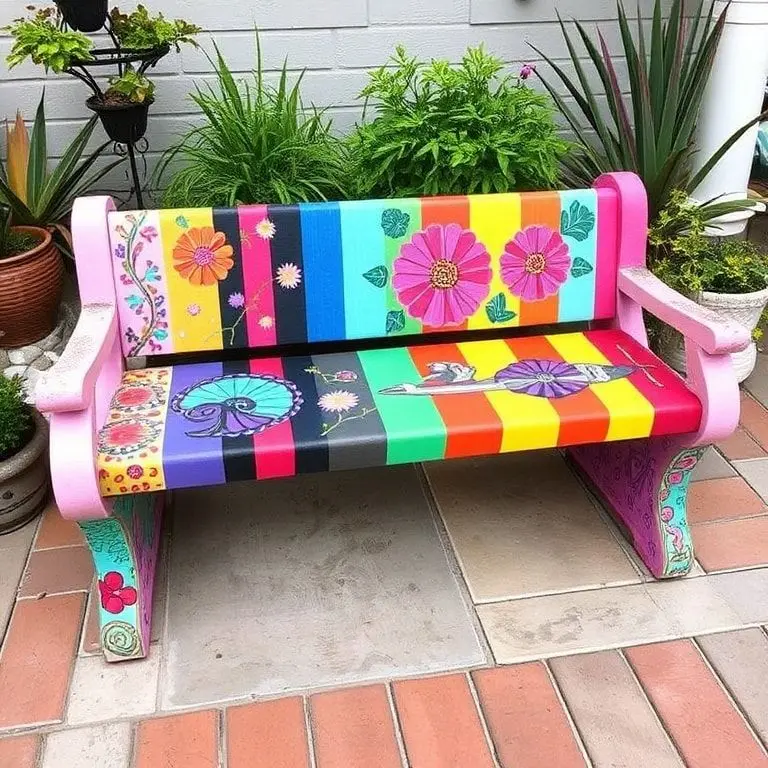
The key to successful bohemian bench painting lies in establishing some unifying element that prevents chaos. This might be repeating one color throughout all patterns, maintaining similar pattern scales, or using all warm or all cool tones. Begin with a plan that maps out where different colors and patterns will appear, even if execution remains loose and organic.
Layer patterns and colors gradually, allowing each element to dry before adding the next. Bohemian style permits imperfections and hand-painted irregularity, which actually enhances authenticity. Incorporate metallic accents, dots, and flourishes as finishing touches that add sparkle and detail. This style pairs beautifully with colorful outdoor cushions, varied plantings, and eclectic garden accessories.
Modern Minimalist Monochrome
Minimalist approaches focus on sophisticated simplicity, using single colors or subtle variations within narrow tonal ranges. Shades of gray from pale dove to deep charcoal create serene, contemporary spaces. All-white benches provide crisp freshness, while black makes bold modern statements. These restrained palettes allow surrounding gardens and architecture to take center stage.
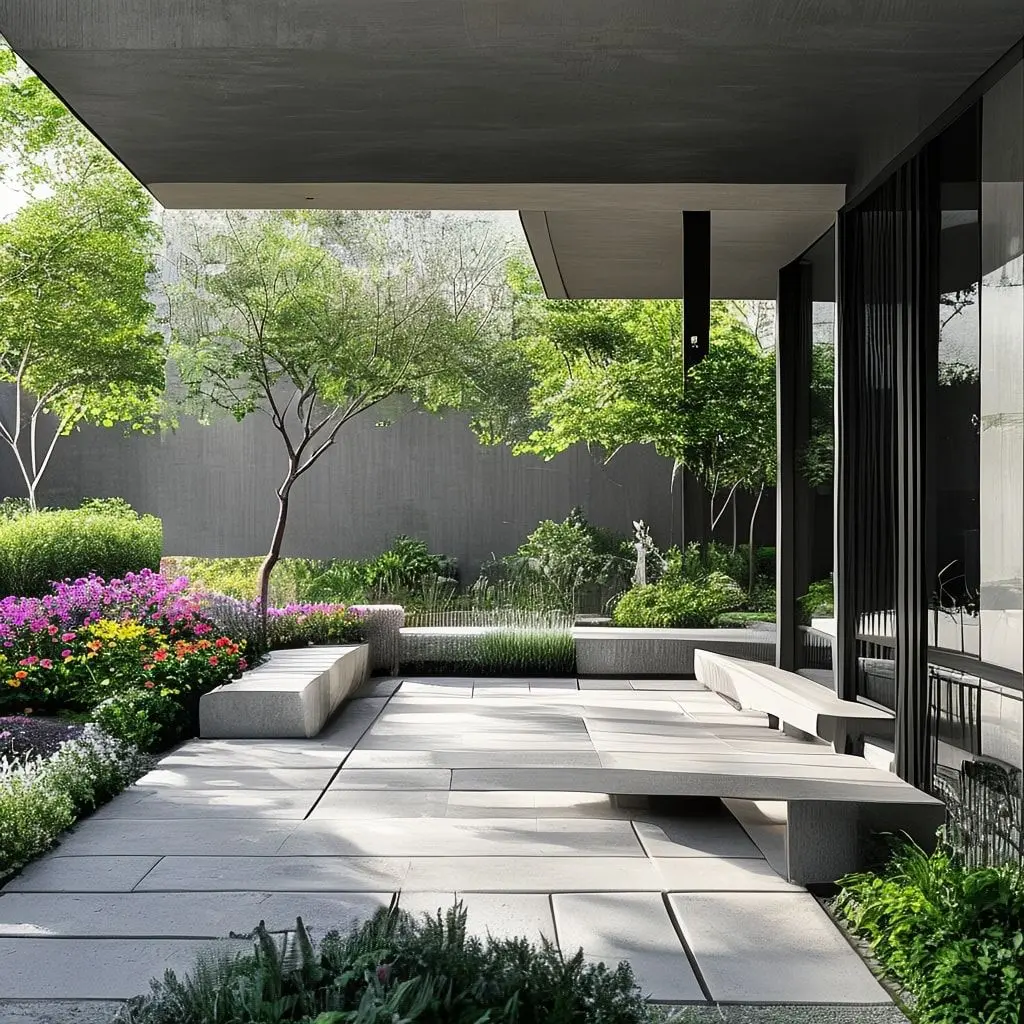
Success in minimalist painting depends on flawless execution. Surface preparation becomes critical as imperfections show prominently against solid, simple finishes. Apply multiple thin coats to achieve perfectly even coverage without drips or irregularities. Consider texture as an alternative to color variation by using different sheens, matte on seats with satin on legs for subtle contrast.
Minimalist painted benches suit modern architecture and contemporary landscape design. They provide visual rest in gardens filled with colorful flowers and varied textures. The simplicity also offers flexibility, as neutral benches coordinate easily with changing seasonal decorations and accessories without clashing.
Rustic Farmhouse Styles
Farmhouse aesthetics favor soft, muted colors and comfortable, lived-in appearances. Painted concrete benches in this style typically feature colors like soft white, cream, sage green, dusty blue, or warm gray. Finishes often incorporate distressing techniques that create gentle aging rather than stark contrasts, suggesting years of use and care.
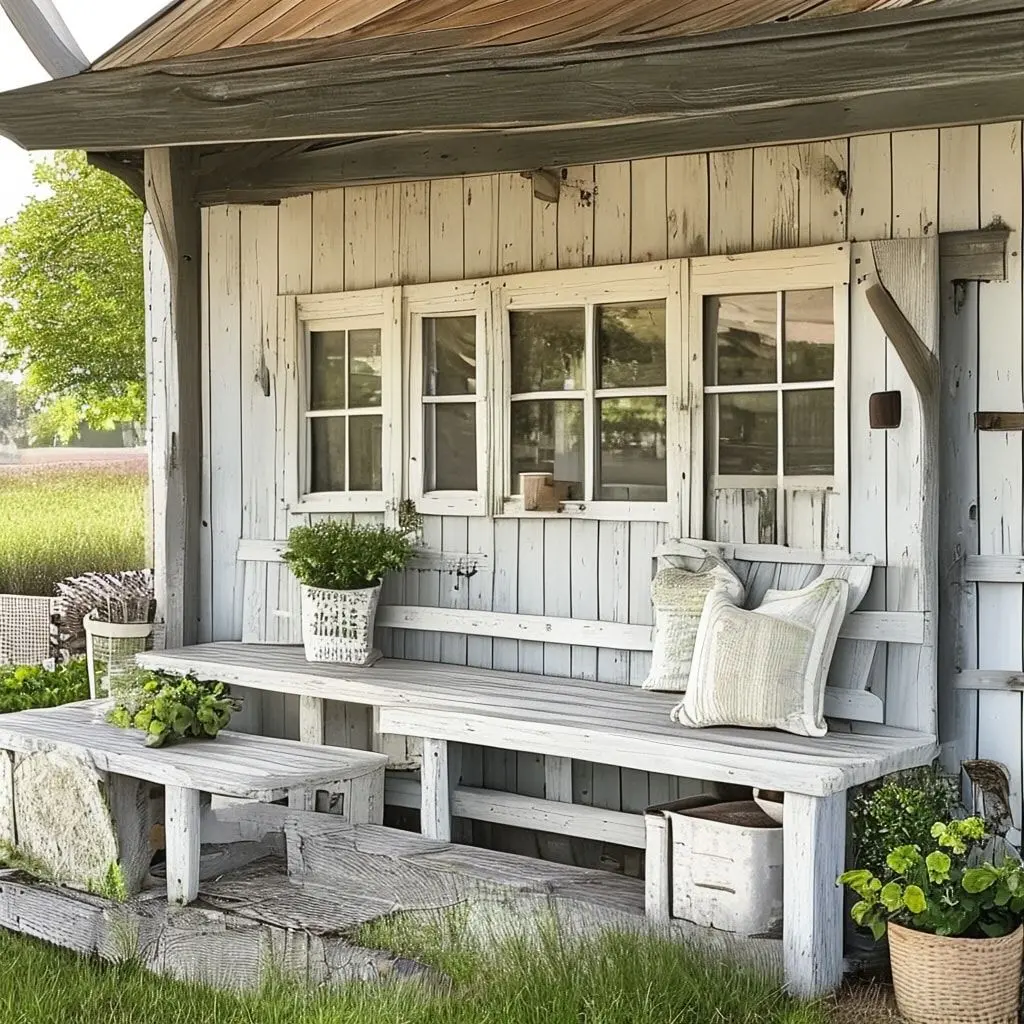
Combine farmhouse paint colors with simple stenciled elements like grain sacks stripes, basic florals, or number and letter markings that reference vintage farm equipment and supplies. Keep designs understated rather than elaborate, allowing the peaceful, unpretentious character of farmhouse style to emerge. Consider milk paint or chalk paint formulas specifically designed to create the flat, slightly powdery finish associated with antique painted furniture.
Farmhouse benches work beautifully in cottage gardens, vegetable gardens, and outdoor spaces adjacent to traditional or country-style homes. Pair them with galvanized metal accessories, wooden crates, and abundant plantings for cohesive rustic appeal. Weather resistance remains important, so seal farmhouse finishes appropriately while maintaining their matte appearance.
Sunset and Sunrise Color Schemes
Capturing the glorious colors of dawn and dusk creates benches that celebrate natural beauty and bring warmth to outdoor spaces. Sunrise palettes feature soft pinks, peaches, lavenders, and pale yellows that evoke peaceful morning light. Sunset schemes incorporate deeper oranges, reds, purples, and golden tones suggesting evening’s dramatic color displays.
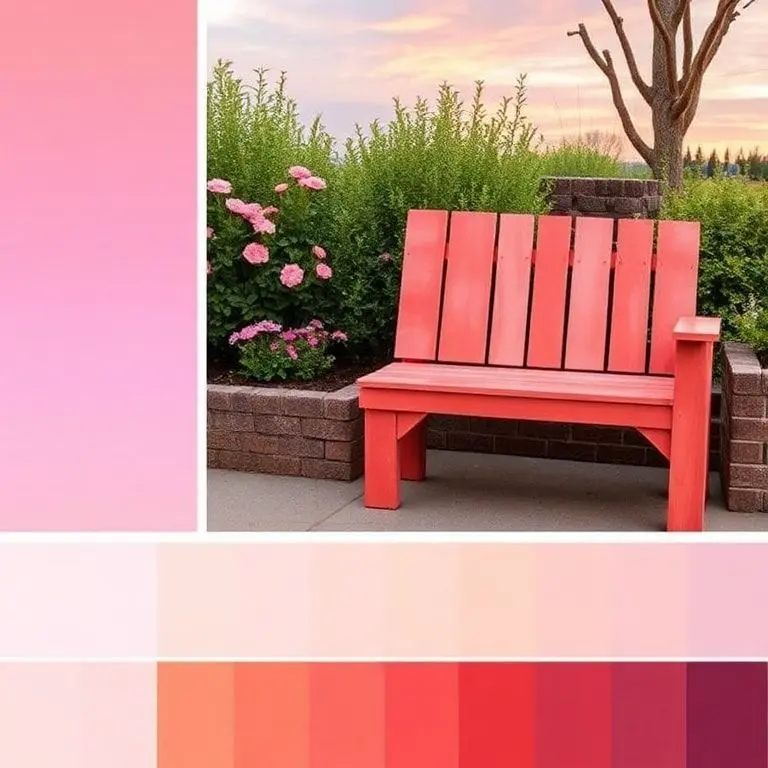
These romantic color combinations work beautifully executed as ombre gradients, horizontal bands suggesting the layered colors of the sky, or as overall washes of blended tones. Position color transitions to flow naturally across the bench form, perhaps from darker tones at the base rising to lighter shades at the top, mimicking the way sunset colors layer in actual skies.
Sunrise and sunset benches create particularly appealing spots for morning coffee or evening relaxation, reinforcing these daily rituals with color associations. The warm tones suit most garden styles and coordinate well with both cool and warm-toned plantings. Metallic gold or copper accents added as final details enhance the glowing quality these palettes evoke.
Tropical and Exotic Palettes
Bold tropical color combinations bring vacation-like energy to outdoor spaces, featuring vivid hues inspired by exotic flowers, tropical birds, and lush rainforest environments. Think hot pink with lime green, turquoise with mango orange, or combinations of purple, yellow, and green. These saturated colors create joyful, energetic atmospheres perfect for entertaining and celebration.

Tropical schemes work well with both solid color blocking and pattern incorporation. Consider painting different bench sections in contrasting tropical colors or adding stenciled palm fronds, monstera leaves, or hibiscus flowers over solid backgrounds. The exuberant nature of tropical style permits creative freedom and playful experimentation.
These intense colors suit warm climates and gardens with tropical or subtropical plantings particularly well, though they can also provide exciting contrast in temperate gardens during summer months. Balance vivid bench colors with surrounding greenery to prevent overwhelming smaller spaces. High-gloss finishes enhance the lush, saturated quality of tropical palettes.
Seasonal and Holiday Themes
Painting benches in seasonal colors allows outdoor decor to change throughout the year, celebrating holidays and seasonal transitions. Spring benches might feature pastel Easter colors, summer designs could incorporate patriotic red, white, and blue, autumn benches showcase orange and burgundy foliage tones, while winter designs embrace deep greens and reds or icy blues and silvers.
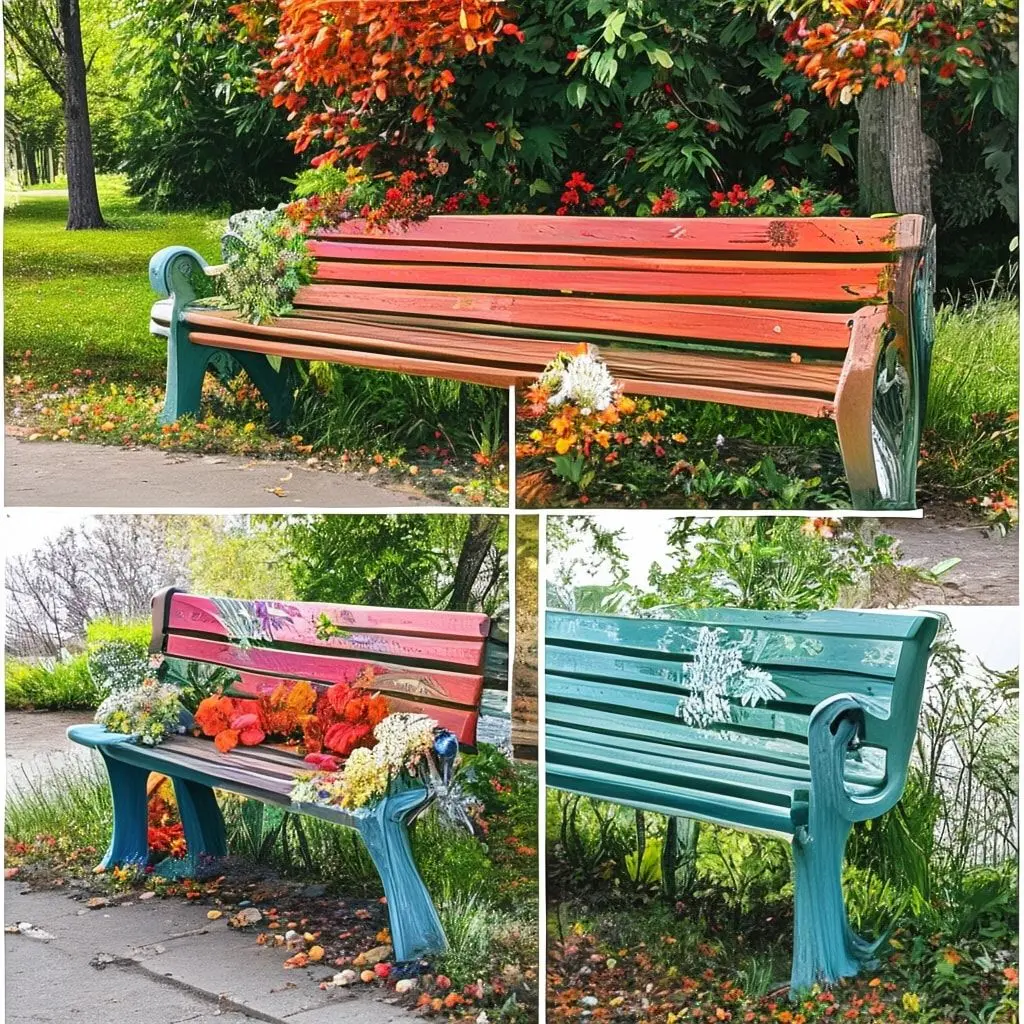
This approach works best for benches that are easy to access and repaint or for households that enjoy frequent DIY projects. Alternatively, create neutral base benches and add seasonal elements through removable stenciled designs or painted details that can be touched up or changed without full repainting. Chalkboard paint sections allow seasonal messages and designs without permanent commitment.
Seasonal painting provides opportunities to involve family members in creative projects that mark the passage of time and celebrate traditions. Children particularly enjoy contributing to holiday decorating efforts. Photograph benches through the seasons to document your creative evolution and maintain records of successful color combinations for future reference.
Metallic and Glamorous Finishes
Metallic paints in gold, silver, copper, or bronze transform concrete benches into luxurious statement pieces that catch light and add sophistication to outdoor entertaining areas. These finishes work as full coverage applications or as accent details over solid base colors. Metallic benches suit contemporary, eclectic, and even traditional garden styles when applied thoughtfully.
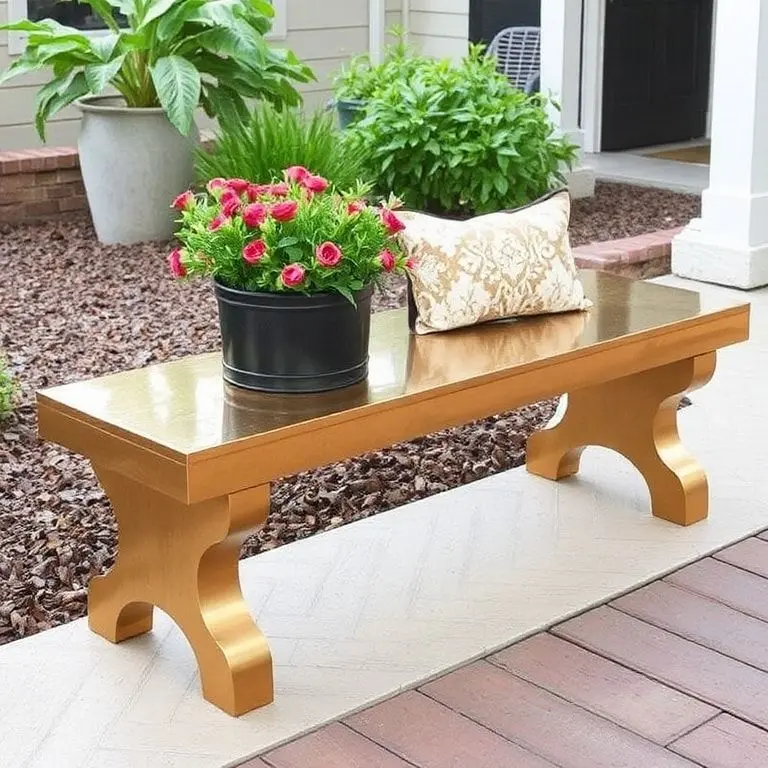
Full metallic coverage creates dramatic impact but requires careful surface preparation and application technique. Metallics show every surface imperfection, so thorough smoothing and priming become essential. Multiple thin coats build even coverage better than single thick applications. Consider weather exposure carefully, as some metallics fade or tarnish faster than standard paints.
Metallic accents offer sophisticated alternatives to full coverage. Paint legs metallic gold while keeping seats neutral gray, add metallic stenciled designs over solid backgrounds, or brush metallic highlights onto raised details and edges. These touches add glamour without overwhelming. Seal metallic finishes with clear protective coats formulated for exterior use to maintain their shine and prevent oxidation.
Abstract Artistic Expressions
Abstract painting techniques turn concrete benches into unique art pieces that reflect individual creativity without requiring representational accuracy. Splatter painting, color blocking, brushstroke patterns, and spontaneous compositions allow personal expression while creating conversation-starting outdoor furniture. This approach suits creative individuals and eclectic garden styles.
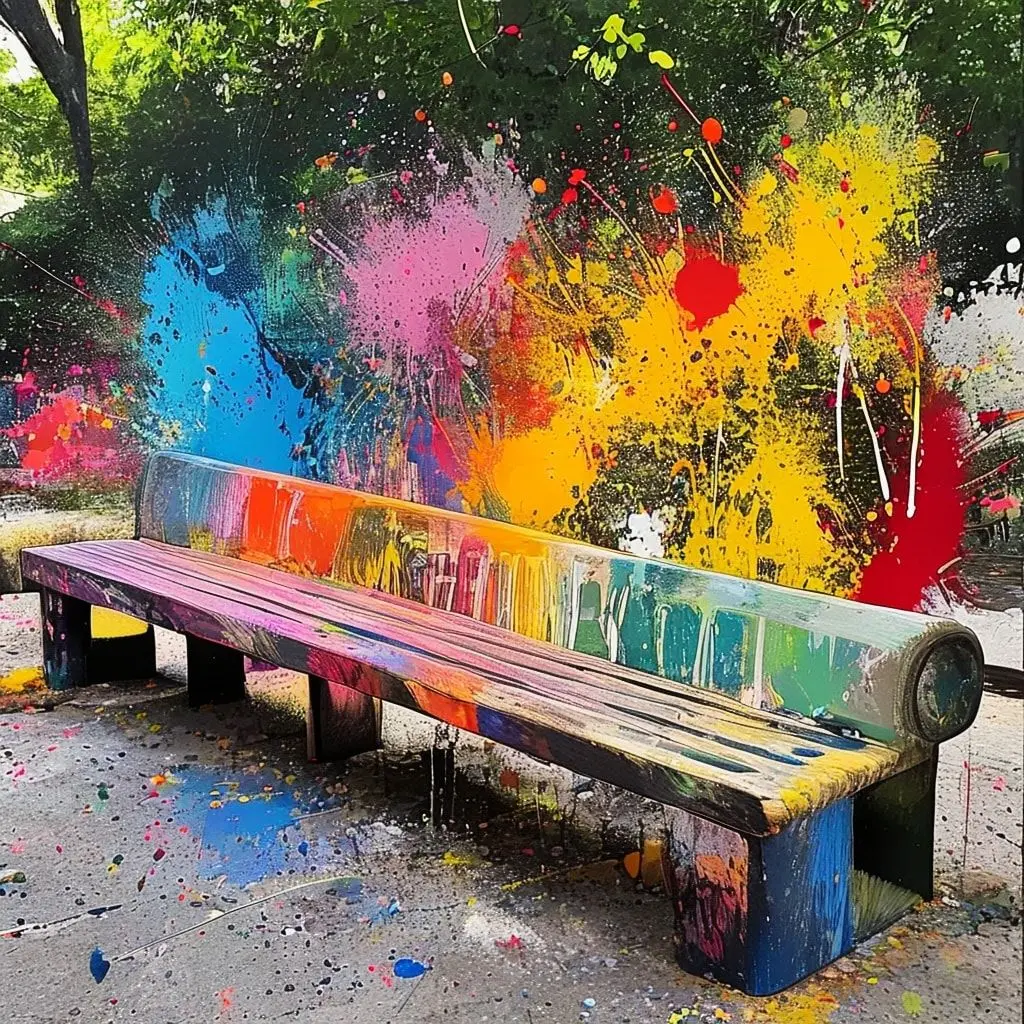
Abstract work permits experimentation and happy accidents. Begin with a base color, then add contrasting colors through various application methods including splattering, dripping, brushing, or sponging. Layer colors to create depth, allowing some underlayers to show through. Step back frequently to assess composition and balance, adding or blending as needed.
The beauty of abstract bench painting lies in its uniqueness. No two pieces will ever be identical, ensuring your outdoor furniture remains truly one of a kind. This technique also provides therapeutic creative outlets and opportunities to use up leftover paints from other projects. Embrace imperfection and spontaneity as essential elements of the abstract process.
Creating Lasting Painted Bench Beauty
Transforming concrete benches through paint opens endless creative possibilities that personalize outdoor spaces while maintaining the durability concrete provides. Whether you prefer bold contemporary patterns, soft romantic palettes, or playful eclectic designs, proper preparation and quality materials ensure your painted benches withstand weather and use for years. The techniques described offer starting points for exploration, but personal creativity and preference should guide final decisions.
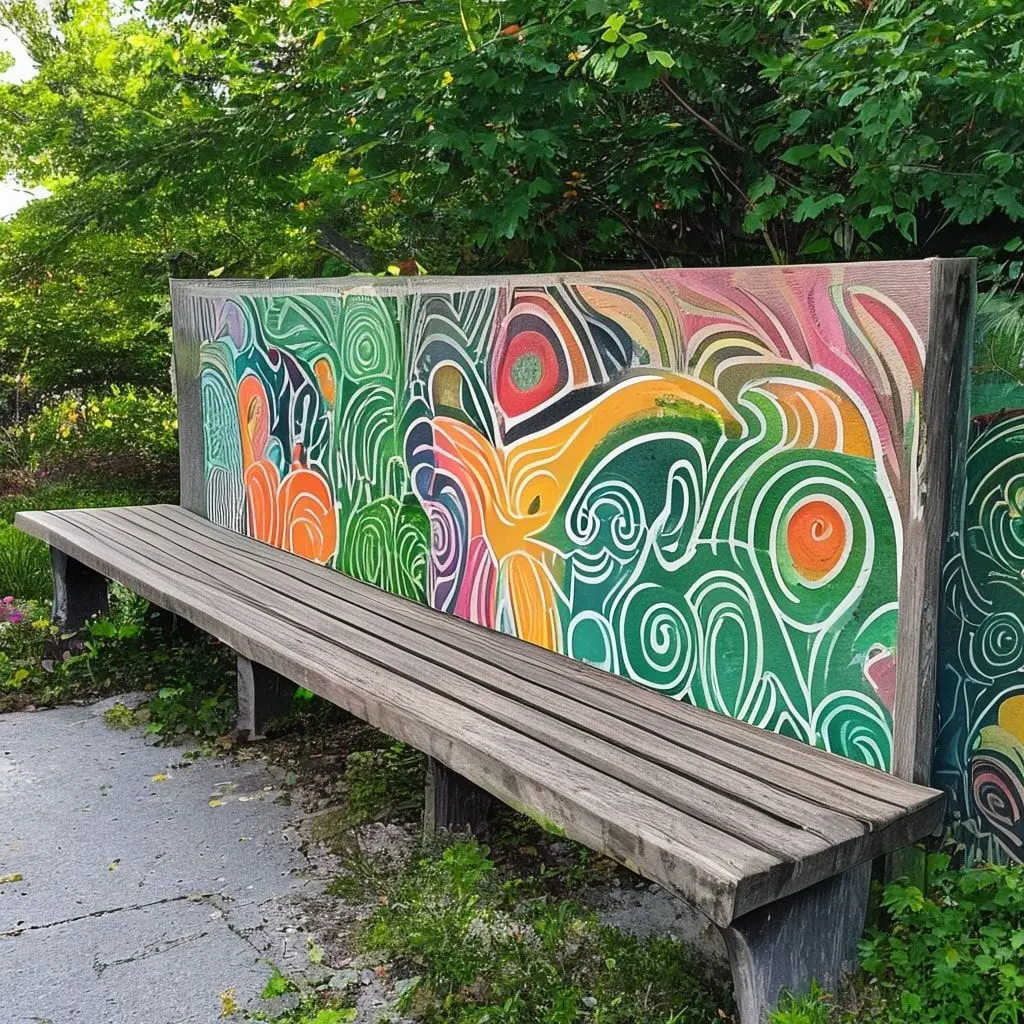
Success in concrete bench painting combines technical skill with artistic vision. Take time to properly clean, repair, and prime surfaces before applying decorative finishes. Select paints formulated specifically for exterior concrete and masonry applications. Seal completed projects with protective topcoats appropriate for outdoor exposure. These foundational steps protect your creative investment and ensure benches maintain their beauty through seasons and years.
Remember that painted concrete benches can be repainted as styles evolve and tastes change. Unlike permanently finished materials, paint allows flexibility to refresh and reimagine outdoor furniture as your garden matures and your preferences develop. Start with projects that excite your creativity, develop skills through practice, and enjoy the process of transforming utilitarian concrete into expressive outdoor art that makes your space uniquely yours.
Frequently Asked Questions:
What type of paint works best for outdoor concrete benches?
Exterior-grade acrylic latex paint or epoxy-based masonry paint formulated specifically for concrete provides the best results. These paints offer superior adhesion, flexibility, and weather resistance compared to standard paints. Always apply a concrete bonding primer first, and seal finished projects with exterior-grade polyurethane or concrete sealer to protect against moisture, UV rays, and wear.
How do I prepare concrete benches for painting to ensure the paint adheres properly?
Start by thoroughly cleaning the concrete with a pressure washer or stiff brush and degreasing cleaner to remove dirt, oil, and debris. Repair any cracks or chips with concrete patching compound, allowing it to cure completely. Sand the surface lightly to create texture for better paint adhesion. Apply a quality concrete primer designed for exterior use before adding any decorative paint layers.
Will painted concrete benches hold up in all weather conditions?
Properly prepared and sealed painted concrete benches withstand rain, sun, and temperature fluctuations effectively. The key is using exterior-grade products and applying protective topcoats. Expect some fading and wear over time, particularly in harsh climates with intense sun or freeze-thaw cycles. Plan to refresh paint every three to five years depending on exposure and quality of initial application.
Can I paint concrete benches that have been previously painted or sealed?
Yes, but thorough preparation becomes critical. Remove loose or peeling paint by scraping and wire brushing. Clean the surface completely and lightly sand to roughen any remaining intact paint or sealant, which helps new paint adhere. Test a small area first to ensure compatibility. If old sealant prevents paint adhesion, you may need to strip it chemically or mechanically before proceeding.
How long should I wait between applying paint coats and before using the bench?
Allow at least two to four hours between paint coats, longer in humid or cool conditions. Read manufacturer specifications for your specific paint product as drying times vary. After final decorative coats, wait 24 hours before applying sealer. Allow sealer to cure for at least 48 to 72 hours before placing the bench in service to ensure proper hardening and durability.