5+ Stunning Planted Goldfish Tank Ideas
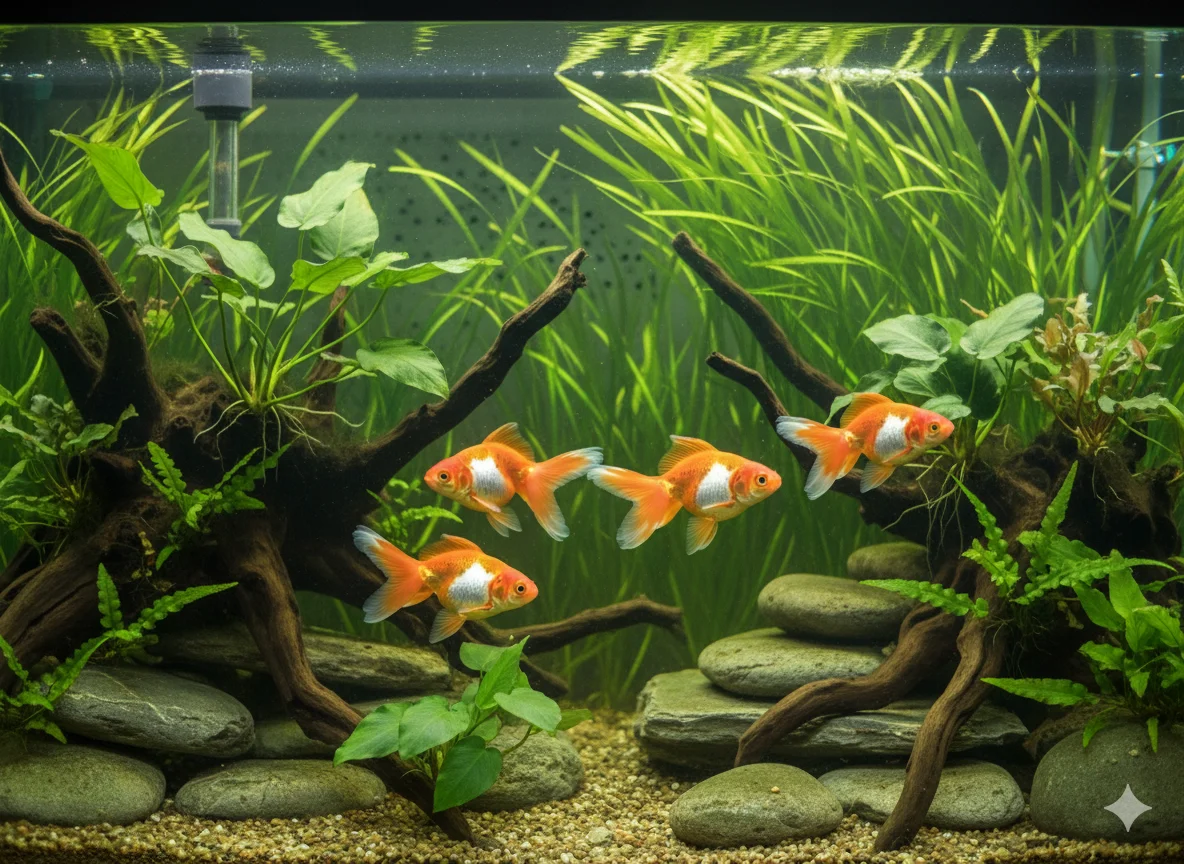
Creating a planted goldfish tank might seem like chasing an impossible dream. After all, goldfish have earned their reputation as enthusiastic plant destroyers who dig relentlessly through substrate and treat delicate foliage as an endless salad bar. However, with thoughtful planning and the right approach, you can establish a thriving planted environment that benefits both your goldfish and your eyes.
The secret lies not in fighting against goldfish nature but working with it. These intelligent fish actually thrive in planted environments where they can exhibit natural behaviors like foraging, exploring, and yes, occasional nibbling. Live plants offer substantial benefits beyond aesthetics. They consume nitrates produced by fish waste, oxygenate water, provide hiding spots that reduce stress, and create a miniature ecosystem that more closely resembles the ponds and slow-moving waterways goldfish ancestors inhabited.
This comprehensive guide explores stunning planted tank ideas specifically designed for goldfish keepers. Whether you maintain fancy goldfish varieties like Orandas and Ranchus or keep the more streamlined common goldfish, these concepts will help transform your aquarium into a beautiful aquatic landscape that withstands goldfish antics while promoting their health and happiness.
Understanding the Planted Goldfish Tank Challenge
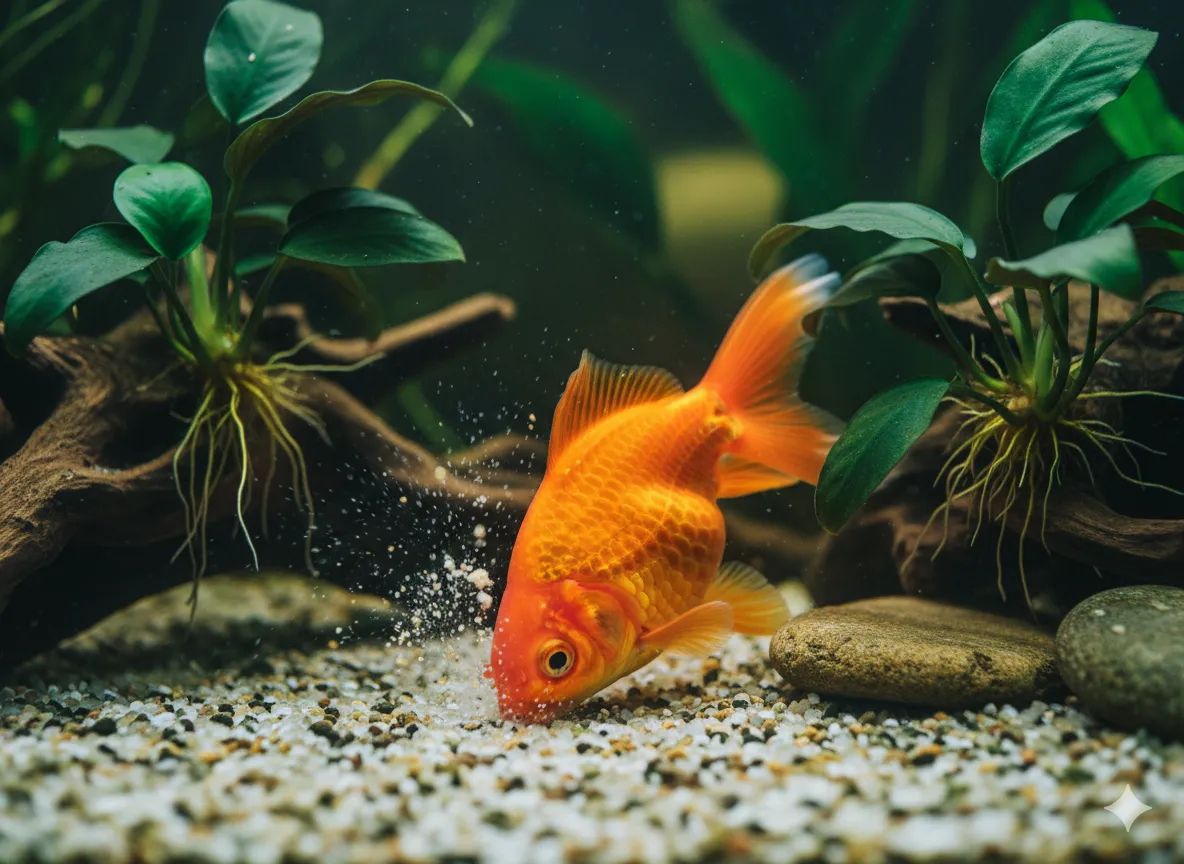
Before diving into specific design ideas, understanding why goldfish pose unique challenges helps set realistic expectations. Goldfish are opportunistic omnivores programmed to constantly search for food. In their natural habitat, this means sifting through mud and vegetation looking for insects, plant matter, and small invertebrates. This instinct does not disappear in captivity.
Additionally, goldfish produce significantly more waste than most tropical fish of comparable size. Their digestive systems process food quickly and inefficiently, resulting in high ammonia and nitrate output. While this creates challenges for water quality maintenance, it also means planted tanks receive abundant nutrients from fish waste, potentially eliminating the need for commercial fertilizers.
The cooler water temperatures goldfish prefer, typically between 65 and 75 degrees Fahrenheit, limit plant selection compared to tropical setups. Many popular aquarium plants originate from warmer climates and struggle at goldfish-appropriate temperatures. However, numerous hardy species thrive in these conditions, offering plenty of choices for creative aquascaping.
The Low-Tech Naturalistic Stream Setup
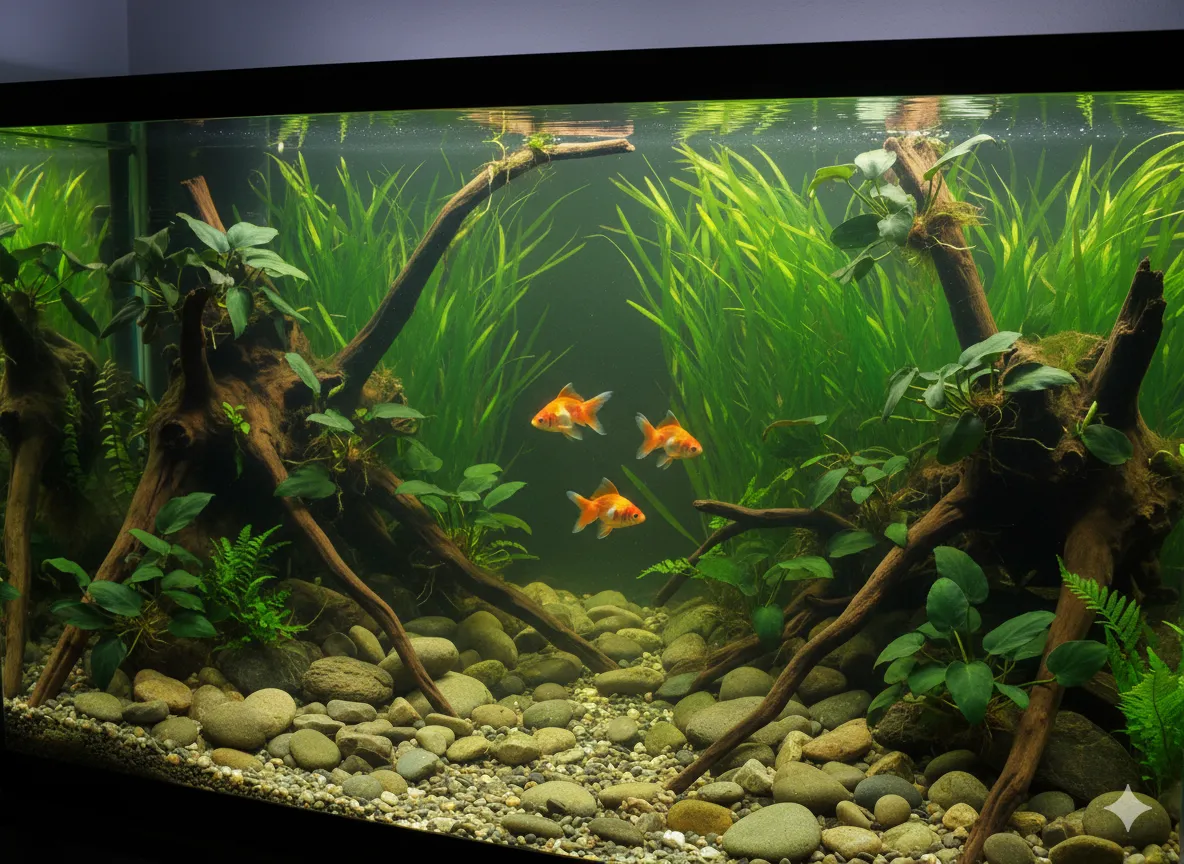
This design mimics a gentle stream or creek bed with smooth river rocks, driftwood, and resilient plants that can handle constant goldfish interaction. The naturalistic approach creates visual interest through layering and texture rather than dense planting.
Start with a substrate foundation of small pea gravel measuring 2 to 3 millimeters in diameter. This size allows plant roots to penetrate and establish while remaining fine enough that goldfish can sift through without choking hazards. Avoid larger gravel pieces that can lodge in goldfish mouths, a genuine risk with these vacuum-like feeders.
Select a few statement pieces of driftwood or mopani wood, ensuring they have been properly soaked to remove tannins unless you want the natural brown water appearance. Attach Anubias varieties to these wood pieces using fishing line or gel superglue. Anubias Barteri and Anubias Nana both feature thick, leathery leaves that goldfish find unpalatable and tough rhizomes that prevent uprooting.
Add Java Fern in its various forms including standard, Windelov, and narrow leaf varieties. Like Anubias, Java Fern attaches to hardscape rather than rooting in substrate, making it nearly impossible for goldfish to destroy. These ferns actually prefer not being buried in gravel, as this can cause rhizome rot.
For background planting, establish Vallisneria along the rear and sides of the tank. These grass-like plants with long ribbon leaves grow quickly and send out runners that create a dense background curtain. Once established with mature root systems, goldfish struggle to uproot them. The leaves may show nibble marks, but Vallisneria grows fast enough to outpace most damage.
Include several Marimo Moss Balls scattered across the aquarium floor. These spherical algae colonies provide additional nitrate uptake and some goldfish enjoy rolling them around like toys while others completely ignore them. Their unique texture adds visual variety to the aquascape.
This setup works particularly well in larger tanks of 55 gallons or more where you have room to create distinct zones. Open swimming areas in the center and front allow goldfish to display their graceful movements while planted zones along the back and sides provide shelter and foraging opportunities.
The Jungle Vallisneria Forest
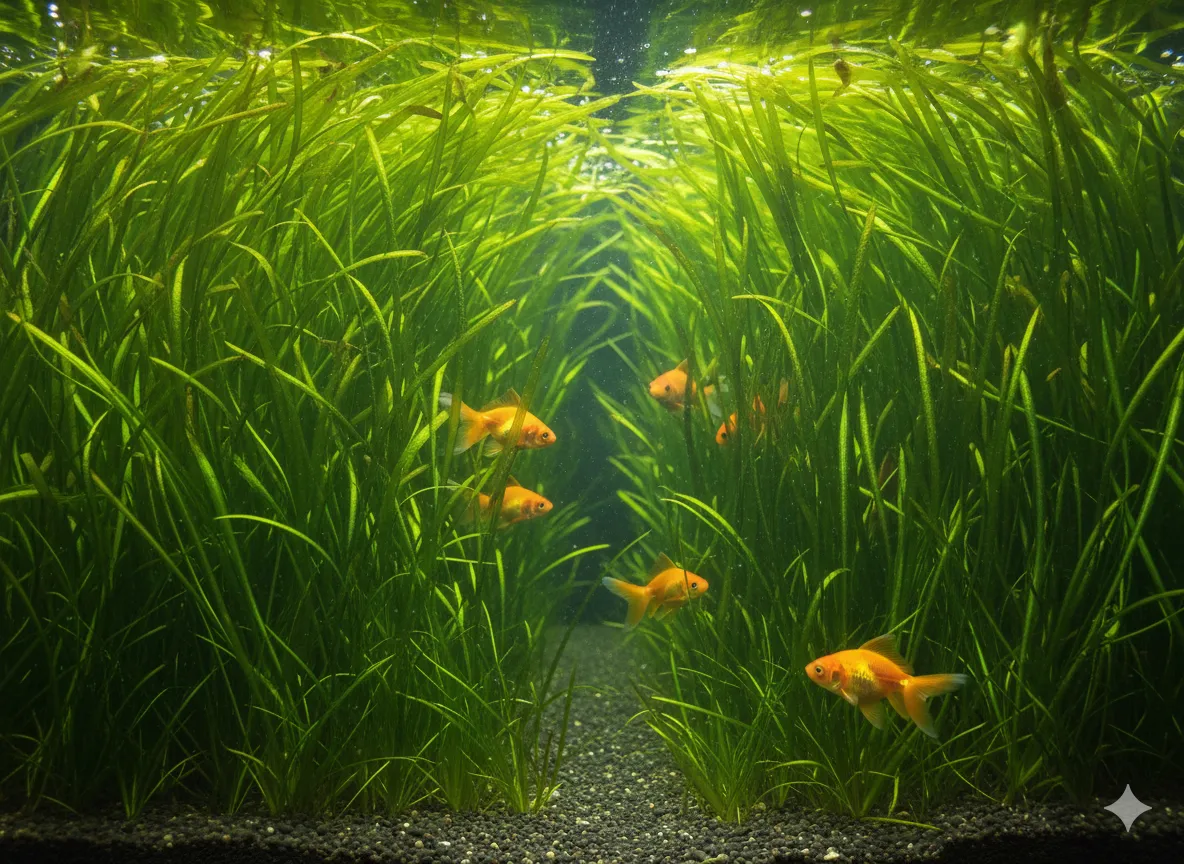
For keepers seeking maximum plant coverage, a Vallisneria-dominated tank creates a dramatic underwater forest effect. This design capitalizes on one of the few plants goldfish genuinely struggle to destroy once established.
Begin by planting multiple Vallisneria specimens along the entire back wall and both sides of your aquarium, spacing them roughly 2 inches apart. Vallisneria species including Jungle Val, Italian Val, and Spiralis all work excellently with goldfish. Their thick leaves resist tearing and their extensive root systems anchor deeply into substrate.
The key to success with this approach involves patience. Plant your Vallisneria in a fishless tank and allow 3 to 4 weeks for root establishment before introducing goldfish. During this time, the plants develop robust underground networks that goldfish cannot easily disturb.
As Vallisneria matures, it sends out runners that produce daughter plants. Within several months, what started as individual plants becomes a interconnected carpet of roots spanning the entire tank bottom. At this stage, goldfish can dig enthusiastically without uprooting plants because the root matrix holds everything firmly in place.
For contrast and lower level interest, add several large rocks with Anubias Nana Petite attached. These smaller Anubias varieties create foreground focal points without blocking sight lines to your goldfish. The dark green Anubias leaves provide color contrast against the lighter Vallisneria blades.
Include Hornwort bunches weighted down with plant anchors or allowed to float freely. Goldfish will undoubtedly shred some Hornwort, but this fast-growing plant recovers quickly and provides excellent nitrate removal. Think of Hornwort as a sacrificial plant that keeps goldfish occupied while protecting your more permanent specimens.
This jungle approach works beautifully in tanks where you want to create the illusion of peering into a densely vegetated pond. The Vallisneria leaves will eventually reach the water surface and trail along it, creating natural hiding spots that make goldfish feel secure.
The Potted Plant Display
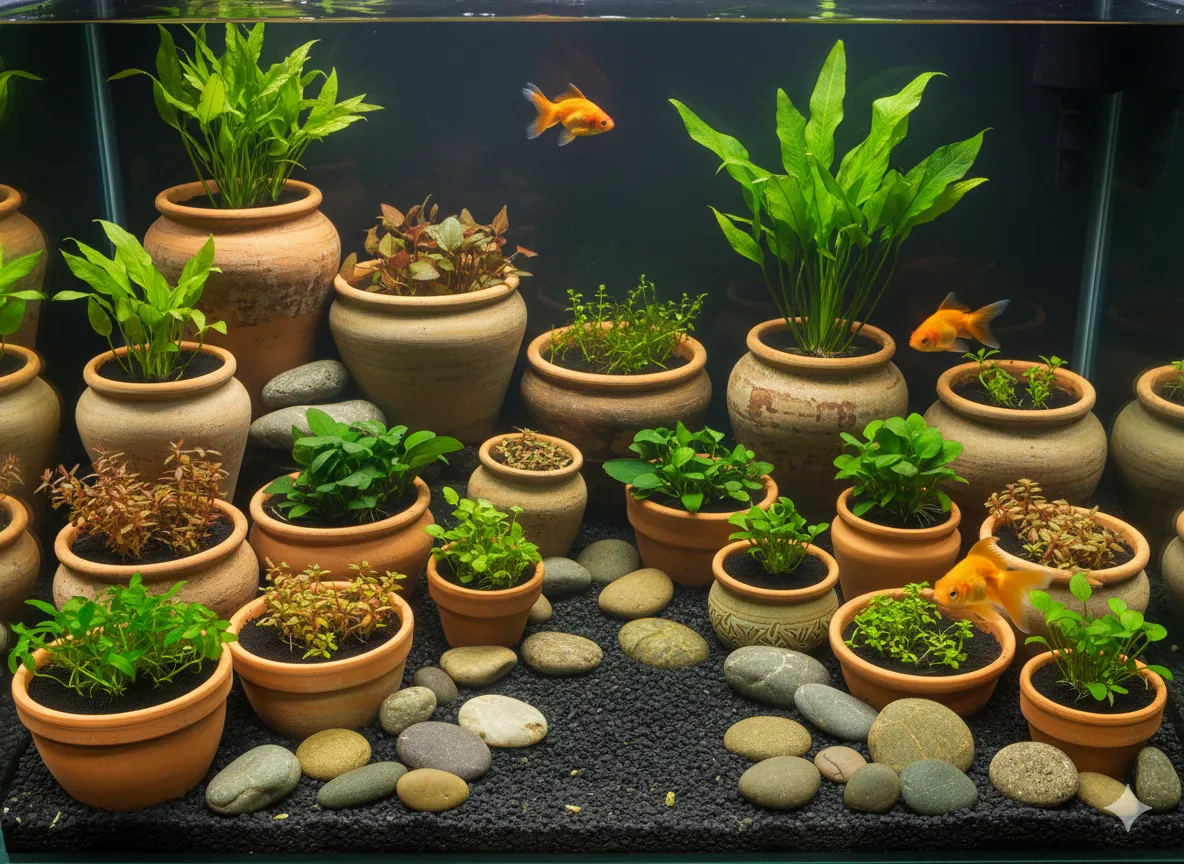
For those hesitant about giving goldfish free reign over planted areas, the container method offers an elegant compromise. This technique involves growing plants in terracotta pots, weighted containers, or planting baskets placed strategically throughout the tank.
Select food-grade plastic containers or traditional terracotta plant pots in various sizes. Fill them with nutrient-rich aquatic soil capped with a 1 to 2 inch layer of gravel or small river stones. The gravel cap prevents goldfish from excavating the soil and creating murky water while still allowing plant roots access to nutrients below.
Plant species like Amazon Swords, Cryptocoryne varieties, and Echinodorus work exceptionally well in containers. These root feeders benefit from the concentrated nutrients in aquatic soil, growing faster and fuller than they would in plain gravel.
Arrange your potted plants in clusters rather than evenly spacing them. This creates natural-looking plant groupings with open areas between. Place taller specimens like Amazon Swords and larger Echinodorus varieties in the background, medium-height Cryptocoryne in the midground, and lower-growing Anubias Nana in the foreground.
The container method offers several advantages beyond preventing plant destruction. You can easily rearrange your aquascape by moving pots around without disturbing the entire tank. Removing pots for cleaning or catching fish becomes much simpler than working around rooted plants. If a particular plant begins struggling or gets too aggressive, you can remove just that container without impacting others. To see some fish bowl ideas do visit Homeliaa.
Disguise pot rims by surrounding them with smooth river rocks or attaching Java Moss to their exteriors. This softens the artificial appearance and helps pots blend into the overall aquascape.
For added visual interest, vary pot heights by placing some on elevated bases made from stacked rocks or inverted terracotta saucers. This creates a terraced effect that adds depth and dimension to the tank.
The Minimalist Zen Garden
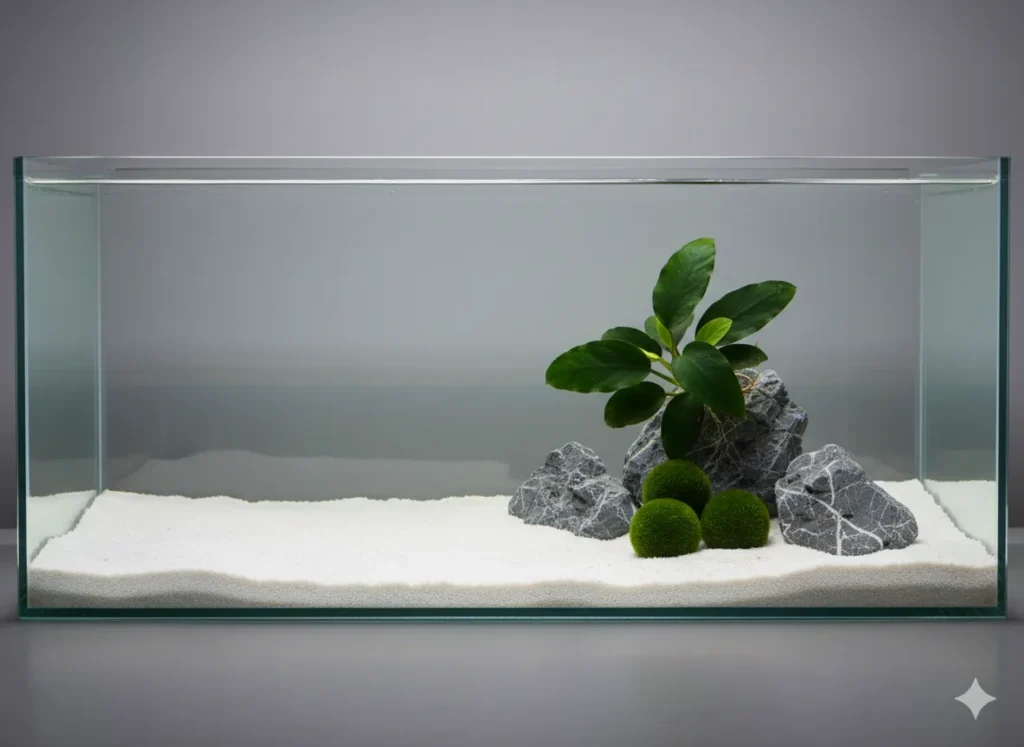
Not every planted goldfish tank requires dense vegetation. The minimalist approach celebrates negative space and carefully selected plant specimens, creating a calming, uncluttered environment that showcases both plants and fish.
Choose a fine sand substrate in natural tan or white to create a clean canvas. Sand allows goldfish to perform natural foraging behaviors while maintaining a tidy appearance since waste remains visible on the surface for easy removal during maintenance.
Select three to five substantial pieces of Seiryu stone or dragon stone as your primary hardscape elements. Arrange them following the rule of thirds, avoiding symmetrical placement that looks artificial. These rock formations serve as anchoring points for your plants.
Attach a single large Anubias Barteri specimen to your largest stone, positioning it slightly off-center as a focal point. The broad leaves and substantial size make a bold statement without requiring multiple plants.
Add two or three smaller rocks with Java Fern attached, placing them at varying heights and distances from your main Anubias. This creates visual flow and gives the eye multiple resting points as it travels across the tank.
Include one specimen of Crinum Thaianum, also called onion plant, partially buried in the sand with just its bulb base and roots beneath the surface. Crinum develops long, elegant leaves similar to Vallisneria but grows from a single bulb rather than spreading via runners. The leaves may reach several feet in length, creating graceful arcs that sway gently with water movement.
Finish with three to five Marimo Moss Balls arranged in an asymmetrical cluster. Their spherical forms contrast beautifully with the angular rocks and flowing plant leaves.
This minimalist design proves particularly effective in smaller tanks of 20 to 40 gallons where too many plants would create a cluttered appearance. The simplicity allows goldfish to become the stars of the display while providing enough plant life for biological benefits.To see more fish tank ideas do visit INJAF.
The Planted Pond Replica
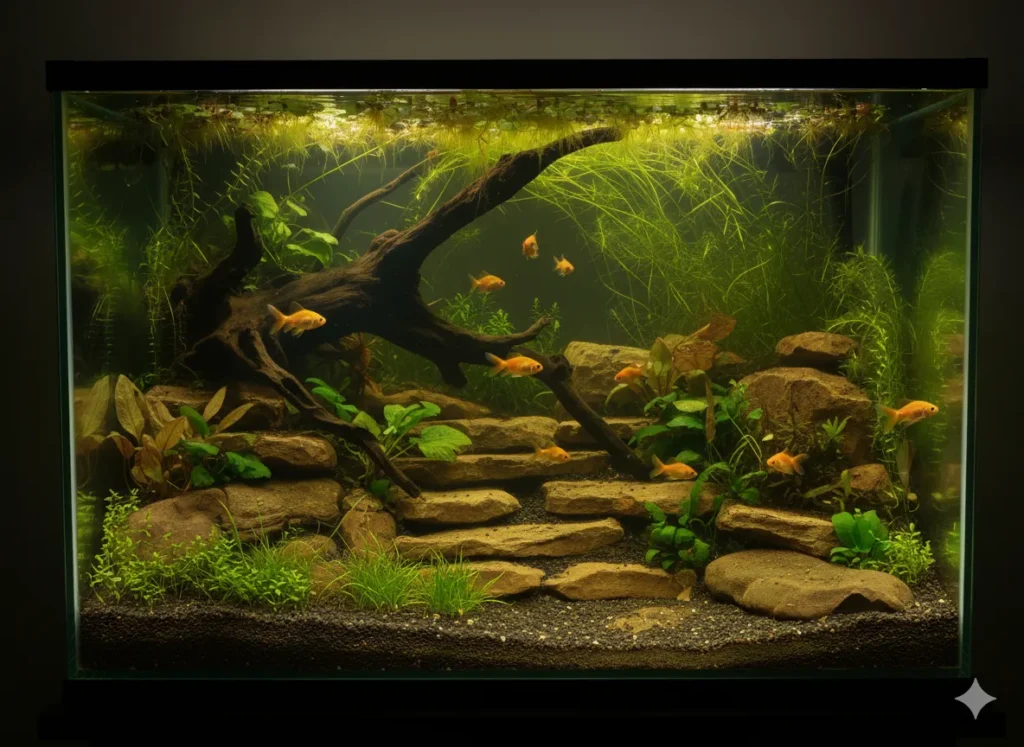
This ambitious design attempts to recreate a natural pond environment complete with emergent vegetation, submerged plants, and natural depth variations. Best suited to larger tanks of 75 gallons or more, this setup delivers maximum visual impact.
Create a sloping substrate bed that runs deeper toward the back of the tank and shallower in front. Use large river rocks to create terracing levels that prevent substrate from sliding forward. This depth variation mimics natural pond topography and provides different planting zones.
In the deepest areas, plant Water Sprite and Hornwort. These fast-growing species thrive in deeper water and provide excellent water quality benefits. Allow some stems to grow to the surface where they can transition to emerged growth if desired.
Along the middle terrace, establish Cryptocoryne varieties such as Cryptocoryne Wendtii and Cryptocoryne Lucens. These adaptable plants tolerate the cooler temperatures goldfish prefer and develop impressive root systems that resist uprooting once mature.
In the shallower foreground areas, plant dwarf Sagittaria. This smaller relative of Vallisneria sends out runners to form a grass-like carpet but remains shorter, allowing clear viewing of your goldfish. Expect some initial damage as goldfish test its palatability, but once established, dwarf Sag grows quickly enough to handle nibbling.
Add larger decorative elements like a substantial piece of driftwood positioned diagonally across the tank or a cluster of large smooth boulders stacked to create caves and overhangs. Attach Java Fern and Anubias throughout these hardscape features.
For an authentic pond appearance, include floating plants like Salvinia or Dwarf Water Lettuce. Goldfish will eat some, viewing them as occasional snacks, but these fast-reproducing floaters can maintain populations even with regular pruning by hungry fish. The floating plants also help diffuse lighting, creating dappled shadows below that enhance the natural aesthetic.
This pond replica approach requires more maintenance than simpler setups due to increased plant variety and complexity. However, it rewards effort with a stunning aquatic display that provides goldfish with a genuinely enriching environment.
The Hardy Plant Fortress
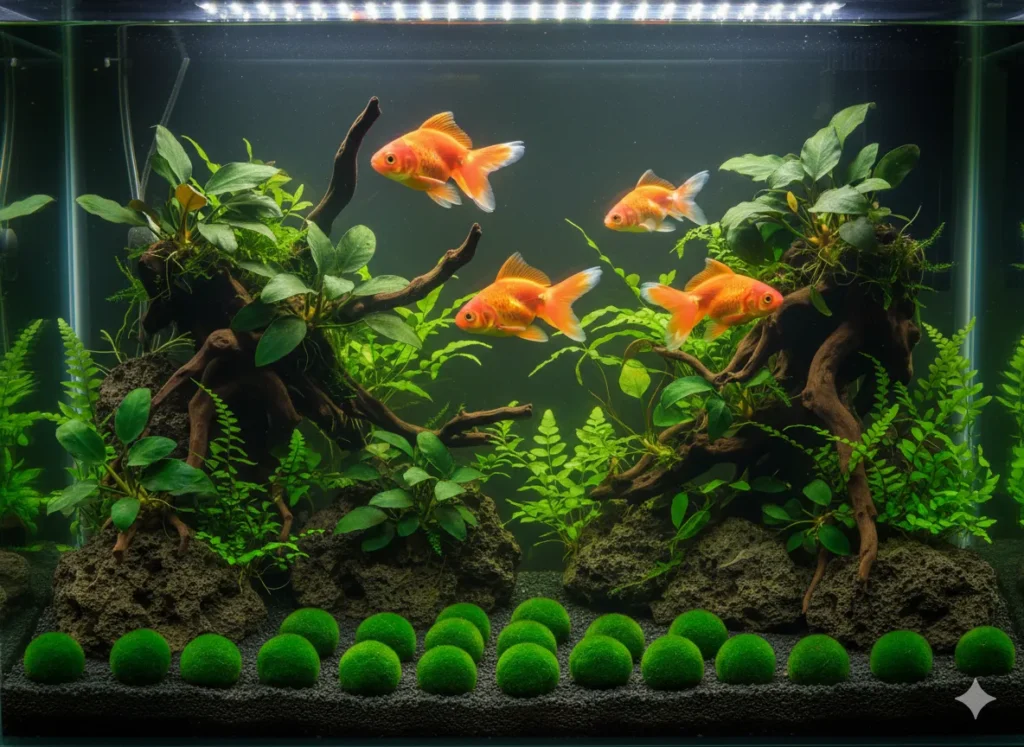
This design focuses exclusively on the toughest, most goldfish-resistant plants, creating a nearly indestructible planted environment ideal for keepers with particularly aggressive plant-eaters or those wanting minimal plant replacement.
Build your plant selection around the bulletproof trio of Anubias, Java Fern, and Marimo Moss Balls. Purchase multiple specimens of varying sizes in each species to create visual diversity despite the limited plant palette.
For Anubias, include Anubias Barteri for large leaves, Anubias Nana for medium coverage, and Anubias Nana Petite for delicate foreground accents. Attach these to driftwood, lava rock, or decorative stone pieces distributed throughout the tank.
Incorporate all three Java Fern varieties including standard Java Fern with broad leaves, Windelov Lace Java Fern with its distinctive frilly edges, and Narrow Leaf Java Fern for textural contrast. Like Anubias, attach these to hardscape elements using fishing line, cotton thread that eventually dissolves, or gel superglue applied to the rhizome.
Scatter Marimo Moss Balls across the substrate in odd-numbered groupings. Consider buying various sizes from small 1-inch specimens to large 3-inch balls for visual variety.
While this limited plant selection might seem restrictive, thoughtful arrangement and use of different sizes creates surprising depth and interest. The extremely low maintenance requirements make this approach perfect for beginners or those who simply want beautiful planted tanks without constant plant replacement.
These six plants thrive in goldfish temperature ranges, require minimal to no fertilization thanks to goldfish waste production, tolerate the moderate to low lighting many goldfish keepers prefer, and most importantly, survive goldfish interaction that would devastate more delicate species.
Substrate Selection for Planted Goldfish Tanks
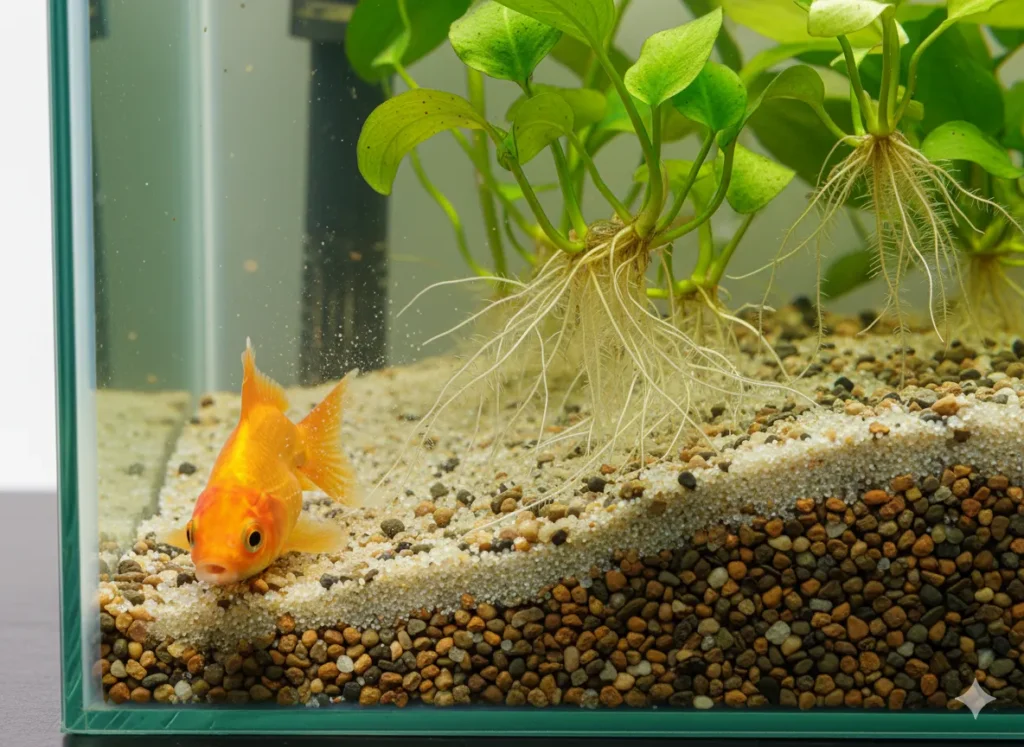
Choosing appropriate substrate might seem simple but significantly impacts both plant health and goldfish wellbeing. Several options work well, each with distinct advantages.
Small pea gravel measuring 2 to 3 millimeters provides an excellent balance. Fine enough for plant roots to penetrate yet coarse enough to prevent compaction, this size allows beneficial bacteria colonization while remaining too small for most goldfish to accidentally swallow. Natural earth-tone gravel blends beautifully with most aquascaping styles.
Aquarium sand works wonderfully if you prefer the aesthetic and don’t mind slightly more challenging vacuuming. Sand permits goldfish to sift thoroughly during foraging without choking risks. However, sand offers no nutritional value for plants, requiring root tabs for substrate feeders. The ultra-fine texture also means more care during gravel vacuuming to avoid sucking up substrate.
Some aquarists layer their substrate, placing nutrient-rich soil or aquatic planting substrate beneath a cap of sand or small gravel. This technique works but requires caution with goldfish. Their enthusiastic digging can breach the cap layer, creating muddy water and mixing substrate types. If using this method, make the cap layer at least 2 inches thick and plan for periodic substrate disruption.
Avoid crushed coral or aragonite unless you specifically need to raise pH and hardness. These calcium-based substrates continuously buffer water chemistry, potentially pushing parameters outside goldfish comfort zones.
Large river rocks or pebbles look attractive and prevent any choking hazards, but their size creates gaps where waste accumulates. Without plants rooting directly in substrate, you forfeit one of planted tanks’ major benefits. This option works best combined with potted plants rather than directly rooted specimens.
Whatever substrate you choose, aim for a depth of 2 to 3 inches. This provides enough material for robust root development without creating excessive depth that complicates cleaning.
Feeding Strategies to Protect Your Plants
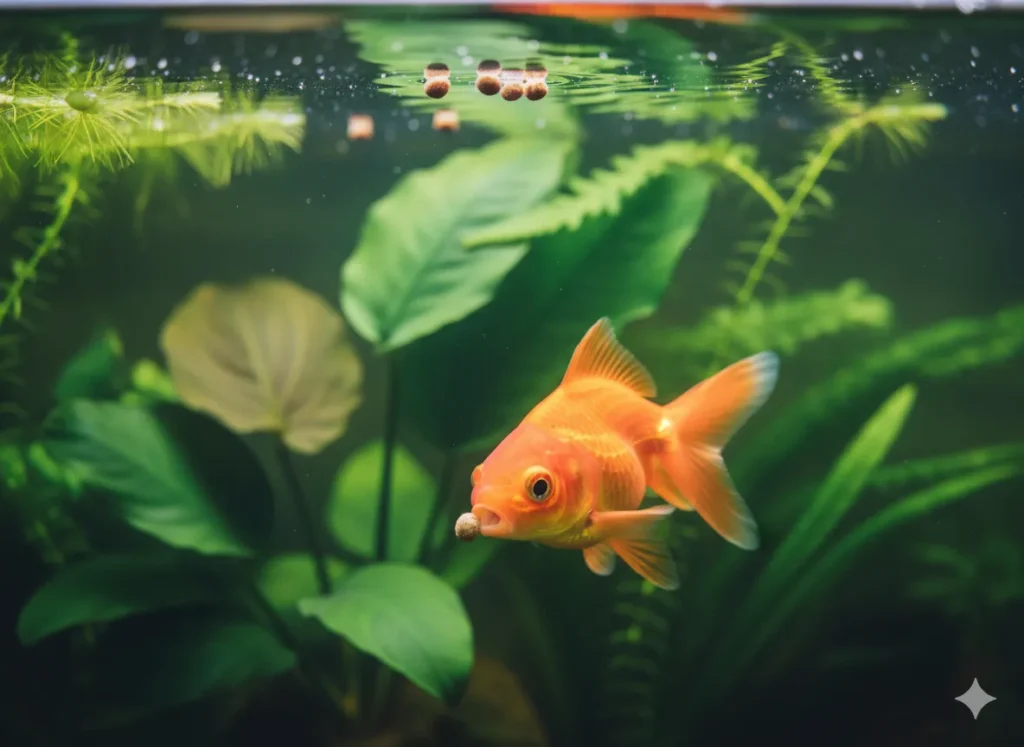
One of the most effective ways to minimize plant damage involves ensuring your goldfish receive proper nutrition. Well-fed goldfish with diverse diets show less interest in decimating plants.
Feed a high-quality pellet or flake food as the staple diet, choosing formulas with balanced protein levels around 30 to 40 percent. Protein-rich diets satisfy goldfish appetites more effectively than vegetable-heavy foods, reducing the urge to graze constantly on plants.
Supplement with protein sources including bloodworms, brine shrimp, and daphnia. These can be frozen, freeze-dried, or live depending on availability and preference. The additional protein helps goldfish feel satiated, lessening plant nibbling.
Paradoxically, avoid feeding fresh vegetables like cucumber, zucchini, or blanched peas too frequently. While goldfish enjoy these foods, regular vegetable feeding trains them to seek out plant matter, making aquarium plants more attractive targets. Save vegetable treats for occasional offerings rather than daily meals.
Feed multiple small meals throughout the day rather than one large feeding. Goldfish lack true stomachs, processing food continuously. Two or three smaller feedings maintain steady satiation levels, preventing the extreme hunger that drives aggressive plant eating.
During the initial establishment period when plants are most vulnerable, consider slightly increasing feeding amounts. A well-fed goldfish proves far less motivated to uproot plants or strip leaves. Once plants develop strong root systems and some regrowth capacity, you can return to normal feeding levels.
Lighting Considerations for Planted Goldfish Tanks
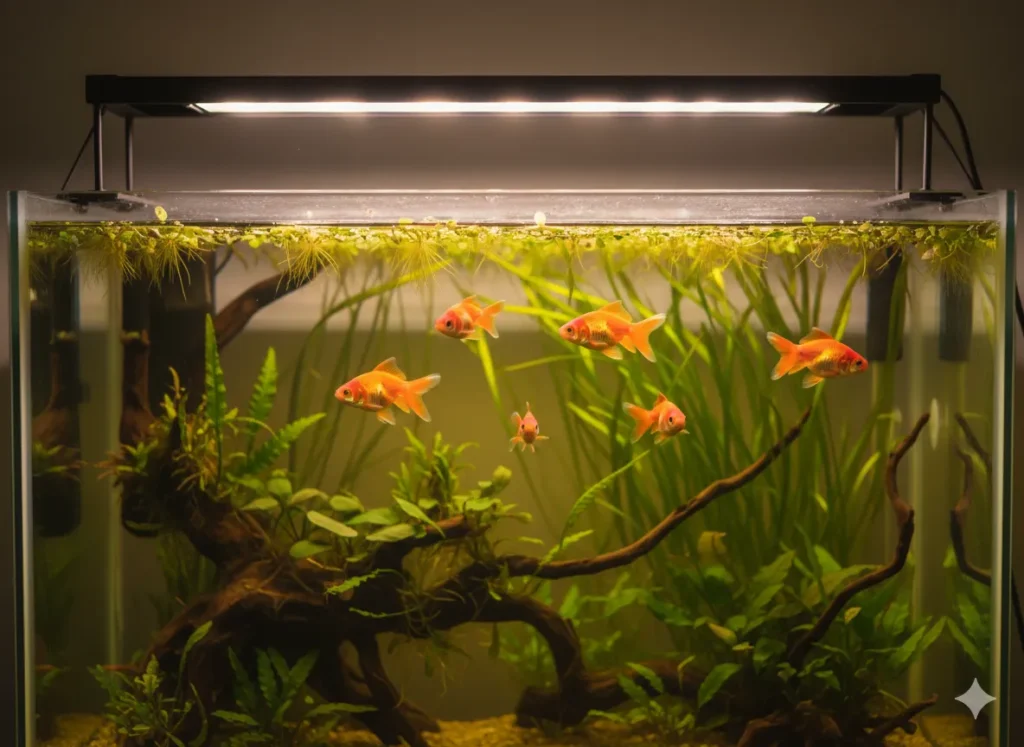
Lighting requirements for planted goldfish tanks differ somewhat from typical planted aquarium setups. The hardy plants best suited to goldfish generally tolerate low to moderate light levels, making intense, expensive lighting unnecessary.
Standard aquarium LED fixtures providing 20 to 40 PAR at substrate level work well for Anubias, Java Fern, Cryptocoryne, and Vallisneria. These plants evolved as understory species in their native habitats, thriving in dappled or reduced light.
Photoperiod length matters more than intensity for these plants. Aim for 6 to 8 hours of light daily. Longer periods encourage algae growth, a common challenge in goldfish tanks due to high waste production and nutrient loads.
Many goldfish keepers find success with simple timer-controlled LED fixtures purchased at reasonable prices. The days of requiring expensive high-output lighting for planted tanks only apply to demanding carpet plants and red species, neither of which work well with goldfish anyway.
Floating plants naturally reduce light penetration, creating shaded areas below. If you include floaters like Salvinia or Water Lettuce despite goldfish snacking, the reduced light benefits lower level plants while creating an attractive dappled effect.
For those desiring the most natural appearance, consider choosing LED fixtures with adjustable color temperatures. Warmer 4000K to 6500K light creates a more natural golden appearance compared to the harsh blue-white of higher Kelvin ratings.
Maintenance Tips for Long-Term Success
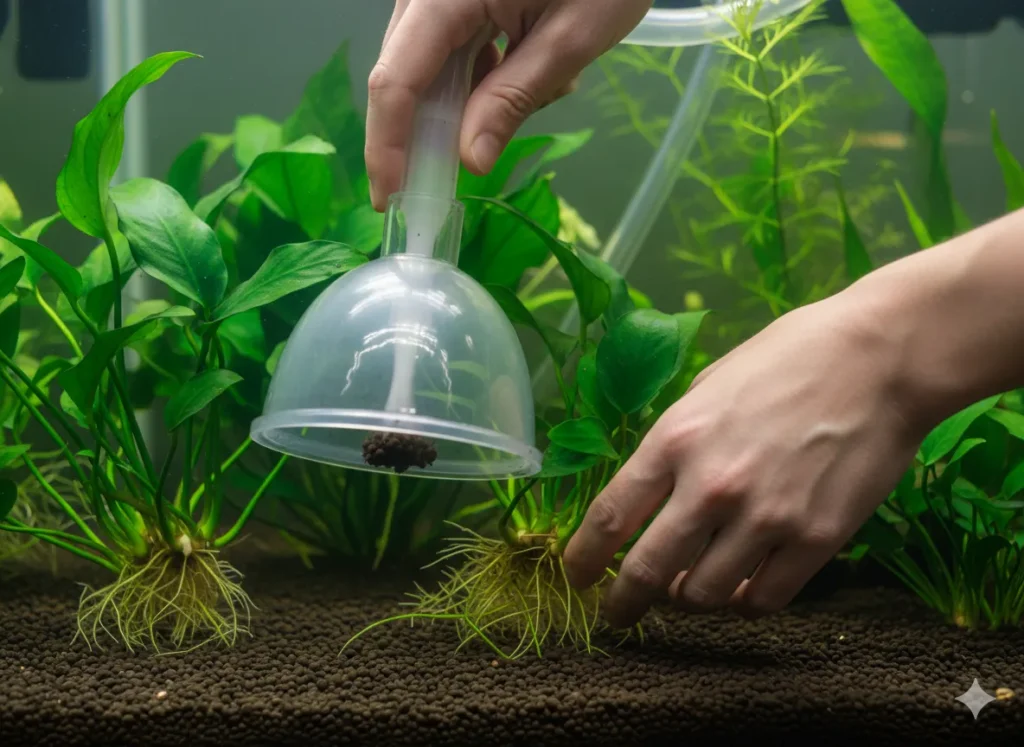
Planted goldfish tanks require slightly different maintenance approaches compared to bare or artificially decorated setups.
Conduct partial water changes of 30 to 50 percent weekly to manage the substantial waste goldfish produce. During water changes, use a gravel vacuum to remove debris from the substrate surface without disrupting plant roots. For areas with dense planting, hovering the vacuum just above substrate level pulls up waste without sucking up gravel or damaging roots.
Trim dead or dying leaves promptly. Decaying plant matter contributes to poor water quality and some goldfish will aggressively tear at damaged leaves, potentially uprooting entire plants in the process. Clean cuts with sharp scissors prevent ragged edges that invite further damage.
Monitor plant growth rates. If previously vigorous plants slow or stop growing, consider adding root tabs for substrate feeders or dilute liquid fertilizers for water column feeders. However, many goldfish keepers find their fish produce sufficient nutrients naturally, eliminating fertilizer needs entirely.
Thin out overly aggressive growers like Vallisneria when they become too dense. Overcrowding reduces water flow, creates dead spots where debris accumulates, and can trap goldfish in tangled growth. Removing excess runners maintains open swimming areas while keeping the planted aesthetic.
Check regularly that attached plants remain secure to their hardscape. Occasionally goldfish dislodge Anubias or Java Fern despite their secure mounting. Reattach loose plants immediately before goldfish learn they can be removed.
Test water parameters monthly even in established tanks. While plants consume nitrates, goldfish bioload can overwhelm even heavily planted systems. Maintain ammonia and nitrite at zero, keeping nitrates below 40 ppm through water changes and plant uptake.
Conclusion
Creating stunning planted goldfish tanks represents an achievable goal rather than an impossible fantasy. The secret lies in selecting appropriate plants, establishing them properly, providing adequate lighting and substrate, and maintaining realistic expectations about coexisting with naturally curious, plant-nibbling fish.
The six design ideas presented here offer frameworks adaptable to various tank sizes, experience levels, and aesthetic preferences. Whether you choose the minimalist zen approach with carefully selected specimens or attempt an ambitious pond replica, success depends on working with goldfish nature rather than against it.
Remember that planted tanks evolve continuously. What starts as sparse planting develops into lush growth as plants establish and spread. Your goldfish will test boundaries, nibbling here and digging there, but hardy species recover and adapt. Over time, you’ll discover which plants thrive in your specific conditions with your particular goldfish.
The effort invested in creating and maintaining a planted goldfish tank pays dividends beyond aesthetics. Your goldfish benefit from improved water quality, natural foraging opportunities, and enriched environments that promote natural behaviors. You gain a living, breathing aquatic landscape that changes and grows, offering endless fascination and beauty.
Start simple, be patient with initial challenges, and gradually expand as you gain experience. Before long, you’ll join the ranks of aquarists who’ve proven that goldfish and planted tanks can indeed coexist beautifully, creating underwater gardens that showcase these magnificent fish at their very best.
Frequently Asked Questions
What plants are completely safe from goldfish eating?
While no plant is completely immune, Anubias species, Java Fern varieties, and Marimo Moss Balls come closest to goldfish-proof status. Their tough leaves and bitter taste deter most goldfish from serious damage. Goldfish may occasionally test-nibble these plants but rarely cause significant harm once they learn the leaves are unpalatable.
How long should I wait before adding goldfish to a newly planted tank?
Allow 3 to 4 weeks for plants to establish root systems before introducing goldfish. This establishment period lets plants anchor firmly into substrate, making them far more resistant to uprooting when goldfish begin their inevitable digging and foraging activities. Plants added to tanks with existing goldfish populations face much higher failure rates.
Can I use fertilizers in a goldfish planted tank?
Generally, goldfish produce enough waste to provide all the nutrients most hardy plants require, making commercial fertilizers unnecessary. If you notice stunted growth despite good conditions, try adding root tabs for substrate-feeding plants or very dilute liquid fertilizers. Always start with half the recommended dose since goldfish tanks tend to be nutrient-rich already.
What substrate depth works best for planted goldfish tanks?
Maintain substrate depth of 2 to 3 inches throughout your tank. This provides adequate room for healthy root development without creating excessive depth that complicates cleaning. Deeper substrate accumulates more waste in areas gravel vacuums cannot reach, potentially leading to water quality issues in high-waste goldfish tanks.
Do planted tanks reduce the frequency of water changes needed?
Planted tanks help manage nitrates through plant uptake, but goldfish produce such substantial waste that regular water changes remain essential. Most planted goldfish tanks still require 30 to 50 percent weekly water changes to maintain optimal water quality. Consider plants a supplementary filtration tool rather than a replacement for proper maintenance schedules.