
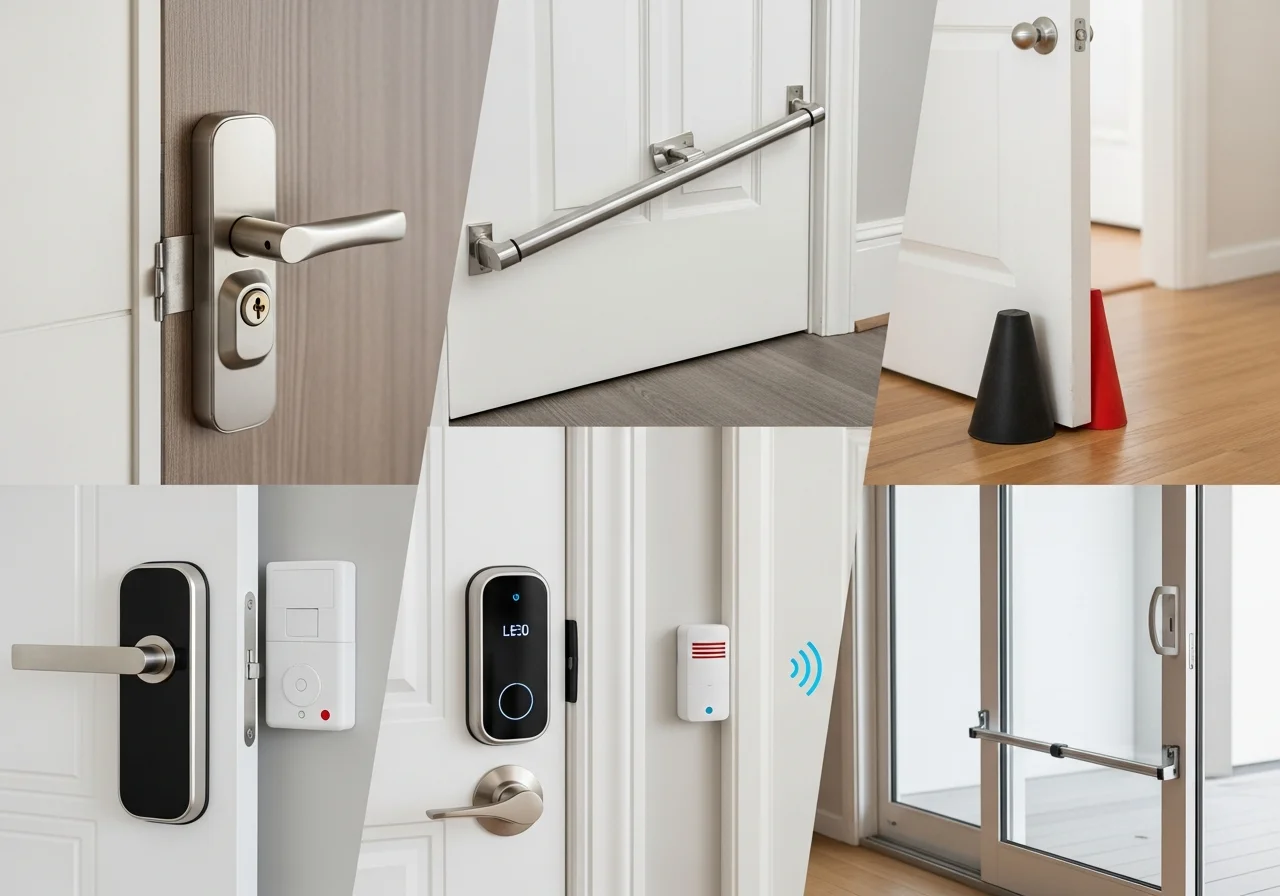
13+ Clever Ideas to Lock Your Door from Inside
Personal security begins at home, and sometimes the locks provided with your doors simply aren’t enough. Whether you’re staying in a rental property, living in a dorm room, or looking to enhance privacy in your own home, knowing how to secure a door from the inside offers peace of mind. The need for additional interior security solutions has grown significantly, particularly among travelers, renters who cannot make permanent modifications, and individuals seeking temporary security enhancements.
This comprehensive guide explores practical, effective methods to lock your door from inside without requiring extensive modifications or professional installation. From simple household items to purpose-built security devices, these solutions cater to various situations, budgets, and skill levels. Understanding these techniques empowers you to take control of your personal security regardless of your living situation.
Portable Door Lock Devices
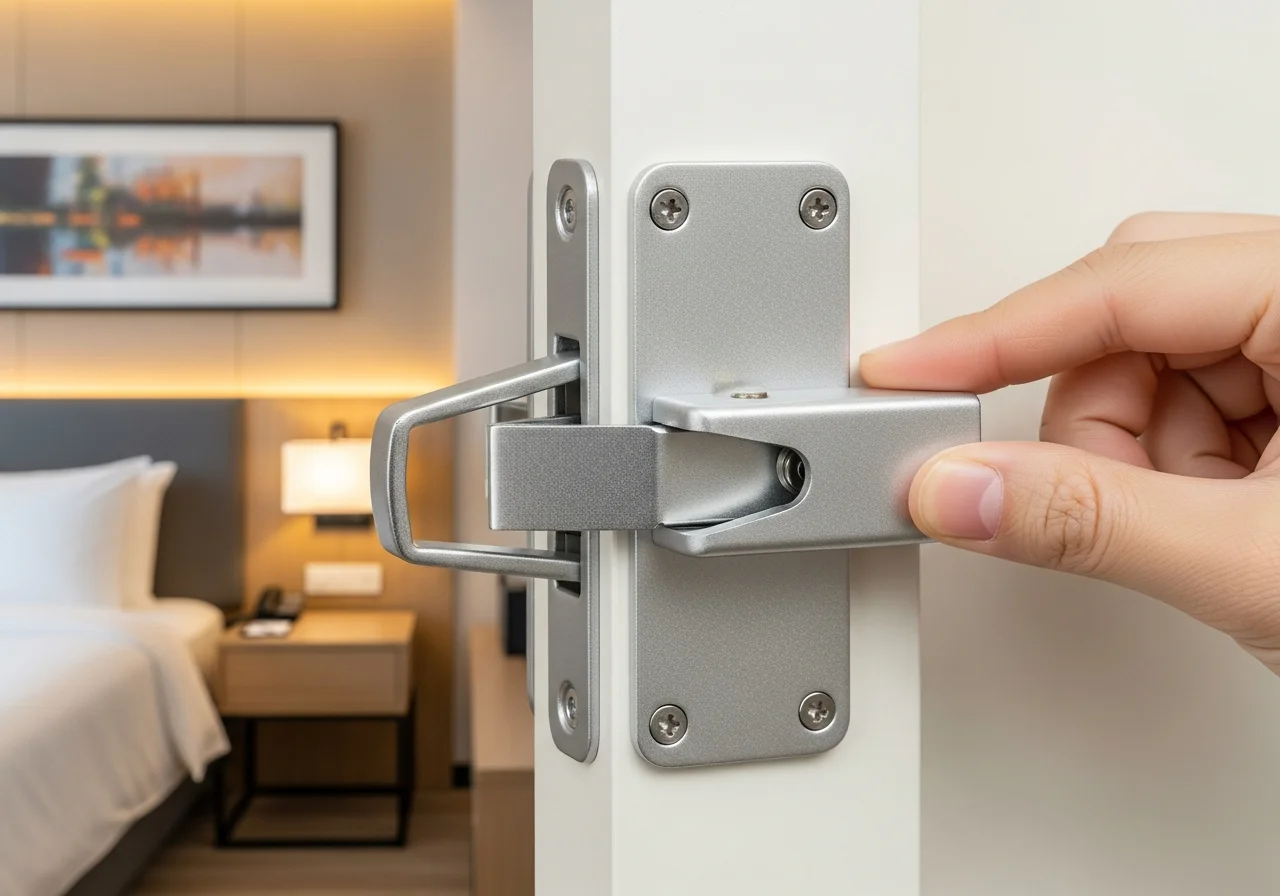
Portable door locks have revolutionized personal security for travelers and renters alike. These compact devices attach to most standard doors within seconds, creating an impenetrable barrier that prevents entry even when someone has a key. The most popular models feature a metal claw that grips the door strike plate, while others use innovative engineering to wedge between the door and frame.
These devices work exceptionally well in hotels, vacation rentals, or temporary accommodations where you have legitimate concerns about unauthorized access. Many models fold to the size of a wallet, making them travel-friendly companions. Installation requires no tools and leaves no damage, which makes them ideal for situations where permanent modifications are prohibited. Quality portable locks can withstand hundreds of pounds of force, providing genuine security rather than just psychological comfort.
When selecting a portable lock, consider the door thickness and gap size in your typical accommodations. Some models work better on doors that open inward, while others accommodate both swing directions. The investment typically ranges from fifteen to forty dollars, offering excellent value for the security provided.
Door Security Bar
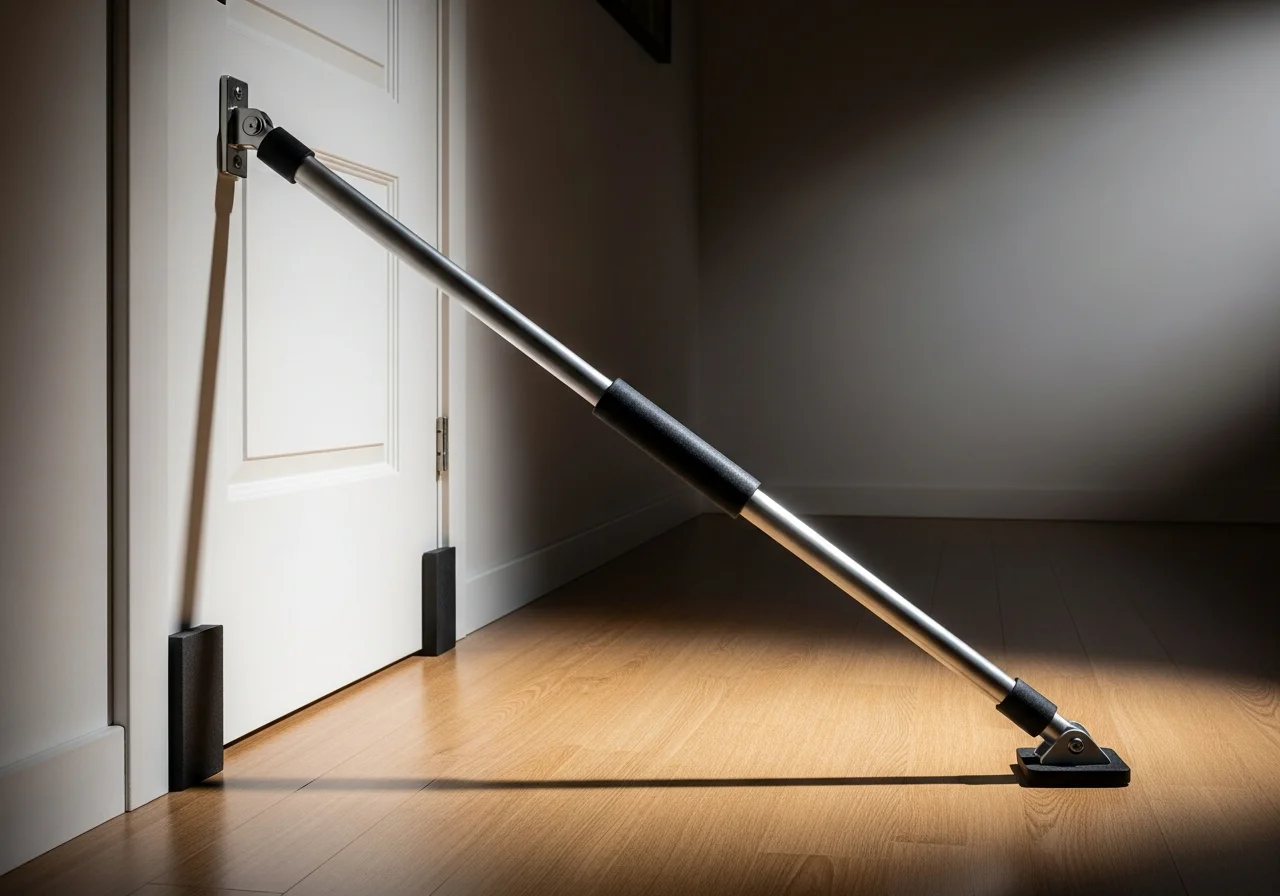
A door security bar represents one of the most robust methods for securing an interior door. This adjustable pole extends from the door handle to the floor at an angle, creating a physical barrier that distributes force across the floor surface. Even with substantial force applied to the door, the geometry of the security bar makes it nearly impossible to open.
These bars work through simple physics. When someone attempts to force the door open, the pressure transfers through the bar to the floor, utilizing the strength of your home’s foundation rather than just the door frame. This makes security bars significantly stronger than traditional locks, which only secure at a single point.
Modern security bars feature rubberized ends to prevent floor damage and telescoping mechanisms that adjust to various door heights. Some advanced models include built-in alarms that activate when pressure is detected, combining physical security with audible deterrence. Installation takes mere seconds, and removal is equally quick, making them practical for daily use.
The primary limitation involves doors that open outward, where these devices cannot function. Additionally, some floor surfaces like thick carpet may reduce effectiveness. For standard interior doors that open inward, however, security bars provide exceptional protection.
Door Wedge Solutions
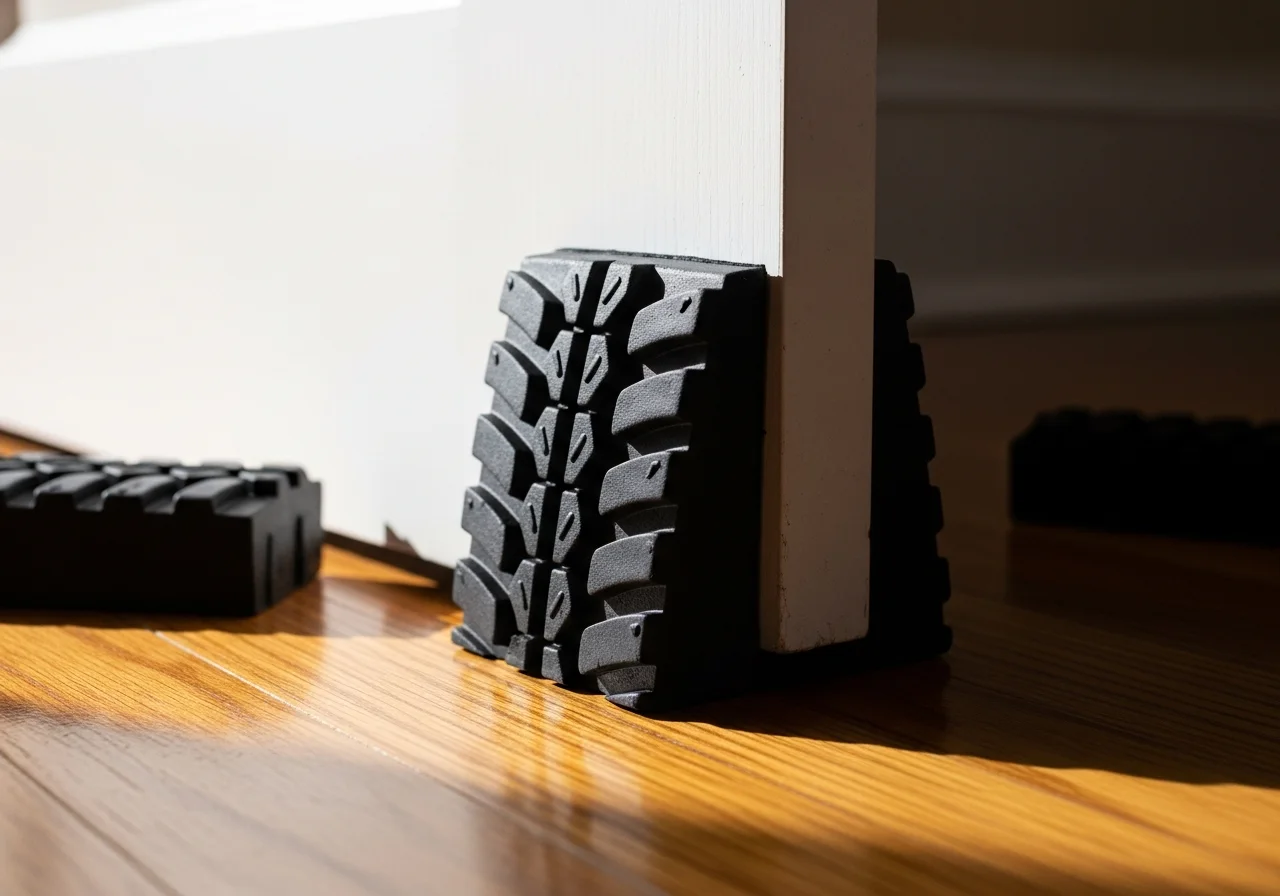
The humble door wedge offers surprising effectiveness as a security device despite its simple design. Rubber door wedges create friction against the floor surface, preventing door movement through physics rather than mechanical locking. Strategic placement directly under the door creates maximum resistance, and the wedge angle determines security strength.
Advanced security wedges differ substantially from standard door stops. They feature aggressive tread patterns that grip flooring, reinforced construction that resists crushing, and ergonomic designs that allow quick installation and removal. Some incorporate alarms that sound when the wedge experiences pressure, adding an audible security layer.
Multiple wedges can be stacked for enhanced security, and placement slightly away from the door pivot point increases mechanical advantage. On hard flooring surfaces, quality wedges can prevent door opening even under considerable force. Carpet reduces effectiveness but still provides meaningful resistance, particularly with specialized carpet-gripping models.
Door wedges excel as backup security, travel companions, and temporary solutions. Their affordability and simplicity make them accessible security tools that require no installation knowledge. Keep several strategically placed throughout your home for quick deployment when needed.
Chair Under Door Handle
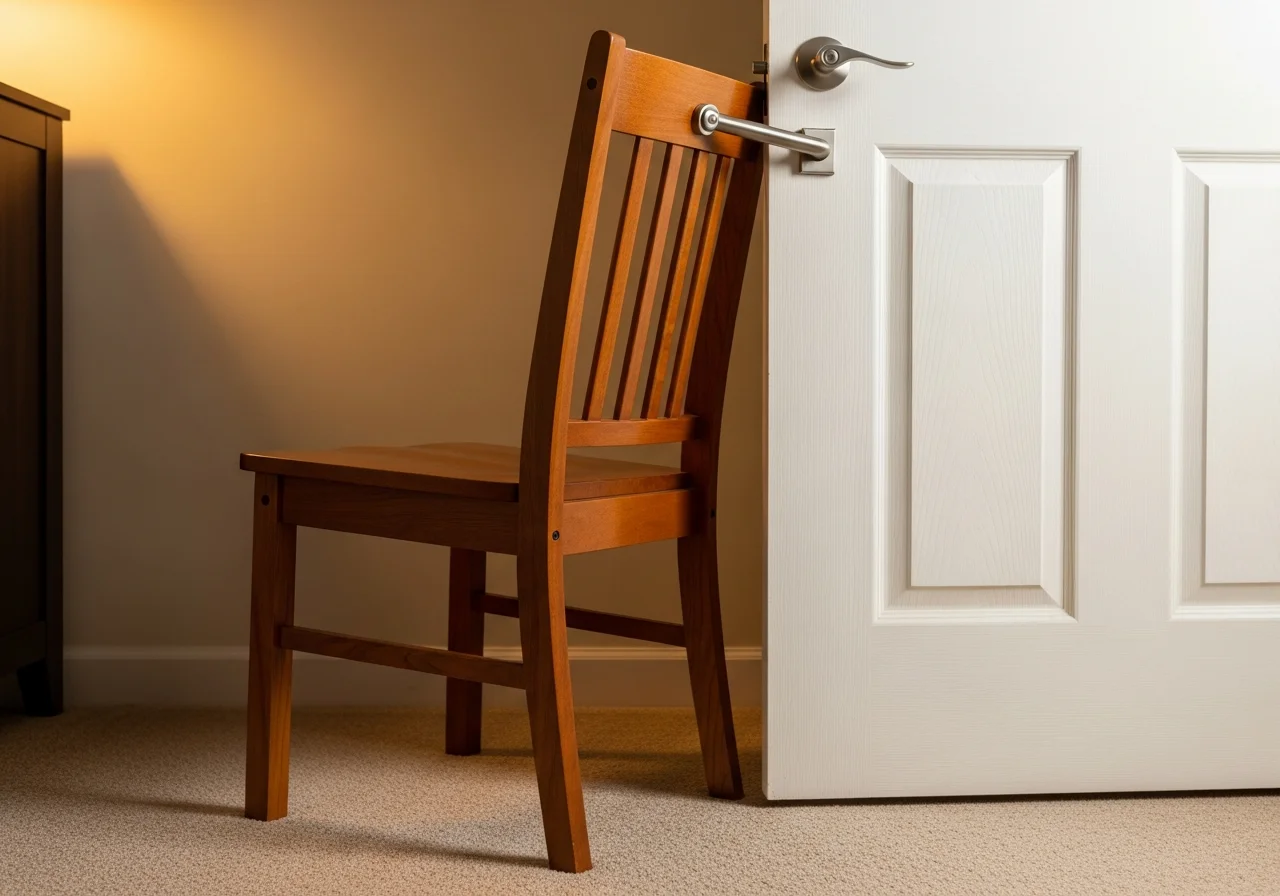
Using a chair to secure a door represents one of the oldest improvised security methods, and it remains effective when executed properly. The technique works by wedging a chair back under the door handle at an angle, with the chair legs pressing against the floor. This creates a rigid triangle that resists door opening through geometric stability.
Chair selection significantly impacts effectiveness. Dining chairs with horizontal back supports work better than those with vertical slats. The chair height should position the back support directly under the handle when angled appropriately. Heavier chairs provide more resistance, though weight alone doesn’t guarantee security.
Proper positioning requires the chair to lean back at approximately forty-five degrees, creating optimal force distribution. The rear chair legs should press firmly against the floor with the front legs slightly elevated. On smooth floors, placing a rubber mat under the rear legs prevents sliding.
This method works best as a temporary measure or when no purpose-built security devices are available. It provides more psychological comfort than actual security against determined intruders, as sufficient force can dislodge most chairs. However, the noise created during any attempt often serves as an effective deterrent and alert mechanism.
Belt or Rope Technique
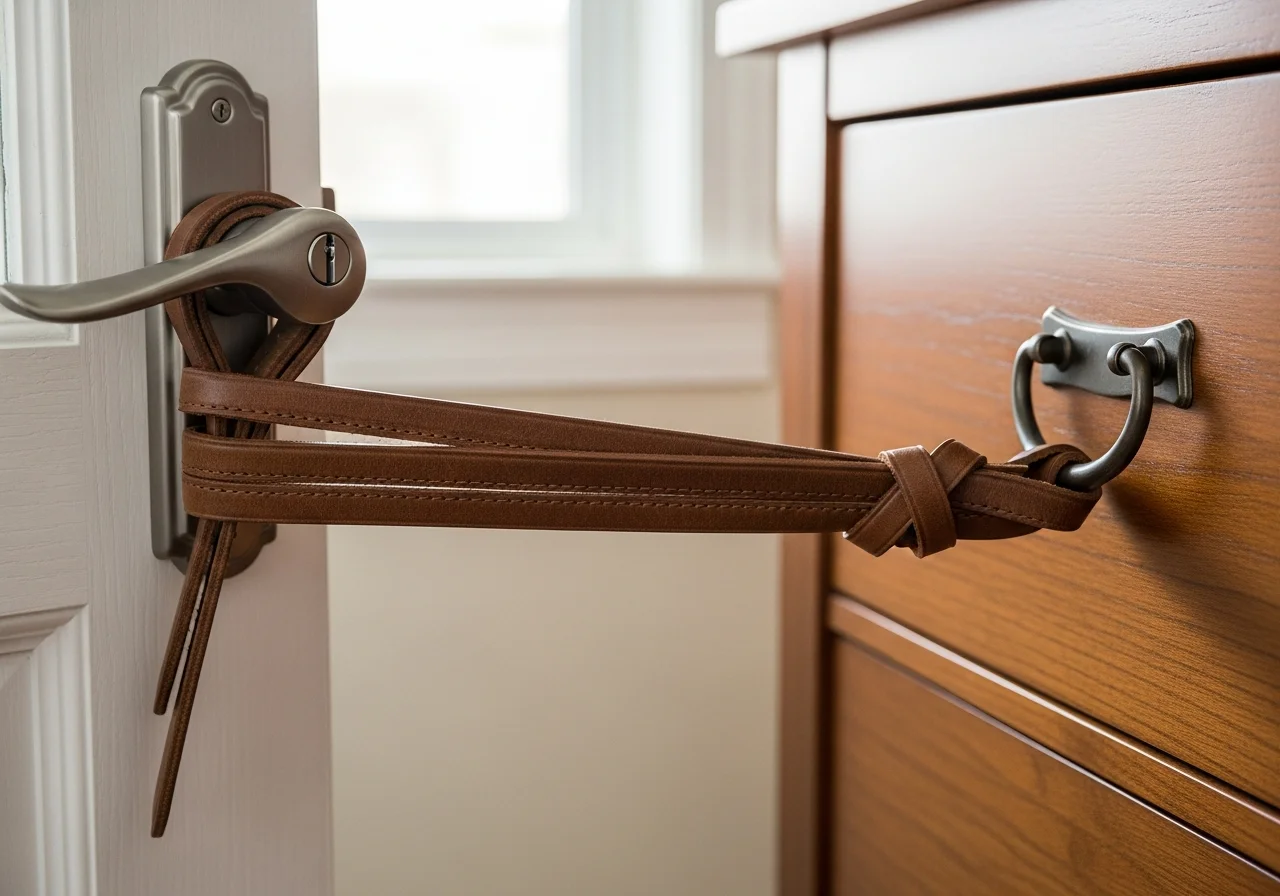
Securing a door with a belt or rope requires creativity but provides genuine security when implemented correctly. This technique works by creating tension between the door handle and a fixed anchor point, preventing the handle from turning or the door from opening. The method particularly suits doors with lever handles where mechanical advantage can be maximized.
For optimal security, wrap the belt or rope around the door handle multiple times before securing it to a heavy furniture piece, radiator, or structural element. The anchor point must be solid and positioned to create perpendicular tension relative to the door handle’s natural movement. Synthetic materials like nylon webbing or climbing rope work better than leather belts, as they resist stretching under load.
The wrapped portion around the handle should be tight enough to prevent handle rotation, while the connection to the anchor point should be taut but not overstressed. Creating a trucker’s hitch or similar adjustable knot allows tension fine-tuning. Multiple wraps increase friction and security, making handle manipulation nearly impossible.
This technique requires some knowledge of knots and mechanical principles but uses items commonly available in most homes. It works equally well on both inward and outward opening doors, provided appropriate anchor points exist. The setup takes several minutes but provides security comparable to commercial devices.
Fork Lock Method
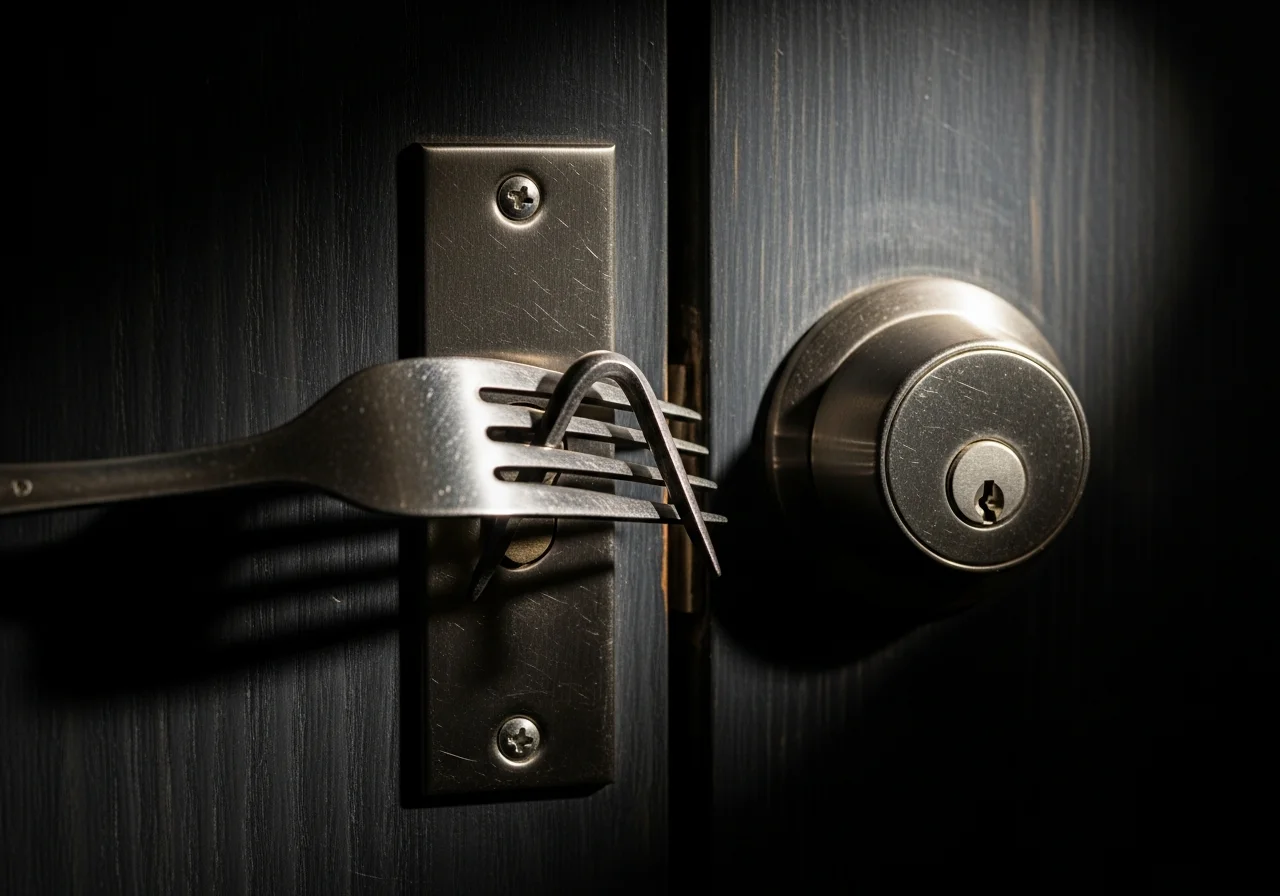
The fork lock method has gained popularity through social media demonstrations, though its practical effectiveness varies. This technique involves bending a metal fork’s tines to create a makeshift locking device that fits into the door strike plate. When implemented correctly, the fork handle prevents the door from opening by interfering with the door frame.
Creating a fork lock requires breaking off the fork handle after bending the tines approximately ninety degrees. The tine portion fits into the strike plate hole, while the handle portion rests against the door, preventing inward movement. Proper execution requires the fork to fit snugly in the strike plate with minimal play.
The reality of fork locks involves significant limitations. Many modern doors have strike plates too shallow for forks to grip effectively. The technique only works on doors that open inward toward you. Fork metal often lacks the strength to resist determined forced entry. Additionally, creating the lock destroys a fork and requires tools many people don’t readily have available.
Despite viral videos suggesting otherwise, fork locks should be considered emergency measures rather than reliable security solutions. They might provide minimal delay against casual intrusion but offer little resistance against serious attempts. Several purpose-built devices provide superior security at comparable or lower effort investments.
Sliding Door Security Bar
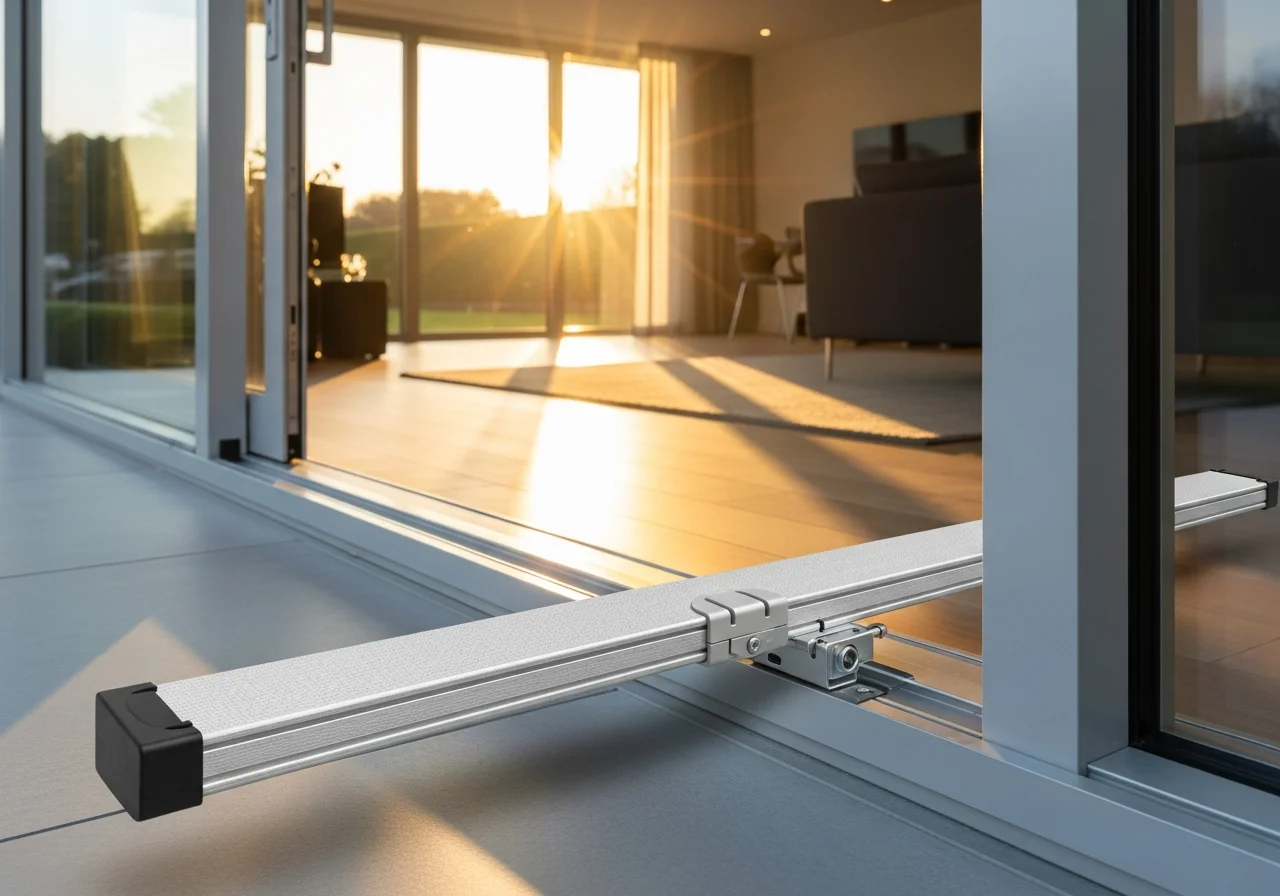
Sliding doors present unique security challenges that standard door locks cannot address. Security bars specifically designed for sliding doors fit into the track, preventing horizontal door movement regardless of lock status. These bars effectively transform even unlocked sliding doors into immovable barriers.
Quality sliding door bars feature adjustable lengths to accommodate various door widths, rubberized ends that prevent track damage, and sufficient rigidity to resist bowing under pressure. Some models include vertical components that also prevent door lifting, addressing a common sliding door vulnerability where intruders lift doors off tracks.
Installation involves simply placing the bar in the track with the door closed and adjusting length until snug. The bar should fit tightly enough that minimal play exists but not so tight that it causes stress. Some users prefer positioning bars at handle height, while others place them near the floor for better concealment and reduced interference with window views.
Beyond security, these bars prevent children from opening doors unsupervised and protect against accidental openings during severe weather. They work equally well on sliding glass doors, closet doors, and window installations. The versatility and effectiveness make them essential security tools for homes with sliding door access points.
Smart Lock Integration
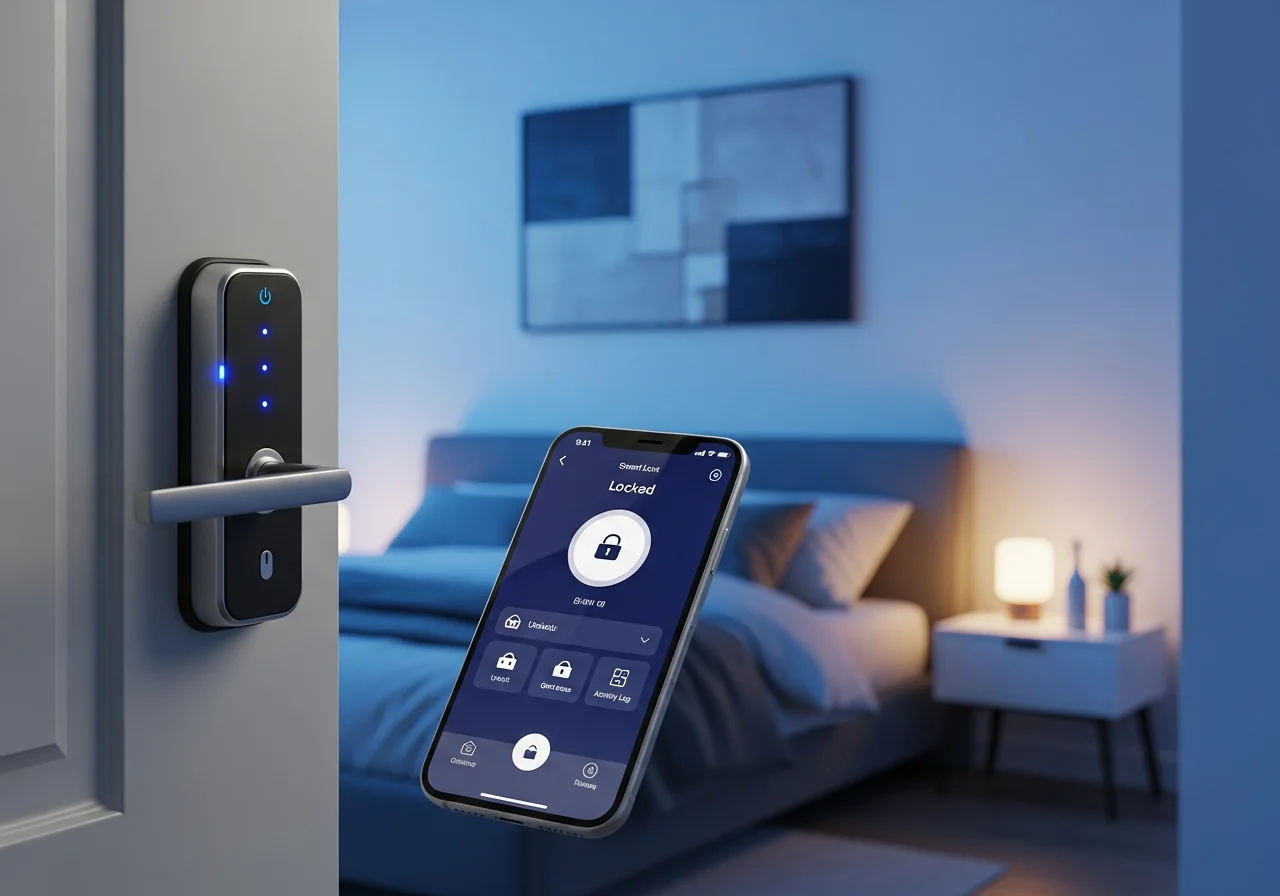
Smart locks bring modern technology to interior door security, offering keyless convenience alongside enhanced security features. These devices allow locking and unlocking via smartphone apps, PIN codes, biometric authentication, or traditional keys as backup. Many models integrate with home automation systems, enabling security protocols triggered by specific conditions.
Interior smart locks differ from exterior models by focusing on privacy and access control rather than weather resistance. They track who enters rooms and when, send notifications during access attempts, and allow temporary codes for guests or service providers. Some models include auto-lock features that secure doors after specific timeframes, eliminating concerns about forgotten locks.
Installation typically requires replacing existing interior lock mechanisms, making them suitable for homeowners but often prohibited in rentals. Battery-powered models avoid wiring complications, though battery monitoring becomes an additional maintenance consideration. Quality smart locks include mechanical key overrides preventing lockouts during battery failures or technical malfunctions.
The privacy implications of smart locks deserve consideration, as these devices create digital records of room access. While beneficial for monitoring unauthorized entry, they also create data that could be accessed by others depending on system security and vendor policies. Balanced against these concerns, smart locks offer unprecedented convenience and detailed security control. May you want to know more
Door Alarm Systems
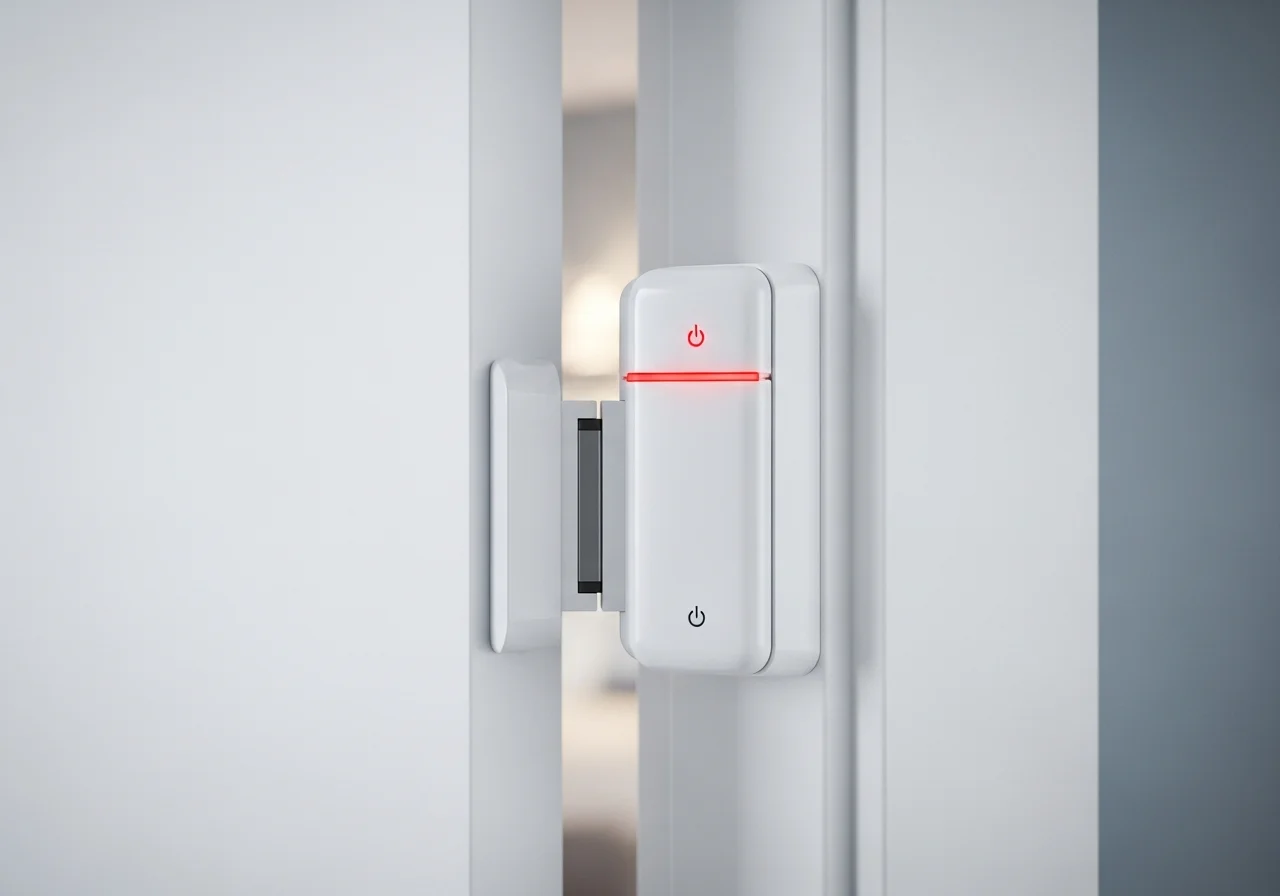
Door alarms provide audible security rather than physical barriers, deterring intrusion through noise that attracts attention. These devices attach to doors and trigger loud alarms when the door opens or when significant vibration is detected. The psychological impact of sudden loud noise often proves more effective than physical barriers against opportunistic intrusion.
Modern door alarms range from simple battery-powered units to sophisticated systems integrating with whole-home security networks. Entry-level models produce alarms exceeding one hundred decibels when the door opens, enough to startle intruders and alert occupants. Advanced models distinguish between authorized and unauthorized entry, offer adjustable sensitivity to prevent false alarms, and include remote monitoring capabilities.
Installation varies by model but generally requires minimal tools and no permanent modifications. Adhesive-mounted sensors attach to the door and frame, while the main unit may be separate or integrated. Portable models travel easily, making them valuable additions to hotel security strategies.
The effectiveness of door alarms relies heavily on context. In occupied homes, they provide excellent alerts allowing appropriate response. In unoccupied properties, they only deter intrusion if potential intruders fear the attention alarms attract. Combined with physical security devices, alarms create comprehensive security systems exceeding either approach alone.
Privacy Locks for Interior Doors
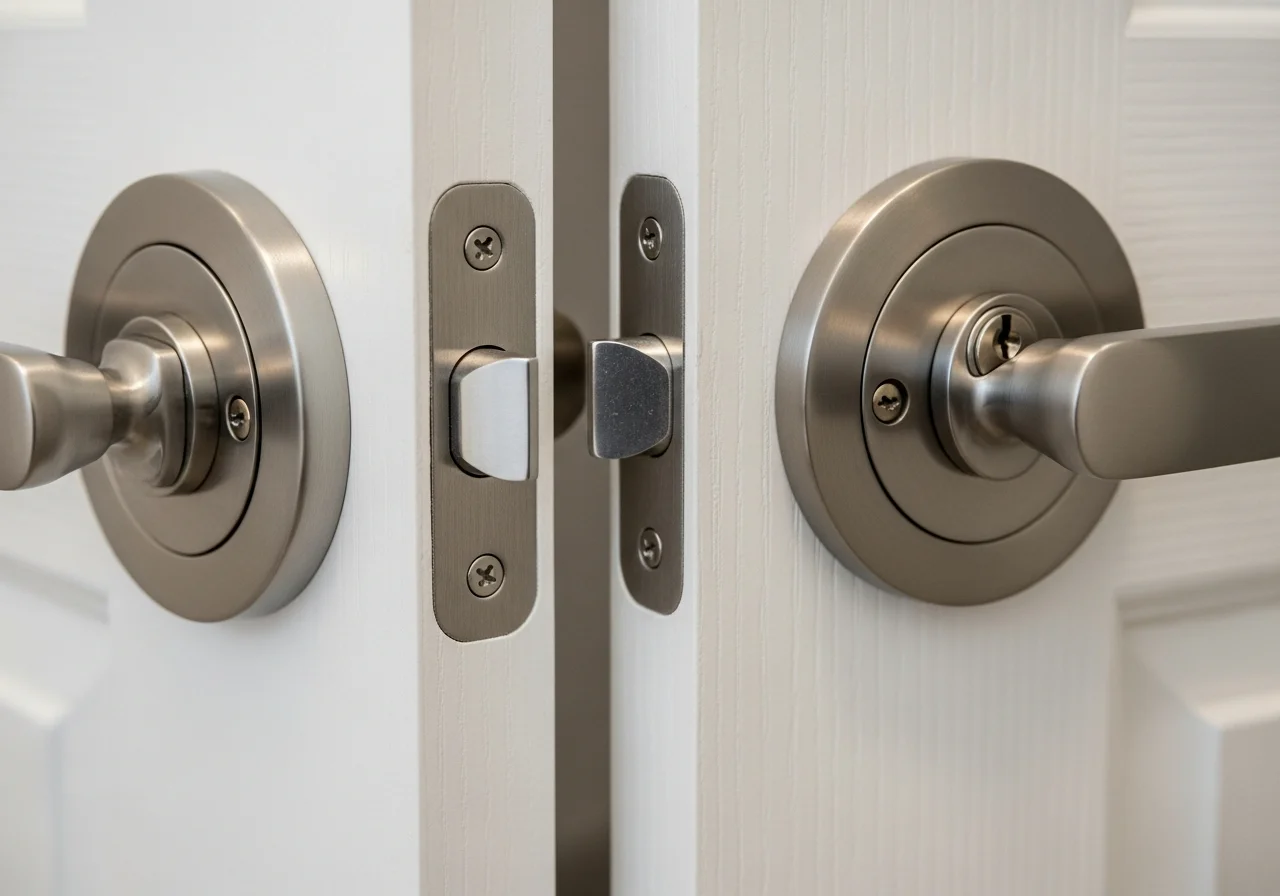
Privacy locks designed specifically for interior doors offer simple security for bedrooms, bathrooms, and private spaces without requiring extensive hardware. These locks typically feature push-button or turn-button mechanisms on the interior side with emergency access provisions on the exterior. They balance privacy needs with safety requirements that prevent dangerous lockouts.
Quality privacy locks include indicator mechanisms showing locked status from the outside, preventing embarrassing intrusion attempts. The emergency access feature usually involves a small hole accepting straightened paperclips or specialized tools, allowing lock release during legitimate emergencies. This design prevents children or disoriented individuals from becoming dangerously trapped while maintaining everyday privacy.
Installation requires drilling into the door edge and face, meaning they work best as permanent solutions in owned properties. Replacing existing privacy locks with higher-quality models provides security upgrades without additional door modification. Look for solid metal construction rather than plastic components, as these provide better durability and security.
The limitations of privacy locks involve their minimal security against determined intrusion. Emergency access features intentionally create vulnerabilities, and the lightweight construction prioritizes privacy over security. For bedrooms and bathrooms, however, they provide appropriate protection aligned with typical interior door security needs.
Deadbolt Installation To Lock a Door From Inside
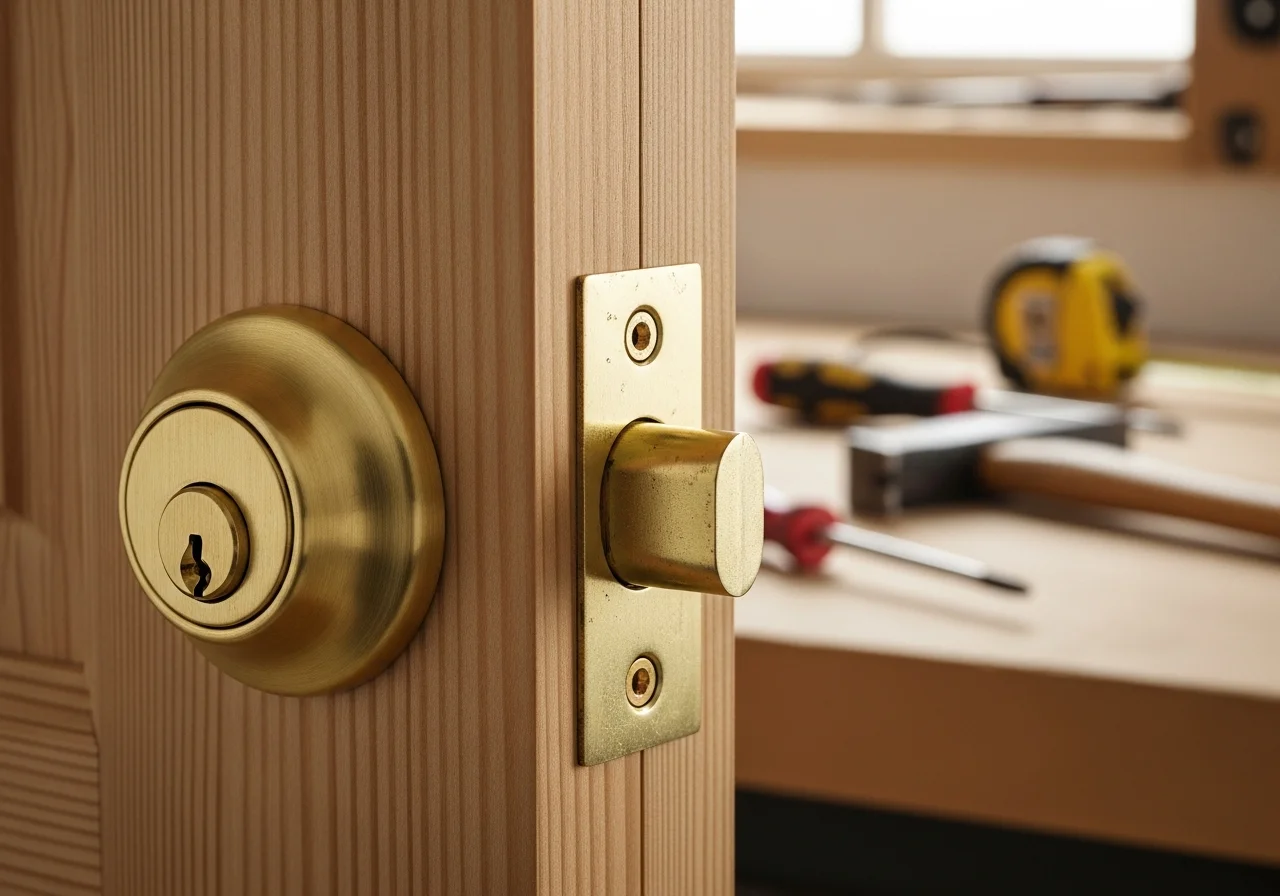
Adding deadbolts to interior doors might seem excessive but provides legitimate benefits in specific situations. Interior deadbolts secure valuable items, create safe rooms, or protect vulnerable occupants from household members. Unlike privacy locks, deadbolts require keys or thumb turns and lack emergency access features, providing genuine security rather than simple privacy.
Installation involves drilling through the door face and edge to accommodate the bolt mechanism and strike plate installation in the door frame. This process requires moderate DIY skills and appropriate tools but creates security comparable to exterior doors. Single-cylinder deadbolts use thumb turns on the interior, while double-cylinder versions require keys on both sides.
The decision to install interior deadbolts should consider safety implications. Double-cylinder deadbolts that require keys on both sides can trap occupants during emergencies like fires. Single-cylinder versions allow interior exit but can be unlocked through broken door glass. Building codes often regulate deadbolt usage, particularly regarding bedroom doors and emergency egress.
Despite complications, interior deadbolts serve important functions in specific contexts. They secure storage rooms containing valuables, firearms, or hazardous materials. They create safe spaces for vulnerable individuals. They provide security in shared living situations where room security matters. Proper implementation balances security benefits against safety considerations.
Barricade Devices
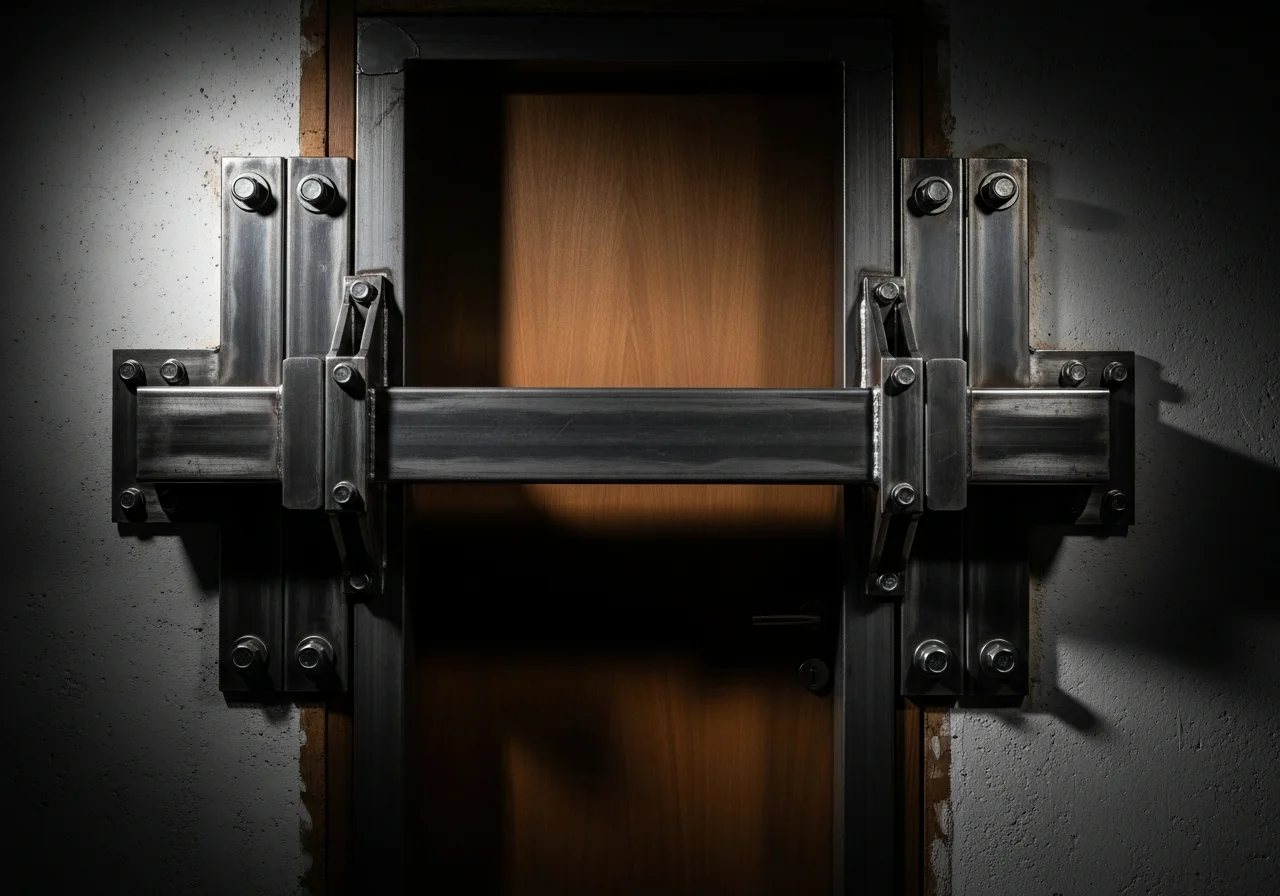
Barricade devices represent the most robust interior door security solutions, designed to resist forced entry even under sustained assault. These commercial-grade devices attach to doors or frames and create obstacles that cannot be easily defeated without causing substantial damage. They serve situations requiring maximum security like domestic violence protection, high-crime areas, or secure storage rooms.
Heavy-duty barricades typically feature hardened steel construction, multiple attachment points distributing force across larger areas, and designs that make door removal difficult even when hinges are accessible. Some models include alarming mechanisms that activate during intrusion attempts, combining physical security with audible deterrence.
Installation ranges from temporary devices requiring no modification to permanent installations involving bolting into wall studs and door frames. The most effective barricades attach to structural elements rather than just door frames, recognizing that frames themselves represent potential failure points under extreme force. Professional installation often makes sense given the complexity and security criticality.
The appearance and obtrusiveness of barricade devices often limits their appeal outside specialized security situations. They make daily door use less convenient and create visual reminders of security concerns that some find psychologically uncomfortable. However, when security genuinely matters more than convenience or aesthetics, barricades provide protection that simpler solutions cannot match.
Door Security Strike Plate Reinforcement
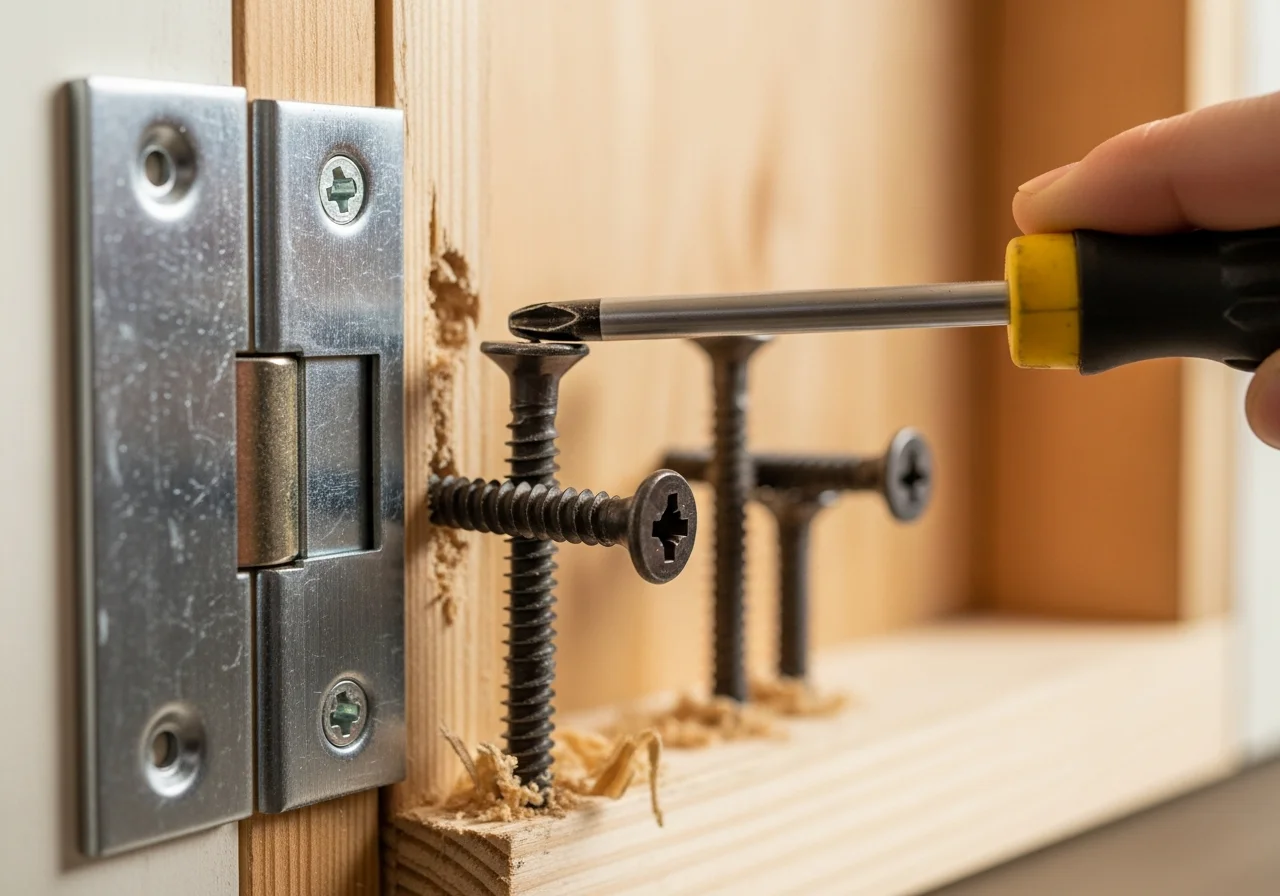
The strike plate represents the weakest point in most door security systems, as it typically attaches with short screws into the door frame rather than structural elements. Reinforcing this component dramatically improves overall door security regardless of lock quality. Heavy-duty strike plates with longer screws that penetrate wall studs transform doors from easy targets into substantial obstacles.
Standard strike plates use half-inch screws that barely penetrate door frames. These provide minimal resistance when doors face forced entry attempts, as the frame wood itself gives way. Replacement strike plates should use three-inch screws that reach through frames into structural wall studs, creating security anchored to the building’s skeleton rather than just decorative trim.
Installation requires removing existing strike plates and drilling deeper pilot holes to prevent wood splitting when driving longer screws. Box strike plates that enclose the bolt provide better security than flat plates by distributing force across larger areas. Some advanced models include hardened steel construction that resists cutting or prying.
This upgrade provides the best security-to-cost ratio of any door modification, costing minimal amounts while providing substantial security improvements. The modification works equally well on exterior and interior doors, creating consistent security throughout properties. Landlords generally permit these upgrades since they improve property security, though checking lease agreements remains advisable. May you want to read more click here
Conclusion
Securing doors from inside involves understanding available options and matching solutions to specific situations and security needs. From simple wedges costing just dollars to sophisticated smart locks and heavy-duty barricades, the range of approaches ensures appropriate solutions exist for every circumstance. The key lies in honestly assessing your security requirements, constraints, and budget before selecting methods.
Combining multiple techniques often provides the most effective security. A portable lock for travel, a security bar for home use, and a door alarm create layered protection that addresses different scenarios. No single solution fits every situation, but understanding this diverse toolkit empowers informed decisions about personal security.
Remember that interior door security represents just one component of comprehensive home security. Windows, exterior doors, lighting, and awareness all contribute to overall safety. However, the peace of mind that comes from knowing you can effectively secure your immediate space provides genuine value regardless of other security measures in place. if you want to know more then click
Frequently Asked Questions
What is the most effective way to lock a door from inside without a lock?
A door security bar provides the most reliable solution, using physics to brace against the floor and preventing door opening even under substantial force. For portability, a quality portable door lock device offers excellent security in under ten seconds.
Can a chair really secure a door effectively?
While a chair under the door handle creates some resistance and makes noise during intrusion attempts, it provides minimal security against determined force. It works best as a temporary measure when no purpose-built security devices are available or as a psychological deterrent.
Are fork locks actually secure?
Fork locks provide minimal security and often fail under moderate force. They work only on doors opening inward, require destructive preparation, and depend heavily on strike plate depth. Purpose-built portable locks offer far superior security with equal or less effort.
How can renters secure doors without damaging property?
Portable door locks, security bars, door wedges, and door alarms require no installation and leave no damage. These solutions provide genuine security while respecting rental restrictions on permanent modifications. Always review lease agreements before implementing any security measures.
What is the best interior door security for hotel rooms?
A combination of a portable door lock and door alarm provides comprehensive hotel security. The lock prevents entry even by those with keys, while the alarm alerts you to intrusion attempts. Both pack easily in luggage and install without tools or modifications.


One Comment