
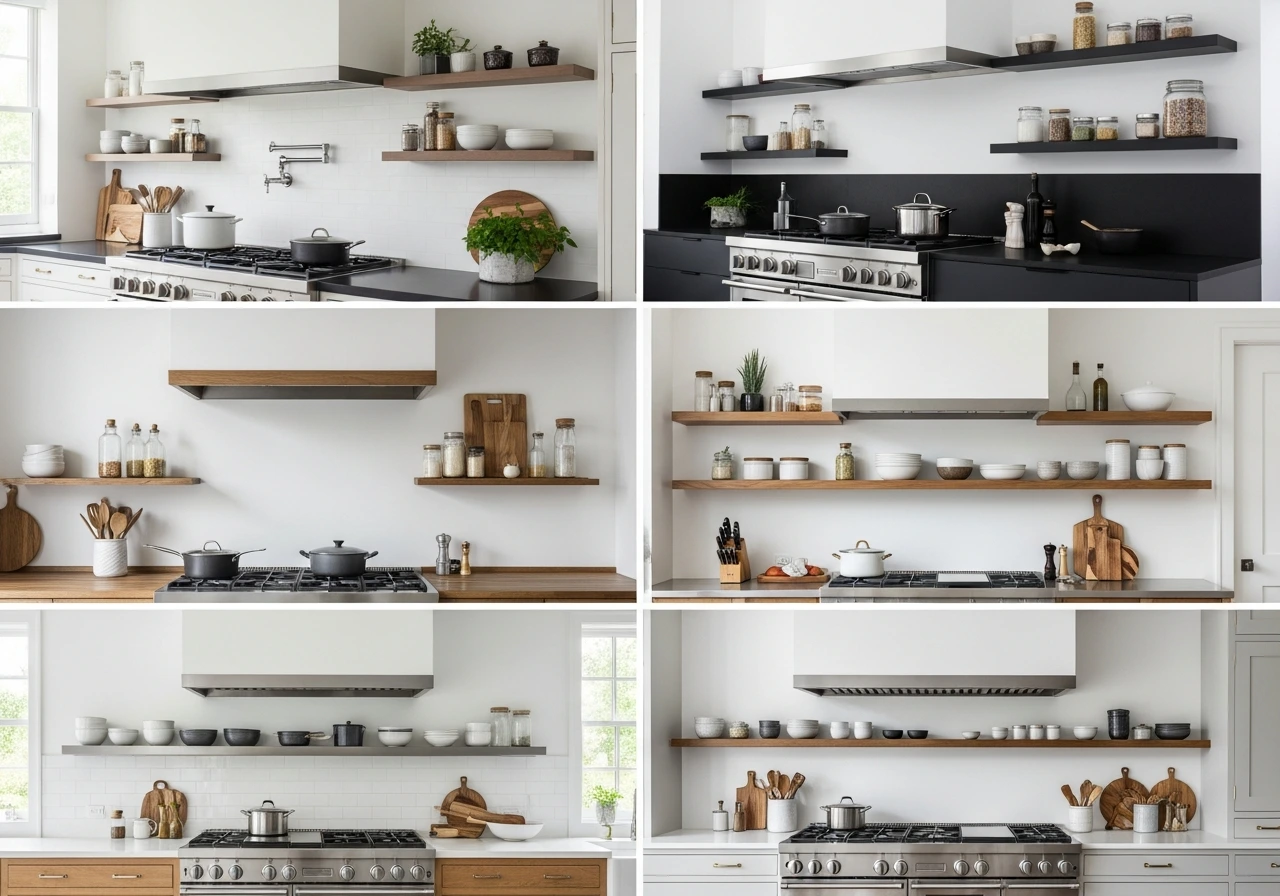
16+ Creative Floating Shelves Above Stove Ideas
The space above your stove represents one of the most underutilized areas in kitchen design. While many homeowners leave this space bare or install a standard range hood, floating shelves offer an opportunity to blend functionality with visual appeal. These shelves can transform your cooking area into an organized, accessible, and beautifully styled space that reflects your personal taste while keeping everyday essentials within arm’s reach.
Floating shelves above the stove have gained popularity among interior designers and homeowners alike because they create an open, airy feeling while maximizing vertical storage. Unlike traditional upper cabinets that can make a kitchen feel closed in, floating shelves maintain sightlines and allow you to showcase your favorite cookware, ingredients, and decorative pieces. Whether you’re working with a compact galley kitchen or a spacious culinary haven, the right floating shelf configuration can enhance both the form and function of your cooking space.
This comprehensive guide explores more than sixteen creative approaches to incorporating floating shelves above your stove. From rustic farmhouse designs to sleek contemporary installations, you’ll discover practical ideas that address common concerns about heat exposure, grease accumulation, and safety while delivering the aesthetic impact you desire.
Rustic Wood Beam Shelves for Farmhouse Charm
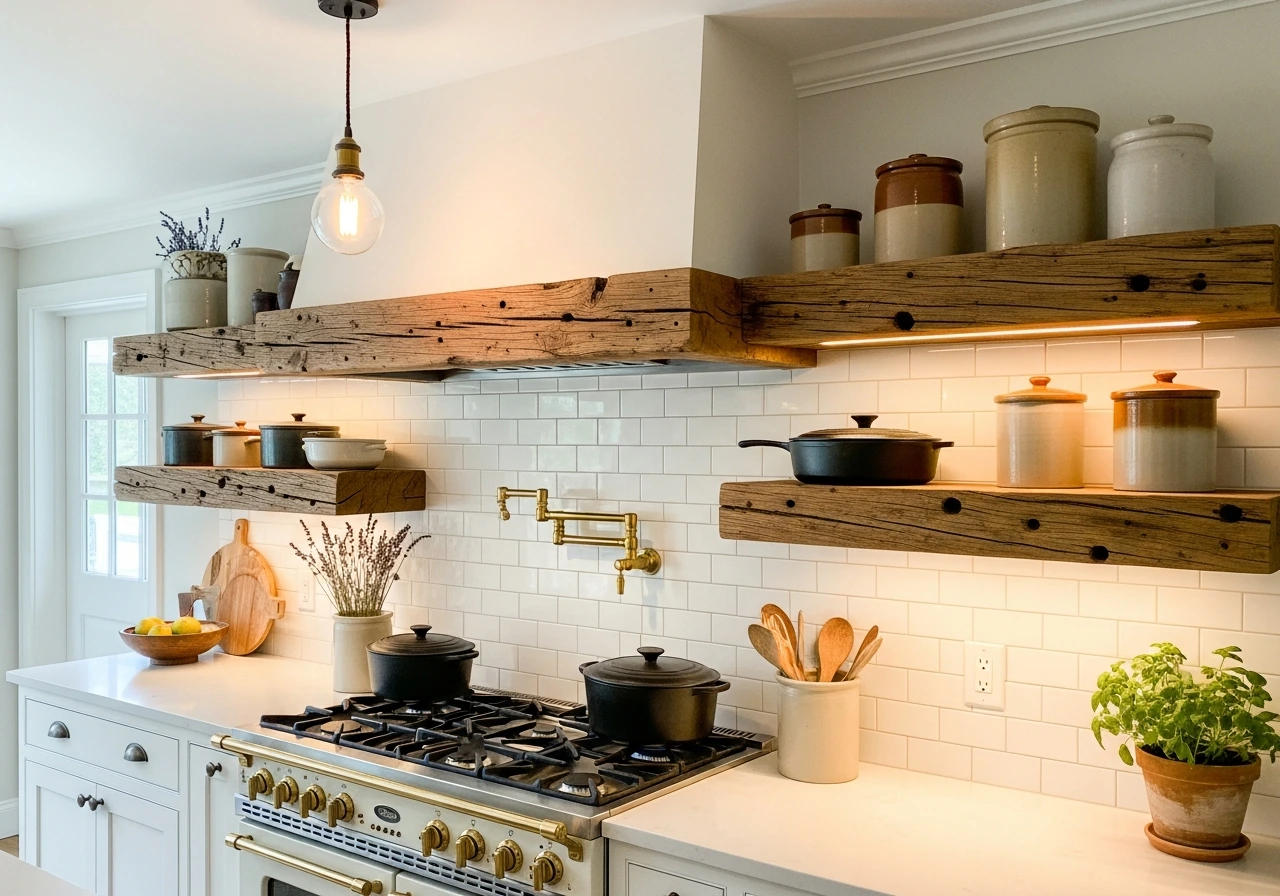
Reclaimed wood beams create an instant focal point above your cooking area. These substantial shelves, often measuring four to six inches thick, bring warmth and character to your kitchen while providing sturdy support for heavier items. The natural grain patterns and weathered texture of reclaimed wood pair beautifully with traditional ranges and vintage-inspired kitchens.
When selecting wood for above-stove placement, consider treated or sealed options that resist moisture and heat damage. Oak, maple, and walnut offer durability, while lighter woods like pine provide a more casual appearance. The key lies in maintaining proper clearance from heat sources, typically thirty inches minimum from the cooktop surface to combustible materials.
Sleek Metal Shelving for Industrial Aesthetics
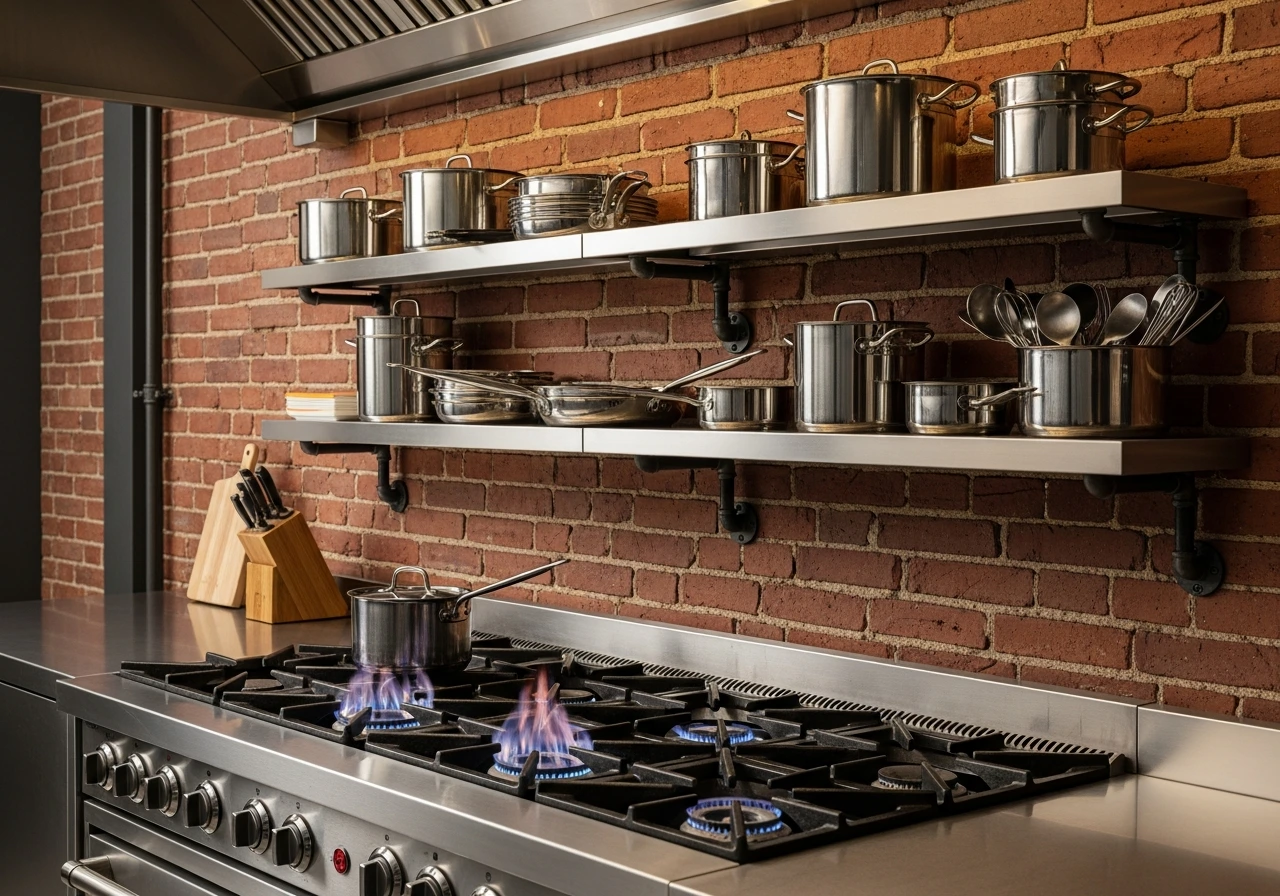
Stainless steel and powder-coated metal shelves deliver a professional kitchen appearance while offering superior heat resistance. These materials withstand temperature fluctuations without warping and clean easily with simple wiping. Metal shelving works exceptionally well in modern and industrial-style kitchens, creating visual continuity when matched to stainless appliances.
Consider pipe-style brackets for an authentic industrial look, or opt for concealed mounting hardware to achieve a true floating effect. Black metal shelves provide dramatic contrast against white subway tiles, while brass and copper finishes add warmth to contemporary spaces.
Tiered Shelf Arrangements for Maximum Storage
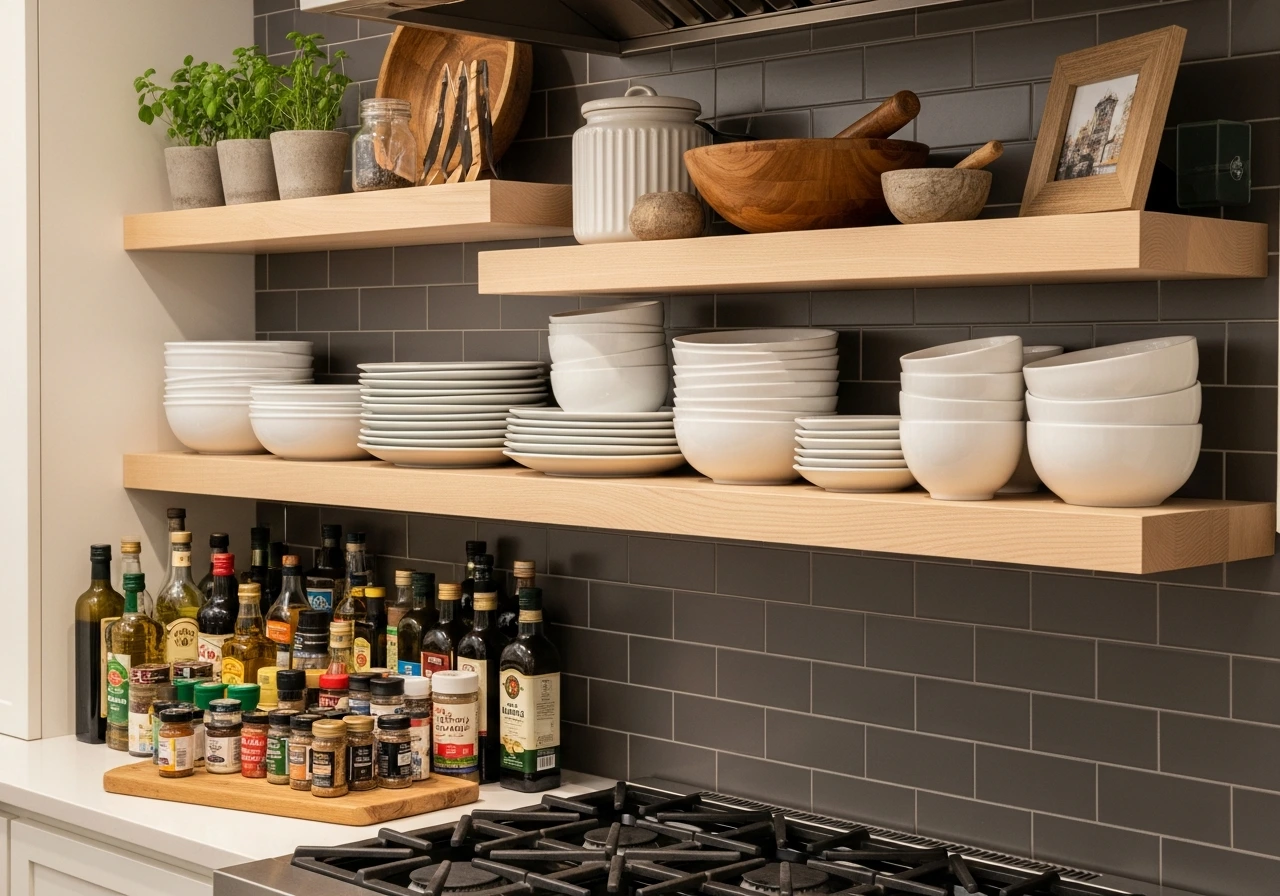
Installing shelves at varying heights creates dynamic visual interest while accommodating items of different sizes. A tiered approach might include a lower shelf for frequently used oils and spices, positioned about thirty inches above the cooktop, with additional shelves spaced twelve to eighteen inches apart ascending toward the ceiling.
This configuration allows you to organize items by usage frequency, keeping everyday essentials at eye level while storing occasional-use serving pieces higher up. The varied heights also prevent the shelving from appearing as a solid visual block, maintaining the open feeling that makes floating shelves attractive.
Corner Floating Shelves for Awkward Spaces
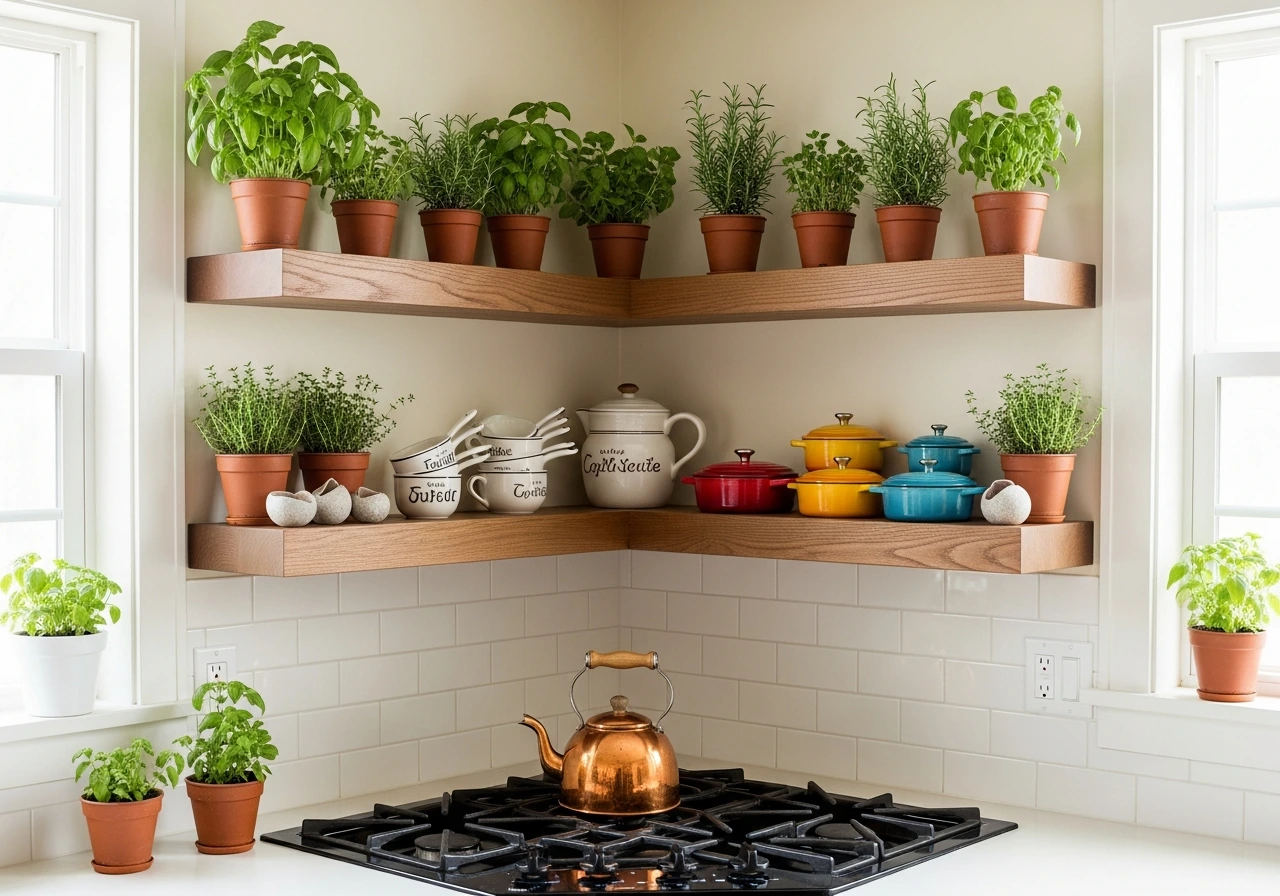
Stoves positioned in corners present unique design challenges and opportunities. Custom-cut corner shelves wrap around the available wall space, transforming what might otherwise be wasted area into valuable storage. These shelves work particularly well for displaying decorative items like pottery, small plants, or collected cookware that adds personality to your kitchen.
The angular nature of corner shelves draws the eye upward and outward, making small kitchens feel more spacious. Pair corner shelving with under-shelf lighting to eliminate shadows and showcase your displayed items effectively.
Glass Shelves for Light and Transparency

Tempered glass shelves offer a contemporary solution that maintains visual openness while providing functional storage. These shelves virtually disappear against painted walls, making them ideal for small kitchens where maintaining sight lines is essential. Glass works especially well for displaying attractive dishware, glassware, or decorative bottles.
However, glass requires more frequent cleaning in the above-stove position due to visible grease and moisture accumulation. Choose glass that’s at least three-eighths of an inch thick for adequate strength, and ensure proper tempering for heat resistance. May you like this
Integrated Lighting Within Shelf Design
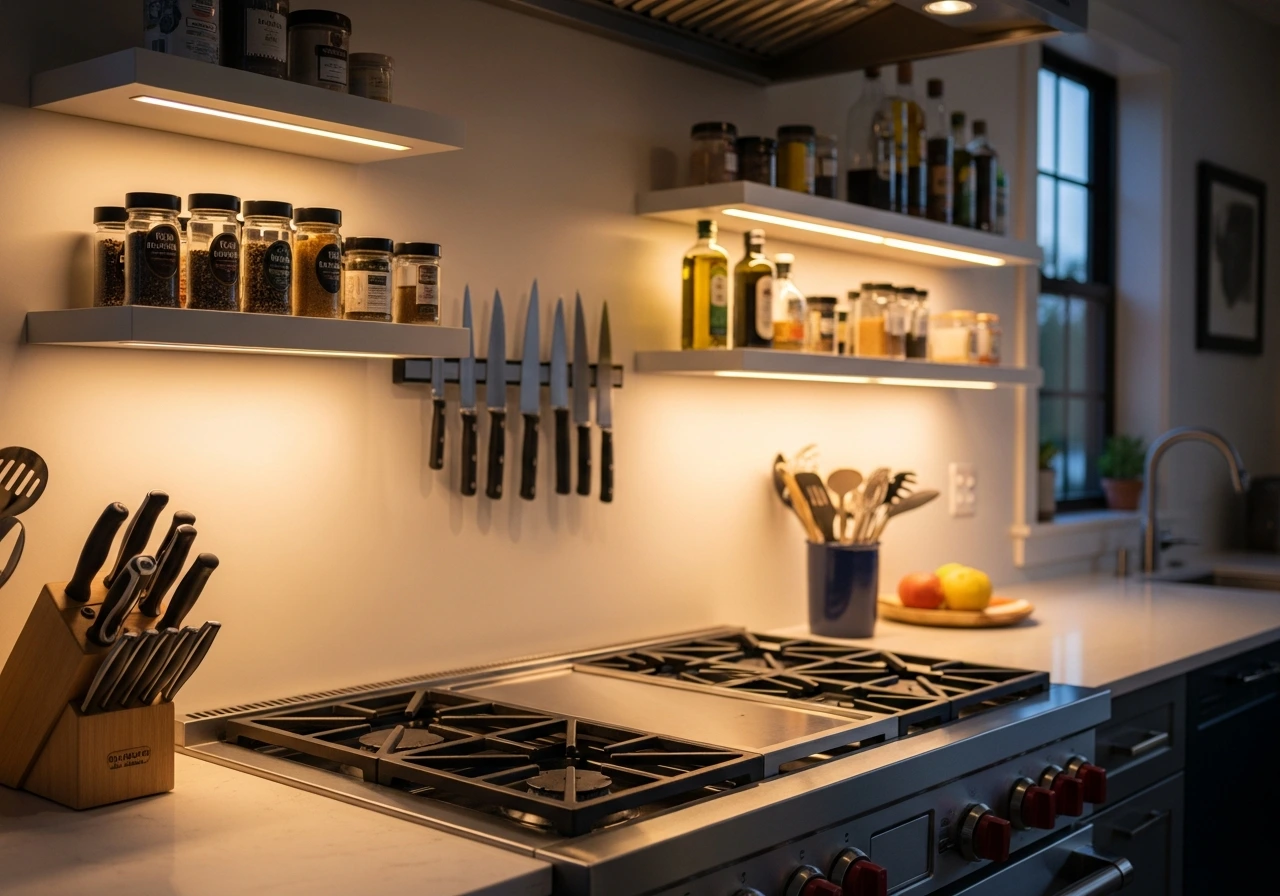
Incorporating LED strip lighting beneath floating shelves transforms them from simple storage into functional task lighting for your cooking surface. This dual-purpose approach eliminates shadows on your cooktop while highlighting the items displayed on the shelves above. Warm white LED create an inviting ambiance, while cooler temperatures provide crisp illumination for detailed cooking tasks.
The lighting installation requires planning during the shelf mounting process, with wiring concealed within walls or channels routed along the shelf bottom. Dimmable options allow you to adjust brightness based on cooking needs or desired atmosphere.
Minimalist Single Shelf Statement
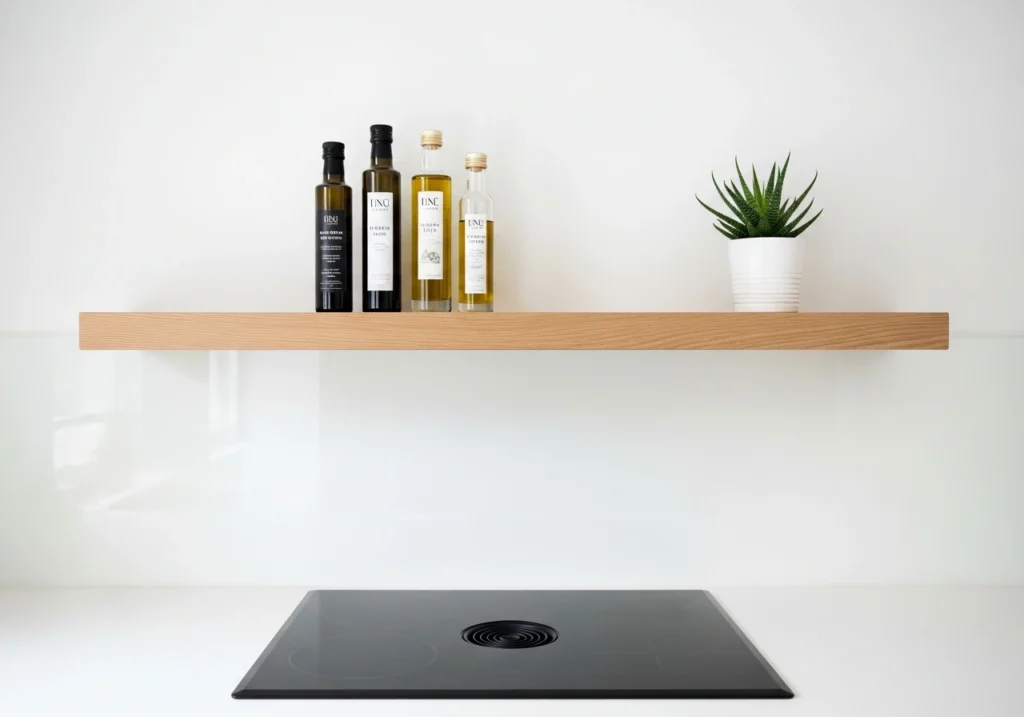
Sometimes restraint creates the most powerful design impact. A single substantial floating shelf positioned above your stove provides essential storage without overwhelming the space. This approach works beautifully in minimalist kitchens where clean lines and uncluttered surfaces take priority.
Choose a shelf depth between eight and twelve inches to accommodate standard cooking oil bottles and spice containers while maintaining a streamlined profile. The singular shelf becomes an opportunity for carefully curated display, encouraging you to edit your items down to only the most beautiful or functional pieces.
Open Shelving With Hidden Range Hood Integration
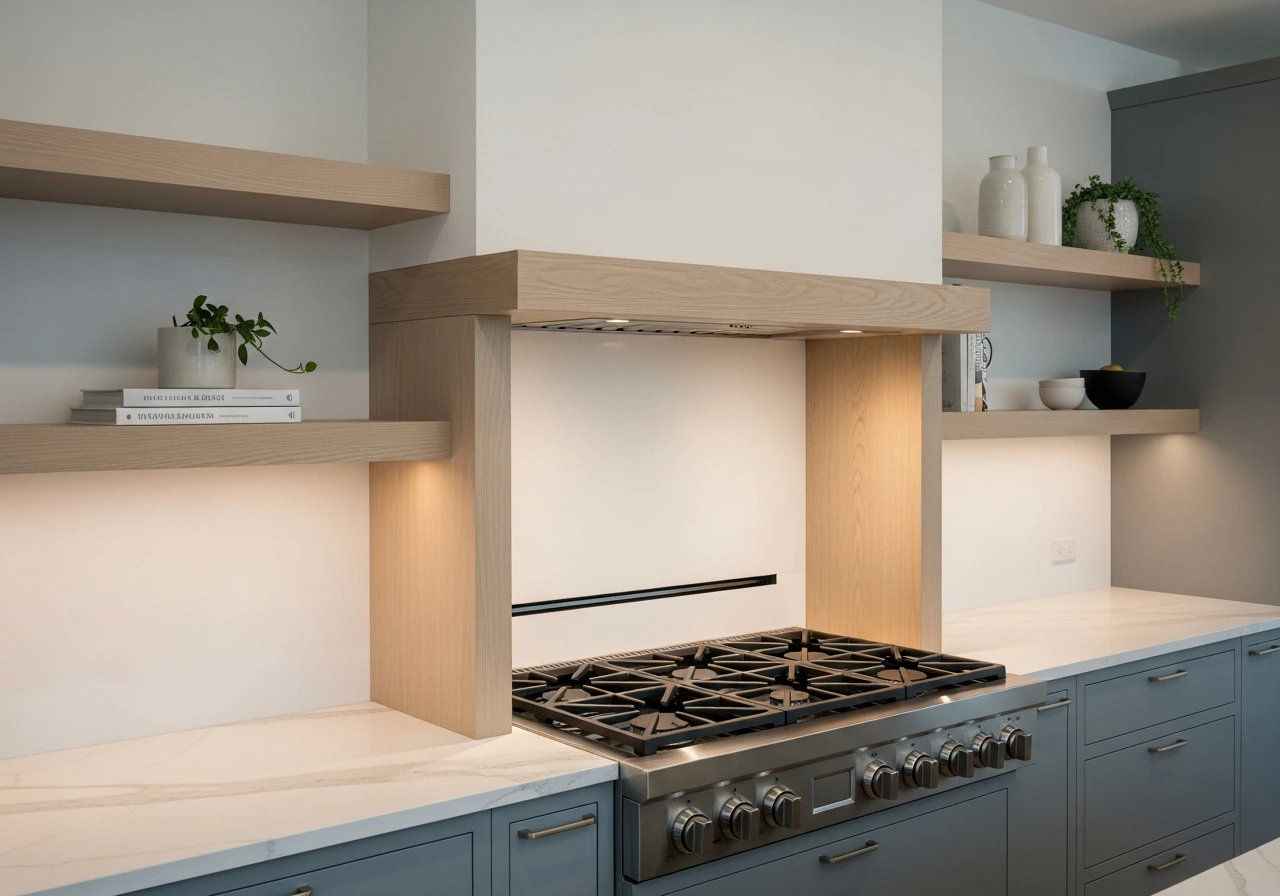
Modern range hood designs can be concealed within or behind floating shelf installations, maintaining the open shelving aesthetic while ensuring proper ventilation. Custom cabinetry shops can create shelving units that incorporate ventilation ducting, with the hood mechanism recessed or disguised as part of the shelf structure.
This integrated approach requires professional planning to ensure adequate ventilation performance while meeting building codes. The result is a seamless appearance that doesn’t sacrifice the functional necessity of removing cooking odors and moisture.
Asymmetrical Shelf Placement for Artistic Flair

Breaking away from traditional centered, symmetrical arrangements, asymmetrical shelf placement creates visual intrigue and accommodates architectural irregularities. You might install a longer shelf to one side of your stove with a shorter complementary shelf on the opposite side at a different height.
This approach works particularly well when your stove isn’t centered on a wall or when windows, doors, or other architectural features create an off-center cooking area. The asymmetry can actually balance the overall visual composition of your kitchen. May you want to get more ideas
Thick Floating Slabs for Contemporary Impact
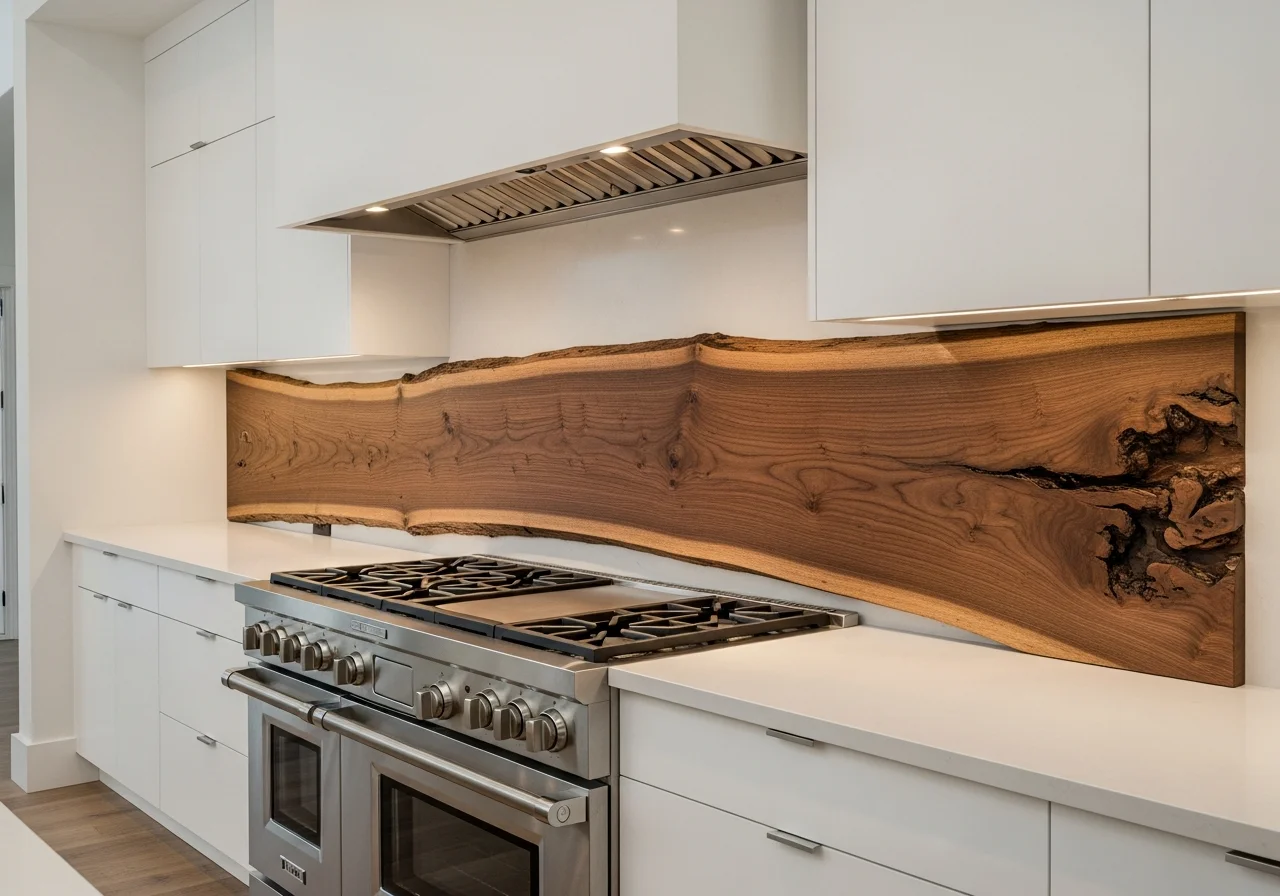
Shelves constructed from thick solid wood slabs or engineered materials create bold horizontal lines that anchor contemporary kitchen designs. These substantial shelves, often two to four inches thick, appear to defy gravity with concealed heavy-duty mounting systems.
The thickness allows for routed grooves or integrated channels that prevent items from sliding, particularly useful in the above-stove location where reaching and replacing items happens frequently. Choose materials with interesting grain patterns or book-matched wood for maximum visual impact.
Ceramic Tile-Backed Shelving Displays
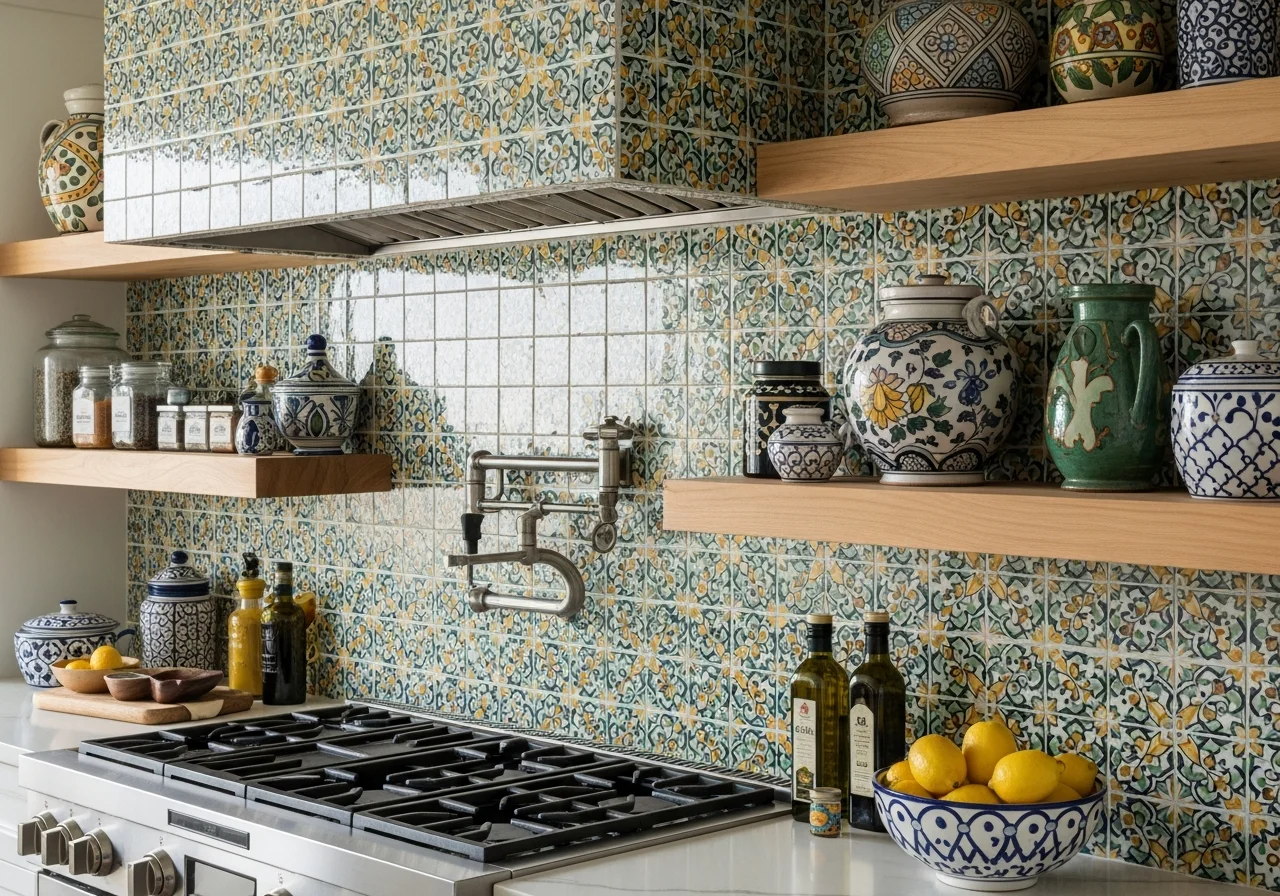
Installing floating shelves against a decorative tile backsplash creates opportunities for color and pattern play. The shelves interrupt the tile pattern, creating visual depth and dimension while the tile provides easy-clean protection for the wall behind your frequently used cooking oils and ingredients.
Consider how shelf placement will interact with tile patterns during the backsplash design phase. Shelves positioned to align with tile grout lines create a more integrated appearance, while deliberate misalignment can produce dynamic visual tension.
Bracket-Style Shelves With Decorative Hardware

Rather than concealing mounting hardware, decorative brackets become design features in their own right. Ornate cast iron brackets suit traditional and farmhouse kitchens, while geometric brass brackets complement transitional spaces. The brackets extend the design language of your cabinet hardware, faucets, and light fixtures throughout the kitchen.
Ensure brackets are rated for the weight you intend to place on shelves, typically looking for options that support at least fifty pounds per linear foot for above-stove applications where you’ll store heavier items like cast iron cookware or ceramic crocks.
Narrow Ledge Shelves for Spice Display
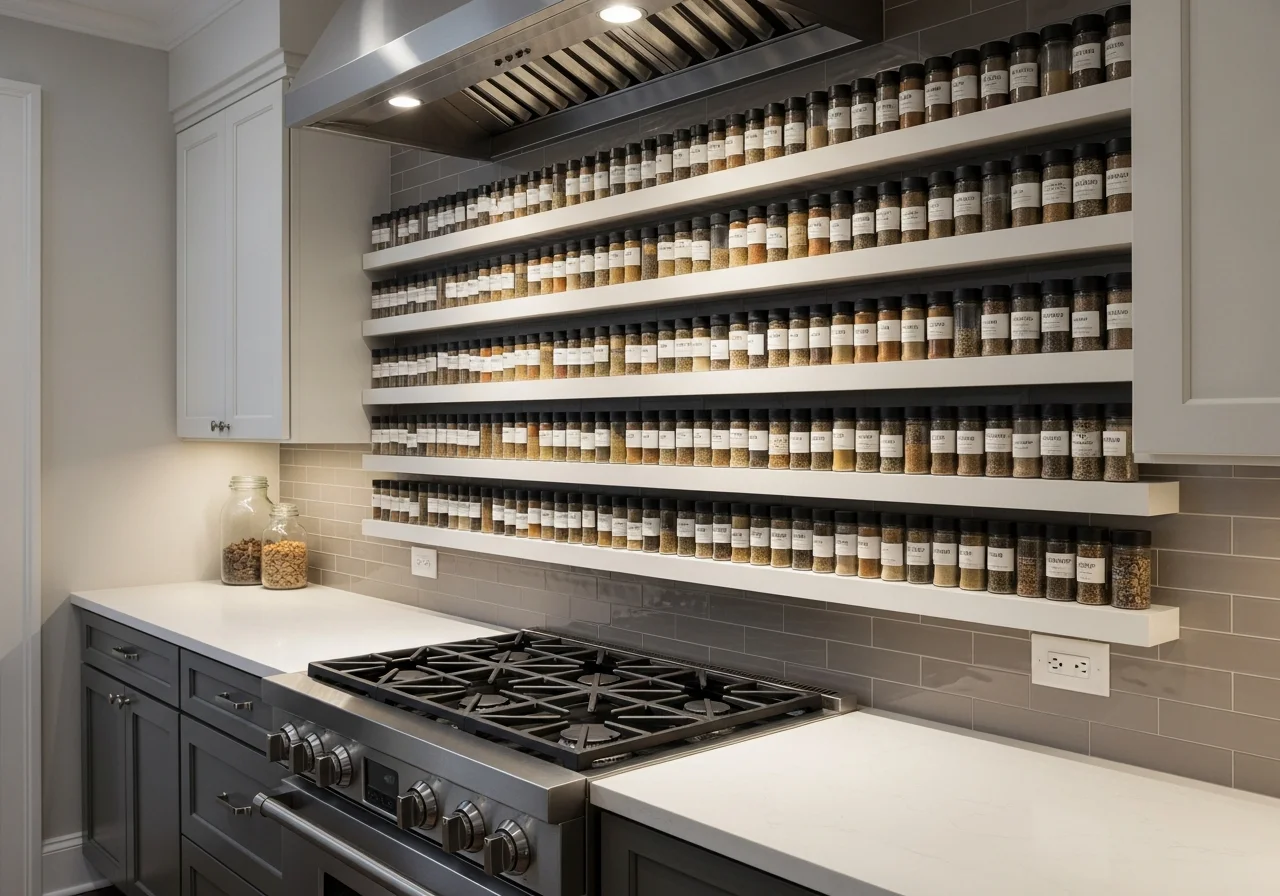
Shallow shelves, measuring just three to four inches deep, provide perfect storage for spice jars and small bottles without protruding far into your kitchen space. These ledge-style shelves keep labels visible and containers accessible, functioning essentially as an attractive spice rack integrated into your kitchen design.
Multiple narrow shelves spaced closely together maximize storage capacity in limited wall space while creating interesting horizontal lines. This approach works exceptionally well in galley kitchens or anywhere wall space comes at a premium.
Mixed Material Shelving Combinations
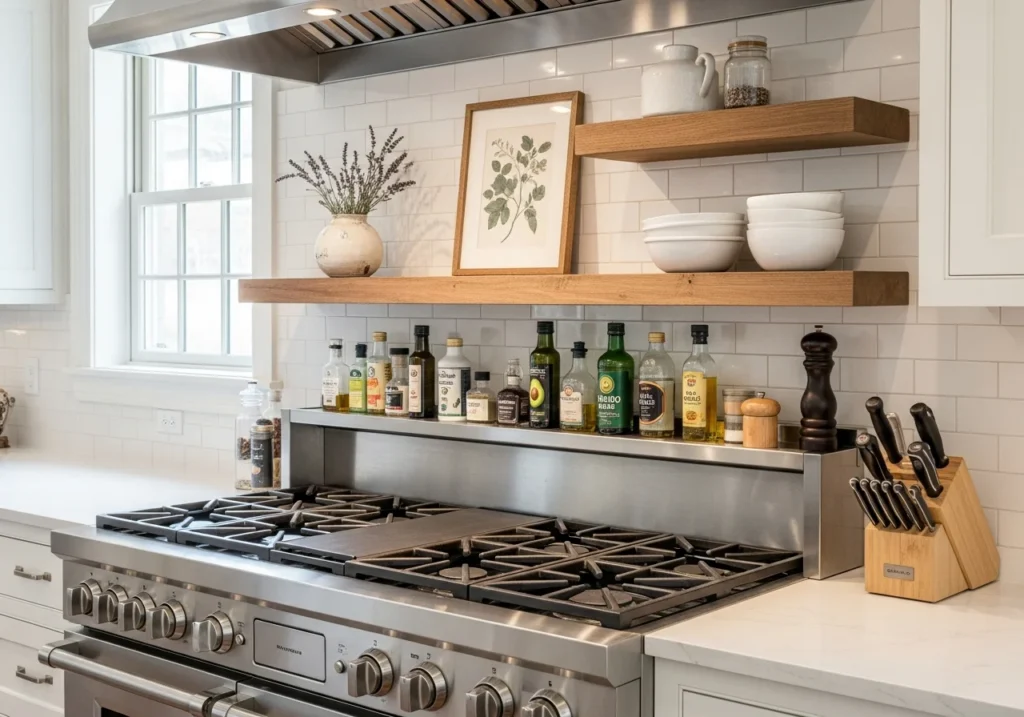
Combining different materials within your above-stove shelving creates textural interest and defines separate functional zones. You might pair a lower metal shelf for heat-exposed storage of oils and everyday spices with upper wood shelves for decorative items and occasional-use ingredients.
The material transition can occur at a logical point, such as where heat exposure diminishes or where functional storage gives way to purely decorative display. This mixed approach allows you to optimize material selection for specific purposes while creating visual variety. For more information click here
Extending Shelves Beyond Stove Width

Rather than limiting shelves to the width of your range, extending them across a broader wall section creates a cohesive storage and display zone. This approach visually connects your stove to adjacent counter areas and can incorporate landing space for hot pots or staging areas for cooking projects.
The extended shelving provides opportunities for displaying cookbooks, larger serving pieces, or decorative objects that establish your kitchen’s style beyond the purely functional cooking zone. Ensure adequate structural support across the full span, particularly where shelves extend beyond wall studs.
Recessed Niche Shelving for Built-In Appearance
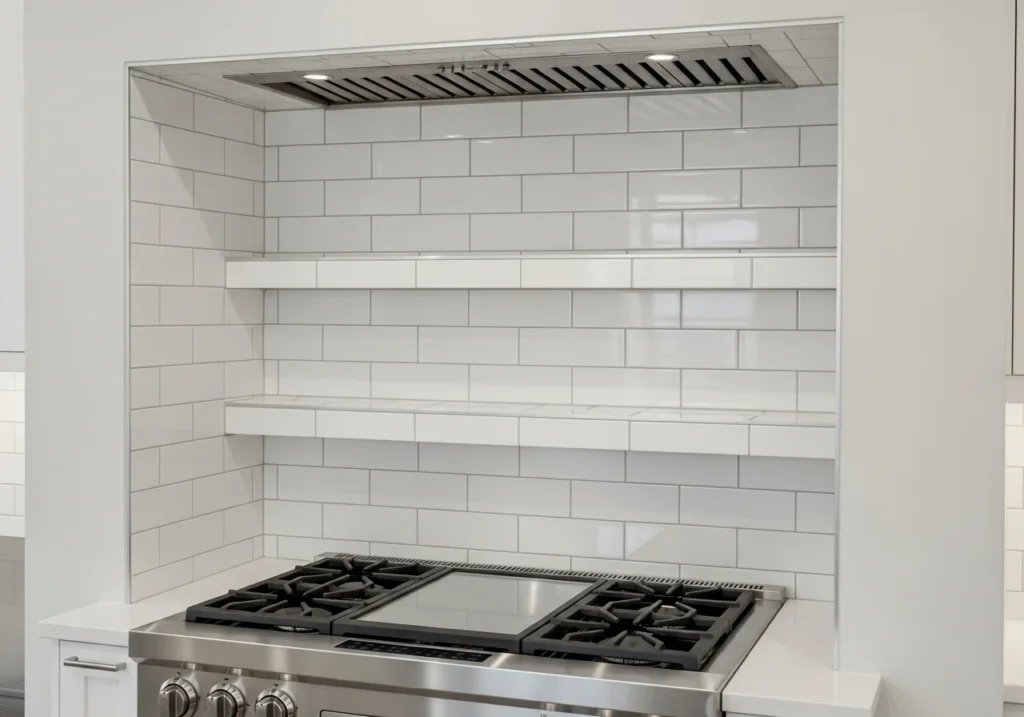
When undertaking more extensive renovations, creating recessed niches above your stove provides storage that appears built into the architecture rather than added afterward. These alcoves, typically framed during wall construction and finished with tile or paint, offer storage without protruding into kitchen space.
Recessed shelving works beautifully in thicker walls or when building out a new wall section. The depth can be customized to your specific storage needs, creating perfect homes for specific items you want to display or access regularly.
Conclusion
Floating shelves above your stove offer a versatile solution that addresses both practical storage needs and aesthetic desires. The sixteen-plus ideas explored here demonstrate the remarkable range of possibilities available, from minimalist single shelves to elaborate multi-tiered installations, from rustic reclaimed wood to sleek industrial metal.
The most successful above-stove shelving installations balance three critical elements: safety considerations including proper clearance from heat sources, functional storage that keeps cooking essentials accessible, and visual appeal that enhances your overall kitchen design. By carefully considering your specific cooking habits, kitchen style, and spatial constraints, you can select and customize an approach that transforms the area above your stove into a hardworking, beautiful focal point.
Remember that while floating shelves create an open, airy feeling, they require more maintenance than closed cabinets due to exposure to cooking residue. Factor cleaning requirements into your decision, perhaps reserving above-stove shelving for items you use frequently enough to justify their exposed placement. With thoughtful planning and proper installation, floating shelves above your stove can become one of the most satisfying elements of your kitchen design. you might get more ideas
Frequently Asked Questions
What is the minimum safe distance for floating shelves above a stove?
The minimum clearance is typically thirty inches from the cooktop surface to any combustible shelf material like wood. However, consult your range manufacturer specifications and local building codes, as requirements vary based on stove type and BTU output. Non-combustible materials like metal may be installed closer in some jurisdictions.
How do I prevent grease buildup on shelves above my stove?
Regular wiping with degreasing solution after cooking sessions prevents buildup. Choose sealed or finished materials that resist grease absorption, and consider installing a high-quality range hood to capture airborne particles before they settle on shelves. Positioning shelves slightly to the side rather than directly above burners also reduces exposure.
Can floating shelves above the stove hold heavy cast iron cookware?
Yes, if properly installed with adequate support. Use heavy-duty mounting brackets secured into wall studs, not just drywall anchors. Each shelf should support at least fifty pounds per linear foot for cookware storage. Thicker shelves and materials like solid wood or metal provide better weight distribution than thin materials.
What shelf materials work best in the heat and moisture above a stove?
Metal, sealed hardwood, and tempered glass perform well in above-stove conditions. Avoid particleboard or MDF which can warp from moisture. If choosing wood, select tight-grained hardwoods sealed with heat-resistant finish. Stainless steel offers the best heat and moisture resistance while requiring minimal maintenance.
Should I install floating shelves myself or hire a professional?
Professional installation is recommended if you’re uncomfortable locating wall studs, drilling into tile backsplashes, or working with heavy materials at height. DIY installation is feasible for those with basic carpentry skills, proper tools, and confidence in securing shelves that will safely hold weight above a high-traffic cooking area.

3 Comments