
19+ Fresh Spring Dough Bowl Ideas for Your Home
Spring arrives with a promise of renewal, bringing lighter days and an invitation to refresh our living spaces. Among the many ways to celebrate the season, dough bowl decorating stands out as a versatile and charming approach to home styling. These rustic wooden vessels, once used for bread making, have become beloved decorative pieces that capture the essence of farmhouse elegance while offering endless creative possibilities.
The beauty of dough bowls lies in their adaptability. Whether you prefer minimalist arrangements or abundant displays, these elongated wooden containers provide the perfect foundation for spring styling. Their organic shape and warm wood tones complement fresh florals, pastel accents, and seasonal elements beautifully. As we transition from the stark simplicity of winter, dough bowls offer an ideal canvas to welcome the vibrant energy of spring into your home.
What makes dough bowl decorating particularly appealing is its accessibility. You don’t need professional design skills or an unlimited budget to create stunning displays. With a few carefully chosen elements and an eye for balance, anyone can transform a simple wooden bowl into a captivating centerpiece that brings the freshness of spring indoors. The ideas that follow will guide you through various styling approaches, from classic floral arrangements to unexpected contemporary interpretations.
Classic Floral Abundance
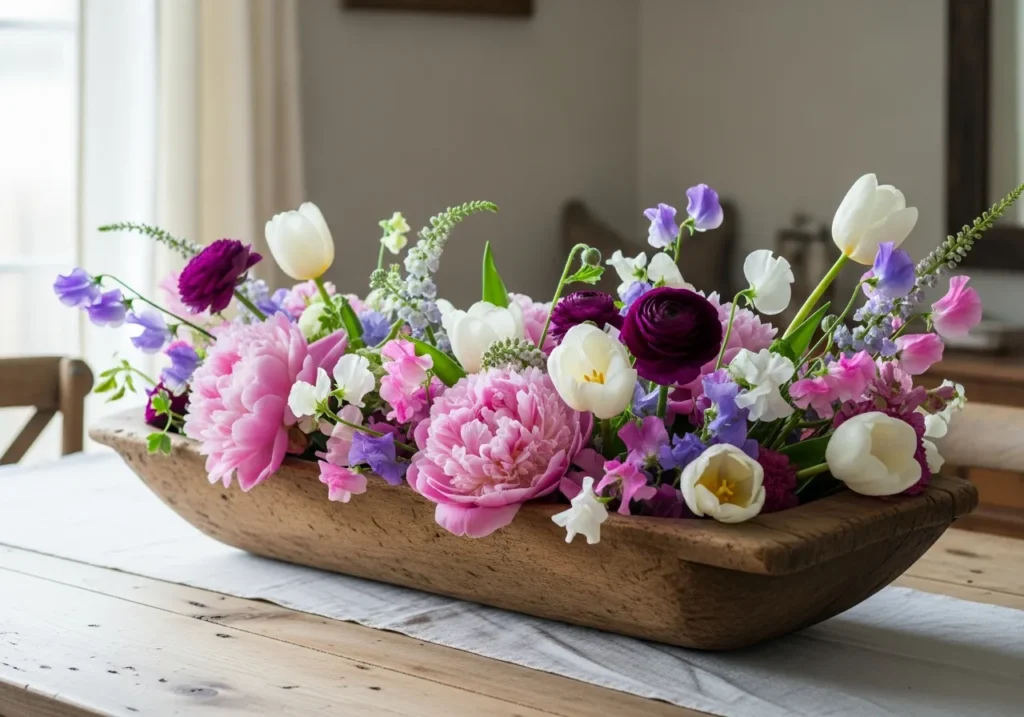
Nothing captures the spirit of spring quite like an overflowing arrangement of fresh flowers nestled in a dough bowl. This timeless approach celebrates the season’s most beautiful blooms in a display that feels both curated and effortlessly natural. The elongated shape of a dough bowl allows you to create a horizontal garden that draws the eye across your table or counter.
Start with a variety of spring favorites such as tulips, ranunculus, peonies, and sweet peas. Mix different heights and textures to create visual interest. The key is achieving a lush, garden-gathered appearance rather than a formal arrangement. Allow some stems to cascade over the bowl’s edges while others stand tall, creating movement and depth.
For longevity, use floral foam or create small water-filled containers hidden within the bowl. This technique keeps your flowers fresh for days while maintaining the organic look of stems appearing to rest directly in the wood. Choose a color palette that speaks to your style, whether that’s soft pastels, vibrant jewel tones, or an all-white sophisticated display.
Pastel Egg Collection

Easter and spring naturally bring eggs to mind, making them perfect seasonal accents for dough bowl styling. A collection of pastel eggs creates a simple yet impactful display that works beautifully throughout the entire spring season, extending well beyond Easter weekend.
Consider mixing different types of eggs for added interest. Combine speckled ceramic eggs with painted wooden versions and perhaps a few faux robin’s eggs in pale blue. Nestle them in a bed of preserved moss or excelsior for a natural setting. The varying sizes and subtle color differences create a collected-over-time appearance that feels personal and intentional.
This approach works particularly well for those who prefer understated decorating. The gentle colors and organic shapes bring spring freshness without overwhelming your space. Position your egg-filled dough bowl on a dining table, coffee table, or kitchen island where it can be appreciated from multiple angles.
Fresh Herb Garden Display

Bring both beauty and functionality to your kitchen with a dough bowl herb garden. This living arrangement fills your home with wonderful scents while providing fresh herbs for cooking. The rustic character of a wooden dough bowl perfectly complements the organic nature of growing plants.
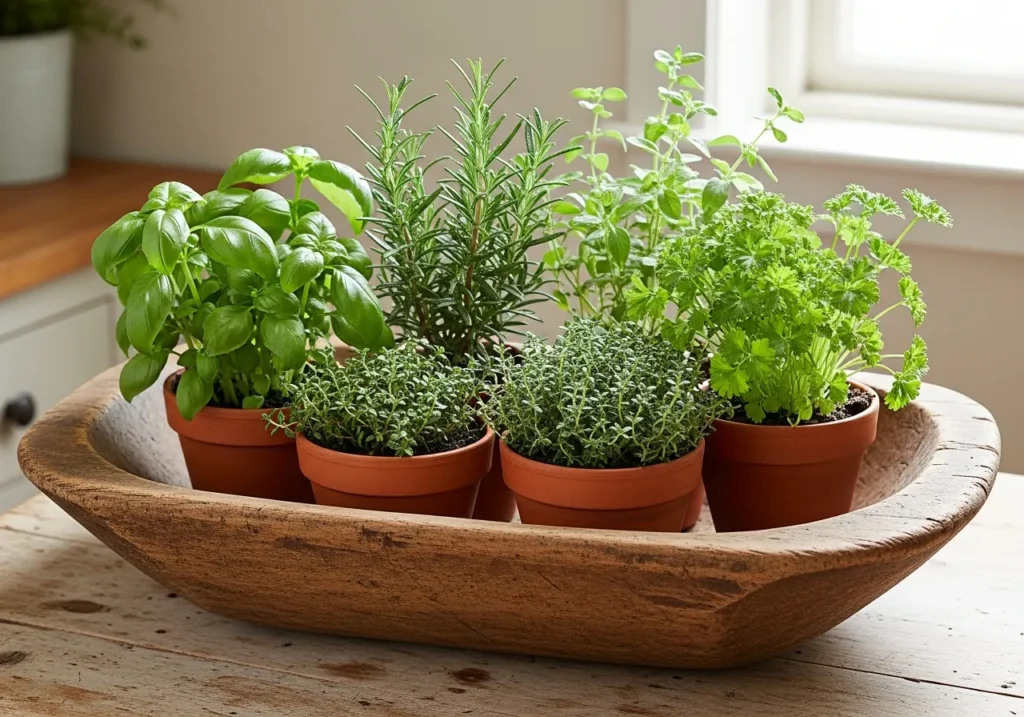
Select herbs that thrive indoors such as basil, thyme, rosemary, and parsley. Plant them in small terracotta pots that fit comfortably within your dough bowl, leaving the pots visible for a charming potager effect. Alternatively, use the bowl as a decorative holder for herb bundles wrapped in kraft paper or linen.
This idea particularly appeals to those who love the farmhouse aesthetic and appreciate décor that serves multiple purposes. The green growth brings life to your kitchen while the herbs remain easily accessible for meal preparation. Replace or refresh the herbs as needed to maintain a vibrant, healthy appearance throughout the season.
Layered Greenery Foundation

Sometimes the most striking displays rely on greenery rather than flowers. A dough bowl filled with various types of green foliage creates a lush, textural base that feels fresh and modern while remaining timeless in appeal.
Combine different varieties such as eucalyptus, lamb’s ear, ferns, and ivy. Mix broad leaves with delicate fronds and trailing vines that drape over the bowl’s edges. The variation in leaf size, shape, and shade creates complexity that keeps the eye engaged. This monochromatic approach feels sophisticated and works seamlessly with any color scheme in your home.
The advantage of a greenery-focused arrangement is its longevity. Many varieties last weeks when properly maintained, and some can even be dried in place for extended use. This makes it an excellent choice for busy households or those seeking low-maintenance seasonal decor. To see some more seasonal decor visit Homeliaa.
Candles and Natural Elements
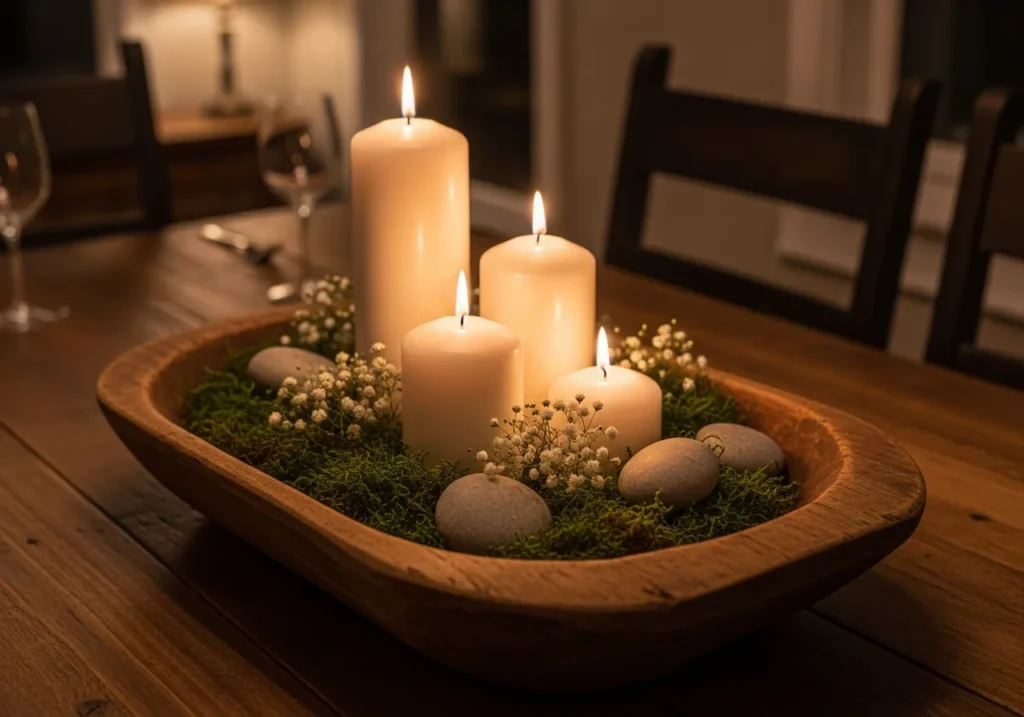
Create an enchanting spring evening atmosphere by combining pillar candles with natural seasonal elements in your dough bowl. This approach transforms your centerpiece into ambient lighting that enhances dinner parties and quiet evenings alike.
Choose three or five candles in varying heights and arrange them along the length of your dough bowl. Fill the spaces between with moss, small flowers, river rocks, or bird’s nests. The warm glow of candlelight brings out the rich tones in the wood while casting gentle shadows on the surrounding elements.
For safety, ensure candles are secured and positioned away from flammable materials. Battery-operated pillar candles offer a worry-free alternative that still provides beautiful ambiance. This styling idea transitions beautifully from day to night, serving as an attractive centerpiece that becomes magical when the candles are lit.
Fruit and Floral Combination

Merge the decorative with the practical by creating a display that combines fresh fruit with spring flowers. This abundant arrangement celebrates the season’s harvest while adding vibrant color and natural beauty to your space.
Fill your dough bowl with lemons, limes, or small oranges as a colorful base. Tuck sprigs of flowering branches, tulips, or daffodils among the fruit. The combination of citrus brightness with delicate blooms creates a cheerful display that works wonderfully in kitchens and dining areas.
This approach has historical roots in European still-life paintings, where fruit and flowers were often depicted together to symbolize abundance and natural beauty. The fruit can be replaced as needed, making this a refreshable display that adapts to what’s available and appealing to you.
Moss and Mushroom Woodland Scene
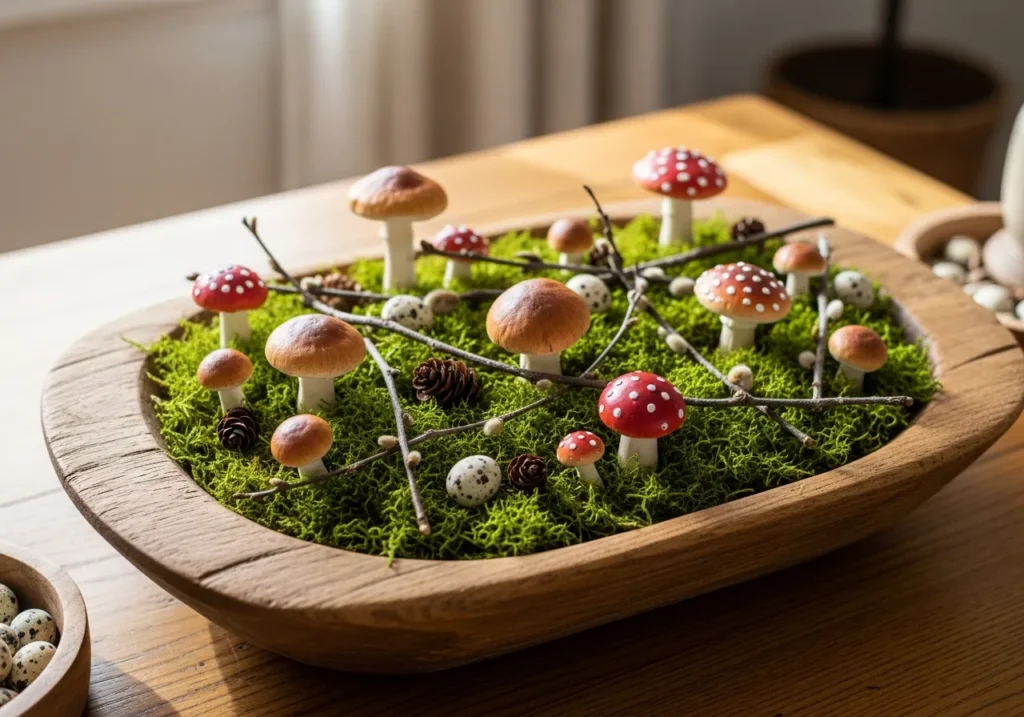
Bring the forest indoors with a woodland-inspired dough bowl arrangement featuring moss, mushrooms, and other natural elements. This earthy display appeals to those who love organic, nature-focused decorating with a slightly whimsical touch.
Create a moss carpet as your foundation, using preserved sheet moss for longevity. Add faux mushrooms in various sizes, small pinecones, twigs, and perhaps miniature bird’s eggs or tiny woodland creatures. The result is a miniature landscape that tells a story and invites closer inspection.
This styling idea works particularly well on coffee tables where guests can enjoy the details up close. The green and brown color palette feels calming and grounding, offering a refreshing contrast to brighter, more colorful spring arrangements.
Bunny and Spring Motifs
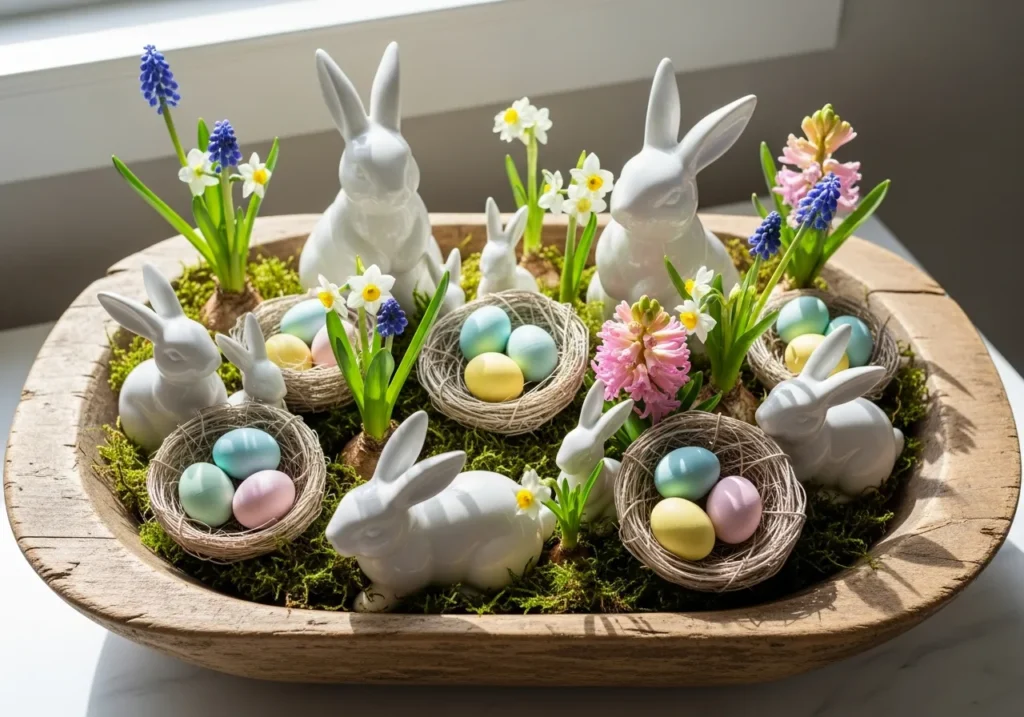
Incorporate charming spring symbols like ceramic bunnies, birds, and butterflies into your dough bowl styling. These whimsical elements add personality and seasonal spirit without relying solely on flowers or plants.
Position a collection of vintage or new ceramic bunnies among a bed of moss and small flowers. Add eggs, tiny bird’s nests, or spring-themed figurines that reflect your personal style. The key is creating a scene rather than simply placing objects in a bowl.
This approach particularly delights children and creates conversation pieces that guests enjoy discovering. Choose items that coordinate in style and color for a cohesive look, whether that’s rustic and weathered or bright and cheerful.
Blooming Branch Statement
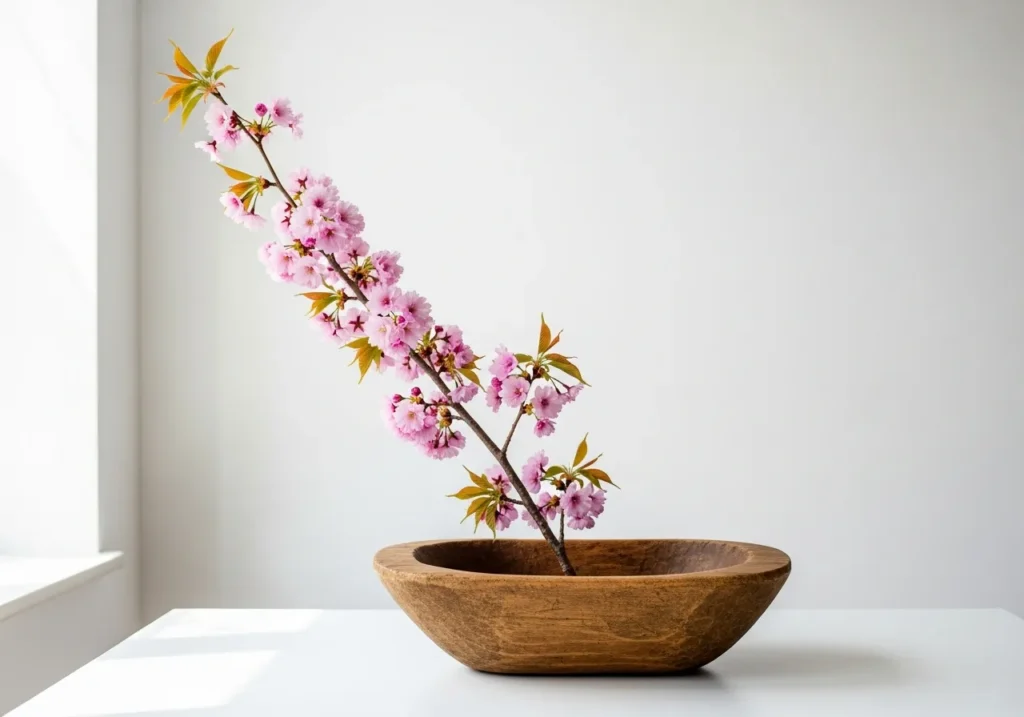
Make a dramatic impact with a minimalist approach featuring a single blooming branch or a few carefully chosen stems. This less-is-more philosophy creates striking visual interest while celebrating the simple beauty of spring blossoms.
Cherry blossoms, forsythia, quince, or flowering dogwood branches work beautifully for this purpose. Position one substantial branch or several smaller ones in your dough bowl, perhaps secured with hidden floral foam or a small weighted vase. The architectural quality of bare branches adorned with delicate blooms creates an elegant, sophisticated display.
This styling idea suits modern and traditional homes alike. The clean lines and focused composition feel intentional and refined, proving that spring decorating doesn’t require abundance to make a statement.
Vintage Book Stack Base
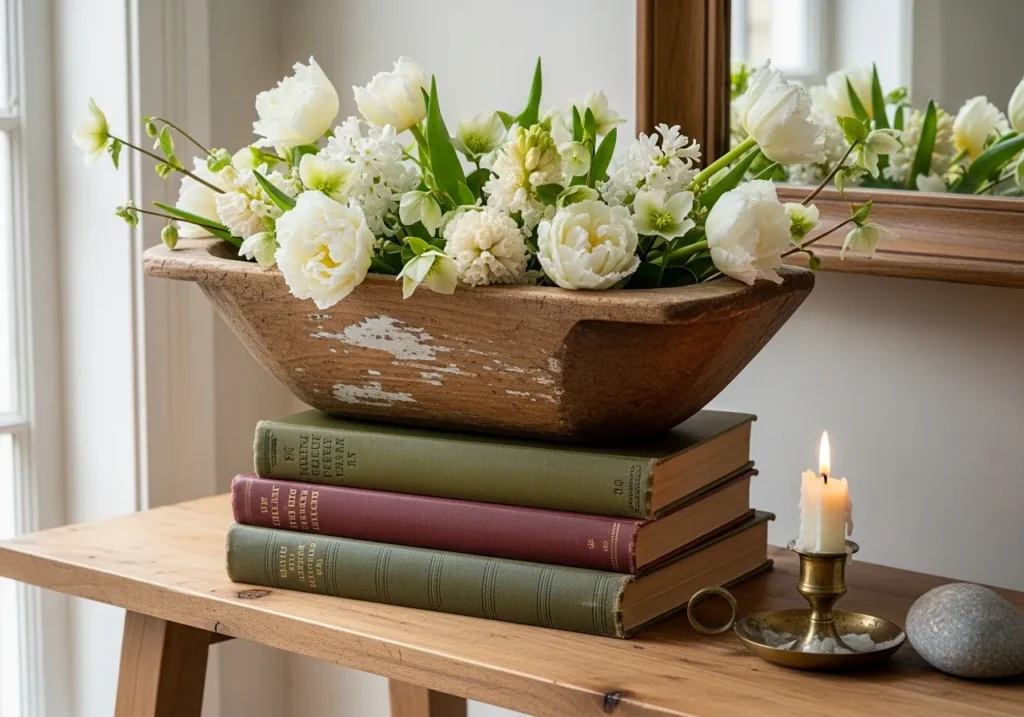
Add height and literary charm to your dough bowl arrangement by placing it atop a stack of vintage books. This layered approach creates dimension while incorporating another element of interest into your display.
Choose books with attractive covers in colors that complement your overall spring palette. Stack them in varying sizes to create an organic, asymmetrical foundation. Position your styled dough bowl on top, allowing some of the book spines to remain visible.
This technique works wonderfully on coffee tables, console tables, and bookshelves where the added height creates better visual balance. The books add personality and can be chosen to reflect your interests, making the arrangement feel personal and curated.
Succulent Garden Arrangement
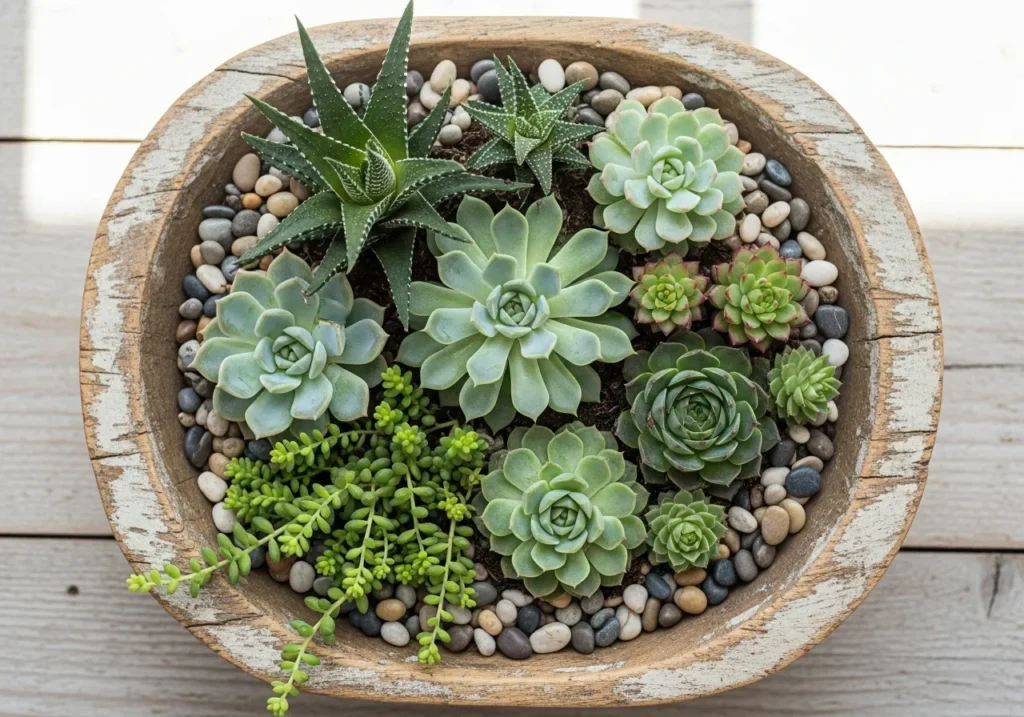
For those seeking low-maintenance spring beauty, a succulent-filled dough bowl offers year-round appeal with minimal care requirements. The varied shapes and subtle colors of succulents create living art that evolves over time.
Select a variety of succulent types with different textures, heights, and hues. Plant them directly in the bowl with proper drainage considerations, or use small pots concealed within. Arrange them with taller varieties toward the back and trailing types near the edges.
Top the soil with decorative elements like small pebbles, sand, or preserved moss to create a finished appearance. This evergreen approach to dough bowl styling provides constant beauty while requiring only occasional watering, perfect for busy lifestyles or those without a green thumb.
Painted Egg and Flower Nest
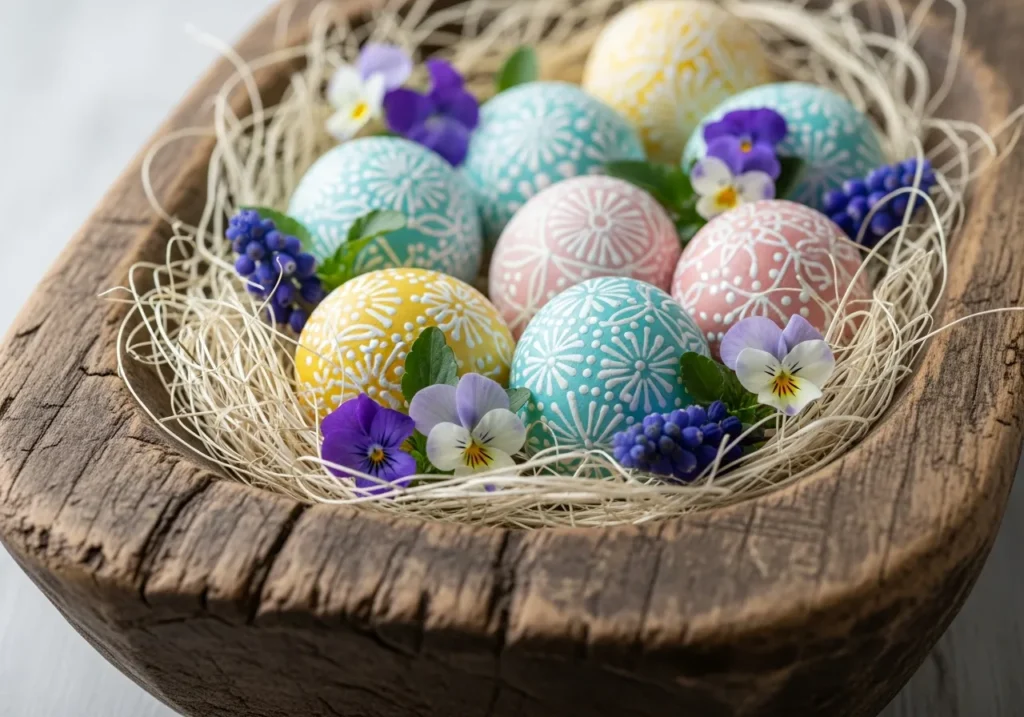
Create a charming nest-like arrangement that combines hand-painted eggs with delicate flowers and natural nesting materials. This artisanal approach adds personal creativity to your spring decorating.
Line your dough bowl with natural excelsior or Spanish moss to create a nest foundation. Add hand-painted eggs in patterns and colors that reflect your style. Tuck in small flowers like grape hyacinths, violas, or lily of the valley among the eggs and nesting material.
The handmade quality of painted eggs makes this display feel special and unique. Consider it an opportunity for a creative afternoon project that results in meaningful seasonal décor. Children particularly enjoy participating in egg painting, making this a family-friendly decorating approach.
Monochromatic White Elegance
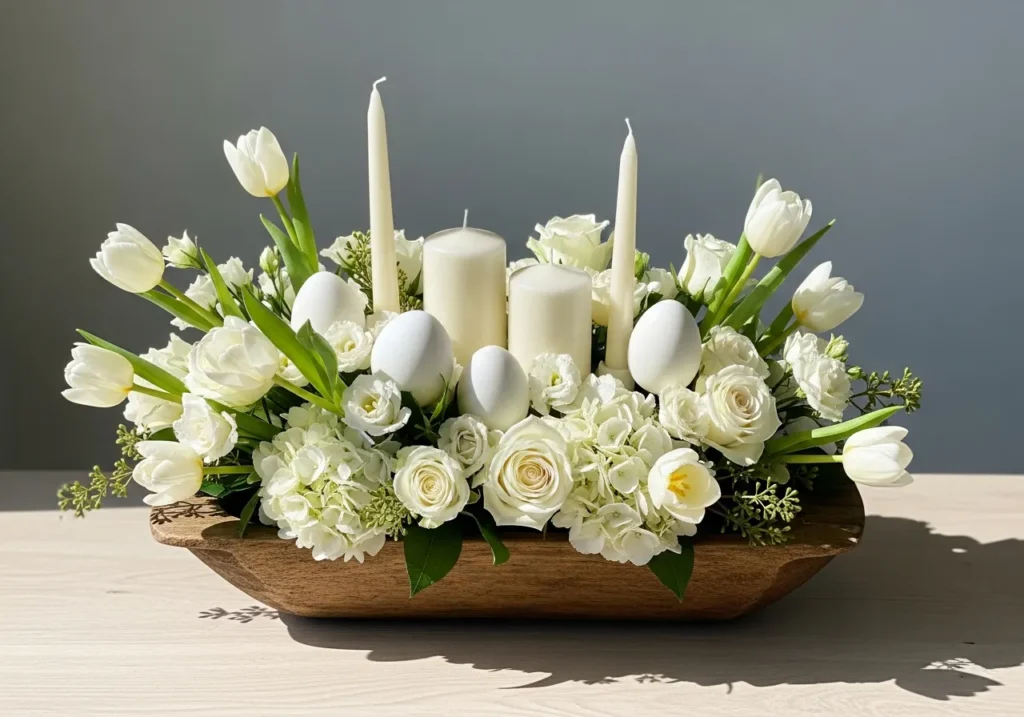
Achieve sophisticated simplicity with an all-white dough bowl arrangement. This monochromatic approach feels fresh and modern while maintaining timeless elegance that works in any decorating style.
Combine white flowers such as tulips, roses, hydrangeas, and ranunculus with white or cream-colored eggs, candles, and decorative objects. The subtle variations in white tones create depth without introducing color. Add texture through different materials like smooth ceramics, soft petals, and rough candlewax.
This refined approach suits formal dining rooms, elegant living spaces, and sophisticated kitchens. The all-white palette feels clean and airy, perfectly capturing the fresh beginning that spring represents.
Garden Tool and Seed Packet Display
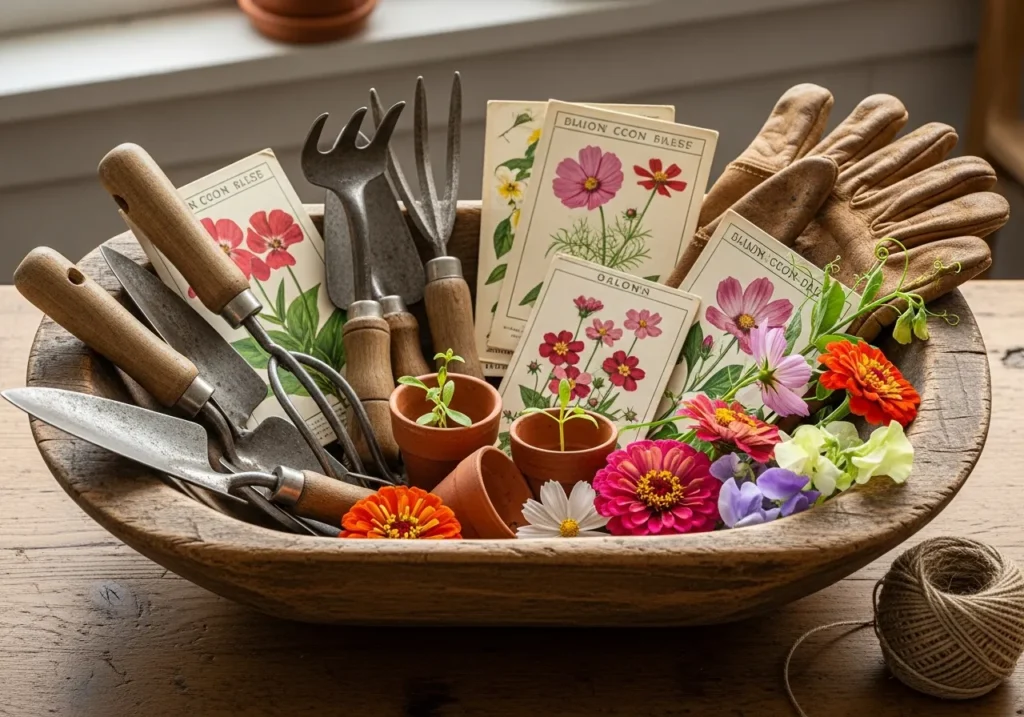
Celebrate the gardening season with a dough bowl arrangement featuring vintage garden tools, seed packets, and botanical elements. This themed approach works wonderfully for garden enthusiasts and those who appreciate nostalgic charm.
Arrange small vintage hand tools like trowels and cultivators alongside antique seed packets, gardening gloves, and small terracotta pots. Add fresh or faux flowers that match the blooms pictured on the seed packets for a coordinated look. Include elements like twine, plant markers, and perhaps a small watering can.
This creative styling idea serves as both decoration and inspiration for your spring planting projects. It brings the garden indoors and celebrates the joy of nurturing growth, making it particularly meaningful for those who find peace in gardening.
Pastel Ribbon and Egg Garland

Add vertical interest to your dough bowl display with a garland element that extends upward or drapes gracefully from the bowl. This dimensional approach creates movement and draws the eye through the entire arrangement.
Attach pastel ribbons to the bowl’s edges or to a central support structure. String decorative eggs along the ribbons at varying heights, or allow the ribbons to cascade freely for a festive effect. Fill the bowl itself with coordinating flowers, greenery, or additional eggs.
This playful approach brings celebration and movement to your spring decorating. The ribbons add softness and flow while the suspended elements create visual intrigue from multiple viewing angles.
Seasonal Transition Display
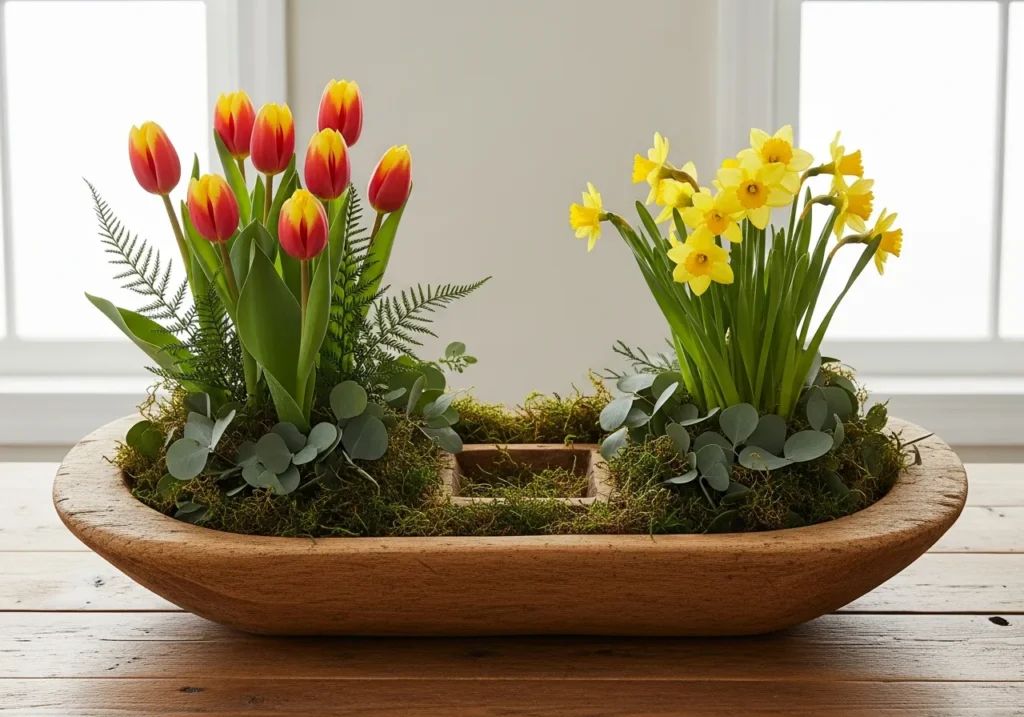
Design your dough bowl arrangement to easily transition through the spring season by creating a flexible foundation that accommodates changing elements. This strategic approach maximizes your investment while keeping your décor fresh.
Start with a permanent base of preserved greenery or decorative filler that remains constant. Create spaces where you can easily swap seasonal elements like early spring bulbs, mid-spring flowering branches, or late spring roses. This modular approach allows you to refresh your display without complete redesign.
The benefit of this method is both economic and practical. You maintain visual interest throughout the changing season without purchasing entirely new arrangements, and the process of swapping elements keeps you engaged with your seasonal decorating.
Textured Neutral Layers
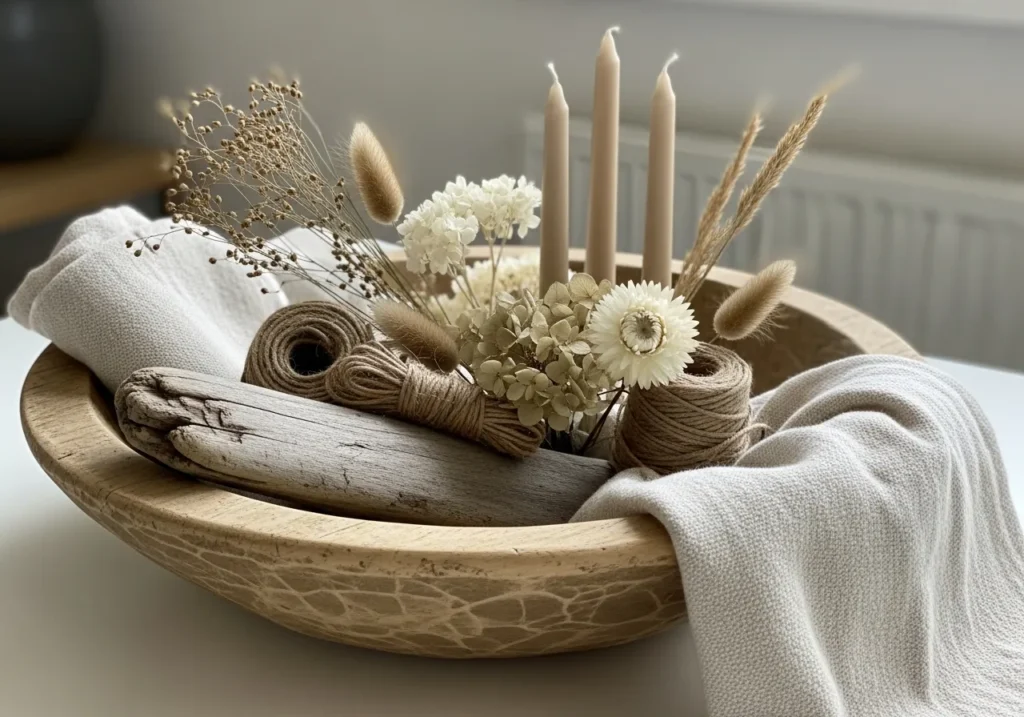
Create sophisticated depth using neutral-toned elements with varied textures. This approach focuses on material contrast rather than color to achieve visual interest and tactile appeal.
Combine elements like weathered wood pieces, natural linen fabric, jute twine, dried grasses, and unbleached cotton stems. Add cream-colored flowers, beige eggs, and tan candles. The result is an arrangement rich in texture but restrained in color.
This styling suits modern farmhouse, Scandinavian, and coastal decorating styles where neutral palettes dominate. The textural variety prevents the arrangement from appearing flat or boring while maintaining a calm, cohesive aesthetic.
Miniature Spring Scene Vignette
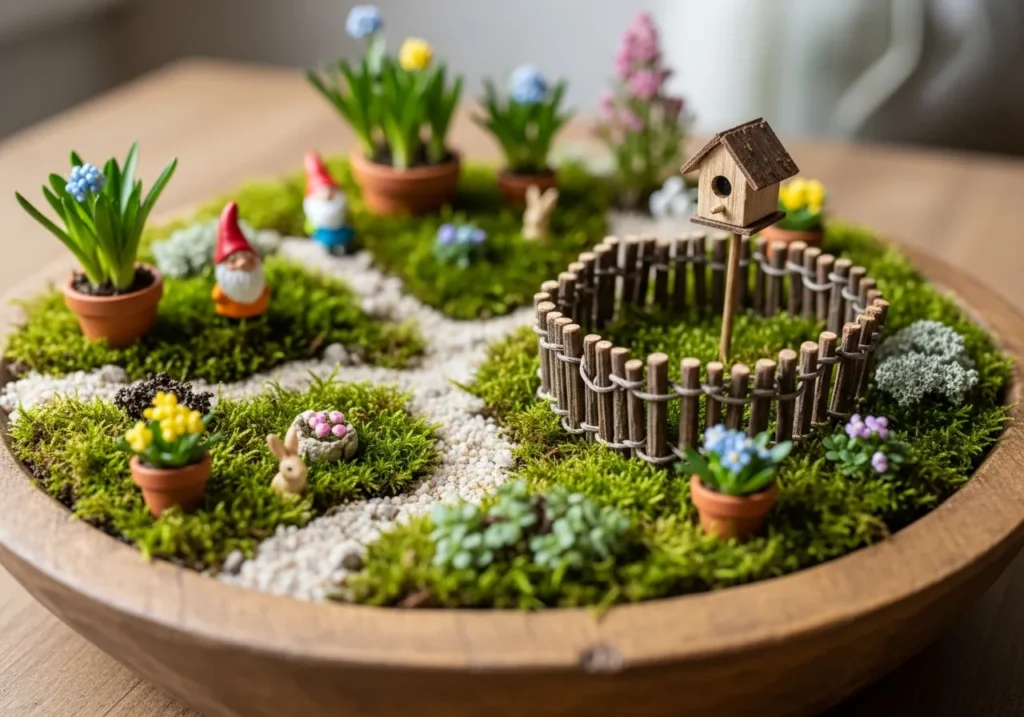
Transform your dough bowl into a miniature spring landscape complete with tiny elements that create a complete scene. This detail-oriented approach rewards close viewing and creates enchanting focal points.
Build a small-scale garden with miniature fencing, tiny birdhouses, small potted plants, and figurines sized appropriately to the bowl’s dimensions. Create pathways with sand or small pebbles and add moss for grass-like ground cover. Position elements to create depth and perspective.
This creative approach particularly appeals to those who enjoy detailed crafts and miniature collecting. The finished display becomes a conversation piece that invites viewers to discover all the small details you’ve included.
Fresh Flower and Vegetable Market Style
Channel the abundant energy of a farmer’s market with a dough bowl arrangement that mixes flowers with fresh spring vegetables. This unexpected combination celebrates the season’s agricultural bounty with visual flair.
Combine cut tulips or daffodils with baby artichokes, asparagus bundles, radishes with greens attached, or small heirloom carrots. The mix of decorative flowers with edible produce creates an arrangement that’s both beautiful and celebratory of spring’s harvest.
This approach works wonderfully in kitchens and dining spaces where the connection between food and beauty feels natural. The vegetables can be used in cooking when you’re ready to refresh your display, making this a truly functional decorating approach.
Conclusion
Regardless of which styling idea appeals to you, achieving visual balance is essential for successful dough bowl decorating. Consider the bowl’s size in relation to your display surface and the elements you’re arranging within it.
For coffee tables and dining tables, your arrangement should be low enough to allow conversation across it. For console tables and mantels, you can build higher displays that create dramatic impact. Vary the heights of elements within your bowl to create interest while maintaining overall harmony.
The rule of three works beautifully in dough bowl styling. Group elements in odd numbers and vary their sizes to create natural, pleasing compositions. Step back frequently as you arrange to assess the overall effect from the viewing distance your display will typically be seen.
Spring offers endless inspiration for refreshing our homes with natural beauty and seasonal charm. Dough bowls provide the perfect vessel for capturing this inspiration in displays that range from simple to elaborate, traditional to contemporary. The ideas presented here serve as starting points for your own creative interpretations, inviting you to experiment with colors, textures, and themes that resonate with your personal style.
The beauty of seasonal decorating lies not in achieving perfection but in the joy of working with natural materials and celebrating the changing year. Your dough bowl arrangements can evolve throughout spring, incorporating new finds from garden centers, farmers markets, or nature walks. Each adjustment keeps your space feeling fresh while the familiar wooden bowl provides continuity and grounding.
As you explore these spring dough bowl ideas, remember that the most successful arrangements are those that bring you happiness and reflect your unique aesthetic. Whether you prefer abundant floral displays or minimalist compositions, rustic farmhouse charm or modern sophistication, your dough bowl can accommodate your vision. To see more interesting dough bowl ideas visit Robyn’s French Nest.
Frequently Asked Questions
What size dough bowl is best for centerpiece displays?
Medium to large dough bowls measuring 18 to 24 inches long work best for dining table centerpieces, while smaller 12 to 16 inch bowls suit coffee tables and console tables. Choose a size proportional to your furniture, ensuring the bowl doesn’t overwhelm the surface or appear too small for the space.
How do I keep fresh flowers alive longer in a dough bowl?
Use floral foam soaked in water or place small water-filled containers inside the bowl to keep flowers hydrated. Change the water every two to three days and trim stems at an angle. Keep the arrangement away from direct sunlight and heat sources to extend the life of fresh blooms.
Can I use any type of bowl for spring decorating?
While traditional wooden dough bowls offer authentic farmhouse charm, you can use any elongated shallow bowl or tray for similar styling. Ceramic, metal, or wicker alternatives work well and may better suit different decorating styles like coastal, modern, or eclectic aesthetics.
How often should I change my spring dough bowl display?
Refresh your display every two to four weeks to maintain visual interest and seasonal relevance. You can make small updates weekly by replacing wilted flowers or adjusting elements, while doing complete redesigns less frequently as spring progresses from early to late season.
Where should I place a dough bowl arrangement in my home?
Dining tables, coffee tables, kitchen islands, console tables, and mantels are ideal locations for dough bowl displays. Choose spots where the arrangement can be viewed from multiple angles and where it won’t obstruct daily activities or conversation across gathering spaces.