15+ Creative Personality Identity Mask Ideas
Creative Personality Identity Mask Ideas, the human face has always been a canvas for self-expression, storytelling, and cultural identity. Throughout history, masks have served as powerful tools for transformation, ritual, and revealing deeper truths about who we are beneath the surface. Today, personality identity masks offer a unique intersection of art, psychology, and self-discovery that allows individuals to explore the many facets of their character in tangible, creative ways.
Whether you’re an educator looking for engaging classroom activities, a therapist seeking innovative tools for client work, an artist exploring themes of identity, or simply someone on a journey of self-discovery, personality identity masks provide a profound medium for expression. These aren’t just craft projects—they’re psychological tools that help us externalize internal experiences, confront different aspects of our personality, and understand the masks we wear in daily life.
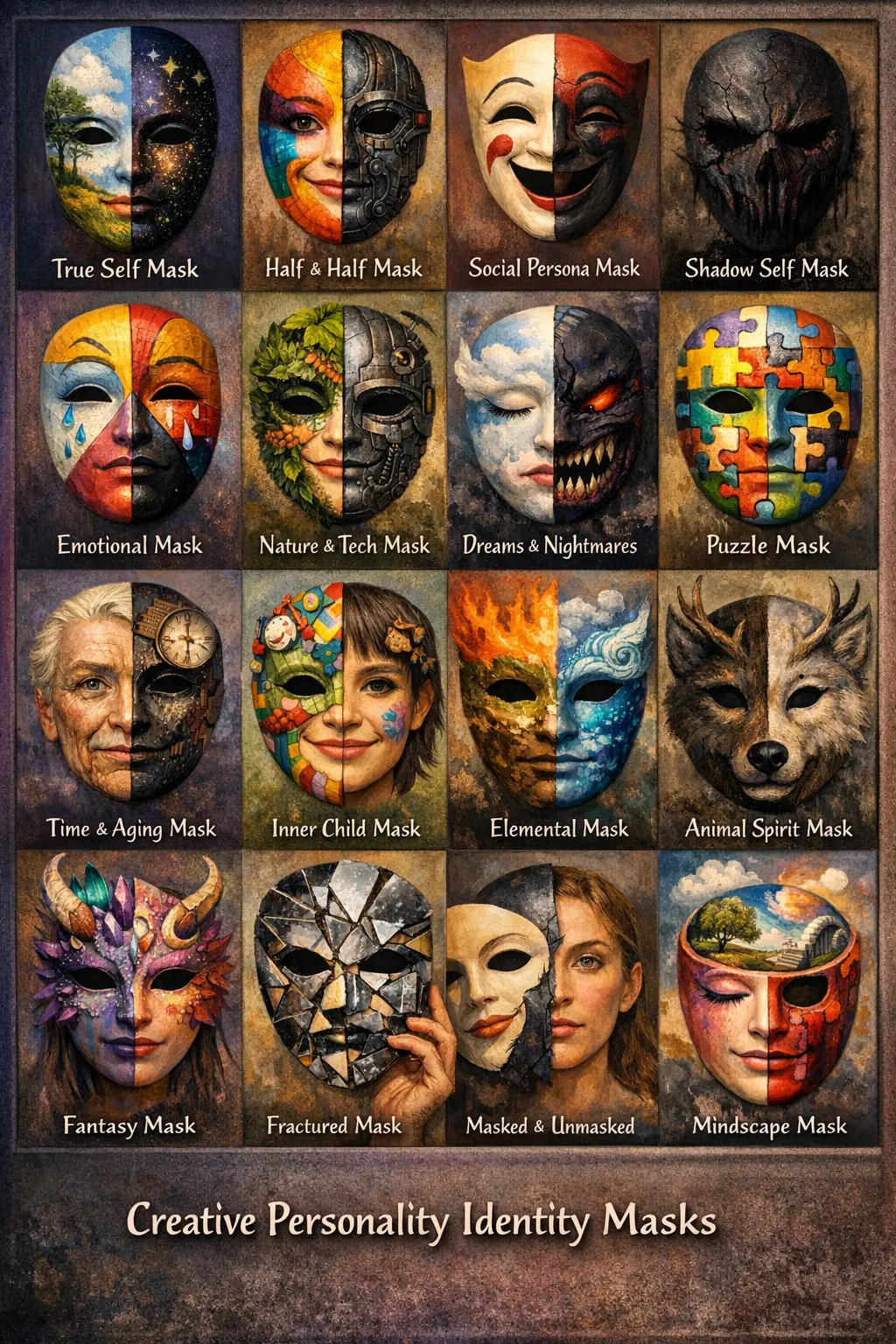
This comprehensive guide will walk you through over fifteen creative personality identity mask ideas, exploring various approaches from psychological frameworks to artistic techniques. You’ll discover how to create masks that represent your authentic self, your social personas, your shadow side, and the many roles you play throughout life.
Understanding Personality Identity Masks
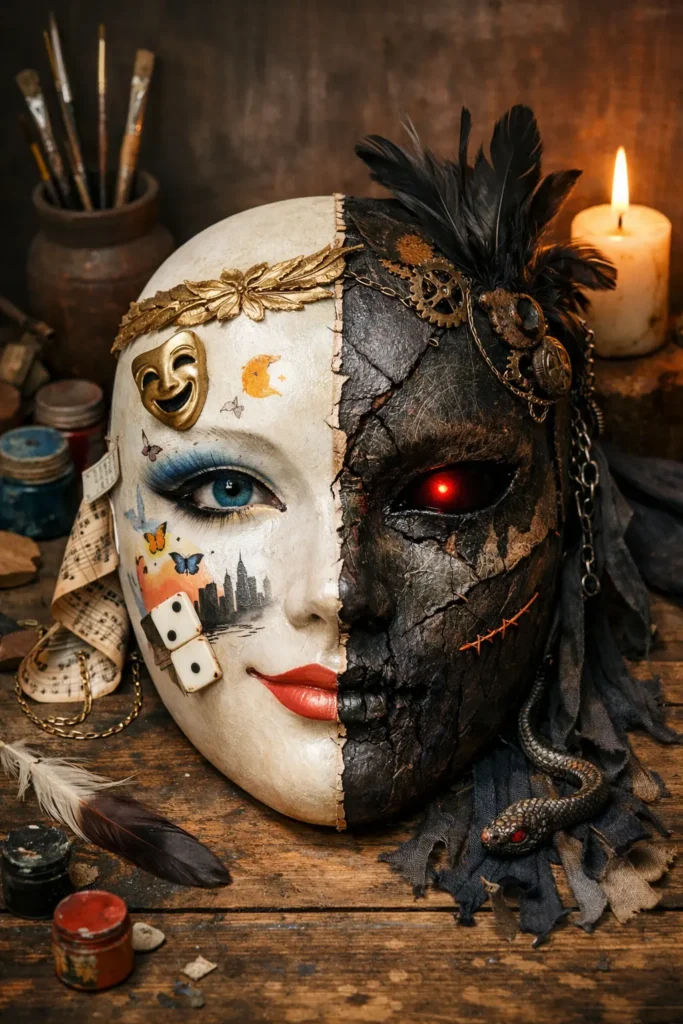
Before diving into specific ideas, it’s essential to understand what personality identity masks represent. The concept draws heavily from Carl Jung’s theory of the “persona”—the mask we present to the world that may differ from our true self. Jung believed we all wear social masks that help us navigate different situations, relationships, and environments.
Creating physical representations of these psychological concepts allows for deeper exploration and understanding. When you craft a mask representing aspects of your personality, you’re engaging in a form of art therapy that can reveal hidden emotions, unacknowledged traits, and the tension between who you are and who you show the world.
Identity masks can serve multiple purposes: they can be therapeutic tools, educational resources, artistic statements, or catalysts for personal growth. The process of creating them often proves as valuable as the finished product, as it requires introspection, honesty, and creative problem-solving.
2 -Persona vs. True Self Masks
One of the most powerful exercises involves creating two contrasting masks: one representing your public persona and another depicting your authentic self. This dual-mask project illuminates the gap between how others perceive you and how you perceive yourself.
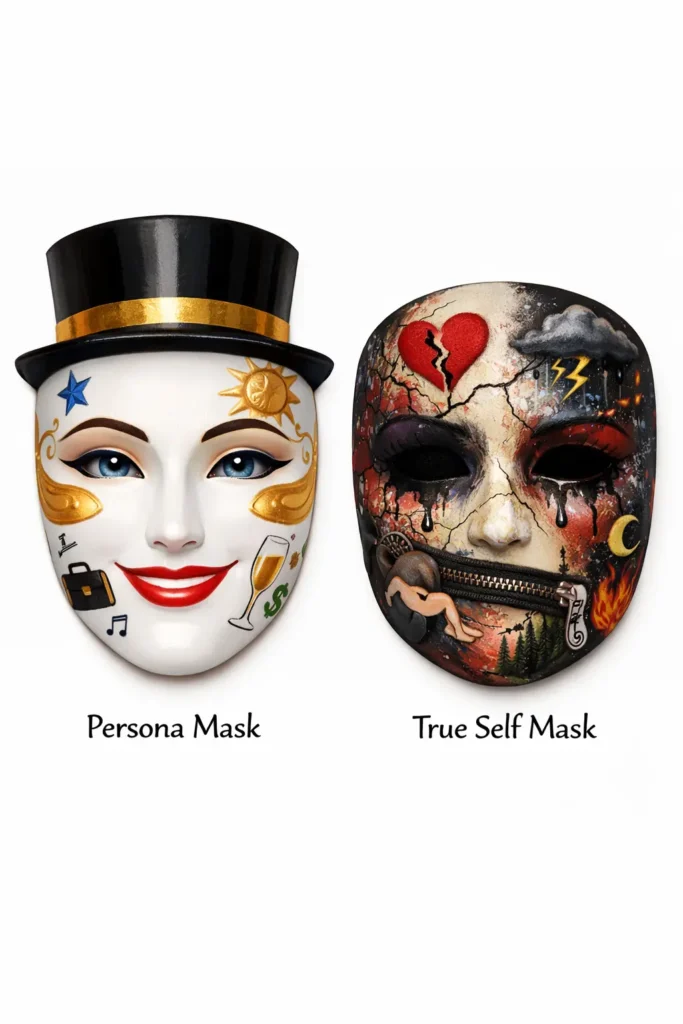
For the persona mask, consider the face you show at work, in social settings, or to acquaintances. What emotions do you display? What traits do you emphasize? Use colors, symbols, and features that represent the polished, socially acceptable version of yourself. This mask might be symmetrical, well-organized, and conventionally attractive.
The true self mask explores your inner world—the thoughts, feelings, and characteristics you keep hidden. This mask might be more abstract, vulnerable, or unconventional. Include elements that represent your private passions, fears, dreams, and the parts of yourself only your closest confidants see. The contrast between these two masks often reveals surprising insights about the energy spent maintaining appearances.
3 -Emotion Spectrum Masks
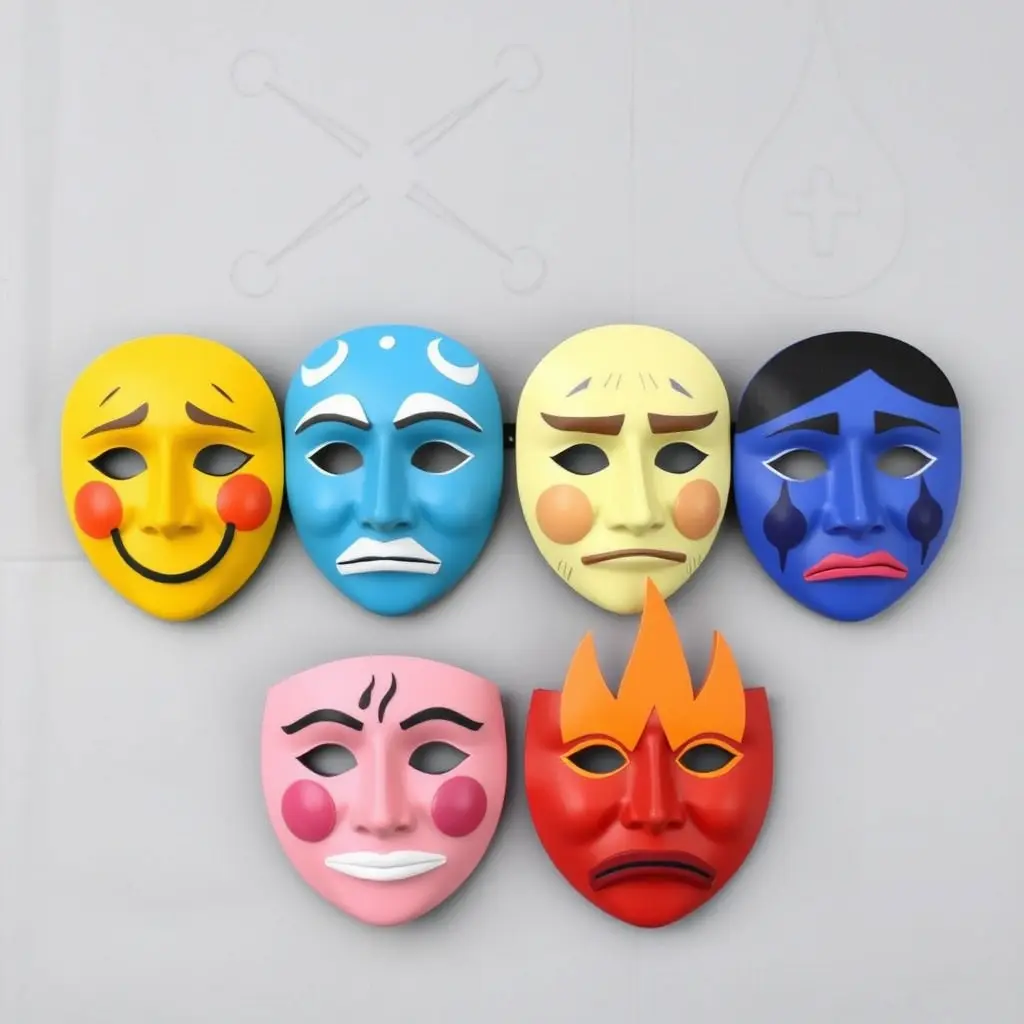
Create a series of masks that each represent a different primary emotion: joy, sadness, anger, fear, surprise, and disgust. This approach, based on Paul Ekman’s research on universal emotions, helps you explore how different feelings manifest in your personality and daily life.
Each emotion mask should use color psychology, facial expressions, and symbolic elements to convey its particular feeling. A joy mask might feature bright yellows and oranges with upturned features and sun motifs. A sadness mask could incorporate blues and grays with downturned elements and rain imagery. An anger mask might use sharp angles, reds, and flame symbols.
The beauty of this project lies in recognizing which emotions you’re comfortable expressing and which you suppress. You might notice that certain emotion masks feel easier to create or more authentic to your experience. This awareness can guide personal development and emotional intelligence work.
4- Cultural Heritage Identity Mask
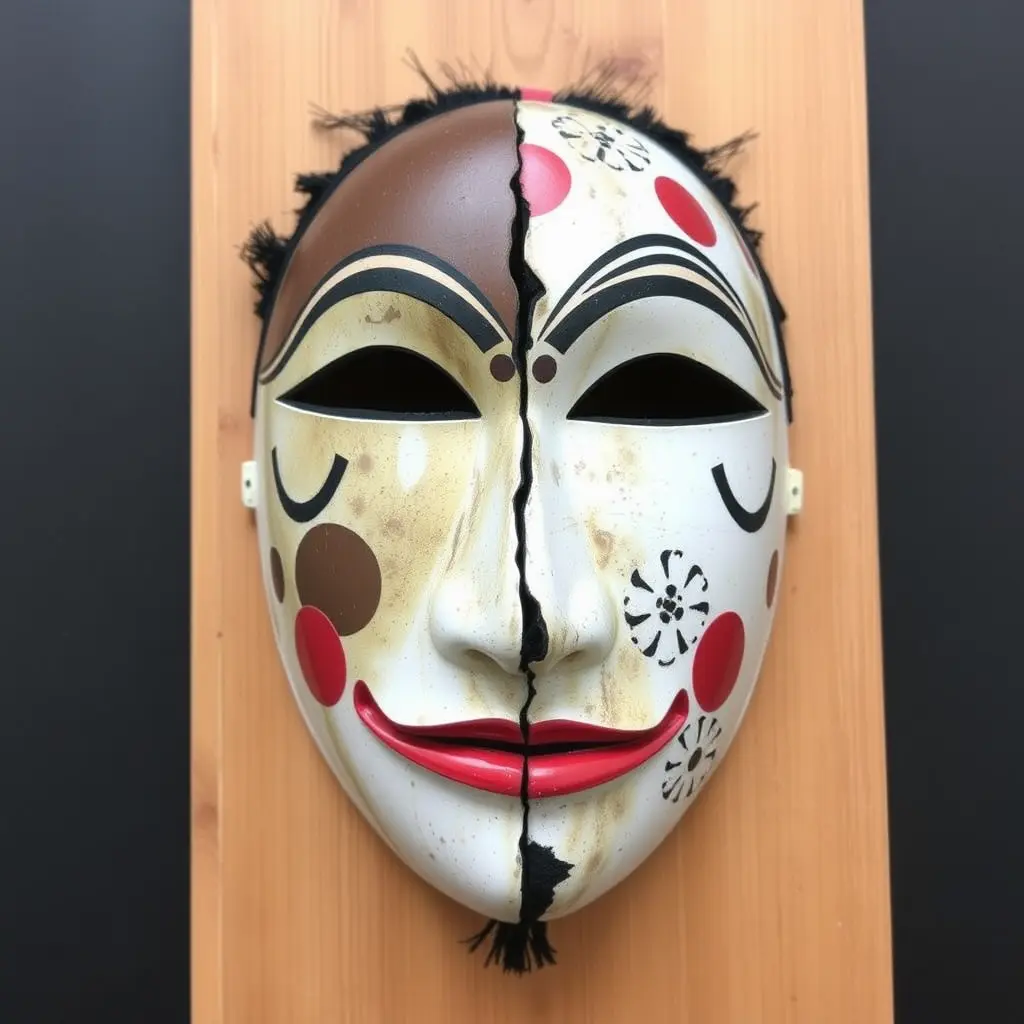
Exploring your cultural background through mask-making connects you to ancestral traditions while expressing your unique identity within that heritage. Research traditional mask-making techniques from your culture of origin, whether that’s African tribal masks, Japanese Noh theater masks, Venetian carnival masks, or Native American ceremonial masks.
Incorporate traditional patterns, colors, and symbols that hold meaning in your cultural history, but personalize them to reflect your individual experience of that heritage. Perhaps you’re third-generation immigrant who feels caught between two cultures—your mask could literally be divided down the middle, showing this duality. Maybe you’re reconnecting with roots you were disconnected from—your mask might show fragments of traditional designs emerging through a contemporary base.
This exercise honors where you come from while acknowledging who you’ve become, creating a bridge between past and present identity.
5- Shadow Self Mask
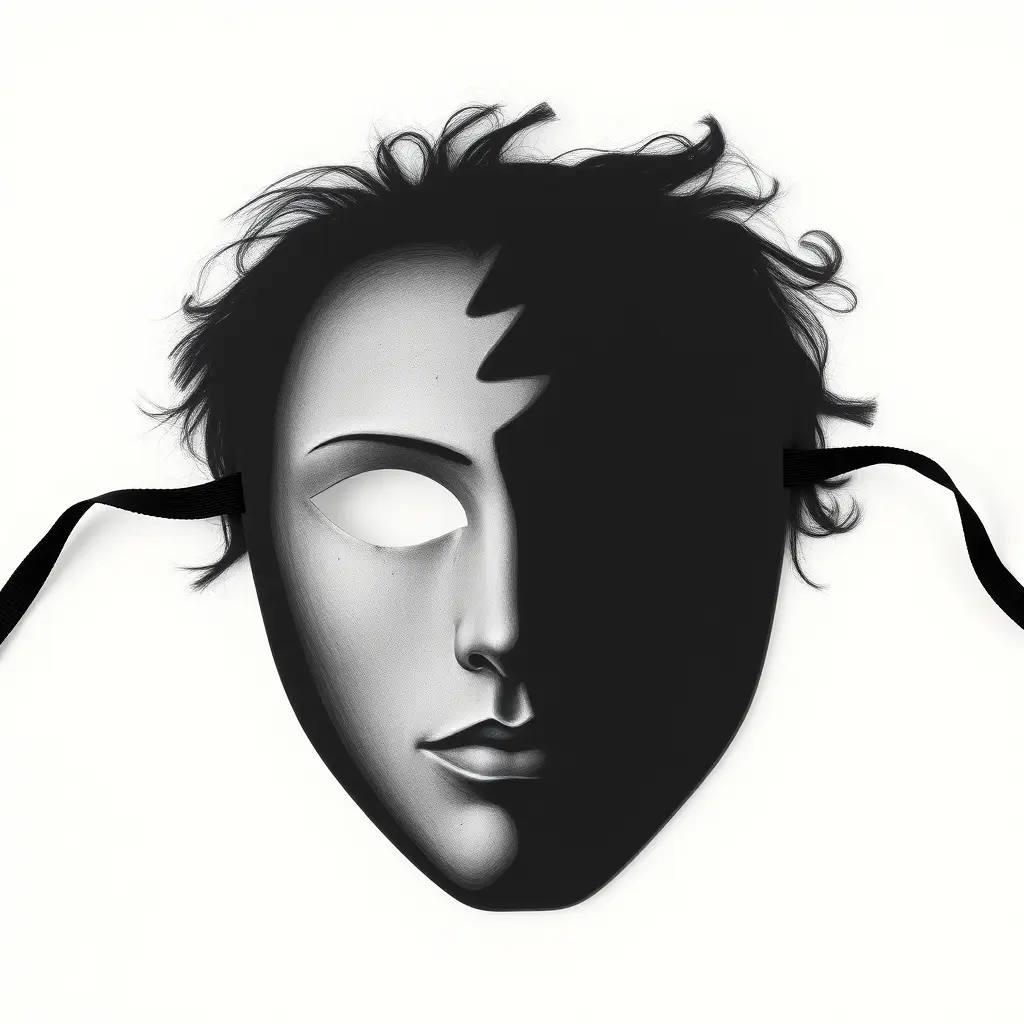
Based on Jung’s concept of the shadow—the parts of ourselves we reject, deny, or hide—this mask confronts the darker aspects of personality. The shadow isn’t necessarily evil; it simply contains traits we’ve learned are unacceptable or undesirable.
Your shadow mask might represent jealousy, aggression, selfishness, laziness, or other qualities you’ve suppressed. Use darker colors, asymmetrical features, or unsettling imagery. The goal isn’t to celebrate negative traits but to acknowledge their existence and understand how denying them might be affecting your life.
Creating this mask requires courage and honesty. Many people discover that their shadow contains not just negative traits but also positive qualities they’ve been afraid to claim—ambition, assertiveness, sensuality, or creativity that didn’t fit family or cultural expectations.
6 -Role-Based Identity Masks
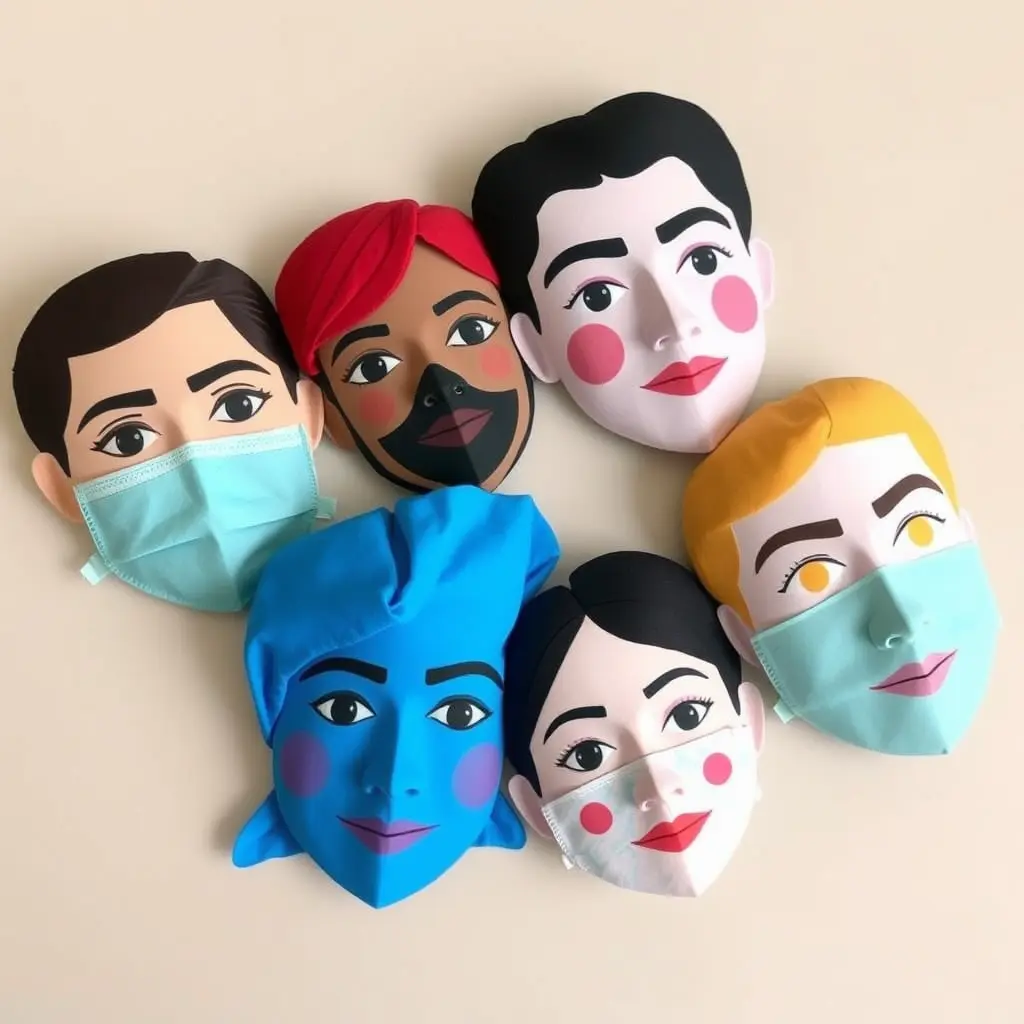
Most people play multiple roles throughout their day: professional, parent, child, friend, partner, sibling, leader, student. Each role comes with different expectations, behaviors, and emotional expressions. Creating separate masks for your various roles illustrates the complexity of modern identity.
Your professional mask might be polished and serious, while your parent mask could be warm and protective. Your friend mask might be playful, and your partner mask might be intimate and vulnerable. Laying these masks side by side reveals which roles feel most authentic, which feel exhausting, and where conflicts arise between competing identities.
This project particularly resonates with people who feel stretched thin or struggle with work-life balance. Visualizing the different faces you wear can help you understand why certain role transitions feel difficult and where boundaries might need strengthening.
7 -Past, Present, and Future Self Masks
Create three masks representing who you were, who you are, and who you’re becoming. This temporal approach to identity acknowledges that personality isn’t static—we continuously evolve through experiences, choices, and growth.
The past mask incorporates elements from childhood, formative experiences, and earlier versions of yourself. What dreams did you have? What traumas shaped you? What innocence or pain did you carry? The present mask shows your current identity with all its complexities and contradictions. The future mask explores aspirations, potential, and the person you’re working toward becoming.
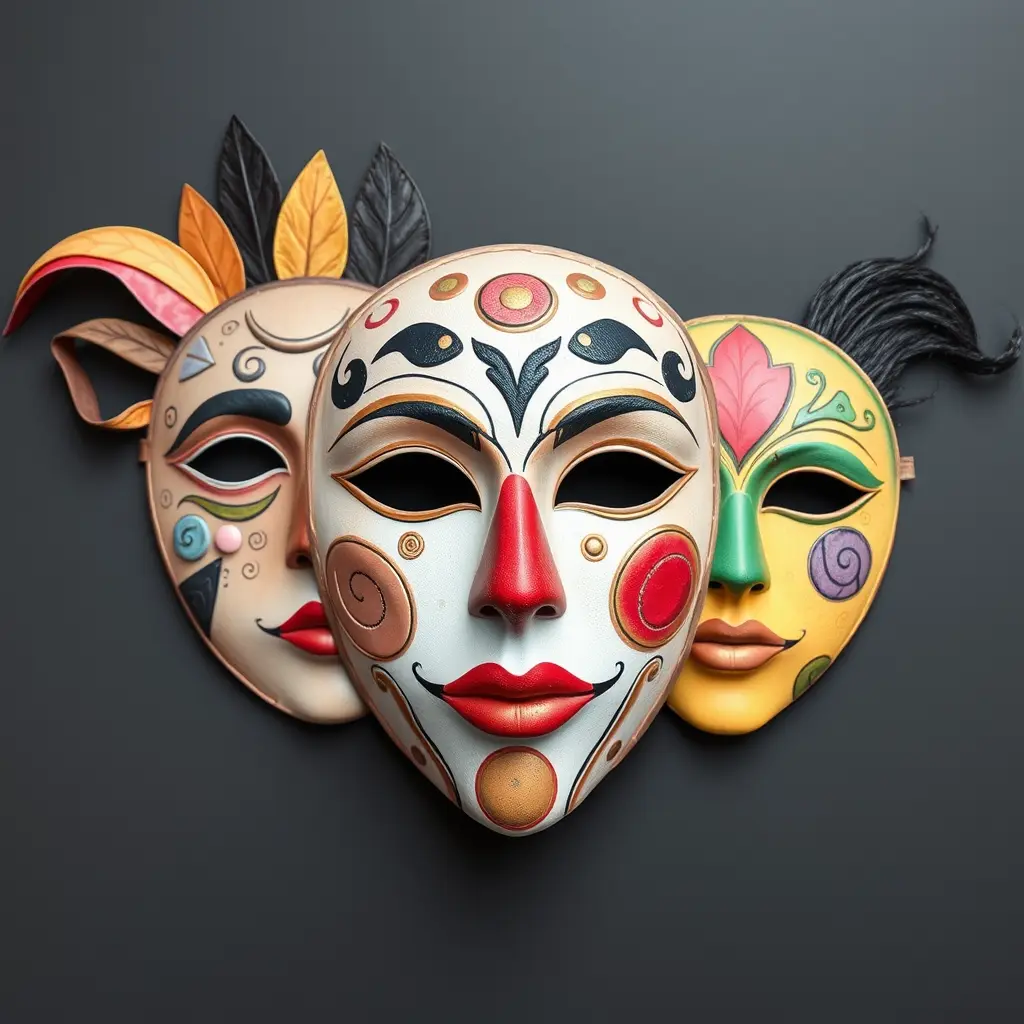
This trilogy format works beautifully as a series displayed together, creating a narrative arc of personal development. The exercise often reveals patterns—perhaps your future self is reclaiming qualities your past self possessed before life taught you to hide them.
8- Element-Based Personality Masks
Drawing from ancient systems that associate personality types with natural elements, create masks representing earth, water, fire, and air qualities within yourself. This approach connects personality to archetypal natural forces.
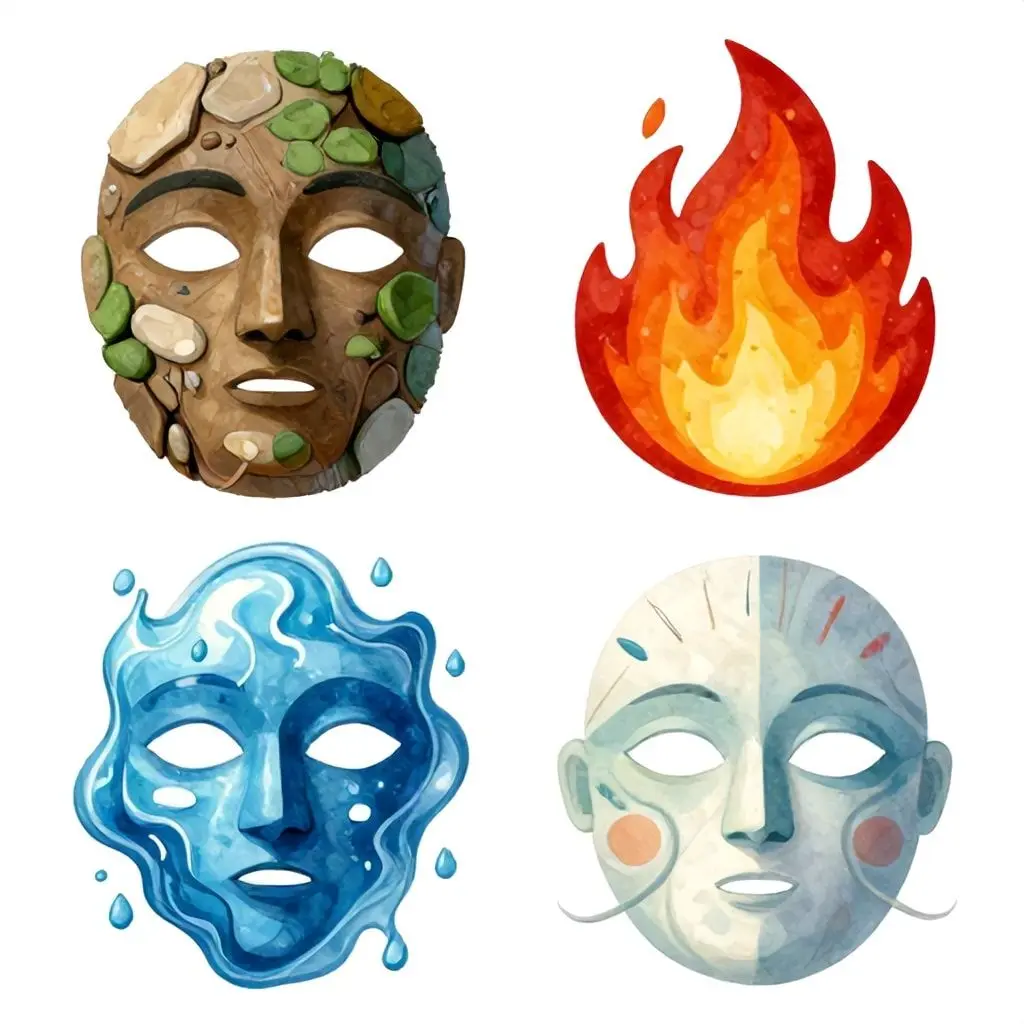
An earth mask earth mask might use browns and greens with textures suggesting stone, wood, or soil, representing your grounded, practical, stable qualities. A water mask could feature flowing blues and reflective surfaces, symbolizing emotional depth, adaptability, and intuition. A fire mask might incorporate reds, oranges, and dynamic shapes representing passion, energy, and transformation. An air mask could use light colors and delicate materials, reflecting intellectual qualities, communication, and freedom.
Most people identify strongly with one or two elements while recognizing traces of all four. Creating all four masks helps you understand your dominant traits while honoring less developed aspects that still contribute to your complete personality.
9 Inner Child and Wise Elder Masks
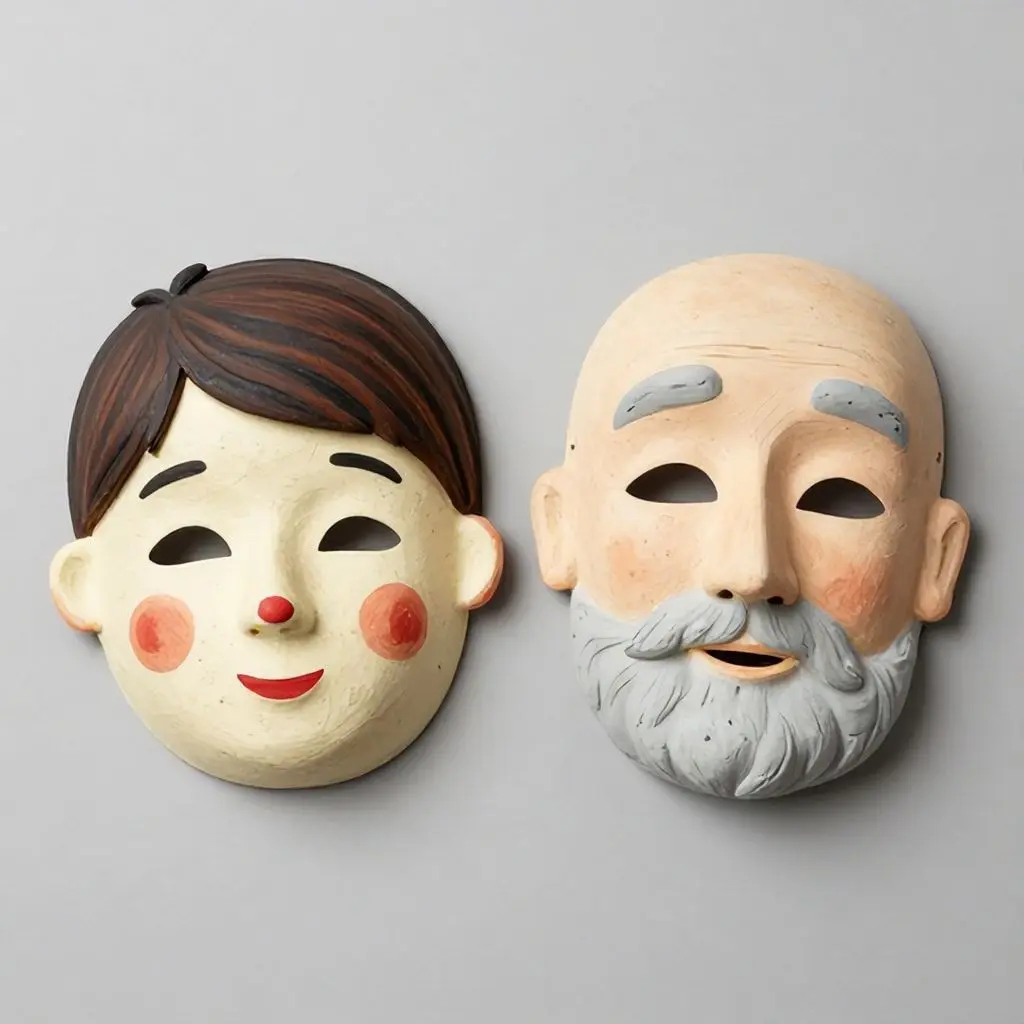
This pairing explores the youngest and oldest versions of your psyche. The inner child mask represents playfulness, curiosity, vulnerability, spontaneity, and wonder—qualities that often get buried under adult responsibilities. Use bright colors, simple shapes, and whimsical elements. Include symbols of childhood joys, fears, or significant memories.
The wise elder mask embodies accumulated knowledge, perspective, patience, and acceptance. This isn’t necessarily your actual future self but rather the archetypal wisdom figure within you. Use muted colors, aged textures, and symbols of growth, seasons, or life cycles.
These two masks create a dialogue between innocence and experience, reminding you to balance responsibility with play and seriousness with joy. Many people find that creating the inner child mask unleashes creativity they’d forgotten they possessed.
10- Anxiety and Confidence Masks
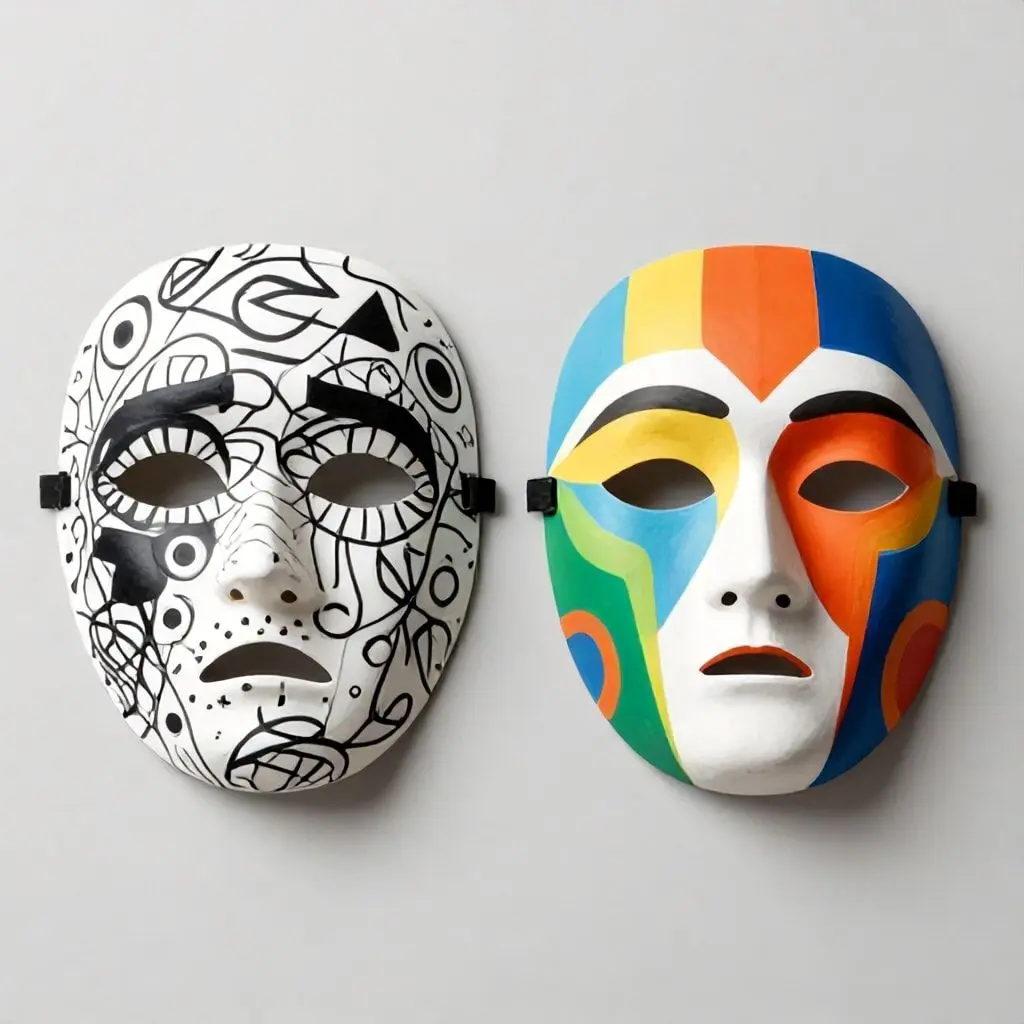
For those working through mental health challenges or personal growth, creating masks that embody opposing psychological states can be illuminating. The anxiety mask might feature chaotic patterns, fragmented pieces, dark colors, and symbols of fear or overwhelm—perhaps multiple eyes suggesting hypervigilance or tangled lines representing racing thoughts.
The confidence mask represents your aspirational mental state: organized, bright, balanced, and strong. It might feature bold colors, symmetry, and symbols of achievement or inner peace.
Physically creating these opposing states helps externalize internal struggles, making them more manageable. Some therapists use this technique with clients, encouraging them to literally put on the confidence mask when facing challenging situations, using it as a tool for embodying desired qualities.https://casolia.com/personality-identity-mask-project-ideas/
11- Intersectional Identity Mask
Identity is multifaceted, shaped by the intersection of race, gender, sexuality, ability, class, religion, and other factors. An intersectional identity mask acknowledges this complexity by incorporating visual elements representing different aspects of who you are and how they interact.
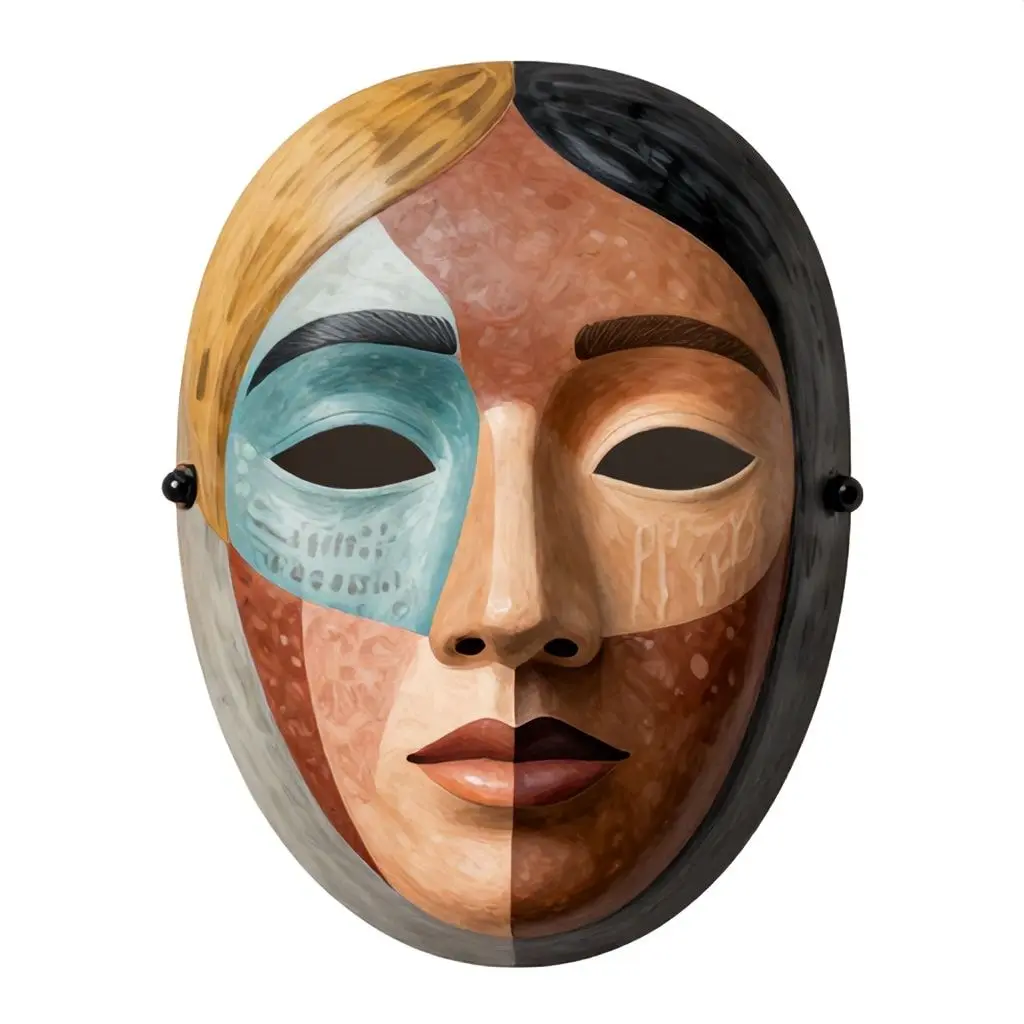
This mask might be divided into sections or layers, each representing a different identity dimension. The overlapping areas can show where different aspects of identity influence each other—perhaps where your cultural background intersects with your professional identity, or where your gender expression meets your creative self.
This approach is particularly powerful for people with marginalized identities who navigate multiple forms of belonging and exclusion. The mask becomes a statement about the richness and challenge of holding multiple identities simultaneously.
12 -Seasonal Personality Masks
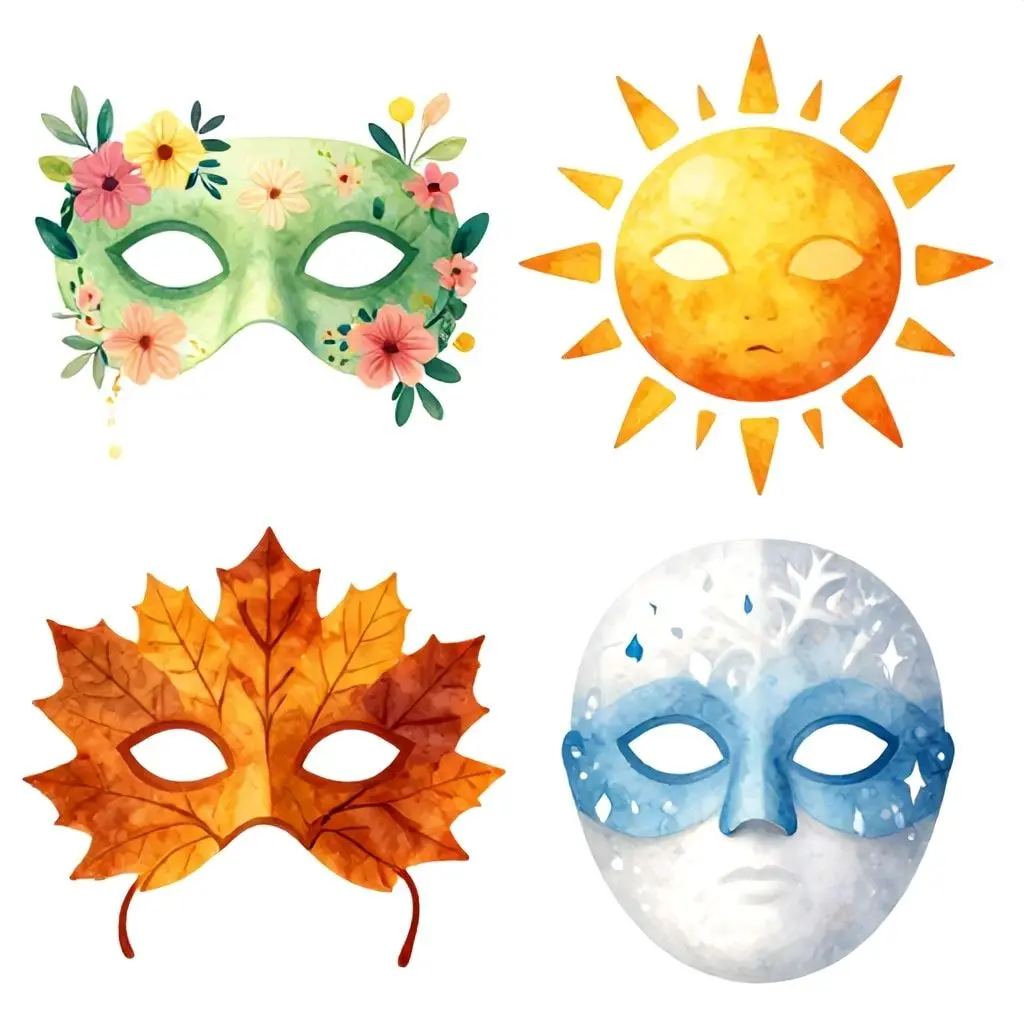
Create four masks representing how your personality shifts with the seasons, whether literally or metaphorically. Perhaps you’re more energetic and social in summer but introspective in winter. Maybe spring represents your creative, growing self while autumn embodies reflection and release.
Each seasonal mask uses corresponding colors, natural motifs, and symbolic elements. A spring mask might feature pastels, flowers, and themes of renewal. A summer mask could be vibrant with sun imagery. An autumn mask might use oranges and browns with falling leaves. A winter mask could be stark, crystalline, or cozy depending on your personal association.
This project acknowledges that personality isn’t constant—we have natural cycles of energy, mood, and behavior. Recognizing these patterns can help you work with your rhythms rather than against them.
13- Strength and Vulnerability Masks
Society often teaches us to show strength while hiding vulnerability, yet true resilience comes from honoring both. Creating paired masks that represent your powerful and your tender sides can heal this false dichotomy.
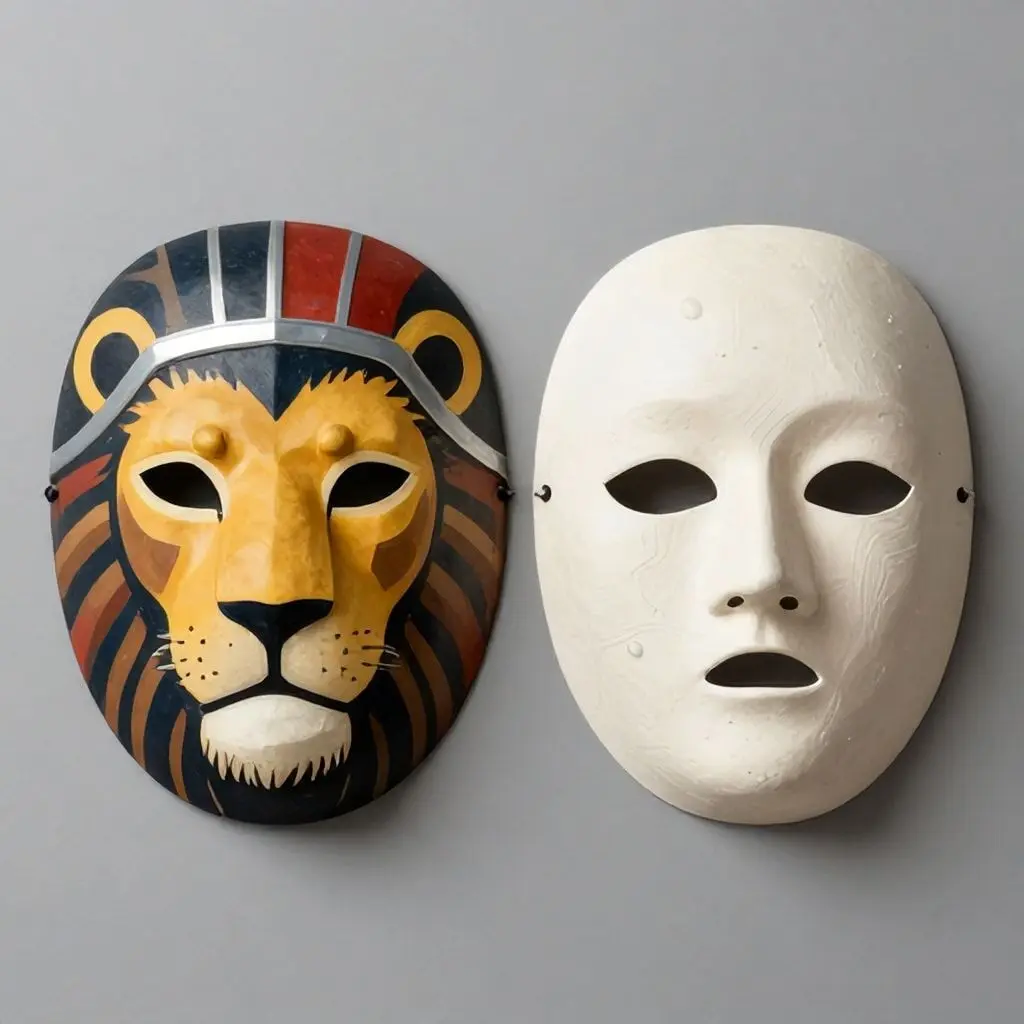
The strength mask might feature armor-like elements, bold colors, and symbols of protection or power—perhaps a lion, shield, or mountain. The vulnerability mask could use soft textures, open spaces, and imagery suggesting receptivity—perhaps water, open hands, or exposed heart imagery.
The profound realization often comes when you understand that vulnerability requires strength, and authentic strength includes the courage to be vulnerable. These masks aren’t opposites but complements, two essential aspects of psychological wholeness.
14- Dream and Reality Masks
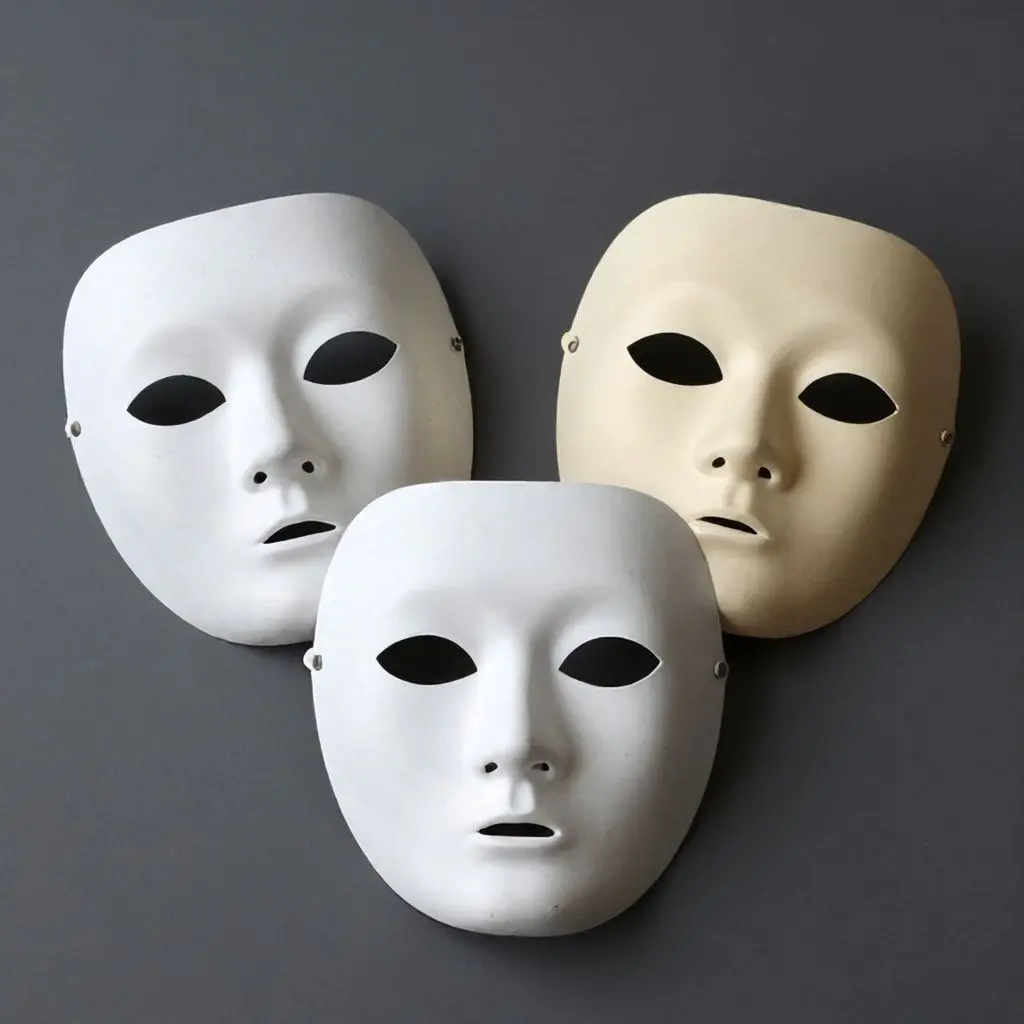
This pairing explores the tension between who you dream of being and who you currently are. The dream mask incorporates aspirational elements, ideal qualities, and the life you imagine for yourself. Let yourself be unrealistic and visionary—this mask represents pure potential without the constraints of current circumstances.
The reality mask honestly depicts your current state, including imperfections, limitations, and the gap between where you are and where you want to be. This isn’t about self-criticism but about clear-eyed assessment.
The space between these masks represents your growth edge—the work ahead, the risks required, and the transformation possible. Some people create a third “bridge” mask representing the steps and qualities needed to move from reality toward dreams.
15- Social Media vs. Authentic Self Masks
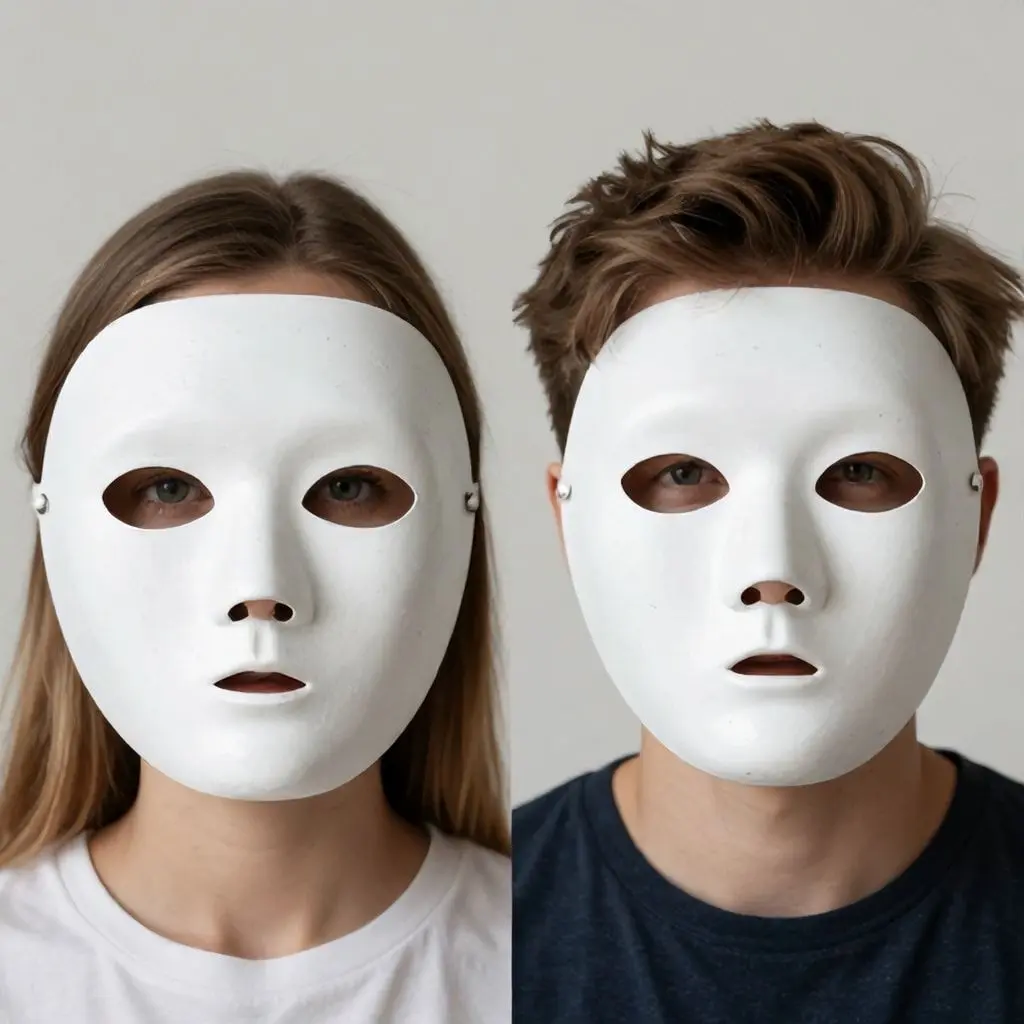
In our digital age, many people maintain carefully curated online personas that may differ significantly from their offline lives. Creating a social media mask that represents your digital presentation alongside an authentic self mask reveals how technology shapes modern identity.
The social media mask might feature filtered, highlighted aspects of your life—travel, achievements, attractive moments, and carefully worded thoughts. It might be glossy, perfect, and somewhat two-dimensional. The authentic self mask includes the messy, boring, difficult, and ordinary aspects of life that never make it to your feed.
This project particularly resonates with younger generations who’ve grown up navigating online identity. It can spark important conversations about authenticity, comparison, and the psychological effects of performing identity for an audience.
16 – Abstract Symbolic Identity Mask
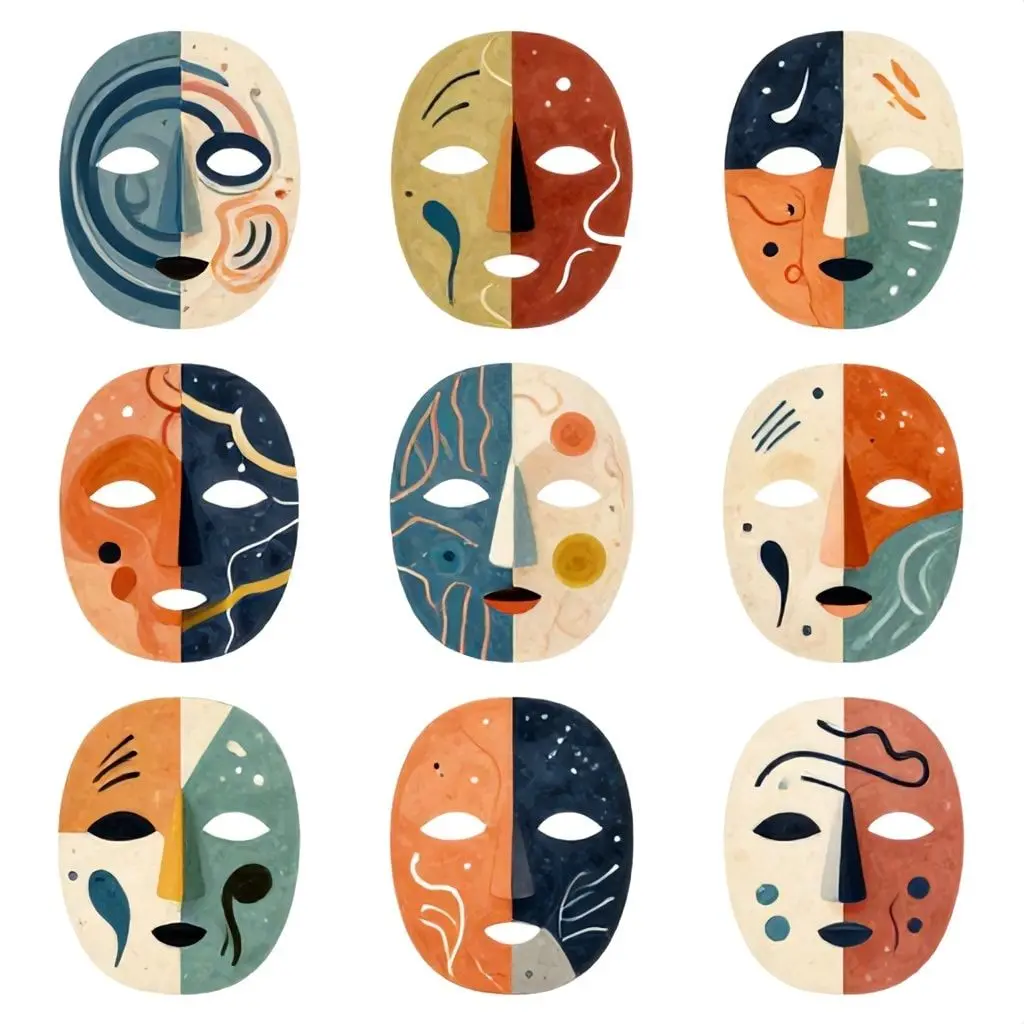
Not all identity masks need to be literal representations. An abstract approach uses color, shape, texture, and symbol to convey personality in non-representational ways. This method often accesses deeper, more intuitive self-knowledge that bypasses rational analysis.
Choose colors that resonate with your emotional landscape. Select shapes that feel personally significant—spirals for growth, fractured pieces for complexity, flowing lines for adaptability. Incorporate meaningful symbols from dreams, nature, or personal iconography.
Abstract masks often surprise their creators by revealing subconscious patterns and preoccupations. Without the constraints of realistic representation, you’re free to express identity in purely emotional and symbolic terms.
Materials and Techniques for Creating Identity Masks
The physical process of mask-making is as important as the conceptual framework. Start with a base: papier-mâché over a balloon or form, pre-made blank masks from craft stores, cardboard, or molding materials like plaster gauze. Each material offers different possibilities for texture and durability.
For decoration, gather paints, markers, fabric, feathers, beads, found objects, magazine clippings for collage, natural materials like leaves or twigs, and anything else that speaks to your creative vision. Mixed media approaches often yield the most interesting results, combining two-dimensional painting with three-dimensional embellishments.
Consider whether your mask will be wearable or purely decorative. Wearable masks need eye holes, proper sizing, and comfortable attachment methods. Display masks have more freedom for elaborate three-dimensional elements that might obstruct vision or be too heavy to wear.
The creative process itself often triggers insights. You might begin with a clear concept only to find the mask evolving in unexpected directions. Trust this process—your hands and intuition often know things your conscious mind hasn’t yet articulated.
Using Identity Masks for Personal Growth and Therapy
Identity masks serve powerful therapeutic functions beyond artistic expression. Therapists use mask-making in various modalities including art therapy, drama therapy, and narrative therapy. The process externalizes internal experiences, making abstract concepts tangible and discussable.
In group settings, sharing and discussing masks creates profound connection. Seeing others’ vulnerabilities, struggles, and multifaceted identities normalized your own complexity. Mask galleries—displays of multiple people’s identity masks—celebrate human diversity while revealing universal themes.
For personal growth work, revisit your masks periodically. How has your relationship to different aspects of yourself shifted? Does your persona mask feel less necessary? Has your shadow mask become less frightening? Is your future self mask coming into being? Masks become mirrors reflecting your evolution over time.
Some practitioners use masks in ritual contexts, literally putting on different masks to embody and explore various aspects of personality in a safe, contained way. This technique, borrowed from ancient traditions, remains surprisingly effective for accessing different parts of the psyche.
Conclusion
Personality identity masks bridge the external and internal, the visible and hidden, the presented and the authentic. Through the creative process of translating psychological complexity into physical form, we gain clarity about who we are, who we show the world, and who we’re becoming.
The fifteen-plus ideas presented here offer starting points for an endless exploration. Your identity is unique, complex, and ever-evolving—your masks should reflect this richness. Whether you create one mask or an entire gallery, whether you work alone or in community, whether your approach is therapeutic or purely artistic, the process of making visible the invisible aspects of identity is inherently valuable.
Don’t worry about artistic skill or creating something museum-worthy. The most powerful identity masks are often the most honest, regardless of technical execution. What matters is the courage to look at yourself clearly, the creativity to express what you find, and the wisdom to honor all aspects of who you are—light and shadow, strength and vulnerability, past and potential.
Pick up your materials and begin. Your personality is waiting to be seen, understood, and celebrated through the transformative medium of mask-making.
5 FAQs About Personality Identity Mask Ideas
Q: Do I need artistic experience to create meaningful identity masks?
A: Not at all. The therapeutic and personal growth value of identity masks comes from the introspective process and honest expression, not technical skill. Simple materials like paper, markers, and collage can create deeply meaningful masks. Focus on authenticity over aesthetics.
Q: How can identity masks be used in educational settings?
A: Teachers use identity masks to explore literature characters, historical figures, cultural studies, and social-emotional learning. Students might create masks representing book characters’ internal conflicts, cultural identities in social studies, or their own personal growth in advisory programs. The activity develops empathy, self-awareness, and creative thinking.
Q: Can creating shadow or anxiety masks be psychologically harmful?
A: When approached mindfully, confronting difficult emotions through art is generally beneficial. However, individuals with severe trauma or mental health conditions should work with a qualified therapist when exploring shadow material. The goal is acknowledgment and integration, not dwelling in darkness.
Q: How long does it typically take to create an identity mask?
A: Time varies based on complexity and materials. A simple painted mask might take 2-3 hours, while an elaborate mixed-media piece could require several sessions over days or weeks. The drying time for materials like papier-mâché or paint also extends the timeline. Honor your natural pace rather than rushing the creative process.
Q: What should I do with my identity masks after creating them?
A: Options include displaying them as personal art, photographing them for reflection, sharing in therapeutic or educational contexts, using them in ritual or drama practices, or storing them as records of your psychological journey. Some people periodically revisit masks to track personal evolution. There’s no wrong answer—let your intuition guide how you preserve and interact with your creations.