
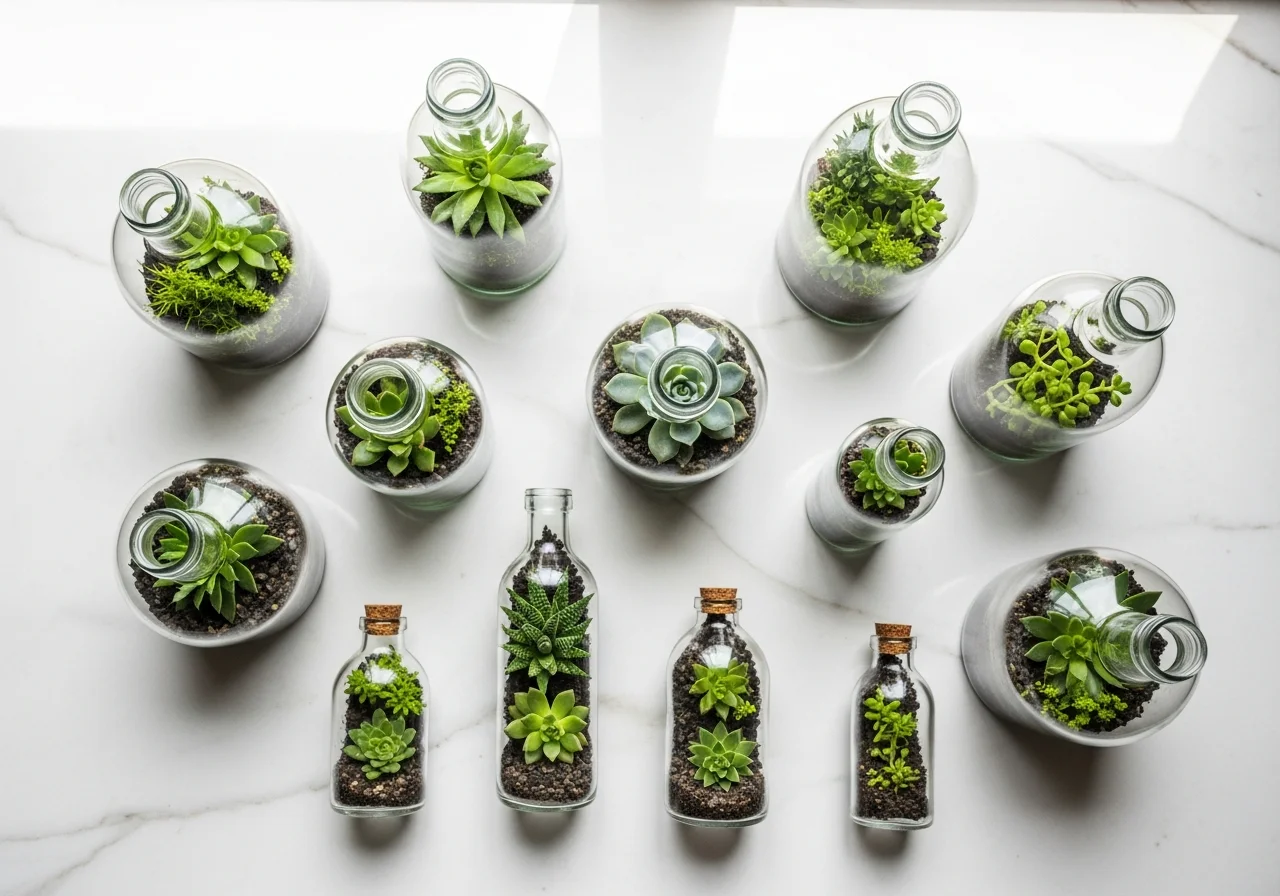
8+ Creative Plants in Glass Bottles Ideas
The art of growing plants in glass bottles has transformed from a Victorian-era curiosity into a modern indoor gardening phenomenon. These miniature ecosystems offer a perfect solution for urban dwellers, plant enthusiasts with limited space, and anyone seeking to bring natural beauty into their home with minimal maintenance. Glass bottle gardens create stunning focal points while providing the perfect microclimate for moisture-loving plants that might otherwise struggle in dry indoor environments.
Whether you have empty wine bottles, vintage apothecary jars, or purpose-bought terrariums, the transparent walls of glass containers allow you to observe root development, monitor moisture levels, and appreciate the intricate beauty of plant life from every angle. This guide explores creative approaches to designing your own glass bottle garden, from selecting the right plants to arranging them in ways that maximize both visual appeal and plant health.
Understanding the Appeal of Glass Bottle Gardens

Glass containers provide unique advantages that traditional pots cannot match. The enclosed or semi-enclosed environment creates a self-sustaining ecosystem where water vapor condenses on the glass walls and returns to the soil, reducing watering frequency dramatically. This recycling system mimics natural rainfall patterns and proves especially beneficial for tropical plants that thrive in humid conditions.
The transparency of glass also serves an educational purpose, particularly for children or new gardeners. Watching roots develop, observing how water moves through soil layers, and witnessing the complete life cycle of plants becomes possible when the growing medium is visible. This visibility also helps you identify potential problems before they become serious, such as root rot, pest infestations, or nutrient deficiencies.
From an aesthetic perspective, glass bottle gardens function as living art installations. The interplay of green foliage against clear glass creates a fresh, organic contrast that complements both minimalist and maximalist interior design styles. The contained nature of these gardens makes them portable and versatile, allowing you to refresh your decor by simply moving them to different locations.
Classic Closed Terrarium in Vintage Bottles

Creating a closed terrarium in a vintage glass bottle represents one of the most traditional and rewarding approaches to bottle gardening. These self-contained worlds require minimal intervention once established and can theoretically sustain themselves for years with proper initial setup.
Select a bottle with a wide enough opening to accommodate your planting tools and hand. Antique medicine bottles, large preserve jars, or decorative decanters work beautifully. The key to success lies in layering your growing medium correctly. Start with a foundation of small pebbles or aquarium gravel to facilitate drainage, then add a thin layer of activated charcoal to filter the water and prevent bacterial growth. Top this with a quality potting mix appropriate for your chosen plants.
For plant selection, focus on species that naturally grow on forest floors where humidity remains high and light filters through the canopy. Miniature ferns like Asplenium or Polypodium create delicate fronds that soften the geometric lines of glass. Baby tears, also known as Soleirolia soleirolii, forms a lush carpet that mimics moss-covered forest floors. Nerve plants bring vibrant color with their intricately veined leaves in shades of pink, white, or red.
Arrange plants with the tallest specimens toward the center or back, creating depth and preventing smaller plants from being overshadowed. Add decorative elements like small stones, pieces of driftwood, or miniature figurines to create narrative interest. Once planted, water lightly and seal the bottle. Monitor the condensation levels over the first week, opening the container briefly if excessive moisture accumulates.
Succulent Showcase in Clear Glass
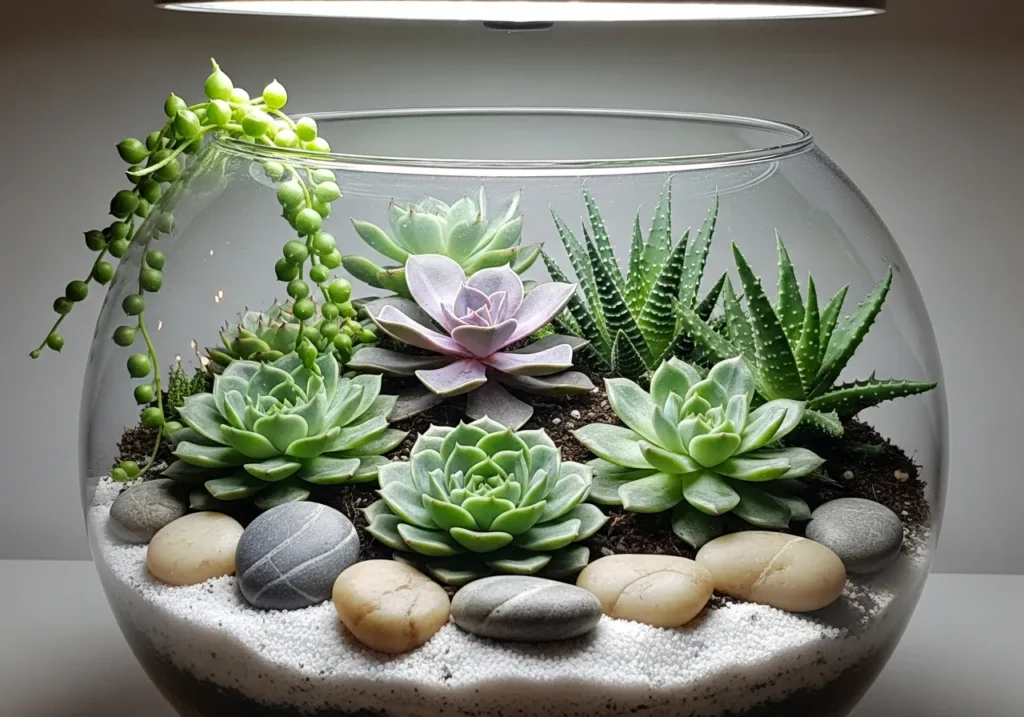
For those who prefer low-maintenance greenery or live in drier climates, succulent arrangements in open glass bottles offer stunning visual impact without the moisture management challenges of closed terrariums. The architectural forms and varied textures of succulents create dynamic compositions that look professionally designed even with minimal experience.
Choose wide-mouthed bottles, fish bowls, or apothecary jars that allow adequate air circulation. Proper drainage becomes critical with succulents, so create a generous base layer of coarse sand mixed with perlite. This prevents water from pooling around sensitive roots that quickly rot in saturated conditions.
Mix different succulent varieties to create textural and color contrast. Echeveria rosettes provide structural focal points with their perfect symmetry and pastel hues. Trailing varieties like String of Pearls or String of Bananas can spill over interior edges, adding movement to the composition. Haworthia species contribute interesting geometric patterns, while small Aloe varieties bring vertical interest.
Consider the growth habits of your selections carefully. Succulents grow slowly but do expand over time, so leave adequate spacing between plants. Top dress the soil with decorative sand, small pebbles, or crushed shells to complete the desert aesthetic while preventing soil from splashing onto leaves during watering. Position your succulent bottle garden in bright, indirect light and water sparingly only when the soil has completely dried. To see more creative ideas about succulents visit Homeliaa.
Aquatic Plant Displays in Glass Containers
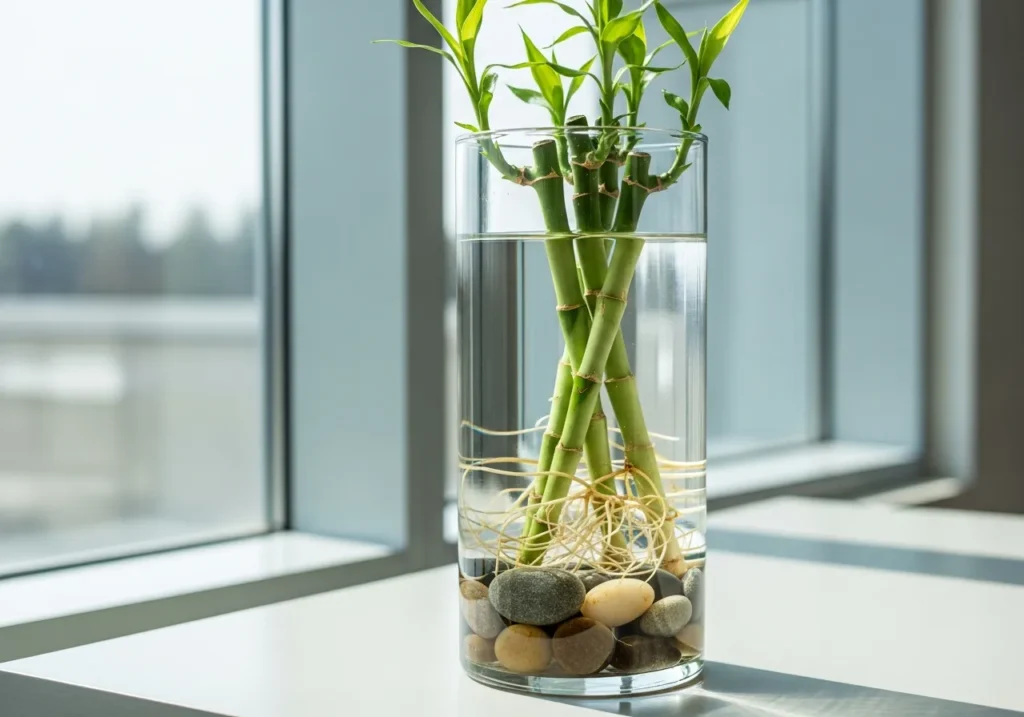
Water-based plant displays in glass bottles create mesmerizing focal points that combine the serenity of aquatic life with the simplicity of container gardening. These arrangements work particularly well for plants that grow hydroponically or naturally inhabit wetland environments.
Lucky bamboo, despite its name actually a member of the Dracaena family, thrives in glass bottles filled with water. Arrange multiple stalks of varying heights in a clear cylindrical bottle, securing them with river rocks for stability. Change the water weekly and add a few drops of liquid fertilizer monthly to maintain vibrant green color.
Pothos cuttings root readily in water and create cascading greenery that transforms simple bottles into living sculptures. Select a bottle with a narrow neck to support the stems while allowing the leaves to drape naturally. The heart-shaped leaves and trailing growth pattern bring softness to modern spaces. As roots develop and fill the container, you can observe the intricate network of white filaments that sustain the plant.
For a more sophisticated approach, try creating a water terrarium with true aquatic plants. Species like Java moss, Marimo moss balls, or Anubias nana can live indefinitely in sealed glass bottles partially filled with water. Add small aquarium stones, a piece of driftwood, or decorative sand to create underwater landscapes. These low-maintenance displays require only occasional water top-ups and indirect light.
Hanging Air Plant Bottles
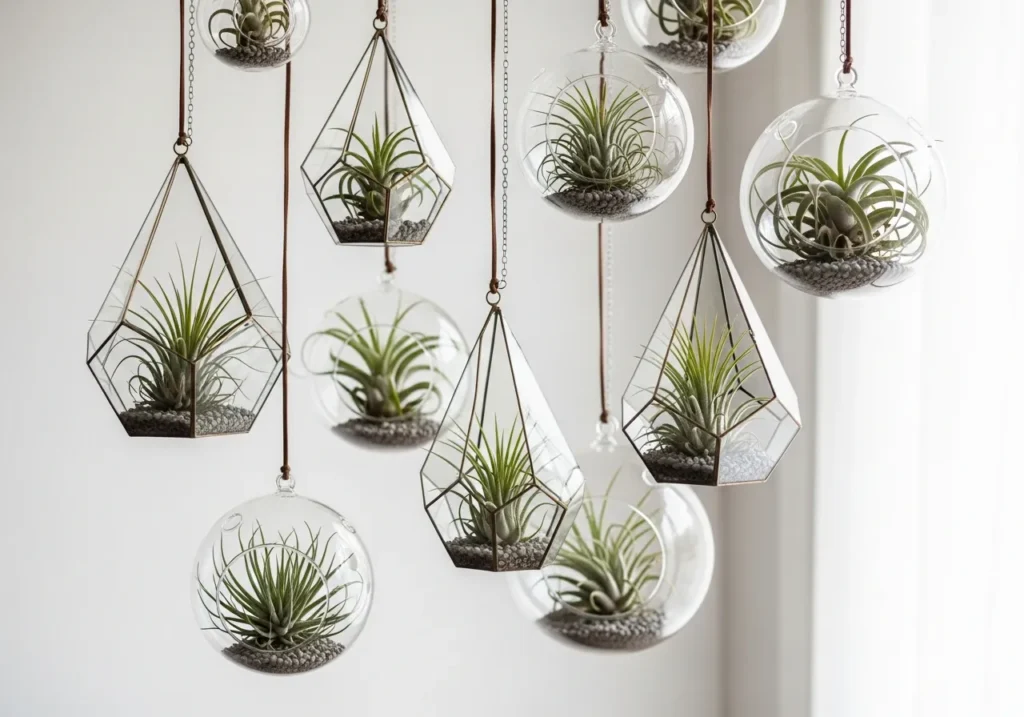
Air plants, scientifically known as Tillandsia, revolutionize the concept of plants in glass bottles by eliminating soil entirely. These epiphytic plants absorb moisture and nutrients through specialized leaf structures called trichomes, making them perfect for creative displays in hanging glass vessels.
Select glass orbs, teardrop-shaped bottles, or geometric terrariums designed specifically for air plants. The key requirement is adequate air circulation, so avoid completely enclosed containers. Suspend these vessels at varying heights using leather cords, macrame hangers, or thin chains to create an eye-catching installation that draws the gaze upward.
Choose air plants with different forms and colors to add variety. Tillandsia ionantha forms compact rosettes with leaves that blush purple or red during blooming. Tillandsia xerographica creates dramatic silvery curls that spiral outward. Smaller species like Tillandsia tectorum provide delicate texture with their fuzzy, white appearance.
Enhance the display by adding natural elements that complement without overwhelming. Small pieces of sea glass, colorful sand, or tiny shells create beachy vibes, while moss and small stones evoke forest floors. Remember that air plants need weekly soaking in water for about thirty minutes, so design your hanging arrangements with easy removal in mind.
Layered Soil Terrarium Art
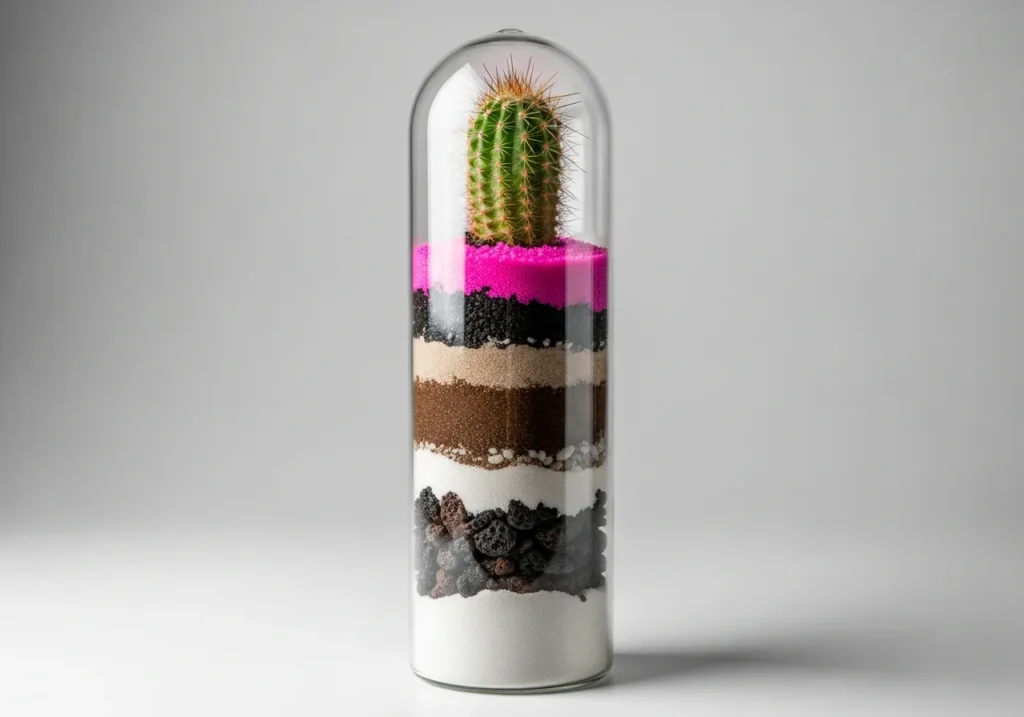
Transforming the functional layers of a terrarium into decorative elements creates striking visual displays that serve both aesthetic and practical purposes. This approach works best in tall, narrow bottles where the stratified layers remain clearly visible.
Begin by selecting colored aquarium sand or decorative soils in contrasting hues. Create distinct horizontal bands by carefully pouring each layer using a funnel or rolled paper to control placement. Alternate between colors and textures, incorporating layers of activated charcoal, white sand, black lava rock, and rich brown potting soil. The resulting pattern resembles geological formations or modern art.
Tilt the bottle while adding certain layers to create angled striations that add dynamic movement to the design. Some crafters create wave patterns or spirals by rotating the bottle while pouring. These techniques require patience and a steady hand but produce museum-quality results.
Once the layered foundation is complete, plant small specimens that won’t disturb the patterns. Miniature cacti or slow-growing succulents work well since their minimal root systems won’t disrupt the carefully arranged layers. Position plants strategically so roots anchor in the soil layer while the decorative sand layers remain undisturbed.
Herb Garden in Kitchen Glass Bottles
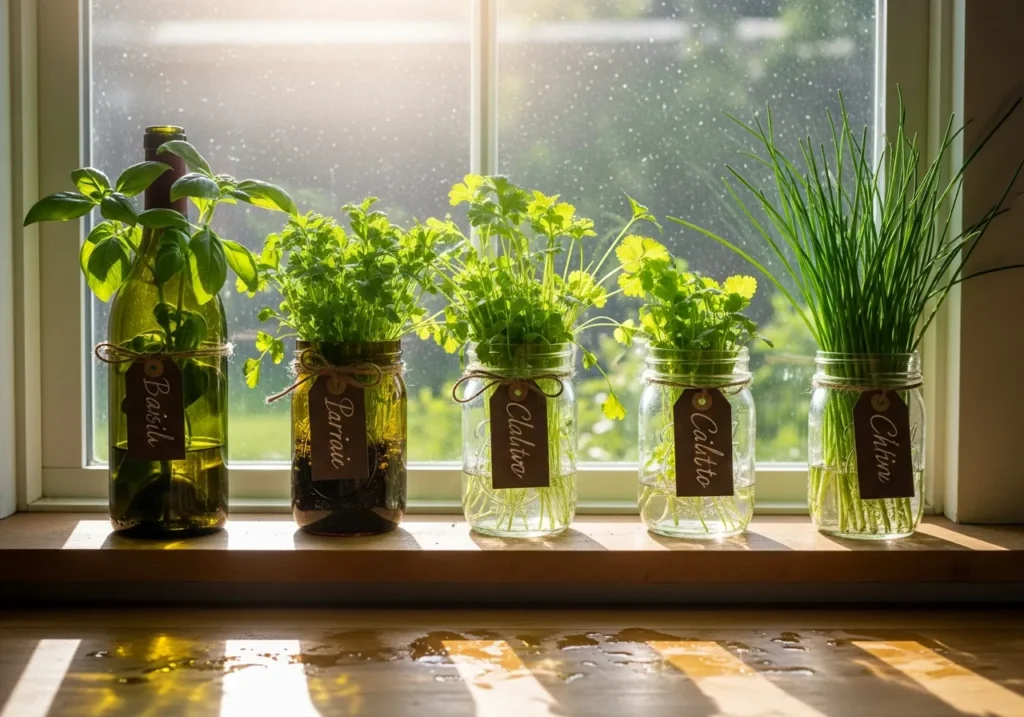
Functional meets beautiful when you establish an herb garden in glass bottles positioned on sunny kitchen windowsills. This approach provides fresh culinary ingredients while adding living decor to cooking spaces.
Wine bottles with the tops cut off or large mason jars create ideal vessels for herb cultivation. The clear glass allows you to monitor root health and soil moisture while the shape provides adequate depth for root development. Group multiple bottles together to create an abundant kitchen garden that supplies various flavors.
Select herbs that share similar growing requirements. Basil, parsley, cilantro, and chives all appreciate consistent moisture and bright light. Plant one variety per bottle to prevent competition and make harvesting easier. Add labels using chalkboard paint sections, wrapped twine with tags, or etched glass techniques to identify each herb.
For sustained production, ensure drainage by drilling holes in bottle bottoms or using them as decorative sleeves for smaller pots that sit inside. Harvest regularly by pinching back growing tips, which encourages bushier growth and prevents herbs from becoming leggy. Rotate bottles periodically so all sides receive equal light exposure.
Moss Garden Miniature Landscapes

Moss creates enchanting miniature landscapes in glass bottles, evoking ancient forests compressed into pocket-sized dimensions. These living sculptures require minimal care while offering maximum visual impact through their varied textures and vibrant green hues.
Collect or purchase different moss varieties to create landscape diversity. Sheet moss forms smooth carpets perfect for meadow effects. Cushion moss grows in rounded mounds resembling tiny hills. Mood moss creates fluffy texture that softens edges and fills gaps. Combining multiple types produces naturalistic scenes with depth and interest.
Prepare the bottle with a thin drainage layer and specialized moss substrate or a mixture of peat and sand. Keep the medium consistently moist but never waterlogged. Arrange moss pieces like puzzle elements, pressing them gently into the substrate to ensure good contact.
Add miniature landscape features to transform the moss garden into a narrative scene. Tiny bridges, ceramic mushrooms, small pebbles arranged as paths, or pieces of bark positioned as fallen logs create storytelling elements. Some enthusiasts incorporate miniature figurines, creating fairy gardens or woodland scenes that captivate children and adults alike.
Seasonal Theme Bottle Gardens

Rotating your glass bottle gardens with the seasons keeps your indoor displays fresh and connected to the natural cycles occurring outside. This approach allows you to experiment with different plants and design aesthetics throughout the year.
Spring bottle gardens might feature emerging bulbs like miniature daffodils or grape hyacinths planted in glass, allowing you to observe the entire growth cycle from bulb to bloom. Combine with baby ferns unfurling new fronds and moss dotted with tiny flowering plants.
Summer displays embrace vibrant colors and lush growth. Combine colorful coleus varieties in large glass containers, or showcase tropical plants like miniature orchids and bromeliads. Bright green selaginella and purple wandering jew create bold color statements.
Autumn arrangements incorporate warm tones through plants with bronze, burgundy, or golden foliage. Certain begonia varieties provide rich leaf colors, while decorative elements like acorns, colorful leaves, or small gourds enhance the seasonal theme.
Winter bottle gardens offer living decoration during months when outdoor gardens sleep. Evergreen selections like miniature conifers, holly fern, or Christmas cacti keep spaces green. Add seasonal touches with white stones resembling snow or small pinecones and berries.
Caring for Your Glass Bottle Gardens
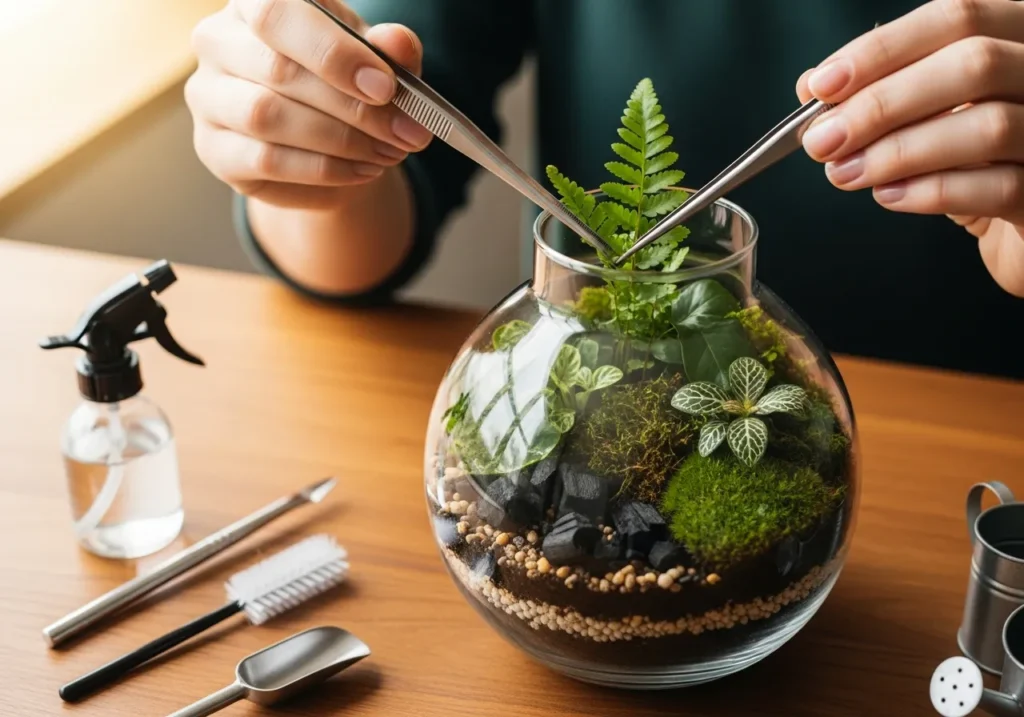
Successful long-term maintenance of plants in glass bottles depends on understanding their unique environmental conditions and adjusting care accordingly. The enclosed or semi-enclosed nature of these containers creates microclimates that differ significantly from standard potted plants.
Light requirements vary by plant selection, but most bottle gardens thrive in bright, indirect light. Direct sunlight magnifies through glass, potentially scorching delicate foliage or overheating the enclosed environment. Position bottle gardens near east or north-facing windows, or set them a few feet back from south or west exposures.
Watering frequency depends on whether your container is open or closed. Closed terrariums may need water only a few times yearly, while open succulent gardens require attention every few weeks. Check moisture by observing condensation patterns in closed systems or testing soil with your finger in open ones. Always water conservatively, as excess moisture has nowhere to escape in glass containers.
Pruning maintains appearance and plant health. Remove yellowed or dead leaves promptly to prevent fungal issues. Trim aggressive growers to prevent them from overtaking companions. For closed terrariums, use long tweezers or specialized terrarium tools to reach inside narrow openings.
Monitor for common issues like excessive algae growth on glass, which indicates too much light or nutrients. Mold on soil surfaces suggests poor air circulation or overwatering. Address problems quickly by adjusting environmental conditions rather than applying chemicals in these enclosed ecosystems.
Conclusion
Plants in glass bottles represent the perfect intersection of horticultural science, artistic expression, and sustainable living. These miniature ecosystems prove that impactful gardens need not require sprawling yards or extensive time commitments. Whether you choose the self-sustaining elegance of a closed terrarium, the architectural beauty of succulent displays, or the functional charm of a kitchen herb garden, glass bottle gardening offers creative opportunities for every skill level and aesthetic preference.
The transparent walls of glass containers invite us to observe plant life in intimate detail, transforming daily care into moments of meditation and connection with nature. As you develop your bottle gardening skills, you will discover that these small green worlds provide outsized benefits, purifying indoor air, reducing stress, and bringing the restorative power of nature into spaces where traditional gardens cannot reach. To know more Glass bottle garden visit Scratch and Stitch.
Start with a single bottle and a few carefully selected plants. Learn from both successes and challenges. Over time, you will develop an intuition for matching plants to containers, creating balanced compositions, and maintaining thriving miniature ecosystems. The journey from that first simple planting to a collection of diverse glass gardens reflects not just growing skill, but a deepening relationship with the green world that sustains us all.
Frequently Asked Questions
Can you use any glass bottle for planting?
Most glass bottles work for plants, but consider opening size and shape. Wide mouths simplify planting and maintenance, while narrow necks challenge placement but create unique aesthetics. Ensure bottles are thoroughly cleaned and free from residues before adding plants. Colored glass filters light differently than clear glass, affecting plant growth.
How often do glass bottle terrariums need watering?
Closed terrariums rarely need water, sometimes only two to four times yearly, as moisture recycles continuously. Open containers like succulent displays need watering every two to four weeks depending on plant type and environmental conditions. Always check soil moisture before watering rather than following a rigid schedule.
What plants survive best in glass bottles?
Ferns, moss, nerve plants, and begonias excel in closed humid terrariums. Succulents and cacti thrive in open glass containers with good air circulation. Air plants require no soil and work perfectly in hanging glass orbs. Select plants based on whether your container is sealed or open.
Do glass bottle plants need fertilizer?
Established closed terrariums rarely need fertilization as the ecosystem recycles nutrients efficiently. Open containers and water-based displays benefit from diluted liquid fertilizer applied monthly during growing seasons. Always use fertilizer at quarter strength to avoid burning delicate plants in the concentrated environment.
How do you prevent mold in glass bottle gardens?
Ensure proper drainage layers, avoid overwatering, and provide adequate air circulation. Remove dead plant material promptly, as it encourages fungal growth. For closed terrariums experiencing mold, open the container for several hours to dry excess moisture. Using activated charcoal in your layering system naturally inhibits bacterial and fungal development.


2 Comments