
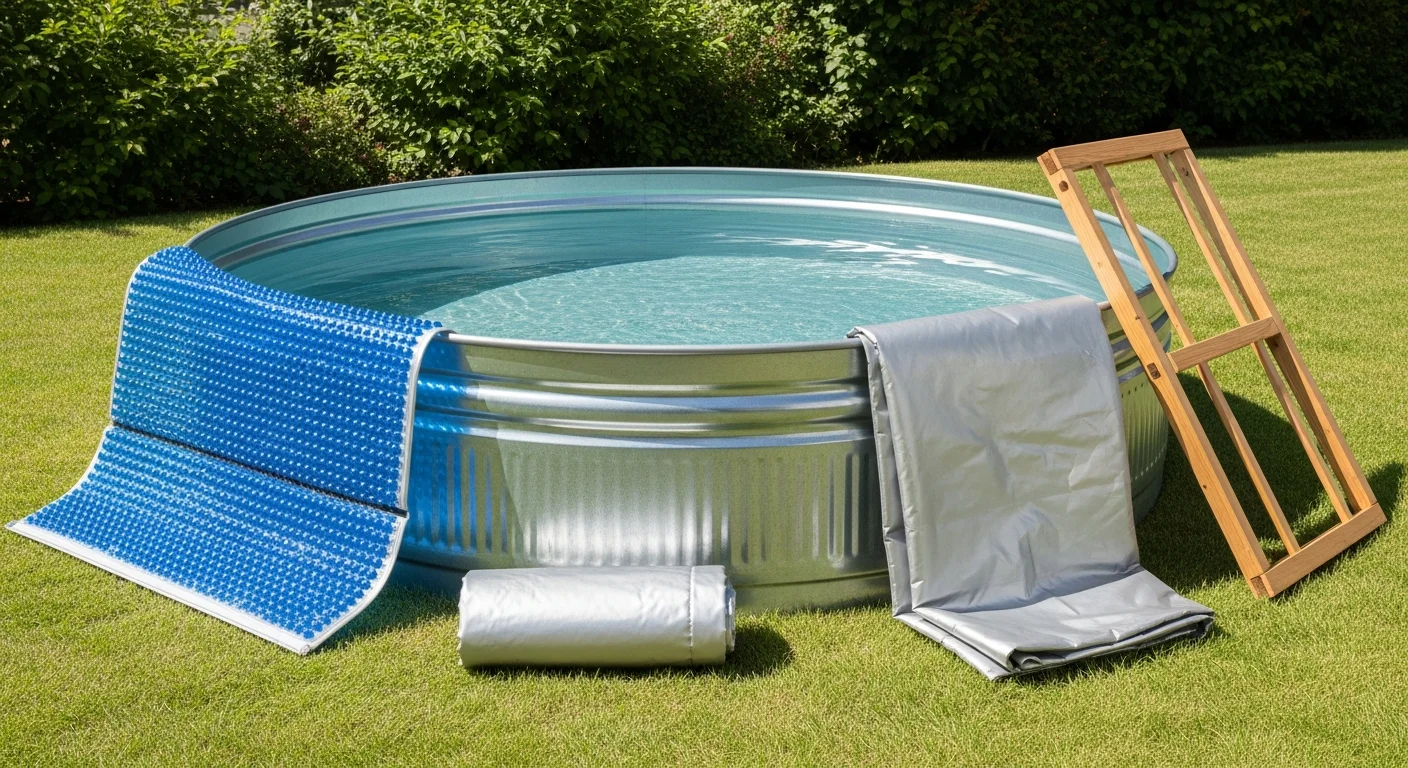
16+ Creative Stock Tank Pool Cover Ideas
Stock tank pools have transformed backyard relaxation, offering an affordable alternative to traditional swimming pools. However, maintaining these charming galvanized oases requires proper protection from debris, temperature fluctuations, and seasonal weather. Finding the right cover solution can extend your pool’s usability, reduce maintenance time, and protect your investment throughout the year.
Whether you’re looking for budget-friendly DIY options or premium commercial solutions, the right stock tank pool cover can make all the difference in your backyard experience. From simple tarps to sophisticated rolling systems, each cover type offers unique benefits tailored to different needs and climates. This comprehensive guide explores creative and practical stock tank pool cover ideas that will help you keep your stock tank pool clean, safe, and ready for use whenever the mood strikes.
Soft Waterproof Oxford Fabric Covers

Oxford fabric covers represent one of the most popular commercial options for stock tank pool protection. These covers typically feature heavy-duty 210D to 420D Oxford cloth construction with waterproof coatings that effectively shield your pool from rain, leaves, and debris. The material provides excellent durability while remaining lightweight enough for one person to manage.
Most Oxford fabric covers include drawstring mechanisms and reinforced edges that secure tightly around the tank rim. The better models incorporate windproof straps and ground stakes to prevent the cover from blowing away during storms. These stock tank pool covers come in standard sizes matching common stock tank dimensions of six, eight, and ten feet in diameter.
The UV-resistant properties of quality Oxford fabric prevent fading and deterioration from sun exposure. Many stock tank pool covers feature reflective silver coatings on the underside that help regulate water temperature. These versatile covers work equally well for summer debris protection and winter storage, making them a practical year-round investment.
DIY Pool Noodle Safety Covers

The pool noodle cover represents one of the most creative and safety-conscious DIY solutions available. This innovative design involves threading pool noodles through a mesh or netting material to create a floating cover that sits inside the tank. The noodles provide buoyancy while the mesh catches debris and can support substantial weight.
Constructors typically use heavy-duty netting or screen material cut to fit the tank diameter. Pool noodles are threaded through the mesh in a grid pattern, creating a sturdy floating barrier. The finished product fits snugly inside the tank rim and can hold enough weight to prevent accidental submersion if a child or pet walks onto it.
This design offers peace of mind for families with young children while effectively keeping leaves and larger debris out of the water. The colorful noodles add a playful aesthetic element, and individual damaged noodles can be easily replaced without rebuilding the entire cover. However, this solution works best for debris management rather than complete weather protection.
Solar Heating Covers
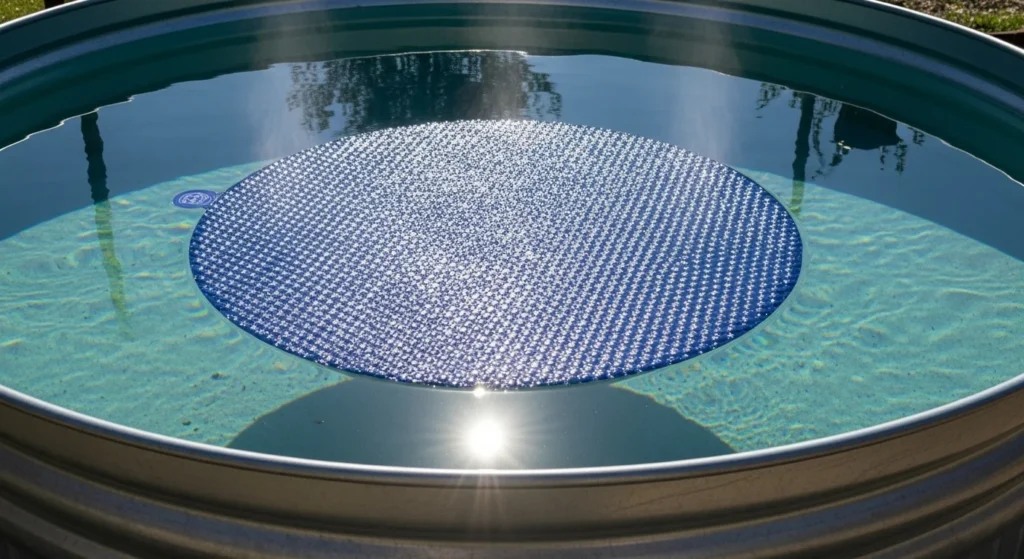
Solar covers serve dual purposes by protecting your pool while naturally heating the water through sunlight absorption. These covers typically feature bubble wrap-like construction with air pockets that trap heat and transfer it to the water below. The dark material absorbs solar energy throughout the day, potentially raising water temperature by several degrees.
Round solar covers designed for above-ground pools work perfectly for stock tanks. The standard eight-foot round size fits most common stock tank dimensions, though you may need to trim larger covers to fit smaller tanks. The material floats directly on the water surface, creating an insulating barrier that also reduces water evaporation.
Many pool owners report significant temperature increases when using solar covers, especially in sunny climates. The covers work particularly well during shoulder seasons when outdoor temperatures are moderate but water remains chilly. Some solar covers include reinforced edges and grommets for securing during windy conditions, though most simply float freely on the water surface.
Rolling Stock Tank Pool Cover Systems
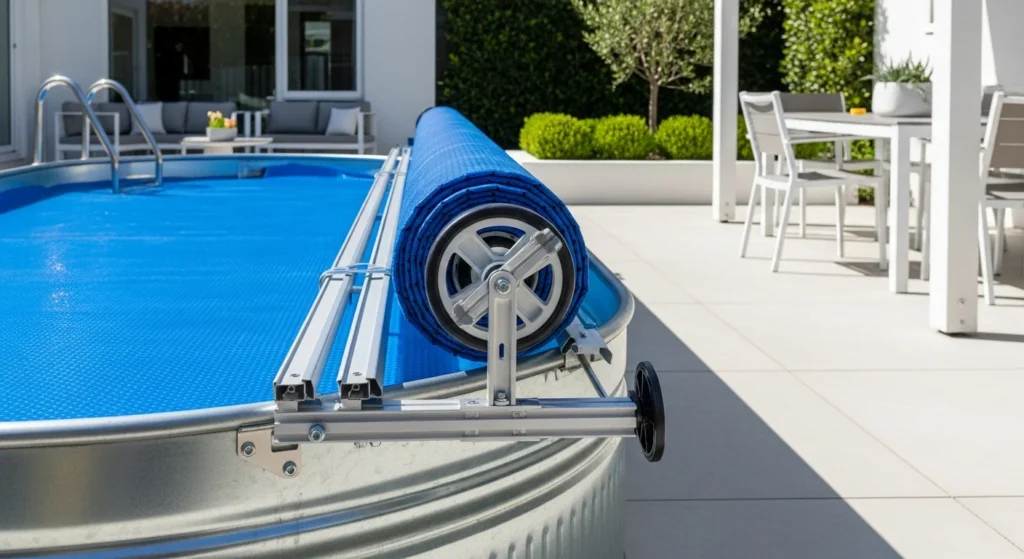
Rolling cover systems bring convenience and durability to stock tank pool maintenance. These professional-grade solutions feature rigid covers mounted on wheeled frames that allow you to easily roll the cover on and off the pool. The typical setup includes sturdy PVC or aluminum tracks positioned on opposite sides of the tank.
The cover itself usually consists of reinforced vinyl or composite materials designed to withstand regular use and weather exposure. Many systems incorporate solar heating properties into the cover material, combining protection with temperature management. The rolling mechanism makes cover deployment quick and effortless, even for one person.
Installation requires mounting the track system around your stock tank perimeter, which works best for permanent pool installations. The investment in a rolling system pays dividends through years of reliable service and significantly reduced effort in daily pool management. These systems particularly benefit pool owners who use their tanks frequently throughout the swimming season.
Inflatable Foldable Covers

The latest innovation in stock tank pool covers combines inflatable technology with foldable design for ultimate convenience. These stock tank pool covers feature an air-filled chamber that provides insulation and structural support, similar to hot tub covers. Built-in handles allow for easy lifting from one end, letting you access the pool without completely removing the cover.
The foldable design eliminates the storage challenges associated with traditional covers. When not in use, these covers fold down to a compact size that stores easily against a fence or in a shed. The inflatable structure creates an air pocket above the water that helps retain heat while keeping debris out.
Most inflatable covers come with included pumps for quick setup and inflation. Straps and D-rings provide secure attachment to prevent wind displacement. The custom fit ensures coverage for standard stock tank sizes, and the design allows partial access, letting you dip in without full cover removal on cooler days.
Heavy-Duty Tarp Solutions
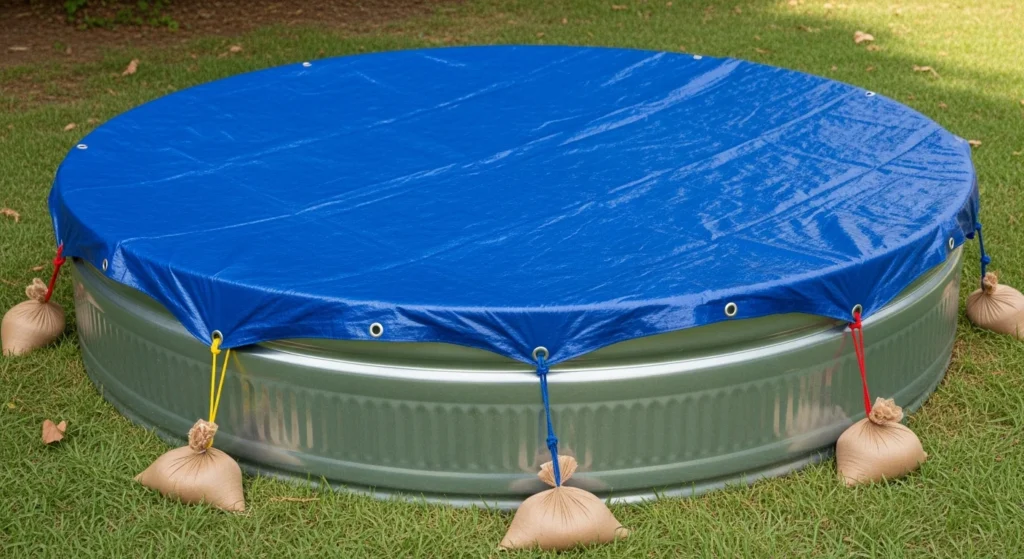
Traditional tarps offer the most budget-friendly cover option for stock tank pools. While basic, a properly secured tarp provides adequate protection from debris and weather when chosen and installed correctly. Look for heavy-duty polyethylene or vinyl tarps with reinforced grommets and UV-resistant coatings.
The key to tarp success lies in proper sizing and securing methods. Choose a tarp that extends at least two feet beyond your tank diameter on all sides. Use bungee cords, ratchet straps, or weighted bags to secure the tarp edges, creating enough tension to prevent water pooling but avoiding excessive stress on the tank rim.
For improved performance, some pool owners create a support structure underneath the tarp using PVC pipe or foam blocks. This prevents water accumulation and provides better debris protection. While tarps lack the refined appearance and convenience of specialized covers, they effectively protect your pool during extended periods of non-use or winter months.
Custom-Fitted Furniture Covers

Round outdoor furniture covers designed for patio tables provide surprisingly effective stock tank pool protection. These stock tank pool covers often feature better construction than generic tarps, with elastic hems, drawstring closures, and weather-resistant fabrics. The key advantage lies in their designed fit for circular objects.
An eight-foot round furniture cover fits perfectly over standard eight-foot stock tanks, providing a snug, professional-looking cover solution. The elastic hem creates a secure seal that stays in place during moderate winds. Many furniture covers feature ventilation panels that prevent moisture buildup and mildew growth underneath.
The material quality typically exceeds basic tarps, with water-resistant coatings and fade-resistant fabrics that maintain appearance over multiple seasons. While not specifically designed for pool use, these stock tank pool covers often outperform cheaper pool-specific options at similar price points. The main limitation involves weight support, as furniture covers are not designed to handle significant loads.
Insulated Hard Covers

Hard insulated covers bring hot tub technology to stock tank pools, offering superior temperature retention and structural strength. These stock tank pool covers typically consist of foam insulation sandwiched between rigid outer shells, creating a walk-on surface while maintaining excellent thermal properties. The construction resembles traditional spa covers adapted for stock tank dimensions.
Installation often involves custom fabrication or modification of existing spa covers to match tank diameter. The covers usually split into two or more hinged sections for easier removal and replacement. Integrated handles and lighter materials make handling manageable despite the rigid construction.
The insulation properties prove particularly valuable for extended season use or cold plunge applications. Hard covers can maintain water temperature differences of twenty degrees or more compared to uncovered tanks. The solid surface also provides complete debris protection and enhanced safety features. However, the weight and storage requirements make these stock tank pool covers better suited for dedicated installations.
Wooden Frame and Screen Covers
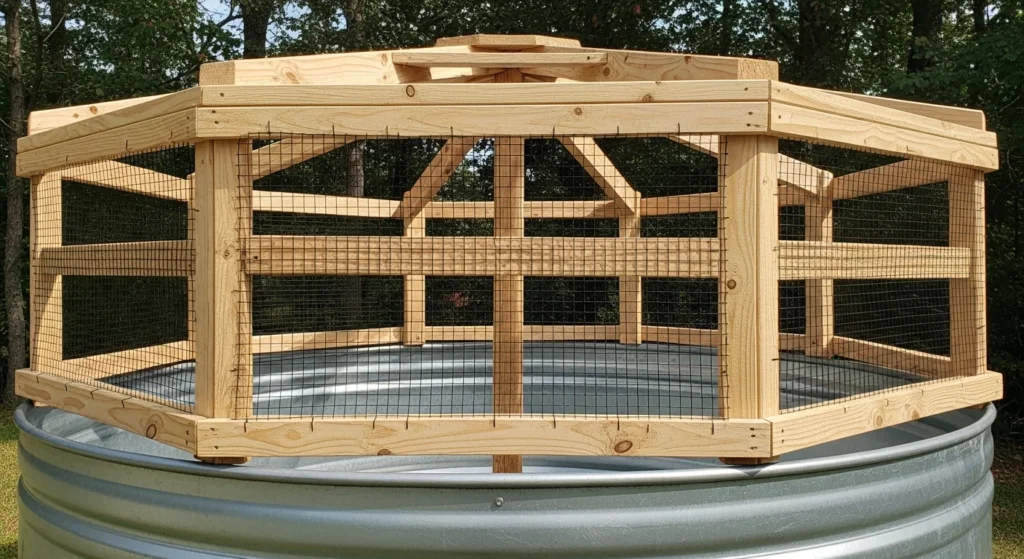
Building a wooden frame cover with screening material offers excellent protection while maintaining good visibility and airflow. This DIY approach involves constructing a simple frame from pressure-treated lumber that sits on or slightly inside the tank rim. Hardware cloth, screen wire, or heavy-duty mesh attaches to the frame to keep out debris and pests.
The frame typically consists of dimensional lumber arranged in a circular or octagonal pattern matching the tank diameter. Cross-bracing provides structural support, and the screening material staples or screws to the frame perimeter. Some builders add legs to elevate the frame above water level, creating an air gap that improves debris management.
This design excels for areas with heavy tree coverage or pest concerns. The screening prevents leaves, insects, and small animals from entering the pool while allowing rainwater drainage. The wooden frame provides a stable platform that can support some weight, though it should not be considered a safety barrier. Treatments or sealants protect the wood from moisture damage, extending the cover’s lifespan.
Clear Vinyl Winter Covers
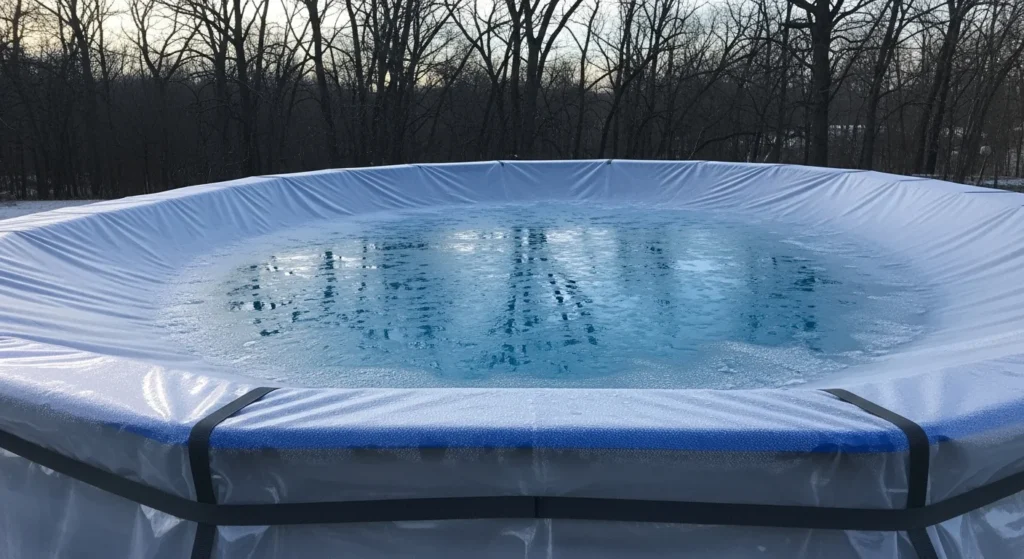
Clear vinyl covers provide winter protection while allowing visual monitoring of water conditions beneath. These covers work similarly to greenhouse plastic, creating a transparent barrier that blocks debris while permitting light penetration. The clear material helps prevent algae growth concerns associated with completely opaque covers.
Installation typically involves stretching the vinyl across the tank and securing with straps or weighted edges. The transparency allows you to check water levels and condition without removing the cover, which proves especially useful during freeze-thaw cycles. The material should include UV stabilizers to prevent degradation from sun exposure.
Clear vinyl covers work best in climates with moderate winters where complete pool draining is unnecessary. The cover prevents debris accumulation while the transparency facilitates visual inspection. Some pool owners combine clear vinyl with foam insulation boards for enhanced temperature protection while maintaining visibility.
Magnetic-Edge Soft Covers

Innovative soft covers incorporating magnetic closures simplify the attachment process while providing secure coverage. These covers feature magnets embedded around the perimeter that attach to the galvanized steel tank, creating a simple yet effective securing mechanism. The magnetic system eliminates the need for straps, drawstrings, or complicated fastening methods.
The cover material typically consists of waterproof oxford fabric or vinyl with reinforced edges housing the magnetic strips. The magnets provide sufficient holding power for moderate wind conditions, though additional tie-downs may be necessary in high-wind areas. The magnetic edge creates a relatively tight seal that prevents most debris entry.
The primary advantage lies in ease of use, as placing and removing the cover requires minimal effort. Simply drape the cover over the tank and allow the magnets to grip the rim. This convenience encourages regular cover use, improving overall pool cleanliness. The magnetic system works exclusively with galvanized steel tanks, as the magnets will not adhere to poly stock tanks.
Retractable Shade Sail Covers
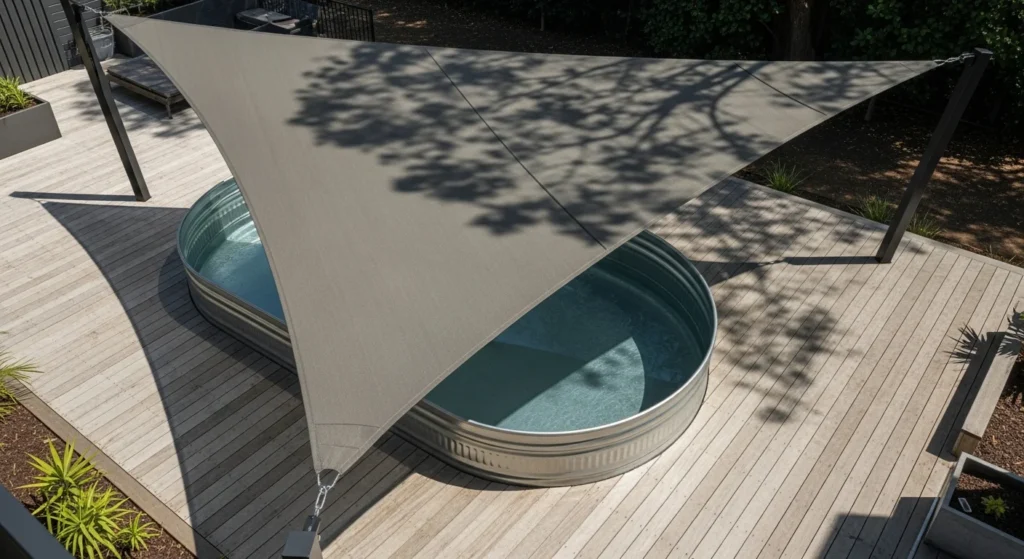
Shade sail systems adapted for pool coverage provide both sun protection and debris management. This approach involves installing posts or mounting points around the pool area and stretching triangular or rectangular shade fabric over the tank. The fabric can be tensioned and released as needed, offering flexible coverage options.
The installation requires permanent or semi-permanent post anchors positioned to allow the shade sail to extend completely over the pool. Quality marine-grade shade cloth provides UV resistance and water permeability, allowing rain to pass through while blocking leaves and larger debris. The angled installation promotes water runoff rather than pooling.
This solution works particularly well for pools in sunny locations where both temperature management and debris control are priorities. The shade sail reduces direct sun exposure during peak hours while the fabric catches falling leaves and debris. The retractable nature allows you to enjoy full sun when desired while maintaining protection capability. Installation complexity and cost exceed simple stock tank pool covers, but the aesthetic appeal and functionality justify the investment for many pool owners.
Combination Hot Tub Covers
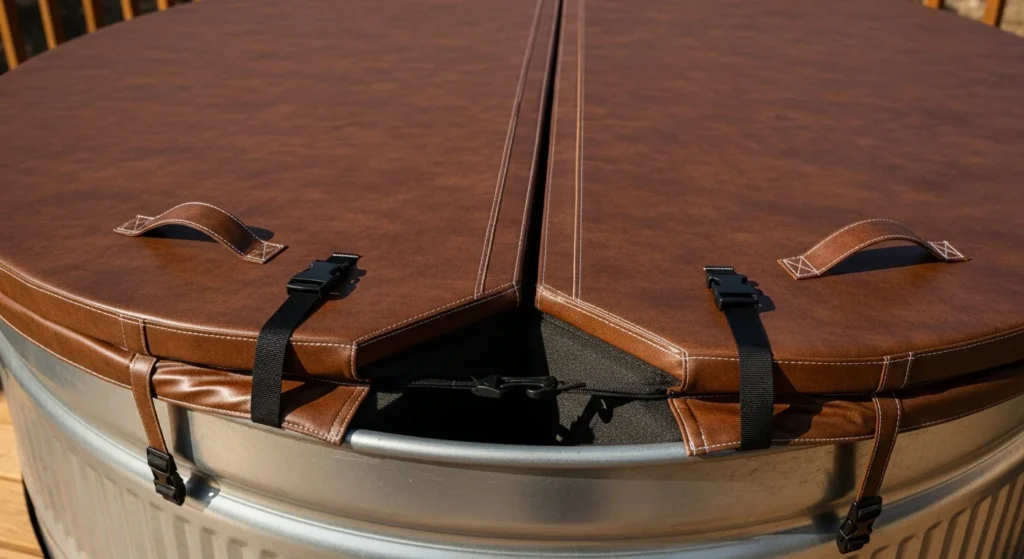
Standard hot tub covers can be adapted to fit stock tank pools, providing excellent insulation and weather protection. These covers feature foam core construction with vinyl exteriors designed to withstand harsh weather while maintaining water temperature. Finding covers that match stock tank dimensions may require custom orders or creative modifications.
The typical hot tub cover consists of tapered foam panels hinged in the middle for easy removal. Locking straps secure the cover and childproof locks add safety features. The foam insulation excels at temperature retention, making these covers ideal for pools used as cold plunge tubs or heated soaking tanks.
Adapting hot tub covers requires careful measurement and potentially cutting foam panels to achieve proper fit. The weight necessitates sturdy tank placement and potentially additional support structures. While more expensive than basic covers, the superior insulation and durability make hot tub covers worthwhile for year-round pool enthusiasts.
PVC Pipe Frame Covers
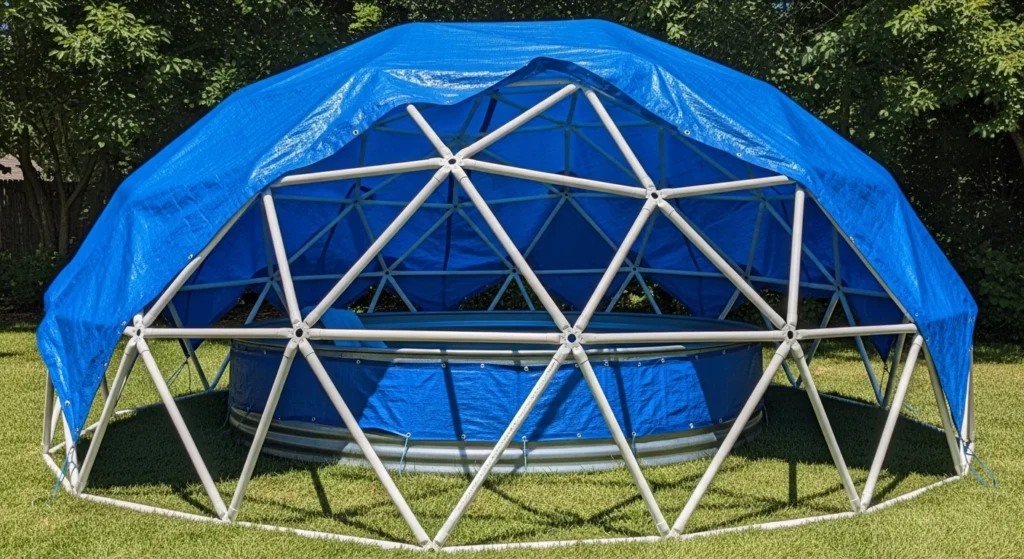
Building a PVC pipe frame creates an affordable and customizable cover support structure. This approach involves constructing a lightweight frame that sits atop the tank, over which various covering materials can be draped. The PVC framework prevents cover sagging and water pooling while providing structural support.
The frame design typically features a circular or octagonal perimeter with cross-members creating a dome or peaked shape. PVC connectors allow for tool-free assembly and disassembly, facilitating seasonal storage. The frame can support tarps, vinyl sheeting, or fabric covers, providing flexibility in covering material choice.
Advanced designs incorporate multiple height levels or adjustable legs to create specific drainage patterns. Some builders add screening material directly to the PVC frame for permanent debris protection. The lightweight construction makes installation and removal manageable for one person, while the durable PVC withstands outdoor conditions for multiple seasons.
Automatic Pool Cover Adaptations
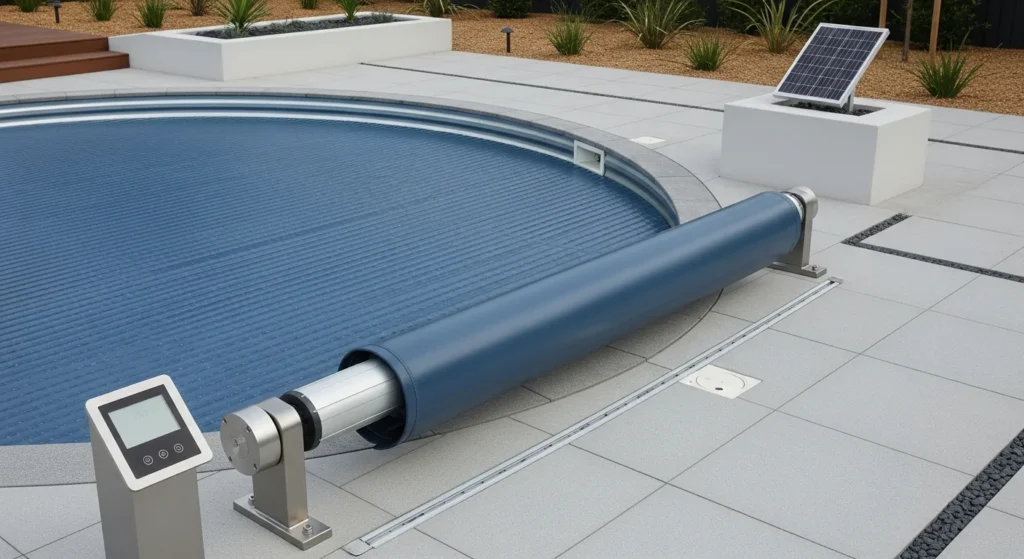
Automatic pool cover mechanisms designed for larger pools can be scaled down and adapted for stock tank applications. These systems involve motorized reels that deploy and retract the cover at the push of a button. While complex and expensive, automated systems provide unmatched convenience for frequent pool users.
The installation requires mounting the reel mechanism at one end of the pool area with tracks or guides positioned along the tank edges. The cover material winds onto the reel when not in use and extends across the pool surface when deployed. Solar panels can power the motor, eliminating electrical wiring requirements.
The sophistication of automatic systems makes them viable primarily for permanent, high-use installations. The investment includes not only the mechanism but also professional installation or significant DIY expertise. However, the effortless operation encourages consistent cover use, maximizing the benefits of pool protection.
Weighted Drawstring Covers
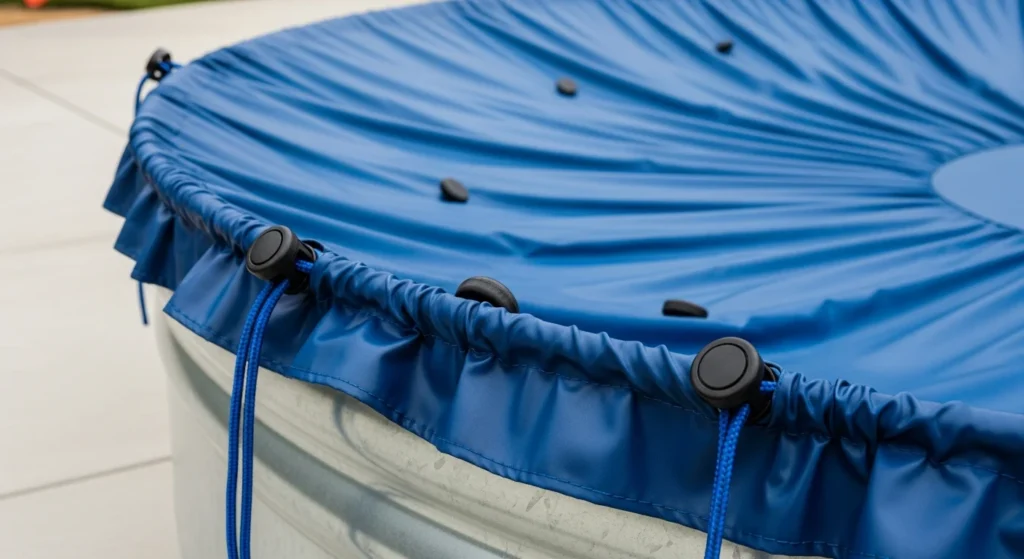
Drawstring covers with weighted edges provide secure coverage without requiring ground anchors or stakes. These covers feature heavy-duty cording threaded through reinforced hems, allowing the cover to cinch tightly around the tank perimeter. Small weights sewn into the hem create downward pressure that holds the cover in place.
The typical design includes multiple adjustment points around the circumference, allowing customization of the fit and tension. The drawstring mechanism accommodates slight variations in tank size and shape, providing versatility across different installations. Quality versions include locking cord mechanisms that maintain tension once adjusted.
Weighted drawstring covers work particularly well on concrete or paved surfaces where stake installation is impractical. The weights provide sufficient holding power for moderate wind conditions, though extreme weather may require additional securing methods. The combination of drawstring adjustment and weighted edges creates a balanced system that is both secure and easy to use.
Conclusion
Selecting the right stock tank pool cover depends on your specific needs, climate, budget, and how frequently you use your pool. Simple solutions like tarps and furniture covers provide basic protection at minimal cost, while specialized options such as solar covers and rolling systems offer enhanced functionality and convenience. DIY enthusiasts can create effective custom solutions using pool noodles, wooden frames, or PVC pipe structures that match their exact requirements.
Consider your primary concerns when choosing a cover. If debris management is your main goal, mesh screens and basic waterproof covers suffice. For temperature retention and extended season use, invest in solar covers or insulated hard covers. Families with young children should prioritize safety features like pool noodle covers or rigid walk-on surfaces.
The best approach often involves combining multiple stock tank pool cover types for different seasons and situations. A lightweight daily-use cover for quick debris protection paired with a heavy-duty winter cover creates a comprehensive protection system. Remember that consistent cover use, regardless of type, dramatically reduces maintenance time and extends your pool’s life. With the right cover solution, your stock tank pool will remain clean, safe, and ready for relaxation whenever you need it.
Frequently Asked Questions
Can I use a regular tarp as a stock tank pool cover?
Yes, heavy-duty tarps work effectively as pool covers when properly secured. Choose UV-resistant polyethylene or vinyl tarps with reinforced grommets. Secure the edges with bungee cords or straps, ensuring enough tension to prevent water pooling but not so much that it stresses the tank. For best results, select a tarp that extends beyond the tank diameter and consider adding support structures underneath to prevent sagging.
Do solar covers really heat stock tank pools?
Solar covers can increase water temperature by five to fifteen degrees depending on sun exposure and climate. The bubble material absorbs solar energy and transfers heat to the water while reducing evaporation. Dark-colored covers provide better heating than clear versions. Solar covers work most effectively in sunny locations during spring and fall when air temperatures are moderate but water remains cool.
What is the safest cover option for homes with children?
The DIY pool noodle cover provides the best safety features for families with young children. This floating design sits inside the tank and can support substantial weight, preventing accidental submersion. Rigid hard covers also offer safety benefits when properly secured. However, no cover should replace adult supervision, and all covers should be completely removed before allowing swimming.
How do I prevent my cover from blowing away?
Secure covers using multiple methods including drawstring closures, weighted edges, ground stakes, or bungee cords attached to heavy objects. For lightweight covers, add sandbags or water weights around the perimeter. Magnetic-edge covers work well for galvanized tanks in moderate wind areas. In high-wind locations, invest in covers with reinforced attachment systems or install permanent anchor points around the pool.
Should I remove my stock tank pool cover in winter?
This depends on your climate and winterization method. In areas with harsh freezes, many owners drain the pool completely and flip the tank upside down or use a protective tarp. In moderate climates, leaving some water with a secure cover prevents debris accumulation. If keeping water, ensure the cover allows for ice expansion and prevents complete sealing that could cause tank damage.




3 Comments