
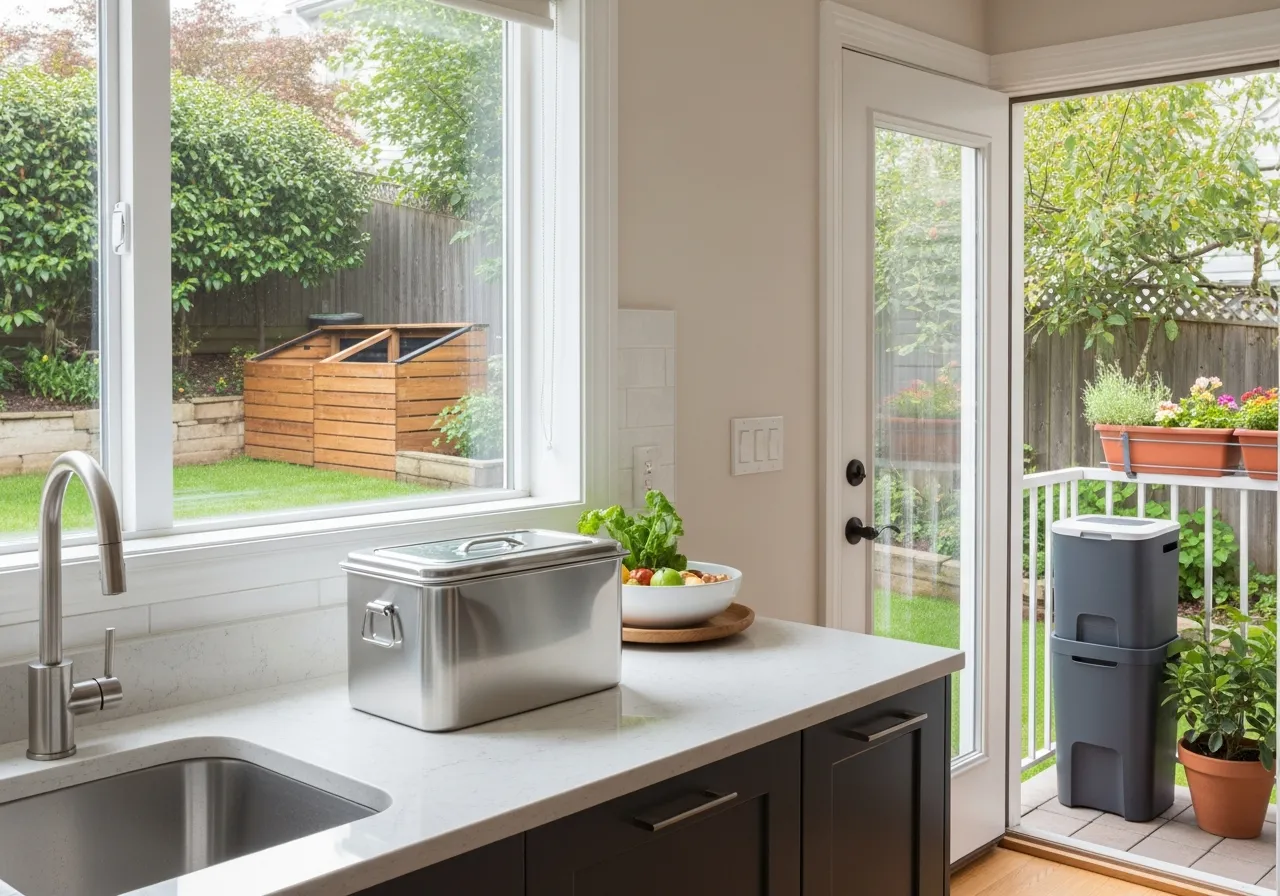
19+ Clever Compost Storage Ideas for Your Home
Composting transforms kitchen scraps and yard waste into nutrient-rich soil amendment, but finding the right storage solution can make or break your composting success. Whether you live in a studio apartment or manage acres of land, proper compost storage keeps your organic waste organized, odor-free, and ready for decomposition. This comprehensive guide explores practical and innovative compost storage ideas that fit every lifestyle, space constraint, and budget.
The key to successful composting starts long before materials break down into finished compost. How you collect, store, and manage organic waste directly impacts odor control, pest prevention, and overall convenience. Many aspiring composters abandon their efforts simply because they lack appropriate storage solutions. The good news is that effective compost storage does not require expensive equipment or complicated systems. With the right approach, you can integrate composting seamlessly into your daily routine while maintaining a clean, pleasant living environment.
Kitchen Counter Solutions
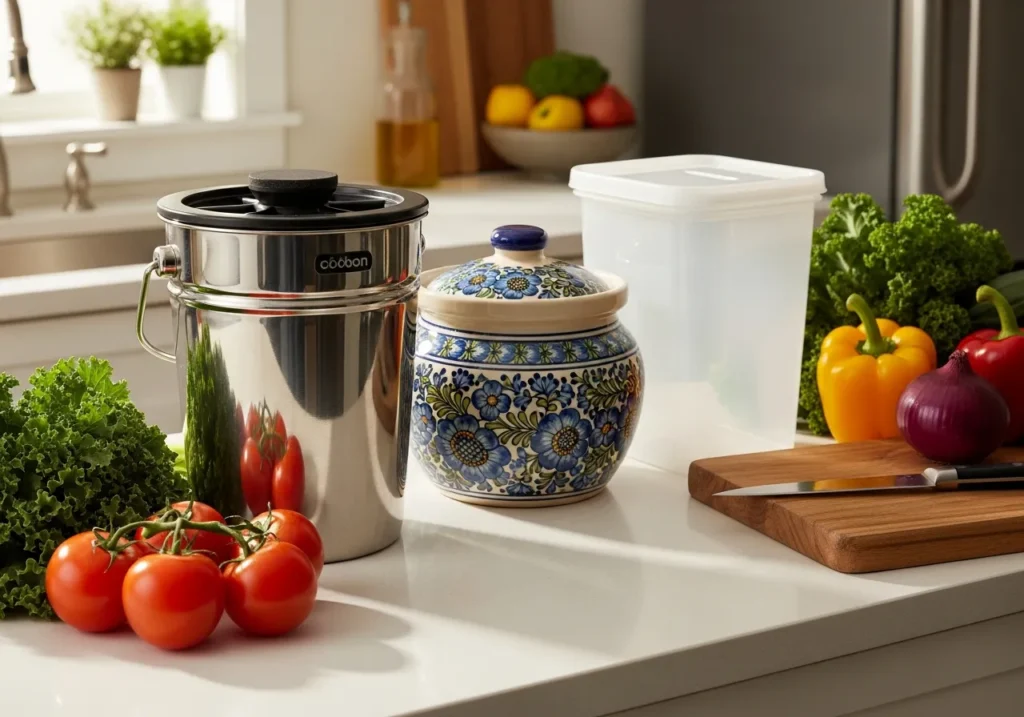
The kitchen generates most household compost materials, making countertop storage your first line of organization. A dedicated container near your food preparation area encourages consistent composting habits and reduces trips to outdoor bins.
Stainless steel compost pails offer durability and aesthetic appeal for modern kitchens. These containers typically hold between one and two gallons, providing enough capacity for several days of scraps without becoming unwieldy. Look for models with carbon filters built into the lid, which absorb odors and keep your kitchen smelling fresh. The sleek finish complements most kitchen decor while remaining easy to clean and maintain.
Ceramic compost crocks bring vintage charm to traditional kitchen designs. These containers often feature attractive patterns or solid colors that coordinate with existing dishes and decor. The natural weight of ceramic keeps the container stable during use, and the material does not absorb odors over time. Many ceramic options include replaceable charcoal filters for enhanced odor control.
For minimalist preferences, simple plastic containers with tight-sealing lids work perfectly well. Choose food-grade plastic that resists staining and cracking. Some budget-friendly options include handles for easy transport and smooth interior surfaces that release contents cleanly.
Under Sink Storage Systems
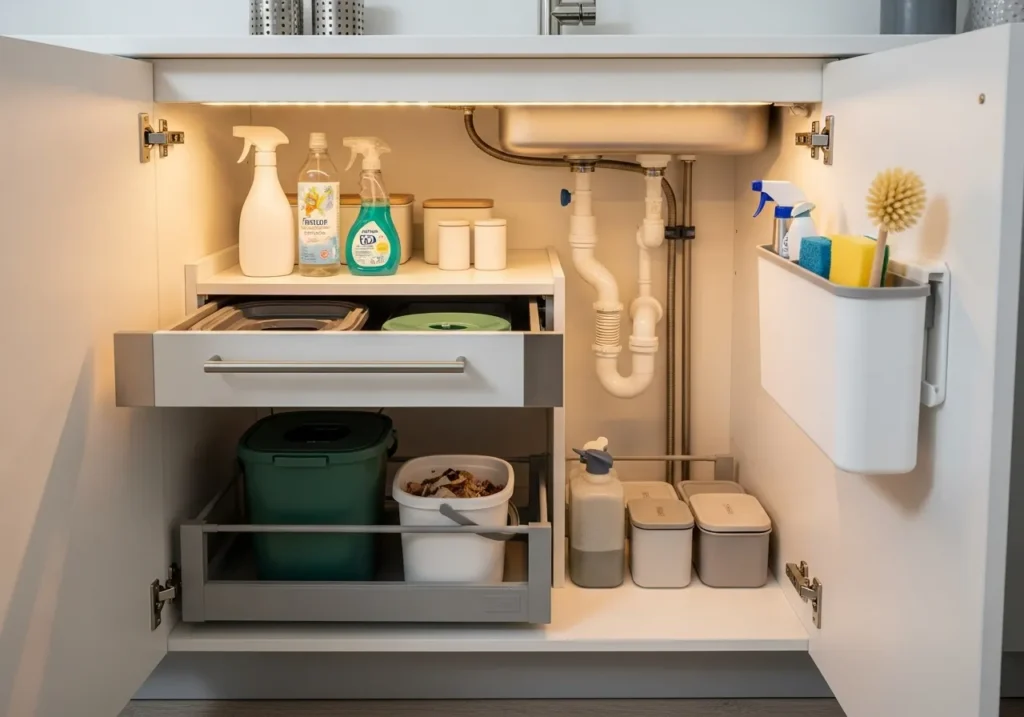
Maximizing vertical space under your kitchen sink creates an out-of-sight composting station that keeps counters clear. This location works particularly well for households that generate large volumes of food scraps daily.
Pull-out drawer systems integrate compost collection into existing cabinetry. These sliding mechanisms mount to cabinet doors or frames, allowing you to scrape scraps directly into the bin while preparing meals. When closed, the system disappears completely, maintaining a streamlined kitchen appearance. Look for models with removable inner buckets for easy emptying and cleaning.
Hanging door-mounted containers attach to the inside of cabinet doors, utilizing otherwise wasted space. These compact solutions work well in smaller kitchens where floor space is limited. Select designs with secure mounting hardware that can support the weight of full containers without sagging or pulling away from the door.
Dual-bin configurations allow you to separate different types of compostable materials or rotate between bins while one empties. This system prevents overflow and maintains continuous composting capacity without interruption.
Freezer Storage Method
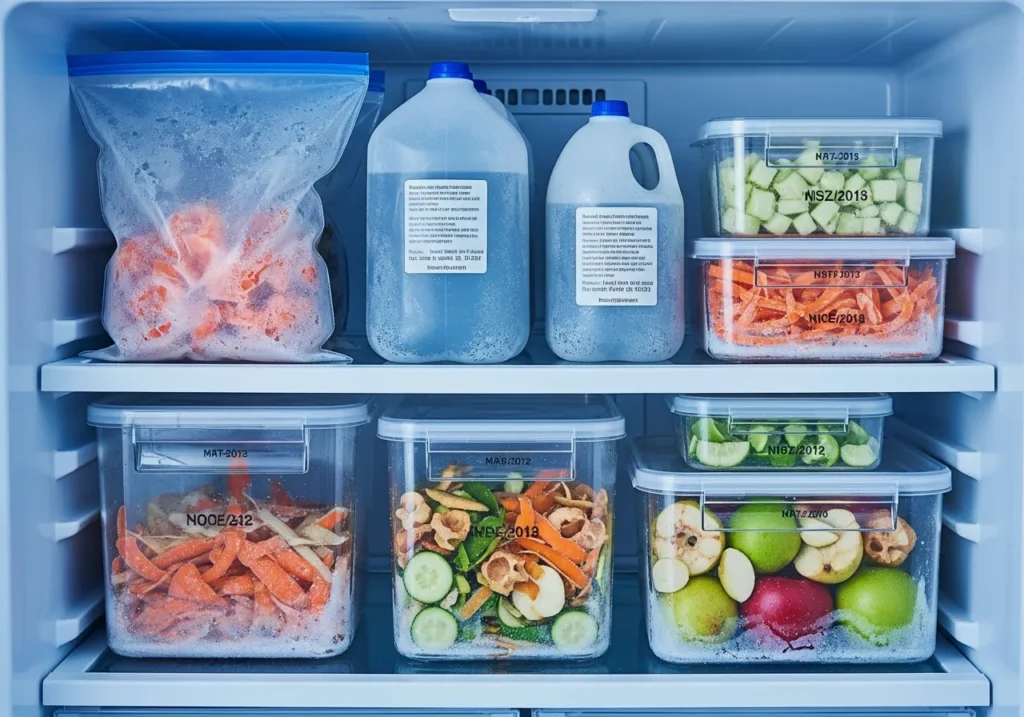
Storing food scraps in the freezer eliminates odor concerns entirely while preserving organic materials until you are ready to compost them. This method works exceptionally well for apartment dwellers without immediate access to outdoor compost bins.
Designate a specific freezer container or bag for compost materials. Gallon-size freezer bags work perfectly, taking up minimal space while holding several days worth of scraps. As you prepare meals, add vegetable peelings, coffee grounds, and fruit cores directly to the frozen collection. The cold temperature halts decomposition completely, preventing any smell or attracting pests.
When the container fills or when convenient, transfer the frozen contents to your outdoor compost pile or community composting program. The freezing process actually benefits decomposition by breaking down cell walls, helping materials decompose faster once thawed and added to active compost.
For those with chest freezers or extra freezer space, larger containers allow you to accumulate compost materials over weeks or months. This approach proves especially valuable during winter when outdoor composting slows or when you want to stockpile carbon-rich or nitrogen-rich materials for balanced additions to your pile.
Outdoor Bin Configurations
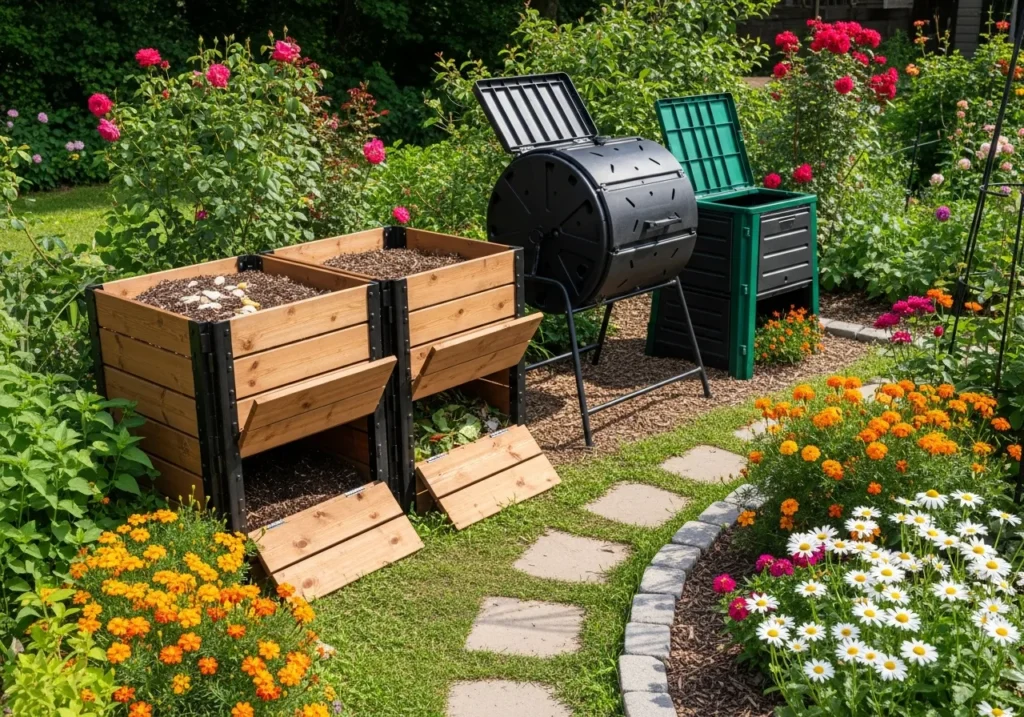
Once materials leave your kitchen, outdoor storage systems handle the bulk composting process. The right outdoor setup depends on available space, climate, and the volume of material you generate.
Traditional compost bins constructed from wood, wire mesh, or recycled plastic provide simple, effective outdoor storage. Three-bin systems allow you to rotate compost through stages: fresh materials in the first bin, actively decomposing material in the second, and finished compost in the third. This progression ensures a continuous supply of ready-to-use compost while efficiently processing new additions.
Tumbler composters offer enclosed, rotating drums that accelerate decomposition through regular turning. These elevated units keep compost off the ground, deterring pests while making turning physically easier than pitchfork methods. The sealed design also controls moisture levels and retains heat, speeding the composting process. Tumbler systems work particularly well for small to medium-sized yards where space efficiency and quick results are priorities.
Enclosed bin systems with multiple chambers provide rodent-proof storage while maintaining proper airflow. Look for designs with removable panels for easy harvesting of finished compost and adjustable vents to regulate oxygen and moisture. The enclosed structure also contains odors more effectively than open piles, making these systems suitable for suburban settings with close neighbors.
Garage and Shed Storage
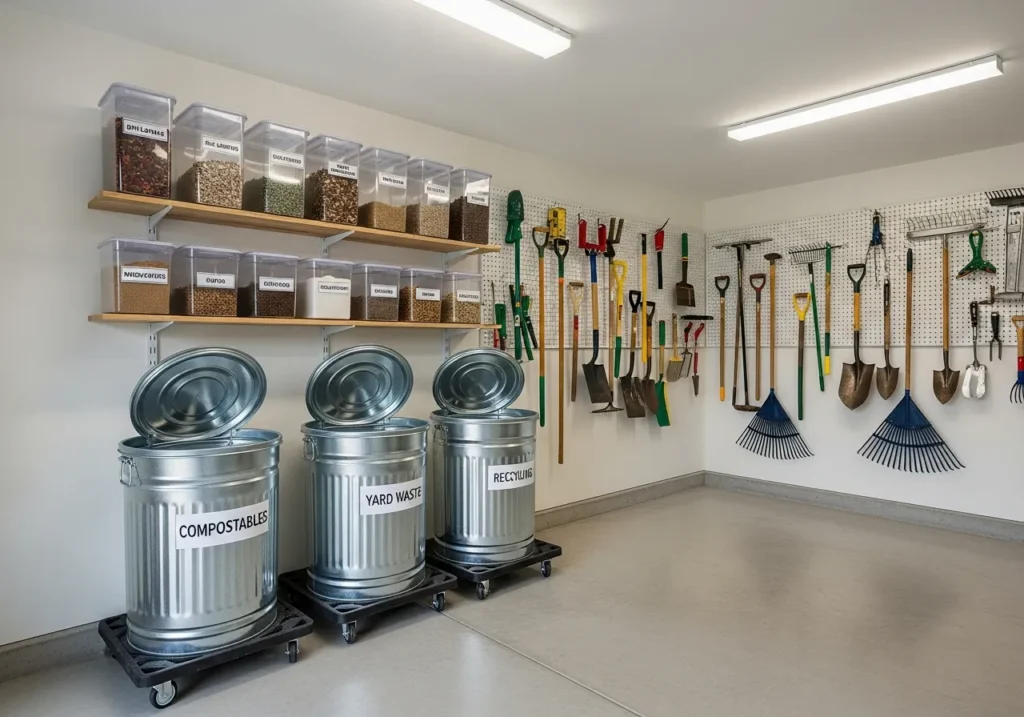
Covered storage areas protect compost containers from weather while keeping them accessible year-round. Garages and sheds serve as transitional spaces between kitchen collection and outdoor processing.
Dedicated compost staging areas in garages allow you to accumulate larger quantities before transferring to outdoor bins. Use sturdy containers with secure lids to prevent pest access. Metal trash cans work well, providing durability and tight seals while holding substantial volumes. Position containers on wheeled platforms for easy movement when full.
Wall-mounted systems in sheds keep floor space clear while organizing different compost components. Install shelving units to separate green materials, brown materials, and additives like lime or compost accelerators. Clear labeling ensures family members add materials to appropriate containers.
Climate-controlled options matter in extreme temperature regions. Insulated containers or heated spaces prevent materials from freezing solid during winter, maintaining some level of decomposition even in cold months. Conversely, shaded garage storage protects containers from excessive summer heat that can dry out materials or create unpleasant odors.
Balcony and Patio Solutions
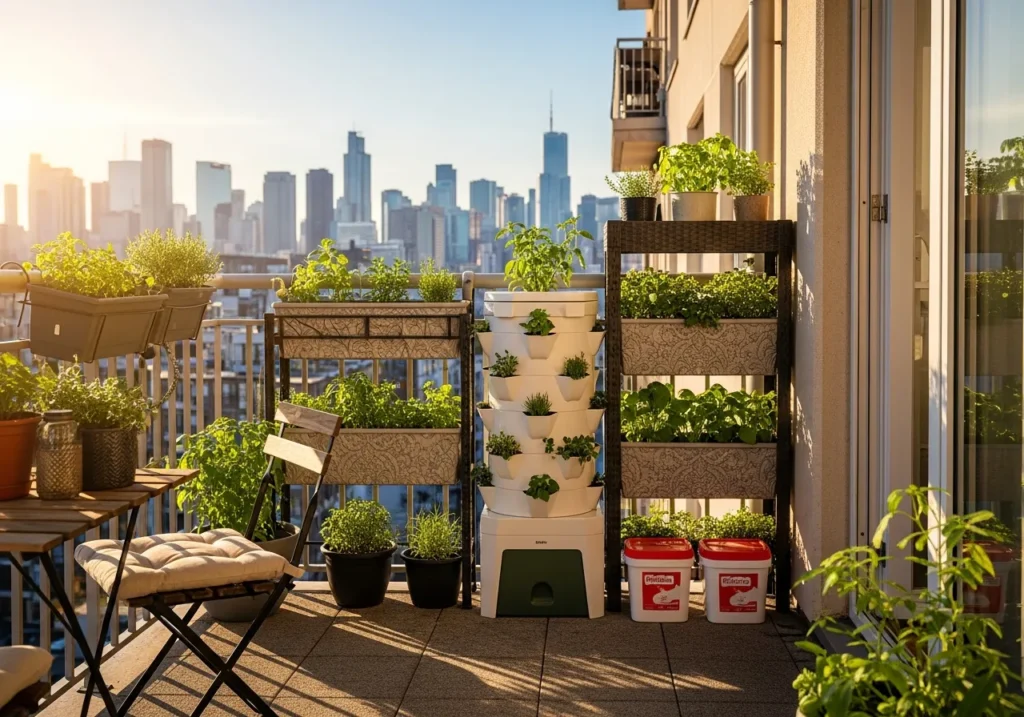
Urban and apartment dwellers can successfully compost using compact systems designed for outdoor living spaces with limited square footage.
Balcony composters are specifically engineered for small spaces, featuring vertical designs that maximize capacity while minimizing footprint. Stackable tray systems allow worms or microorganisms to process materials in layers, with finished compost migrating to lower levels. These self-contained units prevent leaching and control odors, making them neighbor-friendly.
Bokashi bucket systems use fermentation instead of traditional decomposition, allowing you to compost meat, dairy, and other materials typically excluded from standard composting. The anaerobic process occurs in sealed buckets, eliminating odor concerns entirely. Two-bucket rotations ensure continuous processing while one bucket ferments. After fermentation, bury the pre-composted material in soil or add it to traditional compost bins for final decomposition.
Decorative planter combinations integrate composting with container gardening. Use attractive planters that complement your outdoor decor, dedicating one to vermicomposting or small-scale composting while others hold flowers or vegetables. This approach makes functional composting systems visually appealing additions to outdoor living areas. To see some more compost bin ideas for your garden visit BillyOh.
Worm Bin Variations
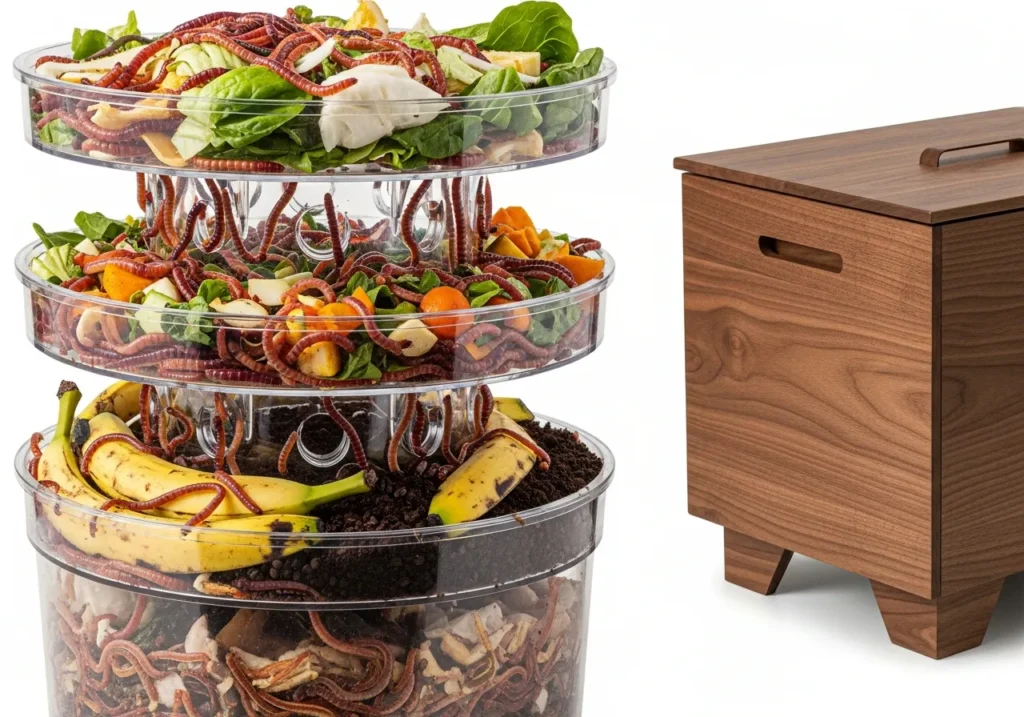
Vermicomposting employs worms to process organic waste, creating nutrient-dense castings while requiring minimal space. Worm bins adapt to various storage locations and aesthetic preferences.
Stackable worm towers allow vertical expansion as your worm population grows. Start with a single tray and add layers as needed, with worms migrating upward through the system as they consume materials in lower trays. Finished castings collect in bottom trays for easy harvesting. These systems fit comfortably in closets, under sinks, or in corner spaces.
Furniture-style worm bins disguise composting systems as attractive side tables, benches, or storage ottomans. These clever designs let you keep worm bins in living areas without announcing their purpose to guests. Well-designed units maintain proper ventilation while containing any moisture, functioning as both practical composting tools and useful furniture pieces.
Outdoor worm bed systems work well in mild climates, allowing worms to process materials directly in garden beds or designated worm growing areas. Protect these systems with shade cloth during hot weather and insulation during cold snaps. The worms naturally regulate their population based on food availability and environmental conditions.
DIY Repurposed Containers
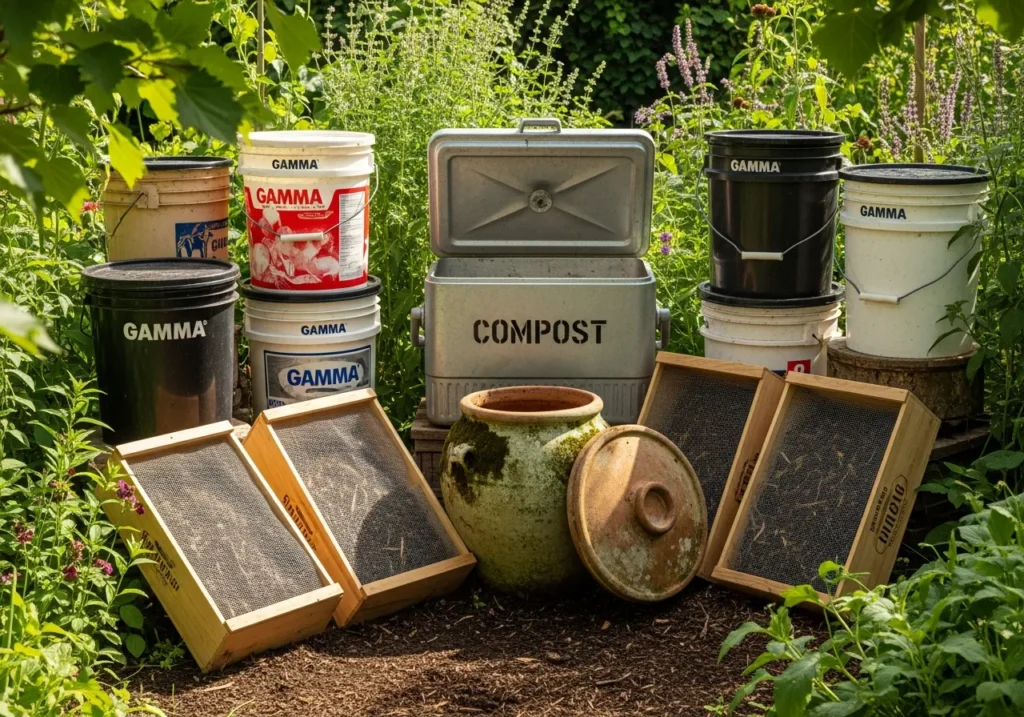
Creative reuse of existing items provides cost-effective compost storage while reducing waste. Many household objects transform into functional composting containers with minimal modification.
Five-gallon buckets with gamma seal lids create excellent kitchen to garden transport containers. The spin-on lids seal tightly for odor control yet open easily for frequent additions. Drill small ventilation holes near the top if storing materials for extended periods. These buckets stack efficiently and withstand years of use.
Retired coolers make surprisingly effective outdoor compost bins. The insulated walls maintain consistent temperatures, speeding decomposition during cool weather. The drainage plug allows you to harvest compost tea, a valuable liquid fertilizer. Secure the lid with bungee cords to prevent animal access while maintaining airflow through existing vents.
Wooden wine crates and produce boxes bring rustic charm to outdoor composting areas. Line these containers with hardware cloth to contain materials while allowing airflow. Stack multiple crates to create compartmentalized storage for different compost ingredients or stages. The natural wood aesthetic blends beautifully with garden settings.
Large ceramic or terracotta pots with drainage holes function as attractive composting vessels for patios or decks. The porous material naturally regulates moisture while the weight provides stability against wind. Choose pots at least eighteen inches in diameter for adequate capacity and airflow.
Seasonal Storage Considerations
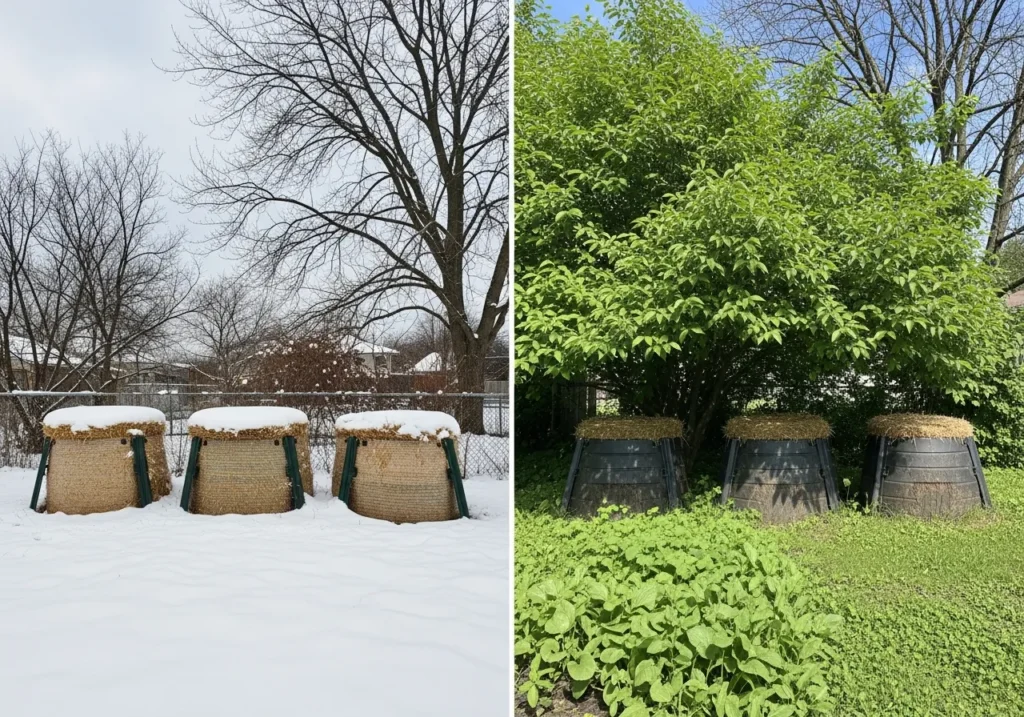
Adapting your compost storage approach to changing seasons maintains year-round composting success despite weather variations.
Winter storage strategies focus on preventing frozen materials and maintaining microbial activity. Move kitchen collection containers closer to exterior doors to minimize cold-weather trips. Consider larger capacity bins that require less frequent emptying during harsh weather. Insulate outdoor bins with straw bales, leaves, or bubble wrap to retain heat generated by decomposition. Some composters move their entire operation into heated garages or basements during the coldest months.
Summer management addresses heat, moisture loss, and increased insect activity. Position outdoor bins in shaded areas to prevent excessive drying and overheating. Increase moisture additions to compensate for evaporation. Use fine-mesh screening on ventilation openings to exclude fruit flies while maintaining airflow. Consider relocating kitchen bins away from sunny windows where heat can accelerate decomposition and intensify odors.
Spring and fall transitions offer ideal composting conditions but often coincide with increased material volumes from garden cleanups and harvest activities. Expand temporary storage capacity using portable bins or designating additional space for seasonal overflow. Process accumulated materials promptly to prevent attracting pests or creating anaerobic conditions in overfilled containers.
Odor Control Strategies
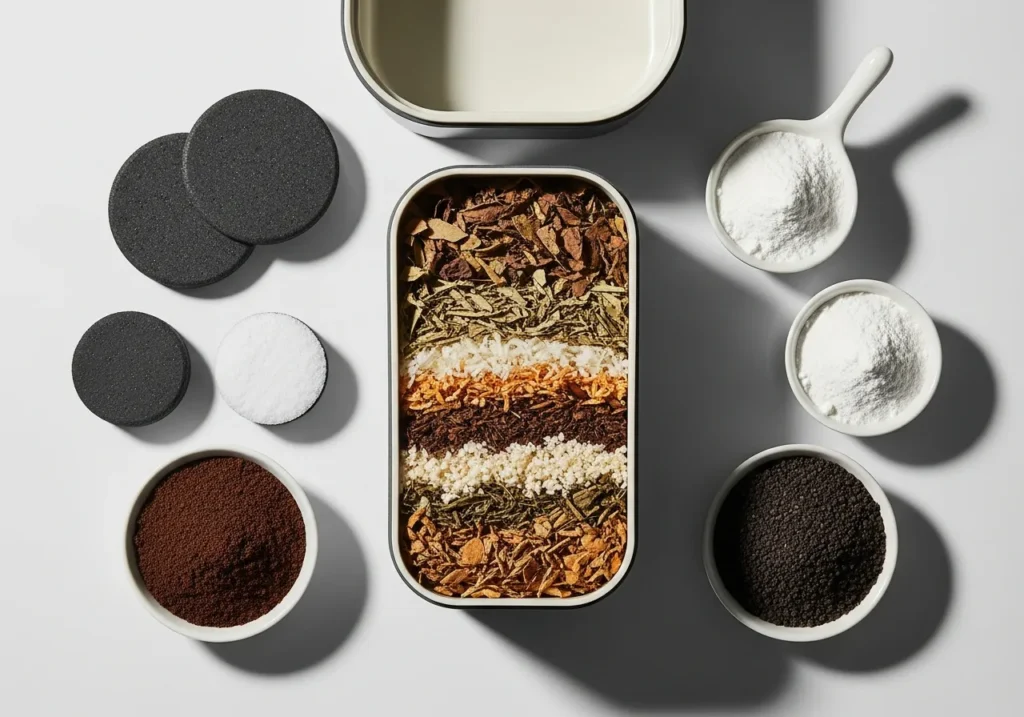
Effective odor management makes the difference between composting systems you use consistently and those that get abandoned. Multiple approaches address smell at different stages of the process.
Carbon filter technology integrated into container lids absorbs volatile compounds before they escape into your living space. Replace filters according to manufacturer recommendations, typically every few months depending on usage. Some systems use replaceable filter disks while others feature washable, reactivatable carbon pellets.
Proper material balance naturally minimizes odors by maintaining aerobic decomposition. Layer food scraps with carbon-rich materials like shredded paper, dry leaves, or sawdust in your collection containers. This practice absorbs excess moisture and provides structure that promotes airflow, both of which reduce anaerobic bacteria that cause foul smells.
Natural odor absorbers added directly to storage containers include baking soda, coffee grounds, and crushed eggshells. Sprinkle a thin layer over fresh additions to neutralize acidic odors. These materials contribute beneficially to the final compost while serving immediate odor control functions.
Freezer storage completely eliminates odor by halting decomposition. For those particularly sensitive to smells or living in small spaces, this method provides absolute odor control without chemicals or filters.
Space Maximizing Techniques
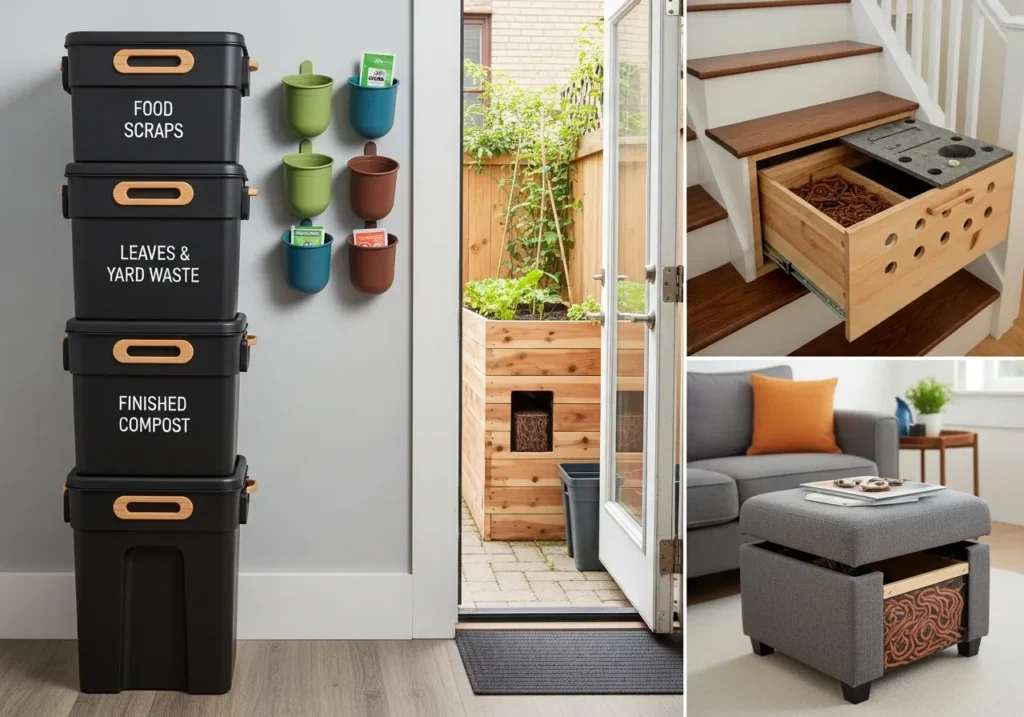
Limited space should never prevent successful composting. Strategic approaches create effective systems in the smallest settings.
Vertical stacking multiplies capacity within the same footprint. Use modular bin systems designed to stack securely, or create your own using food-grade containers with interlocking features. Ensure adequate airflow between stacked units by drilling ventilation holes or leaving gaps between containers.
Wall-mounted hanging systems utilize unused vertical surfaces in garages, sheds, or even kitchen walls. Install sturdy hooks or brackets rated for the weight of full containers. This approach works particularly well for collecting bins that get emptied frequently, as permanent wall mounting suits containers that remain relatively lightweight.
Under-utilized spaces hide composting capacity throughout your home. Look beneath stairs, in closet corners, under decks, or in narrow side yards. Custom-sized containers or bins maximize these awkward spaces that standard storage solutions cannot address.
Multi-function furniture and containers serve dual purposes, justifying their space in small homes. Ottoman-style worm bins, bench seat composters, or decorative kitchen crocks that also hold utensils make every square foot work harder.
Maintenance and Accessibility
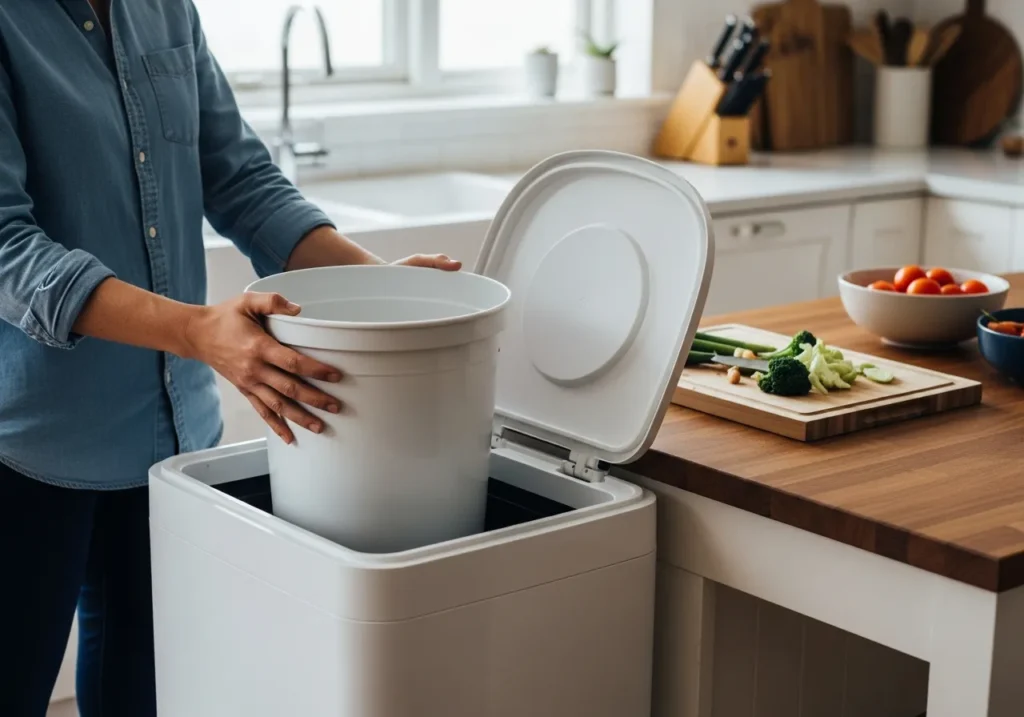
Sustainable composting requires systems you will actually use consistently. Design storage solutions around realistic maintenance capabilities and daily routines.
Easy-access containers encourage regular use by eliminating barriers between intention and action. Position kitchen containers within arm’s reach of primary food preparation areas. Choose outdoor bins with wide openings, removable lids, or doors that open fully rather than designs requiring acrobatic deposits.
Cleaning-friendly materials and designs reduce maintenance burden. Smooth interior surfaces release contents completely and wipe clean easily. Removable inner buckets allow thorough washing without dismantling entire systems. Dishwasher-safe components simplify sanitizing, though hot soapy water works perfectly well for most containers.
Clear visual indicators help you monitor fill levels and maintain appropriate composting conditions. Transparent or translucent containers let you see exactly how full they are without opening lids. Some advanced systems include moisture meters or temperature gauges, though simple observation usually suffices.
Ergonomic considerations prevent injury and fatigue. Avoid bins that require heavy lifting when full. Use wheeled containers for large volumes, or position permanent bins where you can shovel or dump materials rather than carry them. Adjustable height systems accommodate different users and reduce bending or reaching.
Community and Shared Systems
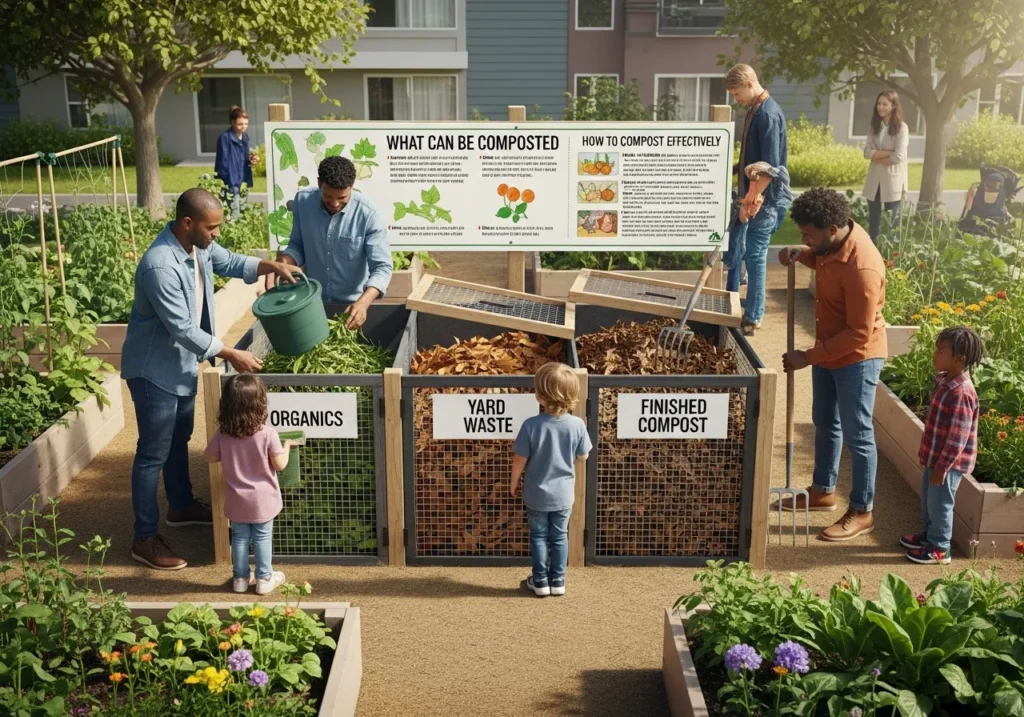
Collaborative composting arrangements expand capacity while building community connections. Shared systems work well in apartment complexes, neighborhood associations, or among close neighbors.
Centralized collection points consolidate individual contributions into larger, more efficient composting operations. Apartment buildings might designate a single outdoor composting area where all residents deposit materials. Clear guidelines about acceptable materials and contribution schedules prevent confusion and ensure system success.
Rotation schedules distribute maintenance responsibilities fairly among participants. Assign monthly or weekly rotations for turning compost, harvesting finished material, or monitoring moisture and temperature. Shared labor makes larger systems manageable while fostering ownership and engagement.
Drop-off programs connect urban composters with processing facilities or farms that accept residential organic waste. Many cities operate curbside collection or designated drop-off locations. Store materials in freezer-safe bags or approved containers until collection day, eliminating the need for personal processing infrastructure.
Community garden plots often include shared composting areas where plot holders contribute materials and harvest finished compost for their gardens. These systems benefit from diverse material inputs and collective knowledge sharing about best practices.
Pest Prevention Methods
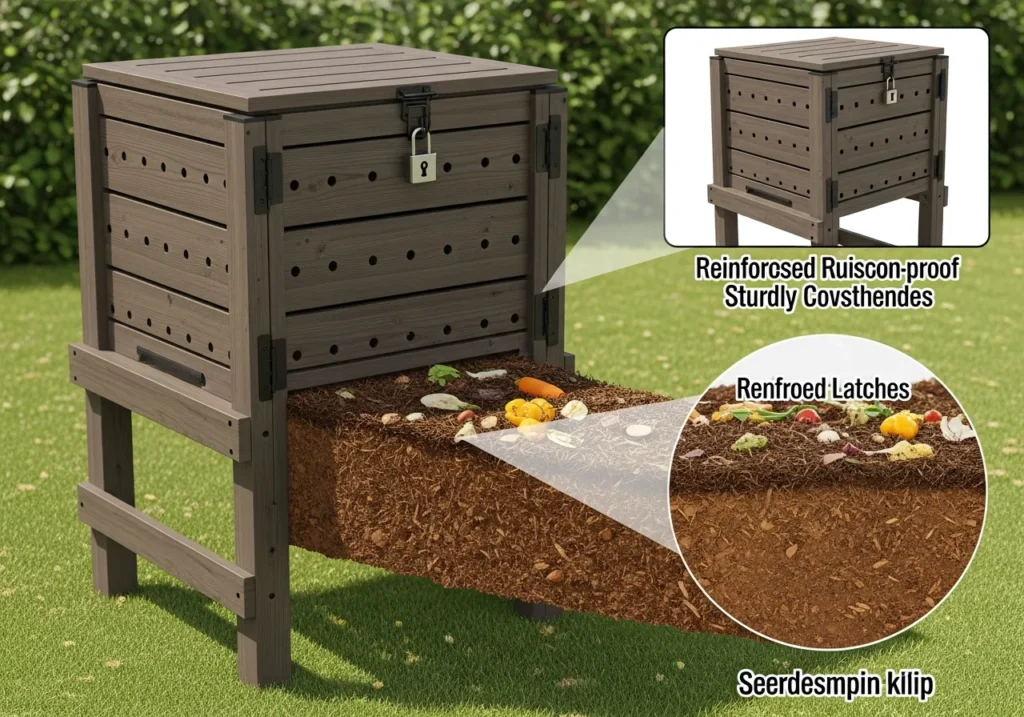
Keeping pests out of compost storage requires thoughtful design and disciplined practices. Prevention always proves easier than elimination.
Secure lid systems create physical barriers against rodents, raccoons, and other scavengers. Look for locking mechanisms, heavy lids, or weighted designs that animals cannot easily displace. Enclosed bins with small entry points limit access while maintaining necessary airflow.
Elevated storage places containers beyond reach of ground-dwelling pests. Mount outdoor bins on platforms or legs at least twelve inches high. This positioning also improves drainage and air circulation while deterring burrowing animals.
Material selection influences pest attraction. Avoid composting meat, dairy, oils, and cooked foods in outdoor bins accessible to wildlife. Bury fresh additions beneath existing material to minimize scent dispersion. Cover food scraps immediately with carbon-rich materials like leaves or shredded paper.
Indoor storage in sealed containers with carbon filters prevents fruit flies and other insects from detecting food sources. Empty containers regularly before materials begin serious decomposition. Wipe rims and lids clean to remove residue that might attract pests.
Integration with Home Design
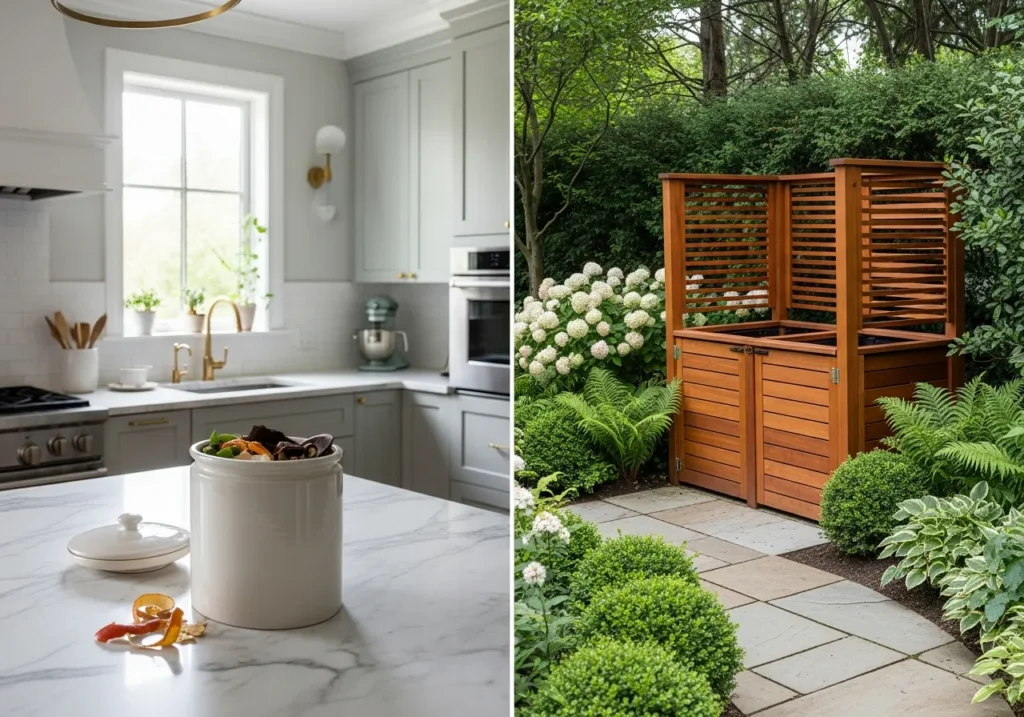
Composting systems need not clash with your aesthetic vision. Contemporary options blend functionality with beautiful design.
Color coordination matches containers to existing decor schemes. Many manufacturers offer compost bins in various finishes, from sleek stainless steel to powder-coated colors that complement cabinetry or outdoor furniture. Ceramic crocks come in endless patterns and hues suitable for any kitchen style.
Disguised systems hide composting equipment within furniture, planters, or architectural features. Custom cabinetry can incorporate pull-out bins, while decorative screening conceals outdoor composters. Garden designers increasingly integrate composting areas into landscape plans, using attractive fencing, plantings, or hardscape elements to make functional spaces beautiful.
Matching hardware and accessories create cohesive systems that feel intentional rather than cobbled together. Coordinate bin materials with tool handles, plant markers, and other garden equipment. This attention to detail elevates composting from chore to integrated lifestyle choice.
Statement pieces turn composting containers into conversation starters. Artist-designed ceramic crocks, architecturally interesting tumbler stands, or custom-built wooden bins showcase your commitment to sustainability while adding visual interest to your home. to see more i dead for your house decor visit Homeliaa.
Budget-Conscious Options
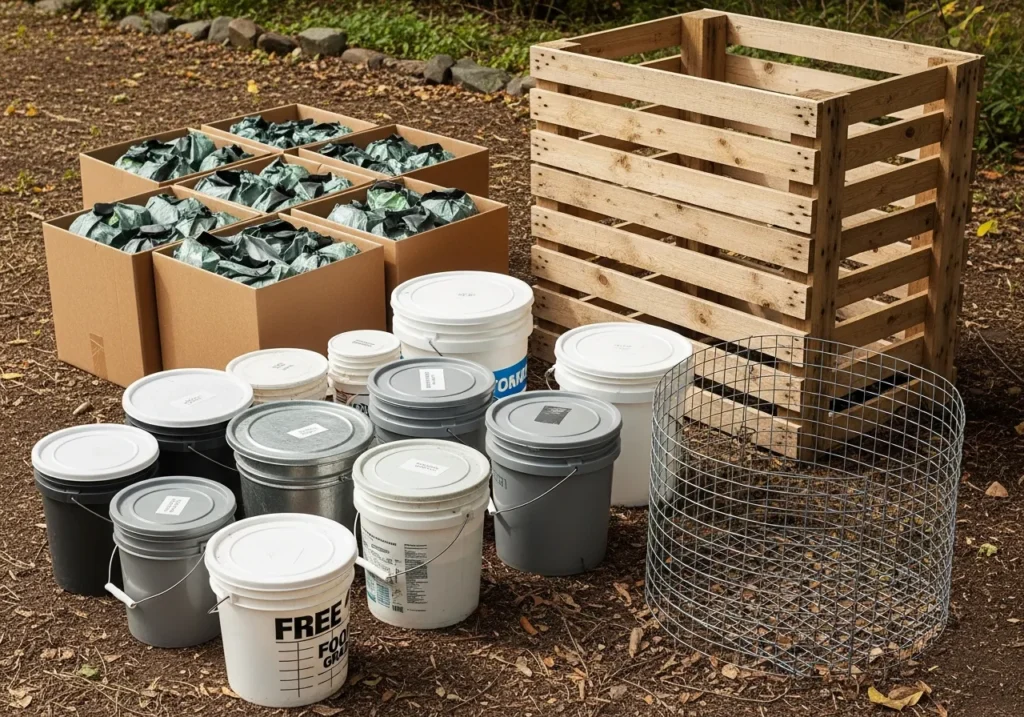
Effective composting need not strain your finances. Resourceful approaches deliver excellent results with minimal investment.
Free and found materials provide surprising storage solutions. Cardboard boxes lined with compostable bags work temporarily. Wooden pallets stacked and secured create sturdy outdoor bins. Food-grade buckets from restaurants or bakeries cost nothing and last for years.
Gradual system building spreads costs over time while letting you refine your approach. Start with basic containers and add features as budget allows and experience guides your preferences. Many composters discover that simple solutions work perfectly well, saving money they might have spent on elaborate systems.
Multi-purpose containers justify their expense by serving several functions. A quality stainless steel pail works for compost collection but also for harvesting produce, soaking dishes, or hauling supplies. Versatile tools earn their keep through regular varied use.
DIY construction reduces costs dramatically compared to commercial products. Basic carpentry skills and recycled lumber create custom outdoor bins sized perfectly for your space. Online tutorials provide detailed instructions for building everything from simple wire bins to sophisticated tumbler systems.
Conclusion
Successful composting begins with storage solutions that match your lifestyle, space, and commitment level. Whether you choose sleek countertop containers, elaborate outdoor systems, or creative repurposed options, the right storage approach makes composting convenient, odor-free, and effective. Start with basic containers that address your immediate needs, then refine your system as you gain experience and understand your household patterns.
The best compost storage ideas combine functionality with aesthetics, creating systems you will use consistently rather than abandon after initial enthusiasm fades. Consider your daily routines, available space, and long-term goals as you select or build storage solutions. Remember that composting is infinitely adaptable; what works for one household may not suit another, and your own needs will likely evolve over time.
By implementing appropriate storage strategies, you transform potential waste into valuable soil amendment while reducing your environmental impact. The effort invested in establishing effective compost storage pays dividends through healthier gardens, reduced trash output, and the satisfaction of closing the nutrient loop in your own home. Start composting today with storage solutions that set you up for long-term success.
Frequently Asked Questions
What size compost container do I need for my kitchen?
Most households generate between one and three gallons of compostable kitchen waste weekly. A container holding one to two gallons works well, requiring emptying every two to four days before odors develop. Larger families or those who cook primarily from fresh ingredients may need bigger containers or more frequent emptying schedules.
How do I prevent my indoor compost container from smelling?
Control odors by choosing containers with carbon filters, emptying bins every few days before decomposition advances, and layering food scraps with dry materials like shredded paper. Alternatively, store food scraps in your freezer until you can transfer them to outdoor bins, completely eliminating any smell.
Can I compost in an apartment without outdoor space?
Absolutely. Vermicomposting with worm bins works perfectly indoors in closets or under sinks. Bokashi fermentation systems process all food waste in sealed buckets without odor. Freezer storage combined with community drop-off programs provides another effective apartment composting solution.
What materials should I avoid putting in compost storage containers?
Exclude meat, dairy, oils, and pet waste from typical compost systems, as these attract pests and create odor problems. Also avoid diseased plants, weeds with seeds, and treated wood products. Stick with fruit and vegetable scraps, coffee grounds, eggshells, and yard waste for best results.
How often should I empty my compost collection containers?
Empty kitchen containers every two to five days depending on capacity, season, and your odor tolerance. More frequent emptying during summer prevents fruit flies and smells. Freezer storage allows indefinite accumulation until convenient to transfer materials. Outdoor bins can accept continuous additions without emptying until finished compost is ready to harvest.





3 Comments