
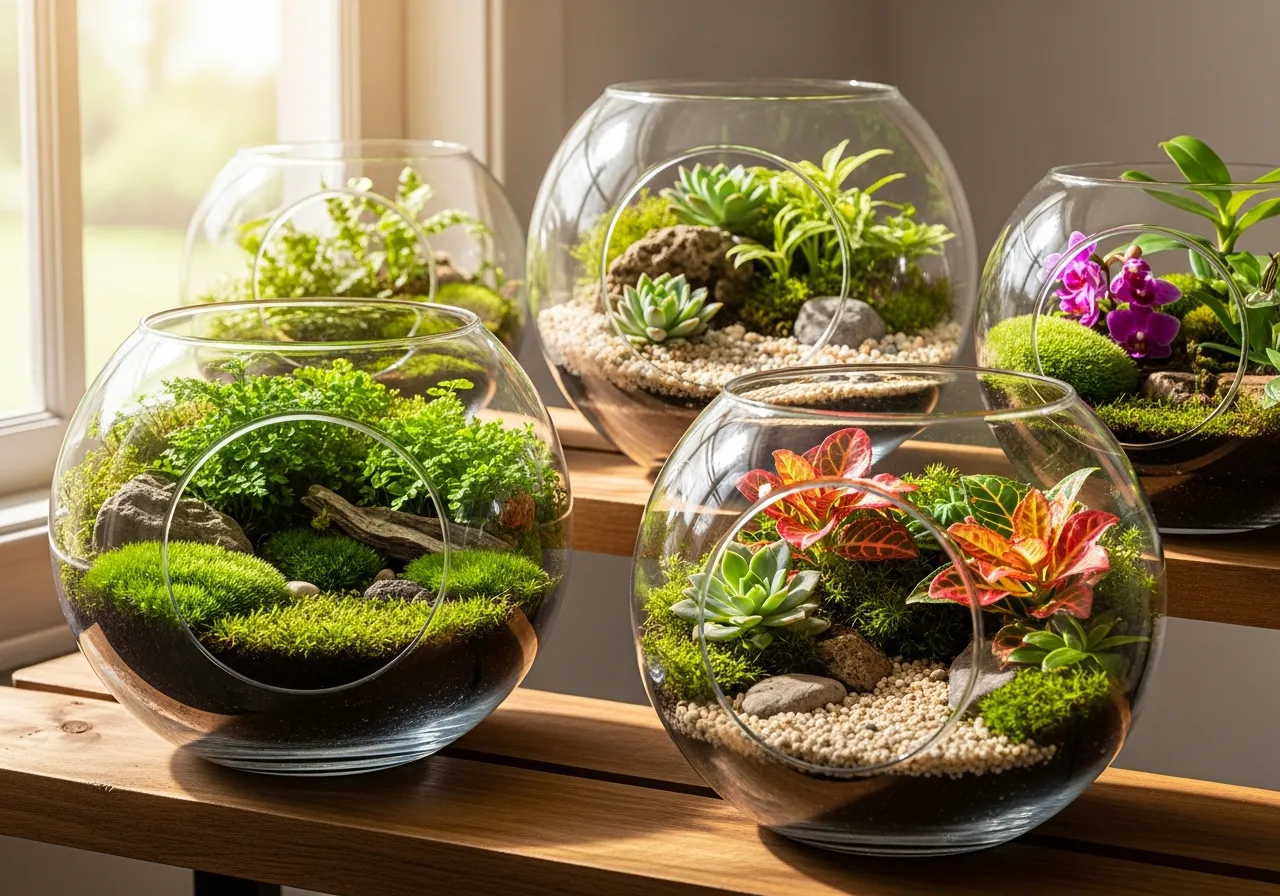
16+ Creative Fish Bowl Terrarium Ideas
Transforming an old fish bowl into a miniature garden brings nature indoors in the most delightful way. These self-contained ecosystems offer a perfect solution for plant lovers with limited space, busy schedules, or those simply looking to add a touch of greenery to their homes. Whether you’re repurposing a vintage bowl from your attic or purchasing a new glass container, the possibilities for creating stunning terrarium displays are virtually endless.
The beauty of fish bowl terrariums lies in their versatility. From desert-inspired succulent arrangements to lush tropical landscapes, each design tells its own story. These living art pieces require minimal maintenance while providing maximum visual impact, making them ideal for everyone from beginners to experienced gardeners. The curved glass walls create a unique viewing experience, magnifying the intricate details of your miniature world and adding an elegant focal point to any room.
In this guide, you’ll discover over sixteen creative ideas that will inspire your next terrarium project. We’ll explore various themes, plant combinations, and decorative elements that transform simple fish bowls into captivating displays of nature’s beauty.
Classic Moss Terrarium
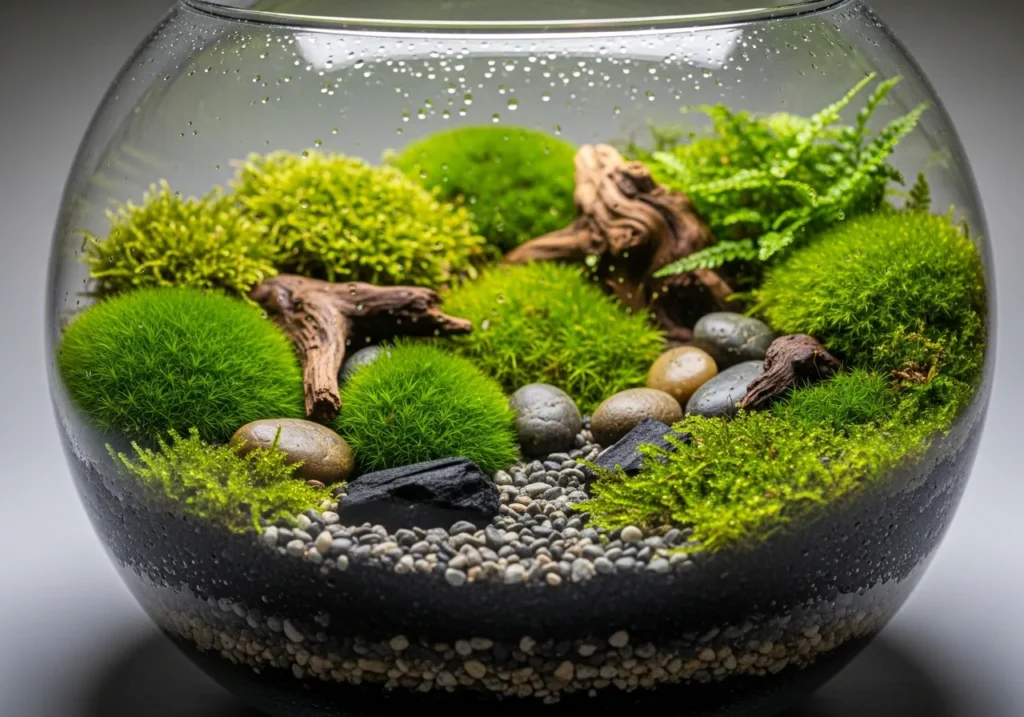
The timeless moss terrarium remains one of the most popular choices for fish bowl designs. This style embraces simplicity while creating a serene, forest-floor atmosphere. Start with a layer of small pebbles for drainage, add activated charcoal to keep the environment fresh, then top with quality potting soil. Various moss species like sheet moss, mood moss, or cushion moss create different textures and shades of green. To see more fish terrarium ideas visit Terrarium Tribe.
Add small pieces of driftwood or smooth river stones to create visual interest and natural focal points. The enclosed environment of a fish bowl creates the perfect humid conditions that moss loves, requiring only occasional misting to maintain. This design works exceptionally well in low-light areas of your home, making it perfect for offices or north-facing rooms.
Desert Landscape with Succulents
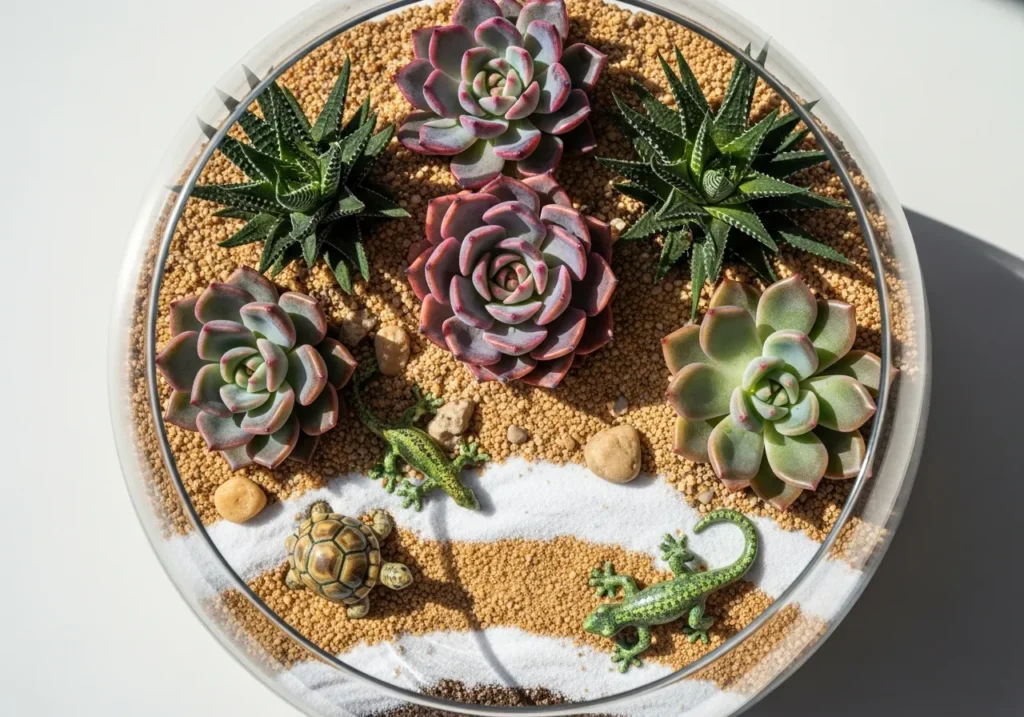
For those who prefer low-maintenance plants, a succulent fish bowl terrarium offers stunning visual appeal with minimal care requirements. This design requires an open terrarium approach since succulents need good air circulation and less humidity than tropical plants. Layer the bottom with coarse sand or fine gravel, skip the charcoal layer, and use cactus-specific soil mix.
Combine different succulent varieties like echeveria, haworthia, or small jade plants to create contrast in color, shape, and texture. Add decorative sand in different colors to create patterns or pathways. Small ceramic animals, miniature benches, or tiny decorative stones can transform your bowl into a desert scene. Position this terrarium in bright, indirect light and water sparingly.
Fairy Garden Wonderland
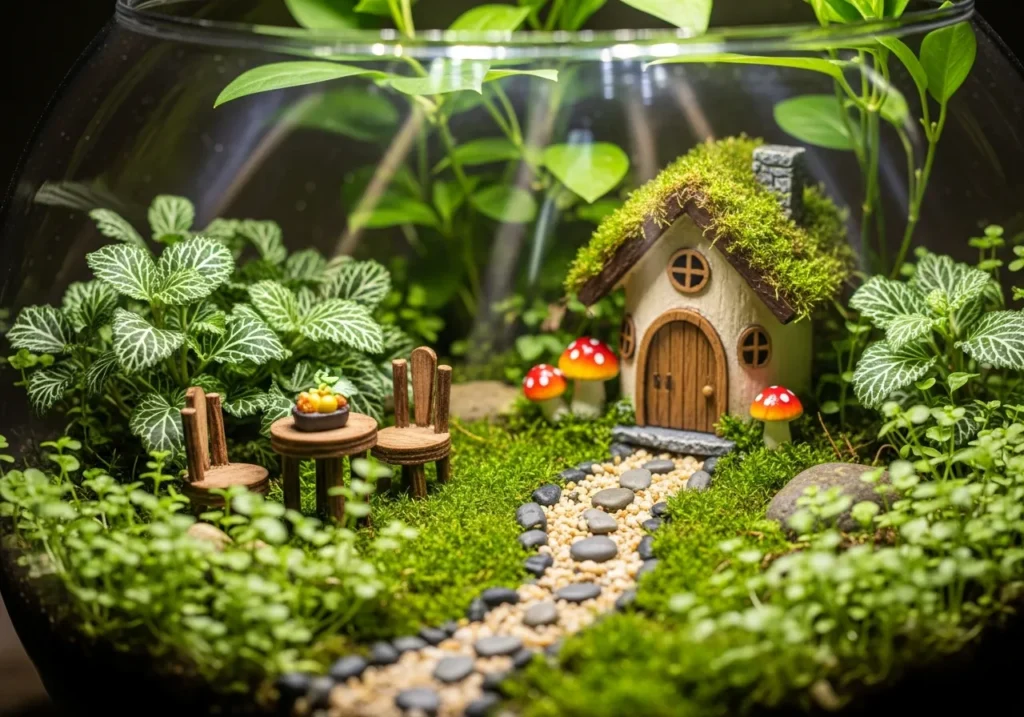
Transform your fish bowl into an enchanted miniature world where imagination takes root. This whimsical design combines small plants with fairy garden accessories like tiny houses, miniature furniture, and delicate figurines. Use fine-leaved plants such as baby tears, small ferns, or nerve plants that stay compact and won’t overwhelm the accessories.
Create different levels using rocks or soil mounds to add dimension to your scene. A small path made from crushed gravel or sand leads visitors through your miniature world. Fairy lights battery packs can even be tucked into larger bowls for magical evening illumination. This style particularly appeals to children and brings a sense of playfulness to any space.
Tropical Rainforest Environment
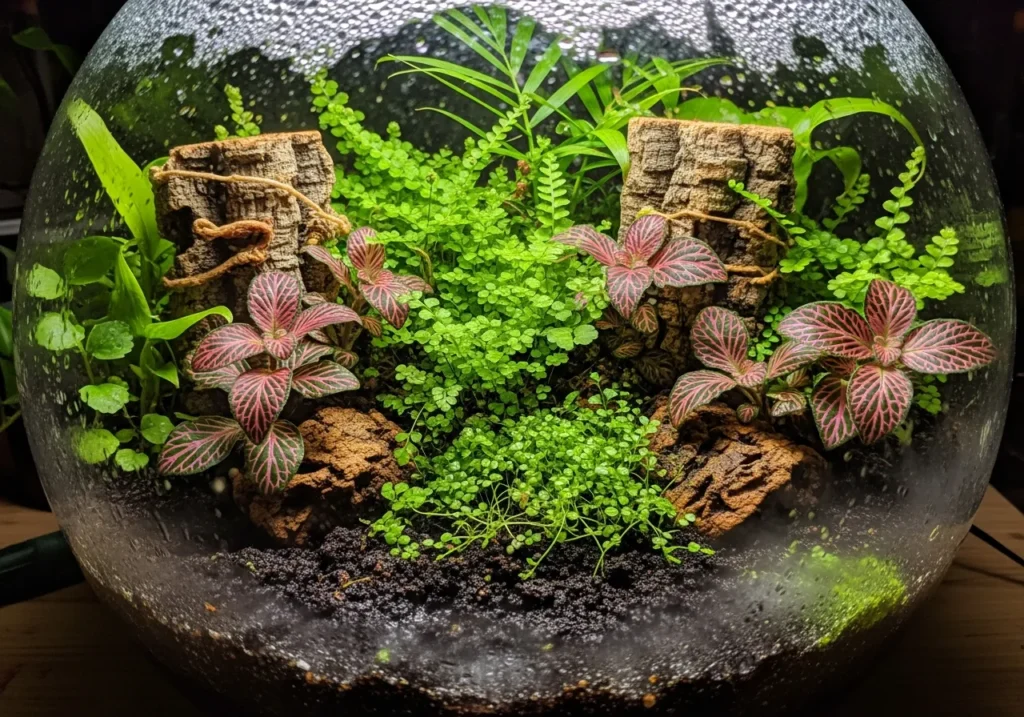
Recreate the lush abundance of a tropical rainforest within the confines of your fish bowl. This design thrives as a closed terrarium, where humidity builds naturally. Select moisture-loving plants like small ferns, fittonia with colorful veins, peperomia varieties, or miniature begonias. The key is choosing plants that remain small and enjoy similar growing conditions.
Layer your bowl starting with pebbles, followed by activated charcoal, then rich, moisture-retaining potting soil. Add small pieces of cork bark or tropical wood to create natural climbing structures. The curved walls of the fish bowl act like a greenhouse, maintaining consistent humidity levels. Mist occasionally and keep the lid partially open if condensation becomes excessive.
Beach-Themed Paradise
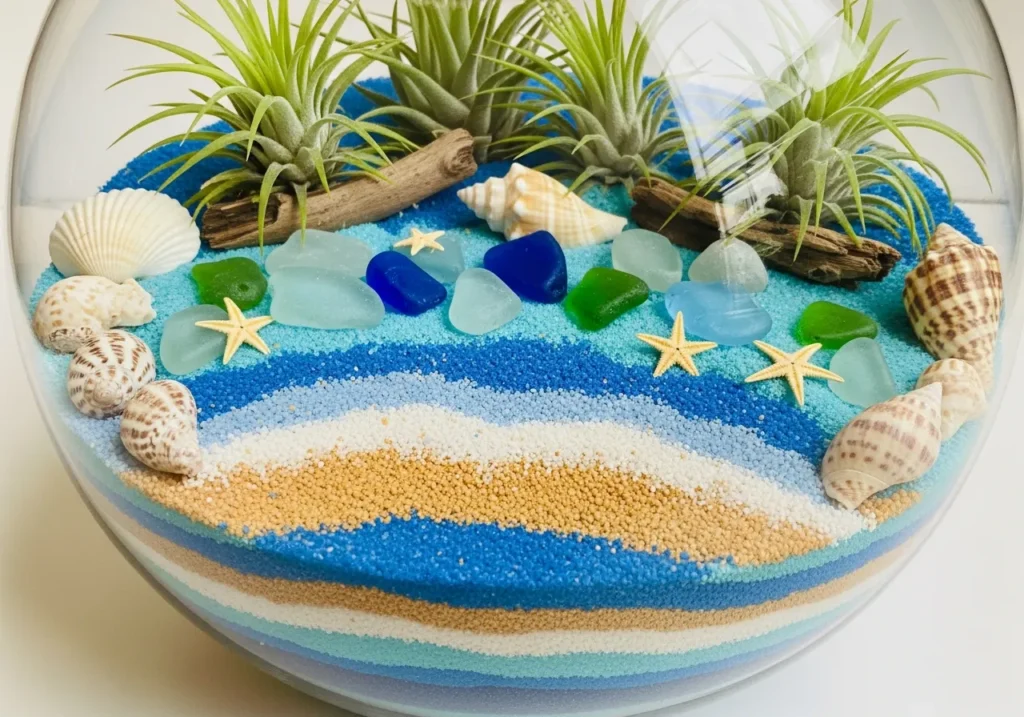
Bring coastal vibes indoors with a beach-inspired terrarium that captures the essence of seaside serenity. Start with layers of different colored sands to mimic beach strata, then add small shells, pieces of coral, or sea glass as decorative elements. Air plants work beautifully in this design since they don’t require soil and can be positioned creatively among the beach treasures.
You might include a small piece of driftwood standing upright like a weather-beaten beach post, or create a tiny shoreline where sand meets small pebbles. Starfish, sand dollars, or miniature lighthouses add thematic charm. This open terrarium requires bright light and weekly misting for the air plants, creating a carefree maintenance routine.
Carnivorous Plant Display
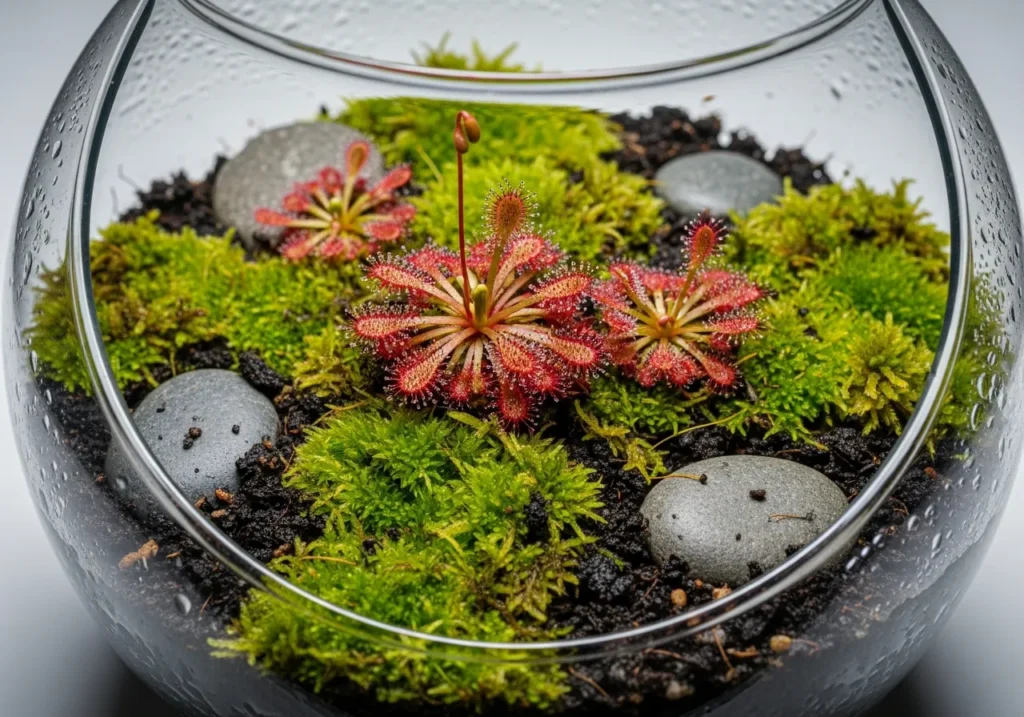
For something truly unique, dedicate your fish bowl to carnivorous plants like small sundews, butterworts, or juvenile pitcher plants. These fascinating specimens capture attention while naturally controlling fruit flies and gnats in your home. Use a mixture of peat moss and perlite as the growing medium, and ensure you use distilled or rainwater since these plants are sensitive to minerals.
Position the bowl in bright, indirect light and maintain high humidity by keeping the terrarium partially closed. Add decorative moss and small stones to complete the natural look. Watching these plants capture prey adds an interactive element that makes this terrarium both educational and entertaining.
Zen Garden Minimalism
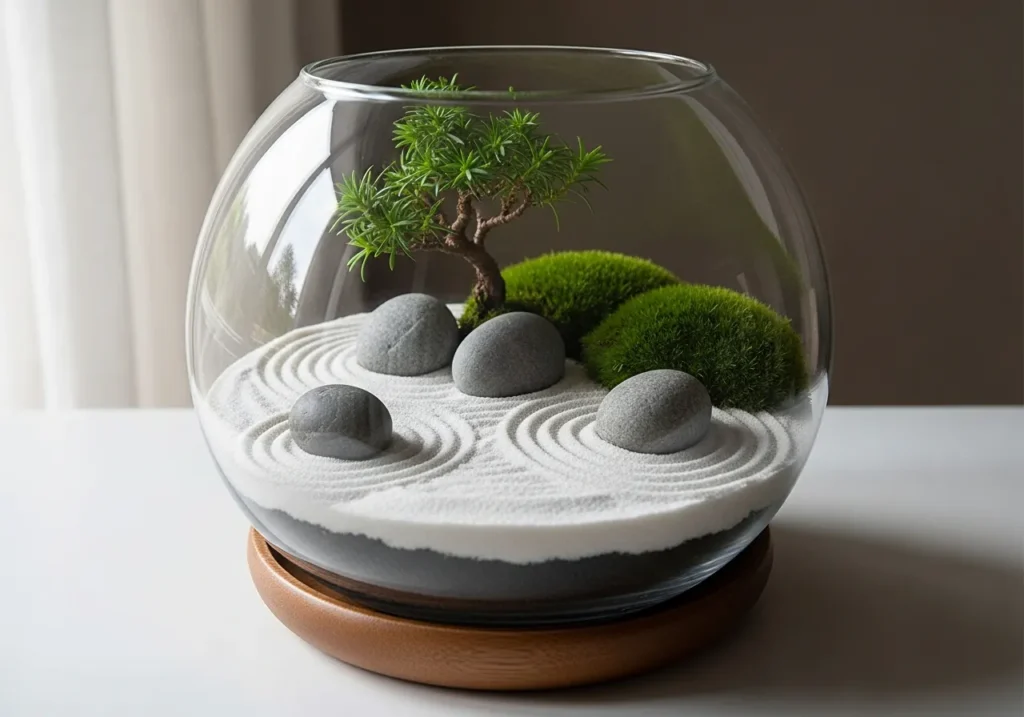
Embrace the principles of Japanese garden design by creating a peaceful zen terrarium. This style focuses on simplicity, balance, and natural elements. Use fine white or tan sand as your base, add carefully selected rocks of varying sizes, and include minimal plant life such as a small bonsai-style plant or simple moss patches.
Rake patterns into the sand using a small fork or specialized miniature rake to represent water ripples. The negative space becomes as important as the elements you include, creating a meditative quality. This design works wonderfully on a desk or meditation space where its calming presence can be appreciated daily.
Woodland Forest Floor
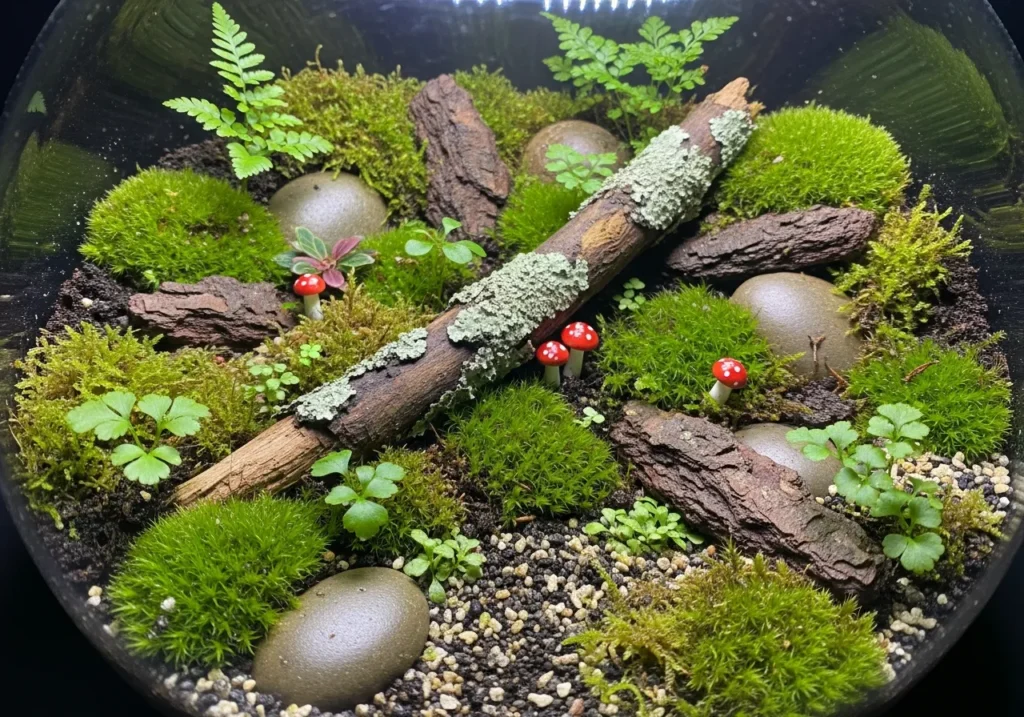
Capture the magic of a forest walk by recreating a woodland scene complete with fallen logs, mushrooms, and shade-loving plants. Use small ferns, moss varieties, and creeping fig to establish your plant base. Add pieces of bark, small twigs, or actual fallen logs collected during nature walks to create authentic forest features.
Tiny mushroom decorations or even dried natural mushrooms add whimsy. Small stones partially buried in the soil suggest rocks emerging from the forest floor. This terrarium thrives with moderate humidity and indirect light, requiring occasional watering and the removal of any dead leaves to maintain its pristine appearance.
Seasonal Celebration Themes
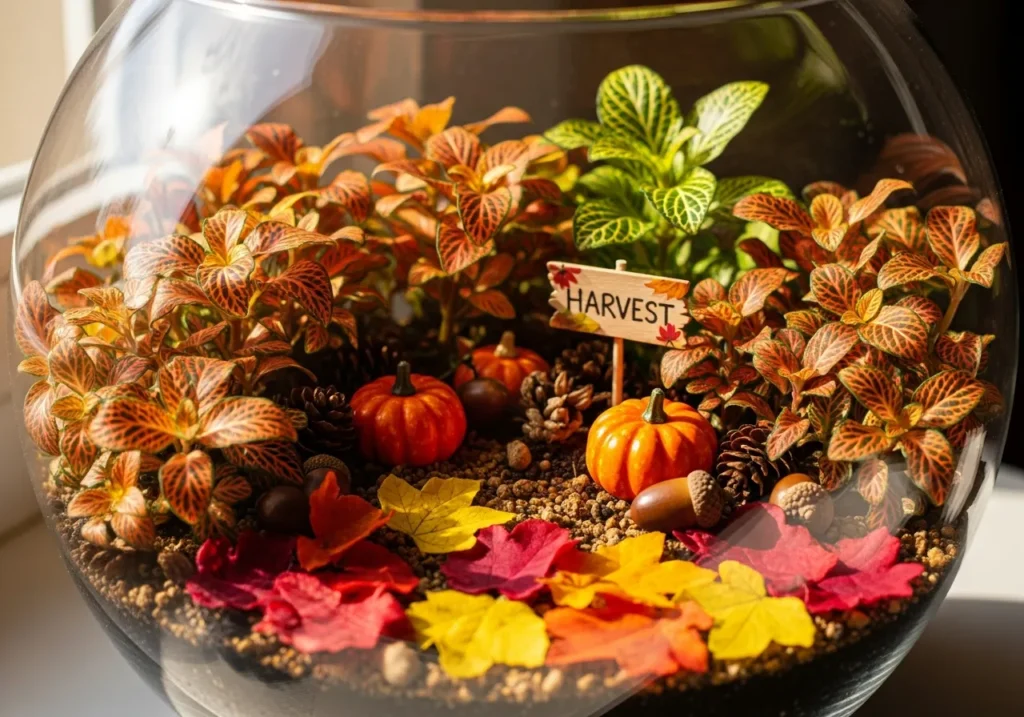
Adapt your fish bowl terrarium to celebrate different seasons or holidays throughout the year. A spring design might feature pastel-colored decorative elements with flowering miniature plants. Summer could showcase bright green growth with sunny yellow accents. Autumn terrariums incorporate orange and red-leafed plants like certain fittonia varieties alongside miniature pumpkins or colored leaves.
Winter designs embrace white sand or pebbles to suggest snow, with evergreen plants and perhaps small pinecones or winter figurines. This approach keeps your terrarium display fresh and engaging year-round while celebrating the changing seasons. Simply swap out decorative elements while maintaining the same plant base.
Geometric Crystal Garden
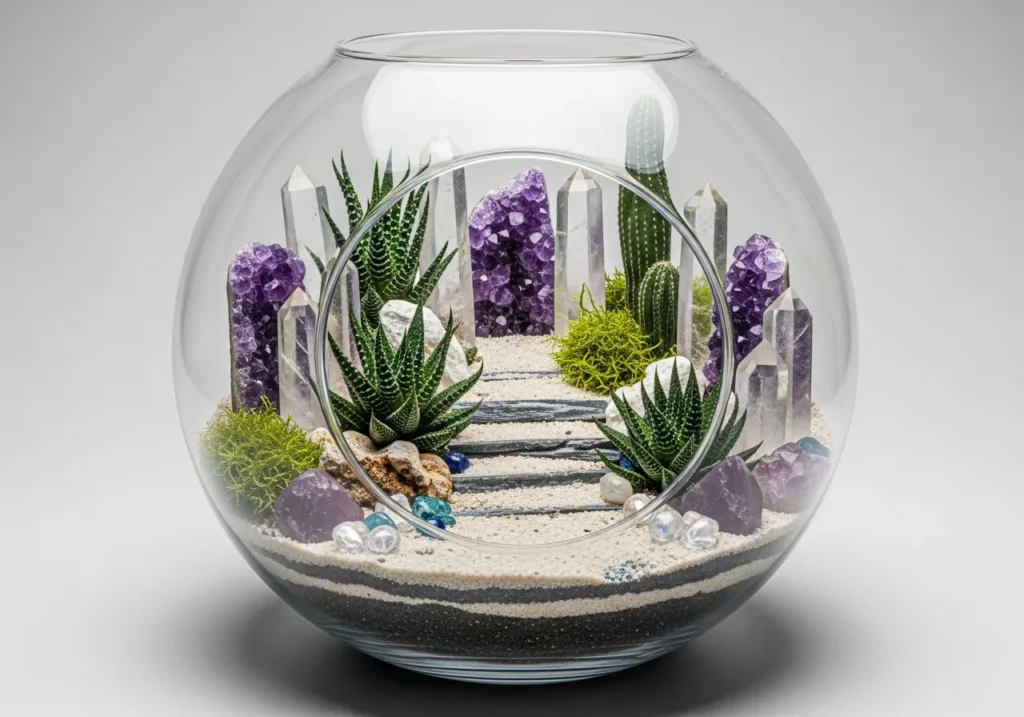
Modern design meets natural beauty in a crystal-themed terrarium that incorporates actual crystals and minerals. Select plants with structural interest like haworthia, small aloe varieties, or architectural air plants. Arrange clear quartz points, amethyst clusters, or rose quartz pieces among the plants to create a mystical atmosphere.
The geometric shapes of both the crystals and certain succulents complement each other beautifully. Use coarse sand or fine gravel in neutral tones to let the crystals become focal points. This design appeals to those interested in both plants and mineral collecting, creating a conversation piece that bridges multiple interests.
Aquatic-Inspired Water Features
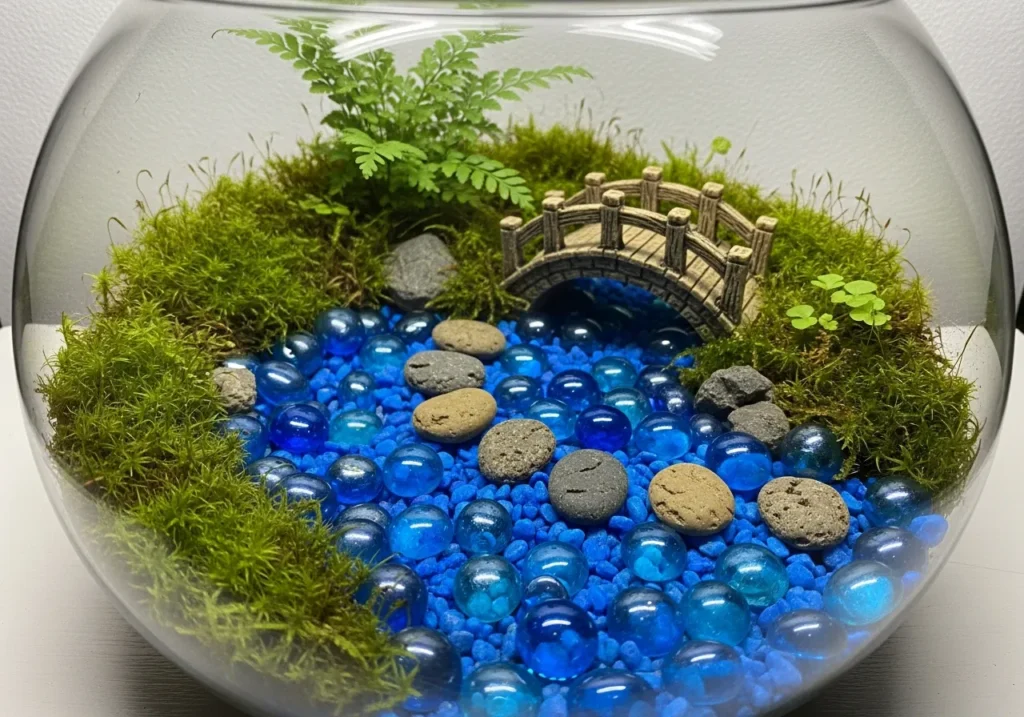
While not an actual aquarium, you can create the illusion of water features within your fish bowl terrarium. Use blue or clear glass pebbles to represent a pond or stream. Position plants along the “banks” of your imaginary water feature. Small bridge accessories or stepping stones can span across the glass pebbles.
Moss varieties planted along the edges create the appearance of verdant growth near water. Small ferns suggest the moisture-loving plants found near natural water sources. This design combines the visual interest of an aquarium with the ease of terrarium care, offering the best of both worlds.
Medicinal Herb Garden
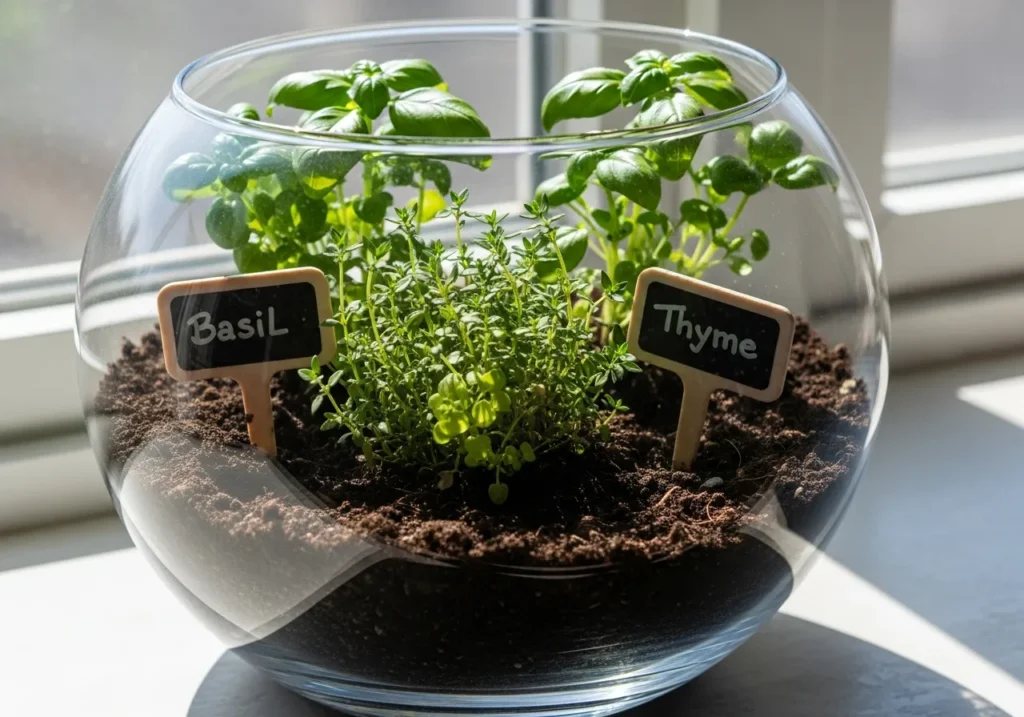
Create a functional terrarium by growing small medicinal or culinary herbs in your fish bowl. Miniature basil, thyme, small mint varieties, or chamomile can thrive in the right conditions. This open terrarium design allows for harvesting while providing fresh greenery and wonderful scents.
Ensure adequate drainage and use nutrient-rich potting soil. Place near a sunny window where herbs receive plenty of light. Small plant markers or decorative labels add both function and charm. While this design requires more active maintenance than ornamental terrariums, the ability to snip fresh herbs for tea or cooking makes it worthwhile.
Monochrome Color Schemes
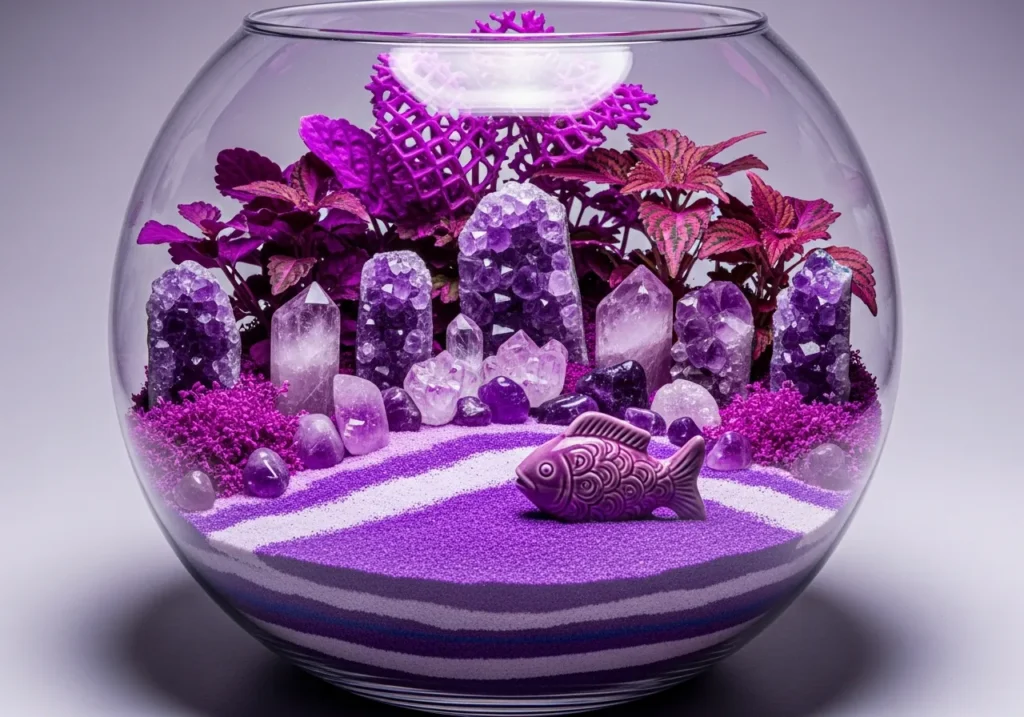
Challenge yourself by creating a terrarium centered around a single color palette. A green-focused design might use various plants with different shades of foliage from lime to forest green. A purple theme could combine purple-leafed plants with amethyst crystals and purple sand.
White and silver designs use plants with variegated or silvery foliage alongside white stones and light-colored sand. This artistic approach creates visual coherence and demonstrates sophisticated design sensibility. The monochrome concept proves that limitations can actually enhance creativity.
Bonsai Focus Display
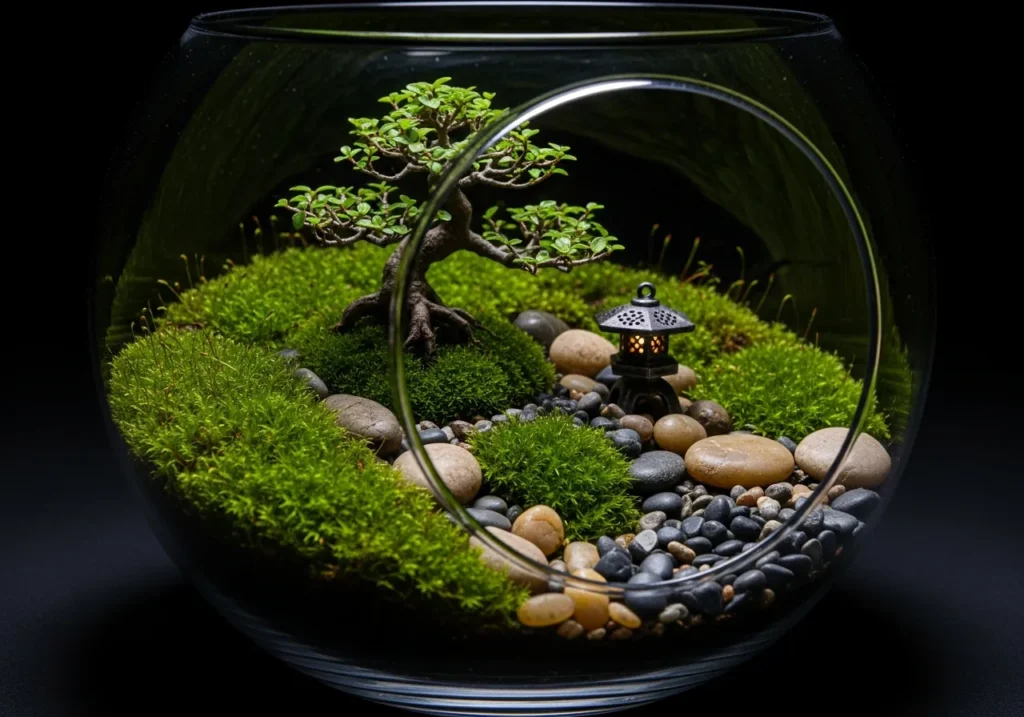
Showcase a miniature bonsai tree as the centerpiece of your fish bowl terrarium. Select dwarf varieties or young bonsai specimens that will remain appropriately sized. Surround the base with moss, small stones, and perhaps a miniature bench or lantern to create a contemplative scene.
The fish bowl’s curved walls frame the bonsai beautifully from every angle. This design requires more horticultural knowledge since bonsai trees need specific care, but the result is a striking living sculpture. Position in appropriate light for your chosen tree species and monitor moisture carefully.
Educational Ecosystem
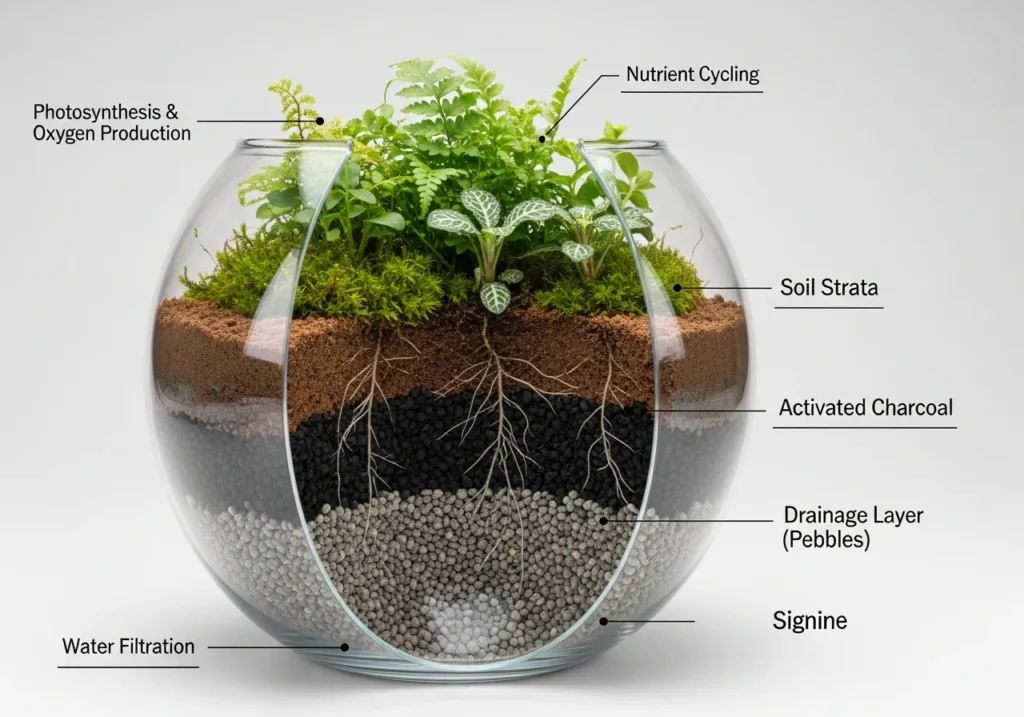
Turn your fish bowl into a learning tool by creating a terrarium that demonstrates ecological principles. Layer the bowl so the strata are visible from the side, clearly showing drainage, charcoal, and soil layers. Include decomposers like springtails or isopods that break down plant matter.
Label different components with small markers explaining their roles in the ecosystem. This approach works wonderfully for classrooms or as a hands-on science project with children. Watching the cycle of growth, decomposition, and renewal provides valuable lessons about nature’s interconnected systems.
Night-Blooming Display
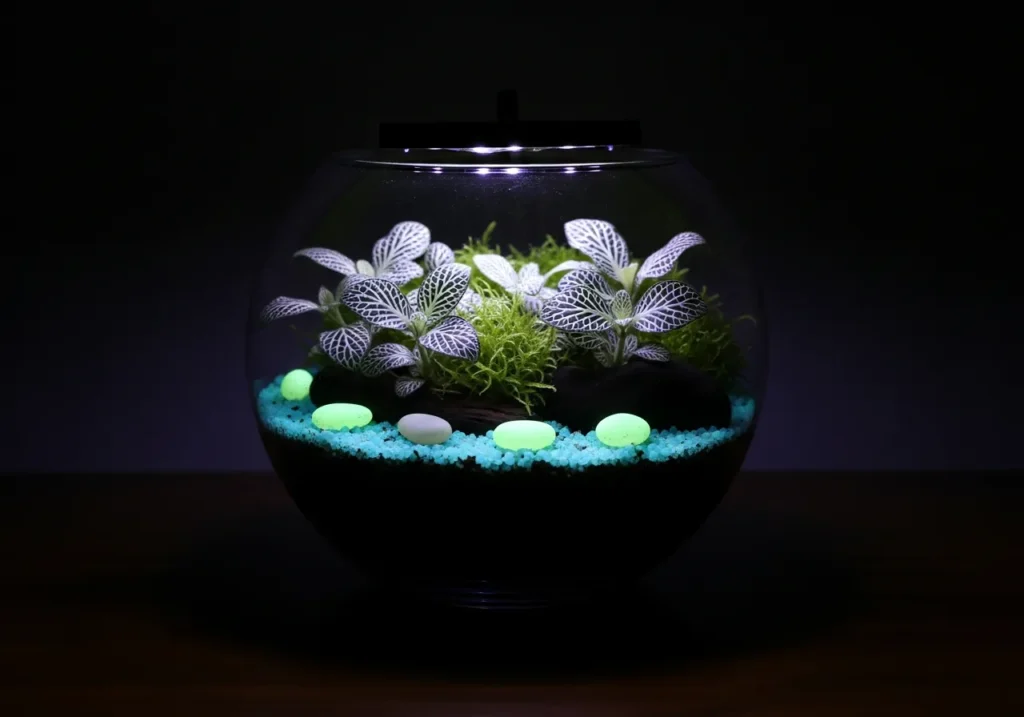
Create intrigue with plants that show their best features in low light or evening hours. While truly night-blooming plants may be challenging in terrarium conditions, you can select plants with white or light-colored foliage that seems to glow in dim lighting. Certain ferns and white-veined fittonia varieties create this effect.
Add phosphorescent pebbles that charge in daylight and glow softly at night. Small LED lights on timers can illuminate your creation during evening hours. This design offers different personalities between day and night, making it especially captivating in bedrooms or living spaces.
Essential Maintenance Tips
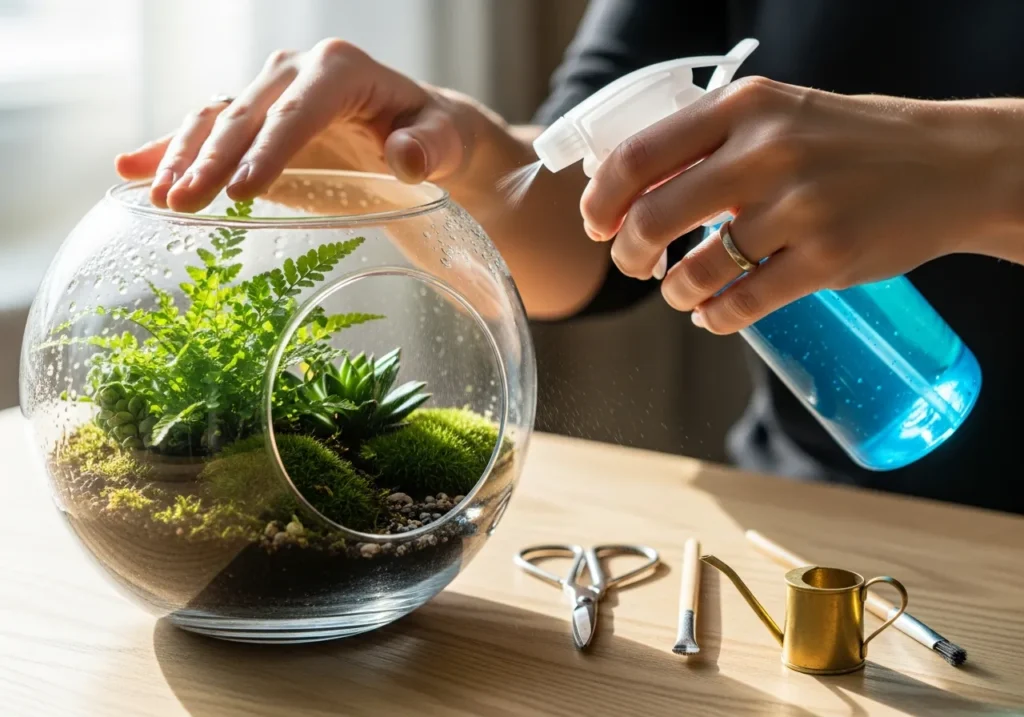
Regardless of which design you choose, certain maintenance practices keep your fish bowl terrarium thriving. Check moisture levels regularly by feeling the soil depth or observing condensation on the glass. Closed terrariums need watering far less frequently than open designs, sometimes only every few weeks or months.
Remove dead or yellowing leaves promptly to prevent mold or decay. Trim plants that grow too enthusiastically to maintain your desired proportions. Rotate your bowl occasionally to ensure even light exposure on all sides. If mold appears, increase air circulation and reduce moisture.
Watch for common pests like fungus gnats or aphids, though properly maintained terrariums rarely experience infestations. The activated charcoal layer helps prevent odors and keeps the environment fresh. Clean the glass exterior regularly to maintain clarity and showcase your creation properly.
Choosing the Right Plants
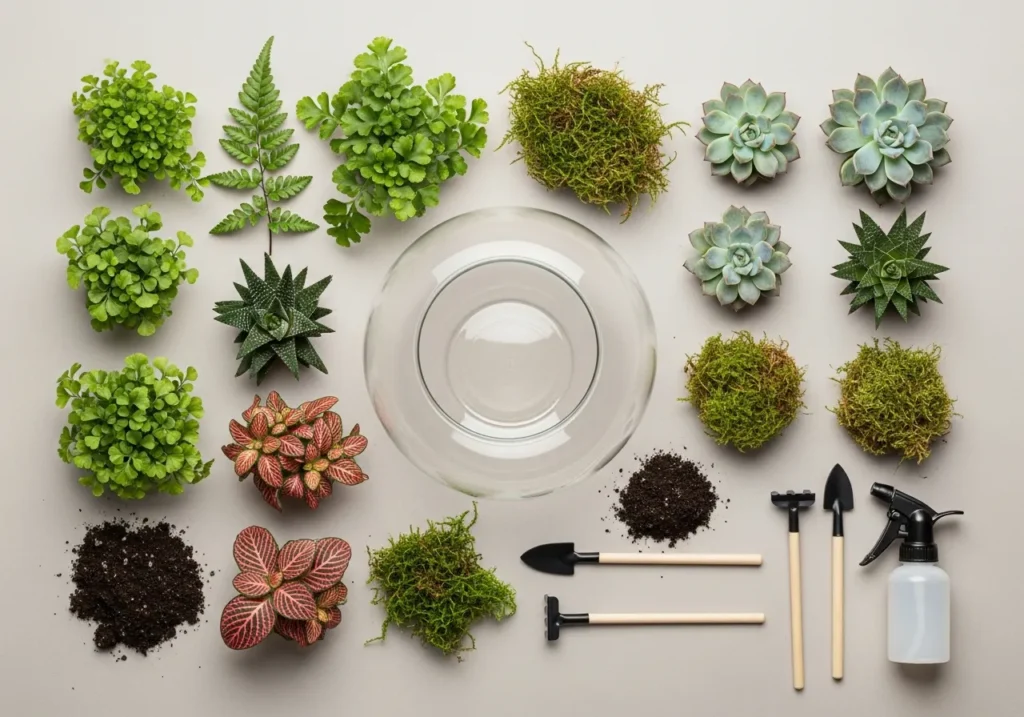
Success depends heavily on selecting compatible plants that share similar light, water, and humidity requirements. Avoid mixing desert cacti with tropical ferns, as their needs conflict dramatically. Research mature plant sizes to prevent overcrowding as your terrarium matures.
Consider growth rates when combining species. Slow-growing plants like most succulents pair better together than mixing them with aggressive growers. Texture contrast creates visual interest, so combine fine, feathery foliage with broader leaves or architectural forms.
Color variation adds depth even within green palettes. Lime green, deep forest, blue-green, and variegated foliage create subtle complexity. Remember that less is often more in terrarium design. A few well-chosen plants create more impact than an overcrowded jumble.
Conclusion
Fish bowl terrariums represent the perfect intersection of art and nature, offering endless creative possibilities within a simple glass sphere. Whether you’re drawn to the meditative simplicity of a zen garden, the whimsical charm of a fairy wonderland, or the exotic allure of a tropical rainforest, there’s a design that matches your aesthetic and lifestyle.
These miniature ecosystems bring the outdoors inside, improving air quality, reducing stress, and adding living beauty to any space. The relatively low maintenance requirements make them accessible to even the busiest plant enthusiasts, while the design possibilities challenge experienced gardeners to try new creative directions.
Starting your own fish bowl terrarium requires minimal investment but offers lasting rewards. Each design becomes a unique expression of your personality and style preferences. As you develop your skills, you’ll find yourself drawn to more complex arrangements and perhaps even maintaining multiple terrariums throughout your home.
The true magic of these creations lies not just in their visual appeal but in the process of creating and caring for them. Watching your miniature world establish itself, observing new growth, and maintaining the delicate balance of this ecosystem connects you with nature’s rhythms in meaningful ways. Pick a design that speaks to you, gather your materials, and begin your own terrarium journey today.
Frequently Asked Questions
Q: How often should I water my fish bowl terrarium? A: Closed terrariums need watering every 2-4 weeks or less, while open terrariums require water weekly. Check soil moisture an inch deep before watering, and reduce frequency if you see constant condensation on the glass.
Q: Can I use a regular fish bowl without a lid for any terrarium? A: Yes, open fish bowls work perfectly for succulent and cactus terrariums, air plant displays, or any desert-themed designs. These plants prefer dry conditions and good air circulation rather than the humidity of closed systems.
Q: Why is activated charcoal necessary in terrariums? A: Activated charcoal filters water, prevents bacterial growth, eliminates odors, and absorbs chemicals that might harm your plants. While some terrariums survive without it, including charcoal significantly improves long-term health and prevents unpleasant smells.
Q: What’s the best location for a fish bowl terrarium in my home? A: Place your terrarium in bright, indirect light away from direct sun, which can overheat the enclosed space. North or east-facing windows work well for most designs. Succulents tolerate brighter conditions while moss prefers lower light levels.
Q: How do I fix excessive condensation in my closed terrarium? A: Remove the lid for several hours to allow excess moisture to evaporate. If condensation constantly obscures your view of the plants, you’ve overwatered. Leave the lid partially open or remove it periodically to regulate humidity levels properly.

3 Comments