
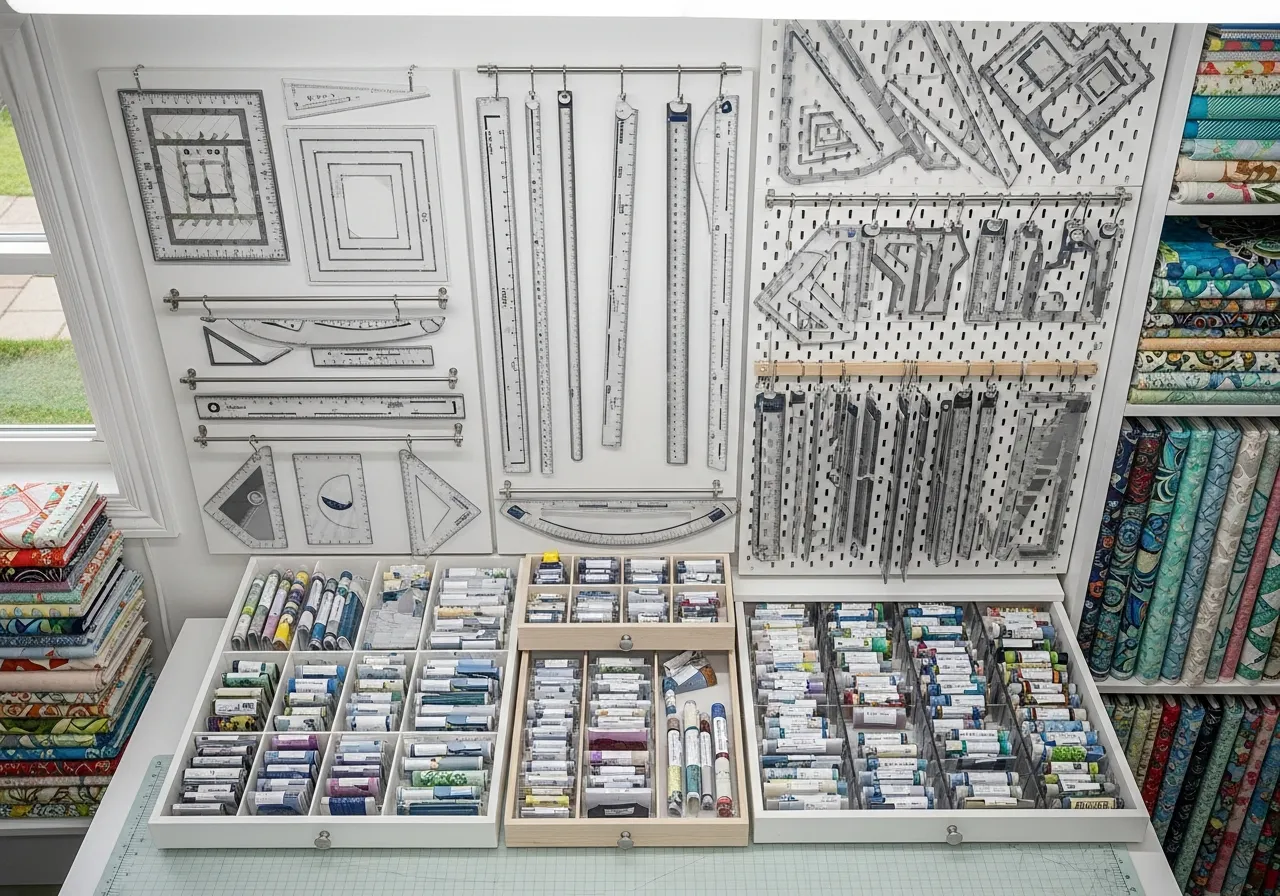
9+ Clever Quilting Ruler Storage Ideas
Every quilter knows the frustration of searching through piles of rulers, trying to find the exact size needed for a project. Acrylic quilting rulers are essential tools, but their awkward shapes and transparent nature make them challenging to organize effectively. Without proper storage, these precision instruments can get scratched, their measurement markings can fade, and valuable sewing time gets wasted hunting for the right size.
The solution lies in implementing smart storage systems that keep rulers visible, accessible, and protected. Whether you have a dedicated sewing room or work in a compact corner, the right storage approach transforms chaos into efficiency. This comprehensive guide presents innovative storage solutions ranging from simple DIY projects to sophisticated organizational systems, helping you create a workspace where every ruler has its place and finding what you need takes seconds instead of minutes.
Why Proper Ruler Storage Matters
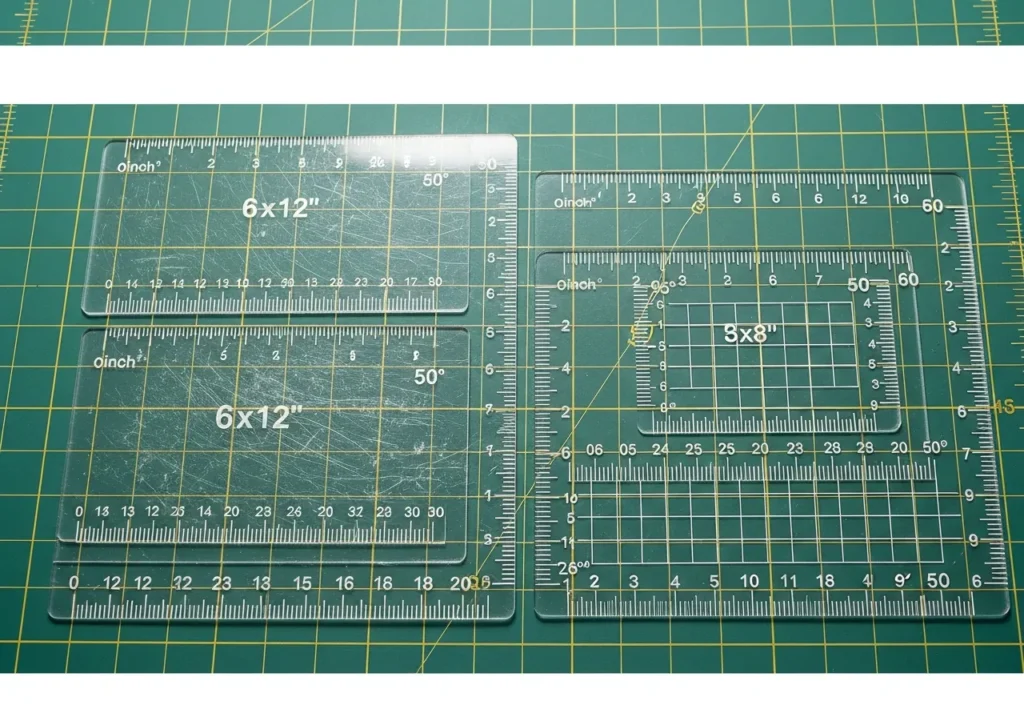
Before diving into specific storage ideas, understanding why ruler organization deserves attention helps prioritize this often-overlooked aspect of quilting setup. Acrylic rulers represent a significant investment for quilters, with quality rulers costing anywhere from fifteen to fifty dollars each. Improper storage leads to scratched surfaces that make measurement lines difficult to read, potentially compromising cutting accuracy.
Beyond protecting your investment, organized ruler storage directly impacts your creative flow. When rulers are readily visible and accessible, project planning becomes more intuitive. You can quickly assess which rulers you own, determine if you need additional sizes, and grab what you need without disrupting your workspace. This efficiency matters especially during time-sensitive projects or when inspiration strikes and you want to move quickly from concept to execution.
The physical safety aspect also deserves consideration. Stacked or loose rulers create hazards in the sewing room. Sharp edges can scratch hands reaching into storage containers, and rulers sliding off surfaces can break or cause injuries. Secure storage eliminates these risks while keeping your creative space pleasant and functional.
Wall-Mounted Ruler Display Systems
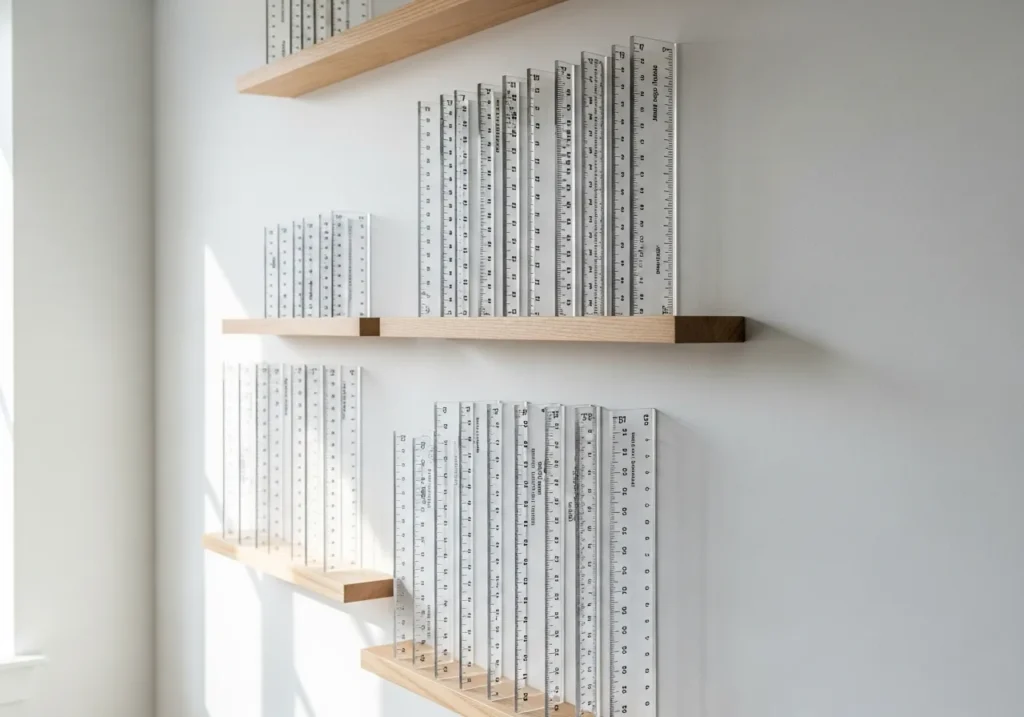
Wall-mounted storage maximizes vertical space while keeping rulers completely visible and instantly accessible. This approach works particularly well in sewing rooms where wall space exceeds surface area, turning previously unused vertical real estate into functional storage.
A popular wall-mounted solution involves installing narrow shelves with lips or rails that hold rulers upright. These shelves typically measure three to four inches deep, just enough to support ruler width without protruding excessively into the room. The lip prevents rulers from sliding forward, while the vertical orientation displays each ruler’s measurements clearly. You can install multiple shelves at different heights, creating a comprehensive ruler library on a single wall section.
Another effective wall approach uses strips of wood with routed grooves or slots cut at regular intervals. Each slot holds one ruler, keeping them separated and preventing scratching. This system requires basic woodworking skills but allows complete customization based on your ruler collection size. The groove depth should accommodate ruler thickness while holding them securely enough that they do not fall out with normal vibration or movement.
For renters or those wanting flexibility, removable adhesive strips combined with clear acrylic pockets create damage-free wall storage. The pockets attach to walls without drilling, and rulers slide in and out easily. This solution works well for frequently used rulers that you want within arm’s reach of your cutting table.
Pegboard Organization Solutions
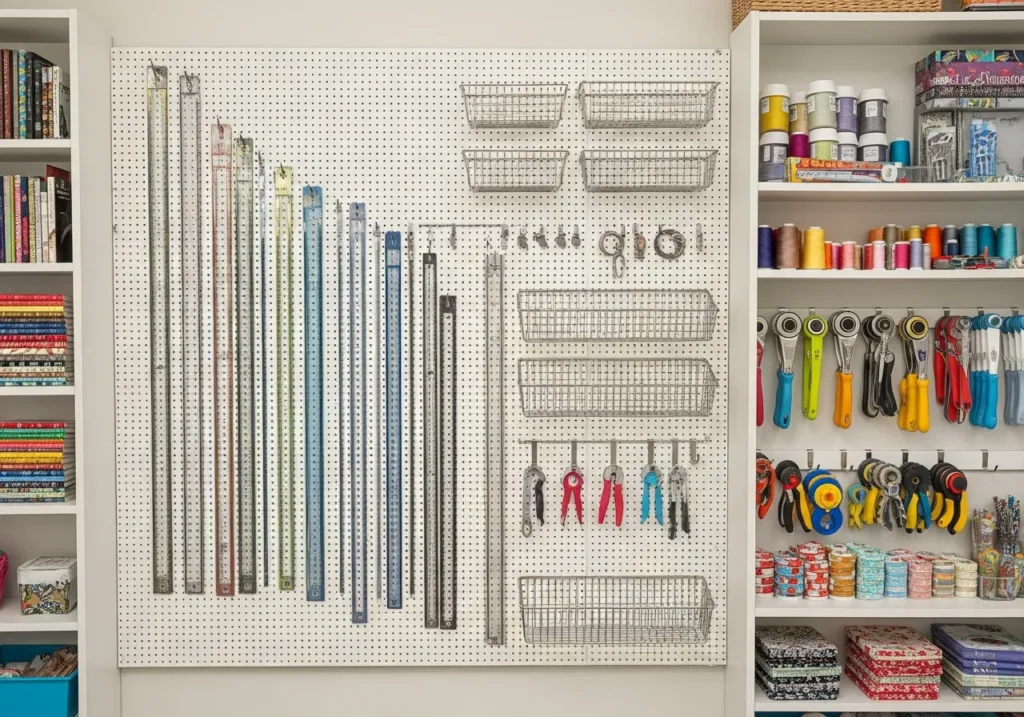
Pegboard systems offer exceptional versatility for ruler storage, allowing you to reconfigure your setup as your collection grows or your needs change. The perforated hardboard accepts various hook and basket configurations, creating custom storage that adapts to different ruler sizes and shapes.
Standard pegboard hooks work surprisingly well for ruler storage. S-hooks or J-hooks positioned vertically create slots where rulers rest securely. The transparent acrylic makes rulers easy to identify even when multiple rulers occupy adjacent hooks. You can arrange hooks to group rulers by size, type, or frequency of use, developing an organizational system that matches your workflow.
Pegboard accessories designed for tools often translate perfectly to ruler storage. Small baskets or bins that hook onto pegboard hold square rulers or specialty shapes that do not work well with standard hooks. Wire shelves provide horizontal surfaces for rulers you prefer to store flat. The modular nature of pegboard means you can experiment with different arrangements until finding what works best for your space and habits.
Painting pegboard in contrasting colors improves ruler visibility. White or light-colored pegboard provides excellent contrast against clear acrylic rulers, while darker colors work well if you prefer a specific aesthetic in your sewing room. Adding labels below hook positions helps maintain organization, especially helpful when multiple people share the space or when you have many similar-sized rulers.
Drawer Divider Systems
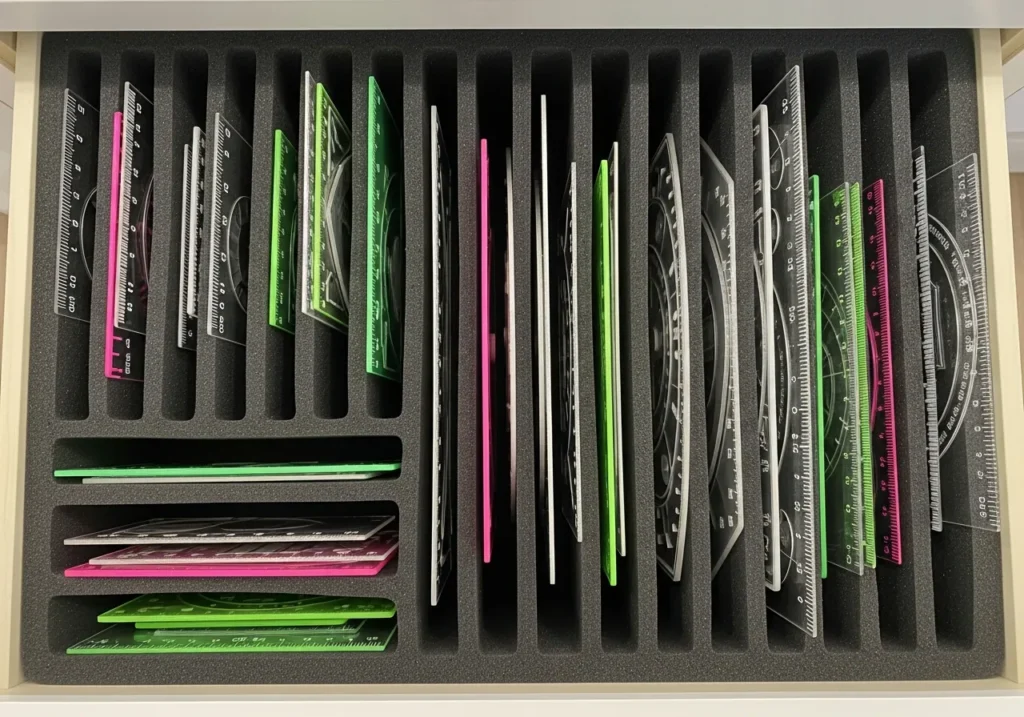
Drawer storage keeps rulers protected from dust and damage while maintaining a clean, uncluttered workspace appearance. The key to successful drawer storage lies in proper dividers that prevent rulers from sliding around and scratching against each other.
Custom-cut foam inserts provide premium protection for expensive ruler collections. Cut slots sized precisely for each ruler create a fitted storage system where every piece has its designated space. The foam cushioning prevents scratching and absorbs shock if drawers close too quickly. While foam inserts require initial investment in time or money, they offer unmatched protection and organization.
Adjustable drawer dividers offer flexibility for evolving collections. These dividers create vertical slots that hold rulers upright, similar to file folders in a filing cabinet. The upright position keeps measurement markings visible when you open the drawer, allowing quick ruler selection. Adjustable systems accommodate rulers of varying lengths and let you reconfigure compartment sizes as needed.
For budget-conscious quilters, repurposed office supplies work remarkably well as drawer dividers. Expanding file folders, desk organizers, or even sturdy cardboard cut to height create functional divider systems at minimal cost. While less polished than purpose-built solutions, these improvised dividers perform the essential function of keeping rulers separated and organized.
Portable Ruler Storage Cases

Quilters who attend classes, retreats, or sewing groups need portable storage that protects rulers during transport while remaining organized and accessible. Several approaches balance portability with functionality.
Dedicated ruler cases designed specifically for quilting rulers provide padded protection and organizational pockets. These cases typically feature clear plastic sleeves that hold individual rulers, allowing you to see your collection without opening compartments. Handles and shoulder straps facilitate easy carrying, while sturdy construction protects against drops and bumps during travel.To see more ideas visit Suzy Quilts.
Art portfolio cases adapted for ruler storage offer an economical alternative to specialized products. These large, flat cases originally designed for protecting artwork provide ample space for even the largest quilting rulers. Interior dividers or added fabric pockets customize the space for ruler storage. The professional appearance and durable construction make portfolio cases excellent for quilters who frequently transport their tools.
Rolling storage carts create mobile ruler storage for home studios or traveling to local venues. Multi-drawer carts on wheels keep rulers organized in individual drawers while allowing you to move your entire collection easily. Position the cart beside your cutting table during work sessions, then roll it aside when you need floor space for other activities.
Magazine Holder Modifications
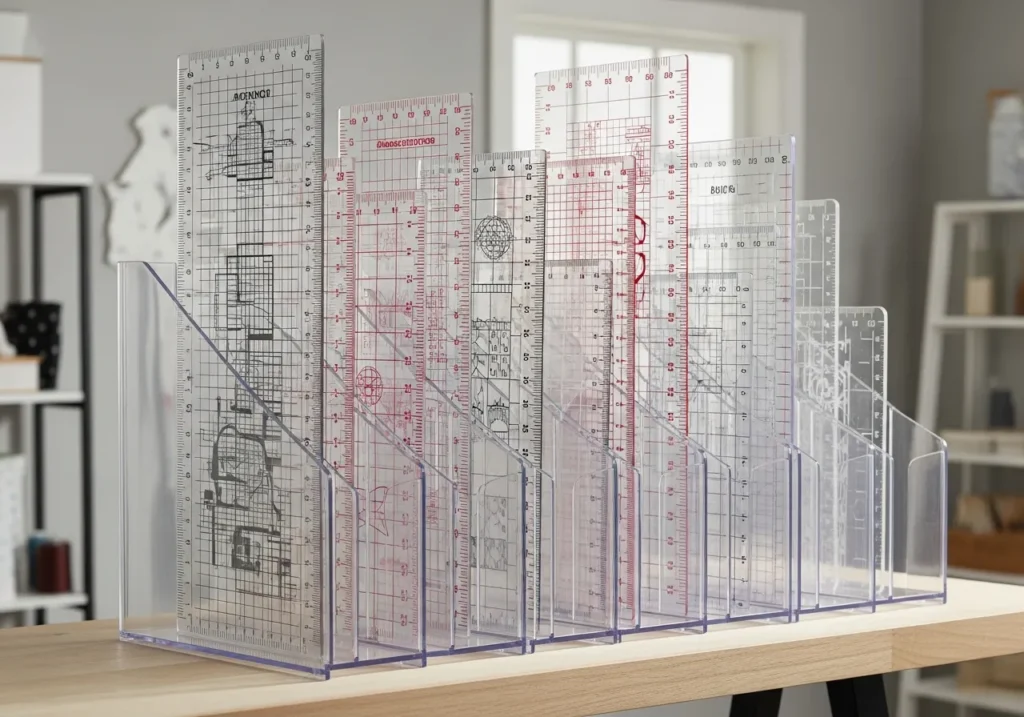
Office magazine holders provide surprisingly effective ruler storage with minimal modification. These readily available products hold rulers upright and visible while taking up minimal surface space.
Standard plastic or metal magazine holders work well for smaller ruler collections. Place holders on shelves or directly on your cutting table, organizing rulers by size or frequency of use across multiple holders. The open top allows easy access, while sides prevent rulers from tipping over. Clear plastic holders offer the advantage of seeing rulers from multiple angles.
Mounted magazine holders create space-saving wall storage. Install holders horizontally on walls beside your cutting table, turning them into ruler slots. This approach works particularly well for long rulers that might be awkward in traditional vertical storage. The horizontal orientation also allows you to store multiple thin rulers together in a single holder.
Decorative magazine holders let you match ruler storage to your sewing room aesthetic. Woven baskets, patterned cardboard holders, or painted wooden versions transform functional storage into decorative elements. This approach works especially well in multi-purpose spaces where sewing areas share room with other activities.
Towel Bar and Rod Systems
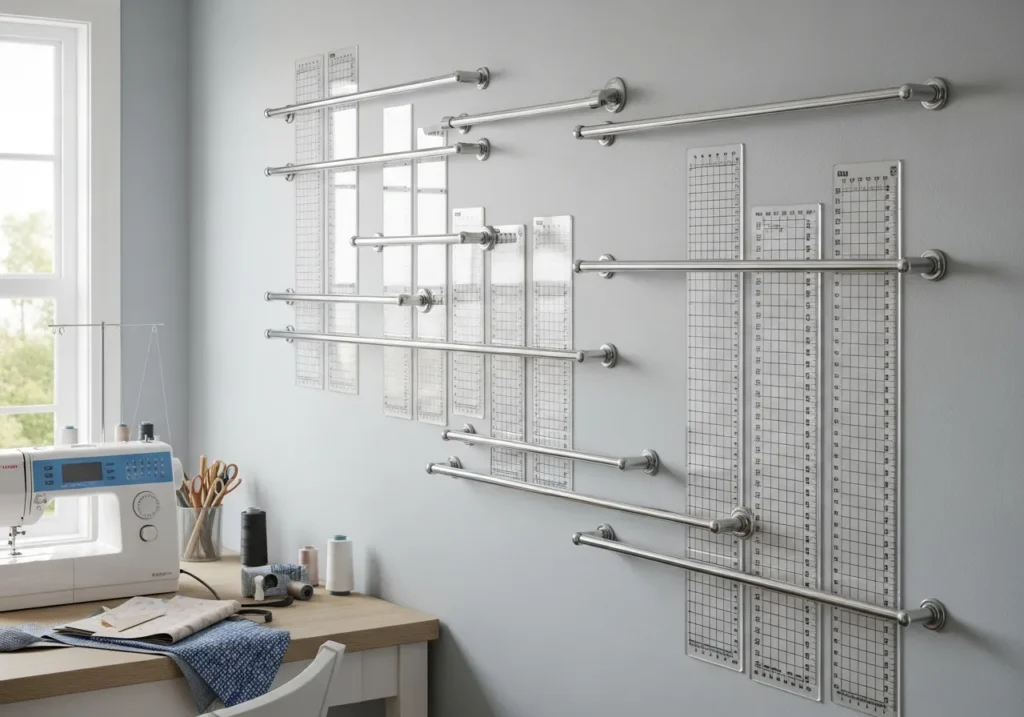
Simple towel bars or rods create effective ruler storage using hardware available at any home improvement store. This approach offers excellent visibility while using minimal depth, perfect for narrow walls or spaces behind doors.
Mount towel bars horizontally at comfortable heights, then lean rulers against the wall with the bar preventing them from sliding down. Multiple bars installed at different heights accommodate various ruler lengths. The narrow profile means this storage protrudes only an inch or two from the wall, maximizing floor space.
Tension rods installed inside cabinets or between walls create hidden ruler storage. Position rods to hold rulers vertically, similar to a filing system. This solution works well when you want rulers protected inside cabinets but still easily accessible. The tension mounting requires no permanent installation, ideal for rental situations.
Decorative hooks combined with horizontal rods create hybrid storage. Install a rod, then add S-hooks along its length. Each hook holds one or more rulers, and you can adjust spacing based on ruler sizes. This system combines the accessibility of open storage with some of the organizational benefits of divided systems.
Under-Table and Behind-Door Storage
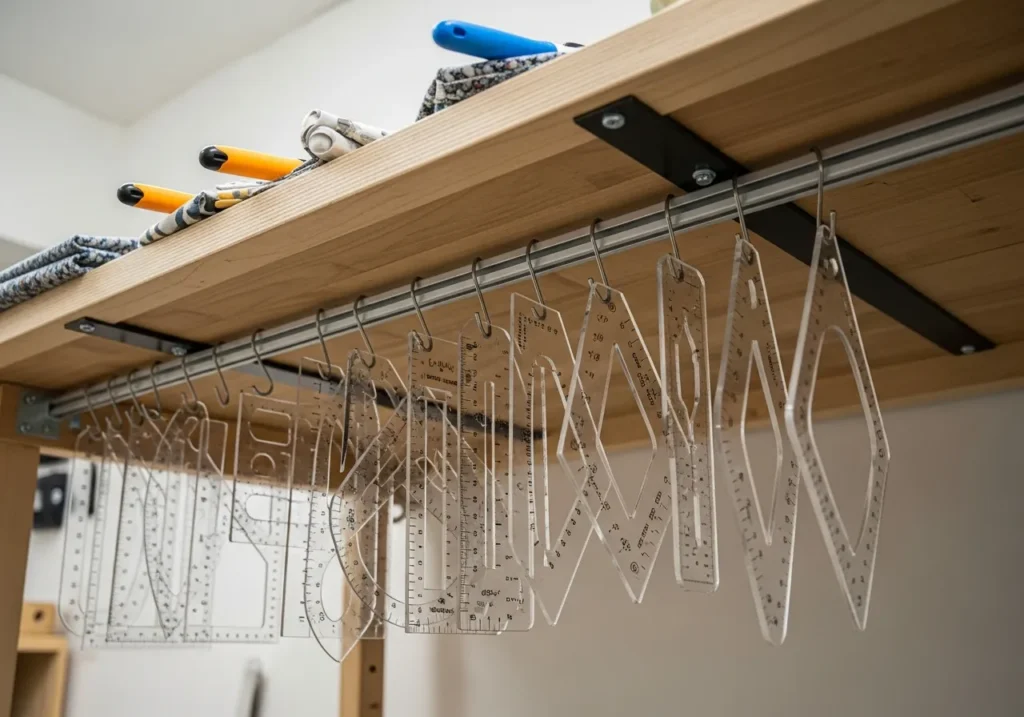
Utilizing overlooked spaces maximizes storage without consuming valuable work surfaces or floor area. The spaces beneath tables and behind doors offer surprising storage potential for ruler collections.
Under-table mounting brackets or rails create hidden storage that keeps rulers immediately accessible while working. Install slim shelves or rail systems on the underside of your cutting table, positioning rulers within easy reach without cluttering the table surface. This location works particularly well for frequently used rulers that you want available without leaving your cutting position.
Over-the-door organizers originally designed for shoes or accessories adapt perfectly for ruler storage. Clear pocket versions allow you to see rulers through the plastic, while solid fabric pockets can be labeled for organization. Door storage works especially well in small spaces where every wall needs to serve multiple purposes.
Behind-door pegboard installations utilize the full height of doors while remaining hidden when doors stay open. Cut pegboard to fit door dimensions, then install hooks or baskets as described earlier. This approach creates substantial ruler storage without claiming any room real estate, since the door already existed.
Lazy Susan and Rotating Storage
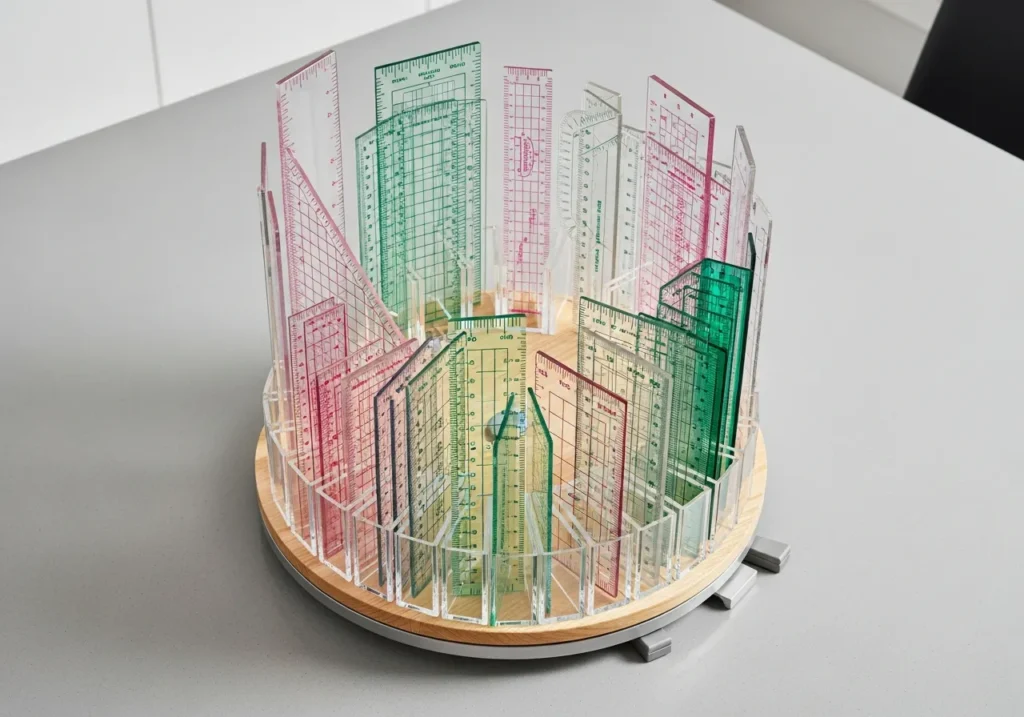
Rotating storage platforms make ruler collections accessible from multiple angles, particularly useful when storage sits in room corners or central positions where you approach from different directions.
Lazy Susan turntables placed on shelves or counters hold rulers vertically in added containers. Arrange rulers around the perimeter of the turntable, then rotate to access any ruler quickly. This solution works well for square rulers and frequently used pieces that you want visible from your primary work position.
Rotating floor stands create freestanding ruler storage that you can position anywhere in your sewing room. Multiple tiers on a central rotating post hold rulers at different heights, making efficient use of vertical space. Floor stands work particularly well in rooms with limited wall space or when you want the flexibility to reconfigure your room layout.
Desktop rotating organizers designed for office supplies adapt well to ruler storage. The compartmented sections hold rulers upright, and the compact footprint fits on cutting tables or shelves without dominating the space. This solution suits quilters with smaller collections or those who want their most-used rulers immediately at hand.
Custom Cabinet Solutions
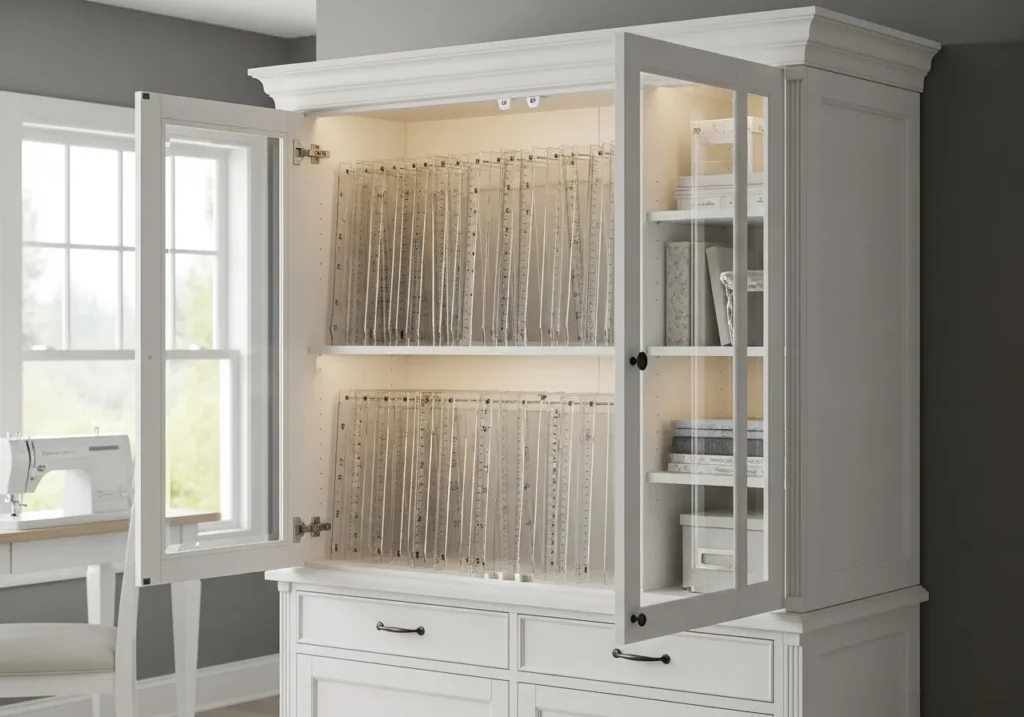
Purpose-built cabinet storage provides the ultimate in ruler organization, combining protection, visibility, and aesthetic appeal. While requiring more investment and planning than other options, custom cabinets create lasting organizational systems tailored precisely to your needs.
Pull-out cabinet drawers with vertical dividers combine the protection of enclosed storage with excellent visibility. Dividers hold rulers upright, and the pull-out mechanism brings the entire collection forward for easy viewing and selection. Soft-close drawer slides prevent jarring impacts that might damage rulers. This approach works especially well when renovating existing sewing rooms or building new cabinets.
Glass-front cabinet doors protect rulers from dust while maintaining visibility. Install rulers vertically on narrow shelves inside cabinets, then add glass doors for protection. The glass allows you to see your entire collection without opening doors, streamlining ruler selection. Interior cabinet lighting further enhances visibility, particularly for darker acrylic rulers.
Corner cabinet installations maximize often-wasted corner spaces. Triangular shelves or lazy Susan mechanisms in corner cabinets provide surprising storage capacity in compact footprints. Corner solutions work well in rooms where straight wall space comes at a premium but corners remain underutilized.
Combining Storage Solutions for Complete Organization
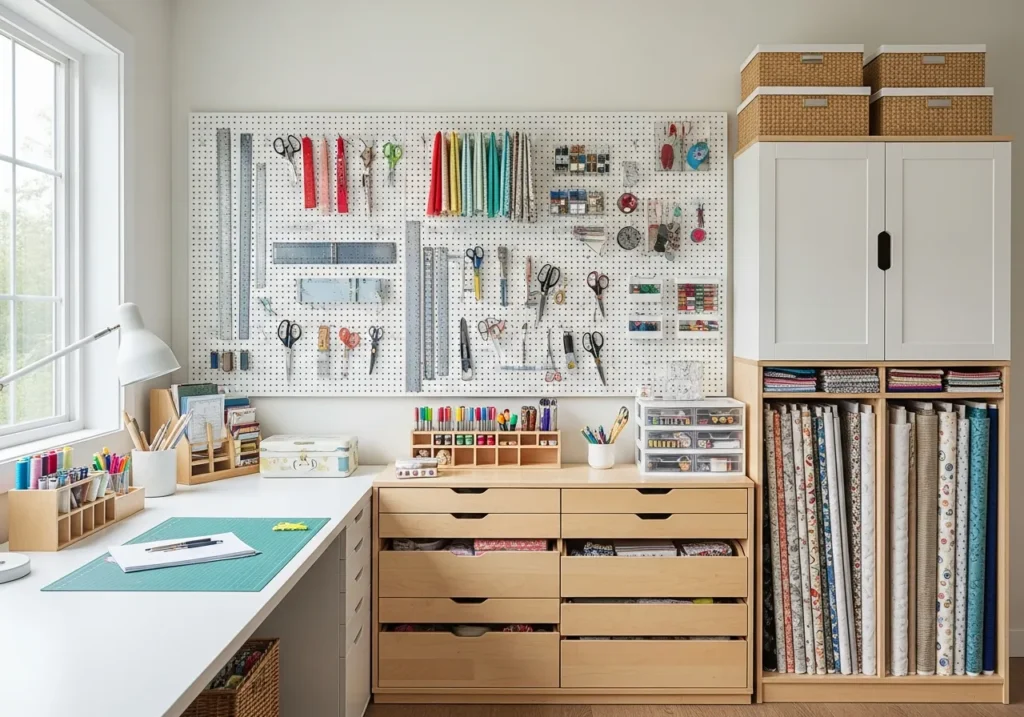
Most quilters benefit from combining multiple storage approaches rather than relying on a single method. A hybrid system accommodates different ruler types, usage frequencies, and available spaces while creating comprehensive organization.
Store frequently used rulers in easily accessible locations like wall-mounted displays or desktop organizers positioned beside your cutting table. These rulers remain visible and within arm’s reach during projects, minimizing interruptions to your workflow. Reserve this prime storage for your handful of most-reached-for sizes.
Medium-use rulers work well in drawer systems or cabinet storage where they remain protected but accessible within a few steps. These rulers appear regularly in projects but do not warrant occupying premium workspace real estate. Organized drawer or cabinet storage lets you find these rulers quickly when needed while keeping your work area uncluttered.
Specialty rulers and rarely used sizes belong in higher storage locations or portable cases that can be retrieved when specific projects require them. These rulers might include large cutting mats with rulers, specialty angle rulers, or unusual shapes you purchased for specific techniques. Storing them separately prevents them from cluttering everyday storage while keeping them available when needed.
Creating Your Personal Ruler Storage System
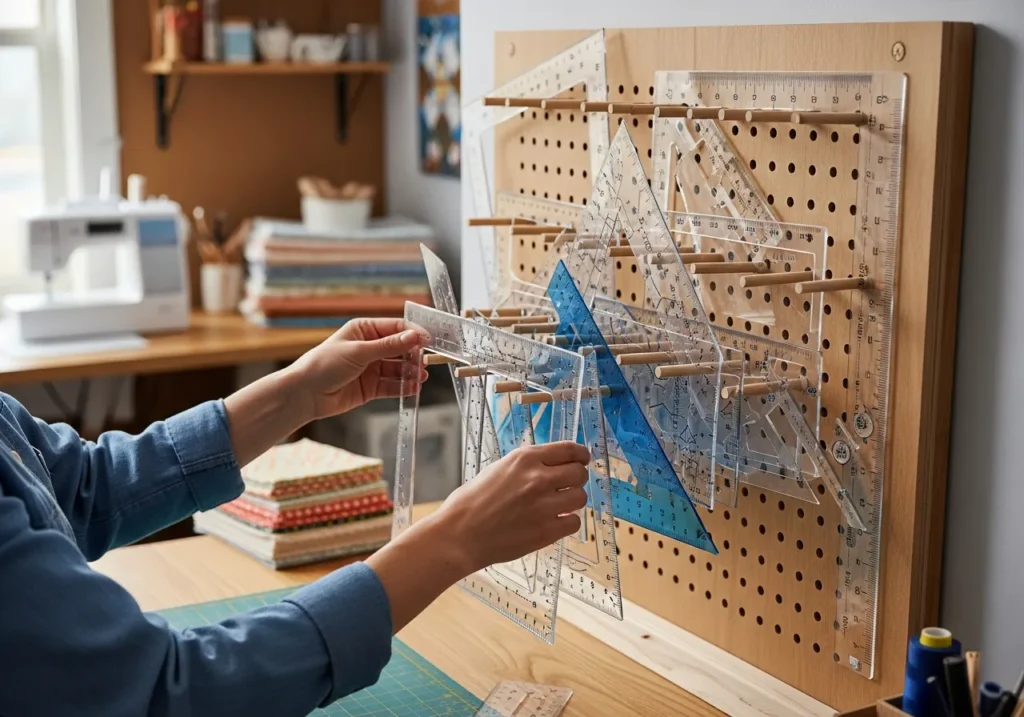
Developing effective ruler storage begins with assessing your specific situation. Count your rulers and measure their dimensions to understand storage requirements. Consider your room layout, available wall space, and whether you need portable storage for classes or travel.
Evaluate your workflow patterns. Do you tend to use the same few rulers repeatedly, or do you rotate through your collection regularly? Do you plan projects carefully, gathering all tools before starting, or do you work more spontaneously, grabbing rulers as inspiration strikes? Your personal style influences which storage approaches will serve you best.
Start with one storage solution and expand gradually. Installing a pegboard or purchasing magazine holders creates immediate improvement without overwhelming commitment. As you use the initial system, you will discover what works well and what needs adjustment, allowing you to refine your approach before investing in more extensive solutions.
Label storage locations and maintain consistency in where you return rulers after use. Even the best storage system fails if rulers do not return to their designated spots. Developing the habit of immediate ruler return prevents gradual disorganization and maintains the benefits of your storage system long-term.
Conclusion
Effective quilting ruler storage transforms your creative space from frustrating to functional. Whether you implement simple magazine holders or invest in custom cabinets, organized ruler storage saves time, protects your tools, and enhances your quilting experience. The strategies presented here offer solutions for every space, budget, and organizational preference, ensuring you can find approaches that work for your unique situation.
The best storage system balances accessibility with protection, keeps rulers visible for quick selection, and fits naturally into your workflow. Start by implementing one or two ideas that address your most pressing storage challenges, then expand your system as needs evolve. With rulers properly organized, you spend less time searching and more time creating, making every quilting session more productive and enjoyable.
Frequently Asked Questions
What is the best way to store quilting rulers to prevent scratching?
Store rulers vertically with dividers or spacers between them, or use individual slots in pegboard or foam insert systems. Avoid stacking rulers directly on top of each other. Drawer storage with foam inserts provides maximum scratch protection, while wall-mounted systems with adequate spacing between rulers also work well.
How can I organize rulers in a small sewing space?
Focus on vertical and hidden storage solutions like wall-mounted pegboards, over-the-door organizers, or under-table mounting systems. Magazine holders on shelves use minimal footprint while keeping rulers accessible. Consider storing specialty rulers in portable cases that can be tucked away when not actively needed.
Should I store rulers horizontally or vertically?
Vertical storage generally works better for most quilting rulers because it maximizes space efficiency, keeps measurement markings visible, and allows easier access. However, very long rulers may work better stored horizontally on wall-mounted bars or in large drawers to prevent tipping or bending.
How do I keep clear acrylic rulers visible in storage?
Use contrasting backgrounds like white pegboard or painted shelves that make transparent rulers stand out. Wall-mounted storage with open fronts provides better visibility than enclosed drawers. Adding small colored tape strips to ruler edges can help identify specific sizes quickly without affecting usability.
What is the most budget-friendly ruler storage solution?
Magazine holders from office supply stores offer excellent value, typically costing just a few dollars while providing immediate organization. Repurposed office dividers in drawers or simple pegboard with basic hooks also create functional storage at minimal cost. DIY solutions using cardboard or wood scraps cost almost nothing while providing effective organization.


2 Comments