
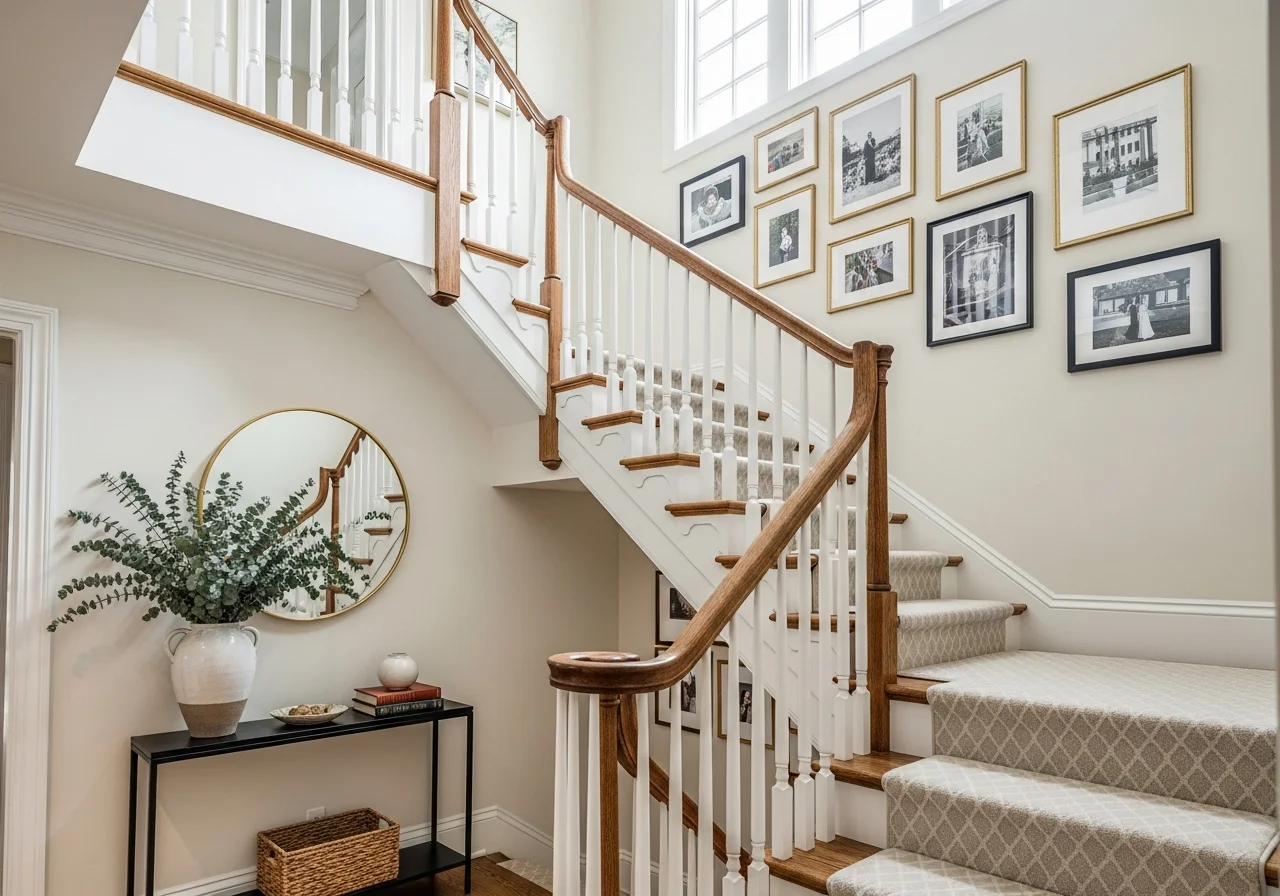
10+ Stylish Decorating Ideas for Stairs and Hallways
There is something deeply telling about the way most homeowners approach interior design. Living rooms get carefully curated. Bedrooms are styled with attention to every detail. Kitchens are renovated with precision and love. And yet, the hallway gets a coat of paint and whatever leftover furniture happens to fit. The staircase, meanwhile, is treated as nothing more than a functional passage from one floor to the next. This is a missed opportunity of remarkable proportion.
Your hallway is the first space anyone enters when they walk through your front door. It sets the tone, creates an impression, and quietly tells every guest something about who you are and how you live. Your staircase, in turn, is often one of the most architecturally prominent features in the entire home. Together, these two spaces form a continuous visual and physical journey through your house. When they are decorated with intention and care, they become some of the most striking areas you own.
This guide brings together more than ten proven decorating ideas for stairs and hallways. Whether you are working with a narrow entryway, a modest staircase, or a sprawling two-story foyer, these strategies will help you transform overlooked corridors into genuinely impressive spaces. No fad trends, no impractical suggestions. Just thoughtful, timeless ideas grounded in real design principles.
Build a Gallery Wall Along the Staircase
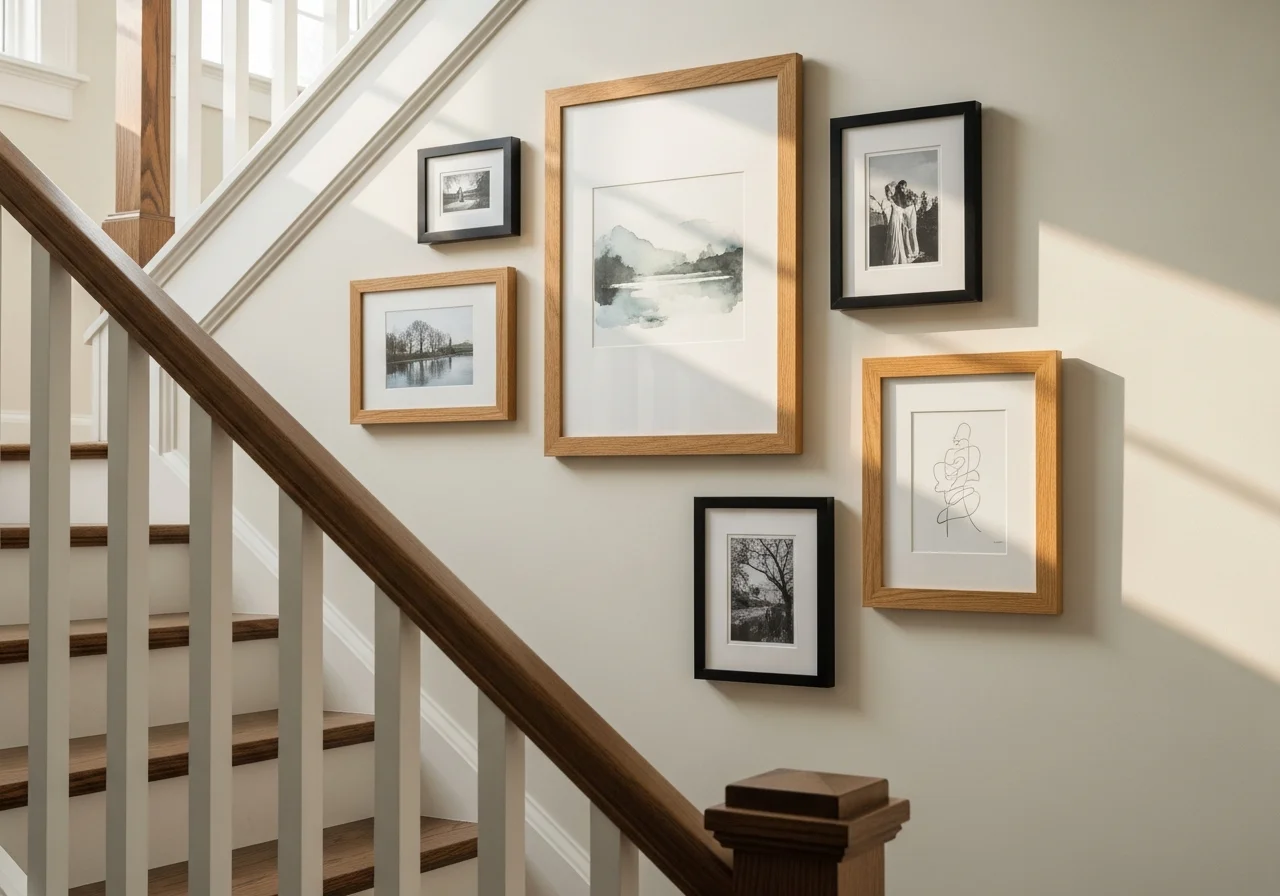
The staircase gallery wall has become one of the most popular and enduring decorating ideas in recent years, and for good reason. The long, slanted wall that runs alongside most staircases is essentially a blank canvas waiting to be filled, and a gallery wall makes use of it in a way that is both deeply personal and visually striking.
The key to pulling this off well lies in planning before you hang anything. Start by measuring your wall space and laying out your frames on the floor to experiment with arrangement. Use painter’s tape on the floor to mirror the dimensions of the wall, then arrange your pieces within that outline until the composition feels balanced. A common rule of thumb is to keep frames roughly two to three inches apart so that they read as a cohesive collection rather than scattered individual pieces.
You have two broad layout options to consider. A symmetrical grid arrangement works beautifully in modern or minimalist homes, using frames of uniform size and matching finishes for a clean, structured look. An organic or asymmetrical layout, on the other hand, suits eclectic or traditional homes and allows you to mix frame sizes, styles, and subject matter. In either case, anchoring the arrangement with one or two larger statement pieces gives the eye a natural resting point and prevents the wall from feeling cluttered.
Frame color matters more than most people realize. All-black or all-white frames create an instant sense of cohesion, while mixing wood tones, gold, and black introduces warmth and visual texture. Family photographs, fine art prints, travel snapshots, and even children’s artwork all work side by side, provided they share a loose thematic or color connection.
Install a Stair Runner for Warmth and Style
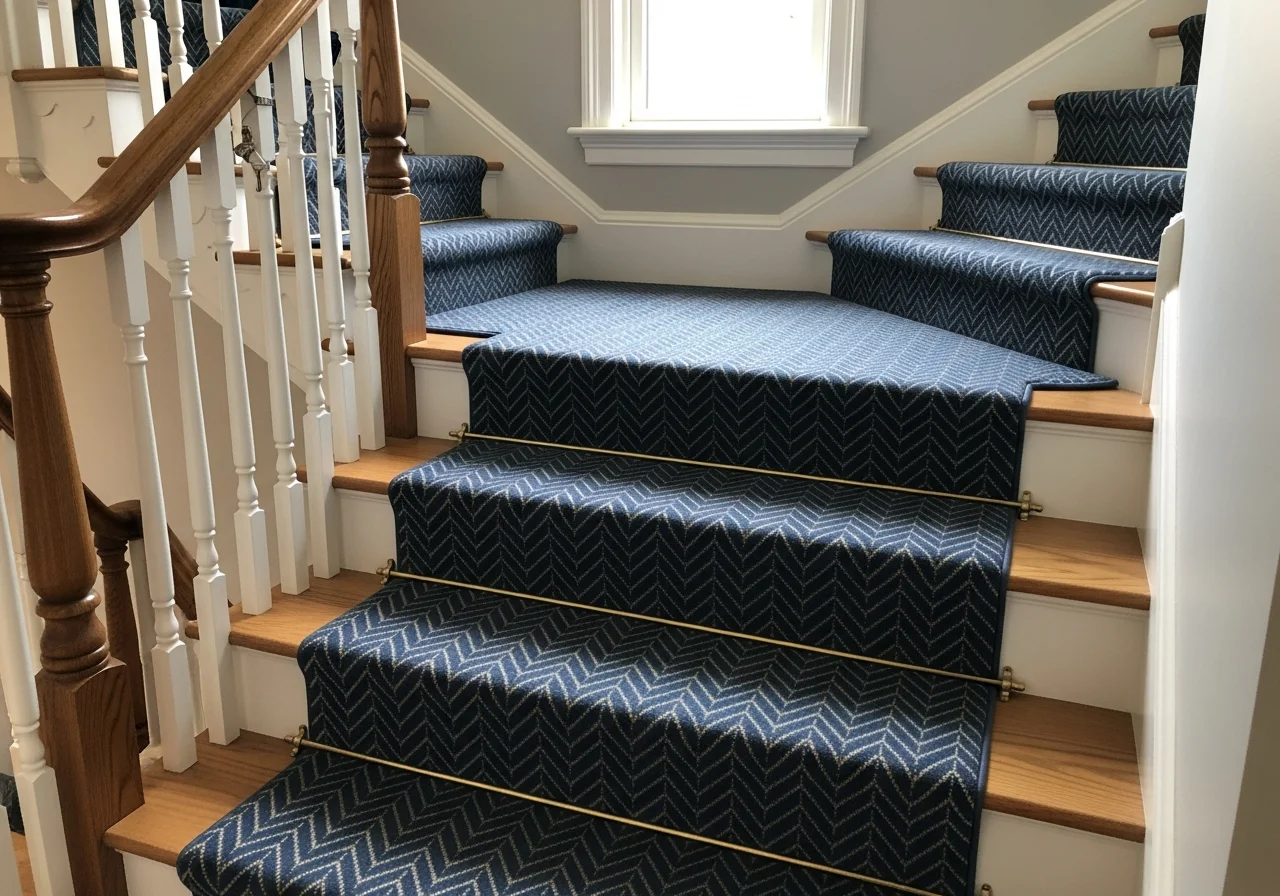
A bare wooden or carpeted staircase can feel both cold and visually flat. A stair runner changes that entirely. It adds warmth underfoot, protects the stair treads from wear, and introduces color and pattern to a space that often lacks both.
When choosing a runner, consider the overall color palette of your home rather than selecting something in isolation. A bold geometric pattern can energize a neutral staircase, while a classic stripe or subtle texture pairs well with more traditional interiors. Materials like wool and polypropylene offer excellent durability for high-traffic areas, and both are available in a wide range of styles and price points.
Proper installation matters for both safety and appearance. A runner should be professionally secured with tack strips or adhesive designed for stairs, and it should extend fully to the edge of each tread so that no one trips on a curled or loose edge. If you prefer a softer landing at the top and bottom of your staircase, extending the runner onto the landing floor creates a seamless transition.
Wallpaper Your Stair Risers
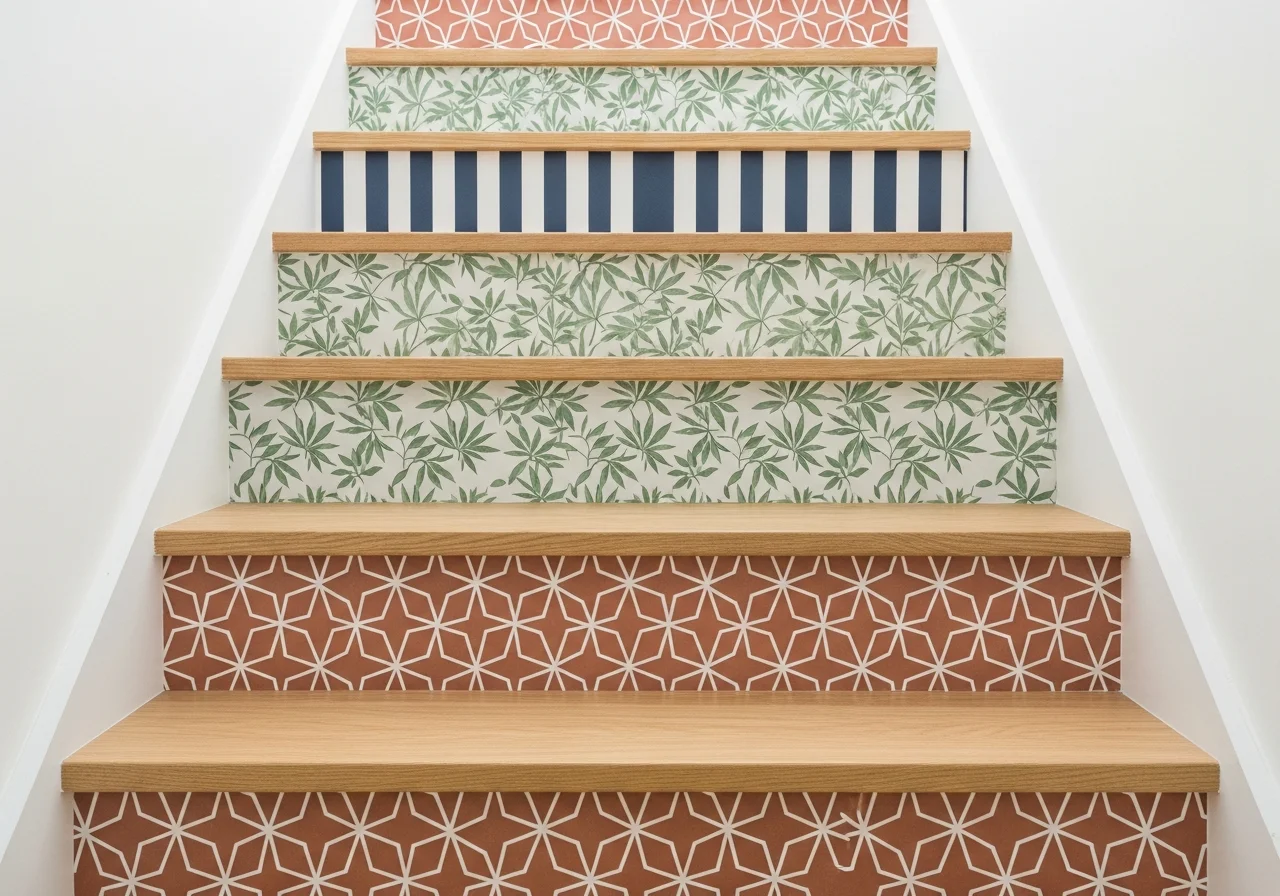
The vertical face of each stair step, known as the riser, is one of the most frequently overlooked surfaces in any home. Wallpapering these risers is a relatively simple project that delivers an outsized visual payoff.
Peel-and-stick wallpaper has made this idea accessible to virtually anyone. You need only measure each riser individually, as risers on the same staircase can vary slightly in both height and width. Cut strips to fit, clean the surface thoroughly, and apply from the bottom of the staircase upward. Patterns with smaller repeats work best on risers because the narrow height of each surface does not allow larger motifs to display fully.
The effect is immediate and striking. A bold stripe on white risers paired with natural wood treads creates a classic contrast. A botanical or geometric pattern can add personality without overwhelming the space. For renters, peel-and-stick options mean the transformation is entirely temporary and leaves no lasting damage to the surface beneath.
Use Mirrors Strategically in the Hallway
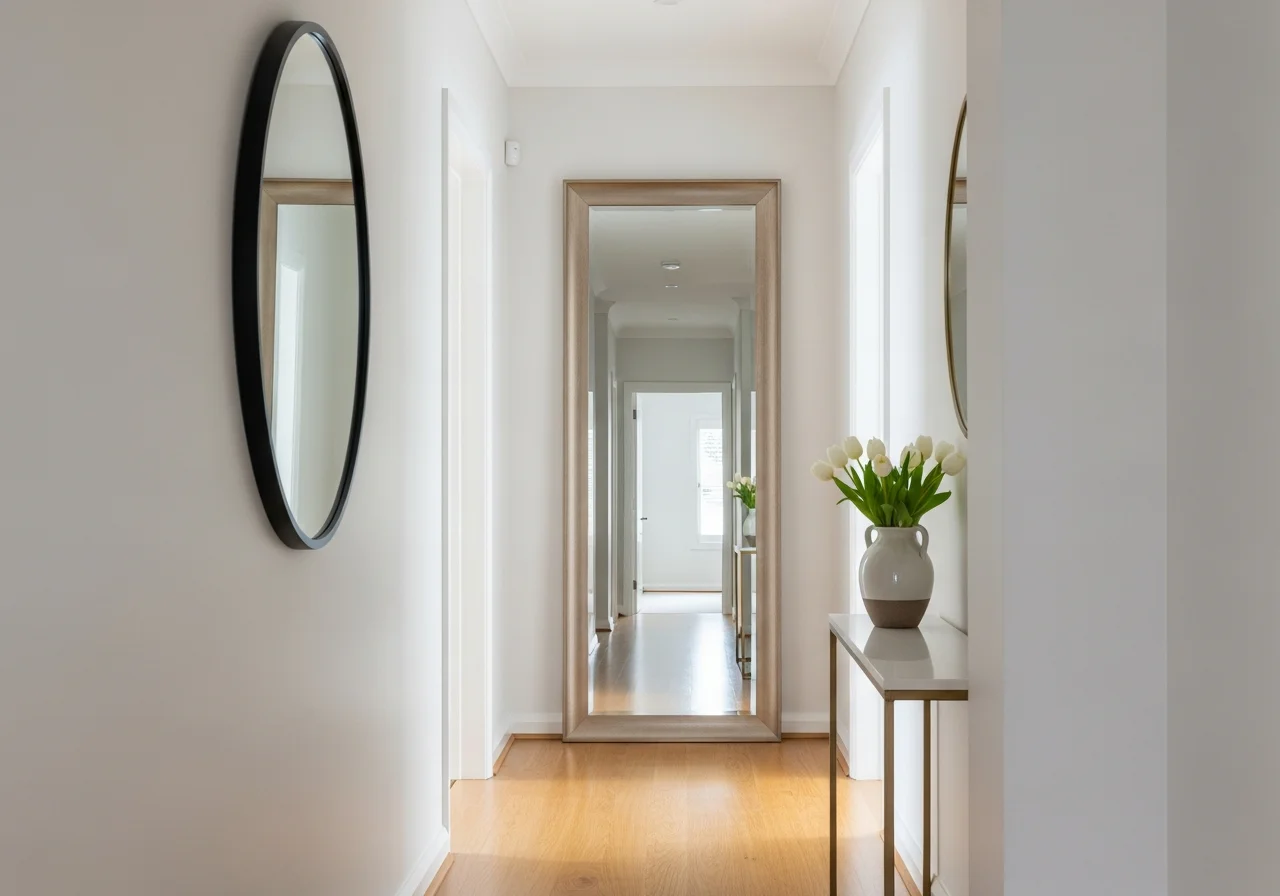
Mirrors are among the most reliable tools available for making a narrow or dim hallway feel significantly larger and brighter. They reflect both light and space, creating the visual impression of depth where there is none.
A tall, slim mirror placed against the wall at the end of a hallway draws the eye forward and elongates the room. A round or oval mirror mounted at eye level adds a softer, more decorative quality. If your hallway receives little natural light, positioning a mirror opposite a window or near a light source amplifies the glow considerably.
Beyond function, mirrors also serve as stylish focal points. An ornate gold-framed mirror on a plain white wall becomes a statement piece in its own right. A collection of smaller mirrors in varying shapes, arranged in an asymmetrical cluster, creates a layered, gallery-style effect without the need for artwork.
Layer Your Lighting with Purpose
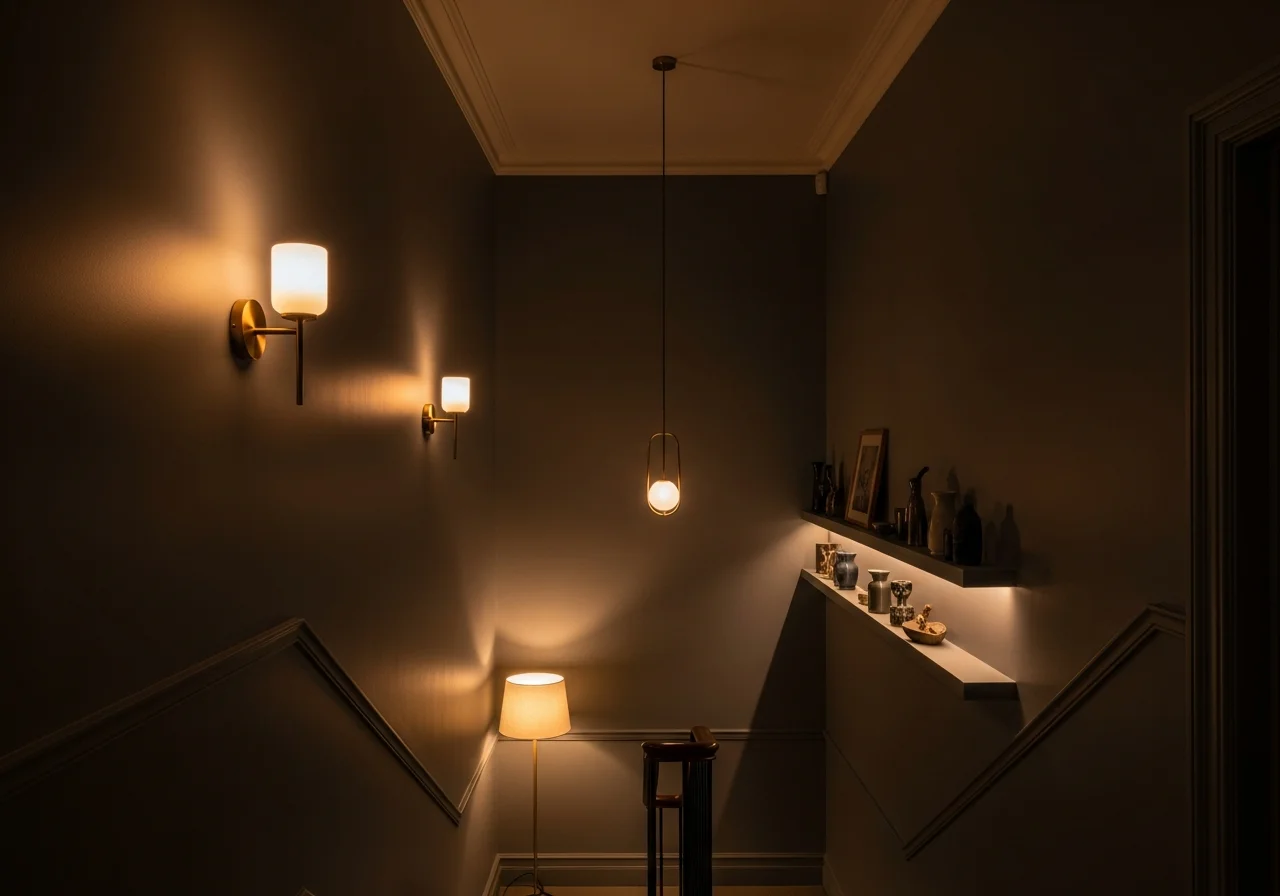
Hallways and staircases tend to be among the darkest spaces in any home, and inadequate lighting makes them feel cramped, uninviting, and even unsafe. Thoughtful lighting, layered from multiple sources, transforms the entire atmosphere of these spaces.
Wall sconces are a natural choice for hallways. They sit flush against the wall, add visual interest without encroaching on floor space, and can be selected in styles ranging from industrial to elegant brass. For staircases, pendant lights or chandeliers hung at staggered heights create a dramatic focal point, particularly in homes with high ceilings. Recessed lighting along the ceiling provides even, ambient illumination that is especially effective in narrow corridors.
Do not overlook accent lighting either. Small picture lights above artwork, LED strip lights beneath floating shelves, or a slim floor lamp tucked into a corner at the base of the stairs all contribute warmth and dimension. A dimmer switch on hallway lighting is a simple addition that allows you to shift the mood from bright and functional during the day to soft and inviting in the evening.
Add a Console Table or Slim Entryway Furniture
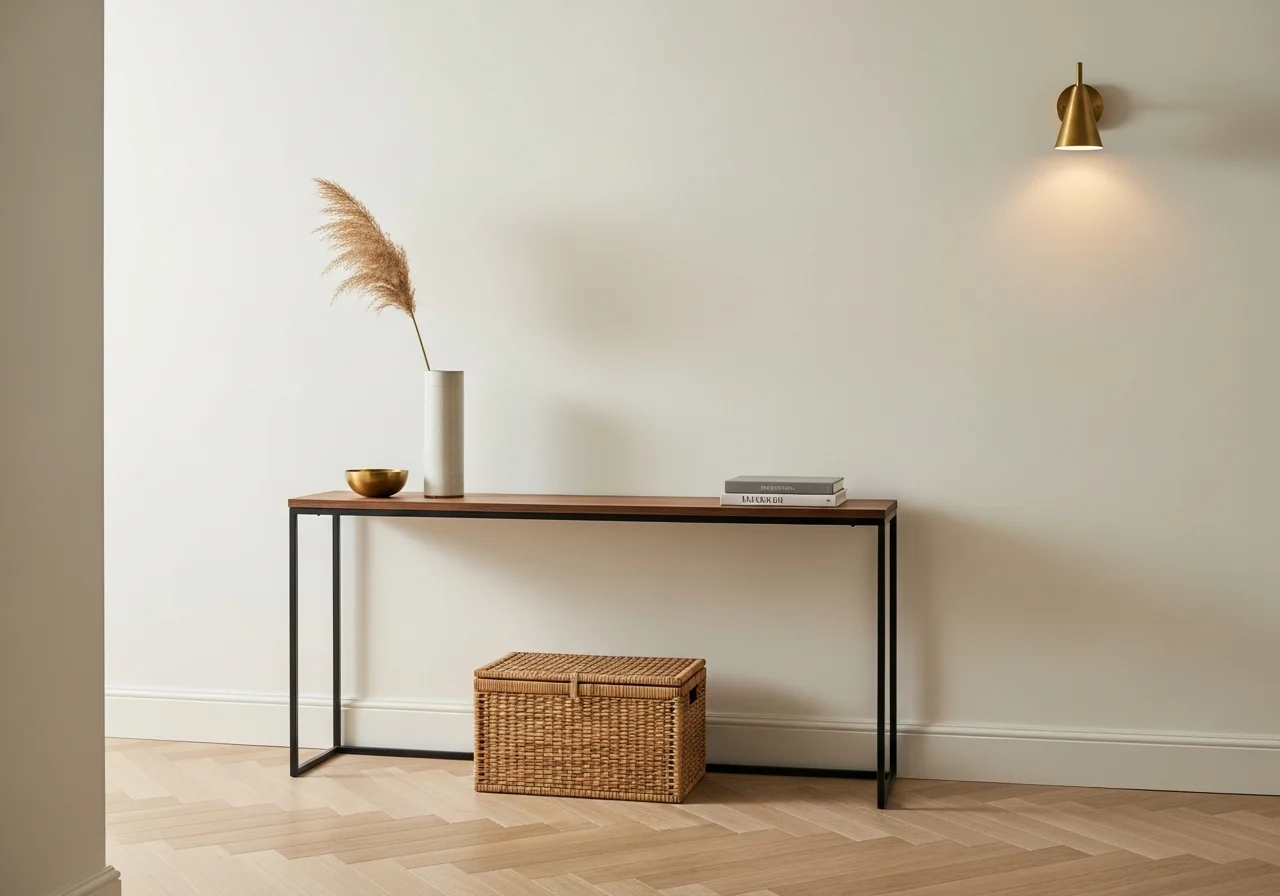
A hallway without any furniture feels incomplete, like a room that has not yet been moved into. A console table is the single most versatile piece of furniture you can place in this space. It provides a surface for keys, mail, a small vase of flowers, or a decorative object, and it anchors the hallway visually without blocking the path.
The critical consideration is depth. In a narrow hallway, a console table deeper than ten to twelve inches will begin to feel obstructive. Look for designs with slim metal or glass legs, which keep the space feeling open and airy even when the table itself is substantial in length. A bench with built-in storage beneath it serves a similar anchoring purpose while also offering a practical place to sit when putting on shoes.
Styling the console table is where your personal taste comes in. A single sculptural vase, a small stack of books, and a trailing plant create a relaxed, organic arrangement. A pair of matching candle holders or a ceramic bowl add symmetry and calm. The goal is restraint. A console table in a hallway should feel curated, not cluttered.
Paint with Bold Color or Create an Accent Wall
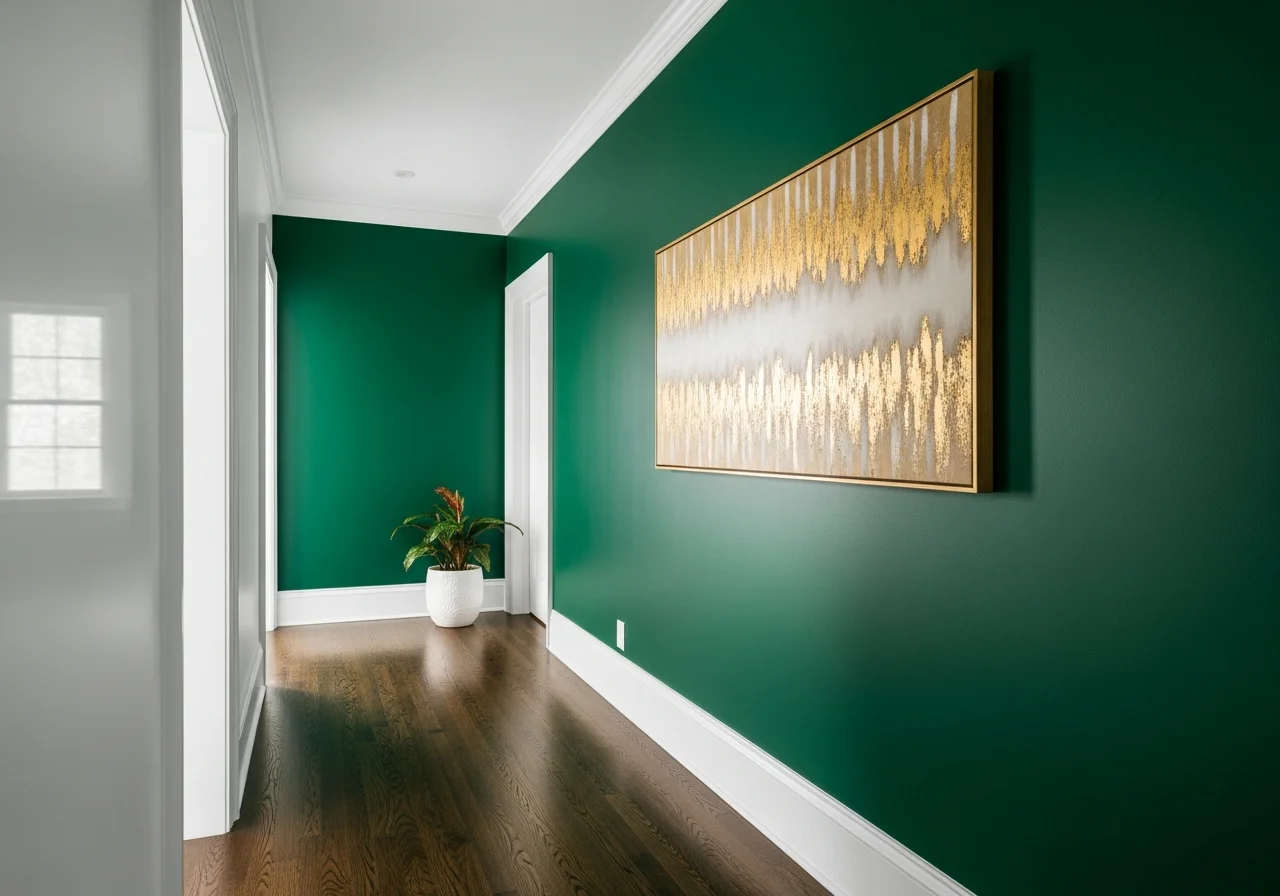
The psychology of color works powerfully in enclosed spaces like hallways. Lighter tones expand the perceived width of a narrow corridor and keep the space feeling bright, which is why soft whites and warm neutrals remain popular choices. But darker, richer colors tell an equally compelling story when used with confidence.
A deep navy, forest green, charcoal, or warm terracotta on the hallway walls creates an enveloping, intimate atmosphere. When paired with lighter trim, white door frames, and well-chosen lighting, these bold hues feel dramatic rather than oppressive. The hallway becomes a moment of transition, a space that feels intentionally different from the rooms it connects.
An accent wall, whether painted or wallpapered, offers a middle ground. Choosing one wall in the hallway or the landing at the top of the staircase and treating it as a feature surface allows you to introduce pattern or color without committing the entire space. Wallpaper with large botanical prints, geometric designs, or textured finishes all work exceptionally well on a single feature wall.
Maximize Under-Stair Storage
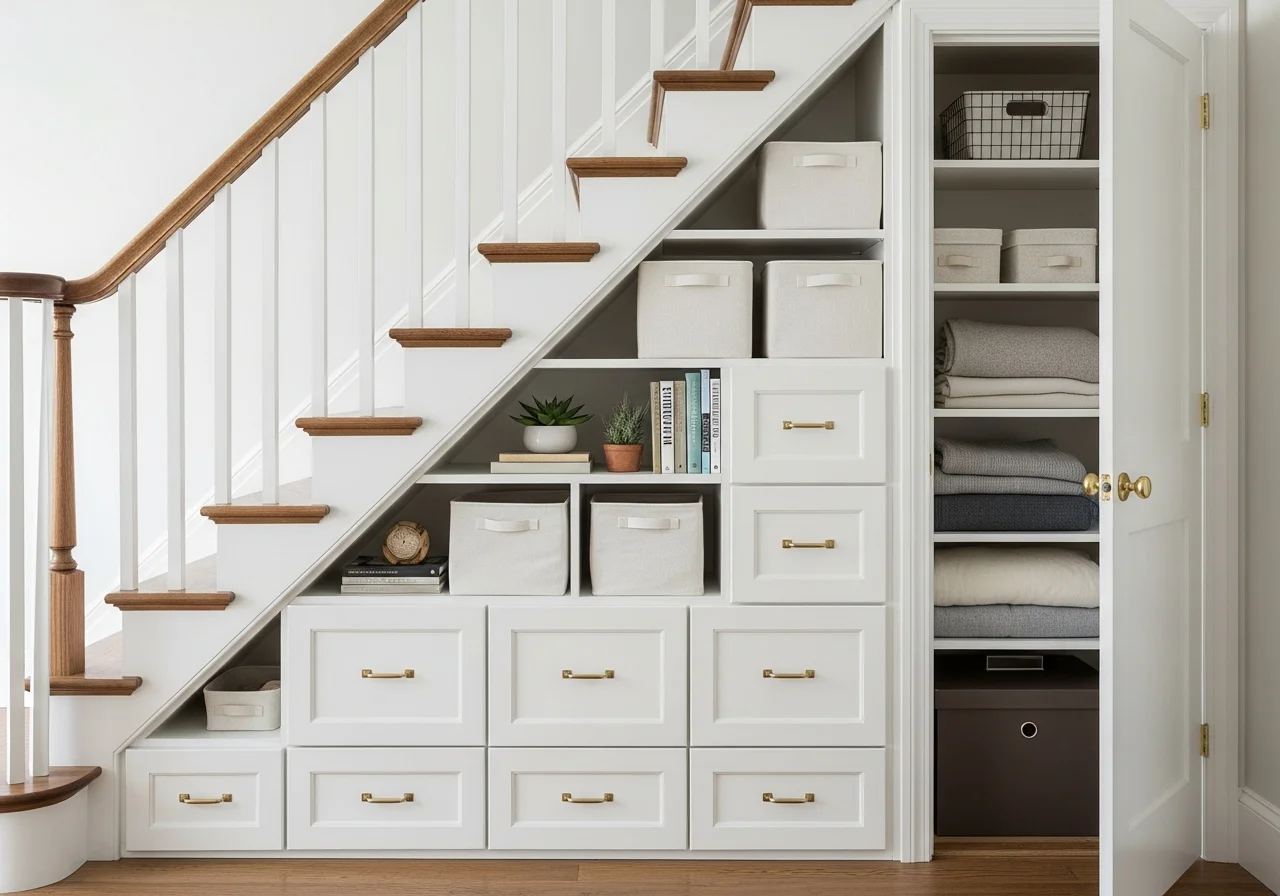
The space beneath a staircase is one of the most consistently underused areas in any home. In modest houses especially, this triangular void represents significant potential for organized, attractive storage.
Pull-out drawers built into the risers allow you to store seasonal items, shoes, or household supplies without cluttering the hallway floor. A single door at the base of the staircase opens into a surprisingly spacious closet that can hold coats, vacuum cleaners, or luggage. For a more open approach, built-in shelving that follows the slope of the stairs creates a display area for books, baskets, or decorative objects. If the space is being renovated, consider a combination of closed cabinets at the back for unsightly items and open shelving at the front for curated collections.
Even without a full renovation, simple additions like a hook rail along the interior wall or a set of stackable bins can transform a dark, forgotten crawl space into a genuinely useful part of your home.
Introduce Wainscoting or Wall Paneling
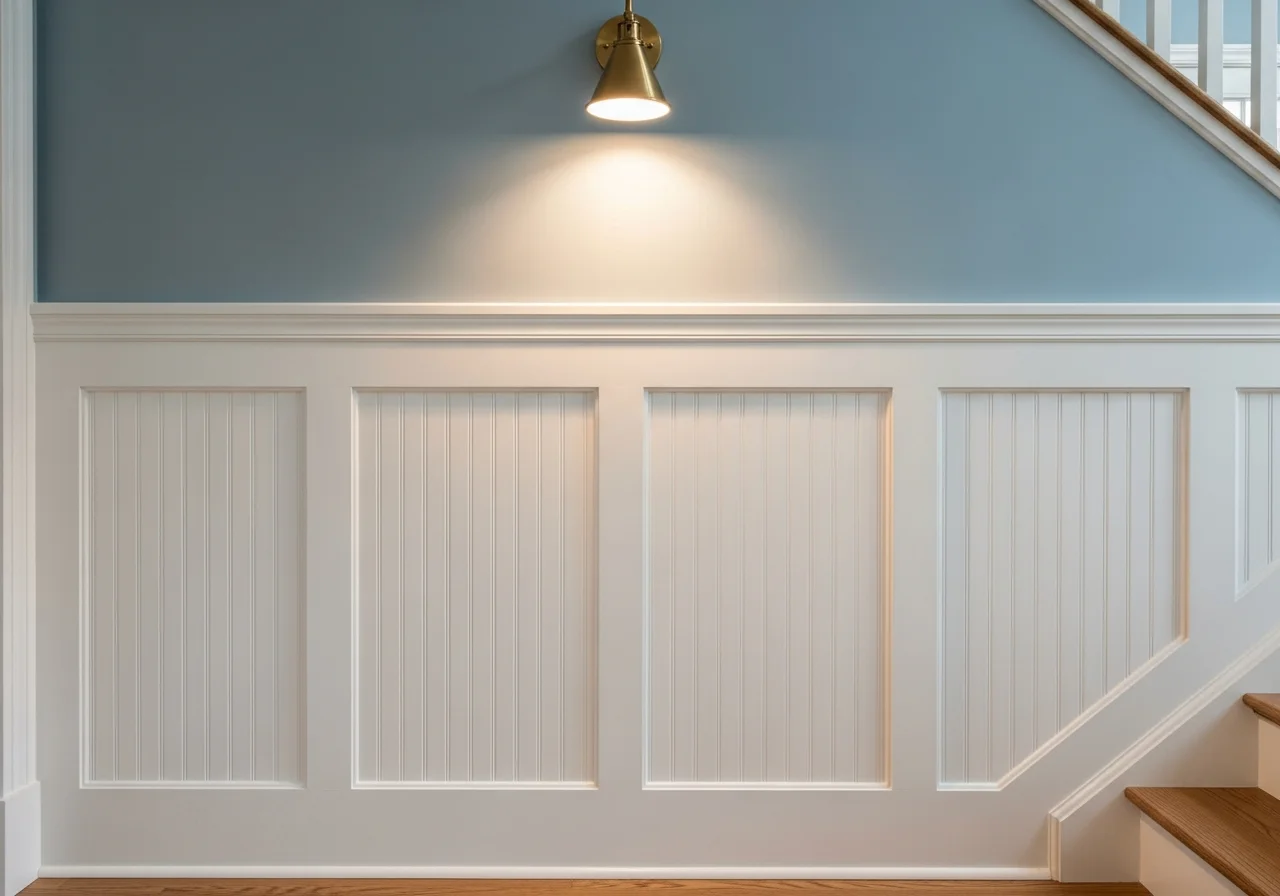
Wainscoting and wall paneling are architectural details that add texture, depth, and a sense of quality to any surface. In hallways and along staircases, they serve a dual purpose: they protect the lower portion of the walls from the scuffs and bumps that inevitably come with a high-traffic corridor, and they introduce visual interest that makes the space feel more finished and considered.
Board and batten is the most accessible style for a do-it-yourself approach. Vertical boards spaced evenly across the lower half of the wall, topped with a horizontal rail, create a clean, classic effect that suits both traditional and contemporary interiors. The entire installation can be painted in white for a timeless look, or in a color that complements the upper wall for a more layered effect.
Paneling on the staircase wall also provides a natural stopping point for a gallery wall mounted above it, preventing frames from being hung too low where they might be knocked or bumped by foot traffic.
Style the Staircase Landing as Its Own Destination
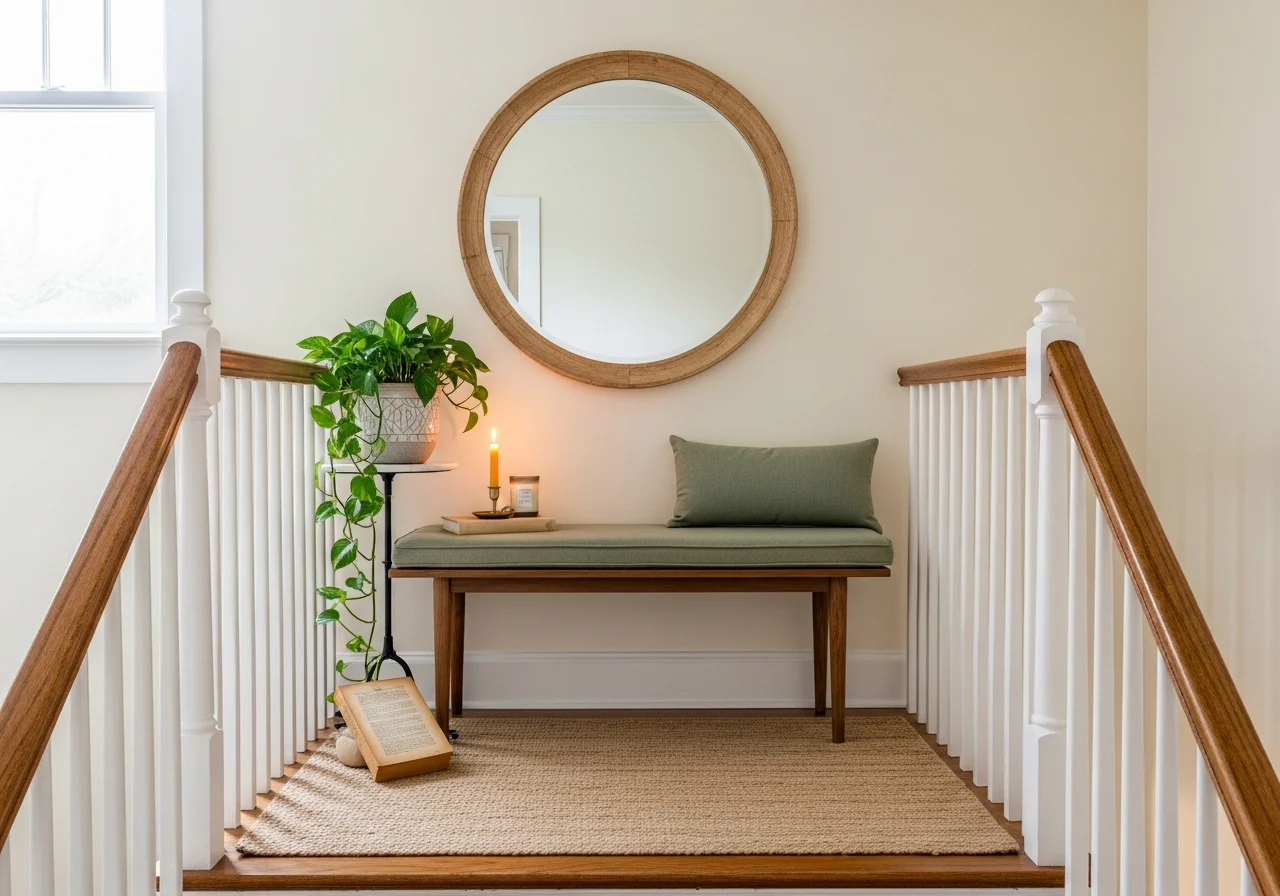
The landing at the top or bottom of a staircase is frequently treated as dead space, an empty patch of floor between one flight and the next. With a small amount of styling, it becomes a genuine pause point in the home, a place where the eye rests and the transition between floors feels intentional.
A small accent table topped with a plant and a few books creates a casual vignette. A bench or a low seat offers a functional element that also adds warmth. A single piece of larger artwork, a sculptural object, or an oversized mirror on the landing wall draws attention upward and makes the space feel like it has been considered as part of the overall design.
The landing also offers an opportunity to reinforce the color or material palette you have established in the hallway and on the staircase. If your stair runner is a warm camel tone, echoing that color in a cushion on the bench or a woven basket on the table creates a thread of continuity that ties the entire vertical journey through your home together.
Choose Flooring That Connects the Spaces
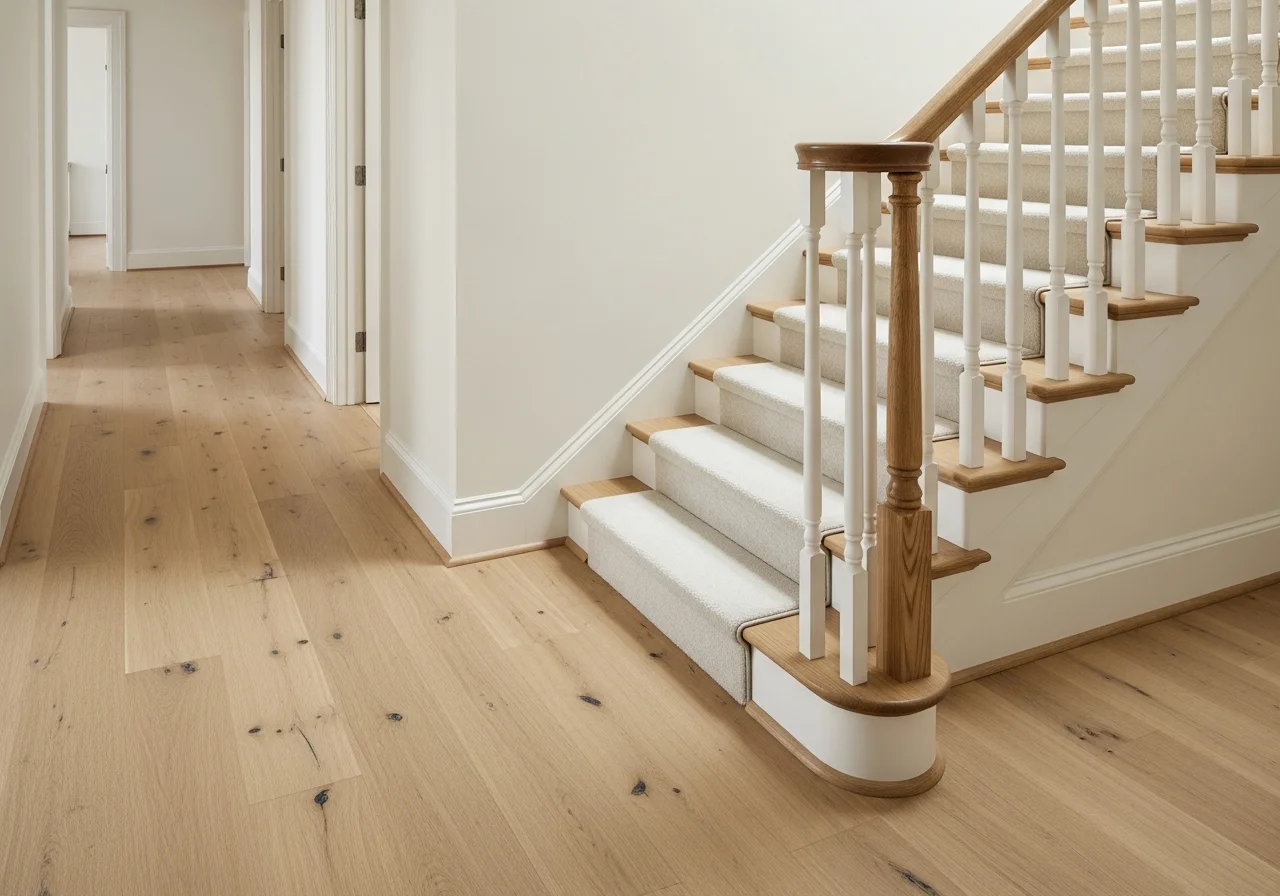
The hallway floor sets the visual baseline for everything above it. A well-chosen flooring material unifies the space and, when it continues onto the staircase treads or the landing, creates a seamless flow that makes the entire area feel larger and more cohesive.
Hardwood remains the most timeless option, offering warmth and durability that improves with age. Luxury vinyl plank flooring has become an increasingly popular alternative, particularly for hallways where moisture and heavy foot traffic are concerns. It replicates the look of wood convincingly and is significantly easier to maintain. Patterned tiles, whether in a classic black-and-white checkerboard or a more adventurous geometric design, bring visual energy to the hallway floor and can extend beautifully onto the risers of the staircase for a dramatic effect.
Whatever material you choose, ensure it is practical for the level of use the space receives. Hallways and staircases are among the highest-traffic areas in any home, and the flooring needs to hold up accordingly.
Conclusion
The hallway and staircase together form the spine of your home. They are the spaces you pass through dozens of times each day, the first impression every guest receives, and the physical connective tissue between every room in the house. Treating them as an afterthought means missing an opportunity to create genuine impact in the places that matter most. For more ideas visit Homeliaa.
The ideas presented here are not meant to be implemented all at once. Start with the changes that resonate most with your current style and budget. A gallery wall here. A runner there. A bold paint color on one wall. Each individual choice compounds the next, and over time, the cumulative effect is a hallway and staircase that feel as considered, as personal, and as beautifully designed as every other room in your home.
The best interiors are not the ones that look perfect on a screen. They are the ones that feel right the moment you walk through the door. That feeling begins in the hallway. It continues up the stairs. And it starts with a single, well-chosen decorating decision.
Frequently Asked Questions
How do I make a narrow hallway feel larger without repainting?
Mirrors are your best tool. A tall mirror placed at the end of the hallway or opposite a light source reflects both space and light, instantly expanding the visual depth of the room. Keeping furniture slim and wall-mounted, and choosing light-colored or reflective accessories, reinforces the effect without touching the paint.
What is the best type of stair runner for a busy household?
Polypropylene runners are exceptionally durable, stain-resistant, and affordable, making them well suited for homes with children or pets. Wool runners offer a more luxurious feel and are also highly durable, though they require a bit more care. In either case, choose a runner with a tight weave and a non-slip backing or have it professionally secured with tack strips for safety.
Can I wallpaper my stair risers if I rent my home?
Yes. Peel-and-stick wallpaper is specifically designed to be removable and residue-free. It adheres well to painted or smooth surfaces and can be peeled off cleanly when you move out. Measure each riser individually before cutting, as even risers on the same staircase can vary slightly in size.
How many pieces should a staircase gallery wall include?
There is no fixed number, but starting with five to seven pieces in the most visible section of the wall gives you a strong foundation. You can add to the collection over time as new photographs or artwork become available. The key is to maintain consistent spacing between frames and ensure the arrangement has at least one or two larger anchor pieces to give the composition visual weight.
What color should I paint my hallway if it gets very little natural light?
Soft whites, warm creams, and light greiges reflect the most light and keep the space feeling open. If you want to introduce color, choose muted, warm tones like soft sage, dusty blue, or pale terracotta rather than cool or very dark shades. Pairing any wall color with good layered lighting, including sconces and a dimmer switch, will do more to brighten a dark hallway than paint color alone.
One Comment