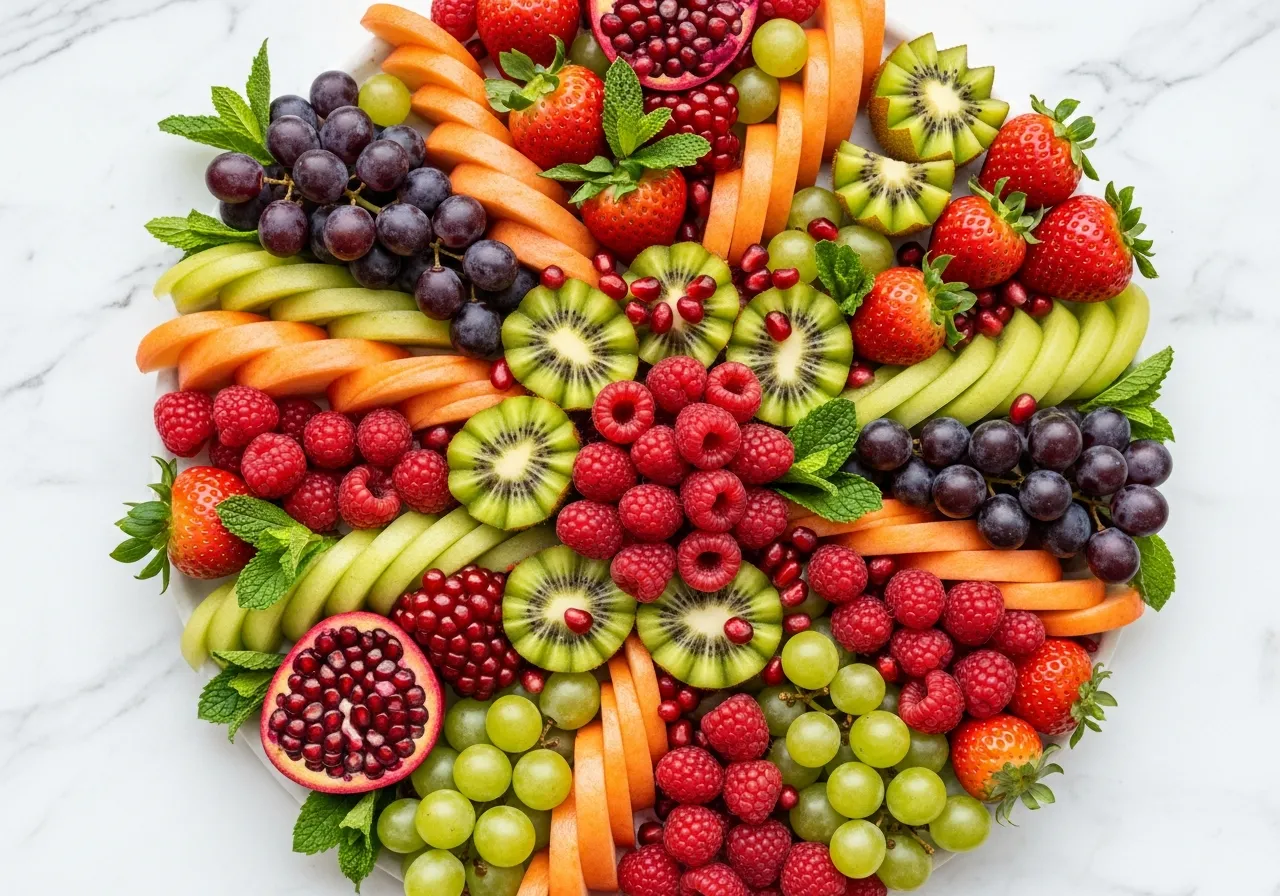
17+ Creative Christmas Fruit Platter Ideas
The holiday season brings countless opportunities to gather with loved ones, and no celebration feels complete without delicious food that captures the festive spirit. While cookies, cakes, and rich entrees often dominate holiday tables, a beautifully arranged Christmas fruit platter offers a refreshing counterbalance that guests genuinely appreciate. These colorful displays provide a healthy option amidst indulgent treats while adding visual appeal that rivals any decorated dessert.
Creating stunning Christmas fruit platters requires minimal cooking skills yet delivers maximum impact. Whether you are hosting a holiday brunch, attending a potluck dinner, or planning a Christmas party, these creative presentations transform ordinary fruit into centerpiece-worthy arrangements. The vibrant reds and greens of seasonal produce naturally complement holiday decor, making fruit platters both practical and beautiful additions to any festive gathering.
This comprehensive guide explores more than seventeen creative Christmas fruit platter ideas that range from simple wreath designs to elaborate three-dimensional displays. You will discover which fruits work best for holiday presentations, learn essential arrangement techniques, and find inspiration for making your own show-stopping fruit creations that guests will remember long after the season ends.
Why Christmas Fruit Platters Are Perfect for Holiday Gatherings
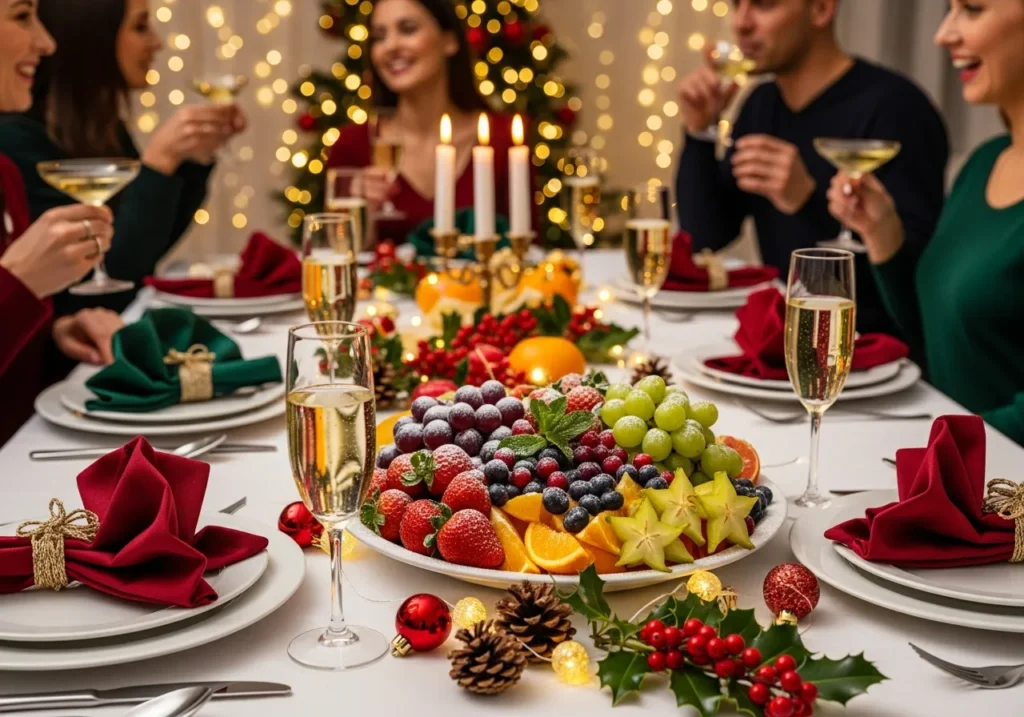
Christmas fruit platters serve multiple purposes at holiday events. They offer a lighter alternative to heavy appetizers and desserts, providing guests with refreshing options that cleanse the palate between richer dishes. Many people appreciate having healthier choices available during a season known for overindulgence, making fruit platters a considerate addition to any menu.
The visual impact of a well-designed fruit platter cannot be overstated. Arranging colorful fruits into festive shapes creates an edible decoration that enhances table presentations without requiring additional centerpieces. These displays work equally well for formal dinner parties and casual family gatherings, adapting seamlessly to different entertaining styles.
Preparation convenience makes fruit platters particularly appealing during the busy holiday season. Most designs can be assembled several hours ahead and refrigerated until serving time, freeing hosts to focus on other preparations. Unlike baked goods that require precise timing, fruit arrangements forgive scheduling flexibility while maintaining their fresh appearance.
Essential Fruits for Holiday Platters
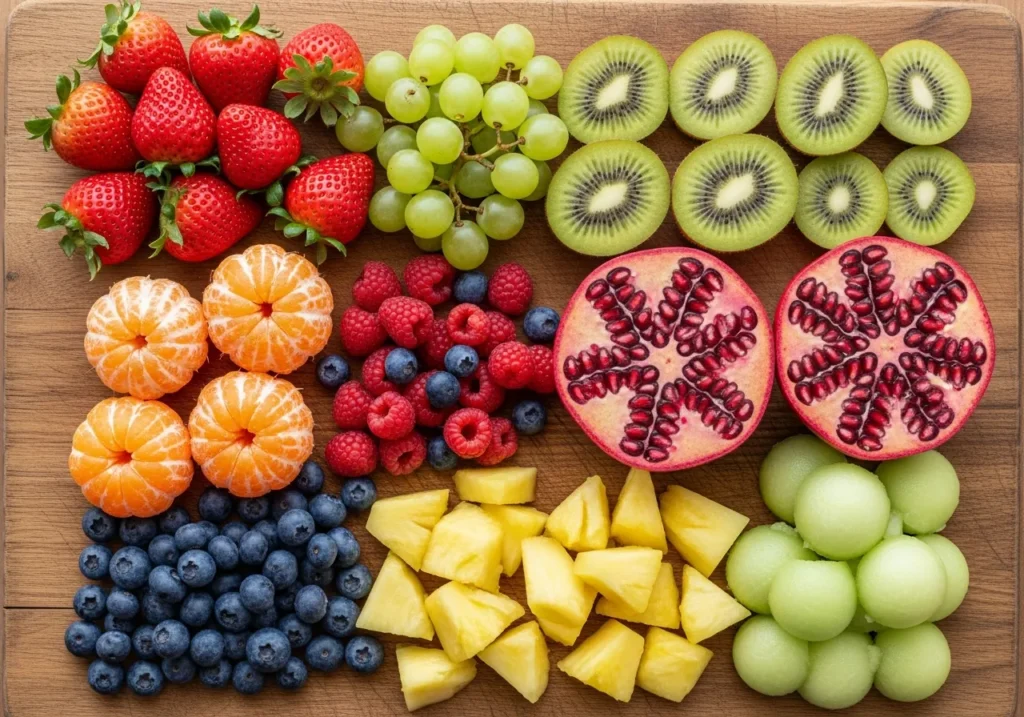
Selecting the right fruits ensures both visual appeal and optimal flavor in Christmas fruit platters. Red fruits naturally evoke holiday colors and should form the foundation of most designs. Strawberries remain the most popular choice, offering vibrant color and familiar taste that appeals to all ages. Fresh raspberries add elegant texture with their jewel-like appearance, while watermelon provides substantial volume and deep crimson color when in season.
Green fruits create necessary contrast and reinforce Christmas color schemes. Green grapes offer convenience since they require no cutting and maintain their shape well during display. Kiwi slices provide striking visual interest with their bright green flesh and distinctive seed patterns. Honeydew melon balls add variety in both color and texture, creating dimensional interest within arrangements.
Accent fruits enhance overall presentation without dominating the design. Blueberries scatter easily to fill gaps and add pops of deep color. Pomegranate arils contribute festive sparkle and sophisticated flavor. Mandarin orange segments bring sunny brightness that complements red and green elements. Pineapple serves dual purposes, providing both yellow accent pieces and structural bases for three-dimensional designs.
When selecting fruit, prioritize seasonal availability and ripeness. Winter months offer excellent citrus options, while berries may cost more but deliver superior visual impact. Choose firm fruits that hold their shape well, avoiding overripe specimens that bruise easily or release excessive moisture during display.
Classic Christmas Wreath Fruit Platter
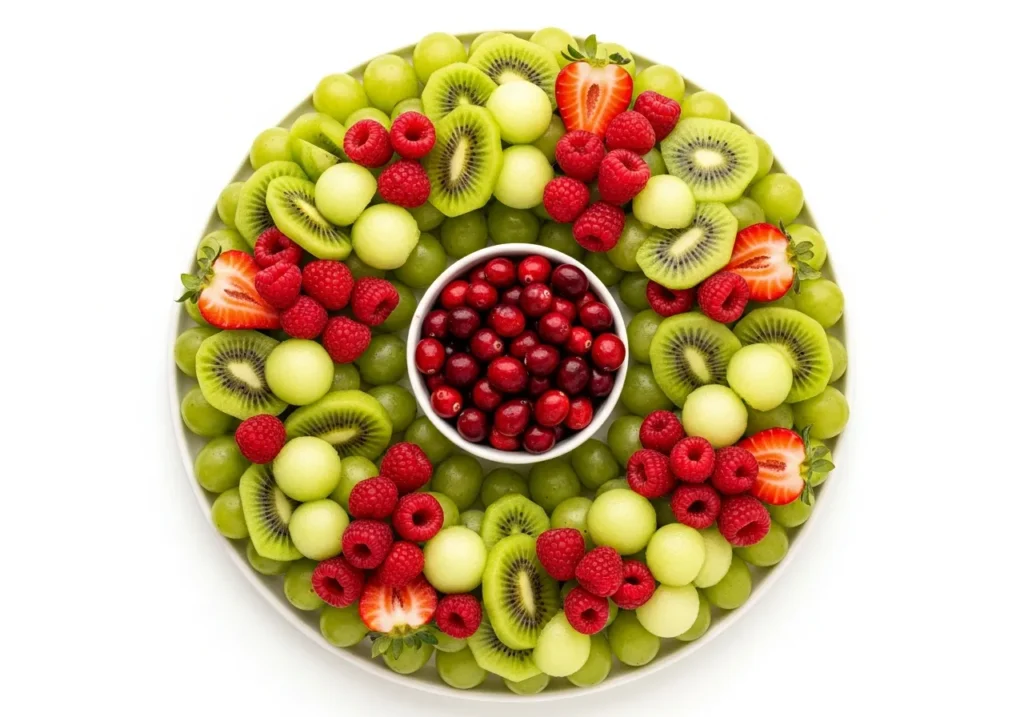
The wreath-shaped fruit platter ranks among the most popular Christmas designs due to its simplicity and striking appearance. This arrangement mimics traditional holiday wreaths using circular fruit formations that require minimal artistic skill yet produce impressive results.
Start by selecting a large round serving platter with a slight lip to prevent fruit from rolling off the edges. Place a small bowl in the center before beginning the arrangement, as this creates the wreath opening and provides space for dip or additional fruit. Choose a bowl size proportional to your platter, typically leaving enough room for a fruit ring approximately three to four inches wide.
Build the wreath ring using predominantly green fruits arranged in a circular pattern around the central bowl. Alternate between green grapes, kiwi slices, and honeydew melon balls to create texture variation and visual interest. Pile fruits generously to achieve fullness, layering them slightly higher than the platter rim for dimensional effect.
Add red berry accents strategically around the green wreath to simulate traditional holiday decorations. Position small clusters of raspberries, sliced strawberries, or cranberries at intervals around the circle, creating the appearance of ornamental berries on evergreen branches. These pops of red color transform the simple green circle into an unmistakably festive design.
Fill the center bowl with complementary red fruits like strawberries, raspberries, or watermelon pieces. Alternatively, use the central space for fruit dip, allowing guests to access it easily while maintaining the wreath appearance. This classic design works beautifully for any holiday gathering and can be assembled up to four hours ahead if covered and refrigerated.
Christmas Tree Fruit Platter Designs
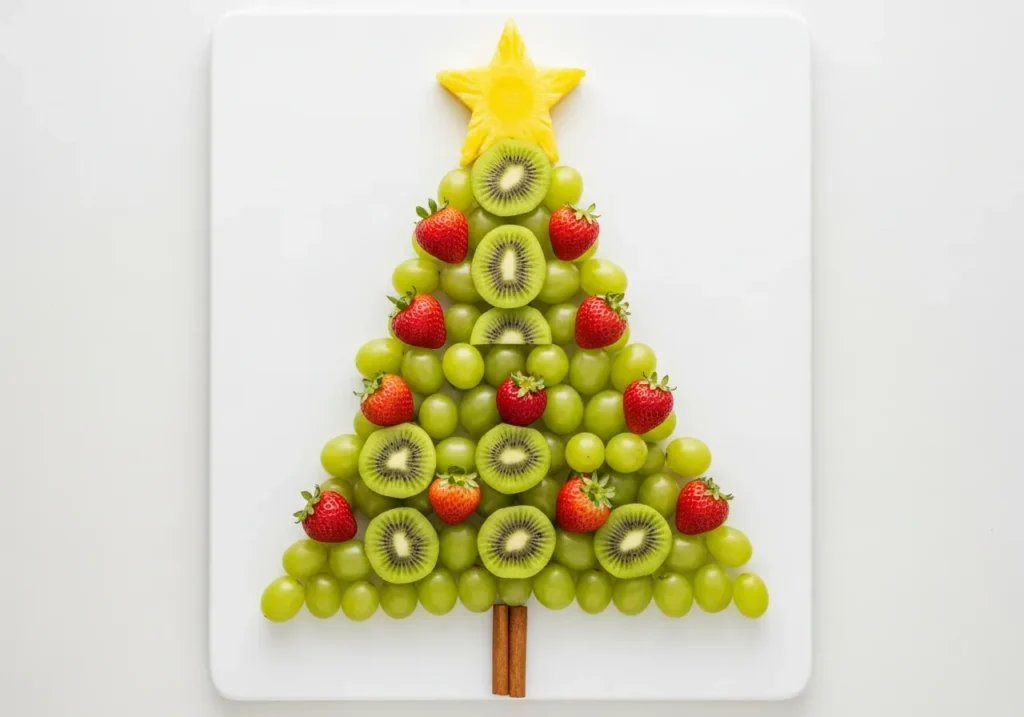
Christmas tree fruit platters offer three distinct approaches, each creating recognizable tree shapes using different techniques. The flat tree arrangement provides the simplest method, ideal for beginners or time-constrained hosts. Create this design by arranging green fruits in a triangular shape on a rectangular platter, starting with a wide base and tapering to a point at the top. Use kiwi slices, green grapes, and melon pieces to build the tree body, then add a pineapple star at the peak and cinnamon stick trunk at the base.
The pineapple-based three-dimensional tree creates a dramatic centerpiece that stands upright on serving tables. This design uses a whole pineapple as the structural foundation, carved into a cone shape to resemble a tree form. Insert toothpicks at angles around the pineapple surface, then attach various fruits to the toothpick ends, working from bottom to top. Include strawberries, grapes, melon balls, and kiwi pieces, arranging colors to create ornament-like patterns. Top the structure with a pear for additional height and crown it with a star cut from pineapple slice using a cookie cutter.
The layered tree platter combines elements of both approaches, building height through strategic fruit stacking. Arrange fruits in graduated horizontal rows, each layer slightly smaller than the one below, creating a stepped pyramid effect. This method works particularly well with uniform pieces like grape clusters and strawberry halves, allowing precise control over the final shape. To see more christmas fruit tree ideas visit Iowa Girl Eats.
All tree variations benefit from finishing touches that enhance their festive appearance. Dust the arrangement lightly with powdered sugar to simulate snow, scatter pomegranate arils around the base like fallen ornaments, or add small sprigs of fresh rosemary to mimic pine branches. These simple additions elevate basic fruit arrangements into memorable holiday presentations.
Santa Hat and Santa Face Fruit Trays
Santa-themed fruit platters bring whimsical charm to holiday tables, appealing especially to families with children. The Santa hat design offers the simplest execution, requiring only strawberries and bananas to create recognizable Christmas imagery. Thread strawberry halves onto skewers alternating with banana slices, topping each skewer with a mini marshmallow to represent the hat pom-pom. Arrange these skewers in a bowl or fan them across a platter for easy serving.
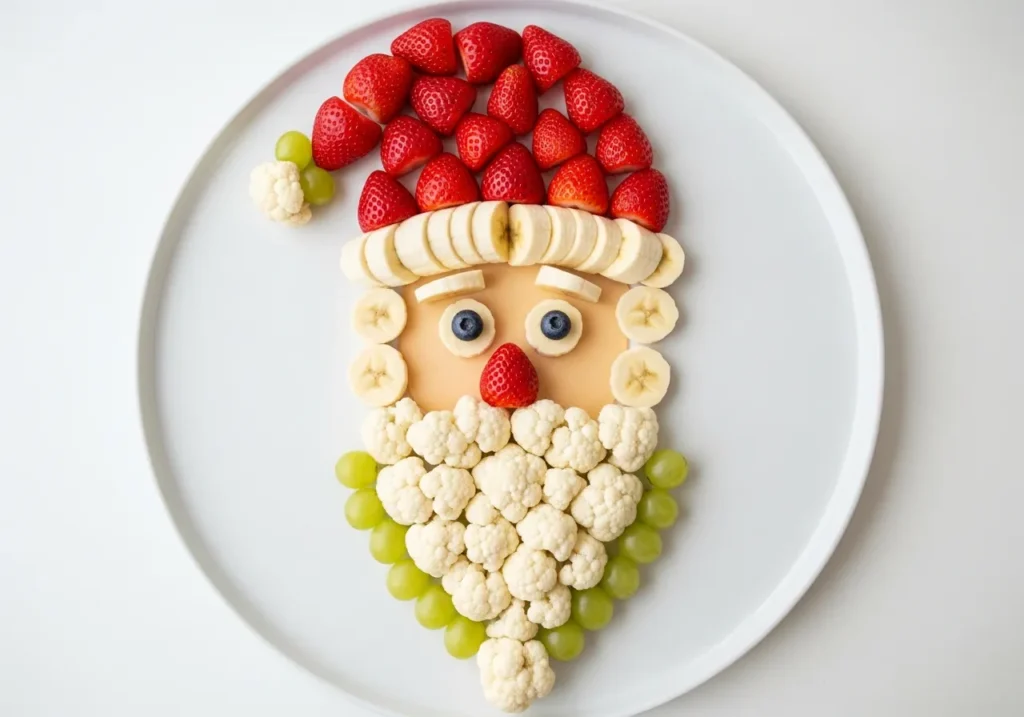
Creating a full Santa face requires more planning but produces impressive results. Use a large round platter as the canvas for this design. Form Santa’s hat using strawberries arranged in a triangular shape at the top portion of the platter, adding a row of mini marshmallows or white grapes along the hat brim. Construct the face using sliced bananas or white melon pieces, positioning two blueberries for eyes and a strawberry piece for the nose.
Build Santa’s beard using cauliflower florets, white grapes, or additional banana slices arranged in a fluffy semicircle below the face. This element requires the most fruit volume and creates the most visual impact, so include generous quantities for proper effect. Some variations incorporate coconut flakes scattered over the beard area for added texture and whiteness.
The Santa face design works well for children’s holiday parties or family gatherings where playful presentations are appreciated. While it requires more time to assemble than simpler designs, the delighted reactions typically justify the extra effort. Consider involving children in the creation process, allowing them to help place fruits and develop ownership over the final presentation.
Snowman Fruit Platter Creation
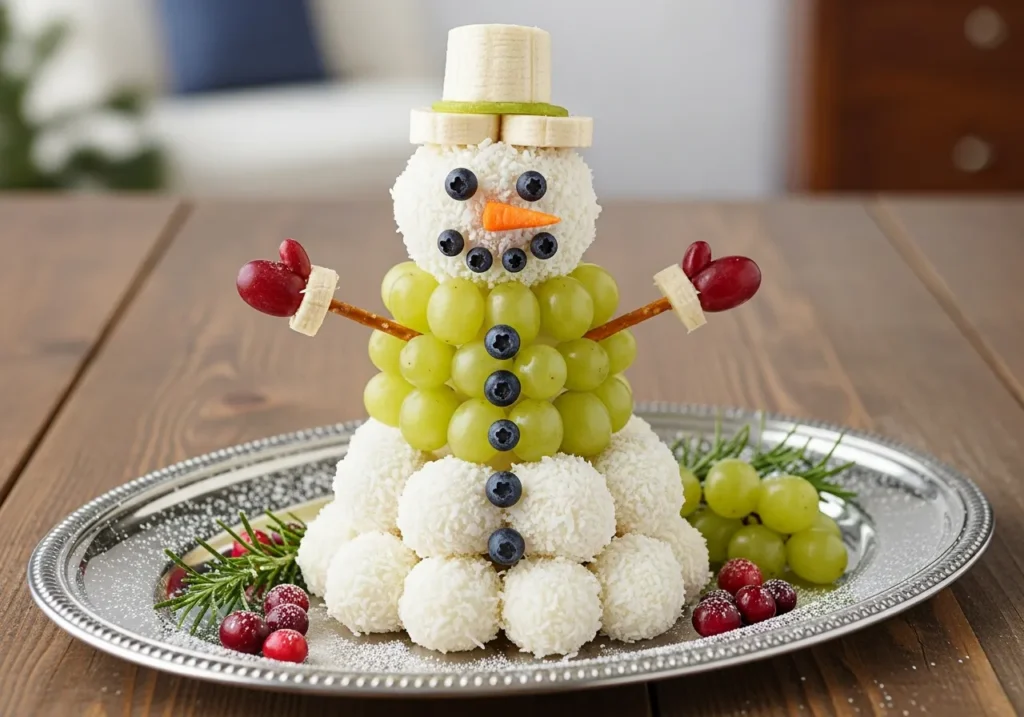
Snowman fruit platters provide another character-based option that showcases creativity while maintaining holiday themes. The most elaborate version uses stacked watermelons carved into graduated spheres, creating an actual three-dimensional snowman figure. This approach requires significant time and advanced cutting skills but produces a stunning centerpiece that serves as both decoration and dessert.
A simpler flat snowman design arranges fruits in three circular sections on a rectangular platter, creating the classic three-ball snowman shape without requiring structural stacking. Form the bottom circle using the largest arrangement of white fruits like bananas, white grapes, or coconut-covered melon balls. Build the middle section slightly smaller, and create the head as the smallest circle at the top.
Add characteristic snowman features using contrasting fruits. Blueberries work perfectly for creating button lines down the front and coal-like eyes on the face. An orange triangle of mandarin segments or carved carrot piece forms the nose, while dried cranberries or raisin pieces can suggest a smile. Create arms extending from the middle section using pretzel sticks, celery stalks, or cinnamon sticks.
Accessorize your snowman with creative touches that personalize the design. Fashion a scarf from fruit leather strips or arrange thin apple slices in colorful patterns around the neck area. Add a hat using a small bowl filled with dark berries positioned above the head, or create one from stacked kiwi slices. These details transform simple fruit arrangements into memorable holiday displays.
Candy Cane and Peppermint Swirl Patterns
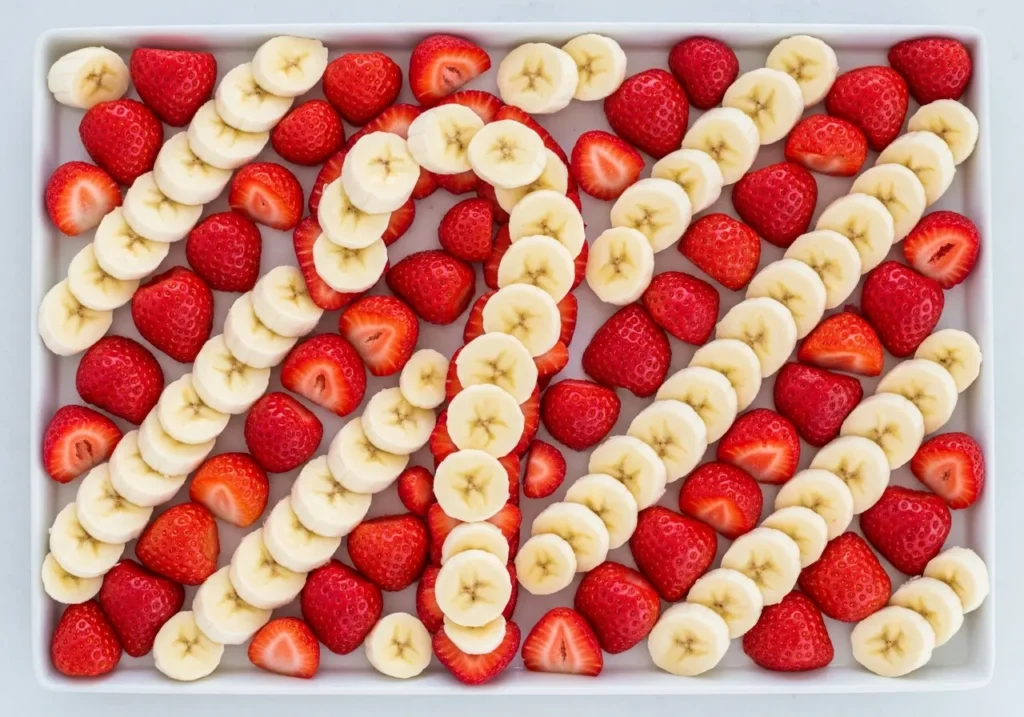
Candy cane patterns translate beautifully to fruit platter designs through strategic color placement. The classic striped effect emerges by alternating rows of red and white fruits in parallel lines across a rectangular or oval platter. Use strawberry slices or raspberries for red stripes, alternating with rows of banana slices, white grapes, or peeled mandarin segments for white stripes.
Create a curved candy cane shape by bending the striped pattern into the characteristic hook form. This requires a larger platter to accommodate the curved design, but the instantly recognizable result rewards the extra space requirements. Add a bow made from watermelon or strawberry pieces at the curved top for additional festive detail.
Peppermint swirl patterns offer a more advanced design that creates circular spiral effects reminiscent of round peppermint candies. Begin with a central cluster of white fruit, then spiral outward alternating between red and white fruits in gradually expanding circles. This design works best when using uniformly sized pieces that fit together closely, creating clean color transitions without gaps.
The swirl pattern requires more planning and precision than linear designs, but creates striking visual interest that captures attention. Consider outlining sections with darker fruits like blueberries or blackberries to enhance definition between color zones. This approach particularly suits round platters where the circular pattern naturally fits the serving vessel shape.
Festive Star and Snowflake Arrangements
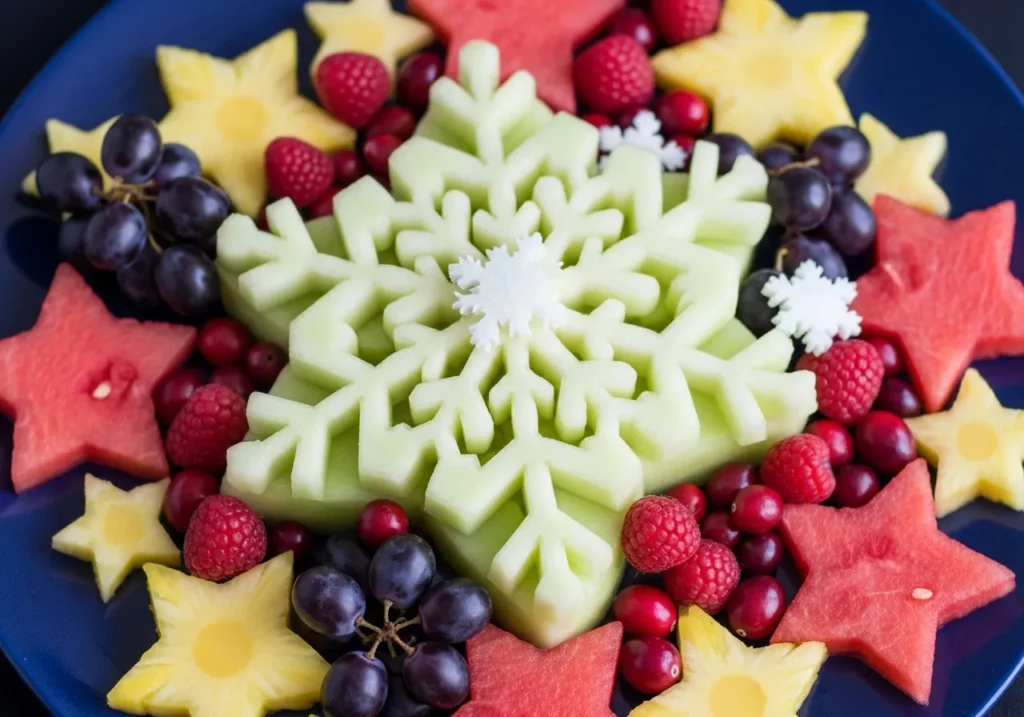
Star-shaped fruit arrangements capture essential holiday symbolism while offering design flexibility. The simplest approach arranges fruit in five triangular sections radiating from a central point, creating a star outline through strategic placement. Use different colored fruits for each point, creating a rainbow effect, or maintain consistent red and green Christmas colors throughout.
Cookie cutters provide another method for incorporating stars into fruit platters. Cut star shapes from firm fruits like pineapple, watermelon, or melon slices, then scatter these shapes across the platter surface among other fruit pieces. This adds dimensional interest and reinforces the holiday theme without requiring the entire arrangement to form a star shape.
Snowflake designs require more intricate cutting but create beautiful winter presentations. Carve detailed snowflake patterns from large watermelon or honeydew slices using small knives or specialty cutting tools. These impressive pieces work as platter centerpieces, positioned prominently with complementary fruits arranged around the edges. The translucent quality of some melons even mimics ice crystal effects when cut thinly and held against light.
Combine multiple smaller snowflakes across a dark-colored platter for a winter wonderland effect. Surround them with white grapes, coconut flakes, and light-colored fruits to reinforce the snowy theme. This design particularly suits winter celebrations beyond Christmas, working well for New Year gatherings or winter-themed parties.
Reindeer and Gingerbread Man Fruit Designs
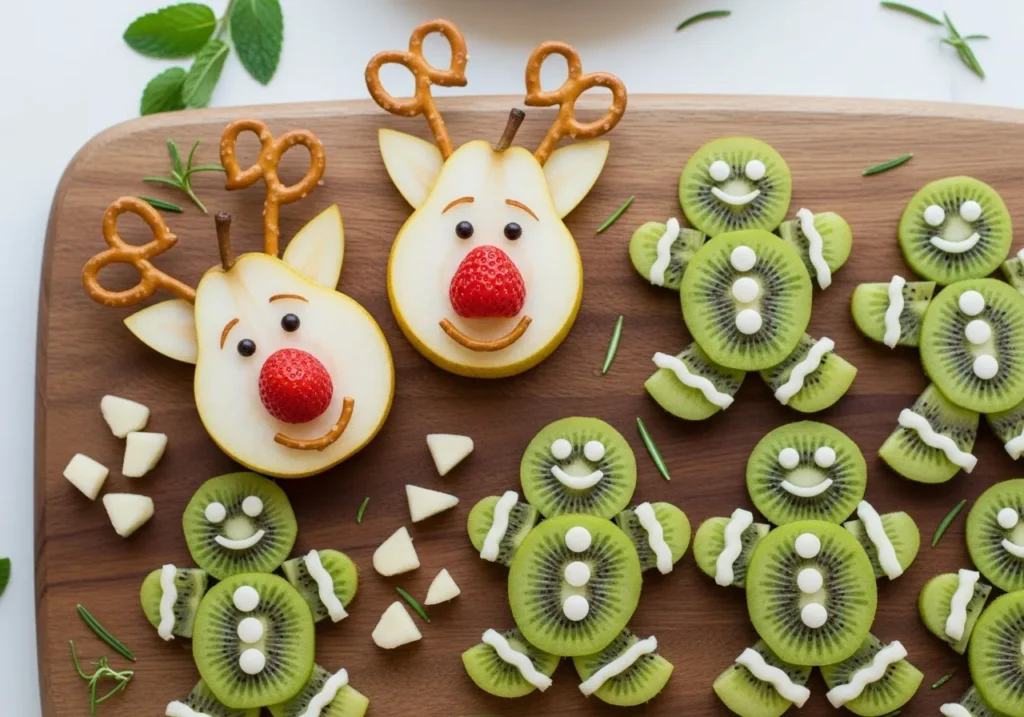
Character-based fruit platters extend beyond Santa and snowmen to include other holiday favorites. Reindeer designs typically use pear or apple bodies positioned horizontally on the platter, with pretzel antlers inserted at the top and chocolate chip or blueberry features for eyes and nose. Red strawberry or raspberry noses create the Rudolph variation that children especially enjoy.
Gingerbread man shapes offer simple execution using brown-toned fruits arranged in the classic cookie cutter silhouette. Use kiwi slices as the base, arranging them to form the head, body, arms, and legs. Decorate with white fruit pieces to simulate icing details, including buttons down the center and a smile on the face. Dried cranberries or pomegranate arils add color accents similar to candy decorations on actual gingerbread cookies.
These whimsical designs work especially well for children’s holiday parties or family gatherings where fun takes precedence over formal presentation. They encourage interaction and conversation, as guests appreciate the creativity and attention to detail involved in bringing these characters to life through fruit arrangements.
Multiple small character designs scattered across a large platter create a holiday scene effect. Combine several mini reindeer, snowmen, and trees in a winter landscape arrangement, using coconut flakes as snow cover and rosemary sprigs as evergreen trees. This storytelling approach to fruit platters engages viewers beyond simple visual appeal.
Elegant Fruit and Cheese Combination Platters
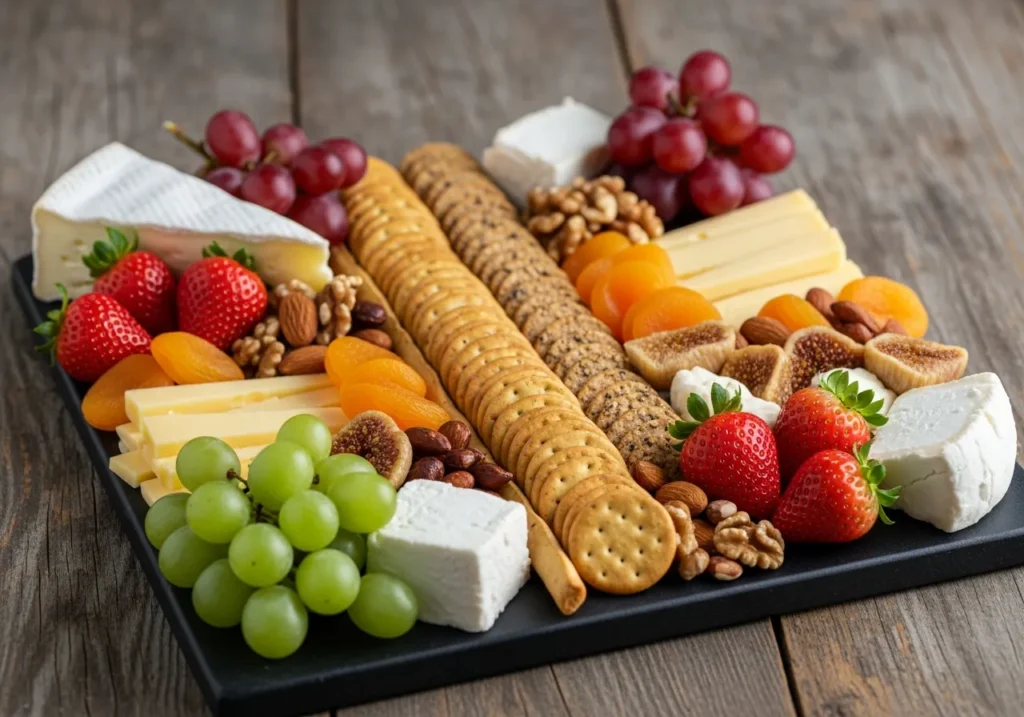
Combining fruit with cheese elevates holiday platters into sophisticated appetizer presentations. This pairing balances sweet and savory elements while providing more substantial offerings than fruit alone. Select cheese varieties that complement rather than compete with fruit flavors, including mild options like brie, creamy goat cheese, and sharp cheddar alongside fruits.
Arrange cheese and fruit in distinct sections rather than mixing them randomly. Create quadrants or curved sections that guide the eye around the platter, alternating between cheese groups and fruit clusters. This organization helps guests identify their preferences quickly while maintaining visual order. Include cheese knives near each variety to prevent flavor mixing.
Add nuts, dried fruits, and crackers to fill gaps and provide textural variety. Walnuts, pecans, and almonds complement both cheese and fresh fruit beautifully. Dried apricots, cranberries, and figs add concentrated sweetness and chewy texture that contrasts with crisp fresh options. Include multiple cracker varieties, from simple water crackers to rosemary or fruit-studded artisan versions.
Consider temperature requirements when planning combined platters. Remove cheese from refrigeration thirty minutes before serving to allow flavors to develop properly. Keep fresh fruit chilled until the last moment to maintain crispness. Some hosts prepare two platters, keeping the fruit arrangement refrigerated while the cheese and accompaniment board sits at room temperature until serving.
Mini Individual Fruit Cup Presentations
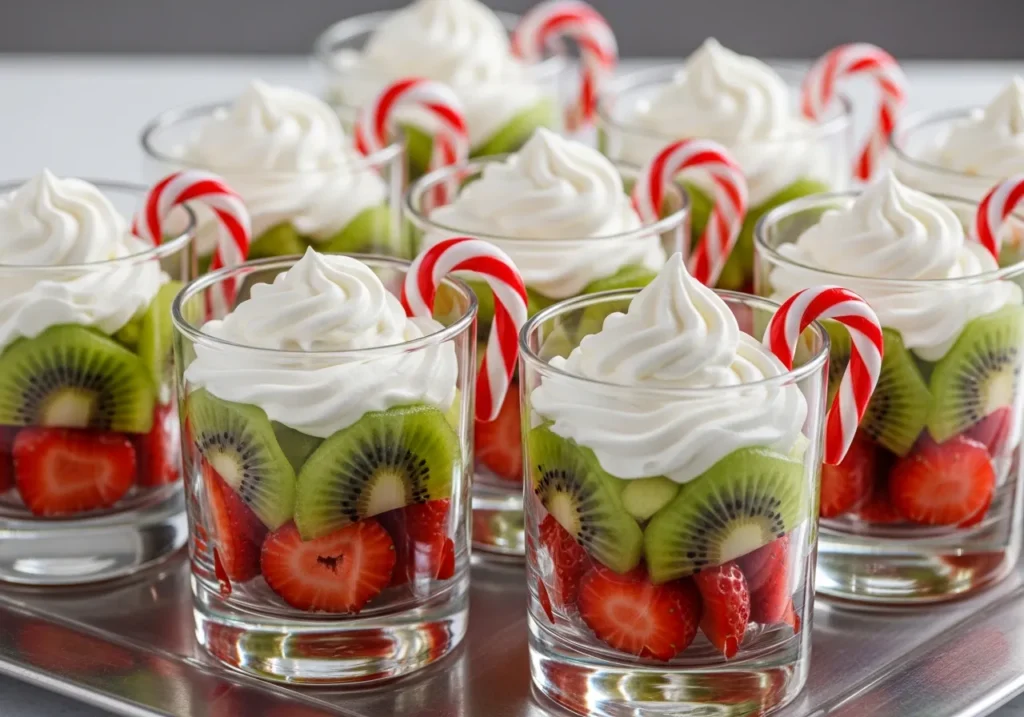
Individual fruit portions offer elegant alternatives to communal platters, particularly for formal gatherings or situations where hygiene concerns arise. Clear plastic cups or small glass containers showcase layered fruit arrangements, allowing guests to see the colorful contents while maintaining portion control. This presentation style works especially well for standing receptions where guests juggle plates and drinks.
Layer fruits in rainbow or Christmas color patterns within each cup. Start with a red base layer using strawberries or raspberries, add a middle layer of green kiwi or grapes, and top with white fruits or whipped cream. These visible layers create miniature works of art that require no additional plating. Include small spoons or forks for easy eating.
Transform individual cups into festive designs using creative garnishes. Thread a strawberry Santa hat onto a small skewer and insert it into the cup top. Add a small candy cane hooked over the rim. Tie red and green ribbons around cup exteriors for additional holiday flair. These simple touches personalize each serving and reinforce the celebratory atmosphere.
Prepare individual cups several hours ahead, covering them with plastic wrap and refrigerating until serving time. This advance preparation reduces last-minute stress while ensuring each guest receives a fresh, attractive portion. Arrange cups on serving trays for easy distribution, or position them at buffet stations where guests can select their own.
Chocolate-Dipped Fruit Display Options
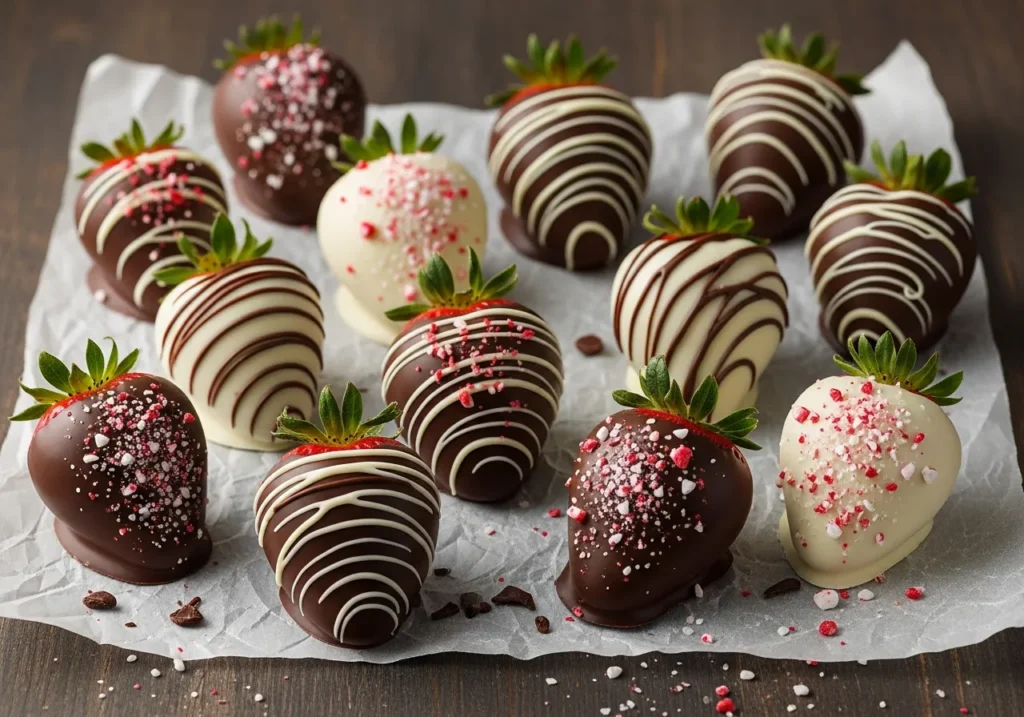
Chocolate-dipped fruit combines two beloved treats into irresistible holiday presentations. Strawberries remain the most popular choice for chocolate dipping, their natural sweetness and firm texture making them ideal candidates. Dip whole strawberries with stems attached into melted dark, milk, or white chocolate, allowing excess to drip off before placing them on parchment paper to set.
Create festive patterns on chocolate-covered fruit using contrasting drizzles or decorative toppings. After the initial chocolate coating sets, melt white chocolate and drizzle it over dark chocolate-covered berries in zigzag patterns. While chocolate remains tacky, sprinkle crushed peppermint candies, colored sugar crystals, or finely chopped nuts to add texture and holiday colors.
Expand beyond strawberries to include other chocolate-worthy fruits. Banana slices dipped halfway in chocolate become elegant bites when arranged on skewers. Dried apricots and pineapple chunks accept chocolate coatings beautifully, offering variety in texture and flavor. Orange segments dipped in dark chocolate provide sophisticated citrus-chocolate combinations that appeal to adult palates.
Arrange chocolate-dipped fruits on decorative platters lined with holiday-themed paper doilies or fresh greenery. Keep these displays refrigerated until shortly before serving to prevent chocolate from softening. Chocolate-covered fruit platters work wonderfully as dessert options or can accompany coffee and tea service after holiday meals.
Fruit Skewer and Kabob Arrangements
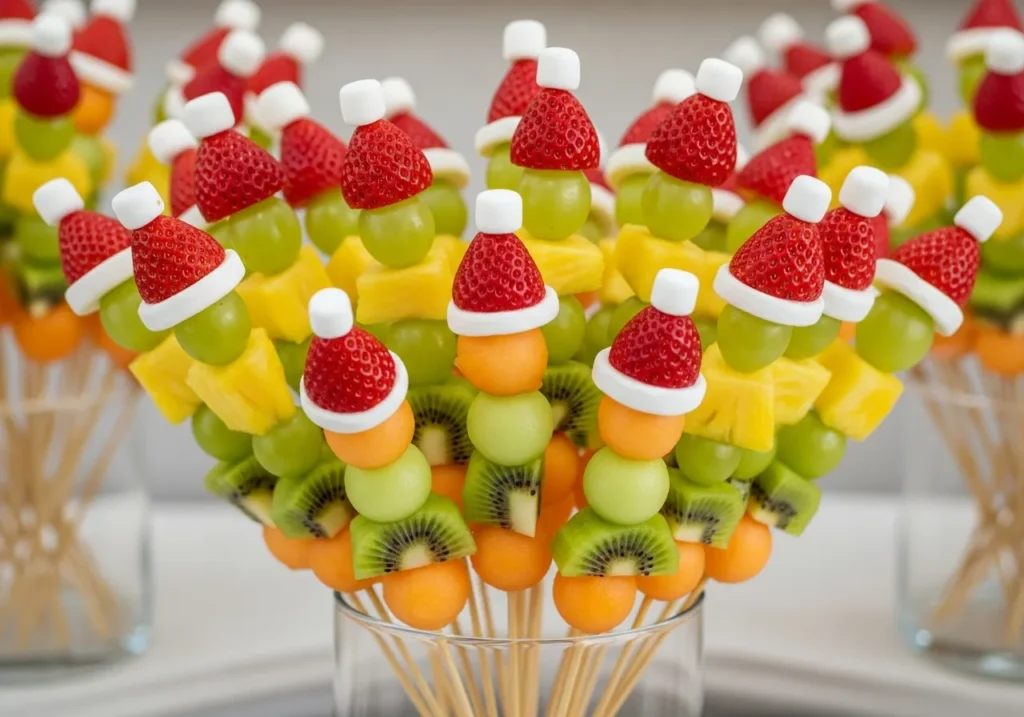
Fruit skewers transform ordinary fruit into handheld treats that simplify serving and eating. Thread alternating fruits onto wooden skewers in repeating color patterns, creating rainbow effects or Christmas-themed red and green sequences. This approach works particularly well for children’s parties and casual gatherings where guests prefer finger foods.
Create Santa hat skewers using the classic strawberry, banana, and marshmallow combination. Thread a strawberry half onto the skewer point first, add a banana slice in the middle, and top with a mini marshmallow. These instantly recognizable treats require minimal time to assemble while delivering maximum festive impact. Arrange completed skewers standing upright in a tall vase or foam base for attractive display.
Vary skewer sizes and fruit combinations to create visual interest within the overall arrangement. Some skewers might include only two or three pieces, while others feature five or six different fruits. This variation adds dimension and allows guests to select portion sizes matching their appetite. Include grapes, melon balls, pineapple chunks, and berries in different combinations.
Present skewers in creative ways that enhance the overall table presentation. Arrange them in wreath formations around a central dip bowl, creating both the circular shape and convenient access to accompaniments. Stand them upright in fresh pineapple halves for tropical flair. Fan them across rectangular platters in graduated heights for dimensional effect.
Healthy Fruit Dips and Accompaniments
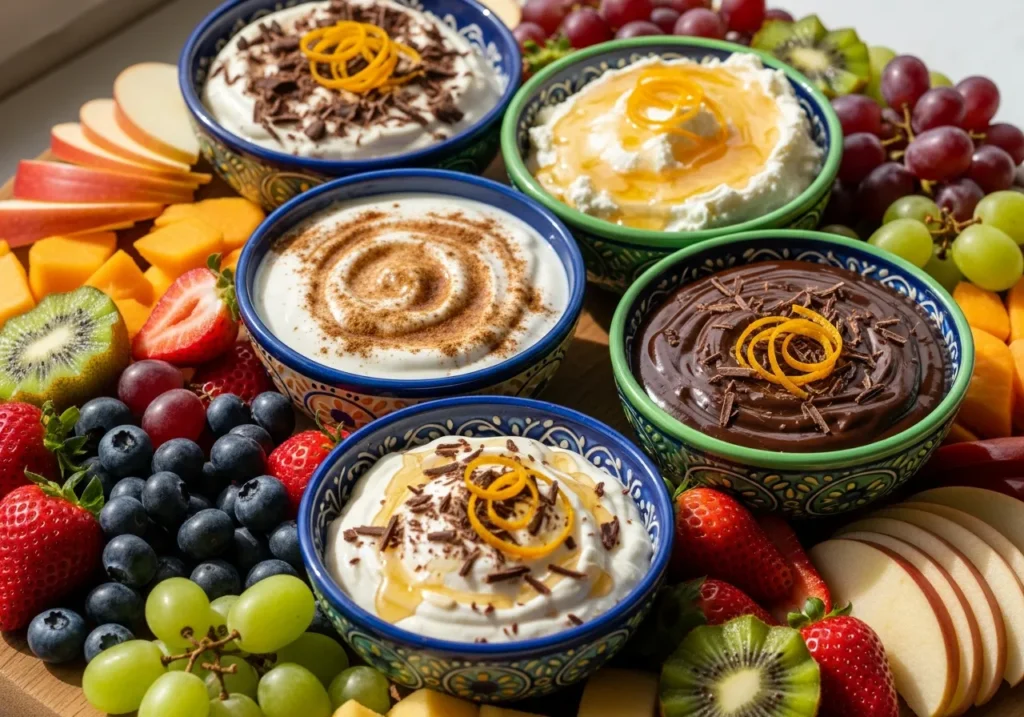
Fruit dips elevate simple fruit platters into complete appetizer presentations. Greek yogurt forms the base for numerous healthy dip variations, its creamy texture and tangy flavor complementing sweet fruits perfectly. Mix plain Greek yogurt with honey and cinnamon for a classic combination that requires only minutes to prepare. The cinnamon adds warming spice notes particularly appropriate for holiday gatherings.
Cream cheese dips offer richer alternatives when occasions call for more indulgent options. Blend softened cream cheese with marshmallow fluff for a sweet, fluffy dip children especially enjoy. Add orange zest and honey to cream cheese for sophisticated citrus notes that pair beautifully with berries and tropical fruits. These dips can be prepared a day ahead and refrigerated until serving time.
Chocolate options satisfy those seeking dessert-like accompaniments. Melt chocolate with small amounts of cream to achieve dipping consistency, keeping it warm in a small slow cooker during serving. Chocolate hazelnut spread mixed with yogurt creates a lighter version that maintains chocolate appeal while reducing richness. White chocolate melted with a touch of peppermint extract provides festive holiday flavour. To see more healthy platter ideas visit Two Healthy Kitchen
Present dips in attractive bowls positioned strategically on the platter or alongside it. Small ramekins work well for individual dip portions, allowing guests to take personal servings. Garnish dips with complementary toppings like cinnamon sticks, orange zest curls, or chocolate shavings to indicate flavors and enhance visual appeal.
Make-Ahead Tips and Storage Guidelines
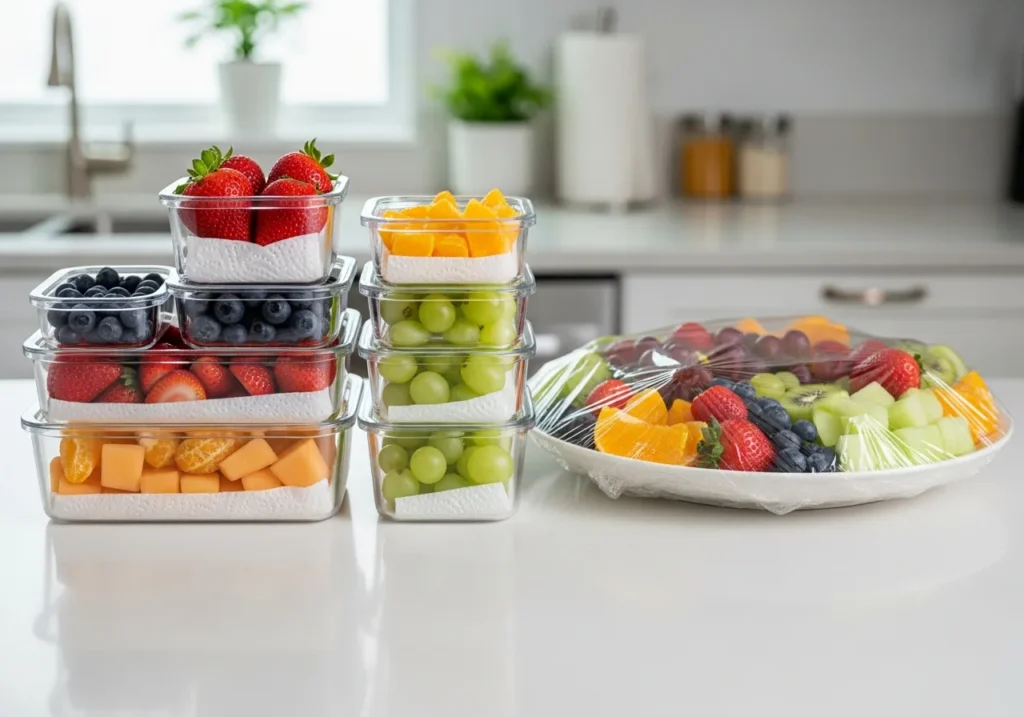
Planning ahead ensures stress-free fruit platter presentation during busy holiday entertaining. Most fruit preparation can occur the night before serving, with proper storage maintaining freshness and appearance. Wash and dry all fruits thoroughly, then store them separately in airtight containers lined with paper towels to absorb excess moisture.
Cut fruits like strawberries, melons, and pineapples can be prepared hours in advance without quality loss. Keep cut pieces refrigerated in sealed containers until assembly time. However, certain fruits require last-minute preparation to prevent browning. Apples, pears, and bananas oxidize quickly when exposed to air, so cut these items immediately before arranging or brush cut surfaces with lemon juice to slow discoloration.
Assemble complete fruit platters up to four hours before serving for optimal results. Cover finished arrangements tightly with plastic wrap, ensuring the wrap touches fruit surfaces to minimize air exposure. Refrigerate assembled platters immediately, removing them from refrigeration only fifteen minutes before serving to maintain fruit freshness while taking the chill off.
Some elements benefit from separate preparation and last-minute addition. Delicate items like mint sprigs, edible flowers, or powdered sugar dustings should be added immediately before presentation. These finishing touches ensure maximum visual impact without wilting or moisture absorption that might occur during extended refrigeration.
Serving Suggestions and Presentation Enhancements
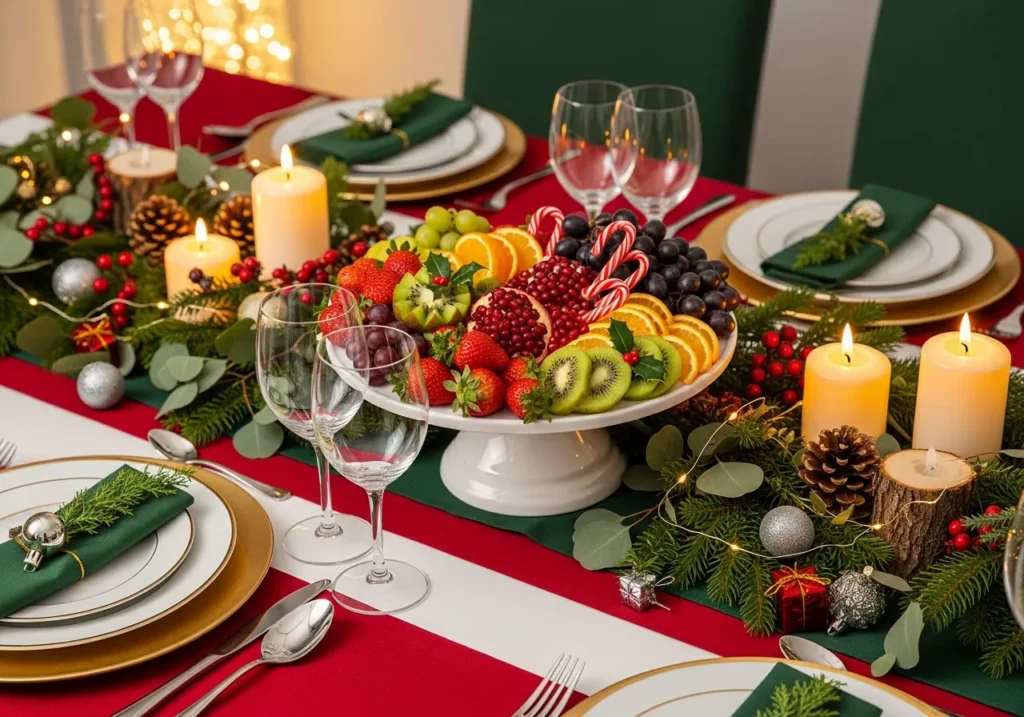
Strategic placement maximizes the impact of Christmas fruit platters within overall table arrangements. Position fruit displays prominently where guests will notice them immediately upon entering the space. Elevated cake stands or pedestals raise platters above table level, creating focal points that draw attention. Surround fruit arrangements with holiday greenery, candles, or decorative elements that reinforce seasonal themes.
Provide appropriate serving utensils that facilitate easy access without disrupting arrangements. Small tongs work well for larger fruit pieces, while spoons suit berries and cut fruits. Include multiple utensils if the platter contains diverse fruit types, preventing flavor transfer between sections. Position serving tools near the platter edges rather than in the center, maintaining visual appeal while ensuring functionality.
Lighting considerations affect how fruit colors appear to guests. Natural daylight showcases vibrant hues most accurately, while warm incandescent lighting can mute red tones. If hosting evening gatherings, position fruit platters near light sources or add subtle uplighting beneath glass serving pieces to enhance color vibrancy. This attention to lighting details ensures your careful color coordination achieves intended effects.
Consider the overall menu when determining fruit platter quantities and styles. Lighter meals benefit from substantial fruit offerings that serve as side dishes or dessert alternatives. When menus include numerous heavy options, smaller decorative fruit arrangements provide visual appeal without contributing excessive quantities to the food selection. Adjust platter sizes and fruit quantities based on guest counts and meal timing.
Seasonal Fruit Selection and Availability
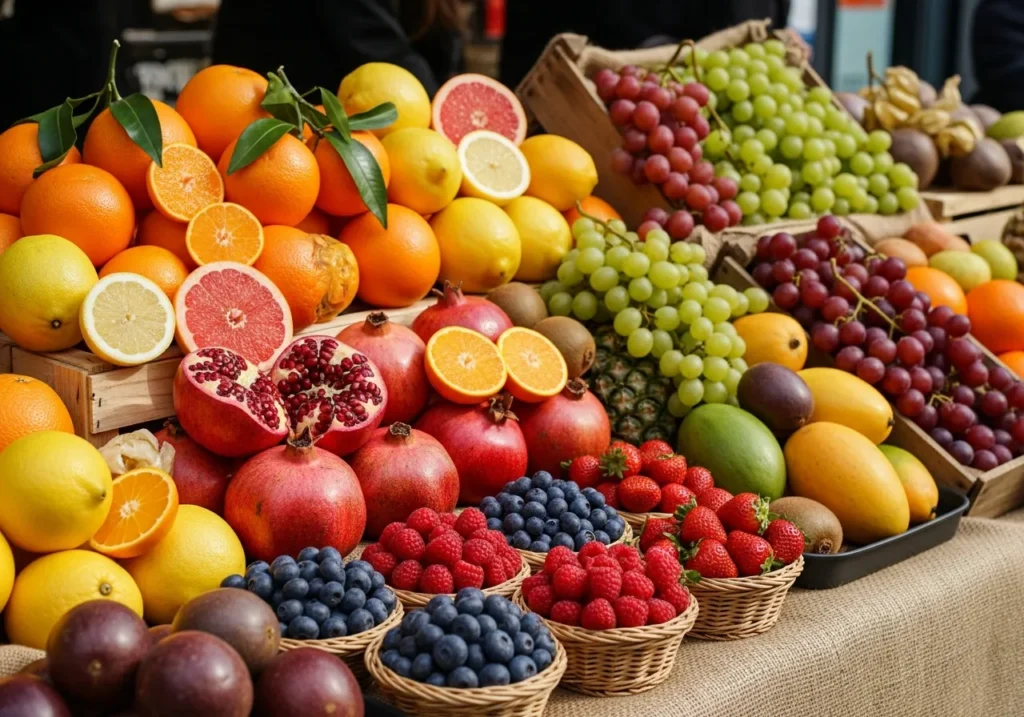
Understanding seasonal fruit availability helps create better holiday platters while managing costs. Winter months offer peak season for citrus fruits including oranges, mandarins, and grapefruits, making these excellent choices for Christmas displays. Pomegranates reach their prime from October through January, providing festive red color and unique flavor during holiday season.
Some traditionally summer fruits remain available during winter through imports or greenhouse production, though quality and cost vary significantly. Strawberries appear in stores year-round but deliver best flavor and value during late spring and summer. Berries purchased in winter often cost considerably more and may lack the sweetness and firmness of peak-season varieties. Consider whether the visual impact justifies premium pricing for off-season selections.
Frozen fruits offer budget-friendly alternatives for certain applications. While frozen berries work poorly for fresh arrangements due to texture changes upon thawing, they excel in smoothies, parfaits, or blended dip preparations. This allows holiday budgets to stretch further while maintaining quality in visible fresh fruit displays.
Local produce markets sometimes offer better seasonal selection and pricing than large grocery chains. Visit farmers markets or specialty stores when planning elaborate fruit platters, as these venues often stock unusual varieties that add interest to displays. Building relationships with produce managers at regular shopping locations can yield insights about upcoming availability and best purchase timing.
Budget-Friendly Fruit Platter Strategies
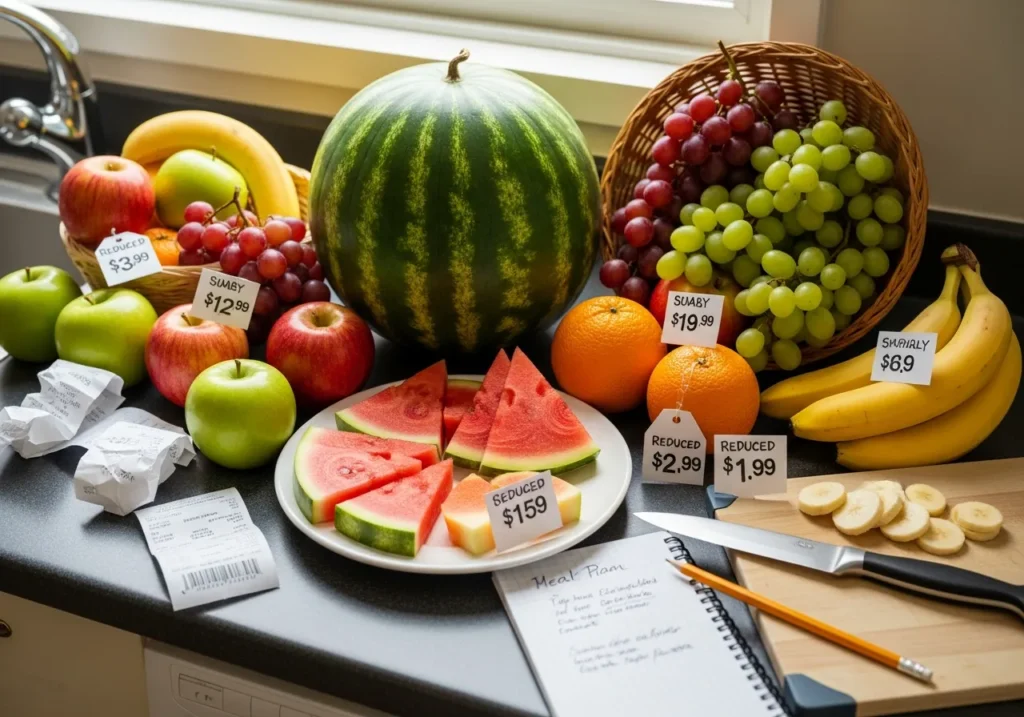
Creating impressive Christmas fruit platters need not strain holiday budgets. Strategic planning and smart shopping reduce costs while maintaining quality and visual appeal. Purchase fruits on sale, buying extra quantities of discounted items even if they differ slightly from original plans. Most fruit platter designs adapt easily to substitute different but similarly colored options.
Focus spending on fruits that deliver maximum visual impact for their cost. Grapes provide excellent value, offering substantial quantity and bold color at moderate prices. Watermelon yields generous amounts of usable fruit from single purchases, and its vibrant red color serves as affordable foundation for many designs. Reserve premium spending for accent fruits like berries that appear in smaller quantities but create essential visual elements.
Buying whole fruits rather than pre-cut options significantly reduces costs while requiring minimal additional labor. Cutting melons, pineapples, and other large fruits takes only minutes with proper tools and saves dollars per pound compared to convenience packaging. Purchase whole pineapples instead of pre-cut chunks, whole watermelons instead of fruit salad containers.
Time purchases strategically to maximize savings. Shop early in the week when produce departments typically offer better selection and competitive pricing. Avoid last-minute shopping on days immediately before major holidays when demand drives prices higher and selection diminishes. Some stores mark down slightly imperfect produce that works perfectly well for cut fruit platters where blemished areas can be trimmed away.
Conclusion
Christmas fruit platters offer the perfect combination of health, beauty, and festive spirit for holiday celebrations. These versatile displays adapt to any gathering size or style, from intimate family dinners to large holiday parties. The creative possibilities range from simple wreath arrangements requiring minimal time to elaborate three-dimensional displays that showcase advanced techniques.
Success with Christmas fruit platters comes from selecting quality seasonal fruits, planning arrangements thoughtfully, and adding personal touches that reflect your unique style. Whether you choose classic designs like wreaths and trees or venture into character-based creations featuring Santa and snowmen, the key lies in balancing colors, textures, and shapes to create cohesive presentations.
The practical advantages of fruit platters make them especially valuable during busy holiday seasons. They can be prepared ahead, require no cooking, and provide refreshing alternatives to richer menu items. Guests appreciate having healthy options available, and hosts benefit from dishes that free up oven space and reduce kitchen time.
As you plan your holiday gatherings this season, consider incorporating one or more of these creative fruit platter ideas into your menu. The combination of nutritious ingredients, stunning visual appeal, and relative ease of preparation makes them ideal additions to any celebration. Your guests will appreciate both the thoughtfulness of providing fresh fruit options and the creativity displayed in your festive arrangements.
Frequently Asked Questions
How far in advance can I prepare a Christmas fruit platter?
You can prepare most Christmas fruit platters up to 4 hours before serving. Wash, dry, and cut sturdy fruits like strawberries, melons, grapes, and pineapples the night before, storing them separately in airtight containers. Assemble the complete platter 2 to 4 hours ahead, cover it tightly with plastic wrap, and refrigerate. Add fruits that brown quickly like apples, pears, and bananas just before serving, or brush them with lemon juice to prevent discoloration.
What are the best fruits to use for a Christmas-themed platter?
The best fruits for Christmas platters include strawberries, raspberries, and watermelon for red colors, plus green grapes, kiwi, and honeydew melon for green accents. Add pomegranate arils for festive sparkle, mandarin oranges for brightness, and blueberries to fill gaps. Choose firm, ripe fruits that hold their shape well during display and provide vibrant colors that complement holiday themes.
How do I keep my fruit platter from looking watery?
Prevent watery fruit platters by thoroughly washing and drying all fruits before cutting. Use paper towels to pat pieces completely dry after washing. Avoid cutting fruits too far in advance, as they release moisture over time. When assembling, place a layer of lettuce leaves or paper towels under fruits to absorb excess liquid. Store the platter refrigerated and uncovered for the first hour after assembly to allow surface moisture to evaporate, then cover tightly until serving.
What dips pair well with Christmas fruit platters?
Popular dips for Christmas fruit platters include cinnamon yogurt made with Greek yogurt, honey, and cinnamon, cream cheese blended with marshmallow fluff for sweetness, and chocolate hazelnut spread thinned with cream. Consider orange cream cheese dip with honey and zest, peppermint white chocolate, or simple vanilla yogurt with maple syrup. Serve dips in small bowls positioned on or near the platter for easy access.
Can I make Christmas fruit platters for large crowds?
Yes, Christmas fruit platters scale easily for large gatherings. For crowds, prepare multiple smaller platters in different designs rather than one enormous display, as this allows better distribution around serving areas and maintains visual appeal as guests take portions. Calculate approximately one cup of fruit per person for parties where fruit serves as one of many options, or one and a half cups if fruit is a primary offering. Use sturdy fruits that hold up well and consider individual fruit cups for very large events.