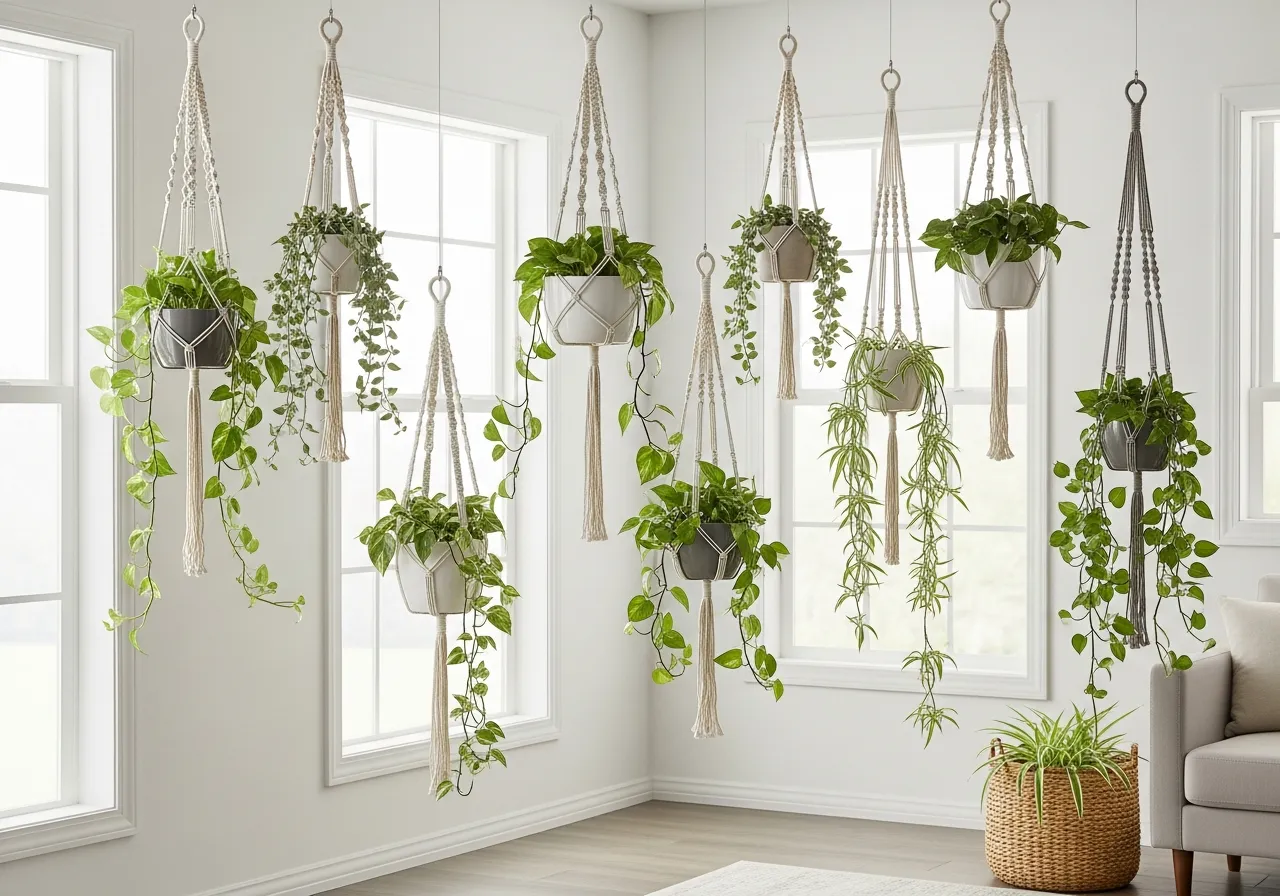
18+ Chic Macrame Plant Hanger Ideas to Try
Transforming your living space with greenery has never been more stylish than with macrame plant hangers. These timeless pieces combine functionality with artistic expression, offering a perfect solution for plant lovers seeking to maximize vertical space while creating visual interest. Whether you live in a cozy apartment or a spacious home, macrame plant hangers provide an elegant way to showcase your botanical collection while adding texture and warmth to any room.
The resurgence of macrame in contemporary interior design reflects our collective desire for handmade elements that bring personality and authenticity into our homes. Unlike mass-produced planters, macrame creations carry the charm of artisanal craftsmanship. Each knot tells a story, and the natural fibers create a connection to organic materials that perfectly complement living plants. The versatility of macrame allows you to customize designs according to your skill level, available space, and aesthetic preferences.
Creating your own macrame plant hangers offers more than just a decorative solution. The meditative process of knotting cord provides a therapeutic escape from digital distractions. As your hands work through repetitive patterns, you enter a state of focused relaxation similar to meditation. The tangible result of your effort becomes a functional art piece that enhances your environment while supporting your plant collection.To see more hanging plant ideas do visit Marching North
This comprehensive guide explores over eighteen distinct macrame plant hanger ideas suitable for various skill levels and design sensibilities. From minimalist single-pot hangers to elaborate multi-tiered displays, you’ll discover options that align with your personal style and practical needs. Each design offers unique characteristics that make it suitable for different spaces, plant types, and interior themes.
Simple Single Pot Classic Hanger
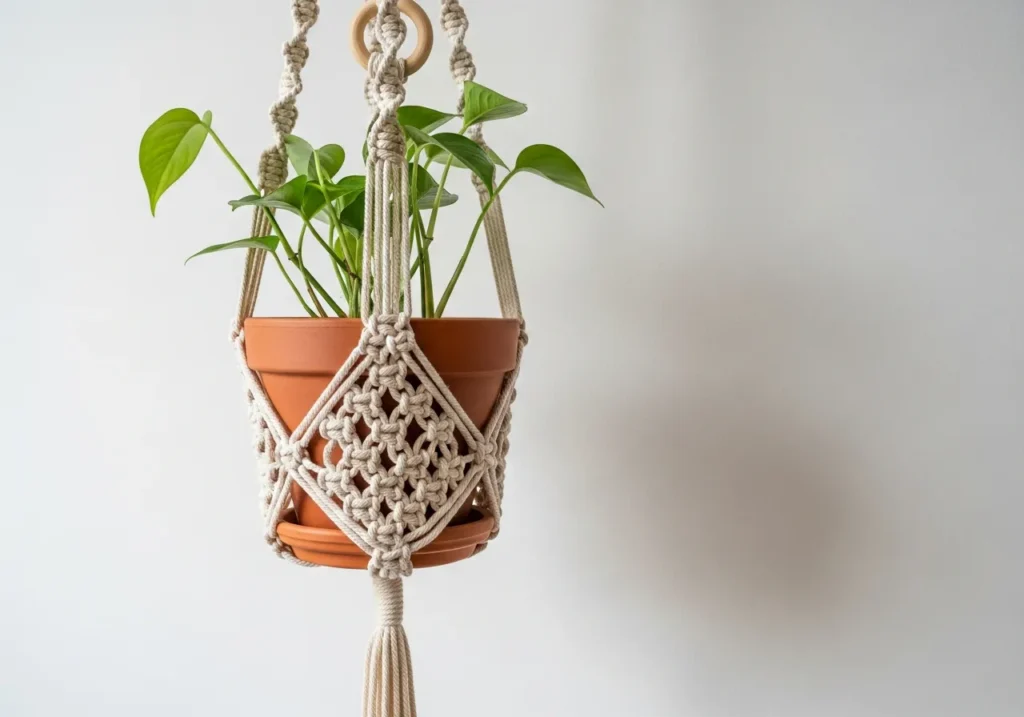
The traditional single pot macrame hanger remains the most popular choice for beginners and experienced crafters alike. This design typically features four main cords secured to a mounting ring, creating a basket-like cradle for your pot through a series of square knots and spiral patterns. The simplicity of this design makes it accessible while maintaining visual appeal.
When creating a classic single pot hanger, consider the weight and size of your chosen plant. Larger plants require thicker cord and tighter knots to ensure adequate support. Cotton cord between three and six millimeters works well for most applications, providing both strength and aesthetic appeal. The natural texture of cotton complements plant foliage beautifully.
The beauty of this design lies in its adaptability. You can adjust the length to suit different ceiling heights, making it perfect for both standard eight-foot ceilings and dramatic vaulted spaces. The basic structure allows for creative variations through bead additions, color choices, and knot pattern modifications.
Double Tiered Plant Display
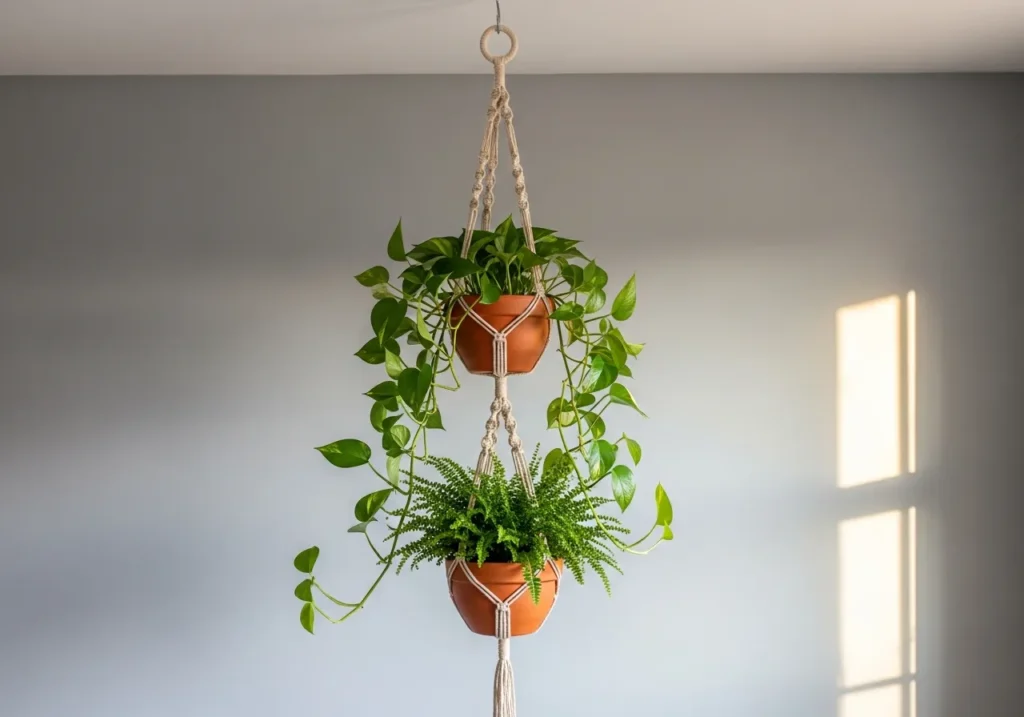
For those seeking to maximize vertical space, the double tiered macrame plant hanger presents an elegant solution. This design suspends two plants at different heights from a single mounting point, creating a cascading effect that draws the eye upward while conserving floor space. The construction requires careful planning to ensure proper weight distribution and balance.
Building a double tier involves extending the basic single hanger pattern to include a second cradle positioned below the first. The distance between tiers typically ranges from twelve to eighteen inches, allowing each plant adequate light exposure and visual definition. This spacing prevents the upper plant from completely shading the lower one.
Plant selection becomes crucial with tiered designs. Position trailing varieties like pothos or string of pearls in the upper tier, allowing their vines to cascade gracefully toward the lower level. Place compact plants with upright growth habits below, ensuring both specimens receive appropriate light without competing for resources.
Minimalist Wall Mounted Design
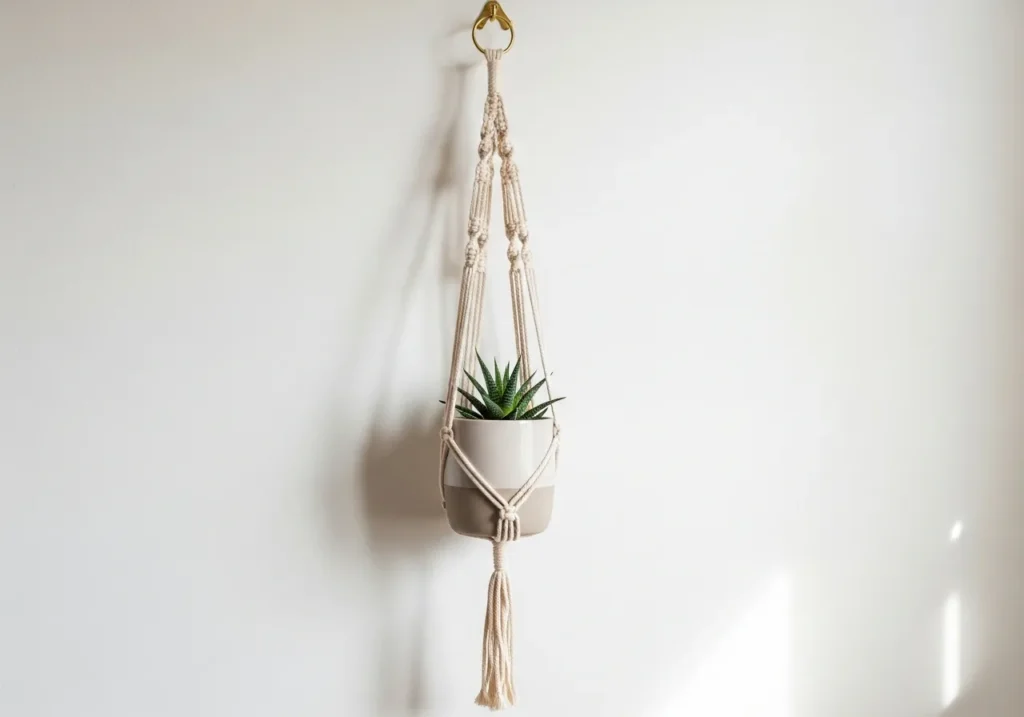
Wall mounted macrame plant hangers offer a space-saving alternative for rooms where ceiling hooks prove impractical. These designs attach directly to vertical surfaces, creating living art installations that combine greenery with textile craftsmanship. The mounting method varies from simple nails to decorative brackets, depending on your wall material and weight requirements.
The minimalist approach emphasizes clean lines and restrained ornamentation. Rather than elaborate knot patterns, these designs feature straightforward techniques that allow the plant to serve as the primary focal point. The macrame becomes a subtle framework rather than a competing visual element.
Creating a wall mounted hanger requires consideration of your plant’s light needs and growth pattern. Position the installation where natural light reaches the foliage adequately. Air plants and succulents work particularly well in wall mounted arrangements, as their modest water requirements minimize draining concerns that might damage your wall surface.To see more ideas for succulents do visit Homeliaa.
Spiral Knot Statement Piece
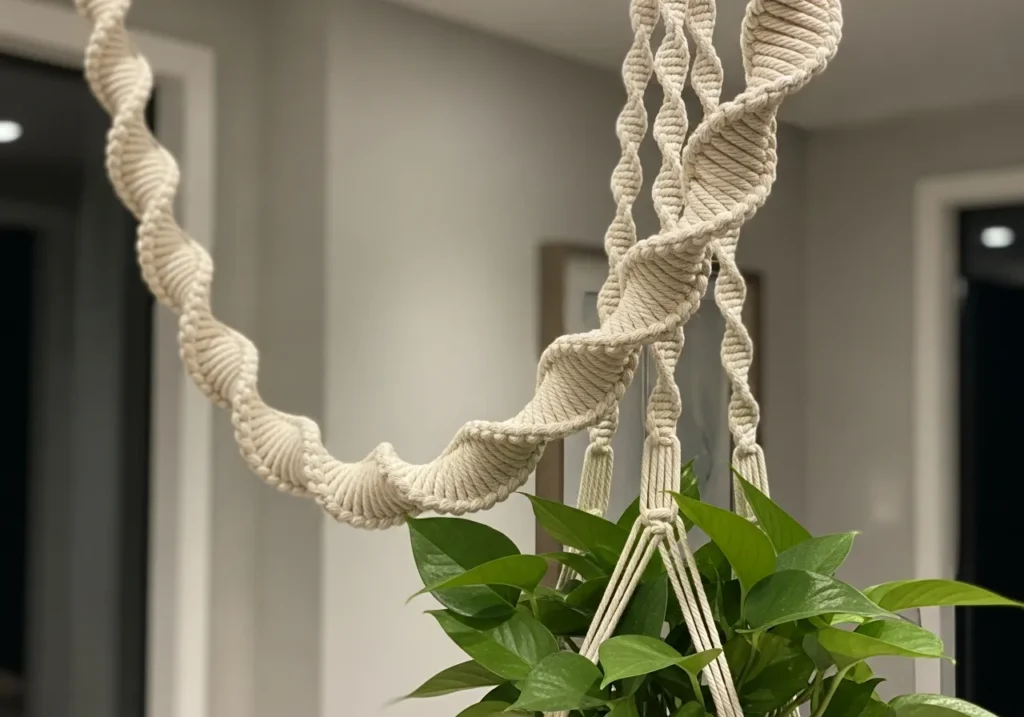
The spiral knot technique creates a twisted rope effect that adds dynamic movement to your plant hanger design. This pattern forms naturally when you consistently tie half square knots in the same direction, causing the cord to rotate around the center strands. The resulting spiral provides both visual interest and structural integrity.
Executing a perfect spiral requires maintaining consistent tension throughout the knotting process. Uneven tightness results in irregular spirals that appear sloppy rather than intentional. Practice the half square knot sequence on scrap cord before committing to your final piece, developing muscle memory for proper tension.
The spiral design works exceptionally well for contemporary spaces where clean geometric forms dominate the aesthetic. The rhythmic pattern complements modern furniture lines while adding organic texture. Consider using monochromatic cord in sophisticated neutrals like charcoal, cream, or natural beige to enhance the minimalist appeal.
Beaded Bohemian Style
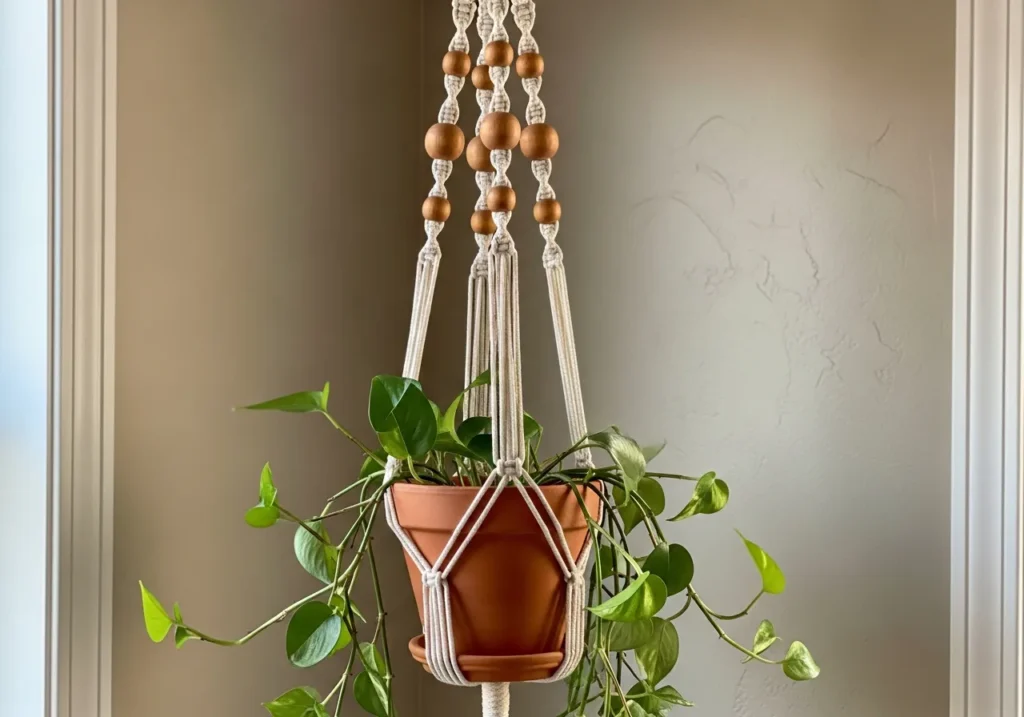
Incorporating wooden beads into your macrame plant hanger elevates the bohemian aesthetic while providing opportunities for color and texture variation. Beads serve both decorative and functional purposes, acting as spacers that define sections and add weight to create more pronounced draping. Natural wood tones complement plant foliage beautifully.
Selecting appropriate beads requires attention to hole size relative to your cord thickness. The bead should slide onto the cord with minimal resistance but fit snugly enough to stay positioned where placed. Standard macrame cord pairs well with beads featuring twelve to fifteen millimeter openings.
Placement strategy determines the overall visual impact. Concentrate beads at the upper portion near the mounting ring for a clustered effect, or distribute them evenly throughout the length for rhythmic repetition. Some designs incorporate larger statement beads as focal points, while others use numerous small beads to create intricate patterns.
Three Arm Plant Cradle
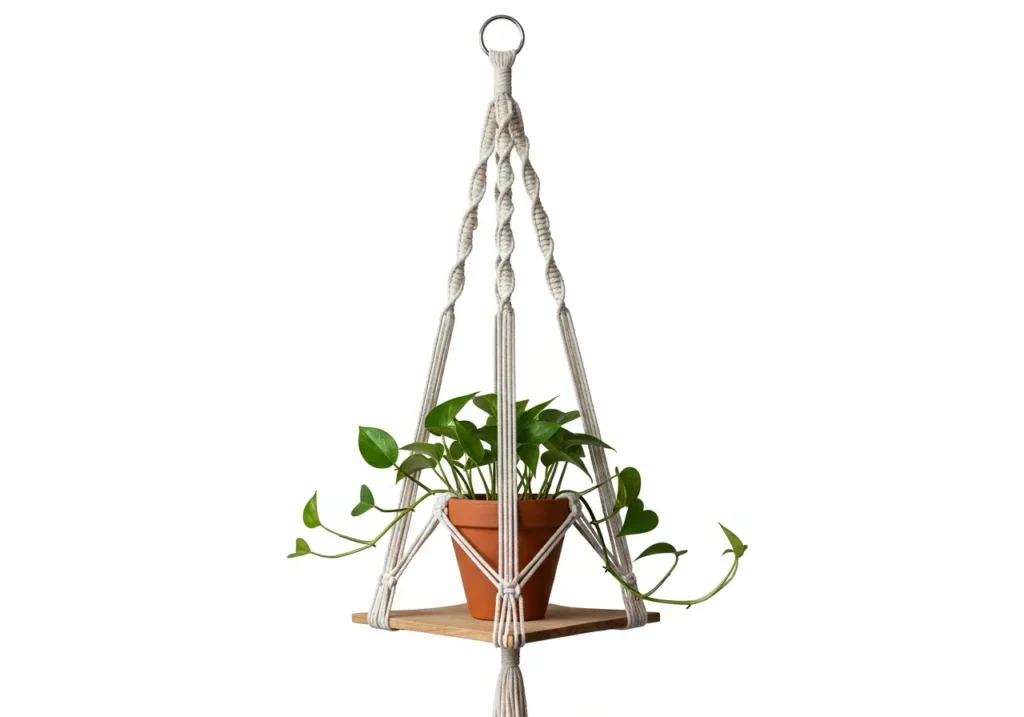
The three arm configuration provides a sturdy alternative to the traditional four rope design while creating a distinctly different aesthetic. This triangular structure works particularly well for smaller pots and offers easier construction for beginners intimidated by managing multiple cord groupings. The reduced number of working cords simplifies the knotting process considerably.
Creating a balanced three arm hanger requires precise measurement and spacing. Each arm must bear equal weight to prevent the pot from tilting. Establish your initial cords at exact hundred twenty degree intervals around the mounting ring, using a protractor if necessary to ensure accuracy.
This design particularly suits modern interiors where geometric shapes create visual coherence. The triangular form echoes architectural elements and contemporary artwork, establishing thematic connections throughout the space. Consider pairing this hanger style with similarly angular planters for maximum impact.
Tassel Free Contemporary Look
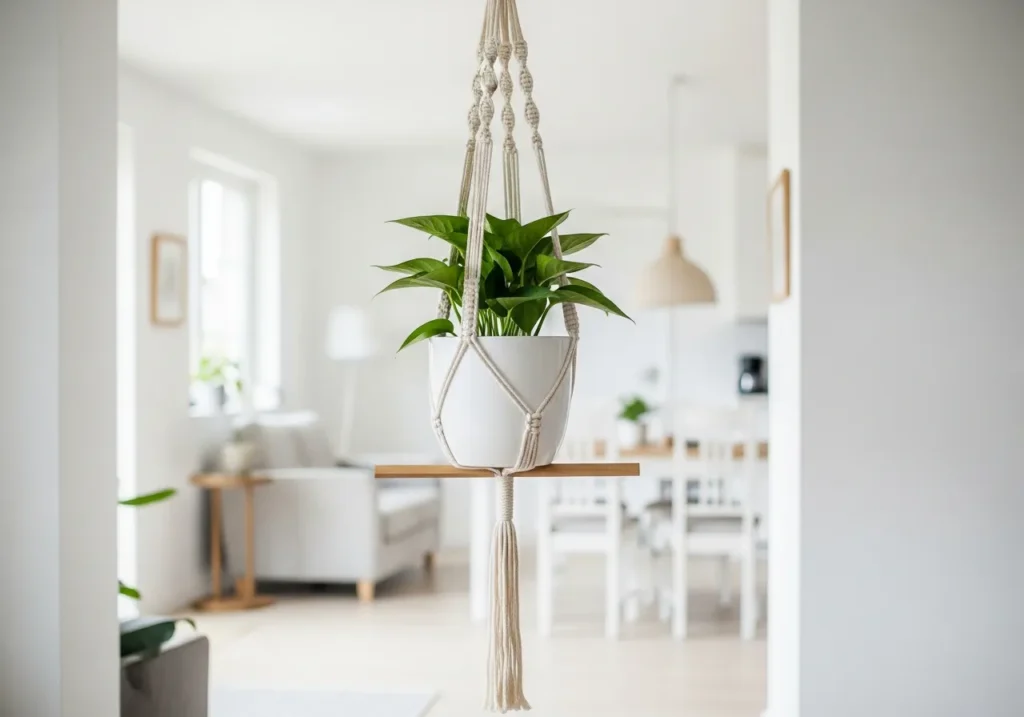
Many macrame enthusiasts prefer eliminating the traditional bottom tassel for a cleaner, more contemporary appearance. This approach removes excess ornamentation, allowing the knotwork itself to shine without competing visual elements. The tassel free design appeals to those embracing minimalist principles in their home decor.
Finishing a hanger without a tassel requires thoughtful planning for how to secure and finish the cord ends. Some craftspeople tie a final gathering knot positioned at the pot’s base, tucking trimmed ends upward into the knots to hide them. Others create a clean horizontal finish by binding all cords together and cutting them to uniform length.
The streamlined silhouette works beautifully in spaces where simplicity takes precedence over ornate decoration. Scandinavian interiors, Japanese-inspired rooms, and modern loft spaces particularly benefit from this restrained approach. The absence of fringe prevents the hanger from overwhelming delicate plants or competing with other room elements.
Diamond Pattern Weave
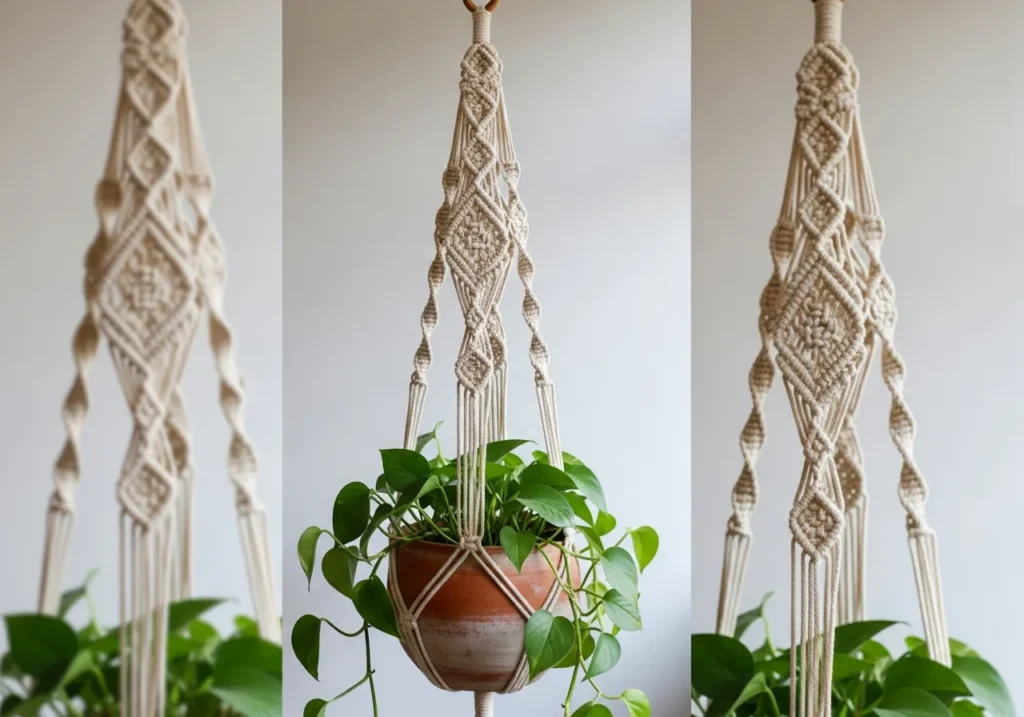
The diamond pattern creates sophisticated visual texture through alternating knot configurations that form geometric shapes within the cord work. This technique requires more advanced skills but produces stunning results that transform a functional plant hanger into a textile art piece. The interlocking diamonds create depth and dimension.
Executing diamond patterns demands careful attention to cord management and tension consistency. Each diamond forms through specific sequences of square knots and half hitch knots, with precise spacing determining the clarity of the geometric shapes. Marking your cord at regular intervals helps maintain proper proportions as you work.
This intricate design deserves prominent placement where its complexity can be appreciated. Position diamond pattern hangers in entryways, above dining tables, or in other locations where visitors naturally pause and observe. The detailed work merits close examination and serves as an excellent conversation starter.
Colorful Multi Strand Creation
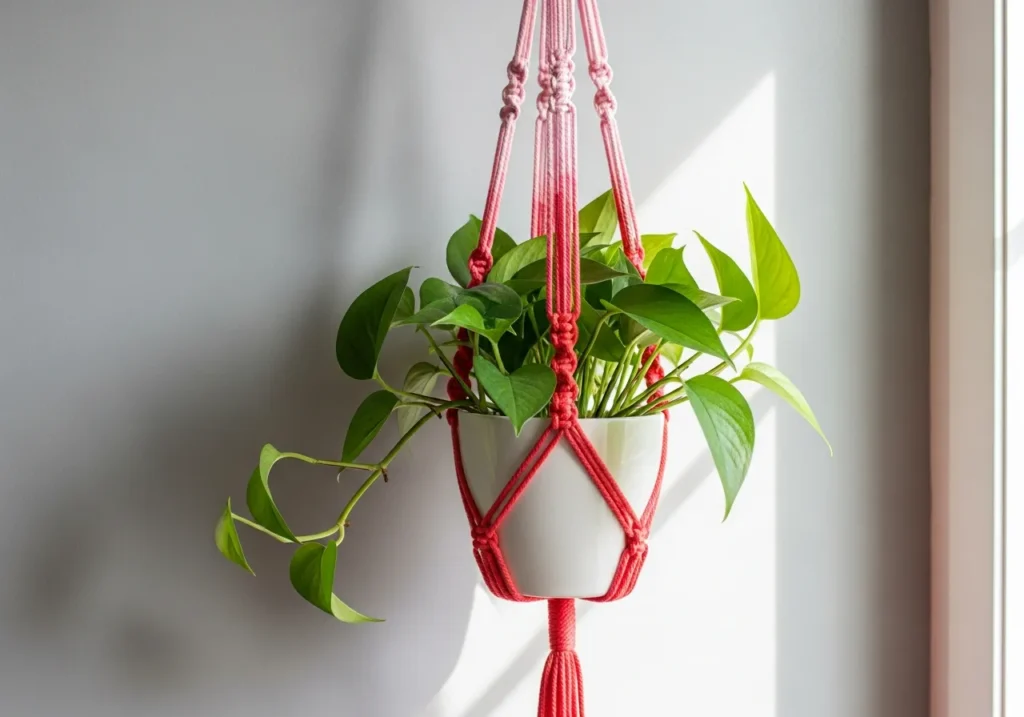
Breaking away from natural cord colors opens exciting possibilities for personalizing your plant hangers to match specific color schemes. Synthetic cords offer vibrant hues ranging from pastels to bold primaries, allowing you to coordinate with existing decor or create striking contrasts. Color blocking techniques combine multiple shades within a single piece.
When working with colored cord, consider both the immediate visual impact and long-term fading concerns. Natural dyes provide softer, more muted tones that age gracefully, while chemical dyes offer intensity that may diminish with sun exposure. Position colorful hangers away from direct sunlight to preserve their vibrancy.
Ombre effects create particularly stunning results, transitioning gradually from light to dark shades or shifting between complementary colors. This technique requires planning the color placement before beginning, determining where each shade begins and ends. The gradual shift adds movement and sophistication to your design.
Mason Jar Hanging Display
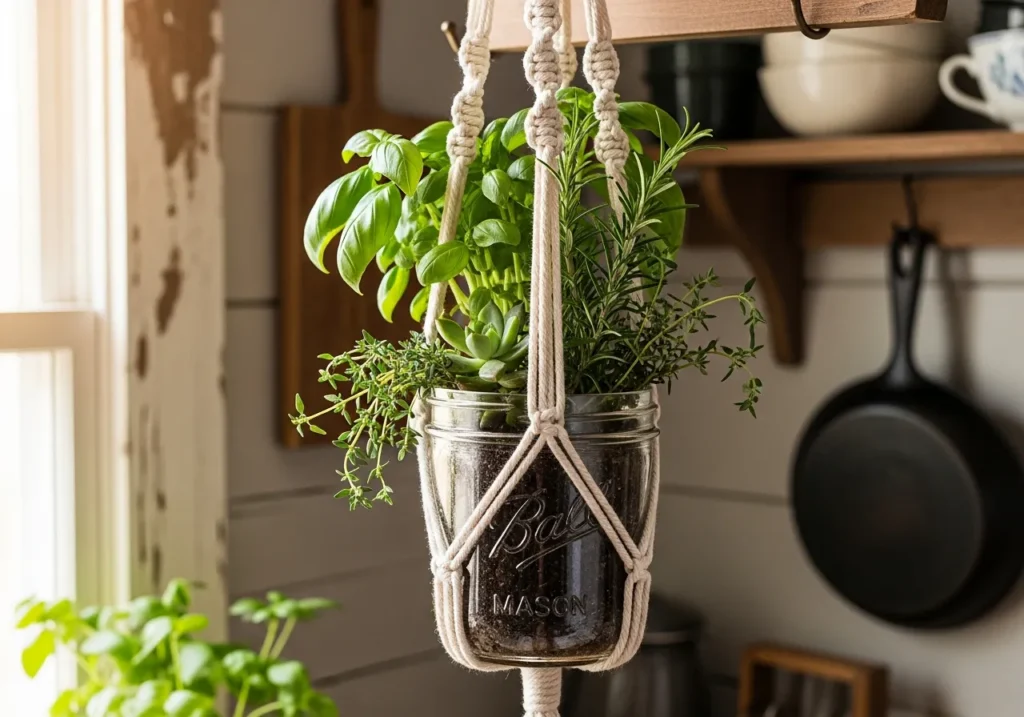
Adapting macrame techniques to accommodate mason jars creates charming hanging displays for cut flowers, herbs, or small succulents. The cylindrical jar shape requires modified knotting patterns that grip the smooth glass surface securely while remaining visually balanced. This design works beautifully in kitchens and cottage-style spaces.
Creating a secure grip on glass requires attention to friction and weight distribution. Some designs incorporate a collar of gathering knots positioned at the jar’s widest point, while others create a full basket that cradles the bottom. The transparent glass allows you to appreciate the cord work from all angles.
Mason jar hangers offer seasonal versatility beyond plant display. Fill them with battery operated fairy lights for ambient illumination, floating candles for romantic atmosphere, or seasonal decorations for holiday charm. The adaptable design transitions easily between functions as your needs change.
Extra Long Dramatic Hanger
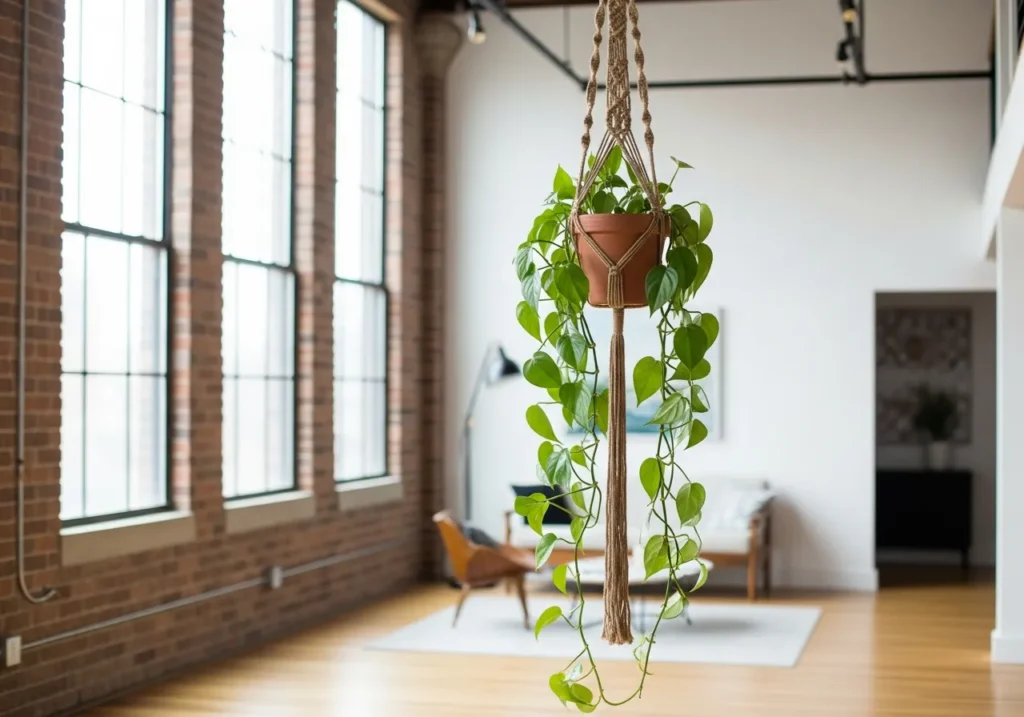
Spaces with high ceilings benefit from extra long macrame plant hangers that emphasize vertical dimension while creating dramatic visual impact. These extended designs typically measure four to six feet from mounting ring to pot, making a bold statement that draws attention upward. The elongated proportions suit trailing plants whose vines can cascade impressively.
Constructing extra long hangers requires significantly more cord than standard designs. Calculate your needs by measuring the desired finished length and multiplying by at least four times the total measurement. This generous allowance ensures adequate material for all knots while providing sufficient tail for finishing touches.
Plant selection becomes particularly important with dramatic lengths. Choose specimens that can handle the height without becoming stressed or dropping lower leaves due to reduced light. Spider plants, philodendrons, and various pothos varieties thrive in elevated positions, producing runners that enhance the vertical effect.
Vintage Inspired Retro Design
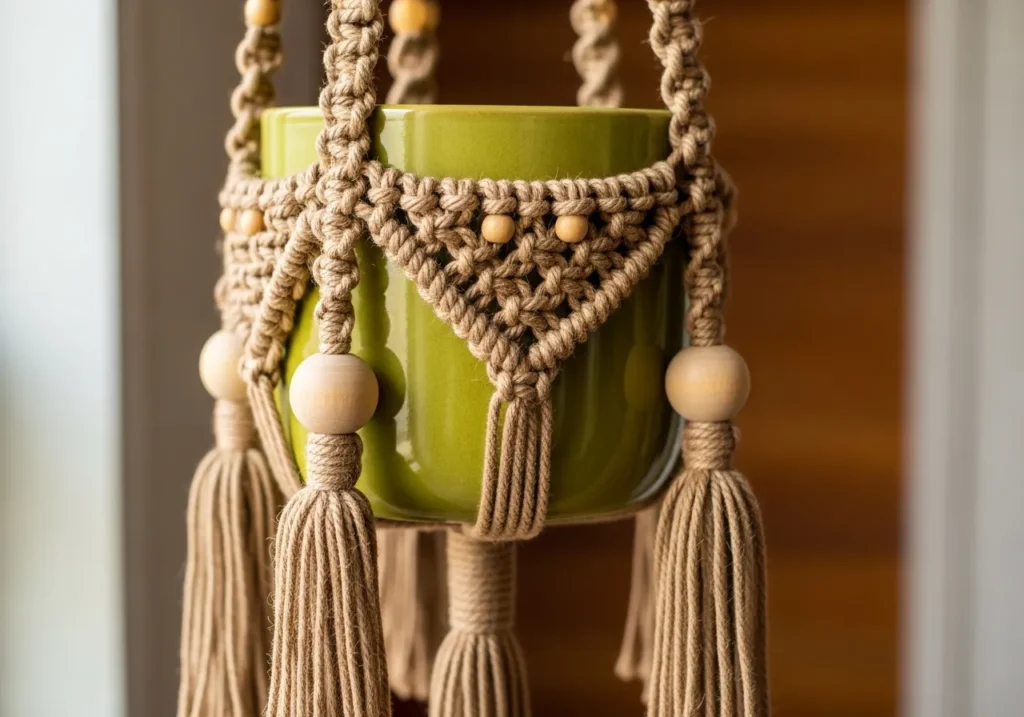
Embracing retro aesthetics through macrame plant hangers connects contemporary spaces with the craftsmanship traditions of the nineteen seventies. These designs typically feature elaborate knot patterns, generous tassels, and earthy color palettes that evoke nostalgic warmth. The vintage approach celebrates complexity over minimalism.
Authentic retro styling incorporates specific period-appropriate elements. Wooden beads in graduated sizes, multiple gathering knots positioned at regular intervals, and full bottom tassels all contribute to the vintage character. Natural jute cord provides the appropriate texture and color, though bleached cotton offers a lighter alternative.
Pairing vintage hangers with appropriately styled planters enhances the cohesive retro aesthetic. Ceramic pots in harvest gold, avocado green, or burnt orange complete the period look. Position these hangers in reading nooks, sunrooms, or other relaxed spaces where nostalgic charm feels most appropriate.
Air Plant Holder Variation
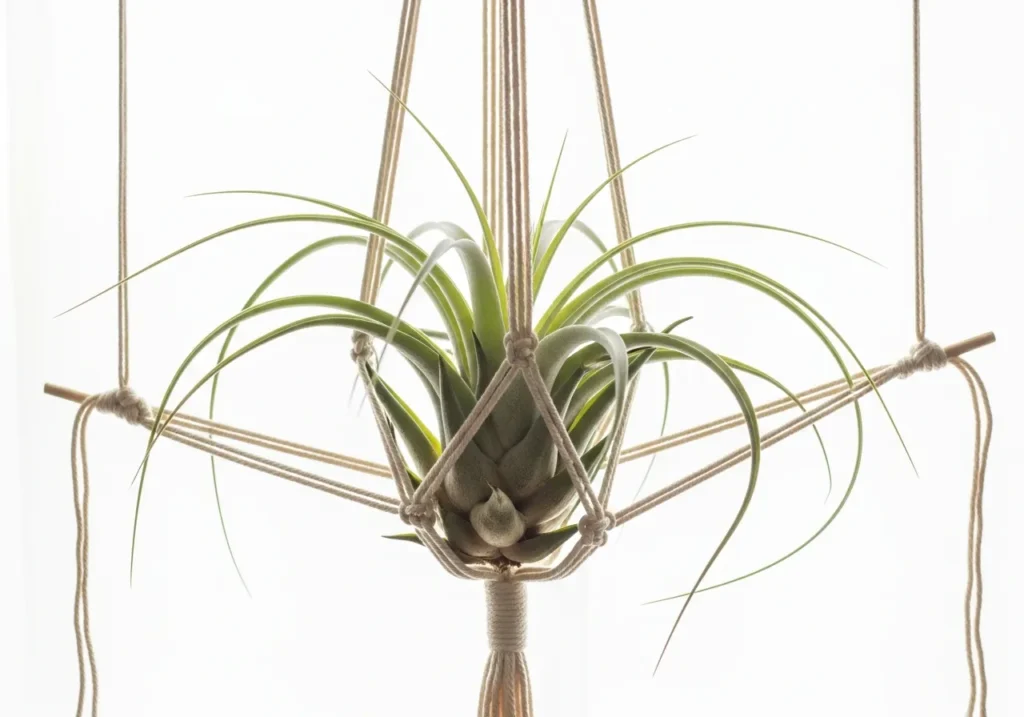
Air plants require no soil, making them ideal candidates for simplified macrame holders that cradle rather than contain. These designs eliminate the traditional basket structure in favor of minimal frameworks that showcase the plant’s unique form. The lighter weight allows for more delicate cord and finer knot work.
Creating an air plant holder focuses on establishing secure contact points rather than full support structures. Some designs suspend plants within loose netting, while others position them in simple cradles formed by crossing cords. The open construction ensures adequate air circulation essential for tillandsia health.
Display multiple air plant holders in groupings for maximum impact. Varying the lengths and positions creates a floating garden effect that appears to defy gravity. Position these arrangements near windows where natural light supports photosynthesis while illuminating the delicate plant structures.
Shelf Style Hanging Planter
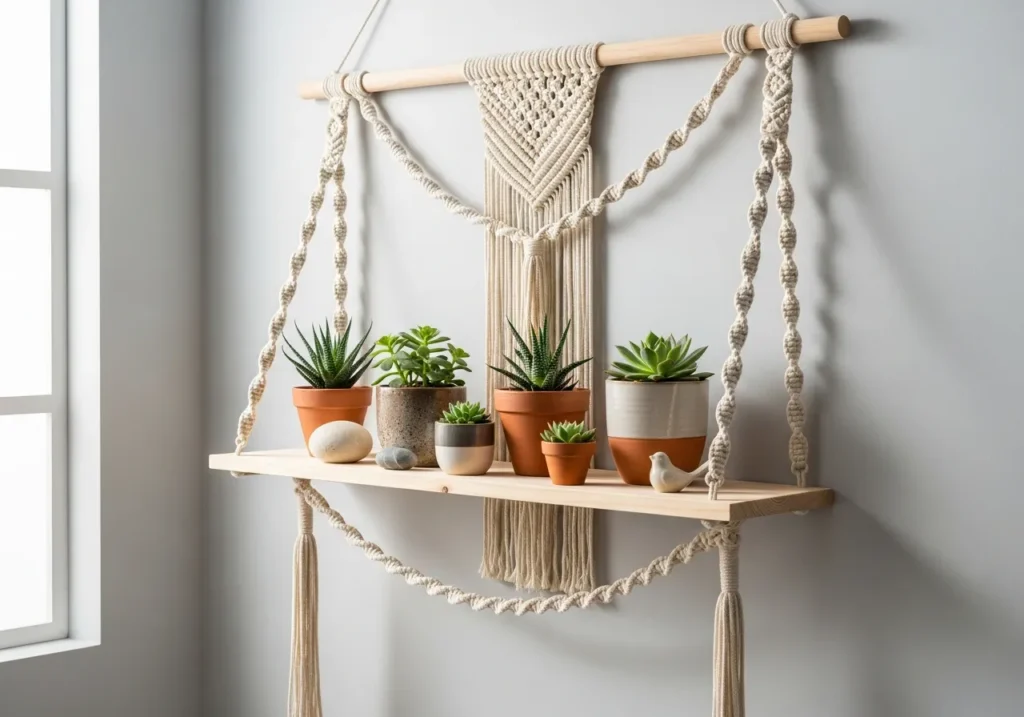
Combining macrame techniques with wooden shelving creates hybrid designs that offer both hanging and surface display options. These pieces suspend horizontal platforms at one or more levels, providing stable bases for pots, books, or decorative objects. The integration of rigid elements with soft textiles creates interesting material contrast.
Constructing shelf hangers requires basic woodworking skills in addition to macrame knowledge. Select lightweight wood species like pine or cedar that provide adequate strength without excessive weight. Sand all edges smooth before incorporating boards into your cord work to prevent fiber damage.
The shelf configuration works particularly well in bathrooms, where you can display small succulents alongside toiletries. Kitchen applications allow you to grow fresh herbs within easy reach while adding decorative interest. The functional versatility makes these pieces valuable in various room contexts.
Corner Space Maximizer
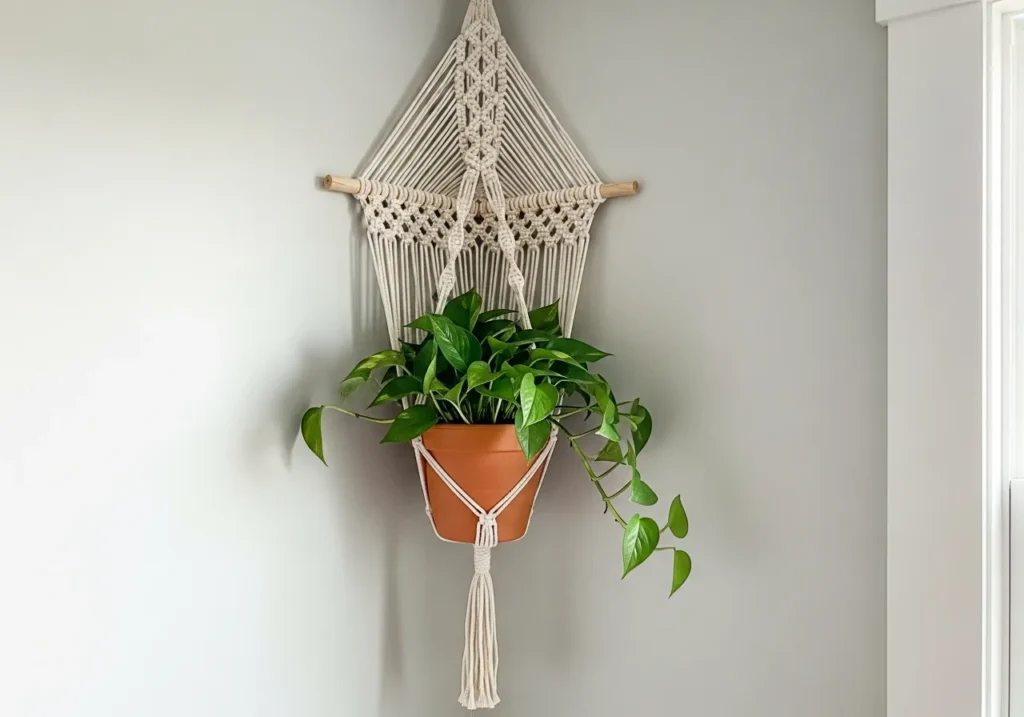
Corner specific macrame plant hangers optimize often overlooked spaces while creating interesting angular displays. These designs account for the unique geometry of corner placement, adjusting cord lengths and angles to ensure proper pot positioning. The specialized construction prevents plants from pressing awkwardly against walls.
Planning a corner hanger requires measuring both wall surfaces and understanding how the pot will hang in relation to each. The mounting point typically positions slightly forward from the actual corner intersection, allowing the plant to nestle into the space without touching either wall. This clearance prevents moisture damage and promotes even growth.
Corners naturally draw less visual attention than central wall areas, making them perfect for specimen plants you want to highlight. Position your most interesting varieties in corner hangers where they command focus without competing with other design elements. The contained space frames the plant beautifully.
Multi Plant Cluster Display
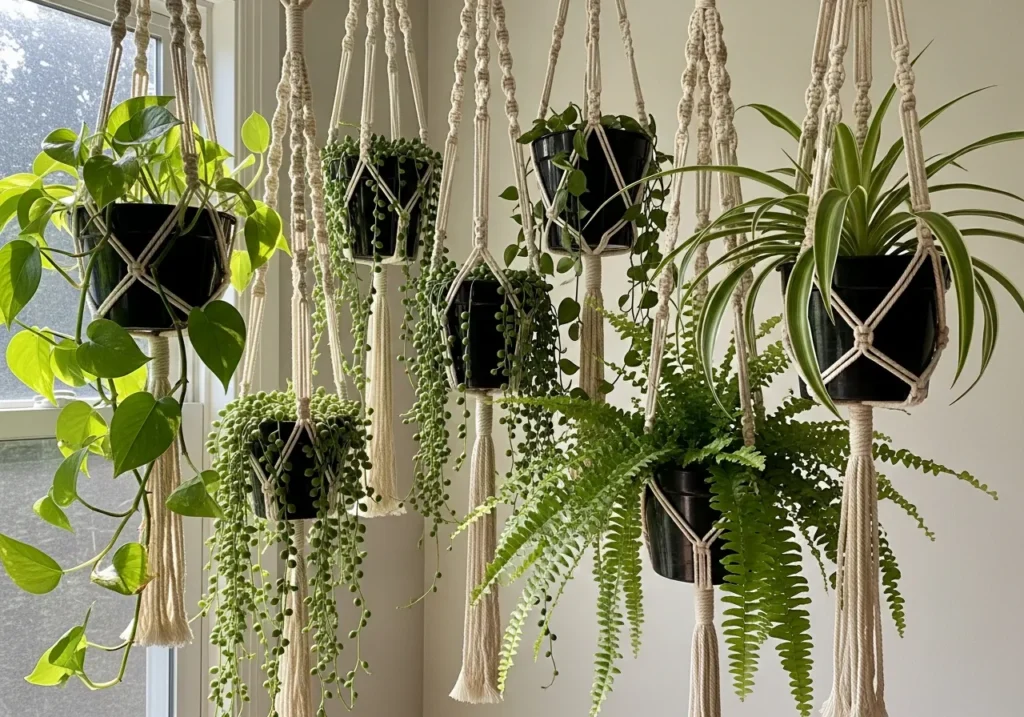
Creating interconnected groupings of individual hangers at varying heights produces lush, layered displays that mimic natural plant communities. This approach clusters several single hangers from a shared mounting system or closely spaced ceiling hooks, generating abundant greenery in concentrated areas. The overlapping effect creates impressive visual density.
Designing successful clusters requires planning for adequate spacing between individual plants. Each specimen needs sufficient room for growth and air circulation while maintaining the cohesive grouped appearance. Stagger heights generously, separating vertical positions by at least eighteen inches to prevent crowding.
Select plant varieties with compatible care requirements for clustered displays. Grouping specimens with similar light, water, and humidity needs simplifies maintenance while ensuring all plants thrive. Consider mixing foliage types and colors within clusters for maximum visual interest and textural variation.
Outdoor Weather Resistant Style
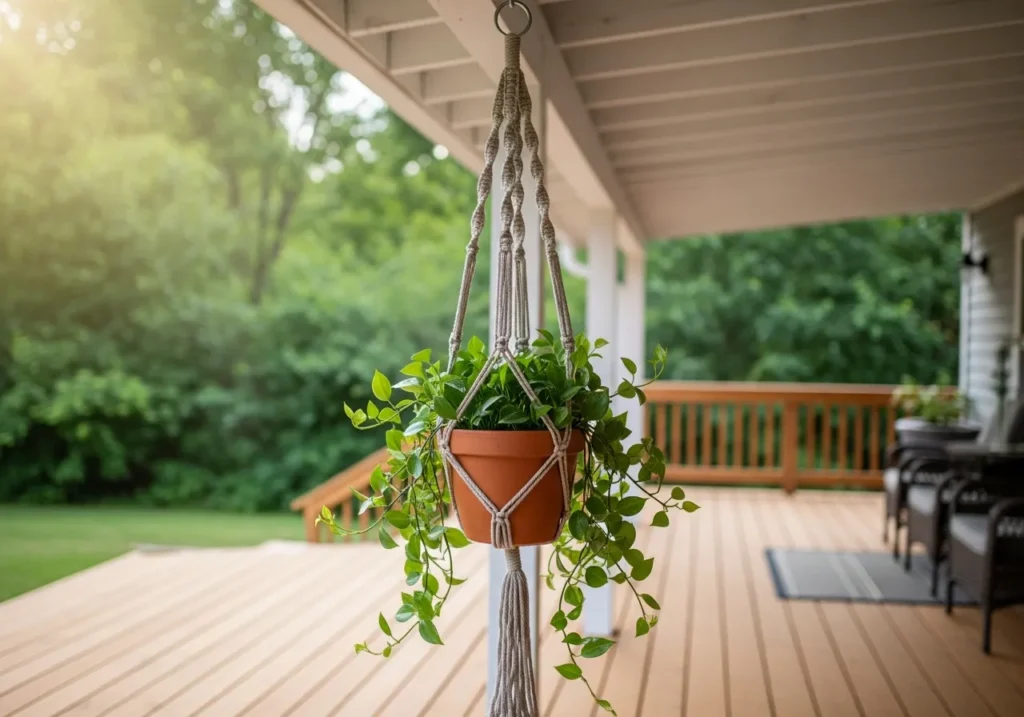
Extending macrame plant hangers to outdoor spaces requires selecting materials that withstand weather exposure without deteriorating. Synthetic cords made from polypropylene or polyester resist moisture, mold, and UV degradation better than natural fibers. These durable options maintain integrity through seasons of sun, rain, and temperature fluctuations.
When creating outdoor hangers, prioritize knot security over decorative complexity. Wind forces test connections more severely than indoor conditions, making reliability paramount. Double check all knots and consider adding adhesive at critical junctions for extra insurance against unraveling.
Protected porch and patio locations offer ideal placement for outdoor macrame hangers. Position them under eaves or covered areas where they receive shelter from direct precipitation while still enjoying natural light and fresh air. This protected exposure extends material life while supporting healthy plant growth.
Leather Cord Luxury Hanger
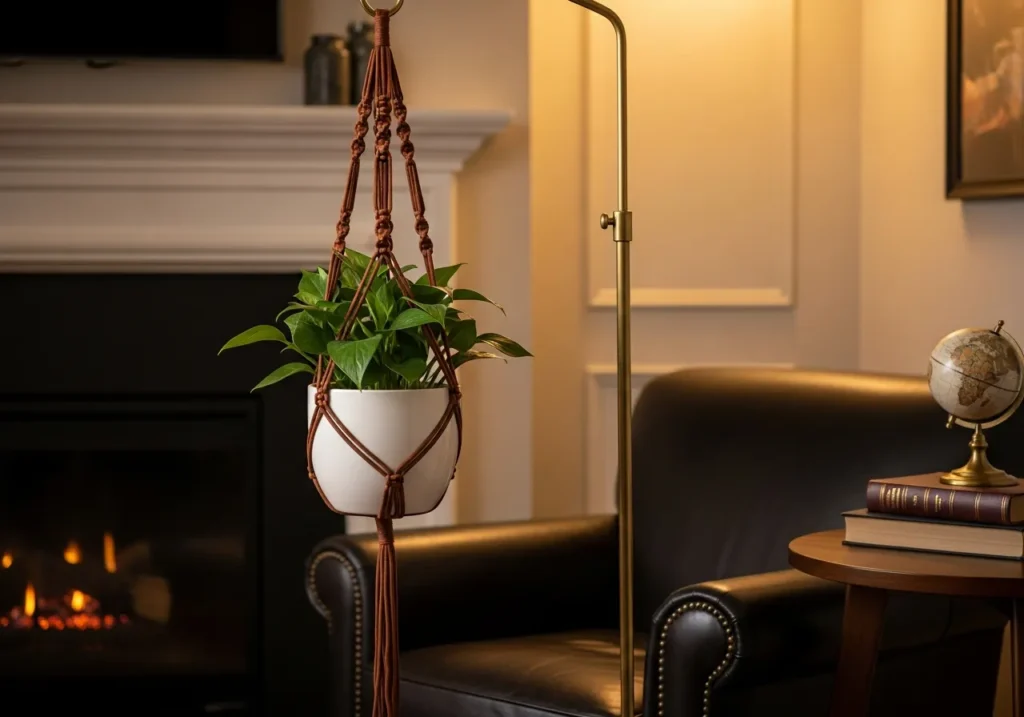
Substituting traditional cotton or jute cord with leather strips creates sophisticated hangers that suit refined interior aesthetics. Leather brings different textural qualities and visual weight, appearing more substantial and luxurious. The material works beautifully in spaces featuring other leather elements like furniture upholstery or accessories.
Working with leather requires modified techniques due to the material’s different handling properties. Leather strips lack the flexibility of twisted cord, making certain knots challenging or impossible to execute. Focus on simple patterns that accommodate leather’s stiffness while showcasing its inherent beauty.
The investment in leather materials merits extra care in construction and placement. Position these special hangers where they receive appreciation as design features rather than purely functional plant supports. The elevated material quality transforms the humble plant hanger into a luxury accent piece.
Quick Beginner Friendly Design
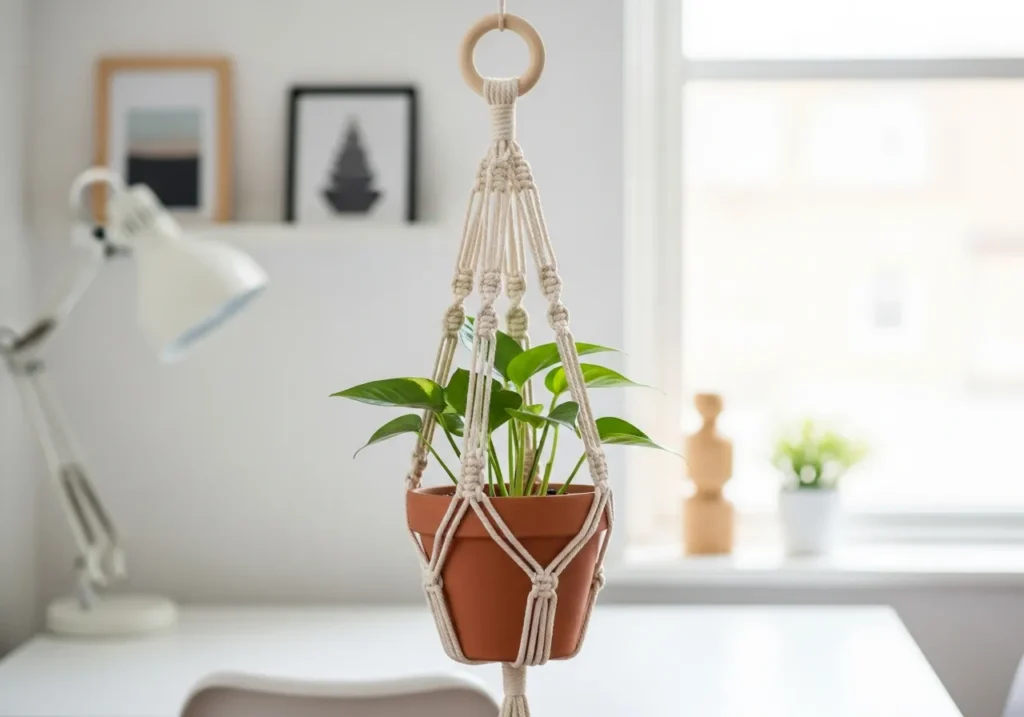
Newcomers to macrame benefit from simplified patterns that build confidence while producing attractive results. These beginner designs eliminate complex knot sequences in favor of repetitive basic techniques that create pleasing patterns through consistent execution. The straightforward approach prevents frustration while teaching fundamental skills.
A typical beginner pattern might employ only lark’s head knots for mounting and simple overhand knots for the basket structure. This minimal technique palette allows you to focus on maintaining even tension and proper spacing rather than memorizing complicated sequences. The resulting hanger looks intentionally simple rather than poorly executed.
Starting with beginner projects establishes a foundation for advancing to more complex designs. As basic knots become automatic, you gain confidence to attempt additional techniques and patterns. Document your early creations photographically to appreciate your skill development over time.
Conclusion
Macrame plant hangers represent more than mere functional objects for displaying greenery. These handcrafted pieces embody the intersection of utility and artistry, bringing warmth and personality into living spaces through natural materials and traditional techniques. Whether you choose simple minimalist designs or elaborate vintage inspired creations, each hanger reflects your personal aesthetic while supporting your botanical collection.
The diverse range of styles ensures appropriate options for every skill level and interior theme. Beginners can start with basic patterns that deliver satisfying results without overwhelming complexity, while experienced crafters can challenge themselves with intricate designs featuring advanced knotwork. The accessibility of macrame makes it an inclusive craft that welcomes everyone regardless of prior experience.
Creating your own plant hangers offers numerous benefits beyond the finished products. The meditative process provides stress relief and creative fulfillment, while the completed pieces serve as tangible evidence of your developing skills. Each project teaches lessons about materials, techniques, and design principles that inform future creations.
As you explore the ideas presented here, remember that experimentation leads to discovery. Modify patterns to suit your preferences, combine elements from different designs, and develop your signature style. The best macrame plant hanger is the one that brings you joy both during creation and as it enhances your living space with supported greenery and handmade beauty.
Frequently Asked Questions
How much cord do I need for a macrame plant hanger?
The general rule suggests cutting cord pieces approximately four times the desired finished length of your hanger. For a standard three foot hanger, cut each strand to twelve feet. Add extra length if incorporating complex knot patterns or want generous tassels. Always overestimate rather than run short, as excess can be trimmed while insufficient cord ruins the project.
What type of cord works best for plant hangers?
Cotton macrame cord between three and six millimeters diameter provides ideal balance between strength and workability for most applications. Natural cotton offers soft texture and accepts dye well, while synthetic materials resist weather damage for outdoor use. Avoid stretchy materials that compromise structural integrity when supporting plant weight.
Can macrame plant hangers hold heavy pots?
Well constructed macrame hangers support considerable weight when using appropriate cord thickness and secure knots. Six millimeter cotton cord handles pots up to ten pounds comfortably. For larger plants, double your cords or select thicker materials. Always test weight capacity before adding plants, and ensure ceiling hooks are properly anchored.
How do I prevent my macrame from unraveling?
Secure all knots by tightening firmly as you work, checking that each knot seats properly against adjacent ones. Finish cord ends with gathering knots or adhesive to prevent loosening. Some crafters apply clear fabric glue to critical knots for extra insurance. Synthetic cords can be heat sealed at cut ends using a lighter.
What plants work best in macrame hangers?
Trailing varieties like pothos, spider plants, and string of pearls showcase beautifully in hanging positions, with vines cascading gracefully. Moderate weight plants with established root systems adapt most successfully to hanging culture. Avoid heavy specimens or those requiring constant moisture, as weight and dripping present challenges in suspended displays.