
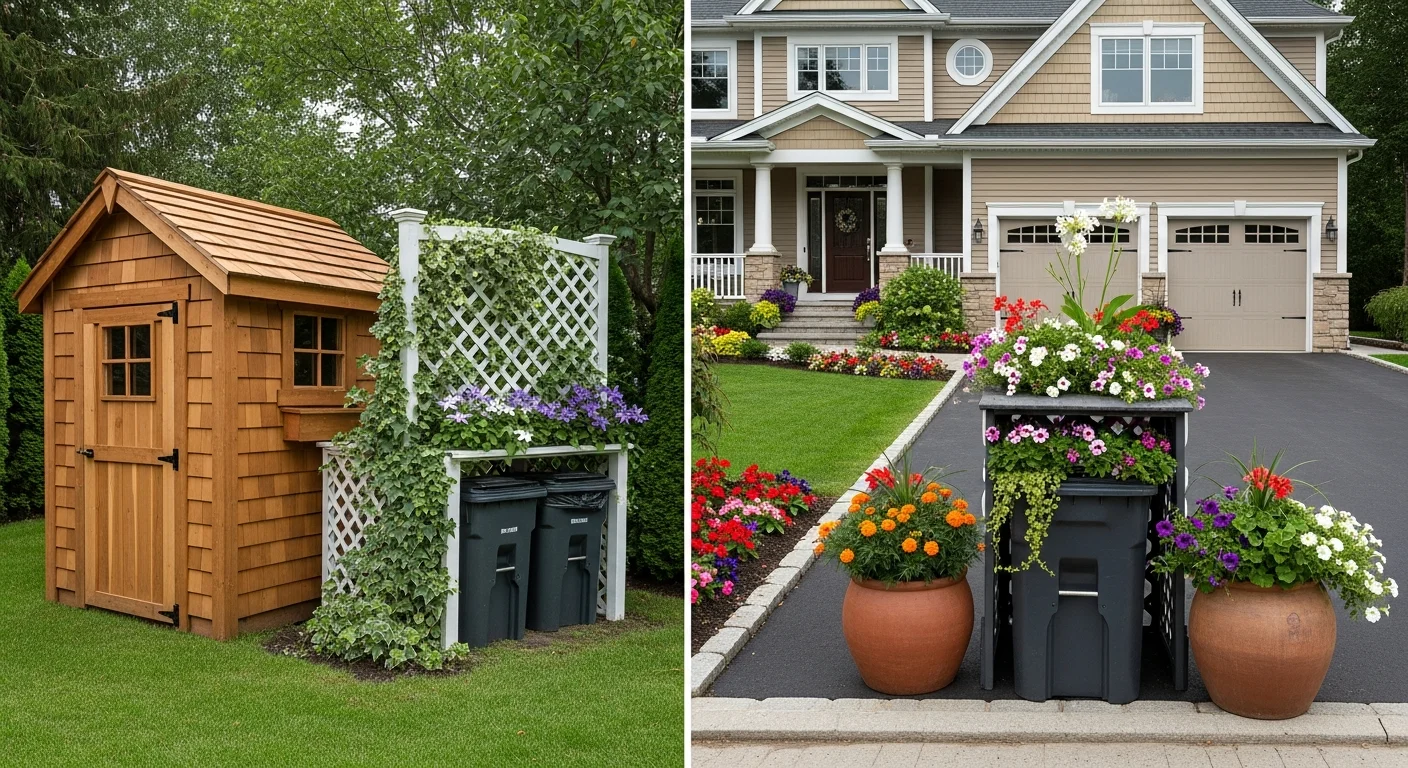
15+ Creative Outdoor Trash Can Cover Ideas
Outdoor trash cans serve an essential purpose in every home, but they rarely win any awards for aesthetics. Those bulky plastic bins sitting along your driveway or next to your garage can significantly detract from your home’s curb appeal, especially when visible from the street. Fortunately, with some creativity and strategic planning, you can transform these necessary eyesores into features that blend seamlessly with your landscaping or disappear entirely from view.
Whether you live in a neighborhood with strict homeowners association guidelines or simply want to elevate your outdoor space, the right trash can cover solution can make a dramatic difference. From simple fabric wraps to elaborate wooden enclosures with planted roofs, the options range from quick weekend projects to more involved carpentry endeavors. This comprehensive guide explores over fifteen innovative ways to conceal your outdoor garbage and recycling bins while maintaining easy access for weekly collection days.
The benefits extend beyond mere appearance. Proper trash can covers help deter raccoons, squirrels, and other wildlife from rummaging through your garbage at night. They also protect bins from harsh weather conditions that can cause cracking and fading, effectively extending the lifespan of your containers. Many solutions incorporate additional features like tool storage, planter boxes, or decorative elements that actively enhance your outdoor living space rather than simply hiding an unattractive necessity.
Build a Custom Wooden Shed Enclosure
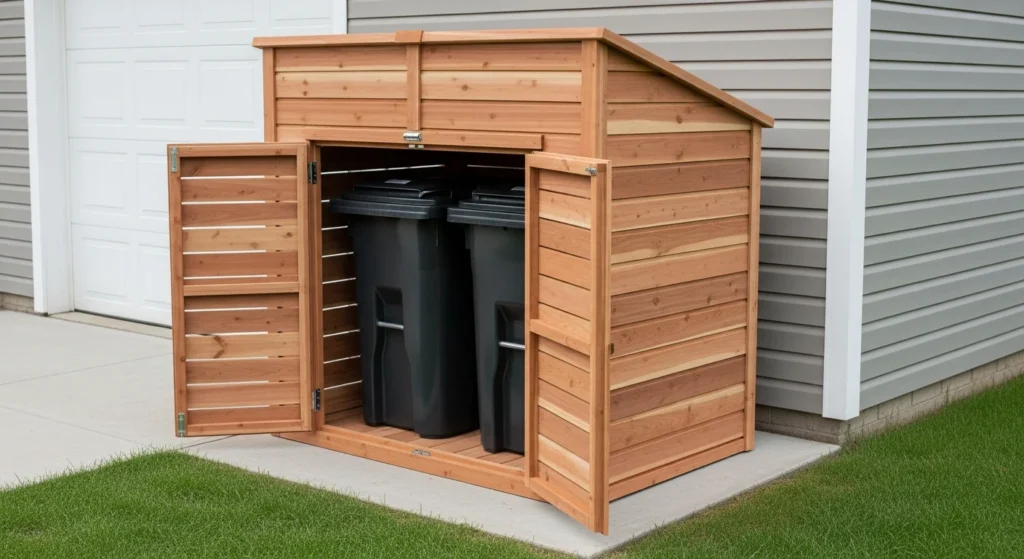
A dedicated trash can shed represents one of the most comprehensive solutions for hiding outdoor bins. These small structures typically feature a platform base, framed walls, and a hinged roof that allows you to lift the lid and drop garbage bags inside without fully opening the enclosure. The front doors swing wide on collection days, making it easy to wheel bins to the curb.
Cedar remains the most popular wood choice for these projects due to its natural resistance to rot, decay, and insect damage. The wood weathers beautifully over time, developing a silvery patina that many homeowners find attractive. Construction typically involves building two side frames with 2×4 lumber, connecting them with cross supports, and covering the exterior with fence pickets or tongue-and-groove boards. The slanted roof design ensures proper water drainage while the hinged lid mechanism can be enhanced with gas shocks that hold the top open while you add trash.
Most DIY shed enclosures can accommodate two standard municipal bins, measuring approximately 80 inches wide, 45 inches deep, and 55 inches tall. The entire project can be completed in a weekend with basic carpentry skills and tools like a circular saw, drill, and level. Total material costs typically range from $200 to $400 depending on lumber prices and whether you add decorative elements like trim boards, painted finishes, or house numbers.
Install a Three-Sided Lattice Screen
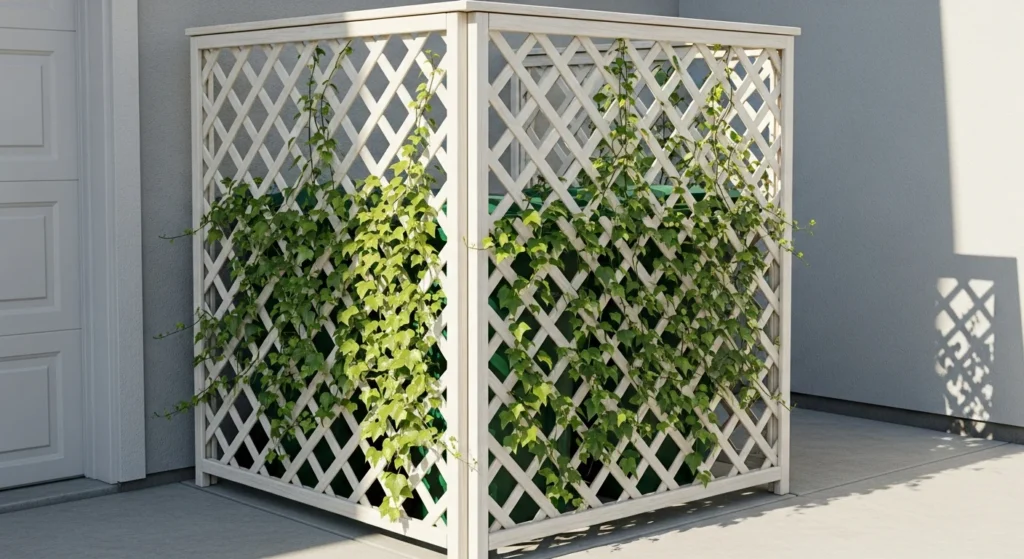
For a faster and less expensive solution, consider a three-sided lattice screen that wraps around your trash cans on the sides and back while leaving the front open for easy access. This approach works particularly well when positioning bins against a garage wall or fence, as the existing structure serves as the fourth wall.
Lattice panels come pre-made in various materials including vinyl, wood, and composite. The geometric pattern provides visual interest while the open design allows air circulation that helps reduce odors. Many homeowners paint or stain their lattice screens to match existing outdoor structures, creating a cohesive look throughout the property. The installation process is straightforward, requiring only posts set in concrete or secured to a base frame, with the lattice panels attached using exterior screws or staples.
To enhance the natural appearance, train climbing plants like clematis, jasmine, or climbing roses to grow up the lattice. Within a season or two, the vines will fill in the gaps, creating a living screen that transforms the trash area into a garden feature. English ivy provides year-round coverage in most climates, though it requires regular pruning to prevent overgrowth.
Create a Privacy Fence Extension
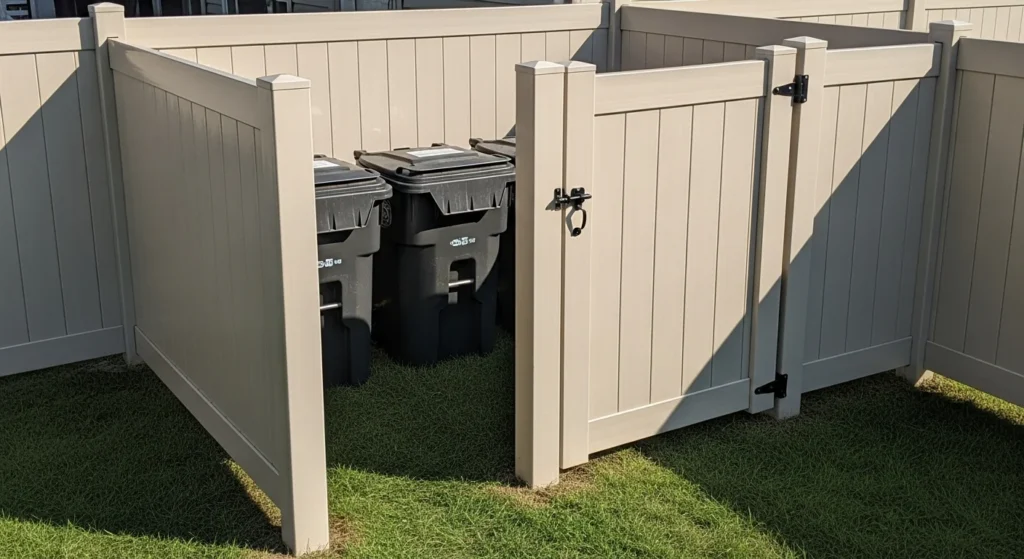
If your property already has fencing, extending a section to create a trash can alcove represents a natural and attractive solution. This approach works especially well for side yards where bins sit near the property line. The fence extension should match your existing fence style, whether that’s horizontal slats, vertical pickets, or decorative panels.
Vinyl fencing offers significant advantages for this application. Unlike wood, vinyl never requires staining or painting, resists moisture damage, and cleans easily with a garden hose. Modern vinyl fencing comes in numerous colors beyond basic white, including tan, gray, and natural wood tones that complement various architectural styles. The material remains stable in temperature extremes and won’t warp or split over time.
For added functionality, consider building the fence section with a hinged gate that swings outward. This allows you to completely enclose the trash area while maintaining convenient access. Add a simple latch or lock to keep the gate secure during windy conditions and prevent animals from pushing through to the bins.
Use Decorative Fabric Covers
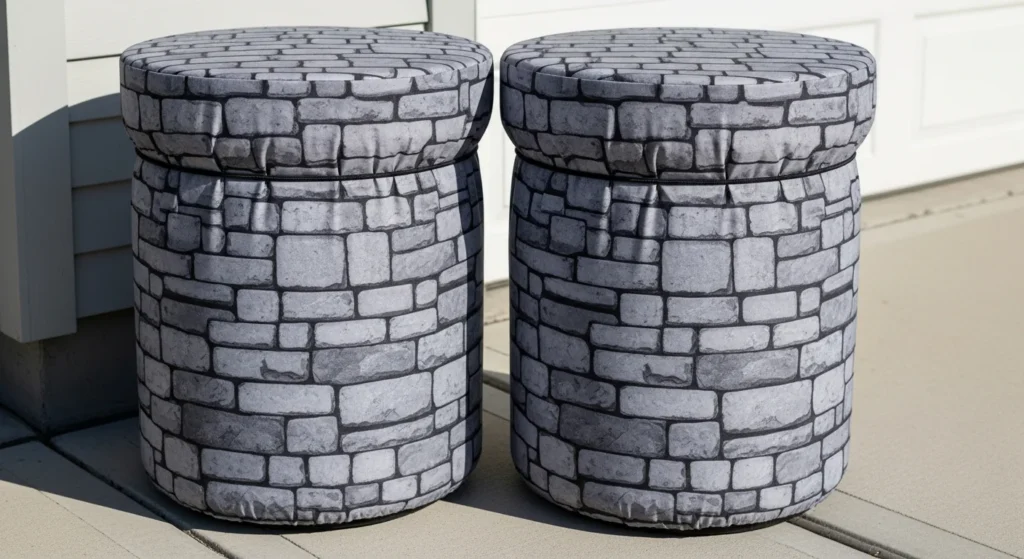
When building projects aren’t feasible, decorative fabric covers offer an immediate solution that requires zero construction skills. These covers wrap around trash cans and attach at the top with bungee cords or snap fasteners, transforming plain plastic bins into attractive landscape features.
Quality outdoor trash can covers use weather-resistant fabrics specifically designed to withstand sun exposure, rain, and temperature fluctuations. Popular patterns include natural stone textures, brick designs, wood grain prints, and botanical motifs. Some homeowners prefer solid earth tones that help bins blend into the surrounding landscape rather than stand out.
The main advantage of fabric covers lies in their removability. You can easily take them off before collection day if your sanitation service requires it, then reattach them after the bins return. They also accommodate different bin sizes through adjustable fastening systems. While fabric covers don’t provide the same level of concealment as structural solutions, they significantly improve the appearance of bins that must remain visible due to property constraints.
Plant Strategic Evergreen Screening
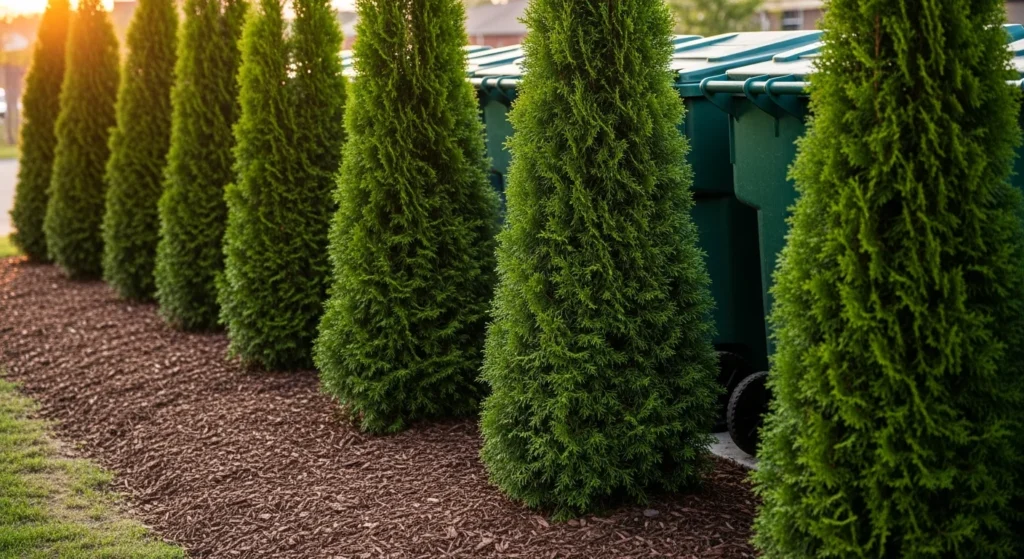
Nature provides some of the most effective and beautiful trash can concealment options through strategic plantings. Evergreen shrubs and trees maintain their foliage year-round, ensuring consistent coverage regardless of season. This approach requires patience as plants establish and grow to full size, but the long-term results create a permanent, self-sustaining solution.
Arborvitae stands out as an ideal screening plant for trash cans. These narrow, upright evergreens can reach heights of 10 to 15 feet while maintaining a compact footprint of just 3 to 4 feet wide. They grow relatively quickly, often adding 12 to 24 inches of height per year once established. Hardy in zones 2 through 7, arborvitae tolerates various soil conditions and requires minimal maintenance beyond occasional watering during dry spells.
Boxwood shrubs offer another excellent option, particularly for smaller spaces or when you want more control over shape and size. These broadleaf evergreens respond well to pruning, allowing you to maintain them at whatever height and width suits your needs. Plant them in a row or grouping in front of trash cans, spacing them 2 to 3 feet apart for a hedge effect. Within two to three years, they’ll create a dense, attractive screen that effectively hides bins from view.
Add a Trellis with Climbing Vines
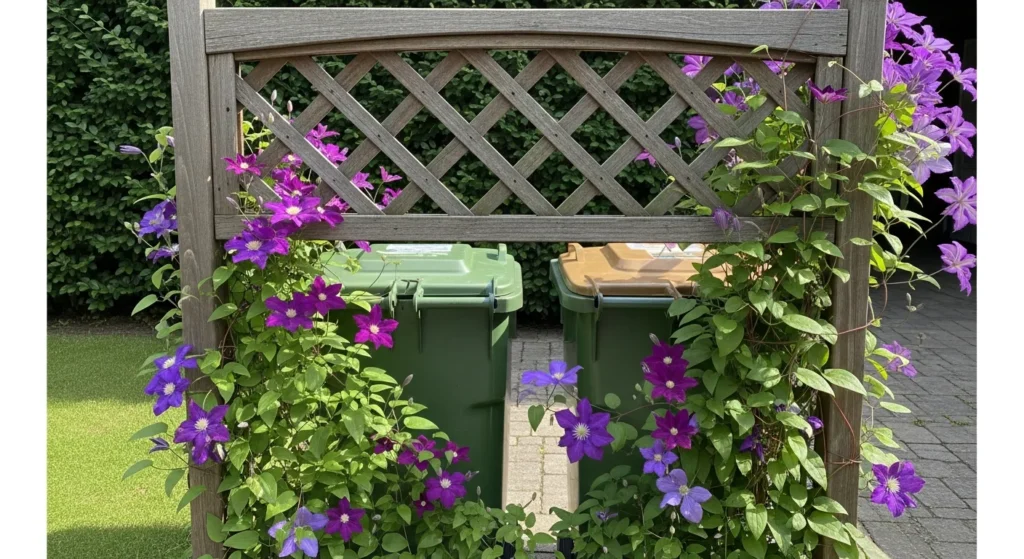
Garden trellises combine structural screening with natural beauty, creating an attractive backdrop for trash cans while supporting flowering or foliage vines. This solution works particularly well in garden settings where you want to maintain a cohesive aesthetic rather than introducing an obviously utilitarian structure.
Trellis materials range from traditional wood to modern metal, vinyl, and resin options. Cedar and wrought iron provide classic looks that suit traditional landscapes, while powder-coated aluminum offers contemporary styling with minimal maintenance requirements. Freestanding trellises typically stand 5 to 7 feet tall and 3 to 4 feet wide, creating an effective visual barrier when positioned behind or beside trash bins.
The choice of climbing plants determines how quickly and thoroughly the trellis provides coverage. Clematis armandii, an evergreen variety, produces fragrant white flowers in spring while maintaining foliage throughout winter. Passionflower grows vigorously in warm climates, offering exotic blooms and interesting foliage texture. For year-round coverage in most regions, consider Boston ivy or Virginia creeper, both of which turn brilliant shades of red and orange in autumn before dropping their leaves.
Build a Horizontal Storage Shed
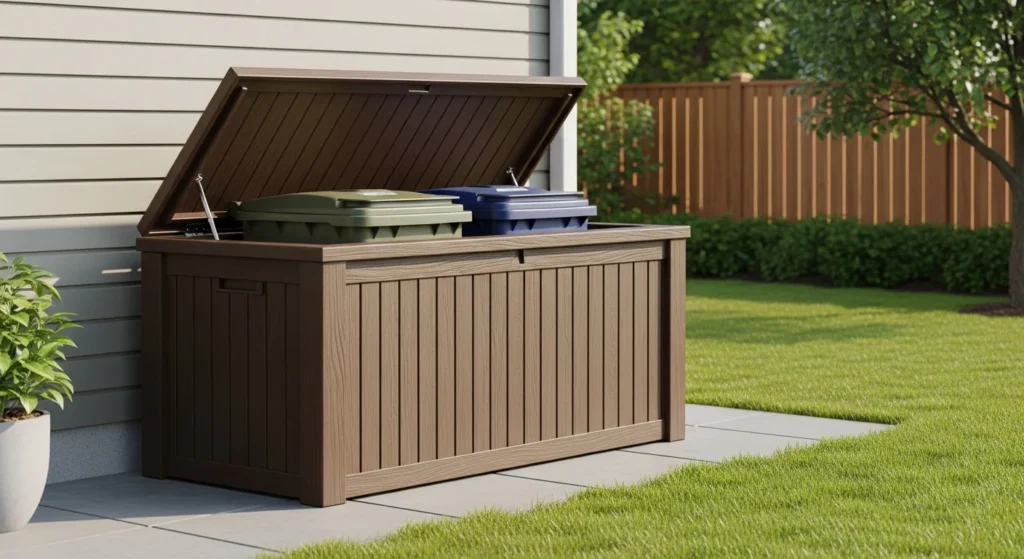
Horizontal storage sheds, also called deck boxes, provide a low-profile alternative to traditional upright sheds. These units typically stand just 3 to 4 feet tall, allowing them to nestle below fence lines while still accommodating standard trash cans. The compact design works well in tight spaces like narrow side yards or small patios.
Resin construction dominates this category due to its superior weather resistance and low maintenance requirements. Multi-wall resin panels provide structural strength while resisting fading, cracking, and warping. Most models feature reinforced floors capable of supporting several hundred pounds, making them suitable for storing not just trash cans but also garden tools, pool supplies, or outdoor cushions.
The hinged lid design offers convenient top access, eliminating the need to open doors. Some advanced models incorporate ventilation systems that reduce odor buildup while keeping rain out. Look for versions with pad-lockable handles if wildlife presents a problem in your area. The lockable design prevents raccoons and other animals from accessing bins while the solid construction withstands their attempts to overturn or claw through the enclosure.
Create a Bench with Hidden Compartment
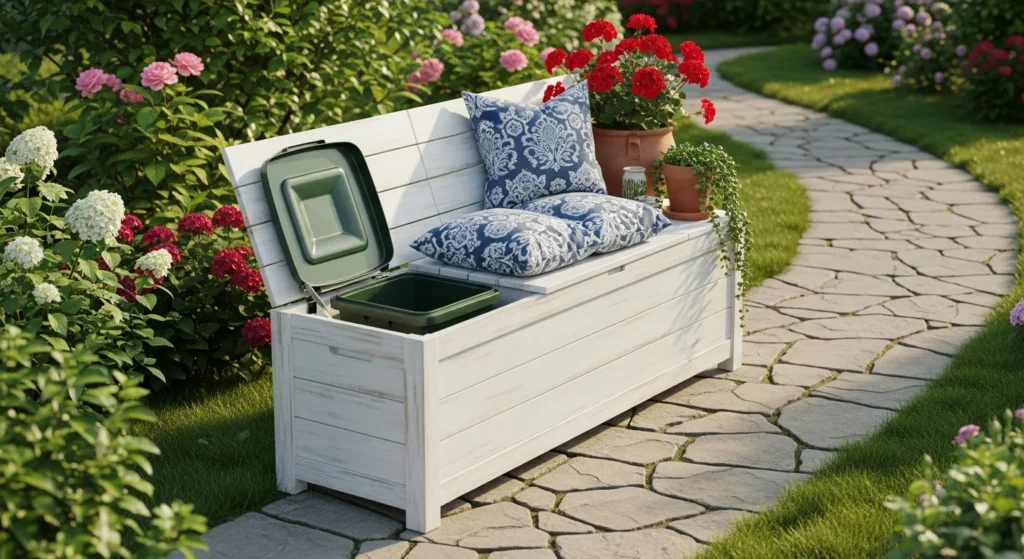
Why settle for hiding trash cans when you can create functional outdoor seating at the same time? A storage bench with a hinged seat provides trash can concealment while offering a place to sit, store garden tools, or display potted plants on top. This dual-purpose solution maximizes utility in smaller outdoor spaces where every square foot counts.
Building a trash can bench requires more advanced carpentry skills than a simple screen, but the results justify the extra effort. The basic construction involves creating a frame sized to accommodate your bins, adding a hinged top, and finishing the exterior with attractive materials like tongue-and-groove paneling, horizontal slats, or beadboard. Paint or stain the bench to coordinate with your home’s exterior colors or other outdoor furniture.
For added comfort, top the bench with weather-resistant cushions in colors and patterns that complement your outdoor decor. Position the bench along a garden path, beside a patio, or near an entry door where it serves both practical and aesthetic purposes. The elevated design also makes accessing bins easier, reducing the need to bend down when depositing trash bags.
Install Pre-Made Metal Enclosures
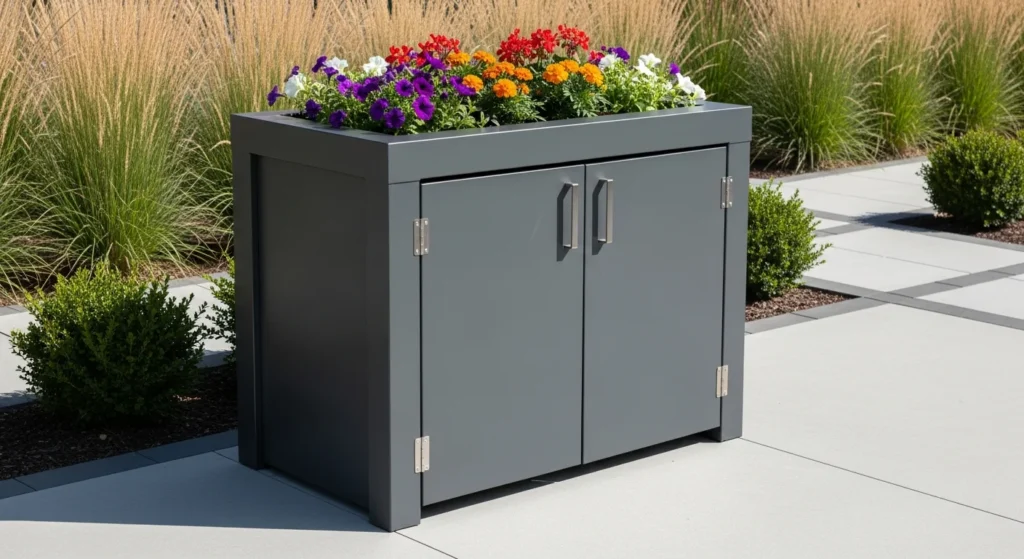
For homeowners who prefer ready-made solutions over DIY projects, manufacturers offer sophisticated metal trash can enclosures that combine durability with contemporary styling. These units typically feature powder-coated aluminum frames that resist rust and corrosion while maintaining structural integrity for decades.
High-end enclosures incorporate thoughtful design details like piano hinges that prevent sagging over time, magnetic closures that keep doors secure, and modular construction that allows expansion as needs change. Some models include integrated planter boxes on top, creating opportunities to add flowers or herbs that enhance the enclosure’s appearance while naturally masking any odors.
The modular nature of quality metal enclosures means you can start with a unit sized for one or two bins and add sections later to accommodate additional recycling or compost containers. This flexibility makes them particularly suitable for growing families or households that increasingly separate waste streams. While initial costs run higher than DIY alternatives, the longevity and low maintenance requirements make them cost-effective over the life of the product.
Use Decorative Screen Panels
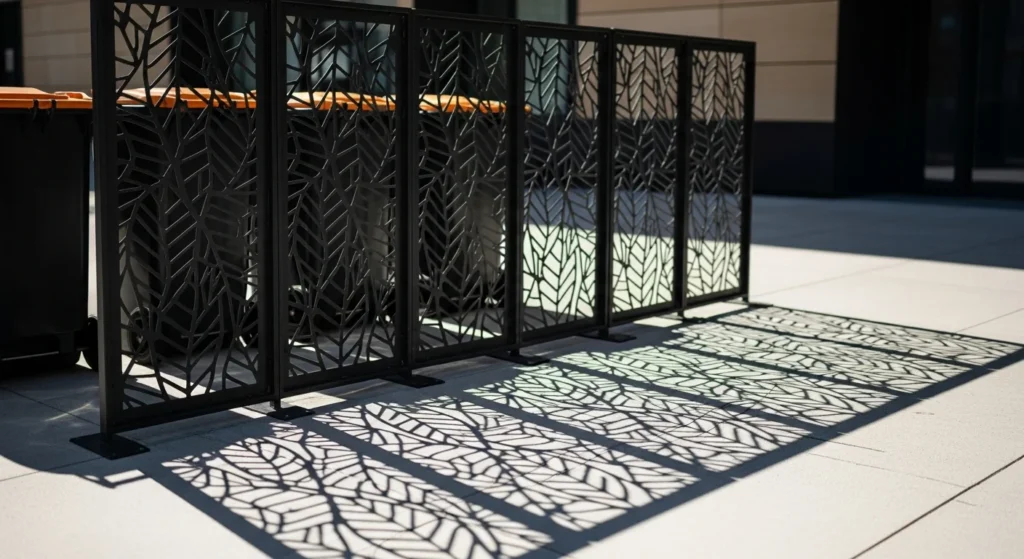
Decorative screen panels offer artistic solutions that elevate trash can concealment from purely functional to genuinely attractive. These panels come in countless designs, from geometric patterns to nature-inspired motifs featuring leaves, bamboo, or abstract designs. Materials include laser-cut metal, carved wood, and molded composite materials.
Installation typically requires setting posts and attaching panels between them, similar to fence construction. However, the visual impact far exceeds standard fencing. A well-chosen decorative screen becomes a focal point that draws attention away from the trash cans it conceals while adding architectural interest to your outdoor space. Many homeowners position uplights at the base of screens to create dramatic evening illumination that highlights the panel design.
For maximum flexibility, look for freestanding screen panels that don’t require installation. These portable units typically feature weighted bases or stabilizing feet that keep them upright without concrete footings or posts. You can reposition them as needed or relocate them entirely if you redesign your landscape. The portability also makes them ideal for renters who want attractive trash can concealment without making permanent modifications to the property.
Build a Covered Platform
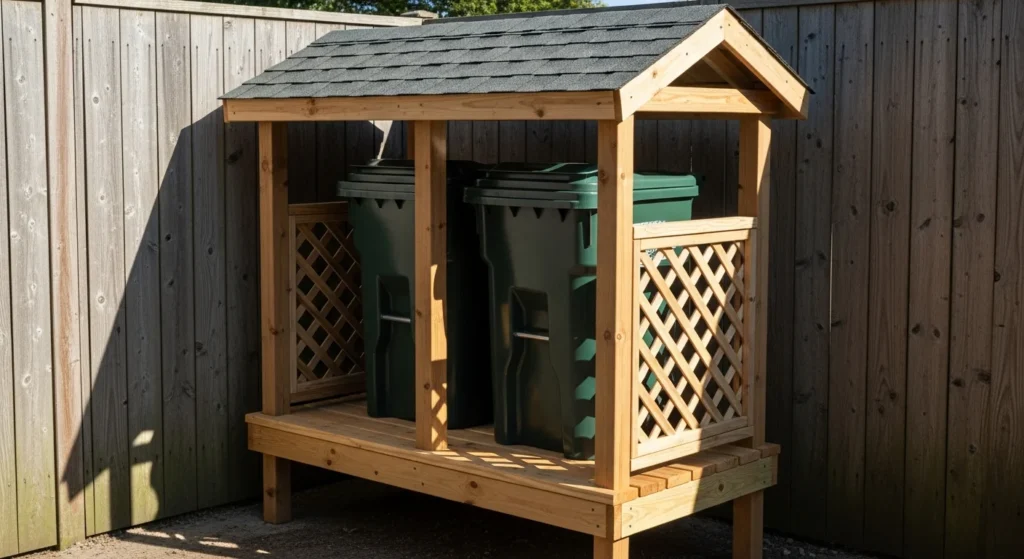
A covered platform raises trash cans off the ground while providing weather protection and improved aesthetics. This solution works particularly well in areas prone to flooding or standing water, as the elevated platform keeps bins dry and prevents the bottoms from sitting in puddles that accelerate deterioration.
The basic construction involves building a wooden platform frame with 2×4 or 2×6 lumber, covering it with plywood or deck boards, and adding a simple roof structure overhead. The roof should extend beyond the platform edges to shed water away from the bins. Asphalt shingles, corrugated metal, or polycarbonate panels all work well for roofing material depending on your aesthetic preferences and budget.
Add vertical posts at each corner and attach lattice panels, horizontal slats, or other screening material between them to enclose the sides while maintaining air circulation. Leave the front open or add a hinged gate for easy access. The entire structure can be customized to match your home’s architecture, whether that means using the same siding material, adding decorative trim, or incorporating design elements that echo other outdoor structures on your property.
Incorporate Planter Boxes
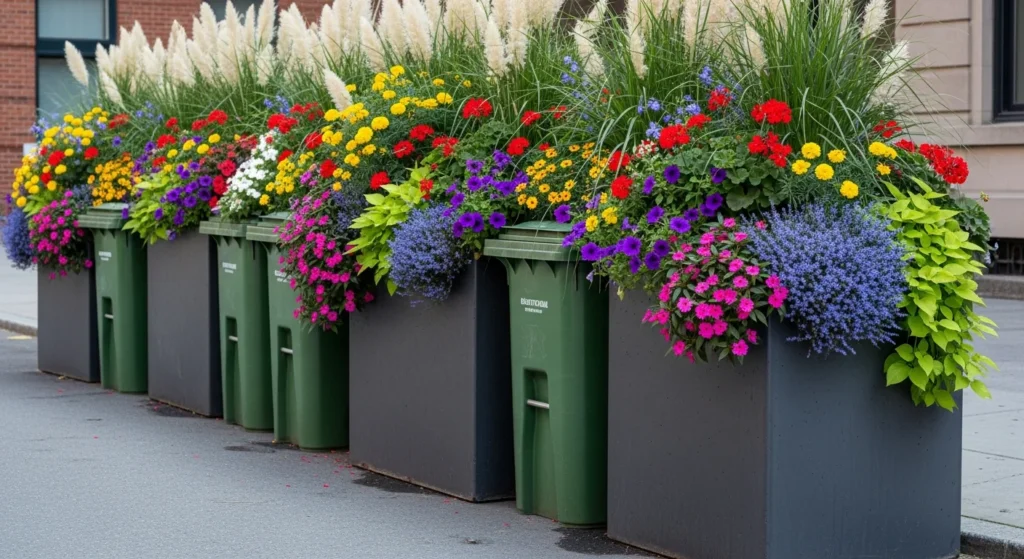
Planter boxes transform trash can areas from spaces you want to hide into gardens you want to showcase. Tall planters positioned in front of or beside bins create visual barriers while adding color and life to the area. This approach works especially well when you can’t build permanent structures due to property restrictions or when you want a solution that evolves with the seasons.
Select planters tall enough to effectively screen your bins, typically 30 inches or higher for standard municipal containers. Materials range from classic terracotta and glazed ceramic to modern fiberglass and lightweight resin that mimics the appearance of stone or concrete. For cohesive design, choose planters that match others used elsewhere on your property or that coordinate with your home’s architectural style.
Fill planters with a mix of evergreen shrubs for year-round structure and seasonal flowers for pops of color. Ornamental grasses provide height and movement while requiring minimal care. In warm climates, tropical plants like bird of paradise or bamboo create lush screens that completely obscure bins. Remember to choose plants appropriate for the amount of sunlight the area receives and your climate zone’s temperature extremes.
Install a Living Green Wall
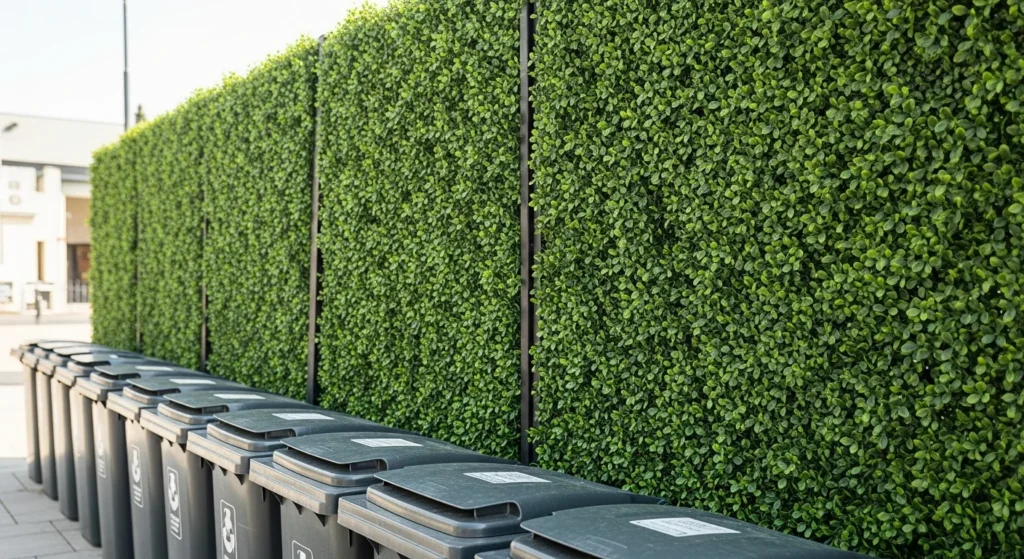
Artificial green walls bring the beauty of planted screens without the maintenance requirements of living plants. These freestanding panels feature realistic synthetic foliage attached to wire frames, creating instant coverage that looks natural from just a few feet away. Quality products use UV-resistant materials that maintain their color and condition for years of outdoor exposure.
Green wall panels typically measure 4 to 6 feet tall and several feet wide, providing substantial coverage for one or more trash cans. Popular styles include boxwood, English yew, and tropical schefflera designs. Some products incorporate flowering elements for added visual interest and seasonal variety. The panels simply need positioning behind or beside bins with no additional installation required in most cases.
The maintenance-free nature of artificial green walls makes them ideal for busy homeowners or those without gardening skills. They never need watering, fertilizing, or pruning, yet they provide consistent year-round coverage. Clean them occasionally with a garden hose to remove dust and debris, and they’ll continue looking fresh season after season. While the upfront cost exceeds natural plantings, the elimination of ongoing care requirements and guaranteed coverage offset the initial investment.
Create a Gravel Pad with Surrounding Fence
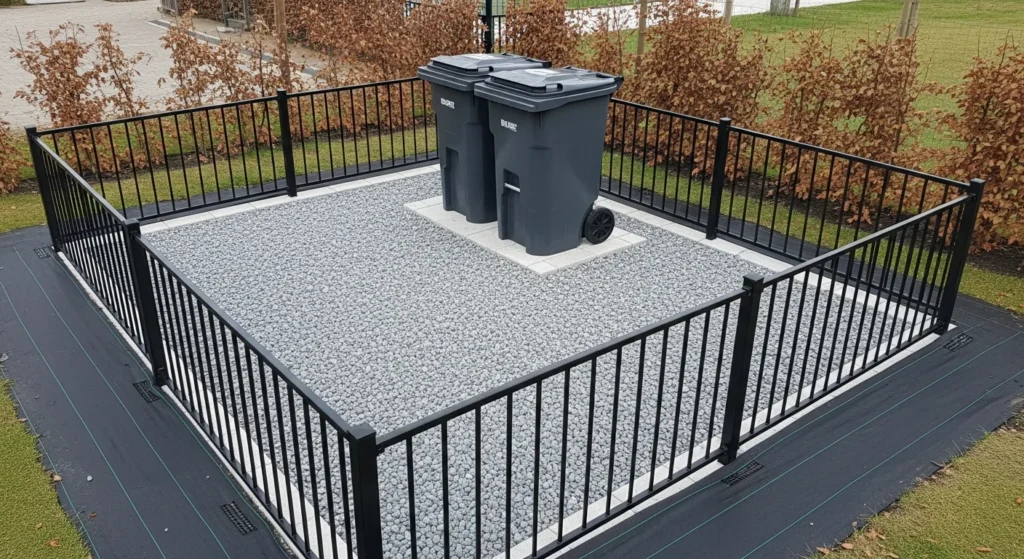
Ground-level solutions like gravel pads with decorative fencing create defined trash can zones that look intentional rather than haphazard. This approach involves excavating the area where bins sit, laying landscape fabric to prevent weed growth, and filling the space with decorative gravel, river rock, or crushed stone.
The gravel serves multiple purposes beyond aesthetics. It provides excellent drainage that prevents water accumulation around bins, reduces mud and dirt that can stick to bin bottoms, and creates a clean surface that’s easy to sweep or rinse. Choose gravel colors that complement your home’s exterior; gray, tan, and brown tones work in most landscapes while white rock creates bright, contemporary spaces.
Surround the gravel pad with low fencing, decorative edging, or a combination of both. Black aluminum fencing offers clean lines and minimal visual weight while clearly defining the space. For a softer look, install split-rail fencing with flowering vines trained to grow along the rails. The contained gravel area signals to visitors that this space has a specific purpose while preventing bins from migrating across your yard as they’re moved for collection.
Add Repurposed Pallets or Reclaimed Wood Screens
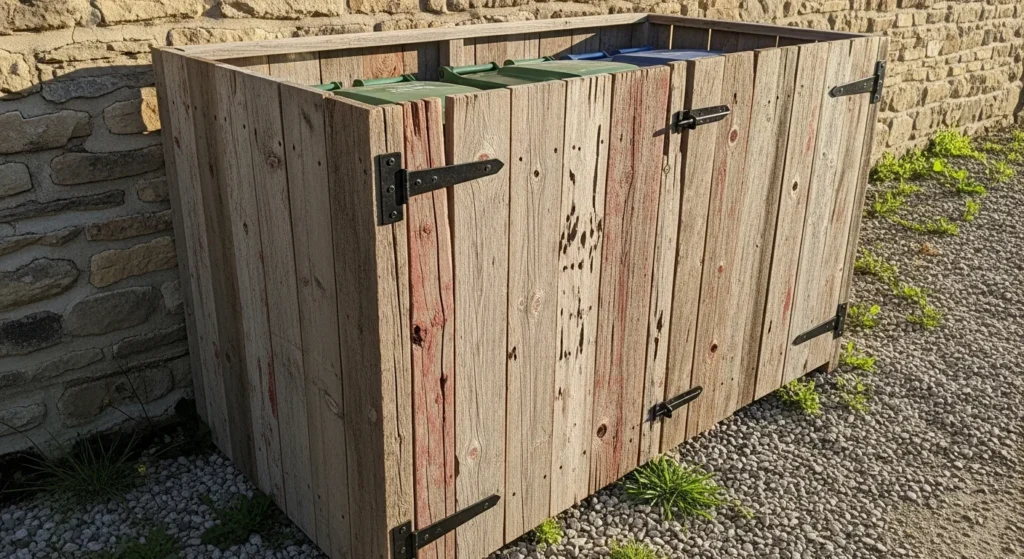
Sustainable-minded homeowners often turn to reclaimed materials for trash can concealment projects that reduce environmental impact while achieving rustic or industrial aesthetics. Wooden shipping pallets can be disassembled and reconstructed into screens, enclosures, or three-sided shelters that hide bins effectively while celebrating the character of weathered wood.
The key to successful pallet projects lies in proper preparation and treatment. Clean pallets thoroughly, remove any loose or damaged boards, and apply exterior wood stain or sealant to protect against moisture and insect damage. Leave gaps between boards for air circulation or position them tightly together for maximum concealment depending on your preference.
Reclaimed barn wood, old fence boards, and salvaged deck materials all work well for trash can screens. The varied patina and weathering patterns create visual interest impossible to achieve with new lumber. These materials often cost significantly less than new wood, sometimes available free from renovation projects, farm auctions, or online marketplaces. The resulting structure carries a story and unique character while serving its practical purpose.
Install a Corrugated Metal Screen
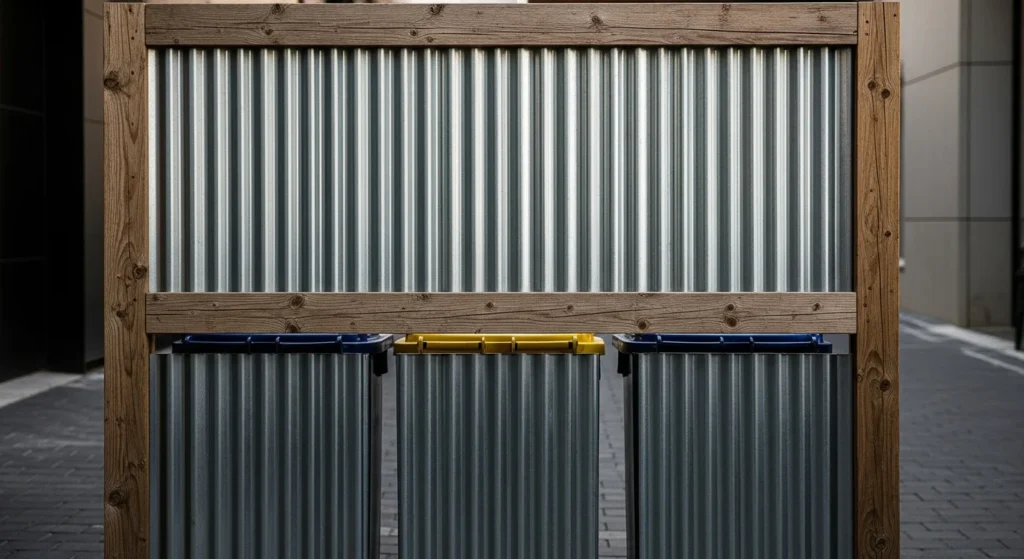
Industrial-style corrugated metal screens bring contemporary edge to trash can concealment while offering exceptional durability and low maintenance. Galvanized steel resists rust and corrosion, making it suitable for any climate and particularly valuable in coastal areas where salt air accelerates deterioration of other materials.
The distinctive ribbed texture of corrugated metal creates visual interest and reflects changing light throughout the day. Leave the metal in its natural silver-gray finish for authentic industrial style, or choose pre-painted options in colors like charcoal, bronze, or even bright hues for bold statements. The material pairs beautifully with wood framing, creating appealing material contrasts in modern farmhouse or contemporary designs.
Installation involves building a simple frame from wood or metal posts and attaching corrugated panels with appropriate fasteners. The lightweight material makes handling easy for DIY installation, yet it provides substantial wind resistance once properly secured. For added style, combine corrugated metal with horizontal wood slats in alternating panels, creating rhythm and variation that elevates the design beyond simple utility.
Conclusion
Concealing outdoor trash cans no longer requires sacrificing accessibility or breaking your budget. The fifteen-plus ideas presented here demonstrate the wide range of creative solutions available, from quick fabric covers to elaborate wooden sheds with planted roofs. The best choice for your home depends on multiple factors including your available space, carpentry skills, budget, climate, and aesthetic preferences.
Consider starting with simpler solutions like decorative screens or strategic plantings if you’re unsure about committing to major construction projects. These approaches provide immediate improvement while allowing you to refine your vision over time. As your confidence grows, you might tackle more ambitious builds that fully enclose bins and incorporate additional features like tool storage or seating.
Remember that effective trash can concealment serves purposes beyond mere aesthetics. The right solution protects bins from weather damage, deters pest problems, complies with neighborhood regulations, and can even add functional features to your outdoor living space. Whether you choose a weekend DIY project or invest in premium manufactured products, transforming your trash can area from eyesore to asset represents a worthwhile home improvement that enhances daily life and increases property value.
The most successful projects blend seamlessly with existing landscape elements while maintaining practical access for regular use. Take time to measure your bins carefully, assess your site conditions, and select materials appropriate for your climate. With proper planning and execution, your outdoor trash cans can disappear into the landscape or become attractive features that actually enhance your home’s curb appeal.
Frequently Asked Questions
What is the easiest way to hide outdoor trash cans?
The easiest solution is using decorative fabric covers that wrap around bins and secure with bungee cords or snap fasteners. These require no construction skills or tools, install in minutes, and can be removed quickly on collection days. For slightly more permanence with minimal effort, position tall planters or freestanding lattice panels in front of bins.
How much does it cost to build a DIY trash can enclosure?
A basic DIY wooden enclosure typically costs between $200 and $400 for materials including lumber, screws, hinges, and finishing products like stain or paint. Costs vary based on lumber prices in your area, the size needed for your bins, and whether you add features like decorative trim or a planted roof. Using reclaimed materials like pallets can reduce costs significantly.
What plants work best for hiding garbage cans?
Evergreen options like arborvitae and boxwood provide year-round coverage and require minimal maintenance once established. For faster coverage, climbing vines like clematis, jasmine, or ivy grow on trellises positioned behind bins. Choose plants suited to your climate zone and the amount of sunlight the area receives. Ornamental grasses also work well in sunny locations.
Do trash can covers deter animals?
Yes, solid enclosures with secure lids or doors effectively prevent raccoons, squirrels, and other wildlife from accessing bins. Fabric covers provide minimal protection, while wooden or metal sheds with latching mechanisms offer the best defense. Look for designs with lockable features or consider adding bungee cords across lids for additional security in areas with persistent wildlife problems.
How do I maintain wooden trash can enclosures?
Apply exterior wood stain or sealant every one to two years to protect against moisture damage and UV fading. Cedar naturally resists rot and insects but still benefits from protective finishes. Clean the structure periodically with mild soap and water, checking for any loose screws or damaged boards. Proper maintenance extends the life of wooden enclosures to 10 years or more.

One Comment