15+ Creative DIY Wine Glass Ideas to Try at Home
Transforming ordinary wine glasses into personalized works of art has become one of the most rewarding craft projects for home enthusiasts. Whether you want to create unique gifts for loved ones, add personality to your dinner parties, or simply enjoy a creative afternoon, customizing wine glasses offers endless possibilities without requiring professional artistic skills or expensive materials.
The appeal of DIY wine glass decoration extends beyond aesthetics. These projects combine practicality with creativity, allowing you to craft functional items that reflect your personal style or commemorate special occasions. From simple painted designs to intricate etched patterns, the techniques you can master at home rival professional results while costing a fraction of store-bought personalized glassware.
What makes these projects particularly attractive is their accessibility. Most supplies are readily available at craft stores or even dollar stores, and many techniques require minimal artistic experience. You can complete most wine glass decoration projects in under an hour, making them perfect for spontaneous creativity or planned craft nights with friends.
Understanding Materials and Paint Types
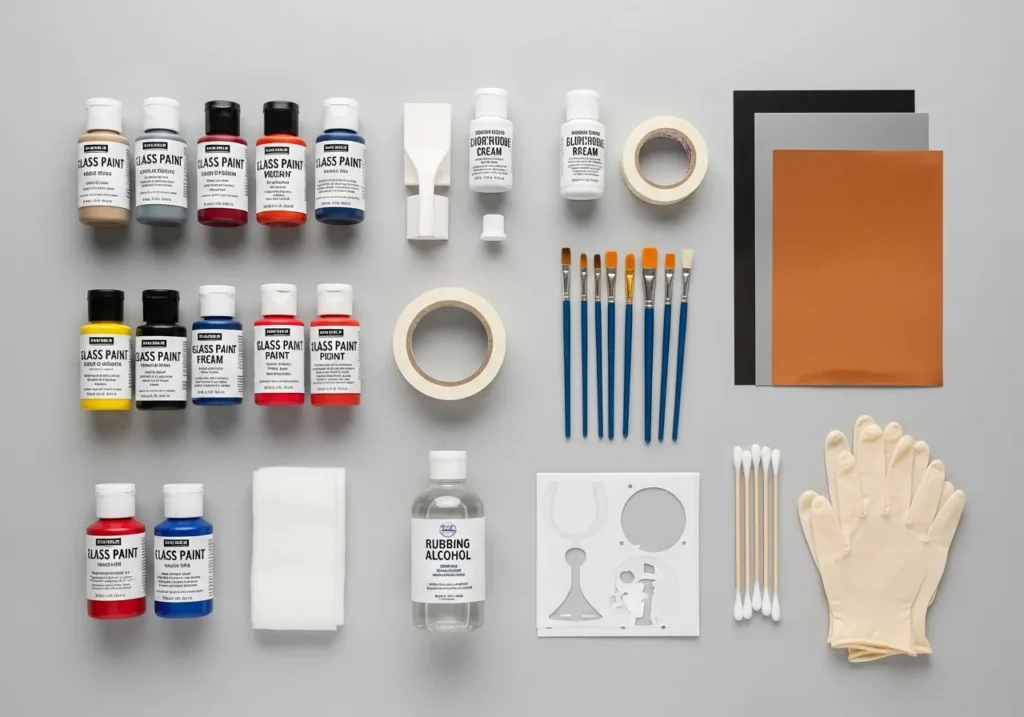
Before diving into specific projects, understanding your material options ensures successful results. The foundation of any wine glass decoration project starts with selecting appropriate supplies that will adhere properly to glass surfaces and withstand regular use.
Glass-specific paints deliver superior results compared to standard acrylics. Multi-surface paints, particularly those labeled for glass application, provide excellent coverage and durability. Brands designed for glassware typically cure to a dishwasher-safe finish when properly heat-set, though hand washing remains the gentler option for preserving intricate designs.
Etching cream offers a permanent alternative to paint for those seeking elegant, frosted designs. This caustic solution chemically alters the glass surface, creating designs that will never fade or wash away. Working with etching cream requires careful handling and protective gloves, but the professional results justify the extra precaution.
Vinyl decals present another versatile option, especially when using cutting machines. Permanent vinyl adheres strongly to glass and comes in countless colors and finishes, from matte to metallic. This method works exceptionally well for lettering, monograms, and geometric patterns that might prove challenging to paint freehand.
Hand Painted Polka Dot Wine Glasses
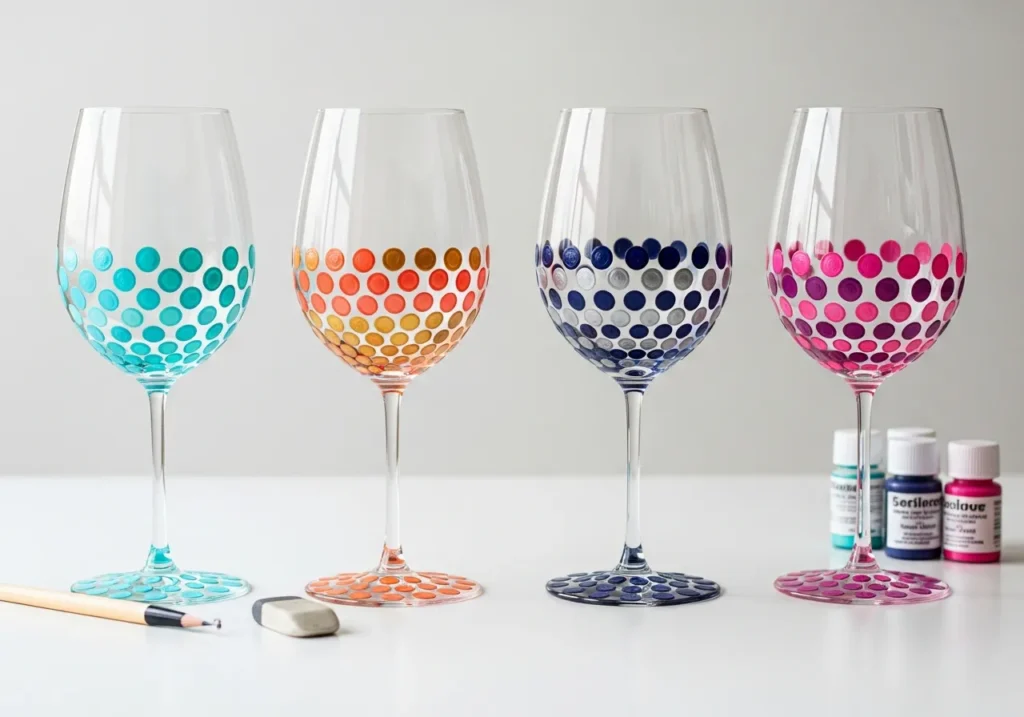
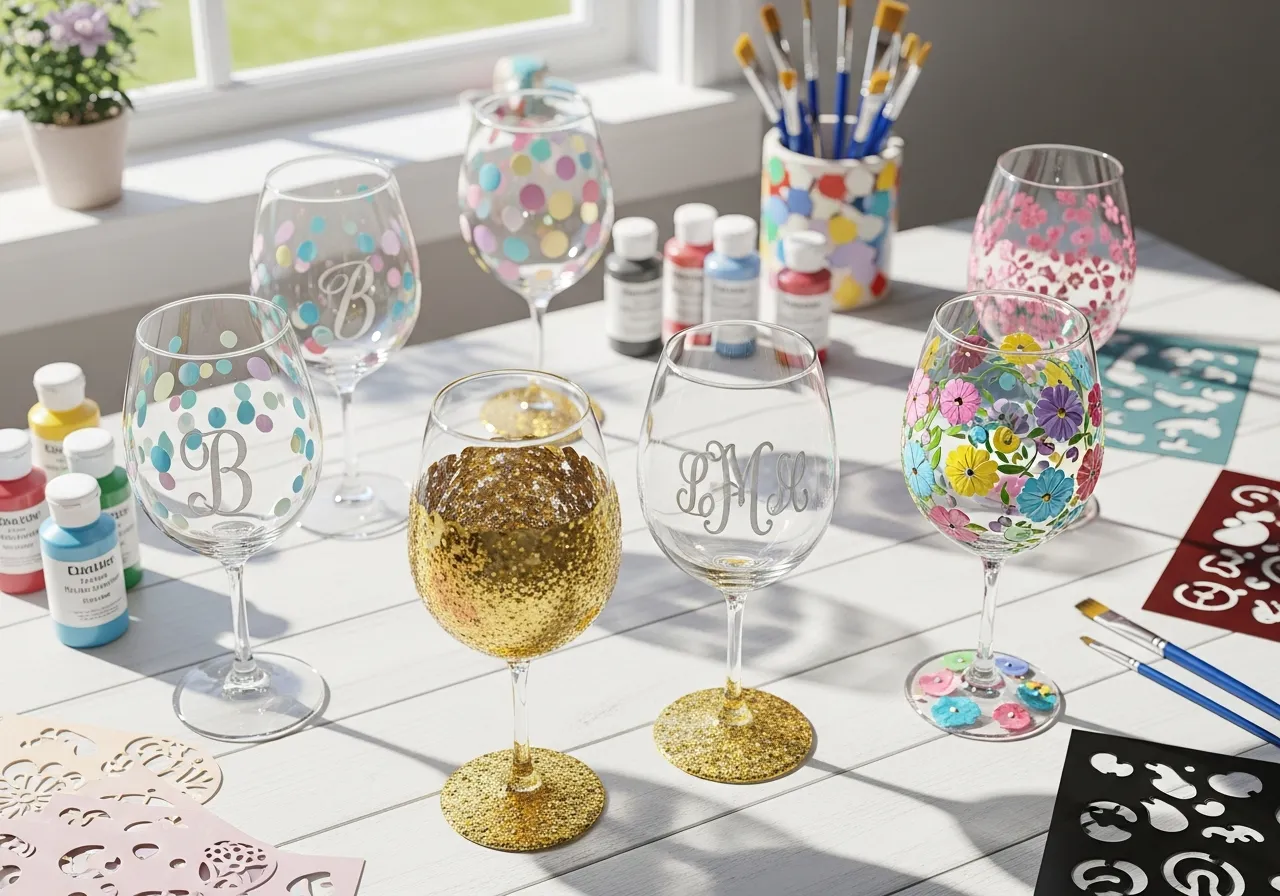
Polka dot designs remain perpetually popular for their charming simplicity and foolproof execution. This technique requires minimal supplies and delivers consistently delightful results, making it ideal for beginners or anyone seeking quick, satisfying projects.
Start by thoroughly cleaning your wine glasses with rubbing alcohol to remove any oils or residue. This crucial step ensures paint adhesion and prevents peeling. Use cotton swabs or the eraser end of new pencils as dotting tools, which create perfectly uniform circles without requiring steady brushwork.
Select two or three complementary colors for visual interest. Apply your first color dots starting from the bottom of the glass, spacing them according to your preferred density. Remember to stop approximately three-quarters up the glass, keeping the rim area paint-free for safe drinking. Layer additional colors once the first has dried slightly, creating depth and dimension.
After completing your design, allow the paint to cure for at least four hours. For permanent results, cure painted glasses in a conventional oven by placing them in a cold oven, setting the temperature to 275 degrees, and baking for thirty minutes. Let glasses cool completely inside the oven with the door partially open to prevent thermal shock.
Glass Etching for Elegant Monograms
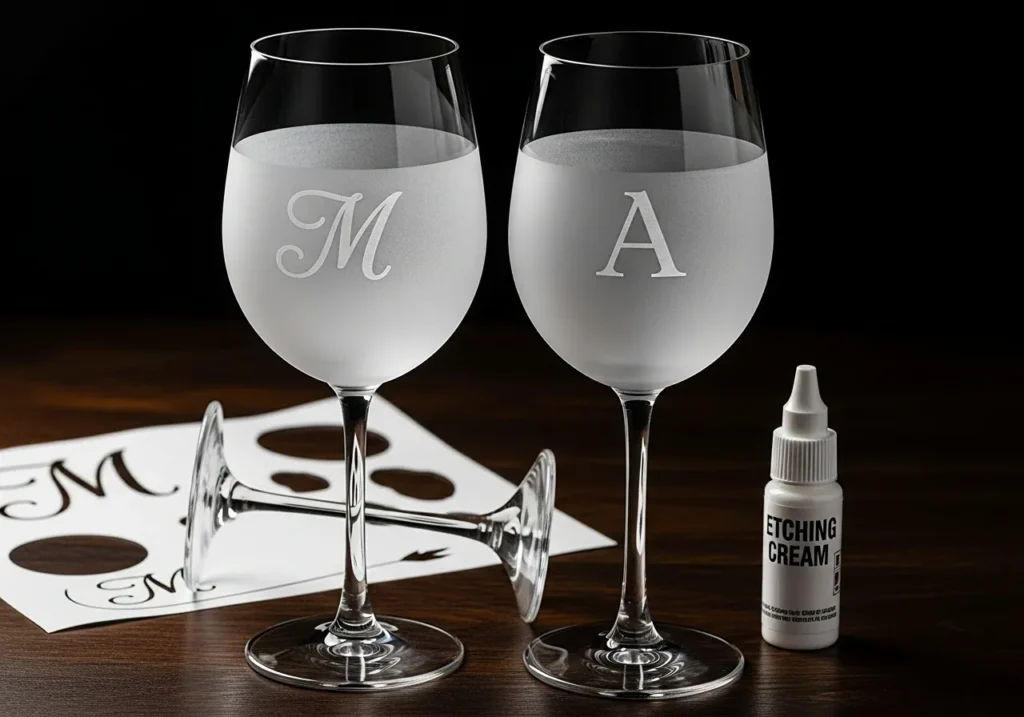
Etched wine glasses exude sophistication and permanence that painted designs sometimes lack. The frosted appearance created by etching cream provides a professional finish suitable for wedding gifts, anniversary celebrations, or heirloom-quality glassware.
The process begins with designing or selecting a stencil for your pattern. Vinyl stencils work best as they create sharp, clean edges and adhere tightly to curved glass surfaces. Position your stencil carefully on the clean, dry glass, pressing firmly to eliminate air bubbles that could allow etching cream to seep underneath.
Wearing protective gloves, apply a thick, even layer of etching cream over your stencil area. Avoid spreading the cream beyond your intended design. Let the cream sit for five to ten minutes, with longer exposure times producing deeper, more visible etching. The waiting period allows the acid to work its magic on the glass surface.
Rinse the glass thoroughly under warm water while still wearing gloves, removing all traces of etching cream. Peel away the stencil to reveal your permanently etched design. The frosted pattern will remain intact through countless wash cycles, making this technique particularly valuable for frequently used glassware.
Glitter Stem Wine Glasses
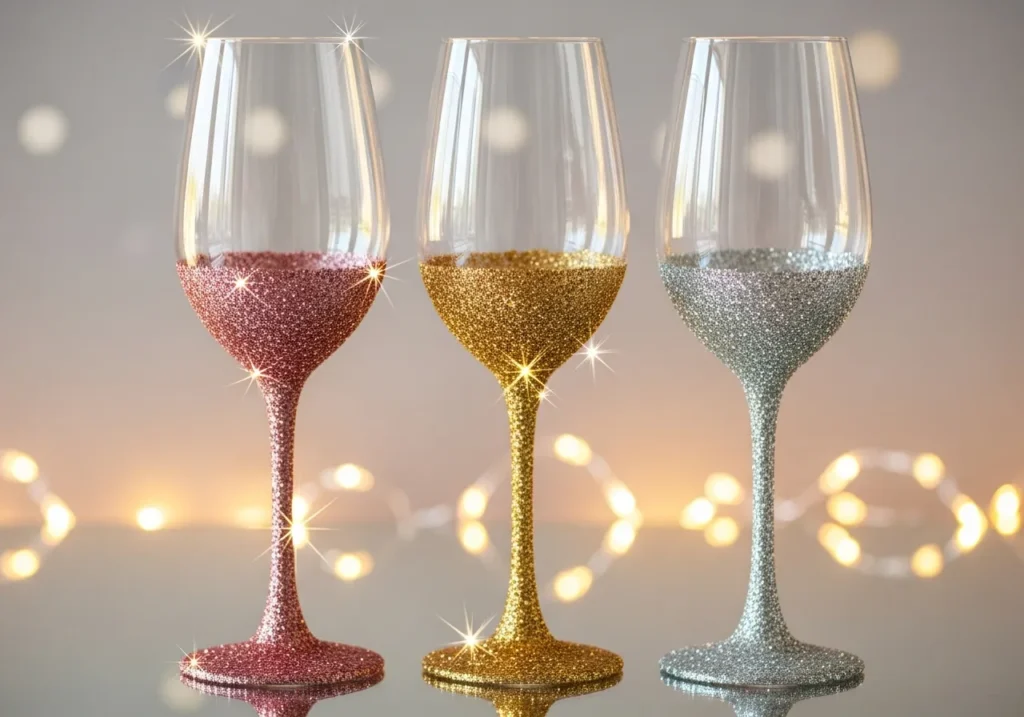
Adding sparkle to wine glass stems creates eye-catching pieces perfect for celebrations without overwhelming the entire glass. This approach maintains the clarity of the bowl while introducing festive shimmer below.
Begin by marking off the stem section you wish to glitter using painter’s tape. This creates clean lines and protects the bowl and base from adhesive. Apply a thin, even coat of decoupage medium or specialized glitter adhesive to the exposed stem area.
While the adhesive remains tacky, generously sprinkle fine glitter over the wet surface, rotating the glass to ensure complete coverage. Work over a paper plate or tray to catch excess glitter for reuse. Tap off loose particles and allow to dry completely.To see more stemmed wine glasses ideas do visit Design by Lolita.
Seal the glittered area with a clear acrylic sealer spray or additional decoupage medium applied gently to avoid disturbing the glitter. This protective layer prevents glitter shedding and adds durability. Multiple thin coats work better than one thick application.
Painted Galaxy and Marble Effects
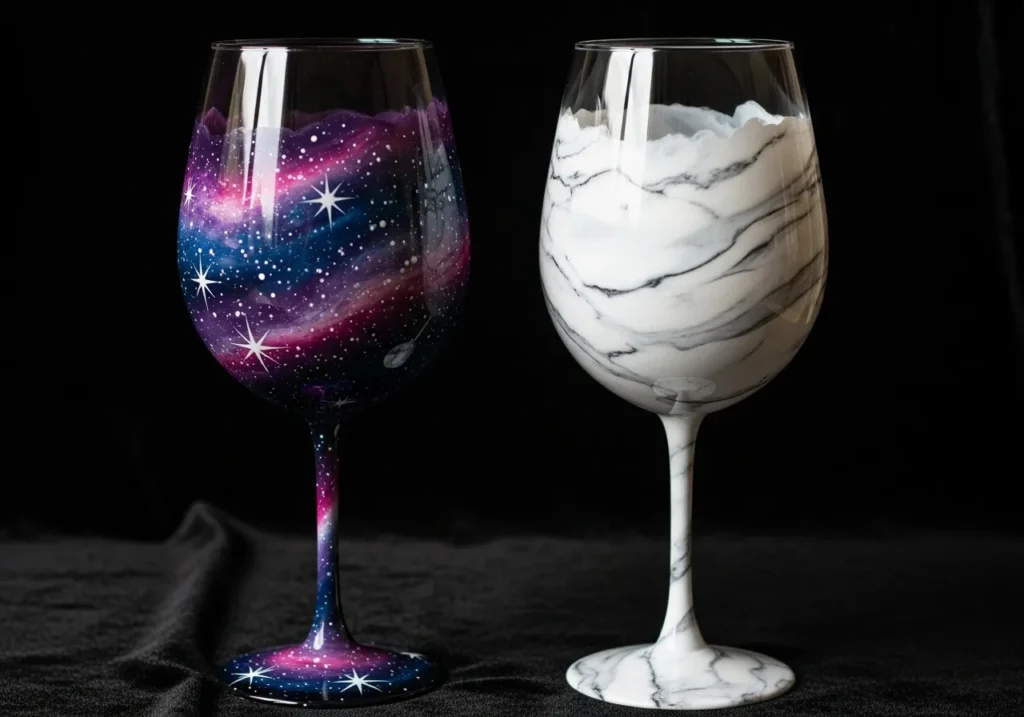
Abstract designs like galaxy or marble patterns offer artistic freedom while camouflaging imperfections that might show in more precise designs. These techniques create stunning, one-of-a-kind pieces through layering and blending.
For galaxy effects, start with a black or deep navy base coat covering the lower two-thirds of the glass. While still wet, dab on purple, blue, and pink paints using a sponge, blending colors where they meet. Create stars by flicking white paint with a toothbrush or adding tiny dots with a pin or stylus.
Marble effects require a different approach. Apply white paint as your base, then immediately add swirls of gray and black. Use a fine brush or toothpick to drag colors through each other, creating the characteristic veining found in marble. The key lies in working quickly before paints dry and in avoiding over-mixing, which muddles the effect.
Both techniques benefit from practice on paper first. The unpredictable nature of these designs means each glass becomes a unique piece, making them particularly special for gift-giving.
Seasonal and Holiday Themed Glasses
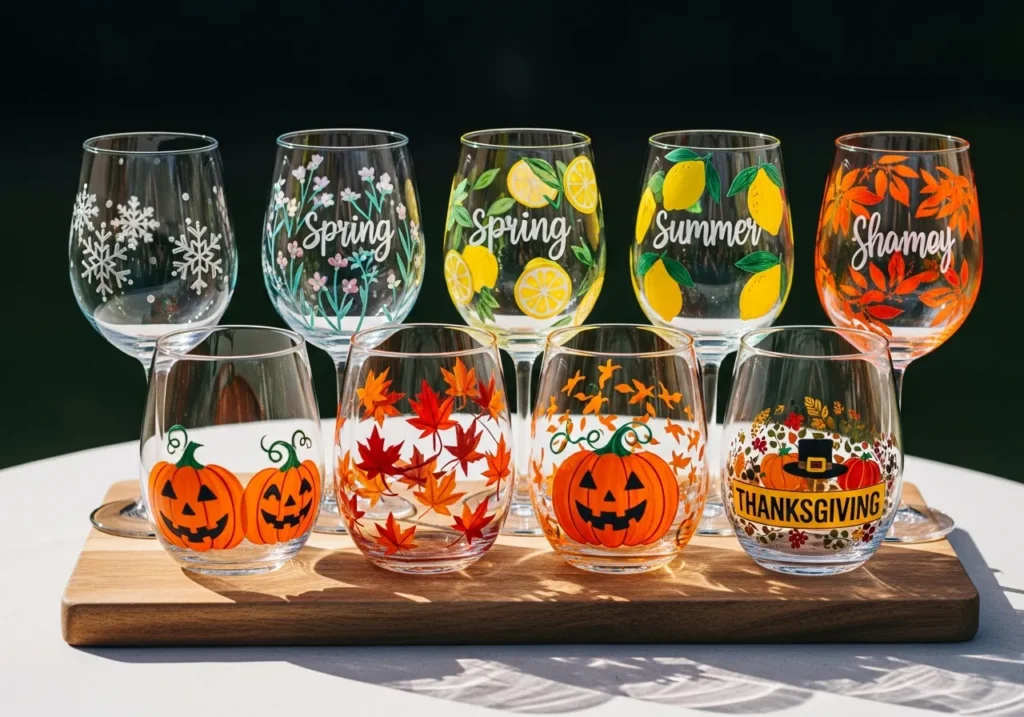
Adapting your wine glass designs to seasons and holidays extends their versatility throughout the year. Creating sets for different occasions allows you to rotate decorative glassware that enhances your table settings and celebrations.
Winter designs might feature snowflakes, pine branches, or festive messages painted in silver and white. Use stencils for precise snowflake patterns or freehand delicate branches with a fine-tipped brush. Metallic paints shine particularly well for winter themes, catching candlelight at holiday gatherings.
Spring and summer call for brighter palettes featuring flowers, fruits, or beach themes. Paint cheerful lemon slices, watermelon wedges, or tropical pineapples using bold, saturated colors. Floral designs work beautifully whether you opt for realistic botanical illustrations or simplified, stylized blooms.
Autumn glasses might showcase falling leaves in warm oranges, reds, and golds, or incorporate pumpkins and harvest motifs. Halloween enthusiasts can create spooky designs with silhouettes, while Thanksgiving themes might feature grateful messages or cornucopia imagery.
Wine Glass Charms for Easy Identification
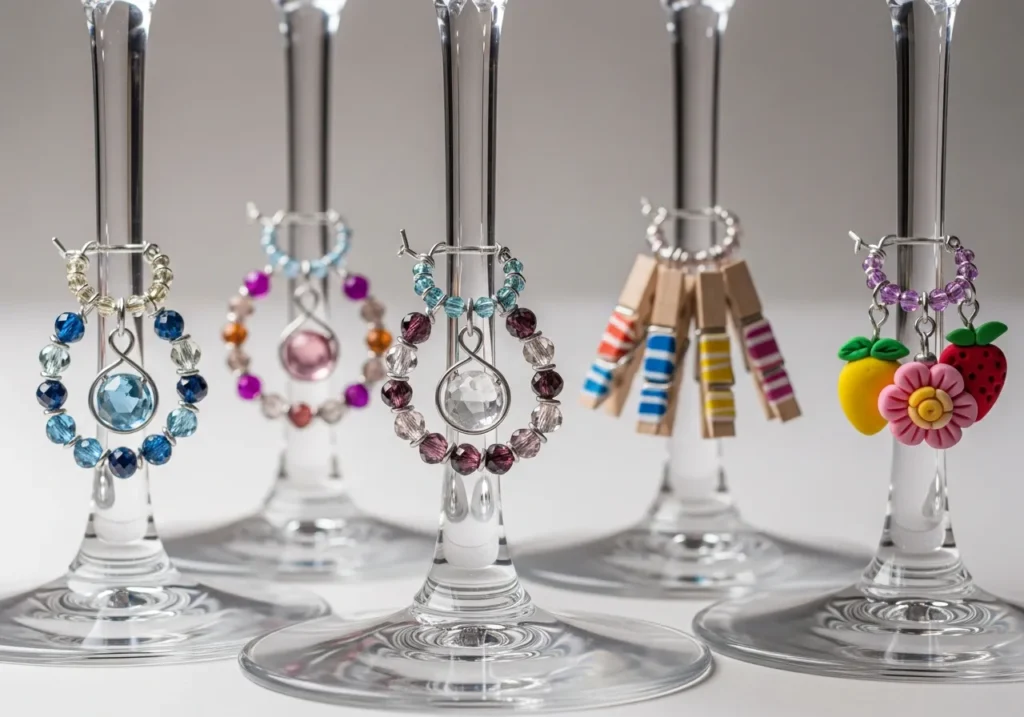
While not strictly a decoration technique, creating coordinating wine glass charms solves the perennial party problem of guests losing track of their drinks. Handmade charms add personal touches while serving practical purposes.
Beaded charms offer endless customization through color and pattern combinations. String small beads onto wire hoops sized to fit your wine glass stems, creating unique identifiers for each guest. Birthstone colors, favorite hues, or themed beads coordinate with party decorations.
Miniature clothespins decorated with washi tape or painted in various colors provide another simple solution. Clip them onto stems and optionally add small paper flags with guest names. This approach works particularly well for casual outdoor gatherings.
For more permanent solutions, consider polymer clay charms shaped and baked into small designs like fruits, flowers, or geometric shapes. Attach them to wire hoops or jump rings for repositionable identification that lasts through many events.
Painted Fruit and Floral Designs
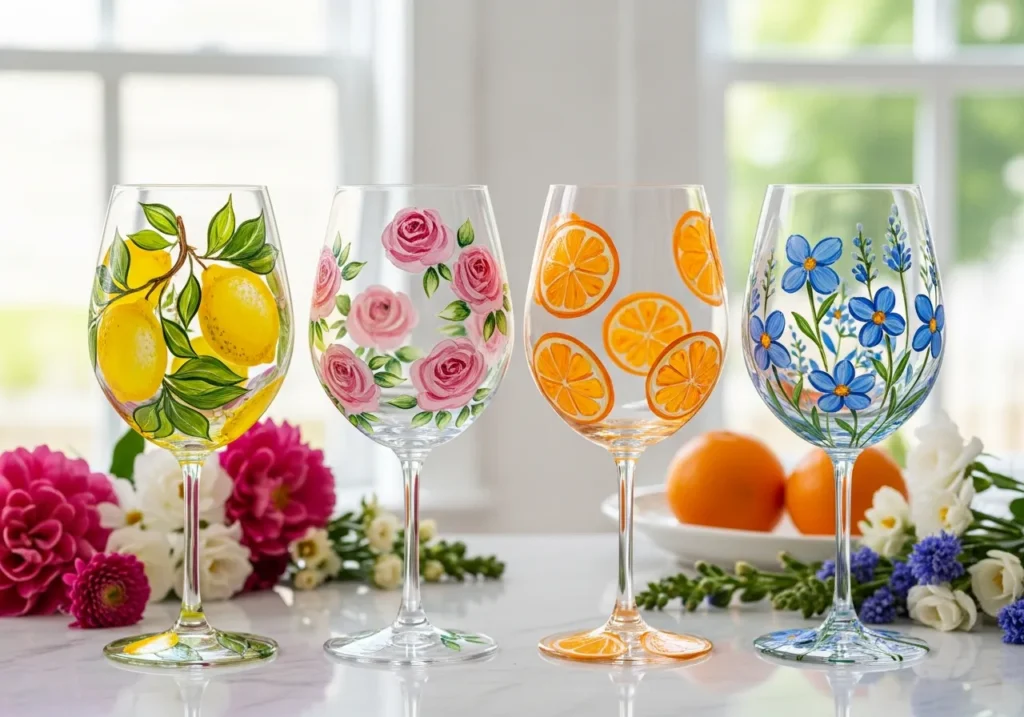
Representational designs featuring fruits, flowers, or nature scenes allow you to showcase artistic skills while creating charming, conversation-starting glassware. These designs work beautifully for specific occasions or everyday use.
Citrus fruits like lemons, limes, and oranges translate well to simplified shapes and bright colors. Paint circular fruit bodies in appropriate colors, add characteristic texture with small dots or lines, and include leaves for botanical accuracy. The bold colors and simple shapes make these designs approachable for novice painters.
Floral designs range from simple daisies to elaborate rose arrangements. Start with basic five-petaled flowers if you lack confidence, or challenge yourself with more complex blooms. Layer petals in slightly different shades for dimension, and add leaves and stems to ground your compositions.
Ocean themes featuring fish, sea turtles, or coral appeal to beach lovers. These underwater scenes allow for creative interpretation and color choices while maintaining recognizable imagery. Paint wavy water lines or bubbles to enhance the aquatic atmosphere.
Ombre and Color Gradient Techniques
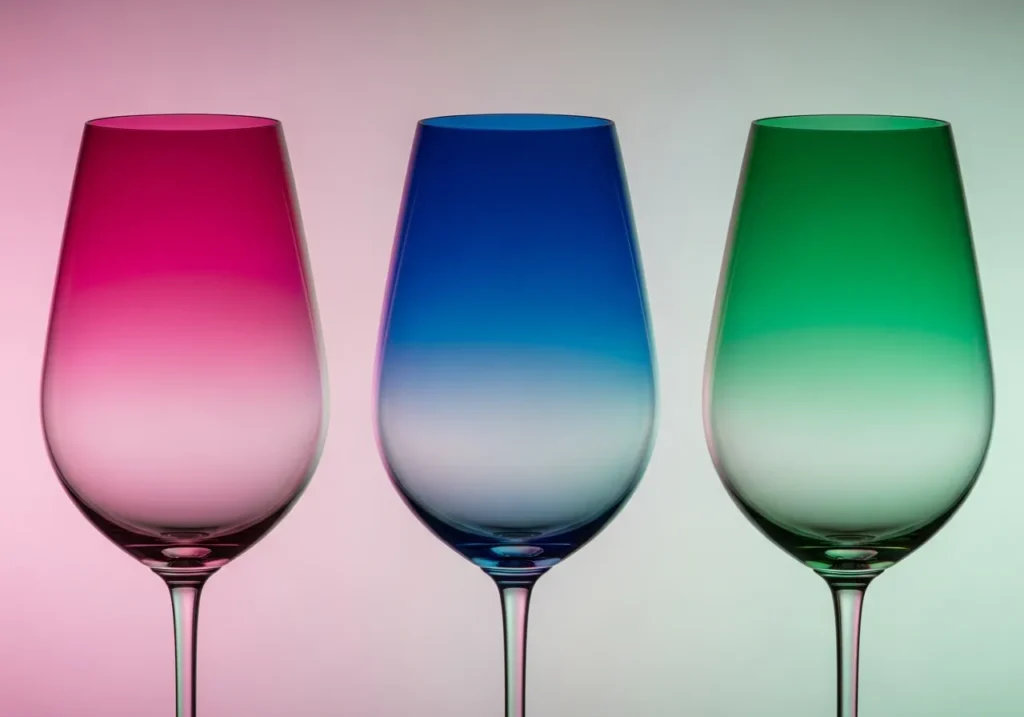
Ombre effects create sophisticated, modern looks through gradual color transitions. This technique requires patience and blending skills but produces stunning results worthy of gallery displays.
Select two or three colors that transition well together, such as pink to purple or blue to teal. Apply the darkest shade to the bottom portion of the glass, then add the middle tone slightly higher, blending where colors meet using a damp sponge or brush. Continue adding lighter shades as you move upward.
Work quickly to maintain wet edges that blend smoothly. Some crafters find it helpful to complete the color application in sections rather than attempting the entire glass at once. Rotate the glass frequently to check for even color distribution.
For metallic ombre effects, use specialized metallic glass paints that maintain their shimmer when blended. These create particularly elegant pieces suitable for formal occasions or as display pieces when not in use.
Typography and Quote Wine Glasses
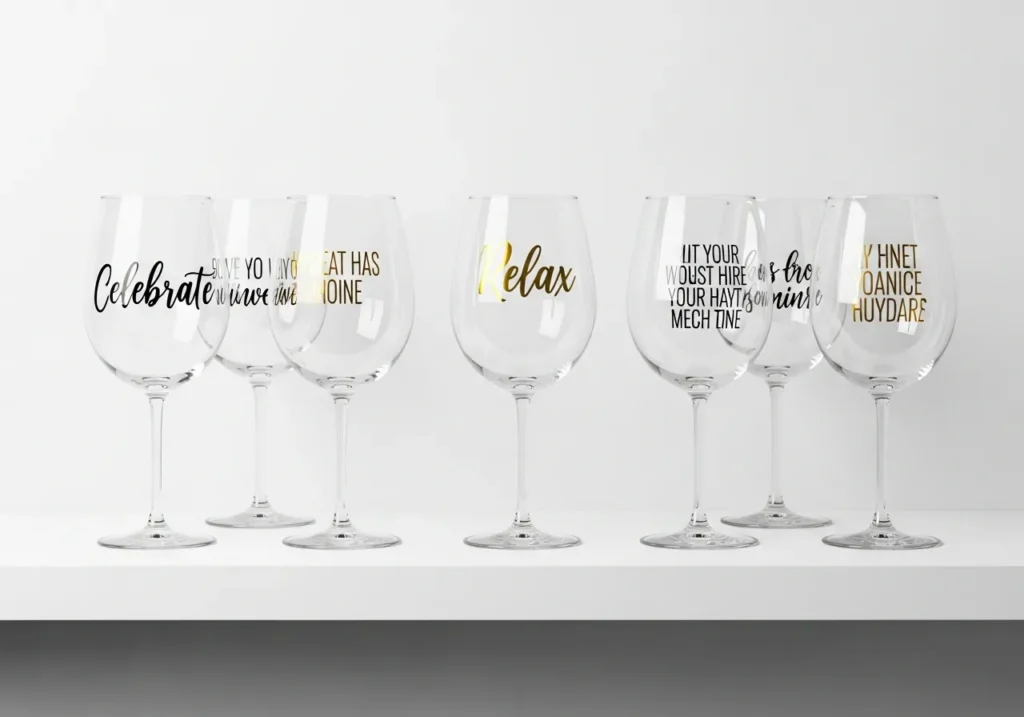
Incorporating meaningful words, phrases, or quotes transforms wine glasses into inspirational or humorous daily companions. This approach works wonderfully for gifts tailored to individual personalities and interests.
Creating lettering requires either excellent freehand skills or the assistance of stencils and vinyl. For those using cutting machines, designing custom text becomes straightforward. Select fonts that balance readability with style, avoiding overly ornate scripts that become illegible on curved surfaces.
Consider the glass orientation when planning text placement. Decide whether words should read when the glass sits upright or when held for drinking. Wrap-around designs maximize visibility from multiple angles.
Popular phrases include motivational quotes, wine-related humor, or simple single words like “Relax” or “Celebrate.” Personal names or dates commemorate special occasions, making these glasses treasured keepsakes from weddings, anniversaries, or milestone birthdays.
Geometric and Modern Abstract Patterns
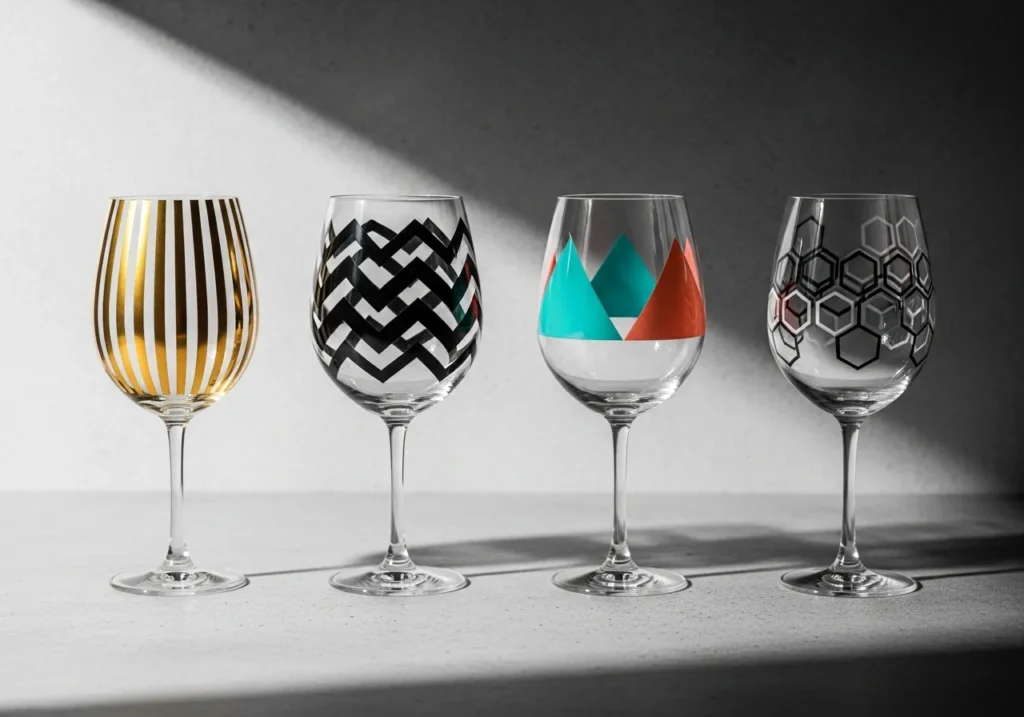
Clean lines and geometric precision appeal to contemporary aesthetics while offering design variety through endless pattern combinations. These patterns suit minimalist preferences and modern home decor schemes.
Striping represents the simplest geometric approach. Use painter’s tape to mask off areas, creating perfectly straight lines in alternating colors. Vertical stripes elongate the glass visually, while horizontal bands create classic, nautical-inspired looks.
Triangular patterns, chevrons, or tessellating shapes require more planning but deliver striking results. Sketch your design on paper first, determining spacing and proportions before committing paint to glass. Precision matters more in geometric work than in organic designs, so take time positioning tape guides.
Color blocking creates bold, modern statements through large areas of solid color. Divide the glass into sections using tape, painting each area a different hue. Metallic colors like gold, copper, and silver work particularly well for luxurious geometric designs.
Decoupage Wine Glass Projects
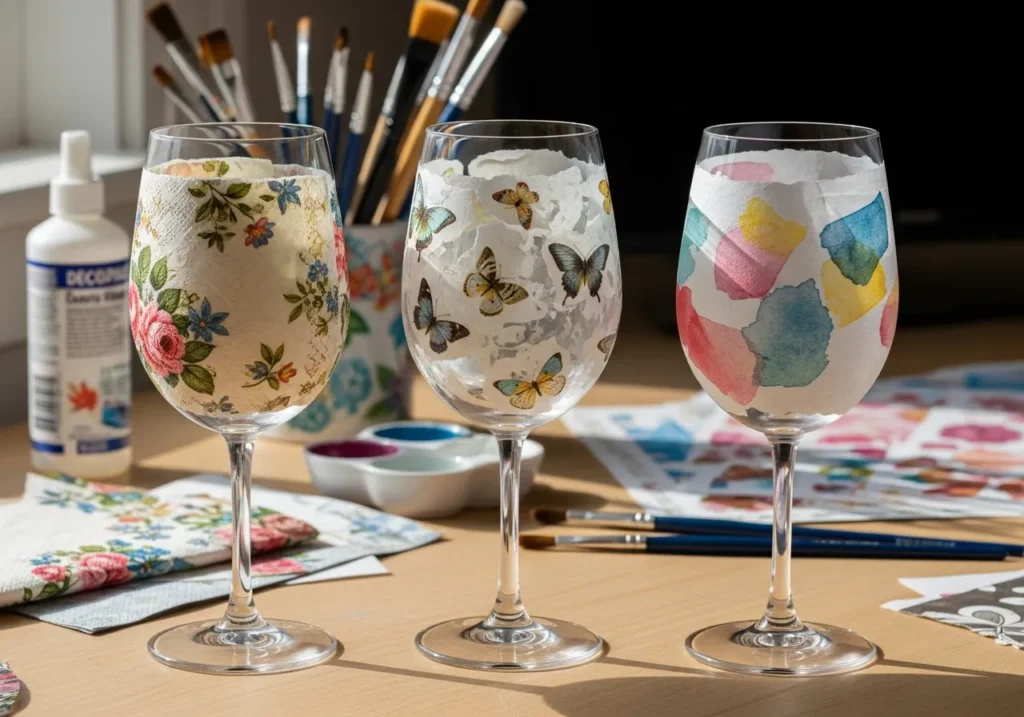
Decoupage techniques apply decorative papers or fabrics to glass surfaces, offering pattern options beyond what most crafters can paint. This method works particularly well for incorporating intricate designs, vintage imagery, or licensed character prints.
Select thin papers like napkins, tissue paper, or specialized decoupage paper. Thicker papers struggle to conform to curved glass surfaces. Separate any printed layers from plain backing layers, using only the decorative surface.
Apply decoupage medium to the glass area where your design will sit. Position the paper carefully, smoothing from the center outward to eliminate wrinkles and air bubbles. The paper becomes transparent when saturated with medium, so work patiently to achieve smooth application.
Seal completed designs with additional coats of decoupage medium, allowing each layer to dry before adding the next. Build up several protective layers to ensure durability. While decoupaged glasses should be hand washed, proper sealing creates surprisingly durable finishes.
Textured Paint Techniques
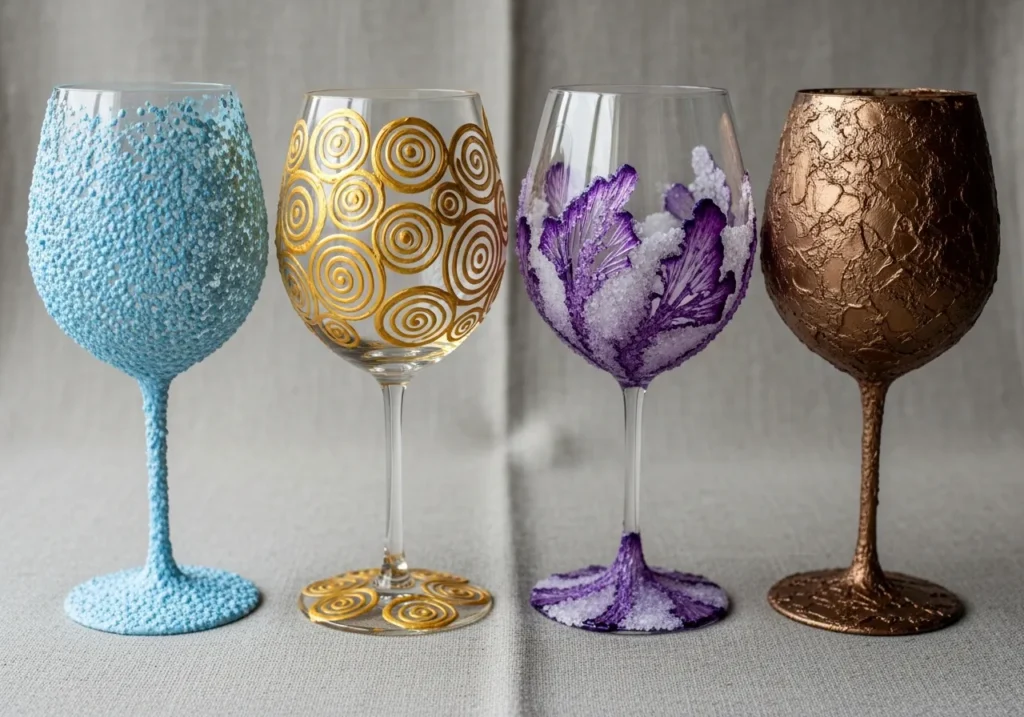
Creating texture adds dimensional interest that flat paint cannot achieve. Various techniques produce different tactile and visual effects, from subtle to dramatic.
Stippling involves dabbing paint onto glass using sponges, creating a softly mottled appearance. This technique works well for backgrounds or all-over coverage. Different sponge textures produce varied results, from fine and uniform to chunky and irregular.
Dimensional glass paint comes in squeeze bottles, allowing you to pipe raised designs directly onto glass. These paints remain slightly puffy when dry, creating lines and dots that stand out from the surface. Use them for outlining, creating borders, or adding decorative details to painted designs.
Salt techniques create interesting crystalline textures. Apply paint to glass, then immediately sprinkle salt over the wet surface. As paint dries, salt absorbs moisture and creates unique patterns. Brush away dried salt to reveal the textured finish beneath.
Reverse Painting Inside Glass
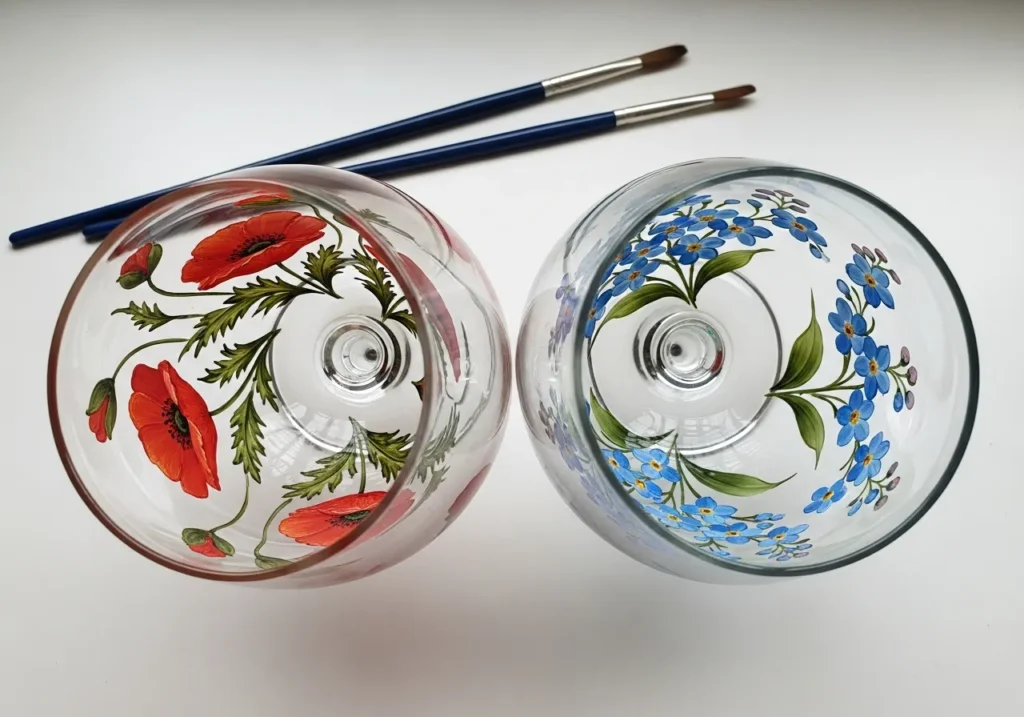
Painting on the interior surface of wine glasses creates protected designs that never contact your lips while drinking. This technique requires careful planning since you work in reverse order compared to traditional painting.
Begin by cleaning the inside of the glass thoroughly. Plan your design knowing that elements painted first will appear in the foreground of the finished piece. For example, paint flower centers first, then petals, then leaves and background.
Working inside glasses presents challenges, particularly in reaching the bowl’s bottom. Long-handled brushes or cotton swabs extended with tape can help. Some crafters find it easier to work with stemless glasses for this technique.
Curing painted interiors requires the same oven-baking process as exterior designs. The protected position of interior designs makes them particularly durable since they avoid contact with dishwashing tools and general handling.
Wine Glass Terrariums and Alternative Uses
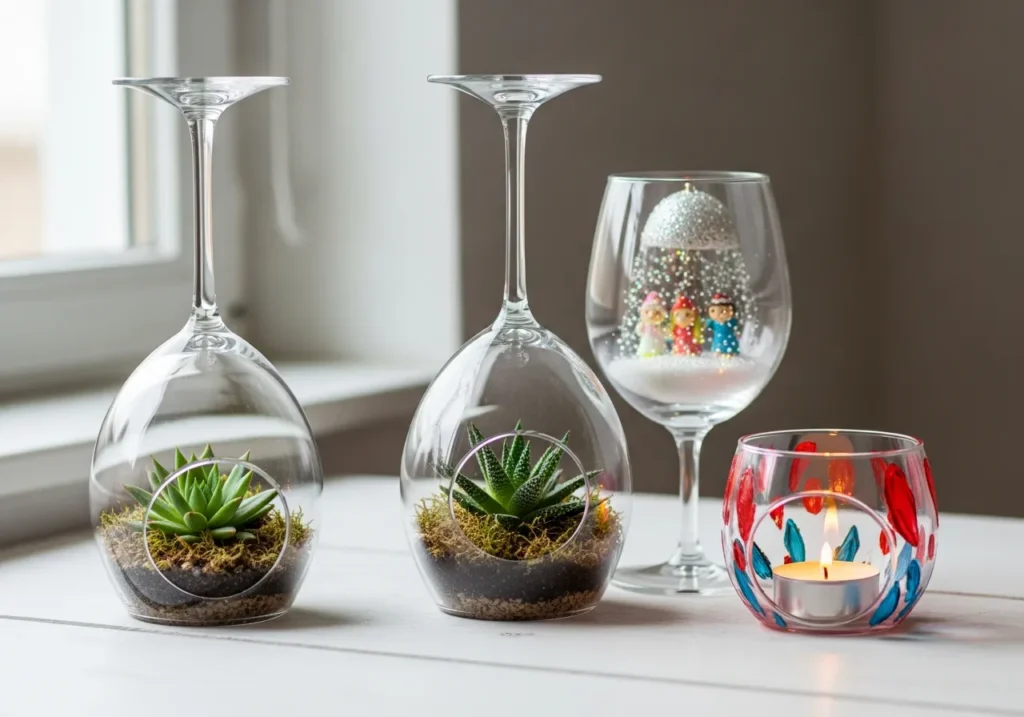
Thinking beyond drinking purposes opens creative possibilities for wine glass decoration and repurposing. Broken glass stems or thrift store finds become charming home decor through imaginative transformation.
Inverted wine glasses serve as miniature terrariums or cloches. Paint the base or stem with coordinating colors, fill the inverted bowl with small plants, moss, or decorative elements, and create tiny enclosed gardens. These make delightful table centerpieces or windowsill decorations.
Snow globe wine glasses capture winter magic in unique form. Glue small figurines or decorative elements to the inside base of the glass, fill with water and glycerin, add glitter, and seal the stem end. Turn the glass upside down to create swirling snow effects.
Candle holders represent another popular alternative use. Paint wine glasses in festive or seasonal designs, place votives or tea lights inside, and enjoy ambient lighting. The glass diffuses candlelight beautifully while protecting flames from breezes.
Care and Maintenance for Decorated Wine Glasses
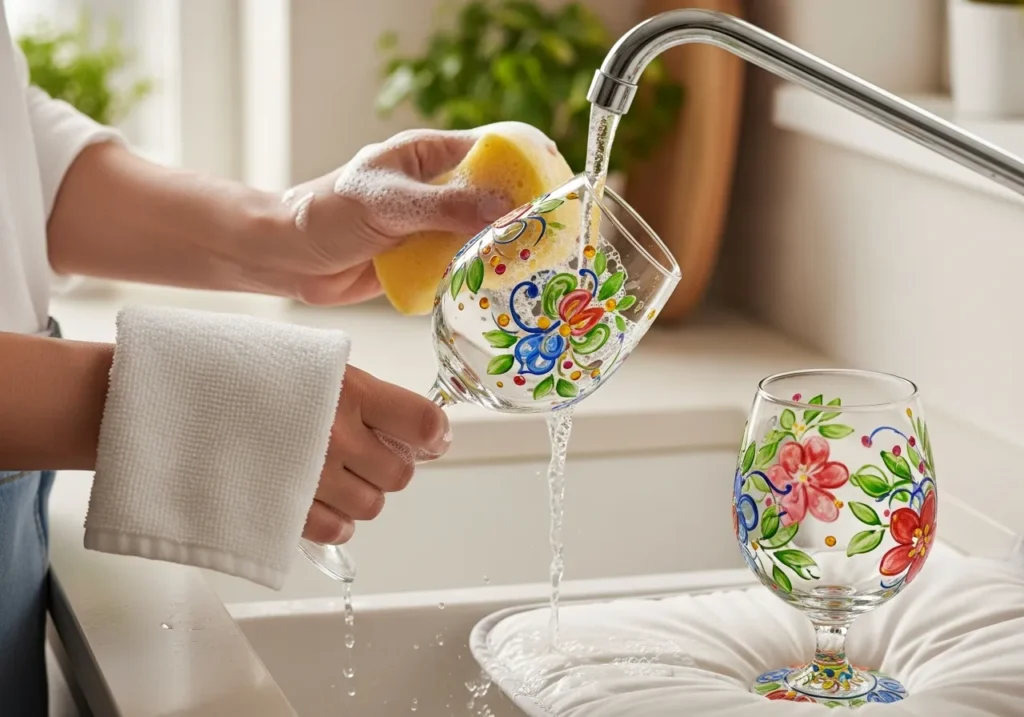
Proper care ensures your decorated wine glasses remain beautiful through many uses. Understanding how different decoration methods respond to washing and handling helps preserve your creative work.
Hand washing always offers the safest cleaning method for decorated glassware. Use mild dish soap and soft sponges, avoiding abrasive scrubbers that scratch painted surfaces. Rinse thoroughly with warm water and dry immediately with soft cloths to prevent water spots.
Dishwasher use remains possible for properly heat-cured painted glasses and etched designs, though hand washing extends their lifespan. If using dishwashers, place glasses on the top rack away from heating elements, use gentle cycles, and avoid harsh detergents. Expect gradual fading over many wash cycles even with careful treatment.
Store decorated wine glasses with adequate spacing to prevent chipping. Consider wrapping especially precious pieces in soft cloth or placing felt dividers between glasses in storage. Display valuable handmade glasses on open shelving where you can enjoy viewing them between uses.
Conclusion
Creating DIY wine glasses opens a world of creative expression while producing functional items that enhance daily life and special occasions. From simple polka dots to intricate etched monograms, the techniques covered here accommodate all skill levels and artistic preferences. The satisfaction of drinking from glassware you personally decorated or gifting handmade pieces that reflect thought and effort makes these projects particularly rewarding.
The affordability and accessibility of wine glass decoration remove barriers to entry. Dollar store glasses and basic craft supplies yield professional-looking results when you apply careful technique and patience. Whether you tackle these projects alone for relaxation or gather friends for crafting parties, the process itself brings joy alongside beautiful finished pieces.
As you explore these ideas, remember that mistakes often lead to happy accidents in creative work. Embrace experimentation with colors, techniques, and designs. Your unique style will emerge through practice, resulting in wine glasses that truly represent your aesthetic vision and bring personality to every pour.
Frequently Asked Questions
What type of paint works best for wine glass decoration?
Glass-specific paints and multi-surface acrylic paints formulated for glass provide the best adhesion and durability. Look for paints labeled as dishwasher-safe when properly cured. Heat-setting in an oven at 275 degrees for 30 minutes typically makes these paints permanent and resistant to washing.
Can I put hand-painted wine glasses in the dishwasher?
While properly cured glass paints can withstand gentle dishwasher cycles, hand washing always remains the safer option for preserving your designs. If you must use a dishwasher, place glasses on the top rack, use mild detergent, and select gentle wash settings. Expect some gradual fading over time even with these precautions.
How do I prevent paint from chipping off wine glasses?
Thorough cleaning with rubbing alcohol before painting ensures proper adhesion. After decorating, allow adequate drying time before heat-curing in an oven. This baking process bonds paint permanently to glass. Avoid painting the rim where lips contact the glass, as this area experiences the most wear.
Where should I avoid painting on wine glasses?
Never paint the rim or upper interior portion of wine glasses where your mouth makes contact. Leave at least the top quarter of the glass unpainted for safe drinking. This prevents paint ingestion and maintains comfort while using the glasses. Focus decorative work on the lower bowl, stem, and base areas.
How long do DIY decorated wine glasses last?
With proper care, decorated wine glasses can last for years. Etched designs remain permanent indefinitely since they alter the glass itself. Painted designs last longest when hand-washed and stored carefully. Vinyl decorations may eventually peel if exposed to excessive heat or harsh washing. Creating new designs offers a good excuse to refresh your collection periodically.