
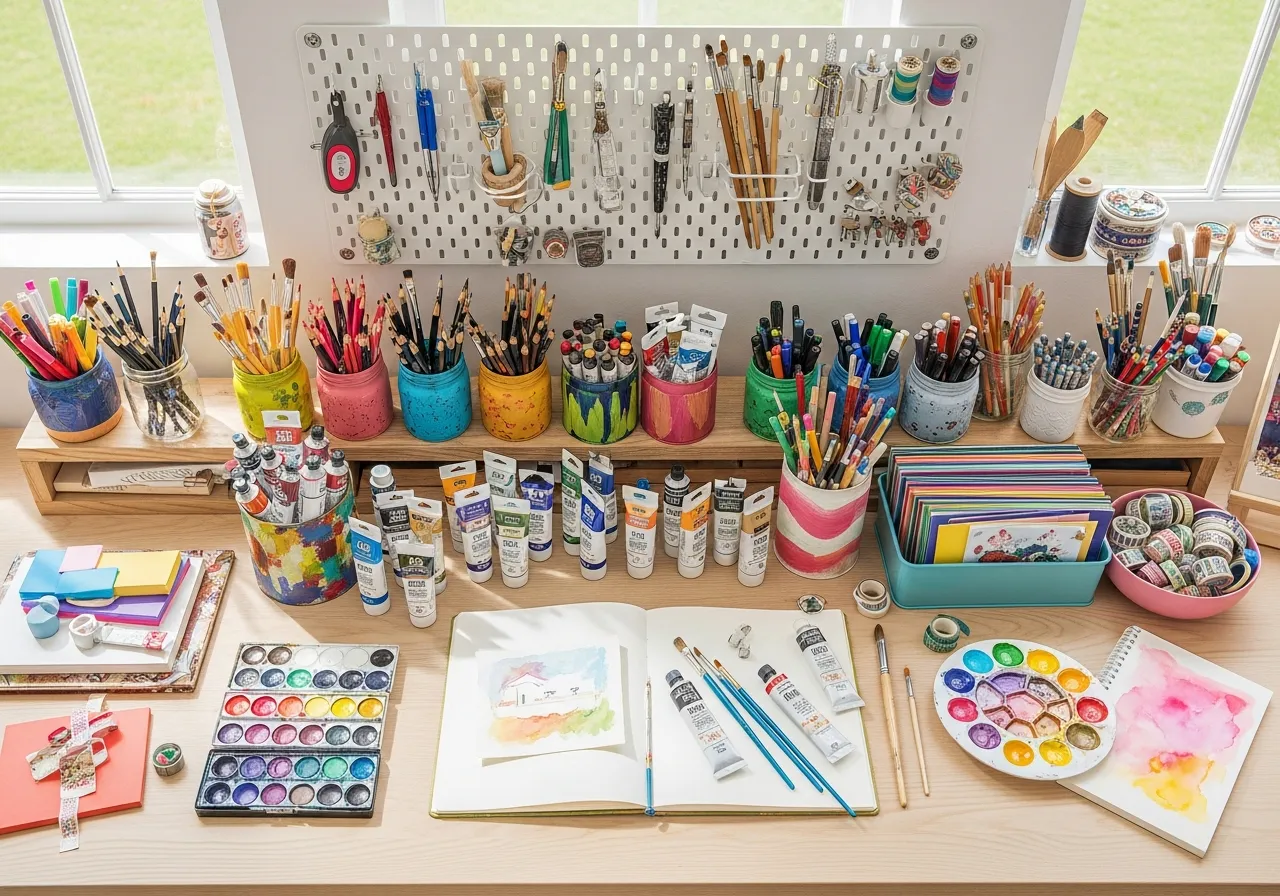
19+ Clever DIY Art Supply Storage Ideas
Every artist knows the struggle. Your collection of paints, brushes, markers, and colored pencils slowly takes over your workspace until finding the right shade of blue becomes an archaeological expedition. Whether you’re a professional illustrator working from a dedicated studio or a weekend watercolor enthusiast creating from your kitchen table, organizing your art supplies transforms not just your space but your entire creative process.
The beauty of DIY storage solutions lies in their dual purpose. They solve practical problems while adding character to your workspace. Unlike generic store-bought organizers that often fail to accommodate the unique shapes and sizes of art materials, homemade storage can be customized to fit your exact needs. Better yet, many of these projects use materials you already own or can acquire for minimal cost.
This comprehensive guide presents over 19 creative storage ideas that range from simple five-minute fixes to weekend projects that will revolutionize your creative space. Each solution addresses specific organizational challenges while maintaining easy access to your materials because inspiration doesn’t wait for you to dig through cluttered drawers.
Wall Mounted Storage Solutions
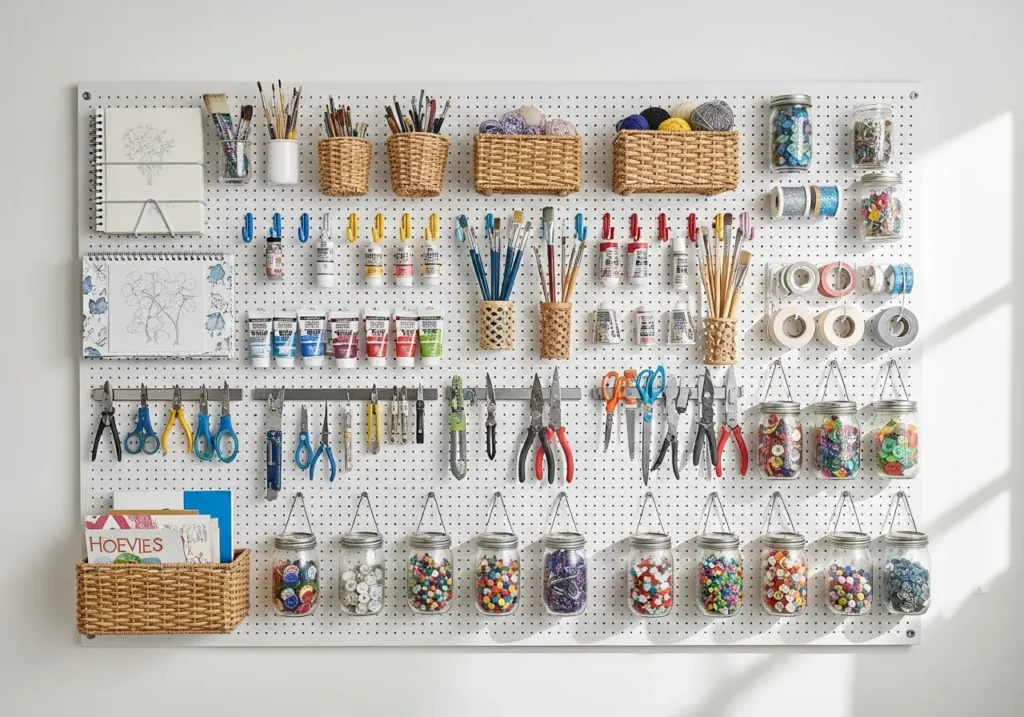
Vertical space remains one of the most underutilized areas in craft rooms and studios. When desk and drawer space becomes scarce, looking upward opens entirely new organizational possibilities.
Pegboard Organization Systems
Pegboard installations have become the gold standard for customizable wall storage. A single four-by-eight-foot pegboard sheet creates an entire organizational ecosystem. The genius lies in its adaptability. Small baskets hold tubes of acrylic paint. Hooks suspend scissors and rotary cutters. Specialized pegboard containers can accommodate everything from ribbon spools to stamp collections.
Installing pegboard requires only basic tools. Mount it with one-inch spacers behind the board to allow hooks to insert properly. Paint the pegboard in colors that complement your workspace or leave it natural for an industrial aesthetic. The real advantage appears when your needs change. Simply rearrange hooks and containers without drilling new holes or reconfiguring the entire system.
Magnetic Strip Tool Holders
Those magnetic knife strips found in kitchens serve artists equally well. Mount them horizontally along your workspace wall to hold metal tools. Scissors, craft knives, metal rulers, and even tweezers snap into place and remain visible and accessible. The vertical storage keeps sharp tools safely off work surfaces while freeing drawer space for other materials.
For maximum efficiency, install multiple strips at different heights. Position frequently used tools at arm level and less common implements higher up. This creates an ergonomic workflow that reduces the physical strain of constantly reaching into drawers.
Hanging Jar Storage
Transform ordinary mason jars into a visually appealing storage display. Attach the metal lids to the underside of a shelf or wall-mounted board using screws. Fill jars with small items like buttons, beads, paper clips, or push pins, then screw them into the mounted lids from below. The contents remain visible through the glass, making inventory checks effortless.
This system works particularly well above workbenches where vertical space goes unused. The jars hang suspended, keeping items contained yet instantly accessible. For added visual interest, use jars of varying sizes to accommodate different quantities of supplies.
Desktop and Tabletop Organization
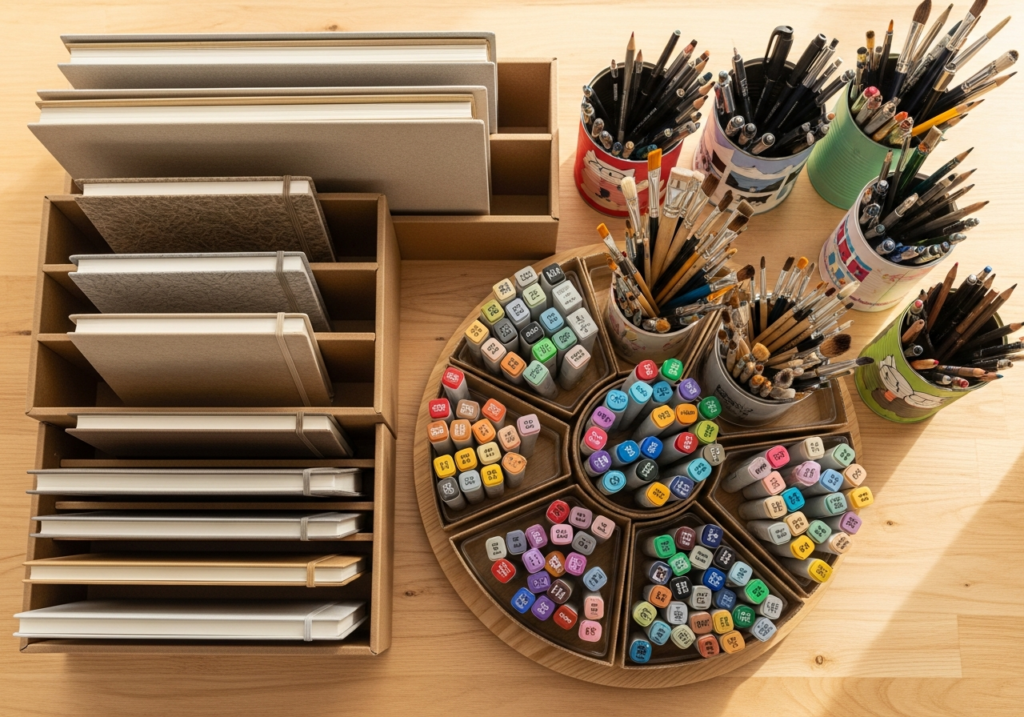
The surface where you actually create deserves thoughtful organization. Desktop storage should facilitate your workflow rather than obstruct it.
Tiered Desk Organizers from Cardboard
Sturdy shipping boxes and cardboard can be transformed into custom desk organizers. Cut boxes to create stepped levels that hold everything from sketchbooks to paint tubes. Cover the cardboard with decorative paper, fabric, or paint to match your aesthetic preferences.
The construction process involves measuring your most-used supplies and building compartments around their dimensions. Glue or tape sections together, reinforcing joints for durability. The resulting organizer costs practically nothing yet functions as well as expensive store-bought alternatives.
Rotating Lazy Susan Supply Caddy
A simple lazy susan turntable becomes a game-changing organizer when paired with containers. Arrange small cups, jars, or bins on the turntable to hold brushes, pens, markers, and other frequently grabbed items. The rotating base allows you to spin the caddy and access any tool without standing up or reaching across your workspace.
This works especially well for markers and colored pencils. Group colors by family in separate containers on the turntable. When you need warm tones, spin to that section. Cool colors? Rotate to the opposite side. The system reduces search time and keeps your focus on creating.
Painted Tin Can Organizers
Empty food cans become charming organizers with minimal effort. Remove labels, wash thoroughly, and cover any sharp edges. Paint cans in coordinating colors or wrap them with patterned paper. Group several cans together on a tray or mount them to a board for wall installation.
The variety of can sizes naturally accommodates different supplies. Tuna cans work perfectly for paper clips and erasers. Soup cans hold brushes and pens upright. Larger coffee cans can store rulers, knitting needles, or rolls of washi tape. The industrial-meets-crafty aesthetic suits many studio styles.
Repurposed Household Items
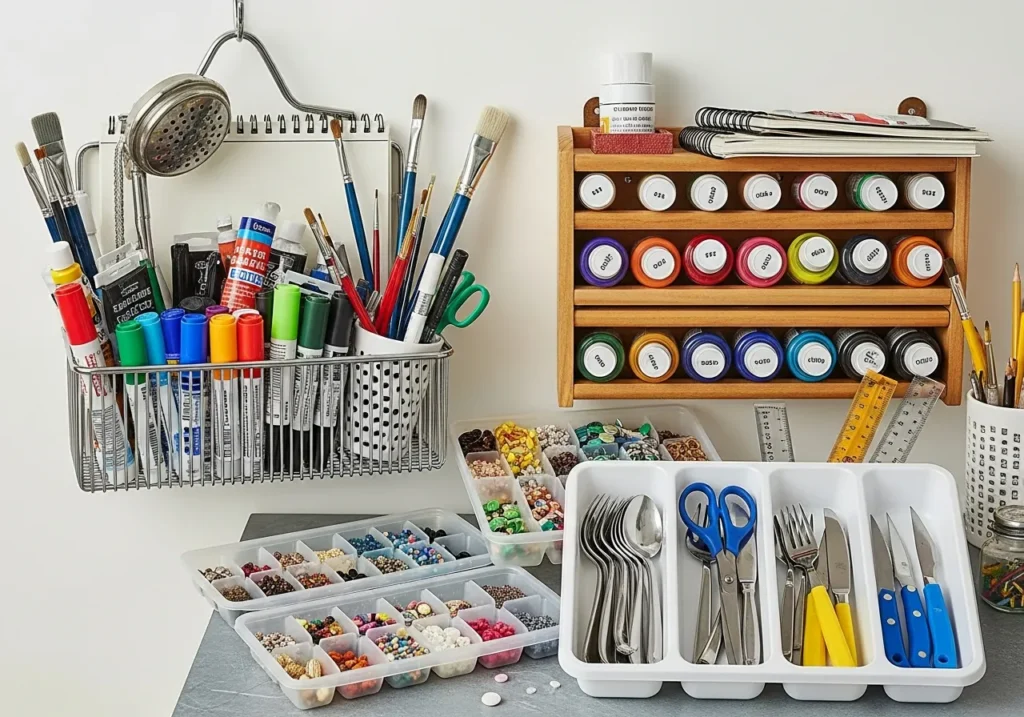
Some of the most effective storage solutions hide in plain sight throughout your home. Repurposing everyday objects reduces waste while solving organizational challenges.
Shower Caddy Art Supply Station
Those hanging shower caddies with multiple pockets excel at storing art supplies. Hang one over your door or on a command hook near your workspace. The mesh or fabric pockets hold markers, scissors, glue sticks, and small notebooks. Everything remains visible and accessible while taking up zero floor or desk space.To see more ideas to organize art supplies do visit The Spruce.
For artists working in small apartments or shared spaces, this provides portable organization. Unhook the caddy and carry it to wherever you’re working, then hang it back up when finished. Your supplies travel with you without requiring a heavy bin.
Spice Rack Paint Storage
Kitchen spice racks designed for cabinet doors hold small paint bottles perfectly. Mount these inside a closet door or on your studio wall for vertical paint storage. The narrow shelves prevent bottles from getting buried behind one another, and you can see every color at a glance.
This works brilliantly for acrylic craft paints, model paints, or any small bottles. Organize by color family or project to make selection even faster. The minimal depth of spice racks means they fit in tight spaces where traditional shelving would protrude too far.
Ice Cube Tray Organizers
Plastic ice cube trays excel at organizing tiny items that otherwise scatter and hide. Use them in drawers to separate beads, sequins, small buttons, googly eyes, or jewelry findings. Each compartment holds a different item type or color.
Stack multiple trays for maximum space efficiency. The rigid plastic keeps items contained even when you open and close drawers quickly. For extra security during transport, choose trays with attached lids or place plastic wrap over the top.
Cutlery Tray Drawer Organization
Those expandable cutlery organizers sold for kitchen drawers adapt beautifully to art supply storage. Use them in desk drawers to create custom compartments for different tool categories. One section holds pens and pencils. Another contains erasers and sharpeners. A third keeps scissors and blades separated and safe.
The adjustable dividers let you reconfigure the layout as your collection changes. This flexibility prevents the drawer from becoming a catch-all chaos zone where small items disappear into corners.
Portable and Flexible Storage
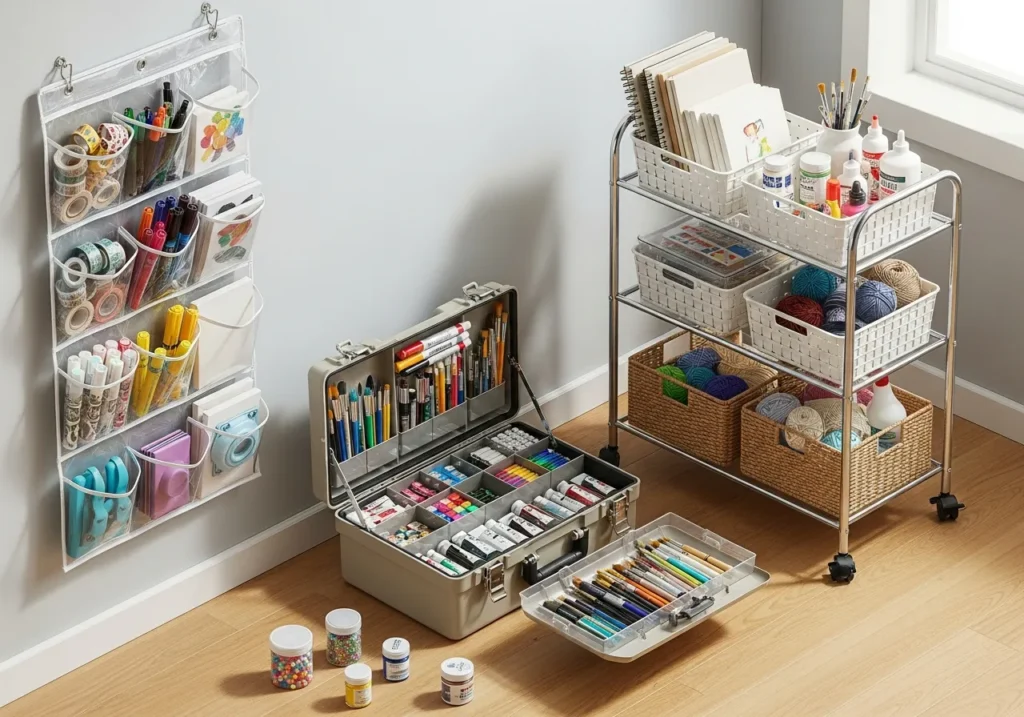
Artists who work in multiple locations or need to pack supplies away after each session require storage that moves with them.
Tackle Box Art Kits
Fishing tackle boxes offer compartmentalized portable storage that costs far less than art-specific carrying cases. The multiple trays and sections keep supplies separated and organized. Small compartments hold erasers and sharpeners. Larger areas accommodate sketchbooks or paper pads.
Choose tackle boxes with adjustable dividers to customize the layout. The sturdy handles and latches ensure everything stays secure during transport. Many artists maintain different tackle boxes for different media, keeping watercolor supplies separate from drawing tools.
Rolling Cart Storage
A simple rolling cart with multiple shelves creates mobile storage that can be positioned wherever needed, then wheeled out of the way. Load the shelves with bins, baskets, or trays containing categorized supplies. The cart becomes a self-contained art supply station.
This solution works exceptionally well in multipurpose rooms. When you want to create, roll the cart to your workspace. When finished, wheel it into a closet or corner. The mobility means you can optimize your working position without permanently dedicating floor space to storage.
Hanging Shoe Organizer Supply Station
Over-the-door shoe organizers with clear pockets provide extensive storage for flat items and small supplies. Each pocket becomes a designated home for different materials. Store paper in larger bottom pockets. Fill middle pockets with ribbon spools, washi tape, or sticker sheets. Top pockets can hold smaller items like erasers and sharpeners.
The transparency lets you see contents without emptying pockets. This visual inventory system helps prevent overbuying supplies you already own. The vertical format maximizes space in small studios or craft areas.
Specialized Storage for Specific Supplies
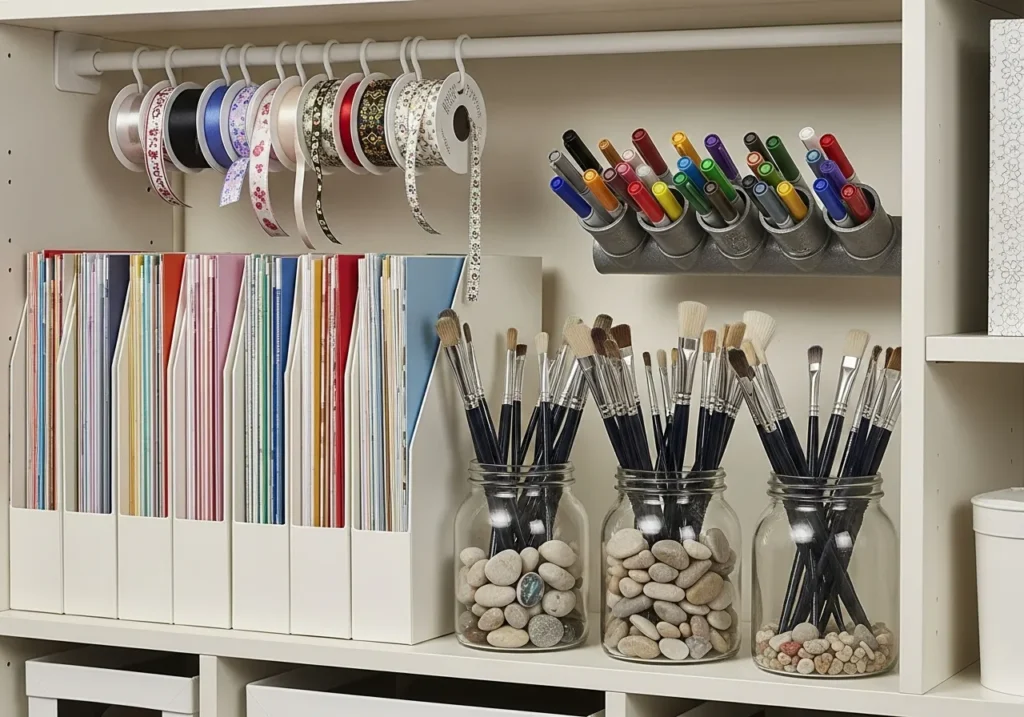
Certain art materials present unique storage challenges that require targeted solutions.
Paper and Cardstock Organization
Large paper sheets and cardstock pads resist most conventional storage methods. Vertical file organizers designed for office use adapt perfectly to this challenge. Stand papers upright, sorted by color, size, or type. The vertical orientation prevents creasing and makes selection easy.
For additional paper types, repurpose old picture frames or wooden crates turned on their sides. Create slots where you can slide in paper pads or cardstock sheets. Label each section clearly to maintain organization.
Paint Brush Preservation
Proper brush storage extends the life of your tools significantly. Create a custom brush holder using a jar or can filled with dried beans, rice, or decorative stones. Position brushes bristle-up so they maintain their shape. The filling material holds brushes upright while allowing air circulation to prevent mildew.
For brushes you use frequently, consider a horizontal brush roll made from canvas or fabric. Sew or glue pockets that accommodate different brush sizes. Roll it up for storage or travel, keeping bristles protected and organized.
Ribbon and Trim Storage
Ribbons and decorative trim tangle into frustrating knots without proper storage. Thread a tension curtain rod through ribbon spools and mount it inside a closet or cabinet. Spools slide along the rod and can be removed individually. Cut ribbon ends at an angle to prevent fraying.
Alternatively, attach clothespins to a wooden board mounted on the wall. Clip ribbon ends to pins, allowing rolls to hang freely. This displays your collection attractively while keeping each type separated.
Marker and Pen Storage
Markers stored horizontally often dry out prematurely. Create storage that keeps them at the correct angle using PVC pipes cut to length and mounted to a board. Size the pipe diameter to fit your markers snugly. Mount pipes at a slight downward angle so ink flows toward the tip.To see more storage ideas using PVC Pipee do visit Homeliaa.
For colored pencils, repurpose old candle holders, kitchen utensil crocks, or tin cans arranged in a tray. Group pencils by color family within each container for quick selection.
Budget Friendly Storage Hacks
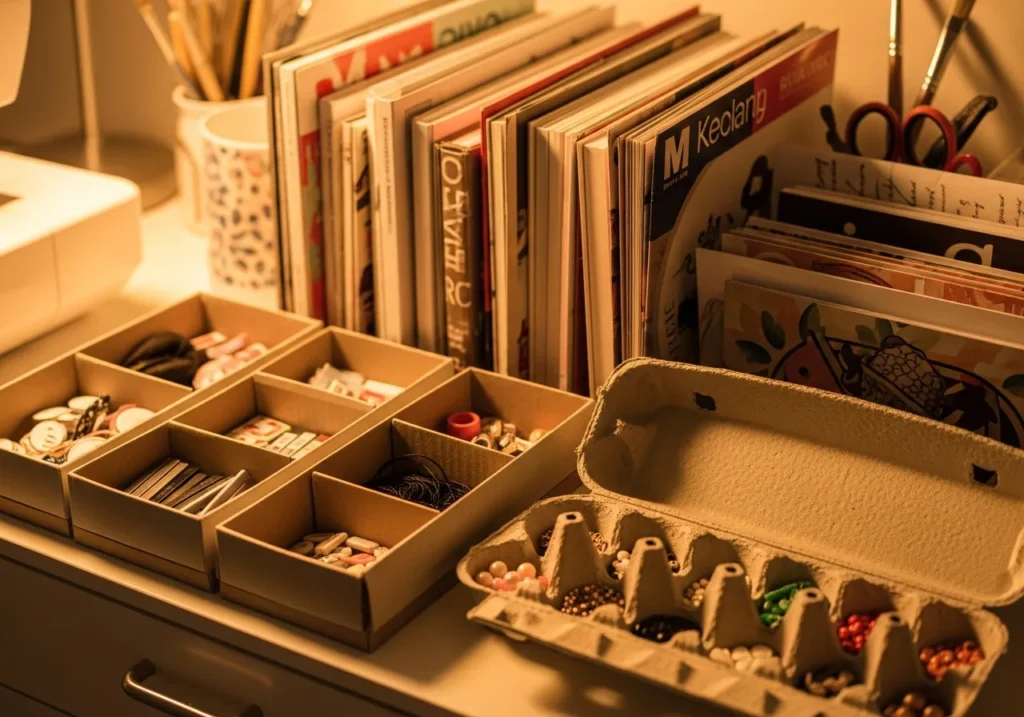
Effective organization doesn’t require expensive purchases. Some of the best solutions cost nothing or use materials destined for recycling.
Cardboard Box Drawer Dividers
Cereal boxes, shipping boxes, and other cardboard packaging can be cut and configured to create custom drawer dividers. Measure your drawer dimensions and cut cardboard pieces to create a grid pattern. These dividers segment drawers into sections for different supply categories.
Cover cardboard with contact paper or decorative tape for a finished appearance. The customization ensures perfect fit and the price cannot be beaten. When your needs change, simply reconfigure or create new dividers.
Egg Carton Small Item Storage
Cardboard egg cartons provide twelve ready-made compartments perfect for tiny items. Use them in drawers or on shelves to organize beads, sequins, small buttons, safety pins, or other miniature supplies. Stack multiple cartons for increased capacity.
For a more permanent solution, paint egg cartons or cover them with decorative paper before use. They cost nothing and keep small items from mixing together or spilling in drawers.
Magazine Holders for Paper Storage
Cardboard magazine holders organize paper pads, sketchbooks, and thin canvases vertically. Line them up on a shelf or bookcase, labeling each holder by content type. This prevents the common problem of paper pads getting buried at the bottom of stacks.
Decorate plain cardboard holders with paint, paper, or fabric to coordinate with your workspace. The vertical access makes grabbing exactly what you need quick and easy.
Creating Your Perfect System
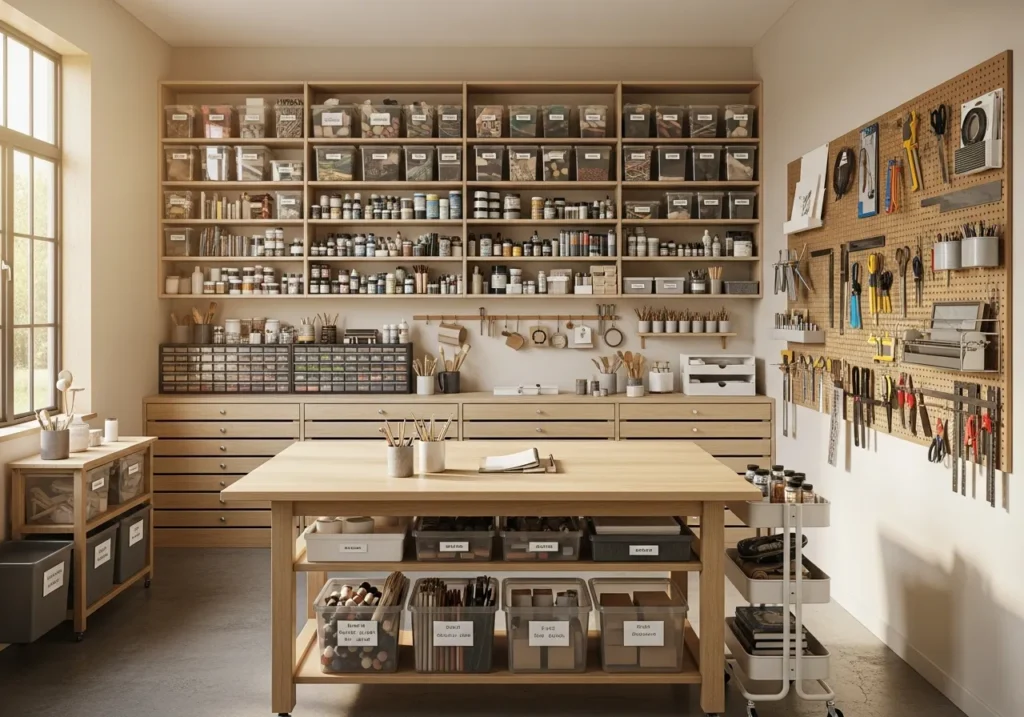
Implementing these storage ideas successfully requires understanding your personal working style and most frequently used materials. Start by assessing which supplies you use daily, weekly, and occasionally. Daily-use items deserve prime real estate at arm level and within easy reach. Weekly supplies can occupy slightly less accessible spaces. Occasional materials can be stored higher up or in closed containers.
Consider your creative process when designing storage. If you work on multiple projects simultaneously, dedicate specific areas or containers to each project. This prevents materials from different endeavors getting mixed together and allows you to switch between projects seamlessly.
Maintenance plays a crucial role in long-term organizational success. Establish a habit of returning items to their designated spots after each creative session. Spend five minutes at the end of your work time tidying up. This small investment prevents the gradual slide back into chaos.
Labeling increases effectiveness dramatically. Even if you think you’ll remember what goes where, clear labels eliminate guesswork and help others who might need to access your supplies. Use a label maker, hand-lettering, or printed labels, whatever matches your aesthetic preference.
The ultimate goal extends beyond mere tidiness. Well-organized supplies reduce creative friction, that moment of hesitation when you cannot find the right tool or color. When everything has a home and you can locate any item within seconds, you spend more time creating and less time searching. The organizational system fades into the background, supporting your creativity rather than impeding it.
These DIY storage solutions adapt to any budget, space constraint, or artistic medium. Mixing and matching ideas from different categories creates a customized system that evolves with your needs. Perhaps you combine pegboard walls with desktop organizers and portable tackle boxes. Maybe your perfect system involves repurposed jars, rolling carts, and cardboard dividers. The beauty lies in the flexibility.
Conclusion
Start with one area or one type of supply. Implement a solution, use it for a week, and assess what works. Adjust as needed. Gradually expand your organizational system until your entire collection has found proper homes. The transformation might happen over weeks or months, but each improvement compounds, creating a workspace that inspires rather than frustrates.
Your art deserves a space where creativity flows freely, unencumbered by clutter and chaos. These storage ideas provide the framework. Your implementation brings them to life, crafting an organized environment that supports your unique artistic journey. The investment of time and minimal resources pays dividends every time you sit down to create and everything you need appears exactly where it should be.
Frequently Asked Questions
What is the most cost-effective way to organize art supplies?
Repurposing household items like tin cans, mason jars, cardboard boxes, and egg cartons costs nothing yet provides functional storage. Start by using what you already have before purchasing new organizational tools. Simple solutions like hanging shoe organizers or shower caddies offer extensive storage at minimal expense.
How do I organize art supplies in a small space?
Maximize vertical space with wall-mounted solutions like pegboards, magnetic strips, and hanging organizers. Use the backs of doors for over-the-door storage systems. Choose stackable, multi-level organizers and rolling carts that can be moved when not in use. Prioritize storing only frequently used supplies in your immediate workspace.
What is the best way to store paint brushes to make them last longer?
Store brushes upright with bristles facing up in containers filled with rice, beans, or stones to maintain their shape. Never store brushes bristle-down as this damages the tips. For travel or long-term storage, use brush rolls that keep bristles protected and separated. Ensure brushes are completely dry before storing to prevent mildew.
How should I organize markers and colored pencils by color?
Group markers and pencils by color families in separate containers on a rotating lazy susan or in divided desktop organizers. Alternatively, store them vertically in clear containers or PVC pipe holders so you can see all colors at once. Keep markers tip-down or horizontal to prevent drying out, and arrange pencils by color gradient within each family for easy selection.
What storage works best for artists who work in different locations?
Tackle boxes and art caddies with multiple compartments provide portable organization that keeps supplies separated during transport. Rolling carts work well for moving between rooms in the same building. Hanging fabric organizers can be unhooked and carried to different workspaces. Consider maintaining separate portable kits for different media types rather than one heavy all-inclusive carrier.



2 Comments