10+ Stylish Ideas for Wooden Shelf Brackets
Stylish Ideas for Wooden Shelf Brackets, Walk into any well-designed home and chances are that open shelving plays a starring role. It draws the eye, creates visual depth, and transforms a bare wall into a conversation piece. But what holds those shelves up with grace and intention? The bracket. More specifically, the wooden shelf bracket — a humble structural element that has quietly become one of the most celebrated details in modern interior design.
Wooden shelf brackets are no longer afterthoughts hidden behind stained boards. Today they are intentional design choices that speak to a homeowner’s taste, craftsmanship sensibility, and understanding of space. Whether you are refreshing a farmhouse kitchen, building out a minimalist home office, or bringing warmth to a bare bathroom wall, wooden shelf brackets offer a level of character and flexibility that metal or plastic alternatives simply cannot match.
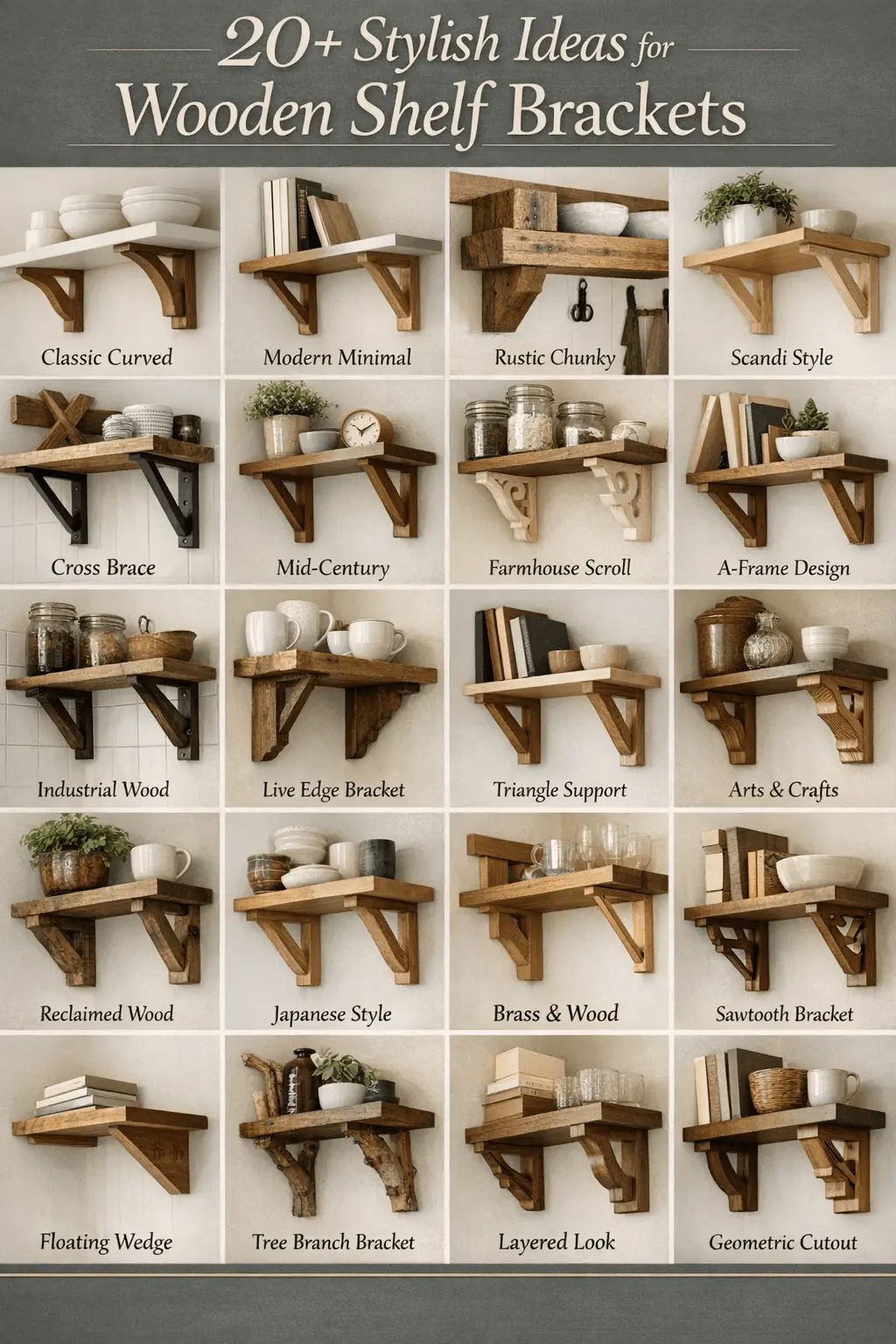
This article walks you through more than 20 stylish wooden shelf bracket ideas, covering a range of design styles, room applications, wood types, and finishing methods. Whether you plan to build your own or shop for the perfect ready-made option, this guide gives you the knowledge and inspiration to make a confident, beautiful choice.
1. The Classic L-Shaped Wooden Bracket
The L-shaped bracket is where every conversation about wooden shelf supports begins. It consists of two pieces of wood joined at a right angle, often reinforced with a diagonal brace for added strength. This design has been used for centuries because it works, and it works beautifully.
In a modern home, a clean L-shaped bracket cut from white oak or maple and finished with a clear matte sealer delivers a look that is timeless without being stale. In a more traditional space, the same shape carved from stained pine creates immediate warmth. The simplicity of this form means it can sit comfortably in almost any room without competing with surrounding decor.
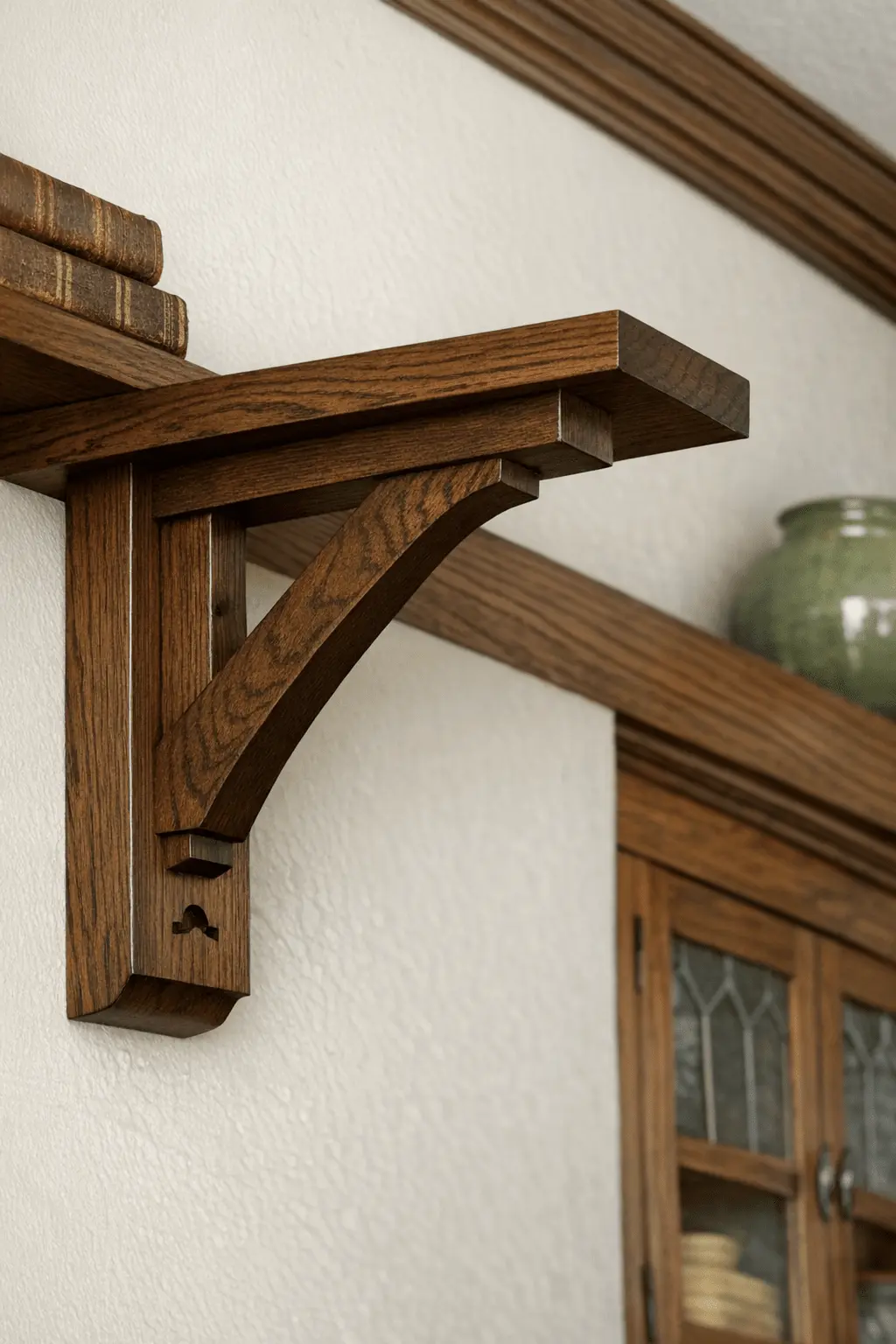
Craftsman Style L-Bracket
A popular variation of the standard L-shape draws heavily from the Arts and Crafts movement. The craftsman-style bracket typically features clean lines, subtle decorative cutouts near the base, and a finish in rich walnut stain or deep espresso. This style works exceptionally well in dining rooms, living spaces, and older homes with character molding and built-in cabinetry.
2. Rustic Corbel Brackets for Farmhouse Appeal
Corbels are among the most visually striking wooden shelf bracket ideas available. Rooted in classical architecture, the corbel is a carved or shaped wood block that protrudes from a wall to support a shelf above it. In residential use today, corbels bring an undeniable richness and handcrafted quality that store-bought metal brackets simply cannot replicate.
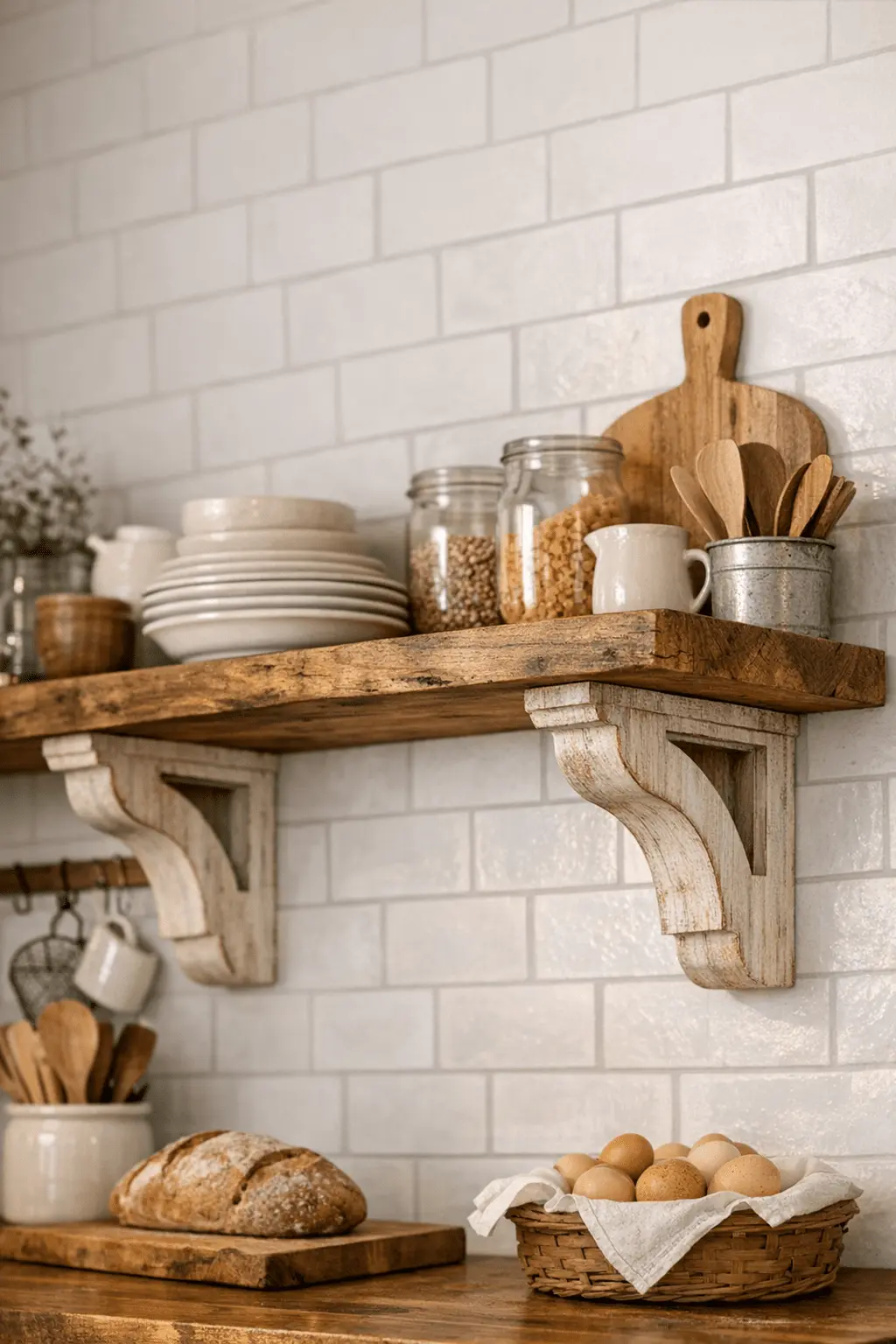
For farmhouse or country-style interiors, a wide pine or fir corbel with a slightly distressed finish is ideal. Pair it with a thick live-edge board for the shelf surface and the result is a piece that looks like it has always been part of the home. Corbels also work beautifully in kitchens where open shelving replaces upper cabinets, lending the space a relaxed, collected quality.
Hollow-Back Corbels
Hollow-back corbels are a variation that reduces visual weight while maintaining the same decorative silhouette. They are slightly lighter and easier to mount than solid versions, making them a practical choice for longer shelf runs where multiple brackets are needed.
3. Floating Bracket with a Wood Face
Floating shelves have dominated interior design for more than a decade, and for good reason. They create a seamless, uncluttered look that suits minimalist and contemporary interiors particularly well. A floating bracket uses hidden hardware mounted inside the wall, with the shelf sliding over the top to conceal the support entirely.
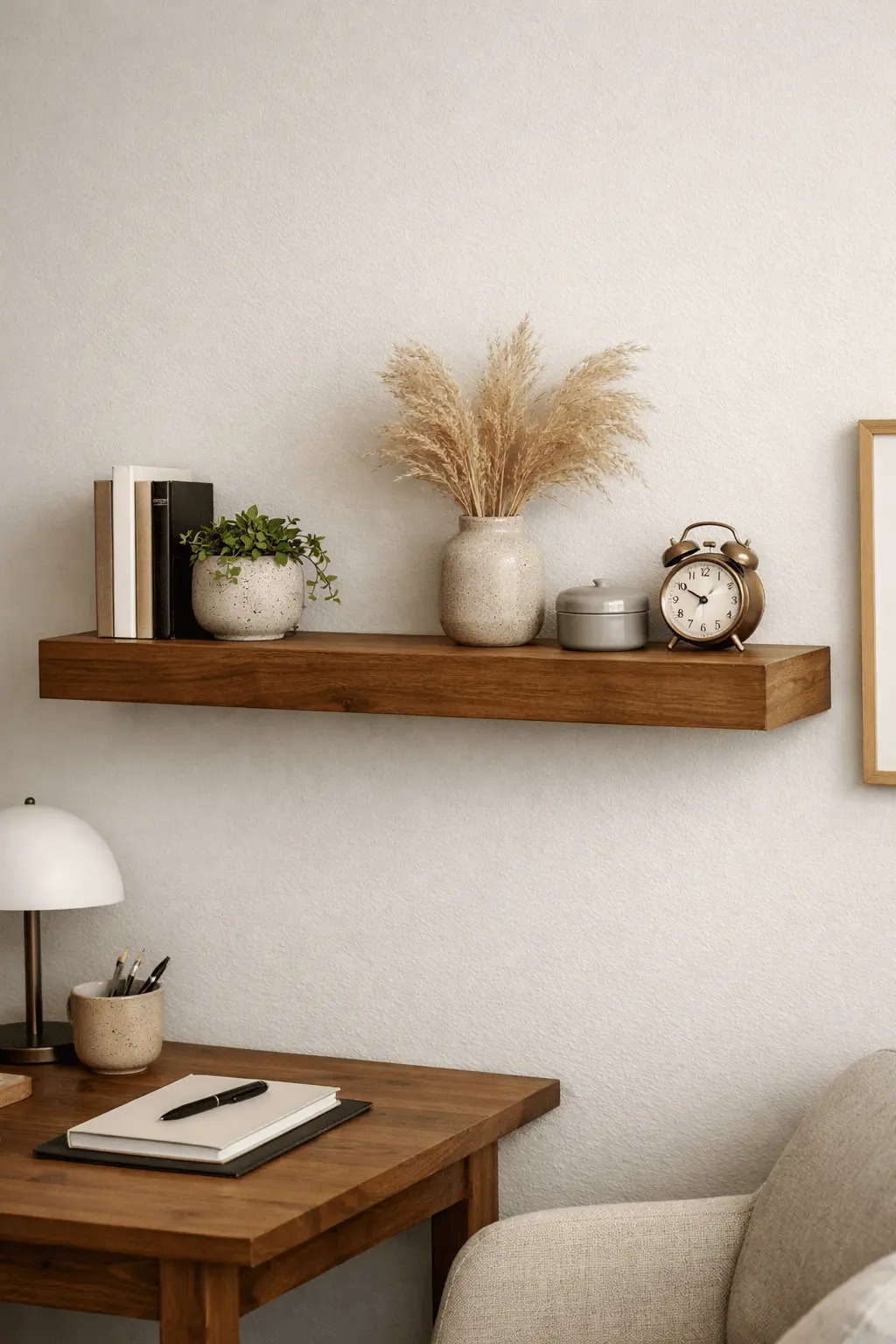
Adding a wood face plate or wooden sleeve to the floating bracket brings warmth to an otherwise cold, invisible system. This approach works especially well in home offices and bedrooms where the shelf needs to feel warm and personal rather than clinical.
4. Reclaimed Wood Brackets for Sustainable Style
Reclaimed wood carries a story. Every knot, check, and grain variation in a piece of salvaged timber reflects years of life and use. When cut and shaped into shelf brackets, reclaimed wood introduces texture, history, and environmental responsibility into a space. https://timberelle.com/blog/wood-shelf-brackets-ideas/
Reclaimed barn wood brackets have become particularly popular in industrial-meets-rustic interiors. Their weathered gray or brown tones pair naturally with raw steel pipe shelves, exposed brick walls, and concrete floors. They also work surprisingly well in contemporary white kitchens where the organic imperfection of the reclaimed timber creates a compelling visual contrast.
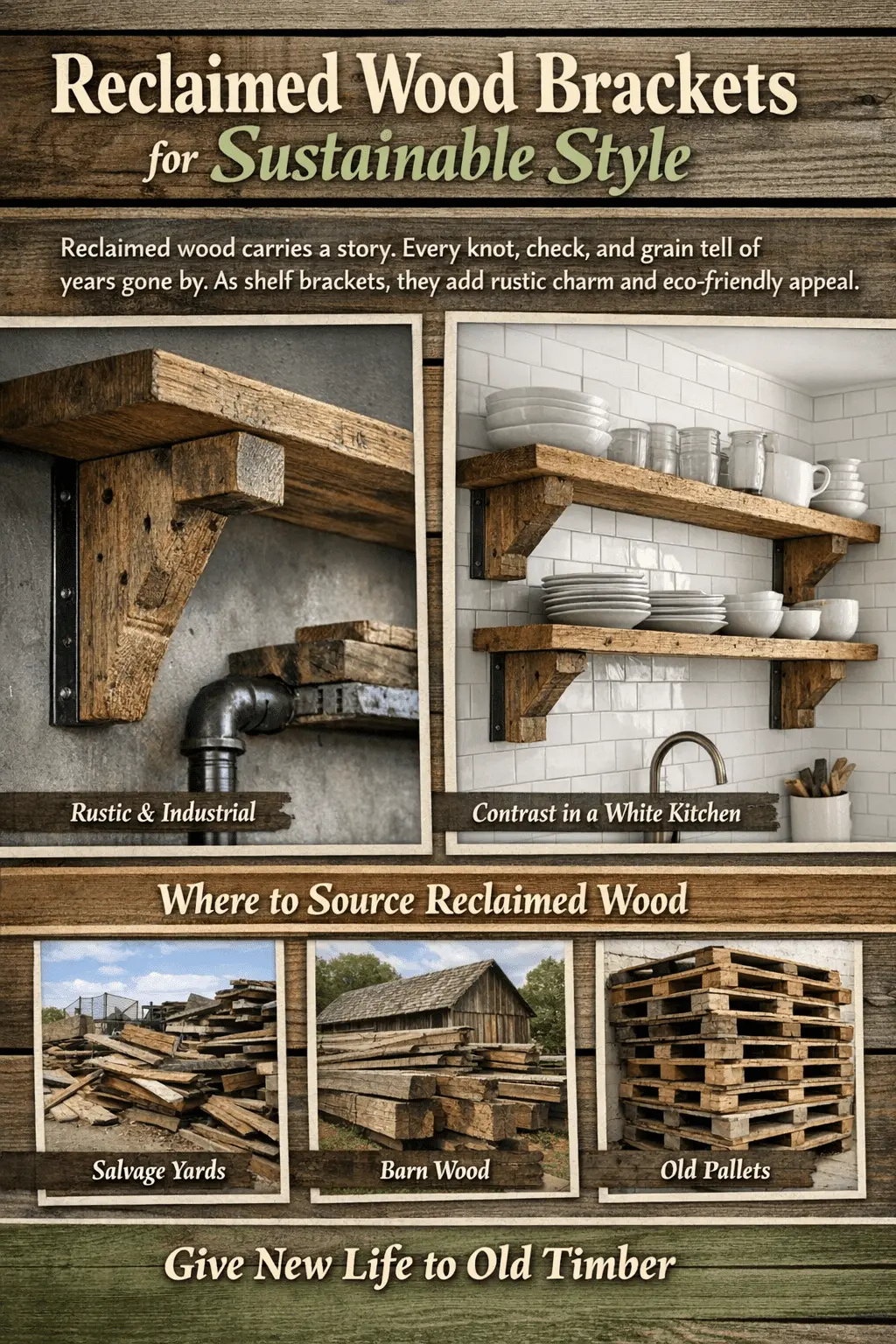
Where to Source Reclaimed Wood
Salvage yards, deconstruction companies , stylish ideas for wooden shelf brackets and specialty lumber dealers are the best sources for reclaimed material. Old fence boards, pallet wood, and barn siding can all be milled into bracket-sized pieces with minimal waste.
5. Diagonal Brace Bracket for Industrial Flair
The diagonal brace bracket takes the standard L-shape and adds a third member: a piece of wood cut at a 45-degree angle that runs between the vertical and horizontal arms. This adds structural integrity and introduces a strong visual line that reads as both functional and intentional.
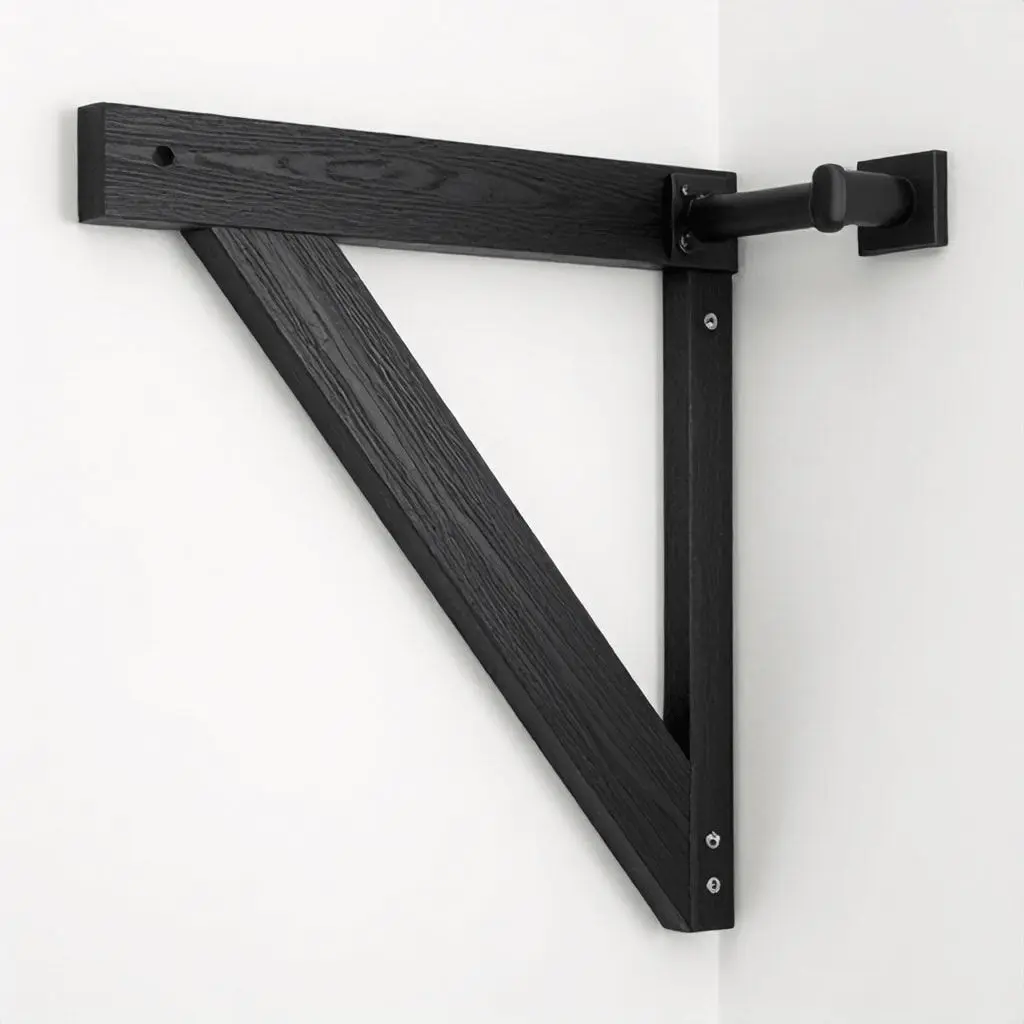
In an industrial-style home, this bracket design is a natural fit. Cut from dark-stained oak or left in a raw, sanded finish and combined with black pipe hardware, the diagonal brace bracket conveys a sense of honest construction that resonates strongly with the industrial aesthetic.
6. Bold Ideas for the Kitchen
The kitchen is perhaps the most popular room for open shelving supported by decorative wooden brackets. Here are three strong bracket ideas specifically suited to kitchen applications.
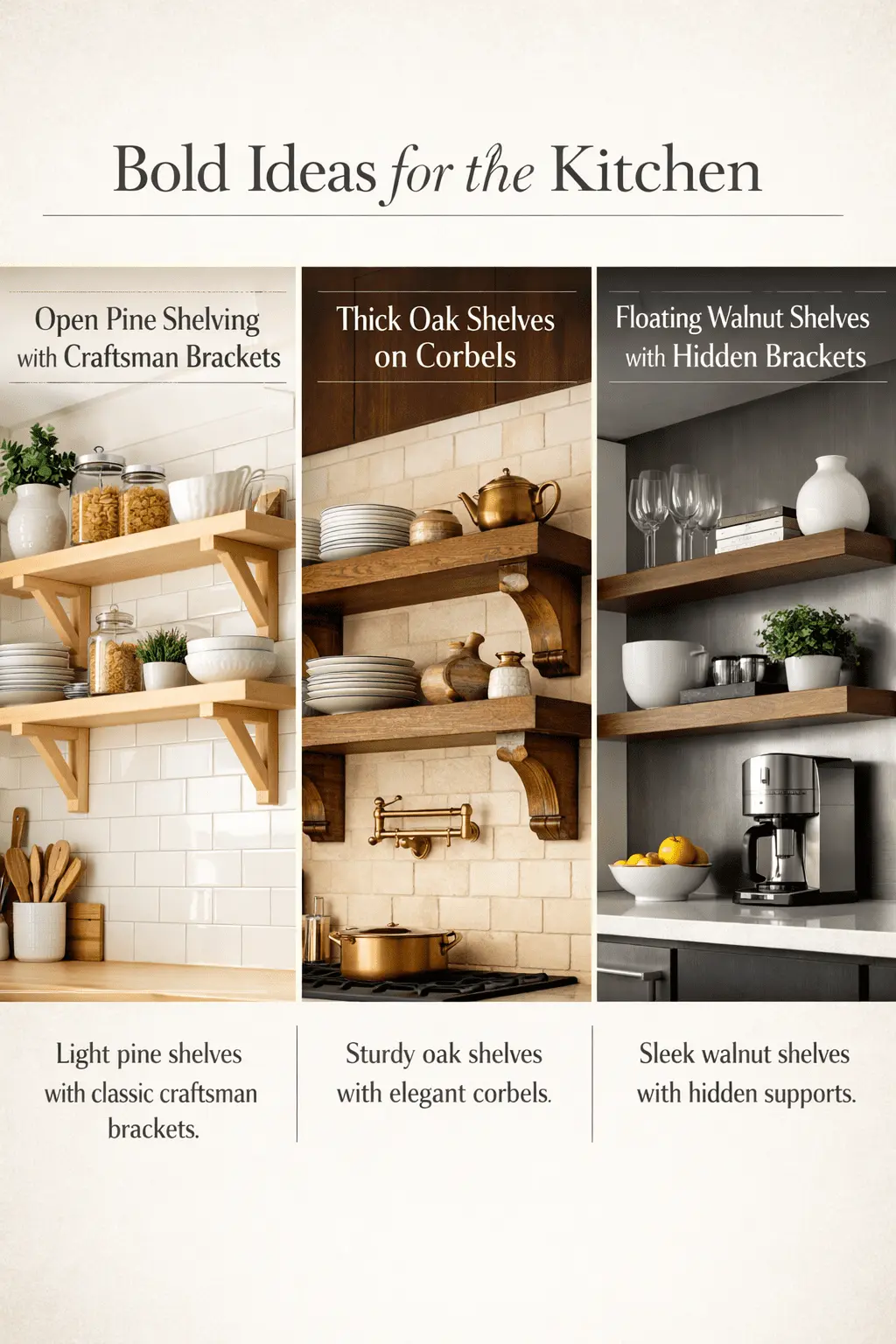
Open Pine Shelving with Craftsman Brackets
Light-colored pine shelves on craftsman-style brackets bring a casual, inviting quality to a kitchen. This combination is budget-friendly, easy to paint or stain, and works in both modern farmhouse and transitional design schemes.
Thick Oak Shelves on Corbels
For a kitchen that leans traditional or European in style, stylish ideas for wooden shelf brackets thick oak shelves on solid corbels are a refined and durable choice. Oak’s tight grain holds up well to kitchen humidity and the weight of dishes, cookbooks, and appliances.
Floating Walnut Shelves with Hidden Brackets
In a sleek, modern kitchen, floating walnut shelves on concealed brackets create a high-end, furniture-grade look. The warm brown tones of walnut soften the hard lines of modern cabinetry and stainless appliances.
7. Bathroom Shelf Brackets Done Right
The bathroom is often overlooked as a canvas for decorative shelf bracket ideas, but it offers real opportunity. A single floating shelf supported by a pair of well-chosen wooden brackets above a toilet or beside a vanity can transform the entire feel of the room.
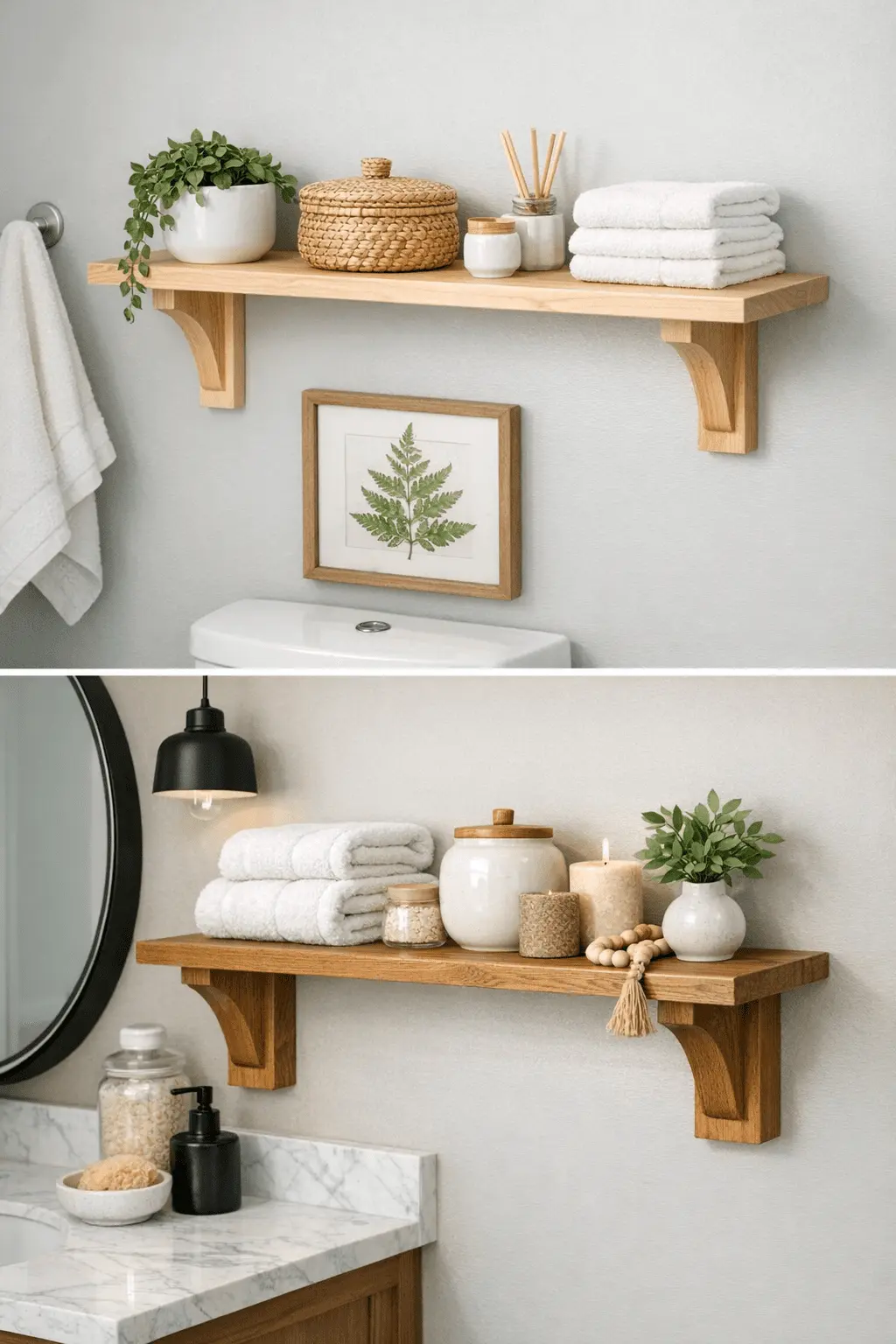
In small bathrooms, slender brackets in a lighter wood like maple or birch keep the space feeling open. In larger bathrooms or those with a spa aesthetic, wider oak or teak brackets support deeper shelves that can hold towels, candles, and decorative objects with ease.
8. Creative Ways to Stylish ideas for Wooden Shelf Brackets
Beyond their structural role, wooden shelf brackets are design elements in their own right. Here are five ways to use them creatively throughout a home.
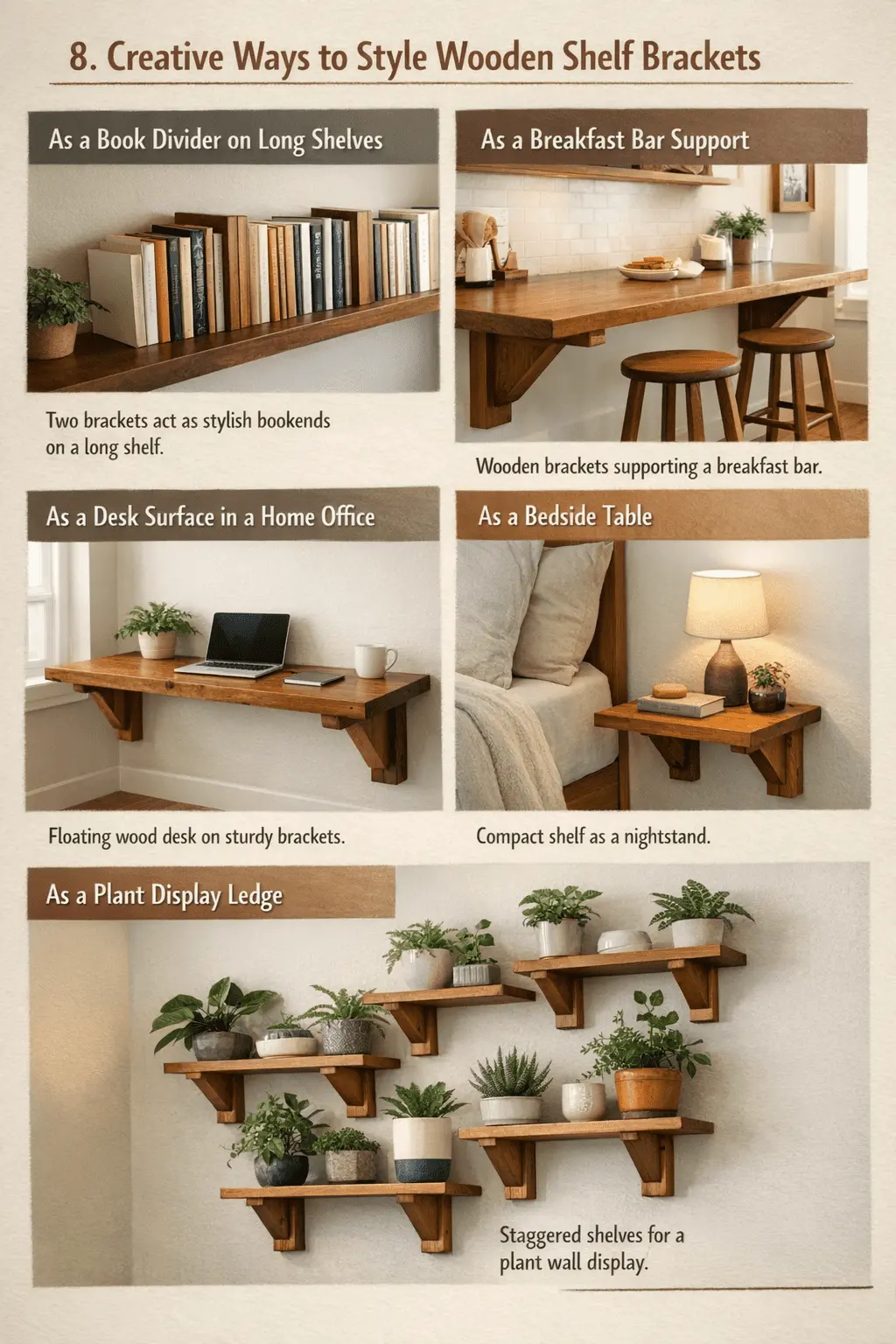
As a Book Divider on Long Shelves
Two small wooden brackets mounted vertically on top of a shelf act as stylish bookends, keeping volumes upright without the clunky look of traditional metal book supports.
As a Bre akfast Bar Support
A wide board mounted at counter height on a pair of heavy-duty wooden brackets creates an instant breakfast bar in a kitchen or dining area. Add a couple of stools and the space becomes a daily gathering point.
As a Desk Surface in a Home Office
Mounting a solid wood plank to the wall on two generously sized brackets produces a minimalist floating desk with real character. The lack of legs keeps the floor visible and the room feeling larger.
As a Bedside Table
In tight bedroom spaces, a small wooden shelf on a single bracket mounted beside the bed serves the same function as a nightstand while taking up almost no floor space.
As a Plant Display Ledge
A series of staggered small shelves on wooden brackets at varying heights creates a dramatic plant wall display. This works beautifully in corners of living rooms or along a bright hallway wall.
9. Finishing Options That Change Everything
The finish applied to a wooden shelf bracket can entirely transform its character. Here are four finishing approaches worth considering.
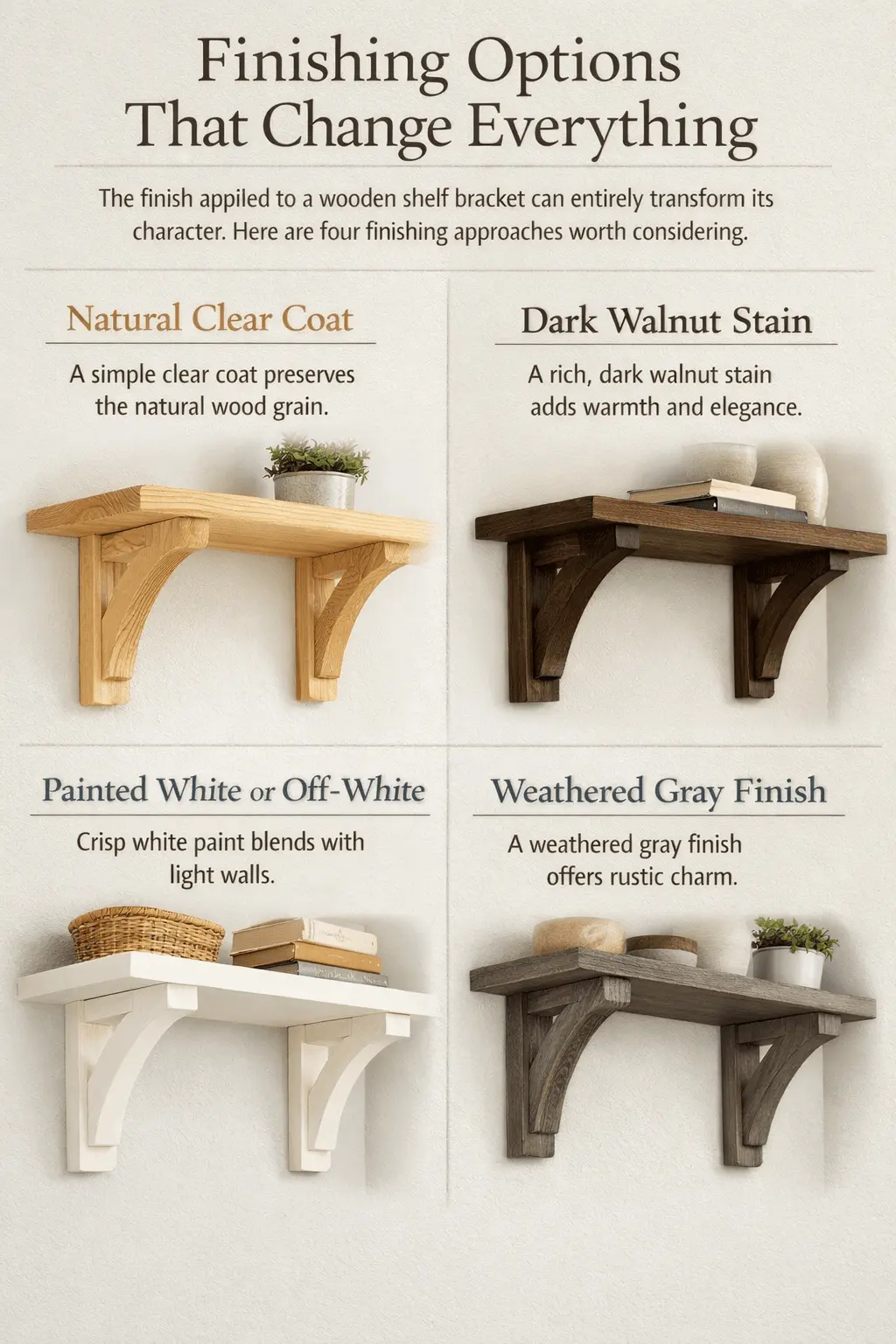
Natural Clear Coat
A simple clear polyurethane or oil finish preserves the natural color and grain of the wood. This option suits light woods like maple and ash in contemporary or Scandinavian-inspired interiors.
Dark Walnut Stain
A dark walnut stain adds depth and richness to less expensive woods like pine, giving them the appearance of a premium hardwood at a fraction of the cost.
Painted White or Off-White
Painting wooden brackets white or off-white integrates them seamlessly into light-colored walls. This approach keeps the shelf as the visual focus and is a reliable choice in traditional and coastal-style homes.
Weathered Gray or Cerused Finish
A weathered gray or cerused finish — achieved by wire-brushing the wood grain and applying a gray tinted wax or stain — delivers a sophisticated, aged look that sits beautifully in modern farmhouse and transitional interiors.
10. Choosing the Right Wood for Your Brackets
Not all wood performs equally in a bracket application. The best choices balance workability, strength, and visual appeal.
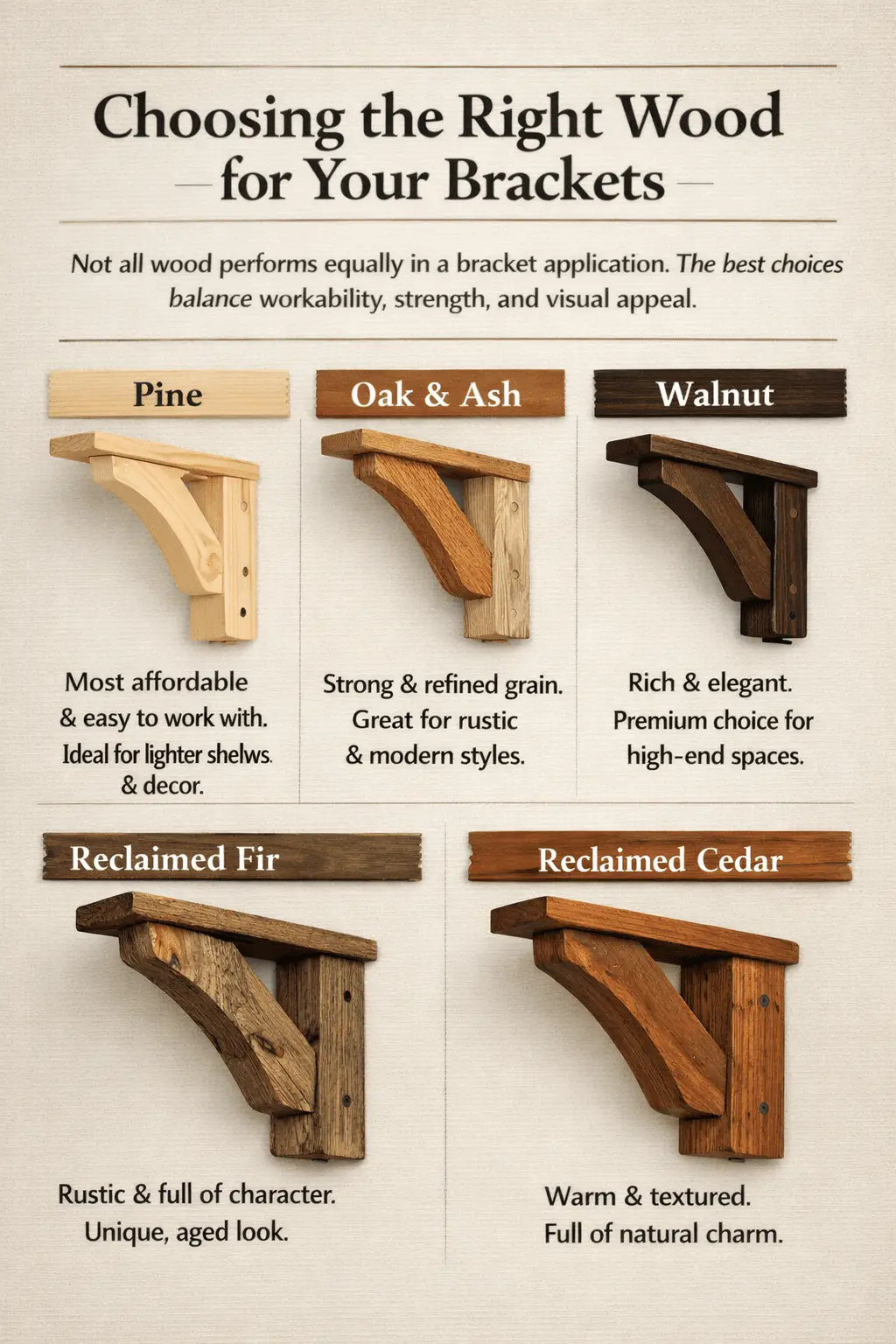
Pine is the most accessible and affordable option, easy to cut, sand, and finish. It works well for lighter shelves and decorative applications. Oak and ash offer greater strength and a tighter, more refined grain that suits both rustic and contemporary styles. Walnut is premium in both appearance and price, reserved for spaces where visual impact justifies the investment. Reclaimed fir and cedar bring texture and character that no new-growth wood can fully replicate.
11. DIY vs. Store-Bought Wooden Shelf Brackets
Building your own wooden shelf brackets is a genuinely rewarding project that requires only basic tools and minimal materials. A miter saw, drill, wood glue, and a few lengths of pine or oak are all it takes to produce brackets that look custom and professional. The cost is significantly lower than buying finished brackets, and the ability to size and shape each piece precisely for its intended shelf is a real advantage.
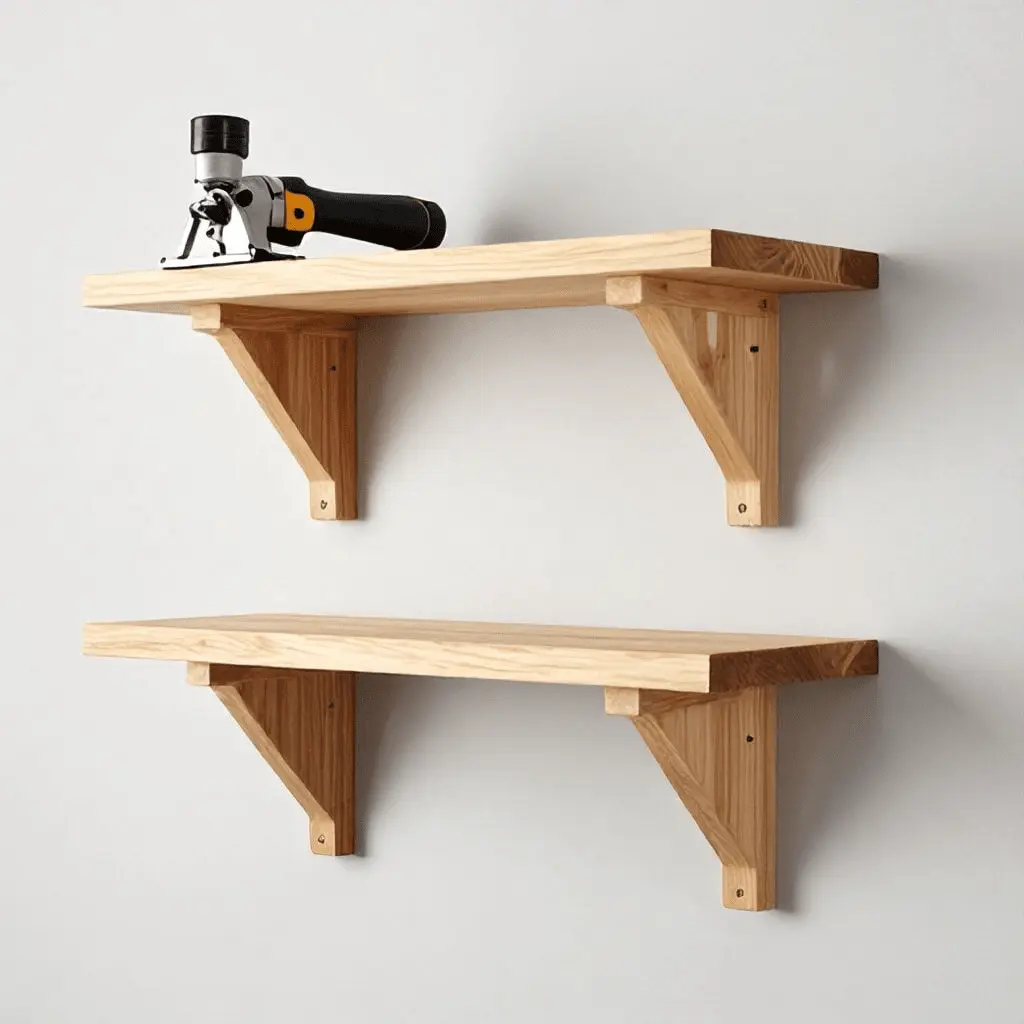
That said, store-bought and artisan-made wooden brackets have their place. For carved corbels with intricate profiles or for specialty woods like live-edge slab, purchasing from a skilled woodworker or specialty retailer is often the most practical path.
Conclusion
Wooden shelf brackets are small in scale but significant in impact. They sit at the intersection of structural function and decorative intention, and the best ones do both jobs with quiet confidence. Whether you choose a simple L-bracket cut from scrap pine, a richly carved corbel in solid oak, or a sleek hidden bracket behind a floating walnut shelf, the wood element brings warmth, texture, and personality that no other material can match.
The ideas explored in this article represent the breadth of what wooden shelf brackets can do in a home. From kitchens and bathrooms to home offices and bedrooms, from rustic farmhouse to modern minimalist, the right bracket applied with care and intention turns a plain wall into a purposeful and beautiful space. Take your time selecting the style, wood, and finish that speaks to your home and your taste, and you will have shelving that earns its place in the room for years to come.
Frequently Asked Questions
What type of wood is best for making shelf brackets? Pine is the most practical choice for beginners due to its low cost and ease of working. For heavier loads or a more refined appearance, oak, ash, or walnut are excellent options that offer greater strength and a superior grain pattern.
How far apart should wooden shelf brackets be spaced? As a general rule, brackets should be spaced no more than 24 inches apart for standard three-quarter inch thick boards. For heavier loads or thinner shelves, spacing brackets every 16 inches, aligned with wall studs, provides better support and prevents sagging over time.
Can I make wooden shelf brackets without advanced woodworking tools? Yes. A basic L-shaped bracket requires only a saw, drill, wood glue, and sandpaper. Many homeowners successfully build their own brackets using nothing more than a miter saw and a hand drill, making this one of the most approachable DIY woodworking projects available.
What finish should I use to protect wooden shelf brackets? Polyurethane is the most durable and widely used finish for wooden brackets, particularly in high-humidity areas like kitchens and bathrooms. For a more natural look, a penetrating oil or hard wax oil provides good protection while preserving the organic feel of the wood.
How much weight can a wooden shelf bracket hold? The weight capacity of a wooden shelf bracket depends on the wood species, bracket dimensions, mounting method, and bracket spacing. A well-built solid oak bracket mounted directly into wall studs can support well over 50 pounds per bracket. For heavier applications, increasing bracket size, reducing spacing, or adding a steel reinforcement plate improves load capacity significantly.