13+ Stunning Concrete Pool Deck Ideas
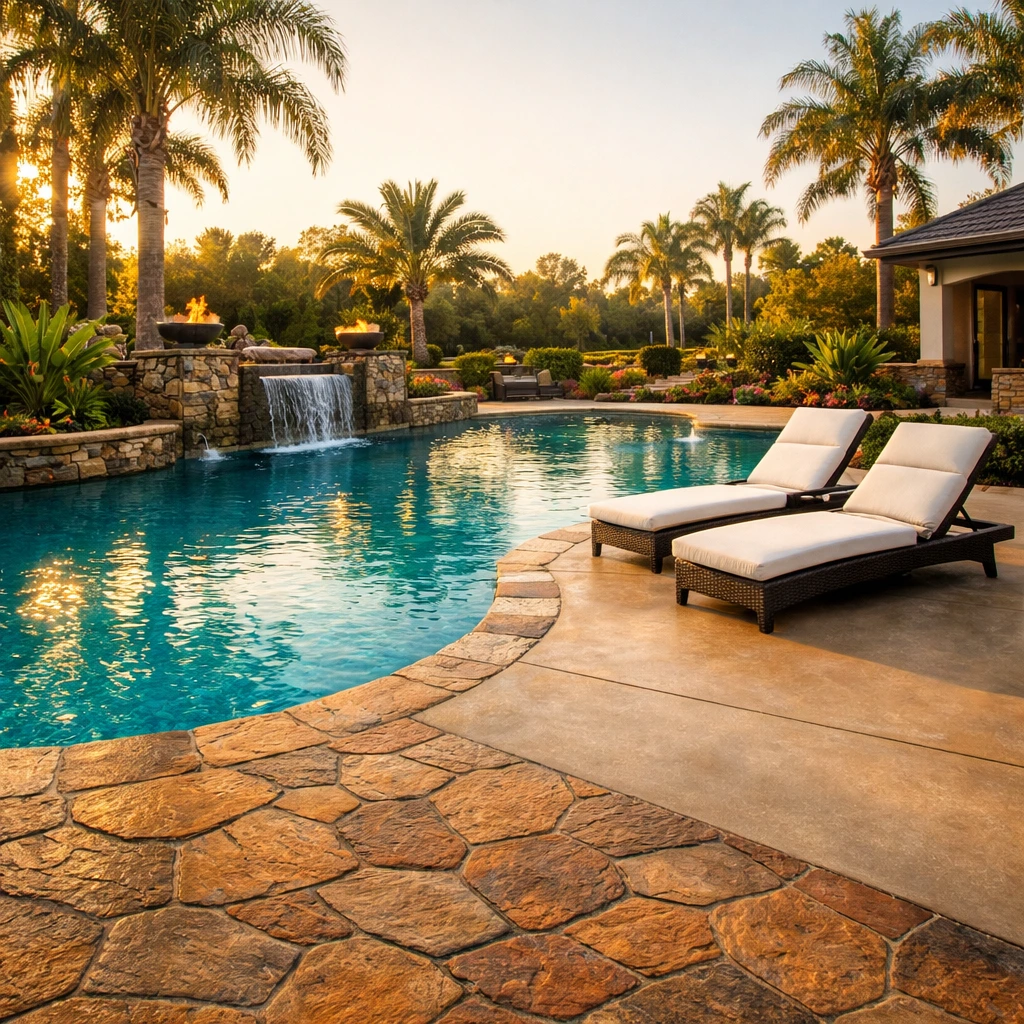
The area surrounding a swimming pool does far more than simply frame the water. It sets the tone for the entire backyard, influences how the space feels underfoot, determines how safe it is for bare feet in wet conditions, and reflects the overall aesthetic of your home. Choosing the right material and finish for a pool deck is one of the most consequential decisions in any backyard design project, and concrete remains the most versatile, durable, and cost-effective choice available.
What makes concrete so compelling is not just its practicality. With the right techniques, concrete can convincingly replicate the look of natural stone, brick, slate, travertine, or even hardwood at a fraction of the cost. It can be colored, textured, stamped, stained, polished, or resurfaced to suit virtually any design vision. Whether you are building a pool from scratch or renovating a tired existing deck, concrete gives you more design freedom than almost any other material.
This article presents thirteen-plus proven concrete pool deck ideas drawn from real design trends, contractor expertise, and homeowner experience. Each idea covers not just aesthetics but also practical performance, safety, and longevity so you can make a genuinely informed decision for your outdoor space.
1. Stamped Concrete With a Flagstone Pattern
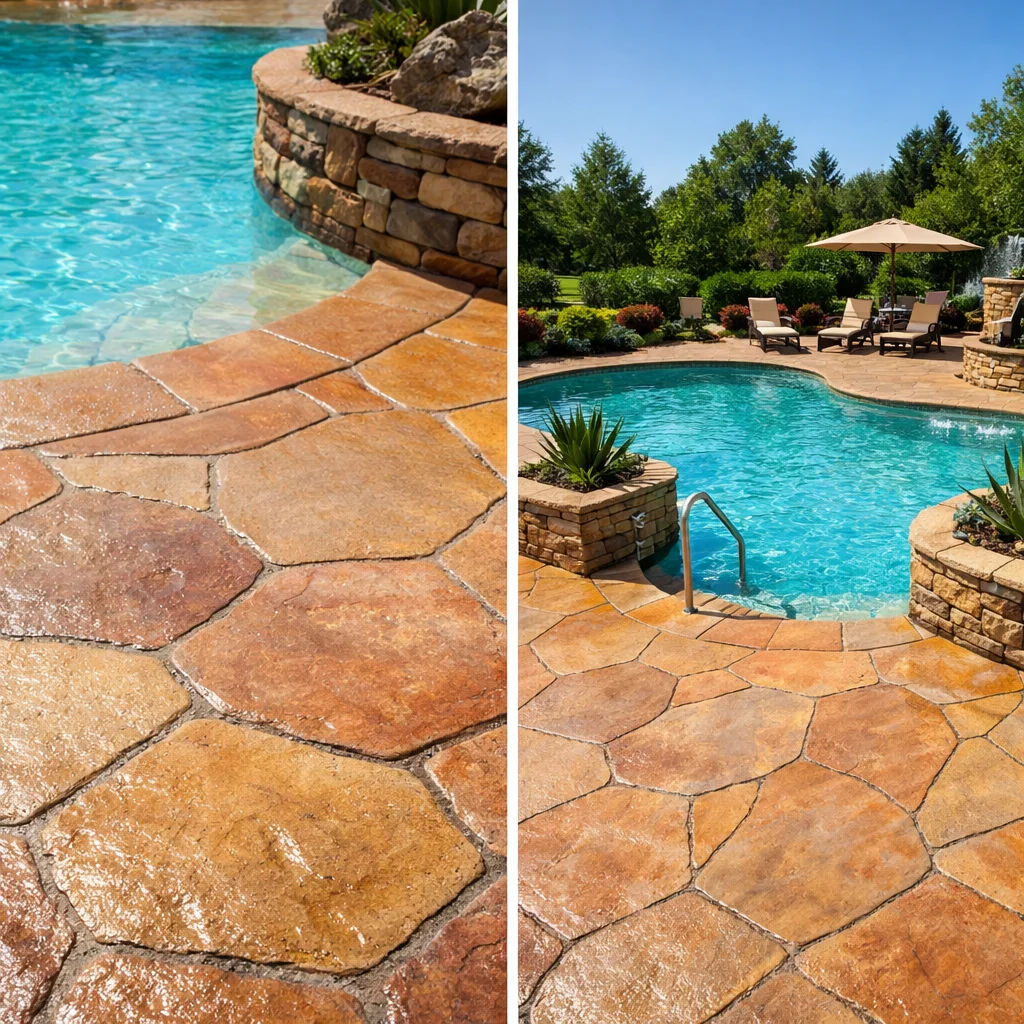
Stamped concrete is one of the most popular concrete pool deck ideas for homeowners who want the upscale appearance of natural stone without the natural stone price tag. Using rubber or polyurethane pattern molds pressed into freshly poured concrete, contractors can replicate the irregular, organic look of flagstone with remarkable accuracy. The result is a surface that reads as expensive and handcrafted but carries the structural advantages of monolithic concrete.
Flagstone-pattern stamped concrete works particularly well around freeform and organic-shaped pools where the irregular stone pattern complements the natural curvature of the pool edge. When combined with earth-toned integral color or acid staining in terracotta, slate grey, or sandstone hues, the finished surface is virtually indistinguishable from the real thing at a glance. A penetrating sealer applied over the surface enhances the color depth while protecting the texture from pool chemicals and UV exposure.
Best Use Cases for Stamped Flagstone Concrete
This finish suits Mediterranean, Tuscan, and resort-style pool designs exceptionally well. It pairs beautifully with natural stone water features, clay pot plantings, and wooden pergolas. Homeowners in warm climates tend to favor lighter color variations in this pattern to reduce heat absorption on the deck surface.
2. Broom Finish Concrete for Safety and Simplicity
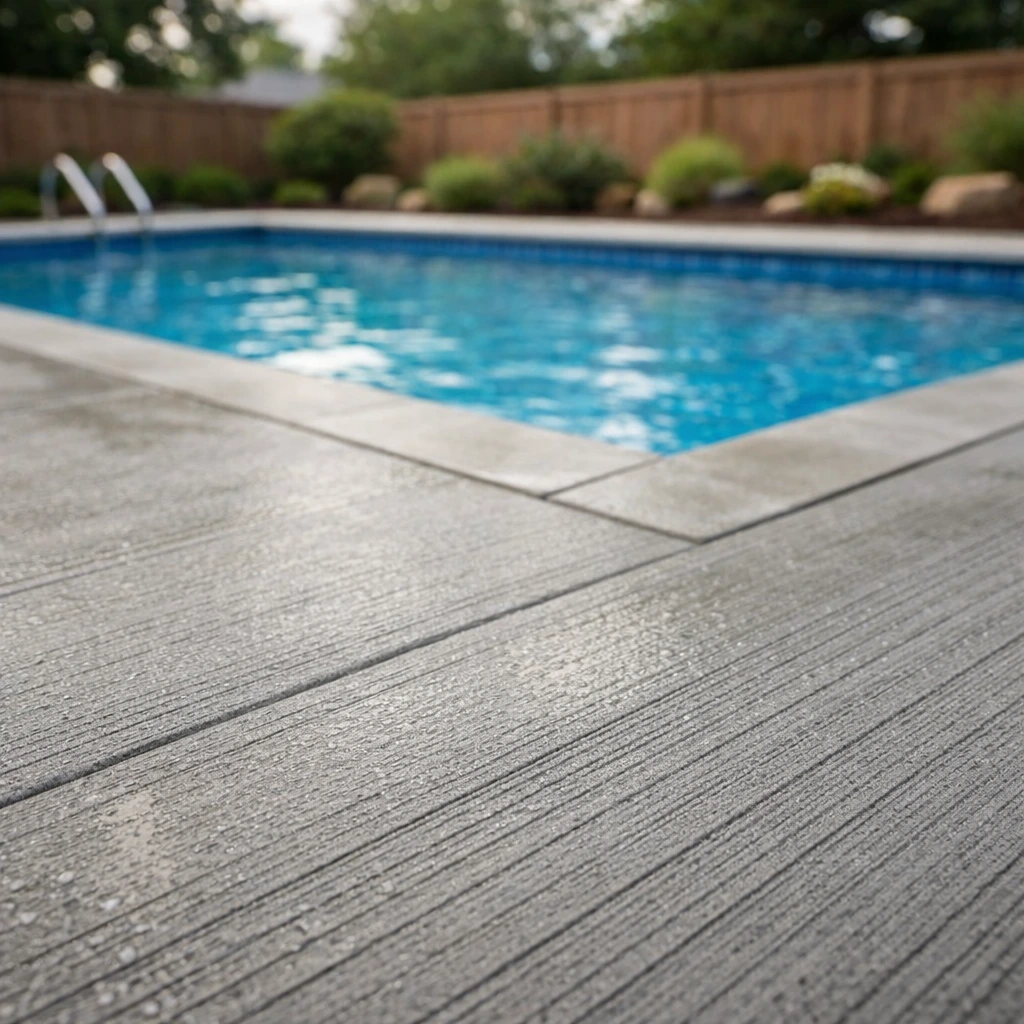
The broom finish is the most widely used concrete pool deck treatment in residential construction, and for good reason. When concrete is poured and begins to set, crews drag stiff-bristled brooms across the surface in a single consistent direction before the material hardens. This creates a series of fine parallel grooves that significantly improve traction underfoot, making it a critical safety feature in wet poolside environments.
Beyond its functional value, the broom finish has a clean, understated aesthetic that suits modern, transitional, and cottage-style outdoor spaces. It is also one of the most budget-friendly options available, typically costing less per square foot than any decorative concrete alternative. Homeowners can further customize broom-finished concrete by incorporating integral pigment during the pour or applying a color hardener to the surface before finishing, introducing warm tones or neutral shades that complement the home exterior without sacrificing simplicity.
For homeowners who want more visual interest without departing too far from the classic broom look, contractors can run the broom in alternating directions across scored sections of the deck to create a subtle diamond or herringbone texture pattern. This approach adds dimension without complexity.
3. Exposed Aggregate Concrete for Texture and Visual Depth
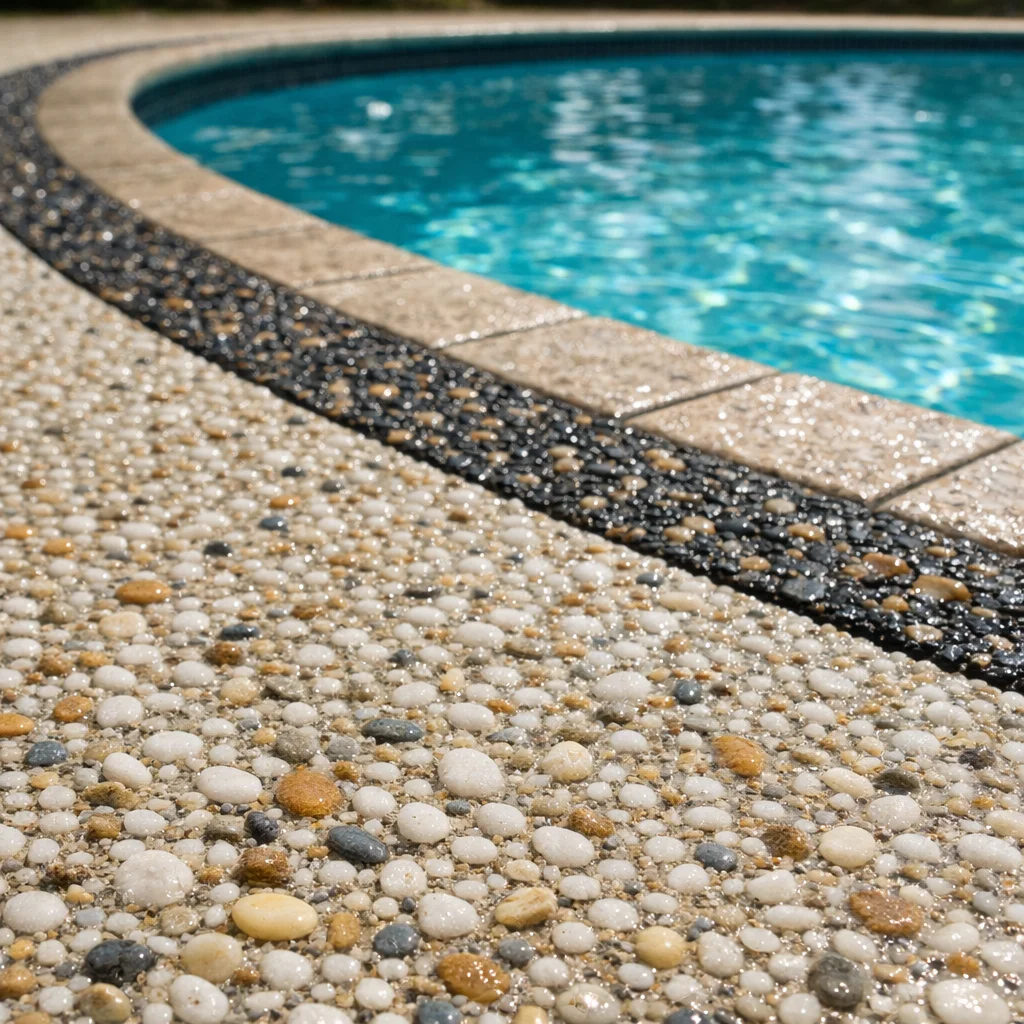
Exposed aggregate concrete is produced by seeding decorative stone, pebbles, shells, or recycled glass into the top layer of fresh concrete and then washing away the surface cement paste before it fully cures. What remains is a richly textured surface where the aggregate material sits proud of the concrete matrix, creating both visual depth and excellent slip resistance.
This technique is particularly valued in pool deck applications because the natural texture of river pebbles or crushed quartz provides traction in a way that is both functional and visually appealing. The surface feels pleasant underfoot for most people once smooth-edged aggregates are selected, making it a comfortable choice for bare feet around the pool. Rounded river stones and pea gravel are the most common aggregate choices for residential pool decks because of their smooth, comfortable texture compared to crushed stone alternatives.
The design flexibility of exposed aggregate is significant. By choosing white quartz aggregate over a grey concrete base, you create a bright, light-reflecting surface that stays cooler than darker alternatives. Mixing complementary stone colors allows for artistic patterns, borders, or medallion features to be incorporated directly into the deck surface.
4. Salt Finish Concrete for a Subtle Coastal Aesthetic
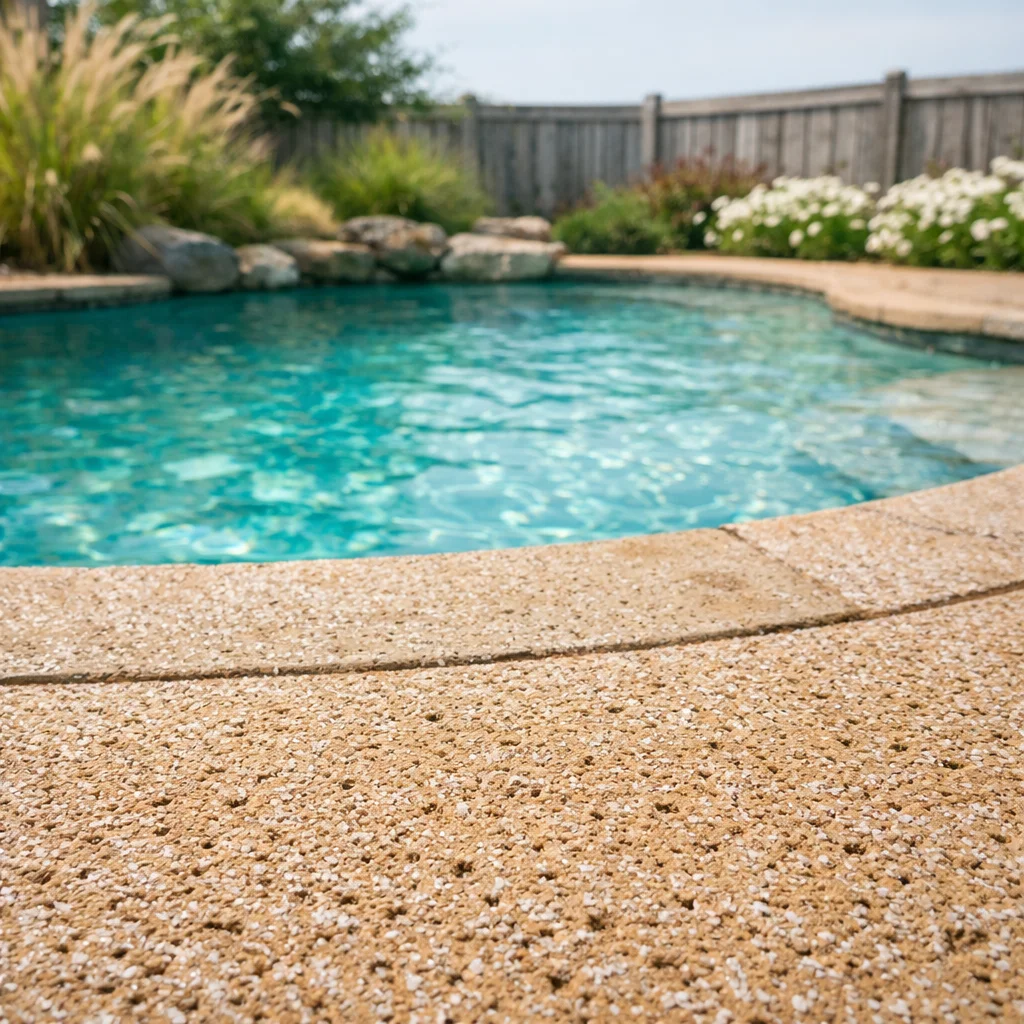
The salt finish is a distinctive concrete pool deck technique that produces a speckled, pitted surface texture reminiscent of rough-hewn stone or weathered coastal materials. During construction, coarse rock salt crystals are scattered evenly over freshly poured and smoothed concrete, then pressed into the surface with a roller. Once the concrete cures, the salt is washed away with a pressure washer, leaving behind a field of small, shallow depressions across the entire surface.
The result is a texture that is both visually interesting and functionally slip-resistant without feeling harsh underfoot. The salt finish has a natural, organic quality that pairs well with coastal, tropical, and casual outdoor designs. It photographs beautifully and has a timeless quality that does not date in the way some more elaborate decorative treatments can.
One important caveat worth noting is that the salt finish is best suited to warmer climates with relatively stable year-round temperatures. In regions with significant freeze-thaw cycles, the small surface indentations can trap water that expands when frozen, potentially leading to surface spalling over time. In temperate or subtropical environments, however, the salt finish is a long-lasting and low-maintenance option.
5. Acid-Stained Concrete for Rich, Translucent Color
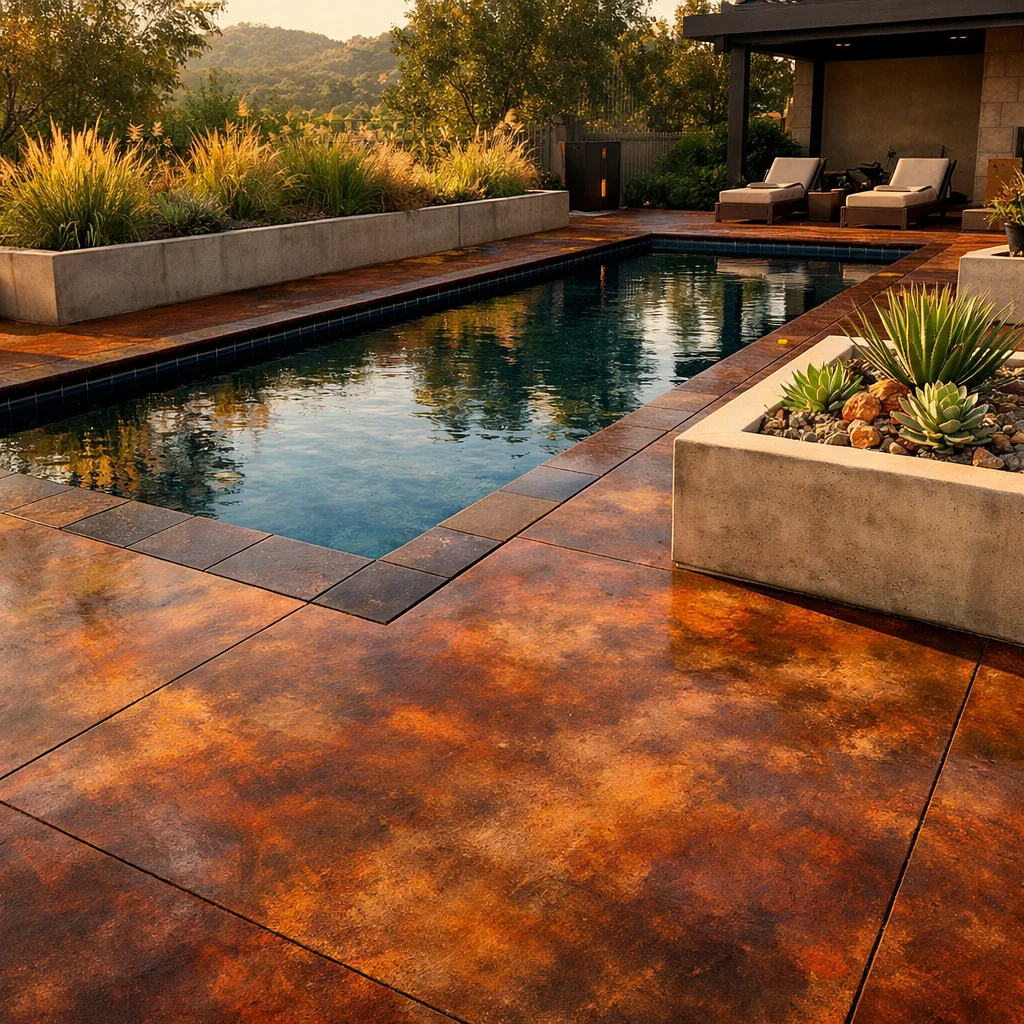
Acid staining is a chemical process that transforms plain grey concrete into a richly colored surface with the depth and translucency of natural stone. Unlike paint, which sits on top of the concrete and eventually peels or chips, acid stain penetrates the concrete surface and reacts chemically with the minerals present in the slab. The result is a permanent, mottled color that cannot flake, peel, or wash away under normal conditions.
The color palette produced by acid staining tends toward warm, earthy tones including terra cotta, coffee brown, sage green, and oceanic blue-green. The mottled, variegated nature of the finish means no two stained concrete slabs look exactly alike, giving each pool deck a genuinely custom appearance. When applied over a broom-finished or lightly textured base, acid-stained concrete combines the visual richness of staining with adequate surface traction for poolside safety.
Sealing Acid-Stained Pool Decks
Acid-stained concrete around pools requires a high-quality penetrating or film-forming sealer to protect the finished surface from chlorine, UV rays, and foot traffic. A matte or satin finish sealer is generally preferred over high-gloss options, which can make the surface slippery when wet. Resealing every two to three years maintains both the color vibrancy and the protective properties of the finish.
6. Concrete Overlay and Resurfacing for Existing Decks
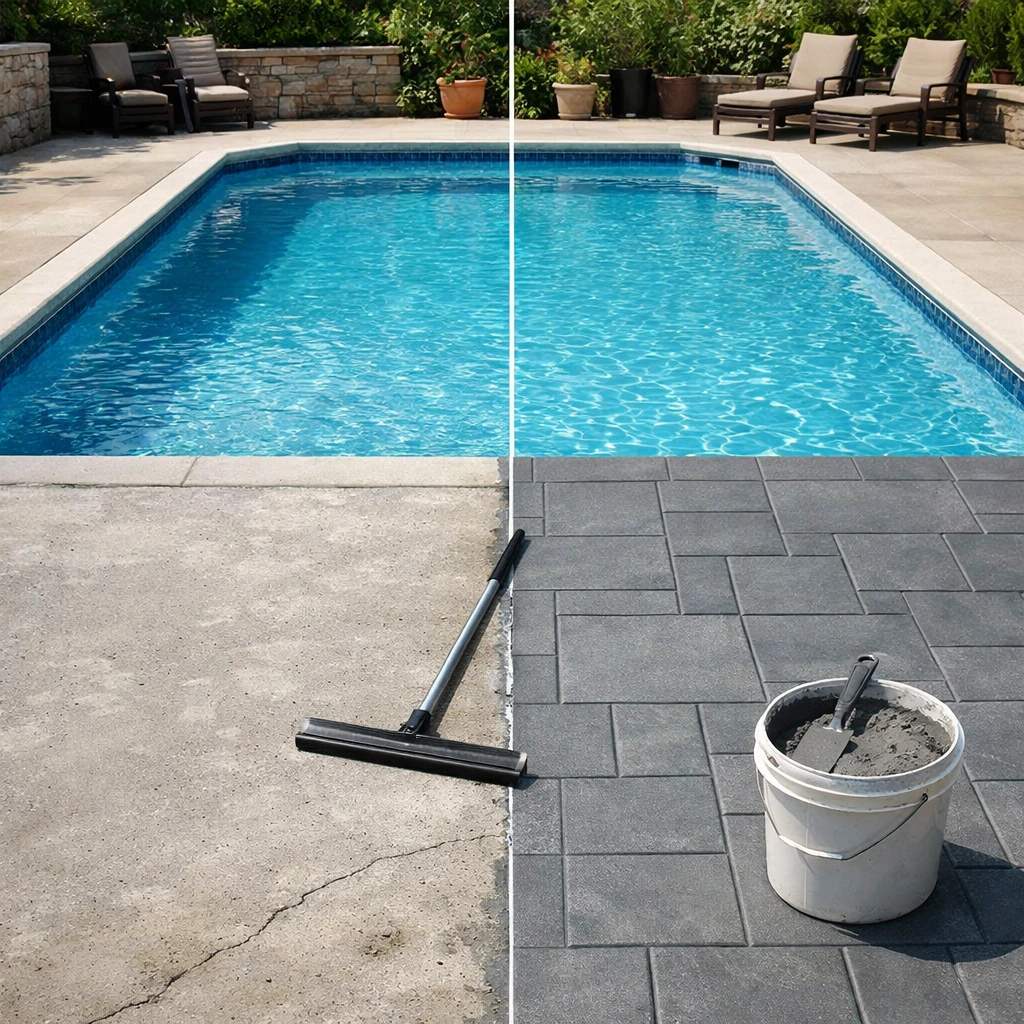
One of the most underutilized concrete pool deck ideas is the application of a decorative overlay to an existing concrete surface. Concrete overlays are thin polymer-modified cement coatings applied over a prepared existing slab, typically ranging from one-eighth to three-eighths of an inch in thickness. They can be stamped, textured, stenciled, or stained to produce virtually any finish effect available on new concrete construction.
This approach is transformative for homeowners dealing with an outdated, stained, or surface-cracked pool deck who do not want to undertake the cost and disruption of full demolition and replacement. Provided the existing slab is structurally sound with no significant settlement or deep structural cracking, an overlay can refresh the appearance entirely for a fraction of the cost of new concrete work. The bond between the overlay and the existing slab is critical to the longevity of the finish, making proper surface preparation including grinding or shot-blasting the existing concrete an essential step.
7. Colored Concrete With Integral Pigment
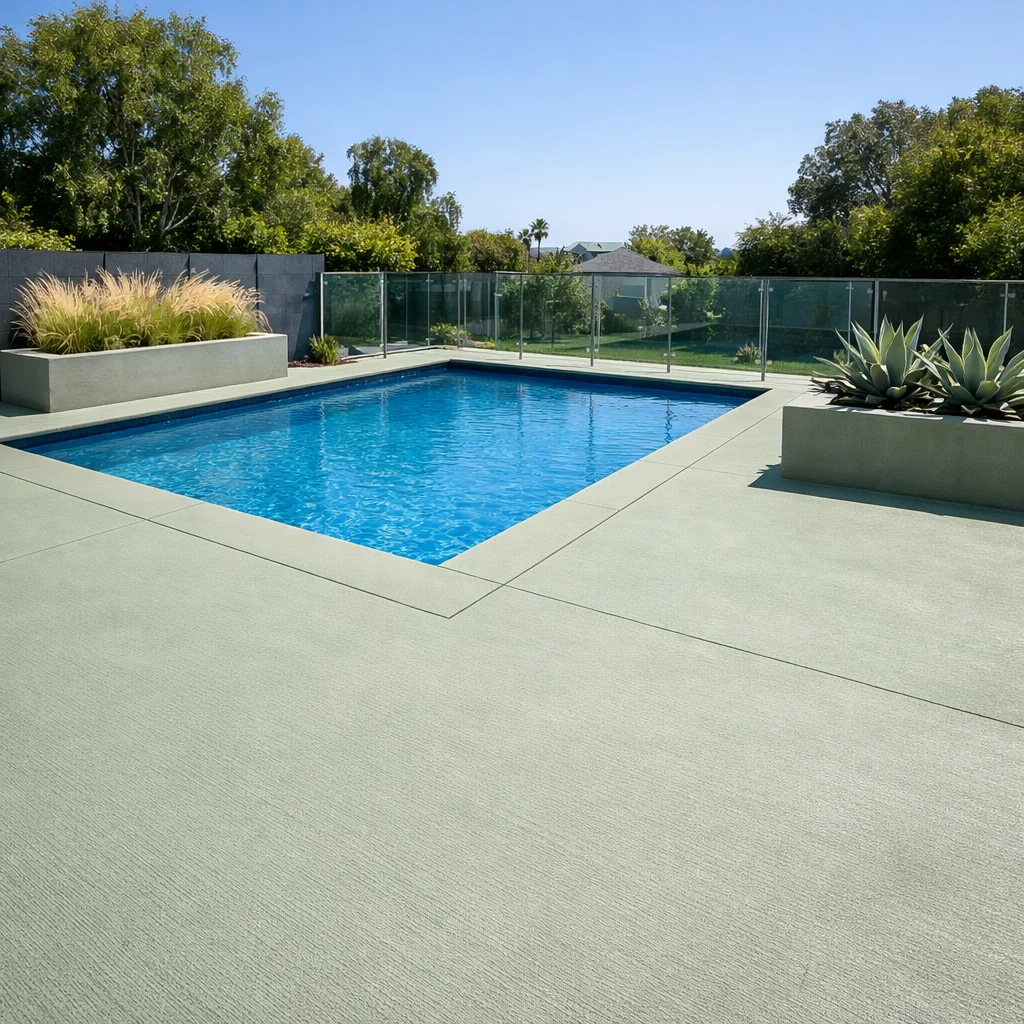
Adding color directly to fresh concrete during the mixing process, known as integral coloring, is one of the most durable and consistent methods for introducing color to a pool deck. Unlike surface-applied stains or paints, integral color permeates the entire depth of the concrete slab. If the surface chips or is abraded over time, the same color is present throughout the material, maintaining visual consistency without revealing grey concrete below.
The range of integral concrete colors available today extends well beyond the traditional buff and tan hues of early decorative concrete. Deep charcoal, warm terracotta, sage green, slate blue, and custom earth tones are all achievable, allowing pool decks to complement specific landscape palettes or architectural color schemes with precision. Integral color works equally well with broom, trowel, salt, or stamped finishes, making it a versatile enhancement applicable to virtually any concrete pool deck idea described in this article.
Lighter integral colors serve a practical function beyond aesthetics in hot climates. A white, pale grey, or cream concrete pool deck absorbs significantly less solar radiation than a dark-colored surface, resulting in a deck that remains comfortable to walk on even during peak afternoon heat.
8. Stenciled Concrete for Custom Patterns and Borders
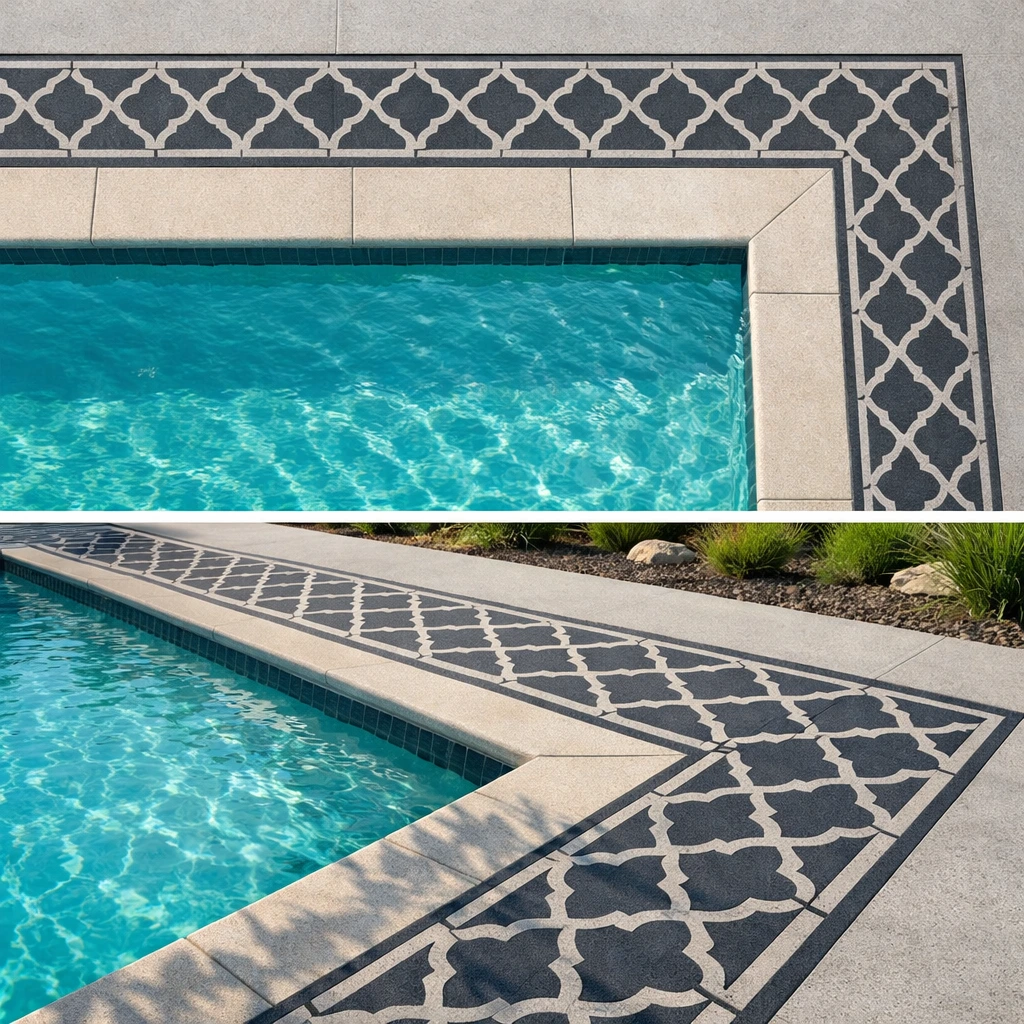
Stenciling is a decorative concrete technique that uses adhesive paper or plastic stencils applied to freshly poured concrete to create precise, repeatable patterns. Unlike stamping, which presses texture into wet concrete, stenciling involves applying a release agent or color hardener over the stencil and then removing it to reveal a crisp pattern in the surface. The effect ranges from simple geometric tile grids to complex Moroccan-inspired latticework or herringbone brick patterns.
Stenciled borders are particularly effective in pool deck design because they allow contractors to define distinct zones within the deck. A wide decorative border in a contrasting pattern around the pool perimeter creates a visual frame that draws the eye toward the water. The main field of the deck can remain in a simpler broom or brushed finish, while the stenciled border provides artistic detail without overwhelming the overall design. This combination of a plain field with a decorative border is a cost-effective approach to achieving a high-end appearance.
9. Modern Smooth Trowel Finish Concrete
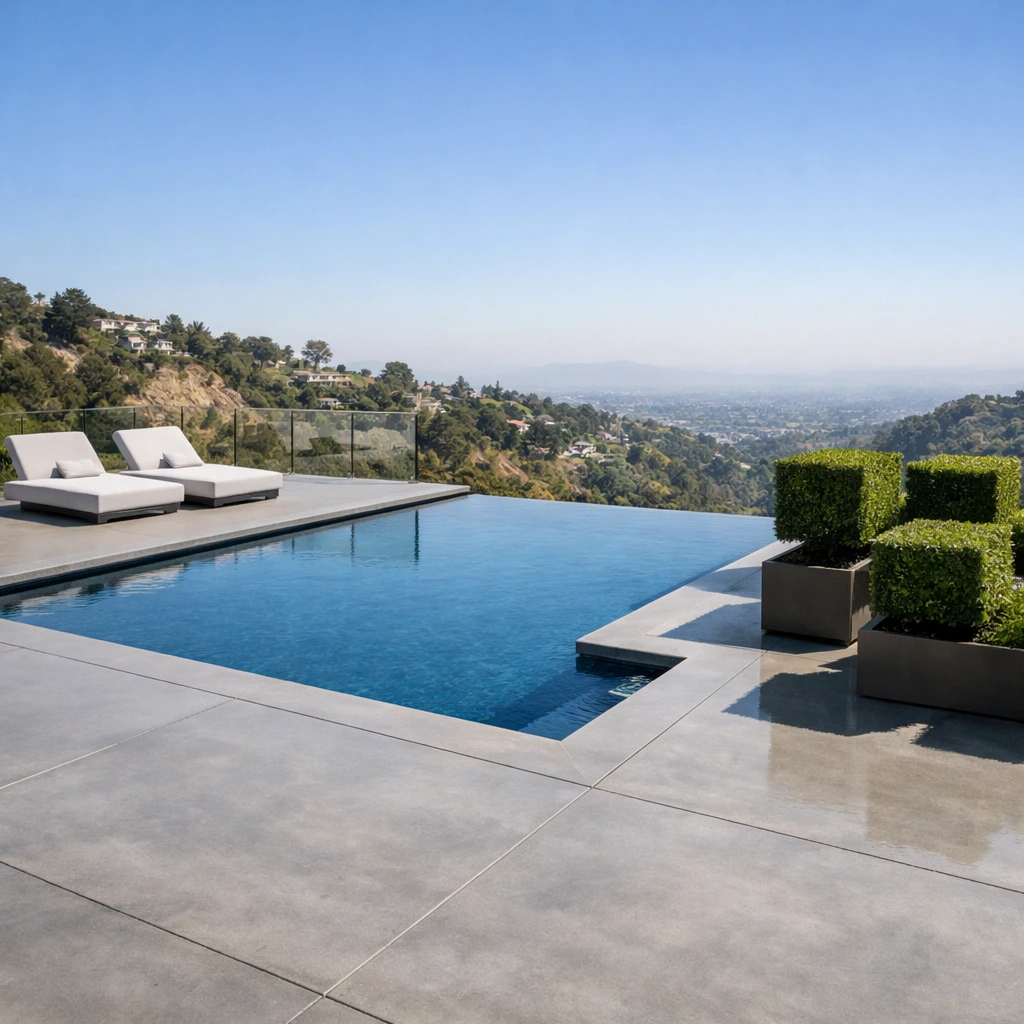
For contemporary and minimalist pool designs, a smooth trowel-finished concrete deck offers a refined, architectural quality that few other surfaces can match. A power trowel-finished concrete slab has a flat, hard surface that reads as clean and deliberate, complementing the geometry of rectangular lap pools, infinity-edge pools, and modern architectural homes where the outdoor space is treated as an extension of the interior living area.
Because a perfectly smooth concrete surface offers minimal inherent slip resistance, smooth trowel-finished pool decks typically incorporate an anti-slip additive into the sealer or topcoat applied over the surface. These additives include fine aluminum oxide particles or silica sand mixed into the sealer product, creating a micro-texture that provides traction without visually disrupting the smooth aesthetic. When sealed with a high-quality penetrating sealer, a smooth trowel-finished concrete deck has an almost stone-like quality that ages gracefully and complements high-end outdoor furniture and landscaping.
10. Travertine-Look Stamped Concrete
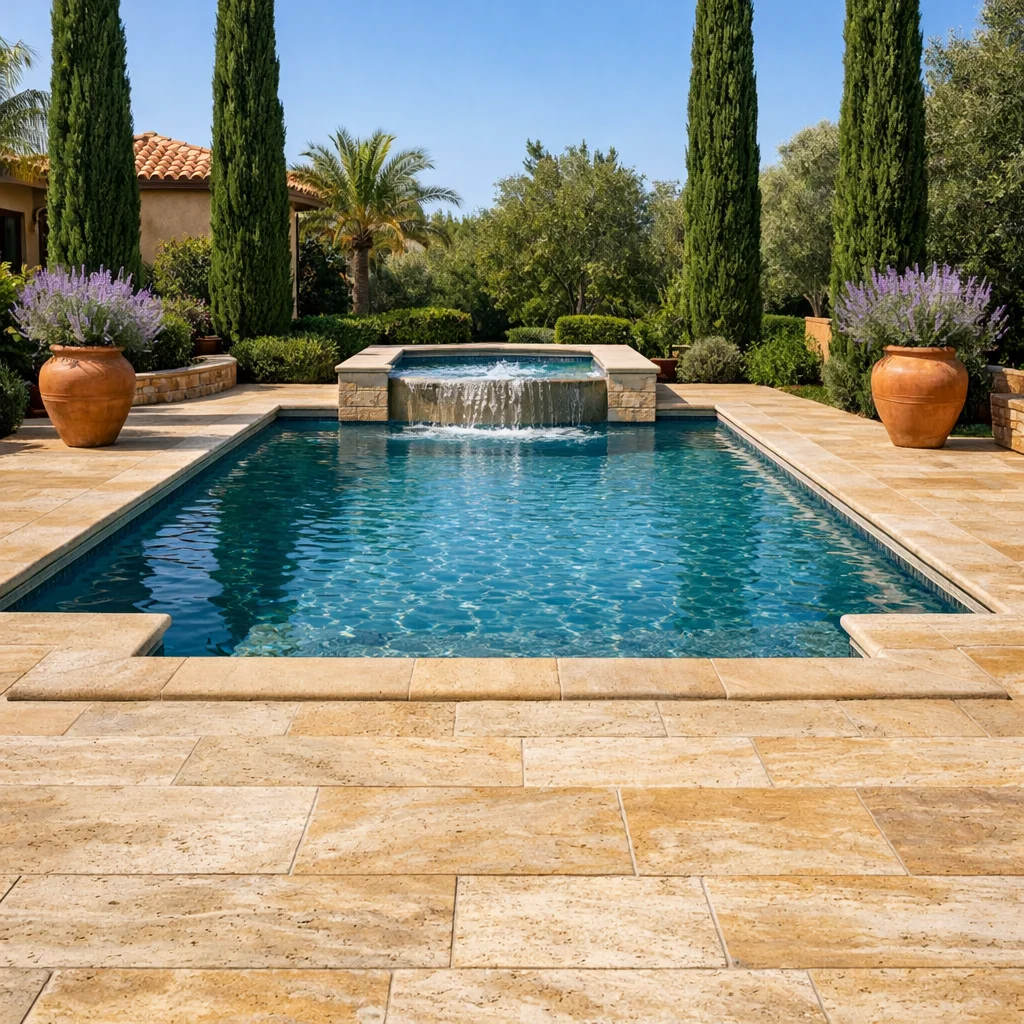
Travertine is one of the most desirable natural stone finishes for pool decks because of its warm ivory and beige tones, natural texture, and classic Mediterranean aesthetic. However, genuine travertine pavers carry a significant cost in both material and installation, and their natural porosity requires regular sealing and maintenance to prevent water infiltration and staining. Travertine-look stamped concrete delivers the same aesthetic at considerably lower cost with superior structural integrity. For more insights visit Homeliaa.
Modern stamping molds that replicate travertine are exceptionally detailed, capturing the characteristic linear texture, natural holes, and color variation of the real material. When combined with a multi-tone color wash that introduces warm ivory, gold, and taupe tones, the stamped concrete version is highly convincing. The practical advantages are meaningful: the concrete slab is a monolithic structure without grout lines to crack or joints to weed, it can be sealed against pool chemistry, and it does not require the periodic re-grouting that natural travertine installations demand.
11. Wood Plank Stamped Concrete
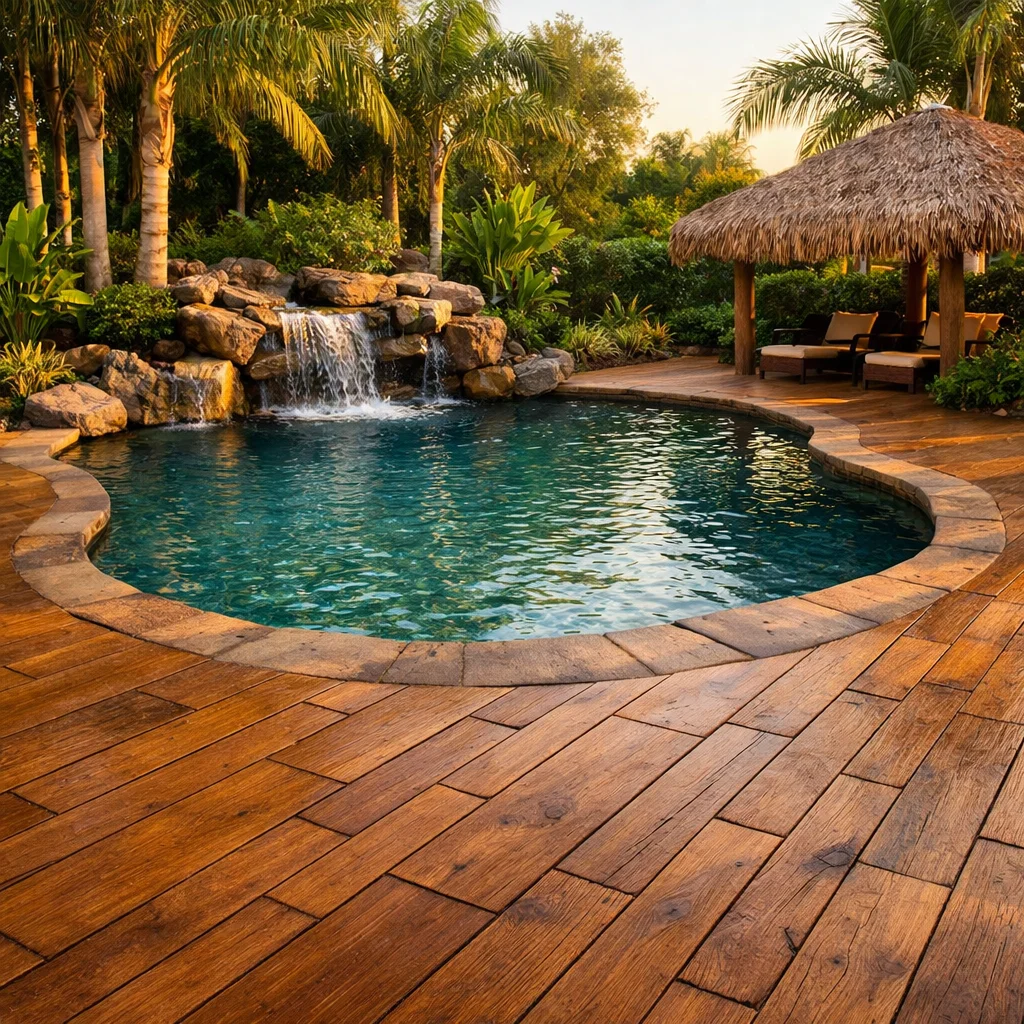
The appeal of a wood deck around a swimming pool is undeniable. The warmth of timber, the linear grain patterns, and the natural texture all create an inviting poolside atmosphere. The practical reality of wood adjacent to a pool, however, involves ongoing maintenance challenges including warping, splintering, fading, and the need for regular sealing or staining to resist water damage and UV degradation. Wood plank stamped concrete delivers the visual appeal of timber with none of those drawbacks.
Specialized wood plank stamping molds replicate not just the plank dimensions and linear grain of real timber but also the natural knots, checks, and grain variation that give wood its character. When stained in warm cedar, redwood, or driftwood grey tones, the resulting concrete surface is a convincing substitute that requires nothing more than occasional sweeping and periodic resealing to maintain its appearance for decades.
This finish pairs beautifully with tropical landscaping, thatched shade structures, and natural stone water features. It is particularly popular in coastal and resort-style pool designs where the combination of timber-look decking and lush greenery evokes a luxury vacation aesthetic in a private residential setting.
12. Concrete Pool Deck With Decorative Coping
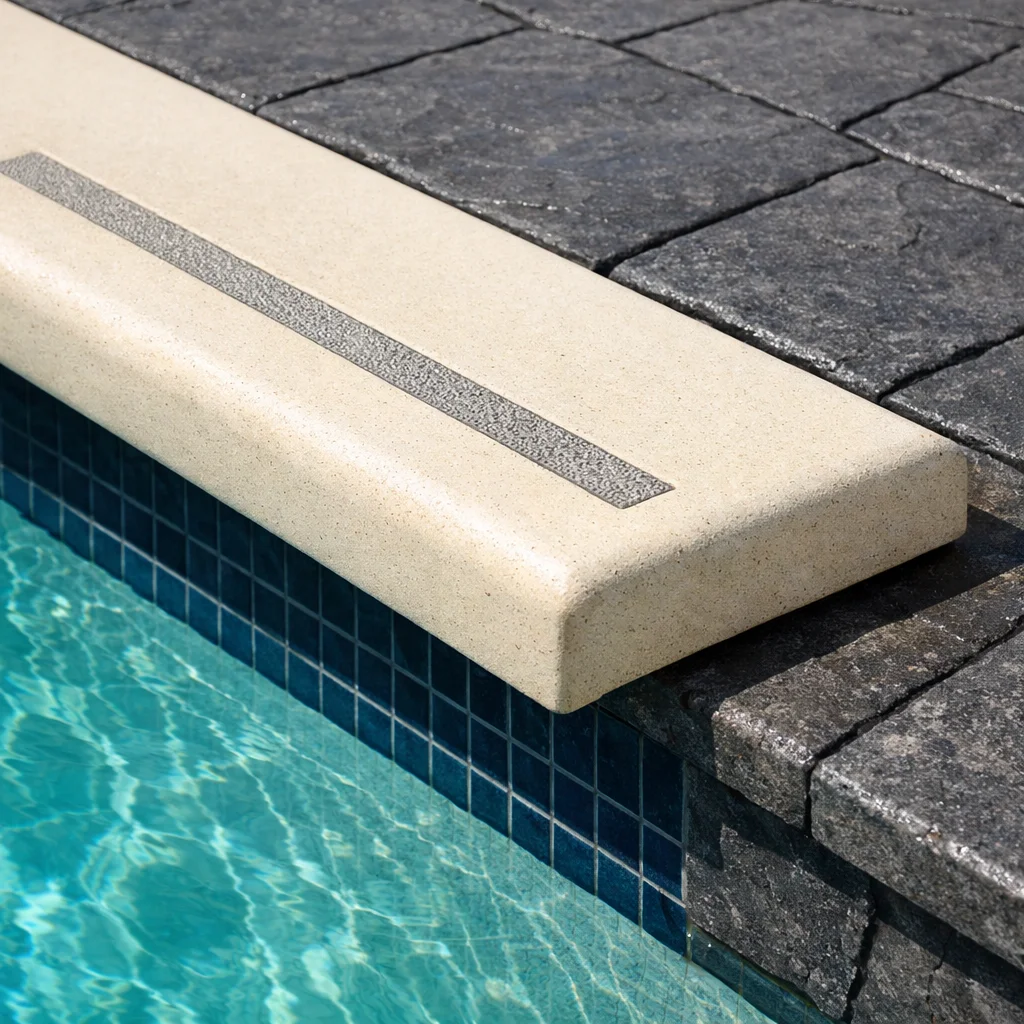
Pool coping, the material that caps the edge of the pool shell and creates the transition between the pool water and the surrounding deck, is one of the most important aesthetic and functional details in any pool design. Concrete coping can be cast as an integral part of the deck or formed separately and applied as a cap over the pool bond beam. The profile and finish of the coping edge contributes significantly to the overall character of the pool design.
Popular coping profiles include the bullnose, which features a smooth rounded edge that is comfortable for swimmers resting on the pool edge; the square or cantilevered edge, which creates a sharp, modern visual line; and the tumbled edge, which has an irregular, handcrafted appearance suited to natural stone aesthetics. Concrete coping can be cast with an integral color that matches or contrasts the main deck surface, or it can be finished in a different texture such as a smooth trowel over a broom-finished deck to create a deliberate contrast at the pool edge.
Integrating Coping With the Deck Design
The most visually sophisticated pool deck designs treat the coping as an intentional design element rather than an afterthought. A wide cantilevered concrete coping in a contrasting color over a stamped deck field creates a clean, architectural border that frames the water beautifully. Embedding non-slip strips into the coping top surface ensures safety at the pool edge without compromising the visual refinement of the design.
13. Cool Deck Coating Over Existing Concrete
One of the most practical concrete pool deck ideas, particularly for homeowners in hot climates, is the application of a cool deck coating over an existing concrete surface. Cool deck products, originally trademarked but now available under various brand names, are spray-applied acrylic or polymer cement coatings that include air cells within their matrix. These air cells reduce heat transfer from the sun into the coating surface, keeping the deck significantly cooler underfoot on hot days compared to plain or sealed concrete.
Beyond thermal performance, cool deck coatings add a consistent, attractive texture to any existing concrete surface and are available in a range of colors from bright white to warm tan and grey. They can be applied directly over sound existing concrete surfaces, making them one of the most accessible pool deck upgrades available. The textured surface also improves slip resistance compared to smooth or sealed plain concrete. Recoating is typically required every five to ten years depending on exposure and foot traffic levels.
Practical Considerations Before Choosing Your Concrete Pool Deck Finish
Regardless of which concrete pool deck idea appeals most to you aesthetically, several practical factors should influence your final decision. Climate is paramount. In hot sun-exposed environments, lighter colors and heat-dissipating finishes are essential for comfort. In freeze-thaw climates, smooth-surfaced finishes with minimal texture pockets are preferable to prevent water infiltration and surface damage during winter months.
Slip resistance is a non-negotiable requirement for any pool deck surface. Every finish discussed in this article can be made slip-resistant through appropriate texture, additive, or sealer selection, but this must be an explicit requirement in your conversations with your contractor rather than an assumed outcome. Finally, budget and timeline considerations should be addressed clearly before committing to any decorative finish, as costs and cure times vary significantly across the different techniques.
Conclusion
Concrete remains the most adaptable and widely chosen material for pool decks precisely because it refuses to be limited to a single look or application. The thirteen-plus ideas presented here demonstrate the remarkable range available within a single material category, from the humble practicality of a broom-finished slab to the architectural refinement of polished concrete surrounding a contemporary infinity pool.
The right concrete pool deck idea for your home is the one that balances your aesthetic vision with your climate, your budget, and your willingness to maintain the surface over time. Every finish described in this article is a proven performer in real residential applications when installed correctly and maintained appropriately. Take your time, consult with a qualified concrete contractor who specializes in decorative work, and request physical samples or references before committing to any finish. The investment you make in your pool deck will shape your enjoyment of your outdoor space for decades to come.
Frequently Asked Questions
1.What is the best concrete finish for a pool deck?
The best finish depends on your priorities. For safety on a tight budget, a broom finish is the most practical and widely used option. For aesthetics, stamped concrete with a flagstone or travertine pattern offers the most visual impact. For hot climates, a cool deck coating or light-colored exposed aggregate finish provides the best thermal performance. There is no single universally best finish, only the best match for your specific needs and conditions.
2.How much does a concrete pool deck cost?
Concrete pool deck costs vary significantly by finish type and region. A basic broom-finished concrete deck typically ranges from six to ten dollars per square foot installed. Exposed aggregate and salt finishes fall in the eight to twelve dollar range. Stamped and decorative concrete finishes generally start at twelve dollars per square foot and can reach twenty-five dollars or more for complex multi-color designs. Overlays and resurfacing projects are usually less expensive than new pours for equivalent decorative finishes.
3.How long does a concrete pool deck last?
A properly installed and maintained concrete pool deck can last thirty years or more. The longevity depends on the quality of the initial installation including adequate base preparation, reinforcement, and correct concrete mix design, as well as ongoing maintenance such as periodic sealing, prompt crack repair, and appropriate cleaning. Decorative finishes like overlays and stamped surfaces may require resurfacing or resealing sooner than plain concrete, typically every ten to fifteen years depending on exposure.
4.Is concrete around a pool slippery?
Plain smooth concrete can be slippery when wet, which is why all concrete pool deck applications should incorporate texture or an anti-slip treatment. Broom, exposed aggregate, salt, and stamped finishes all provide inherent slip resistance through surface texture. Smooth-finish concrete decks must include an anti-slip additive in the sealer or topcoat. Always discuss slip resistance requirements explicitly with your contractor before selecting any pool deck finish.
5.Can you resurface an old concrete pool deck without replacing it?
Yes, concrete overlays and resurfacing systems allow most structurally sound existing slabs to be refinished at a fraction of the cost of replacement. The existing surface must be clean, free of major structural cracks or settlement, and properly prepared through grinding or shot-blasting to ensure a strong bond. A qualified decorative concrete contractor can assess whether your existing slab is a suitable candidate for resurfacing and recommend the most appropriate overlay system for your goals.