15+ River Table Ideas for Home
Introduction
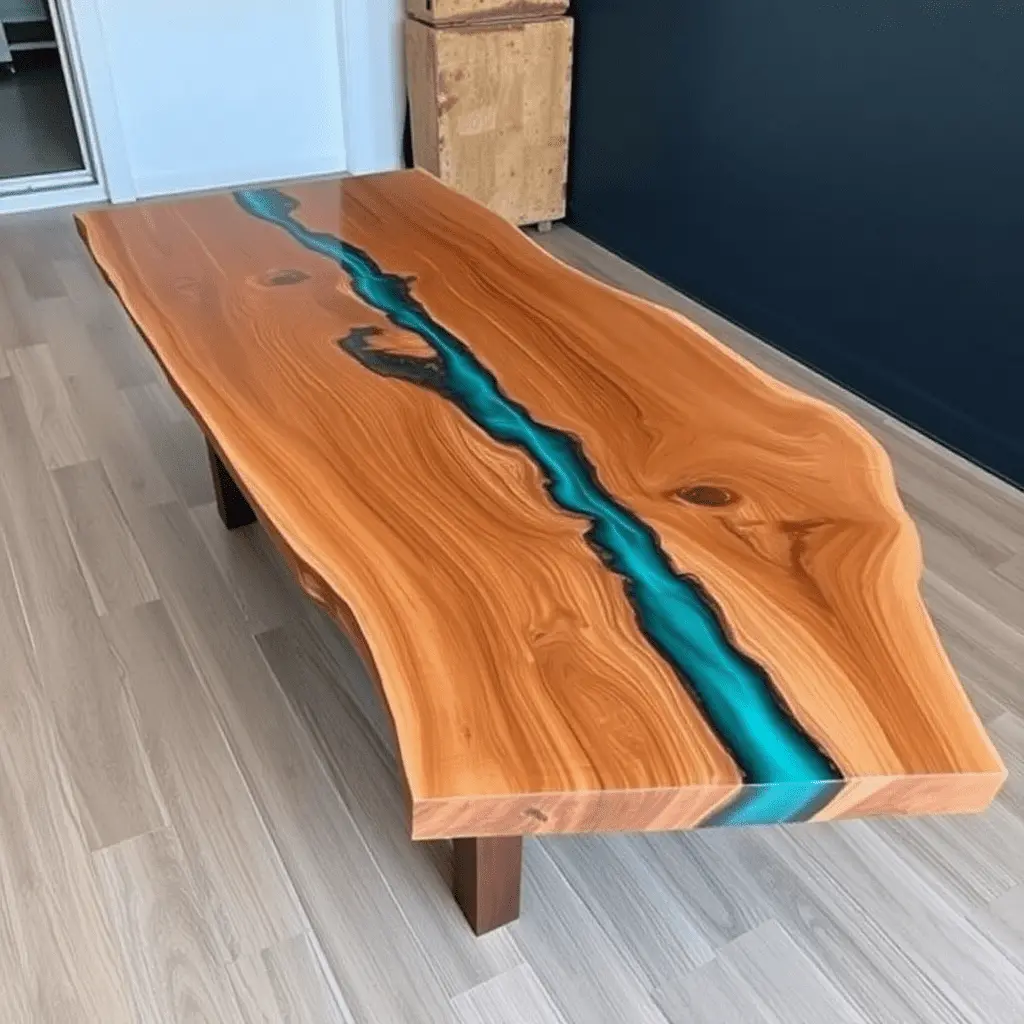
River table ideas ,there is a certain quiet beauty in a piece of furniture that looks like it was shaped by nature itself. River tables have captured the imagination of homeowners, interior designers, and woodworking enthusiasts around the world precisely because they carry that feeling. At their core, these tables are made from two live-edge wood slabs with a flowing channel of epoxy resin running between them, mimicking the look of a river cutting through a landscape. The result is a piece that is simultaneously raw and refined, rustic and modern.
Over the past decade, river tables have moved from niche woodworking projects into the mainstream of interior design. You will find them anchoring living rooms as bold coffee tables, commanding dining rooms as statement centerpieces, serving busy home offices as creative desks, and even bringing character to outdoor patios. The range of styles, wood species, resin colors, and leg designs means that no two river tables are ever identical, and that uniqueness is a large part of their appeal.
Whether you are planning to commission a custom piece, purchase one ready-made, or take on a rewarding DIY project, this guide covers 15 or more river table ideas for the home, spanning every room, style, and budget. Read on to discover which concept speaks to your space.
What Exactly Is a River Table
A river table is a piece of furniture, typically a tabletop, made by placing two live-edge wood slabs side by side with a gap between them. That gap is then filled with poured epoxy resin, which hardens into a glass-like surface that resembles a flowing river when viewed from above. The natural, uncut edges of the wood act as riverbanks, while the resin represents the water moving between them.
The concept was pioneered by furniture makers who wanted to bring natural landscapes into functional objects. Washington-based designer Greg Klassen is widely credited as one of the early champions of this style, blending timber with glass inserts to evoke the appearance of rivers and lakes. Today, makers worldwide use colored epoxy resin in blue, turquoise, green, gold, black, and even glow-in-the-dark formulas to create pieces that feel both organic and contemporary.
Choosing the Right Wood for Your River Table
The wood you choose will define the character and durability of your river table. Different species carry distinct grain patterns, tones, and hardness levels, all of which interact differently with epoxy resin.
Black Walnut
Black walnut is one of the most popular choices for river tables. Its rich, chocolatey brown tones create a warm contrast against blue or turquoise resin, and its tight grain means it bonds exceptionally well with epoxy. Walnut river tables carry a slightly masculine, sophisticated look that fits well in both modern and traditional interiors.
Maple
Maple offers a lighter, creamy tone that makes resin colors pop with greater vibrancy. Birdseye maple, in particular, features natural swirling patterns that add an extra layer of visual interest. A maple slab paired with a bold emerald or cobalt blue resin river makes for a striking, gallery-worthy piece.
Oak, Cherry, and Exotic Hardwoods
White oak brings a pale, open grain that works beautifully with translucent or lightly tinted resin. Cherry wood deepens to a warm reddish-brown over time, pairing naturally with turquoise or amber resin. For something truly exotic, mesquite burl, acacia, and olive wood are increasingly popular choices, each offering dramatic natural figuring that makes every table a one-of-a-kind work of art.
15+ River Table Ideas for Every Room in Your Home
Below are 15 or more distinct river table ideas organized by room and style. Each concept comes with practical details to help you envision how it would work in your own space.
1. The Classic Blue River Dining Table
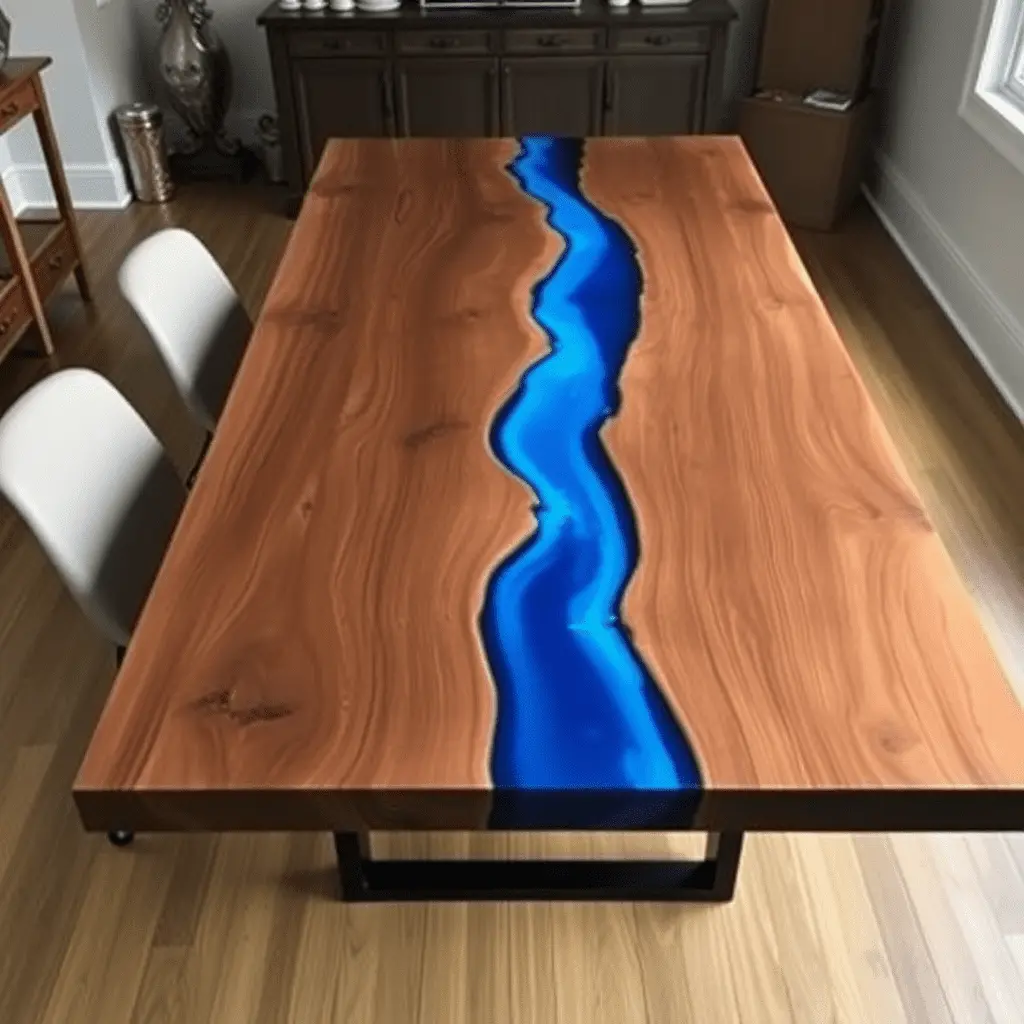
The most iconic river table idea is a large dining table with a deep blue epoxy river running down the center between two walnut slabs. The blue resin mimics the visual depth of open water and creates an immediate focal point in any dining room. Pair this with steel hairpin legs or a black powder-coated steel frame for a contemporary look, or with turned wooden legs for something more traditional. This design works in spaces of nearly any style, from industrial lofts to farmhouse kitchens.
2. Ocean Wave Coffee Table for the Living Room
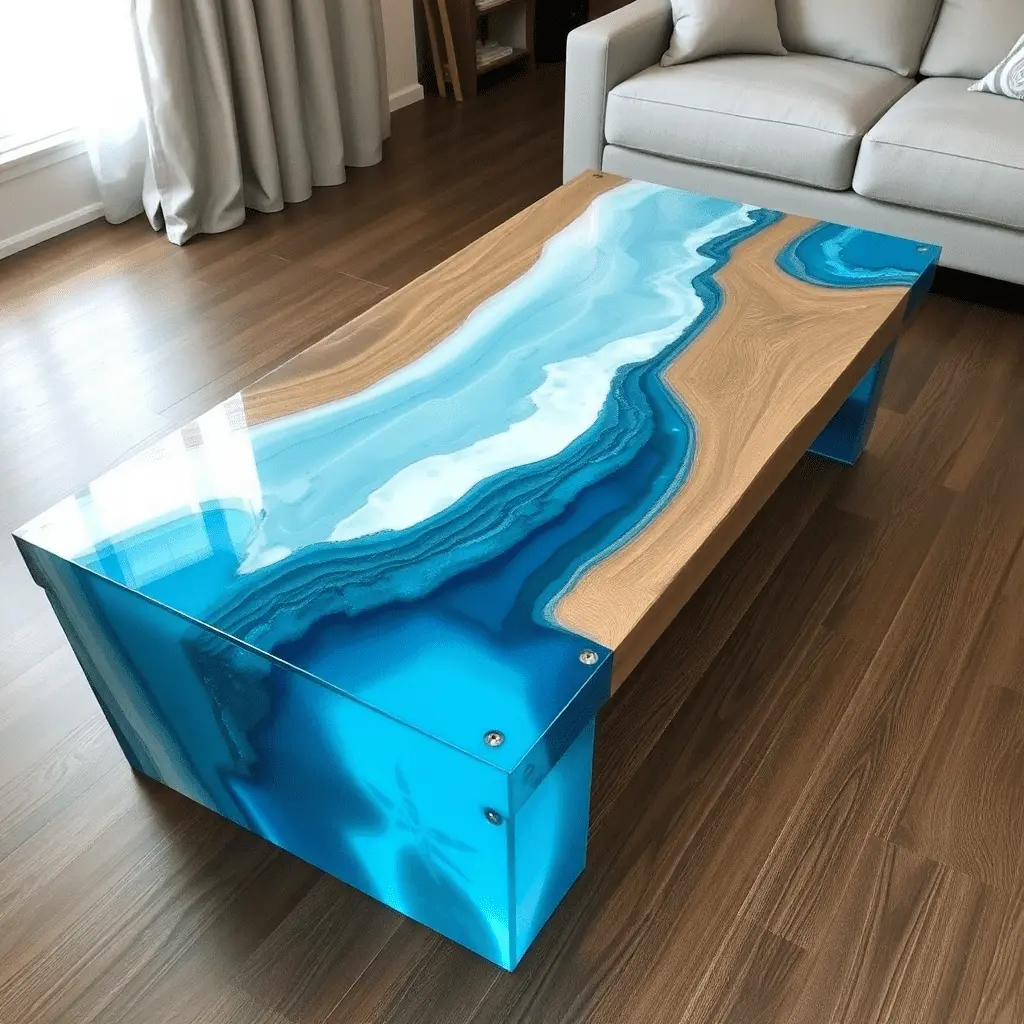
A river coffee table with layers of translucent blue and white resin creates a stunning ocean wave effect. Using oak or maple as the base wood, the resin is poured in multiple layers with varying opacities to simulate the movement of water near a shoreline. This table works exceptionally well in coastal-inspired interiors, but it brings a calming, nature-influenced energy to any living room.
3. Turquoise Resin River Desk for the Home Office
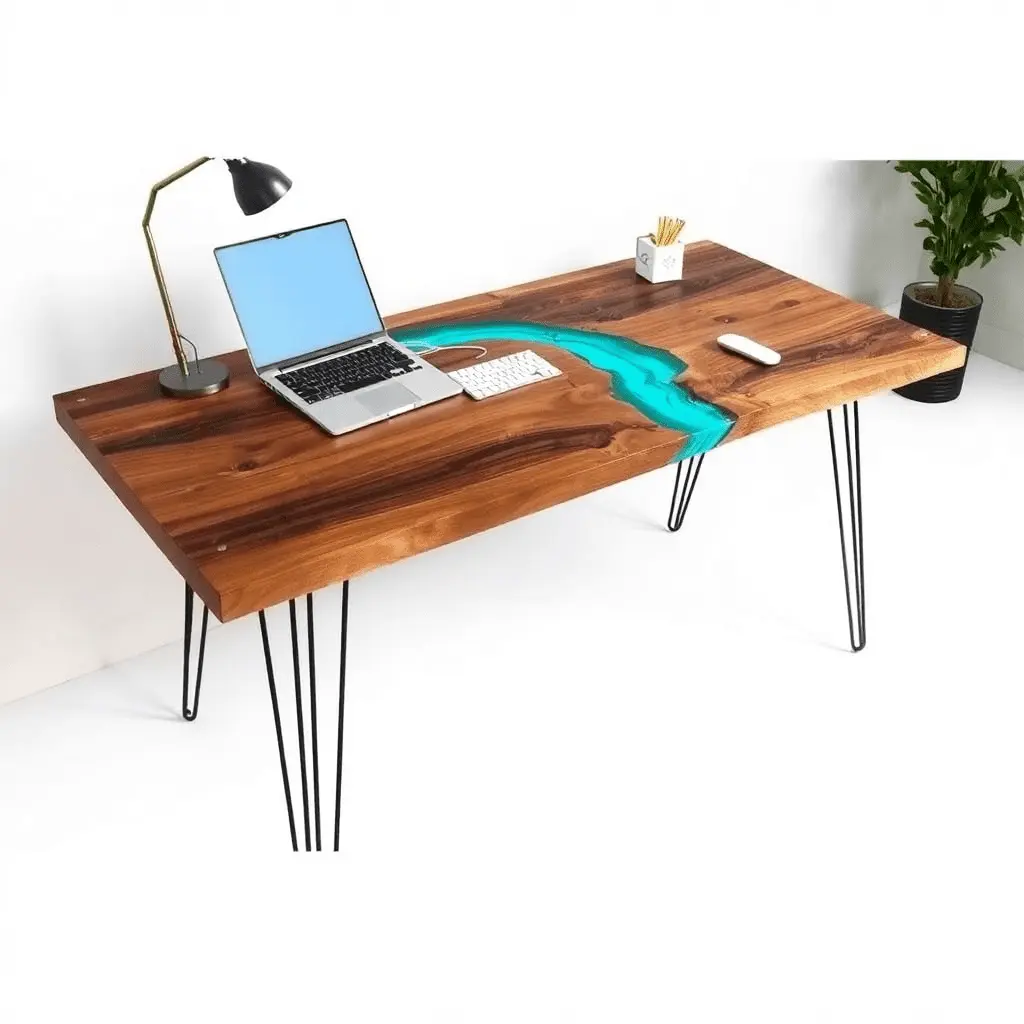
A river desk with a walnut slab and a luminous turquoise resin channel transforms an ordinary workspace into an inspiring creative environment. The resin channel can run down one side of the desk for an off-center river effect, which leaves most of the wood grain visible and keeps the workspace feeling functional rather than decorative. Hairpin legs in brass or matte black finish the look cleanly.
4. Gold Metallic Resin River Console Table
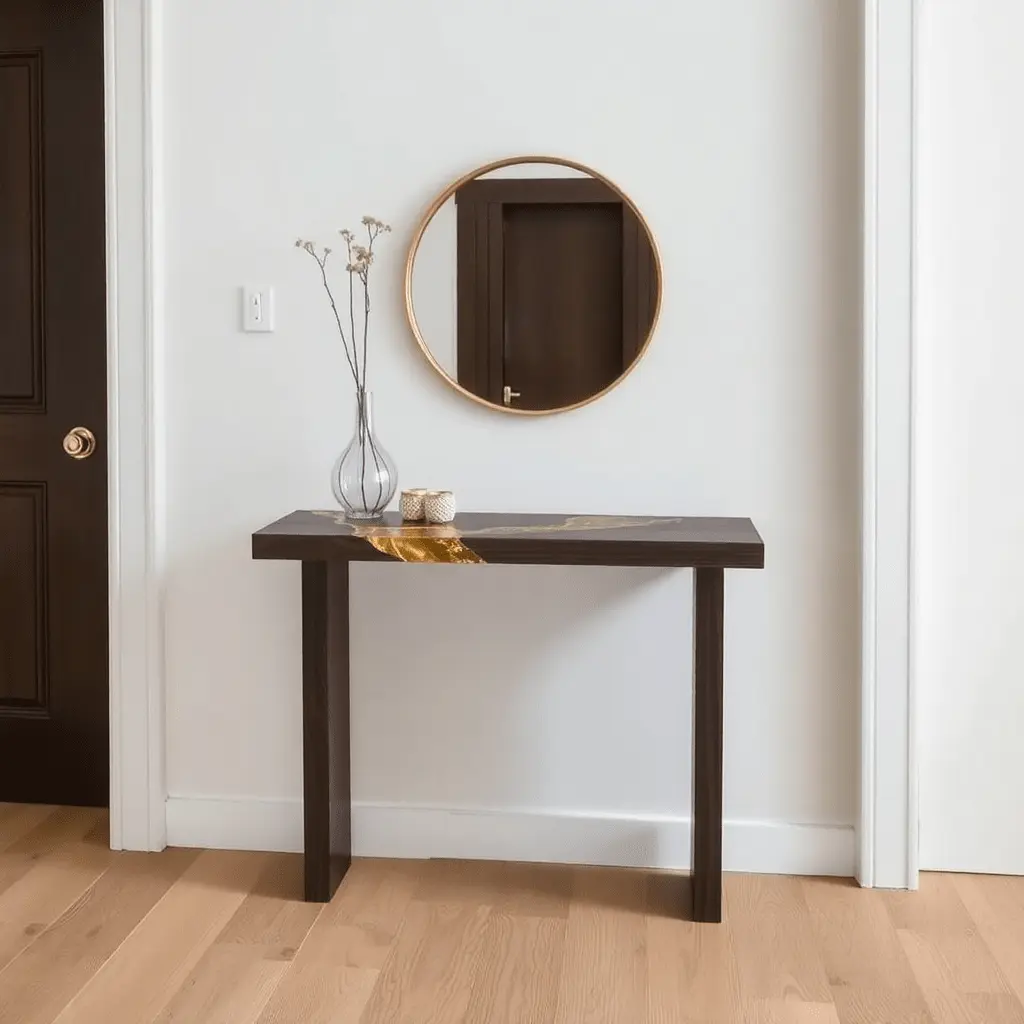
For an entryway or hallway, a narrow console table with a gold metallic epoxy river is both glamorous and original. Dark walnut or black-stained oak against warm gold resin reads as luxurious without being overdone. Place it behind a sofa, against an entryway wall, or beneath a mirror, and it immediately elevates the perceived quality of the entire room.
5. Emerald, Green River Table for a Bold Statement
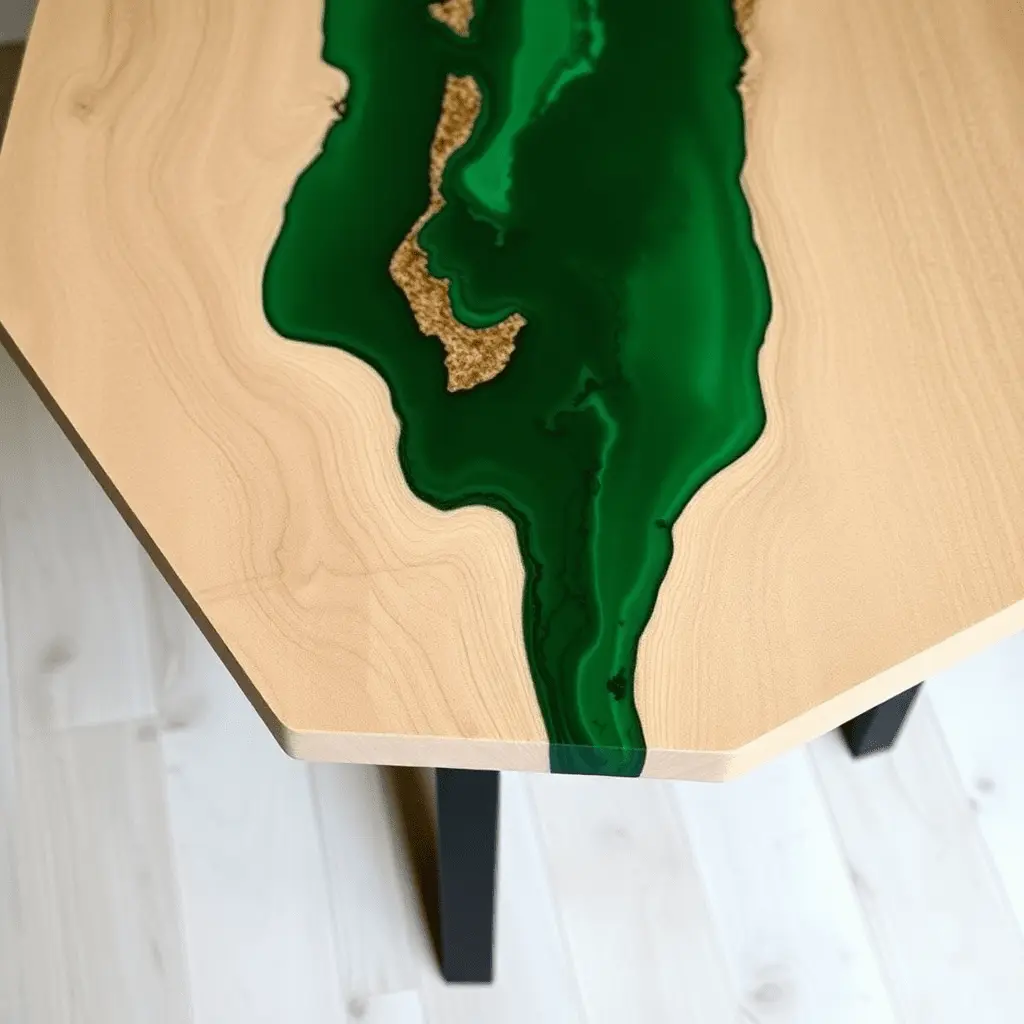
An emerald, green resin river paired with light maple is one of the most visually arresting color combinations available in river table design. The jewel-toned green reads as rich and sophisticated, making this an ideal choice for a dining room or lounge where you want the table to function as a true centerpiece. The light wood background ensures the green remains the star of the show.
6. Glass Insert River Table in the Classic Style
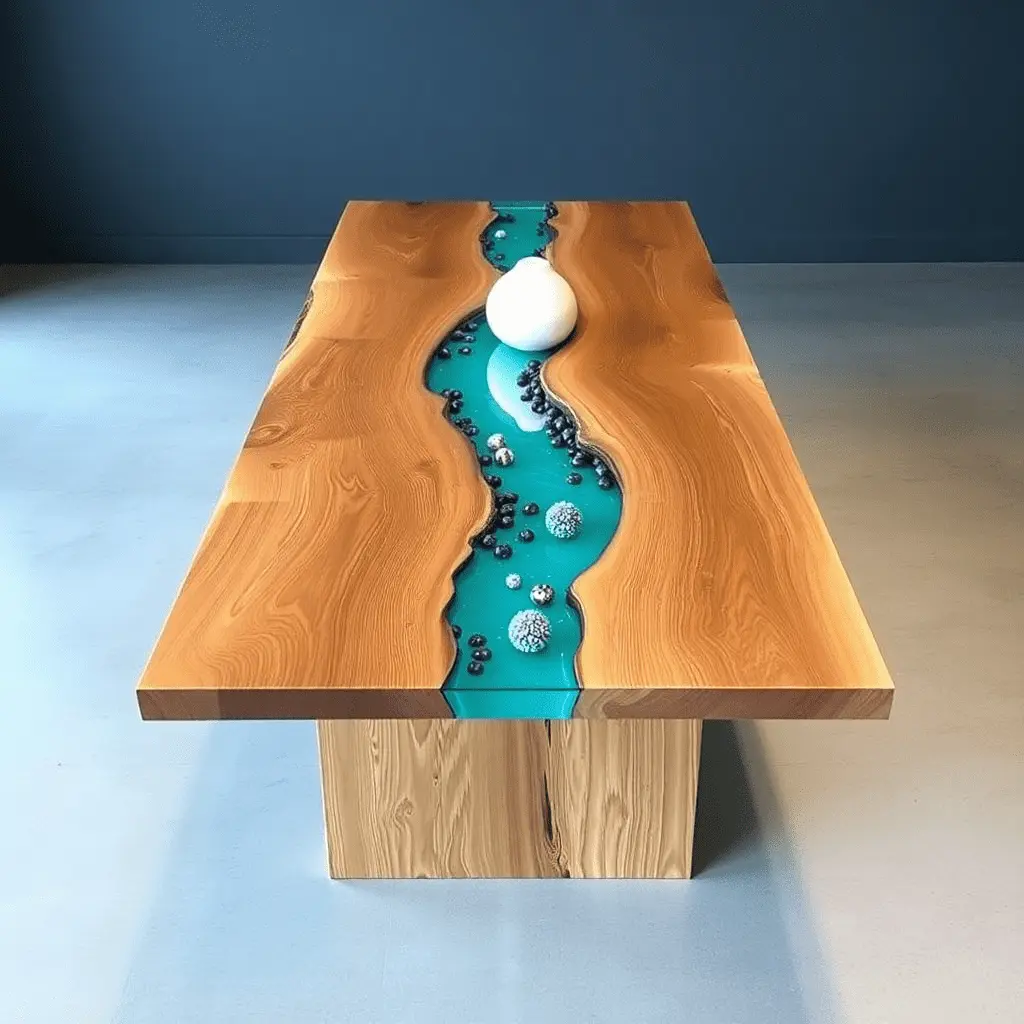
Inspired by Greg Klassen’s original designs, a glass insert river table uses tempered glass instead of epoxy resin to fill the gap between wood slabs. This creates a transparent river through which you can see the table’s base or decorative objects placed beneath the glass. It is a refined, understated take on the river table concept that suits minimalist and Scandinavian-influenced interiors beautifully.
7. Round River Table with Burl Wood
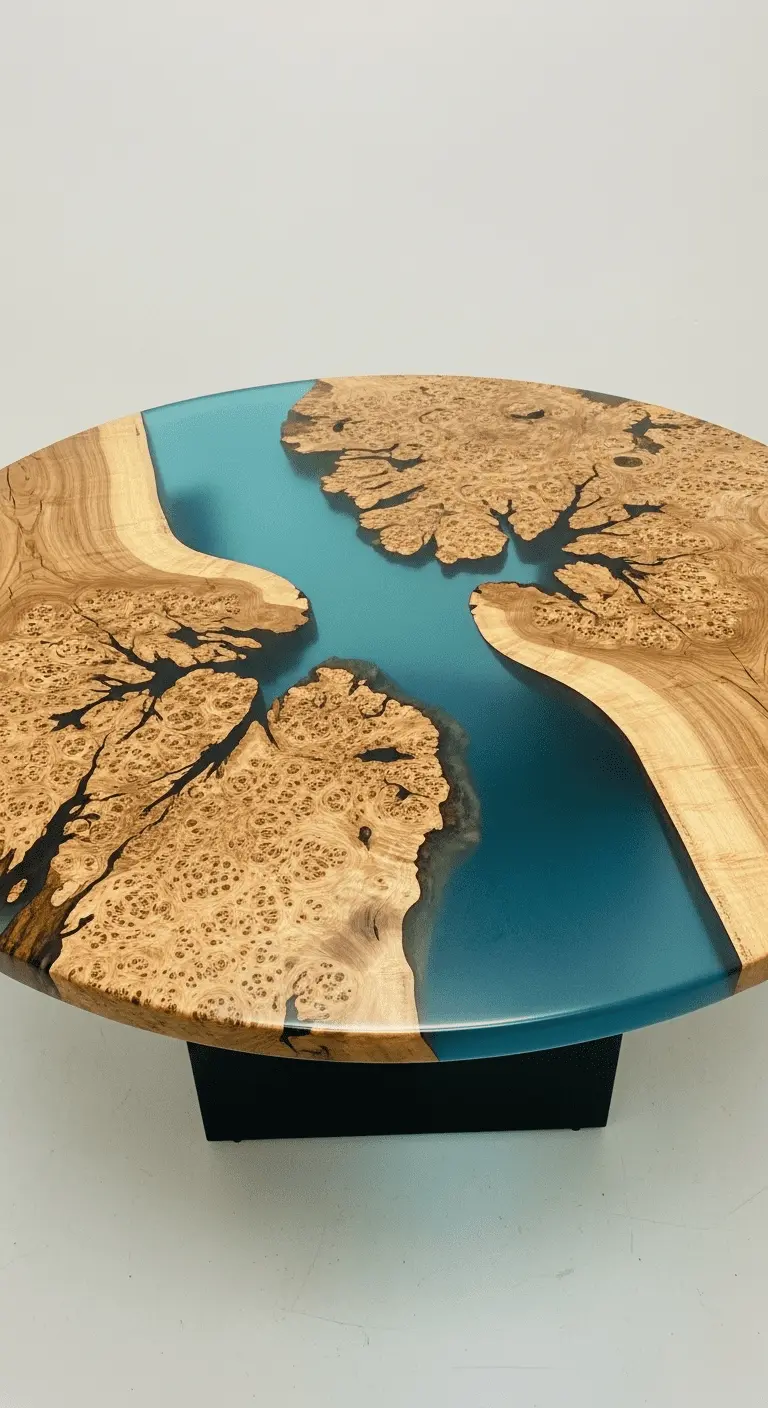
Round river tables are less common than rectangular ones, which makes them all the more striking. A burl poplar round table with a gently curving river of teal resin running from one edge to the other looks almost like a geological cross-section of the earth. Round tables work well in smaller dining rooms or as oversized coffee tables, and the curved river of resin reinforces the organic, flowing nature of the design.
8. Glow in the Dark Resin River Table

Adding glow-in-the-dark powder to epoxy resin creates a river table that literally comes alive after dark. During daylight hours, the resin may appear as a soft turquoise or white. At night, it glows with a cool blue-green light that is both theatrical and magical. This idea works especially well for a games room, a bar area, or a teenager’s bedroom, though it attracts attention in any room after sunset.
9. Black Epoxy River Table for a Modern Aesthetic
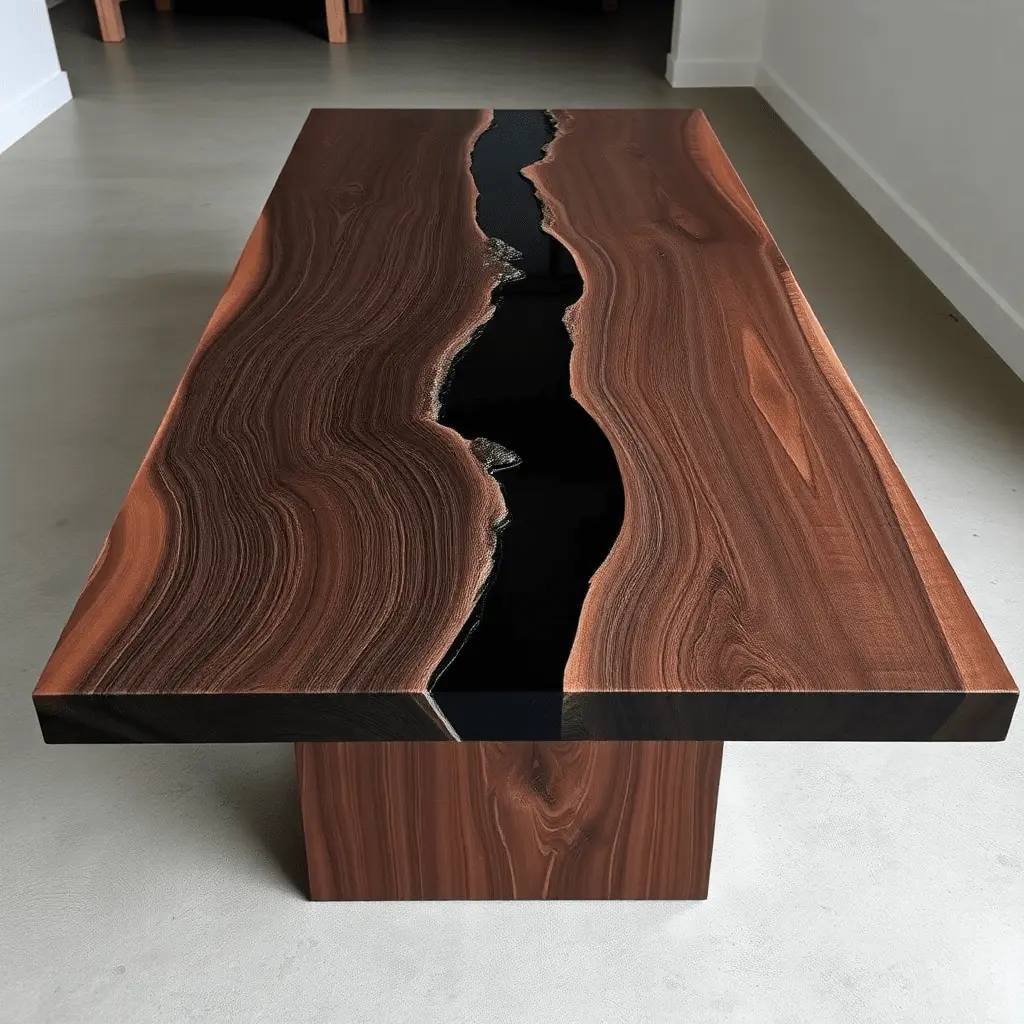
A black walnut slab paired with a jet-black epoxy river creates a monochromatic, dramatically modern table. The river becomes visible through the natural sheen and depth of the black resin, which sits in beautiful contrast with the wood grain that is also dark but distinctly textured. Black river tables pair well with white walls, concrete floors, and industrial or mid-century modern interiors.
10. Epoxy River Kitchen Island Countertop
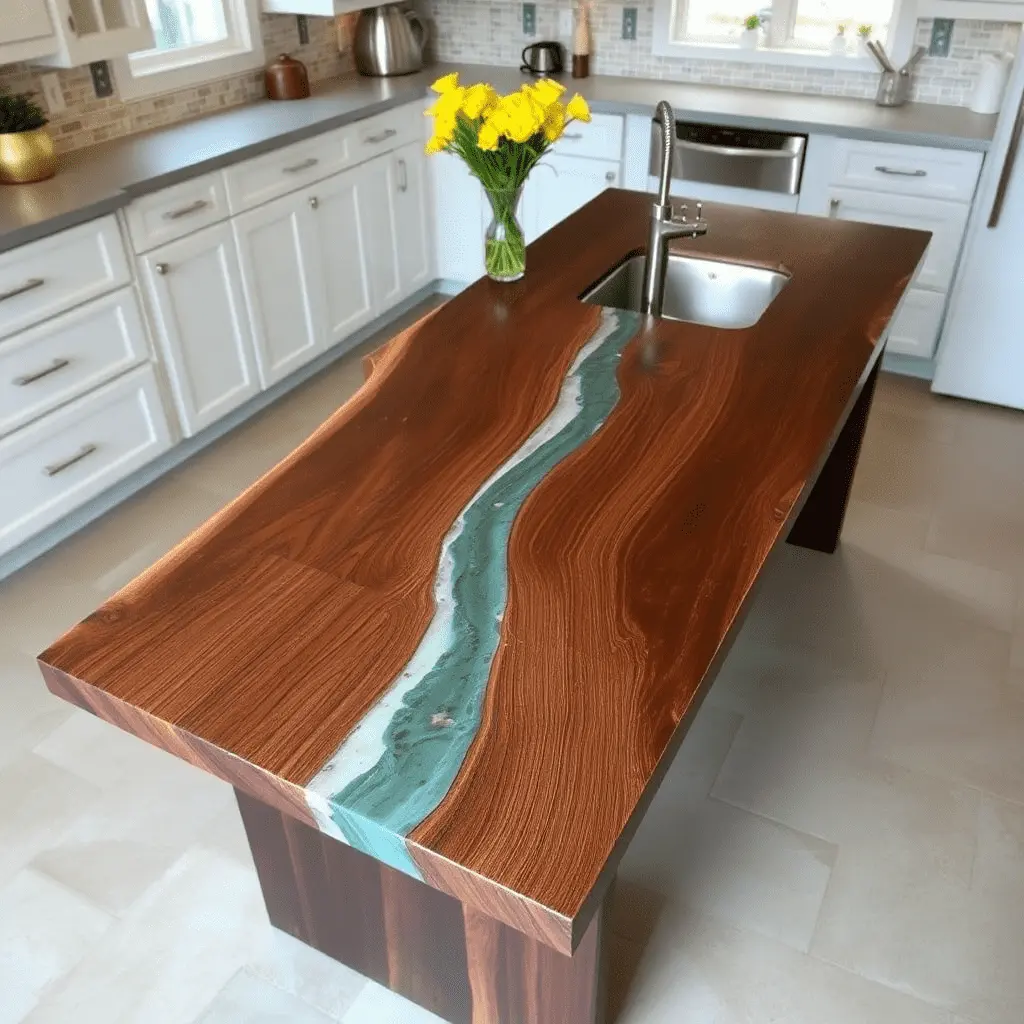
River table techniques can be applied to kitchen island countertops as well, making the kitchen the most unexpected room in which to find this design. A walnut or acacia slab with a clear or lightly tinted resin channel running along one edge adds visual drama without disrupting function. The epoxy surface is nonporous, easy to clean, and highly resistant to daily kitchen wear.
11. Shell and Stone Embedded River Table
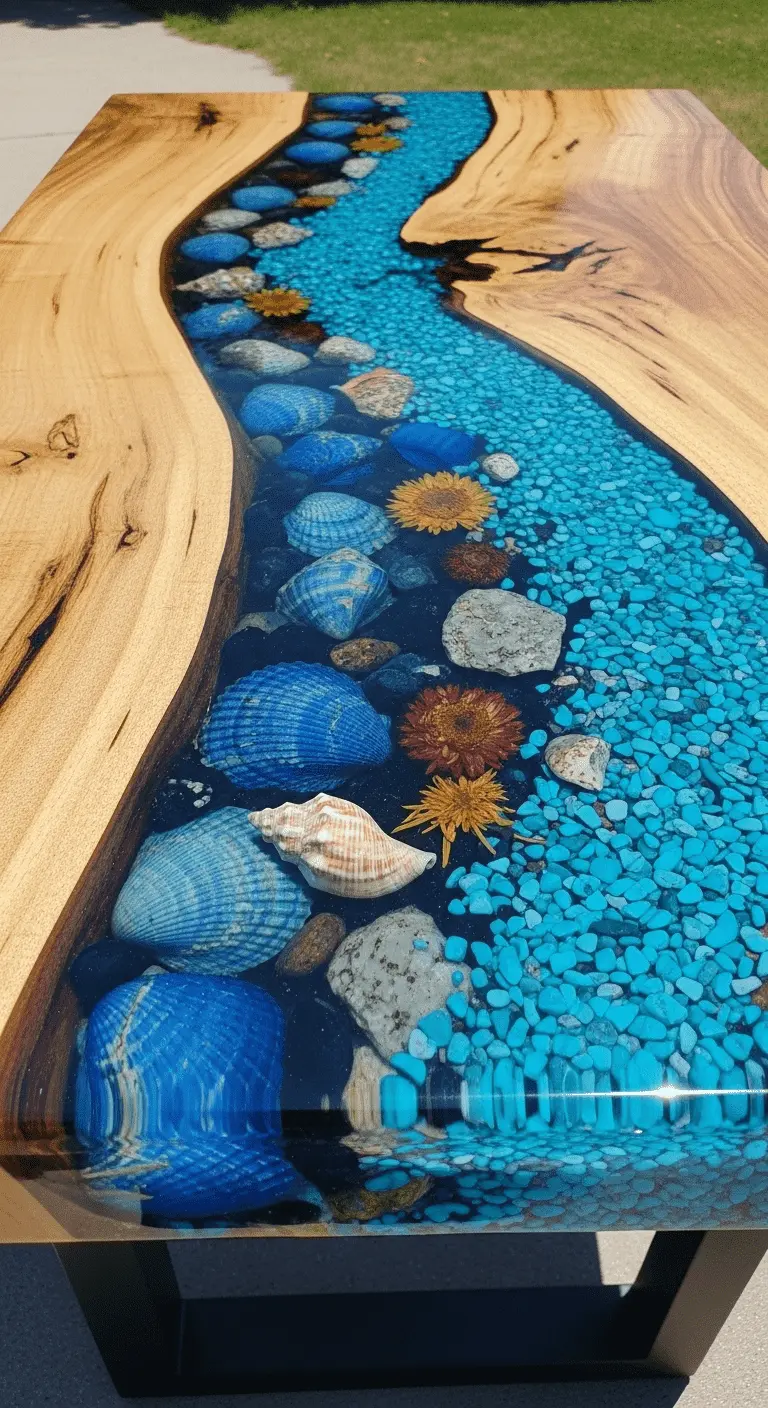
Embedding natural objects such as seashells, river stones, dried flowers, or even small crystals within the resin river takes the design concept to another level entirely. A live-edge table with blue shells and crushed turquoise stone set into the resin captures the feeling of a tropical shoreline. These inclusions are suspended permanently within the hardened epoxy, creating a functional display case within the tabletop itself.
12. River Bedside Table for the Bedroom
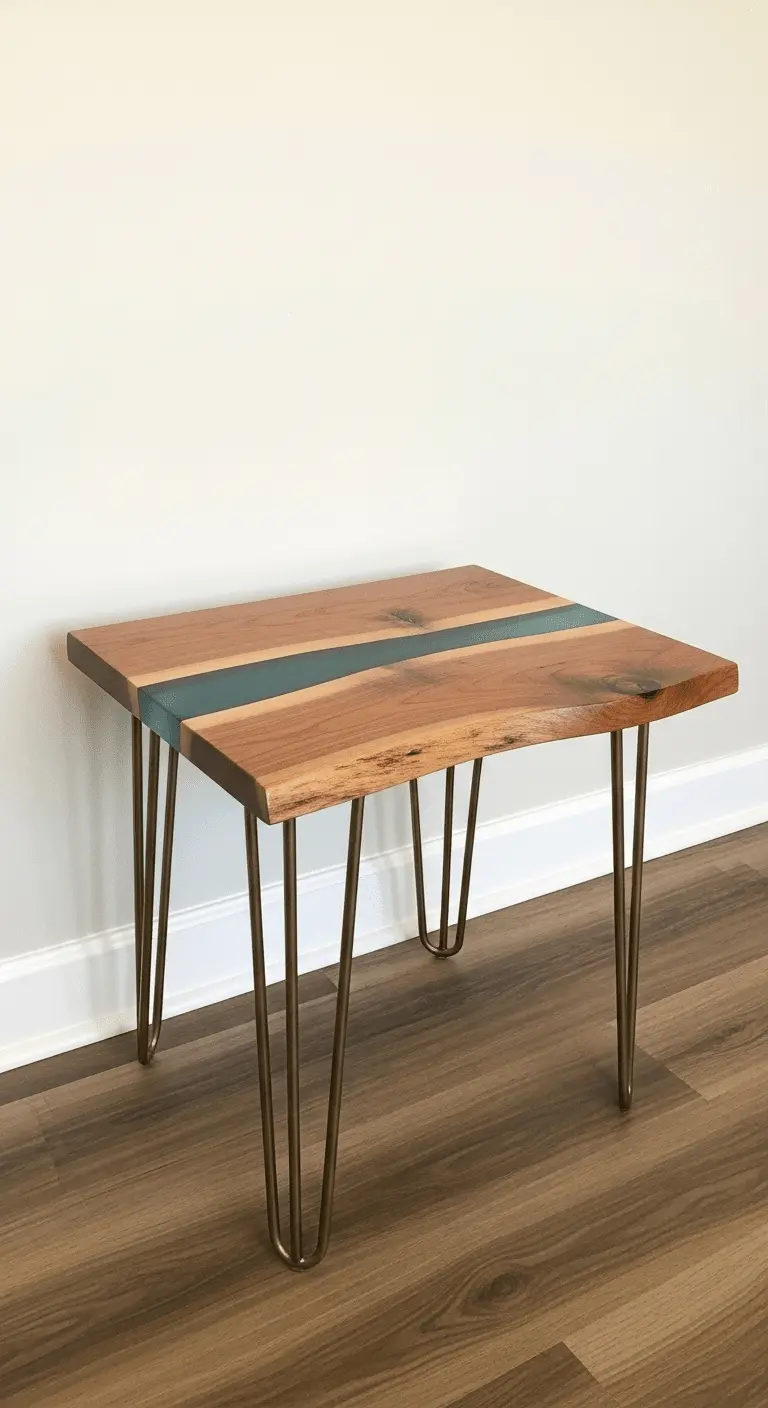
A compact river bedside table brings an artistic touch to the bedroom without overwhelming the space. A small slab of cherry or walnut with a narrow strip of soft blue or green resin running along the edge is enough to make the table feel special. Paired with simple hairpin legs in brass, the result is a nightstand that looks custom designed and feels personal.
13. Outdoor Patio River Table
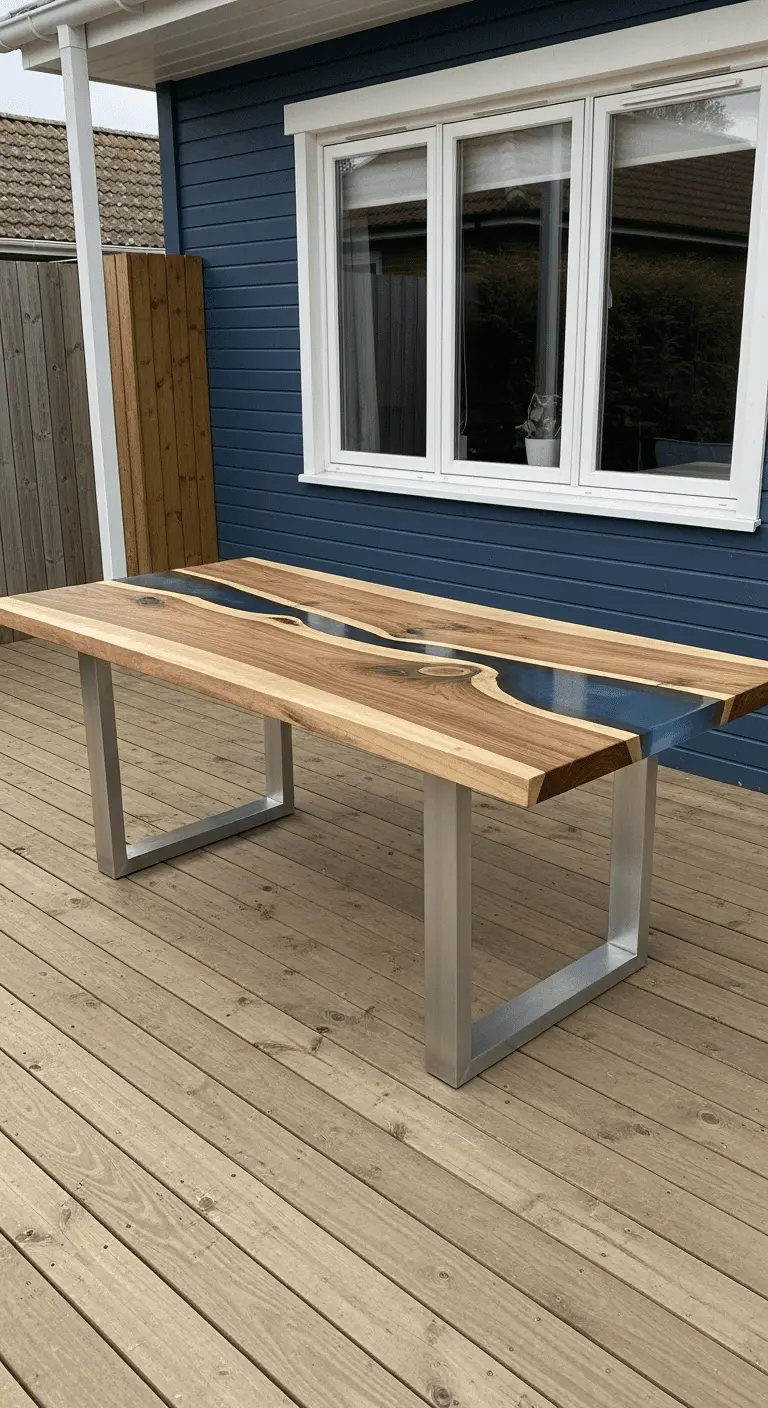
River tables are not confined to interior spaces. With proper UV-resistant epoxy resin and weather-treated wood, a river table can serve as a spectacular outdoor dining or entertaining table on a covered patio or deck. Aluminum legs are an ideal choice here because they resist rust and keep the table lightweight enough to be moved seasonally. The natural materials of the table blend beautifully with garden surroundings.
14. River Table Bar Top
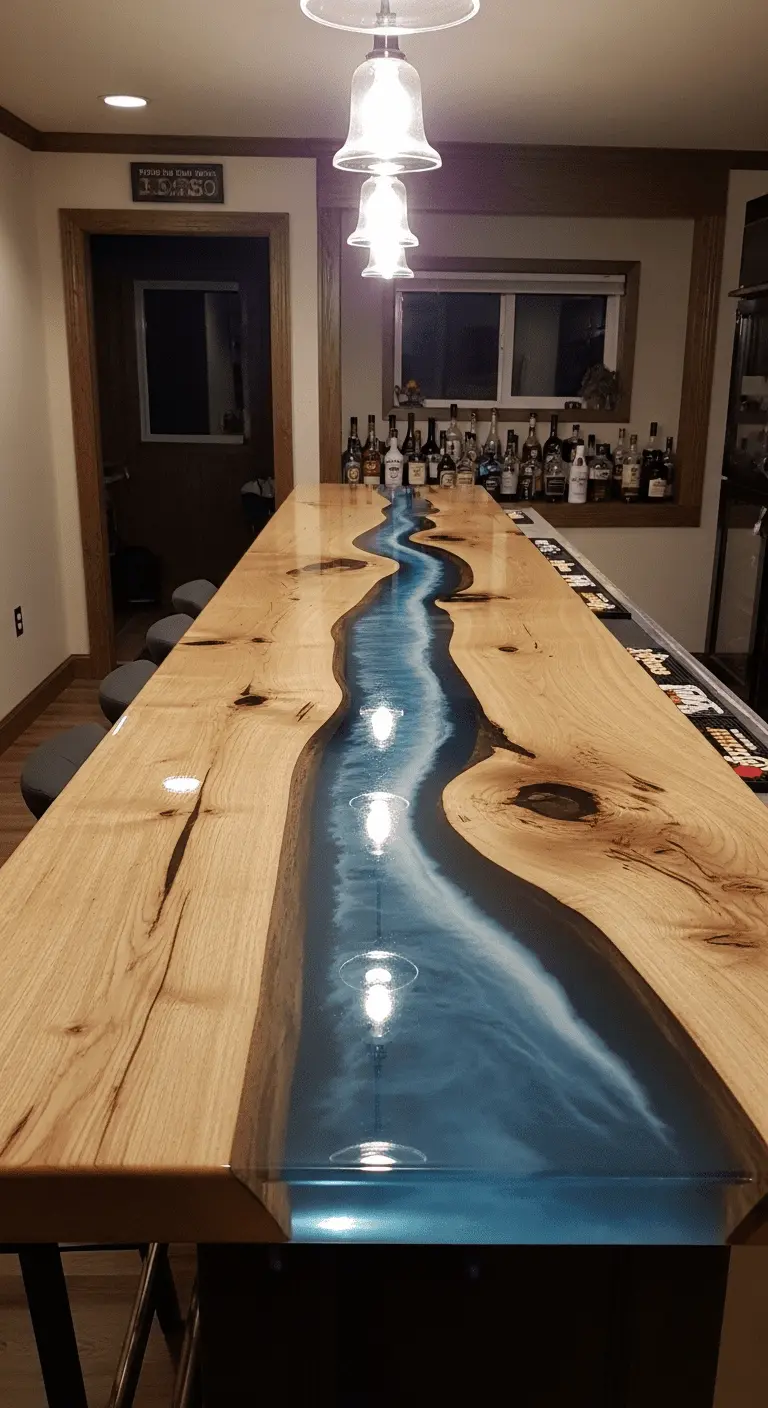
A home bar or basement bar top finished with river table epoxy technique is one of the most impressive applications of this design. A wide slab of oak or maple with a clear or blue-tinted river running across the length of the bar creates a surface that is both beautiful and highly functional. Epoxy bar tops are scratch-resistant, waterproof, and extremely easy to wipe clean after entertaining.
15. Two-Tone Resin River Table
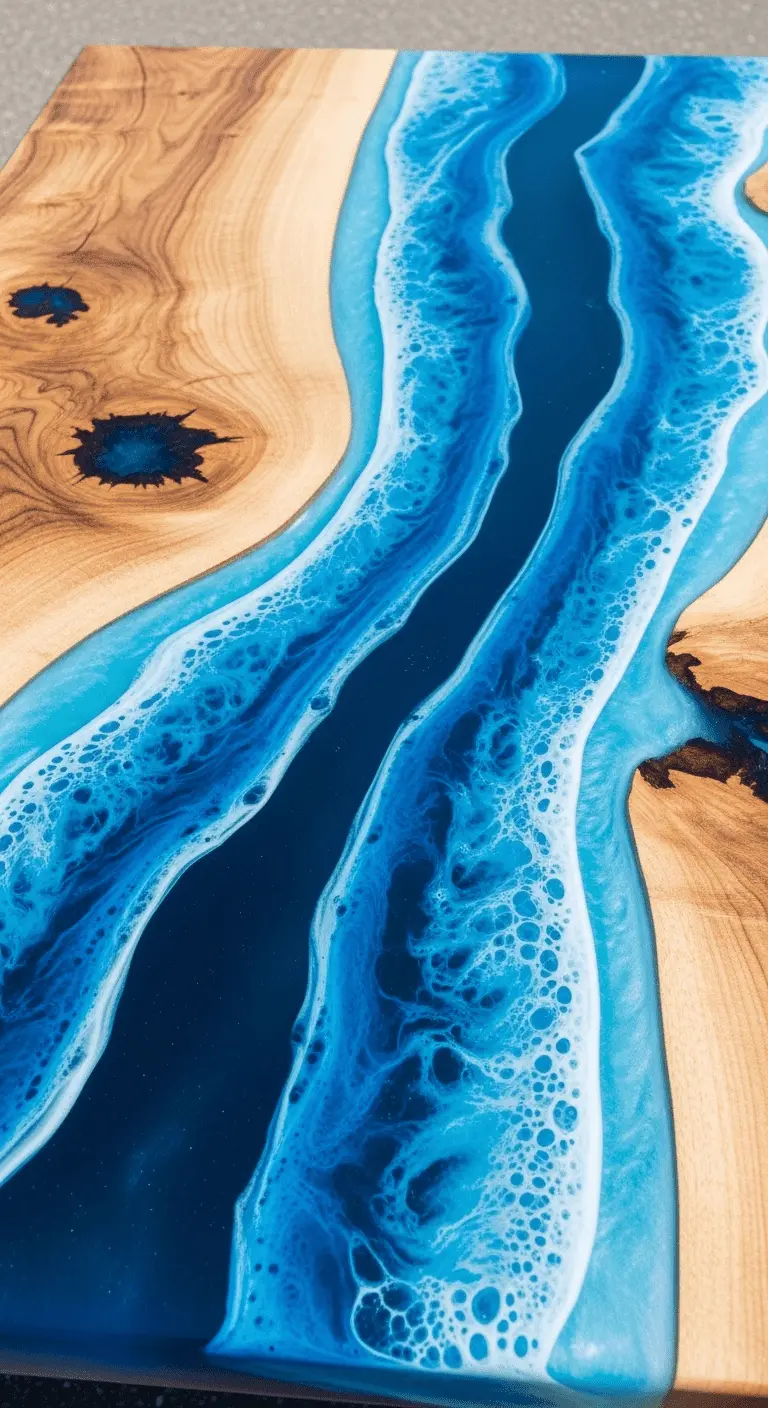
Rather than using a single resin color, a two-tone pour creates a river with depth and gradient. For example, pouring deep navy at the base of the river and a lighter sky blue at the surface creates the illusion of a river with depth and dimension. When light hits the surface from different angles, the two colors interact and shift, keeping the table visually interesting in changing light throughout the day.
16. LED-Lit River Table
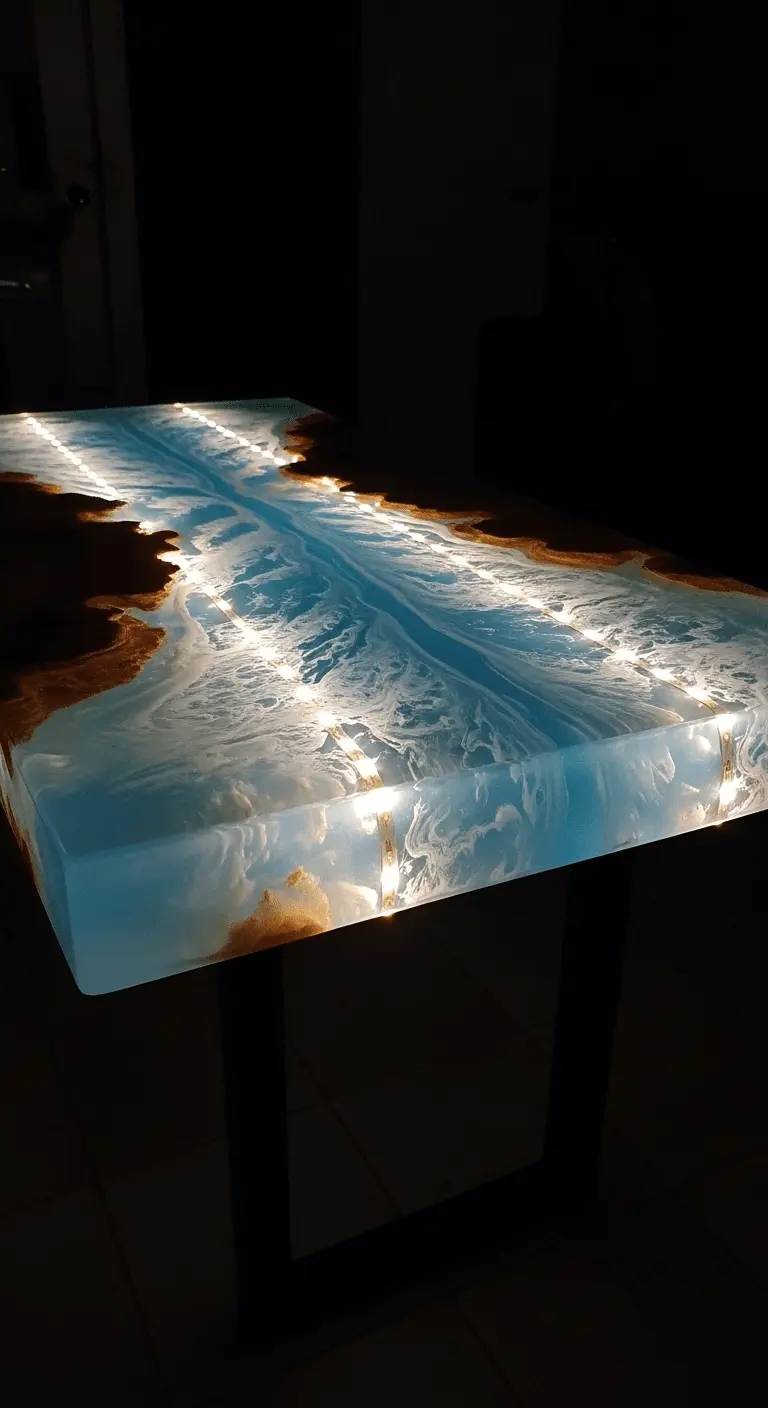
Integrating LED strip lights beneath a clear or translucent epoxy river creates a table that glows from within. The light travels through the resin and illuminates the table from underneath, drawing attention to the movement and depth of the resin pour. LED river tables work especially well as coffee tables in dimly lit living rooms or entertainment spaces, where they become a feature light source in their own right.
Choosing the Right Legs for Your River Table
The legs of a river table play a significant role in determining its overall style. Here are the most common options and what each communicates about the design. https://eliteremodelingclearwater.com/river-table-ideas/
Hairpin legs are slender; metal legs made from bent steel rods. They come in a range of finishes including matte black, brass, and brushed nickel, and they lend an airy, mid-century modern feel to any river table. Because they are slim, they allow the tabletop to remain the dominant visual element without visual competition from the base.
Steel trestle or box frames provide a solid, industrial look. A flat steel frame that runs the length of the table creates a grounded, architectural quality that suits larger dining tables. These frames are extremely strong and keep the tabletop perfectly flat even at wide spans.
Wooden legs maintain a fully natural aesthetic by continuing the organic theme of the tabletop. Matching the leg wood to the slab creates a cohesive look, while contrasting wood species add variety and visual layering. Wooden legs suit farmhouse, bohemian, and rustic interior styles particularly well.
Selecting the Right Resin Color for Your Space
Resin color is the single most expressive choice you will make when planning a river table. Ocean blues and aquamarines are by far the most popular because they reference water most directly and complement both light and dark wood tones. Emerald green reads as fresh and jewel-like, working well in nature-inspired or eclectic spaces. Gold and copper metallic resins bring warmth and luxury to the design. Black or smoke-colored resin creates drama and depth, especially in darker wood slabs. Clear resin is a refined choice that lets the natural beauty of the wood remain completely central, with the resin visible only as a glassy void between the two slabs. For the most adventurous approach, glow-in-the-dark or color-shifting resins create tables that change character entirely depending on the light and time of day.
How to Care for a River Table
River tables are more durable than they might initially appear. A properly cured epoxy surface resists scratches, water, and everyday spills. To keep the surface looking its best, wipe it down with a soft, damp cloth rather than abrasive scrubbers. Avoid placing extremely hot items directly on the resin, as sustained heat can cause discoloration over time. If the surface develops minor surface scratches after years of use, a light polishing compound can restore its original clarity. The wood portions should be occasionally treated with a food-safe oil or wax to maintain their natural luster and prevent drying.
Should You Buy, Commission, or Build Your Own River Table
The answer depends largely on your budget, skill level, and how specific your vision is. Ready-made river tables are available at a range of price points, offering good value for standard sizes and common color combinations. Custom river tables commissioned from independent artisans or furniture makers allow you to specify the wood species, resin color, dimensions, and leg design to match your space precisely. Building your own river table is a deeply rewarding woodworking project that requires live-edge slabs, a deep-pour epoxy product, a router sled for flattening, and patience. The curing process alone can take 24 to 72 hours, and proper sanding through progressively finer grits is essential for a mirror-smooth finish. Many first-time makers describe the experience as one of the most satisfying DIY projects they have ever undertaken.
Conclusion
River tables occupy a rare space in furniture design where craft, artistry, and daily function meet in equal measure. Whether you are drawn to the organic drama of a walnut and blue-resin dining table, the quiet elegance of a glass insert coffee table, the practicality of a kitchen island countertop, or the creativity of an LED-lit bar top, there is a river table concept that fits your home and your vision.
What makes these pieces so enduring as a design trend is that each one is genuinely unique. The natural edge of every wood slab is different. The way resin flows and cures in different temperatures creates subtle variations. The combination of species, color, and leg design ensures that no two tables are ever alike. In a world where most furniture comes off an assembly line, a river table carries the mark of the specific tree it came from and the specific hands that shaped it.
Use the 15 or more ideas in this guide as a starting point. Think about the room, the light, the existing palette, and the mood you want to create. Then pursue the idea that excites you most, because the best river table for your home is ultimately the one that makes you stop and look at it every time you walk into the room.
Frequently Asked Questions
1. How much does a river table cost?
The cost of a river table varies widely depending on size, wood species, resin complexity, and whether it is handcrafted by an artisan. Smaller coffee tables can start at around 500 to 1,000 dollars. A full-sized custom dining table from a skilled maker typically ranges between 2,000 and 8,000 dollars or more. DIY projects, where you source materials yourself and do all the labor, can bring costs down to between 300 and 800 dollars depending on the size and quality of materials.
2. What type of epoxy is used for river tables?
River tables are made using deep-pour epoxy resin, which is specifically formulated to cure in thick layers without cracking or generating excessive heat. Standard casting epoxy can only be poured in shallow layers at a time, while deep-pour epoxy allows pours of two inches or more in a single application. For the topcoat, a bar top or table top epoxy is applied over the cured pour to create the final glass-like surface.
3. Are river tables durable enough for everyday use?
Yes. When built with properly dried wood and correctly cured epoxy, a river table is highly durable and well suited to daily use. The epoxy surface is waterproof, scratch-resistant, and nonporous, making it easy to clean. The bond between the wood and the resin is extremely strong once the epoxy has cured fully. With basic care and occasional maintenance of the wood portions, a quality river table can last for decades.
4. Can a river table be made without woodworking skills?
Some aspects of building a river table require basic woodworking tools and experience, particularly flattening the slabs with a router sled and sanding the surface through multiple grits. However, many suppliers now sell pre-flattened live-edge slabs ready for resin pouring, which reduces the skill required significantly. For those new to the craft, starting with a small coffee table or side table is advisable before taking on a large dining table project.
5. What resin colors work best for a river table?
Blue and turquoise are the most classic choices because they replicate the appearance of water most convincingly. However, the best resin color for your river table is ultimately the one that complements your wood species and integrates with your room’s color palette. Light wood species like maple or ash benefit from bolder resin colors such as cobalt or emerald. Dark woods like walnut pair well with metallic golds, clear resin, or deep ocean blues. If you are unsure, request small sample pours from your maker or resin supplier before committing to a full project.