
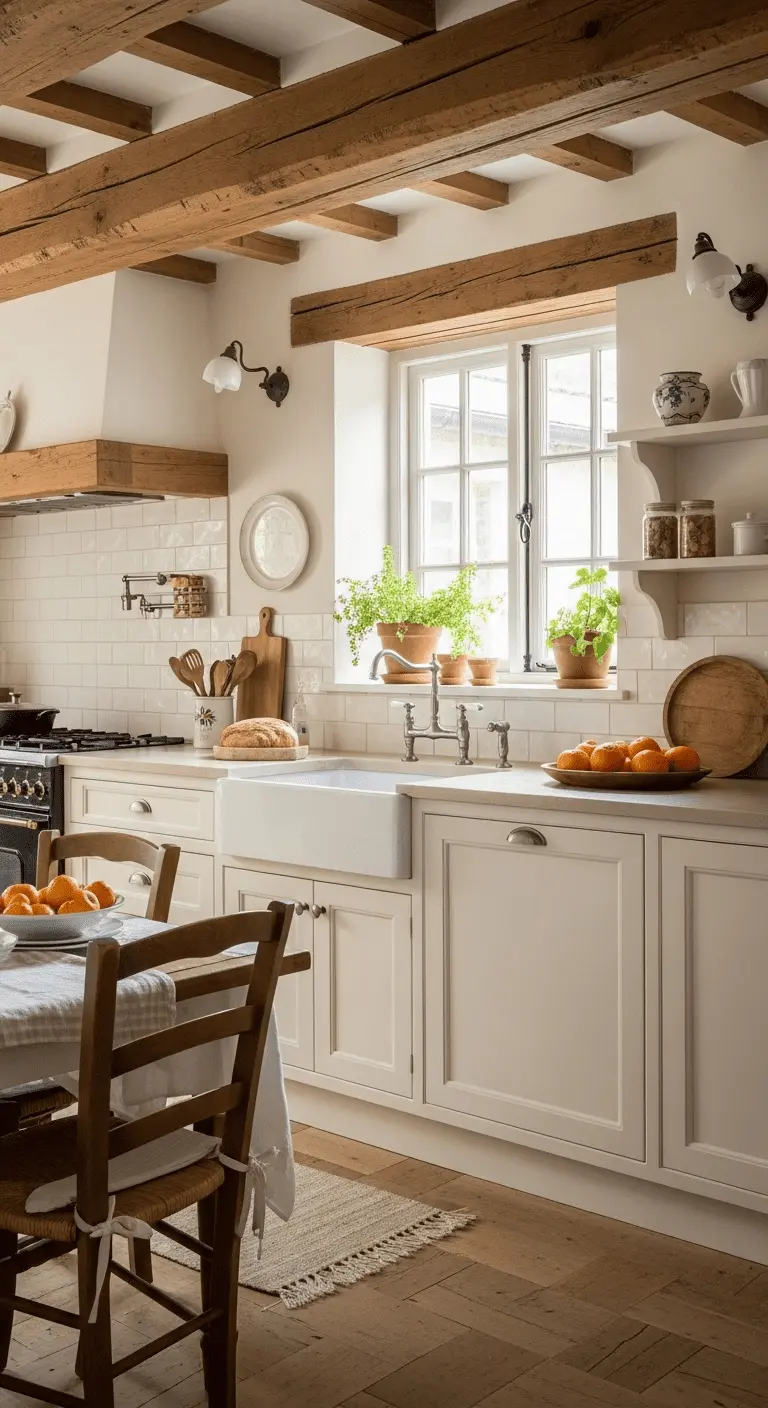
15+ Attractive French Country Kitchen Ideas
Introduction
French Country Kitchen Ideas, there is something deeply comforting about a French country kitchen. It does not shout for attention. It does not chase trends. Instead, it draws you in with the kind of warmth that feels lived-in, unhurried, and effortlessly beautiful. Rooted in the pastoral landscapes of Provence, Normandy, and the rural South of France, this timeless design style has captured the hearts of homeowners across the world. Whether you live in a countryside farmhouse or a city apartment, a French country kitchen invites you to slow down, gather around the table, and enjoy the art of cooking and connection.
What makes French country kitchen ideas so enduring is their rare ability to blend rustic charm with quiet sophistication. You will find rough-hewn wooden beams overhead, soft cream cabinetry below, and a farmhouse sink that looks as though it has stood in place for a hundred years. Every material feels natural. Every detail feels intentional. And the overall effect is a kitchen that is as practical as it is beautiful. If you are planning a renovation or simply looking to refresh your space, this guide covers 15 of the most attractive and achievable French country kitchen ideas to bring that unmistakable European warmth into your home.
1. Embrace a Warm, Neutral Color Palette
Color is the foundation of every French country kitchen. The palette draws from the natural landscape of rural France: soft creams, warm whites, muted taupe’s
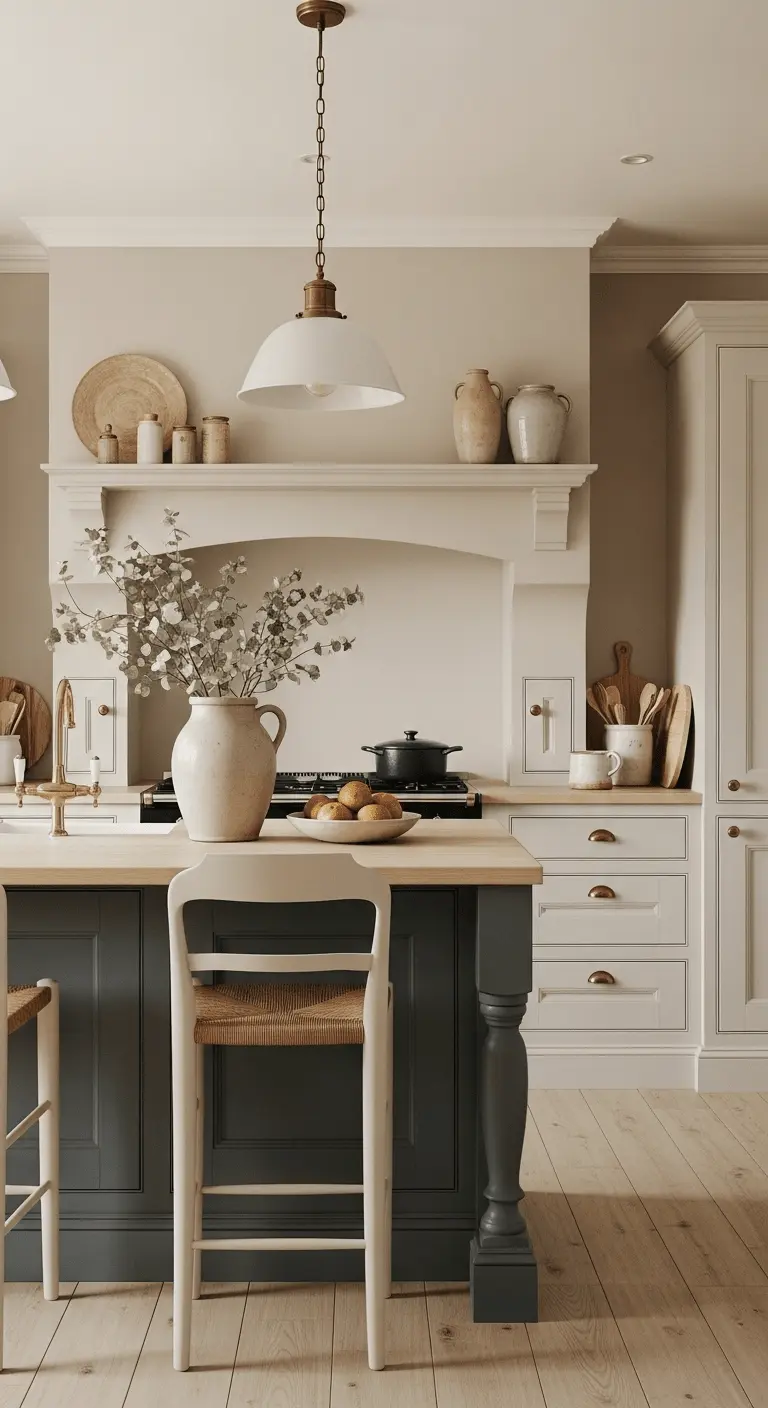
, dusty sage greens, and gentle grays. These shades do not compete with one another. Instead, they layer together to create a backdrop that feels calm and cohesive.
A popular approach is to paint cabinetry in a warm off-white such as Farrow and Ball’s All White or Pointing, then bring in a second tone through the kitchen island or lower cabinets. Muted dusty blue is a particularly beloved accent in this style, nodding to the glazed pottery and faded shutters of the French countryside. For walls, stick to warm neutrals that allow your natural materials and textures to take center stage.
2. Choose Distressed or Furniture-Style Cabinetry
The cabinetry in a French country kitchen never looks factory fresh. It tells a story. Furniture-style cabinets with inset doors, raised panel detailing, or glass-front uppers give the space a custom, old-world quality. Off-white and cream finishes are the most classic choices, though soft sage green and pale gray are equally popular.
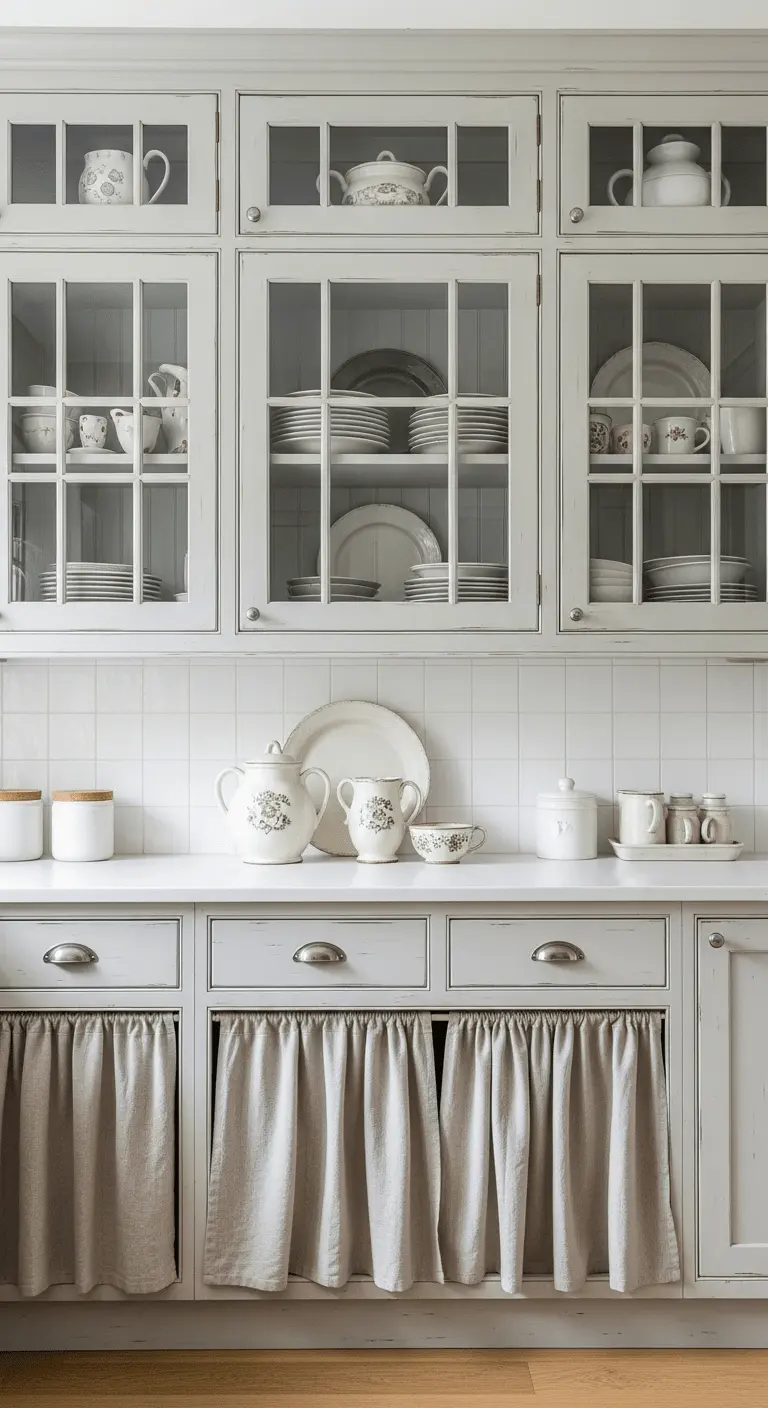
Distressed finishes are a hallmark of the style. A subtle glaze over painted cabinetry adds depth and visual age without looking overdone. Glass-front upper cabinets serve a dual purpose here: they create an airy, open feeling while giving you the perfect opportunity to display your collection of French pottery, vintage dishware, or cherished ceramics. If you want to soften the look further, consider replacing a few lower cabinet doors with gathered linen curtains for a touch of relaxed Provencal charm.
3. Install Exposed Wooden Ceiling Beams
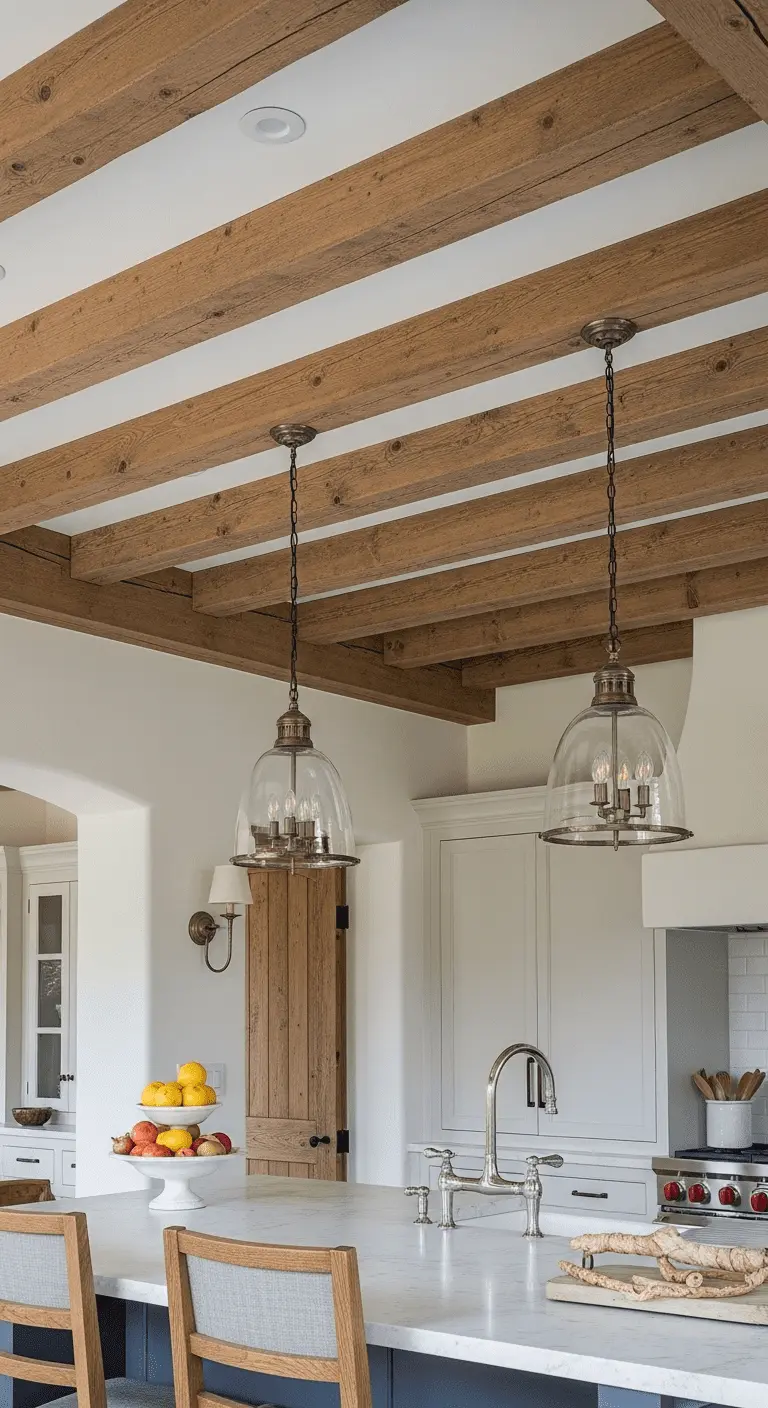
Few architectural details define a French country kitchen as powerfully as exposed wooden beams overhead. Whether they are original structural beams preserved during a renovation or decorative beams added to a modern space, they instantly transform the ceiling into a focal point of warmth and character.
Choosing the Right Beam Finish
For an authentic look, opt for rough-hewn or hand-hewn beams in natural oak or reclaimed wood. A weathered gray or honey-brown stain is more evocative of the French countryside than a dark walnut, which can feel too formal. If installing actual heavy beams is not feasible, lightweight faux-wood beam wraps are widely available and convincingly realistic. Pair the beams with whitewashed plaster walls or a soft, painted ceiling to let the wood truly stand out.
4. Opt for Natural Stone or Terracotta Flooring
The floors of a French country kitchen should feel as though they have been worn smooth by generations of family gatherings. Natural stone tile, limestone, terracotta, and worn hardwood are the most fitting choices. Each of these materials ages gracefully, developing a patina over time that only adds to their appeal.
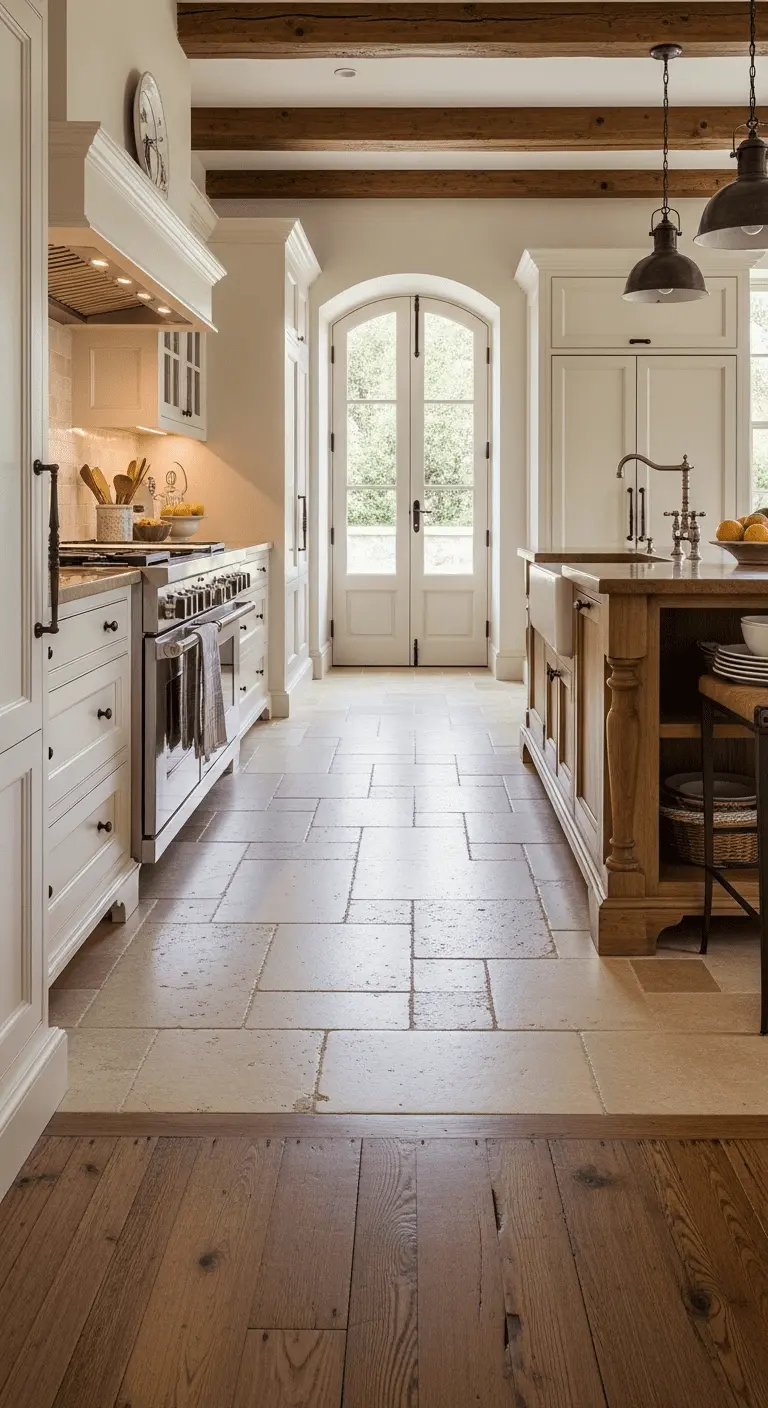
Terracotta tiles in warm earthy tones are a signature of Provencal kitchens. They work beautifully with cream cabinetry and rustic wood elements. For a slightly more refined look, large-format limestone tiles in soft beige or ivory create a sense of space and grandeur reminiscent of a French chateau. Wide-plank wood floors in a brushed or distressed finish are another excellent option, especially in homes where warmth and coziness are the primary goals.
5. Incorporate a Classic Farmhouse Sink
The apron-front farmhouse sink is one of the most recognizable features of any French country kitchen. Deep, practical, and undeniably elegant, it anchors the kitchen visually while offering serious function for those who love to cook.
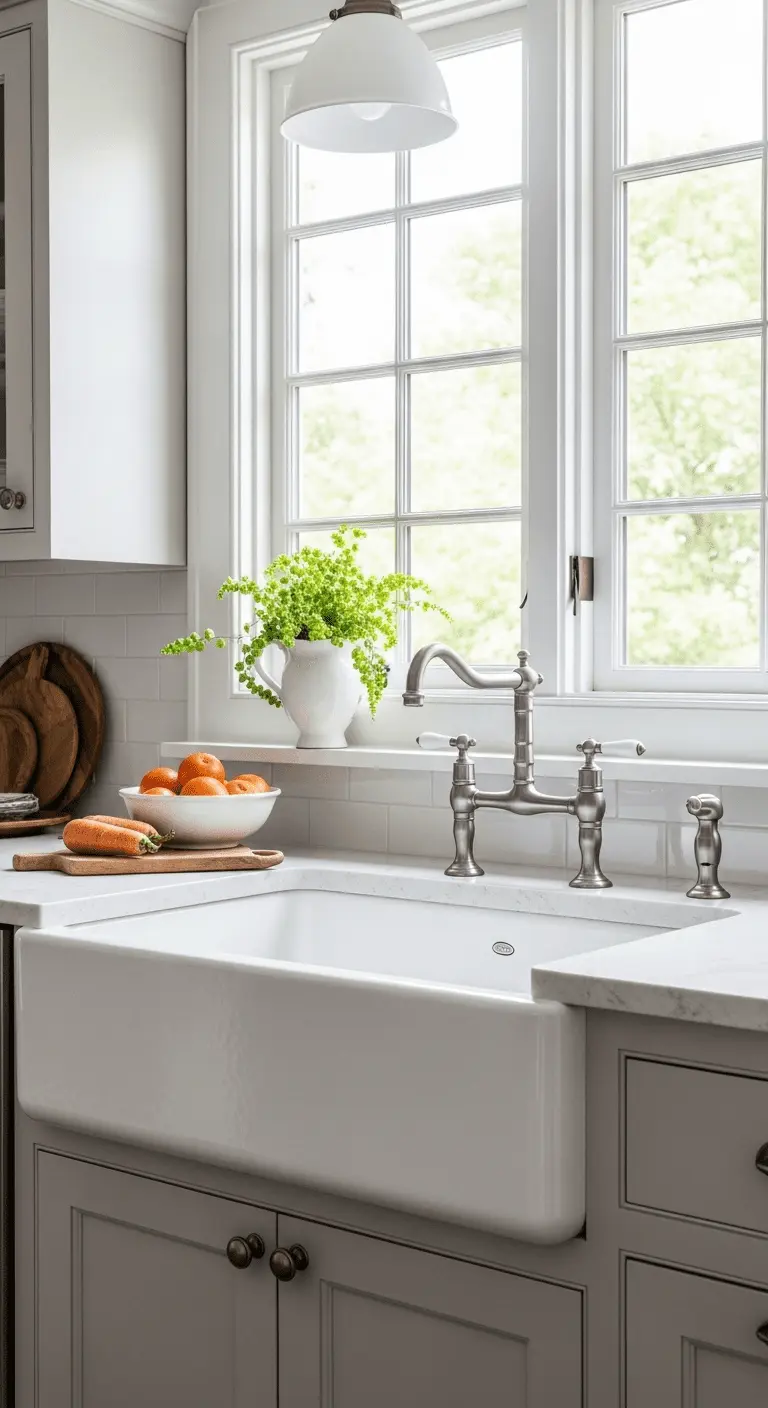
White cast iron is the gold standard for this style. It carries a weight and permanence that feels authentic to the aesthetic. A single-basin sink keeps the look clean and uncluttered, and pairing it with a bridge-style faucet in aged brass or brushed nickel completes the picture beautifully. Position the sink beneath a window whenever possible. There is something deeply French about washing vegetables while looking out at a garden, and it adds to the light-filled, pastoral quality that defines this style. https://simplespaces.net/french-country-kitchen-ideas/
6. Use Marble or Limestone Countertops
French country kitchens favor natural countertop materials above all else. Marble has been used in European homes for centuries, and its soft veining and cool surface make it a natural fit for this design style. Carrera marble with its classic white-and-gray pattern is a timeless choice, while Calacatta marble adds a touch of more dramatic luxury.
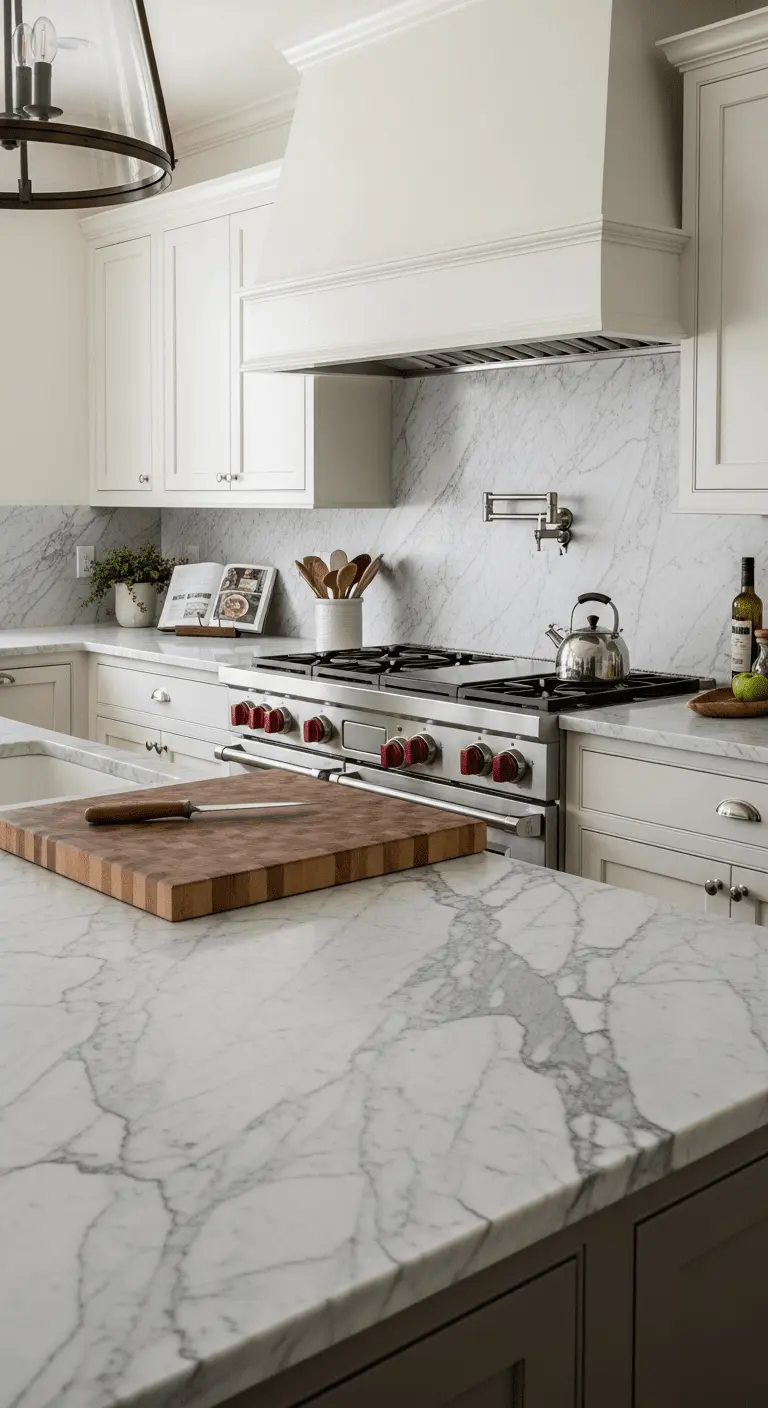
For a more rugged, countryside feel, limestone countertops are equally beautiful and feel especially at home in a Provencal-inspired space. Butcher block sections near the range or on the kitchen island add warmth and texture, breaking up the stone surfaces while providing a practical work surface for food preparation. If budget is a concern, quartzite and certain quartz options can deliver a similar aesthetic at a lower price point.
7. Add a Patterned Tile Backsplash
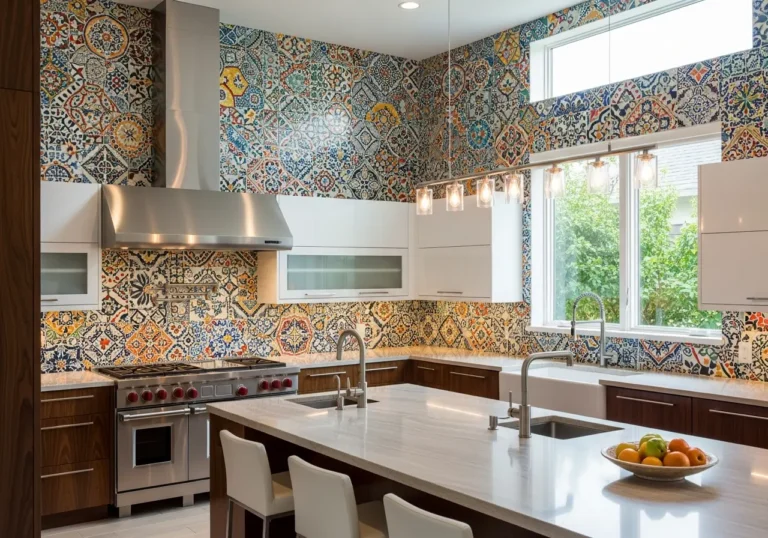
The backsplash is one of the easiest places to introduce pattern and personality into a French country kitchen. Hand-painted ceramic tiles with delicate floral or geometric motifs are a beloved choice. These tiles, reminiscent of traditional French faience pottery from Quimper or Moustiers-Sainte-Marie, bring an artisanal quality that no machine-made product can replicate.
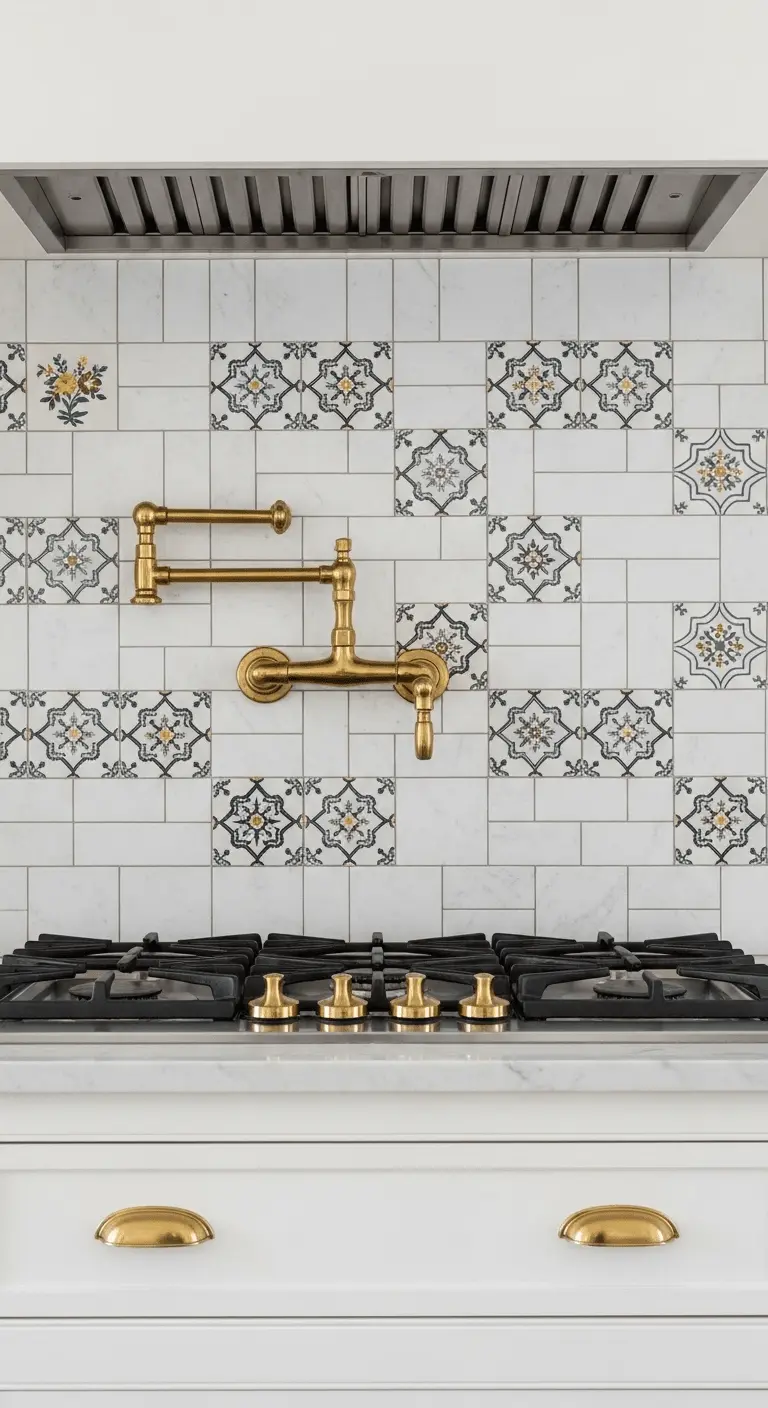
Subway Tile as a Timeless Alternative
If you prefer a cleaner, less busy look, classic white or soft cream subway tiles laid in a traditional brick pattern are equally at home in a French country kitchen. Pairing them with a contrasting dark grout adds depth without overwhelming the space. Marble subway tiles offer an elevated version of this look that pairs beautifully with brass fixtures and cream cabinetry.
8. Hang Copper Pots and Pans on Display
In a true French kitchen, cookware is not hidden inside cabinets. It is displayed proudly. A collection of copper pots and pans hanging from a ceiling-mounted rack or a wall-mounted pot rail above the range is one of the most iconic and practical decorating moves in this style.
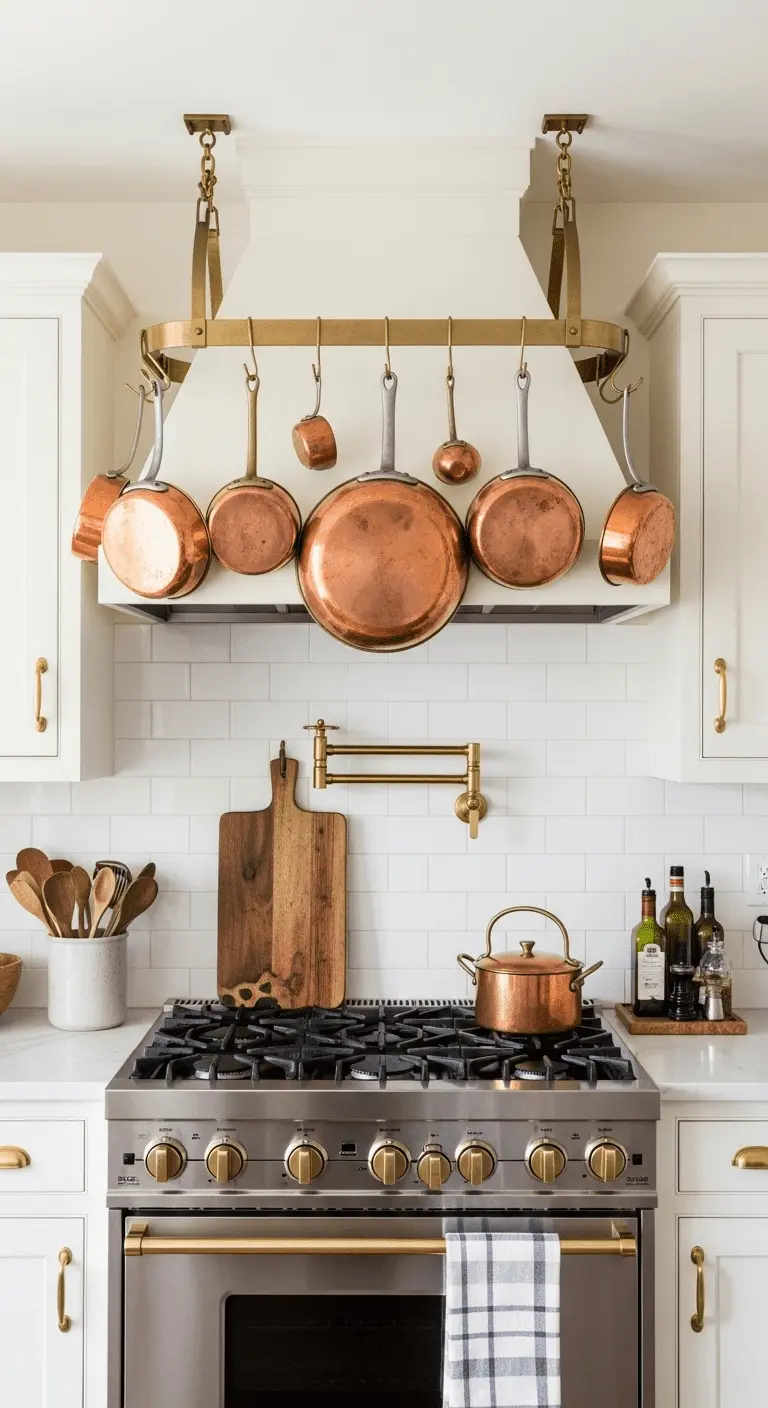
Copper develops a beautiful natural patina over time, shifting from bright orange to a warm, burnished glow that only improves with age and use. Even a modest collection of three or four copper pieces can transform the visual tone of a kitchen. Complement the copper with brass hardware on your cabinet doors and drawers to create a warm, cohesive metallic thread throughout the space.
9. Incorporate Open Shelving for Display and Function
Open shelving is a central feature of the French country aesthetic. It removes the formality of closed upper cabinets and encourages you to think of your everyday objects as part of the decor. Wooden shelves in a natural or whitewashed finish are the most fitting material, though wrought iron brackets add a satisfying rustic detail.
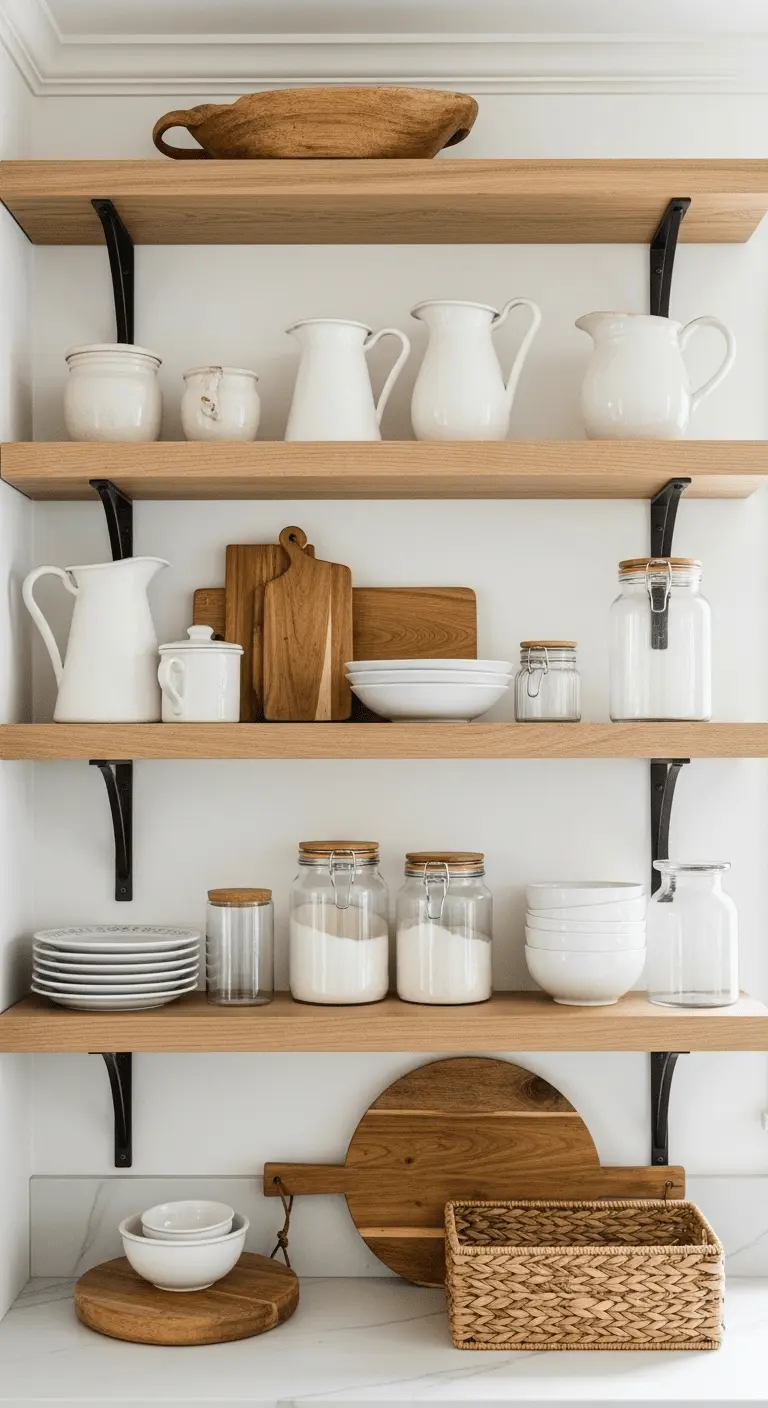
The key to beautiful open shelving is curation. Display a mix of French pottery, ceramic pitchers, glass canisters, wooden cutting boards, and woven baskets. Avoid cluttering every inch. Leave breathing room between objects so each piece can be appreciated. A well-styled open shelf in a French country kitchen looks effortless precisely because someone has taken the time to arrange it thoughtfully.
10. Select Brass or Wrought Iron Hardware
Hardware is the jewelry of a kitchen, and in a French country space, it should feel warm, aged, and full of character. Brushed brass is the most popular choice right now, striking a beautiful balance between old-world charm and contemporary appeal. Unlacquered brass develops a natural patina over time, which only deepens the authenticity of the look.
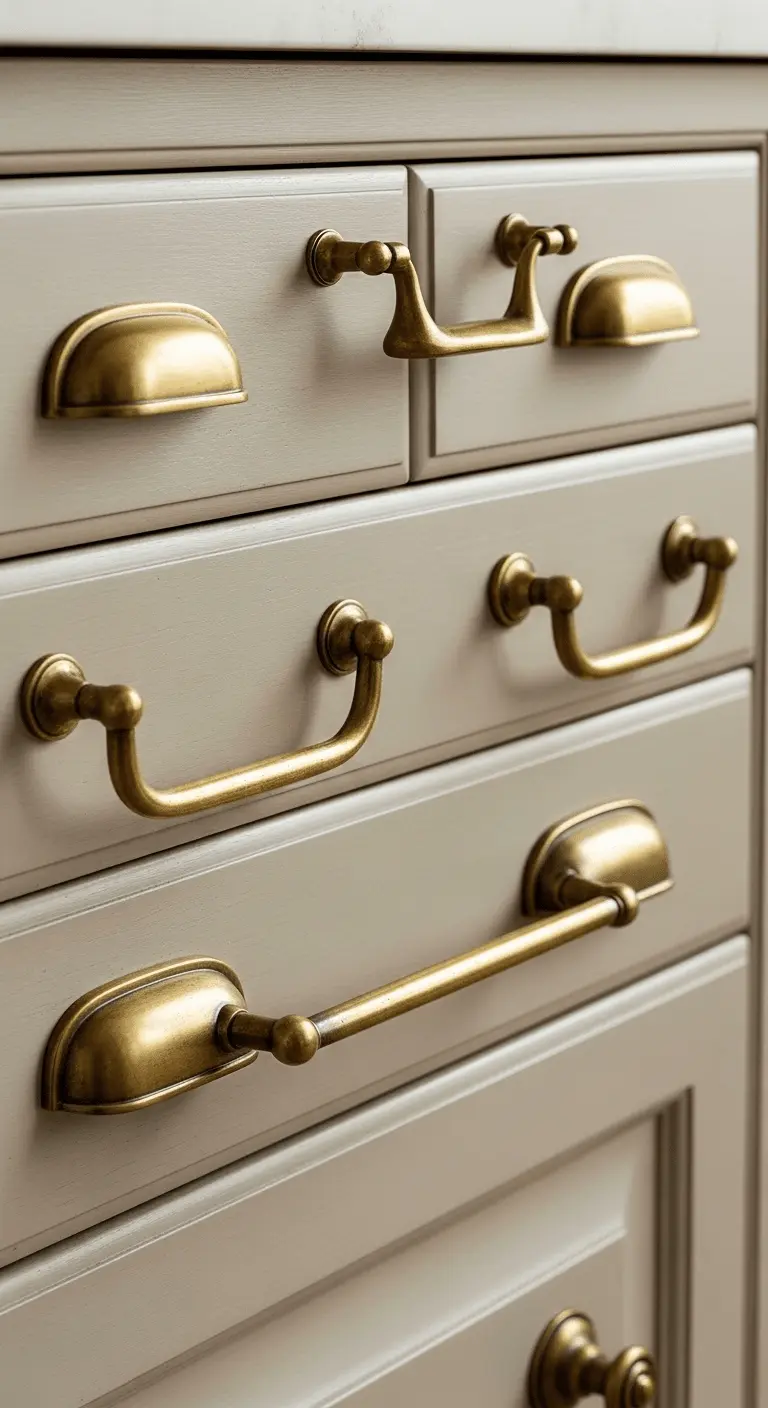
Wrought iron hardware, including bin pulls, cup handles, and knobbed bin pulls, is another excellent option that speaks directly to the rustic side of this design tradition. Mix handle shapes across your cabinetry for an eclectic, collected-over-time effect. Avoid sleek, brushed nickel or chrome hardware, which can feel too modern and clinical for this warm aesthetic.
11. Add a Statement Range Hood
A custom range hood is one of the most impactful investments you can make in a French country kitchen. Rather than a standard stainless steel ventilation hood, consider a plaster, wood, or stone-clad hood that rises from the range area like a fireplace mantel. This architectural element immediately becomes the focal point of the kitchen and sets the tone for the entire space.
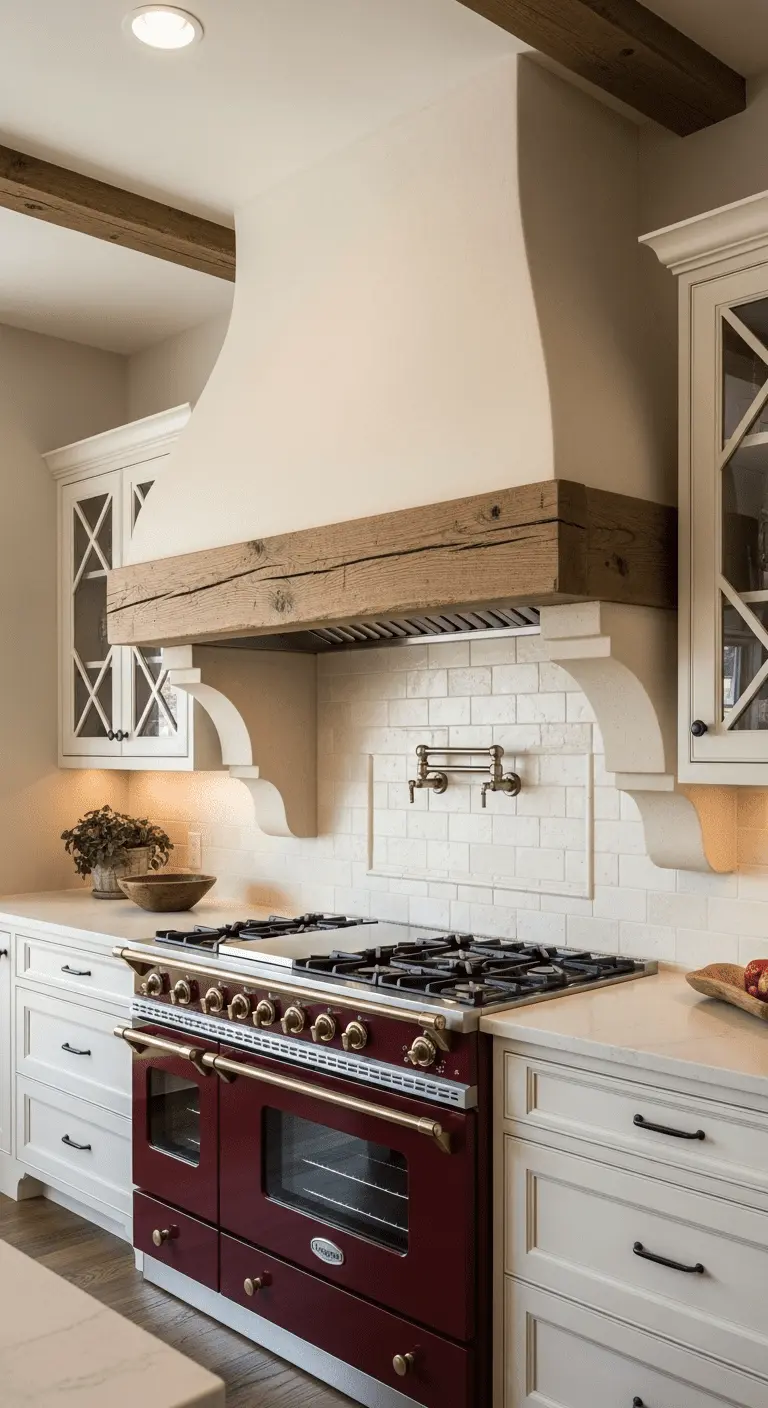
Plastered hoods in warm cream or white are especially popular because they mimic the look of old European farmhouses. A wooden corbel or two supporting the hood from below adds another layer of rustic detail. For those who love the idea of a professional-grade cooking range, a Lacanche range in classic white or burgundy beneath a custom hood creates a kitchen focal point of extraordinary elegance.
12. Bring in a Large Wooden Dining Table
The dining table is the social heart of any French country kitchen. A large, solid oak or pine table with a worn, matte finish invites gathering in a way that a sleek modern table simply cannot. It does not need to be a genuine antique, though a piece found at a brocante market or a French flea market will always feel the most authentic.
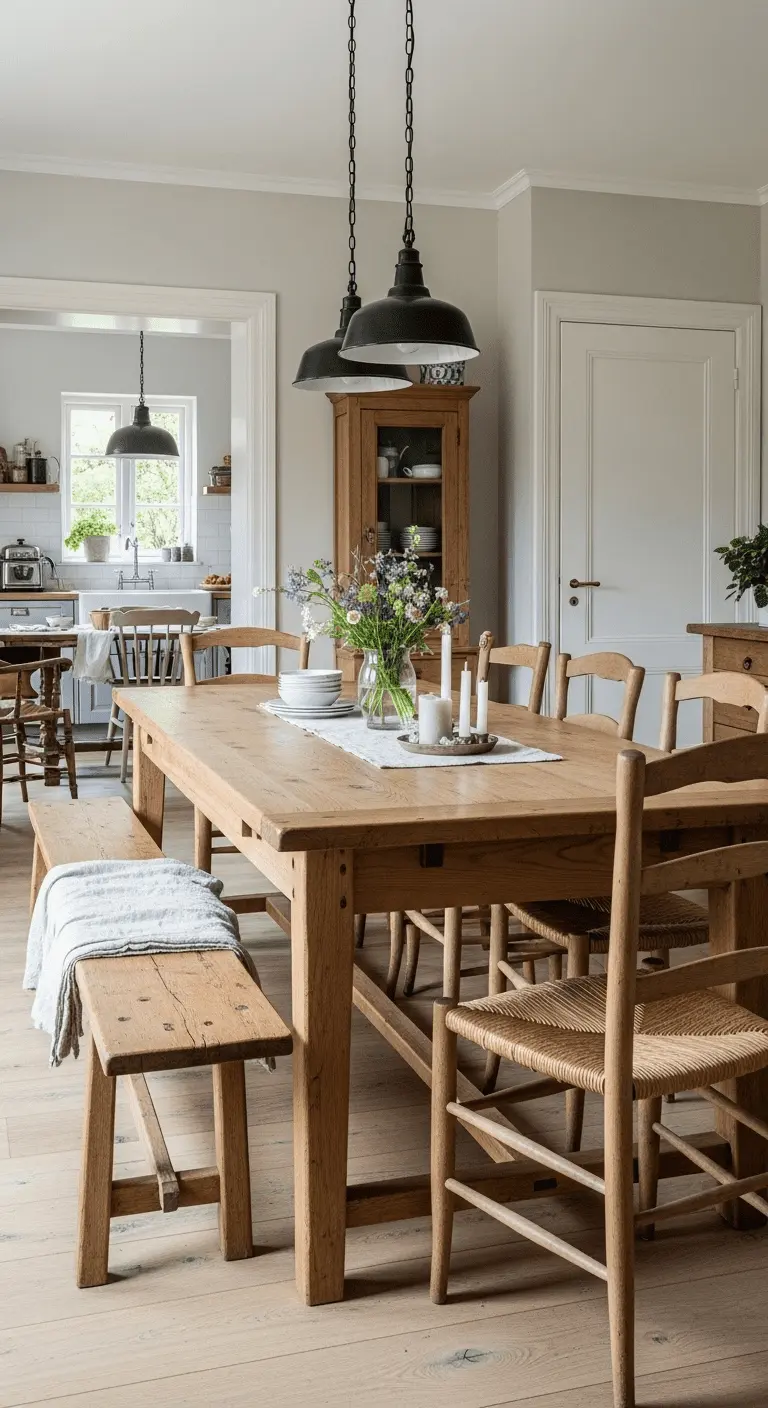
Surround the table with mismatched chairs for a relaxed, eclectic feel. Combine rush-seat ladder-back chairs with a painted wooden bench along one side for an informal, welcoming arrangement. In smaller spaces, a round pedestal table works beautifully and keeps the room feeling open and unhurried. A worn linen tablecloth, a cluster of candles, and a simple bunch of wildflowers will complete the scene with characteristic French ease.
13. Use Soft Textiles and Linen Fabrics
Textiles play a surprisingly important role in the warmth and livability of a French country kitchen. French kitchen linens, including dish towels, tablecloths, and napkins woven in traditional Basque stripes or classic toile de Jouy patterns, are prized for their quality, thickness, and quiet elegance.
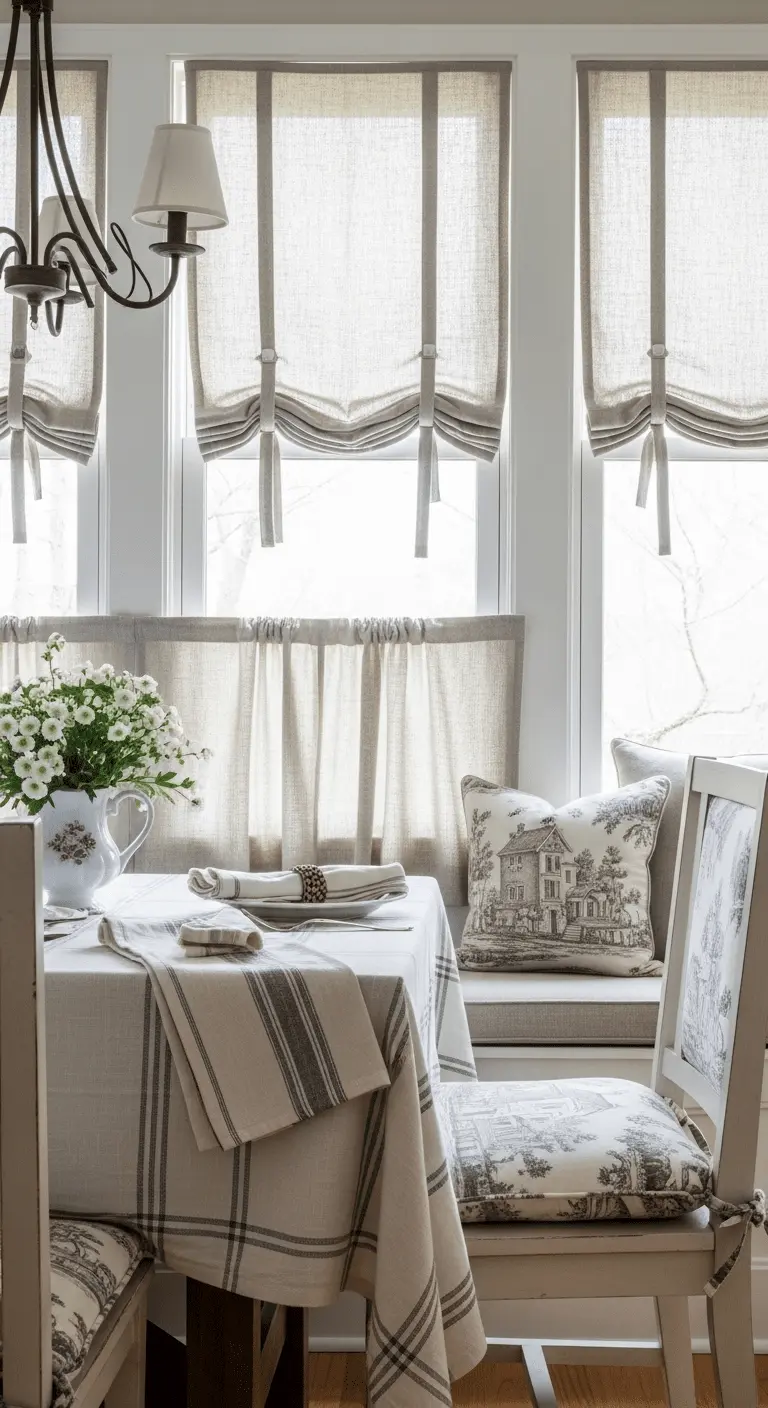
For window treatments, choose simple linen curtains in natural or off-white tones, perhaps with a subtle check or stripe. A classic brise-bise, the half-curtain draped across the lower portion of a window, is a quintessentially French detail that lets in plenty of light while providing privacy. Seat cushions in cotton or linen with a faded floral or provincial print on dining chairs or a window bench add softness and comfort to the room.
14. Decorate with French Pottery and Vintage Accessories
A French country kitchen is never finished. It is always evolving, always collecting. Antique enamelware canisters labeled with French words, ceramic pitchers filled with fresh lavender, a worn wooden cutting board leaned against the backsplash, a wire basket overflowing with fresh produce. These are the details that give the space its soul.
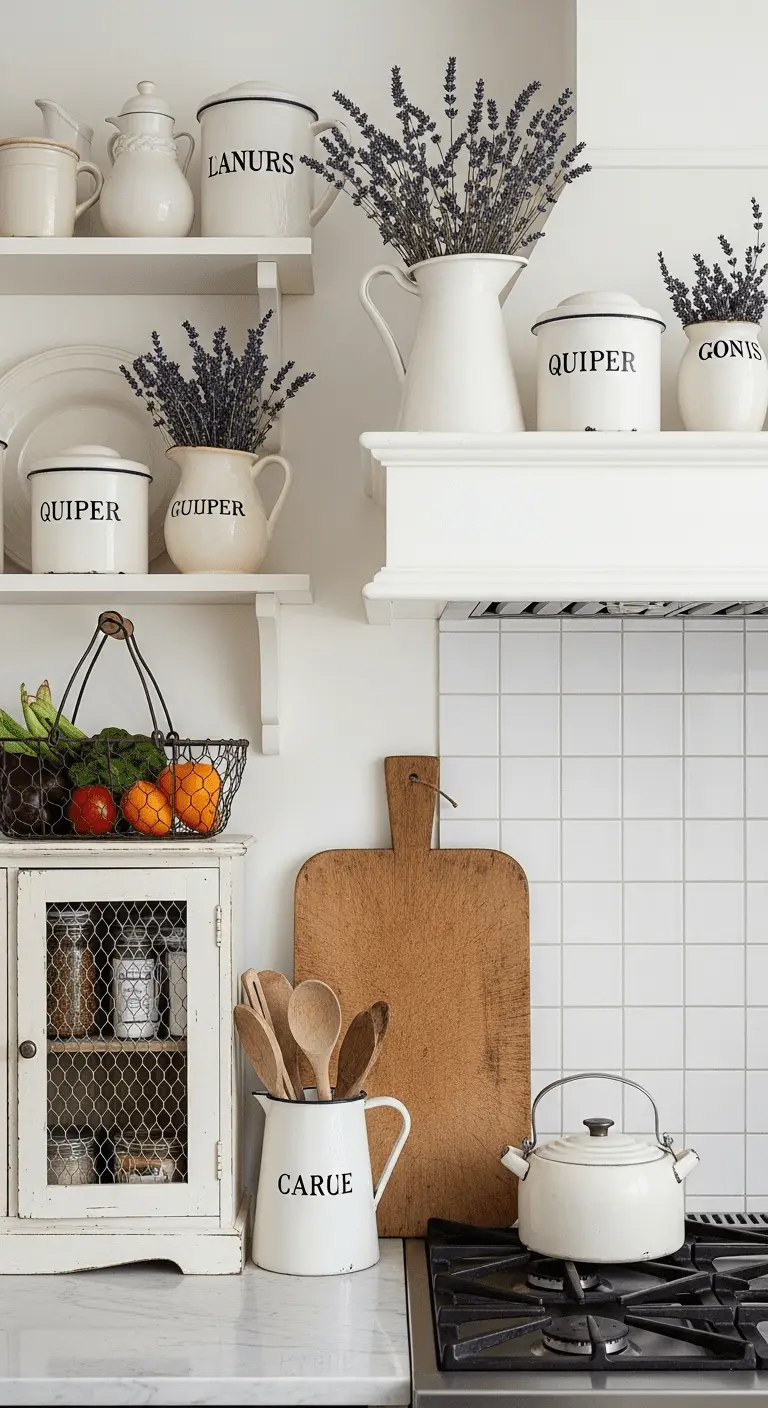
French pottery is particularly valued in this style. Pieces from regional traditions like Provencal Santons, Quimper faience, or simple white earthenware from local markets bring an artisanal character that is difficult to manufacture. Display them on open shelves, atop the range hood, or along the top edge of upper cabinetry. A chicken wire cabinet or a small armoire used for pantry storage adds a farmhouse detail that is both beautiful and deeply practical.
15. Choose Lighting That Feels Warm and Handcrafted
Lighting in a French country kitchen should feel warm, intimate, and slightly imperfect in the most beautiful way. Wrought iron chandeliers with candle-style bulbs are a classic choice for the main light source over the dining area or kitchen island. Their organic, hand-forged quality pairs naturally with wooden beams, copper accents, and plaster walls.
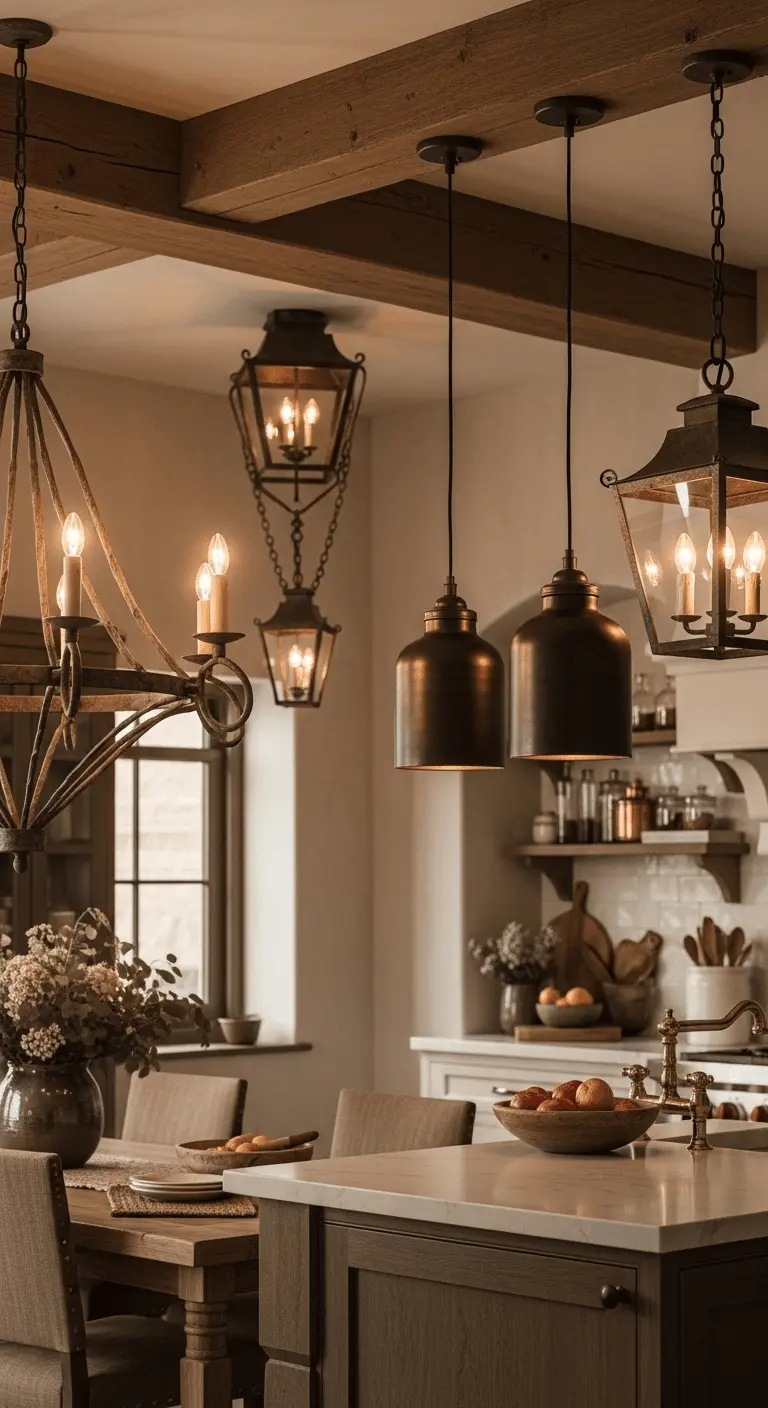
Bell jar pendant lights in aged brass or matte black work wonderfully over an island, providing focused task lighting while reinforcing the artisanal aesthetic. Lantern-style flush mounts or semi-flush mounts in iron or antiqued brass are ideal for lower ceilings. Wherever possible, use warm-toned bulbs in the 2700K to 3000K range to enhance the golden, candlelit quality that makes this style feel so inviting after dark.
Bonus: Creating a French Country Kitchen on a Budget
The beauty of French country style is that it has never been about spending lavishly on everything at once. The most authentic-looking spaces are built over time, piece by piece, with objects that carry history and personality. Flea markets, thrift stores, estate sales, and online vintage marketplaces are treasure troves of affordable pieces that will do more for your kitchen than any expensive renovation.
Start with the paint. A warm neutral on your walls and a coat of off-white on your existing cabinets is the single most impactful, affordable change you can make. Swap out hardware next. New brass or iron handles cost very little but transform the look of a kitchen immediately. Then, slowly add textiles, pottery, and a few carefully chosen vintage accessories. Replacing a standard kitchen faucet with a bridge-style model and adding a simple open shelf above a window are inexpensive steps that create an enormous visual difference. You do not need a grand budget to achieve the warmth and charm of a French country kitchen. You only need patience, a good eye, and a genuine love of beautiful, lived-in spaces.
Conclusion
French country kitchen ideas endure because they speak to something fundamentally human: the desire for a space that feels warm, genuine, and full of life. This is a style that does not demand perfection. It welcomes imperfection. It celebrates the patina of copper pots, the warp in an old wooden table, the faded print of a linen dish towel washed a hundred times over. Whether you undertake a complete renovation or simply begin by adding a few carefully chosen elements, the French country kitchen offers a timeless direction that will never look dated or out of place.
The 15 ideas explored here are not rigid rules. They are an invitation to interpret the style in a way that reflects your own life and personality. Mix vintage with modern. Layer textures with patience. Cook with copper. Let your shelves tell a story. A truly French kitchen, wherever it exists in the world, is one that feels as though it has always been there and always will be.
Frequently Asked Questions
FAQ 1: What are the key elements of a French country kitchen?
The key elements include warm neutral color palettes, distressed or furniture-style cabinetry, natural stone or terracotta floors, exposed wooden beams, a farmhouse apron-front sink, marble or limestone countertops, brass or wrought iron hardware, copper cookware on display, open shelving, and handcrafted lighting fixtures. Together, these elements create the characteristic blend of rustic warmth and quiet elegance the style is known for.
FAQ 2: What colors are used in a French country kitchen?
French country kitchens favor soft, warm neutrals such as cream, off-white, warm gray, muted taupe, and sage green. Dusty blue is a popular accent color, particularly for kitchen islands or lower cabinets. The palette is inspired by the natural landscape of rural France and is intentionally restrained, allowing natural materials and textures to carry the visual interest rather than bold color contrasts.
FAQ 3: How do I make my kitchen look French country on a budget?
Start with an affordable repaint of your existing cabinetry in a warm off-white or cream. Replace hardware with aged brass or wrought iron pieces. Add open wooden shelving and display a curated collection of pottery, wicker baskets, and vintage accessories sourced from flea markets or thrift stores. Swap out your faucet for a bridge-style model in brass and hang simple linen curtains at the windows. Small, deliberate changes build the aesthetic effectively without a large renovation budget.
FAQ 4: What flooring works best in a French country kitchen?
Terracotta tiles, natural limestone, wide-plank hardwood in a distressed or brushed finish, and aged stone pavers are the most appropriate flooring choices for a French country kitchen. Each material develops a beautiful patina over time that deepens the authentic, lived-in quality of the space. Avoid highly polished or overly uniform surfaces, which can feel too modern and contrast with the warmth this style depends on.
FAQ 5: What is the difference between French country and Farmhouse kitchen styles?
While both styles share rustic roots and a love of natural materials, French country kitchens lean toward a more refined, European elegance. They incorporate softer color palettes, more ornate cabinetry detailing, French pottery, toile de Jouy textiles, and formal lighting elements like wrought iron chandeliers. American farmhouse style tends to be more casual, with stronger use of shiplap, industrial metal accents, and a simpler, less layered approach to decoration. French country style is often described as rustic chic, whereas farmhouse style skews more rustic and utilitarian.

One Comment