12+ Stunning Marble Floor Ideas for Your Kitchen
There are few design choices that transform a kitchen as completely and as permanently as the flooring beneath your feet. It anchors the entire space, ties together cabinetry, countertops, and fixtures, and sets the visual tone the moment someone steps through the door. Among all the flooring materials available today, marble stands in a category of its own. It has graced the floors of palaces, grand estates, and iconic architecture for centuries, and its appeal has not diminished by a single degree.
Marble brings something to a kitchen that no manufactured material can fully replicate: the quiet authority of nature itself. Each slab, each tile, carries a pattern that formed over millions of years underground, making every kitchen floor genuinely one of a kind. The subtle movement of veining through a polished white surface, the cool depth of a charcoal grey tile, the warm invitation of a creamy beige slab, these are qualities that photographs barely capture and that only grow more beautiful with time.
This guide presents more than 15 stunning marble floor ideas for your kitchen, covering every major style, color family, pattern, and finish. Whether you are planning a full kitchen remodel or simply replacing worn flooring, these ideas will help you make a choice that is both beautiful and lasting.
1. Classic White Marble for a Timeless Kitchen Foundation
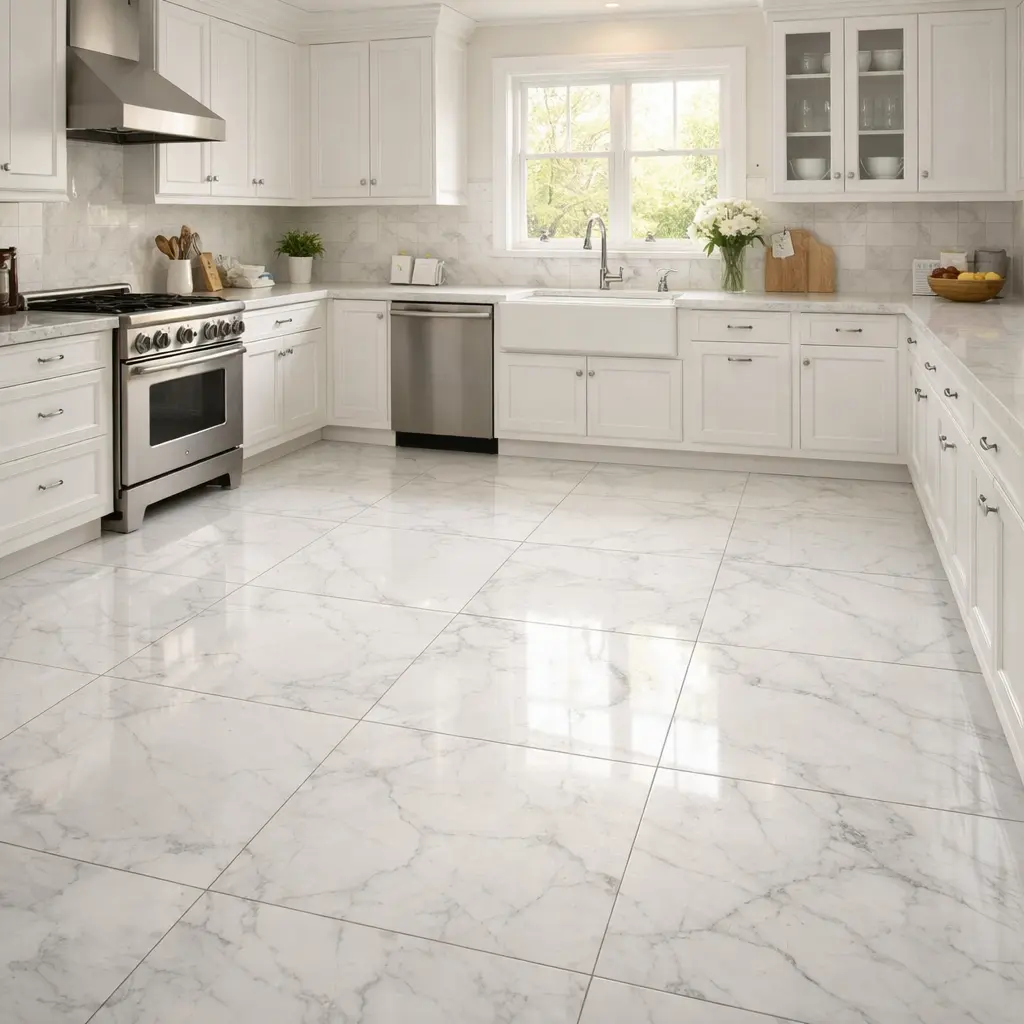
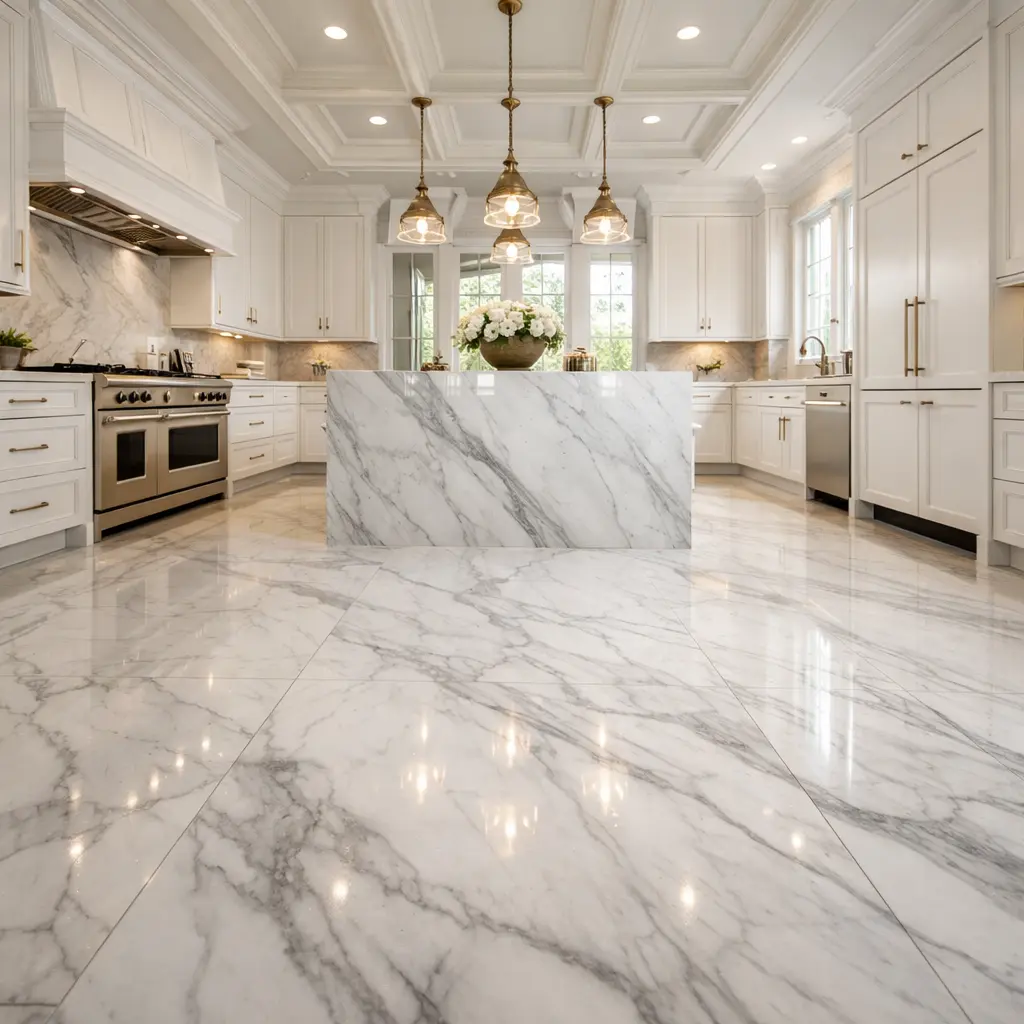
White marble is the most enduring and universally admired choice for kitchen flooring, and for good reason. Its bright, luminous surface reflects light beautifully, making even modest-sized kitchens feel open, airy, and refined. White marble pairs effortlessly with virtually every cabinetry color, from crisp white shaker cabinets to deep navy blue, warm wood tones, and sleek charcoal finishes.
Carrara marble, sourced from the mountains of Tuscany, is the most well-known variety of white marble. Its cool white background with soft grey veining has a gentle, understated quality that suits both traditional and contemporary kitchens. For a more dramatic statement, Statuario marble offers bolder, more pronounced veining against a brighter white base, giving the floor a graphic quality that draws the eye without overwhelming the room.
When selecting white marble tiles for kitchen floors, consider large format tiles of 24 by 24 inches or larger. Fewer grout lines mean a cleaner, more seamless appearance that allows the natural beauty of the marble to take center stage.
2. Grey Marble Floors for Modern Sophistication
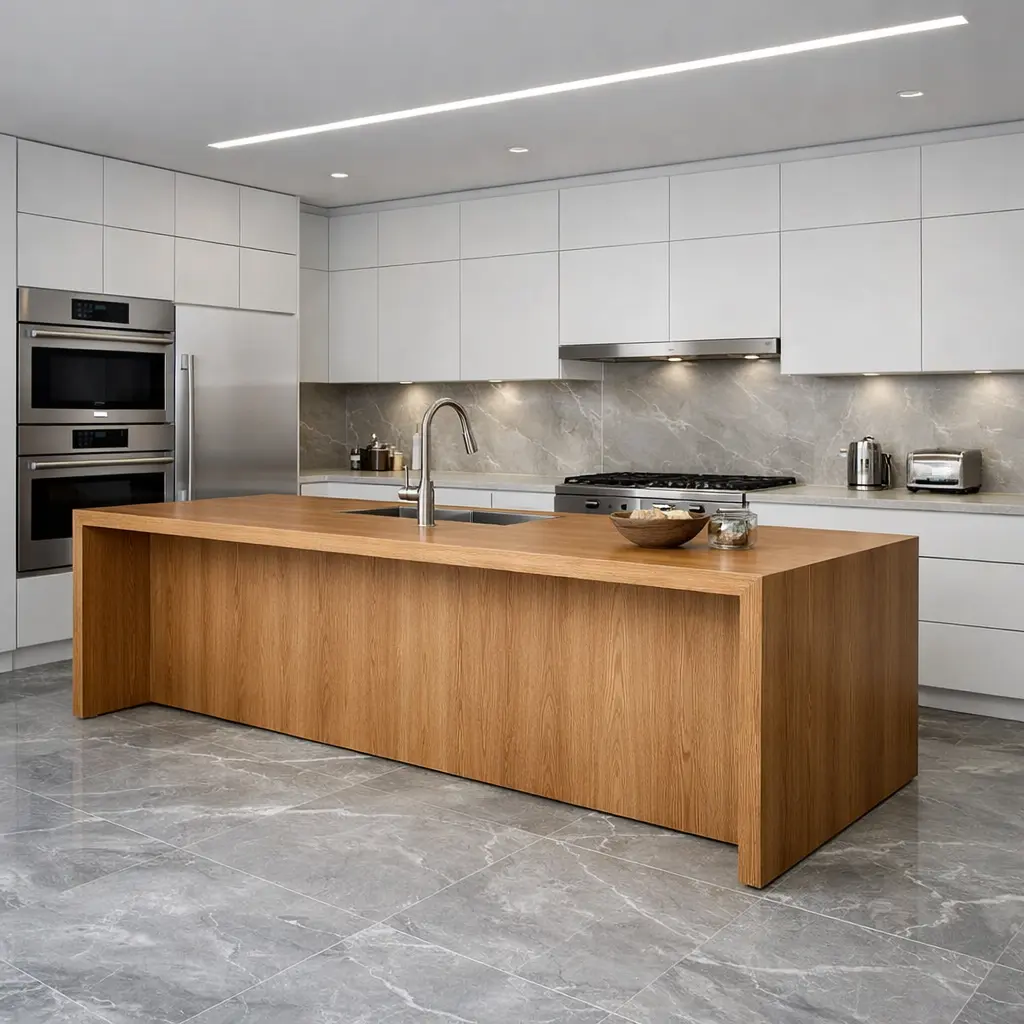
Grey marble is among the most versatile and increasingly popular choices for contemporary kitchen design. It occupies a middle ground between the brightness of white and the drama of black, offering a cool, composed elegance that integrates naturally with stainless steel appliances, concrete elements, and minimalist cabinetry.
The range within grey marble is surprisingly broad. At one end, you have pale dove grey tones with barely visible veining, creating a hushed and refined atmosphere perfect for Scandinavian or Japanese-influenced interiors. At the other, deep charcoal grey marbles with bold white or silver veining deliver a striking, high-contrast look that reads as confidently luxurious.
Grey marble floors pair particularly well with flat-panel cabinetry in matte white or warm wood, brushed nickel or chrome fixtures, and concrete-style countertops. The combination creates a kitchen that feels thoroughly modern without being cold or unwelcoming.
3. Black Marble Kitchen Floors for Dramatic Elegance
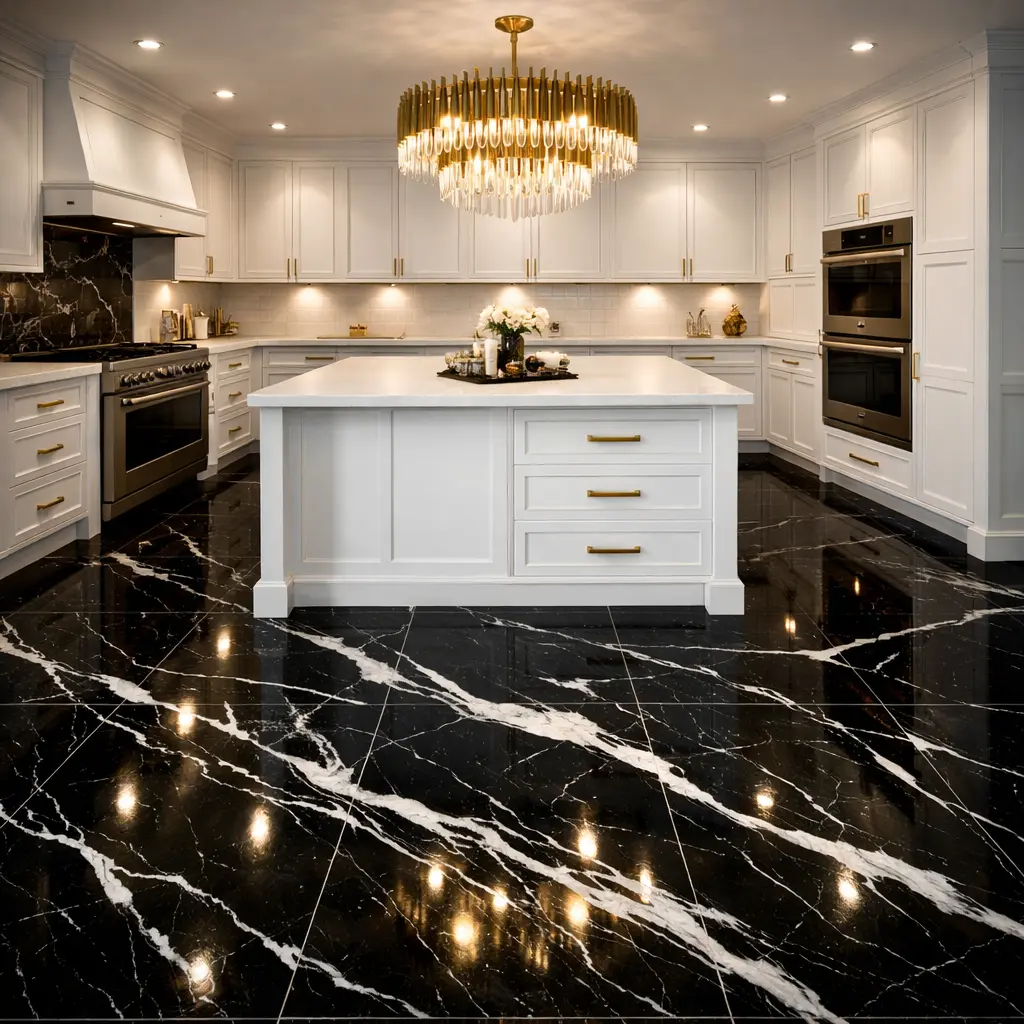
For homeowners who want a kitchen that commands attention and communicates unapologetic luxury, black marble flooring is the definitive choice. The depth and richness of dark marble, with its complex veining in gold, silver, or white, creates an interior that feels more like a high-end restaurant or boutique hotel than a domestic kitchen.
Nero Marquina, one of the most sought-after black marbles in the world, features crisp white veining against a deep, uniform black background. It is stunning when used as large format floor tiles in a kitchen with white or light grey cabinetry, as the contrast creates a graphic, editorial quality that photographs beautifully and lives even better.
Black marble floors do show water spots and dust more readily than lighter alternatives, so maintenance habits matter. Regular sweeping and prompt wiping of spills keeps the surface looking its best. The investment in care, however, is well rewarded by the sheer visual impact of a black marble kitchen floor.
4. Calacatta Marble Floors for Luxury Statement Kitchens
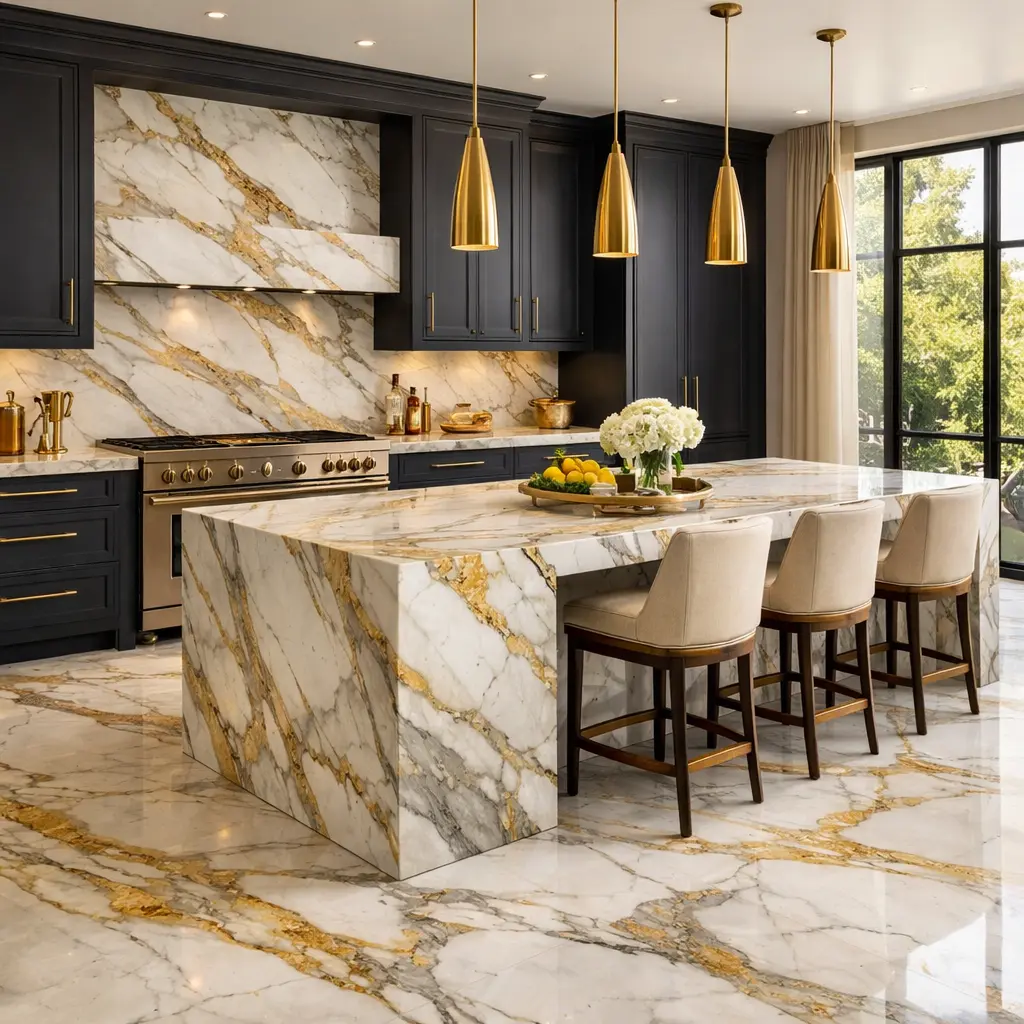
Calacatta marble is the pinnacle of marble luxury and the material most associated with high-end kitchen design worldwide. Quarried exclusively in the Apuan Alps of Italy, Calacatta is distinguished by its bright white background and bold, sweeping veins in shades of gold and warm grey. No two slabs are alike, and that individuality is precisely what makes it so coveted.
A Calacatta marble floor elevates a kitchen to an entirely different level of refinement. When paired with custom cabinetry, professional-grade appliances, and carefully chosen fixtures, it creates a space that feels genuinely bespoke. Many interior designers recommend extending Calacatta marble from the floor up to the backsplash and even the countertops for a seamless, continuous effect that is breathtaking in person.
Because of its relative rarity and the quality of its veining, Calacatta marble commands a premium price. For those who love its aesthetic but need a more accessible option, high-quality Calacatta-look porcelain tiles have reached a level of realism that is quite convincing as a starting point.
5. Herringbone Marble Pattern for Artisan Character
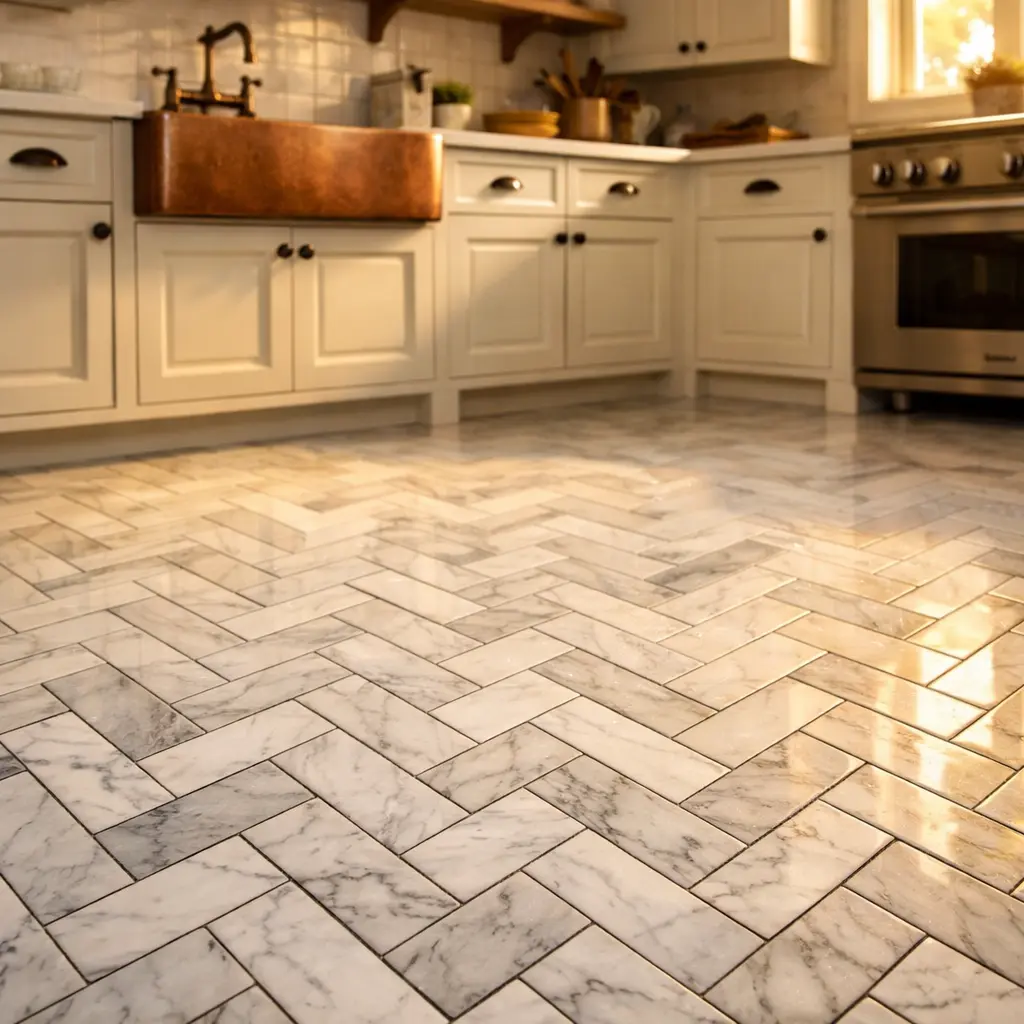
The herringbone pattern is one of the most beloved and enduring tile layouts in interior design history, and when executed in marble, it produces a kitchen floor of extraordinary visual richness. Individual rectangular marble tiles are laid at forty-five-degree angles to create a continuous V-shaped zigzag that moves dynamically across the floor, drawing the eye through the space.
Herringbone marble floors work beautifully in both traditional and transitional kitchens. In a classic white kitchen with shaker cabinetry and brass hardware, a white Carrara herringbone floor adds artisan craftsmanship and historical depth. In a more contemporary setting with clean lines and muted colors, a grey or beige marble herringbone floor adds texture and movement without disrupting the minimal aesthetic.
The herringbone layout does require more precision during installation and generates slightly more tile waste than a standard grid pattern. Working with an experienced tile installer who specializes in patterned layouts ensures clean, properly aligned results that honor the material.
6. Marble Mosaic Tiles for Intricate Kitchen Flooring Art
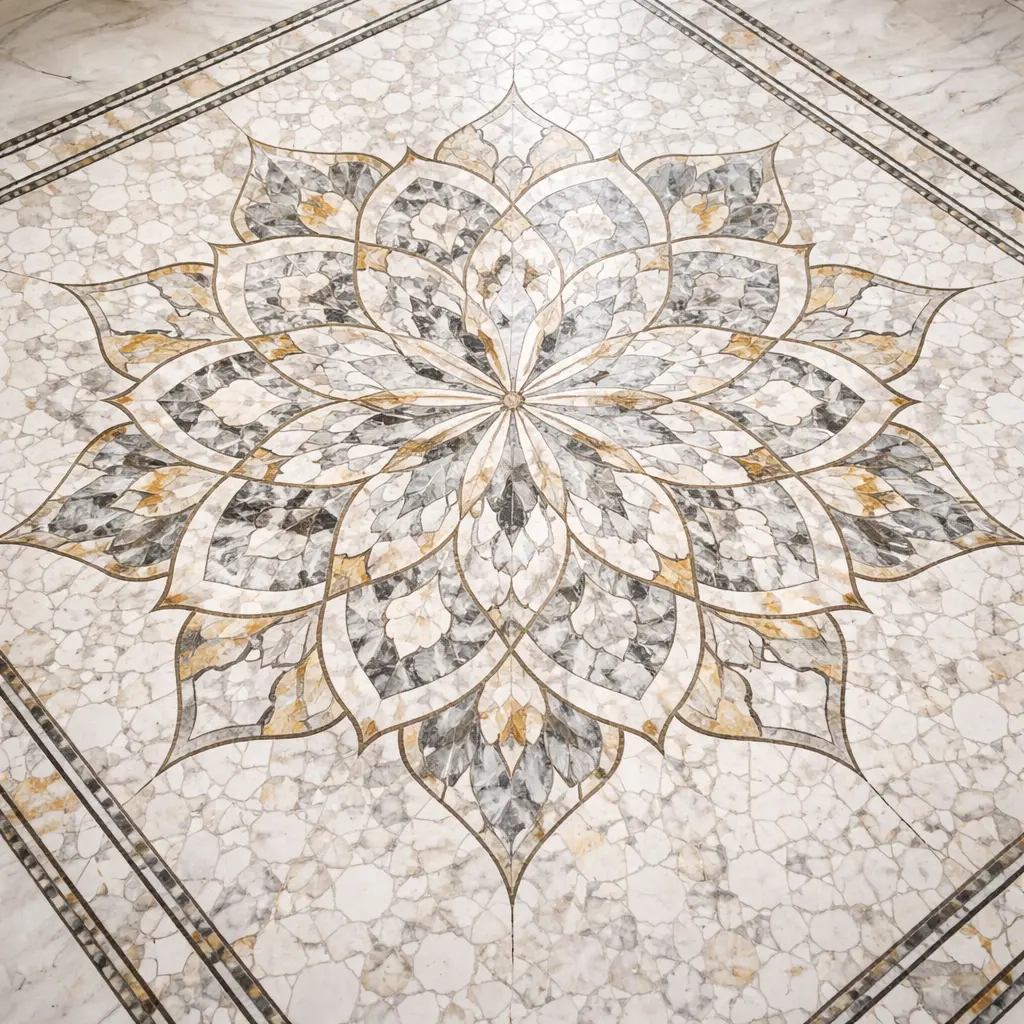
Marble mosaic tiles bring a level of detail and artistry to kitchen floors that larger format tiles simply cannot achieve. Composed of small individual pieces of marble arranged into patterns and fixed to mesh backing sheets for easier installation, marble mosaics transform floors into genuine works of art.
Classic mosaic designs include basket weave, penny round, pinwheel, and arabesque patterns. Each offers a different visual character: basket weave is structured and traditional, penny rounds are soft and organic, and arabesques carry a distinctly Mediterranean or Moorish influence. Waterjet-cut marble mosaics take the artistry even further, enabling complex geometric and floral designs with a precision and intricacy that rivals hand-crafted tilework.
Marble mosaic floors are particularly effective in kitchen entryways, beneath kitchen islands as a defined zone, or as decorative borders framing a simpler large-format tile field. The combination of mosaic and plain tile creates a layered, curated look that speaks of genuine design intention.
7. Beige and Warm-Toned Marble for an Inviting Kitchen
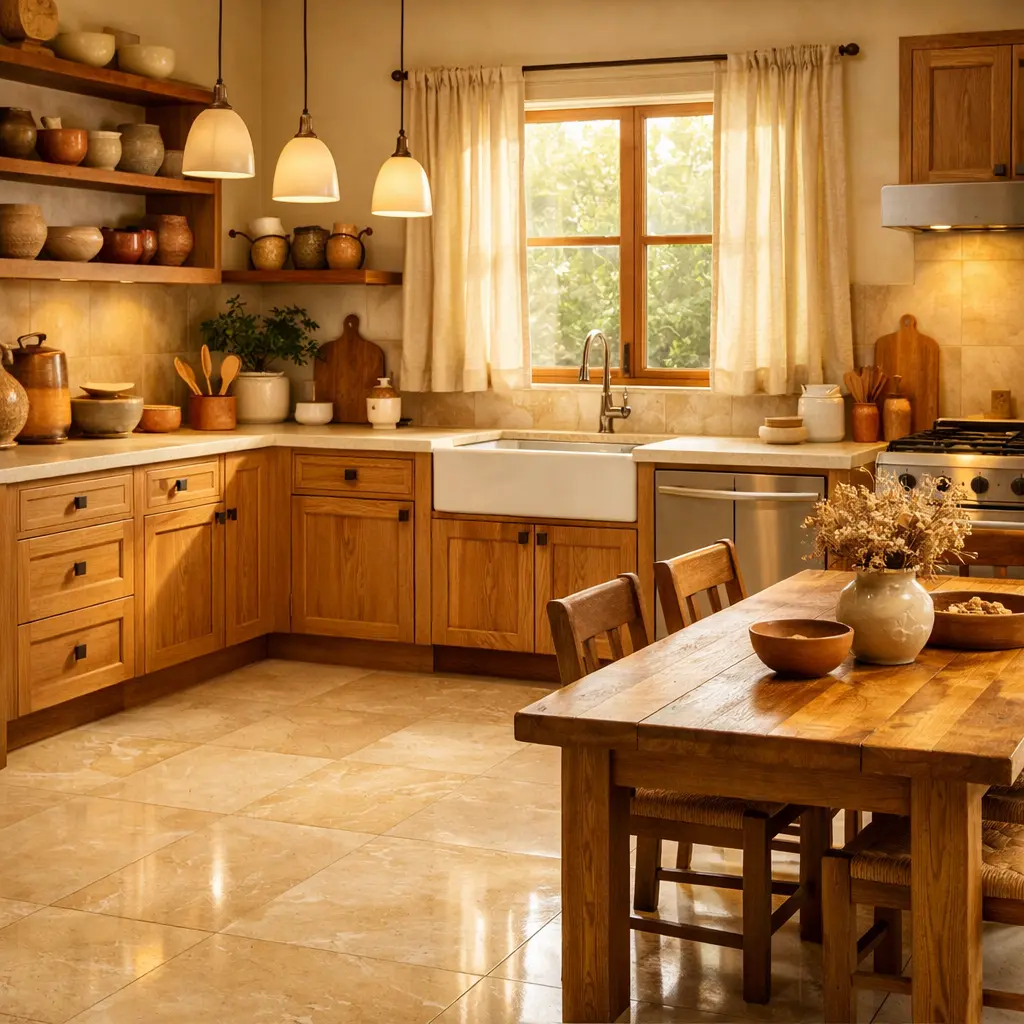
Not every kitchen needs to be cool, bright, or dramatically contrasted. For homeowners who want warmth, comfort, and a sense of natural, organic beauty in their kitchen, beige and warm-toned marble floors deliver exactly that. Crema Marfil, one of the world’s most popular beige marbles sourced from Spain, offers a pale cream to soft golden background with delicate veining that creates a quietly beautiful surface.
Warm marble tones work exceptionally well in kitchens with natural wood cabinetry, terracotta or copper accents, and earthy color palettes. They create an environment that feels nourishing and grounded, quite different from the cool precision of white or grey marble but no less sophisticated. For more insights visit Homeliaa.
Beige marble floors are also a practical choice for busy kitchens because their warm, varied tones are more forgiving of minor scuffs, dust, and the everyday marks of a well-used kitchen. Sealing them properly on installation and annually thereafter keeps them looking their very best for decades.
8. Checkerboard Marble Floor for Timeless Pattern Drama
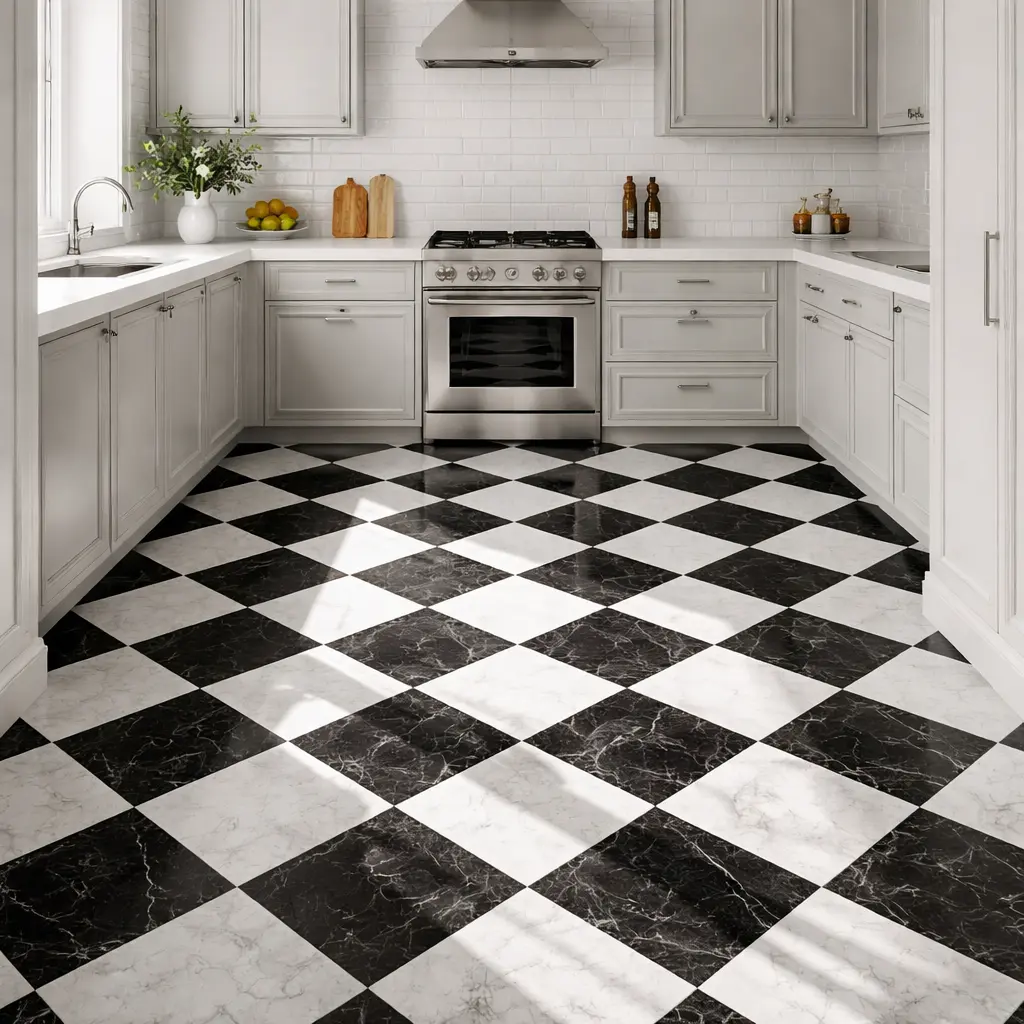
The checkerboard floor is one of the most recognized patterns in interior design history, having appeared in European palaces, Victorian townhouses, and Art Deco dining rooms for centuries. When rendered in alternating white and black marble tiles, it brings a sense of graphic boldness and historical elegance to a kitchen that is impossible to replicate with any other material.
The classic checkerboard uses equal squares of white and black marble set in a diagonal orientation, which makes the pattern appear more dynamic than a straight grid. Contemporary interpretations sometimes use grey and cream instead of pure black and white for a softer version of the same idea. Others play with scale, using very large tiles for a minimalist interpretation or very small tiles for a more intricate, detailed effect.
A checkerboard marble floor is a confident design statement that works best in kitchens with relatively restrained cabinetry and simple countertops. Let the floor be the star and build everything else around it with a calm, considered hand.
9. Large Format Marble Tiles for a Seamless, Spacious Look
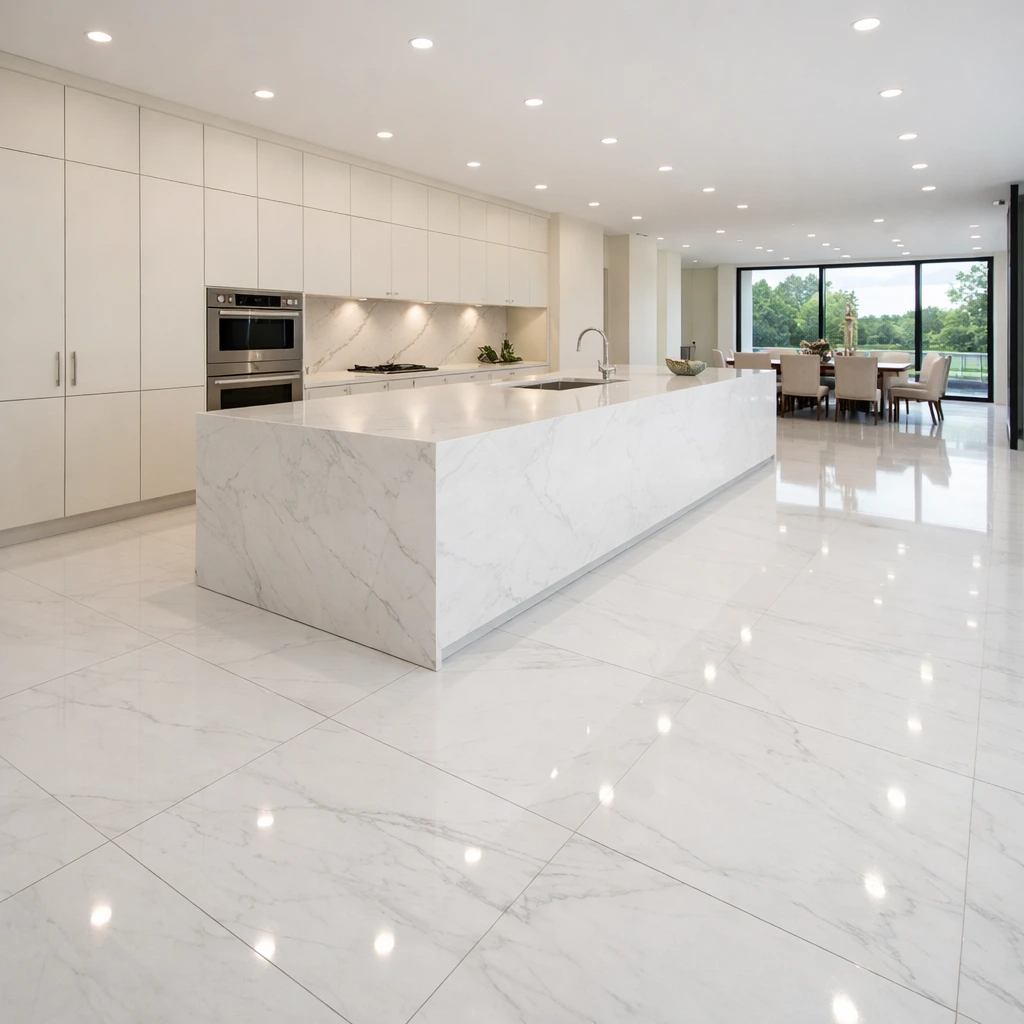
Large format marble tiles, typically measuring 24 by 24 inches, 24 by 48 inches, or even larger, have become one of the most sought-after trends in contemporary kitchen flooring. The reason is straightforward: fewer grout lines mean a more continuous, seamless surface that reads as more luxurious and makes the kitchen feel significantly more spacious than smaller tiles would.
When working with large format marble tiles, the quality and levelness of the subfloor is critical. Any imperfections in the substrate beneath become more noticeable with larger tiles, a phenomenon known as lippage, where tile edges sit at slightly different heights. A properly prepared subfloor and an experienced installer make all the difference between a floor that looks spectacular and one that disappoints.
In open-plan kitchens that flow into dining or living areas, large format marble tiles laid continuously across all spaces create an impressive sense of flow and cohesion. The eye travels unimpeded across the surface, amplifying the perception of space.
10. Honed Marble Floors for a Matte, Natural Finish
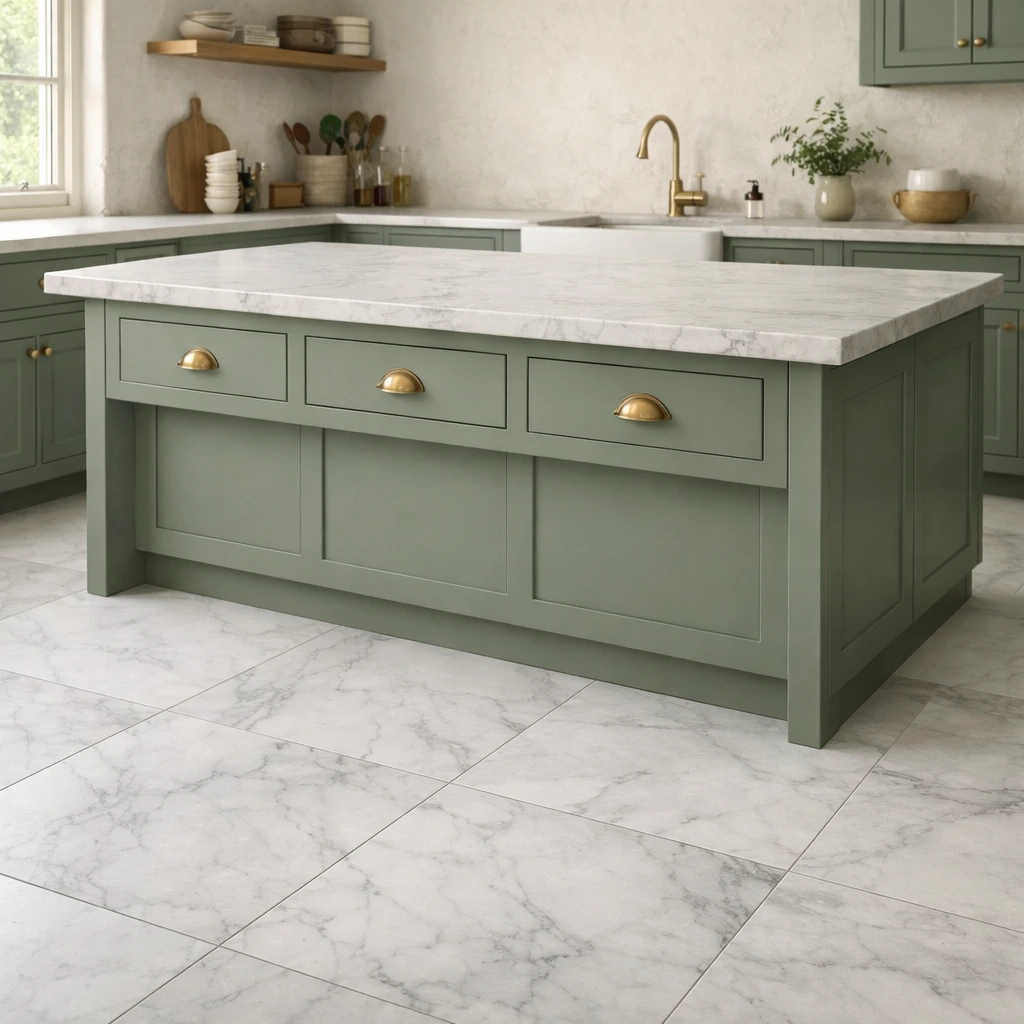
Most people are familiar with polished marble, which has a glossy, mirror-like surface that reflects light brilliantly. Honed marble is the alternative finish: matte, smooth, and considerably more understated in its appearance. It achieves this surface by stopping the grinding process before the final polishing stage, leaving the marble with a soft sheen rather than a high gloss.
Honed marble floors are an excellent practical choice for kitchens because the matte surface does not show scratches, etching, or water spots nearly as readily as polished marble. The trade-off is that honed marble is slightly more porous and requires sealing with equal care. For families with children, busy kitchens, or homeowners who prefer a more relaxed, natural aesthetic, honed marble strikes an ideal balance between beauty and practicality.
Honed white or beige marble floors in particular carry a quality of quiet, understated elegance that many designers find more sophisticated than the glossy alternative. They feel honest, tactile, and deeply connected to the natural origins of the material.
11. Chevron Marble Pattern for Contemporary Energy
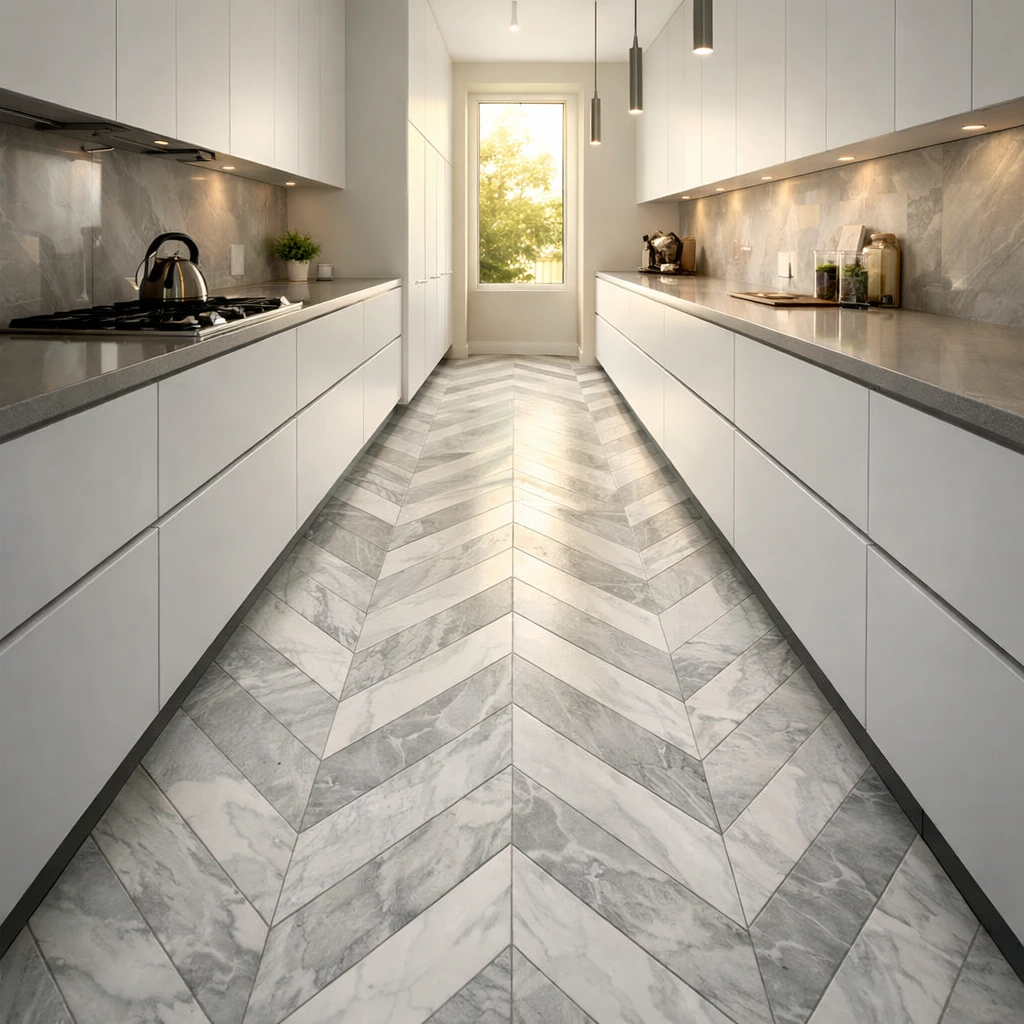
The chevron pattern is a close relative of the herringbone but with one important distinction: in a chevron layout, each tile is cut at an angle at both ends so that the joints meet in a perfect, continuous V-shape rather than a staggered zigzag. The result is a sharper, more directional pattern that feels more contemporary and energetic than herringbone.
Chevron marble floors are particularly effective in galley kitchens or long, narrow kitchen layouts because the pattern can be oriented to run lengthwise, visually extending the space and drawing the eye toward the far end of the room. In a square or L-shaped kitchen, the chevron creates a dynamic focal point that adds movement and personality without needing any additional decorative elements.
White or light grey marble in a chevron layout is a particularly popular combination in modern kitchen design because it unites classic material with a contemporary pattern language, bridging traditional and modern sensibilities in a single floor.
12. Green Marble Floors for a Nature-Inspired Kitchen
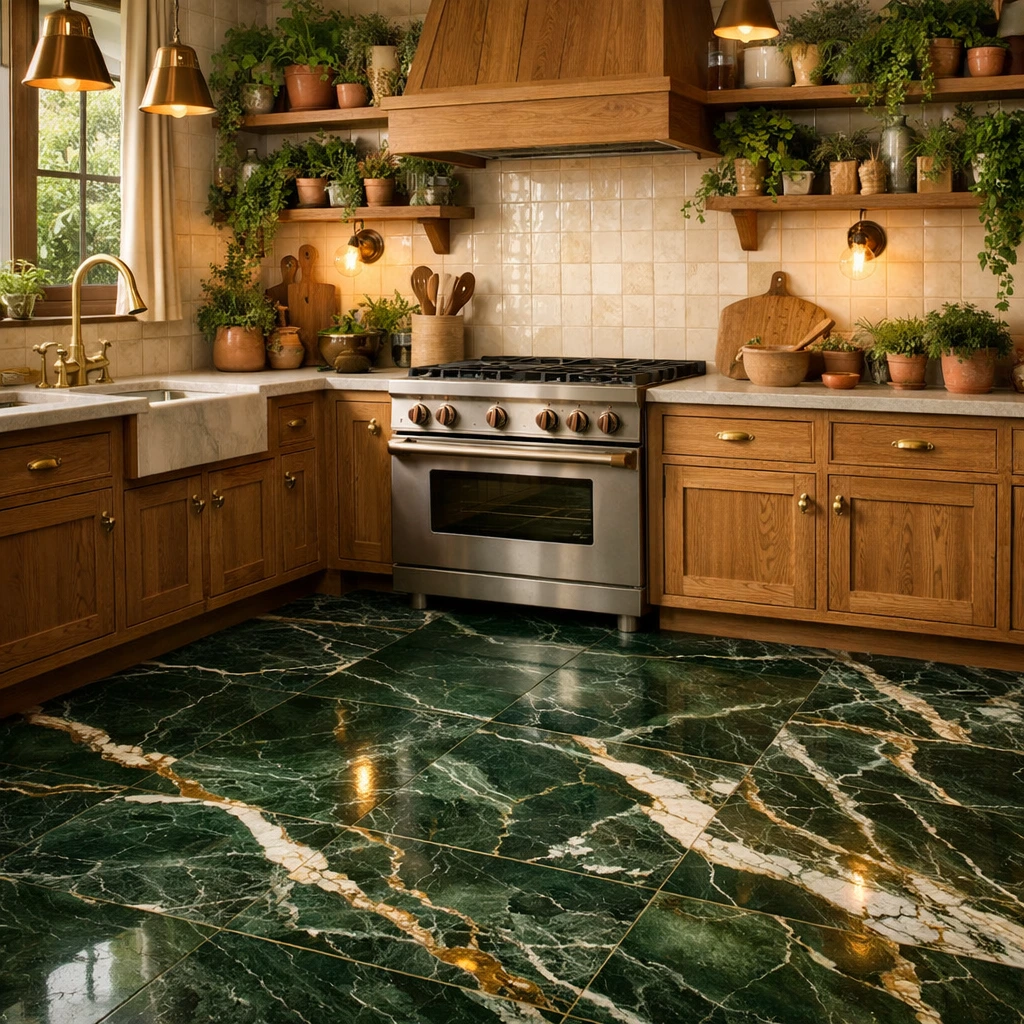
Green marble is among the most distinctive and increasingly fashionable choices for kitchen flooring. Drawing on the current widespread design interest in biophilic interiors, organic materials, and nature-inspired color palettes, green marble brings the outside world into the kitchen with genuine authority and beauty.
Verde Guatemala, Calacatta Green, and Cipollino are among the most popular green marble varieties, each with its own character. Some offer deep, forest green tones with bold white or gold veining. Others present softer, sage-like greens with subtle movement. All carry an undeniable sense of vitality and freshness that few other flooring materials can approach.
Green marble kitchen floors pair beautifully with natural wood cabinetry, unlacquered brass fixtures, handmade ceramic backsplash tiles, and stone countertops. The combination creates a kitchen that feels rooted, organic, and deeply personal, quite different from the sleek minimalism of grey and white but every bit as refined.
Conclusion
Marble floor ideas for kitchens span an extraordinary range of styles, colors, patterns, and finishes, yet they all share a common quality: the ability to transform an ordinary kitchen into a space of genuine beauty and lasting character. Whether you choose the classic purity of white Carrara marble, the modern drama of black Nero Marquina, the artisan richness of a herringbone pattern, or the practical elegance of marble look porcelain, you are making a flooring choice that will serve your kitchen well for many years to come.
The key to a successful marble kitchen floor lies in understanding the material honestly, selecting the right color and finish for your lifestyle, working with skilled installation professionals, and committing to the proper care that marble deserves. Done well, a marble floor is not merely a beautiful surface. It is an investment in the quality and character of your home that pays dividends every single day.
Take time to view samples in your actual kitchen under natural and artificial light before making a final decision. The way marble looks in a showroom can differ significantly from how it reads in your specific space. Trust your instincts, invest in quality, and choose the marble floor idea that genuinely moves you.
Frequently Asked Questions
1. Is marble flooring a good choice for kitchens?
Yes, marble flooring is an excellent choice for kitchens when properly selected, installed, and maintained. It is durable, naturally beautiful, and adds significant value to a home. The key requirements are regular sealing to protect against staining, use of pH-neutral cleaning products, and prompt attention to spills, particularly acidic substances. With proper care, marble kitchen floors last decades and often become more beautiful with age.
2. What is the best type of marble for kitchen floors?
The best type depends on your priorities and lifestyle. Carrara marble is a classic choice that balances beauty with relative affordability. Calacatta marble is the premium option with dramatic veining and a bright white background. For families with busy kitchens, honed marble in grey or beige tones is more forgiving of daily wear. For a dramatic modern kitchen, black Nero Marquina marble delivers unmatched visual impact.
3. How often does marble kitchen flooring need to be sealed?
Marble kitchen floors should be sealed before first use and resealed approximately once per year under normal use conditions. High-traffic kitchens or those prone to frequent spills may benefit from sealing every six to eight months. A simple water test confirms when resealing is needed: if water droplets soak into the marble rather than beading on the surface, it is time to apply a fresh coat of penetrating stone sealer.
4. What is the difference between honed and polished marble for kitchen floors?
Polished marble has a glossy, reflective surface that enhances the depth and luminosity of the stone’s color and veining. It is more vulnerable to visible scratches and etching. Honed marble has a matte, smooth surface with a soft sheen. It is more resistant to visible surface damage and offers a more understated, natural aesthetic. For kitchens, honed marble is often recommended for its practicality, while polished marble suits formal or low-traffic kitchen spaces.
5. Can I use marble look porcelain tiles instead of natural marble in my kitchen?
Absolutely. High-quality marble look porcelain tiles are a practical and visually convincing alternative to natural marble. They require no sealing, are highly resistant to staining and etching, and are generally more affordable. Modern manufacturing technology has made the best porcelain marble-look tiles remarkably realistic. They are an excellent choice for busy households, rental properties, or any kitchen where low maintenance is a priority without sacrificing the marble aesthetic.