15+ Stylish Orange Couch Living Room Ideas
Few design decisions carry as much visual power as choosing an orange couch for your living room. Bold, warm, and undeniably inviting, an orange couch has a unique ability to transform an ordinary room into a space that feels deliberate, energetic, and full of personality. Whether you lean toward a deep burnt orange, a rich terracotta, a vibrant tangerine, or a soft rust tone, this color family has something for every taste and every interior style.
For decades, orange sat at the edge of mainstream home decor, considered too bold for most spaces. Today, it sits firmly at the center of some of the most celebrated living room designs around the world. Interior designers consistently turn to orange sofas as anchor pieces that tie together warmth, texture, and color in a single statement. The key to making an orange couch work beautifully lies in understanding how to pair it with the right colors, materials, lighting, and accessories.
This article explores fifteen stylish orange couch living room ideas that cover a wide range of aesthetics, from minimalist and modern to bohemian and maximalist. Whether you are redecorating an entire room or simply searching for fresh ideas to style around a couch you already own, the following ideas offer clear, practical, and visually rewarding direction.
1. Burnt Orange Couch Against Crisp White Walls
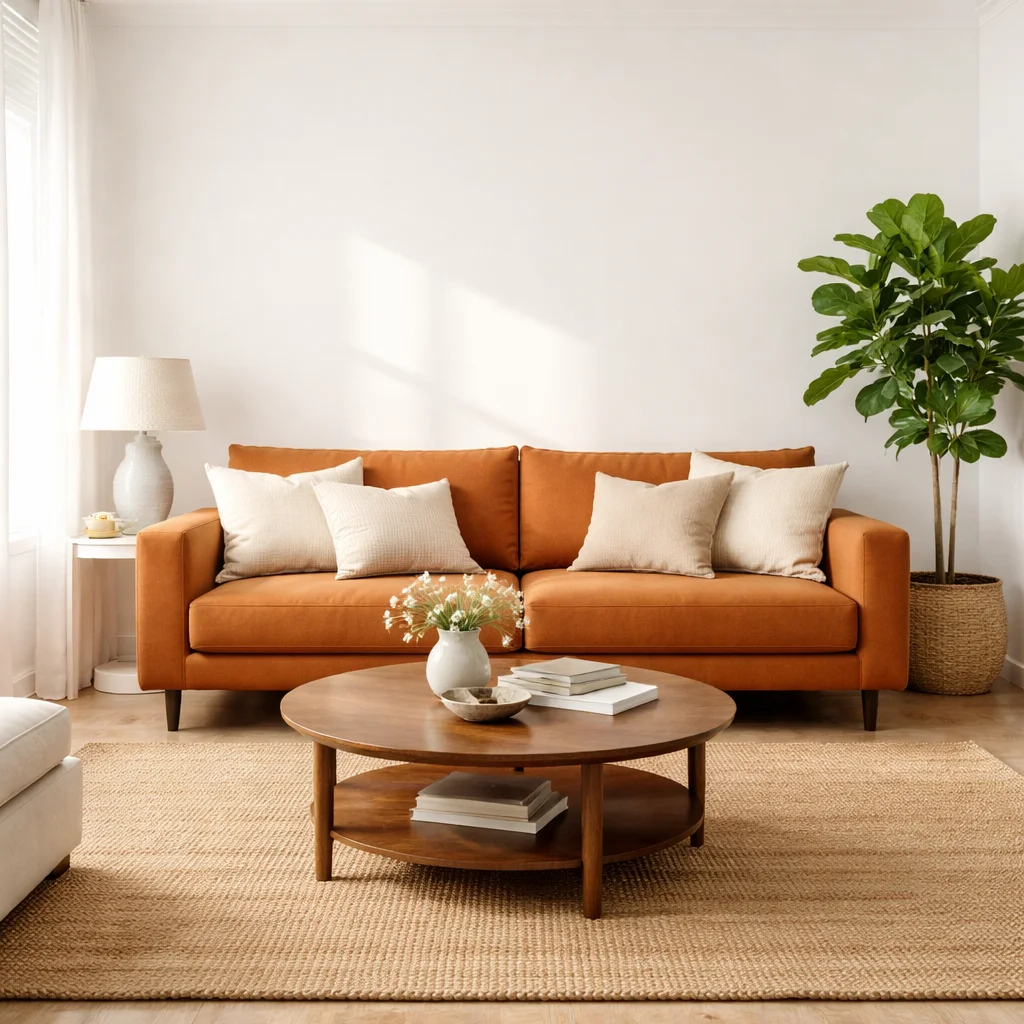
One of the most timeless and effective combinations in interior design is a burnt orange couch placed against clean white walls. The contrast is striking without being chaotic. The white backdrop allows every tone in the orange upholstery to shine, while keeping the overall atmosphere open and airy. This pairing works especially well in smaller living rooms where you want the couch to serve as the undisputed focal point without overwhelming the space.
To complete this look, add natural wood elements such as a walnut coffee table or light oak shelving. Throw pillows in cream, sand, or warm beige keep the palette cohesive. A simple jute rug underfoot adds earthy texture that grounds the entire composition. The result is a space that feels curated and confident without requiring an extensive redesign.
2. Orange Velvet Sofa in a Scandinavian-Inspired Room
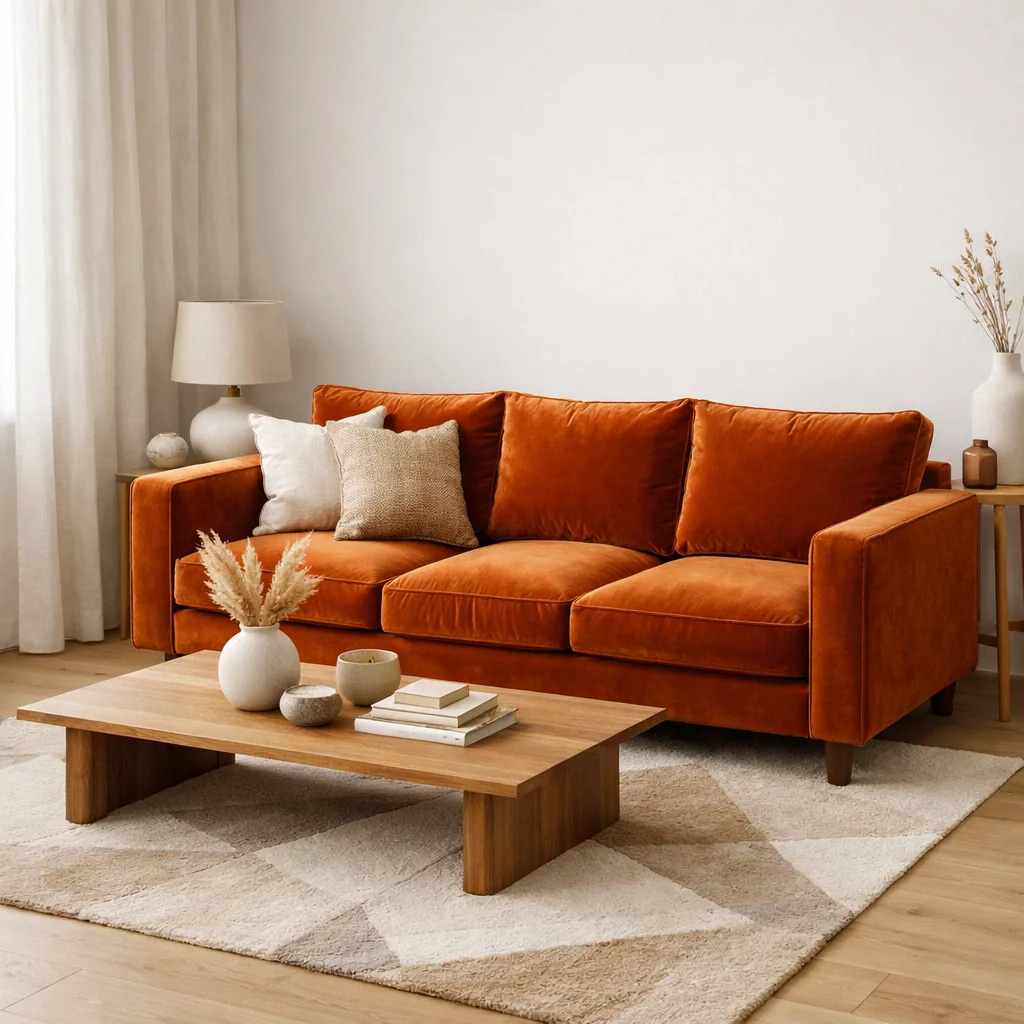
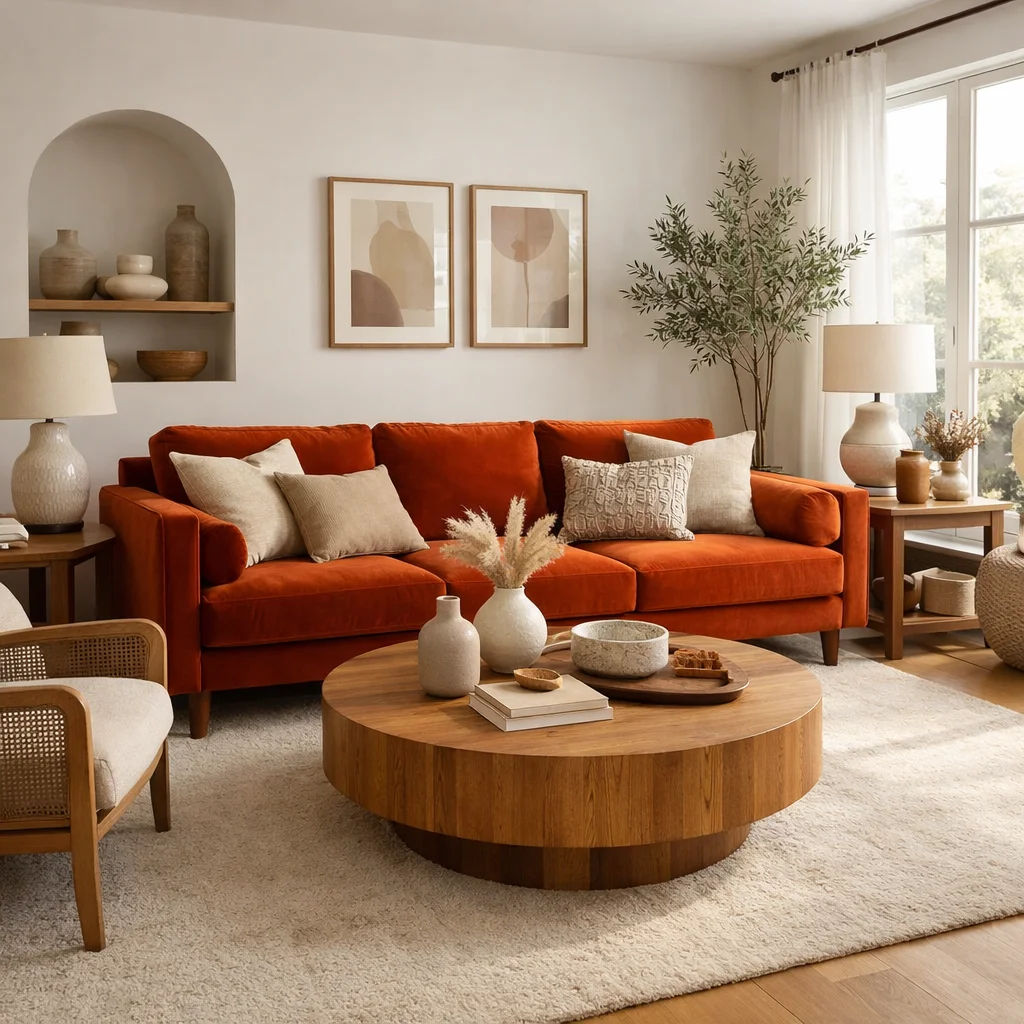
Scandinavian design is known for its dedication to simplicity, function, and warmth. An orange velvet sofa fits naturally into this aesthetic, adding a luxurious pop of color to what might otherwise be a very restrained palette. In a room dominated by whites, light grays, and natural wood tones, a velvet orange sofa introduces warmth and tactile richness that elevates the entire space.
Keep the surrounding furniture clean-lined and minimal. A low wooden coffee table, simple linen curtains, and a geometric area rug in neutral tones create just enough visual interest without competing with the sofa. Crown molding details or a statement wall tapestry can add architectural character while still letting the couch hold the spotlight.
3. Orange Couch with Navy Blue Walls
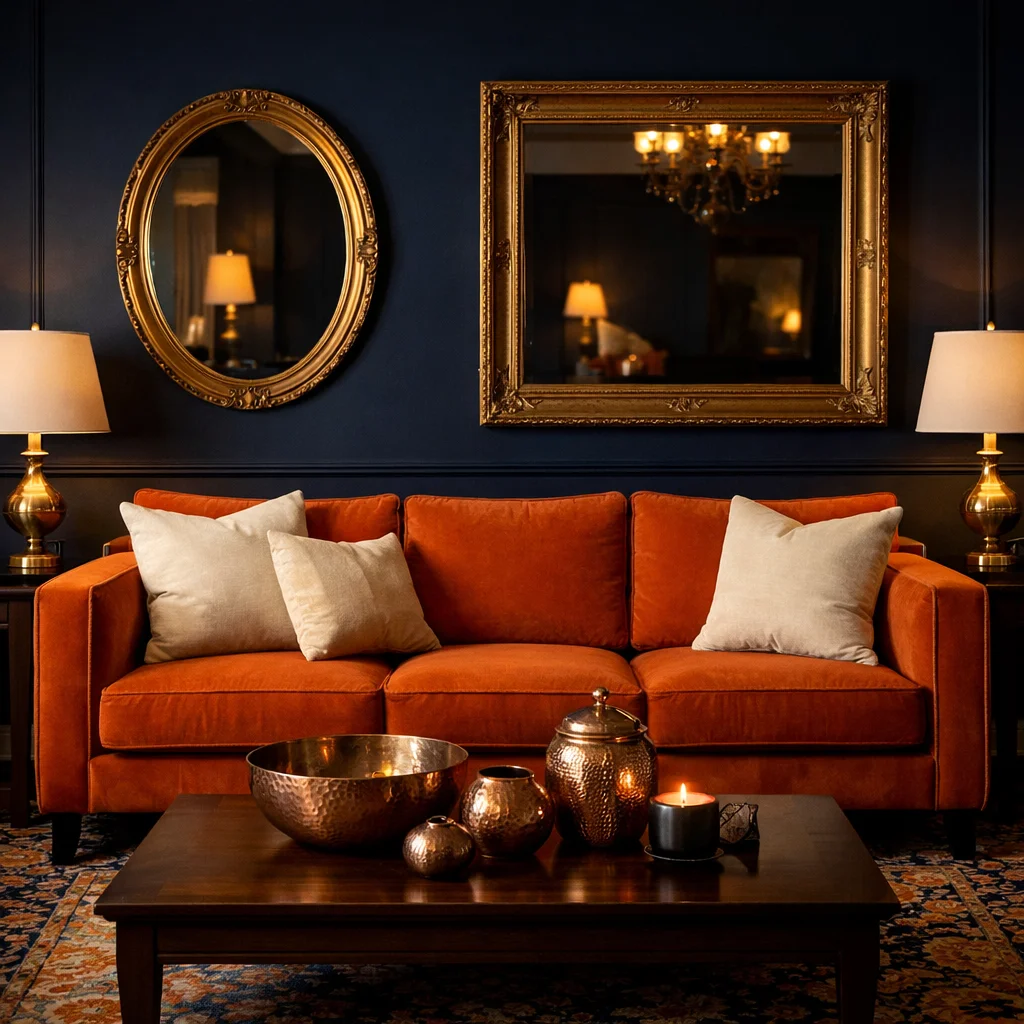
Navy blue and orange sit on opposite sides of the color wheel, which makes them a naturally powerful combination. Pairing an orange couch with deep navy blue walls creates a moody, sophisticated interior that feels both dramatic and warm. This is a particularly effective choice for living rooms that receive limited natural light, as the boldness of the combination creates its own visual energy.
Layer in metallic accents through brass table lamps, gold-framed mirrors, or copper decorative objects to introduce a sense of luxury. Throw pillows in cream or ivory prevent the combination from feeling too dark. A patterned area rug that incorporates both orange and blue ties the palette together seamlessly.
4. Rust-Toned Sofa in a Mid-Century Modern Living Room
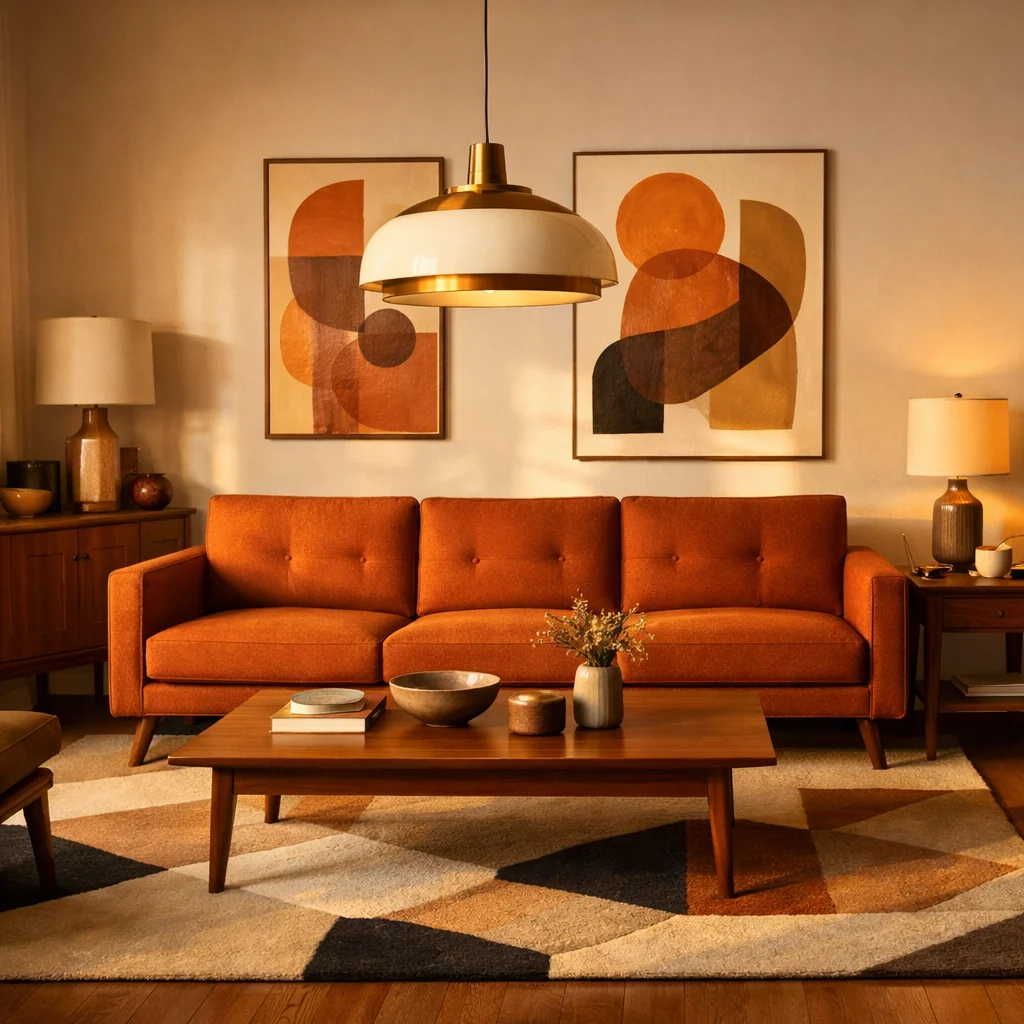
The mid-century modern aesthetic and rust orange tones were practically made for each other. This design era, which peaked in the 1950s and 1960s, celebrated warm earthy palettes, organic shapes, and natural materials. A rust-colored sofa with clean lines, tapered legs, and quality upholstery is the quintessential mid-century statement piece.
Pair the sofa with walnut furniture, hexagonal floating shelves, and a geometric pendant lamp to complete the vintage aesthetic. A low-profile coffee table in warm wood tones, combined with abstract wall art and a retro-style area rug, reinforces the mid-century character. Muted mustard, olive green, and warm brown accent pieces work beautifully in this setting.
5. Bohemian Orange Couch Surrounded by Layered Textures
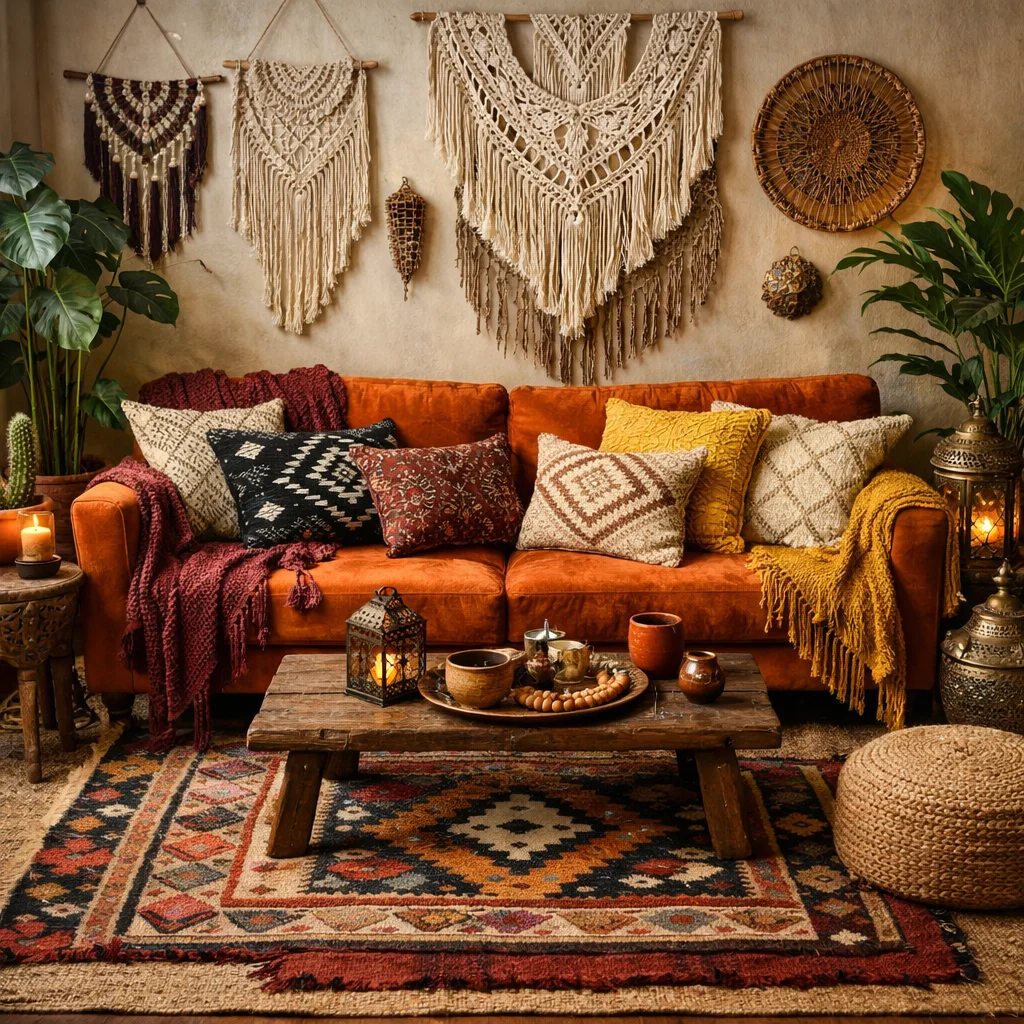
The bohemian design style thrives on layering, color, and a relaxed sense of abundance. An orange couch is a natural centerpiece for a boho-inspired living room. The warmth of the orange tone complements the earthy, global feel of this aesthetic, and it allows for a wide variety of patterns, textures, and accessories to coexist without the space feeling cluttered.
Surround the couch with macrame wall hangings, woven throw blankets, and cushions in rich jewel tones such as burgundy, teal, and mustard yellow. Indoor plants in various sizes add organic freshness. A layered rug arrangement with a patterned kilim over a jute base creates depth underfoot. The overall effect is warm, lived-in, and deeply personal.
6. Orange Sectional in an Open-Plan Living Space
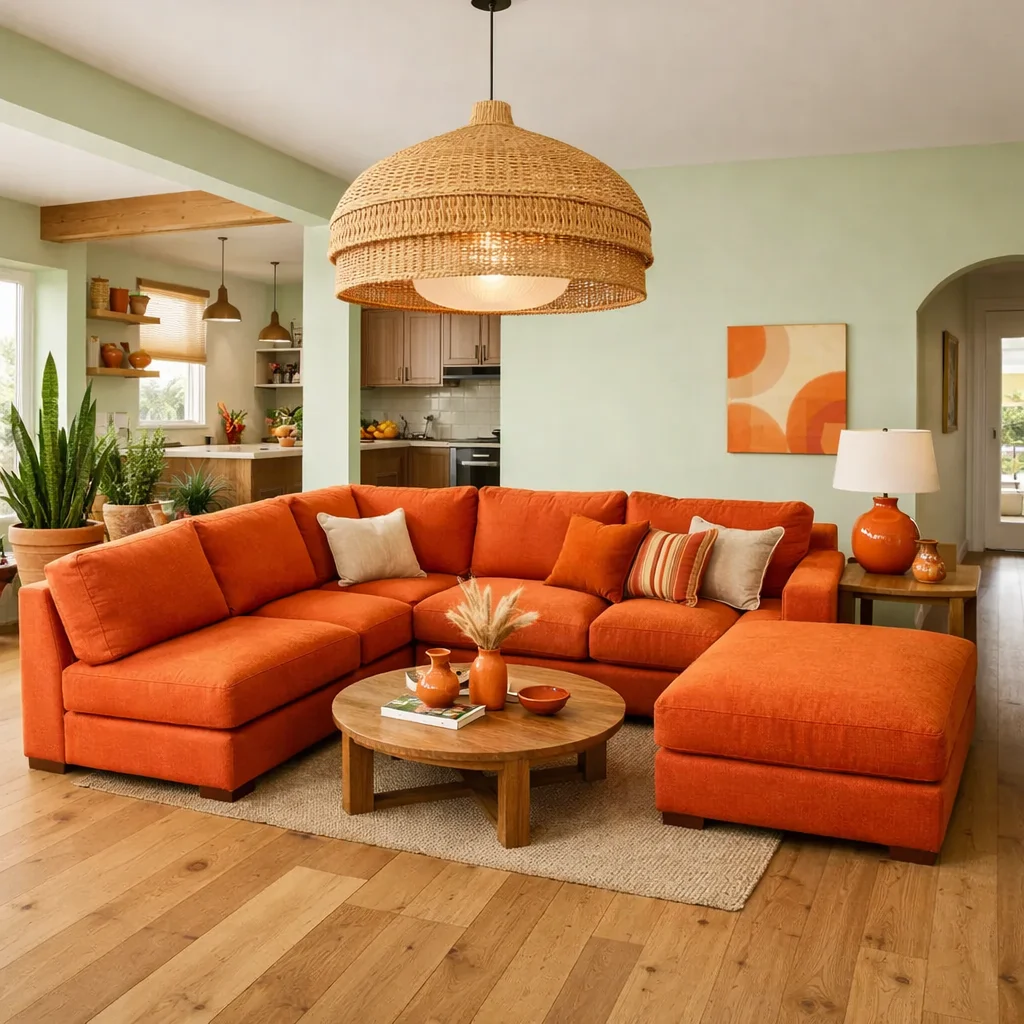
A large L-shaped orange sectional can do extraordinary work in an open-plan living area. Its bold color and generous proportions define the seating zone clearly within a larger space, creating a sense of structure without the need for walls or dividers. The scale of a sectional also means the orange tone gets full visual expression, making it impossible to ignore in the best possible way. For more insights visit Homeliaa.
In an open-plan setting, it is important to echo the orange elsewhere in the room, even subtly, to create visual continuity. An orange decorative vase on the dining table, a terracotta pot near the kitchen island, or artwork featuring warm tones helps thread the color throughout the connected spaces. Light green walls and natural light enhance the warmth of the sectional beautifully.
7. Burnt Orange Sofa Paired with Olive Green and Natural Wood
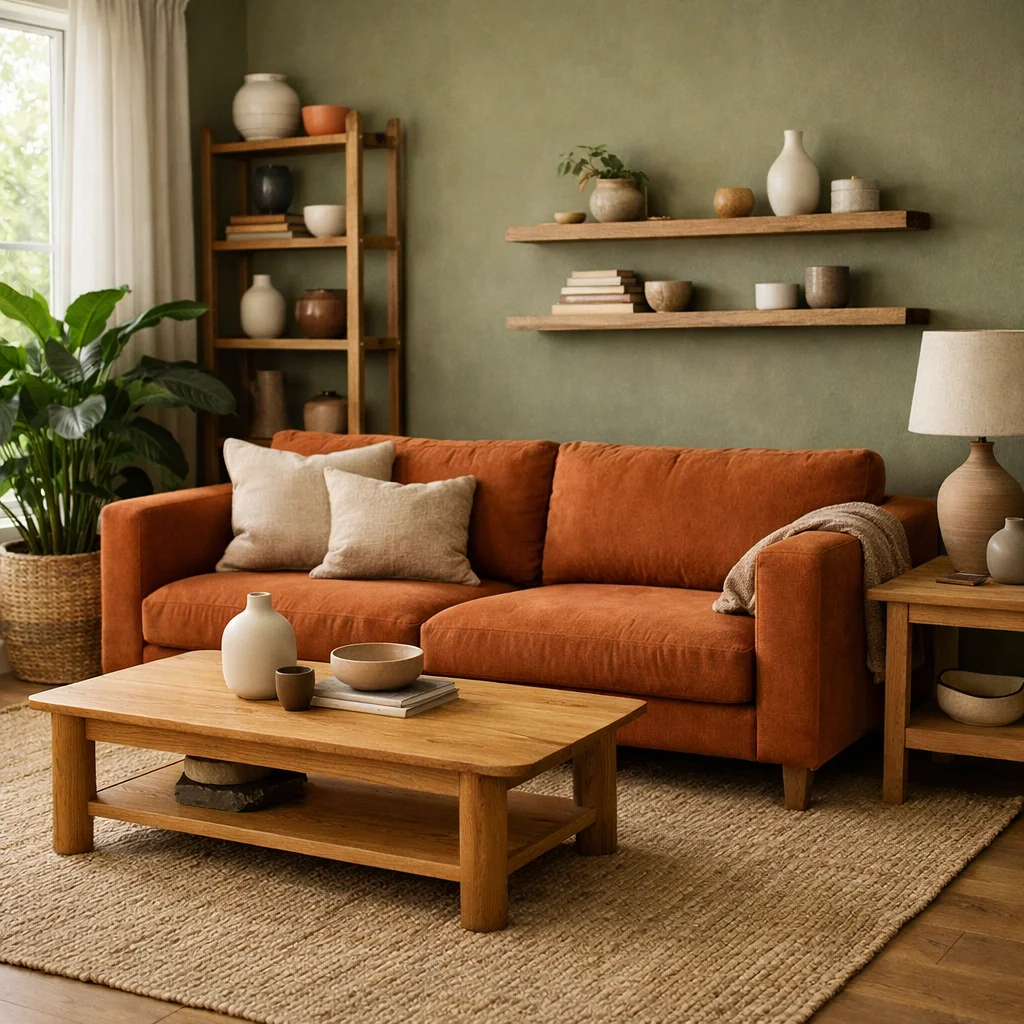
For those who love organic, earthy interiors, the combination of burnt orange, olive green, and natural wood is a particularly satisfying one. These three elements share the same warm, nature-inspired spirit, and together they create a living room that feels grounded, cozy, and visually rich without any jarring contrasts.
This palette works best when supported by natural materials throughout. Wooden floors in oak or walnut, linen curtains in warm cream or sage, and ceramic accessories in matte earth tones reinforce the organic mood. Potted plants, particularly those with broad, lush leaves, soften the boldness of the orange and add life to the overall composition.
8. Minimalist Orange Couch as a Statement Focal Point
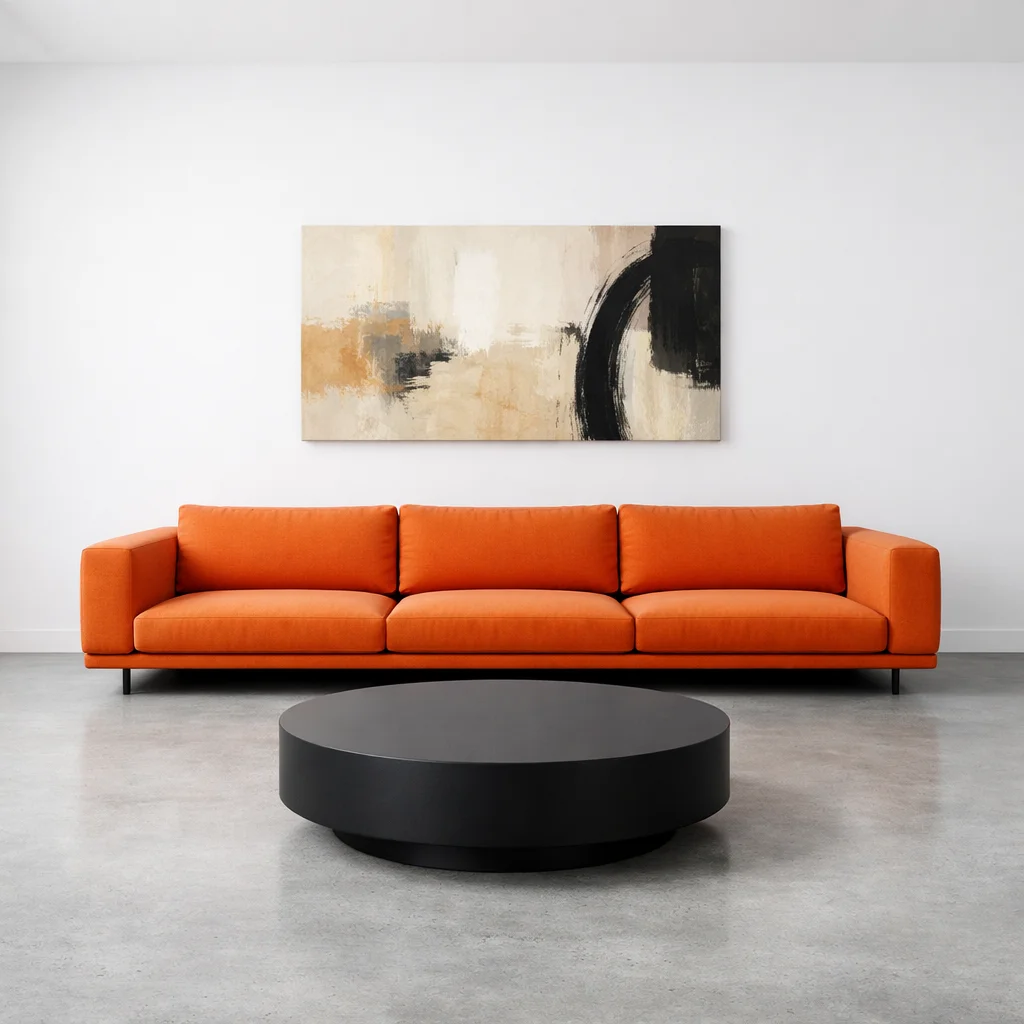
In a minimalist living room, every piece of furniture carries significant visual weight because there are so few elements competing for attention. Placing a sleek, low-profile orange couch in such a space makes it an unmistakable focal point. The simplicity of the surrounding environment amplifies the impact of the color rather than diminishing it.
Choose a sofa with clean lines and minimal embellishments. Keep surrounding furniture in neutral tones, a white or light gray wall, and an uncluttered floor plan. A single piece of abstract artwork and a simple round coffee table in a contrasting material such as glass or matte black complete the look. Less truly is more here, and the orange carries the room effortlessly.
9. Orange Couch in a Teal and Orange Color Scheme
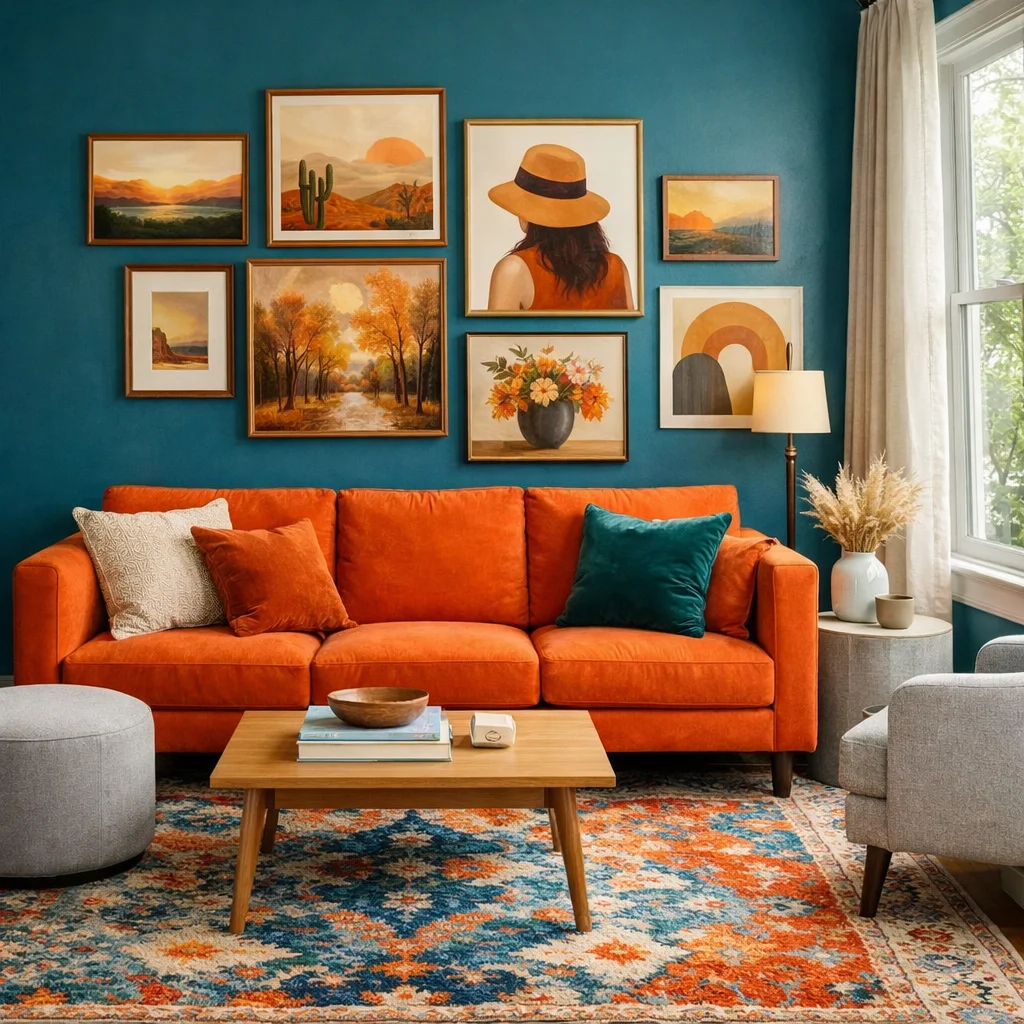
Teal and orange are one of the most celebrated complementary color pairings in interior design. The cool, blue-green depth of teal provides the perfect counterbalance to the warm vibrancy of orange, creating a room that feels both energetic and harmonious. Teal blue walls with a bold orange sofa is a combination that feels fresh, confident, and visually exciting.
A patterned area rug that incorporates both colors is a particularly elegant way to anchor the room. Gallery walls work well in this setting, adding personality and visual interest without disrupting the color story. Furniture in neutral tones such as white or light gray keeps the palette from feeling overwhelming while allowing both hero colors to shine.
10. Terracotta Couch with Warm Neutrals and Rattan Accents
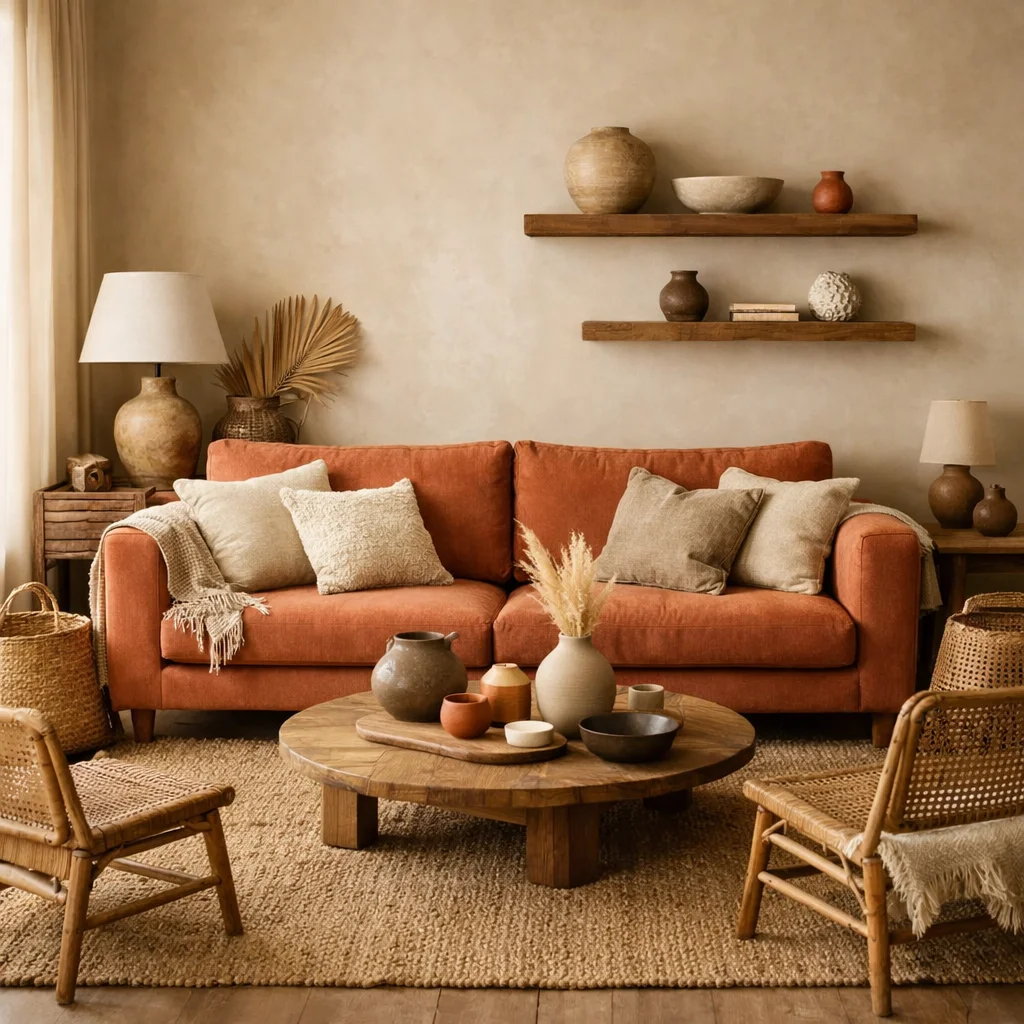
Terracotta is the softest and most livable shade within the orange family. A terracotta-toned couch feels warm and grounding rather than bold or energetic, making it an excellent choice for those who want the richness of orange without its full vibrancy. This shade pairs beautifully with warm neutrals such as sand, cream, taupe, and linen, creating a palette that feels endlessly comfortable.
Rattan furniture, whether in the form of accent chairs, side tables, or pendant lighting, adds a natural, artisanal quality that complements the terracotta beautifully. Woven baskets, ceramic accessories in matte earth tones, and a jute area rug complete the setting. The overall impression is one of relaxed sophistication, inviting without effort.
11. Industrial Living Room with a Rust Leather Orange Couch
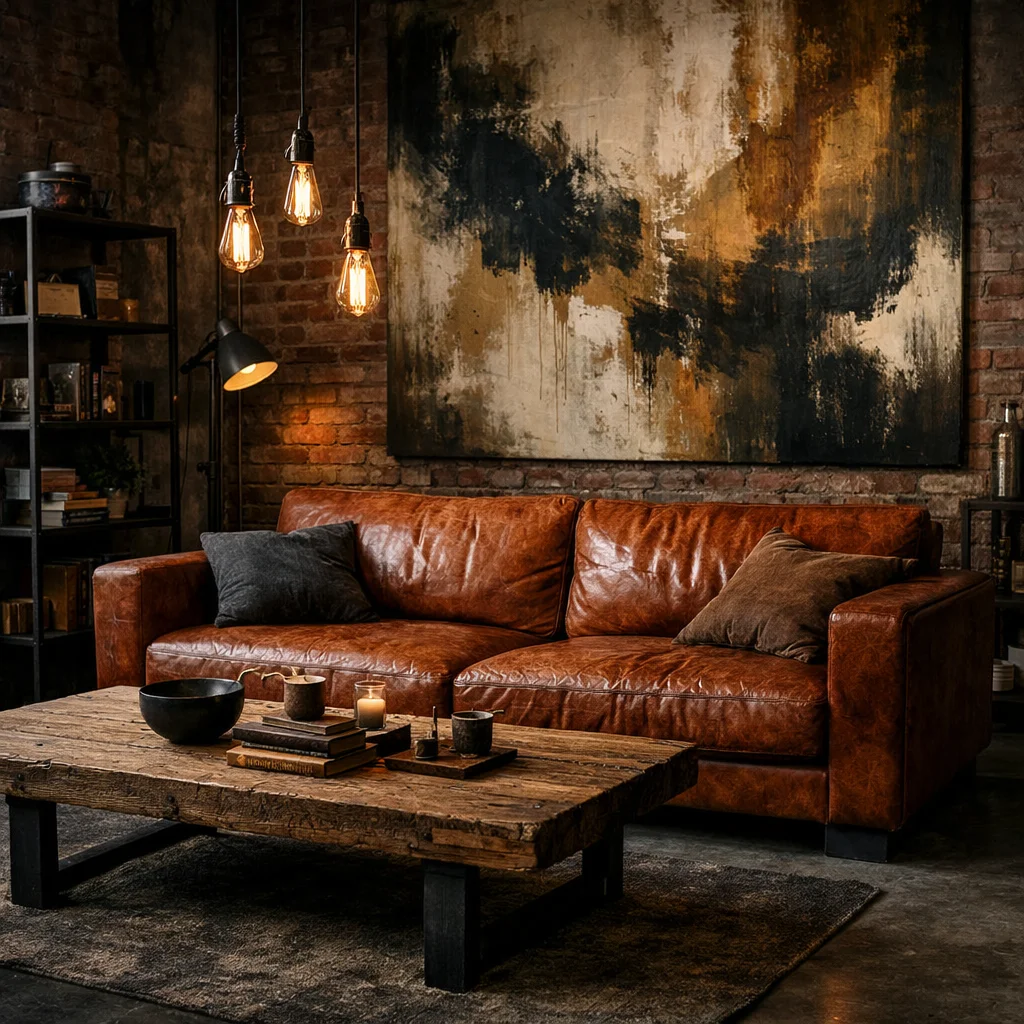
The industrial design aesthetic, with its exposed brick, raw concrete, and metal accents, finds a wonderful partner in a rust-colored leather sofa. The richness of the leather brings warmth to an otherwise raw and utilitarian environment, softening the stark edges of industrial design without compromising its character. Rust leather in particular has an aged, worn quality that feels perfectly at home in this setting.
Pair the sofa with a reclaimed wood coffee table, metal-framed shelving, and Edison bulb lighting for maximum industrial effect. Oversized abstract artwork on an exposed brick wall adds character and visual height. Dark gray or charcoal flooring ties the palette together and reinforces the moody, masculine tone of the room.
12. Orange Couch with Gallery Wall and Eclectic Accessories
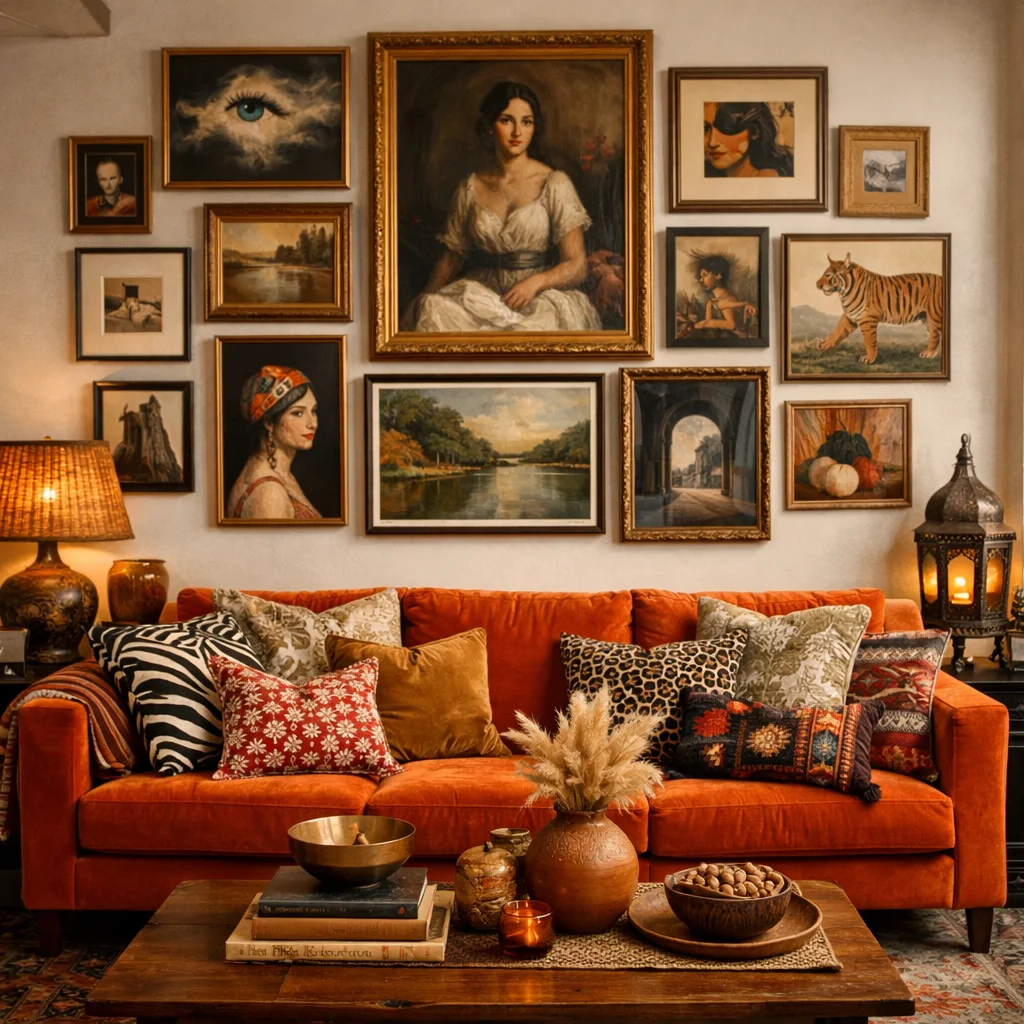
A gallery wall is one of the most effective ways to integrate an orange couch into an eclectic or maximalist interior. By building a curated collection of artwork, prints, and decorative objects above and around the sofa, the orange becomes part of a larger visual story rather than an isolated statement. The key is to ensure that some elements within the gallery wall incorporate or reference warm tones, pulling the sofa into the overall composition.
Mix different frame sizes, artwork styles, and decorative elements to create a gallery wall that feels personal and layered. Eclectic throw pillows in a range of prints and textures add further complexity to the sofa itself. This approach works particularly well in living rooms with high ceilings, where the vertical scale of a gallery wall can be used to full advantage.
13. Orange Couch in a Farmhouse-Style Living Room
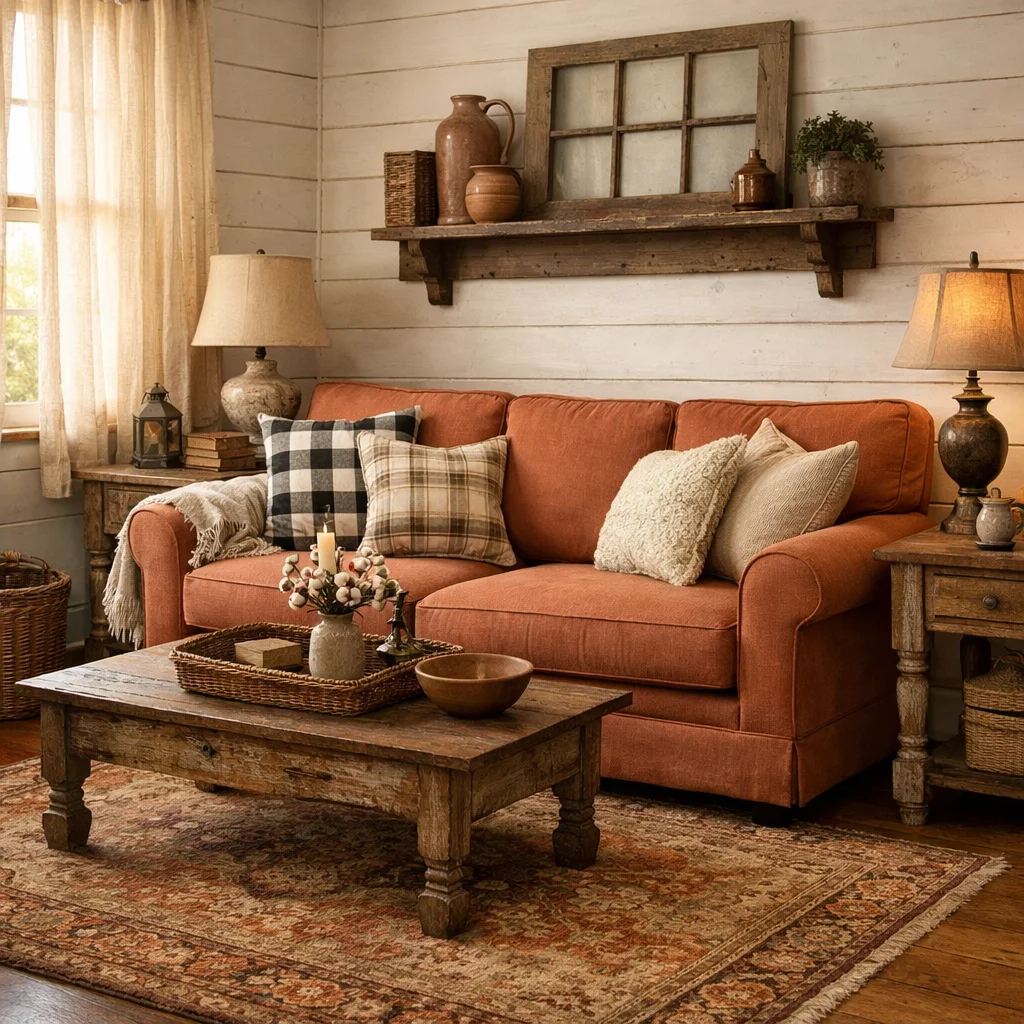
The warmth and character of a farmhouse-style interior make it a surprisingly natural fit for an orange couch. The key is to choose a muted or earthy shade of orange rather than a bright or vivid tone. A warm, slightly dusty orange or a deep rust complements the typically neutral farmhouse palette of white, cream, and natural wood without overwhelming it.
Shiplap walls, distressed wood furniture, and vintage accessories reinforce the farmhouse aesthetic. Soft textiles in plaid, chambray, or buffalo check patterns work beautifully as throw blankets and cushion covers. An antique-style rug with warm tones underfoot completes the comfortable, lived-in feeling that defines this interior style at its best.
14. Orange Couch Styled for a Small Living Room
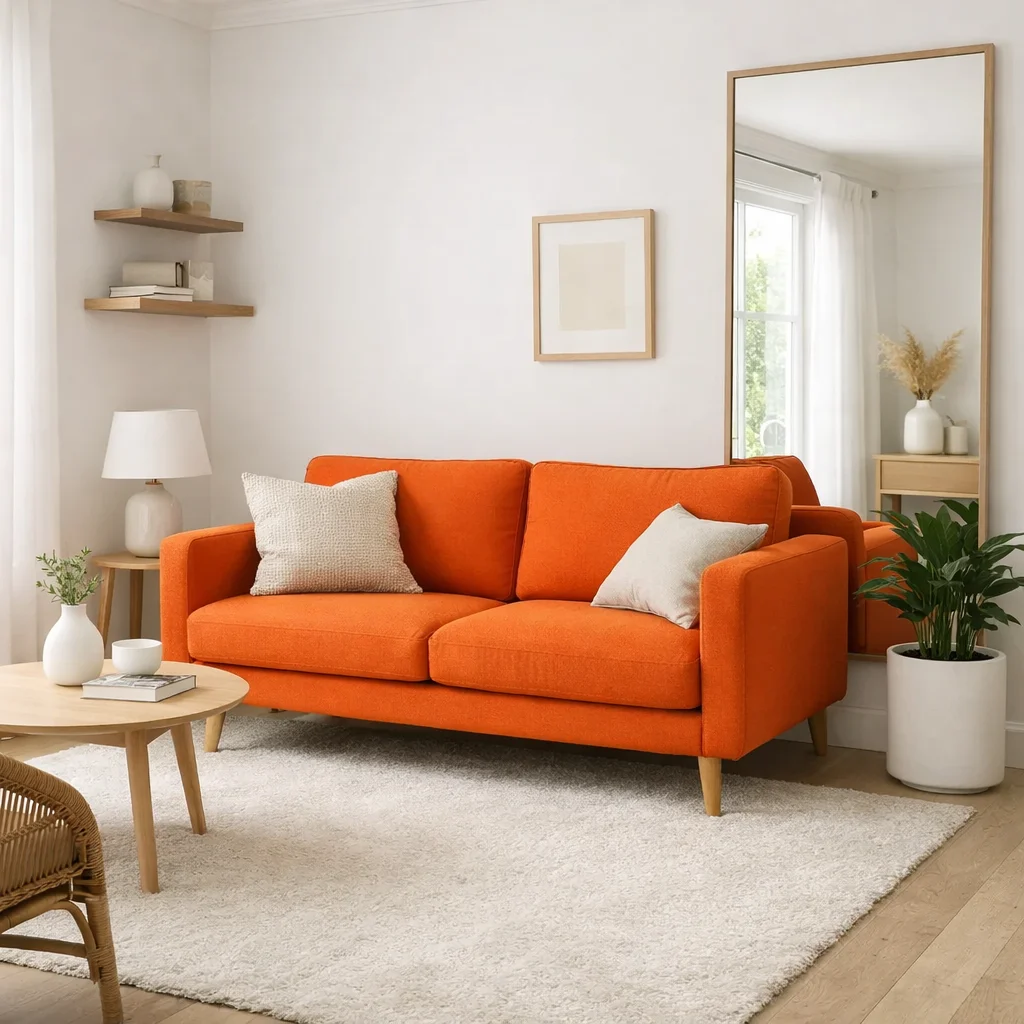
Many people assume that a bold orange couch is best reserved for large living rooms with plenty of space to absorb the color. In reality, an orange couch can be transformative in a smaller space, provided the rest of the room is handled thoughtfully. The secret lies in keeping the surrounding palette light and relatively neutral so that the room does not feel overwhelmed.
In a compact living room, white or very pale walls create the necessary breathing room for the orange to work. Furniture should be minimal, with clean lines and a small footprint. A light-colored rug expands the visual floor space, and strategic mirror placement bounces light around the room, making it feel larger and brighter. The orange couch becomes the cozy, colorful heart of a space that punches well above its size.
15. Seasonal Styling Around an Orange Couch
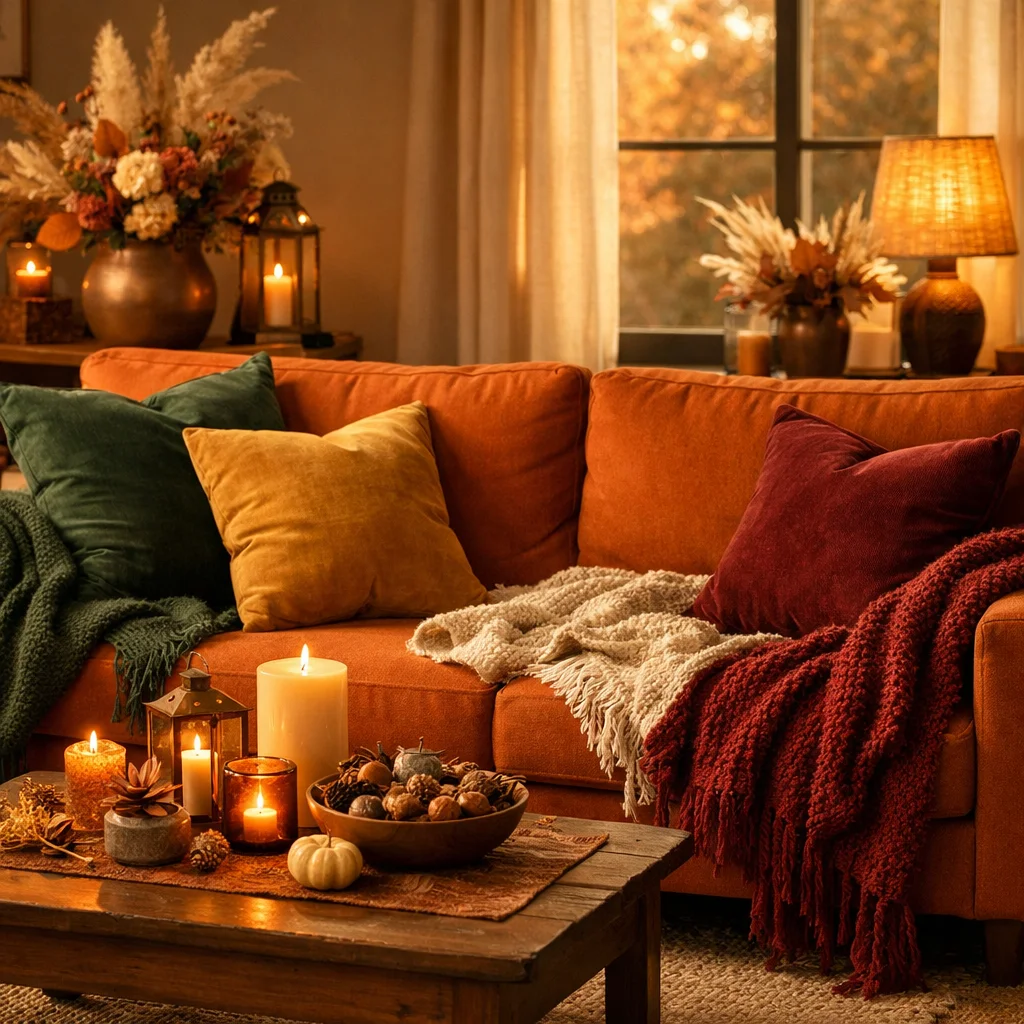
One of the greatest advantages of an orange couch is how naturally it lends itself to seasonal styling. The warm, earthy tones of orange connect deeply with the atmosphere of autumn, but with thoughtful accessory changes, the same couch can feel perfectly at home in any season throughout the year.
For autumn and winter, layer the couch with deep green, mustard yellow, and burgundy throw pillows and blankets. Add warm-toned candles, dried floral arrangements, and textured throws to heighten the cozy atmosphere. For spring and summer, swap to lighter cream, soft coral, and white accents. Woven textures and botanical prints refresh the palette without requiring any significant investment. This seasonal flexibility makes an orange couch one of the most versatile long-term furniture investments you can make.
Conclusion
An orange couch is far more than a bold furniture choice. It is an invitation to design a living room with confidence, warmth, and genuine personality. Across fifteen distinct ideas, this article has demonstrated that orange works beautifully in spaces ranging from minimalist and Scandinavian to bohemian, industrial, and farmhouse. The shade you choose, whether a bright tangerine, a rich burnt orange, a muted rust, or a soft terracotta, will shape the mood and character of the entire room.
The most important principle in styling an orange couch is intentionality. Echo the color through at least one or two additional elements in the room, whether through artwork, a patterned rug, decorative accessories, or accent wall details. Anchor the boldness of the couch with neutral or complementary tones, and invest in quality textiles and natural materials that add depth without distraction. When approached this way, an orange couch does not demand attention so much as it earns it, becoming the warm, welcoming centerpiece of a home that truly reflects the people living in it.
Frequently Asked Questions
1. What wall color goes best with an orange couch?
Neutral wall colors such as white, soft gray, warm beige, and greige work exceptionally well with an orange couch, allowing the sofa to stand out as a focal point. For a more dramatic effect, deep navy blue, forest green, or teal walls create a bold and sophisticated contrast that highlights the warmth of the orange tones beautifully.
2. What colors should I use for throw pillows on an orange couch?
The most effective throw pillow colors for an orange couch include cream, ivory, mustard yellow, olive green, navy blue, teal, deep burgundy, and warm brown. These shades either complement or contrast the orange in a balanced and visually pleasing way. Neutral tones create a calming effect, while jewel tones add drama and richness.
3. Can an orange couch work in a small living room?
Yes, an orange couch can work very well in a small living room. The key is to keep the walls light, ideally white or pale, and to choose furniture with a minimal footprint. A light-colored rug, strategic use of mirrors, and uncluttered decor allow the orange couch to energize the space without overwhelming it.
4. What type of rug works best with an orange couch?
A rug that incorporates warm tones such as terracotta, rust, mustard, or cream works naturally with an orange couch. Neutral rugs in jute, sisal, or light gray provide a grounding contrast without competing with the sofa. For a bolder look, a patterned rug that features both orange and a complementary color such as teal or navy creates a cohesive and dynamic palette.
5. What interior design styles work best with an orange couch?
An orange couch adapts well to a wide variety of interior design styles. It is particularly at home in mid-century modern, bohemian, Scandinavian, industrial, and farmhouse interiors. With the right shade and surrounding decor, it can also work in contemporary minimalist settings and maximalist or eclectic rooms. The versatility of orange, particularly in its deeper burnt and rust tones, makes it one of the most adaptable statement furniture colors available.