
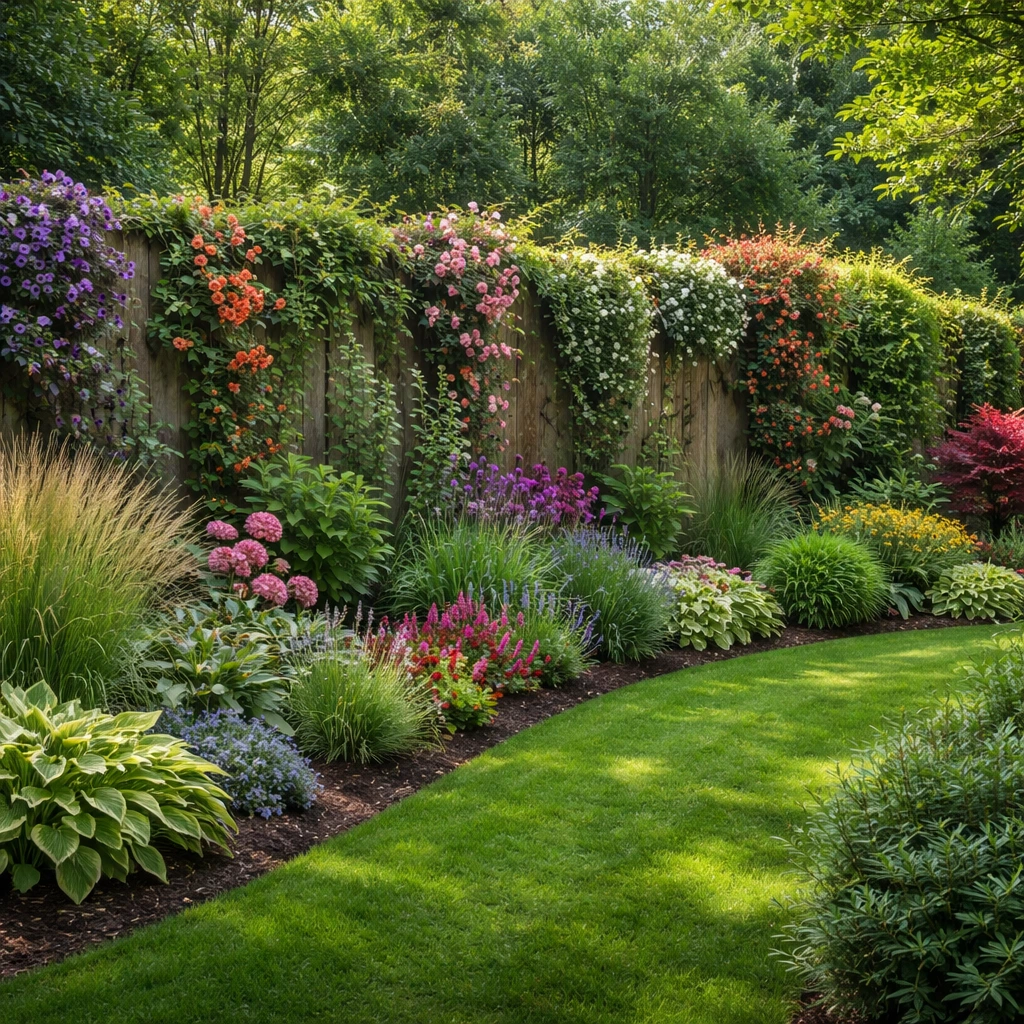
24 Fence Plant Ideas for a Beautiful Backyard
A bare fence is one of the most overlooked opportunities in backyard design. Whether it is a wooden privacy panel, a chain-link boundary, or a simple post-and-rail structure, a fence without plants feels cold, flat, and unfinished. The right plants transform that same boundary into a living, breathing feature that adds color, texture, privacy, and seasonal beauty throughout the year.
Choosing what to grow along or against a fence requires a bit of thought. You need to consider the available sunlight, soil conditions, your climate zone, how much maintenance you are willing to commit to, and whether your primary goal is privacy, beauty, wildlife habitat, or all three. Once you have a clear picture of those factors, the options become genuinely exciting.
This guide covers 24 of the best fence plant ideas for backyards, organized by plant type and purpose, so you can find exactly what suits your space.
Why Planting Along Your Fence Matters
Before diving into specific plant choices, it is worth understanding what strategic fence planting actually accomplishes. Plants soften the harsh, linear quality of any fence. They add vertical interest, drawing the eye upward and making a compact yard feel more layered and dynamic. Dense plantings increase privacy without requiring an expensive fence upgrade. Flowering species attract pollinators, and berry-producing shrubs support birds and other backyard wildlife.
From a practical standpoint, plants also reduce wind impact along fence lines, which makes outdoor seating areas more comfortable. Some climbers and hedges can even add a small degree of thermal insulation to wooden structures by reducing direct exposure to weather.
The key principle that experienced landscape designers repeat consistently is layering. Place taller plants at the back near the fence, medium-height plants in the middle, and low-growing groundcovers or flowers at the front. This approach creates depth and makes even a narrow planting bed feel lush and intentional.
Climbing Plants for Maximum Coverage
1. Clematis
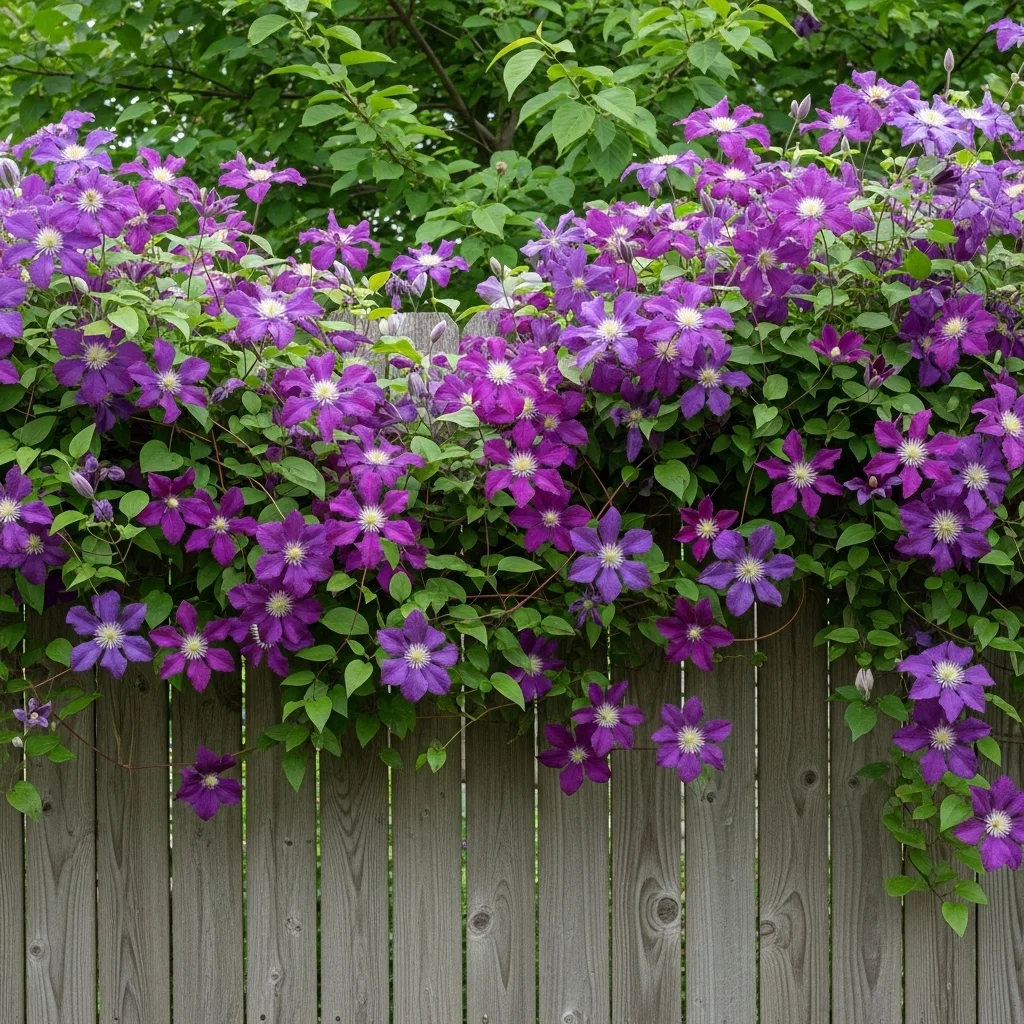
Clematis is widely considered one of the finest climbing plants for fence coverage. It grows vigorously, comes in a sweeping range of colors from deep purple to pale pink and white, and some varieties can extend over 20 feet within a single growing season. It requires a trellis, wire, or mesh for support and thrives when its roots are kept cool and shaded while its top growth reaches toward the sun. For year-round interest, choose an evergreen variety like Clematis armandii.
2. Star Jasmine
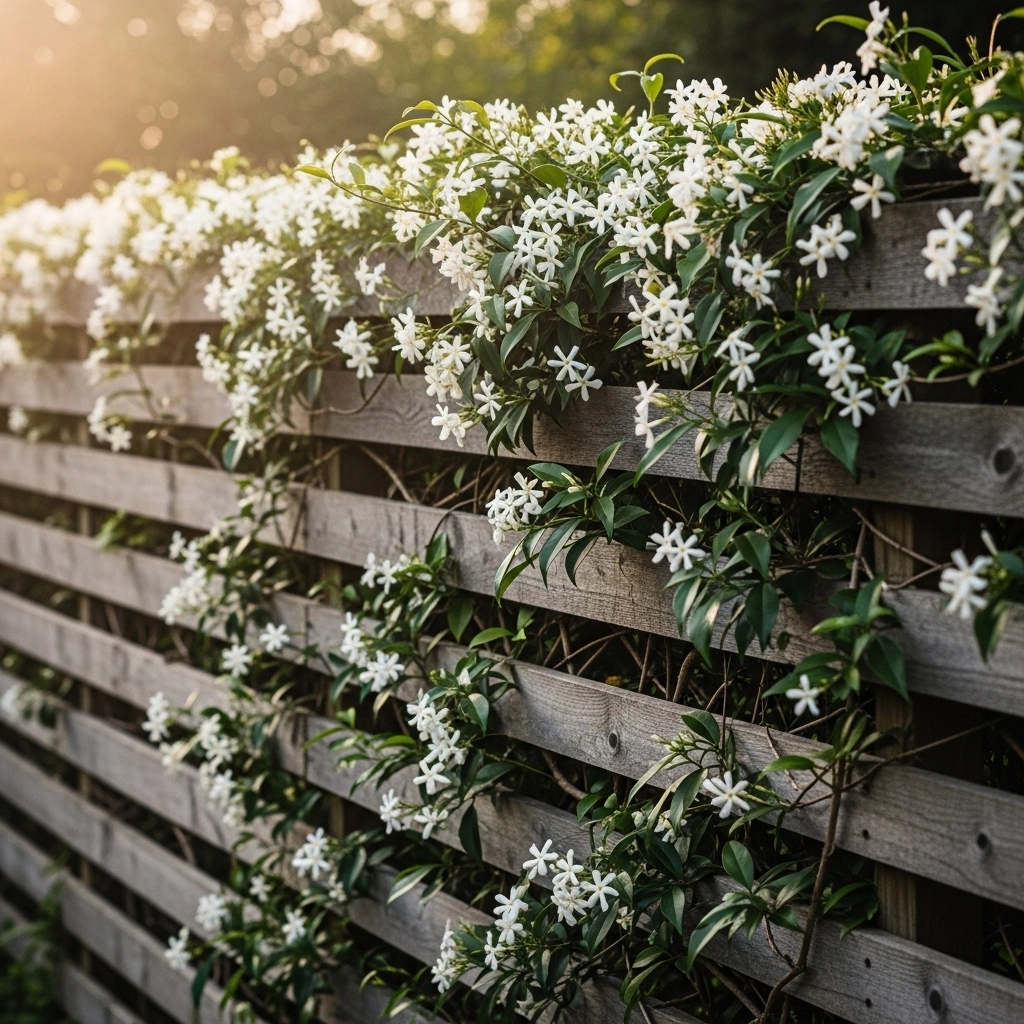
Star jasmine is a climber that combines dense, dark green foliage with intensely fragrant white flowers. It is one of the most reliable plants for full fence coverage and performs especially well in warmer climates. Given proper support such as horizontal wires attached to the fence, star jasmine will cover a large panel within two to three growing seasons. The fragrance it produces on warm summer evenings is an added benefit that few other climbers can match.
3. Climbing Hydrangea
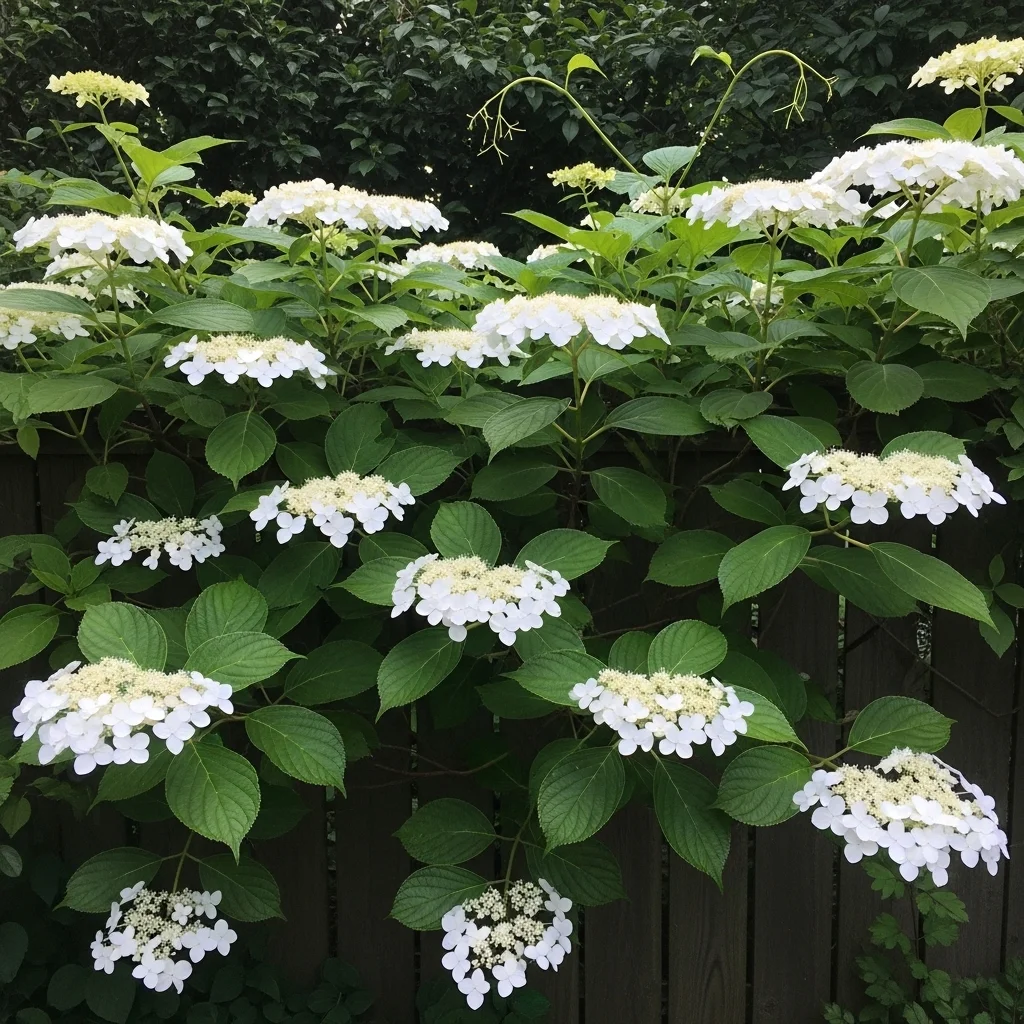
For shaded or north-facing fences where many plants struggle, climbing hydrangea is an outstanding choice. It attaches itself through aerial roots, produces broad clusters of white flowers in summer, and develops attractive peeling bark during winter months. Growth is slow in the first couple of years, but once established, it becomes vigorous and low-maintenance.
4. Wisteria
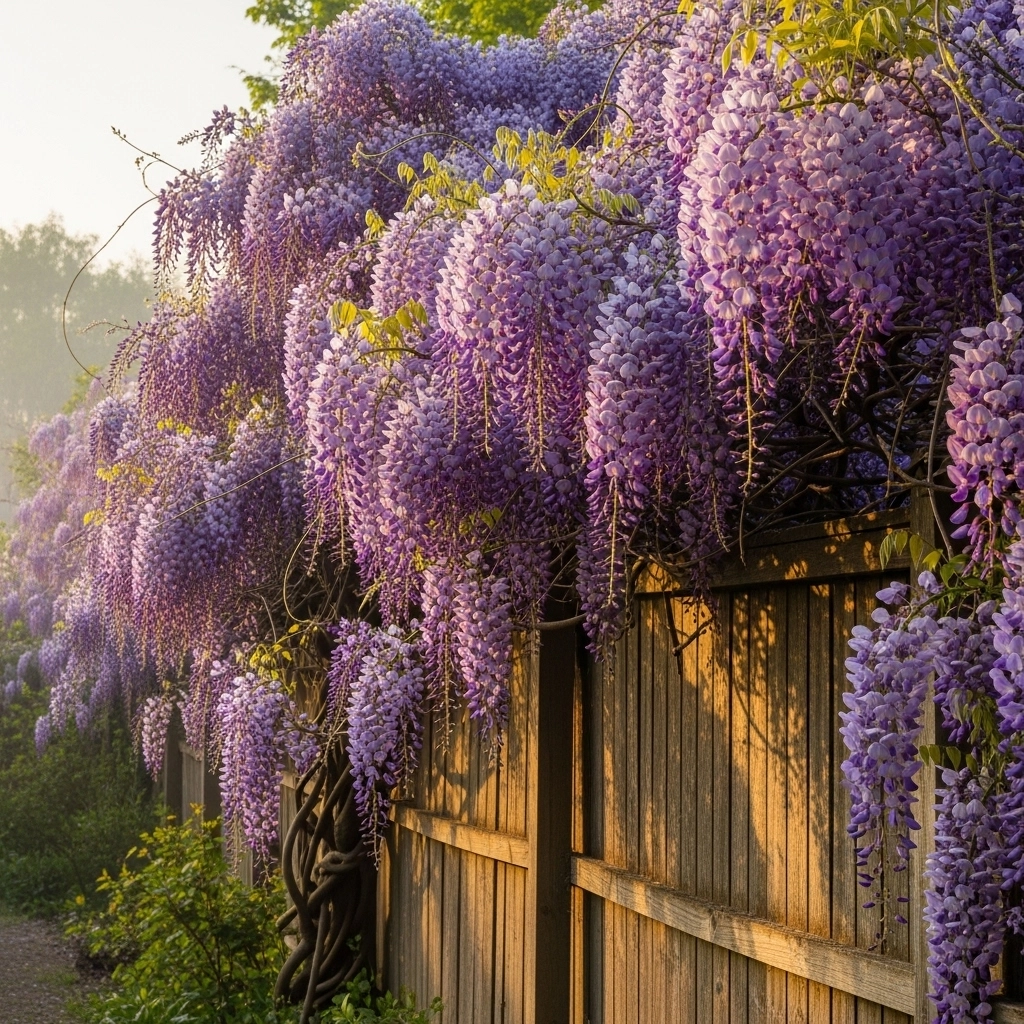
Few climbers create a more dramatic effect than wisteria in full bloom. Its cascading purple or white flower clusters are spectacular in late spring. Wisteria is a heavy feeder and grows aggressively, so it requires a structurally sound fence and annual pruning to keep it in check. Used thoughtfully, however, it becomes the focal point of any backyard.
5. English Ivy
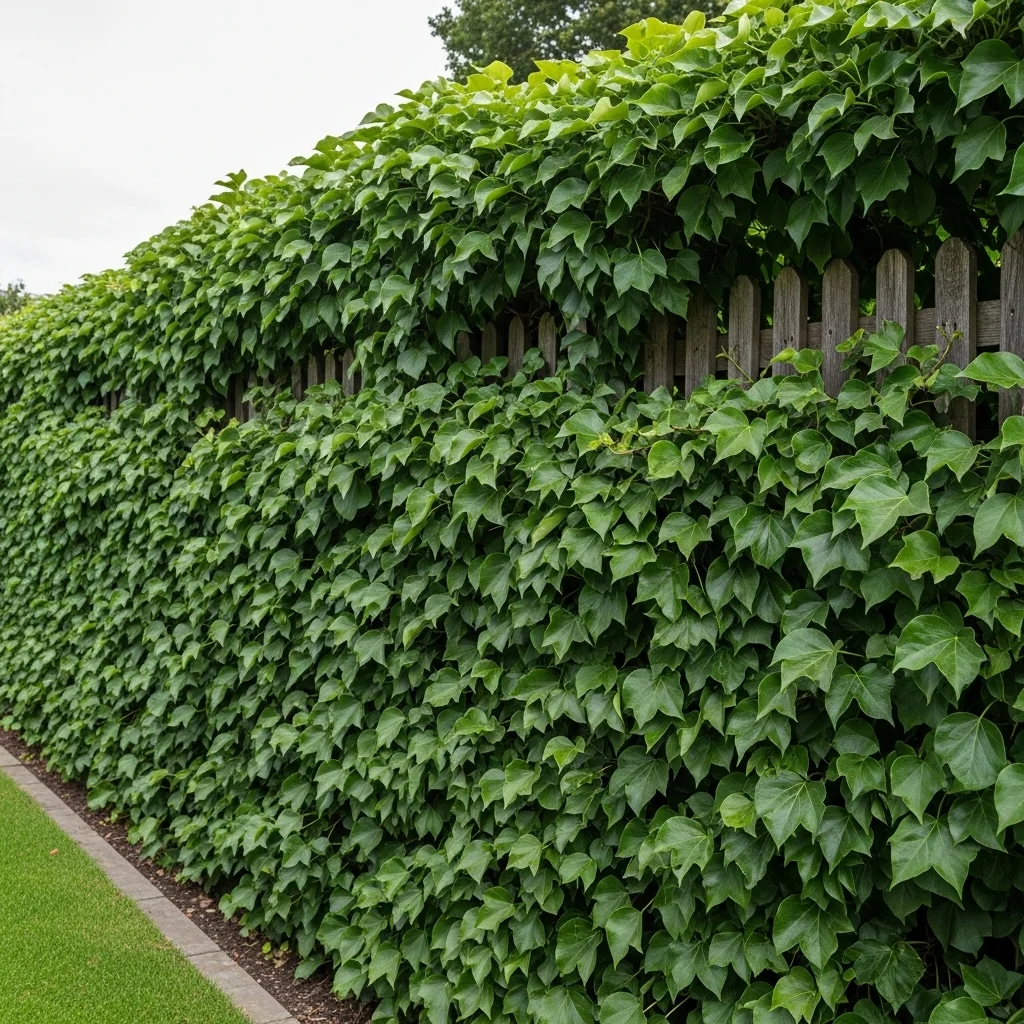
English ivy is a self-clinging climber that needs no support to scale a fence. It creates a wall of glossy green foliage, works in almost any light condition, and provides berries for birds in winter. In some regions it can spread aggressively, so it is worth checking its behavior in your specific climate and confining it to the fence line with regular trimming.
6. Bougainvillea
In warm, frost-free climates, bougainvillea is an incomparably vibrant fence plant. Its papery bracts in magenta, orange, red, and coral create a visual spectacle that few plants can rival. It is drought-tolerant once established but does come with thorns, so placement near high-traffic areas requires care.
Evergreen Shrubs for Year-Round Privacy
7. Boxwood
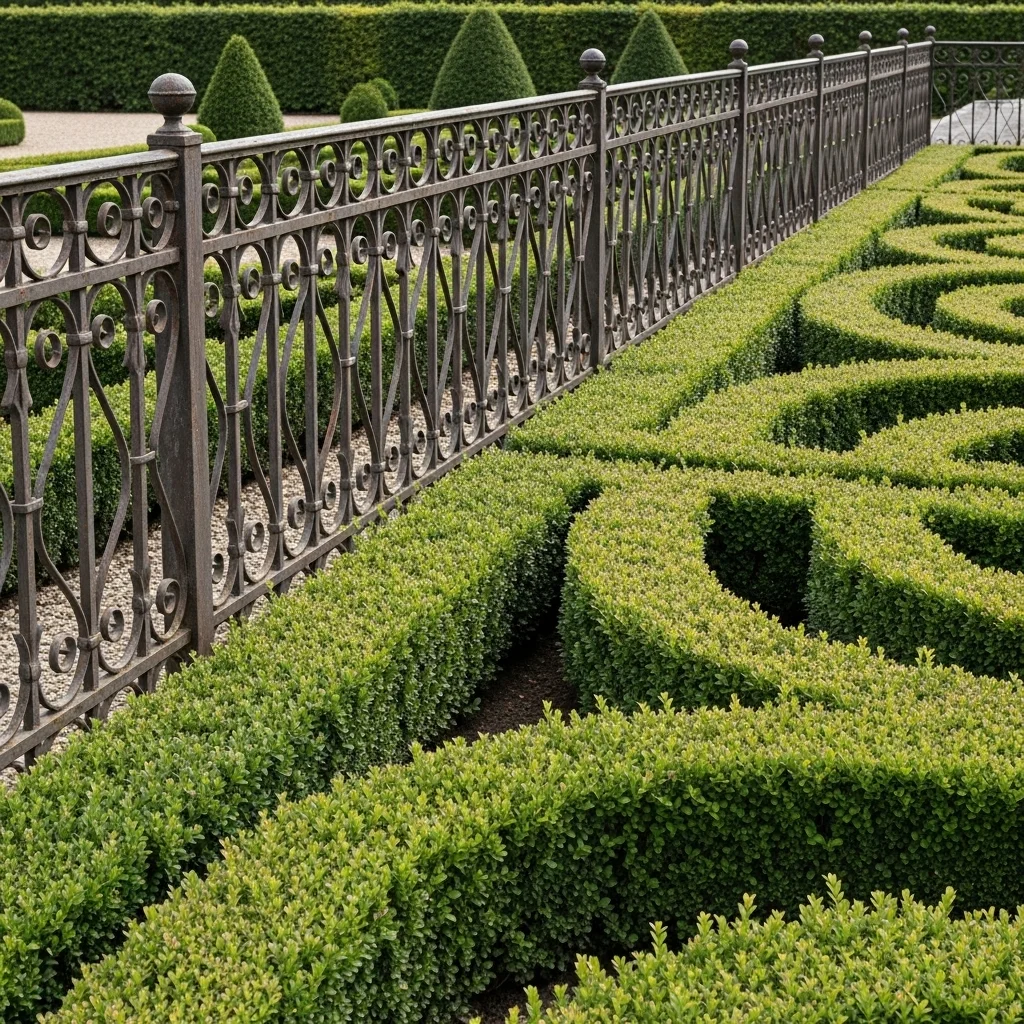
Boxwood is a classic choice for formal, structured fence plantings. Its dense, small-leaved foliage responds beautifully to shaping, allowing you to create a neat, sculpted hedge alongside your fence. It is slow-growing but exceptionally long-lived and tolerant of shade. Wintergreen boxwood is a particularly hardy cultivar worth considering.
8. Holly
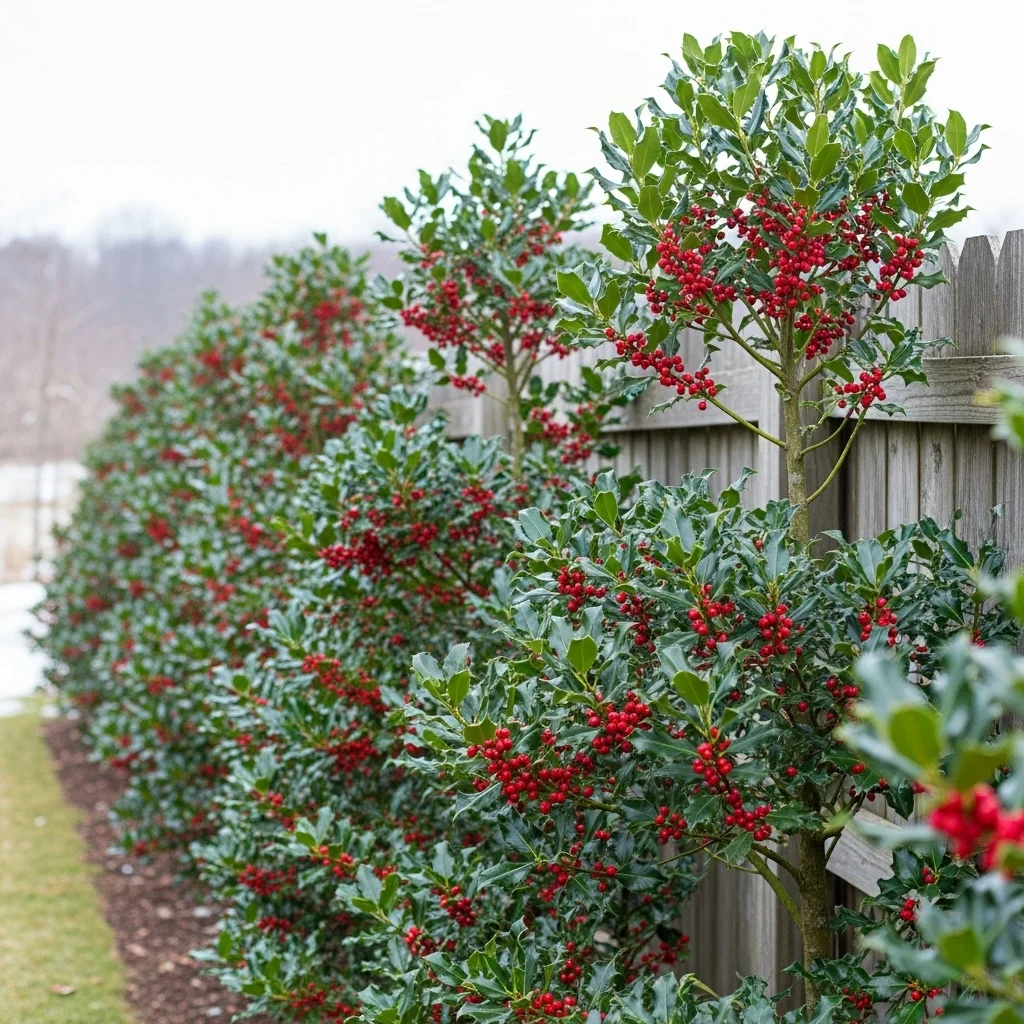
Holly brings dual-season appeal to a fence line. Its glossy, deep green leaves provide rich evergreen coverage throughout the year, while bright red berries add striking winter color. Blue Princess holly is a popular hybrid that grows up to 12 feet and creates an almost impenetrable boundary. For berry production, at least one male plant such as Blue Prince should be planted nearby.
9. Juniper
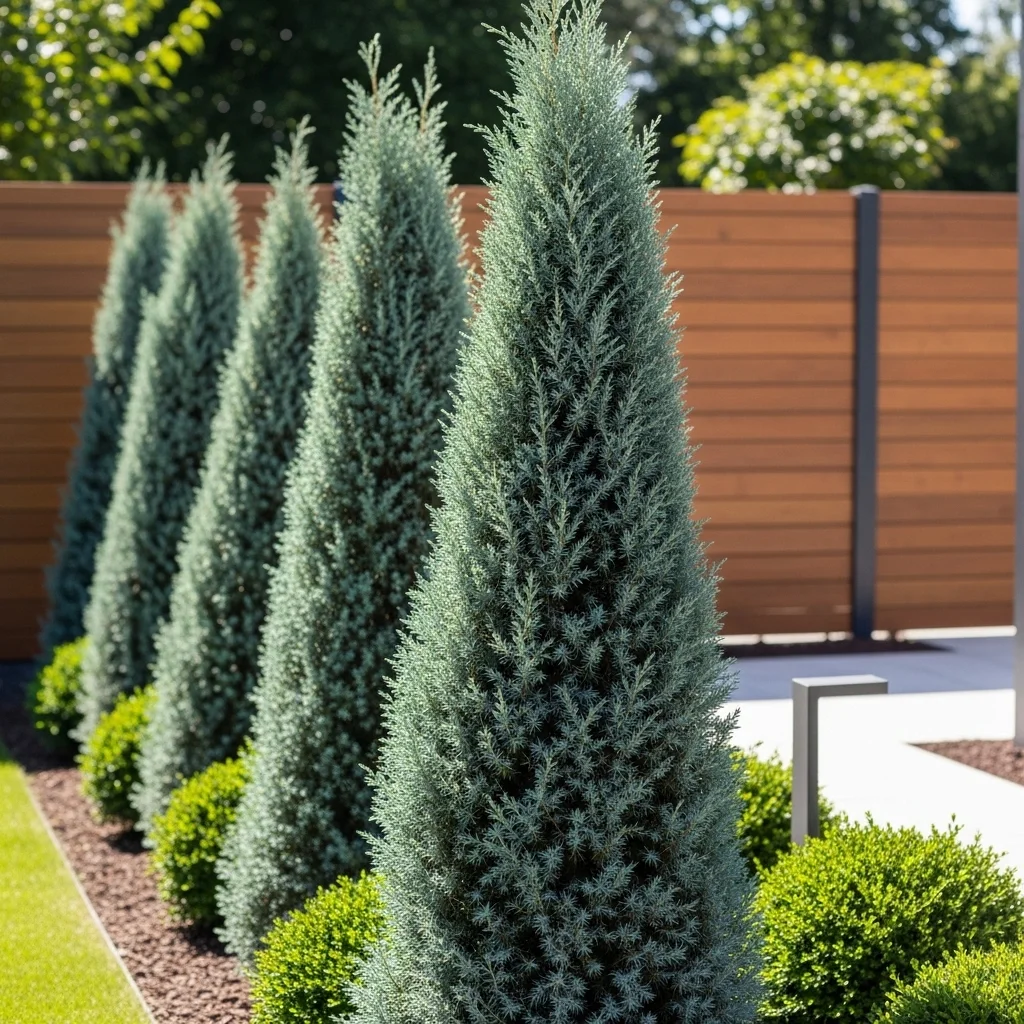
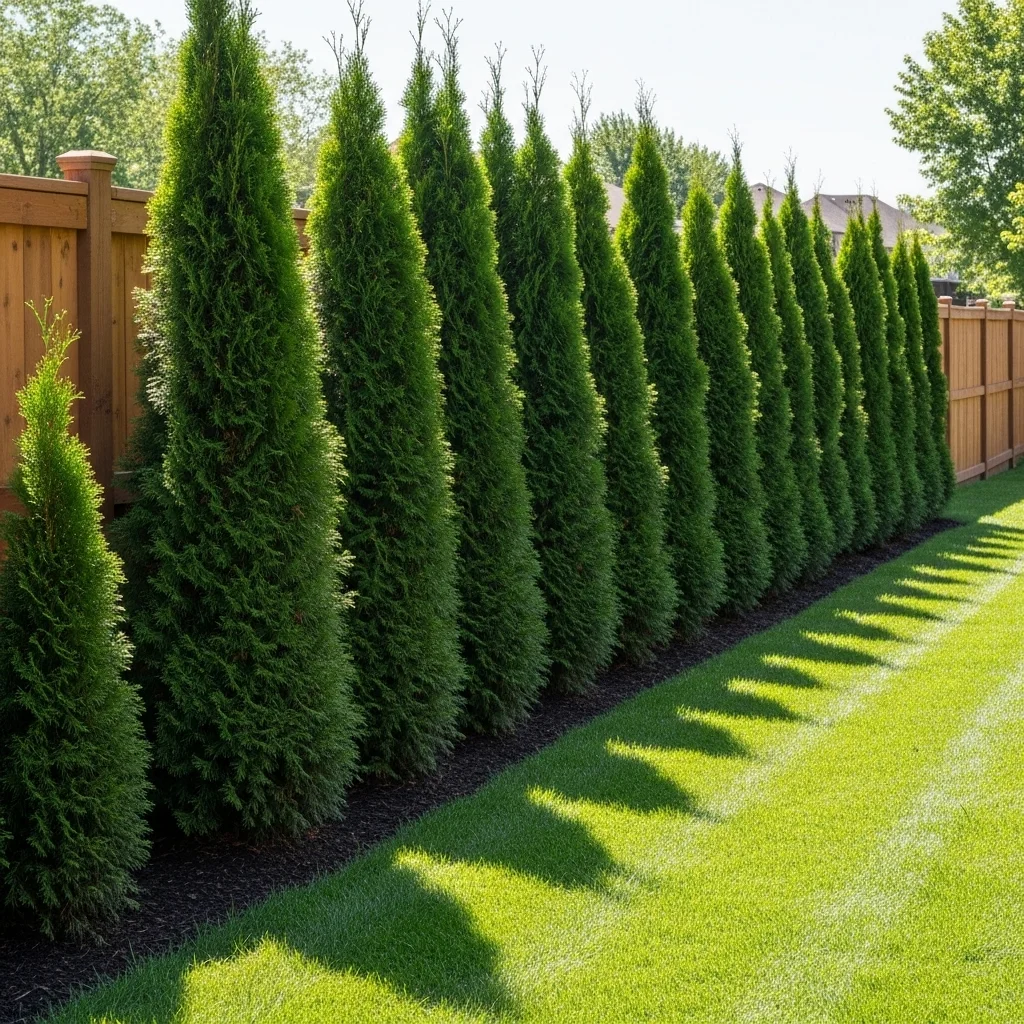
Junipers are among the most versatile evergreen shrubs for fence plantings. Columnar varieties like Blue Arrow juniper grow 16 to 20 feet tall but only two to four feet wide, making them ideal for tight spaces where you need height without depth. They are highly drought-tolerant once established and thrive in full sun with minimal maintenance.
10. Cherry Laurel
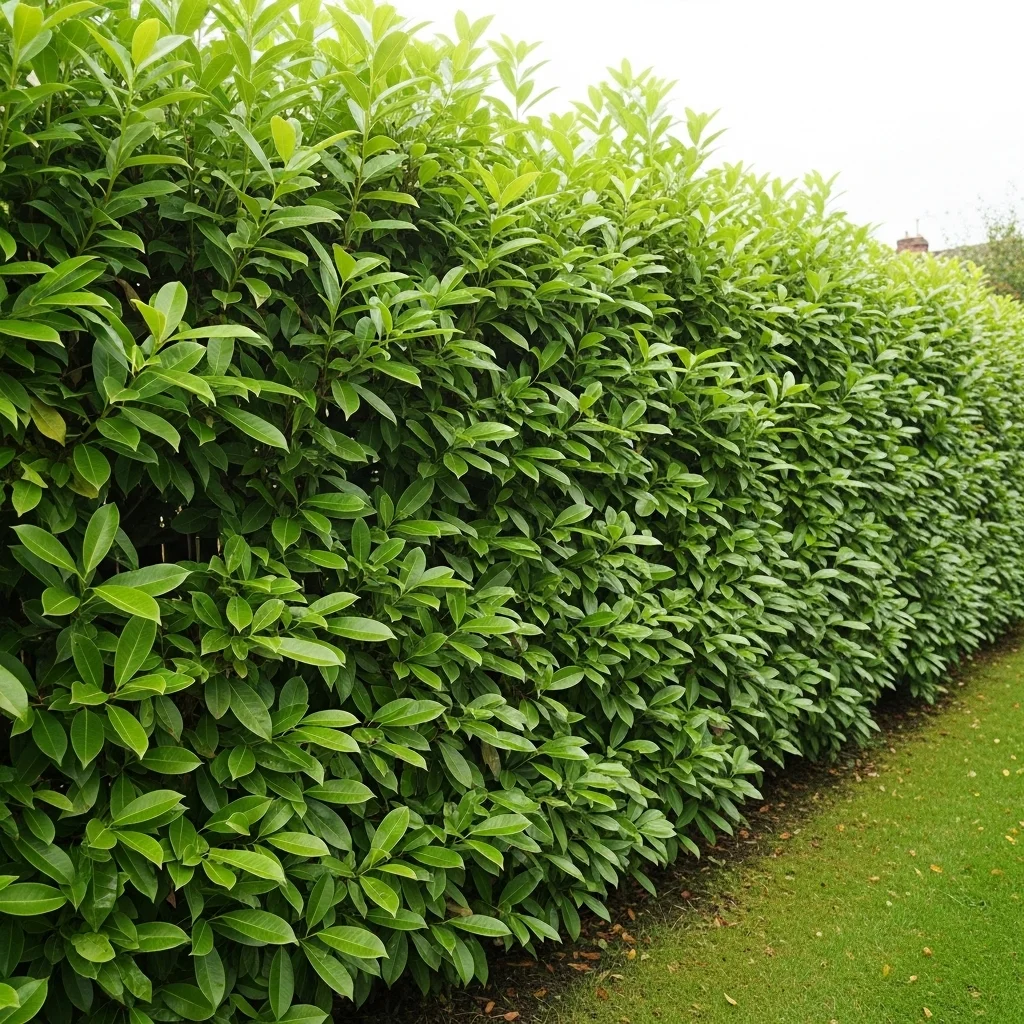
Cherry laurel is a reliable, fast-growing evergreen shrub that excels as a dense privacy screen. It tolerates both full sun and fairly heavy shade, grows 12 to 24 inches per year, and responds well to hard pruning if it gets out of hand. It is not the most glamorous plant on this list, but for sheer practicality and dependability along a fence line, it is hard to beat.
11. Photinia Red Robin
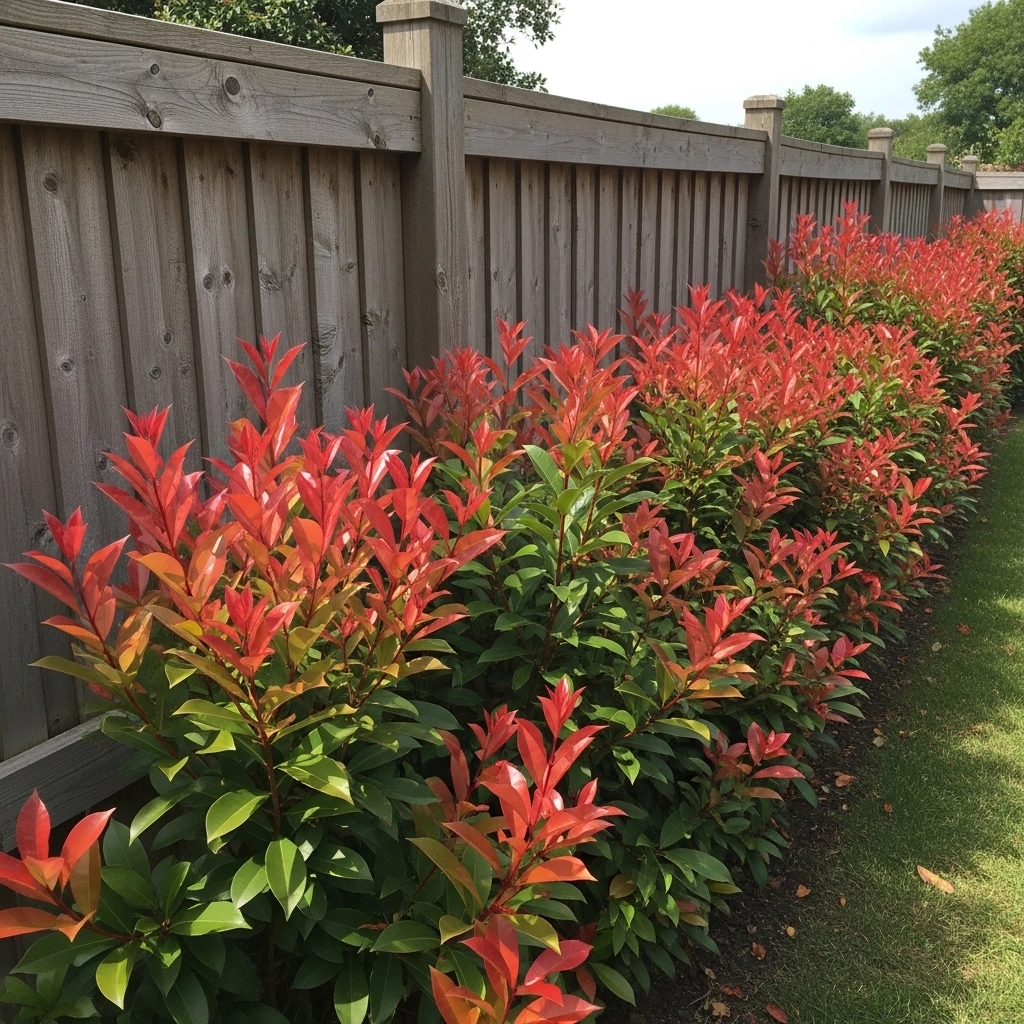
Photinia Red Robin brings genuine drama to a fence planting. Its new growth emerges in vivid scarlet before maturing to a deep, glossy green, providing repeated bursts of color throughout the growing season. It is evergreen, tolerates most soil types, and can be kept as a formal clipped hedge or allowed to grow more naturally into a looser screen.
Flowering Shrubs and Hedges
13. Lilac
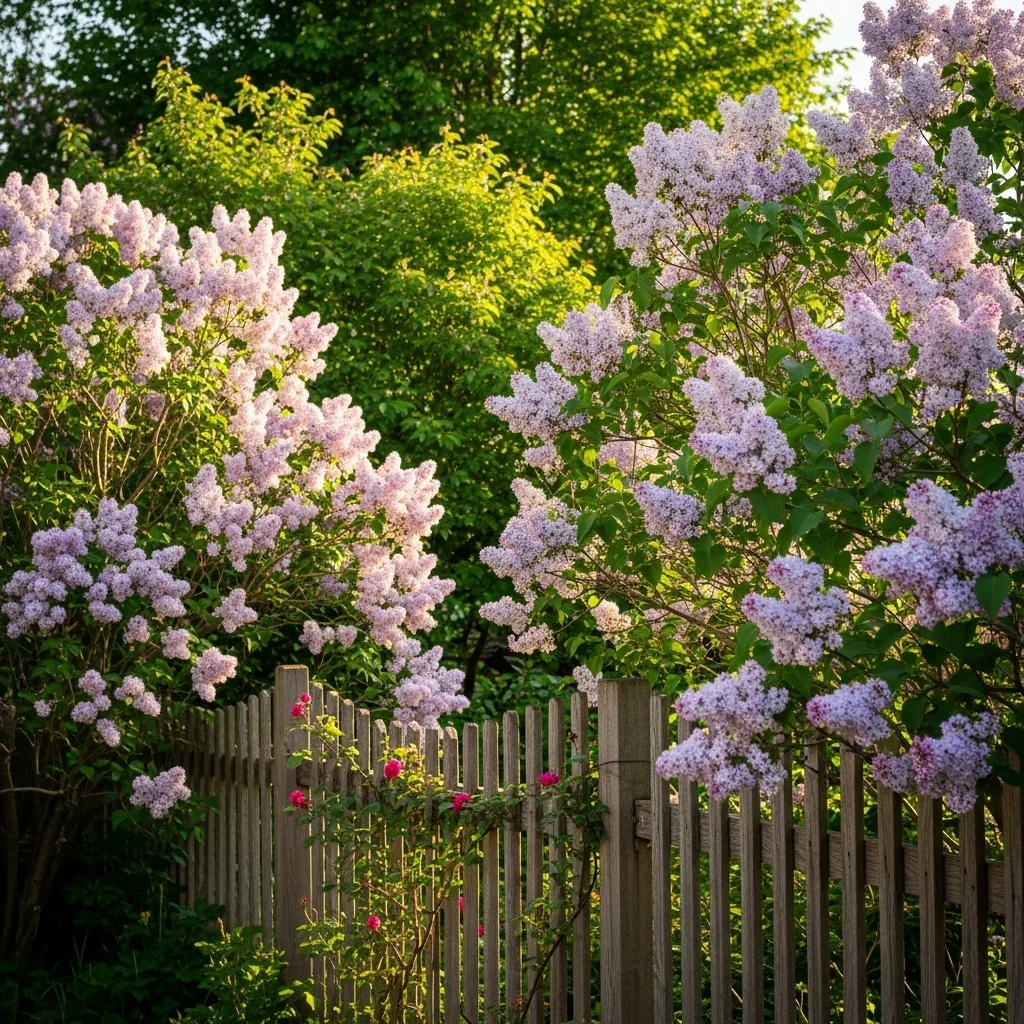
A row of lilacs along a fence delivers one of spring’s most rewarding floral displays, paired with a fragrance that fills the entire backyard. Dwarf varieties like Korean Lilac stay under five feet, making them suitable for shorter fences and smaller gardens. For a taller hedge, Miss Kim Lilac can reach seven feet and is hardy across a wide range of climate zones.
13. Forsythia
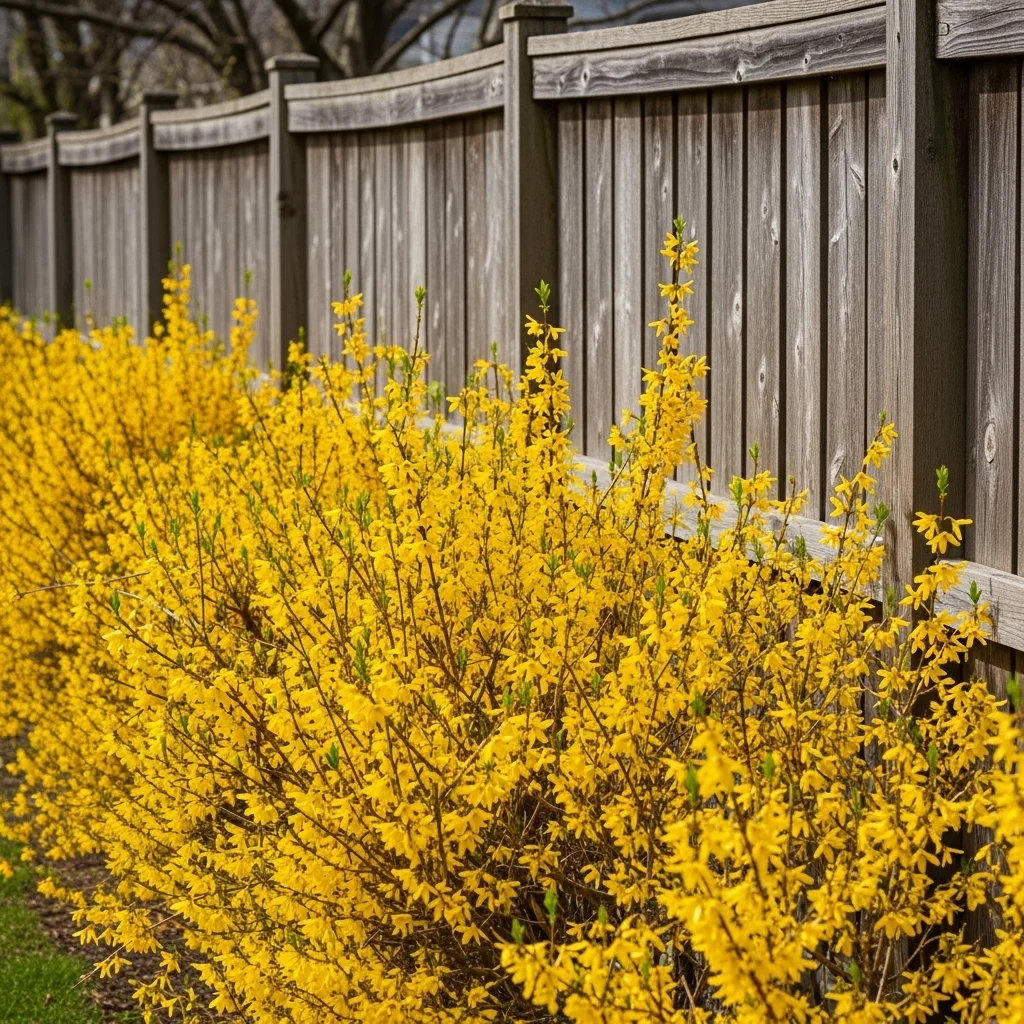
Forsythia is one of the earliest flowering shrubs of the year, producing a spectacular show of bright yellow blooms before its leaves even emerge in early spring. It grows quickly, tolerates a range of conditions, and can be trained loosely along a fence line or pruned more formally. Its vibrant color makes it a genuine statement plant in late winter landscapes.
14. Viburnum
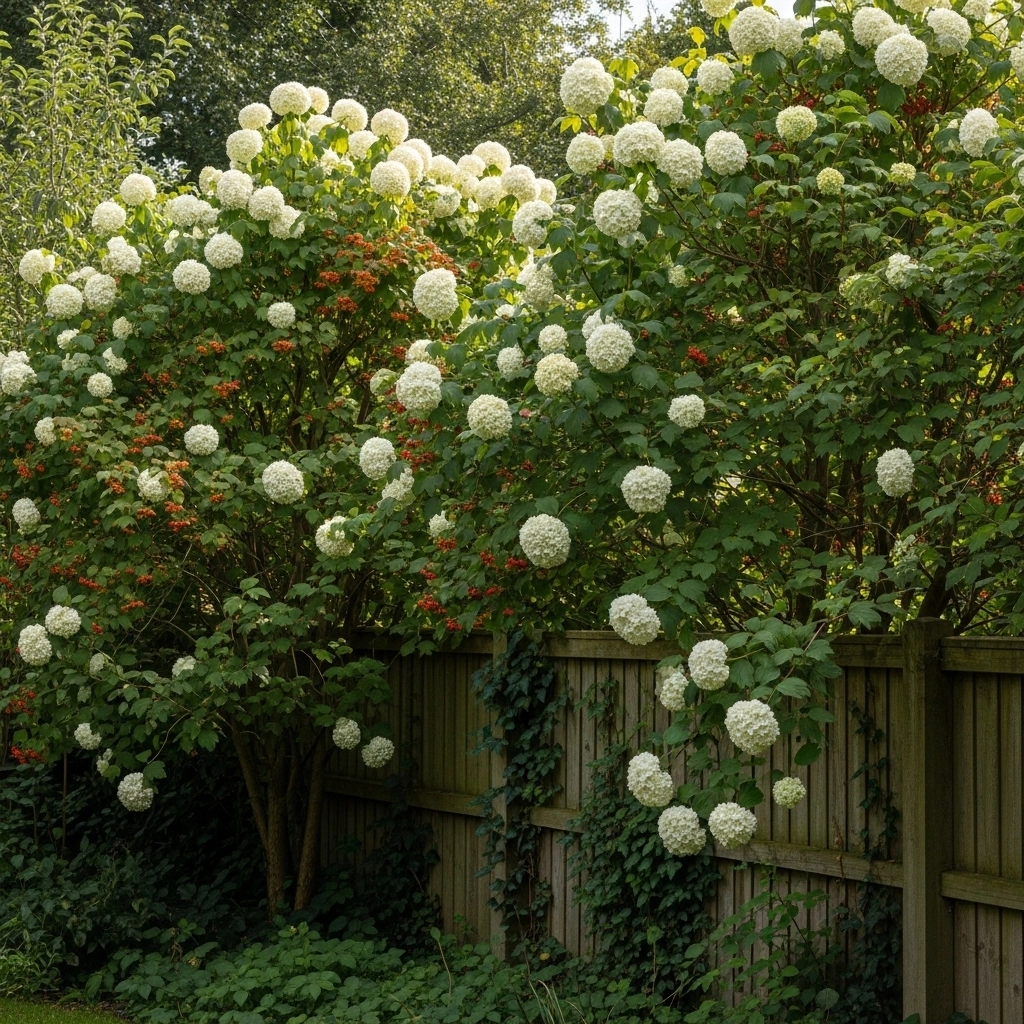
Viburnums are incredibly versatile flowering shrubs that suit a wide range of fence planting scenarios. Depending on the variety, they offer fragrant spring flowers, attractive berries, and rich autumn foliage color. They work well in mixed borders, attracting pollinators and birds while providing good seasonal structure along the fence.
15. Roses
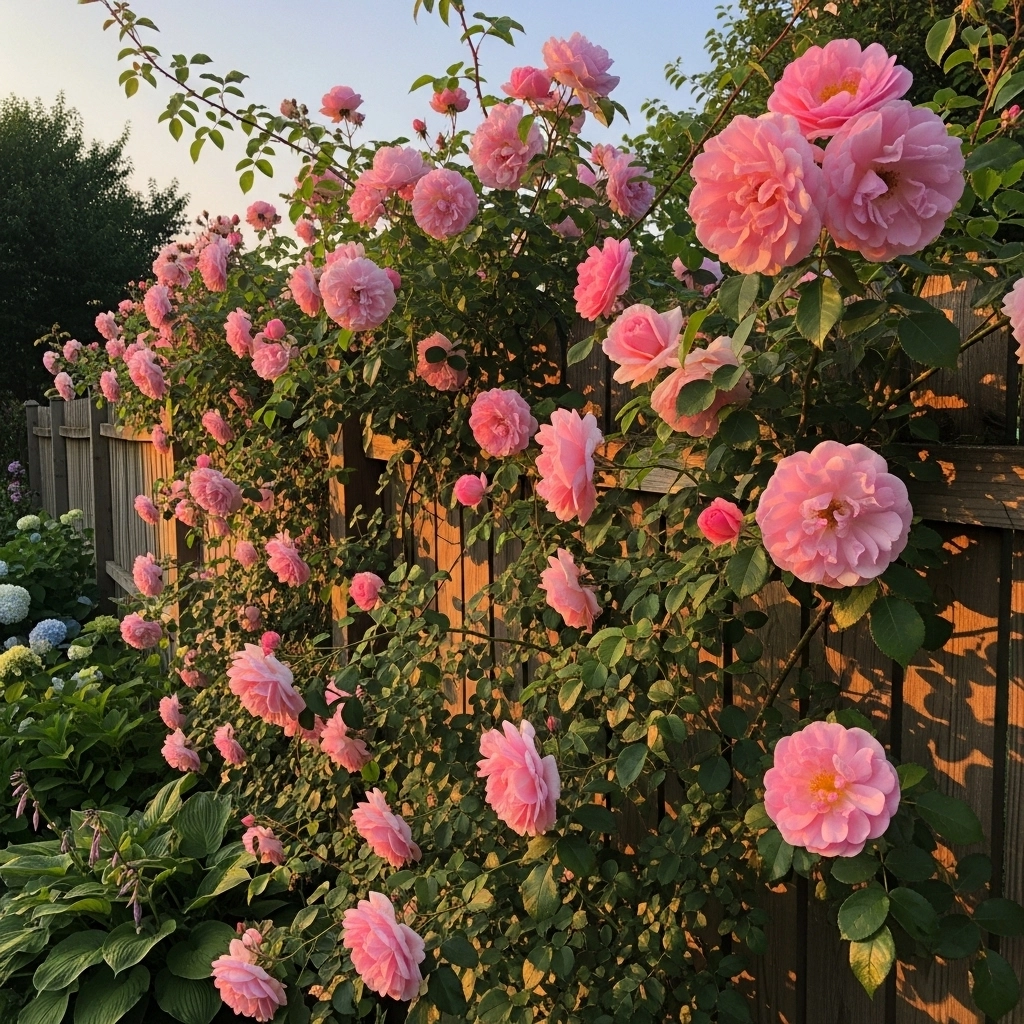
Climbing roses trained against a fence create one of the most romantic and classic backyard displays imaginable. Choose disease-resistant modern varieties for lower maintenance. They require some support and annual pruning but reward that effort with months of flowering from late spring through autumn. Pairing a climbing rose with clematis along the same fence panel is a particularly effective combination.
Ornamental Grasses and Perennials
16. Fountain Grass
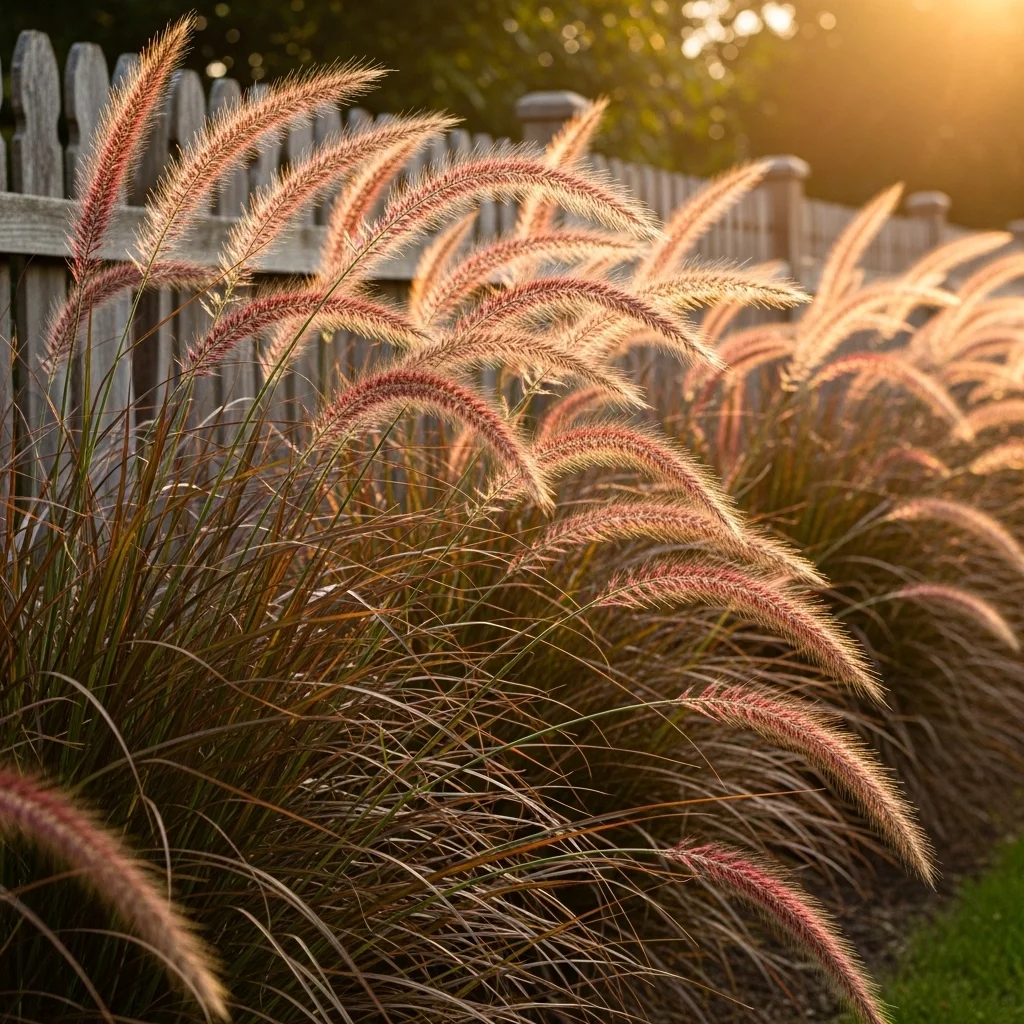
Ornamental grasses bring movement, texture, and a relaxed naturalistic character to a fence line that few other plants can replicate. Fountain grass develops attractive arching clumps with feathery plumes that catch the light beautifully in late summer and remain attractive through winter. It grows in full sun, requires minimal care, and adds real visual softness to a hard fence structure.
17. Maiden Grass
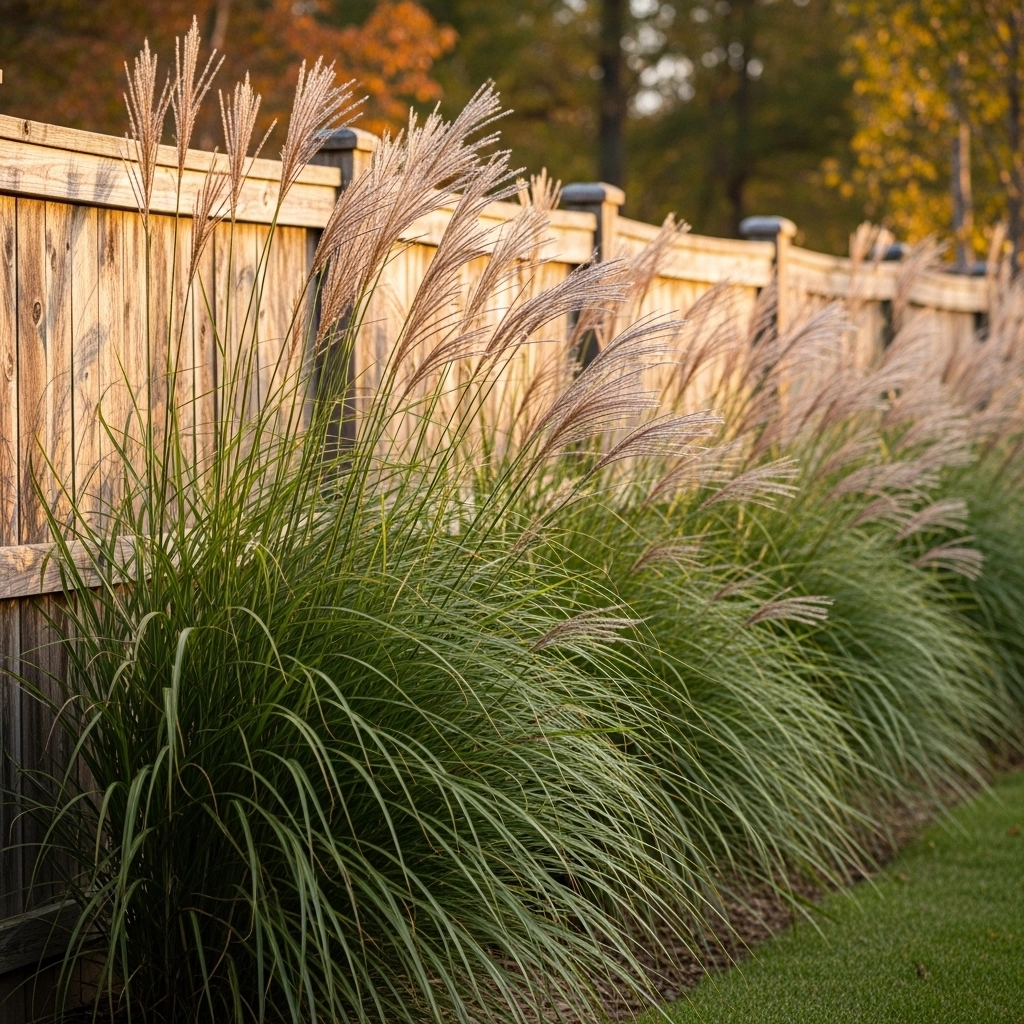
Maiden grass is a tall ornamental grass that can reach five to eight feet, making it effective as a partial privacy screen along a fence line. Its silver-plumed seed heads in autumn are particularly beautiful. It works well planted in repeated clumps along a fence to create a rhythmic, flowing boundary planting.
18. Lavender
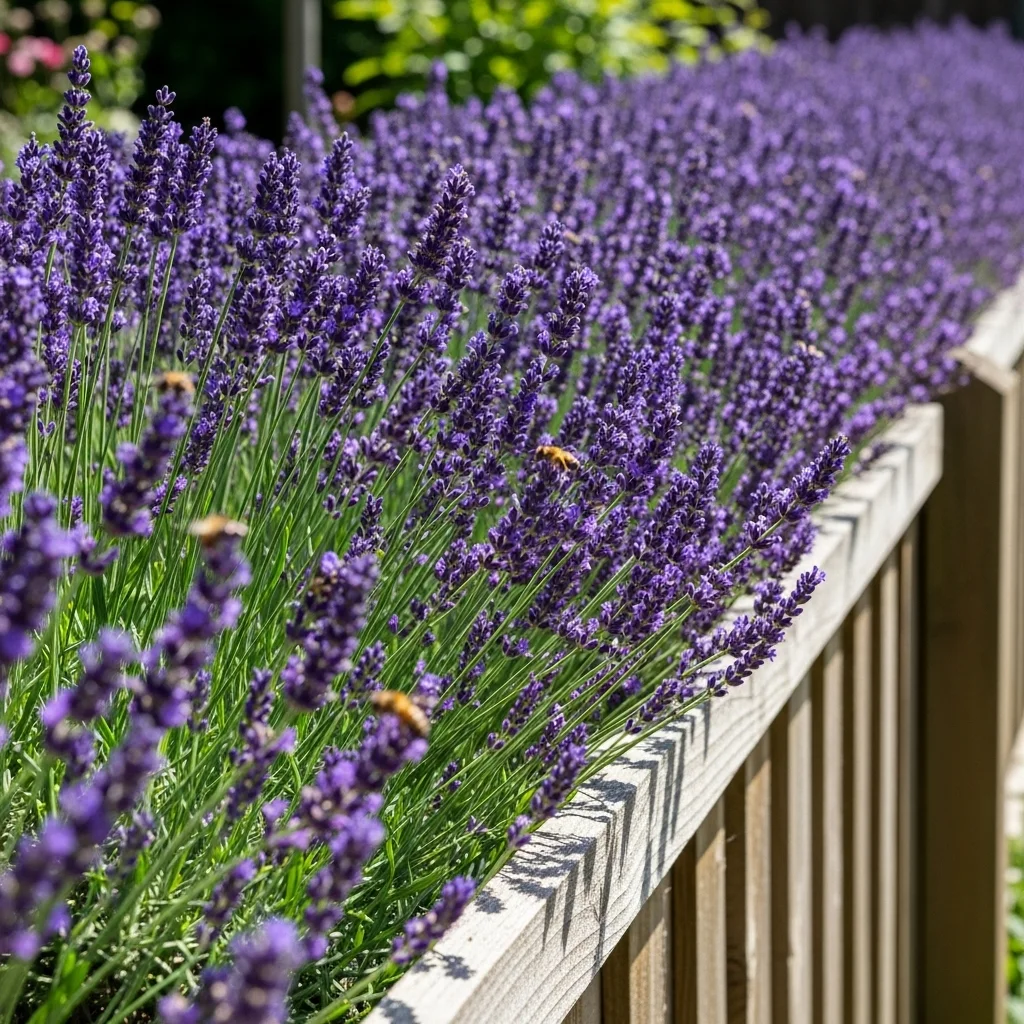
Planting lavender along the base of a sunny fence combines sensory pleasure with genuine practicality. Its silver-gray foliage and purple flower spikes are attractive from spring through summer, it repels certain pests, and its fragrance is one of the most universally appreciated in the garden. It requires excellent drainage and full sun but is otherwise very low-maintenance.
19. Salvia
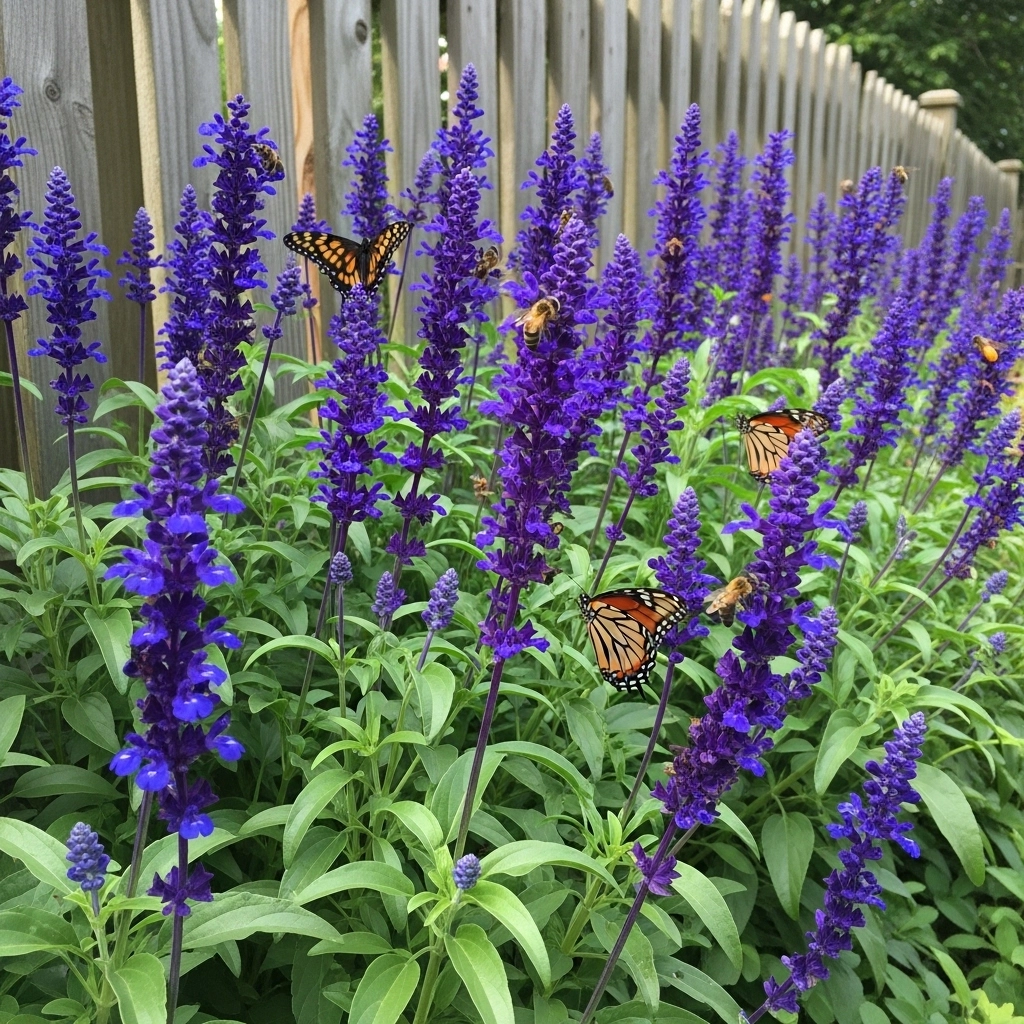
Salvia is an underused perennial for fence line planting that delivers months of flower color with very little input. Blue and purple varieties are particularly effective as a front-of-border planting beneath taller shrubs or climbers at the fence, providing continuity of color through the summer and into autumn while supporting bees and butterflies.
Bamboo and Screening Plants
20. Clumping Bamboo
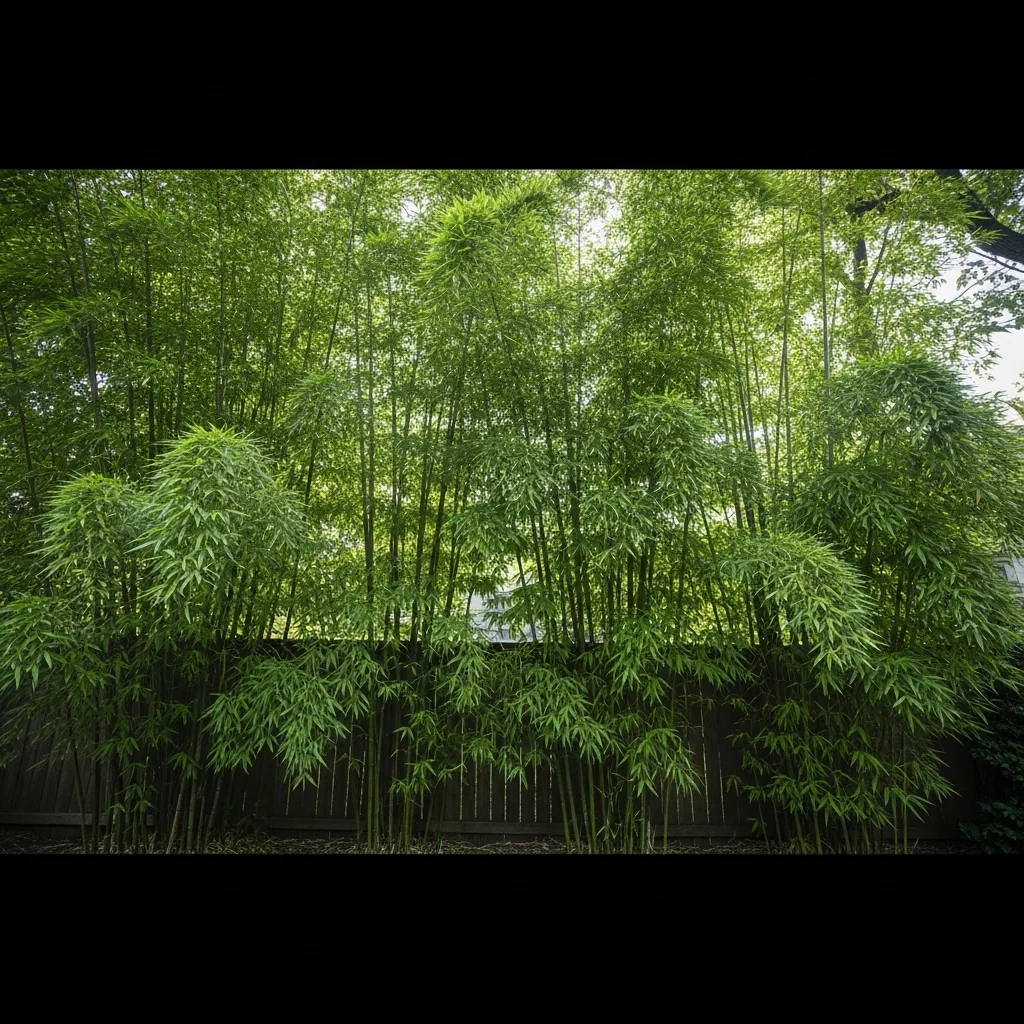
Clumping bamboo is one of the fastest ways to create a tall, dramatic screen alongside a fence. Unlike running bamboo, clumping varieties stay well-contained, growing in dense upright clusters that reach eight to fifteen feet depending on the variety. The sound of bamboo canes rustling in a breeze adds a pleasant, calming dimension to a backyard.
21. Escallonia
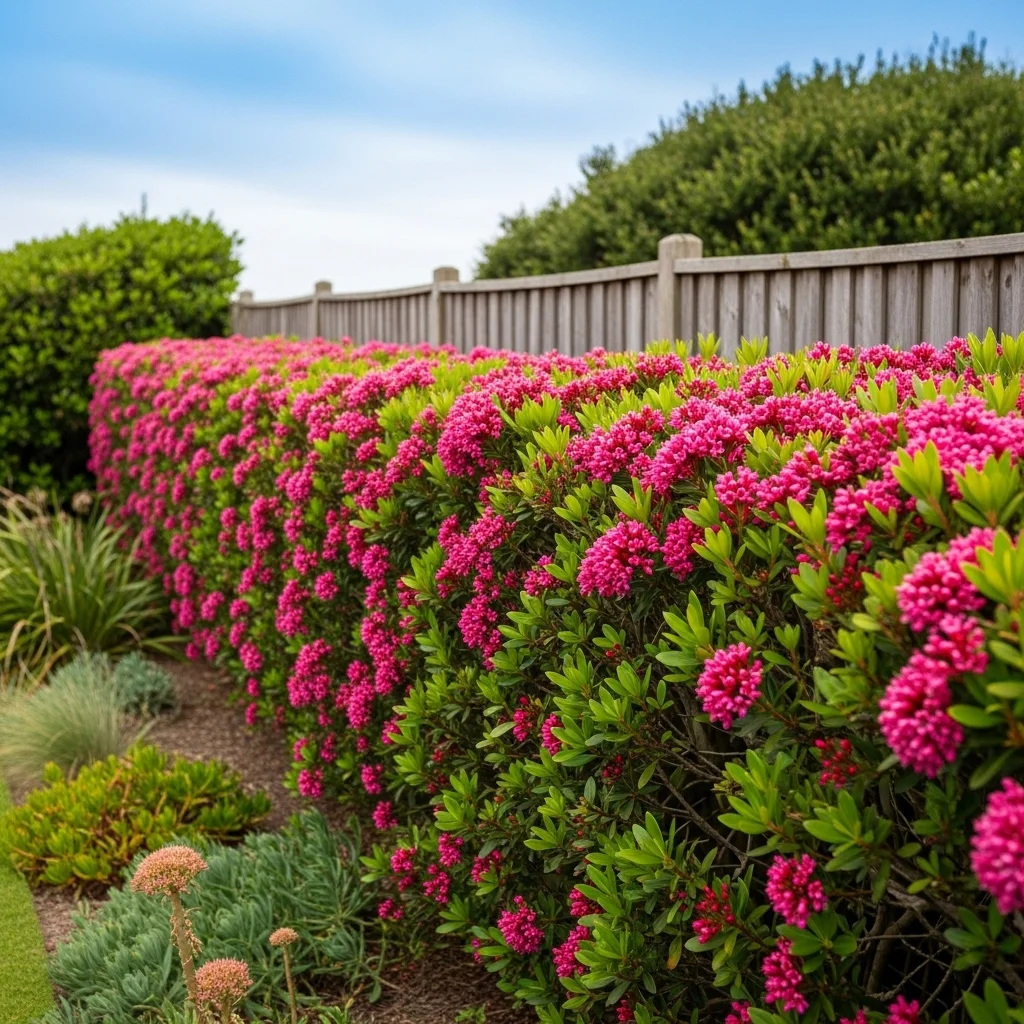
Escallonia is a dense, bushy evergreen shrub that produces masses of small flowers in pink, red, or white during summer. It is extremely hardy, responds well to pruning, and develops into a thick, attractive hedge along a fence line within a few years. It is an especially good choice for coastal gardens where salt winds would damage less tolerant species.
Edible and Fruit-Bearing Fence Plants
22. Espaliered Fruit Trees
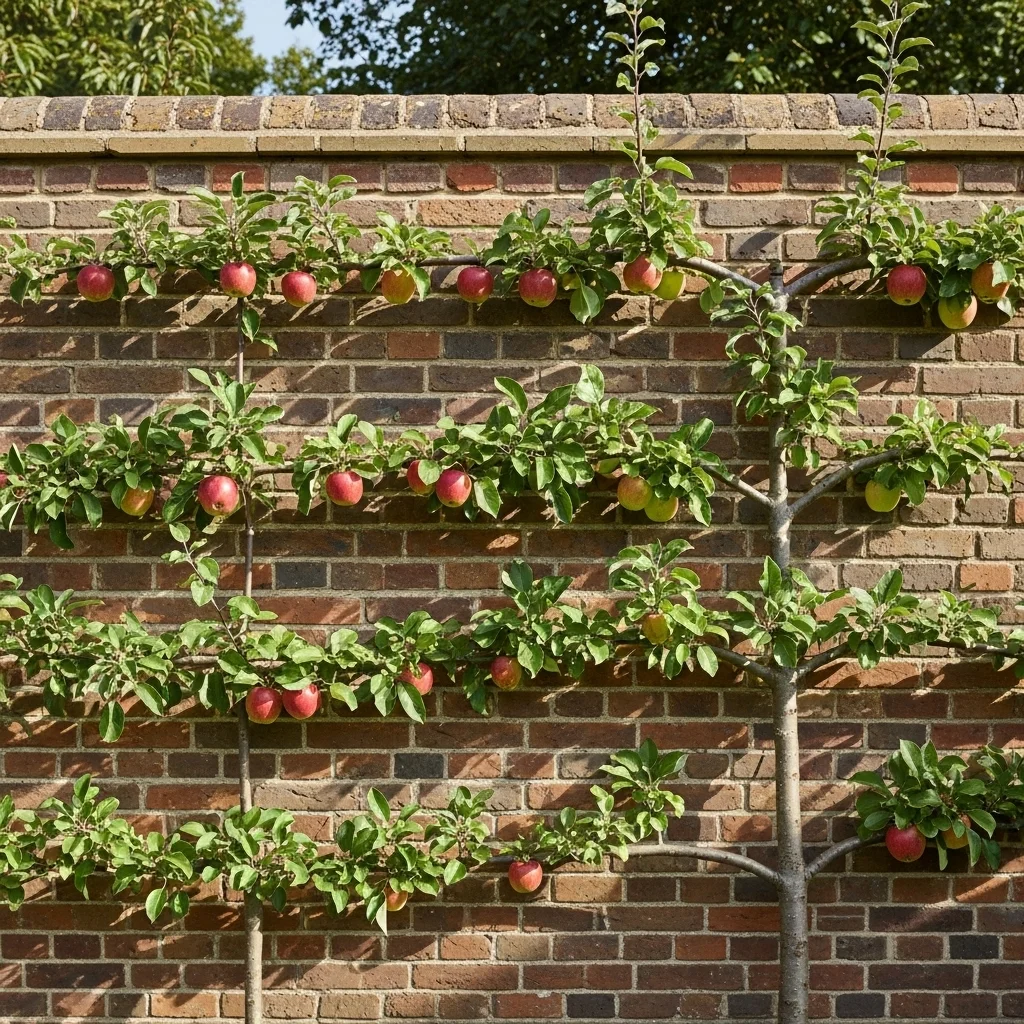
Training an apple, pear, or fig tree in an espalier pattern flat against a sunny fence is both beautiful and productive. This technique, practiced in European kitchen gardens for centuries, creates a living work of art while producing a genuine harvest. It requires a warm, sheltered fence position and some patience with training, but the result is one of the most rewarding fence plant arrangements possible.
23. Blueberries
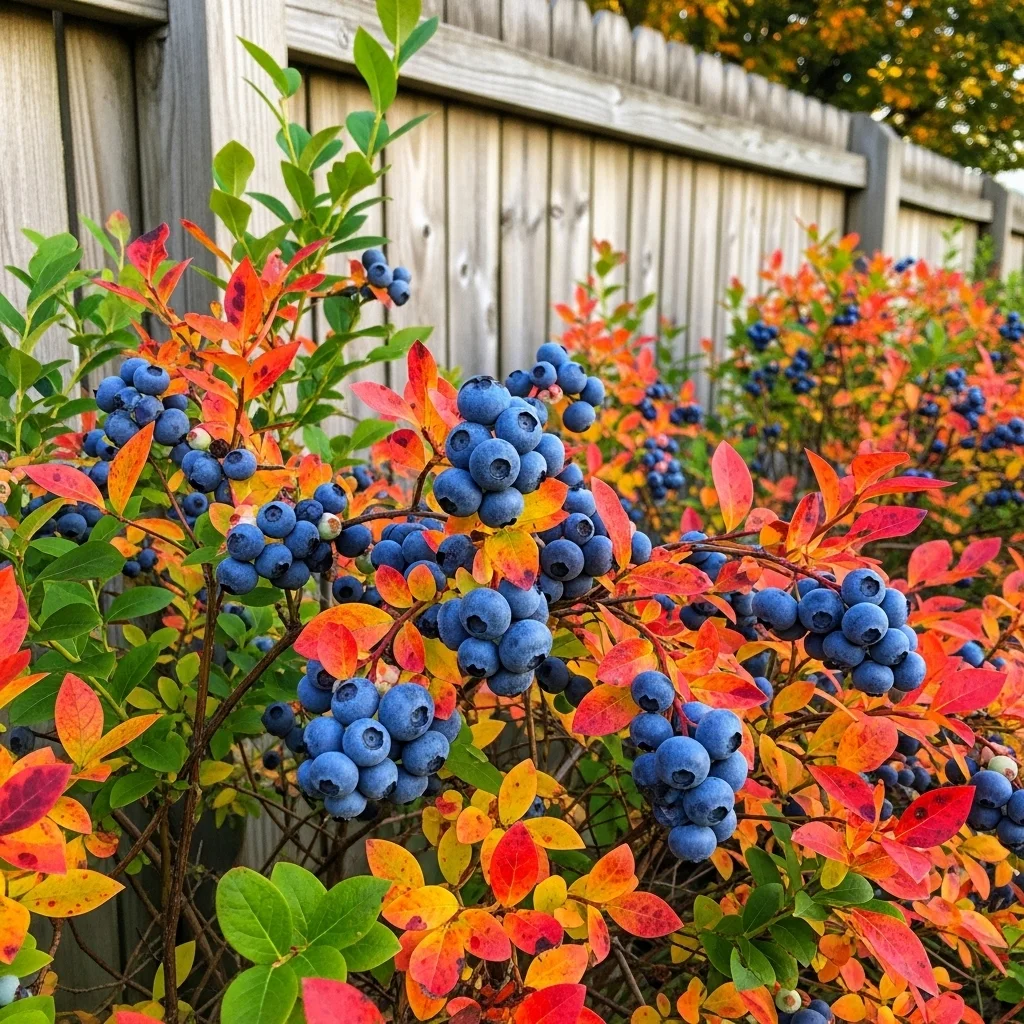
Blueberries planted along a fence offer attractive spring flowers, beautiful autumn foliage color, and of course a generous summer fruit harvest. They prefer acidic soil and full sun, and while they require some attention to soil preparation, once established they are long-lived, productive, and genuinely ornamental throughout the seasons. Planting multiple varieties improves cross-pollination and overall yield.
How to Plan Your Fence Planting
Once you have chosen your plants, a little planning goes a long way. Prepare the soil thoroughly before planting, incorporating organic matter to improve drainage and fertility. Consider that the base of a fence often sits in a rain shadow, receiving less natural rainfall than open ground, so plan to water new plantings consistently during the establishment period.
Mix evergreen and deciduous plants to ensure the fence line has interest in every season. Combine different heights and textures for depth. Repeat key plants at intervals along the fence to create visual rhythm rather than planting one of every variety, which tends to look restless and disjointed.
Introduce a few fast-growing species to provide quick results while slower, more permanent plants establish themselves over the first two to three years.
Conclusion
A fence does not have to be a visual endpoint in your backyard design. With the right plant choices, it becomes a dynamic backdrop that changes with the seasons, supports wildlife, adds fragrance, and transforms the entire character of the outdoor space. Whether you are drawn to the structured elegance of boxwood hedges, the romantic abundance of climbing roses, the dramatic height of arborvitae, or the sensory pleasure of lavender and jasmine, there is a fence plant combination that suits every backyard, every climate, and every level of gardening experience. Start with one or two ideas from this list, observe how they perform in your specific conditions, and build from there. The most beautiful backyard fence plantings are rarely completed in a single season. They grow, layer, and deepen over years into something genuinely rewarding.
Frequently Asked Questions
What is the fastest-growing plant to cover a fence?
Clematis and star jasmine are among the fastest-growing options for fence coverage, with some clematis varieties capable of extending well over 15 feet within a single growing season when provided with adequate support and nutrition.
What plants are best for privacy along a fence?
Arborvitae, cherry laurel, clumping bamboo, and holly are excellent choices for privacy screening. They are dense, evergreen, and grow to sufficient heights to block sightlines effectively throughout the year.
Can I plant directly against a wooden fence?
Yes, but leave a small gap of several inches between the plant and the fence to allow airflow. Good air circulation helps prevent moisture buildup, which can accelerate wood decay and encourage fungal issues on both the fence and the plants.
What plants grow well on a shaded north-facing fence?
Climbing hydrangea, English ivy, winter jasmine, and cherry laurel all perform reliably on shaded or north-facing fences where sunlight is limited. These species have adapted to lower light conditions and will establish well without direct sun.
How do I stop fence plants from becoming invasive?
Choose clumping rather than running bamboo varieties, keep climbers like ivy trimmed to the fence line, and prune vigorous shrubs regularly. Selecting plants that are well-suited to your climate zone also reduces the risk of overly aggressive spreading behavior.

2 Comments