
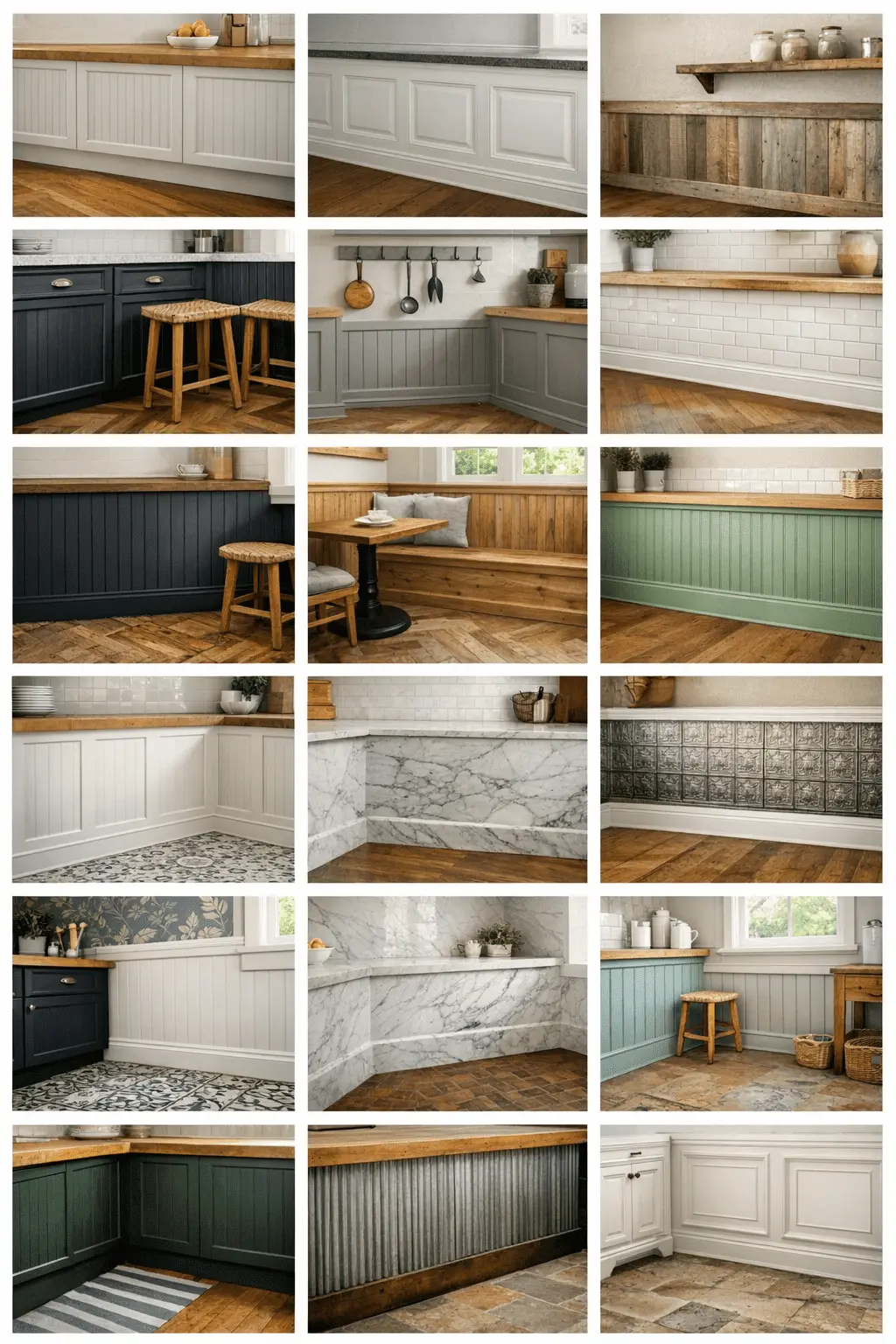
17+ Creative Wainscoting Ideas for Kitchen
Introduction:
Wainscoting Ideas for Kitchen Walk into almost any kitchen and you will notice the same pattern. The countertops are beautiful. The cabinetry is well chosen. The flooring is polished and intentional. But the walls, particularly the lower section between the floor and the countertop level, are painted white or beige and left completely bare. This is one of the most overlooked missed opportunities in home design.
The lower portion of kitchen walls endures more daily punishment than any other surface in the home. Chairs scrape against them. Appliances bump into them. Grease, steam, and the occasional splash of tomato sauce all leave their mark. A coat of flat paint holds none of this back and shows every bit of wear within months.
Wainscoting solves all of these problems at once. It is a wall treatment that covers the lower section of a wall with paneling or molding, typically ending at a cap rail somewhere between thirty two and forty eight inches from the floor. Originally used in European homes centuries ago for purely practical reasons, it has evolved into one of the most beloved and versatile design elements in contemporary interior design.
In a kitchen specifically, wainscoting does something remarkable. It protects walls that take constant abuse, introduces architectural texture that makes the room feel crafted and complete, and provides a design anchor that ties together cabinetry, countertops, and flooring into one cohesive visual story.
The following 18 ideas represent the full range of what kitchen wainscoting can achieve, from timeless classics to genuinely unexpected approaches. Whatever your kitchen style, your budget, or your level of DIY confidence, there is a solution here that will transform your space.
1. Classic White Beadboard Wainscoting for a Timeless Cottage Feel
Beadboard is the most recognizable and widely used form of kitchen wainscoting. Its defining feature is a series of narrow vertical planks separated by thin ridges, which create a soft, repetitive rhythm on the wall. Painted in crisp white or a warm off white, beadboard brings instant warmth and familiarity to any kitchen.
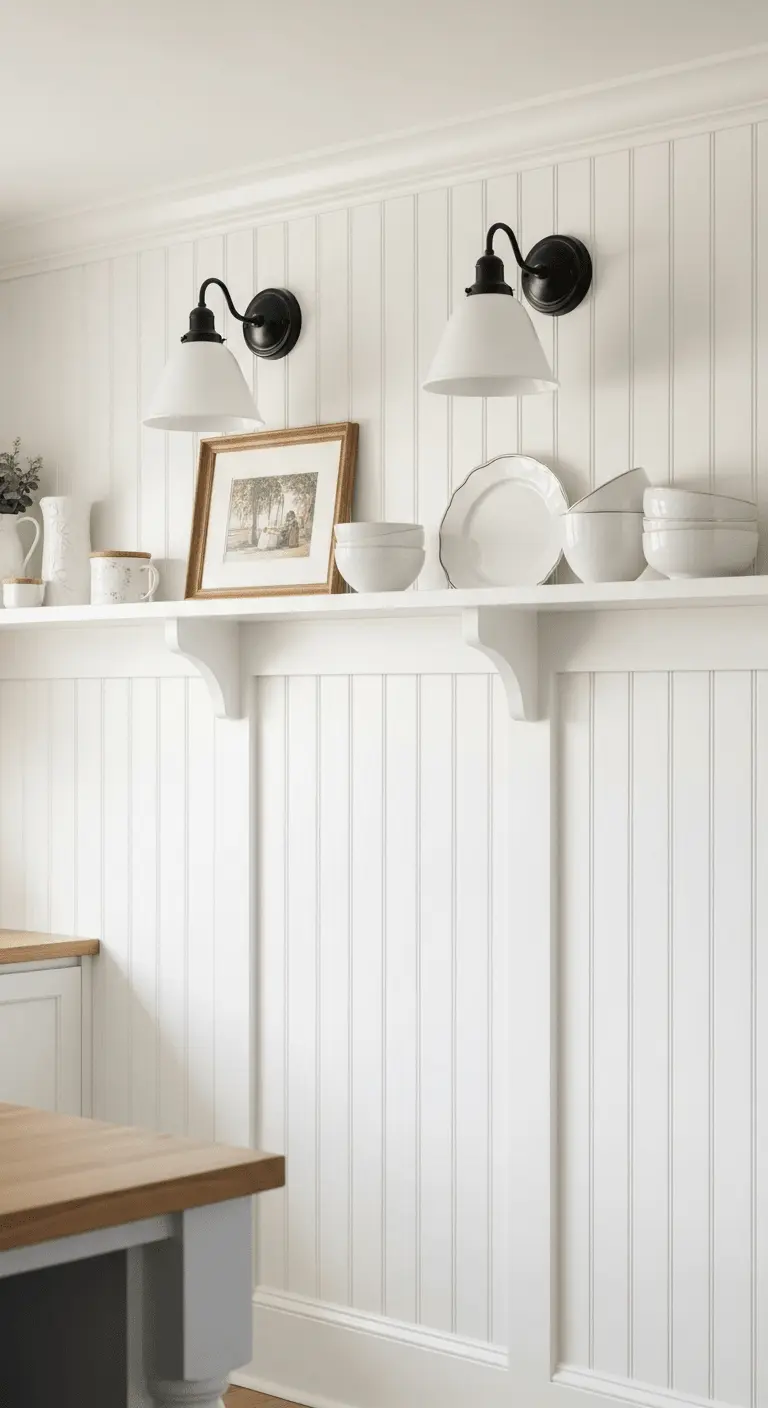
The vertical lines in beadboard draw the eye upward, making ceilings feel taller and rooms feel more open. This quality makes it particularly valuable in smaller kitchens where every visual trick matters. Its texture adds depth without demanding attention, allowing other design elements like open shelving, stone countertops, or statement light fixtures to remain the focal point.
Beadboard is also one of the most durable wainscoting options available. PVC beadboard panels, in particular, are completely waterproof and do not warp, crack, or absorb grease the way that standard wood panels can. For families with young children or anyone with a busy kitchen, PVC beadboard finished in a semi gloss or satin paint provides a surface that wipes down in seconds and looks fresh year after year.
2. Board and Batten Wainscoting for Farmhouse Character
Board and batten is the most graphic and architectural of all wainscoting styles. Wide, flat boards are arranged vertically and separated by narrow strips called battens, which create a bold, structured pattern that looks simultaneously handcrafted and intentional.
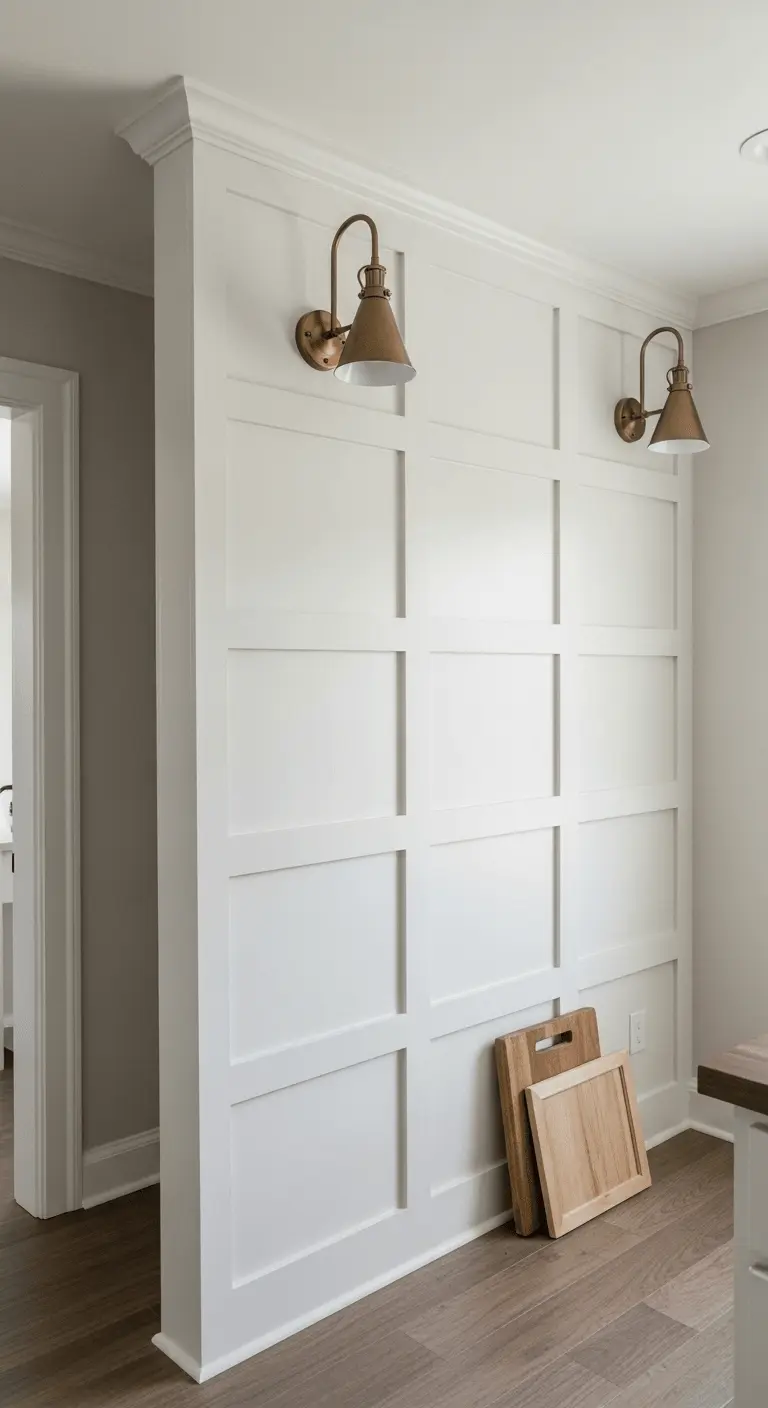
In farmhouse kitchens, board and batten in a muted white or warm greige gives walls the grounded, slightly rustic quality that defines the aesthetic. For a more dramatic result, extend the boards to two thirds of the wall height rather than stopping at the standard one third. This taller installation creates a more powerful architectural statement and makes ceilings feel significantly higher by drawing the eye upward along the full length of the boards.
3. Raised Panel Wainscoting for Traditional Elegance and Craftsmanship
Raised panel wainscoting is the most formal and detailed of all styles. Each panel features a framed rectangle with a slightly elevated center, which creates subtle shadows and a genuine sense of depth and dimension. This style carries a quality of permanence and craft that no other wainscoting type quite matches.
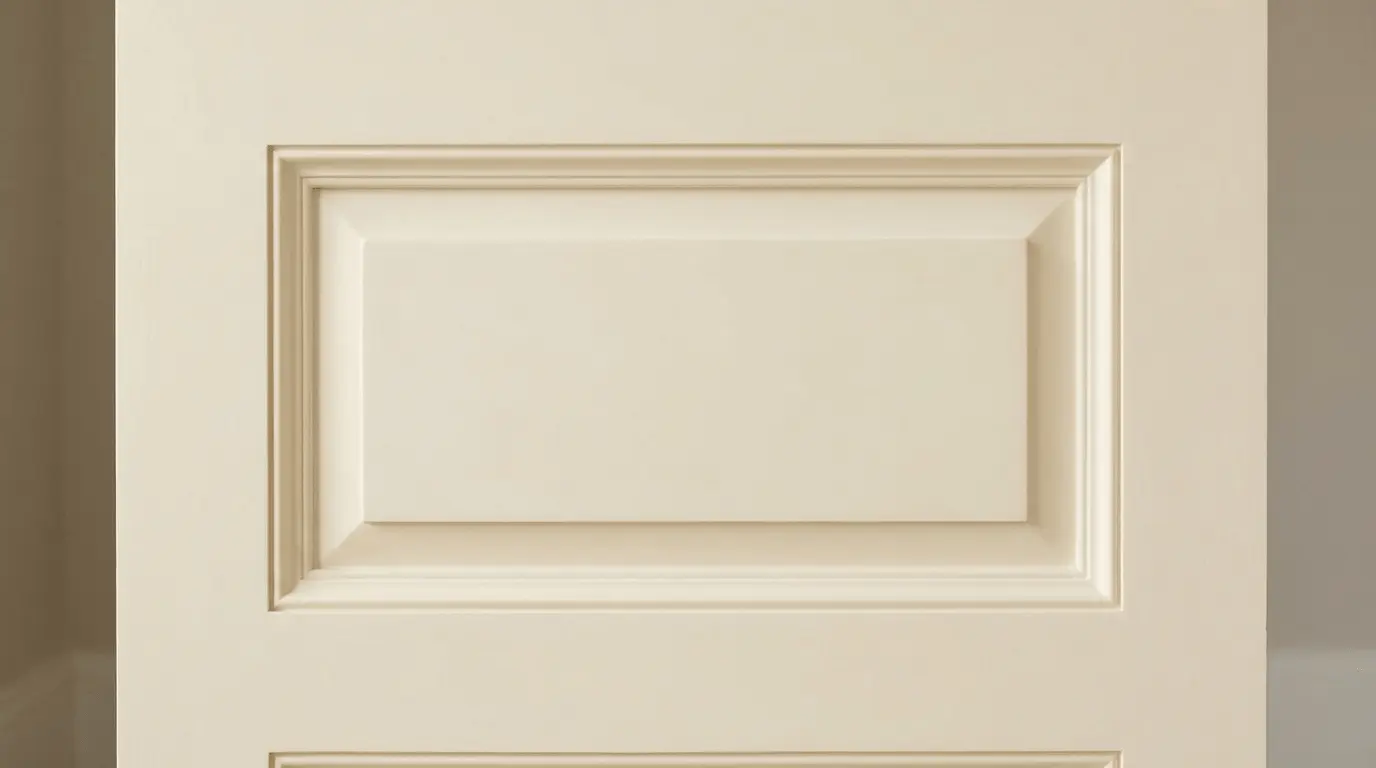
Raised panel wainscoting belongs naturally in traditional and transitional kitchens with detailed crown molding, ornate cabinet hardware, and rich material choices like marble countertops or oil rubbed bronze fixtures. Painted in warm white or soft cream, raised panels give the room an air of historical refinement. The installation demands precise carpentry, and professional help is worth the investment for this particular style, as poorly fitted joints and gaps can undermine the formal effect entirely.
4. Flat Panel Wainscoting for Sleek and Contemporary Spaces
Where raised panels feel historical and ornate, flat panel wainscoting feels modern and resolved. Smooth panels with clean, unadorned frames integrate naturally into contemporary and transitional kitchens where simplicity and geometry are the guiding design principles.
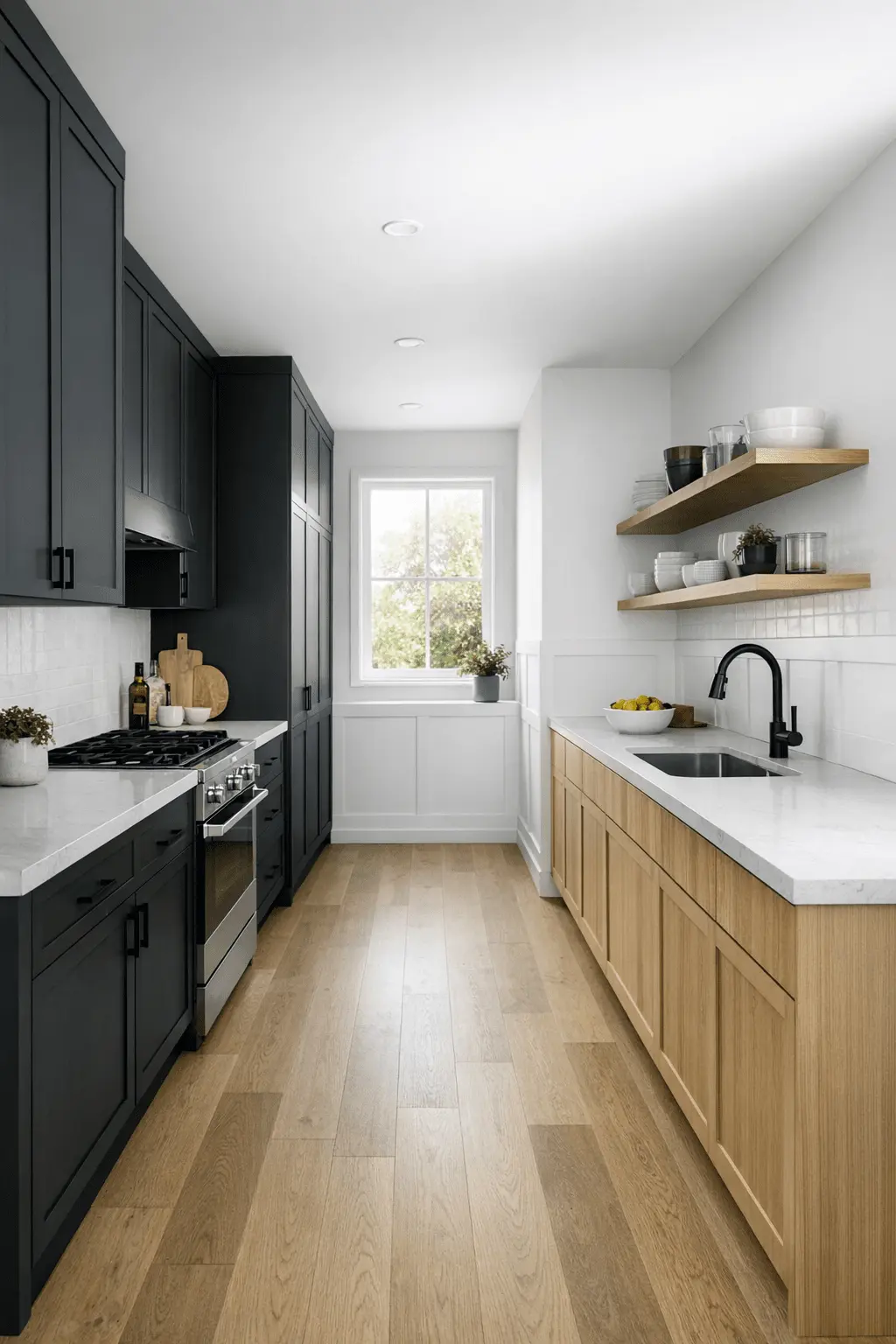
Flat panels can be painted to match cabinetry for a fully unified, furniture like look, or finished in a contrasting shade to introduce visual depth without complexity. In galley kitchens where clean lines and efficient use of space are paramount, flat panel wainscoting reads as intentional and sophisticated without ever feeling overdone or busy.
5. Shiplap Wainscoting for a Relaxed Coastal Atmosphere
Shiplap panels feature slightly overlapping horizontal planks with a narrow shadow gap between each one. The result is a relaxed, textured wall surface that carries a distinctly coastal or casual spirit. In kitchens, shiplap wainscoting adds warmth and informality while remaining easy to maintain and clean.
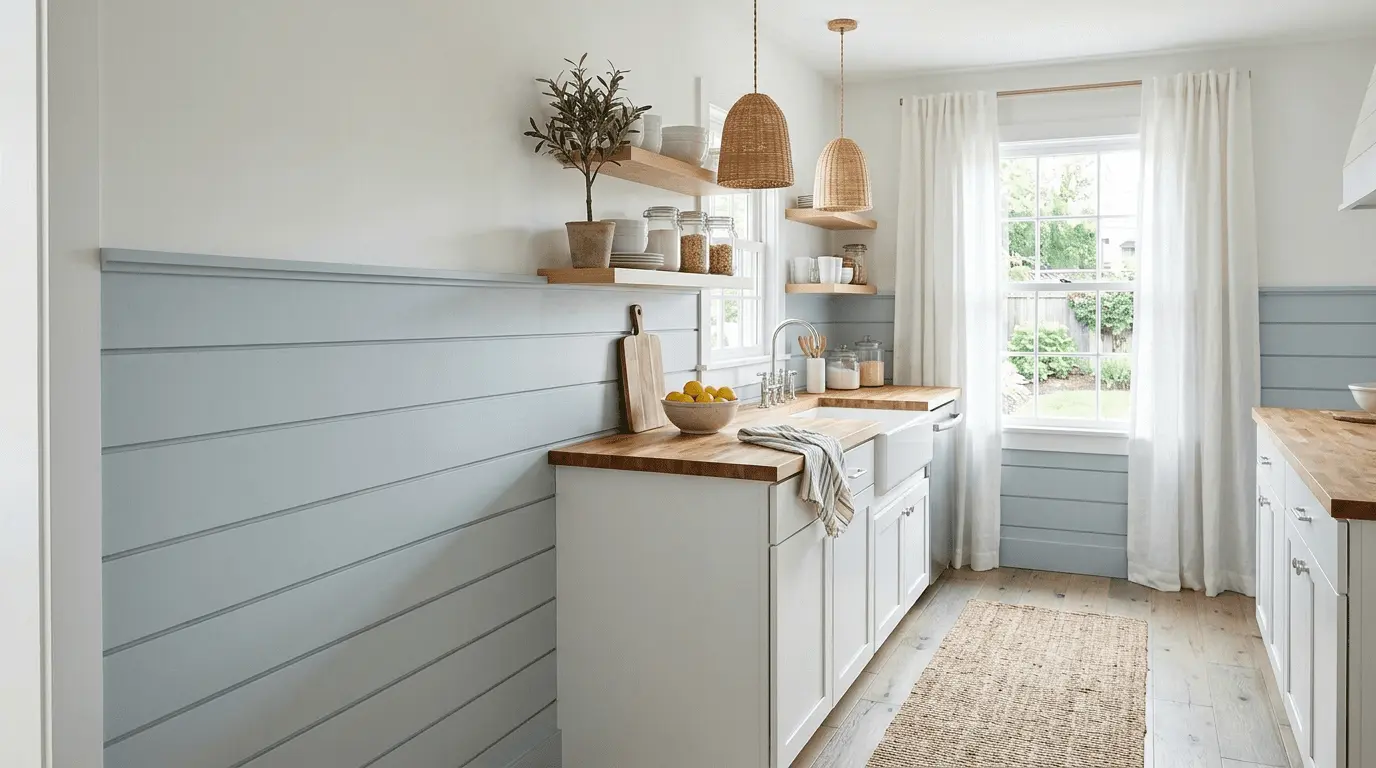
Pale blue gray, soft white, and sandy neutral tones all work beautifully on shiplap panels in a kitchen setting. These colors reinforce the relaxed, coastal identity of the material and pair naturally with open shelving, rattan or natural fiber pendant lights, and butcher block or reclaimed wood countertops. For a more dramatic take, a deep charcoal shiplap creates a striking contrast against lighter upper walls and white cabinetry.
6. Two Tone Wainscoting for Purposeful Visual Contrast
The two tone wainscoting treatment is one of the most effective design moves available in a kitchen. This approach involves painting the lower paneled section one color and the upper wall a different, typically lighter, shade. The contrast creates a natural dividing line in the room that anchors the lower portion visually and makes the entire space feel deliberately designed.
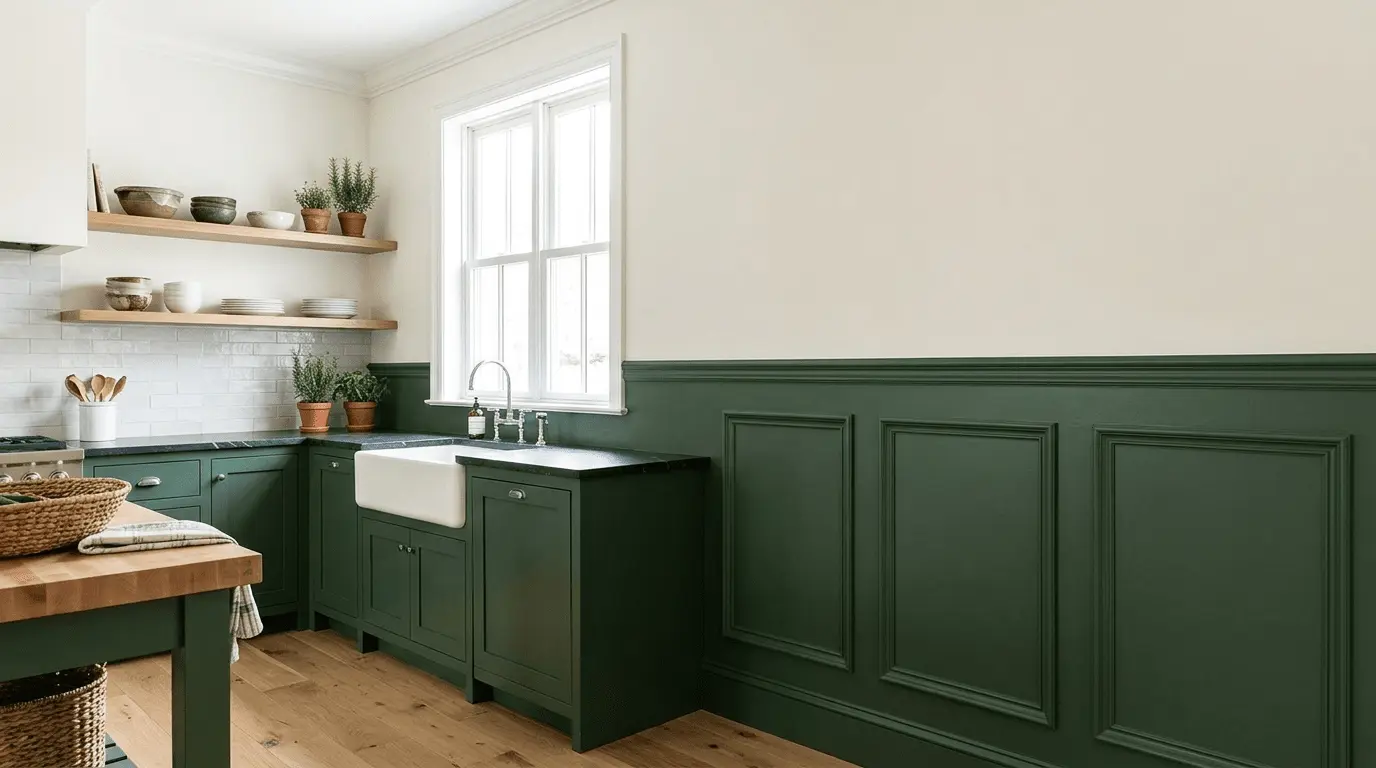
A deep forest green lower section paired with a warm white upper wall creates a sophisticated, nature inspired atmosphere that suits traditional and farmhouse kitchens equally well. A navy lower section against a pale gray upper wall delivers a polished, classic look that works in coastal and transitional spaces. The key is allowing the lighter, upper color to carry enough of the room so that the darker lower panel feels grounded rather than heavy.
7. Reclaimed Wood Wainscoting for Genuine Rustic Warmth
There is a quality to reclaimed wood that no manufactured material can replicate. Each plank carries its own unique grain pattern, natural imperfections, weathered character, and history. When this material is used for kitchen wainscoting, the result is immediate and deeply appealing in a way that feels both old and current at the same time.
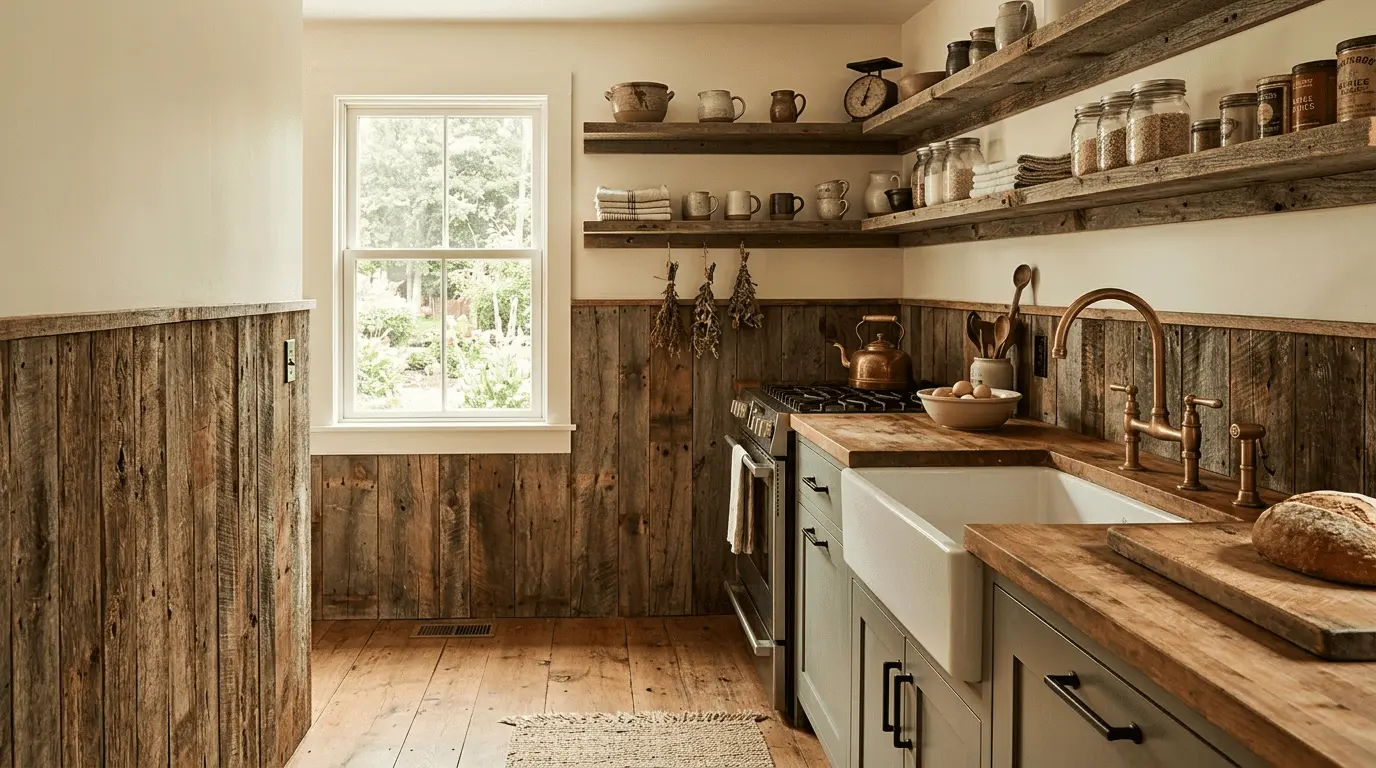
Reclaimed wood wainscoting suits mountain homes, converted farmhouses, and any kitchen that embraces an organic, artisanal aesthetic. Pair it with open shelving made from the same or similar wood, matte black or unlacquered brass hardware, and a butcher block countertop for a cohesive rustic vision that feels genuinely considered rather than assembled from trend pieces.
8. Wainscoting on the Kitchen Island Sides
The kitchen island is one of the most important visual and functional elements in a modern kitchen, yet its sides are frequently left as plain painted surfaces. Applying wainscoting to the island sides is one of the most impactful upgrades available in kitchen design because it transforms a functional block of cabinetry into something that reads more like a piece of furniture.
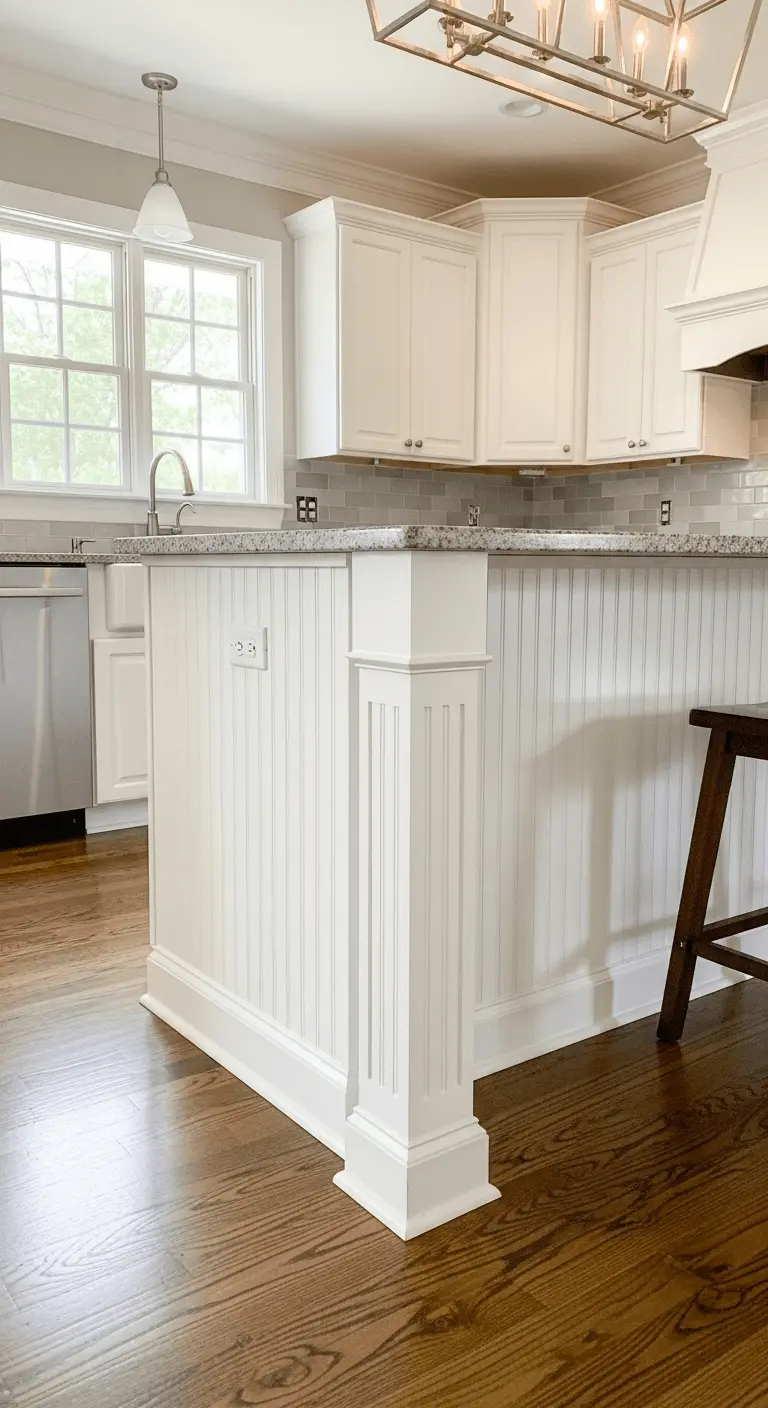
Raised panel designs on island sides are particularly popular in traditional and transitional kitchens. Beadboard on an island gives it a cottage charm that suits farmhouse spaces beautifully. Flat panels in a contrasting color create a modern, intentional look that elevates the entire kitchen. Whatever style you choose for the surrounding walls, repeating it on the island creates continuity that makes the whole room feel unified and carefully designed.
9. Wainscoting Behind the Range as an Architectural Focal Point
Most homeowners address the wall behind their range with a standard tile backsplash. Applying a panel of wainscoting in this zone instead creates something far more unexpected and visually commanding. A raised panel section framed behind a professional style range transforms the entire cooking wall into an architectural moment rather than a purely functional surface.
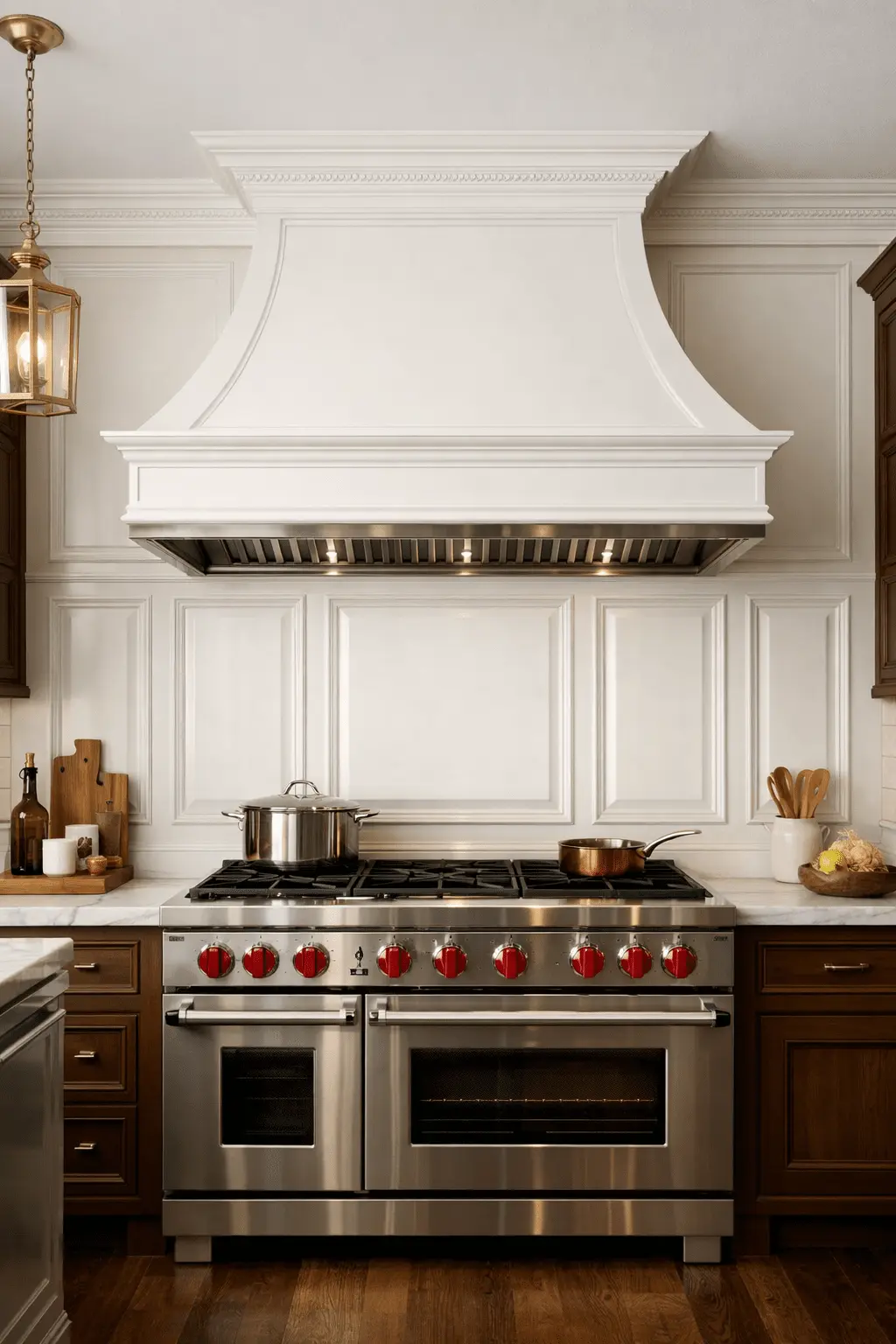
This application works best in kitchens where the range hood already commands significant attention. The wainscoting extends the formality of that feature downward, creating a cohesive, designed cooking wall from countertop level to hood. Materials must be chosen carefully here. High quality paint with a moisture and heat resistant formulation is essential, and MDF panels should be sealed thoroughly to prevent any warping from cooking moisture.
10. Tall Wainscoting for Kitchens with Generous Ceiling Heights
Standard wainscoting installations end at roughly thirty two to thirty six inches from the floor. In kitchens with taller ceilings, this proportion can feel insufficient, leaving too much unbroken wall above the panels. Extending wainscoting to forty eight or even sixty inches creates a much more commanding installation that fills the space more generously.
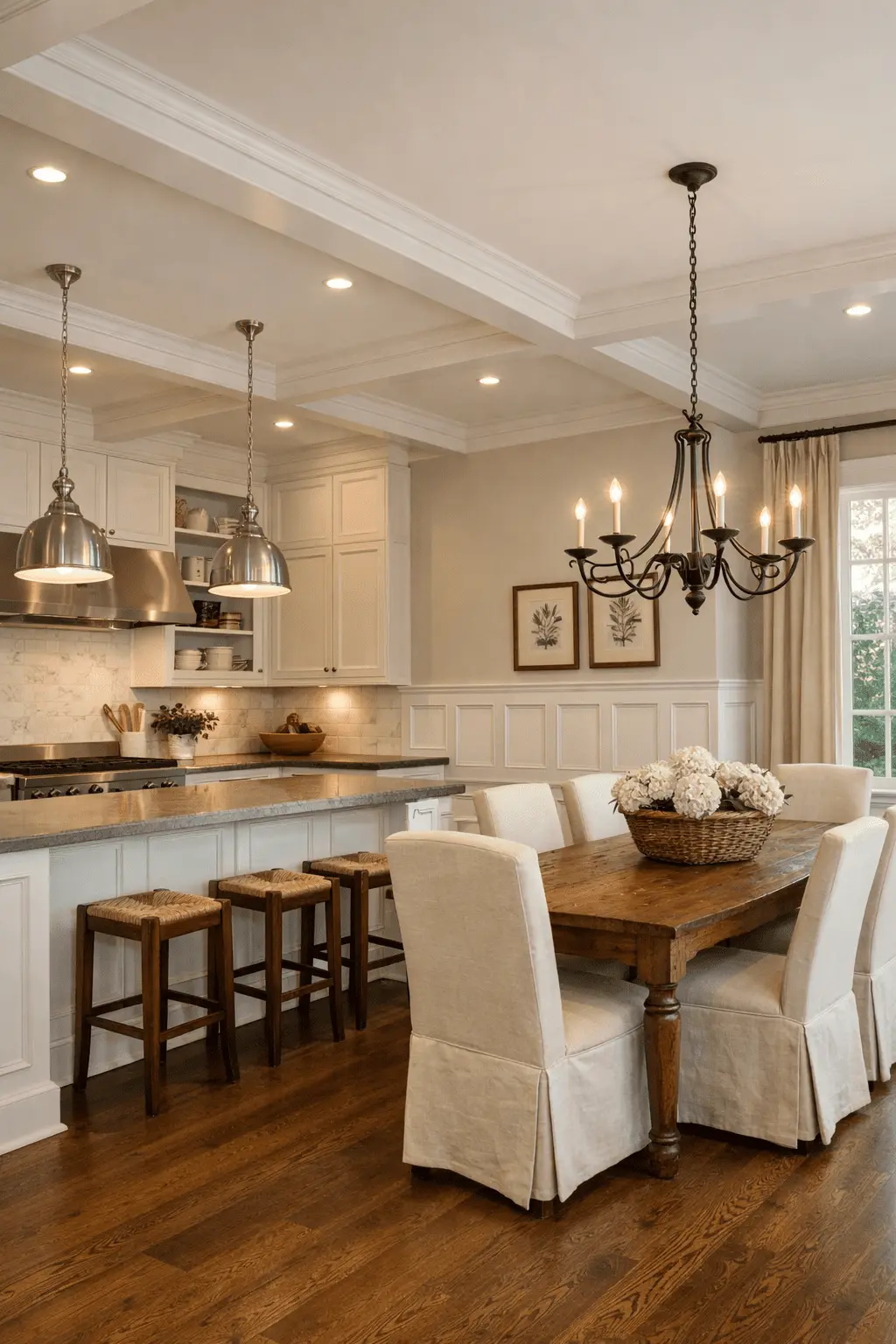
Kitchens in homes with nine or ten foot ceilings, vaulted spaces, or open plan kitchen and dining combinations benefit most from this approach. In kitchen dining combinations specifically, tall wainscoting can wrap from the cooking area into the dining zone, unifying the two spaces under one cohesive architectural treatment and making the combined room feel intentionally designed rather than arbitrarily connected.
11. Bold Colored Wainscoting as the Room’s Defining Feature
Most people default to white or off white for kitchen wainscoting because it feels safe and universally flattering. But bold color is one of the most exciting and transformative choices available, and when executed well, it produces a kitchen that feels genuinely memorable and personal.
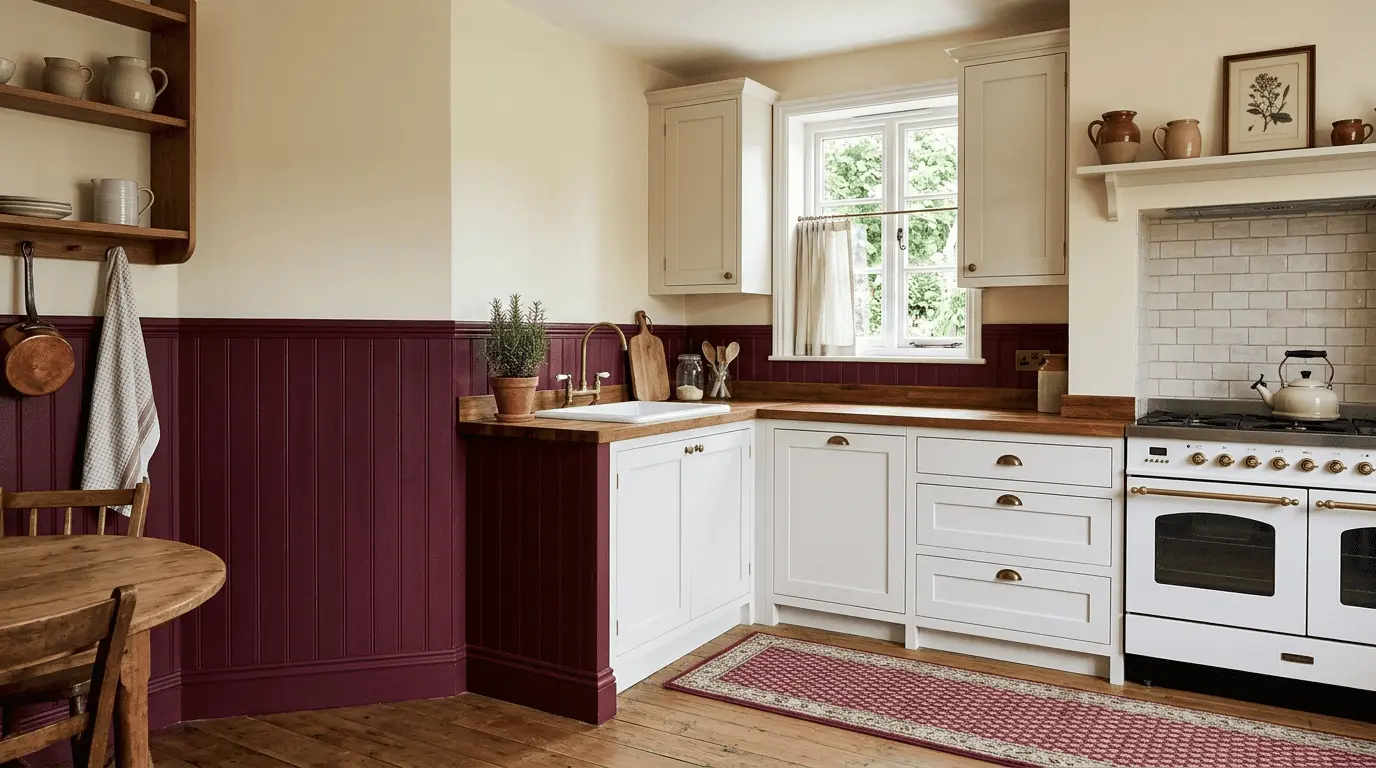
A deep burgundy, a rich slate blue, a saturated forest green, or a confident charcoal all work beautifully as wainscoting colors in kitchens where the upper walls and cabinetry remain relatively neutral. The darker, richer panel color grounds the room and creates a visual anchor that makes the space feel designed from the ground up rather than decorated after the fact.
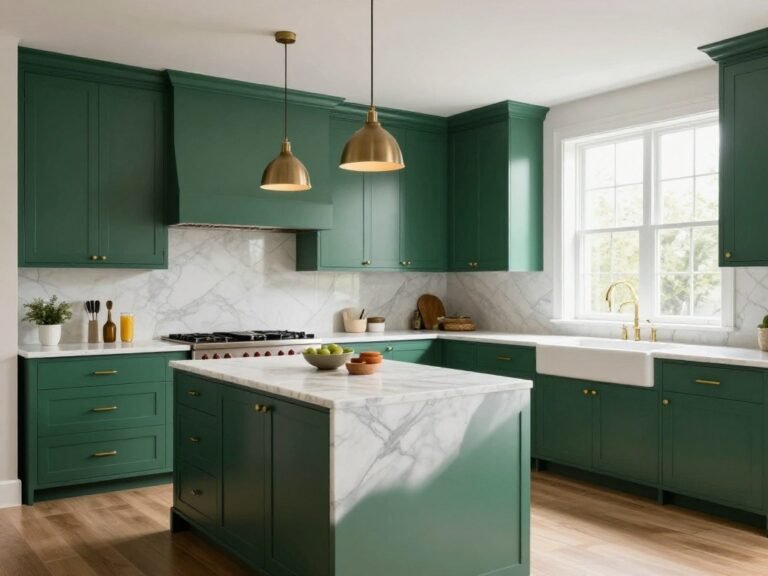
12. Sage Green Wainscoting for a Calm and Organic Kitchen Atmosphere
Sage green has become one of the most beloved colors in contemporary kitchen design, and it translates with particular success to wainscoting applications. This muted, earthy green tone creates a sense of calm and connection to the natural world that makes a kitchen feel like a retreat rather than a purely utilitarian workspace.
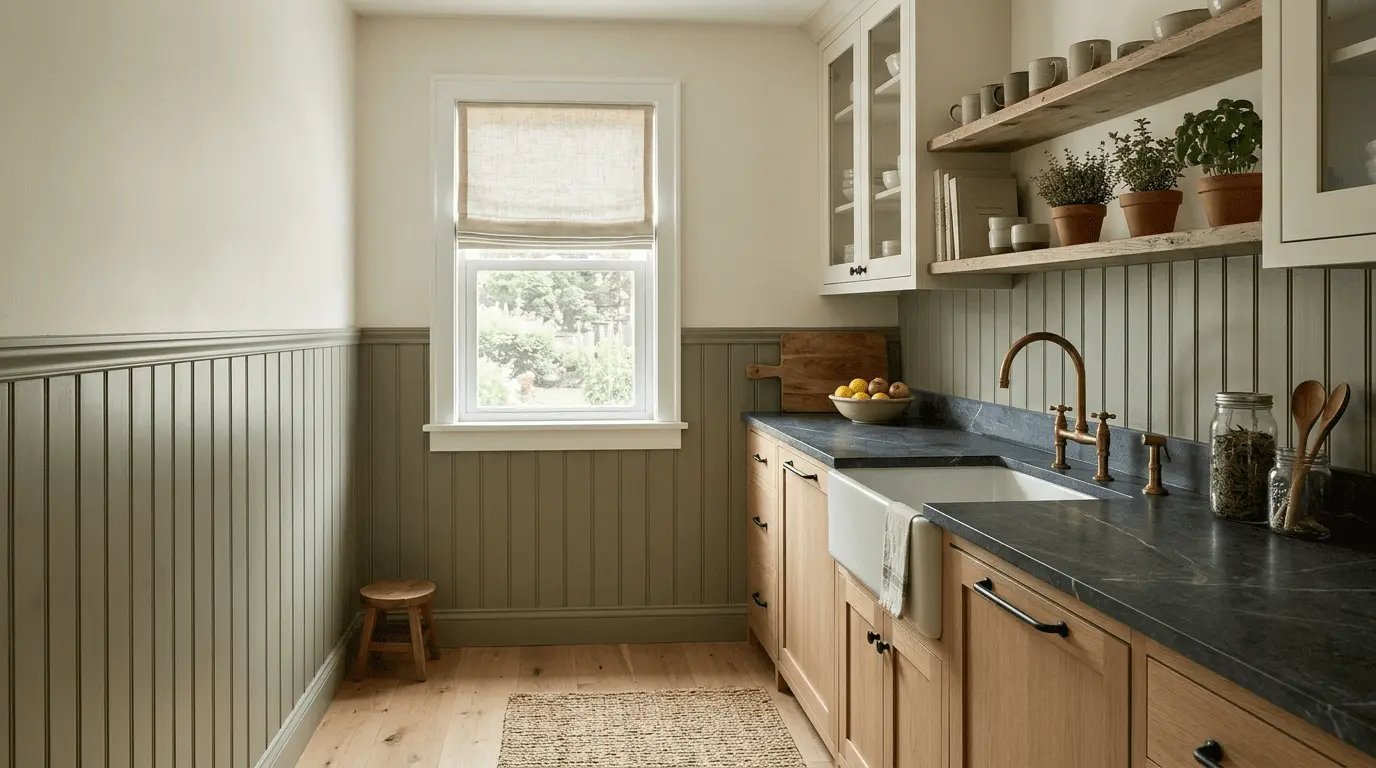
Sage green wainscoting pairs naturally with warm wood tones such as light oak or walnut, cream painted upper cabinetry, and hardware in unlacquered brass or matte black. It reads equally well in farmhouse kitchens, transitional spaces, and cottage style rooms. The color’s organic quality connects it visually to natural stone countertops, linen window treatments, and the kinds of understated, considered materials that define the most welcoming kitchens.
13. Navy Blue Wainscoting for a Bold and Polished Result
Navy wainscoting brings a level of sophistication and visual confidence to a kitchen that very few other design choices can match. When installed at the standard chair rail height and paired with white upper walls and light countertops, navy paneling creates a two tone combination that feels both timeless and current in equal measure.
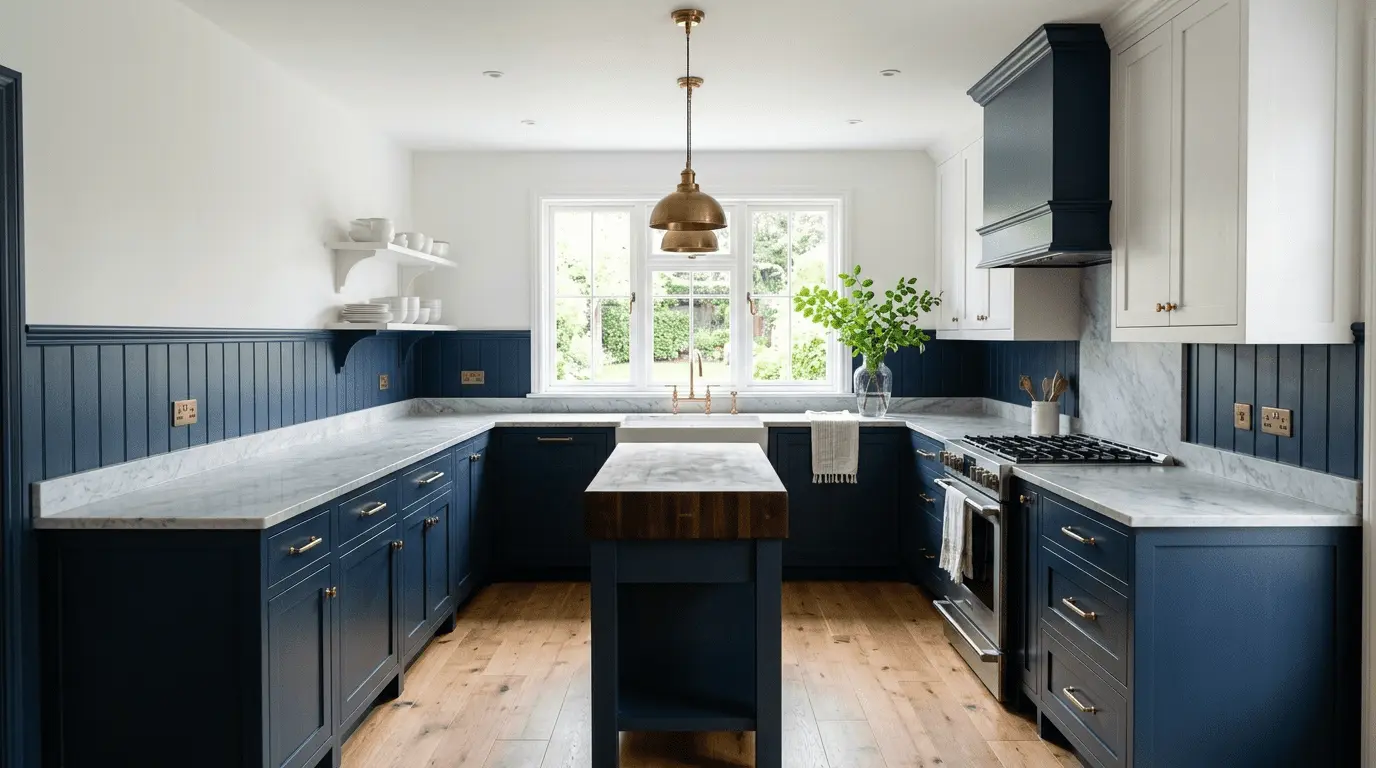
This color performs best in kitchens with adequate natural light. The depth of the navy is counterbalanced beautifully by bright white upper walls, light countertops in marble or quartz, and cabinetry that has enough visual weight to hold its own against the strong lower color. Brass and gold hardware complements navy wainscoting particularly well, warming the coolness of the deep blue with metallic richness.
14. MDF Wainscoting for Budget Conscious and Value Driven Renovations
Not every kitchen renovation operates with an unlimited budget, and that is precisely where medium density fiberboard panels earn their place. MDF wainscoting is significantly more affordable than solid wood, accepts paint beautifully, and when properly finished, produces a surface that looks genuinely polished and professional.
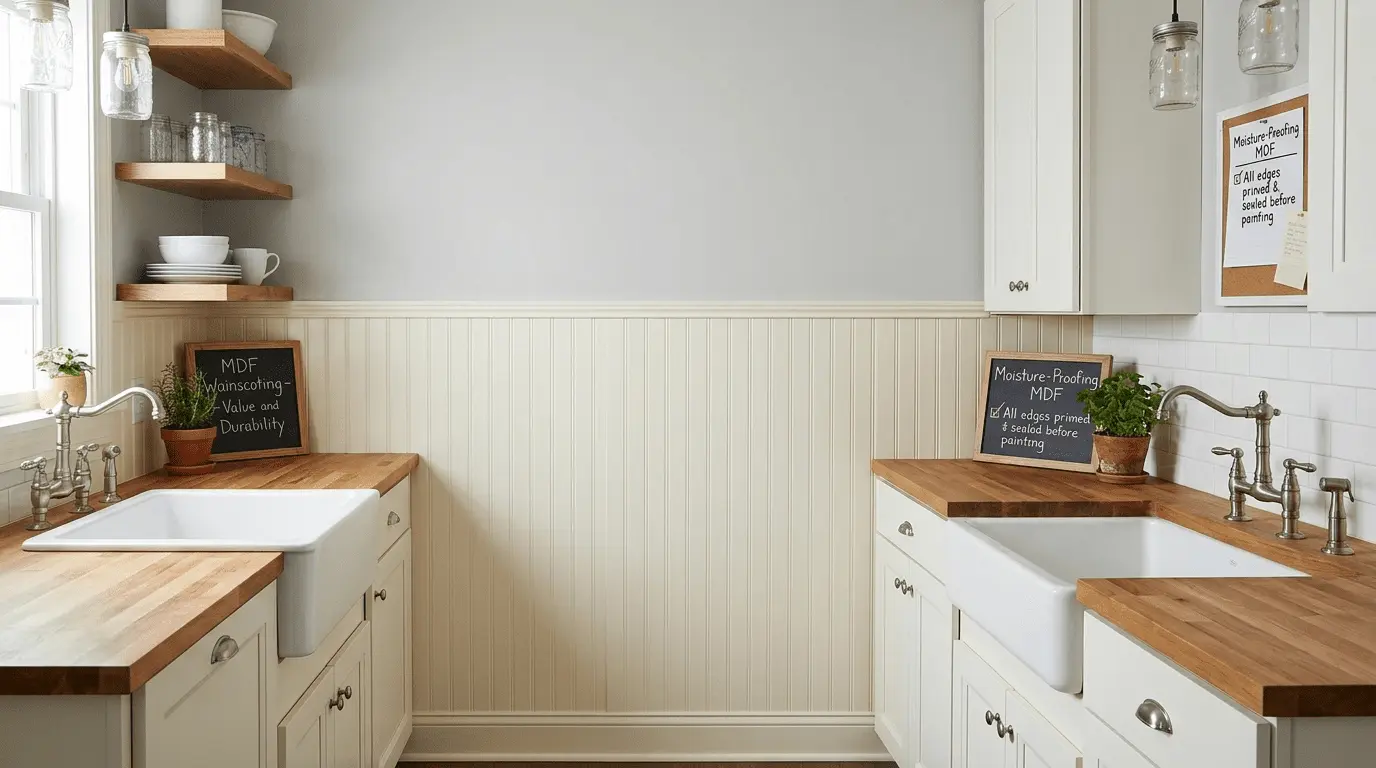
MDF does not handle prolonged moisture exposure the way solid wood does. In a kitchen environment, sealing every cut edge, joint, and surface with a quality primer and a moisture resistant topcoat before painting is non negotiable. When this preparation step is done thoroughly, MDF wainscoting performs extremely well in kitchens and can look indistinguishable from solid wood paneling at a fraction of the cost.
15. Geometric and Lattice Wainscoting for a Contemporary and Artistic Twist
For kitchens that want to move beyond the conventional options, geometric wainscoting patterns offer something genuinely original. Diamond grids, herringbone arrangements, chevron layouts, and interlocking square patterns applied to the lower walls create a sense of movement and visual energy that makes the kitchen feel curated and artistic rather than simply functional.
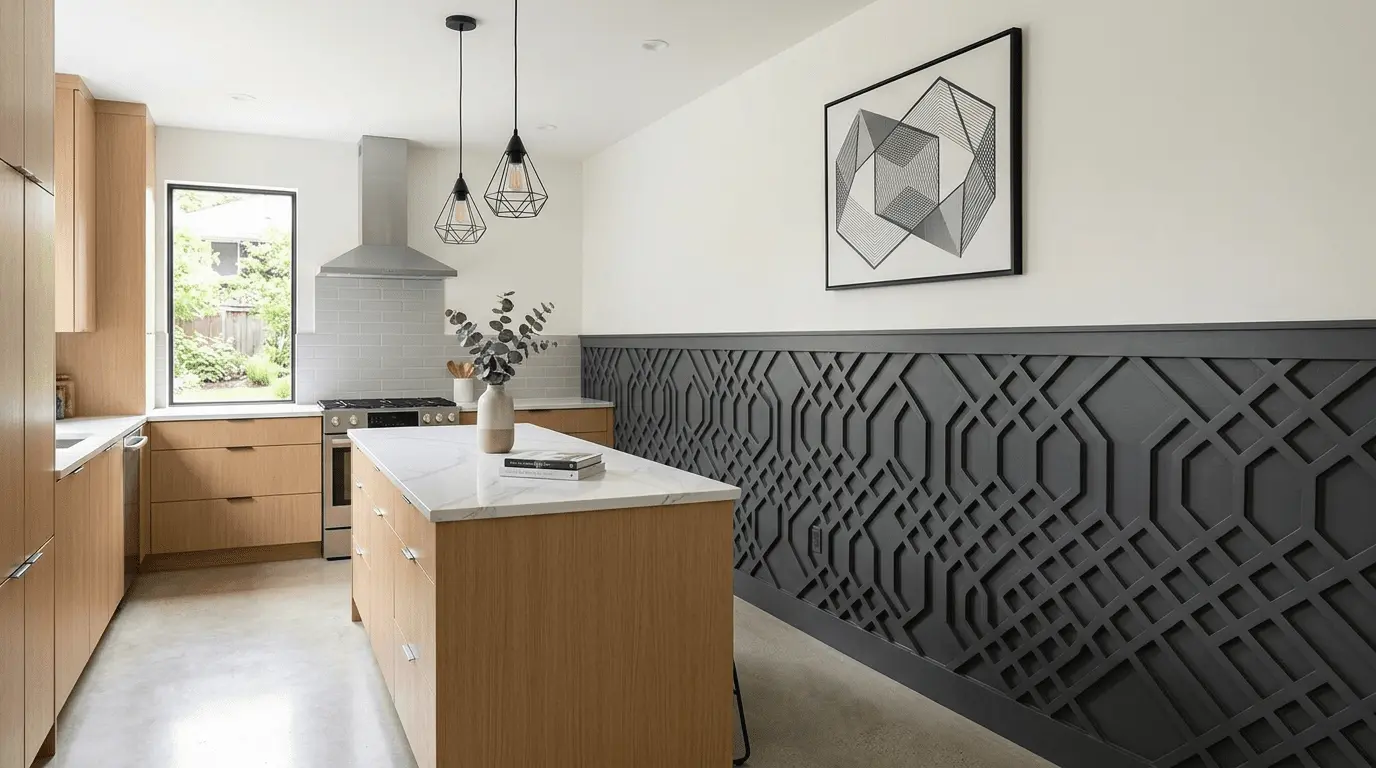
Geometric wainscoting works best in contemporary kitchens with clean lines, minimal ornamentation, and a design sensibility that welcomes the unexpected. The precision required for proper installation is considerable, and this is a style where professional carpentry almost always produces a better result than a DIY approach. The finished product, however, is a kitchen wall that functions as a piece of art in its own right.
16. Monochromatic Wainscoting for a Sophisticated and Tonal Effect
Painting both the wainscoting panels and the upper wall in the same color is a bold design move that rewards those willing to commit to it fully. When there is no color contrast between the lower panels and the wall above, the texture of the wainscoting itself becomes the focal point. The light and shadow created by the panel profiles produce a quiet, refined depth that a completely flat painted wall never achieves.
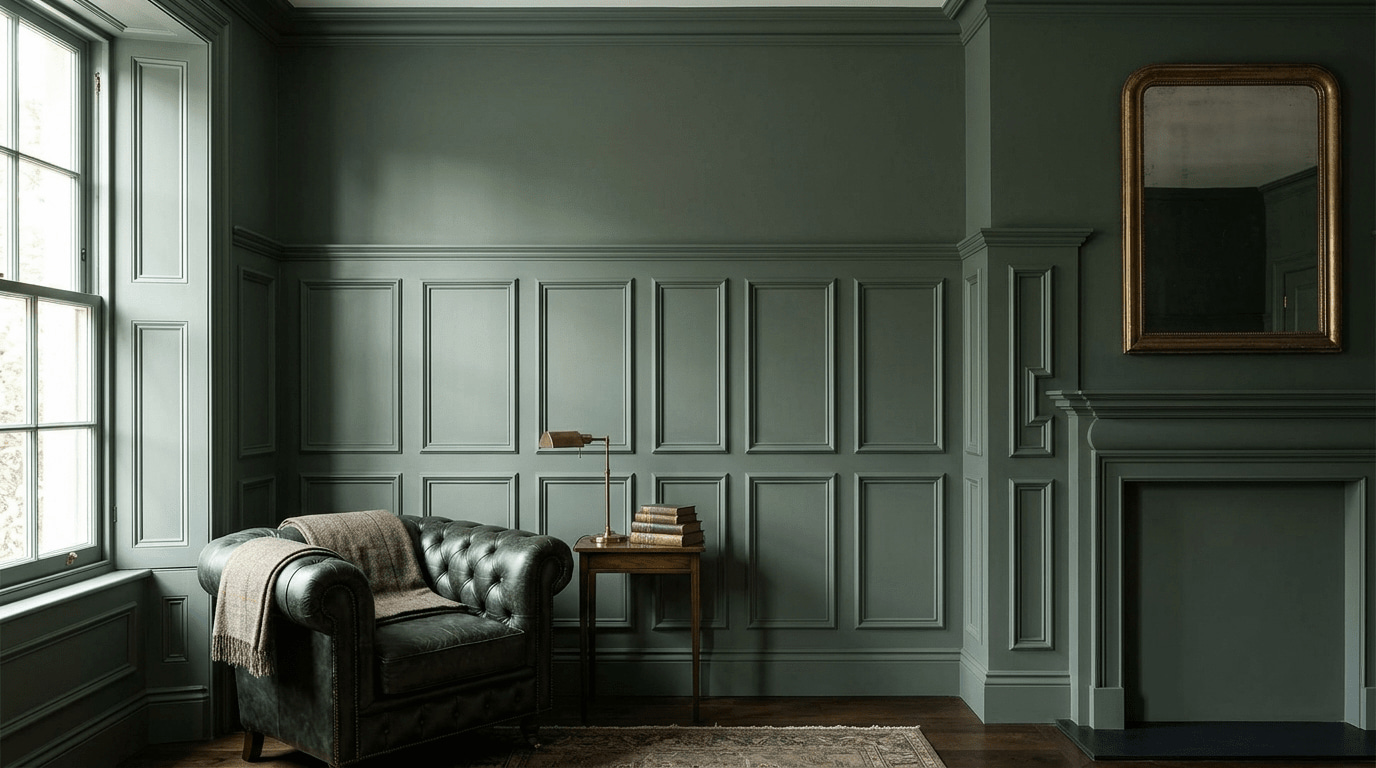
Monochromatic wainscoting requires a color with enough depth to register as more than background. A warm taupe, a muted clay, a deep sage, or a complex gray all work beautifully in this application. Very pale colors can work as well, particularly in kitchens with strong natural light where the subtle texture of the panels remains visible even without color contrast to define them. https://www.itsoverflowing.com/kitchen-wainscoting-ideas/
17. Wainscoting Combined with Decorative Wallpaper Above for Maximum Character
One of the most characterful and personality driven combinations in kitchen design is traditional wainscoting below paired with decorative wallpaper above the chair rail. The paneling provides a grounded, architectural base that protects the lower wall while the wallpaper above delivers pattern, color, and visual energy in a way that paint alone rarely achieves.
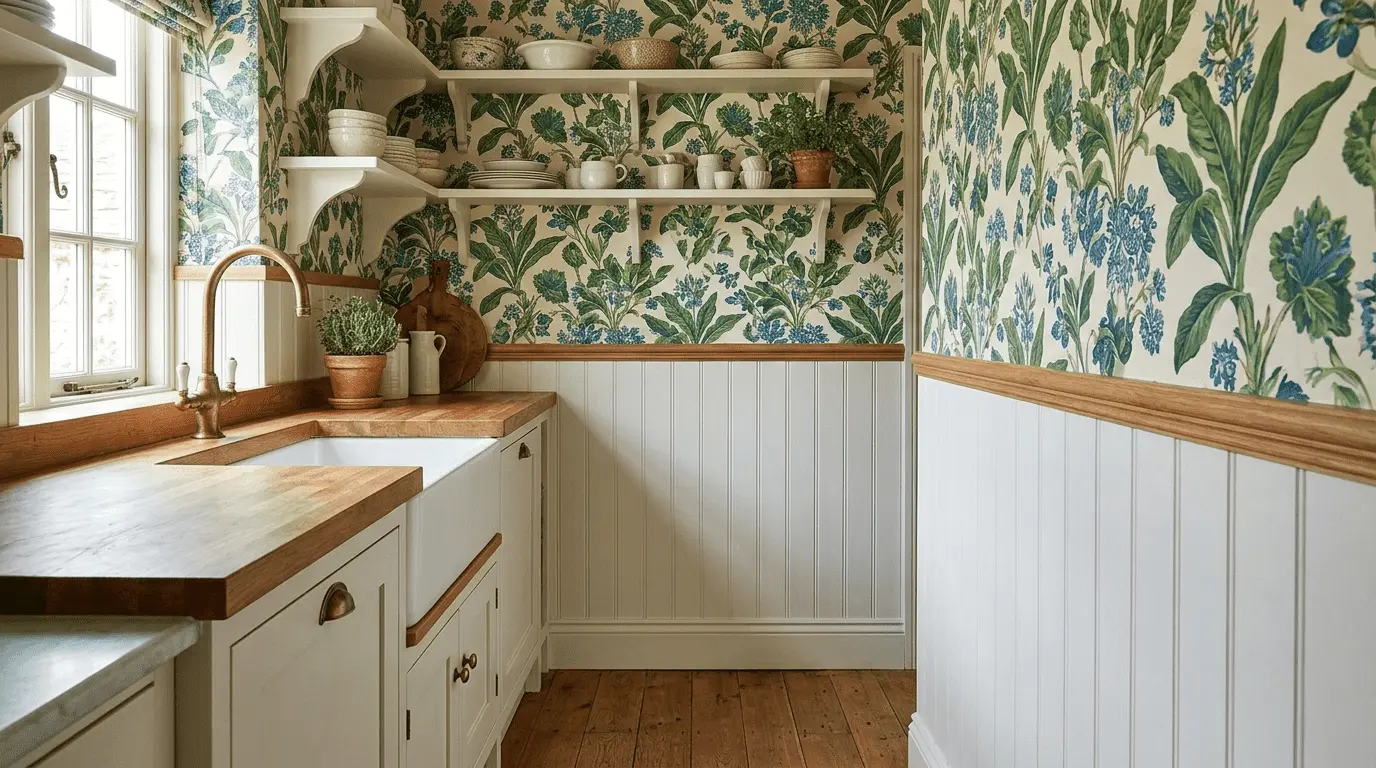
Botanical prints, delicate florals, geometric repeats, and small scale abstract patterns all integrate well with wainscoting below. The cap rail of the wainscoting acts as a natural frame between the two elements, keeping the transition between panel and wallpaper clean and intentional. This combination suits traditional kitchens particularly well, though it can work in any space where design personality is the priority.
18. Wrapping Wainscoting from the Kitchen Into the Adjacent Dining Area
In open plan homes where the kitchen and dining zone share the same physical space, treating them as separate rooms when it comes to wall design is a missed opportunity. Wrapping wainscoting continuously from one area into the other is one of the most effective ways to visually unify two zones that would otherwise feel disconnected.
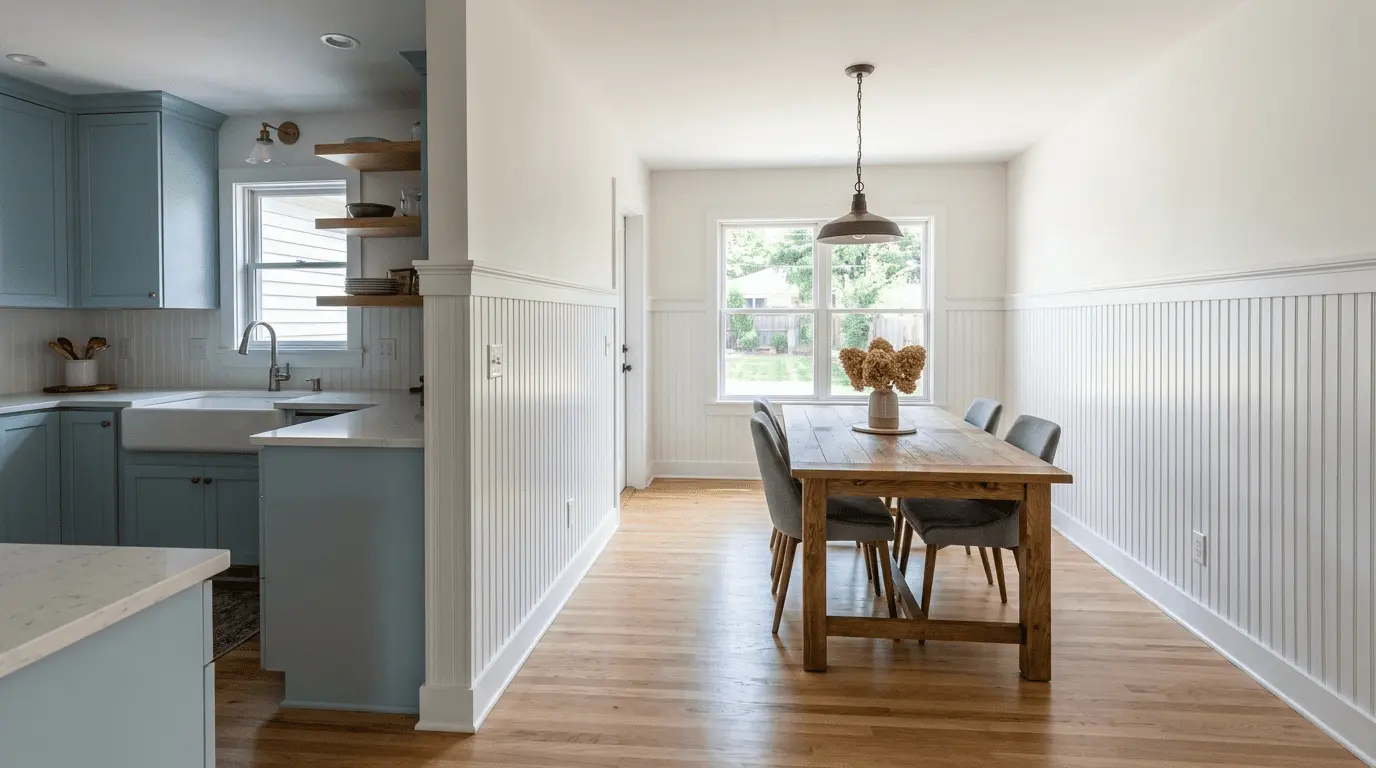
When wainscoting travels from the kitchen walls through the dining area without interruption, it becomes the architectural thread that ties the whole space together. Both zones feel like parts of a single, intentionally designed room rather than two adjacent areas that happen to share a floor plan. Any of the eighteen styles described in this article works in this application, and the choice of color and height should be driven by the combined proportions and light quality of the entire shared space.
Getting the Finish Right Across Every Style
Regardless of which wainscoting style or material you choose, the paint finish you apply will significantly influence both the appearance and the longevity of the installation in a kitchen environment. Kitchens produce humidity, grease, and regular splashes, and a flat or matte finish, while beautiful, will not hold up under these conditions.
Satin and semi gloss finishes are the standard recommendation for kitchen wainscoting. Both wipe down easily, resist moisture effectively, and maintain their appearance under daily use. High gloss finishes offer the maximum durability and create a lacquered, formal look that suits certain kitchen styles beautifully, particularly those with very traditional or very contemporary design sensibilities.
Installation Tips That Separate a Professional Result from a Weekend Project
The single most important planning decision before installing kitchen wainscoting is height alignment. Measuring the countertop height before deciding where the cap rail will land, and then aligning the two elements, creates visual harmony across the whole room. When the top of the wainscoting meets the countertop level, the eye reads the kitchen as one cohesive unit rather than a collection of competing elements at different heights.
Planning carefully around electrical outlets and switches saves significant headaches during installation. Positioning panels so that outlets fall at natural joints in the design is far better than trying to cut panels around outlets after the fact. Thorough caulking of every joint and seam before painting is the single step that separates wainscoting that looks professionally installed from wainscoting that reveals its DIY origins. A clean, sealed seam makes panels look as though they grew from the wall.
A Conclusion That Brings It All Together
Kitchen wainscoting is one of those rare home improvements that improves a room on every level simultaneously. It adds the architectural detail that transforms a plain room into a designed space. It protects walls that would otherwise show years of wear within months. It creates visual coherence between floors, cabinetry, and countertops in a way that paint alone never achieves.
Whether you choose classic white beadboard in a farmhouse kitchen, bold navy panels in a transitional space, reclaimed wood behind a rustic range, or a wrapping installation that unifies a kitchen and dining zone, the decision to add wainscoting to a kitchen is one of the most lasting and rewarding investments available in residential design. It improves how the room looks, how it functions, and how it feels to spend time in every single day.
Frequently Asked Questions
What is the ideal height for kitchen wainscoting?
The standard recommendation is to cover the lower one third of the wall, placing the cap rail at roughly thirty two to thirty six inches from the floor. In kitchens, many designers adjust this to align the cap rail with the countertop height, which creates a cleaner and more unified visual connection across the entire room.
What is the best material for kitchen wainscoting?
Solid wood and MDF are the two most common choices. Solid wood is more naturally moisture resistant and durable but comes at a higher cost. MDF is budget friendly and paints to a flawless finish but requires thorough sealing in kitchen environments. PVC beadboard is the most waterproof option of all and suits high splash zones particularly well.
Can kitchen wainscoting be installed as a DIY project?
Simpler styles like beadboard and board and batten are manageable for confident DIYers with basic carpentry tools and patience. More intricate styles such as raised panels and geometric patterns require a level of precision that typically calls for professional carpentry. Poor alignment and visible gaps in more detailed styles undermine the finished look considerably.
What paint finish should be used on kitchen wainscoting?
Satin and semi gloss finishes are the most practical choices for a kitchen environment. Both clean easily, resist moisture and grease, and maintain their appearance over years of daily use. High gloss offers the maximum durability and a more formal, lacquered appearance that suits certain kitchen styles particularly well.
Does adding wainscoting increase a home’s resale value?
Well installed wainscoting is consistently regarded by buyers and real estate professionals as a sign of quality craftsmanship and thoughtful design. It contributes to the perceived value of the home and can positively influence buyer interest and resale price, making it one of the more rewarding wall treatments to invest in from both a lifestyle and financial perspective.
2 Comments