
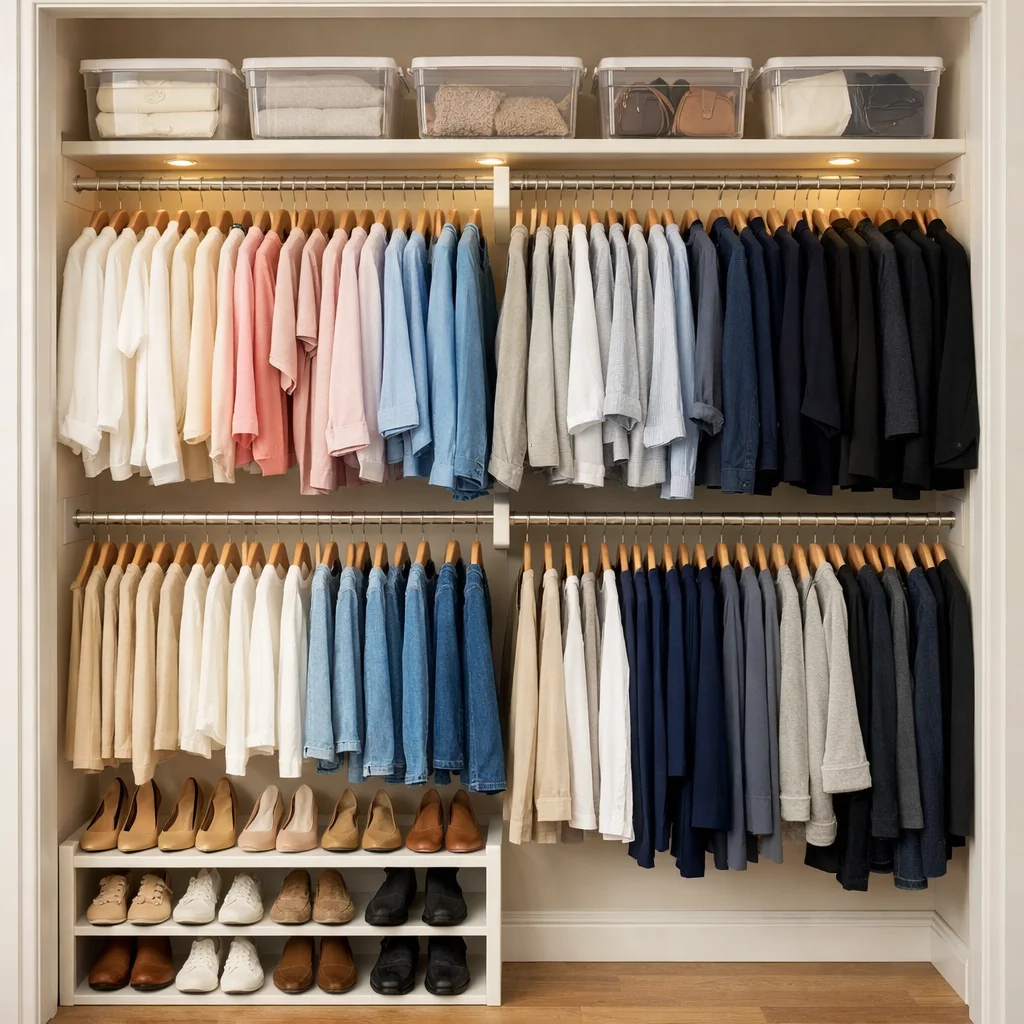
22 Small Closet Ideas That Maximize Space
A small closet is one of the most universally frustrating features in any home. Whether you are renting a city apartment, living in a charming older house, or simply sharing space with a partner, the reality of an undersized closet hits hard every single morning. Clothes pile up, shoes get kicked around, and finding a belt becomes a five-minute expedition.
But here is the truth that most people miss: a small closet is rarely the actual problem. Poor organization almost always is. With the right strategies, even the most compact reach-in closet can hold a surprising amount of clothing, footwear, and accessories while still feeling calm and orderly. You do not need a renovation budget or a professional organizer to make a real difference. What you need is a clear plan and the right ideas applied in the right order.
This guide walks you through 22 practical, proven small closet ideas that genuinely work. From doubling your hanging space to unlocking the storage potential hiding behind your closet door, every idea here is actionable, affordable, and designed to transform the way you use the space you already have.
1. Install a Double Hanging Rod
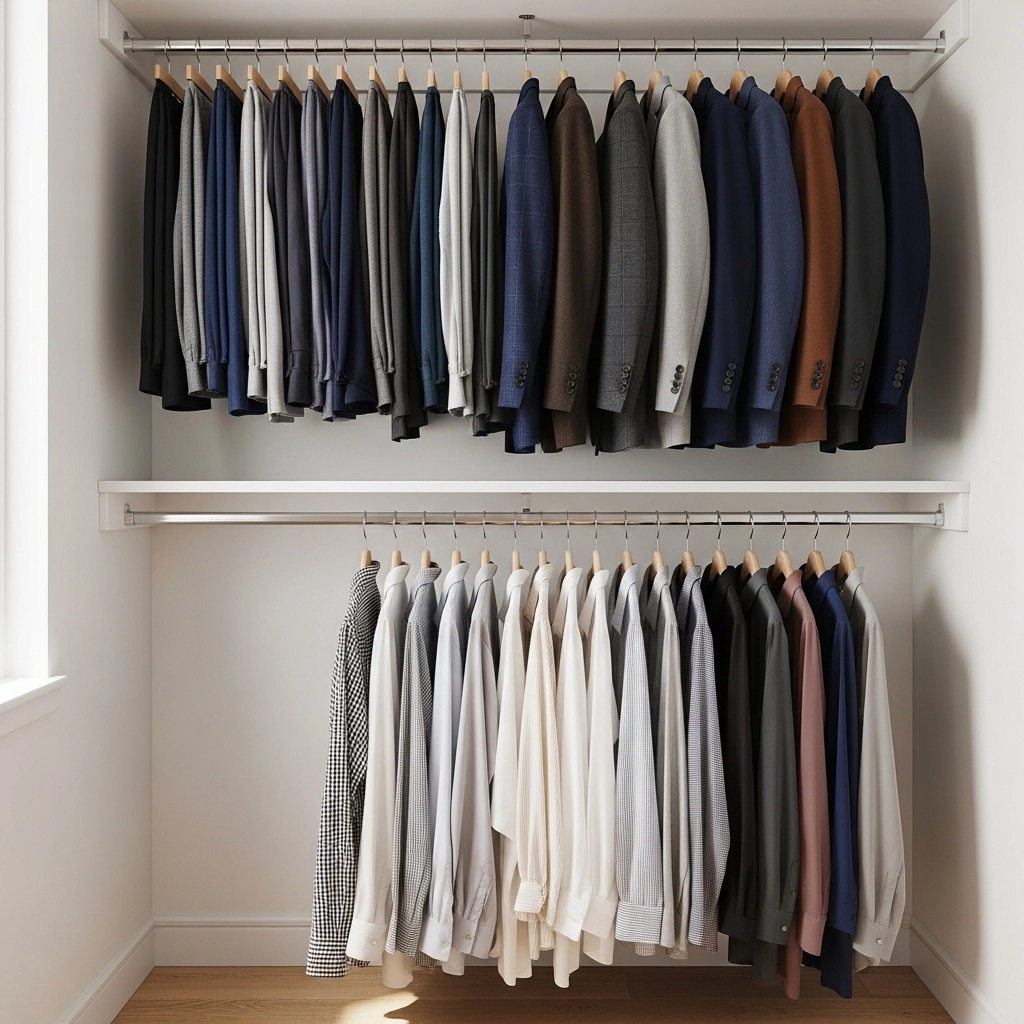
The single most impactful change you can make in a small closet is adding a second hanging rod beneath the existing one. Most standard closet rods sit high enough to leave several feet of empty space below shirts and jackets. A second rod installed at a lower height effectively doubles your hanging capacity without touching the walls or floor. Use the upper rod for shorter items like shirts, blazers, and folded trousers, and the lower rod for everything that hangs below the knee.
2. Switch to Velvet Slim Hangers
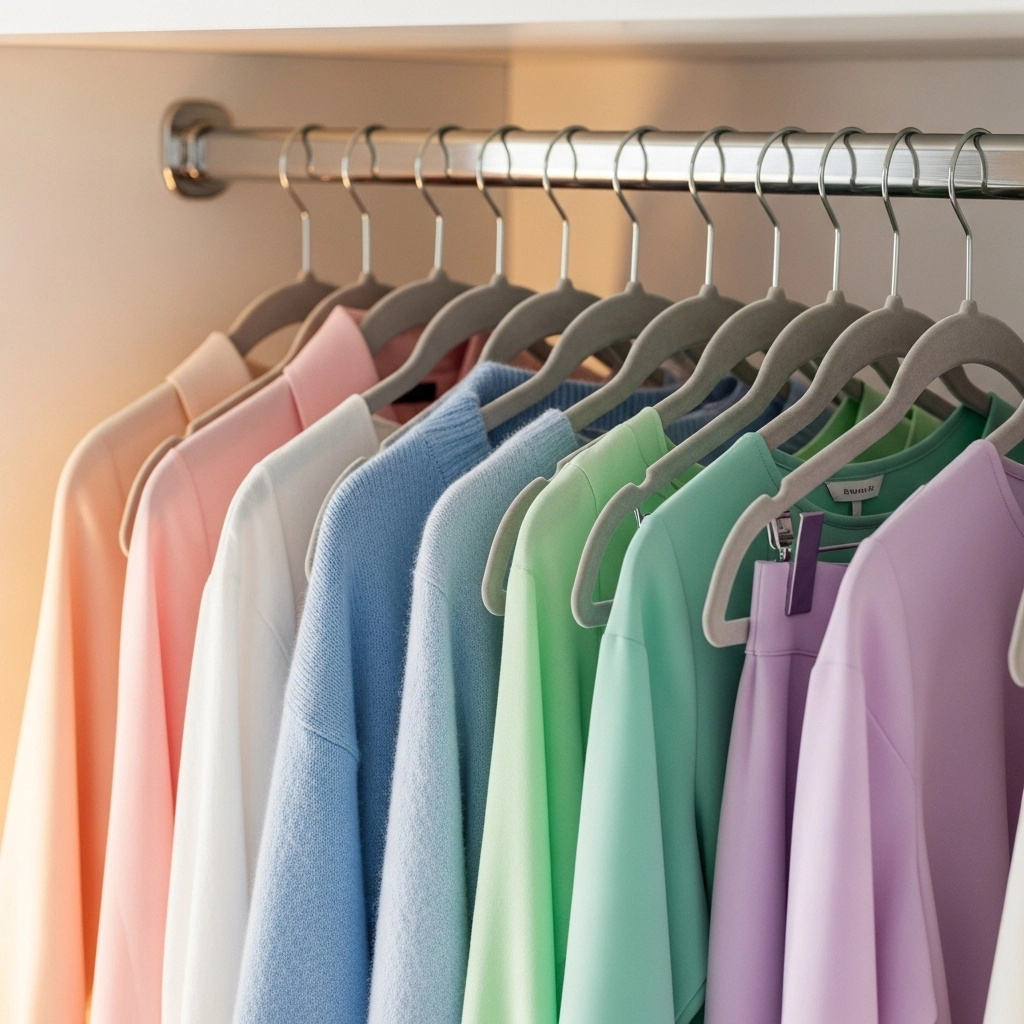
Bulky plastic hangers waste more space than most people realize. Replacing them with slim velvet hangers immediately reclaims inches of rod space across the entire closet. Velvet hangers are also non-slip, which means clothes stay where you put them rather than sliding into a heap. A full set costs very little and makes the entire closet look noticeably cleaner and more cohesive.
3. Use Every Inch of Vertical Space
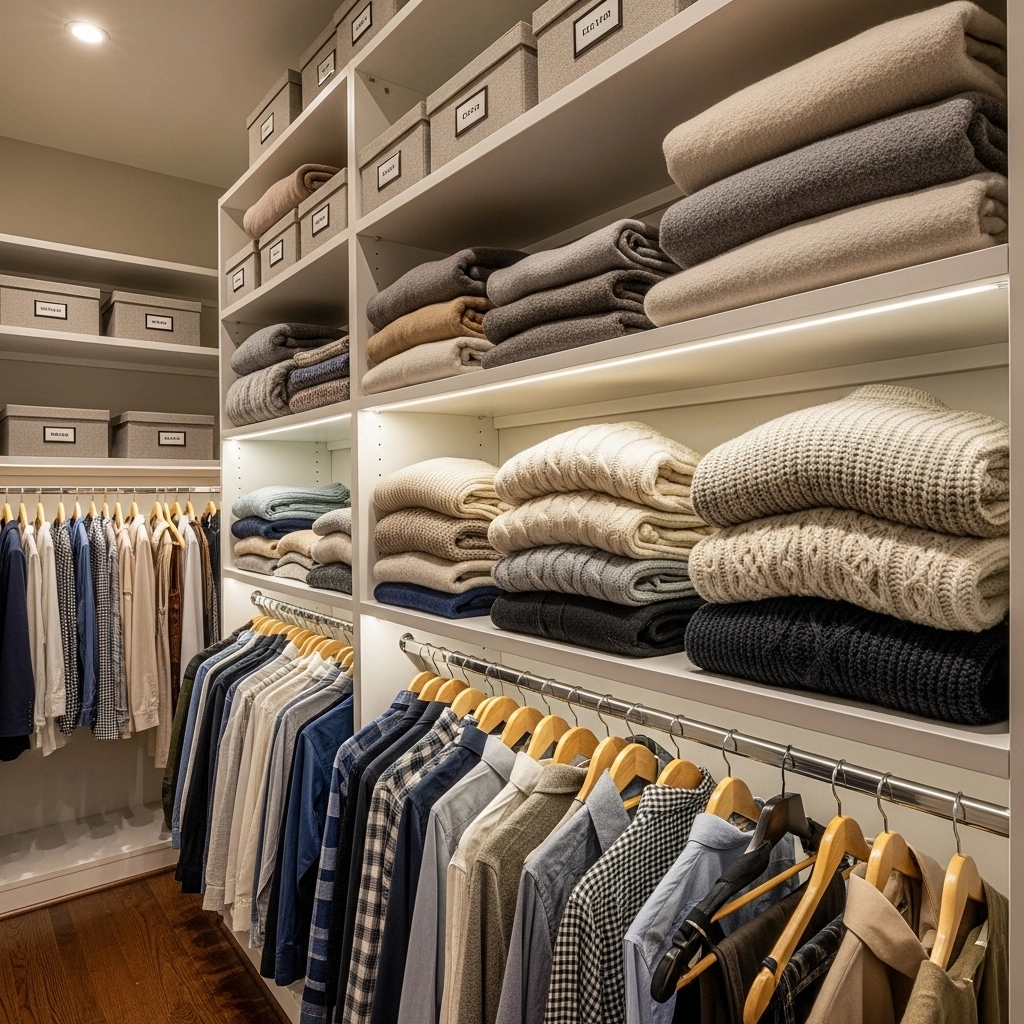
Most closets have usable wall space that stretches to the ceiling but stops being utilized above the first shelf. Adding a second or even third shelf above the primary one gives you a dedicated home for seasonal items, spare bedding, or items stored in labeled boxes. The rule is simple: the higher the shelf, the less frequently the items stored there should need to be accessed.
4. Add Shelving to Dead Corner Space
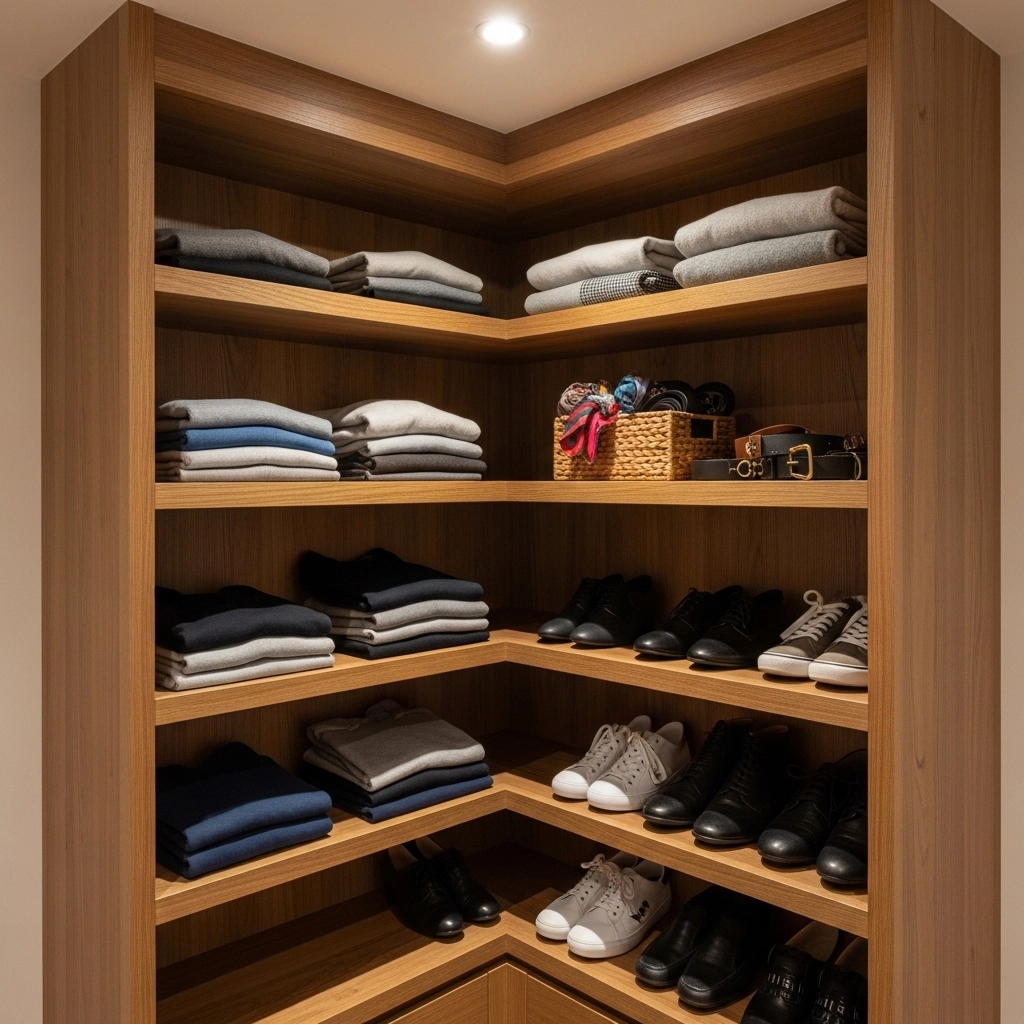
The recessed ends of reach-in closets and the corner areas of walk-in closets are notorious dead zones. Wire shelving or custom-cut wood shelves installed in these areas unlock significant storage without requiring any structural changes. These spaces are ideal for folded sweaters, bins of accessories, or a dedicated shoe section.
5. Hang an Over-the-Door Organizer
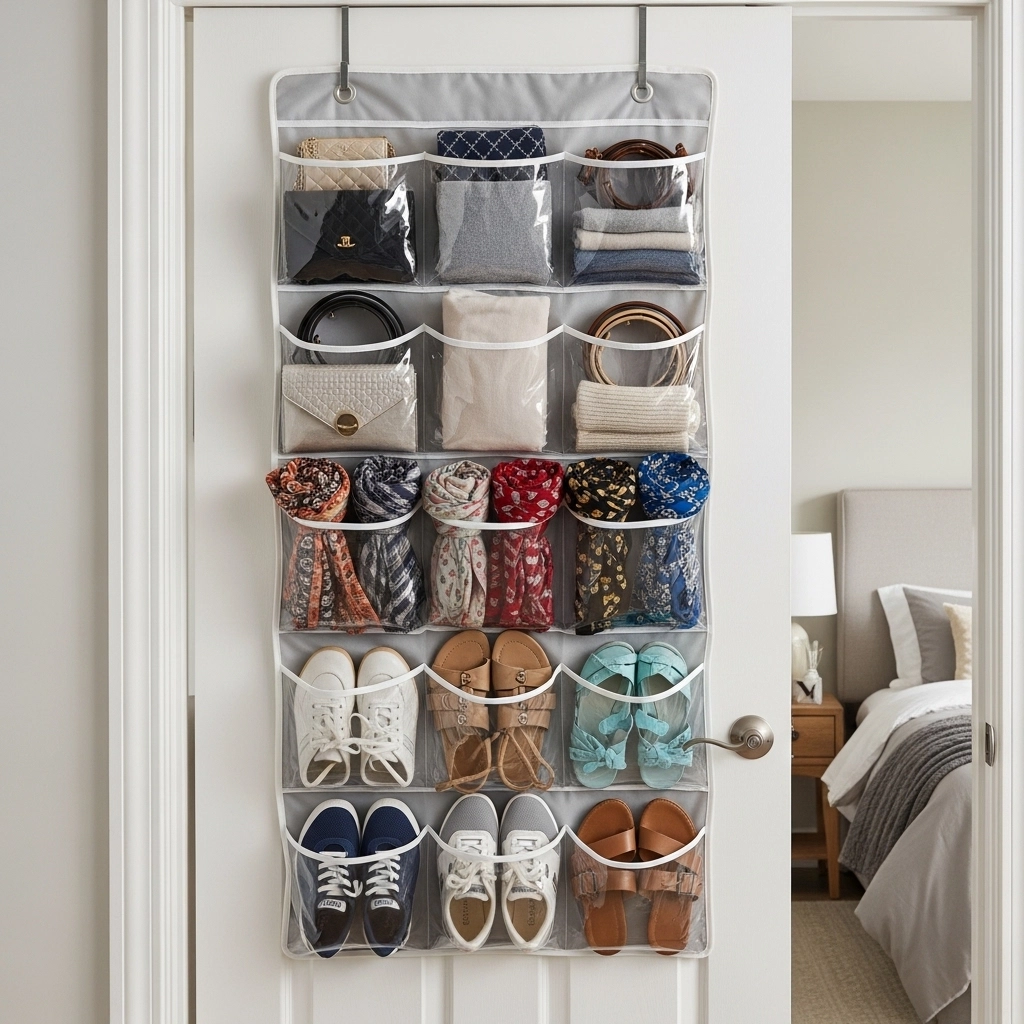
The back of a closet door is prime storage real estate that most people leave completely empty. An over-the-door organizer with pockets or hooks can hold shoes, scarves, belts, small bags, hats, and accessories. For bifold doors, a hanging fabric organizer works just as well and keeps smaller items visible and reachable without taking up a single inch of shelf or rod space.
6. Mount Hooks on the Side Walls
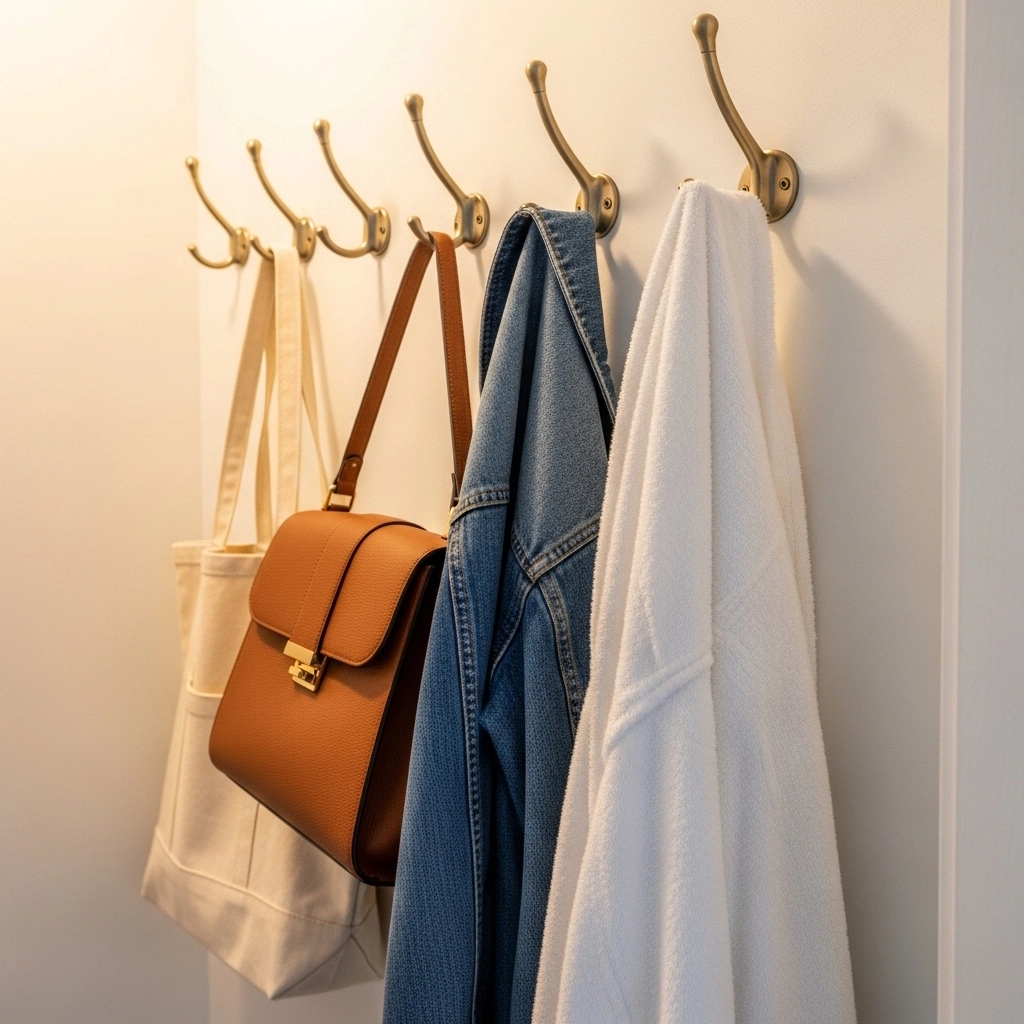
The narrow side walls inside a closet are often overlooked. A row of simple hooks installed at various heights on these walls creates instant storage for frequently worn jackets, robes, gym bags, or handbags. This keeps daily-use items accessible without forcing them to compete for rod space with the rest of your wardrobe.
7. Invest in a Modular Closet System
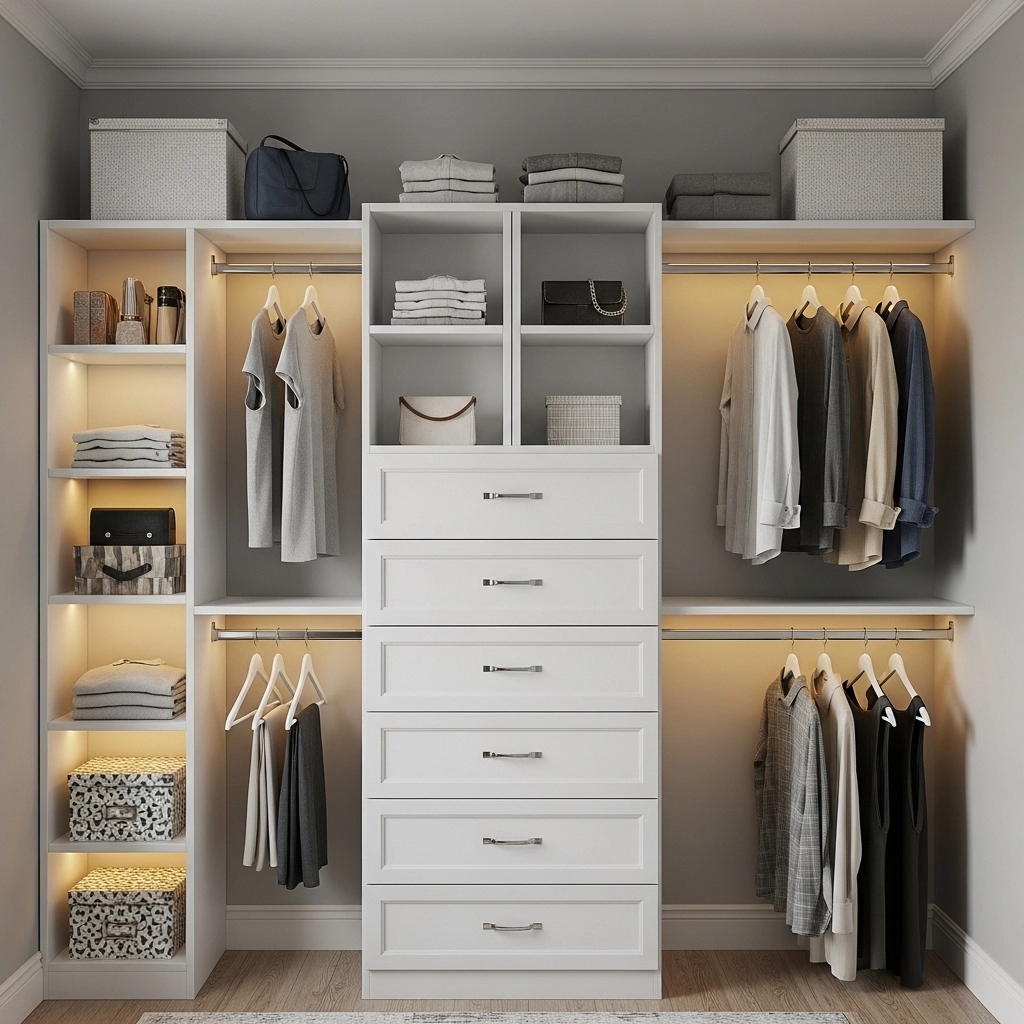
A modular closet kit, whether wood or wire, transforms an empty box of a closet into a thoughtfully configured storage system with towers, drawers, rods, and shelves. These systems are available at most home improvement stores in a range of configurations and price points. The key advantage is customization. You can select the combination of hanging space, shelf space, and drawer space that matches your specific wardrobe, rather than working around a one-size-fits-all setup.
8. Add Drawers Beneath the Hanging Rod
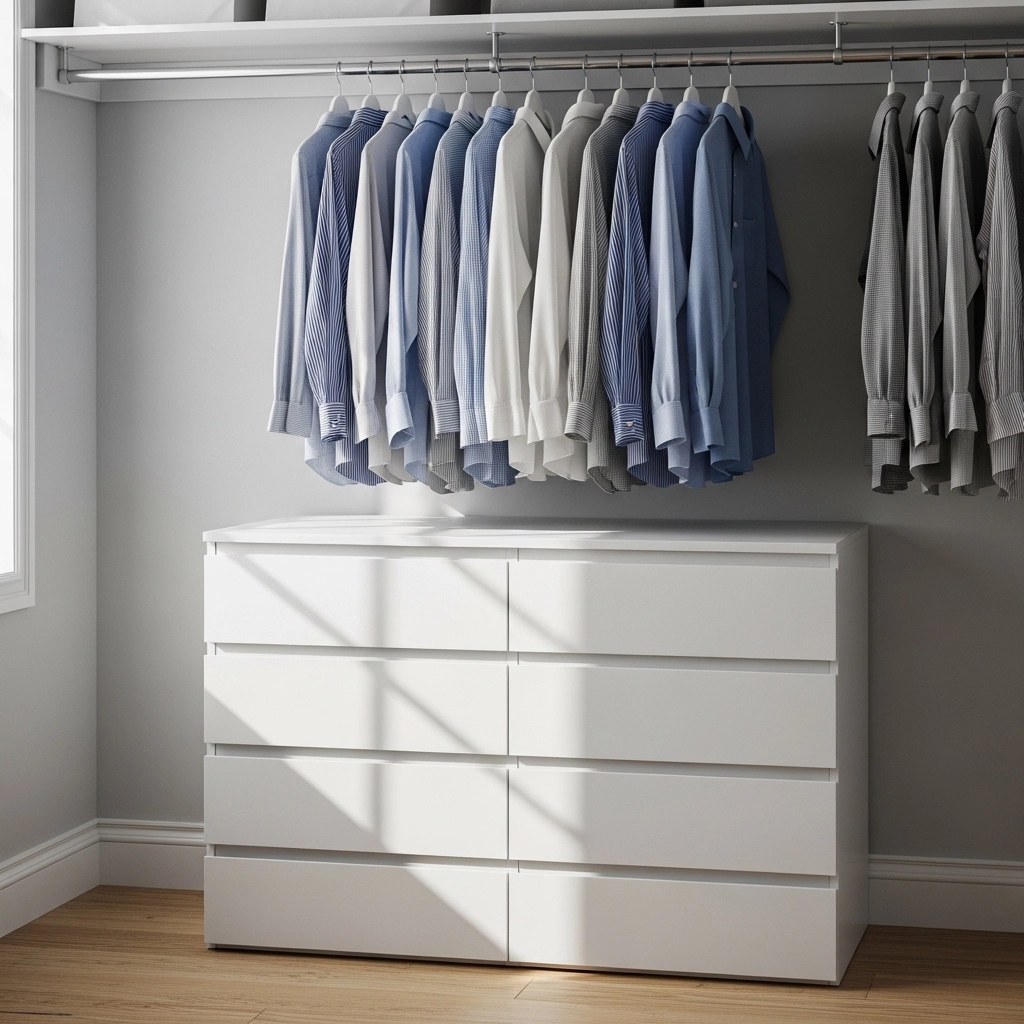
If your closet has open floor space beneath a hanging rod, a freestanding dresser or a modular drawer unit placed there serves double duty. It keeps folded items like t-shirts, underwear, and workout wear neatly stored while using space that would otherwise sit empty. This is particularly useful for people who lack a full-sized dresser in their bedroom.
9. Use Clear Storage Bins
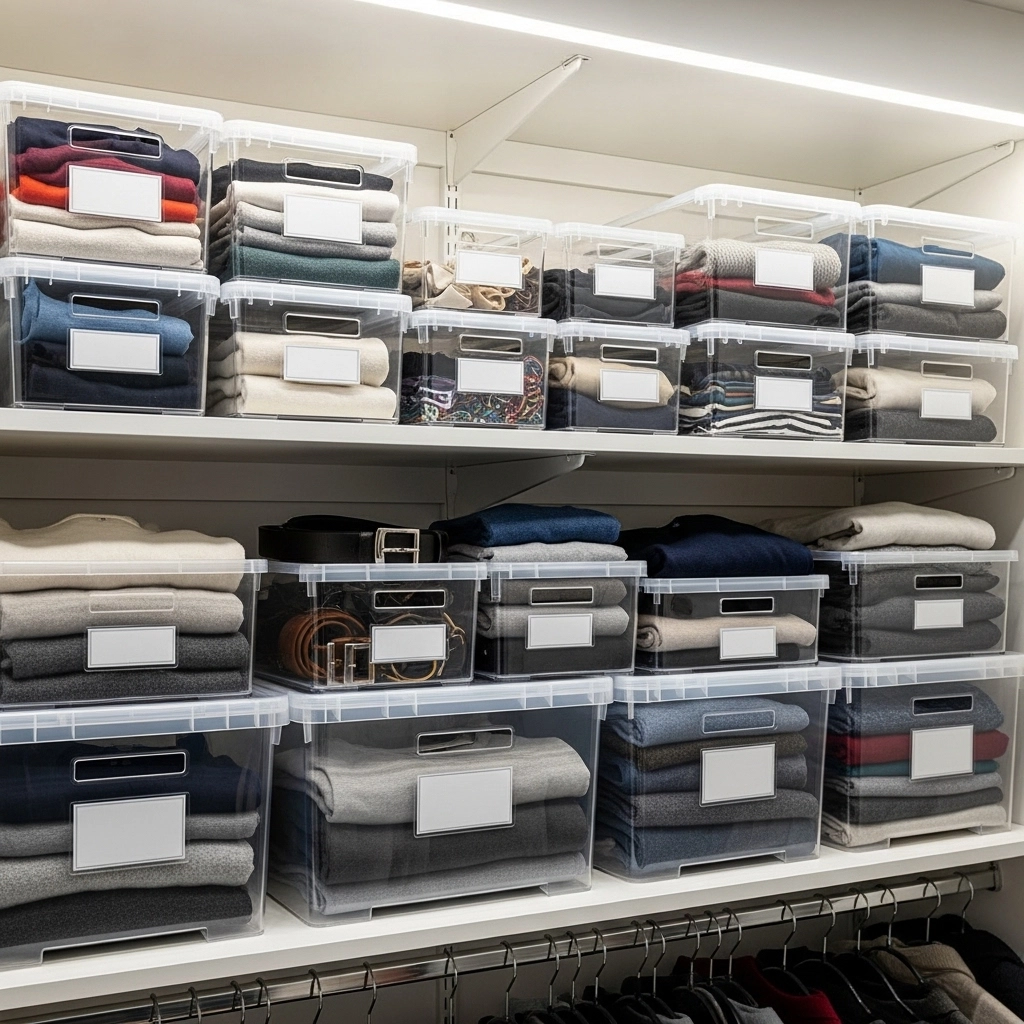
Opaque bins invite chaos because you cannot see what is inside them without pulling them out. Replacing them with clear plastic bins on upper shelves means you can identify the contents at a glance. Label each bin with a simple tag and you have a system that is both organized and genuinely easy to maintain.
10. Install a Shoe Rack on the Floor or Door
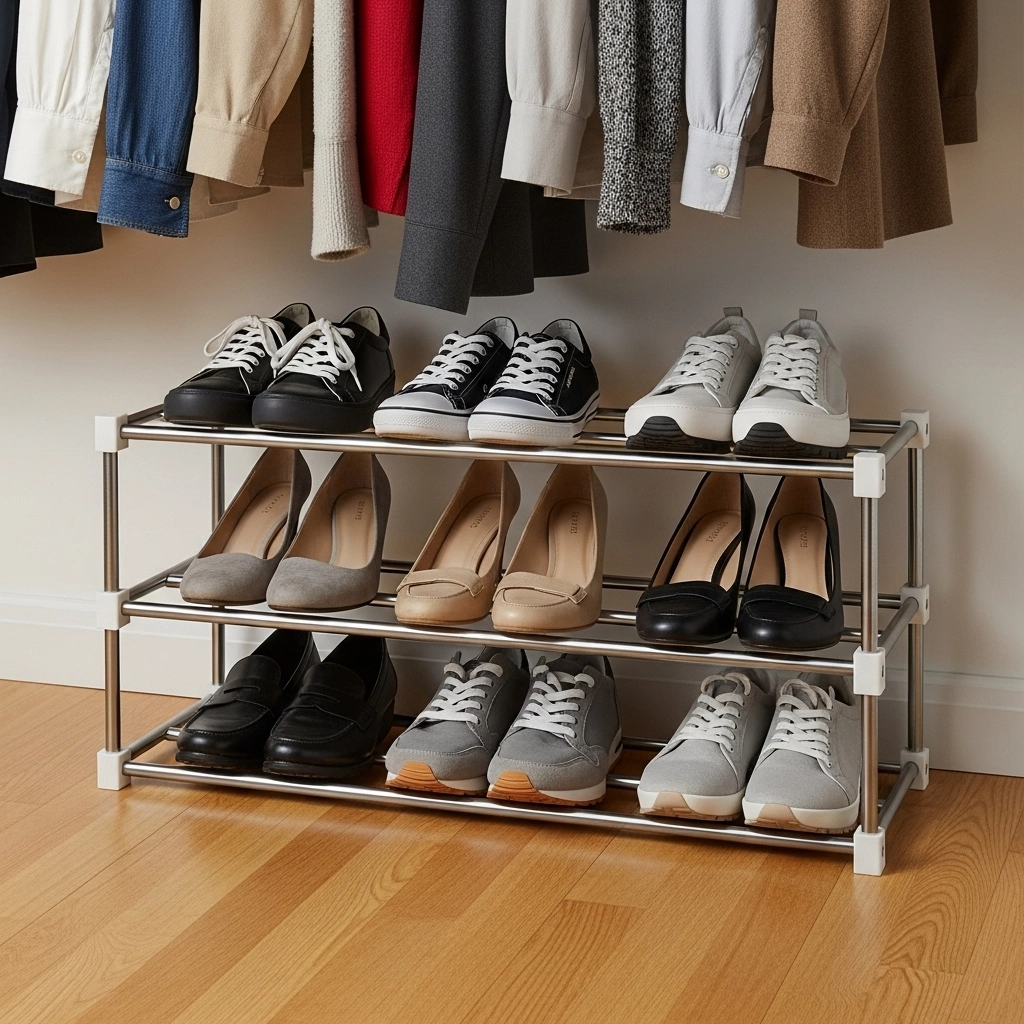
Shoes are among the biggest space wasters in a small closet when they are simply kicked onto the floor in a pile. A tiered floor shoe rack or an over-the-door shoe organizer keeps footwear organized, paired, and protected while reclaiming usable floor space beneath hanging clothes. Stackable shoe boxes with photo labels on the front offer a cleaner aesthetic and work especially well on lower shelves.
11. Use Shelf Dividers for Folded Clothes
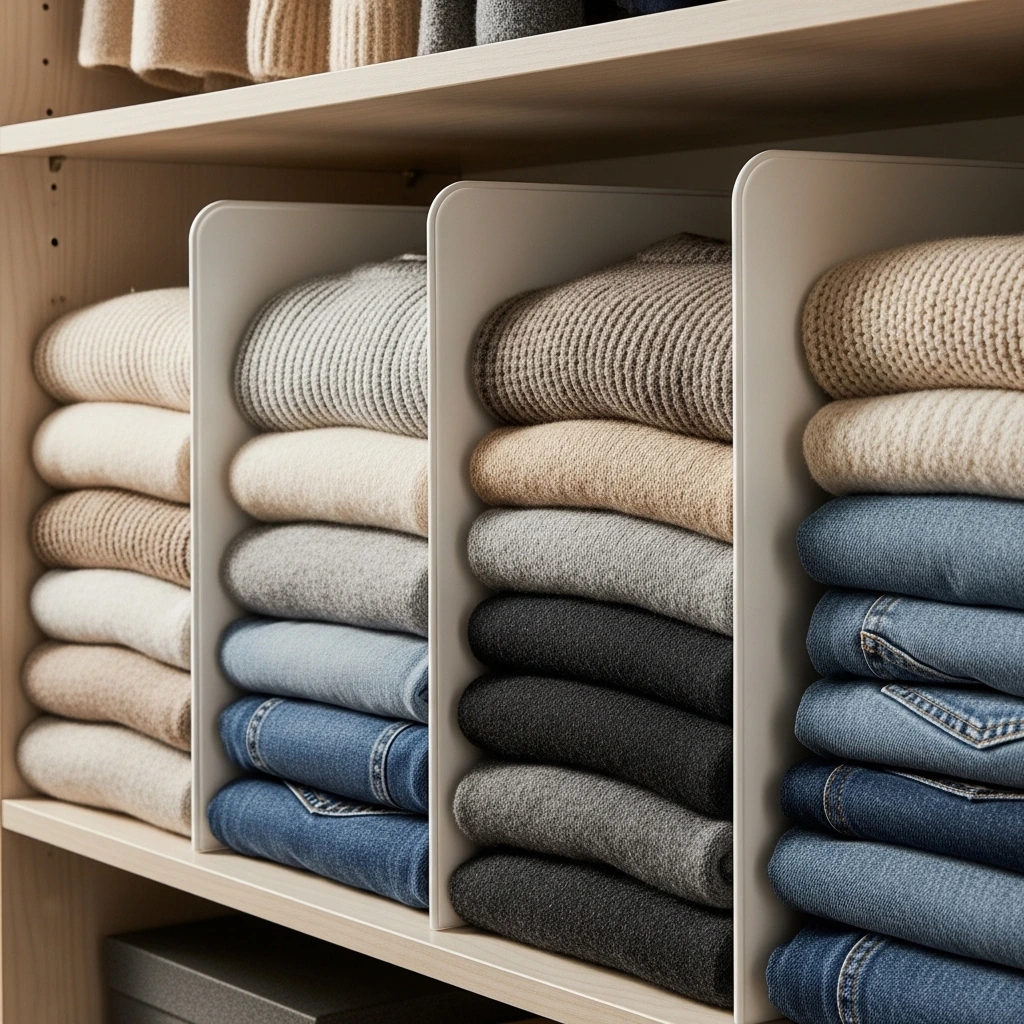
Stacks of folded sweaters, jeans, and tops inevitably topple without support. Shelf dividers clipped onto existing shelves keep each stack upright and contained. They also create visual boundaries that make it easier to identify where one category ends and another begins, which speeds up the process of getting dressed considerably.
12. Hang a Mirror on the Inside of the Door
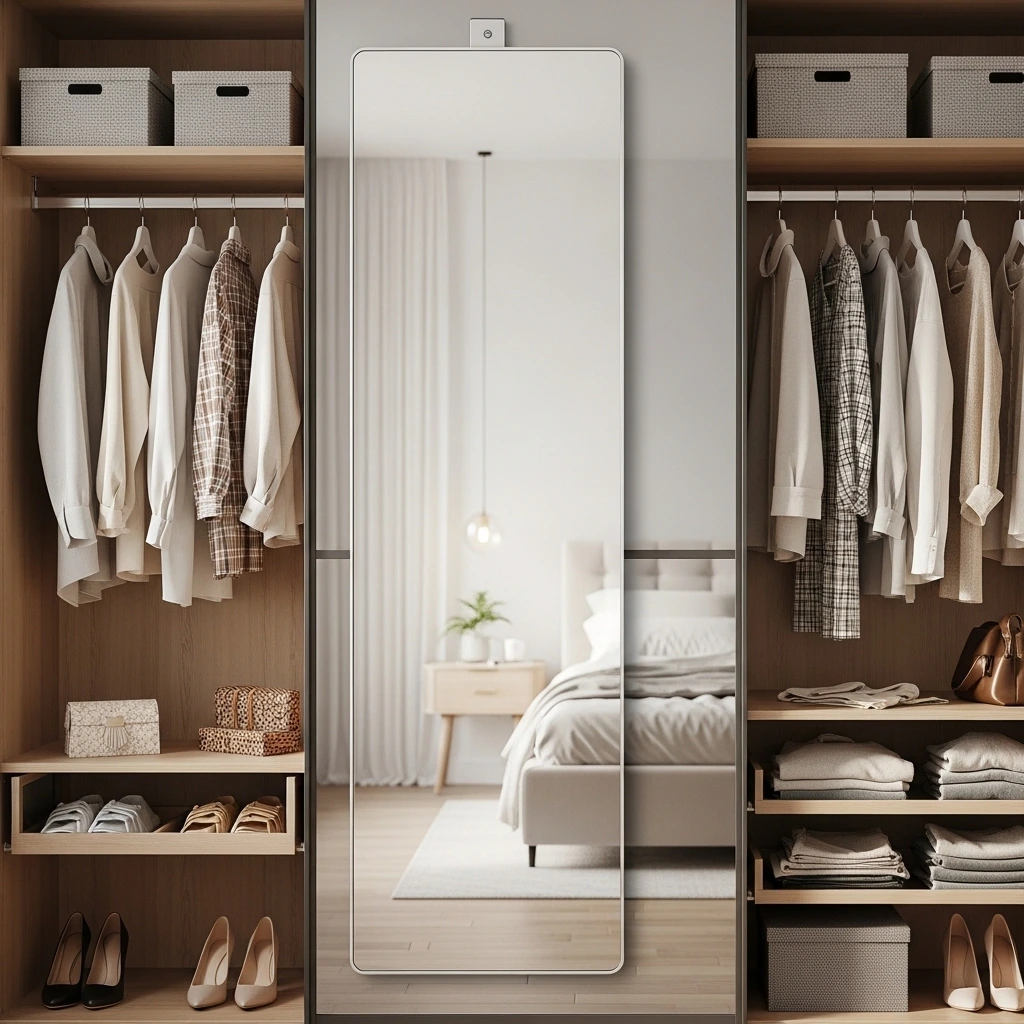
Adding a full-length mirror to the inside of the closet door serves two purposes. It eliminates the need for a freestanding mirror elsewhere in the room, saving floor space, and it makes the closet itself feel more open and bright when the door is ajar. This is a particularly smart solution for small bedrooms where every square foot matters.
13. Store Seasonal Items Elsewhere
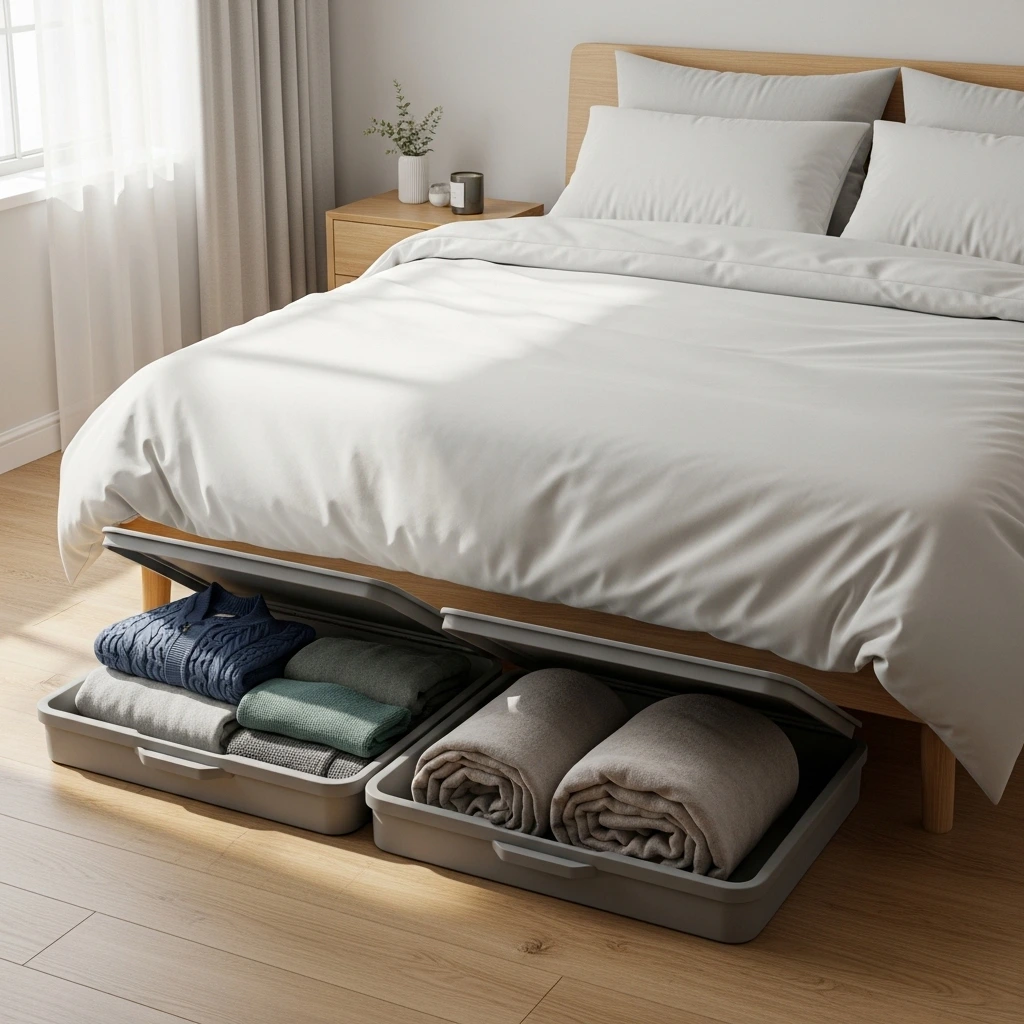
Not every item in your wardrobe needs to live in your primary closet year-round. Heavy winter coats, ski gear, and summer swimwear that are out of season can move to under-bed storage bins, a hall closet, or vacuum-sealed bags stored at the top of a guest room wardrobe. This seasonal rotation instantly frees up meaningful closet space for the clothes you are actually wearing right now.
14. Use Under-Shelf Baskets
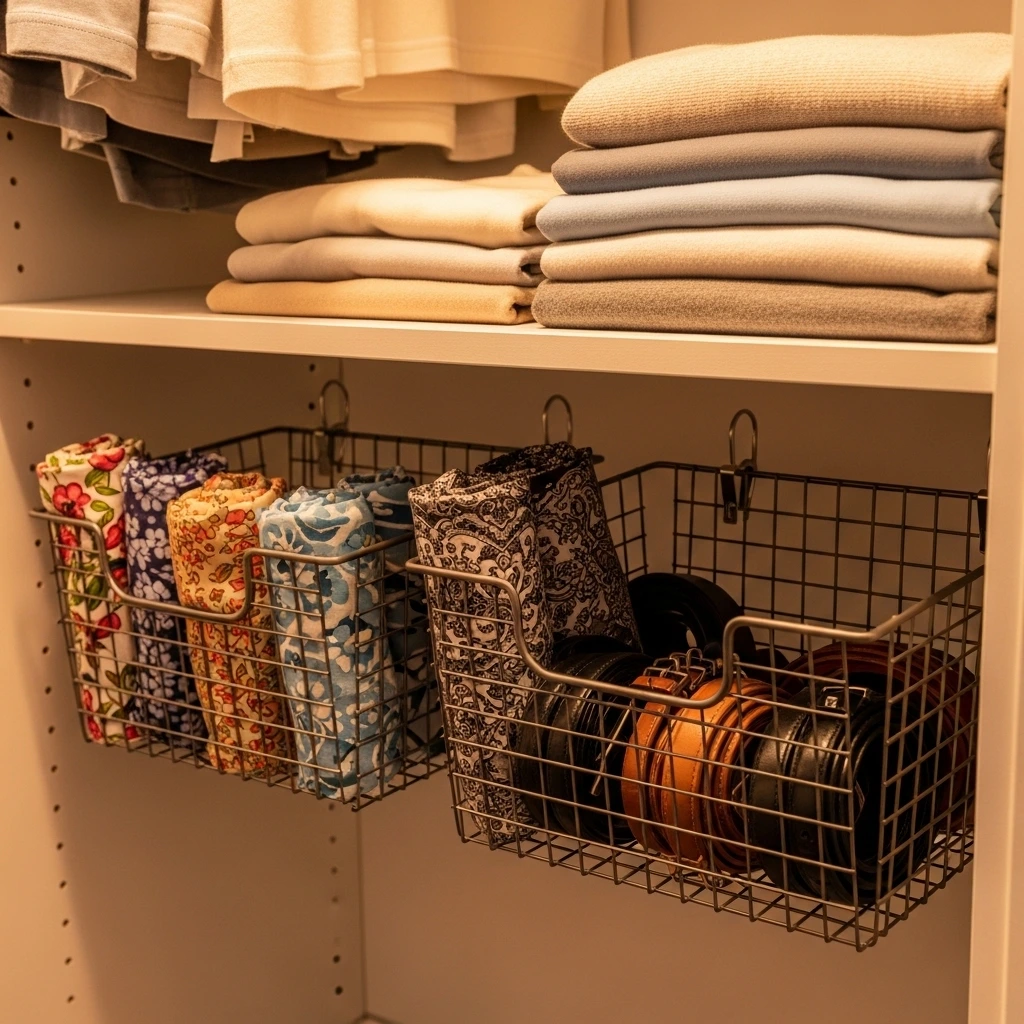
Under-shelf baskets clip onto the underside of existing shelves and hang below them, creating an entirely new layer of storage out of what was previously dead air. They work brilliantly for scarves, belts, folded clutches, or small accessories. They require no installation tools and can be moved or removed in seconds.
15. Create Zones Within the Closet
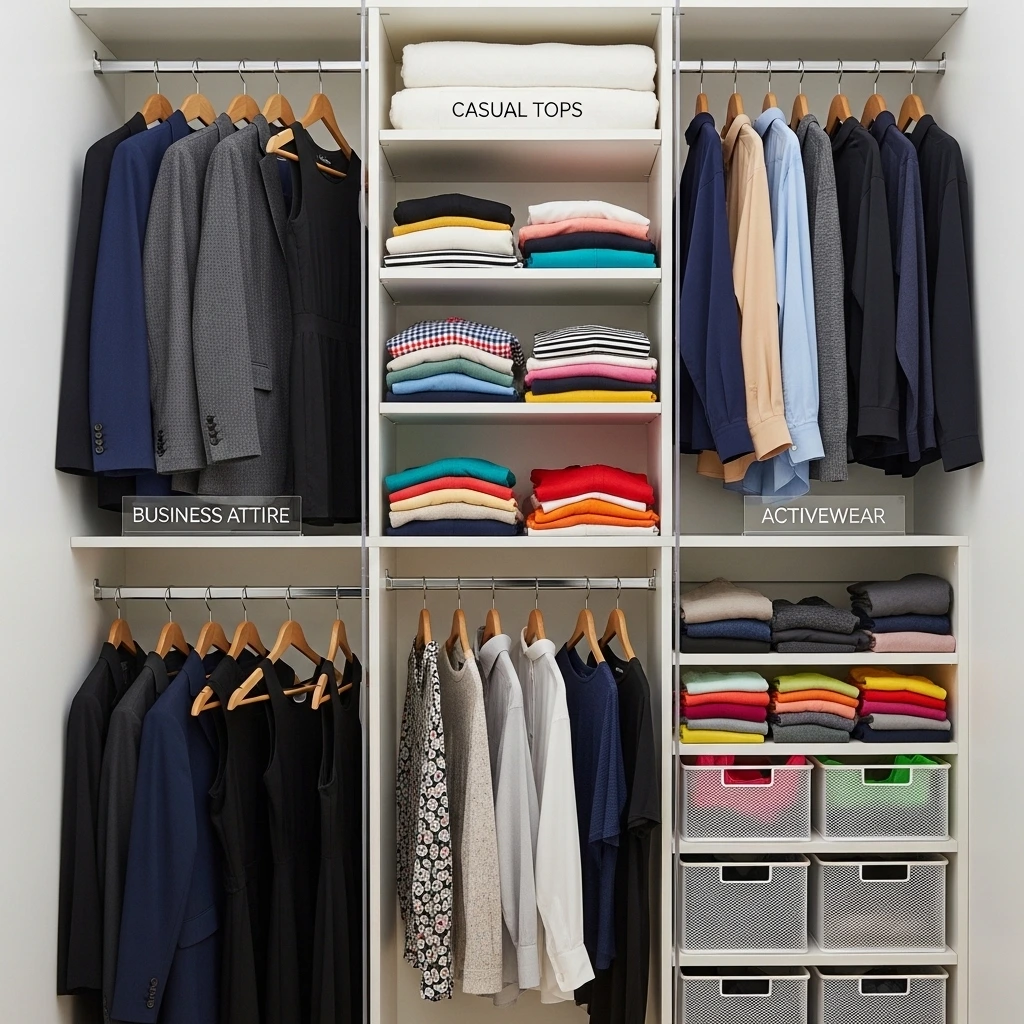
A disorganized closet feels small even when it has adequate space. Dividing the closet into dedicated zones — workwear, casual clothing, activewear, accessories — and committing to keeping each category in its designated area makes the entire system easier to maintain. Use shelf dividers, labeled bins, or simply the position of items on the rod to enforce these boundaries.
16. Use Multi-Garment Hangers
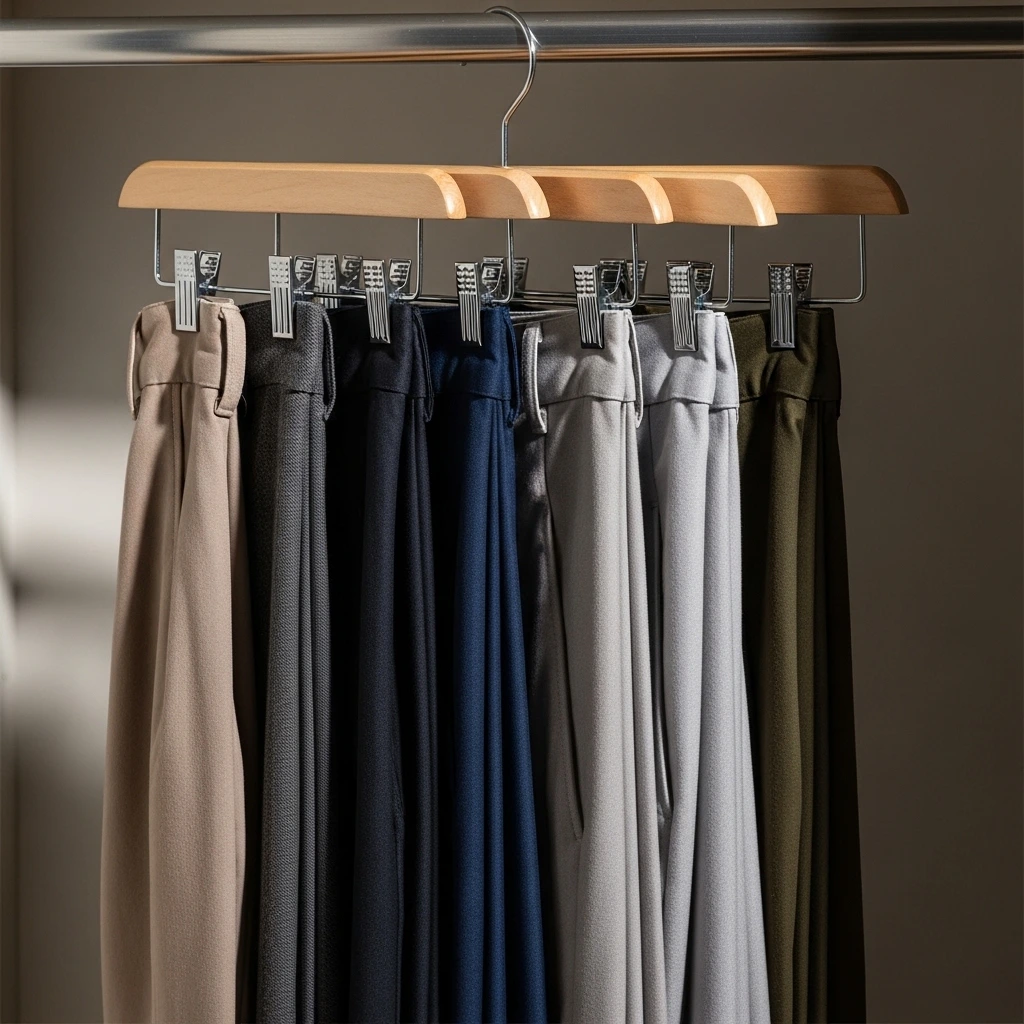
Specialty hangers designed to hold multiple pairs of trousers, skirts, or scarves on a single hook are one of the simplest ways to multiply hanging capacity. A single cascading trouser hanger, for example, holds five to eight pairs of pants in the space normally occupied by one. These work especially well in reach-in closets where rod length is the primary limitation.
17. Add a Pegboard for Accessories
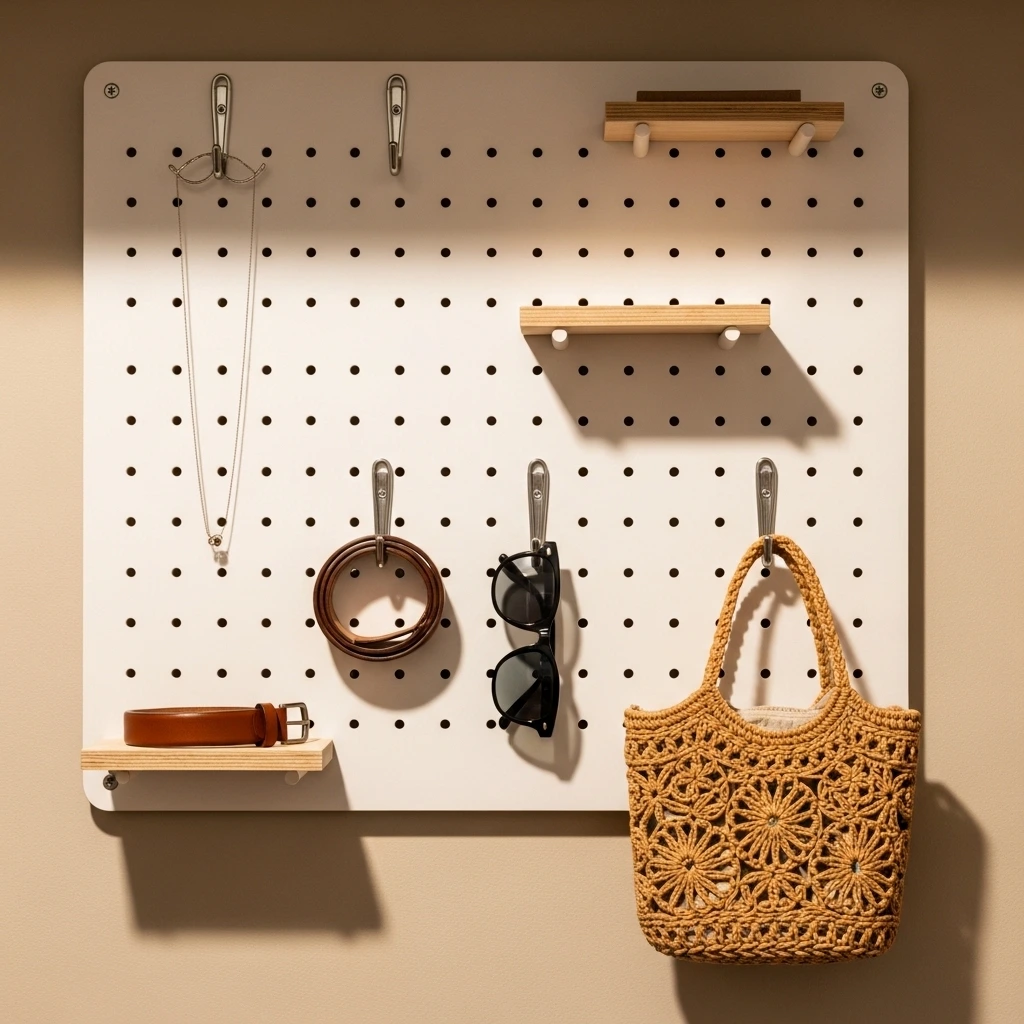
A small pegboard mounted on a wall inside the closet or on a side wall transforms an otherwise flat surface into a customizable storage grid. Hooks, small shelves, and bins can be arranged in any configuration to hold jewelry, belts, sunglasses, or small bags. Pegboards are inexpensive, easy to install, and infinitely adjustable as your storage needs change.
18. Use Luggage as Off-Season Storage
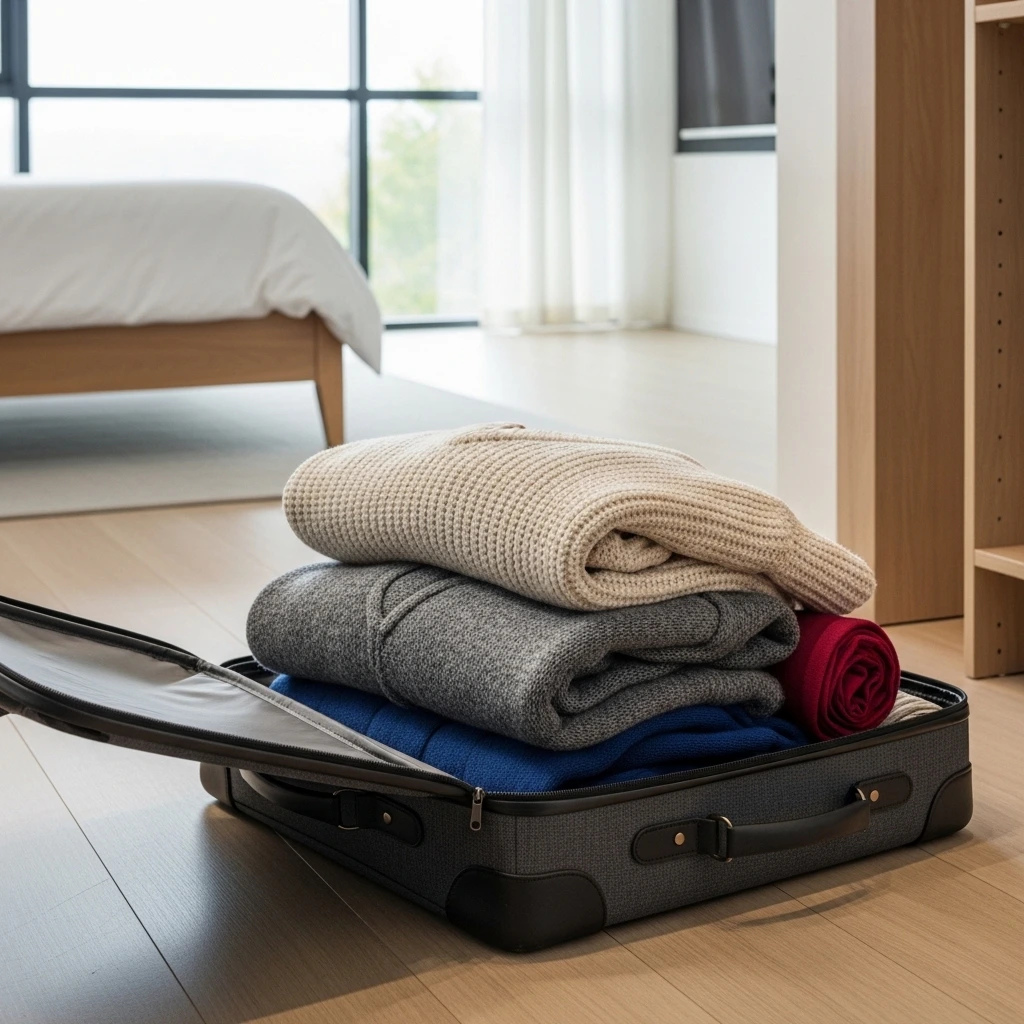
Suitcases and travel bags take up valuable closet floor space while sitting completely empty for months at a time. Filling them with off-season bulky items like winter sweaters, holiday-specific clothing, or extra blankets transforms passive wasted space into active storage. The luggage still lives in the closet but now earns its keep.
19. Paint the Interior a Light Color
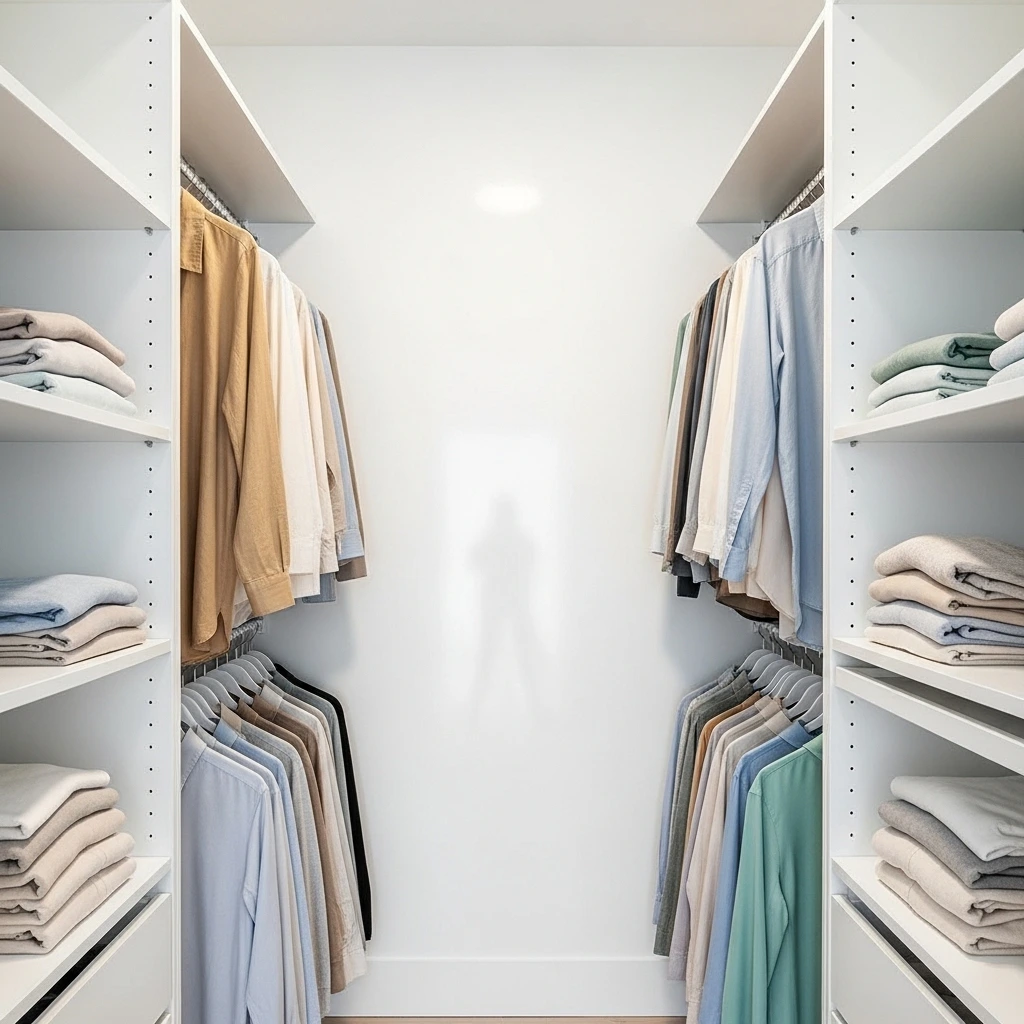
A fresh coat of bright white or a soft, pale neutral on the interior walls and ceiling of a closet makes the space feel noticeably larger and more inviting. Dark interiors make a small closet feel like a cave. Light paint reflects the available light, making it easier to see items stored toward the back or on higher shelves, which alone improves usability.
20. Consider a Freestanding Wardrobe
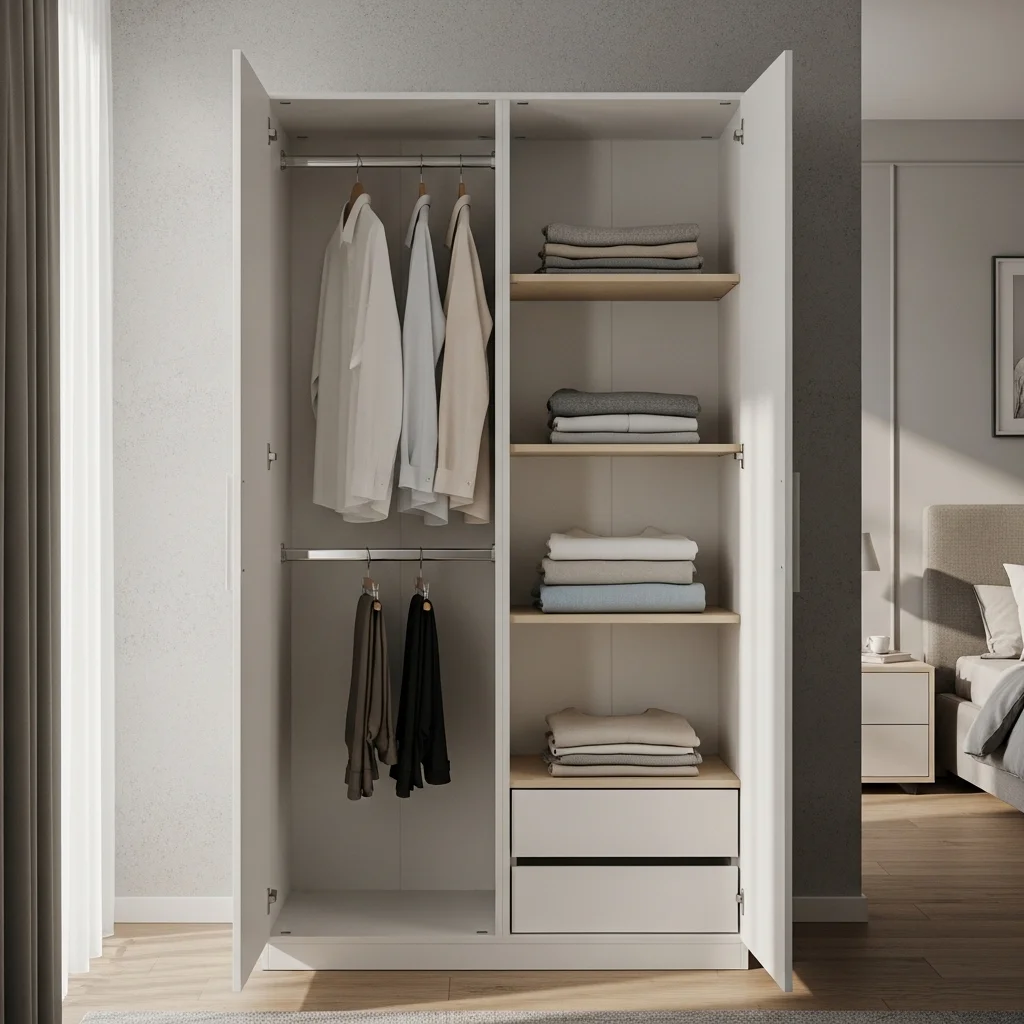
For rooms with no closet at all or with a closet so small it cannot meet your needs, a freestanding wardrobe is a practical and often stylish solution. Modern wardrobes range from sleek minimalist designs to classic armoire styles and can include a combination of hanging space, shelves, and drawers. Placed thoughtfully in a bedroom, a well-chosen wardrobe can become an intentional design feature rather than an afterthought.
21. Install Lighting Inside the Closet
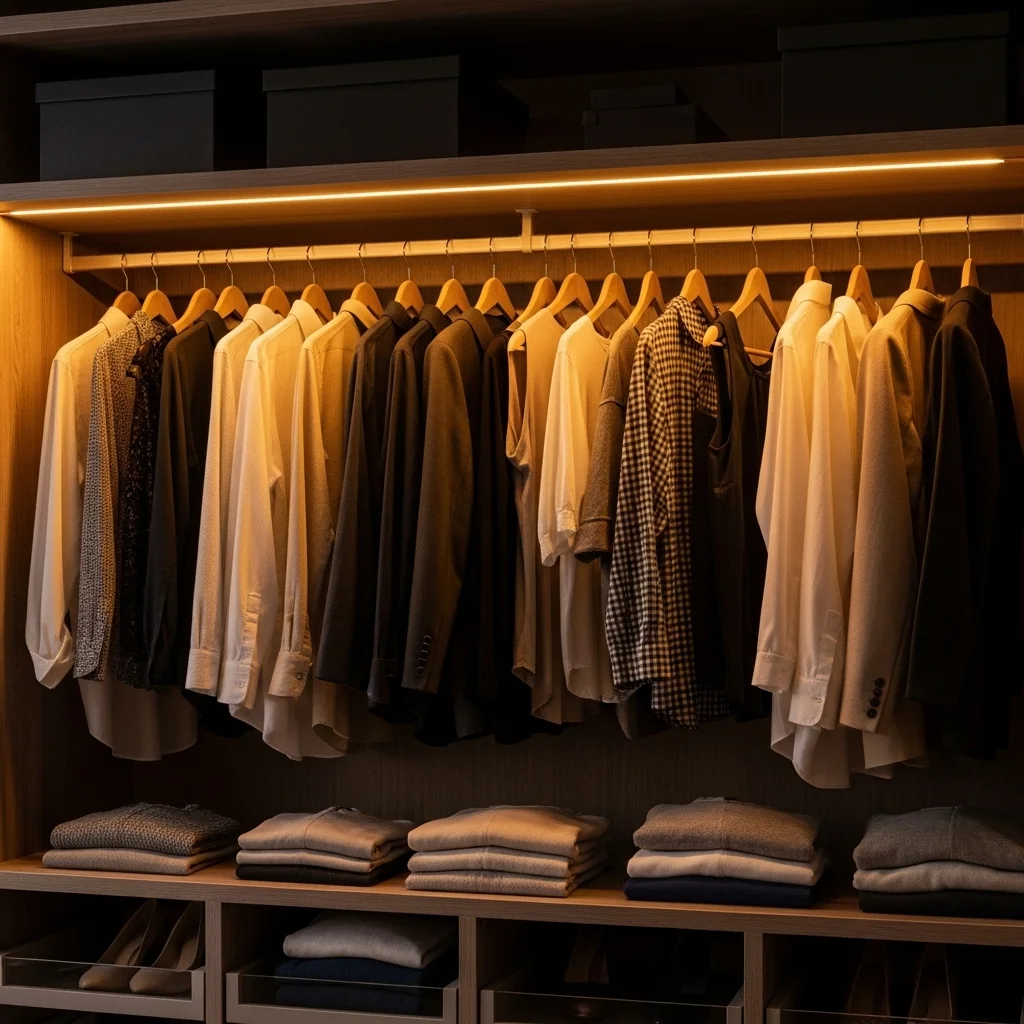
A poorly lit closet is an underused closet. Installing a battery-powered LED strip or a plug-in puck light inside the closet dramatically improves visibility, especially in deep shelves or lower cubbies. When you can see everything clearly, you are far more likely to use the full depth of the space rather than only what is immediately visible near the front.
22. Use the Space Above the Door
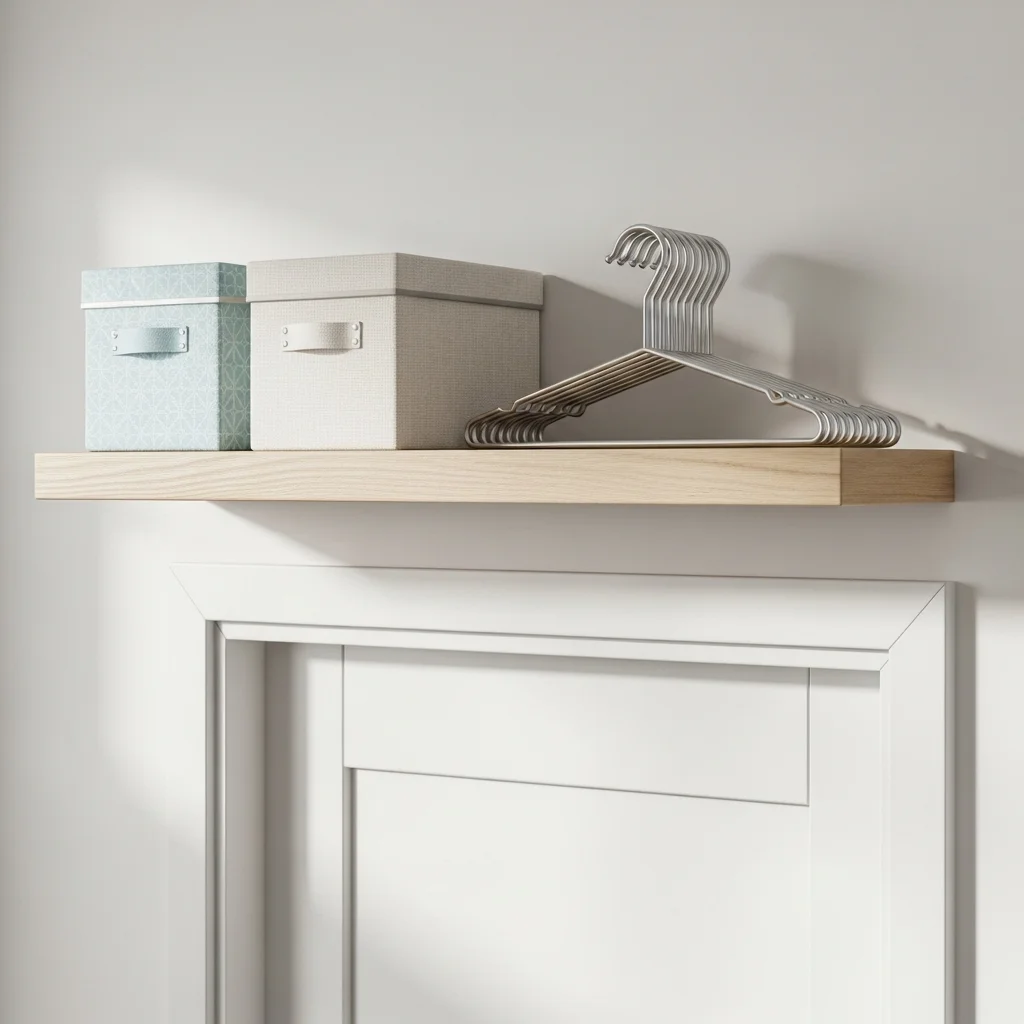
The area above a closet door frame is almost always wasted. A narrow floating shelf installed in this zone creates a spot for rarely needed items like spare hangers, extra pillowcases, or small decorative boxes. It requires minimal hardware to install and uses space that no other storage solution typically reaches.
Putting It All Together
The most effective approach is to start with the ideas that address your specific pain points first. If shoes are your biggest problem, begin with an over-the-door shoe organizer and a floor rack. If hanging space is the issue, install a double rod before anything else. Tackle decluttering, then structure, then accessories. For more information visit Homeliaa.
A Note on Maintenance
A well-organized small closet requires occasional upkeep. A monthly habit of returning items to their designated zones and doing a quick review of what is being worn versus what is just sitting there will keep the system functioning smoothly. The investment of ten minutes a month prevents the slow drift back to chaos.
Conclusion
A small closet does not have to feel like a limitation. With a clear strategy and the right combination of ideas, even the most modest reach-in closet can become a highly functional, well-organized space that makes your daily routine easier and your bedroom feel calmer. The twenty-two ideas covered here represent a full toolkit: some are free, some cost very little, and all of them are rooted in the same principle: every inch of space has potential. The only question is whether you are using it.
Start with one idea today. The difference it makes will motivate you to implement the next one, and then the one after that.
Frequently Asked Questions
1. What is the most effective first step to organizing a small closet?
Decluttering is always the first and most impactful step. Removing items you no longer wear or need immediately creates space and makes every organizational tool you add afterward more effective.
2. How can I double my hanging space without renovating?
Installing a second hanging rod beneath the existing one is the fastest way to double hanging capacity. Basic rod brackets and a length of closet rod available at any hardware store are all you need, and the installation takes less than an hour.
3. What should I store in a small closet versus elsewhere?
Keep your current season’s most frequently worn clothing and shoes in the primary closet. Move off-season items, bulky outerwear, and rarely used accessories to under-bed storage, a hall closet, or storage bags to free up daily-use space.
4. Are modular closet systems worth the investment for small spaces?
Yes. A modular system tailored to your specific wardrobe dramatically outperforms a generic single-rod setup. Even an affordable wire or laminate kit from a home improvement store can transform a disorganized closet into a well-structured storage space.
5. How do I organize a small closet with no door?
A doorless closet benefits from consistent zone organization, uniform bins or baskets for a cohesive look, and a curtain rod with a fabric panel if you want to conceal the contents. Keeping the color palette of visible storage containers consistent makes an open closet look intentional and tidy rather than cluttered.


One Comment