9+ Beautiful Wedding Drawing Ideas to Spark Creativity
Introduction
wedding Drawing Ideas Few subjects inspire as much artistic tenderness as a wedding. The ceremony, the couple, the flowers, the quiet emotional weight of two people choosing each other in front of everyone they love; all of it translates into imagery that artists have been drawn to across centuries and across every medium imaginable. Wedding drawing ideas sit at the intersection of fine art and personal storytelling, and whether you are a seasoned illustrator or someone picking up a pencil for the very first time, the subject offers an almost endless source of creative possibility.
What makes wedding art so compelling is its layered nature. A wedding is not one image but dozens of them: the soft architecture of a bridal gown, the nervous posture of a groom at the altar, a single flower stem resting across a cathedral windowsill, the silhouette of two people against a late afternoon sky. Every one of these moments is a composition waiting to be drawn, and every artist who attempts to capture them brings something entirely personal to the result.
This guide brings together ten beautiful wedding drawing ideas designed to spark creativity, build artistic confidence, and help anyone who loves the subject find a starting point that feels genuinely exciting. Whether you are creating a handmade wedding card, designing personalized stationery, working on a commissioned portrait, or simply exploring wedding themes in your sketchbook, these ideas will give you clear direction and deep inspiration to carry your work forward.
Essential Tools for Wedding Drawing
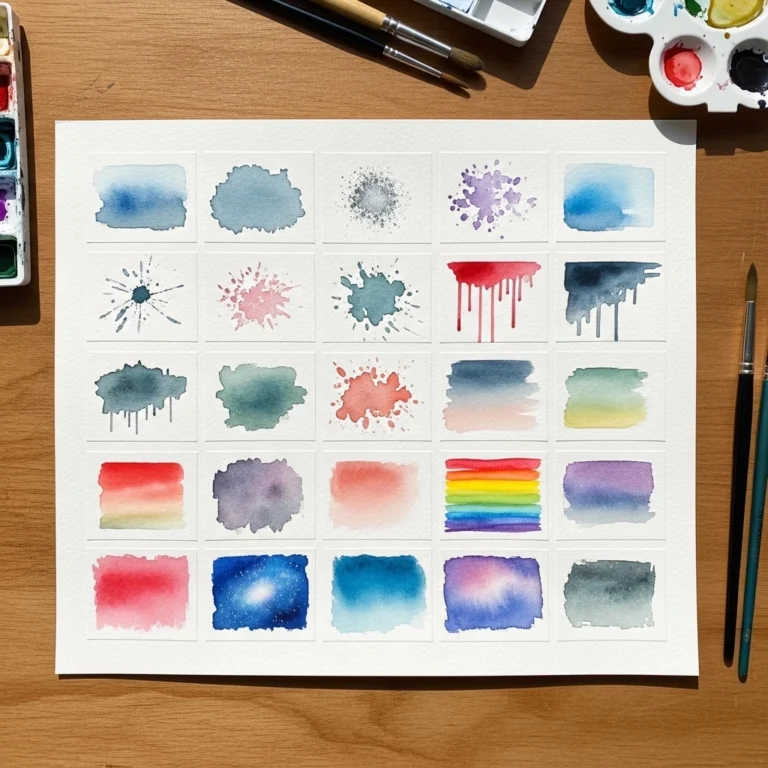
Before exploring the specific ideas, it is worth spending a moment on the tools that serve wedding art most naturally. For pencil sketching, a set of graphite pencils ranging from H grades for light, precise lines to B grades for soft, dark shading gives you the full tonal range that wedding subjects require. A fine-tipped ink pen is invaluable for line work and illustrative detail. Watercolor paints in soft, romantic palettes dominated by blush, ivory, sage, dusty rose, and gold complement wedding themes with an almost effortless elegance. Cold press watercolor paper handles both wet and dry techniques well. A light box or tracing pad helps when transferring sketched compositions from draft to final paper without losing the energy of the original drawing.
For digital artists, a drawing tablet combined with software that supports pressure sensitivity allows for both the precise line quality of pen drawing and the soft, luminous quality of watercolor-style brushwork in a single workflow.
1. The Romantic Couple Portrait
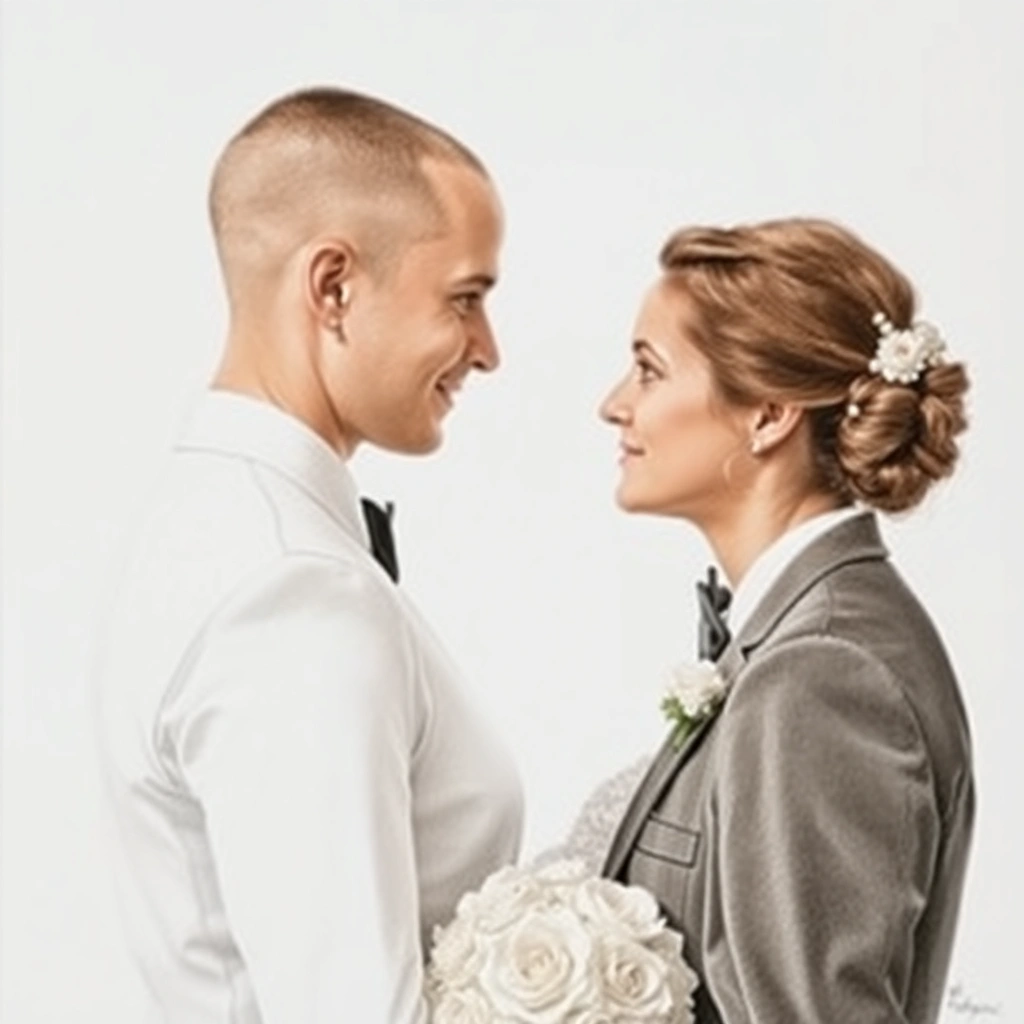
The romantic couple portrait is the most enduring and emotionally resonant category of wedding drawing, and for good reason. A well-executed portrait of a bride and groom captures not just their physical appearance but the particular quality of their connection at one of the most significant moments of their shared life.
Choosing Your Composition
Begin by studying the couple’s posture and the spatial relationship between them. A front-facing composition conveys formality and presence. A three-quarter angle creates depth and draws the viewer into the scene. A profile view, with both faces turned toward each other, communicates intimacy and tenderness in a way that frontal portraits rarely achieve. The most emotionally compelling wedding portraits often show partial views rather than full body renderings: two faces very close together, a hand resting at the small of a back, a forehead gently touching another forehead.
Capturing Expression Over Likeness
The most common mistake in wedding portraiture is prioritizing physical likeness over emotional expression. Likeness matters, but the quality that makes a wedding portrait unforgettable is the feeling it communicates. Study the way the eyes of the subjects relate to each other. Notice the tension and release in the jaw, the shoulders, the hands. These details carry the emotional content of the image and capturing them accurately does far more for the portrait than perfectly replicating a nose or eyebrow shape.
Pencil sketching with soft graphite works beautifully for this style, while a light watercolor wash applied over a finished pencil drawing adds warmth and romance without overwhelming the delicate line work beneath.
2. The Bride in Her Wedding Dress
A solitary portrait of the bride in her wedding gown is one of the most classical and widely admired wedding drawing ideas, and it offers significant artistic challenge alongside its obvious beauty. The wedding dress is one of the most complex garments an artist can attempt to render, combining structural architecture, delicate fabric texture, and deeply personal symbolism in a single composition.
Begin with the silhouette of the gown. The overall shape, whether it is an A-line, a ballgown, a mermaid cut, or a structured column, determines the entire visual rhythm of the composition. Sketch the silhouette lightly before adding any internal detail. Then work inward from the outline, building the texture of the fabric through layers of hatching, cross hatching, or soft blended shading.
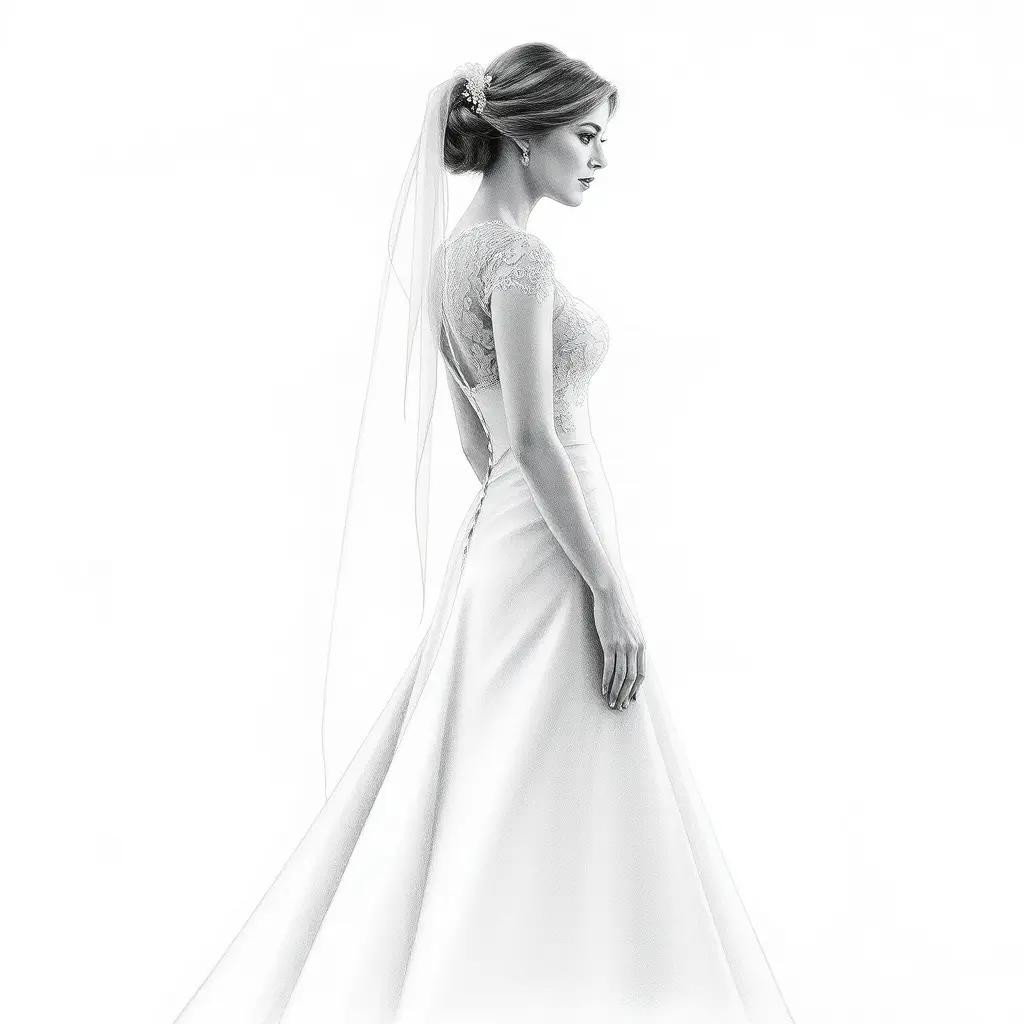
Lace detailing requires particular patience and a fine-tipped pen or a very sharp hard pencil. Rather than attempting to render every individual lace motif literally, focus on the pattern’s rhythm and repeat. Suggest the motif through selective detail in the areas of highest visual focus, such as the bodice and neckline, and allow the pattern to soften and simplify as it moves toward the edges of the drawing.
Watercolor artists often find that leaving the white of the paper to represent the gown, while using pale washes of blue gray shadow to define its folds and volume, produces a more convincing and luminous result than attempting to paint the white fabric directly.
3. Floral Wedding Drawing
Flowers are so deeply embedded in wedding culture that any serious exploration of wedding drawing ideas must give significant attention to botanical and floral illustration. From the bridal bouquet to the ceremony arch, from the centerpieces to the corsages pinned to lapels, flowers appear at every level of a wedding’s visual vocabulary.
Botanical Accuracy Versus Artistic Impression
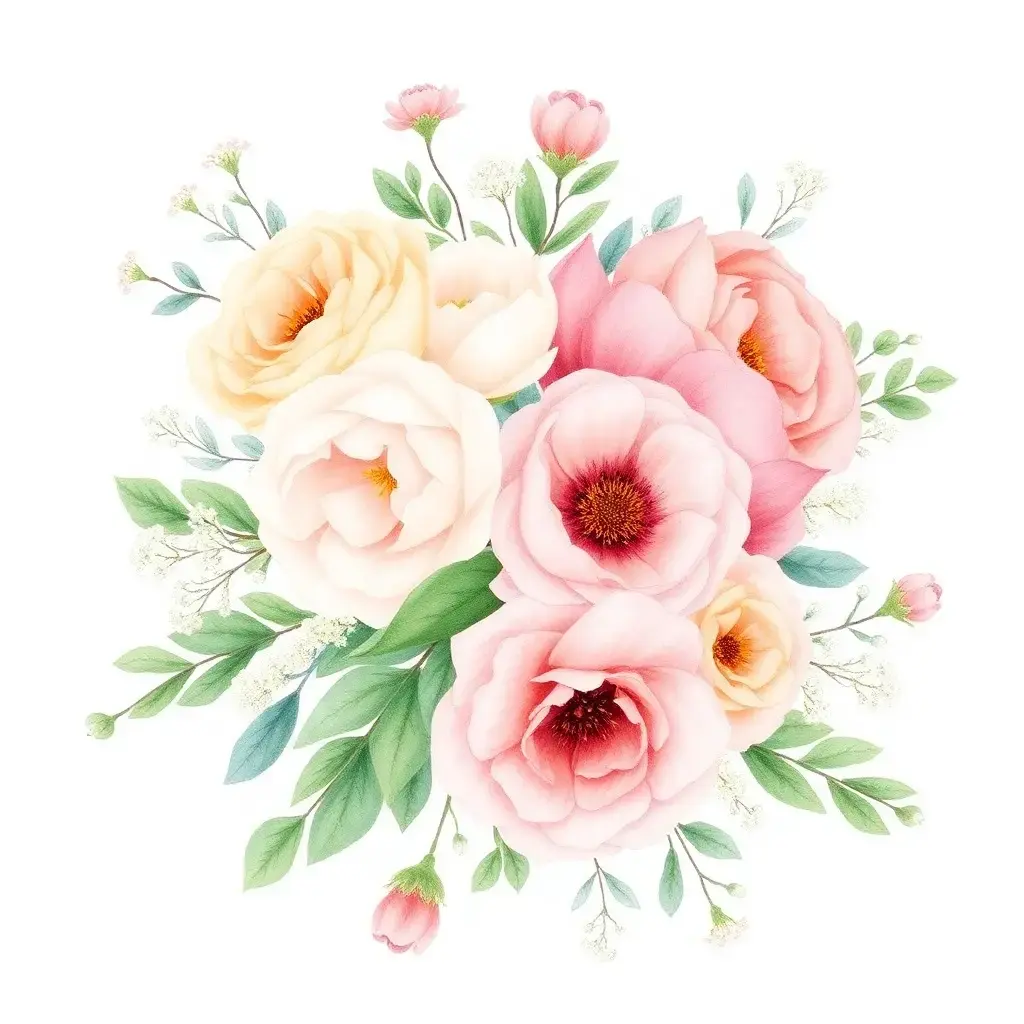
Floral wedding drawings can take two distinct approaches. The first is botanical illustration, which prioritizes accuracy of form, petal structure, leaf arrangement, and color. This approach produces drawings that feel authoritative and detailed, and it suits wedding stationery design and formal print applications beautifully. The second approach is impressionistic floral art, where the goal is to capture the mood and abundance of flowers rather than their precise botanical identity. Loose, gestural watercolor florals with soft edges and layered transparent washes are particularly suited to this style and have become enormously popular in contemporary wedding illustration.
The most commonly drawn wedding flowers include garden roses, peonies, ranunculus, eucalyptus, baby’s breath, dahlias, and wildflowers. Each has distinct structural characteristics worth studying before attempting to render them. A peony, for example, has an almost overwhelming abundance of layered petals that create a globe shape. Rendering it convincingly requires working from the center outward and building layers of petals progressively, with the innermost petals receiving the deepest shadow and the outer petals rendered in lighter, more transparent tones.
4. Romantic Wedding Scene Illustration
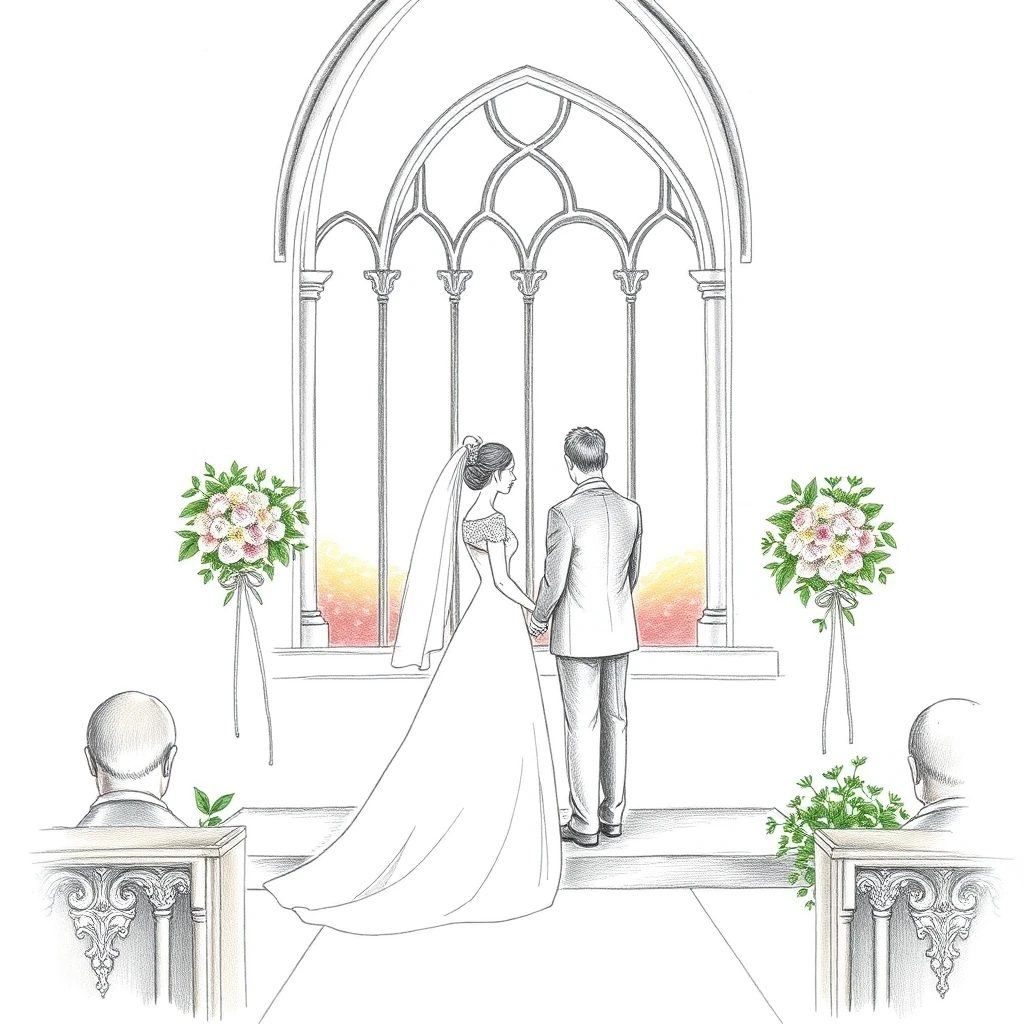
Where couple portraits focus on individuals or pairs in close proximity, wedding scene illustrations take a wider view, depicting entire moments within the ceremony or reception in a single frame. These are among the most narratively rich of all wedding drawing ideas and reward careful compositional planning before any detailed drawing begins.
Popular wedding scenes to illustrate include the moment of the first kiss under a flower arch, the couple walking back down the aisle as newlyweds surrounded by guests, the first dance under string lights, the bouquet toss caught in mid-air, and the quiet moment before the ceremony where the bride stands alone at the entrance to the venue.
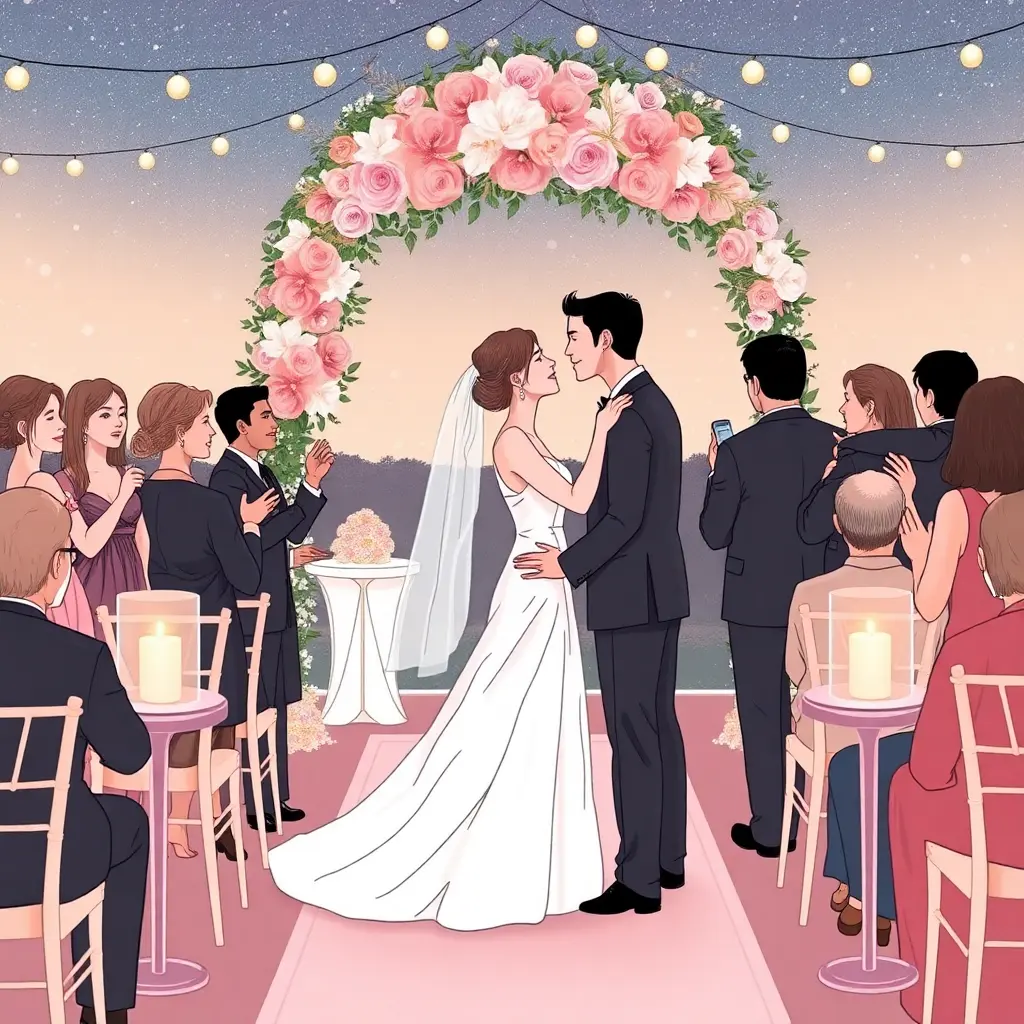
The key to a convincing scene illustration is establishing a clear hierarchy of focus within the composition. The couple should always read as the primary subjects even when surrounded by architectural elements, floral arrangements, and other figures. Achieve this through contrast, placing the couple against a lighter or simpler background area, through size and positioning, centering them in the composition or placing them at an intersection of compositional lines, and through detail density, rendering the couple with greater specificity than the elements surrounding them. https://blackpaperdrawing.com/creative-wedding-drawing-ideas-to-inspire-your-art/
5. Wedding Silhouette Art
Wedding silhouette art has enjoyed a long and distinguished history in both fine art and decorative traditions, and it remains one of the most graphically striking of all wedding drawing ideas. A well-designed wedding silhouette reduces the couple and their environment to pure shape, eliminating all surface detail and focusing entirely on outline, proportion, and the emotional geometry of two figures in relation to each other.
The power of silhouette art lies in this reduction. When detail is removed, the viewer’s imagination fills in everything that the eye cannot see, and this imaginative participation creates a deeply personal response to the image. A silhouette of two figures facing each other across a slight gap communicates anticipation. The same two figures with foreheads touching communicates intimacy. The shapes tell the emotional story without requiring any rendered detail at all.
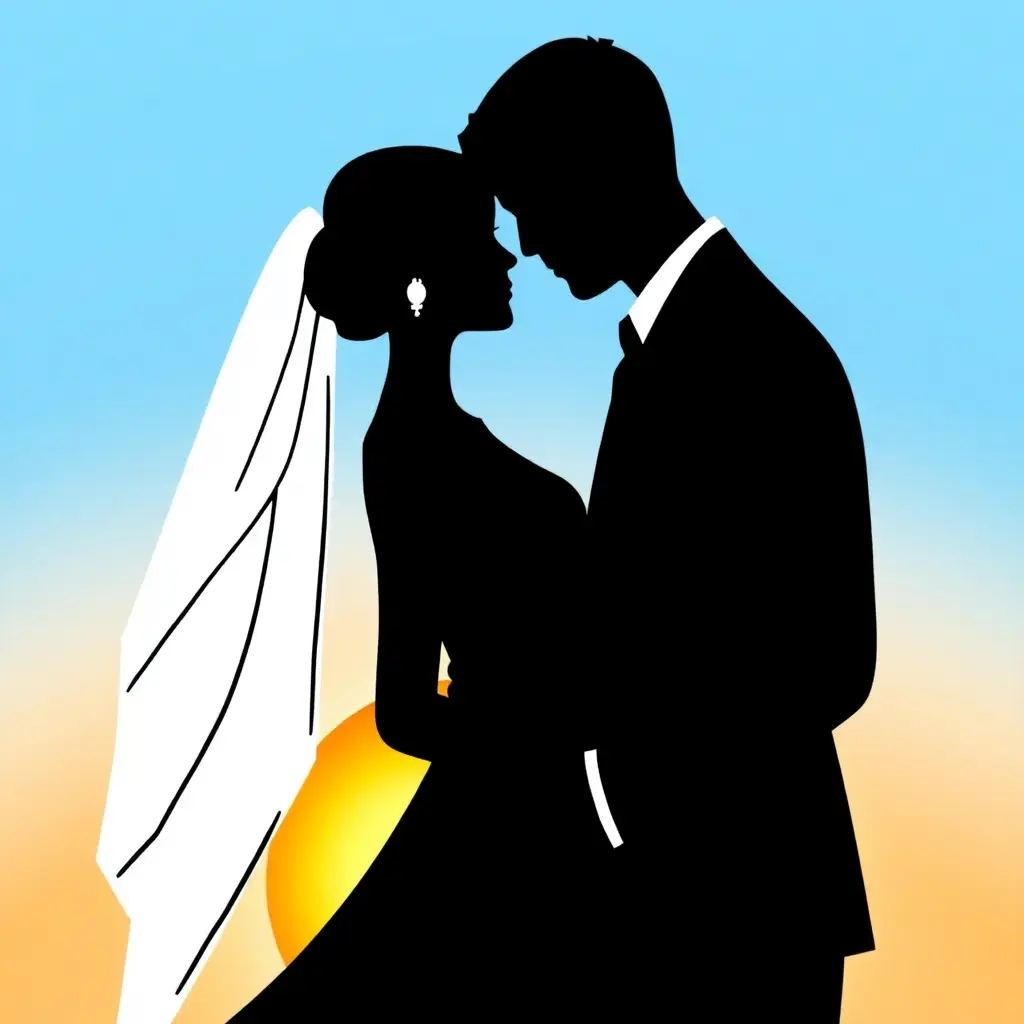
Silhouette wedding drawings work beautifully in cut paper, in ink on white paper, or in negative space against a richly colored painted or watercolor background. A sunset gradient behind a black couple silhouette is perhaps the most universally beloved version of this style and consistently produces striking, emotionally resonant results that work as framed art, greeting cards, and invitation graphics.
6. Wedding Ring and Symbolic Element Drawing
Not every wedding drawing idea requires depicting people. Some of the most elegant and widely appreciated wedding artworks focus instead on the symbolic objects that carry the deepest emotional meaning within the ceremony: the rings, the bouquet, the wedding cake, the invitation suite, the champagne glasses catching the light, the shoes resting beside each other, the veil spread across a bed.
Wedding ring drawings present a specific technical challenge in the rendering of reflective metal and the precise geometry of circular forms in perspective. Study how a ring sits on a flat surface. The circle of the band becomes an ellipse when viewed from an angle, and the degree of ellipse changes as the viewing angle changes. Getting this geometry right is the single most important step in making a ring drawing convincing.
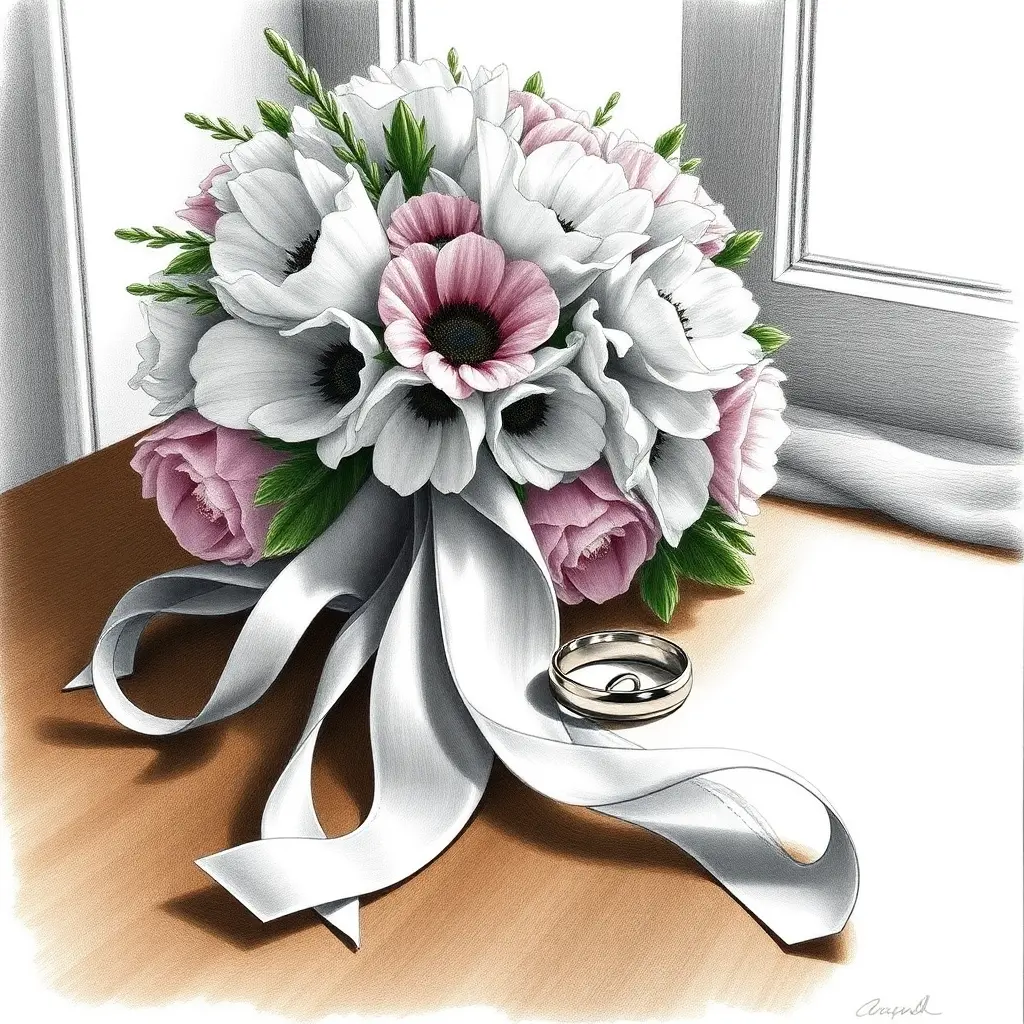
Beyond the rings, consider drawing the wedding bouquet as a standalone subject, giving it the same compositional attention you would give a traditional still life. Place it on a windowsill or a wooden table. Study the relationship between the flowers at the bouquet’s heart and those at its outer edges. Allow the ribbon trailing below the stems to add a softly flowing element to the composition. This type of drawing makes a beautiful handmade card or a standalone piece of art that feels deeply personal to the occasion.
7. Wedding Caricature Drawing
Wedding caricatures occupy a joyful and often underappreciated corner of wedding art. While portraits aim for dignity and emotional resonance, caricatures celebrate the personality and humor of the couple through affectionate exaggeration. The groom’s enthusiastic grin made just a little wider. The bride’s famously expressive eyebrows drawn just a touch more dramatic. These amplifications, done with warmth and genuine affection, produce images that make the couple laugh and that carry enormous personal meaning.
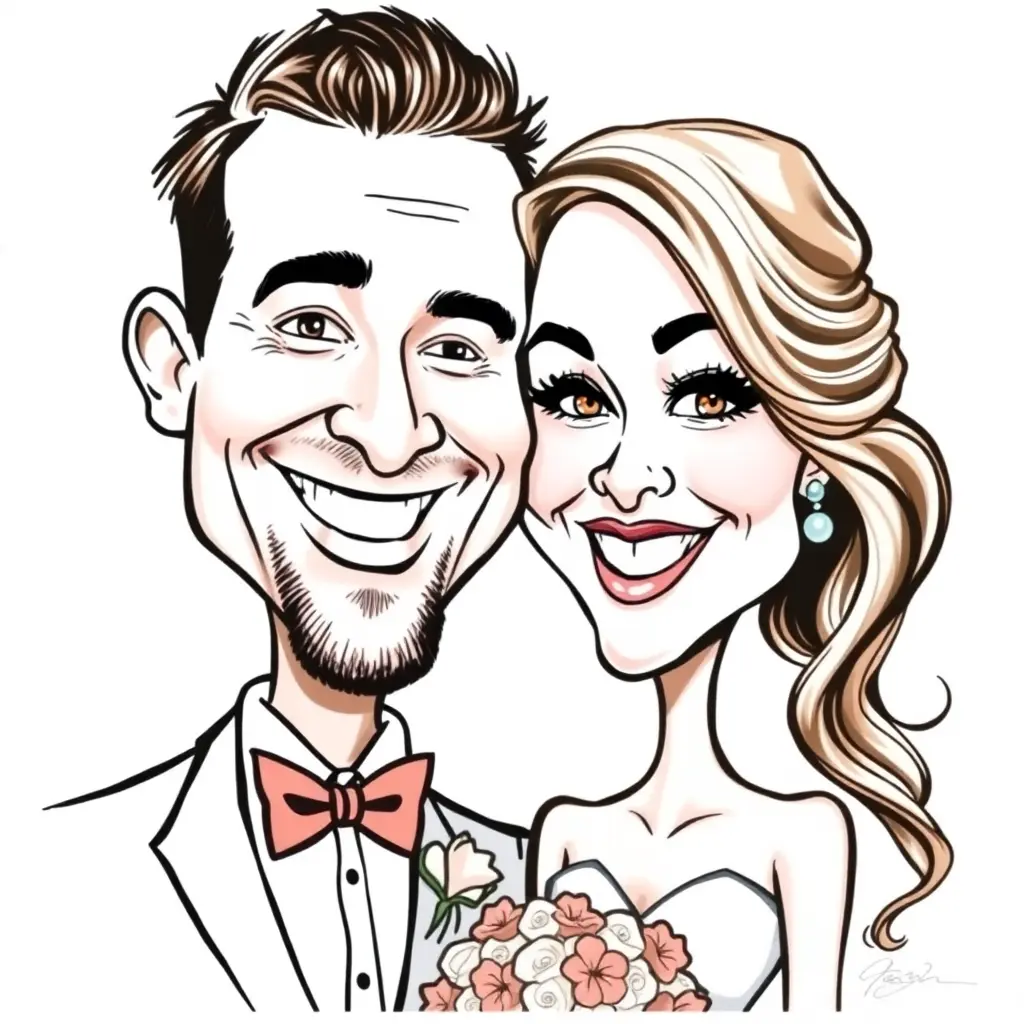
The fundamental principle of caricature is observation before exaggeration. Study the subject carefully before introducing any exaggeration at all. Identify the feature that is most characteristic: a strong jaw, an infectious smile, a distinctive nose, an unusually expressive pair of hands. Then amplify that characteristic while keeping all other features relatively close to their real proportions. Exaggerating everything simultaneously produces a chaotic image. Exaggerating one or two carefully selected features produces a caricature that is both recognizable and delightfully humorous.
Wedding caricatures are particularly popular as live entertainment at receptions, where artist’s sketch guests and the couple in real time, producing take-home mementos that guests treasure long after the evening ends.
8. Wedding Venue Sketch
Drawing the venue where a wedding takes place is a wonderful way to anchor a wedding artwork in a specific sense of place. Whether the venue is a centuries-old stone cathedral, a contemporary industrial event space, a beachfront pavilion, or a wildflower meadow beneath open sky, a skilled venue sketch captures the architectural and atmospheric personality of the setting in a way that photographs sometimes miss.
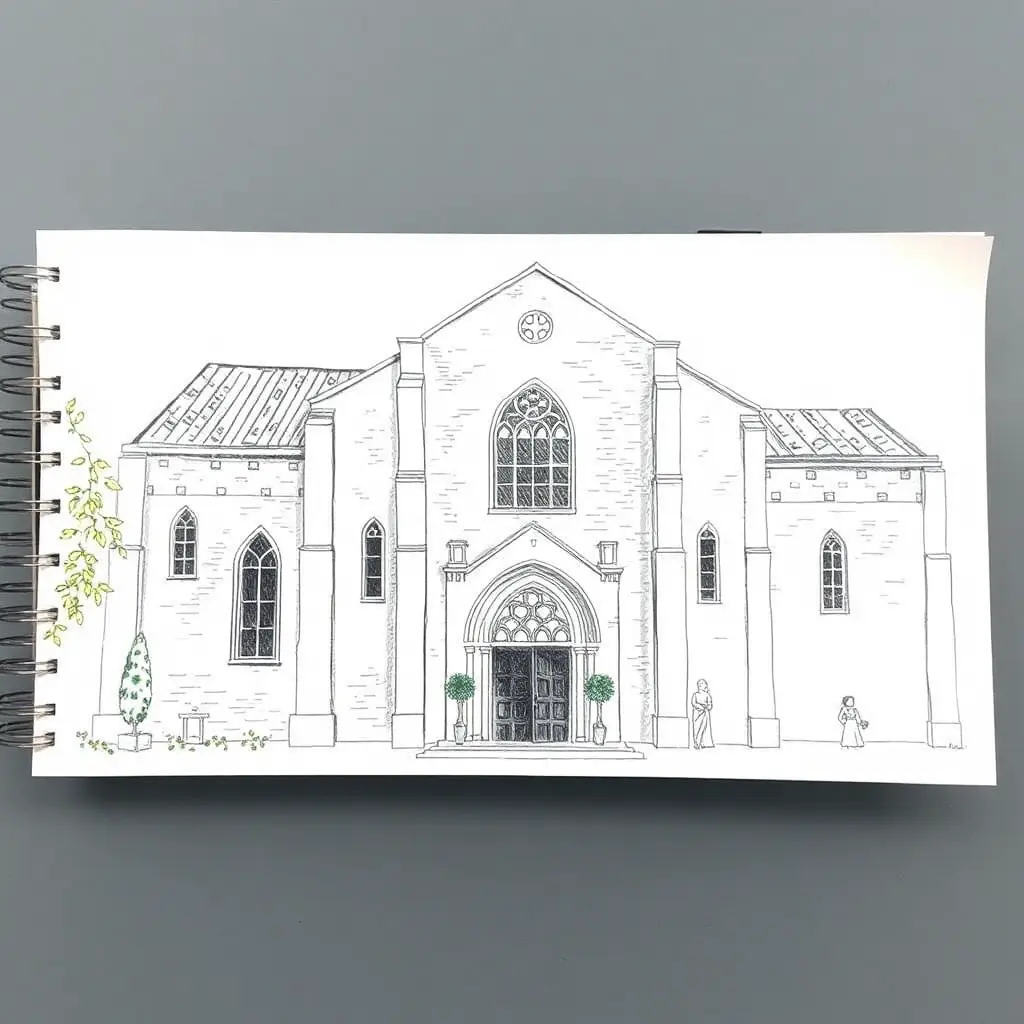
Begin with the architectural lines of the main structure. Use a ruler for straight edges if working in a realistic style or allow slightly imperfect hand-drawn lines if the goal is a more illustrative and personal result. Establish the major masses of the building first, then work toward windows, doors, columns, and decorative details. Add the environmental context: trees, pathways, the quality of the light falling across the facade, the movement of fabric or floral decoration visible in the doorways.
Venue sketches make extraordinary, personalized wedding gifts and are often commissioned as keepsakes that the couple can frame and display in their home. Combining a venue sketch with small drawn vignettes of symbolic objects from the ceremony creates a composite illustrated page that functions as a visual narrative of the entire day.
9. Wedding Card and Stationery Illustration
Wedding drawings find one of their most practical and widely appreciated applications in handmade cards and stationery. A beautifully drawn wedding card carries a level of personal investment that a commercially printed card simply cannot replicate, and it often becomes one of the keepsakes the couple returns to most frequently in the years that follow.
For wedding card illustration, the most effective approach is to identify one clear central image and give it the full available space rather than crowding the composition with multiple competing elements. A single rose stem with perfect leaf placement. Two interlinked rings with a soft shadow beneath them. A minimal outline of a bride and groom holding hands from behind. These simple, focused compositions read clearly even at small sizes and transfer to card stock with excellent results.
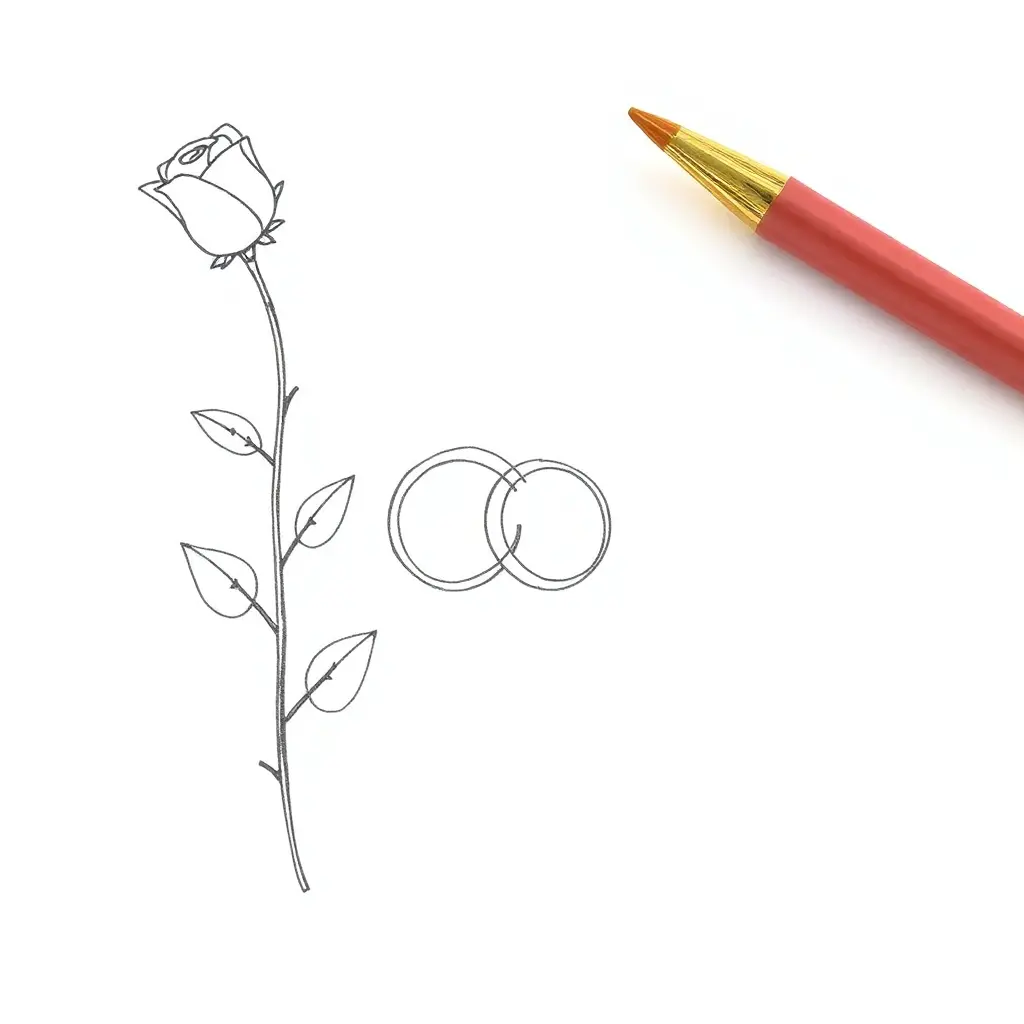
For stationery illustration as part of a larger wedding design system, consistency of line weight, color palette, and illustrative style across all pieces creates a cohesive visual identity for the wedding that feels designed rather than assembled. Choose two or three motifs drawn from the couple’s aesthetic preferences and repeat them across invitation, menu card, program, and thank-you card for a unified and professionally considered result.
10. Watercolor Wedding Portrait from a Photograph
The practice of translating a wedding photograph into a hand-painted watercolor portrait is one of the most requested and most cherished forms of wedding art. It takes the captured reality of a photograph and transforms it into something with warmth, texture, and visible human intention that no digital filter or print can reproduce.
Begin by selecting the photograph with care. The best source images for watercolor portraits have strong, clear light, well-defined subject placement, and enough tonal contrast to provide clear reference for the painted values. A portrait where the couple is backlit against a bright sky, for example, creates a natural opportunity for a luminous, high-key watercolor treatment with pale warm shadows and rich atmospheric depth in the background.
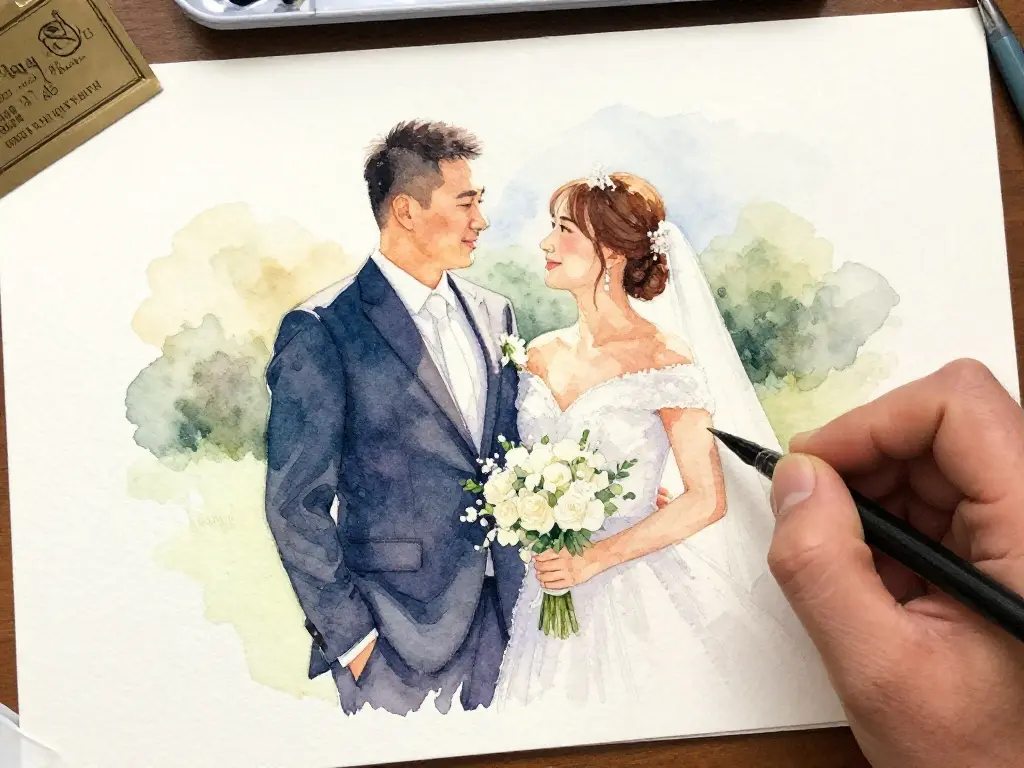
Transfer the basic composition to your watercolor paper using a light graphite sketch, preserving only the essential outlines and major value boundaries. Work from light to dark, preserving the white of the paper for the brightest highlights by working around them. Build color in transparent layers, allowing each wash to dry before adding the next. The most common mistake in watercolor portraiture is overworking wet layers, which disturbs the luminosity that makes watercolor so uniquely suited to romantic and wedding-themed subjects.
Tips for Developing Your Wedding Drawing Practice
Developing skill in wedding drawing requires consistent reference study alongside regular practice. Collect high-quality wedding photographs to use as drawing references and study them analytically before beginning any drawing. Notice where the light falls and how it models the subjects. Observe how fabric moves and folds. Pay attention to the geometry of architectural backgrounds and how they frame the couple within the composition.
Practice individual elements in isolation before combining them into complete compositions. Draw hands until they feel confident. Study and sketch fabric folds across different materials. Practice rendering reflective metal for ring drawings. Build a personal reference library of floral studies covering the most common wedding flowers. Each of these individual practice sessions feeds directly into the quality of finished wedding drawings.
Joining a community of artists who draw wedding-related subjects provides feedback, accountability, and inspiration that is difficult to generate in isolation. Sharing work in progress and studying the work of illustrators whose wedding art you admire accelerates development in ways that solitary practice alone cannot.
Conclusion
Wedding drawing ideas open a creative territory that is simultaneously emotionally rich and technically rewarding. Every style explored in this guide, from the intimate couple portrait to the architectural venue sketch, from the joyful caricature to the luminous watercolor portrait, offers its own particular pleasures and its own particular set of challenges. What they share is their capacity to transform a moment of human love into something visible, lasting, and deeply personal.
The best wedding artwork begins not with technical ambition but with genuine feeling for the subject. When you draw a wedding with real attention to what makes that specific moment, that particular couple, that exact arrangement of flowers and light and space emotionally significant, the result carries a quality of presence that transcends skill level and speaks directly to anyone who sees it.
Begin with the idea that excites you most from this guide. Work slowly. Return to your references often. Be patient with your drawing hand, and allow your own perspective and sensibility to shape what emerges on the page. Wedding art at its finest is not a reproduction of reality but an expression of what love looks like when it is given form by someone who truly paid attention.
Frequently Asked Questions
Q1. What is the best drawing style for beginners who want to try wedding drawing ideas?
Beginners are best served by starting with simple silhouette drawings or minimalist line art of symbolic wedding objects such as rings, flowers, or champagne glasses. These subjects require less anatomical knowledge than portrait drawing and still produce beautiful, emotionally resonant results. As confidence builds, moving toward full couple portraits and scene illustrations becomes a natural progression.
Q2. Do I need expensive materials to create beautiful wedding drawings?
Not at all. Some of the most beautiful wedding drawings are produced with nothing more than a basic set of graphite pencils and a good quality sketchbook. Investing in a set of watercolor paints and cold press paper opens up additional creative possibilities, but exceptional wedding art has been created with the most minimal of tools throughout art history. Begin with what you have and expand your materials as your practice deepens.
Q3. Can wedding drawings be used as personalized gifts for a couple?
Wedding drawings make extraordinarily meaningful personalized gifts. A hand-drawn portrait of the couple, a watercolor illustration of their venue, a detailed sketch of the bridal bouquet, or a beautifully rendered scene from their ceremony all carry a level of personal investment and artistic uniqueness that purchased gifts rarely achieve. Framed and presented, a wedding drawing becomes a piece of art the couple can live with for the rest of their lives.
Q4. How long does it typically take to complete a wedding portrait drawing?
This varies considerably depending on the complexity of the composition, the drawing medium, and the artist’s experience level. A simple pencil sketch of the couple can be completed in one to three hours. A detailed watercolor portrait from a reference photograph typically requires between eight and twenty hours of focused work spread across multiple sessions. A full scene illustration with multiple figures and architectural background elements can extend to thirty hours or more.
Q5. What reference material is best to use when drawing wedding subjects?
High-quality wedding photography provides the richest and most reliable reference material for wedding drawings. Look for photographs with strong natural light, clear subject positioning, and enough tonal contrast to reveal the full range of values you will need to render. For floral references, botanical illustration books and high-resolution flower photography provide excellent structural detail. For fabric and gown references, fashion illustration archives and bridal magazine photography offer invaluable study material that cannot be replicated from imagination alone.