18 Stunning Kitchen Countertop Ideas for Homes
Introduction
The countertop is the workhorse of every kitchen. It bears the weight of daily cooking, carries the fingerprints of family gatherings, and quietly sets the visual tone of the entire space. Whether you are building a new home from the ground up or refreshing an older kitchen, the countertop decision is one of the most consequential choices you will make. The right surface does not just look beautiful. It performs, endures, and ultimately reflects the way your household lives.
With so many materials, finishes, colors, and installation styles available today, the options can feel overwhelming. That is exactly why this guide exists. Below, you will find 18 distinct kitchen countertop ideas spanning a wide range of budgets, aesthetics, and functional needs. Each one has something meaningful to offer, and by the end, you will have a clear sense of which direction suits your home best.
1. Classic White Quartz for a Timeless Look
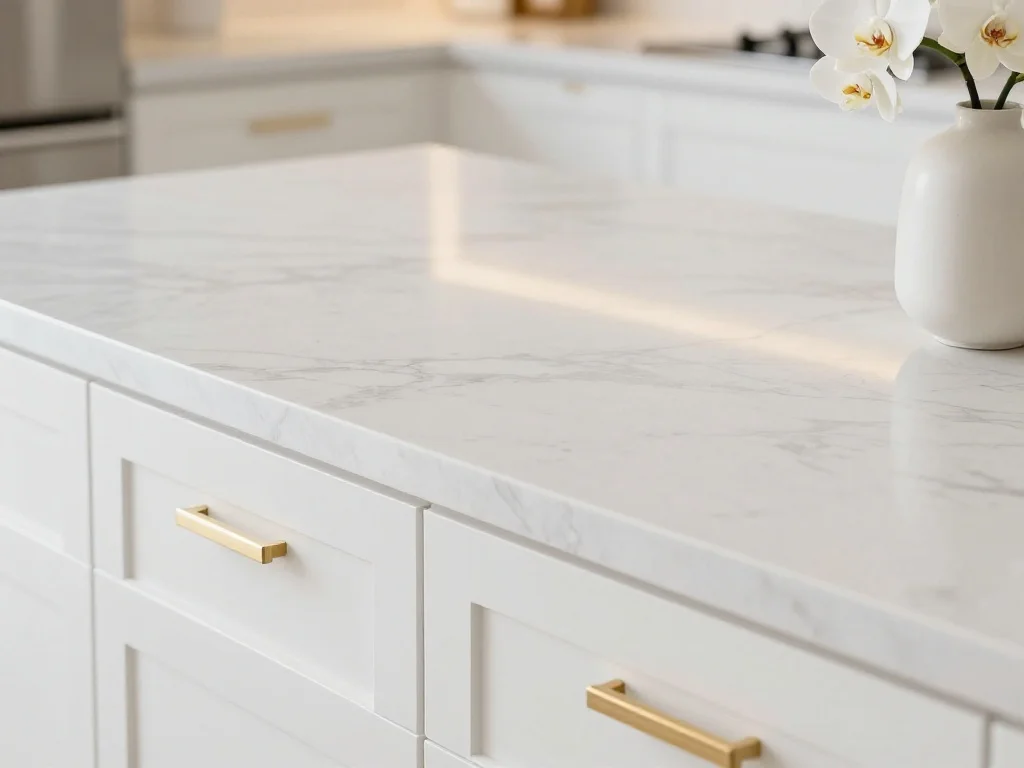
White quartz remains one of the most popular choices in residential kitchens today, and for good reason. It delivers the elegance of marble without the demanding maintenance schedule that natural stone requires. Quartz is engineered from crushed stone and resin, making it non-porous, highly resistant to stains, and simple to clean with nothing more than mild soap and warm water. White quartz pairs effortlessly with both light cabinetry and dark cabinetry, and it holds its appearance over decades of heavy use. For homeowners who want a polished, clean aesthetic with minimal effort, white quartz is a strong starting point.
2. Dramatic Veined Quartz for a Statement Surface
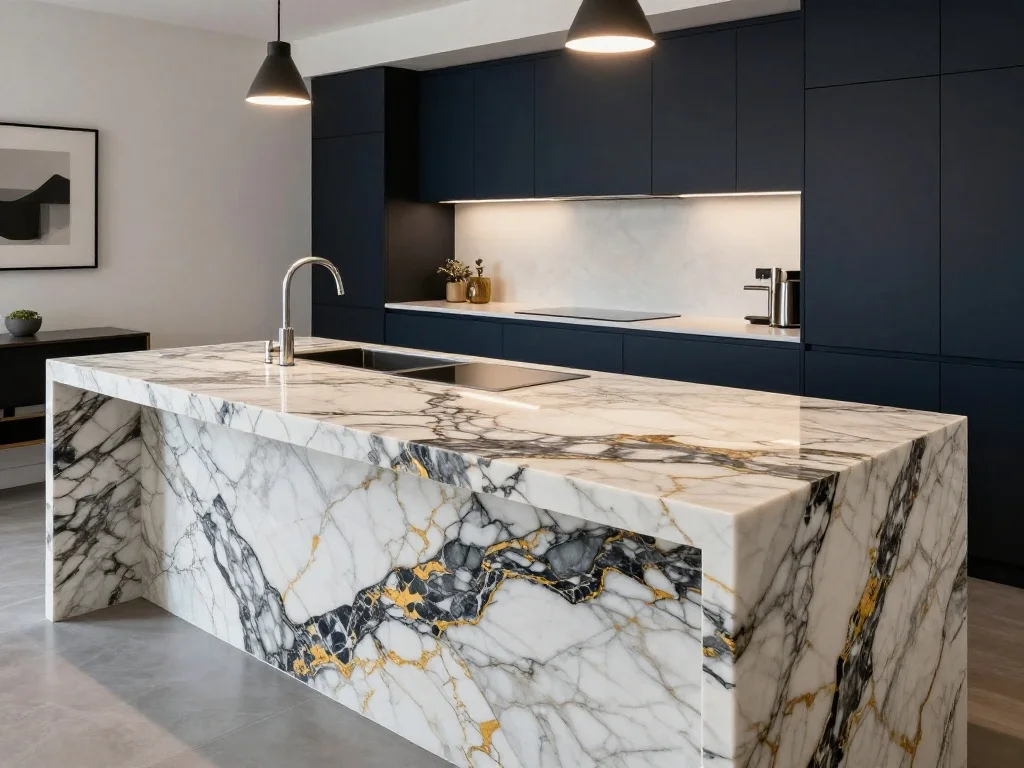
Not all quartz is understated. Dramatic veined quartz, designed to mimic the look of exotic marbles like Calacatta and Carrara, has grown enormously popular in kitchens that want a focal point rather than a background surface. Bold veining in gold, grey, or charcoal creates a visual energy that eliminates the need for busy backsplashes or elaborate decorative accents. The countertop itself becomes the star of the room.
3. Classic Granite for Natural Depth and Durability
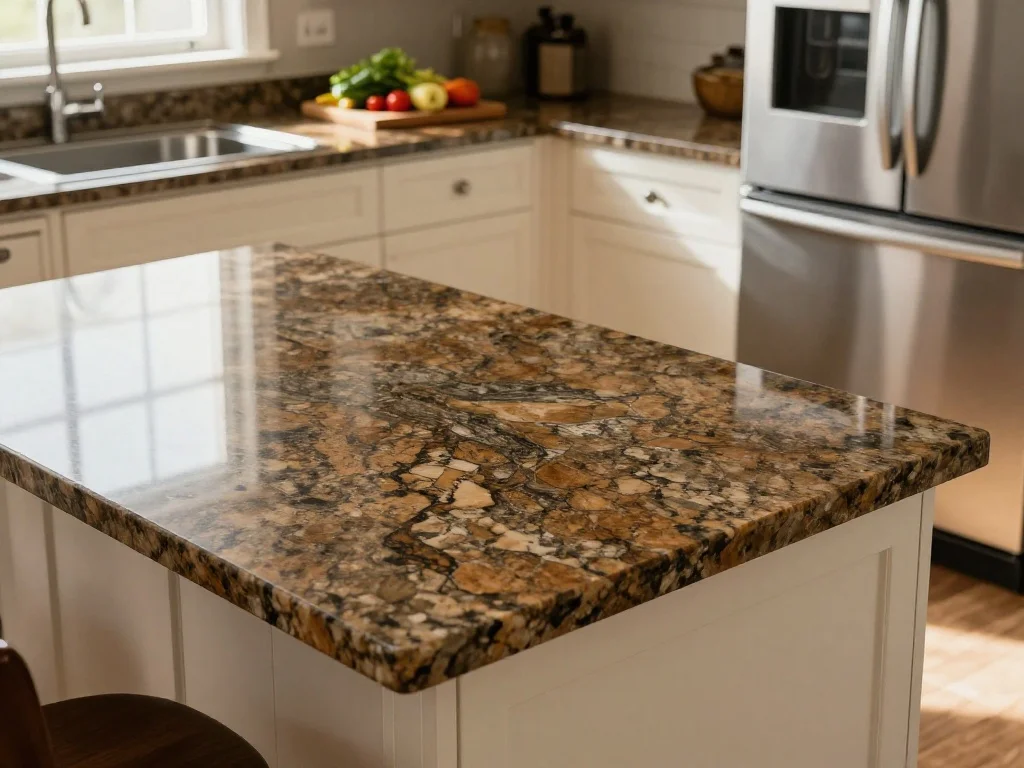
Granite has earned its place in the upper tier of countertop materials through decades of reliable performance. Every slab of granite is entirely unique, marked by its own pattern of minerals, speckles, and movement that no other slab will ever replicate. It is extremely hard, highly heat resistant, and scratch resistant under normal kitchen conditions. Granite does require periodic sealing to maintain its resistance to staining, but many homeowners find that task entirely manageable. For kitchens that need both visual richness and genuine toughness, granite delivers on both fronts.
4. Marble for Luxury and Timeless Elegance
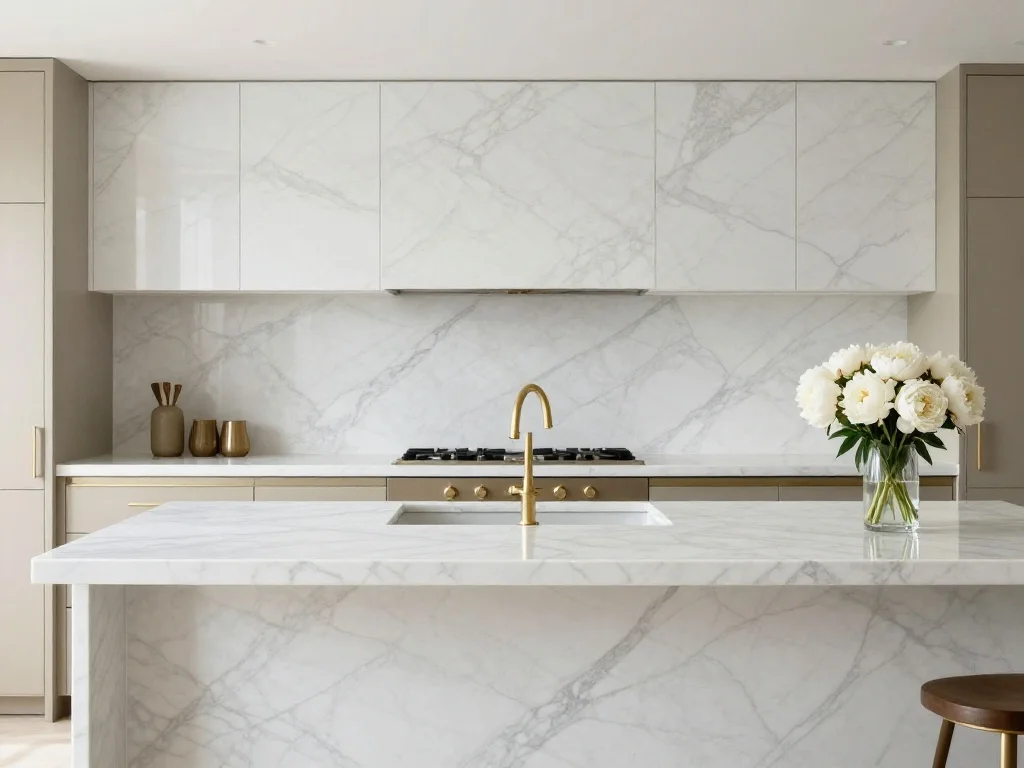
Few materials in design history carry the same cultural weight as marble. Its luminous quality, cool surface, and distinctive veining have made it a symbol of refined taste for centuries. Modern sealants have significantly improved marble’s resistance to staining, addressing what was historically its greatest weakness in a kitchen environment. White Carrara marble works beautifully in traditional and transitional kitchens, while darker marbles in green or black bring a bold, sophisticated edge to contemporary spaces. Marble requires care and attention, but for homeowners who value beauty above convenience, it rewards that investment generously.
5. Quartzite for Natural Stone Performance
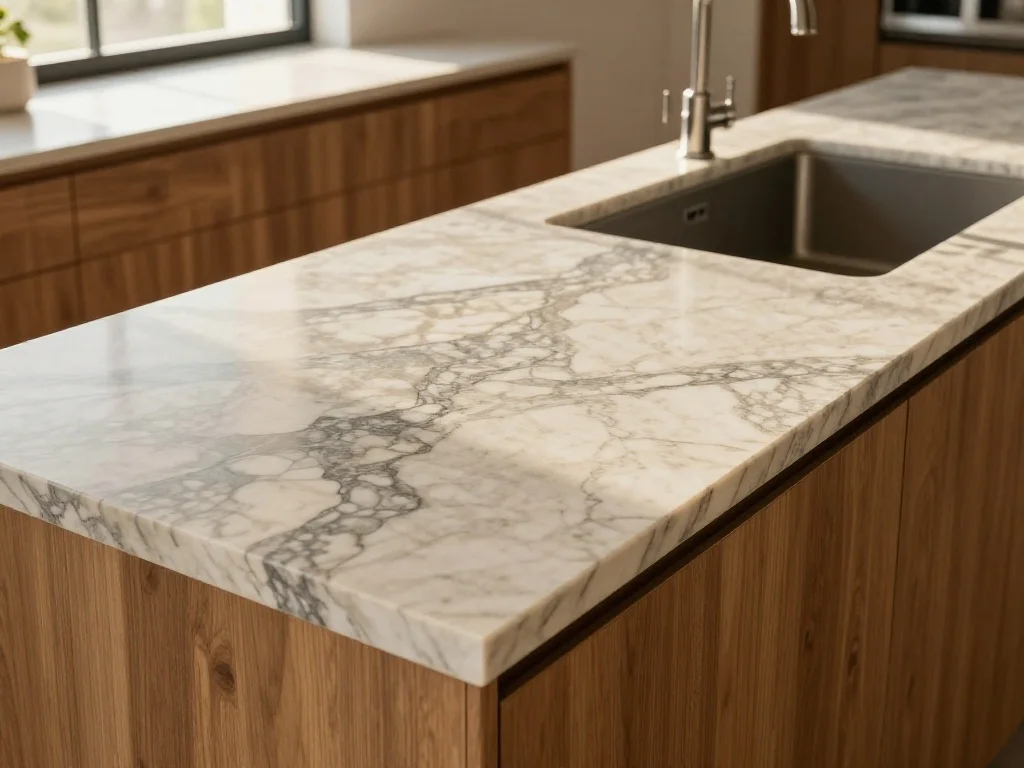
Quartzite is a naturally occurring metamorphic rock that looks remarkably similar to marble but offers substantially greater hardness and durability. It is heat resistant, scratch resistant, and carries the organic veining patterns that make natural stone so visually appealing. Quartzite has grown quickly in popularity among homeowners who love the marble aesthetic but want a surface that handles the demands of a working kitchen with less anxiety. It does require sealing, but its overall toughness makes it a practical choice for families who cook often and cook actively.
6. Honed and Leathered Finishes on Natural Stone
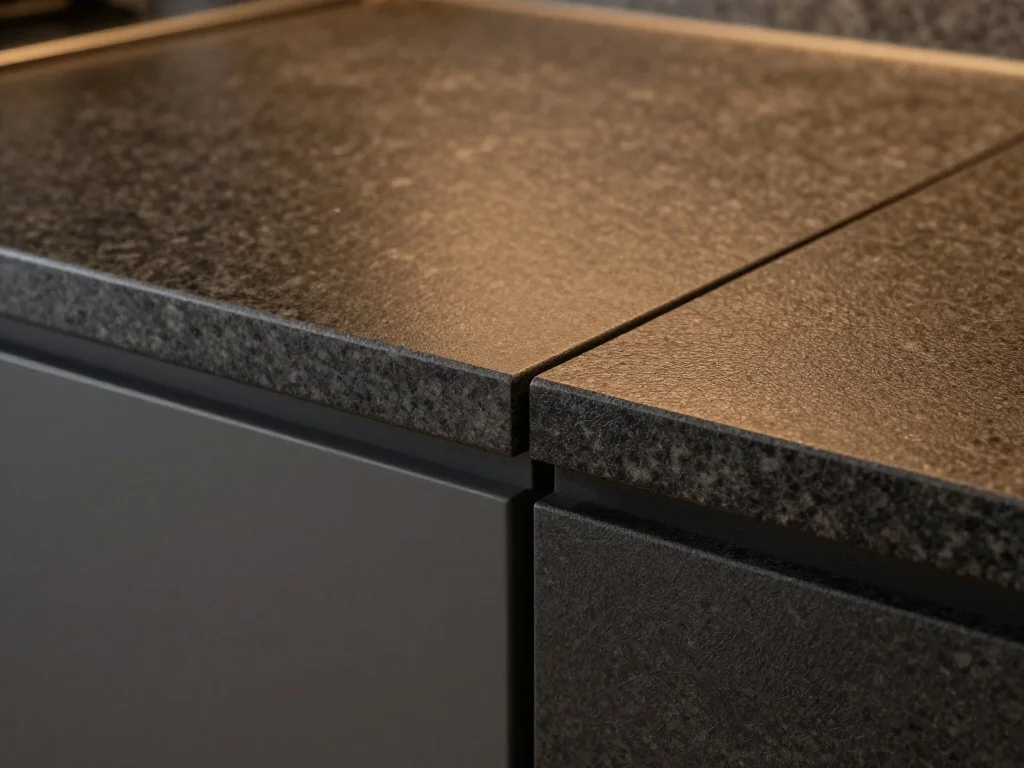
The finish on a stone countertop changes its entire character. A polished finish creates a glossy, reflective surface that reads as formal and refined. A honed finish, by contrast, is matte and soft in appearance, lending a more relaxed, organic quality to the kitchen. A leathered finish sits between the two, with a subtle texture that adds tactile depth and helps mask fingerprints. These finish options apply to granite, marble, and quartzite, and they allow homeowners to customize the mood of their kitchen without changing the material itself.
7. Butcher Block for Warmth and Character
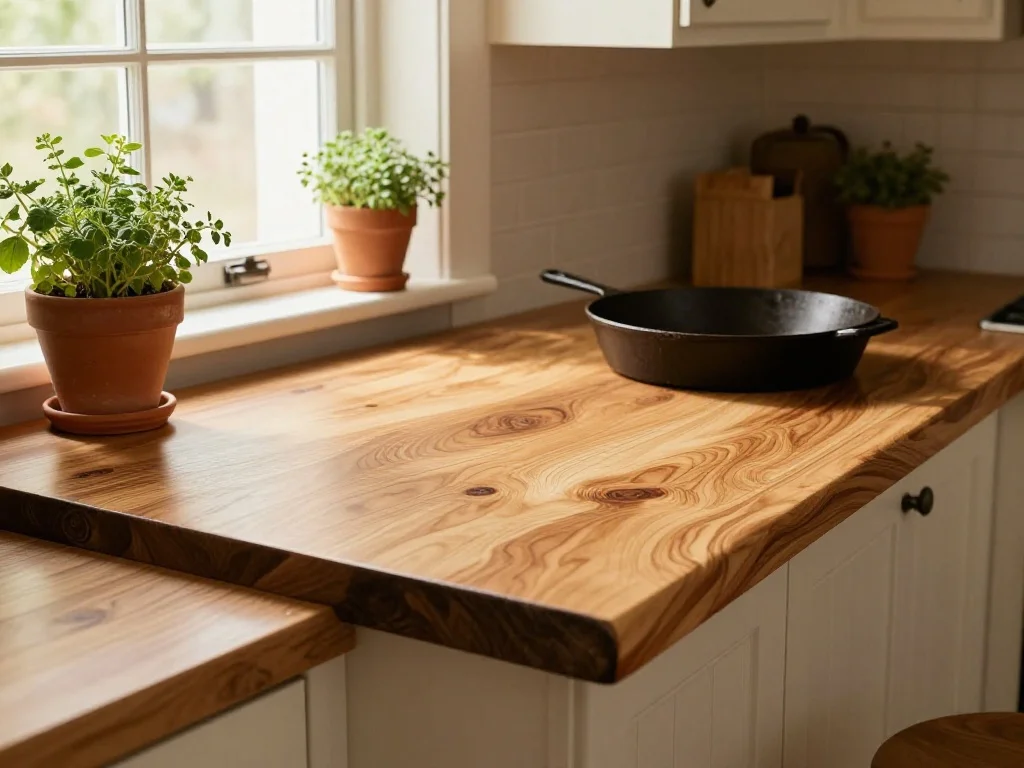
Butcher block countertops bring an unmistakable warmth to a kitchen that stone simply cannot replicate. Made from bonded sections of hardwood such as maple, oak, or walnut, butcher block surfaces add natural grain, color variation, and a sense of craftsmanship that feels both functional and beautiful. Butcher block works especially well in farmhouse kitchens, cottage-style homes, and any space where the goal is to feel welcoming rather than sleek. It is also one of the few surfaces you can cut on directly. The trade-off is maintenance: butcher block requires regular application of mineral oil to prevent cracking, warping, and moisture damage.
8. Concrete for an Industrial, Custom Aesthetic
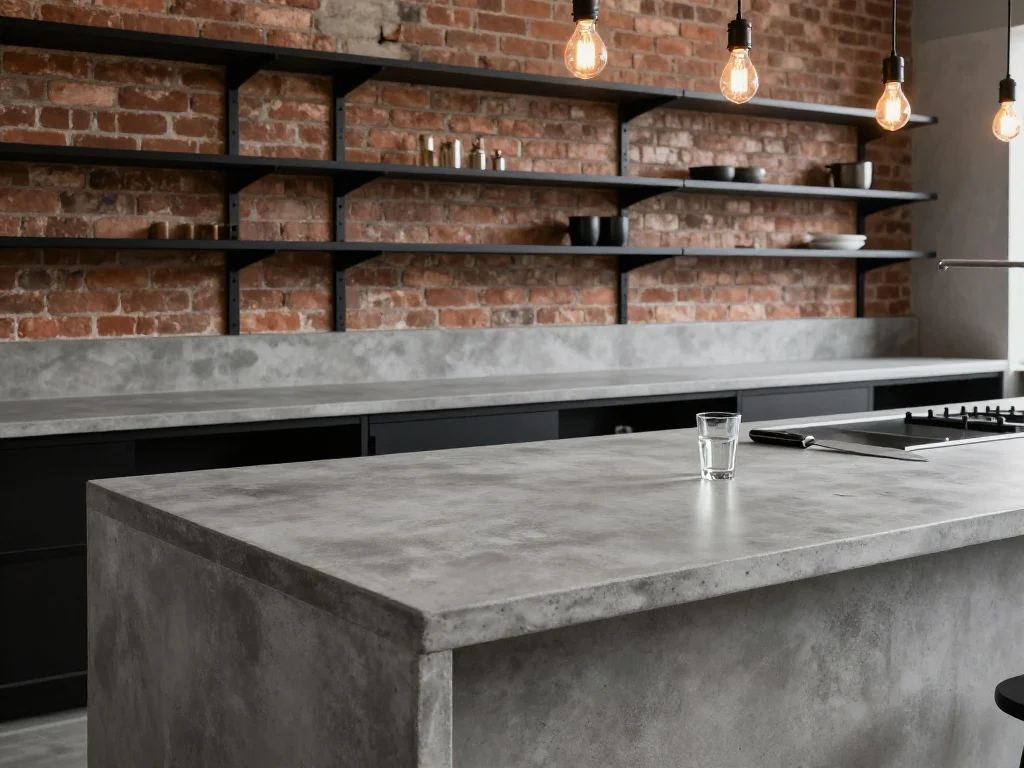
Concrete countertops carry an industrial character that works particularly well in modern, loft-inspired, or minimalist kitchens. What makes concrete distinctive is its complete customizability. It can be tinted to nearly any color, textured through different finishing techniques, and molded into custom shapes that other materials cannot accommodate. Concrete is extremely hard and heat resistant, but it does require regular sealing to prevent staining. Hairline cracks are a known characteristic of concrete countertops and, rather than being viewed as defects, are often accepted as part of the material’s organic personality.
9. Porcelain Slab for a Sophisticated Low-Maintenance Option
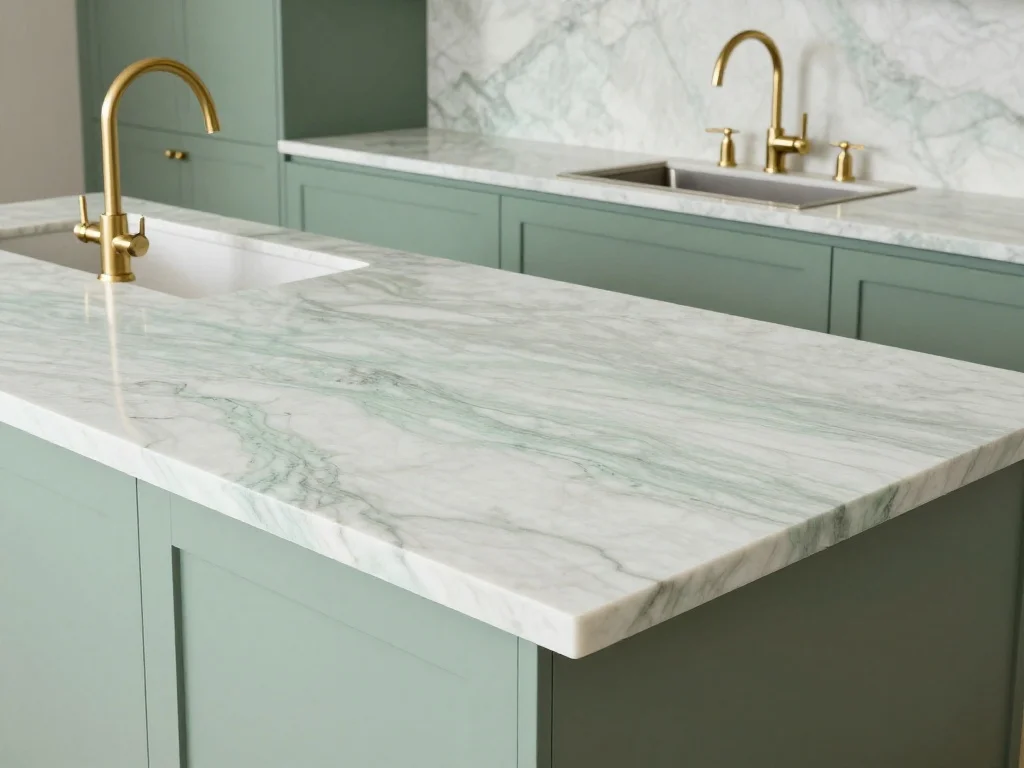
Porcelain slab countertops have emerged as one of the most exciting developments in modern kitchen design. Made from dense, high-quality clay fired at extreme temperatures, porcelain is harder than granite, non-porous, stain resistant, heat resistant, and impervious to UV rays, making it equally well-suited for outdoor kitchen applications. High-precision printing technology allows porcelain manufacturers to reproduce the appearance of rare marble, quartzite, and other exotic stones with impressive accuracy. The result is a surface that looks as beautiful as natural stone while demanding almost none of its maintenance requirements.
10. Waterfall Edge Countertops for Modern Drama
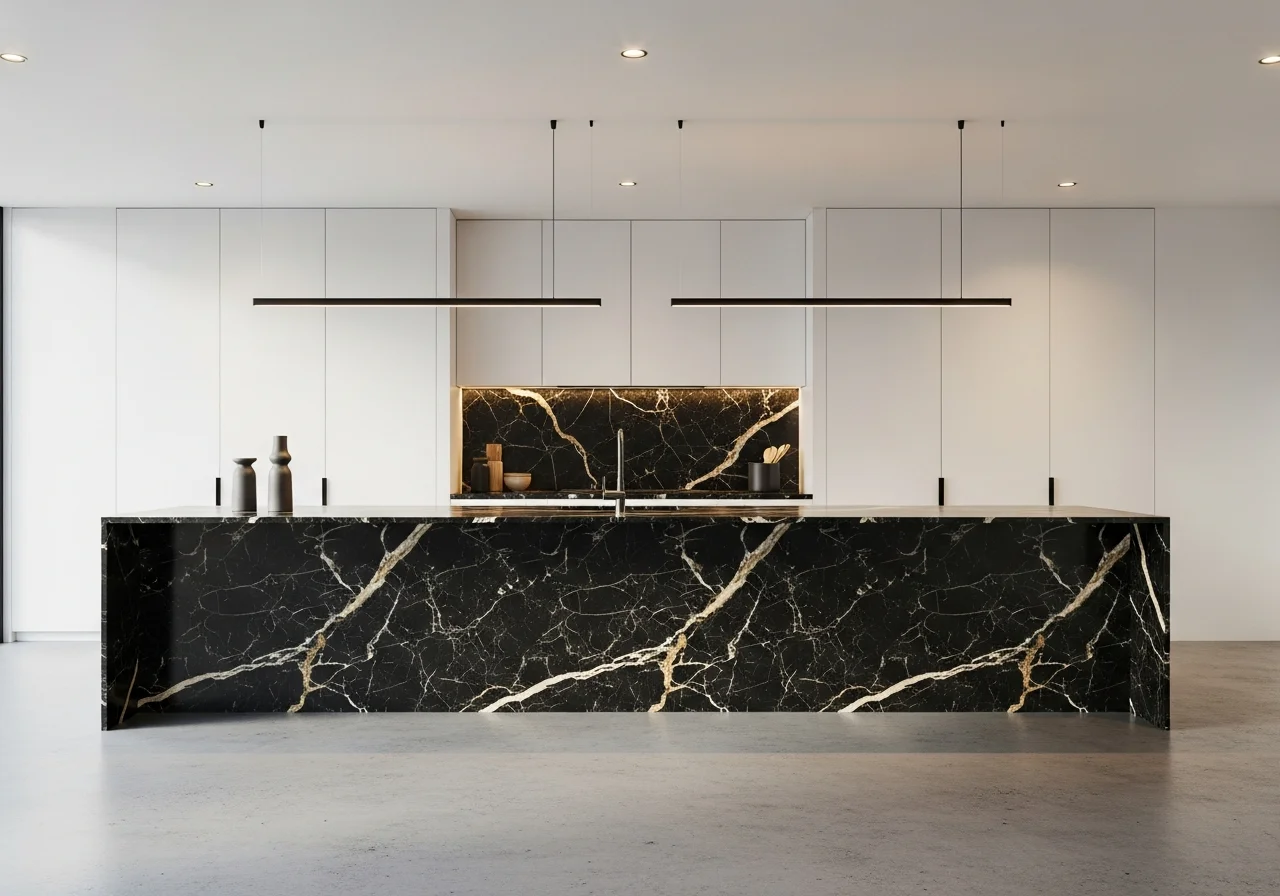
The waterfall edge is not a material but an installation style that has become one of the defining visual elements of contemporary kitchen design. In a waterfall configuration, the countertop material continues vertically down the side of a kitchen island or cabinet run, reaching all the way to the floor. The effect is dramatic and architectural, particularly when executed in a material with bold veining or an interesting pattern. Waterfall edges work best in kitchens with clean, modern lines and open layouts where the island can be appreciated from multiple angles.
11. Recycled Glass for an Eco-Conscious Choice
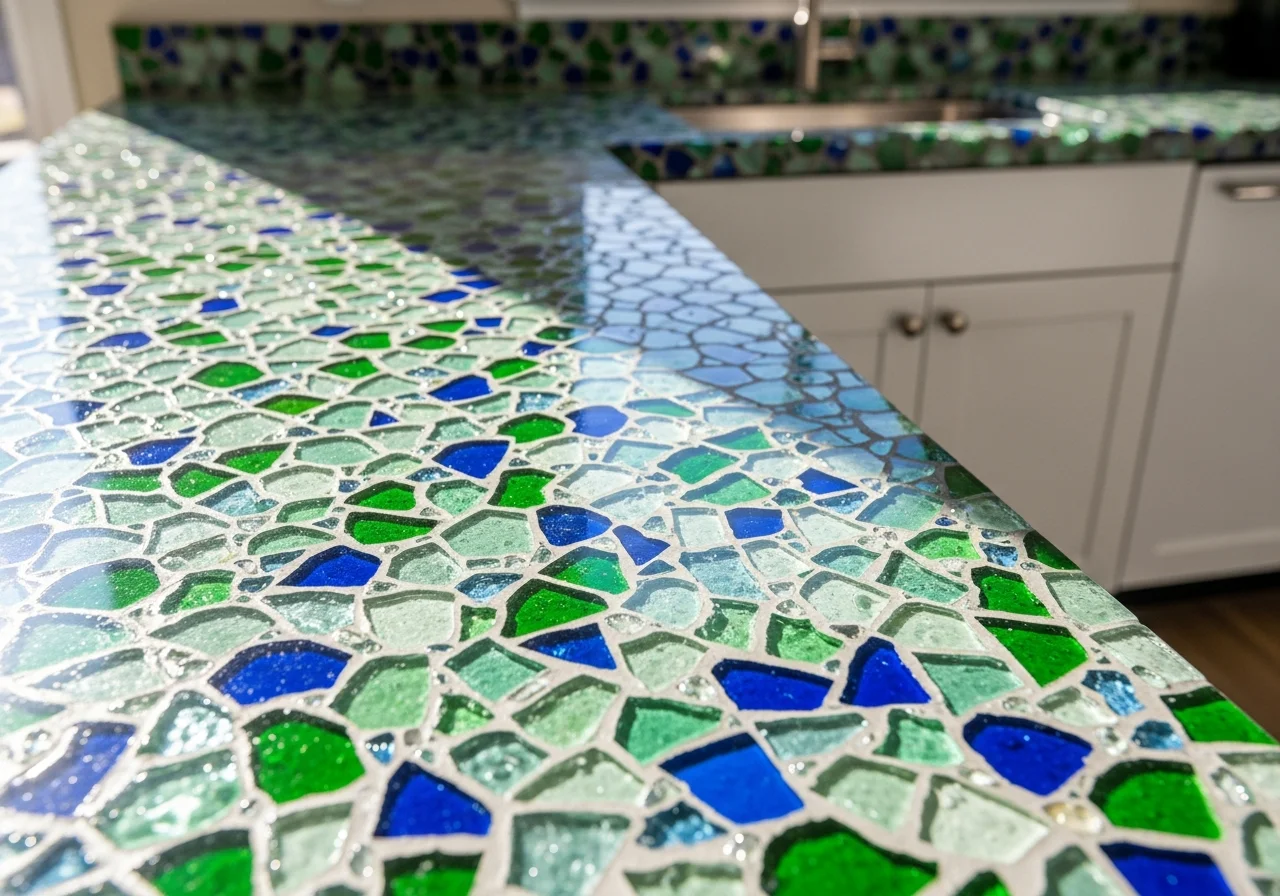
Recycled glass countertops are composed of crushed glass set in concrete or resin binders, creating surfaces that are visually striking and environmentally responsible. The glass pieces catch and scatter light, giving the countertop a luminous, almost jewel-like quality that no other material can produce. Colors range from soft sea greens to vivid blues, ambers, and clear whites depending on the source glass used. Recycled glass surfaces are non-porous, stain resistant, and durable under normal kitchen conditions. For homeowners who prioritize sustainability without sacrificing visual interest, this is an exceptional option.
12. Soapstone for a Naturally Heat-Resistant Surface
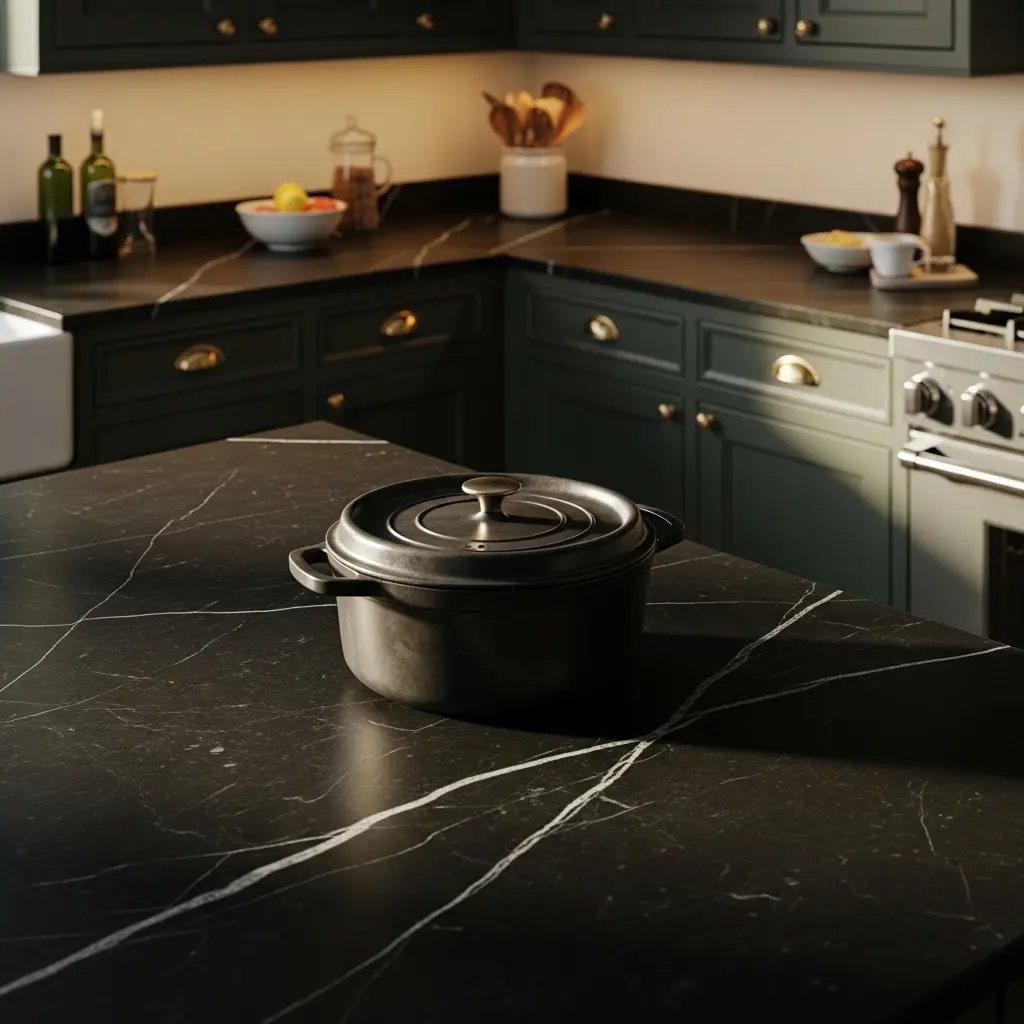
Soapstone is a dense natural stone that has been used in kitchen applications for well over a century. It is composed primarily of talc, giving it a distinctive soft texture and a naturally matte appearance. Soapstone is remarkably heat resistant and does not require sealing to resist stains, which sets it apart from most natural stones. Over time, it develops a natural patina that many homeowners find deeply appealing. Soapstone tends toward dark grey and charcoal tones, making it a sophisticated choice for kitchens where a moody, refined palette is the goal.
13. Stainless Steel for a Professional Kitchen Feel
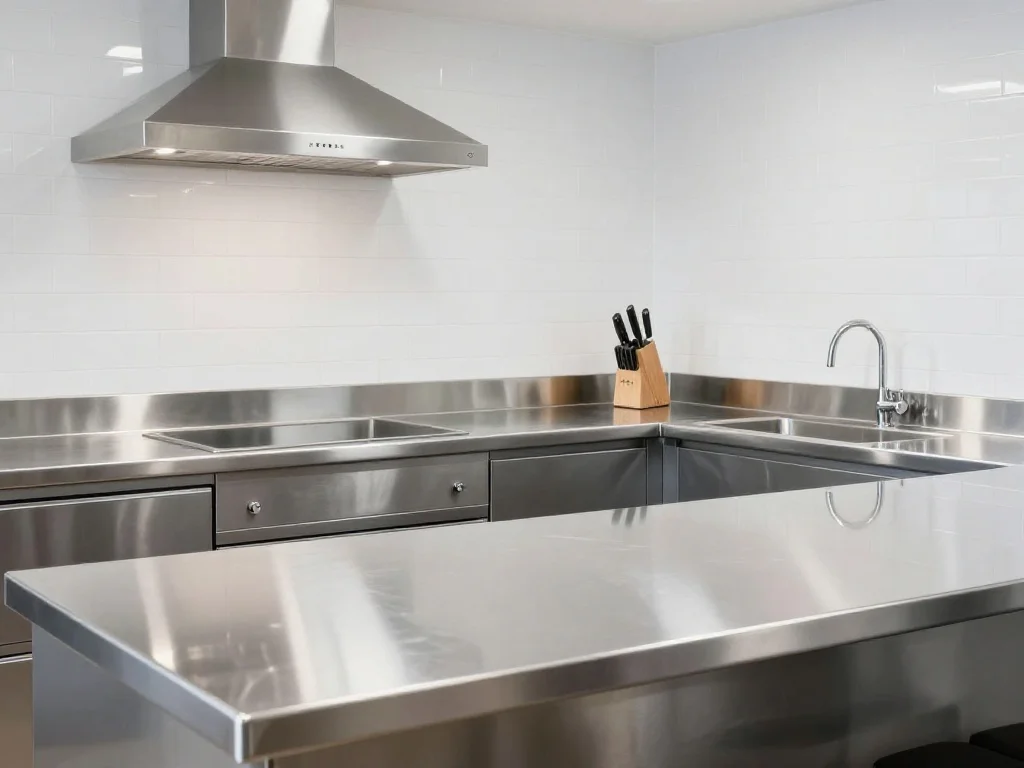
Stainless steel countertops have been a fixture in professional restaurant kitchens for generations, and their appeal has crossed over decisively into residential design. Stainless steel is non-porous, hygienic, heat resistant, and extremely durable. It creates a clean, precise aesthetic that works well in modern and industrial-themed kitchens. The material does show scratches and fingerprints, though many homeowners appreciate how these marks accumulate into a lived-in finish over time. Stainless steel is also commonly used in specific zones of a kitchen, such as a prep island or a surface adjacent to the range, rather than as the exclusive countertop material throughout.
14. Laminate for a Budget-Friendly and Versatile Solution
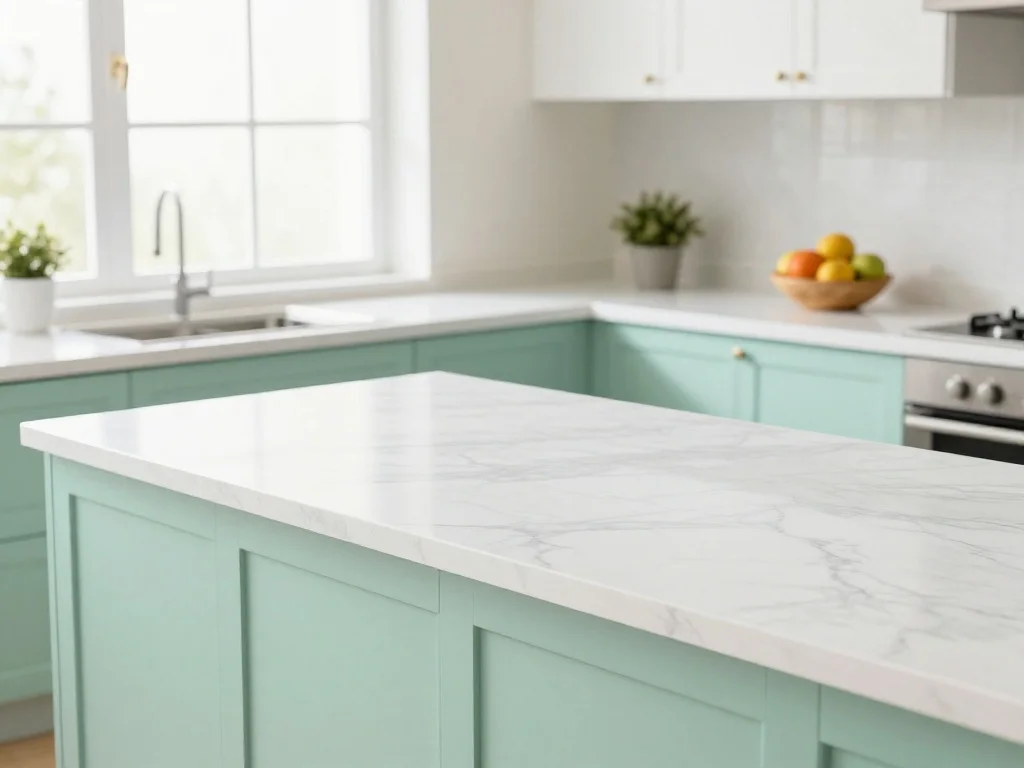
Modern laminate countertops bear very little resemblance to the dated versions that earned the material its unflattering reputation. Today’s laminate is produced using high-resolution printing technology that convincingly replicates the appearance of granite, marble, quartzite, and wood at a fraction of the cost. Laminate is lightweight, relatively easy to install, simple to clean, and available in an enormous range of colors and patterns. It is not as heat resistant as stone or as scratch resistant as quartz, but for homeowners working within a strict budget, it offers access to attractive design without compromise on style.
15. Mixed Materials for a Layered, Custom Kitchen
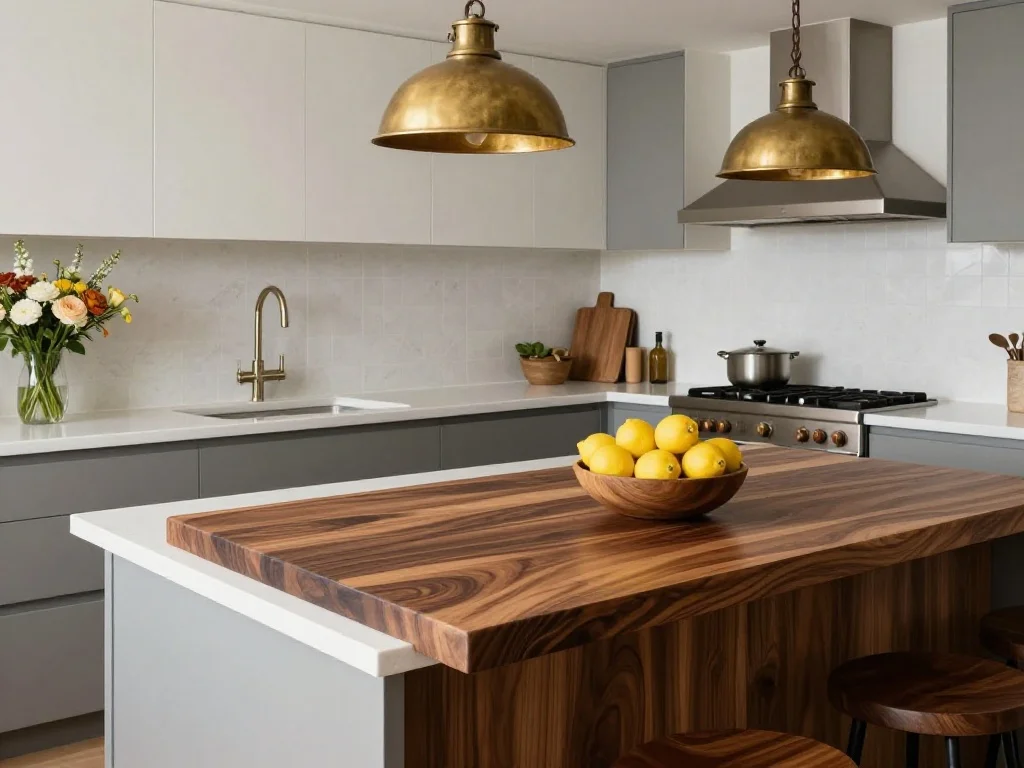
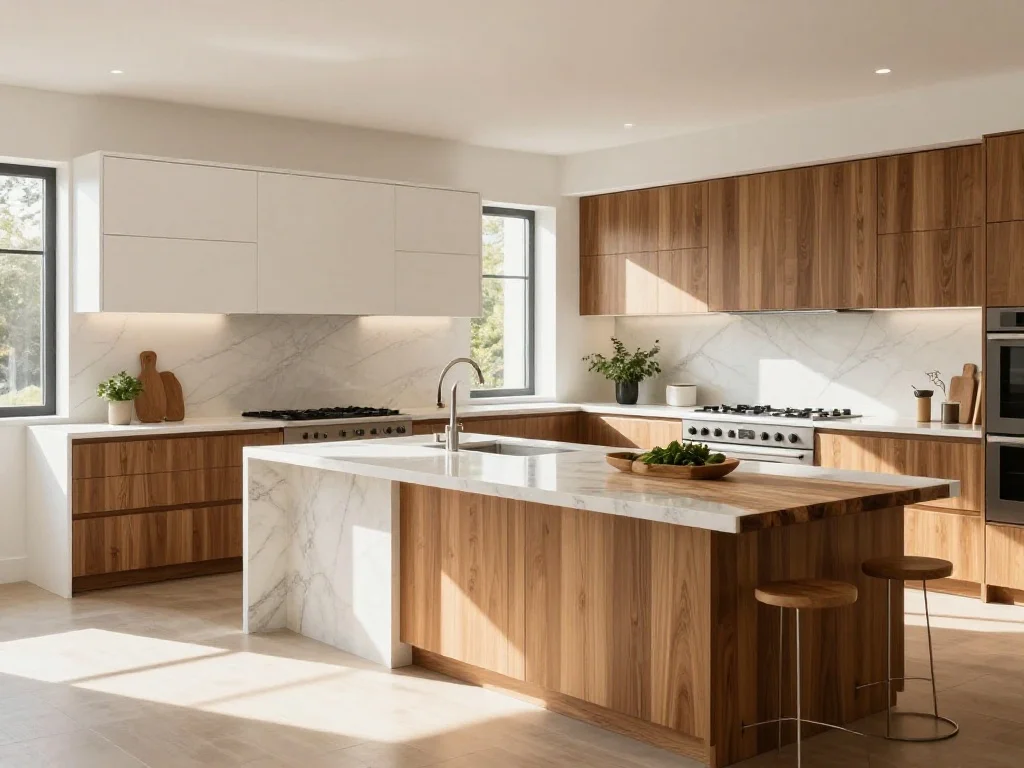
One of the most distinctive approaches in contemporary kitchen design is the deliberate use of different countertop materials within the same space. A common example pairs a practical, durable surface such as quartz along the kitchen’s perimeter walls with a more expressive material such as marble or butcher block on the central island. This strategy creates visual contrast, defines functional zones, and allows homeowners to use premium materials where they have the greatest visual impact without applying them everywhere at full cost. Mixed material kitchens feel curated and personal in a way that single-material kitchens sometimes do not.
16. Bold and Colored Countertops for a Distinctive Kitchen
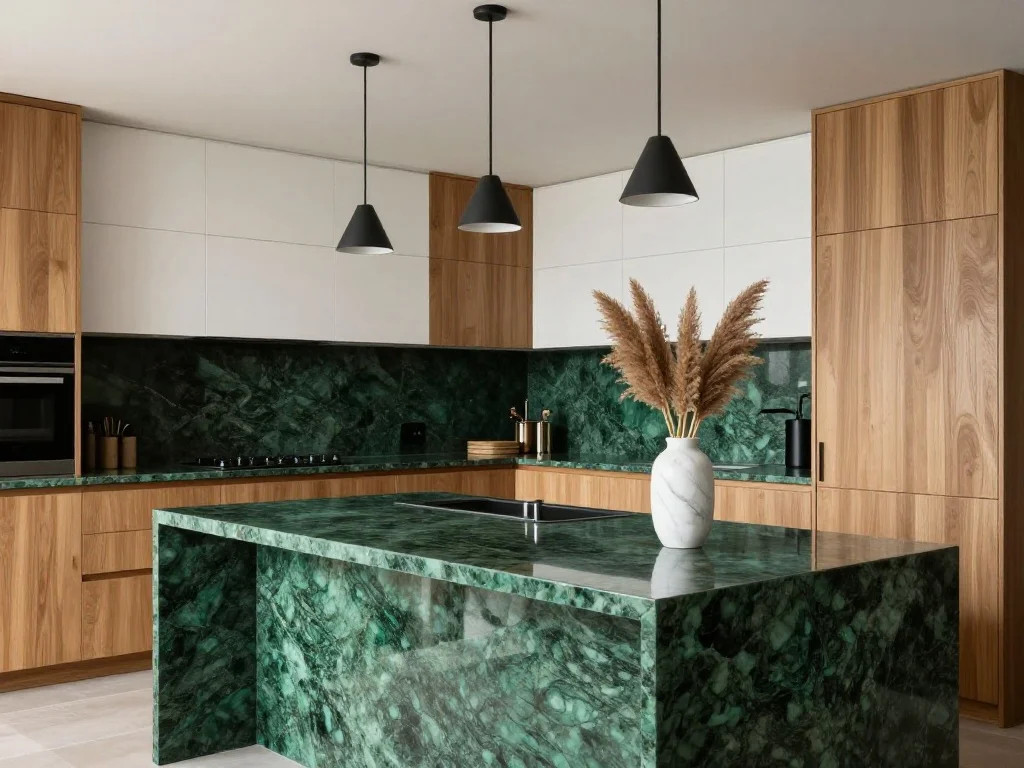
The era of exclusively white and grey countertops is giving way to a more expressive approach. Deep navy blues, rich emerald greens, warm terracotta tones, and dramatic black surfaces are gaining significant ground in residential kitchen design. Bold countertop colors work particularly well when paired with neutral cabinetry, allowing the surface to carry the visual weight of the room without competing with too many other elements. A deep green island against white perimeter cabinets, for example, creates a decisive focal point that gives the kitchen a sense of personality and confidence.
17. Bamboo Countertops for a Sustainable Warmth
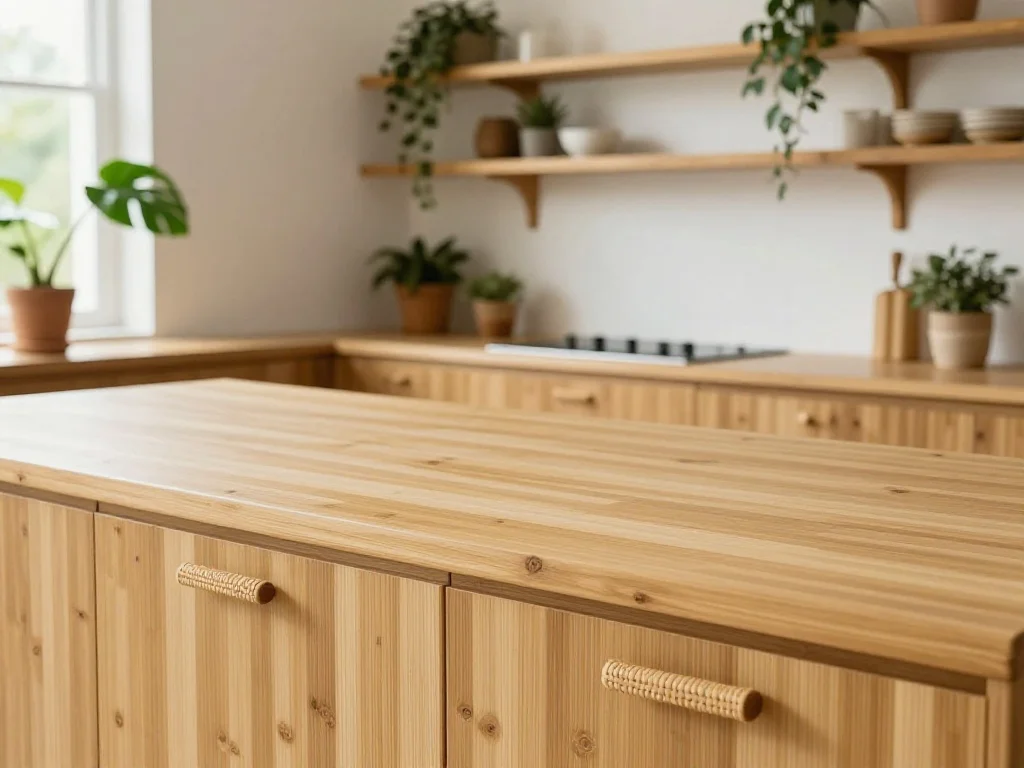
Bamboo is technically a grass rather than a wood, and its rapid growth rate makes it one of the most renewable materials available in any category of home design. Bamboo countertops carry a clean, golden warmth similar to light-toned hardwoods, with a slightly finer grain. They are naturally antibacterial and surprisingly durable given their affordable price point. Like butcher block, bamboo does require regular sealing to protect against water damage and staining, and it is vulnerable to scratches from sharp knives. For homeowners who prioritize environmental responsibility and want a warm natural surface, bamboo is a compelling choice.
18. Countertop and Backsplash Unity for a Seamless Design
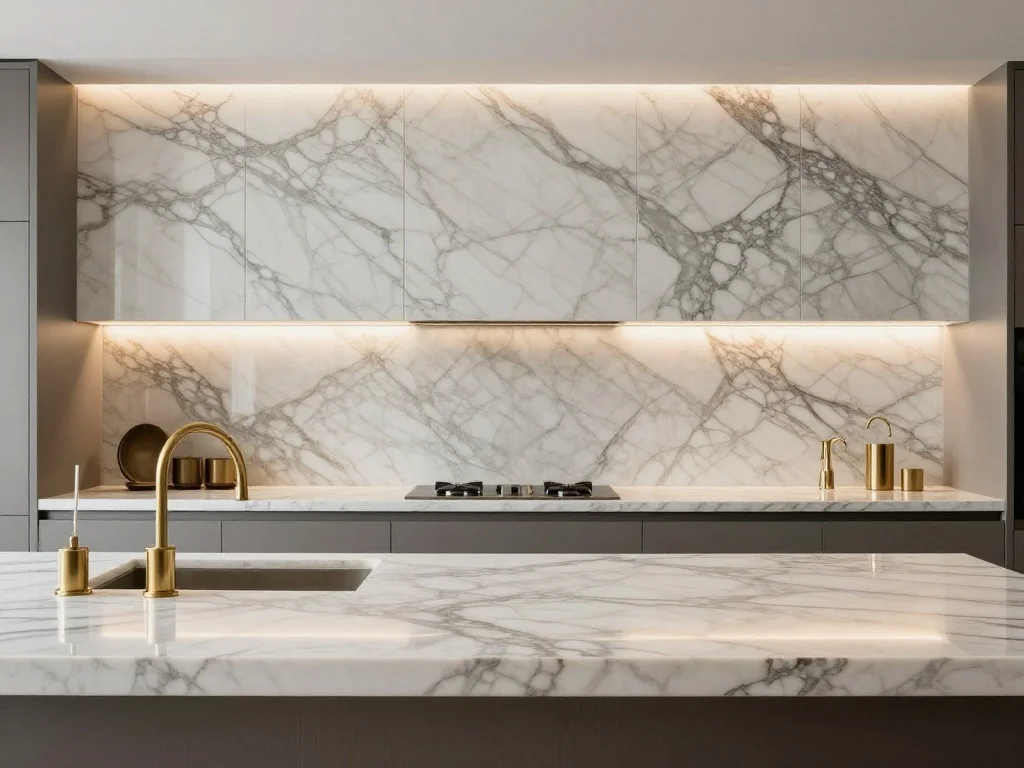
One of the most sophisticated trends in kitchen design today involves extending the countertop material upward to serve as the backsplash as well. When the same slab of marble, quartzite, or porcelain flows from the horizontal countertop surface up the vertical wall behind, the visual result is a seamless, unified field of pattern and color that feels genuinely luxurious. This approach works especially well with materials that carry dramatic veining, as it allows the full movement and beauty of the stone to be appreciated across a much larger surface area. It also eliminates the visual interruption of a transition between two different materials.
Conclusion
Choosing the right kitchen countertop is ultimately a personal decision shaped by how you cook, how you live, and what you value in your home. A family that cooks daily and needs a surface that forgives spills, heat, and heavy use will find quartz or granite to be the most reliable partners. A homeowner restoring a farmhouse and seeking warmth and texture will find butcher block or soapstone deeply satisfying. A design-focused renovator who wants maximum visual impact with minimal maintenance will likely find their answer in porcelain slab or dramatic veined quartz.
The eighteen ideas covered in this article represent the full spectrum of what is available, from time-tested classics like marble and granite to emerging favorites like porcelain and recycled glass. None of them is a wrong answer. The right countertop is the one that serves your kitchen well for years to come while making you glad every time you walk into the room.
Frequently Asked Questions
Q1. Which kitchen countertop material is the most durable?
Quartzite and granite are among the hardest and most durable natural stone options available. Engineered quartz and porcelain slab also rank extremely high for durability, with the added advantage of being non-porous and resistant to staining without the need for regular sealing.
Q2. What is the most low-maintenance kitchen countertop?
Engineered quartz and porcelain slab are the two lowest-maintenance options in the market. Both are non-porous, do not require sealing, resist stains, and clean easily with everyday household products. They represent the best combination of beauty and ease of care.
Q3. Are there affordable countertop options that still look high-end?
Yes. Modern laminate countertops use advanced printing technology to replicate the appearance of marble, granite, and other premium materials convincingly. Butcher block is another cost-effective option that delivers genuine warmth and character. Both can create a polished kitchen look on a controlled budget.
Q4. How often does natural stone need to be sealed?
This depends on the stone type and the sealer used. Granite typically requires sealing once every one to two years. Marble and quartzite may need sealing annually, particularly in high-use kitchens. Soapstone is a notable exception in that it does not require sealing at all.
Q5. Can I mix different countertop materials in the same kitchen?
Absolutely. Mixing materials is one of the most effective ways to create a layered, custom kitchen design. A common approach uses durable quartz along the perimeter and a more expressive material, such as marble or butcher block, on the island. The key is to ensure the materials complement rather than compete with each other in color and finish.