18 Cozy Kitchen Ideas to Warm Up Your Home Space
Introduction
The kitchen has always been called the heart of the home, and there is a very good reason for that. It is where the first coffee of the morning is brewed, where family dinners come together, where conversations happen naturally and unhurriedly. Yet despite its central role in daily life, the kitchen is often treated as a purely functional space, designed for efficiency rather than comfort. The result can be a room that feels clinical, cold, and disconnected from the warmth and personality that fills the rest of the home.
Creating a cozy kitchen does not require a complete renovation or a significant budget. More often than not, it comes down to thoughtful material choices, considered lighting decisions, the right colors on the walls, and a handful of personal touches that transform a working space into one you genuinely want to spend time in. The ideas in this article cover the full spectrum, from small and affordable changes to more involved design decisions, all united by the same goal: making your kitchen feel like the warmest, most welcoming room in your home.
1. Embrace a Warm, Earthy Color Palette
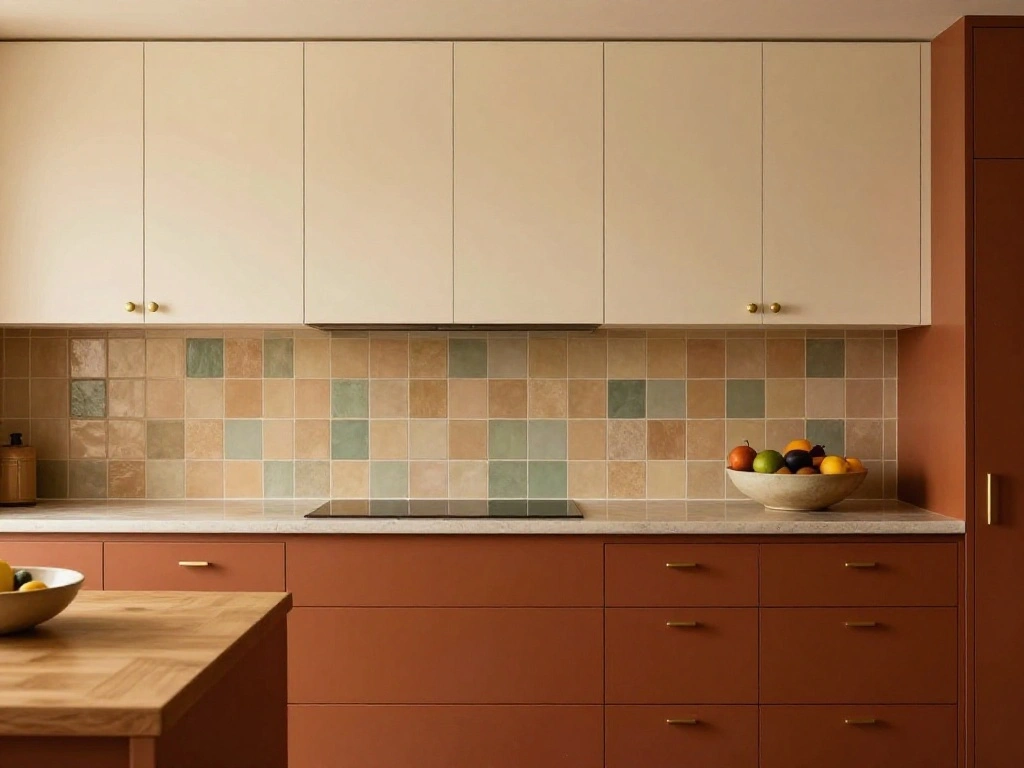
Color is the single most powerful tool available when creating a cozy kitchen atmosphere. Cool greys, stark whites, and high-gloss finishes have their place in modern design, but they do not contribute to warmth. Warm earthy tones do. Shades of cream, soft terracotta, dusty sage green, warm ochre, and deep burnt sienna create an immediate sense of comfort the moment you step into the room.
You do not need to commit to a full repaint to introduce these tones. An accent wall behind open shelving, a warm-toned tile backsplash, or colored lower cabinets in a deep olive or rich clay tone can shift the entire mood of the kitchen without touching a single major structural element.
2. Introduce Natural Wood Throughout the Space
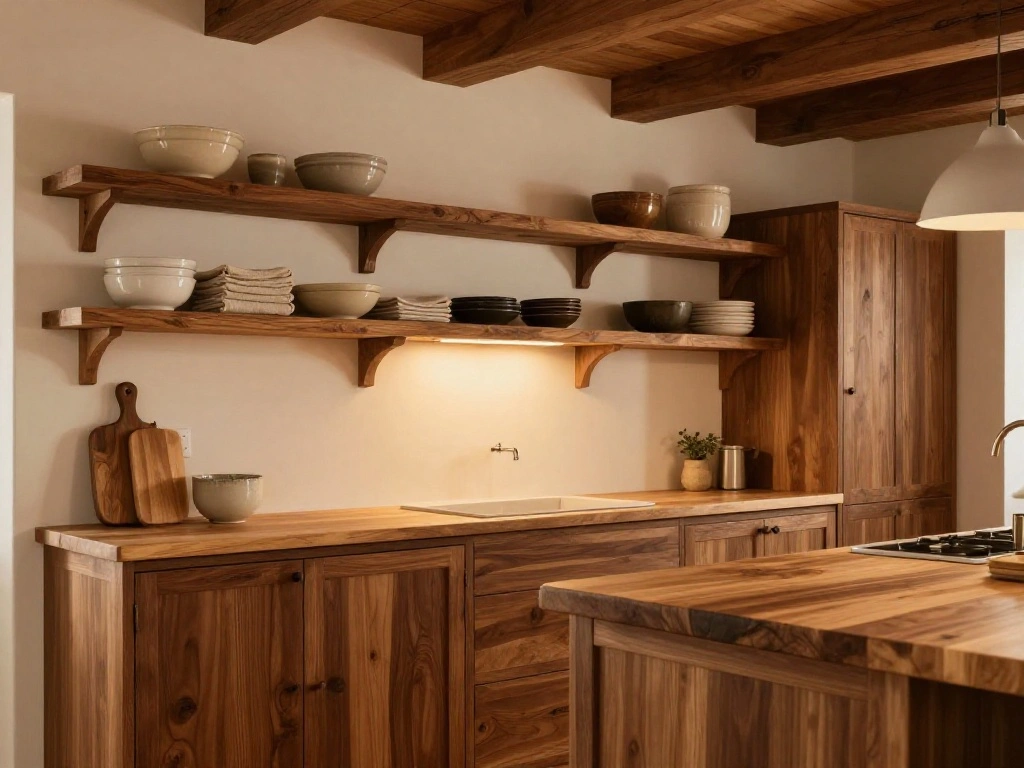
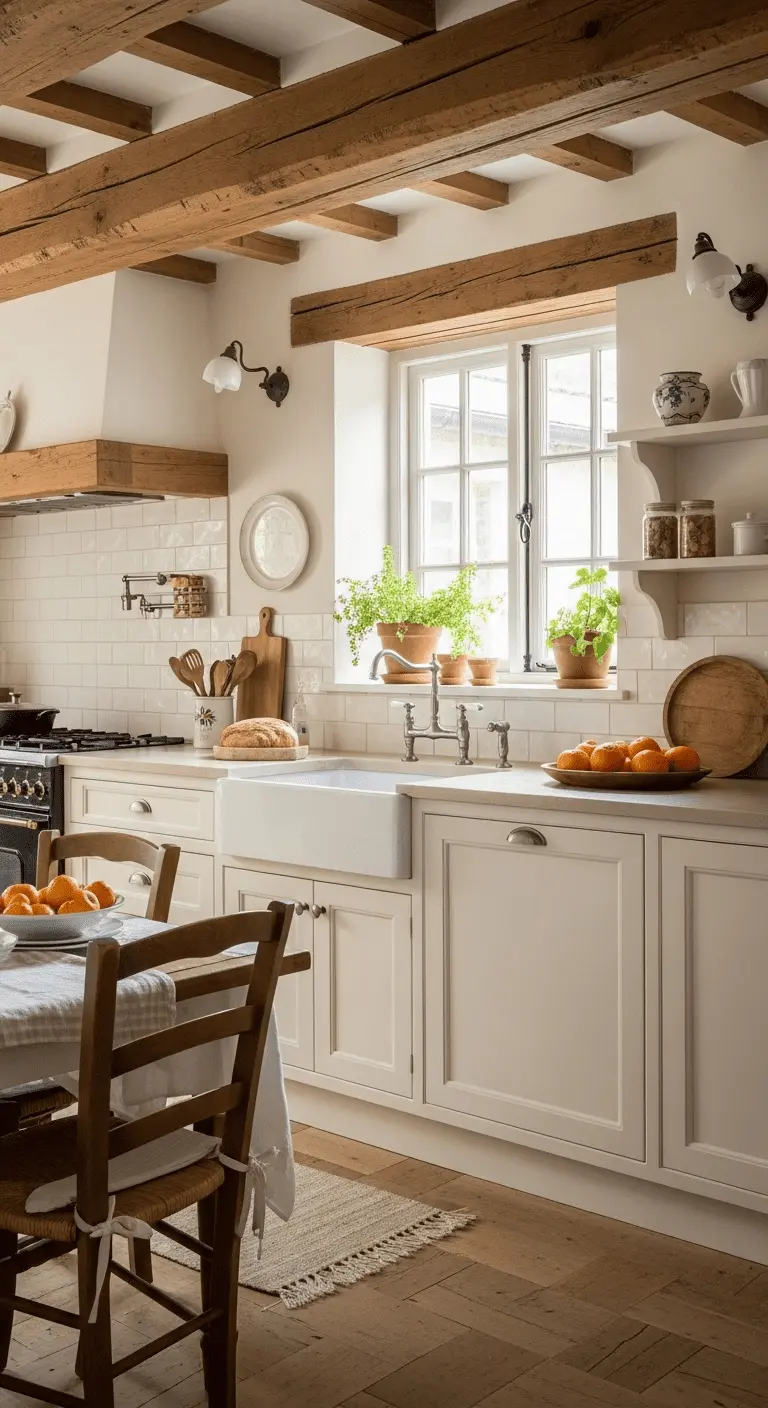
Wood is the most instinctively cozy material available in kitchen design. Its grain patterns, natural color variation, and organic warmth do something no painted surface or engineered material can fully replicate. Butcher block countertops bring rich, tactile warmth to a kitchen island or prep area. Open shelves cut from reclaimed timber carry history and character. Wooden cabinet fronts in oak, walnut, or pine introduce a depth of tone that feels grounded and natural.
Mixing Wood Tones for a Layered Look
Matching every wood element in a kitchen can make the space feel too uniform and lacking in visual interest. A more effective approach is to mix wood tones deliberately, pairing a lighter oak shelf with a deeper walnut island top, for example. This collected-over-time quality is exactly what makes a kitchen feel genuinely lived-in and warm rather than showroom perfect.
3. Layer Your Lighting for Atmosphere and Function
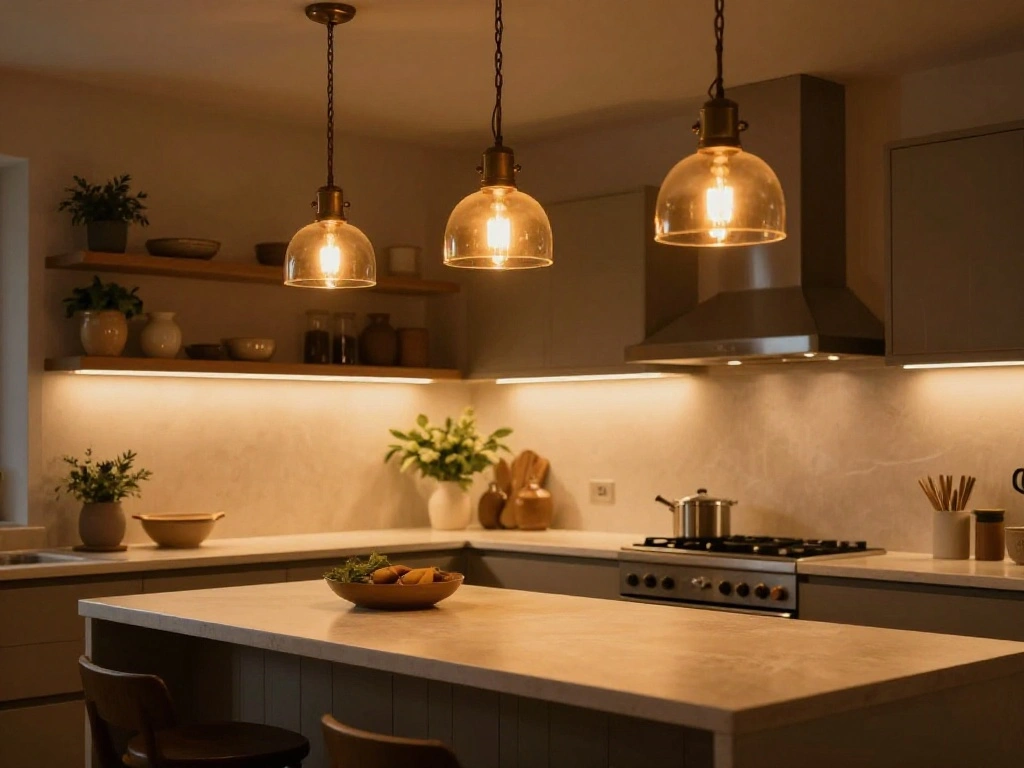
A single overhead light fixture creates harsh, flat illumination that works against coziness at every level. Layered lighting, combining overhead ambient light with task lighting and softer decorative sources, transforms the way a kitchen feels at every hour of the day.
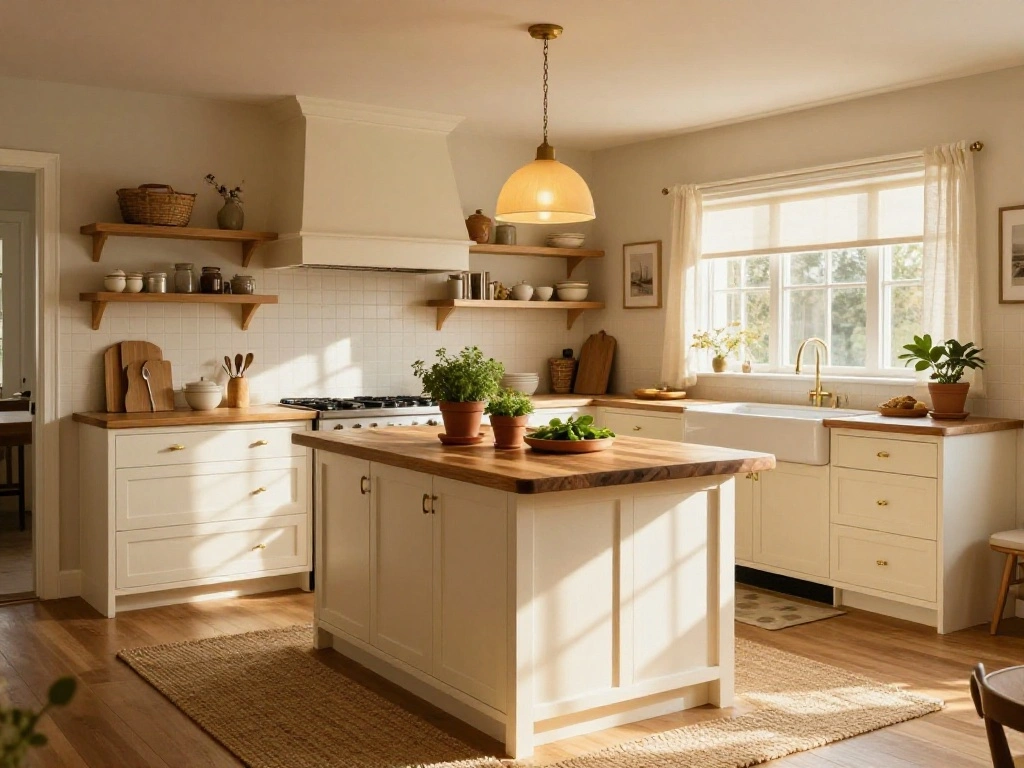
Pendant lights hung over a kitchen island cast a warm, focused glow that makes the space feel intimate. Under-cabinet LED strips illuminate work surfaces practically while adding a warm ambiance to the lower half of the room. Dimmer switches on all overhead fixtures allow the lighting mood to shift from bright and functional during cooking to soft and inviting during evening meals. Always choose warm white bulbs in the 2700K to 3000K range rather than cool white, which reads as clinical and cold.
4. Add a Kitchen Rug for Softness Underfoot
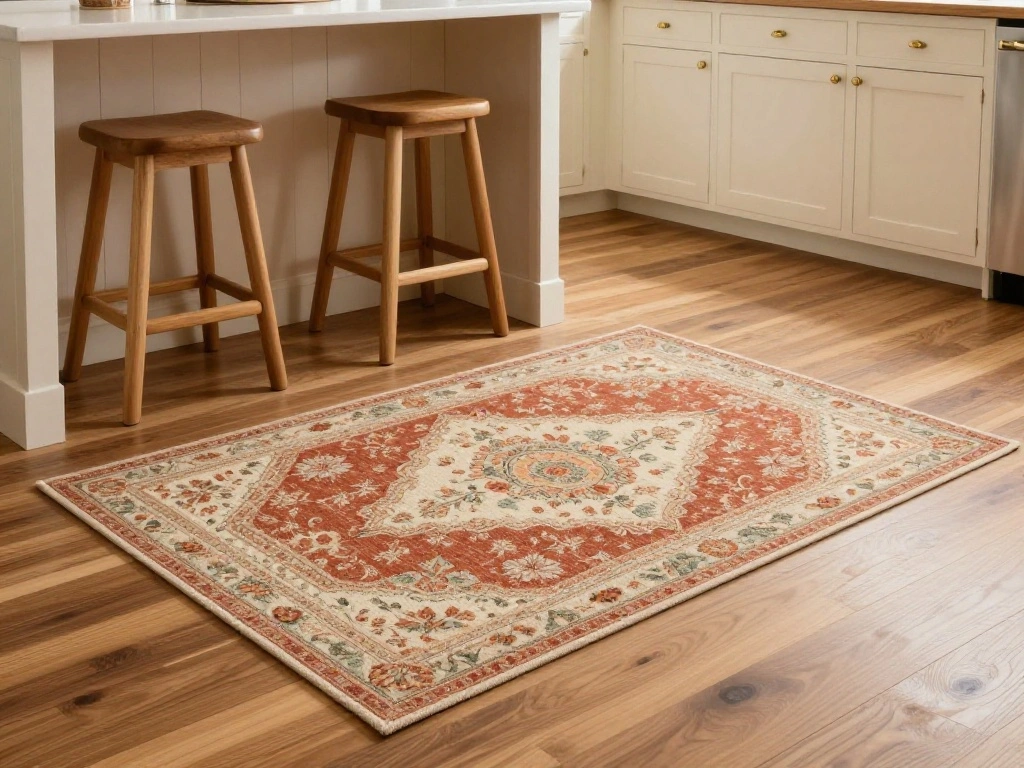
Hard floors are practical in kitchens for obvious reasons, but they contribute to a coldness that works against the cozy atmosphere you are trying to build. A well-chosen kitchen rug solves this immediately. It adds softness underfoot, introduces color and pattern, and signals that the kitchen is a space for living as much as for cooking.
Choose a washable rug in natural fibers such as jute, cotton, or wool, in earthy tones that complement your cabinet colors. A vintage-inspired runner in front of the sink or a larger area rug beneath a kitchen island both work beautifully. In kitchens with neutral palettes, a rug is one of the most affordable and impactful ways to introduce warmth and personality.
5. Install Open Shelving for a Relaxed, Personal Feel
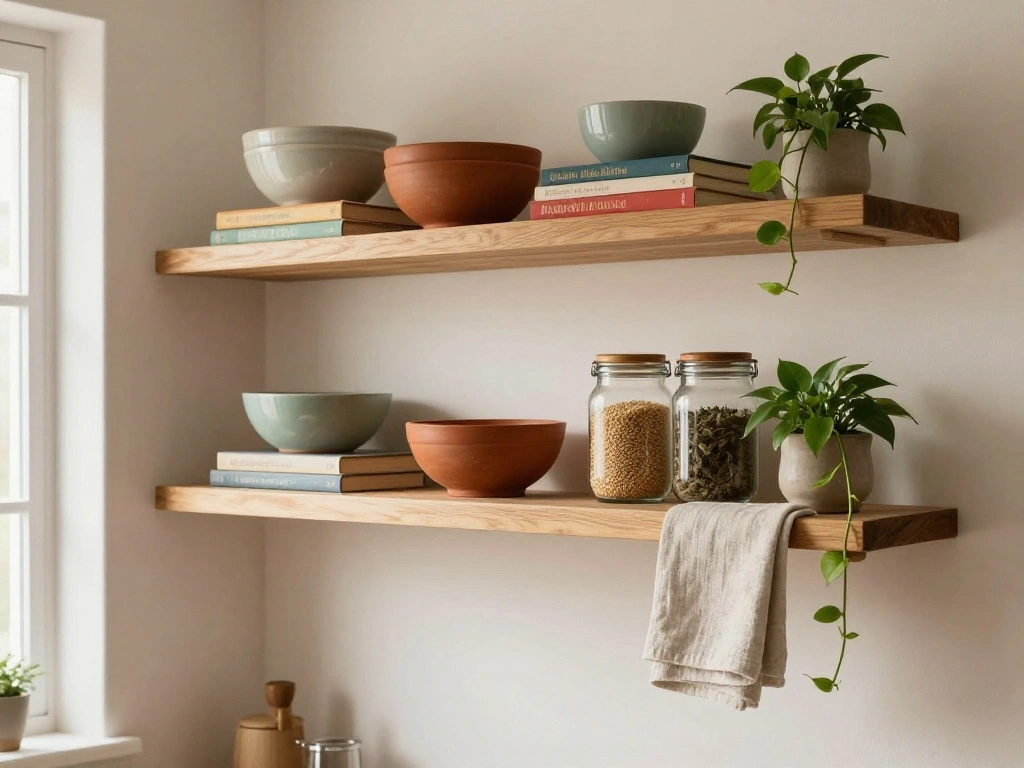
Open shelving removes the visual closure of upper cabinets and replaces it with an invitation to display the things you actually use and love. Stacks of ceramic bowls in warm earthy tones, rows of cookbooks with colorful spines, glass jars filled with grains and pulses, small potted herbs, and ceramic mugs arranged by color all contribute to a kitchen that feels curated and personal rather than sterile and closed.
The key to open shelving that looks intentional rather than cluttered is editing. Each shelf should hold a combination of practical items and decorative pieces, with enough breathing space between objects to allow each one to be appreciated. Rotate seasonal items to keep the display feeling fresh throughout the year.
6. Choose Warm Metals for Hardware and Fixtures
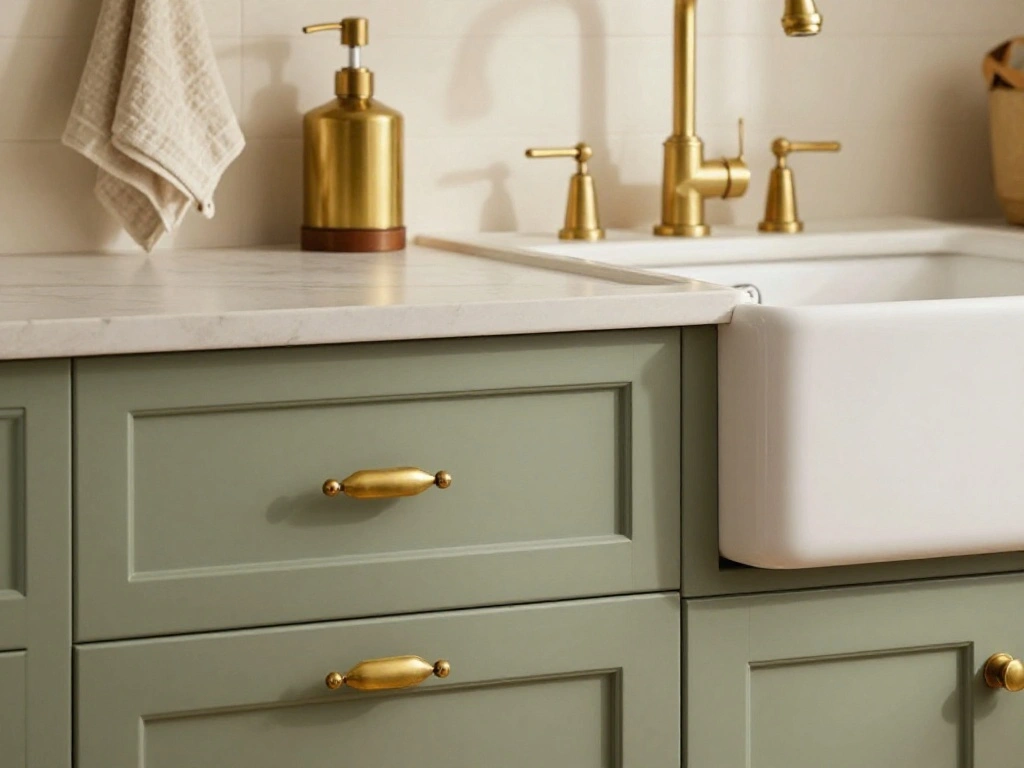
The hardware in a kitchen has an outsized impact on the overall warmth of the space. Chrome and brushed nickel are practical and neutral but they read as cool. Brass, aged gold, unlacquered bronze, and copper hardware carry warmth in their tone that elevates the entire room. Swapping cabinet pulls, drawer handles, and faucet fixtures to warm metal finishes is one of the most cost-effective upgrades available in kitchen design.
Warm metals also pair beautifully with natural wood, earthy paint tones, and ceramic elements, reinforcing the cohesive warmth of the whole space. You do not need to match every metal finish perfectly. A combination of brass and aged bronze in the same kitchen can feel layered and considered rather than inconsistent.
7. Incorporate Soft Textiles and Fabric Accents
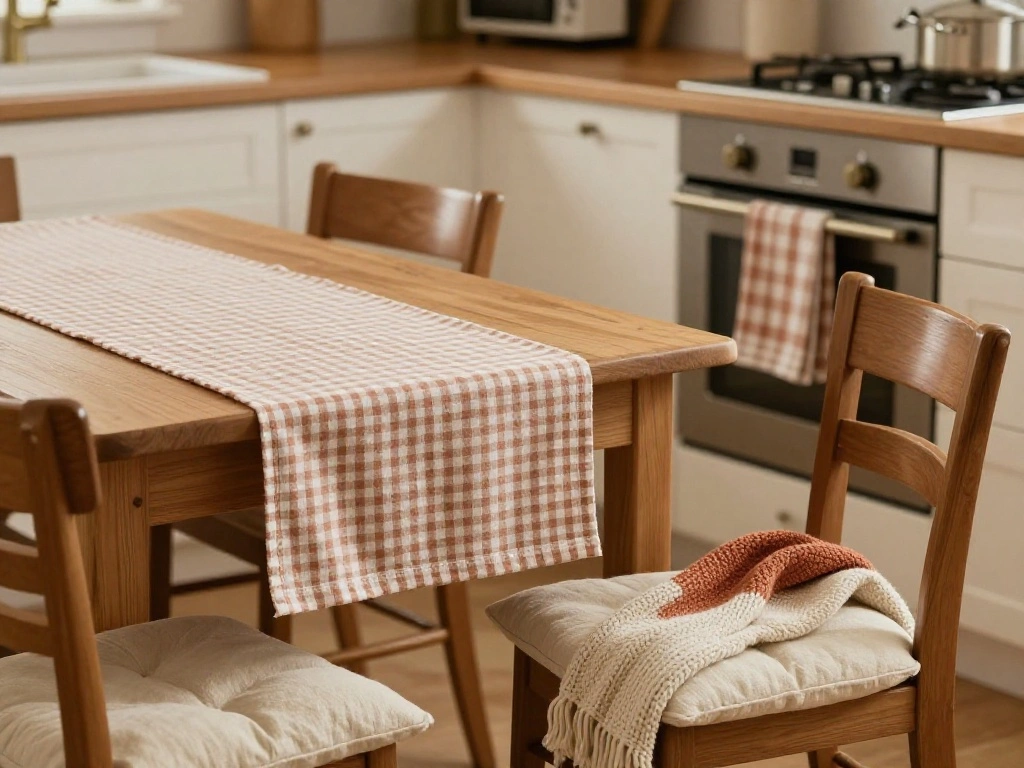
Fabric has almost no presence in the average kitchen, and that absence is part of what makes many kitchens feel cold. Introducing soft textiles changes the texture balance of the room in a fundamental way. Linen dish towels draped over an oven handle, a gingham table runner on a kitchen table, plush seat cushions on bar stools, and a knitted throw over a chair in a breakfast nook all introduce the soft, enveloping quality that makes a space feel genuinely cozy.
Choose natural fabrics in warm tones. Cotton, linen, and wool all carry a warmth and tactile quality that synthetic fabrics do not replicate. Seasonal swapping of these textiles, moving toward richer tones in autumn and winter and lighter, fresher tones in spring and summer, keeps the kitchen feeling connected to the changing rhythm of the year.
8. Create a Cozy Breakfast Nook or Seating Corner
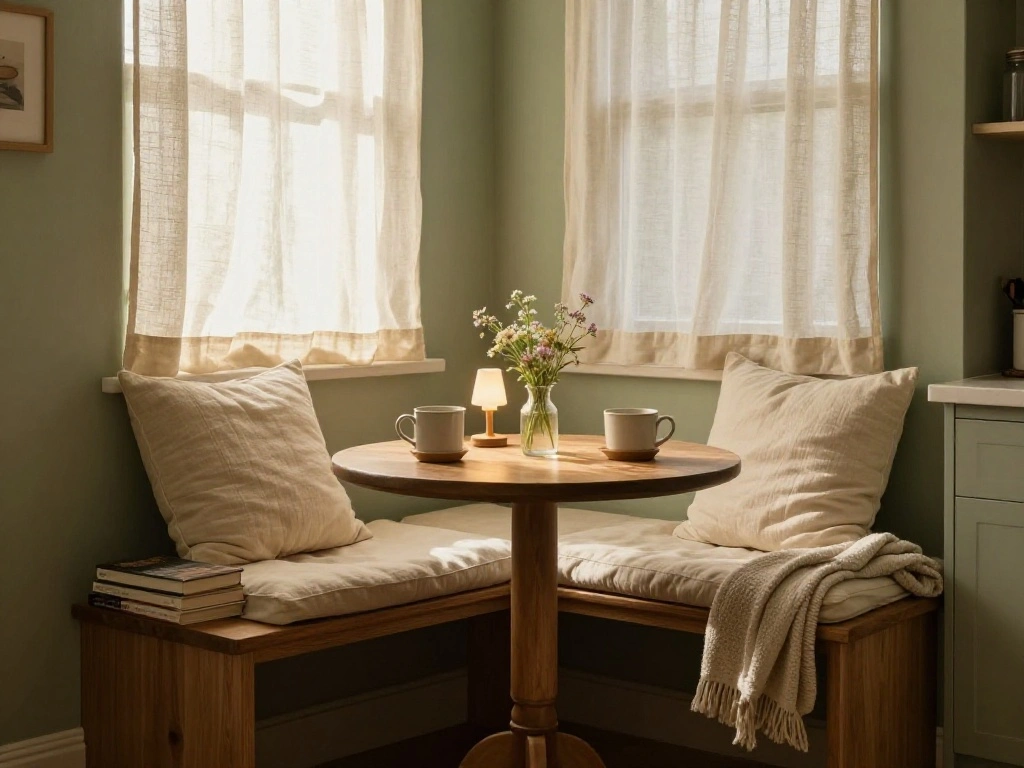
A kitchen that invites people to sit, linger, and stay awhile is fundamentally cozier than one designed purely for standing and cooking. If your kitchen layout allows, a breakfast nook or small seating corner transforms the room from a workspace into a gathering place. A built-in bench with cushioned seating tucked into a corner, a small round table with upholstered chairs, or even a pair of comfortable stools at a kitchen island all signal that this is a space for living as much as for preparing food.
Soft seat cushions in linen or cotton, a small lamp on the table, and a collection of books or a vase of fresh flowers elevate the nook from functional to genuinely inviting. Morning coffee in a well-designed breakfast nook is an entirely different experience from standing at the counter.
9. Display Fresh Herbs and Indoor Plants
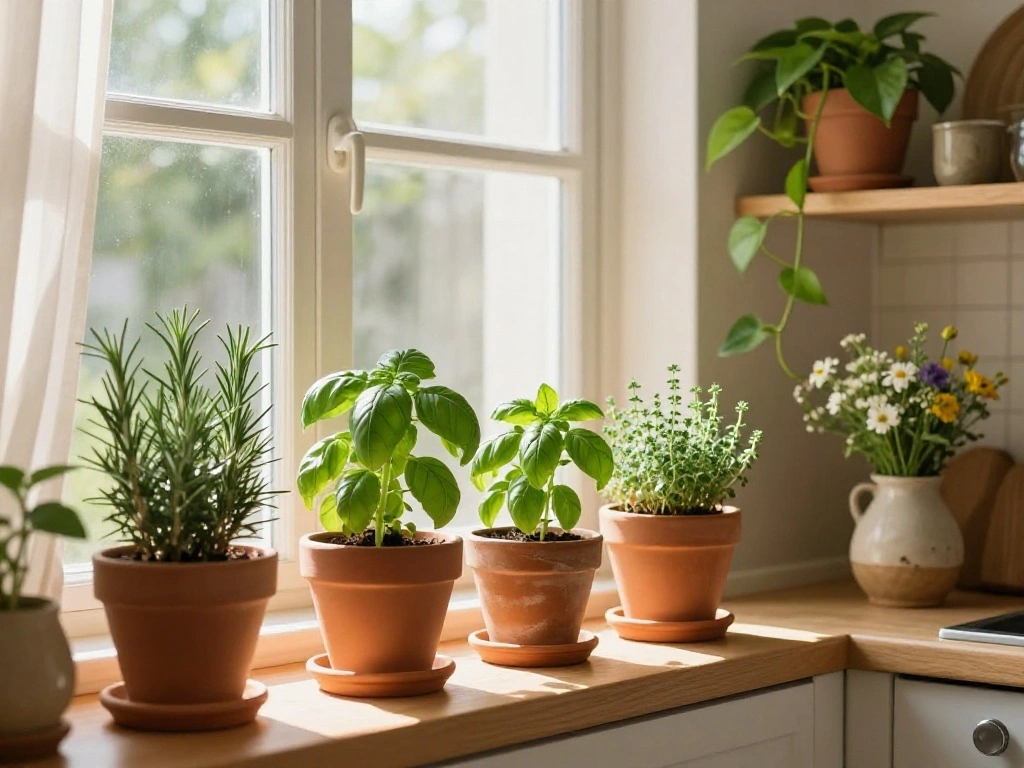
Living plants bring an organic energy into the kitchen that no inanimate object can replace. Fresh herbs growing in small terracotta pots on a windowsill or along a shelf add both visual warmth and practical value, since they are within reach during cooking. A small potted rosemary, trailing pothos on a shelf, or a ceramic planter of fresh basil contributes to the biophilic quality that makes a space feel connected to the natural world.
Beyond herbs, trailing plants such as pothos or a small fiddle leaf fig in a warm-toned planter add a sense of life and movement that softens the hardness of a kitchen environment. Even a single bunch of wildflowers in a ceramic vase on the counter makes a meaningful difference to how the room feels.
10. Use Candles and Ambient Lighting for Evening Warmth
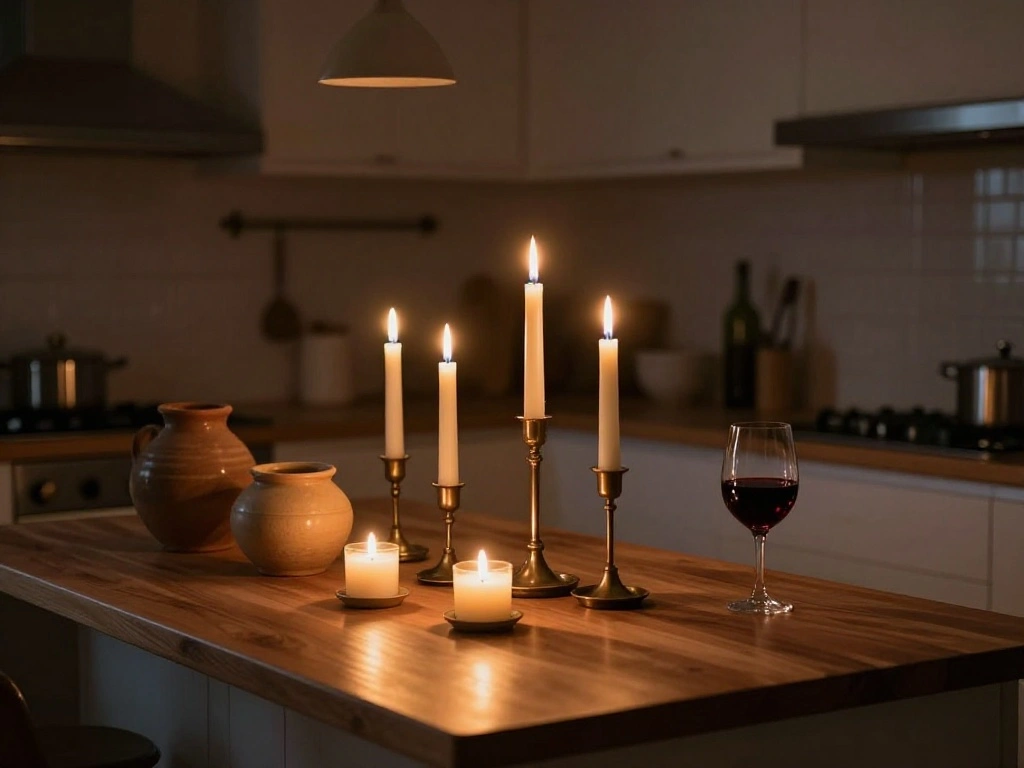
Candles do something that electric lighting cannot fully replicate. The living, flickering quality of candlelight creates an atmosphere of intimacy and warmth that is almost viscerally comforting. A cluster of candles in varying heights on a kitchen island, a pair of taper candles in ceramic holders on a dining table, or a collection of small votives on a windowsill all contribute to the warmth of a kitchen during evening hours.
Scented candles add another dimension entirely. Warm, familiar scents such as vanilla, cinnamon, cedarwood, or baked goods are deeply associated with comfort and home, and their presence in the kitchen reinforces the cozy atmosphere at a sensory level that visual decor alone cannot achieve.
11. Soften Windows with Curtains and Fabric Treatments
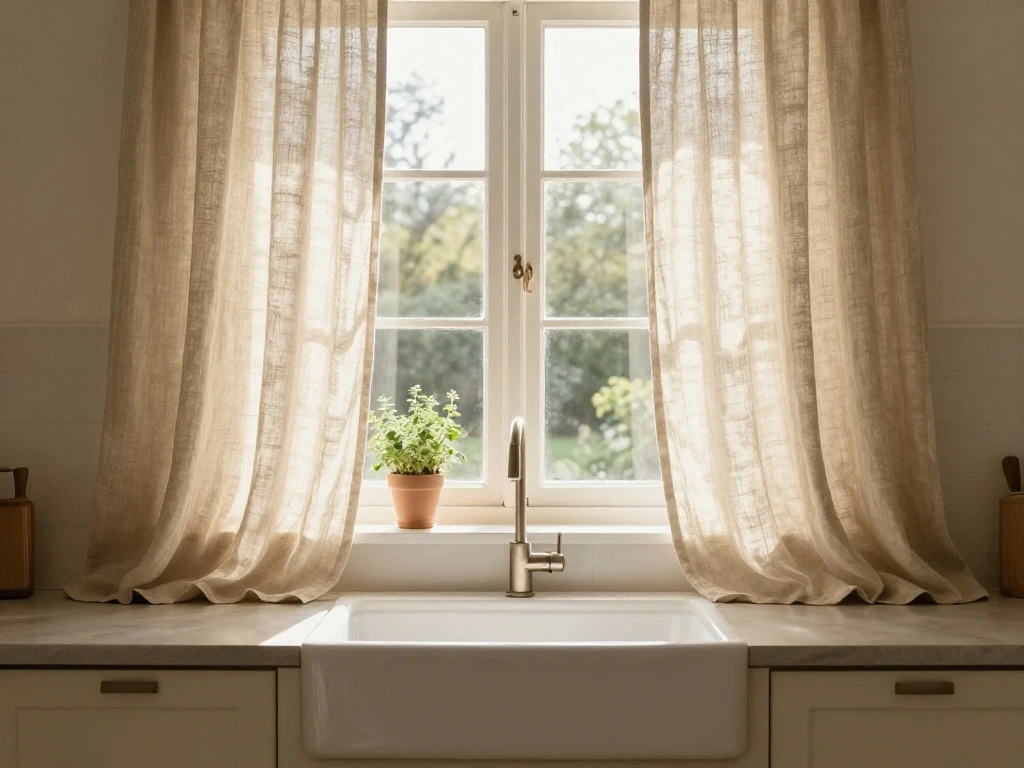
Bare kitchen windows let in natural light during the day, which is valuable, but they also feel stark and unfinished in a way that works against coziness. Soft window treatments introduce fabric into one of the largest vertical surfaces in the kitchen and immediately make the room feel warmer and more finished.
Linen curtains in warm cream or soft sage, Roman shades in a classic gingham or small-scale floral print, bamboo blinds with a warm natural tone, or simple cafe curtains across the lower half of a window all serve the same purpose. They soften the transition between inside and outside, filter harsh direct sunlight into a gentle diffused glow, and introduce texture and movement into a room that is otherwise dominated by hard surfaces.
12. Decorate with Earthy Ceramic and Vintage Dishware
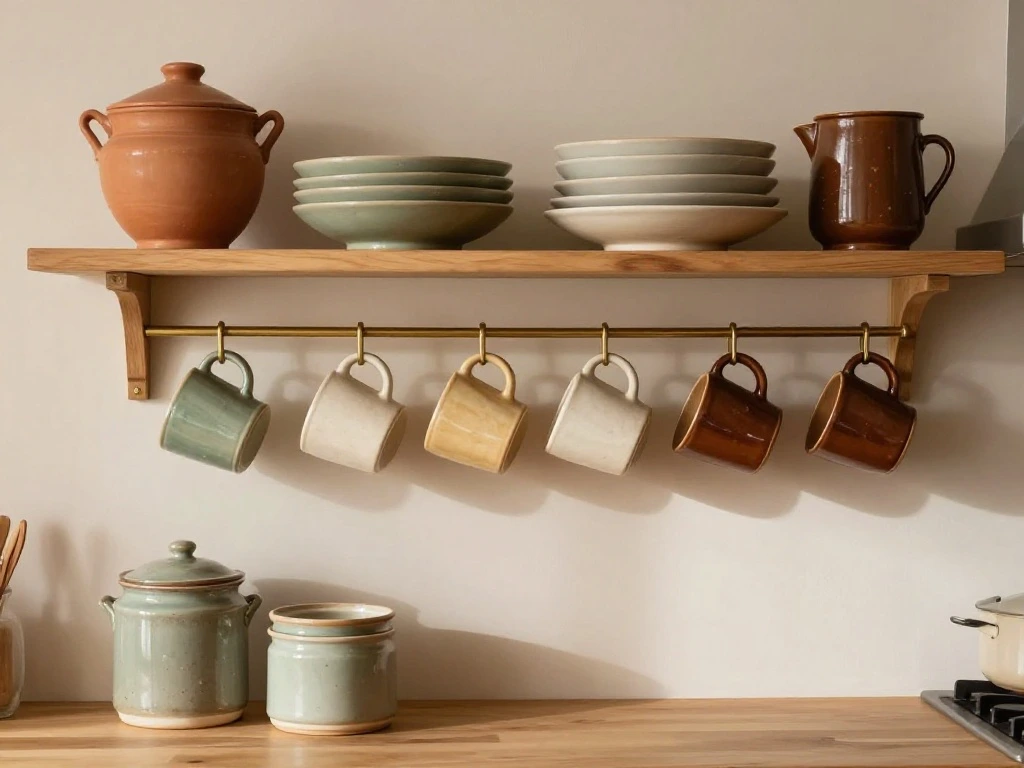
The objects you choose to display in your kitchen communicate its personality more clearly than almost anything else. Earthy ceramic dishware in terracotta, muted green, warm cream, and deep brown tones displayed on open shelves or inside glass-fronted cabinets contributes a sense of warmth and artisanship that mass-produced items in neutral tones do not. Vintage or vintage-inspired pieces, mismatched in a deliberate and considered way, tell a story of a kitchen that has been lived in and loved over time.
Practical items can be beautiful items. A ceramic soap dispenser beside the sink, a set of handthrown mugs hung on small hooks, a row of stoneware canisters on the counter all contribute to the overall cozy atmosphere while serving genuine daily functions.
13. Add a Farmhouse or Apron Sink
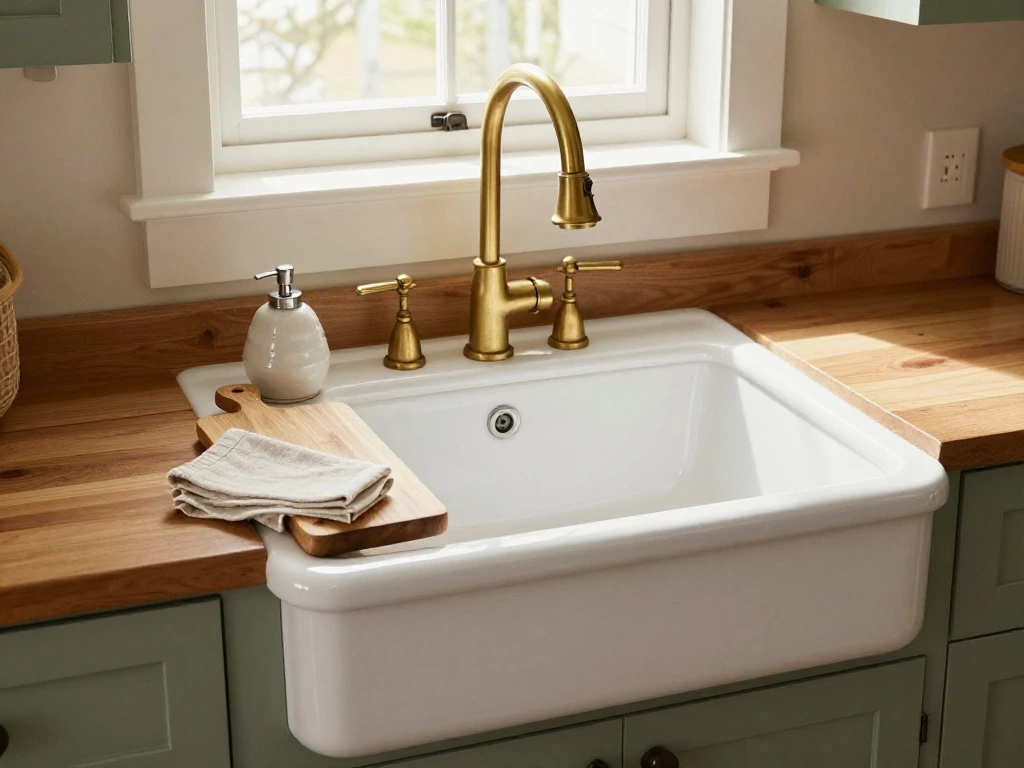
Few single fixtures make as immediate an impact on the coziness and character of a kitchen as a farmhouse-style apron sink. Its deep basin, front-facing panel, and generous proportions carry a sense of history and craftsmanship that standard under-mount sinks simply do not possess. In white porcelain, it works beautifully with both traditional and modern kitchens. In fireclay, it adds a more artisanal, handcrafted quality. Paired with a vintage-style bridge faucet in brass or oil-rubbed bronze, the farmhouse sink becomes one of the most characterful design elements in the entire kitchen.
14. Embrace Dark and Moody Cabinet Colors
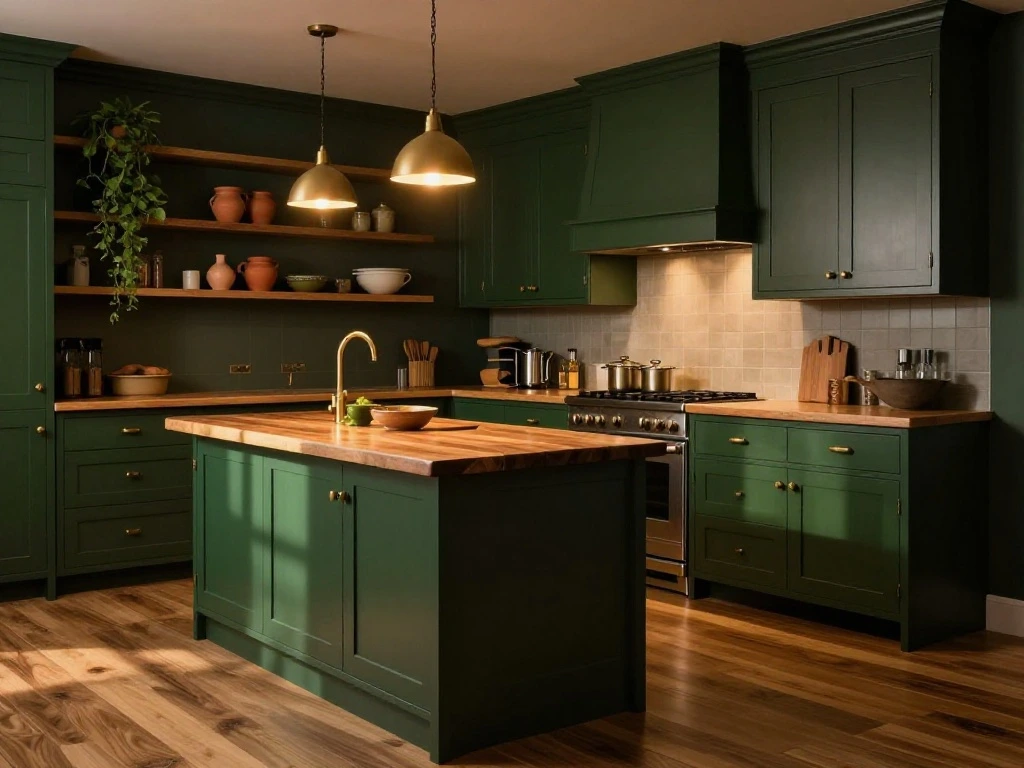
A cozy kitchen does not have to be bright. Some of the most inviting kitchens are built around deep, rich cabinet colors that create an enveloping, cocoon-like atmosphere. Deep forest green, navy blue, charcoal, inky black, and dark plum all carry a warmth and sophistication when used on kitchen cabinetry, particularly when paired with warm metal hardware, natural wood countertops, and warm ambient lighting.
Dark kitchens work best in spaces with good natural light or generous artificial lighting, where the depth of the cabinet color creates richness rather than heaviness. In large kitchens with high ceilings, a dark lower cabinet paired with lighter upper cabinets creates a grounded, layered look that feels genuinely luxurious.
15. Style Your Countertops with Purposeful Objects
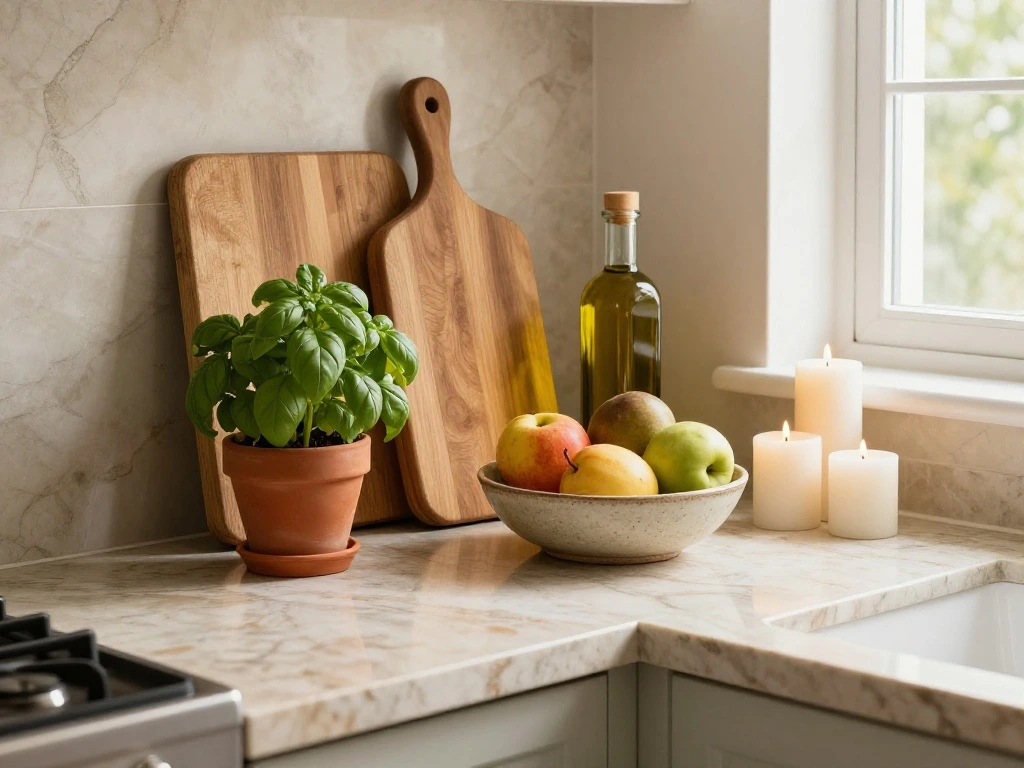
Counter styling is one of the most overlooked aspects of kitchen coziness. A completely empty countertop can feel cold and impersonal. An overcrowded one feels chaotic and stressful. The sweet spot is a countertop styled with a small number of beautiful, functional objects grouped with intention.
A wooden cutting board leaned against the backsplash, a ceramic bowl filled with seasonal fruit, a small potted herb in a terracotta pot, a beautiful bottle of olive oil alongside a few cooking staples, and a cluster of candles near the window form the kind of still-life arrangement that makes a kitchen feel genuinely inviting without tipping into clutter.
16. Incorporate Woven and Natural Texture Accents
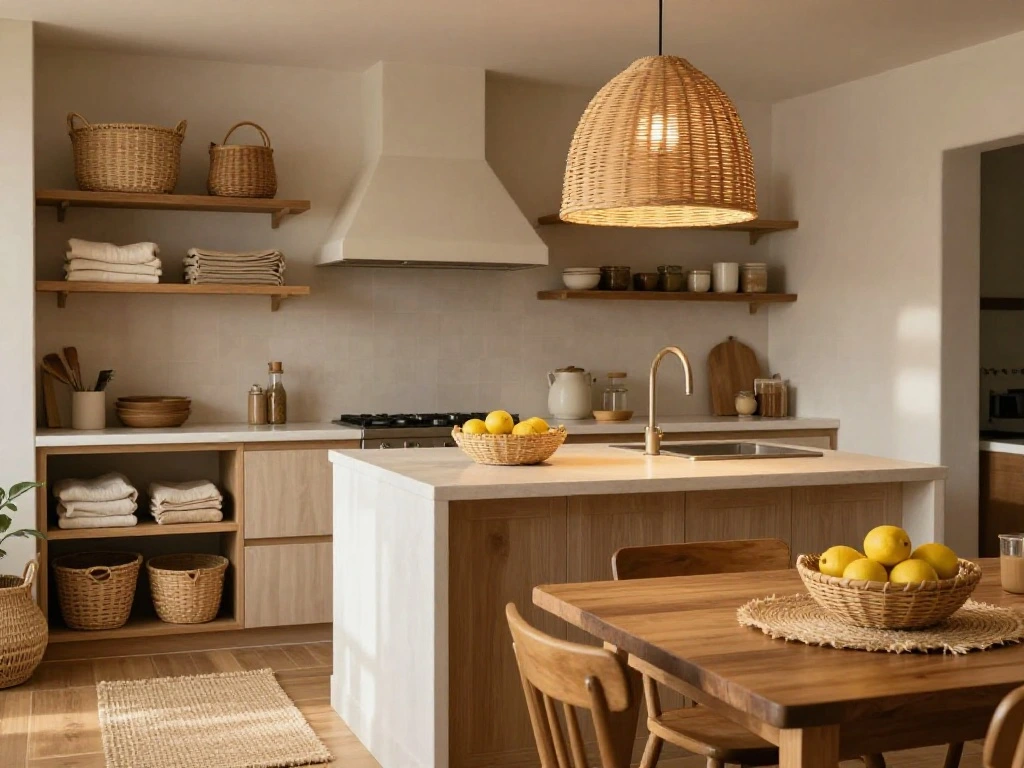
Texture is the quiet ingredient of cozy design. Smooth, reflective surfaces make a room feel bright and modern. Rough, woven, and organic textures make it feel warm and human. In a kitchen, texture comes from woven basket storage on open shelves, a rattan fruit bowl on the counter, jute placemats on the table, a woven pendant light over the island, and the natural grain visible in a wooden shelf or butcher block surface.
These materials reference the natural world and carry a warmth that manufactured materials cannot easily replicate. Introducing even two or three textural elements into an otherwise smooth kitchen immediately shifts the atmosphere toward the cozy end of the spectrum.
17. Personalize the Space with Meaningful Objects
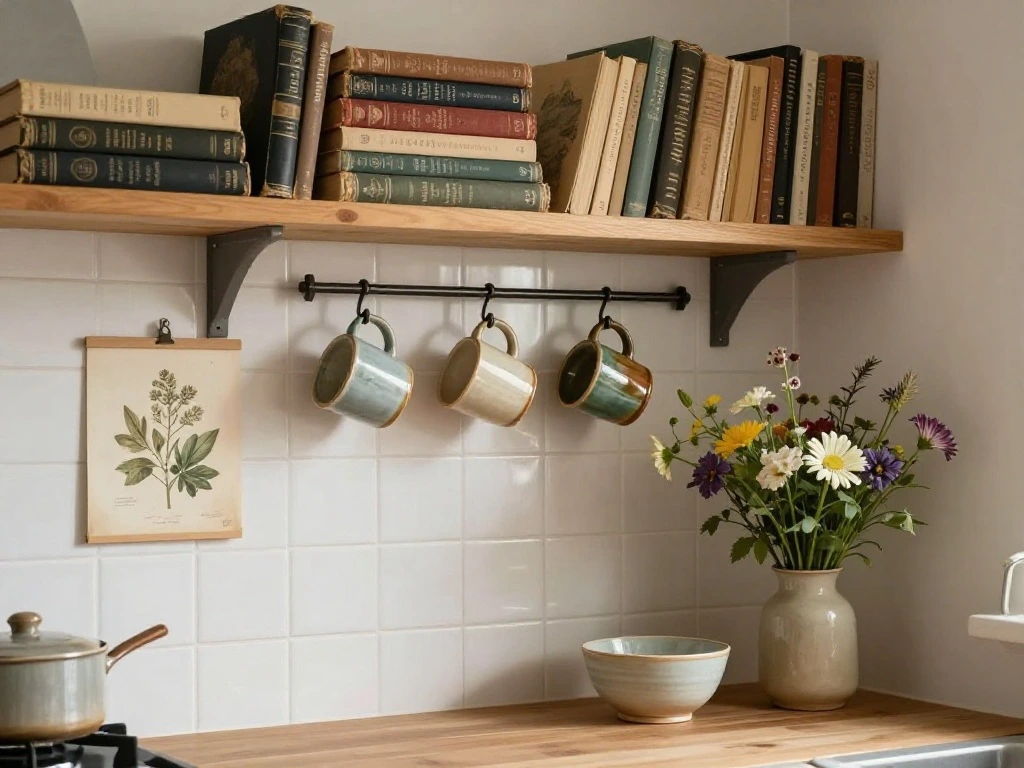
A cozy kitchen is ultimately a personal kitchen. It is a space that carries the evidence of the people who use it, their tastes, their travels, their history, and their habits. A collection of cookbooks with cracked spines and annotated pages stacked on an open shelf, a piece of vintage art hung on the backsplash wall, a set of mugs brought back from different travels, a child’s drawing pinned to the side of a cabinet, a ceramic piece made by a friend all of these objects make a kitchen feel inhabited and loved in a way that no amount of careful styling can manufacture.
Personal objects do not need to be displayed everywhere to have an impact. A single meaningful item in a considered position communicates warmth and story more effectively than a shelf full of generic decorative pieces.
18. Design for Gathering, Not Just Cooking
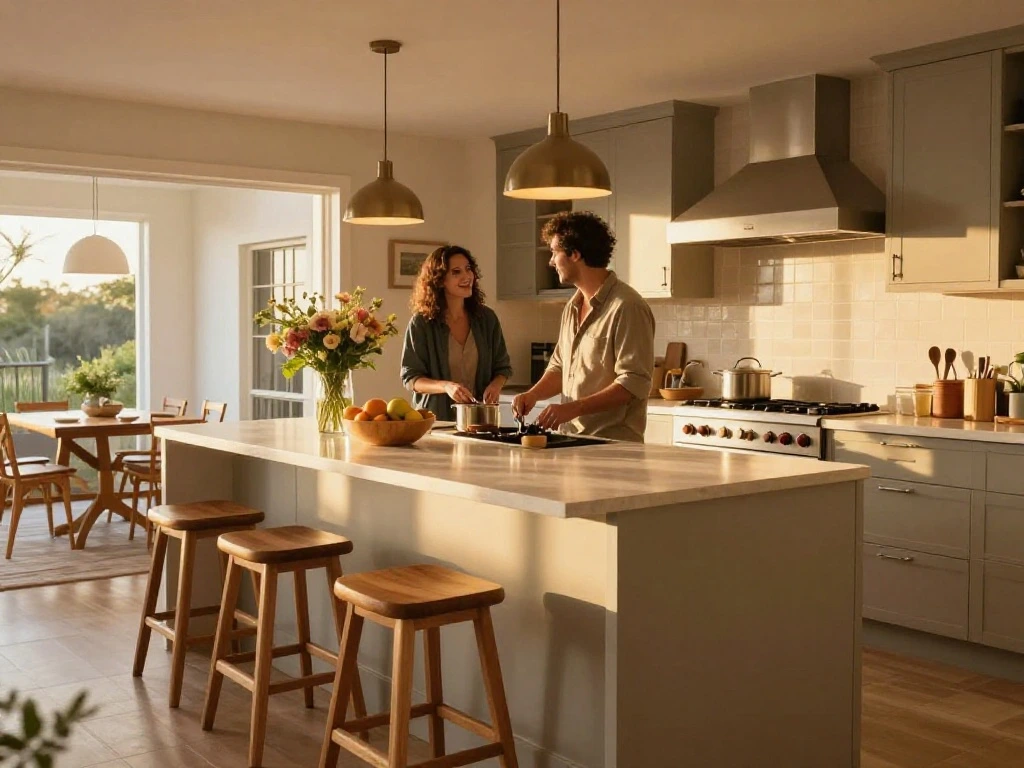
The coziest kitchens are designed with the understanding that people do not only go to the kitchen to cook. They go there to talk, to help, to keep each other company, to do homework while dinner is being made, to linger after the meal is finished. A kitchen designed purely for efficient food preparation will feel like exactly that. A kitchen designed with space for gathering will feel warm, welcoming, and alive.
This means thinking about where people will stand or sit when they are not actively cooking. It means designing an island with enough overhang for stools on the opposite side. It means creating a corner with comfortable seating. It means considering the sightlines so that the person cooking is not isolated from everyone else in the room. These decisions, more than any material or color choice, determine whether a kitchen truly becomes the heart of the home.
Conclusion
A cozy kitchen is not defined by its size, its budget, or its age. It is defined by the quality of thought that goes into how it is designed, styled, and lived in. The eighteen ideas explored in this article span the full range of possible approaches, from a simple swap of cabinet hardware to warm brass, to the more involved decision of installing a farmhouse sink or building a breakfast nook. Each one moves the kitchen a little further along the spectrum from functional to genuinely inviting.
Start with what feels most accessible and most true to your personal style. Add a rug, swap a light fixture, arrange fresh herbs on the windowsill, or introduce a few earthy ceramics to your open shelves. Small changes made with intention accumulate into something significant. Over time, with the right combination of warmth, texture, light, and personal objects, your kitchen will become exactly what it was always meant to be: the warmest, most welcoming room in your home.
Frequently Asked Questions
Q1. What is the quickest way to make a kitchen feel cozy?
The fastest changes with the greatest impact are warm lighting and soft textiles. Replace any cool white bulbs with warm white alternatives, add a washable rug in front of the sink or island, and introduce one or two earthy ceramic or wooden objects to the counter. These three changes alone can fundamentally shift the atmosphere of a kitchen in a single afternoon.
Q2. What colors make a kitchen feel cozy and warm?
Warm earthy tones are the most effective palette for a cozy kitchen. Shades of cream, soft terracotta, dusty sage green, warm ochre, warm white, and deep burnt sienna all create an immediate sense of comfort. Avoid cool greys and stark whites as primary colors, as they tend to read as cold even when the room is well lit.
Q3. Can a small kitchen be made to feel cozy?
Absolutely. In fact, smaller kitchens often feel naturally cozier because their proportions are more intimate. The key is to use warm tones, avoid excessive clutter, introduce layered lighting, and add one or two personal or natural elements such as fresh herbs, a ceramic bowl, or a small piece of art. A small kitchen styled with intention can feel more welcoming than a large one that has not been given the same care.
Q4. What natural materials work best for a cozy kitchen?
Wood is the most versatile and impactful natural material for kitchen coziness, used in cabinets, shelving, countertops, or simple decorative objects like cutting boards and bowls. Beyond wood, rattan, jute, terracotta, ceramic, linen, and cotton all contribute organic warmth and texture that manufactured materials cannot fully replicate. Combining several of these materials creates a layered richness that feels deeply inviting.
Q5. How do you make a modern kitchen feel cozy without losing its contemporary look?
The key is to introduce warmth through materials and lighting while keeping the overall lines clean. Warm wood accents, brass hardware, a wool or jute rug, pendant lights with warm bulbs, and a small display of earthy ceramics or fresh herbs can all be added to a modern kitchen without disrupting its contemporary aesthetic. The goal is to soften the edges of modern design with warmth and texture rather than replacing one style with another.