15+ Stunning Mosaic Garden Ideas for a Colorful Outdoor Space
Introduction:
Mosaic Garden Ideas there is something deeply satisfying about walking into a garden that tells a story through color, texture, and pattern. Mosaic garden ideas have captured the imagination of homeowners, landscape designers, and DIY enthusiasts for centuries, and the reason is simple. Mosaic art turns ordinary outdoor spaces into extraordinary visual experiences. Whether it is a hand-crafted steppingstone near the flower bed or an intricate tiled mural adorning a garden wall, mosaic work adds a layer of personality and permanence that no other decorative technique quite matches.
The art of mosaic itself traces its roots back to ancient Mesopotamia, traveled through Greece, Rome, and the Byzantine Empire, and found renewed life in the hands of artists like Antoni Gaudi, whose Park Guell in Barcelona remains the most celebrated example of mosaic in outdoor design. Today, that same spirit of creative freedom is available to every garden lover, regardless of skill level or budget.
This guide walks you through sixteen stunning mosaic garden ideas that range from beginner-friendly weekend projects to more ambitious transformations. Each idea is packed with practical insight so you can take inspiration and turn it into something real in your own outdoor space.
1. Mosaic Steppingstones That Transform Your Garden Path
Mosaic steppingstones are one of the most popular entry points into garden mosaic work, and for very good reason. They are small enough to be completed in a single afternoon, require minimal materials, and deliver an immediate visual reward. A plain concrete paver becomes a work of art the moment it is covered with fragments of colorful tile, China, or stained glass.
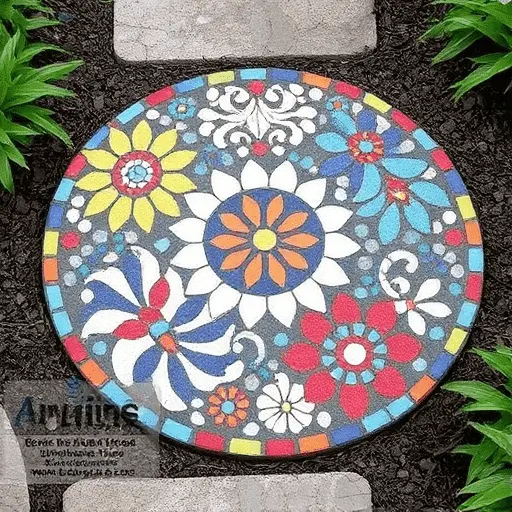
Pour or purchase a round concrete base of roughly twelve to fourteen inches in diameter. While the concrete is still workable, press broken tile pieces, China fragments, or glass pebbles into the surface in whatever pattern appeals to you. Floral motifs, geometric sunbursts, and abstract color fields all work beautifully. Once cured, grout the gaps with a sanded, weatherproof grout and seal the entire surface for longevity. A row of these stones winding through a garden bed creates a path that is genuinely worth walking.
2. Mosaic Garden Planters for a Burst of Personality
Terra cotta pots, concrete planters, and even old ceramic bowls become entirely new objects when dressed in mosaic tile. This is one of the most budget-conscious mosaic garden ideas available because it repurposes containers you may already own. A chipped pot that was destined for the bin can be covered in broken blue and white china to become a showpiece planter for lavender or rosemary.
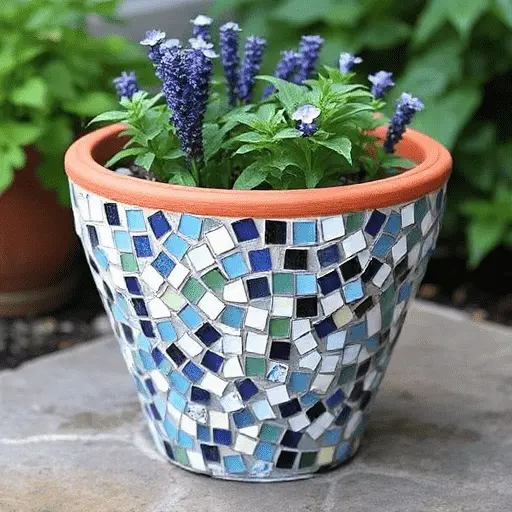
For planters that will live outdoors year-round, prioritize vitreous glass tiles or ceramic tesserae rated for exterior use. Avoid mirror tiles in very sunny climates as intense reflection can scorch nearby plants. Use a waterproof tile adhesive and finish with two coats of outdoor tile sealer to protect your work through rain and frost.
3. Mosaic Bird Baths That Double as Garden Sculpture
A mosaic bird bath achieves two things at once. It attracts wildlife to your garden and stands as a permanent piece of outdoor sculpture. The bowl and pedestal of a standard bird bath offer generous surface area for tile work, making them ideal for more ambitious patterns such as swirling water motifs, fish designs, or bold geometric arrangements.
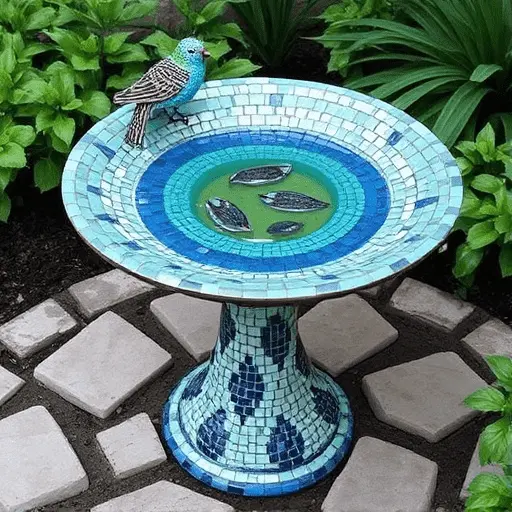
Use glass mosaic tiles in blues, teals, and aquamarines to evoke the feeling of moving water. The reflective quality of glass tiles picks up sunlight beautifully and gives the bath a luminous quality even on overcast days. Make sure all adhesive and grout used is fully waterproof since the basin will hold standing water continuously.
4. Mosaic Garden Walls and Decorative Feature Panels
A plain rendered garden wall or bare brick fence is one of the most overlooked opportunities in outdoor design. Applying mosaic panels directly to a wall, or attaching pre-made mosaic boards as hanging art, transforms a background element into a focal point.
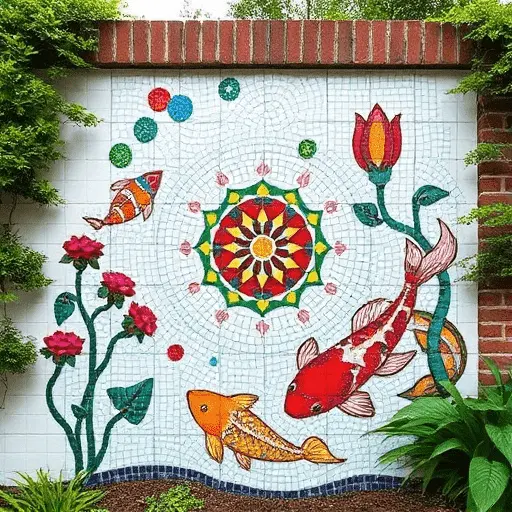
Large-scale abstract designs with bold color blocks are particularly effective on garden walls because they read clearly from a distance. Nature-inspired themes such as stylized trees, flowering vines, or koi fish suit garden environments perfectly. If a full wall feels ambitious, consider a single mosaic medallion centered at eye level, which provides visual impact without requiring an enormous time commitment.
5. Mosaic Pathways and Winding Walkways
A full mosaic pathway is a grander undertaking than steppingstones, but the results are correspondingly spectacular. The basic technique involves setting mosaic tiles or pebbles into a mortar bed within a defined pathway frame. Earth-toned river pebbles combined with colored ceramic tiles create pathways that feel connected to the natural landscape while still displaying genuine artistry.
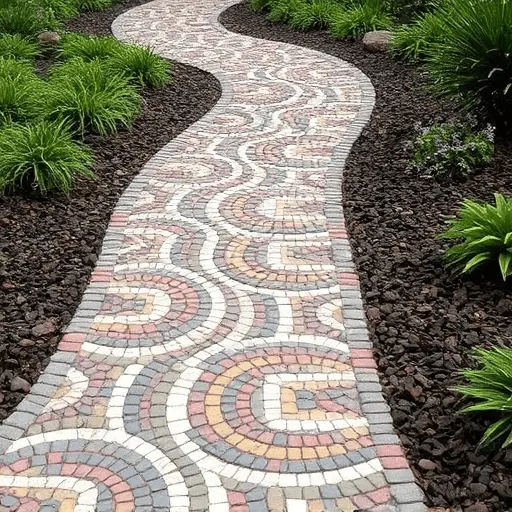
Keep the central walkway area relatively simple with repeating geometric patterns so that foot traffic does not visually interrupt a complex design. Save more intricate mosaic work for the borders and edges where it can be appreciated without being walked over. Sealing the finished pathway thoroughly is essential for durability, particularly in gardens that receive heavy rainfall.
6. Mosaic Garden Benches and Outdoor Seating
A mosaic bench is one of those garden features that stops visitors in their tracks. Whether it is a simple wooden bench frame covered in tile or a purpose-built concrete bench with mosaic inlaid across the seat and backrest, the result is always striking. Mosaic benches work particularly well in Mediterranean or Moroccan-inspired garden styles, where rich color and patterned surfaces are central to the aesthetic.
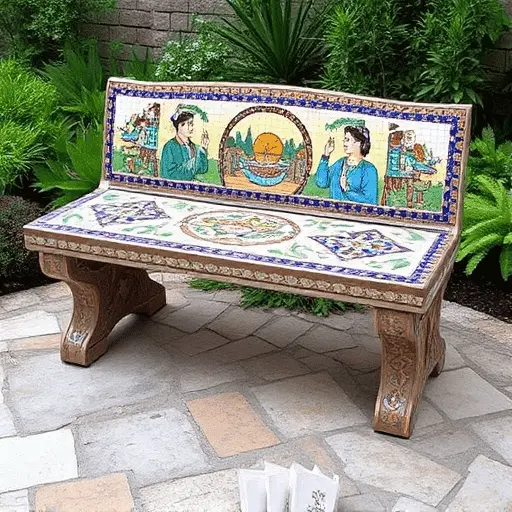
For the seat surface, choose flat, smooth tiles rather than highly textured ones to ensure comfort. The legs and back of the bench are ideal locations for more expressive tile work, including pictorial designs or bold color gradients. Apply at least three coats of outdoor sealer to any surface that will be sat upon. https://plantisima.com/mosaic-garden-ideas-that-turn-outdoor-spaces-into-art/
7. Mosaic Flowerpots and Window Boxes
Window boxes running along a fence line or garden wall offer a long, narrow canvas that suits repeating border patterns particularly well. A mosaic window box planted with trailing nasturtiums or bright petunias creates a layered effect where living color meets crafted color in the most satisfying way.
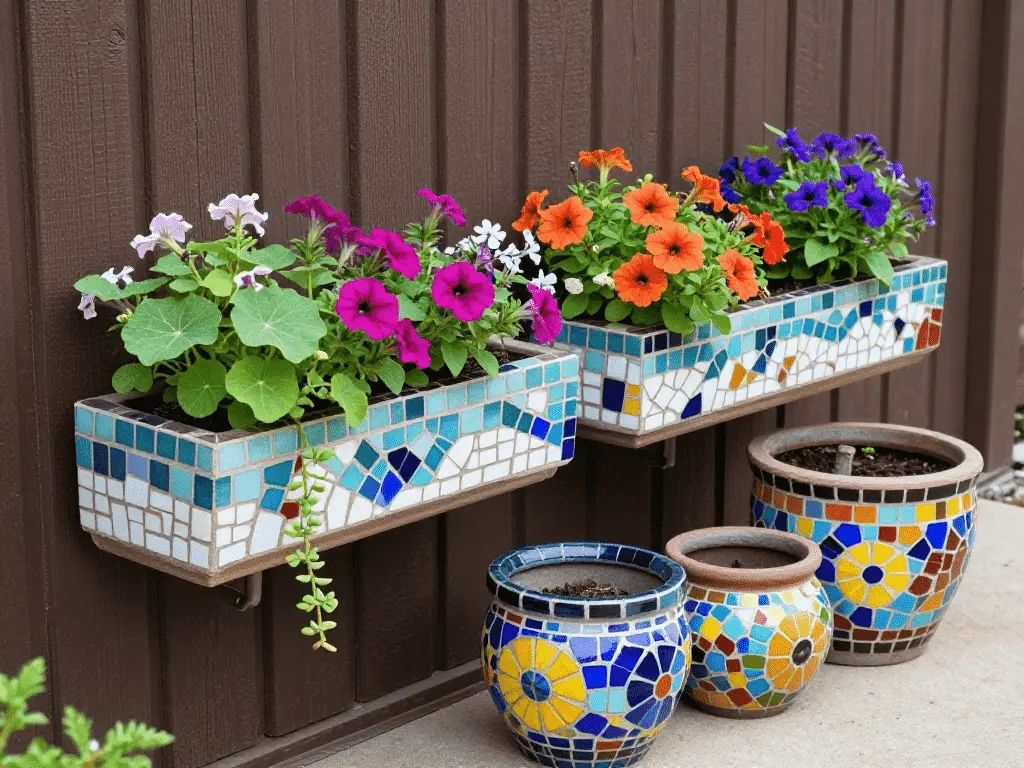
For individual flowerpots, consider grouping three or five pots of different sizes that share a common color palette in their mosaic work. Individually they are charming objects. Grouped together on steps or a terrace, they become a curated collection that elevates the entire outdoor space.
8. Mosaic Garden Fountains and Water Features
Water and mosaic tile are natural partners. The play of light on a tiled fountain surface, the way rippling water animates even a simple pattern, and the sound of falling water combine to create a garden feature that engages multiple senses simultaneously. A mosaic fountain becomes the undisputed centerpiece of any garden.
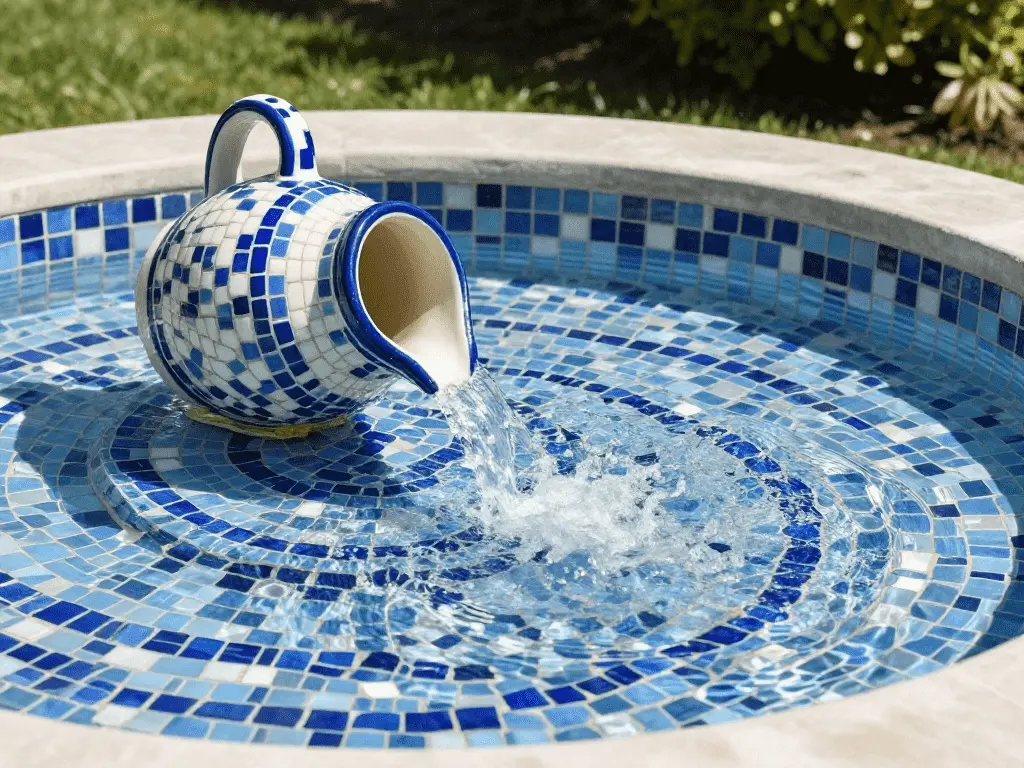
Not every garden has the plumbing or power supply for a working fountain. An extremely effective alternative involves arranging mosaic tiles in a pattern that suggests flowing water, such as curving blue and white tesserae spilling from a tilted ceramic jug. This trompe l’oeil approach delivers all the visual pleasure of a water feature without any of the mechanical complexity.
9. Mosaic Outdoor Dining Tables
An outdoor dining table covered in mosaic tile is both a functional piece of furniture and a genuine work of art. The flat, expansive surface of a table top provides one of the largest and most visible canvases available in the garden. Geometric patterns, Mediterranean tile designs, and even pictorial compositions such as a large central flower or sunburst all translate beautifully to table scale.
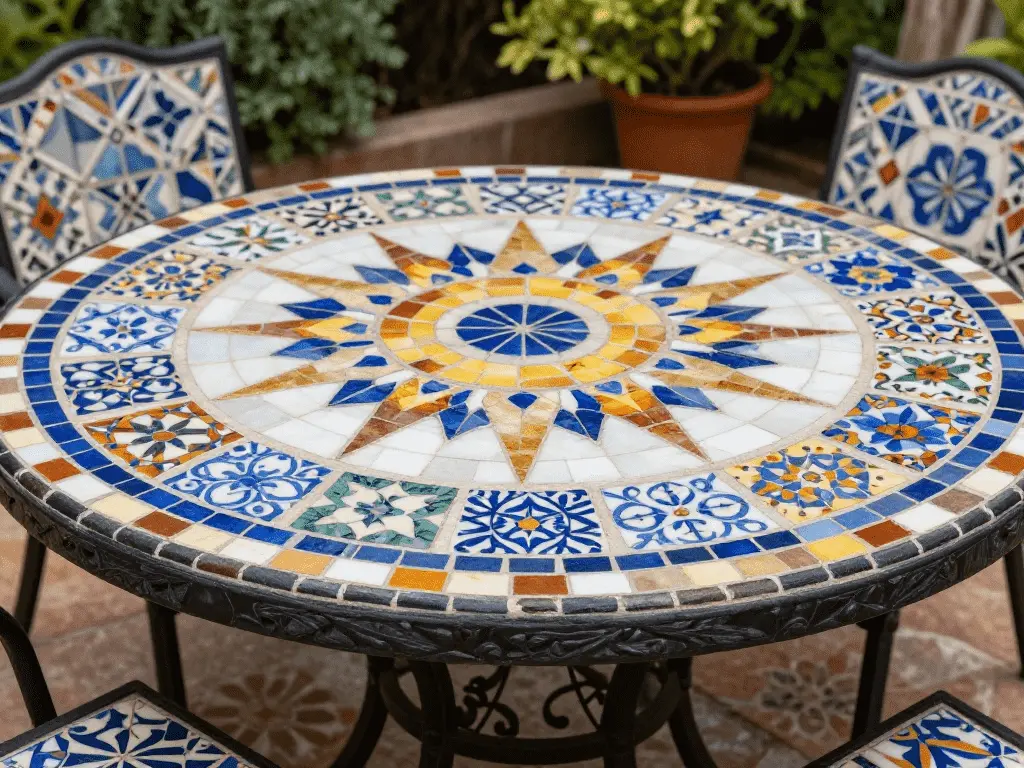
Use vitreous glass tiles for the smoothest finish and most consistent grout lines. The table should be grouted with a non-porous, stain-resistant grout since it will come into contact with food and drink. Sealed correctly, a mosaic dining table will age gracefully and improve in character over many seasons.
10. Mosaic Garden Edging and Border Designs
Garden edging is often an afterthought, but mosaic border tiles elevate it to a design feature in its own right. Running a line of decorative mosaic along the edge of a raised bed, separating a lawn from a planted border, or framing a patio area with tiled edging gives the garden a finished, intentional quality that plain brick or timber edging simply cannot match.
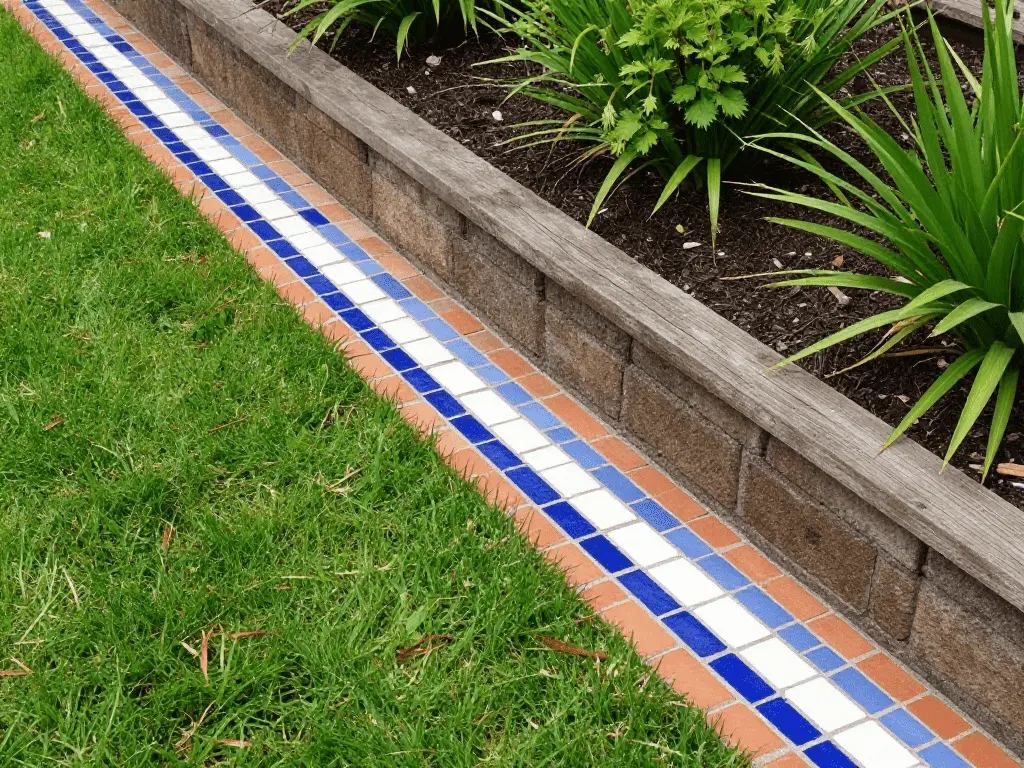
Simple repeating patterns in two or three colors are most effective for edging since they are long, thin, and viewed from above or at a low angle. Terracotta, cobalt blue, and white is a classic combination that suits cottage and Mediterranean gardens equally well.
11. Mosaic Gazing Balls and Garden Spheres
Mosaic gazing balls are among the most charming and accessible mosaic garden ideas. A bowling ball, concrete sphere, or large foam ball serves as the base. Tiles, glass gems, mirror pieces, and ceramic fragments are applied to the curved surface using exterior-grade adhesive and then grouted. The finished sphere reflects sunlight and surrounding garden colors in a way that makes it appear to glow from within.
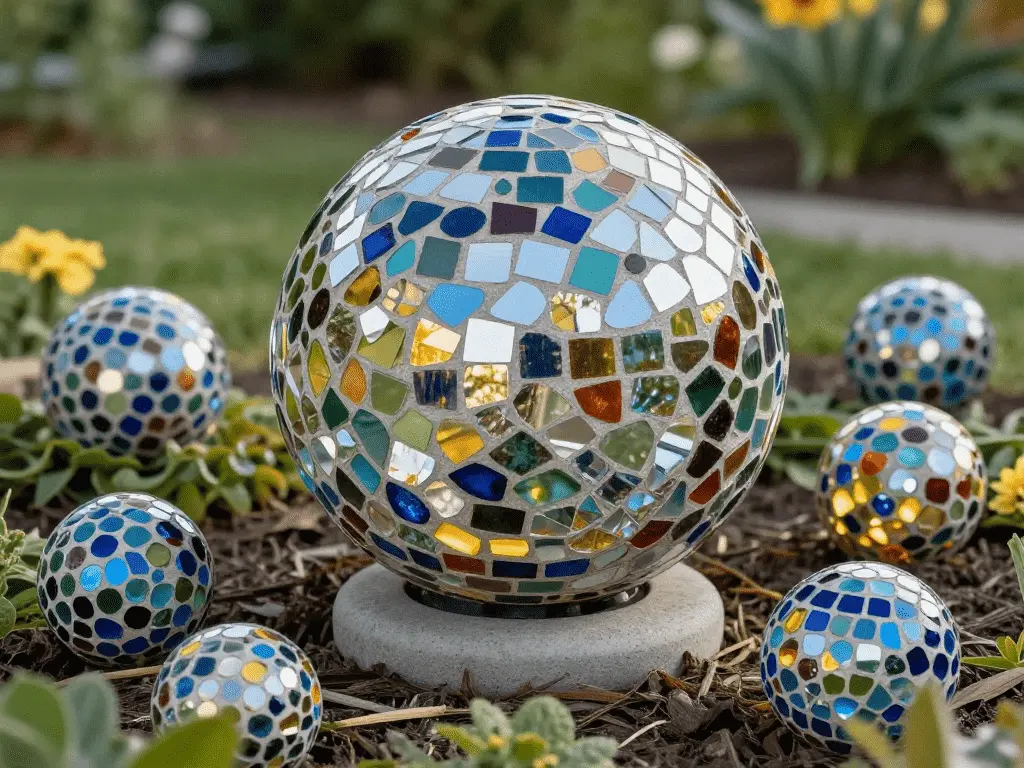
Place a single large sphere as a focal point in the center of a formal garden bed, or scatter several smaller ones of varying sizes through a planting area for a more whimsical effect. Mirror tiles mixed with colored glass create particularly eye-catching spheres that change appearance as the light shifts throughout the day.
12. Mosaic Tree Rings and Decorative Garden Bed Borders
A mosaic ring set around the base of a mature tree creates a defined, decorative collar that prevents lawn-mower damage while adding considerable visual interest. This technique works particularly well around trees with attractive bark or interesting branch structures, as the mosaic base draws the eye upward through the whole form of the tree.
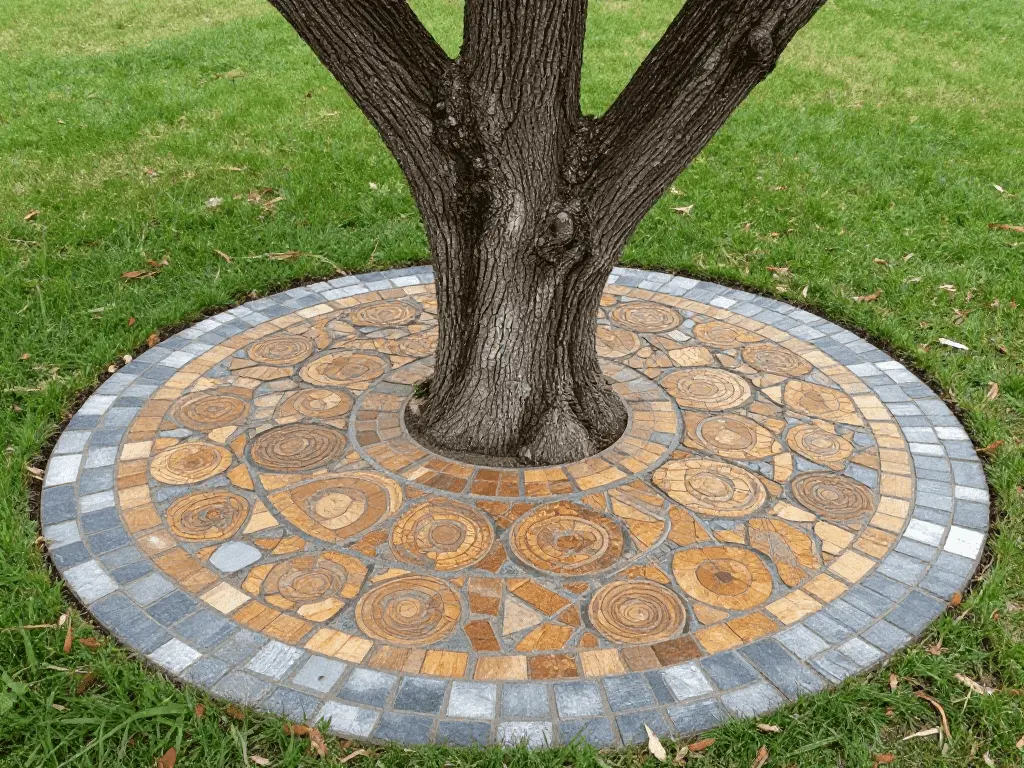
Lay the tiles in a circular frame set into a mortar bed. Choose colors that complement the bark tone of the specific tree. Warm amber and rust tones suit oak and apple trees beautifully. Cool greys and blues work well beneath silver birch or olive trees. This is also a practical project for awkward spots under trees where grass refuses to grow.
13. Mosaic Outdoor Murals and Vertical Garden Art
A large-scale mosaic mural mounted on a garden wall or fence is the most dramatic of all mosaic garden ideas. This category of project moves from craft into fine art territory and requires more planning and patience than smaller pieces. However, the finished result can redefine the entire character of a garden space.
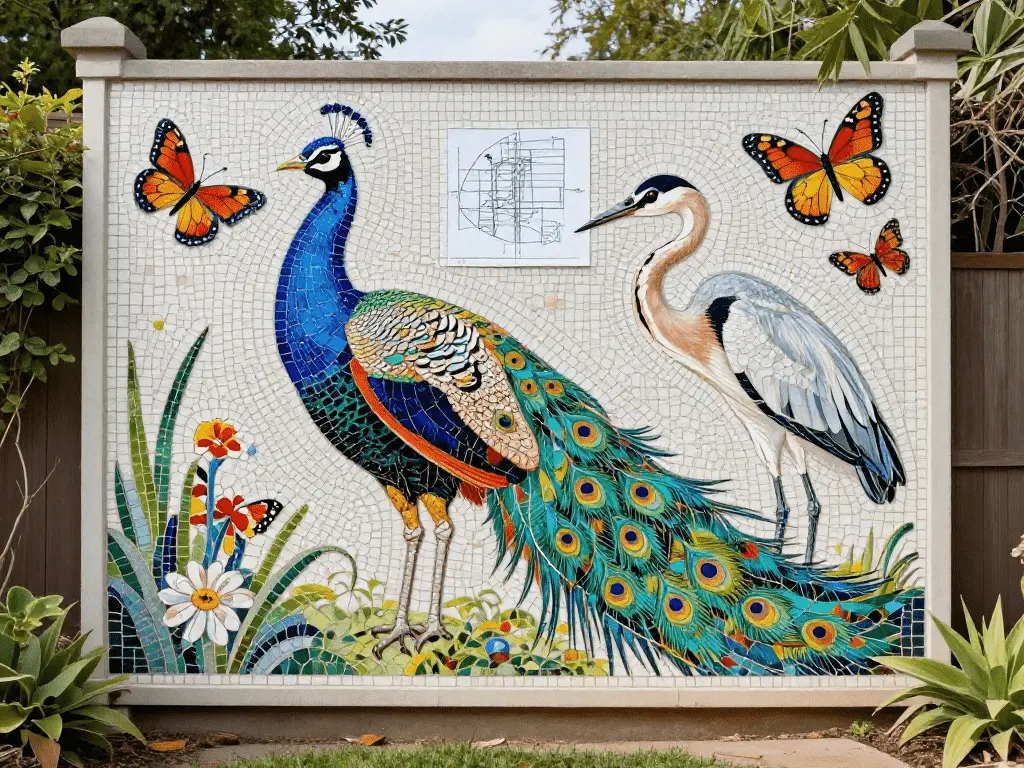
Start by sketching the design to scale on paper and dividing it into a grid. Transfer the grid to your backing board or wall surface and work section by section so the project remains manageable. Wildlife subjects such as peacocks, herons, or butterflies work beautifully at mural scale because they allow for rich color variety and fine detail in the feathers or wings.
14. Mosaic Garden Signage and House Numbers
Mosaic tiles offer a wonderfully durable and attractive solution for garden signage. House numbers rendered in bold mosaic tile on a terracotta or slate base, garden name plaques, or even directional signs within a larger property all benefit from the permanence and weather resistance of tile work.
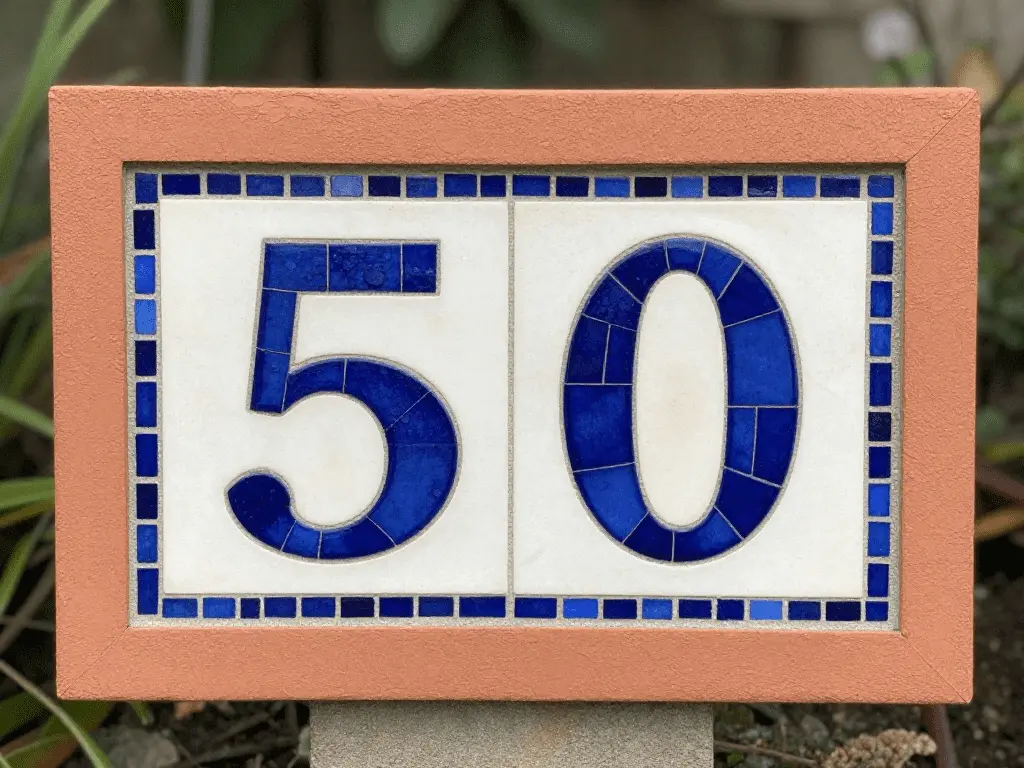
Script lettering in mosaic requires patience since each letter needs to be outlined carefully in a contrasting tile color before the background is filled in. Block numerals are more straightforward and suit bold, graphic tile patterns around them. These small pieces make exceptionally thoughtful and lasting gifts for new homeowners or garden enthusiasts.
15. Mosaic Decorative Rocks and Garden Sculpture
Large garden rocks and boulders provide a three-dimensional and naturally weathered canvas for mosaic work. Selected smooth, flat surfaces on natural stone can be decorated with tile and glass to create hybrid pieces that sit at the boundary between nature and craft. These mosaic rocks integrate beautifully into naturalistic garden styles where too formal a design approach might feel out of place.
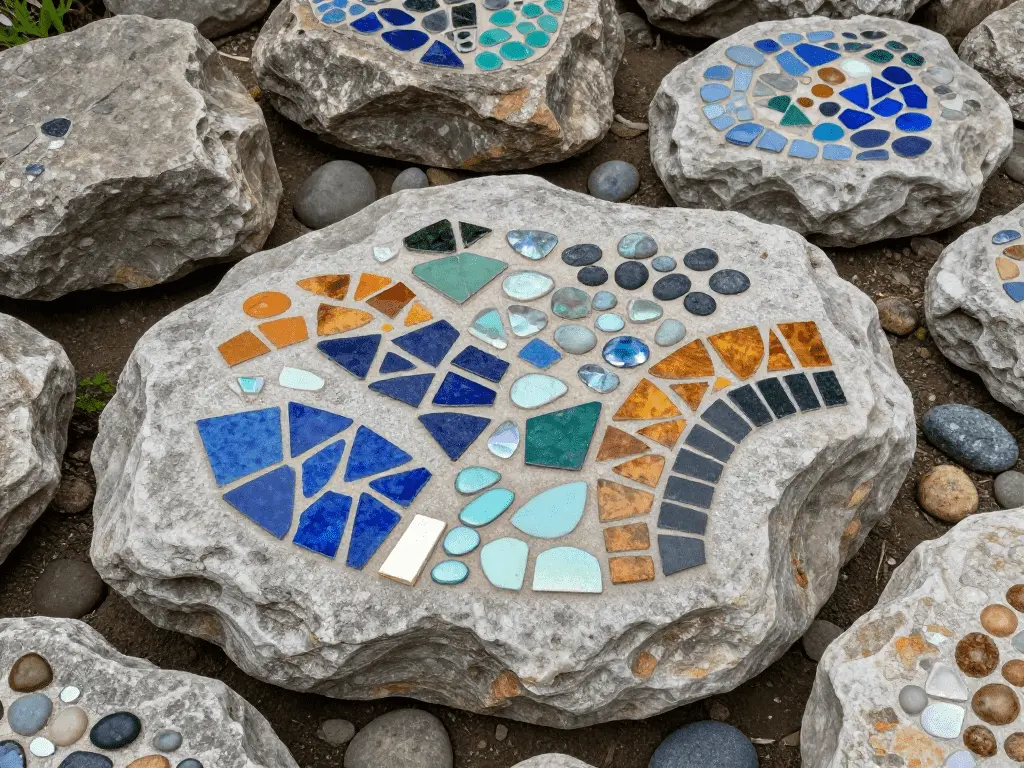
Abstract color arrangements rather than precise pictorial designs tend to suit the irregular surface of natural stone. Glass pebbles, mirror fragments, and iridescent tiles all work well on rock surfaces and give finished pieces an organic, found-object quality that is genuinely compelling.
16. DIY Mosaic Garden Projects for Beginners
Every experienced mosaic artist began with a first project, and the learning curve is far gentler than most people assume. The most important principle for beginners is to start small. A single steppingstone or a medium-sized flowerpot gives you the opportunity to learn how tile adhesive behaves, how to cut tiles safely, and how to apply and clean grout without the pressure of a large-scale commitment.
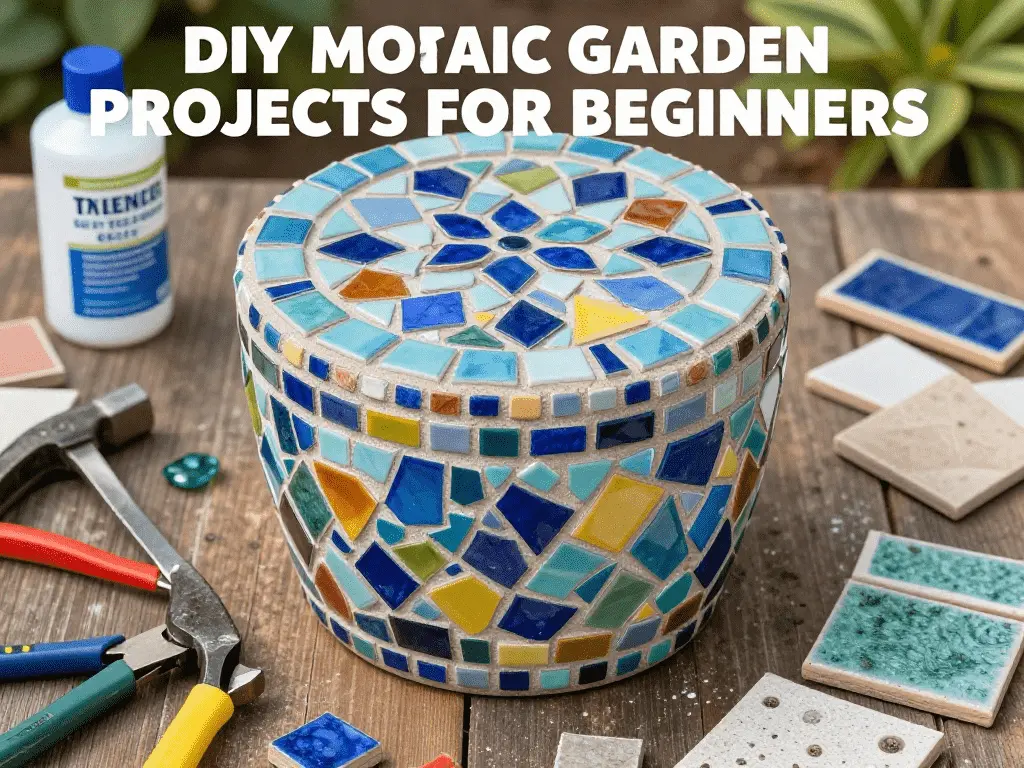
Gather your base object, exterior-grade tile adhesive, sanded weatherproof grout, a grout float, tile nippers or a hammer and bag for breaking tiles, protective gloves and eyewear, and your chosen tile or China fragments. Broken plates from thrift stores, tile offcuts from hardware stores, and sea glass collected from beaches are all free or very low-cost materials that produce genuinely beautiful results. Seal your finished piece with outdoor tile sealer and allow it to cure fully before placing it in the garden.
Conclusion
Mosaic garden ideas offer something genuinely rare in outdoor design: they combine lasting artistic expression with practical durability. Unlike painted surfaces that fade or wooden decorations that rot, a well-made mosaic piece improves with age, developing a patina and presence that only years of weathering can produce. From a single decorated steppingstone to an ambitious garden wall mural, each of the ideas covered in this guide represents a real and achievable way to bring more color, character, and creativity into your outdoor space.
The beauty of mosaic work is also its flexibility. You can spend an afternoon on a beginner project or invest months in a masterpiece. You can work with expensive specialist tiles or with broken China rescued from the charity shop. The art form welcomes all levels of ambition and all sizes of budget. What it rewards above all is the willingness to begin. Pick one idea from this list, gather your materials, and let your garden become something worth looking at every single day.
Frequently Asked Questions
1. What materials work best for outdoor mosaic garden projects?
Vitreous glass tiles, ceramic tesserae, broken China, and glass pebbles are all excellent choices for outdoor mosaic work. The key requirement is that all adhesive and grout must be rated for exterior use and fully waterproof. Sealing the finished piece with outdoor tile sealer adds an important additional layer of protection against frost, rain, and UV exposure.
2. Is mosaic gardening suitable for complete beginners?
Absolutely. Mosaic steppingstones and small decorated plant pots are genuinely beginner-friendly projects that can be completed in a single afternoon with basic materials. No prior art experience is necessary. Starting with a small, flat surface allows you to learn the key techniques of cutting, adhering, and grouting before moving on to more ambitious work.
3. How do I protect mosaic garden pieces during winter?
Apply two to three coats of outdoor tile and stone sealer to all finished mosaic pieces before placing them in the garden. In climates with heavy frost or snow, bring smaller moveable pieces indoors or into a shed during the coldest months. For permanent installations such as walls or pathways, use frost-resistant grout and ensure the backing surface is solid and non-porous.
4. What is the best adhesive for mosaic garden projects?
A polymer-modified thinnest mortar is the most reliable adhesive for permanent outdoor mosaic installations. For smaller moveable pieces such as pots and steppingstones, an exterior-grade tile adhesive or weatherproof construction adhesive such as Weldbond performs well. Avoid standard craft glues or indoor-only adhesives as they will fail in outdoor conditions within a single season.
5. Can I use broken household China for garden mosaics?
Yes, and this is one of the most satisfying aspects of mosaic garden work. Broken plates, mugs, tiles, and even glass bottles can all be used as tesserae. Wrap items in an old towel and break them carefully with a hammer or use tile nippers for more controlled shapes. Always wear protective gloves and eyewear when breaking materials, and sort pieces by color before starting your project to make the design process much easier.