15Kitchen Storage Ideas to Organize Your Space
15 Kitchen Storage Ideas to Organize Your Space
Introduction
kitchen storage ideas kitchen is the most active room in any home. It is where meals are prepared, conversations happen over morning coffee, and the entire household rhythm begins each day. Yet despite its central role, the kitchen is also the room most likely to descend into clutter. Overflowing cabinets, crowded countertops, mismatched containers rolling around in drawers, and pots stacked precariously on top of one another are familiar frustrations in kitchen storage ideas households of every size.
The good news is that an organized kitchen is not a luxury reserved for people with sprawling layouts or expensive renovations. With the right kitchen storage ideas, even the most compact cooking space can be transformed into a highly functional, visually pleasing environment. The key lies not in buying more stuff, but in rethinking how the space you already have is being used.
This article walks you through 15 practical, proven kitchen storage ideas that address every corner of yourCrate & Barrel – 15 Kitchen Organization Ideas for a Clutter-Free Space, from the inside of cabinet doors to the space above your refrigerator. Whether you are working with a tinykitchen storage ideas apartment kitchen or a full-sized family cooking space, these strategies will help you claim every inch, reduce daily frustration, and make cooking a more enjoyable experience.
1. Embrace Vertical Storage From Floor to Ceiling
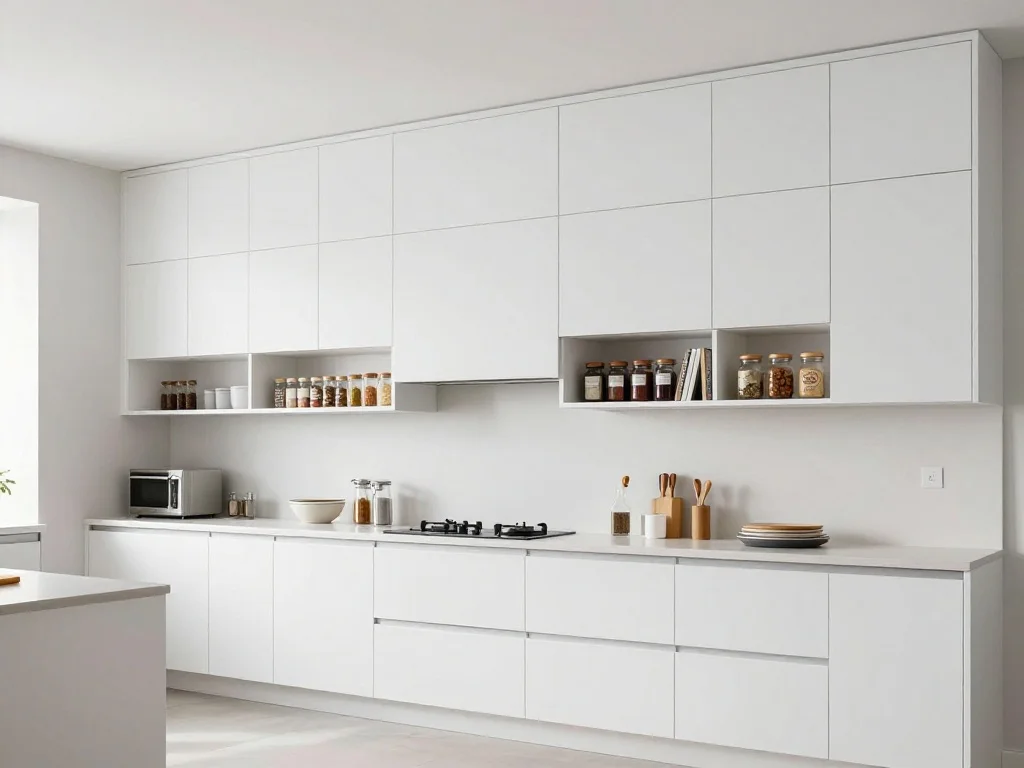
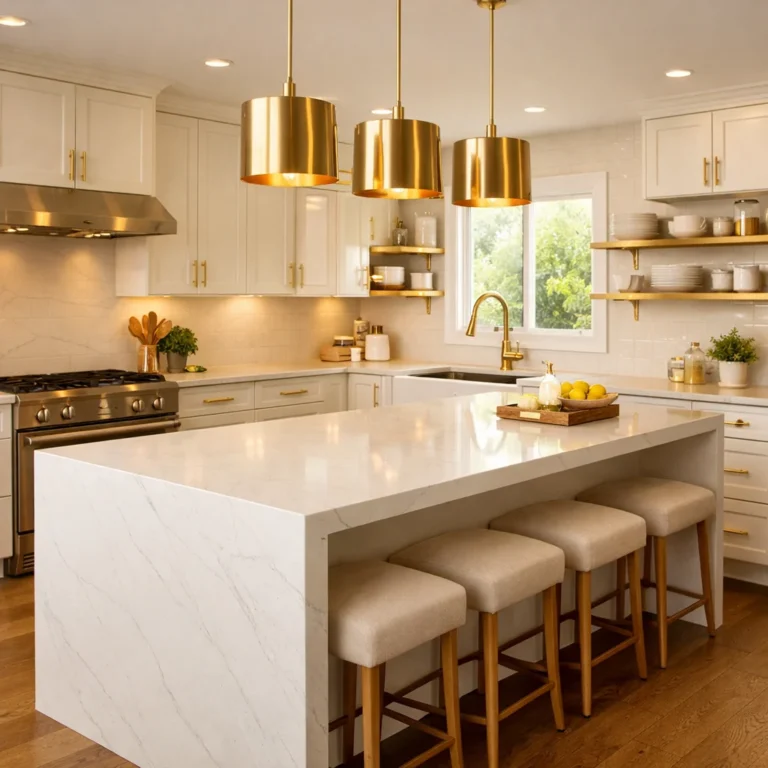
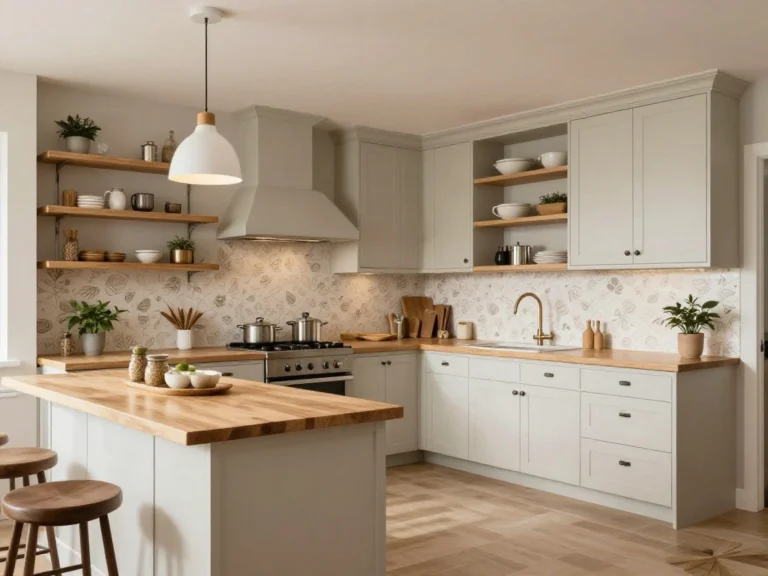
Most kitchens use the horizontal plane well but completely ignore the vertical dimension. Walls from the countertop to the ceiling represent a significant amount of unused storage real estate. Installing floating shelves above counters allows you to keep cooking oils, spice jars, frequently used cookbooks, and decorative dishware within arm’s reach without consuming a single inch of counter space.
For a more dramatic approach, consider extending your upper cabinets all the way to the ceiling. This eliminates the awkward gap above cabinets where dust collects and unused items accumulate. Store seasonal bakeware, large serving platters, or rarely kitchen storage ideas used appliances in the topmost sections and reserve lower shelves for daily essentials.
2. Install a Pegboard for Utensil and Tool Storage
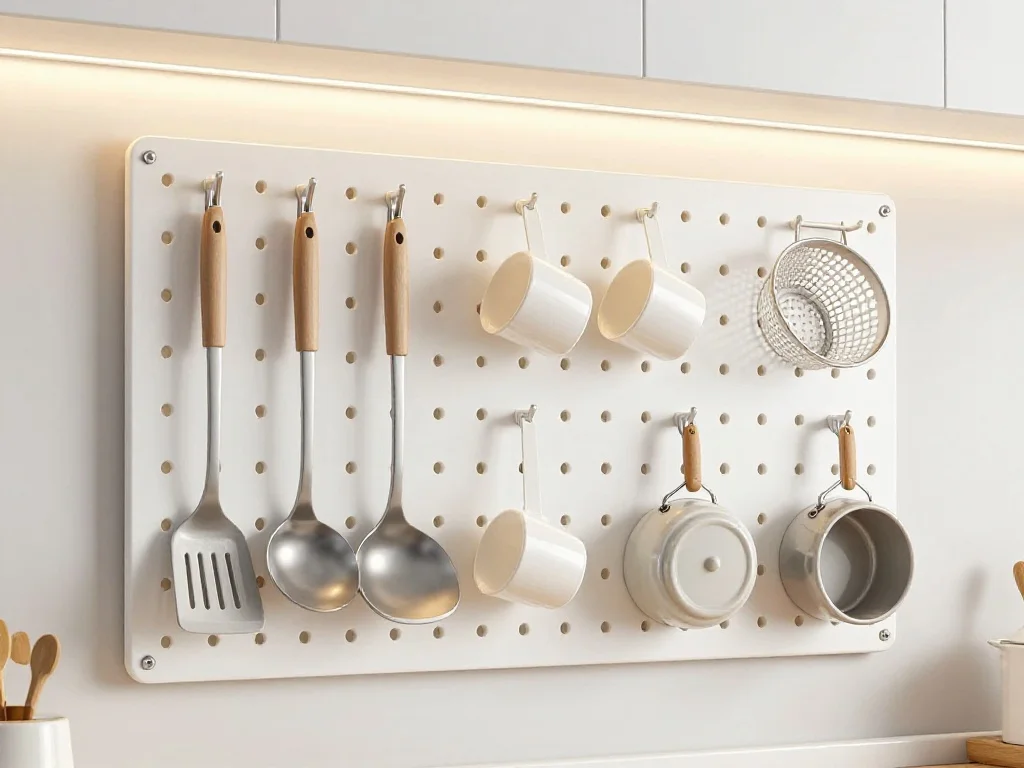
A pegboard mounted on a kitchen wall is one of the most adaptable and cost-effective storage solutions available. It can be customized to hold almost anything, including spatulas, ladles, measuring cups, colanders, small pots, and even a paper towel roll. Unlike fixed shelving, the hooks and brackets on a pegboard can be rearranged at any time askitchen storage ideas you rkitchen storage ideas storage needs change.
3. Use Pull-Out Drawers Inside Your Cabinets
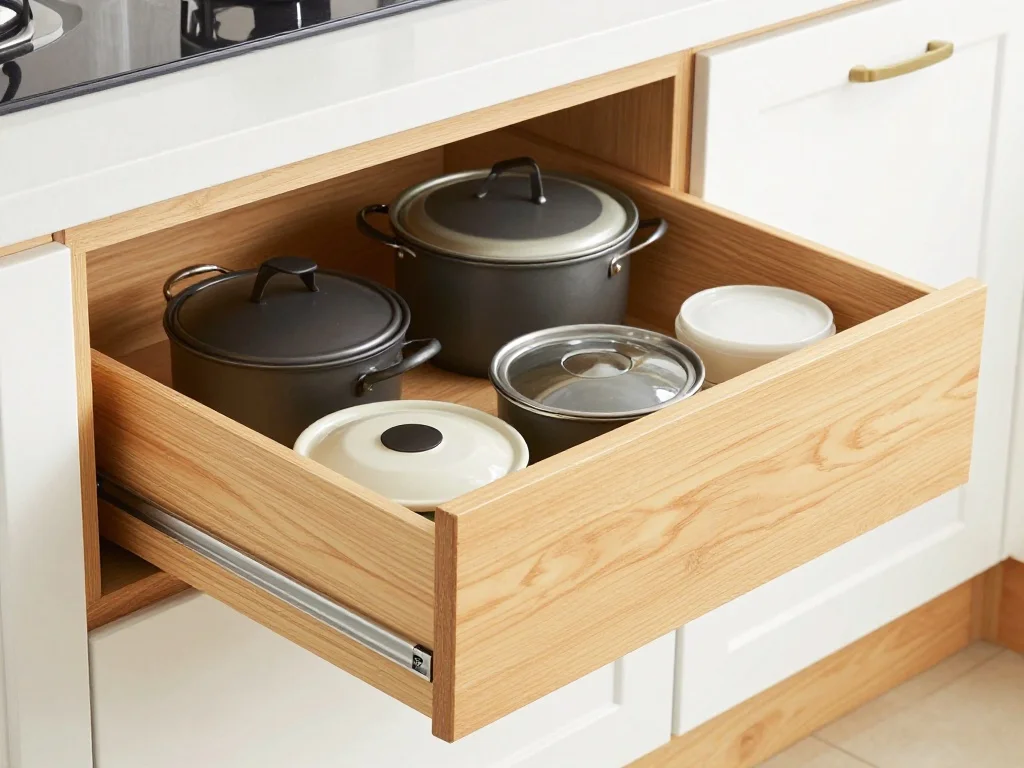
One of the most underappreciated kitchen storage ideas involves upgrading the interior of existing cabinets with pull-out drawers or sliding shelves. Standard cabinets with fixed shelves force you to stack items and dig through the back to find what you need. This leads to clutter, broken dishes, and wasted time.
Pull-out drawers solve this problem entirely. When you open a cabinet, the entire contents slide forward, making every item immediately visible and accessible. This is especially valuable in lower cabinets where pots, pans, and pantry staples tend to accumulate. Pull-out organizers kitchen storage ideas are available in pre-made sizes at most home improvement stores and can often be installed without professional help.
4. Maximize Corner Cabinet Space With a Lazy Susan
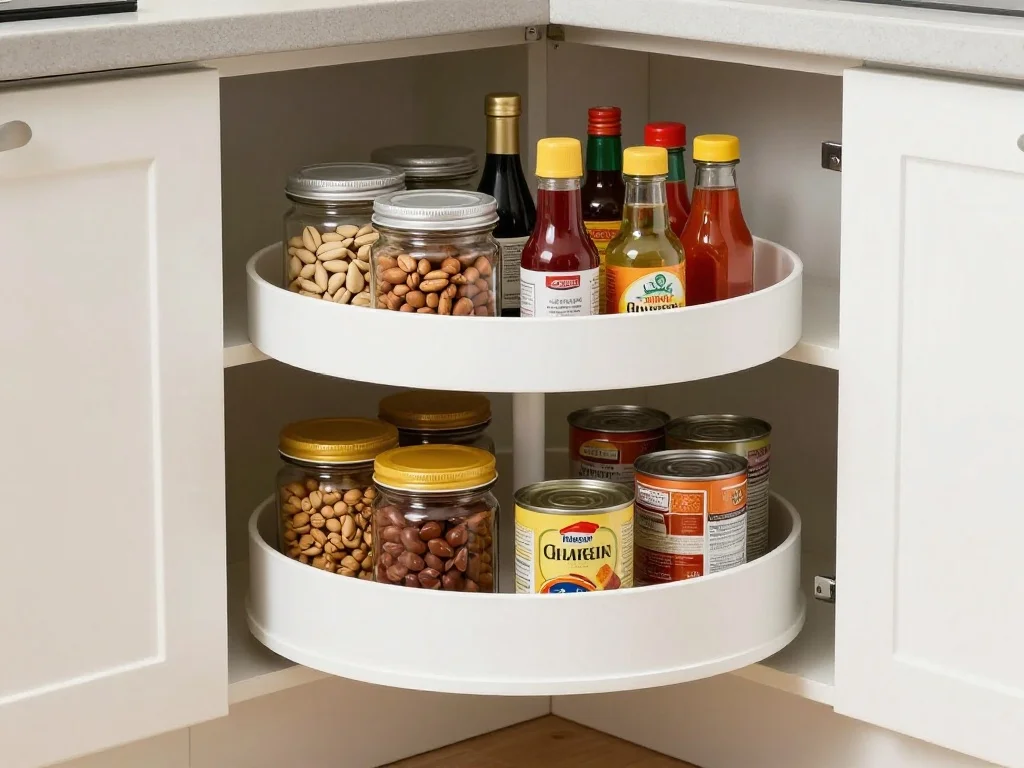
Corner cabinets are notorious for being the most difficult storage spaces in any kitchen. Their awkward depth makes items at the back nearly impossible to reach, kitchen storage ideas and the angled layout means much of the space goes completely unused. A rotating lazy Susan solves both problems with a simple and elegant design.
By installing a lazy Susan inside a corner cabinet, you convert what was essentially dead space into a fully accessible storage zone. A simple spin of the turntable brings everything within reach, making it ideal for storing pots, pans, canned goods, oils, and condiments.kitchen kitchen storage ideas storage ideas A variation known as the pull-out corner organizer, which features kidney-shaped shelves on a swinging arm, offers an even more efficient use of the kitchen storage ideas full cabinet depth.
5. Hang Pots and Pans on a Ceiling or Wall Rack
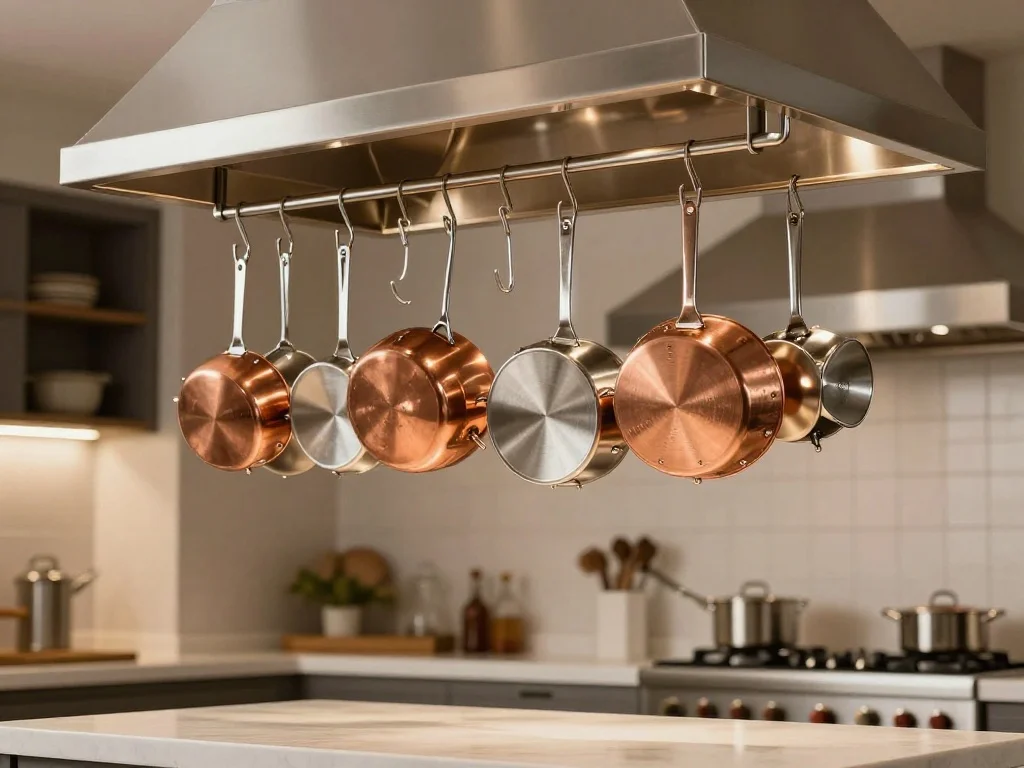
Pots and pans are among the bulkiest items in any kitchen, and storing them inside cabinets typically means creating an unstable, noisy tower of cookware. A mounted pot rack eliminates this problem entirely while also serving as a design statement.
A ceiling-mounted rack suspended above a kitchen island or cooking area keeps your most-used cookware visible, accessible, and completely out of the way. Wall-mounted pot racks serve the same purpose in kitchens without an island. Both options free up an entire lower cabinet for other storage needs.
6. Rethink Your Spice Storage System
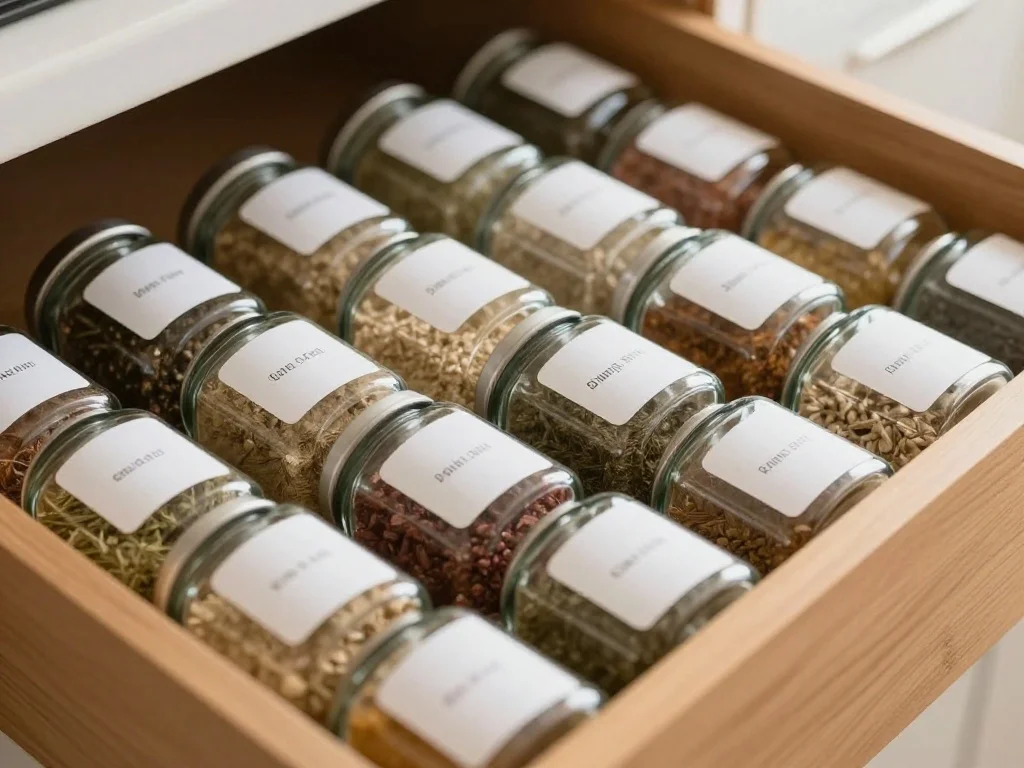
Spice storage is a challenge in virtually every kitchen. The standard approach of arranging spice jars in a cabinet or on a counter often results in a disorganized jumble where finding the right seasoning requires sorting through dozens of containers. A dedicated spice storage system changes this entirely.
7. Optimize Cabinet Doors for Hidden Storage
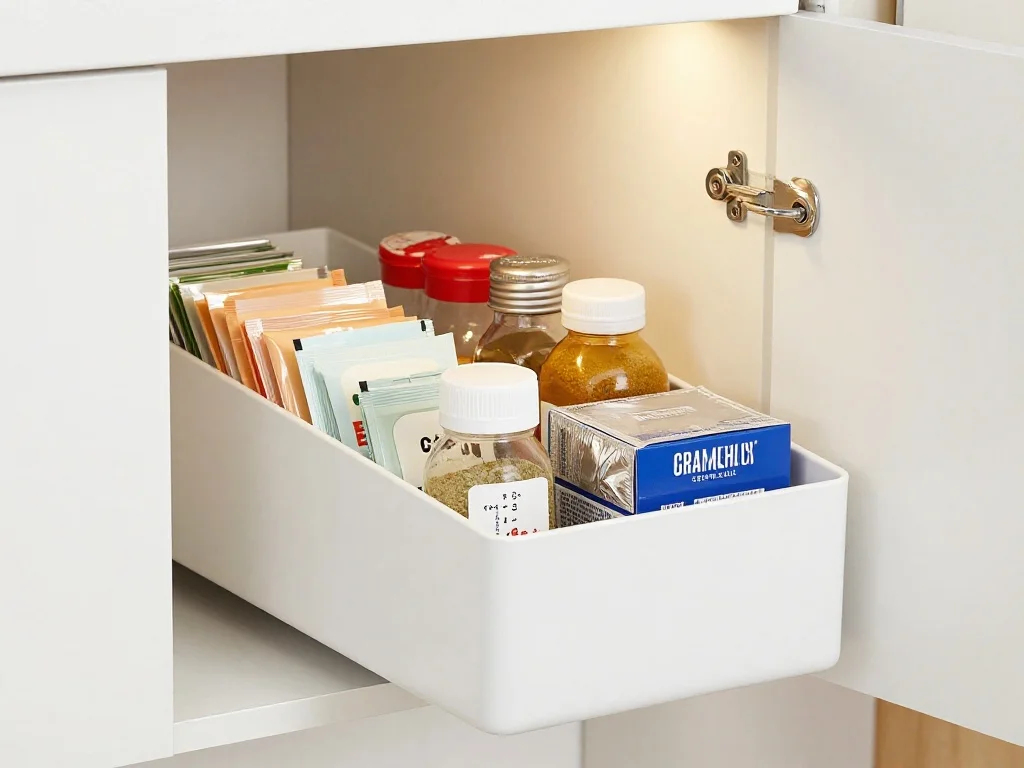
The inside surface of cabinet doors is one of the most overlooked storage opportunities in the entire kitchen. That smooth interior panel can hold a surprising amount without adding any bulk to the room’s appearance.
Self-adhesive hooks mounted on the inside of cabinet doors are ideal for hanging measuring cups, spoons, pot lids, and lightweight tools. A narrow over-the-door organizer with shallow pockets can hold spice packets, small bottles, aluminum foil boxes, and plastic wrap rolls. For the area under the sink, an over-the-door caddy is perfect for dish soap, scrubbers, rubber gloves, and cleaning supplies.
This approach is especially valuable in rental properties where permanent modifications are not permitted, since most adhesive solutions are removable and leave no damage behind.
8. Switch to Stackable Airtight Containers for Dry Goods
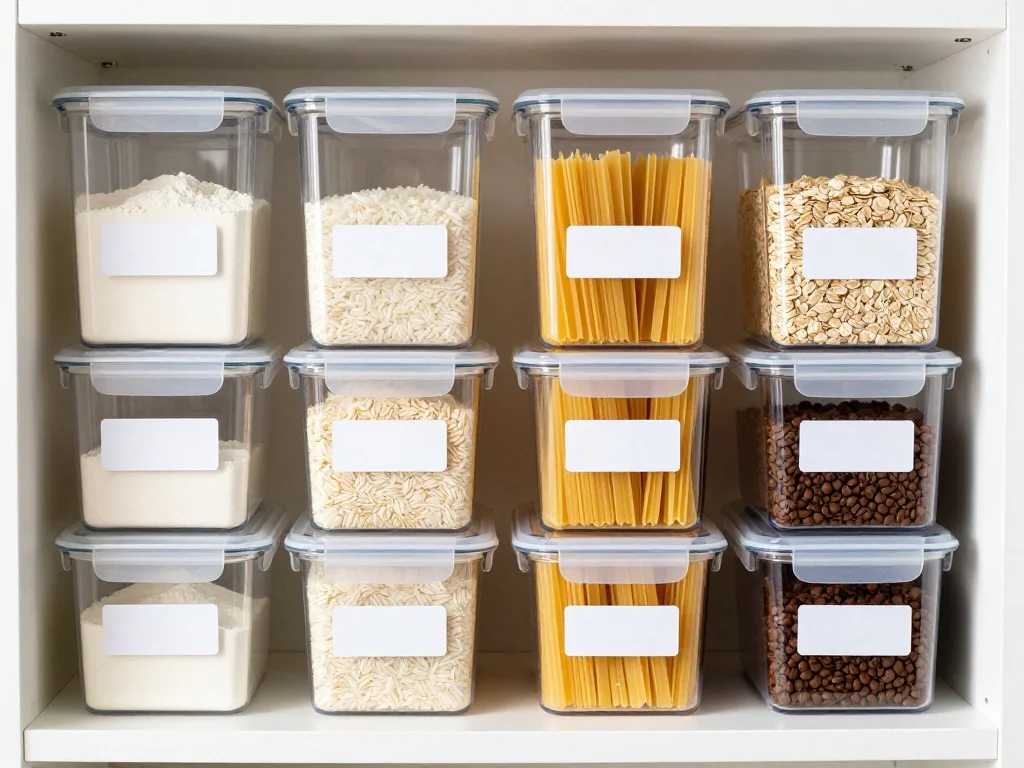
Dry goods such as flour, sugar, rice, pasta, oats, and coffee come in packaging of wildly different shapes and sizes. Storing them in their original bags and boxes guarantees inefficiency, wasted space, and a cluttered pantry shelf. Transferring these items to a uniform set of stackable, airtight containers transforms an unruly pantry into a model of order.
9. Add Open Shelving for Frequently Used Items
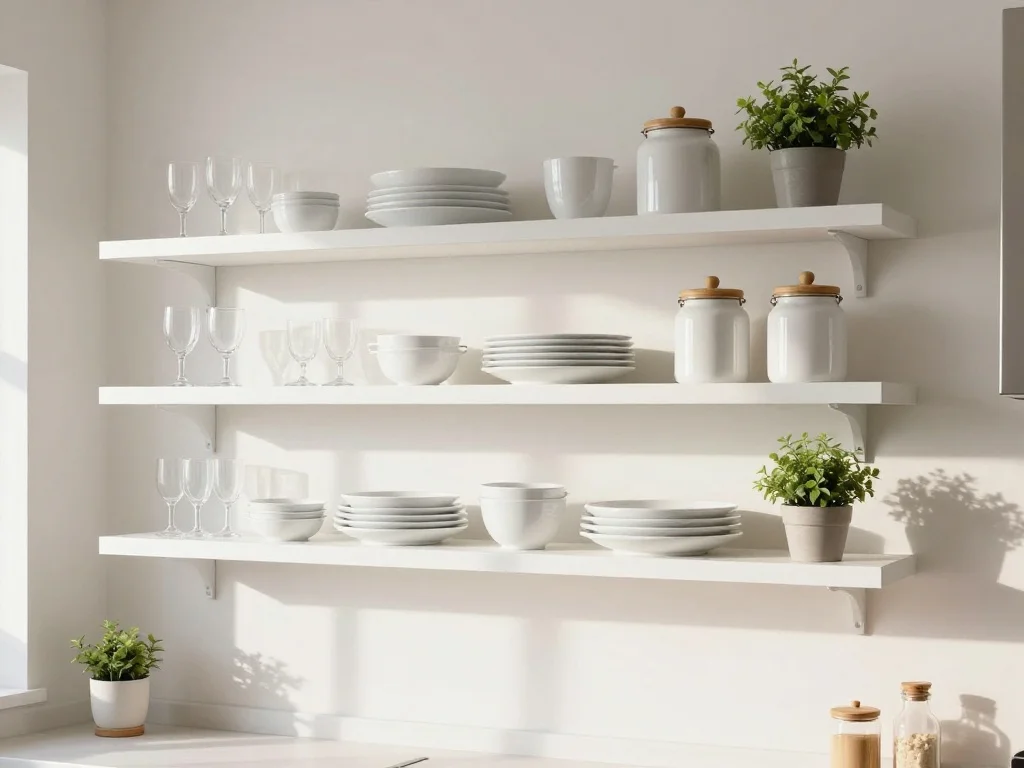
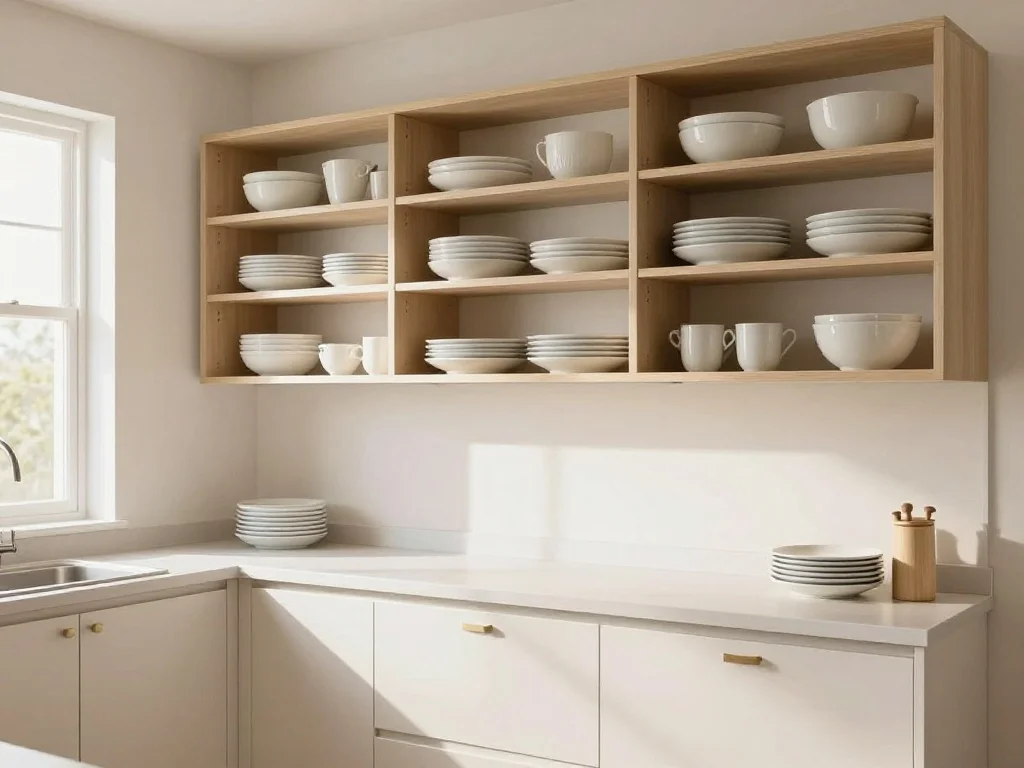
Open shelving has moved well beyond a passing trend. When implemented thoughtfully, it provides a practical and visually appealing way to store everyday items while keeping them within immediate reach. Dishes, glasses, mixing bowls, and frequently used ingredients stored on open shelves mean you never have to open a cabinet to find what you need during cooking.
The key to making open shelving work is consistency. Using matching dishware, uniform storage containers, and coordinated colors prevents open shelves from looking messy. A few carefully chosen decorative items, such as a small potted herb, a wooden cutting board, or a ceramic jar, add warmth without creating clutter.
10. Use Under-Shelf Baskets to Double Your Storage
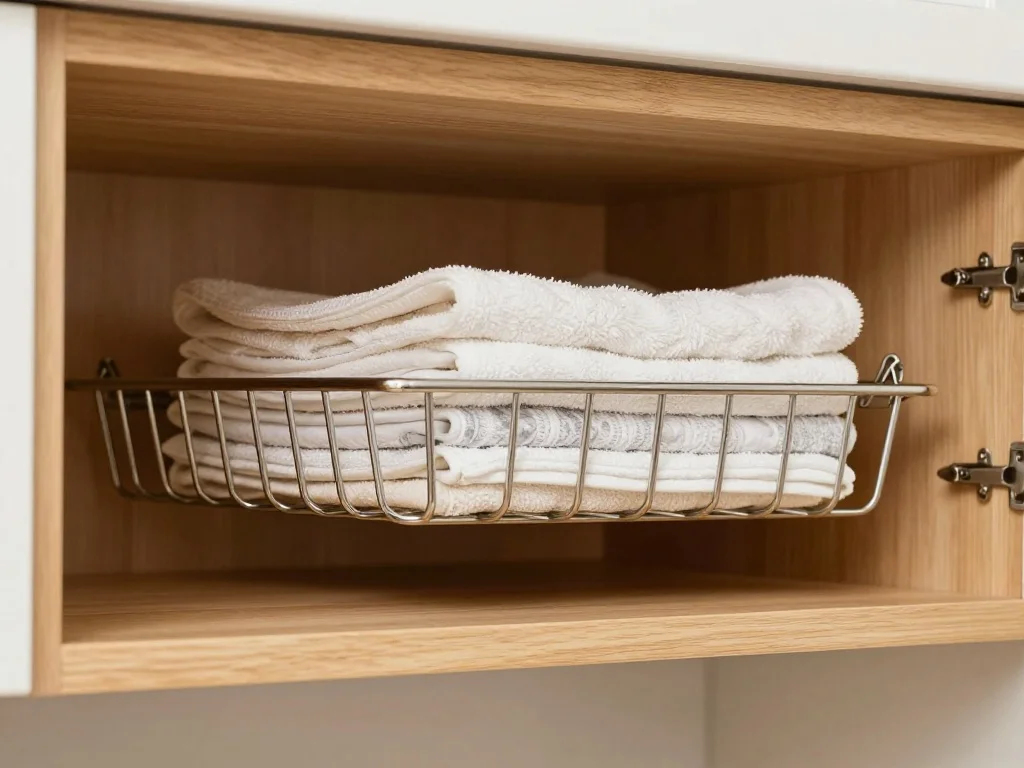
A simple and inexpensive product known as an under-shelf basket clips onto an existing shelf and hangs below it, effectively creating an additional storage tier in any cabinet, pantry, or on open shelving. This clever solution allows you to store an entirely separate category of items in the space that previously went completely unused between shelf levels.
Under-shelf baskets are ideal for storing folded kitchen towels, fruit, rolls of plastic wrap, small cutting boards, or packets of seasoning mix. In a pantry, they can double the effective capacity of each shelf without any drilling, tools, or modification to the existing structure.
11. Create a Dedicated Drawer for Wraps, Foils, and Bags
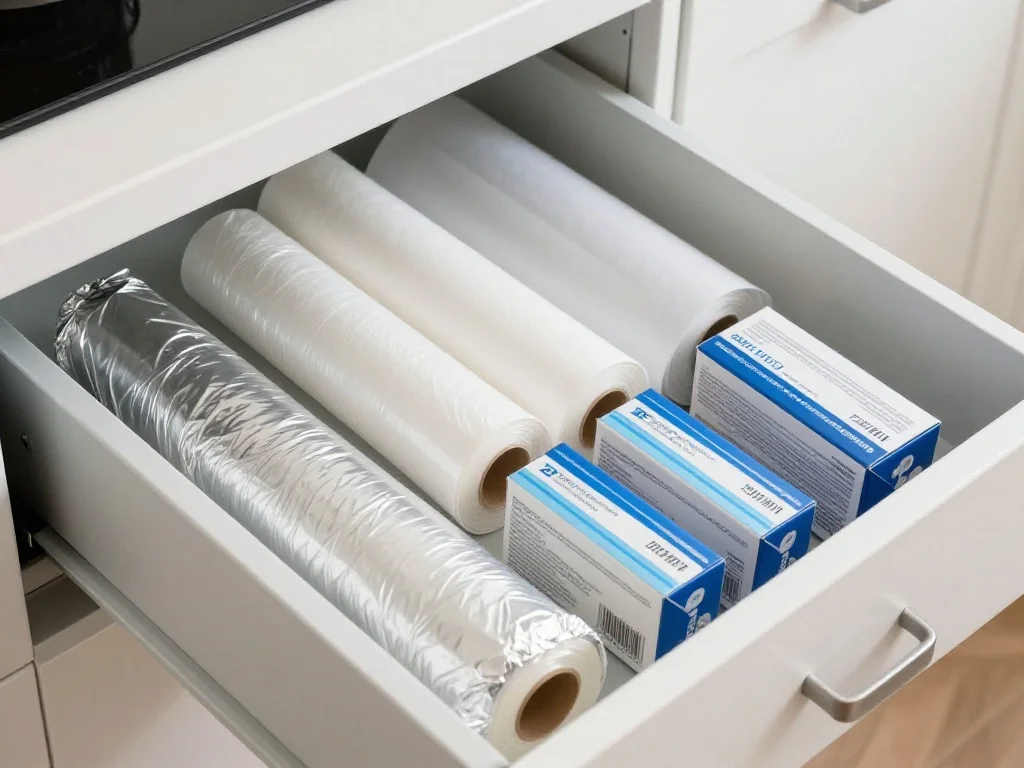
Plastic wrap, aluminum foil, parchment paper, zip-lock bags, and resealable pouches are some of the most consistently misplaced items in any kitchen. They end up stuffed into random drawers, falling out of cabinets, or balanced precariously in a corner of the pantry. Dedicating a single deep drawer to these items and using a simple vertical organizer inside it solves the problem permanently.
Vertical drawer dividers hold each roll and box upright and separate, so every item is visible without digging. This approach applies equally to the Tupperware drawer, a notorious source of kitchen frustration. A dedicated container organizer that stores lids separately from bases and nests containers by size transforms a chaotic drawer into one that functions effortlessly.
12. Take Advantage of the Space Above the Refrigerator
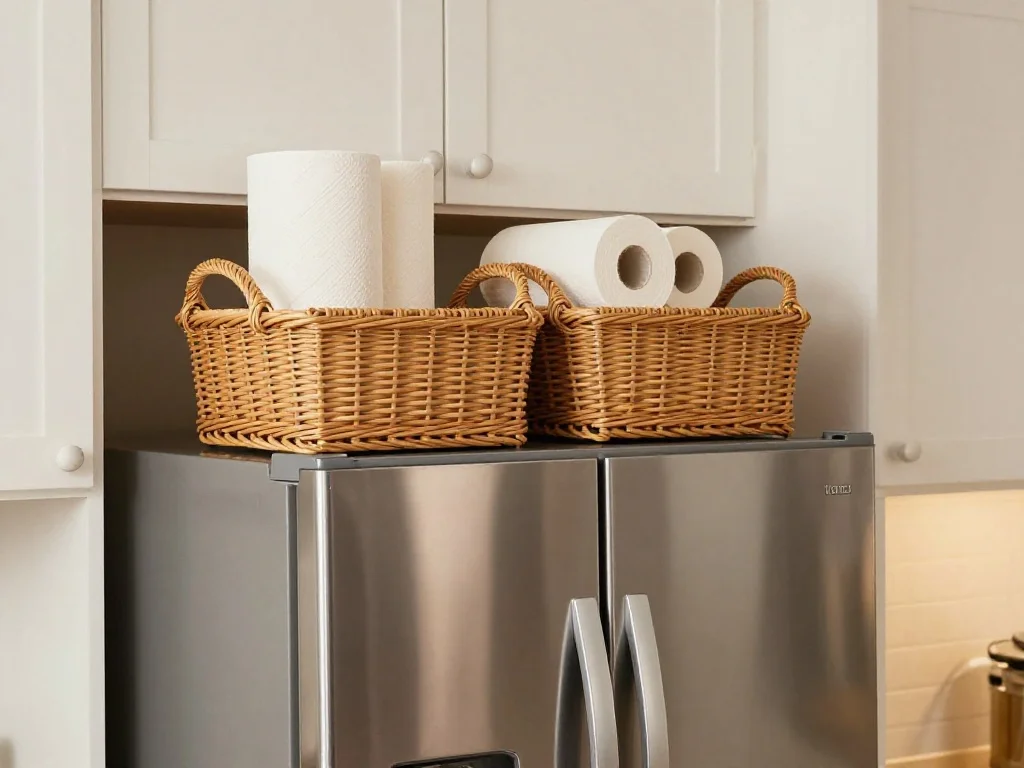
The top of the refrigerator is an often-wasted flat surface that can hold a surprising amount of kitchen overflow. Large items that are rarely needed but take up valuable cabinet space, such as a bread maker, a large stockpot, extra paper towels, or bulk pantry items, are well suited to this elevated storage zone.
A small set of baskets or bins placed on top of the refrigerator keeps these items corralled and prevents them from looking disorganized. If access is a concern, a small step stool stored nearby makes retrieval easy. In kitchens where cabinetry extends above the refrigerator, this space is already enclosed and can be used for seldom-needed items stored in labeled bins.
13. Install a Magnetic Knife Strip to Free Up Counter and Drawer Space
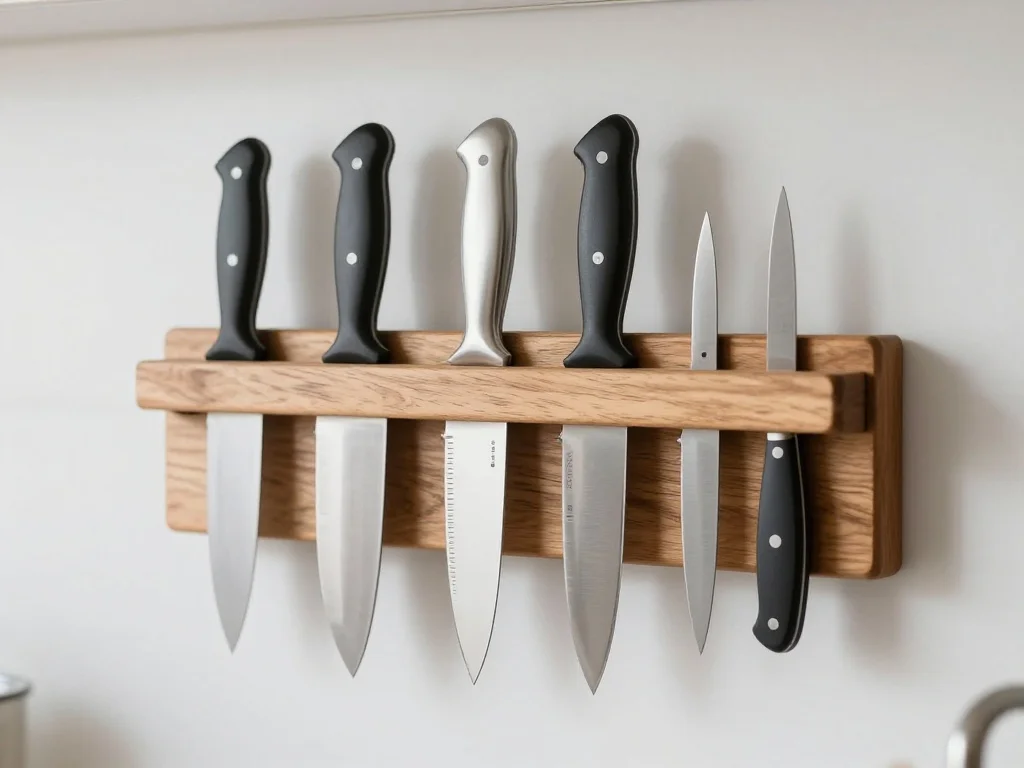
A knife block sitting on a countertop consumes a disproportionate amount of prime counter real estate. A magnetic knife strip mounted on the wall directly above or beside the prep area solves this problem while also keeping blades sharper for longer, since they are not rubbing against wood slots or other utensils in a drawer.
Magnetic strips are available in wood, stainless steel, and matte black finishes, making it easy to find one that complements your kitchen’s aesthetic. Beyond knives, magnetic strips can hold metal measuring spoons, a bottle opener, scissors, and other small metal tools. The result is a cleared counter and a cleaner workspace that feels noticeably more professional.
14. Use a Kitchen Island or Rolling Cart for Added Storage
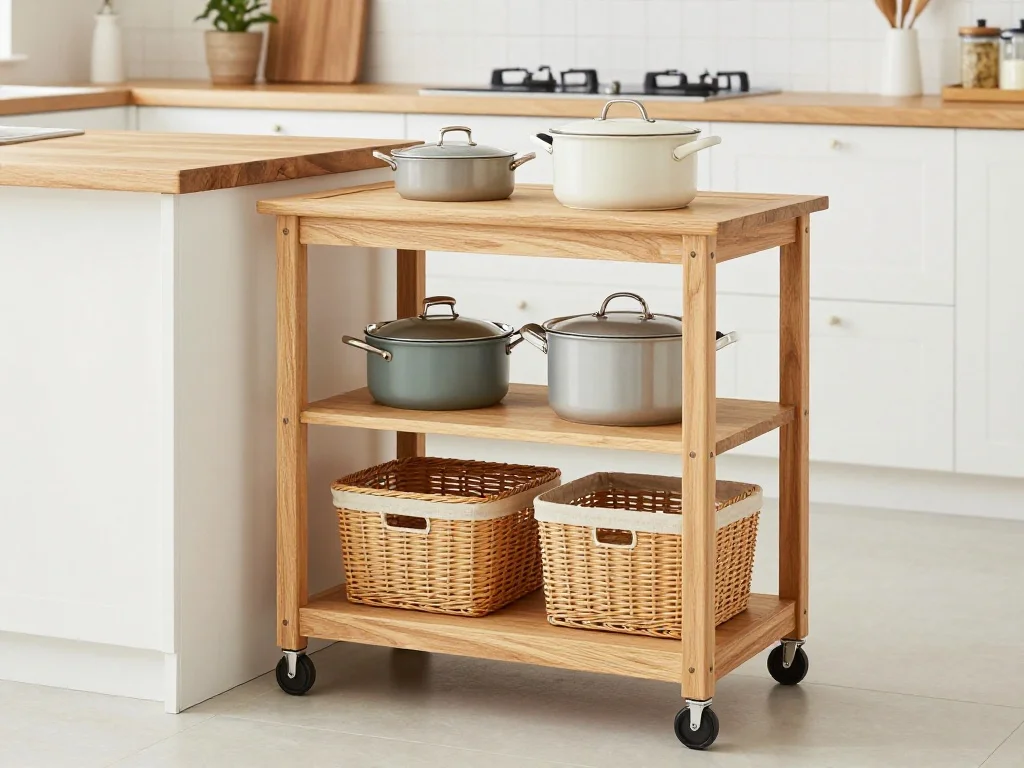
A kitchen island, whether built-in or on wheels, adds substantial storage capacity to any kitchen that has floor space to accommodate one. Islands with built-in shelving, drawers, and hooks on the sides provide dedicated storage for pots, wine bottles, cookbooks, and small appliances that would otherwise crowd the counters and cabinets.
For smaller kitchens, a rolling cart serves the same purpose without the permanence. A cart can be positioned wherever it is most useful during food preparation, then rolled out of the way or tucked against a wall when not in use. Many rolling carts feature multiple shelf tiers, hooks on the sides, and a butcher block top surface that doubles as extra prep space.
15. Declutter First, Organize Second
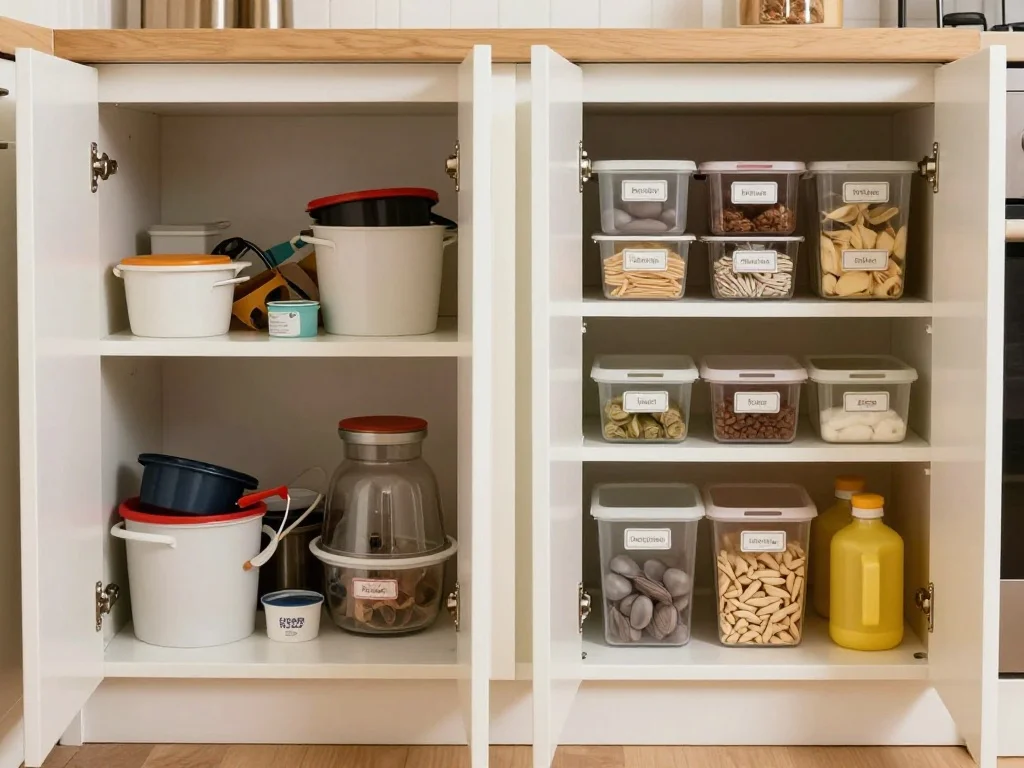
The single most important kitchen storage idea on this entire list costs nothing. Before purchasing a single organizer, container, or shelf, take inventory of what is actually in your kitchen and remove everything that does not belong there.
Duplicate tools, broken gadgets, expired pantry items, appliances that have not been used in over a year, and excess dishware all consume storage space that could be used for things you actually need. Professional organizers consistently report that decluttering alone, without adding a single new storage product, creates enough freed-up space to make a dramatic difference in most kitchens.
The discipline of working through one cabinet or drawer at a time, asking honestly whether each item earns its place, sets the foundation for every other storage strategy on this list. An organized kitchen is not built on clever products alone. It begins with clarity about what belongs in the space and what does not.
Conclusion
A well-organized kitchen changes the daily experience of everyone who uses it. Meals come together more smoothly, mornings feel less frantic, and the act of cooking becomes genuinely enjoyable rather than a navigation exercise through clutter. The 15 kitchen storage ideas covered in this article are not theoretical concepts. They are practical, accessible strategies that work in real kitchens of every shape and size.
The most effective approach is to start with decluttering, then address the areas that cause the most daily friction first. Whether that means installing a pot rack, adding pull-out shelves to your lower cabinets, or simply switching your dry goods to stackable containers, each improvement builds on the last. Over time, the cumulative effect of these changes is a kitchen that feels completely different, one where everything has a place and finding what you need takes seconds rather than minutes.
You do not need to renovate your kitchen or spend a large amount of money to achieve meaningful organization. You need a clear plan, a willingness to let go of what you do not use, and a handful of the right strategies applied consistently. Start with one idea from this list today, and let the results motivate you to keep going.
Frequently Asked Questions
Q1. What is the most effective kitchen storage idea for a small kitchen?
Vertical storage is the single most impactful strategy for small kitchens. Using the full wall height from counter to ceiling with floating shelves, tall cabinets, pegboards, and wall-mounted racks adds significant storage capacity without consuming any floor space.
Q2. How do I organize deep kitchen cabinets so nothing gets lost in the back?
Pull-out drawers or sliding shelf inserts installed inside deep cabinets bring the entire contents forward when the door is opened, eliminating the problem of items being pushed to the back and forgotten. Lazy Susans work equally well for corner cabinets with deep, awkward layouts.
Q3. What is the best way to store pots and pans without cluttering cabinets?
A ceiling-mounted or wall-mounted pot rack is the most space-efficient solution. It moves bulky cookware entirely out of cabinet space, keeps every piece individually accessible, and adds a professional look to the kitchen. If a rack is not an option, vertical pan organizers inside a lower cabinet are an excellent alternative.
Q4. How can I organize my pantry so I can actually find things quickly?
Transfer dry goods into uniform stackable containers with clear labels, group similar items together on dedicated shelves, use lazy Susans for bottles and jars, and add under-shelf baskets to double the effective capacity of each shelf level. Keeping frequently used items at eye level and lesser-used items on higher or lower shelves also makes a significant difference.
Q5. Is open shelving a practical kitchen storage option or just a design trend?
Open shelving is genuinely practical when used correctly. It works best for frequently accessed items such as everyday dishes, glasses, and cooking staples. The key to making it functional rather than cluttered is maintaining visual consistency with matching dishware and uniform containers, and committing to keeping only what belongs there on display.