16 Hot Tub Patio Ideas for the Perfect Backyard Retreat
There is something deeply satisfying about stepping into a steaming hot tub at the end of a long day, surrounded by a thoughtfully designed backyard hot tub patio ideas that feels like a world of its own. Hot tub patio ideas have evolved far beyond simply placing a spa on a concrete slab and calling it done. Today, homeowners are creating full outdoor living experiences that blend relaxation, aesthetics, and functionality into one seamless retreat.
Whether you are working with a sprawling suburban backyard or a compact urban patio, the right design choices can transform your outdoor space into a personal sanctuary. From sunken spas framed in natural stone to covered pergola setups draped in string lights, the possibilities are genuinely inspiring. This guide walks through 16 of the most compelling hot tub patio ideas, each one grounded in practical design thinking and proven aesthetic appeal. By the end, you will have a clear picture of how to build a backyard retreat that serves you for years to come.
1. The Sunken Hot Tub with Natural Stone Surround
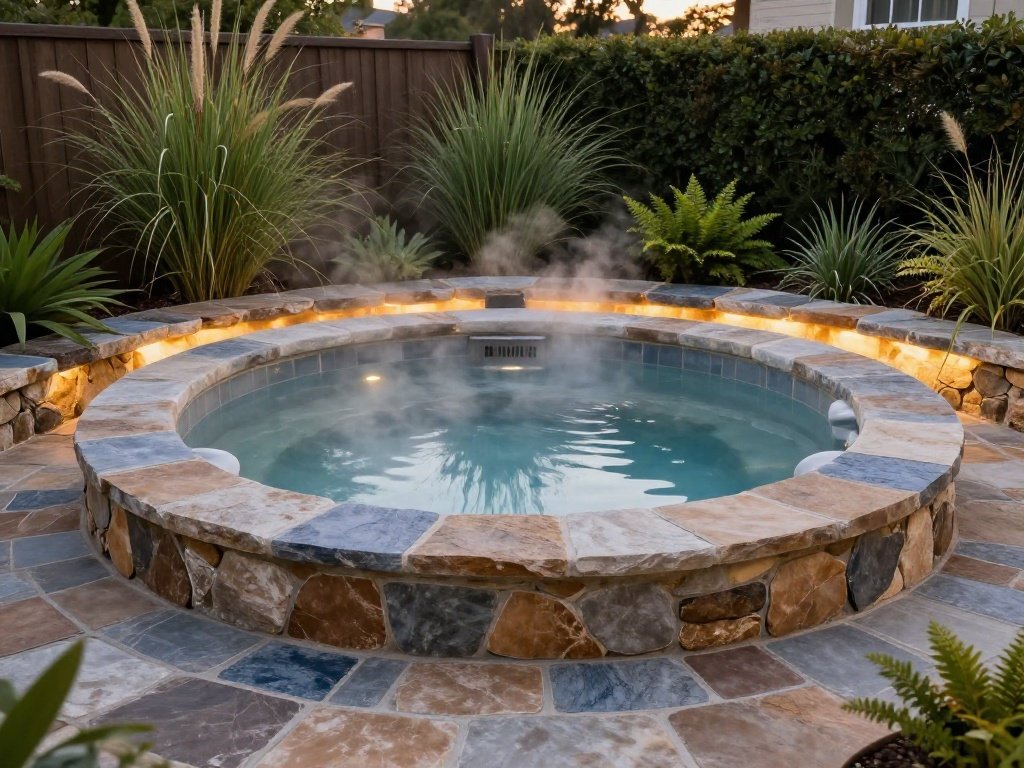
A sunken hot tub is one of the most sought-after installations in modern backyard design, and for good reason. By recessing the tub into the ground and framing it with natural stone, you achieve a resort-like finish that feels hot tub patio ideas permanent and polished. The low profile eliminates the awkward step-up that above-ground tubs often require, creating a seamless visual flow from patio to spa.
Flagstone, bluestone, and ledgestone are particularly popular choices for the surrounding coping. Their irregular textures and earthy tones complement water beautifully and blend naturally with outdoor landscaping. Pair this setup with ornamental grasses around the perimeter and you have a design that looks like it grew from the ground rather than being dropped into it.patio ideas
2. Pergola-Covered Hot Tub Patio
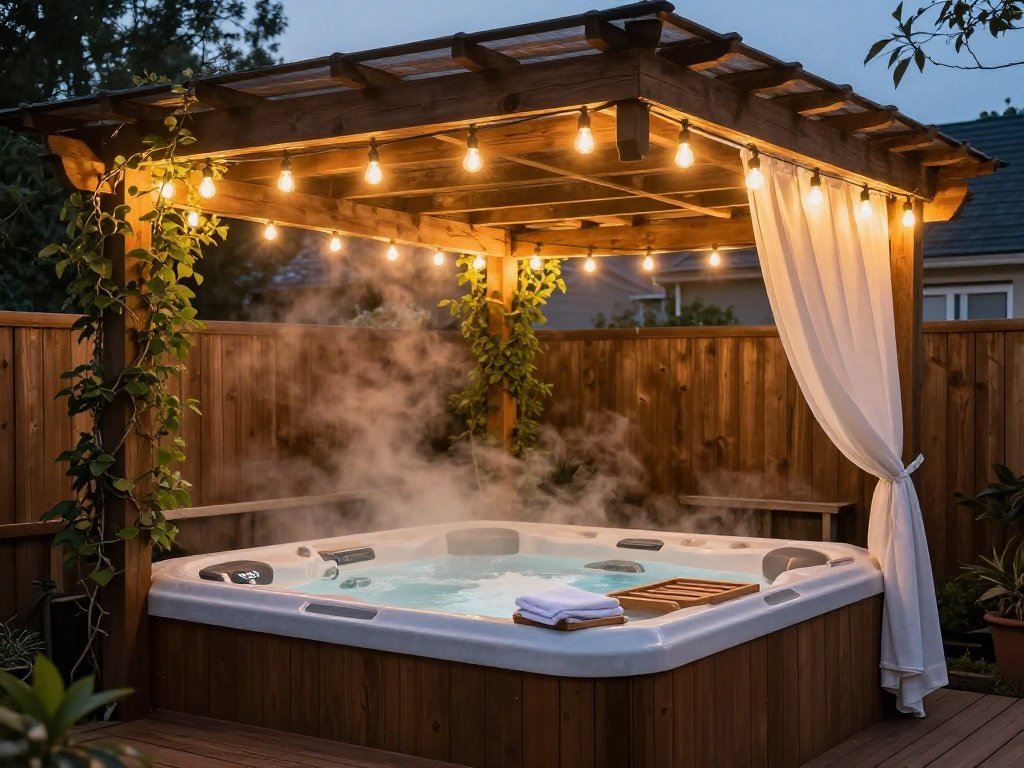
A pergola directly over a hot tub accomplishes several things at once. It creates shade during warmer months, provides a framework for climbing plants or string lights, and defines the spa area as a dedicated destination within the yard. Cedar and redwood are classic pergola materials, naturally resistant to moisture and visually warm against the steam rising from the water.
For added ambiance, wrap Edison bulb string lights across the pergola beams. On cool evenings, this combination of warm light, drifting steam, and wood overhead creates an atmosphere that no spa facility can replicate. You can further enhance the setup with sheer outdoor curtains that draw for privacy when needed.Backyard hot ideas
3. Hot Tub and Fire Pit Combination
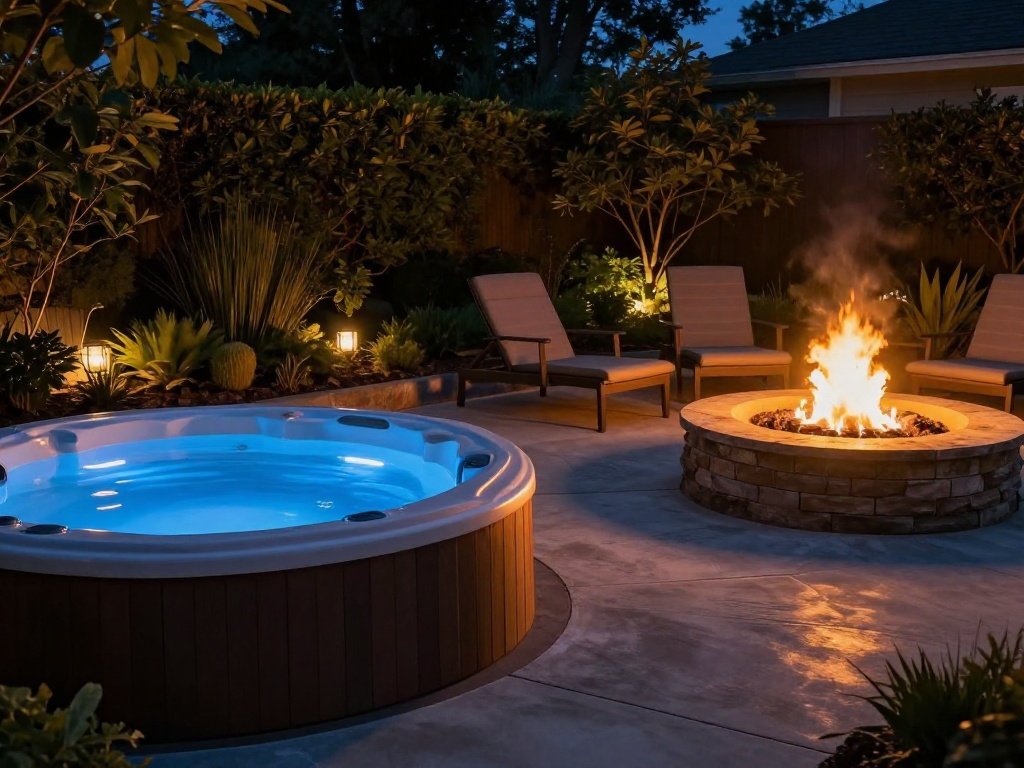
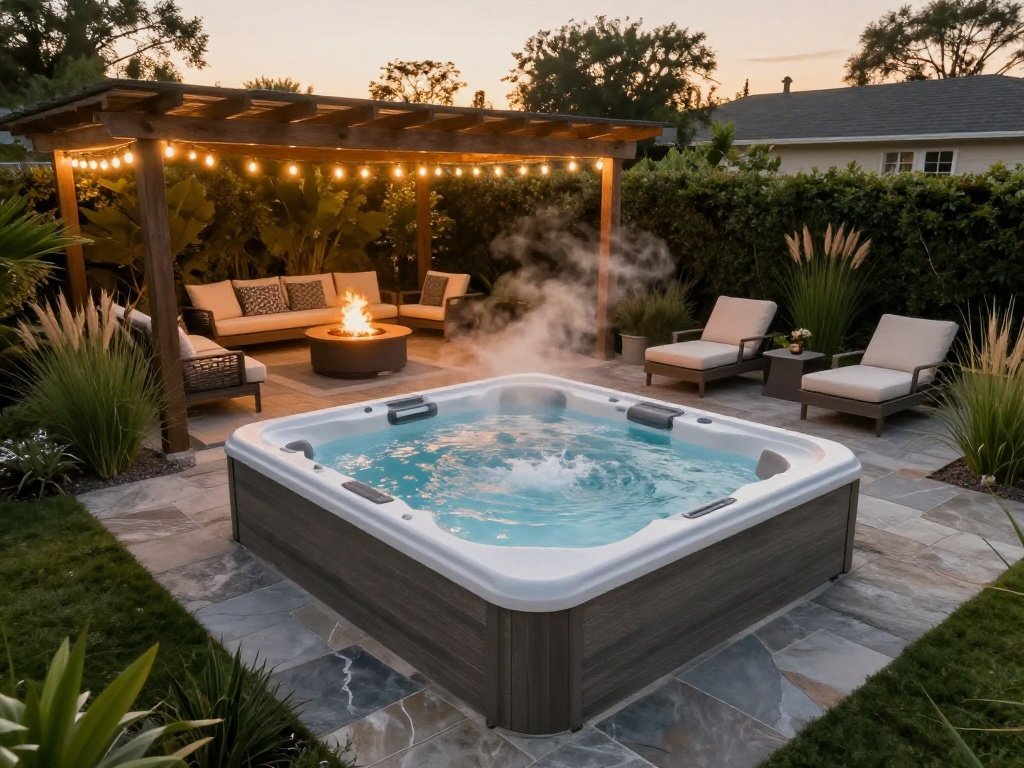
Pairing a hot tub with a fire pit is one of the smartest investments in outdoor entertaining. The two elements serve complementary purposes: the hot tub draws guests inward for quiet conversation and hydrotherapy, while the fire pit creates a gathering circle for larger groups. Together, they extend your outdoor season well into autumn and even winter.
Design-wise, position the fire pit and hot tub within easy visual connection but maintain a safe distance of at least ten feet between the two. Use non-flammable patio pavers in the shared zone and add weatherproof seating that bridges both areas. This layout creates a natural social flow that encourages guests to move between the warmth of the fire and the heat of the water throughout the evening.
4. Deck-Integrated Hot Tub
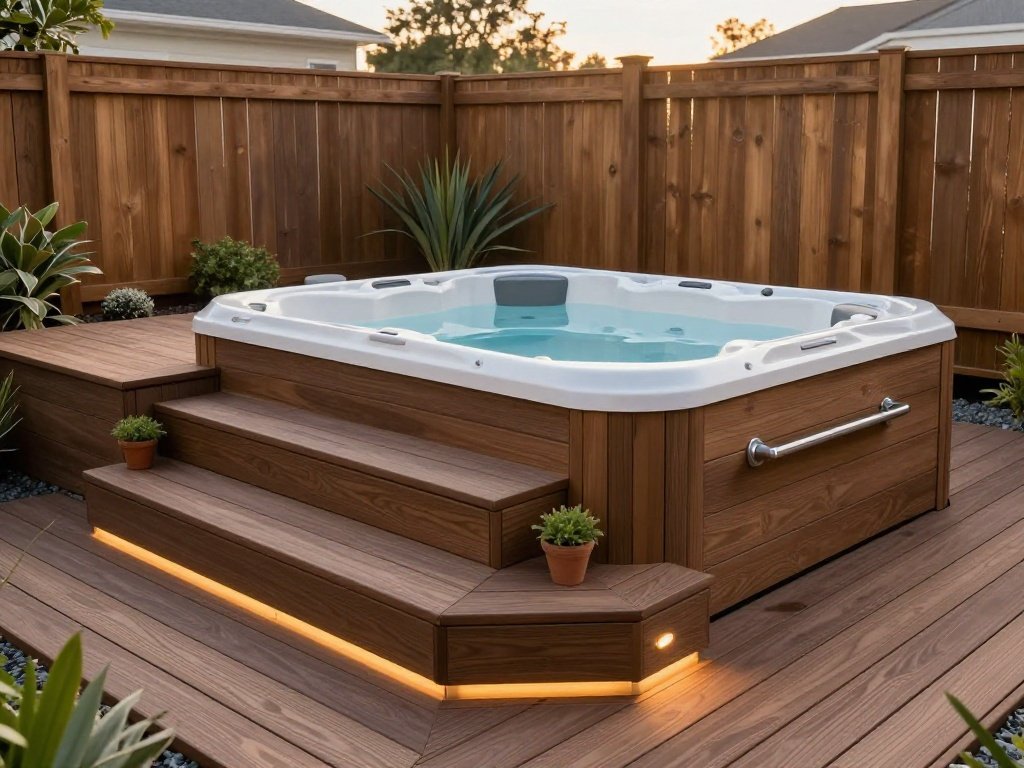
Building a wooden deck around or partially over a hot tub is one of the most popular approaches precisely because it delivers such a clean, finished result. The deck surface unifies the outdoor space, and a well-built surround with built-in steps makes entry and exit feel effortless rather than awkward.
Composite decking has become the material of choice for many homeowners because it resists moisture, fading, and splintering with minimal upkeep. Leave intentional gaps in the deck design for potted plants, built-in towel hooks, or low-voltage lighting fixtures. If the hot tub is slightly elevated, the deck can cascade down in gentle tiers, creating visual interest while also solving the grade change naturally.
5. Tropical Landscaping for a Resort Feel
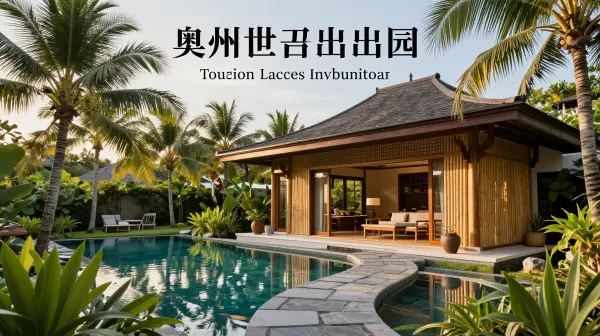
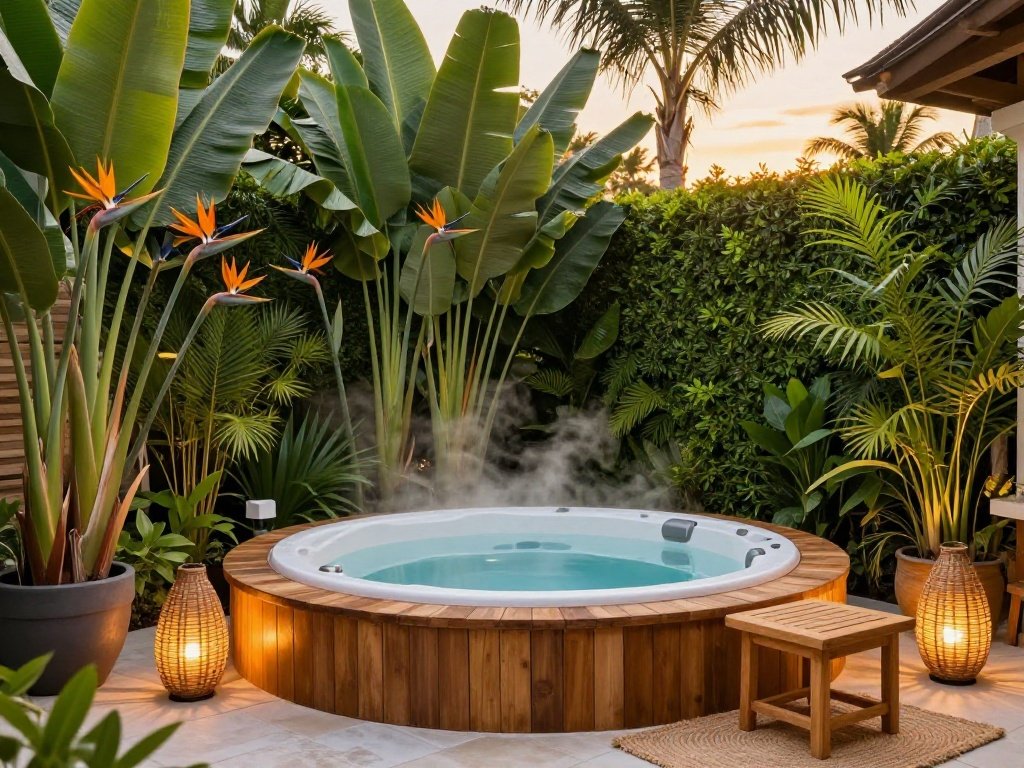
Few hot tub patio ideas deliver the instant transformation of tropical landscaping. Tall ornamental grasses, banana plants, bird-of-paradise, and dense hedging create walls of greenery that provide privacy while simultaneously transporting you to a warmer, more exotic climate.
The key to making this work outside of genuinely tropical regions is choosing hardy plants that can withstand your local winters while still projecting that lush, layered aesthetic. Bamboo in contained planters, arborvitae, and large-leafed hostas can all suggest tropical abundance even in more temperate gardens. Add a few outdoor lanterns, some natural fiber textiles, and a cedar tub surround, and the effect is complete.
6. The Modern Minimalist Setup
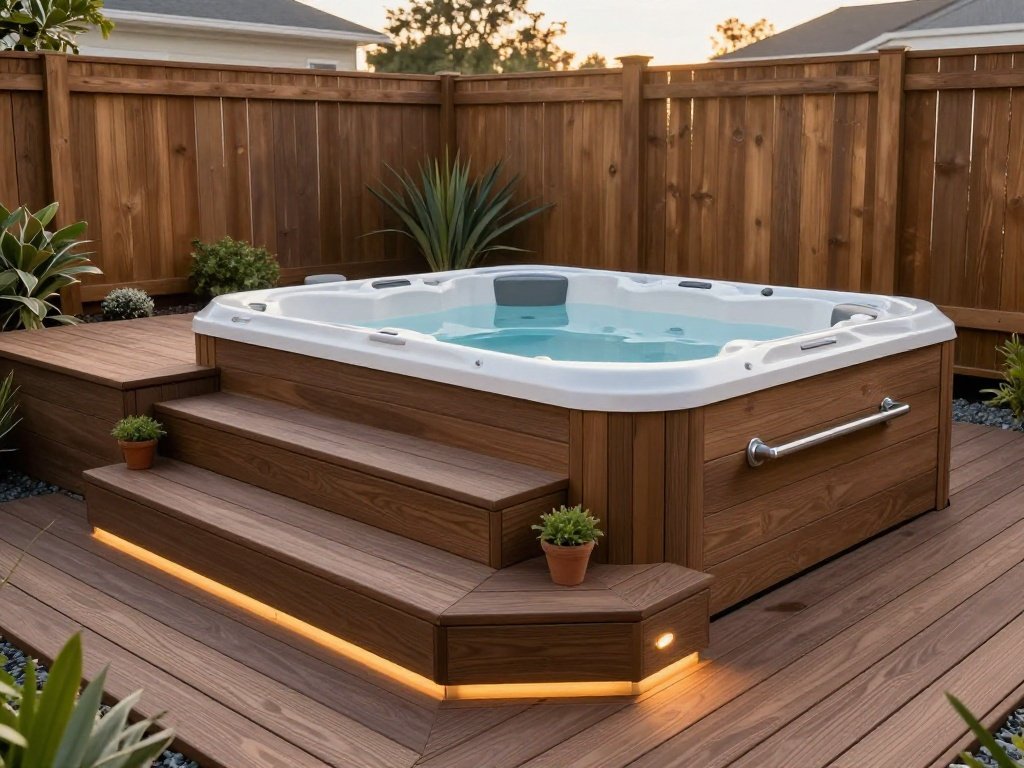
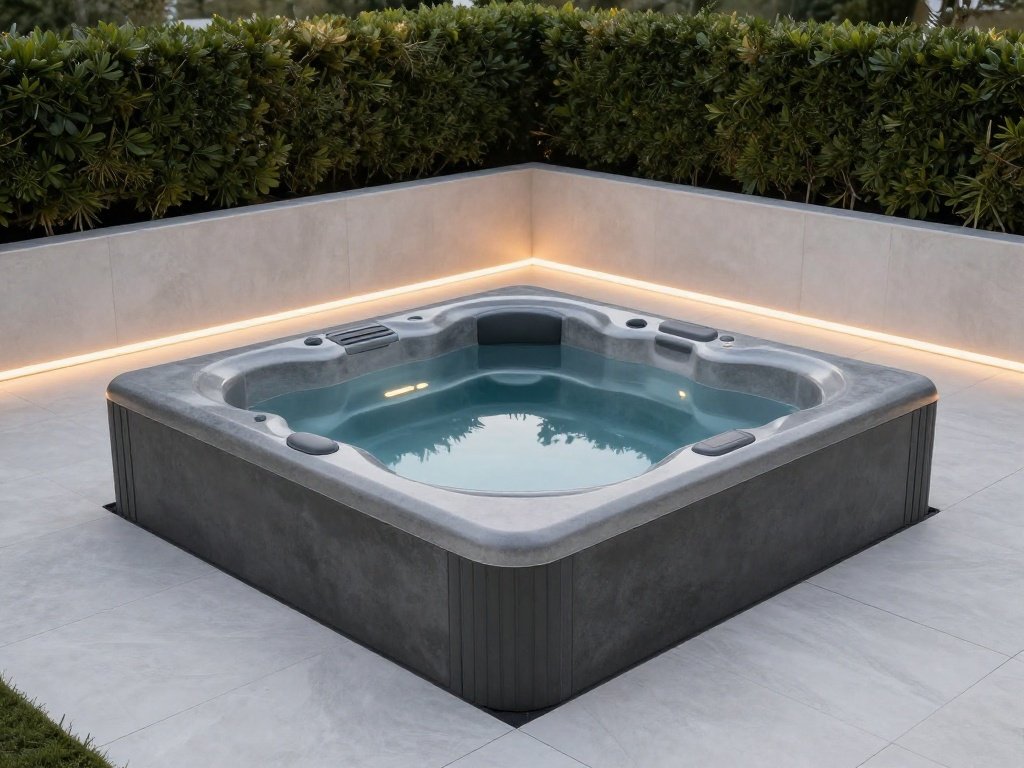
Contemporary hot tub patio design favors clean geometry, restrained material palettes, and purposeful simplicity. A square or rectangular spa set within a polished concrete surround, flanked by a single row of architectural planters and illuminated by recessed ground lighting, creates a space that feels both sophisticated and serene.
Color palettes in minimalist setups typically stay within charcoal, white, warm gray, and natural wood tones. The absence of visual clutter is precisely what makes these designs so powerful: the water itself becomes the focal point, and every surrounding element serves to frame it rather than compete with it. This approach works particularly well in urban backyards where the architecture of the home is modern or industrial.
7. Japanese-Inspired Soaking Tub Patio
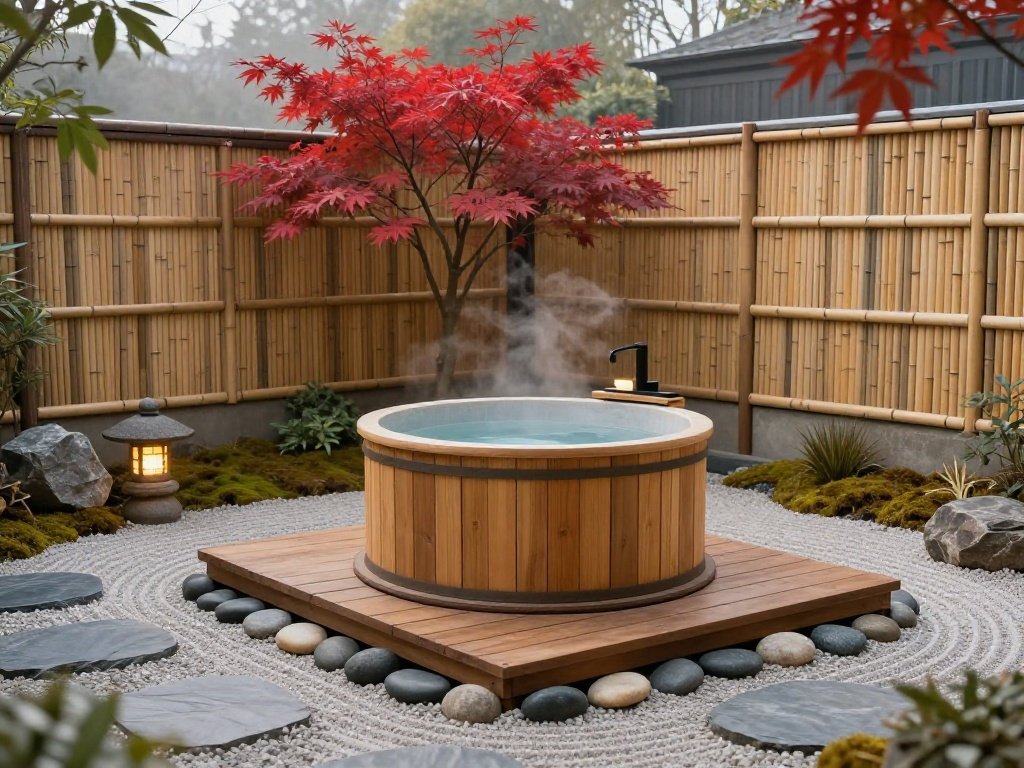
The Japanese soaking tub, or ofuro, brings centuries of bathing culture into the contemporary backyard. These cylindrical cedar tubs are typically deeper than standard spas, encouraging a meditative stillness rather than active hydrotherapy. Placed on a simple wooden deck with river stones, a bamboo fence, and perhaps a single specimen Japanese maple nearby, this setup achieves a profound sense of calm.
Japanese-inspired patios tend to use restrained planting, natural stone paths, and an intentional lack of clutter. The effect is not emptiness but edited simplicity, where each element has been chosen with care and placed with intention. A cedar tub darkens beautifully with age, taking on the character of the surrounding landscape over time.
8. Privacy Screens and Living Walls
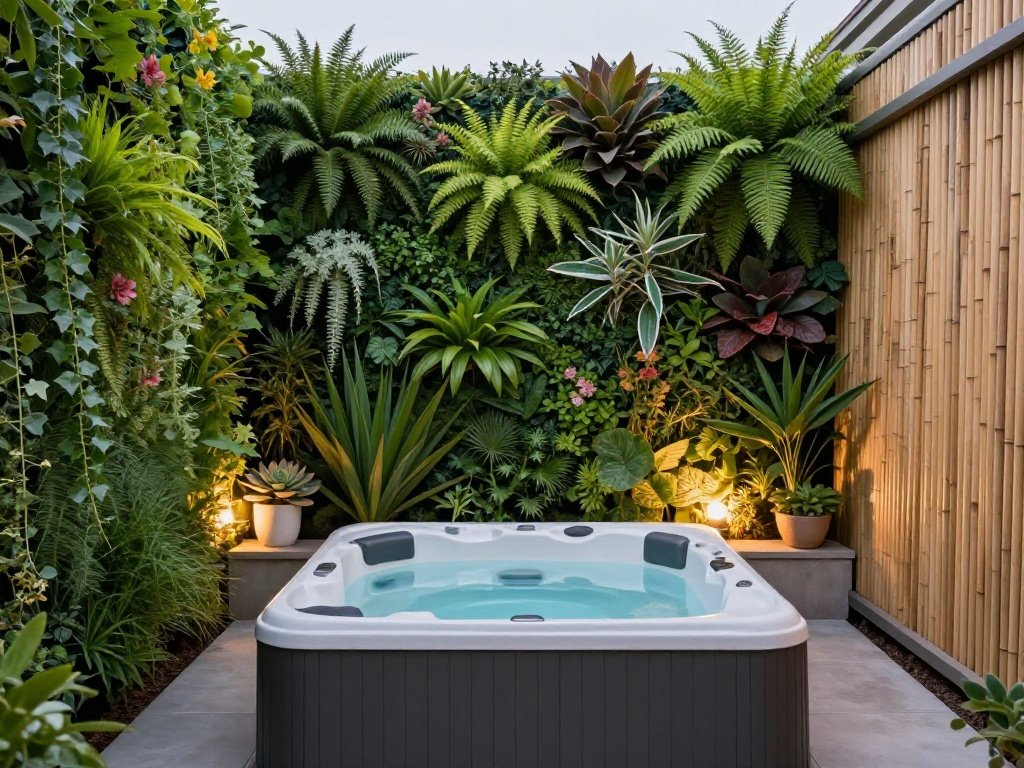
Privacy is one of the most practical concerns for any hot tub patio, and the most thoughtful designs address it without resorting to plain wooden fencing that feels more like a barrier than a design feature. Living walls planted with ferns, succulents, or fragrant herbs serve as both a privacy screen and a sensory experience, adding fragrance, texture, and colour to the spa environment.
Bamboo screens are another excellent option, offering immediate coverage with a natural, lightly exotic appearance. For homeowners who prefer a more architectural solution, powder-coated aluminum screens with geometric cutouts provide privacy while allowing air circulation and filtered light. The best approach often layers two or three of these elements together for coverage that feels lush rather than enclosed.
9. Stamped Concrete Patio with Integrated Spa
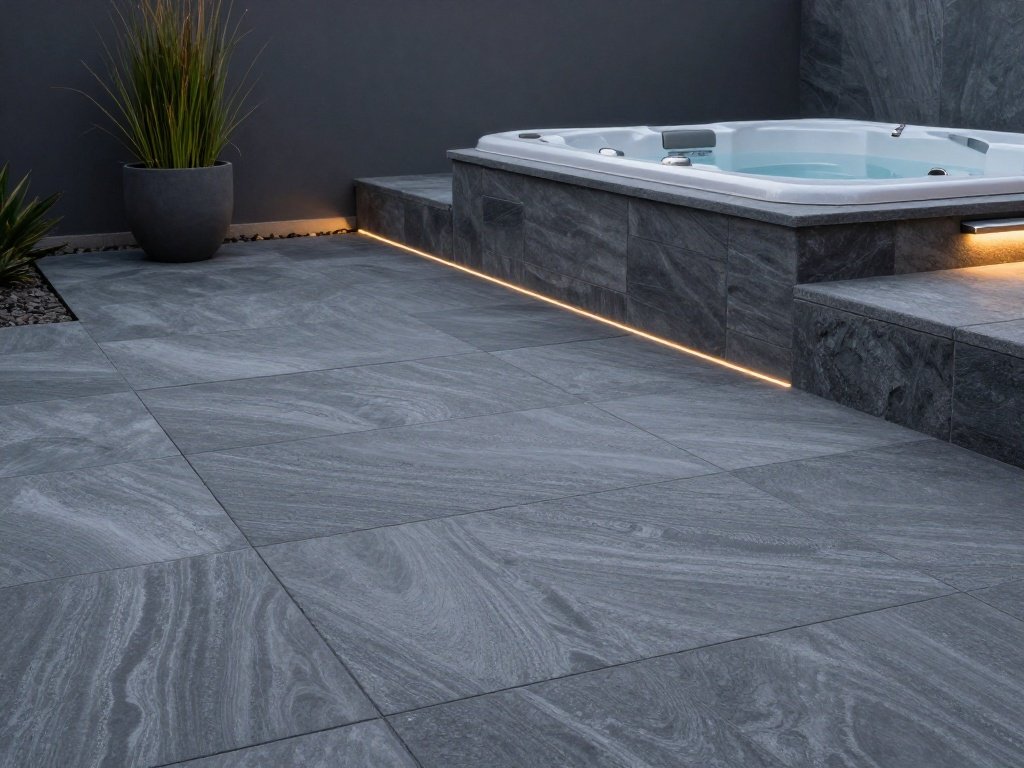
Stamped concrete is an underrated surface choice for hot tub patios. It can be textured to mimic slate, cobblestone, or wood planks, and it handles moisture and pool chemicals without deteriorating. More importantly, it can be poured in any configuration, allowing the patio to wrap organically around the hot tub shape rather than conforming to the rigid lines of standard pavers.
Extending the same stamped concrete surface up the sides of the hot tub enclosure creates a seamless visual unity that eliminates the disconnected look many above-ground spas can have. Choose a color that complements your home’s exterior palette, and seal the surface regularly to preserve both its appearance and its non-slip texture.
10. Hot Tub with Waterfall Feature
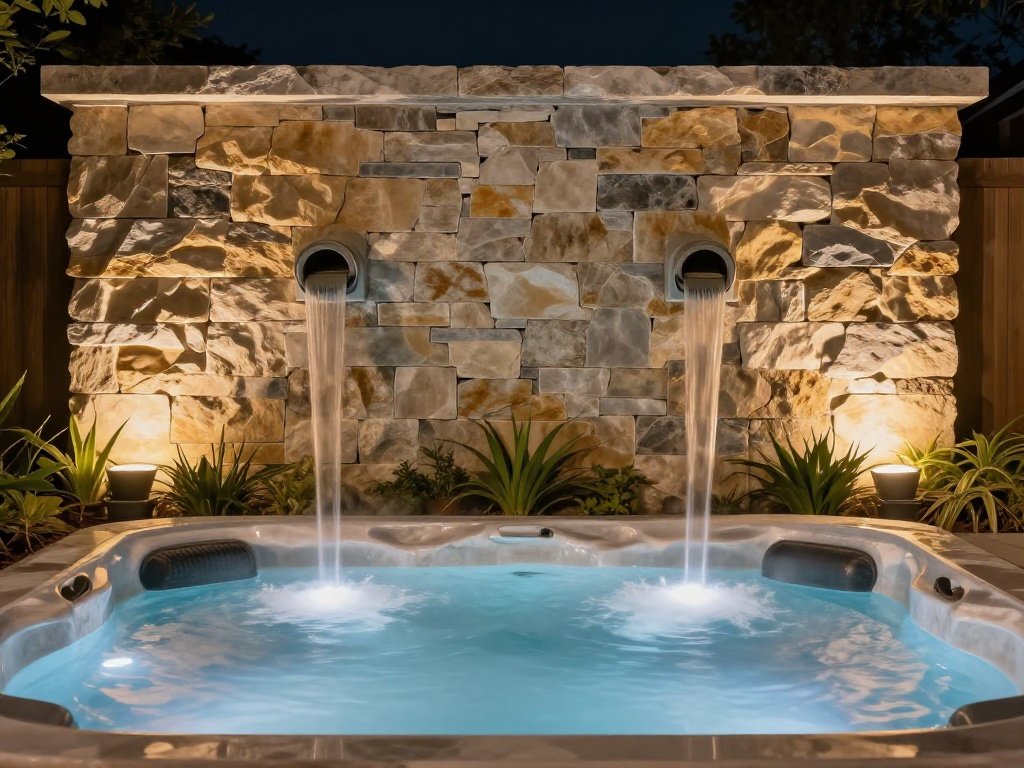
Adding a waterfall or water scupper to the side of a hot tub elevates the sensory experience considerably. The sound of trickling water is one of the most universally relaxing auditory experiences available, and when it is incorporated directly into the spa design, it deepens the sense that you have arrived somewhere genuinely restorative.
Water features built from ledgestone veneer with a limestone cap are among the most popular configurations. Custom scuppers that arc water in a graceful curve into the tub create a visual drama that still photographs beautifully and performs even better in person. Solar-powered fountain features can add smaller-scale water sounds at a much lower budget if a fully integrated waterfall is not within reach.
11. Corner Placement with L-Shaped Seating
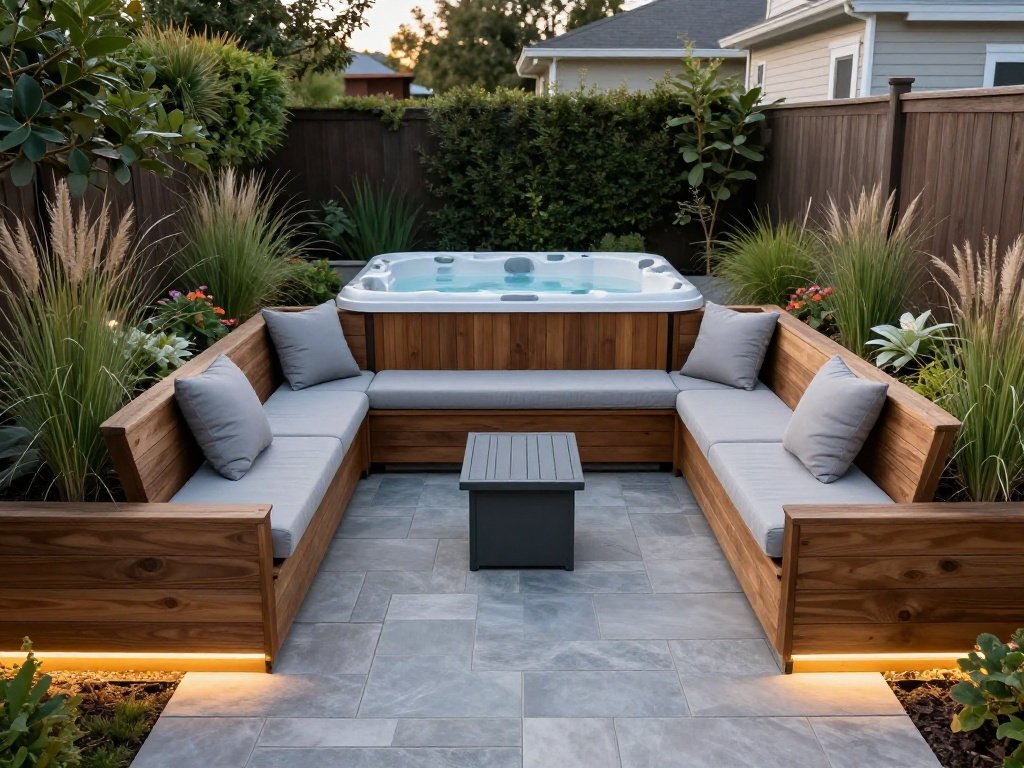
Tucking a hot tub into a corner of the patio accomplishes two practical goals: it preserves the center of the outdoor space for other uses, and it gives the spa an enclosed, intimate quality that feels appropriately private. An L-shaped seating arrangement wrapping around two sides of the tub creates a natural social configuration where guests can sit close to those soaking without needing to enter the water themselves.
This layout works particularly well in smaller backyards where every square foot of patio real estate matters. Raised timber garden beds in the two corners beside the tub can add vertical interest and soft greenery without consuming ground space. Use angled paving stones within the corner zone to give the area its own defined identity within the larger patio layout.
12. Gazebo-Enclosed Hot Tub Retreat
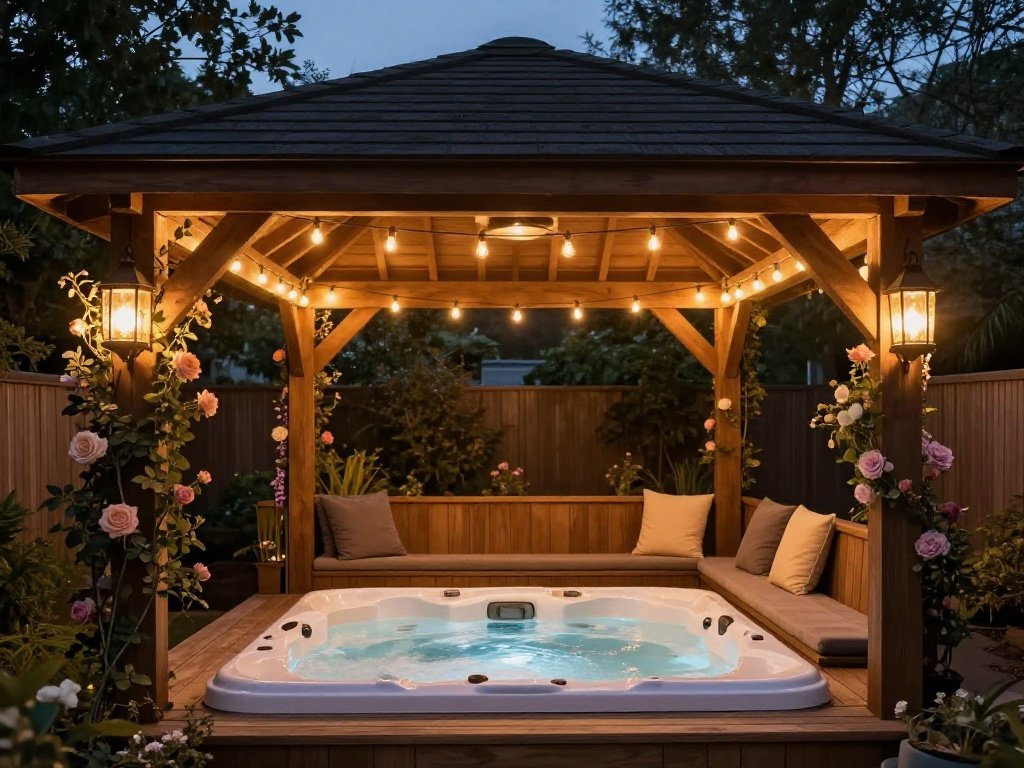
Enclosing a hot tub within a gazebo takes the patio spa experience to another level of comfort and privacy. A gazebo provides overhead protection from rain and sun, hot tub patio ideas extends the usable season into colder and wetter months, and creates a genuinely room-like atmosphere outdoors. Many homeowners find that a gazebo-enclosed spa becomes the most-used feature of their entire property.
Timber-framed gazebos with a solid roof and optional side panels offer the most versatility, allowing you to close off the structure entirely on cold or wet evenings while opening it up in summer. String lights woven through the overhead beams and a simple outdoor sound system can make the interior of the gazebo feel like a true destination.
13. Rustic Stone and Wood Aesthetic
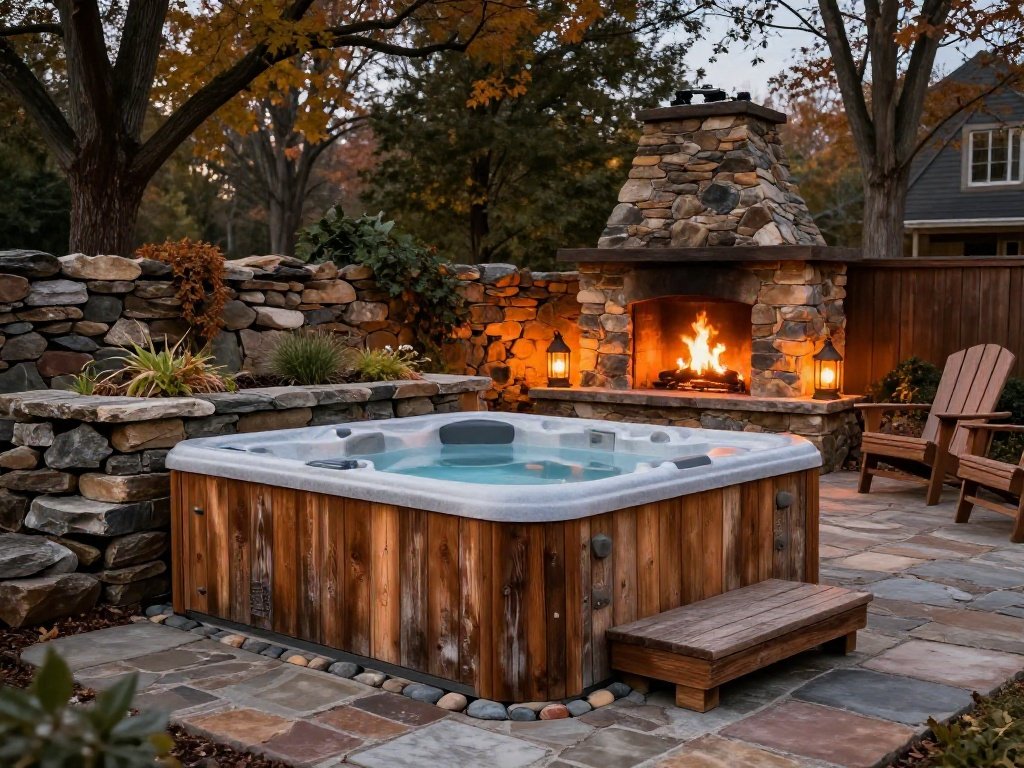
For homeowners whose properties lean toward a more natural or rural character, a hot tub patio built from rough-hewn stone, reclaimed timber, and aged wood delivers an authenticity that polished contemporary designs cannot hot tub patio ideas replicate. This approach treats the hot tub as an organic element of the landscape rather than a modern appliance placed within it.
Cobblestone or flagstone paving, a cedar or teak tub surround, stone retaining walls with creeping plants spilling over the edges, and the glow of outdoor lanterns rather than recessed LED lighting all contribute to this aesthetic. A stone fireplace or outdoor wood-burning hearth nearby completes the picture of a retreat that feels like it has been part of the landscape for generations.
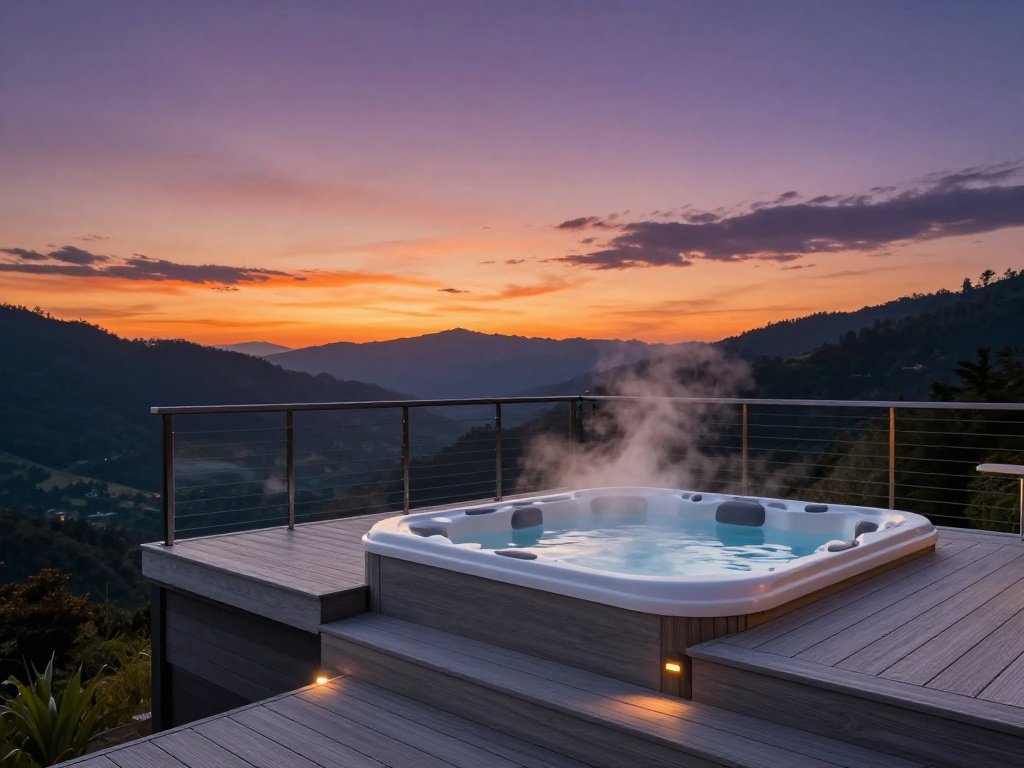
14. Elevated Deck Hot Tub with Panoramic Views
If your property includes a natural grade change or a view worth capturing, an elevated deck hot tub can be one of the most dramatic design moves available to you. Rather than fighting the slope, this approach uses it as an asset, building the deck out over the hot tub patio ideas grade to position the spa at exactly the right height for unobstructed views.
Full panoramic mountain, water, or cityscape views from a hot tub make the soaking experience genuinely transportive. Low-profile deck railings in glass or cable wire preserve the sightlines while meeting safety requirements. Recessed lighting along the deck stairs and perimeter ensures the space is as functional and safe at night as it is visually compelling during the day.
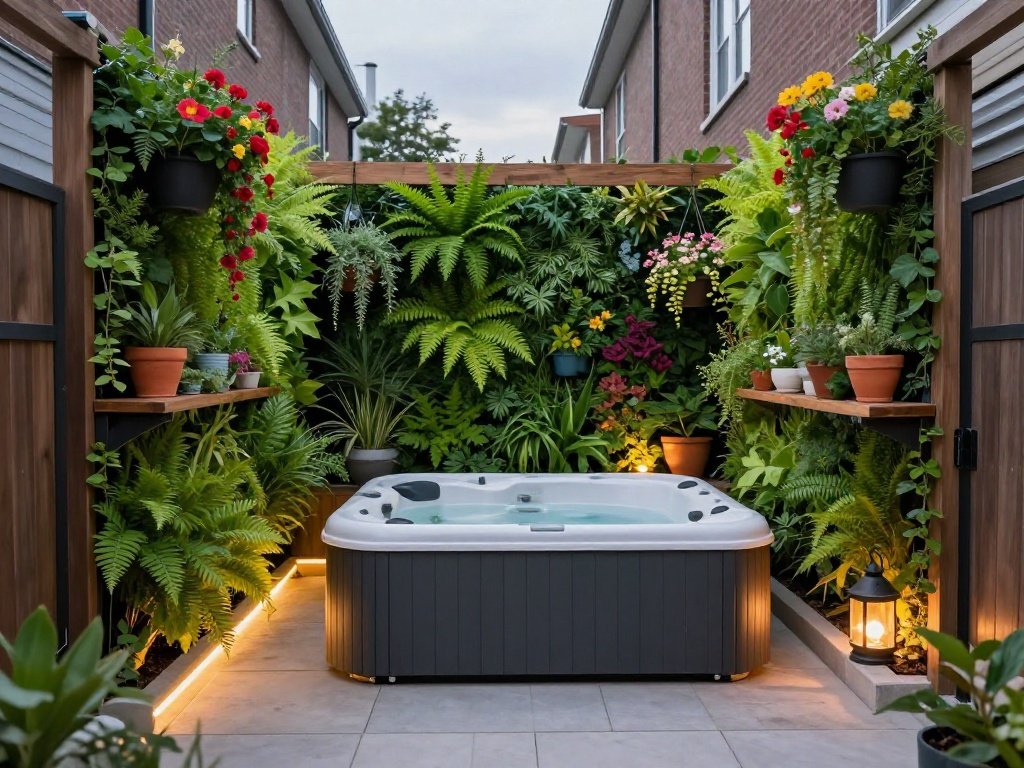
15. Small Backyard Hot Tub with Vertical Landscaping
Limited ground space is not the obstacle many homeowners believe it to be when it comes to hot tub patio design. The key to making a compact backyard spa area feel generous is to build vertically. Living walls with ferns, herbs, and flowering plants create a lush backdrop that the eye reads as abundance, even when the footprint of the garden is small.
Hanging baskets suspended from an overhead structure, mounted shelves holding compact planters and lanterns, and a single well-chosen specimen tree in a large container can all contribute to a vertical composition that transformshot tub patio ideas a tight space. Pair these elements with clever LED lighting along the fence line and beneath the hot tub decking, and a small backyard spa can feel genuinely luxurious after dark.
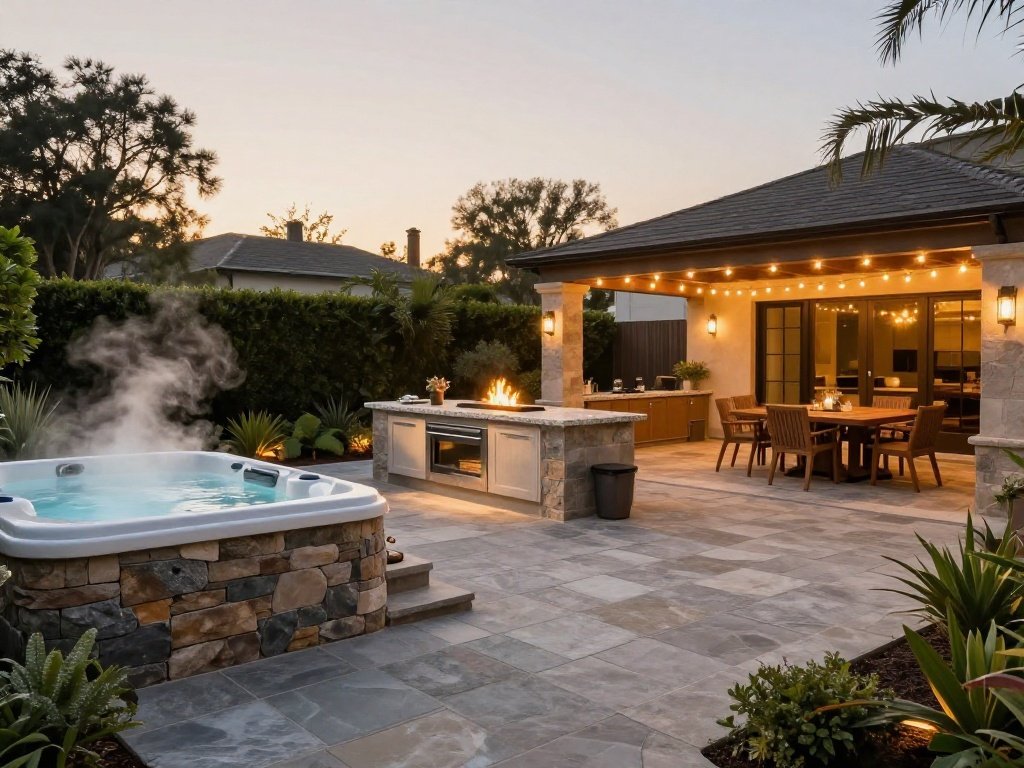
16. Fully Integrated Outdoor Living Zone
The most ambitious and rewarding of all hot tub patio ideas is the fully integrated outdoor living zone, where the spa, dining area, kitchen, seating, and fire feature are hot tub patio ideas all designed as a single cohesive composition rather than individual elements placed near one another. This approach requires more planning upfront but produces a result that functions better and looks dramatically more intentional.
Zone the outdoor space thoughtfully: the hot tub area benefits from some degree of visual separation from the dining and cooking zones, even if all three share the same patio surface. Use level changes, material transitions, or landscaping rows to hot tub patio ideas create that definition. When every element shares the same material palette, lighting scheme, and planting language, the backyard reads as a unified retreat rather than a collection of separate projects assembled over time.
Choosing the Right Surface for Your Hot Tub Patio
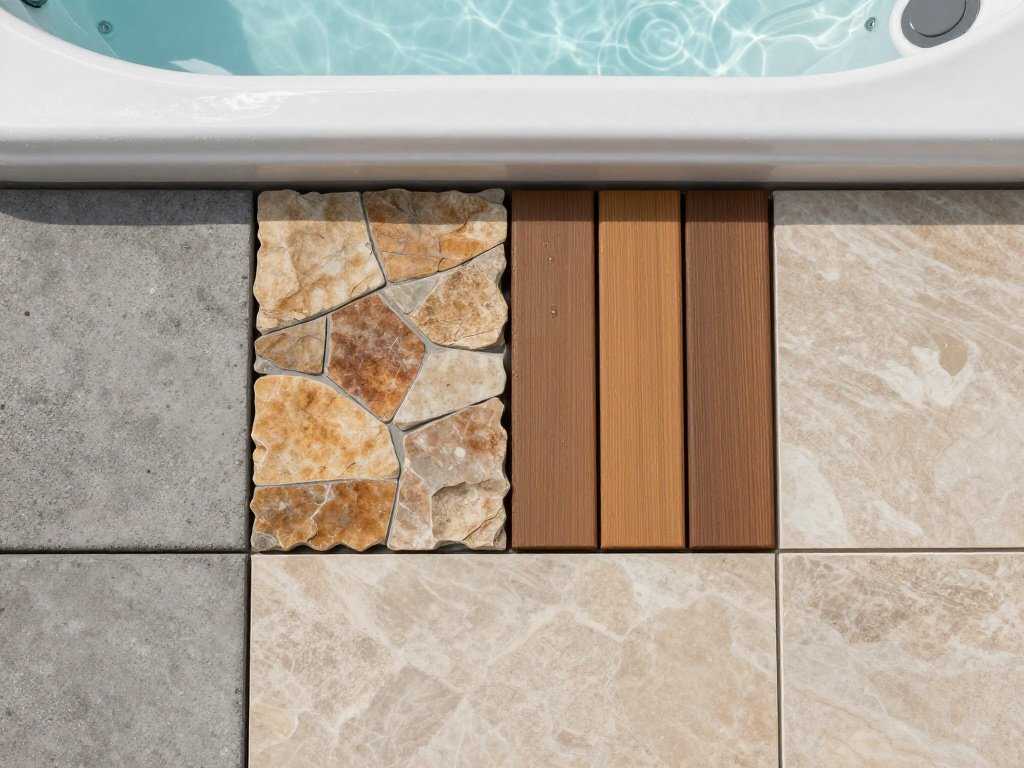
Before committing to any of the ideas above, it is worth understanding which patio surfaces are best suited to the demands of a hot tub environment. Surfaces must support significant weight, handle constant moisture, and remain non-slip even when wet. Natural stone pavers, stamped concrete, composite decking, and porcelain tile are all strong performers hot tub patio ideas in this respect.
Avoid materials that become slippery when wet or that absorb water and are prone to cracking in freeze-thaw cycles. Textured finishes, whether in stone, concrete, or tile, are always preferable around water. Gravel patio zones can work well as a surrounding element, providing drainage and a natural aesthetic, as long as a stable, smooth surface is provided immediately around the tub for safe entry and exit.
Lighting Your Hot Tub Patio
Lighting is the element that most transforms a hot tub patio after sunset, and the best hot tub patio ideas installations layer several types. Recessed ground lights along walkways and steps provide safety. String lights or pendant fixtures overhead create warmth and atmosphere. Underwater LED lights within the tub itself add color and drama. Low-level perimeter lighting along planting beds or fence lines defines the space without overpowering it.
Smart lighting systems that allow you to adjust color temperature and intensity from a phone app are increasingly hot tub patio ideas accessible and worthwhile. The ability to shift from a bright, energizing white light for evening entertaining to a soft, amber glow for a private late-night soak makes the investment in a flexible lighting system well justified.
Conclusion
Designing the perfect hot tub patio is ultimately an exercise in understanding how you want to feel when you are in your backyard. Every element, from the surface underfoot to the plants around the perimeter to the light overhead, contributes to an experience that is either restorative or merely functional. The 16 ideas explored in this guide represent a range of budgets, styles, and space constraints, but they all share a common commitment to intentionality.
Start with the ideas that resonate most strongly with your personal taste and your property’s existing character. Build in layers over time if the full vision is not immediately within budget. A thoughtfully chosen patio surface, one excellent privacy screen, and quality lighting can transform even the most basic hot tub setup into something hot tub patio ideas genuinely special. Your backyard retreat is closer than you think.
Frequently Asked Questions
1. What is the best patio surface to place a hot tub on? Stamped concrete, natural stone pavers, and composite decking are all excellent choices because they handle moisture well, resist slipping, and can bear the weight of a filled hot tub. Avoid untreated wood, which warps, and smooth tiles, which become dangerously slippery when wet.
2. How much space do I need around a hot tub on a patio? As a general guideline, allow a minimum of three feet of clearance on all sides of the hot tub for safe movement, maintenance access, and visual comfort. More generous spacing of four to five feet allows for built-in seating, planting beds, and a more relaxed overall layout.
3. How can I add privacy to my hot tub patio without ruining the design? Living walls, bamboo screens, pergolas with side curtains, and tall ornamental grasses are all effective privacy solutions that double as design features. Layering two or three of these elements creates coverage that feels lush rather than enclosed or utilitarian.
4. Can I use a hot tub on my patio year-round? Yes, most modern hot tubs are engineered for year-round use and are well-insulated. Adding overhead coverage such as a pergola, gazebo, or louvred roof makes cold-weather soaking considerably more comfortable and extends the usability of the entire patio space through colder months.
5. What plants work best around a hot tub patio? Hardy evergreens such as arborvitae, boxwood, and privet hedges provide year-round privacy and greenery. Ornamental grasses add movement and texture. For a more tropical feel, banana plants, bird-of-paradise, and large-leafed hostas create bold visual impact. Choose moisture-tolerant varieties and avoid plants that shed heavily into the water.