16+ Clever and Easy Door Ideas for Your Home
Walking through your home day after day, you might not give much thought to your doors. They simply exist as functional barriers between rooms, quietly doing their job without fanfare. Yet these often-overlooked architectural elements hold tremendous potential to transform your living spaces. Whether you’re looking to refresh a single room or undertake a whole-home update, doors offer one of the most accessible and impactful opportunities for change.
The beauty of door renovations lies in their versatility. From simple afternoon projects requiring nothing more than a paintbrush to weekend installations that completely re imagine how your rooms connect, door improvements accommodate every skill level, budget, and design preference. Unlike major renovations that disrupt your entire household, door updates deliver dramatic visual results while keeping mess and inconvenience to a minimum.
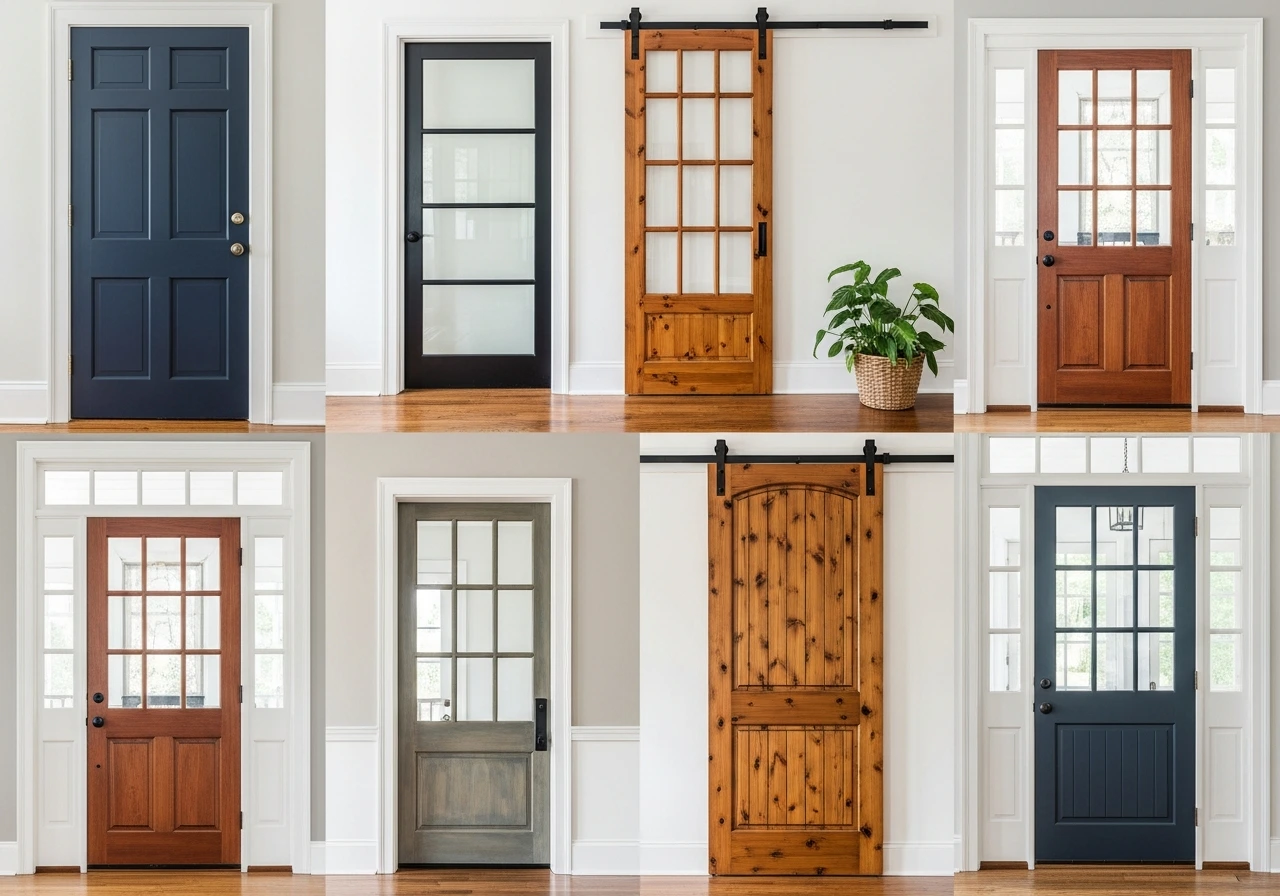
This comprehensive guide presents over sixteen practical door ideas that will help you elevate your home’s aesthetic appeal and functionality. Each suggestion has been selected for its achievability, offering clear pathways for homeowners who want professional-looking results without professional-level complexity. Whether you’re drawn to contemporary minimalism, cozy farmhouse charm, or timeless traditional elegance, you’ll find inspiration that aligns with your vision.
Paint Your Way to a Fresh Look
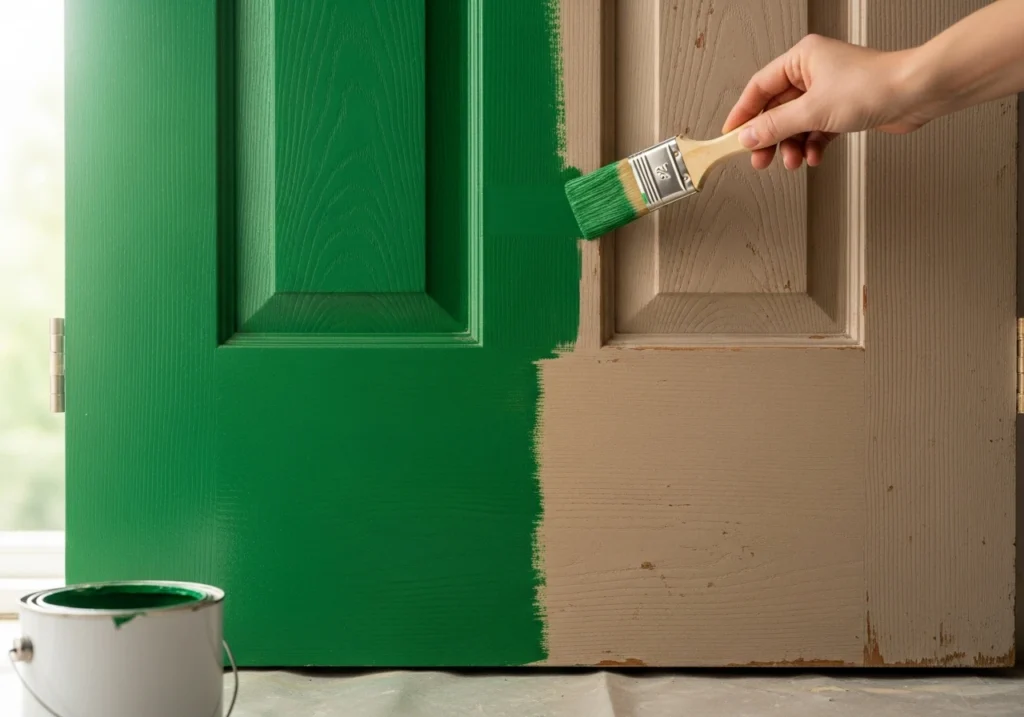
Nothing transforms a door faster than a fresh coat of paint. This single change can shift the entire mood of a room, creating drama, serenity, or playfulness depending on your color choice.
Bold, saturated colors have surged in popularity for interior doors. Deep navy blues create sophisticated contrast against neutral walls, while emerald greens bring organic richness to living spaces. For those seeking warmth, terracotta and burnt orange tones infuse rooms with inviting energy. Black doors offer striking architectural definition, particularly effective in homes with white or light gray walls.
The process requires minimal investment. Quality interior paint, primer if you’re making a dramatic color shift, painter’s tape, and basic brushes or rollers comprise your entire supply list. Remove the door from its hinges for easiest application, though painting in place works for quick refreshes. Two coats typically suffice, with light sanding between applications ensuring smooth, professional results.
Consider extending your color story beyond solid applications. Two-tone doors, with different colors on each side, let you coordinate with the distinct color schemes of adjoining rooms. Alternatively, paint just the door trim in a contrasting shade while keeping the door panel neutral, creating subtle visual interest without overwhelming the space.
Upgrade Hardware for Instant Sophistication

Door hardware serves as jewelry for your interior architecture. Swapping outdated or builder-grade handles, knobs, and hinges creates immediate refinement, often for less than fifty dollars per door.
Modern lever handles in brushed brass or matte black finishes align with contemporary design trends, replacing dated polished brass or chrome fixtures. For traditional homes, oil-rubbed bronze or antique pewter hardware reinforces classic character. Crystal or glass knobs add vintage charm, particularly suitable for bedrooms and bathrooms in older homes.
Beyond handles, consider hinge upgrades. Switching to decorative hinges in coordinating finishes with your handles creates cohesive polish. For French doors or other glass-paneled options, ornamental hinges become decorative features rather than purely functional components.
The installation process requires only a screwdriver in most cases. Measure your existing hardware’s dimensions before purchasing replacements to ensure proper fit. Standard door preparations accommodate most hardware, though occasionally you may need to fill old screw holes with wood filler if new hardware doesn’t align perfectly with existing holes.
Install Sliding Barn Doors for Space-Saving Style

Sliding barn doors have transcended their farmhouse origins to become versatile solutions for homes of every style. These space-efficient alternatives to traditional swing doors work beautifully for closets, bathrooms, pantries, and room dividers.
The practical advantages extend beyond aesthetics. Conventional doors require clearance radius for opening and closing, consuming valuable floor space. Sliding doors eliminate this requirement, making them ideal for tight hallways, small bathrooms, or any area where furniture placement conflicts with door swing patterns.
Installation kits have simplified the process considerably. Most hardware sets include the track, rollers, mounting brackets, and detailed instructions. You’ll need basic tools like a drill, level, and stud finder. The door itself can be purchased pre-made or constructed from reclaimed wood for authentic rustic character.
Style variations abound. Clean-lined doors with minimal paneling suit modern interiors, while five-panel or cross-buck designs enhance farmhouse aesthetics. Paint, stain, or leave natural depending on your existing décor. Track finishes ranging from industrial black to elegant brushed nickel ensure hardware complements your design vision.
Add Glass Panels for Light and Openness
Replacing solid wood panels with glass transforms doors from barriers into light conduits. This modification proves particularly valuable in darker hallways, small rooms, or homes where natural light struggles to penetrate interior spaces.
Several approaches accommodate different skill levels. For existing paneled doors, you can remove center panels and install glass inserts with trim molding securing them in place. This preserves your door’s character while adding transparency. Alternatively, replacing entire doors with French doors or glass-paneled options provides maximum light transmission.
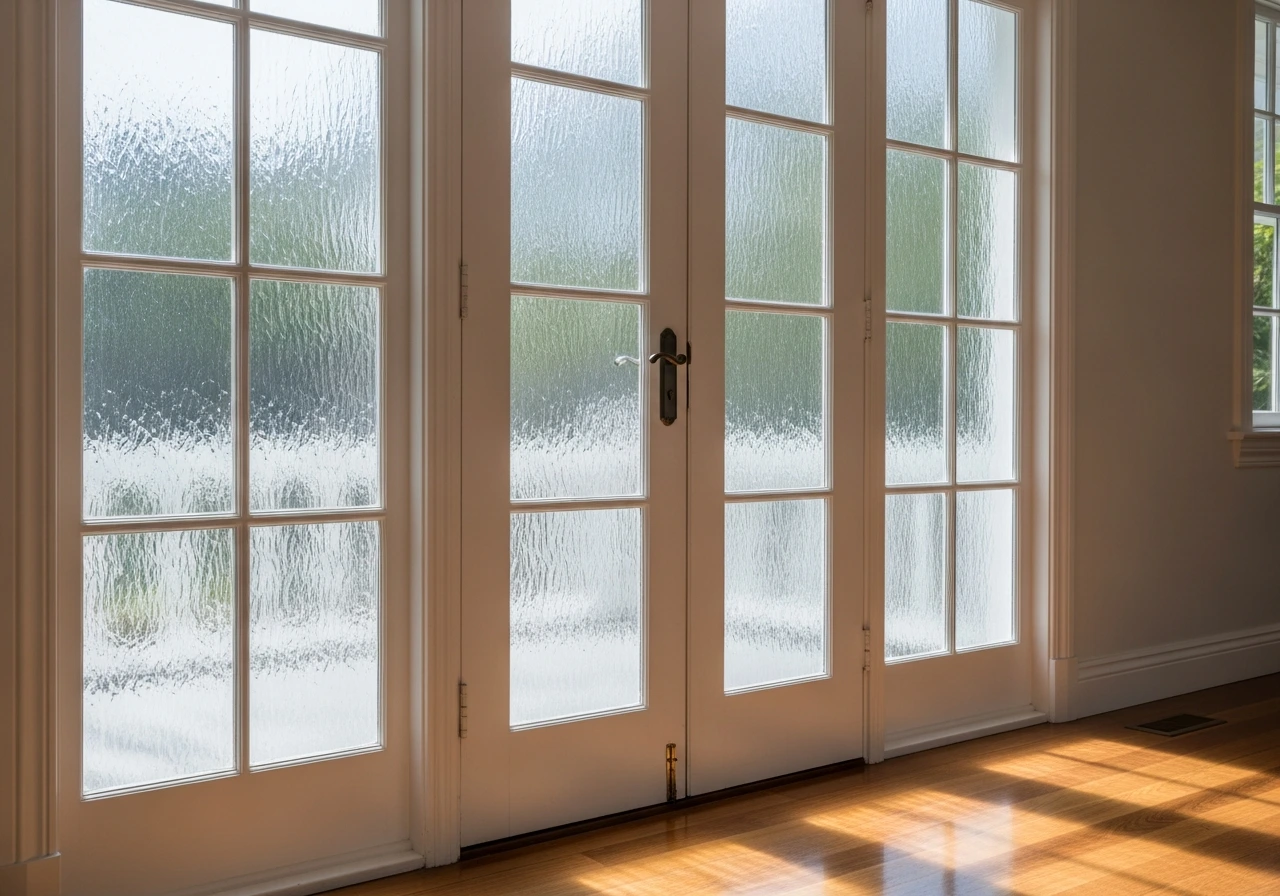
Privacy considerations guide glass selection. Clear glass suits spaces where visibility poses no concern, such as between kitchen and dining areas. Frosted, textured, or seeded glass maintains privacy while still allowing light passage, appropriate for bathrooms, home offices, or bedrooms. Decorative glass with etched patterns or stained glass elements adds artistry alongside functionality.
For rental properties or those hesitant about permanent modifications, removable window film offers reversible privacy solutions. These adhesive films come in countless patterns and opacity levels, transforming clear glass doors without tools or lasting alterations.
Create Drama with Dutch Doors
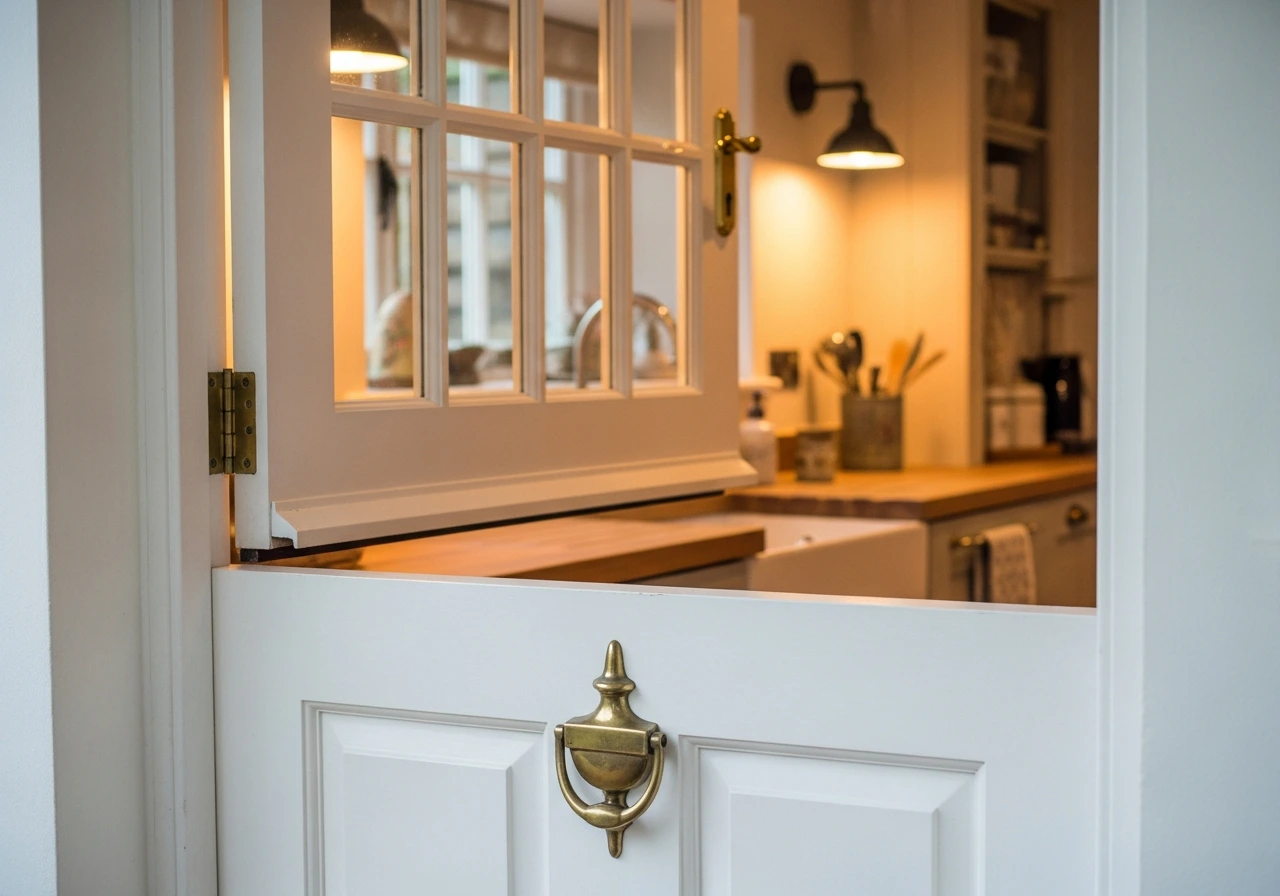
Dutch doors, split horizontally to allow independent opening of top and bottom halves, bring whimsical charm and practical versatility to homes. Originally designed for farmhouses where the top could open for ventilation while the bottom kept animals outside, they now serve as delightful conversation pieces.
The split functionality offers modern benefits. Open the top half to maintain air circulation while containing pets or small children. Use it as a serving pass-through during gatherings. In home offices, the closed bottom maintains boundaries while the open top preserves connection with household activities.
Creating a Dutch door from an existing solid door requires moderate woodworking skills. You’ll cut the door horizontally, typically about three feet from the floor, install additional framing for stability, and add a latch mechanism to lock the halves together when desired. Alternatively, purchasing pre-made Dutch doors simplifies installation while ensuring structural integrity.
These doors work exceptionally well for pantries, laundry rooms, mudrooms, and children’s bedrooms. Paint the halves different colors for playful cottage appeal, or maintain uniform finish for understated elegance.
Replace Closet Doors with Curtains

Fabric curtains offer budget-friendly, flexible alternatives to traditional closet doors. This approach particularly suits bedrooms where soft textiles contribute to cozy atmospheres.
The advantages extend beyond cost savings. Curtains require no floor clearance, sliding smoothly along mounted rods even in cramped quarters. They conceal irregular or damaged door frames that would show around bifold or sliding doors. Seasonal changes become effortless, simply swap curtain panels to refresh your room’s look.
Installation requires only a curtain rod mounted above the closet opening. Standard tension rods work for narrow closets, while wall-mounted rods provide sturdier support for wide openings. Choose fabric that coordinates with your bedding, window treatments, or wall colors. Heavy fabrics like velvet or canvas provide better concealment than lightweight sheers.
For a polished appearance, select curtains slightly wider than your opening, creating gentle gathers when closed. Floor-length panels create streamlined vertical lines, while café-length curtains suit closets where you want to display shoes or storage boxes below.
Incorporate Frosted Glass for Modern Privacy

Frosted glass doors strike the perfect balance between openness and privacy, making them ideal for bathrooms, home offices, and walk-in closets. The translucent surface allows light passage while obscuring detailed views.
Modern frosted glass doors feature clean lines and minimal frames, contributing to contemporary aesthetics. They make small bathrooms feel more spacious by preventing the visual dead end created by solid doors. In office spaces, they maintain professional boundaries while preventing the isolation of completely enclosed rooms.
Installation mirrors standard door hanging, though the material requires careful handling to prevent chips or cracks. For existing glass doors, frosting film provides an affordable transformation. These adhesive products come in varying opacity levels and can include decorative patterns or borders.
Maintenance remains simple. Glass surfaces wipe clean easily, resisting the smudges and wear that accumulate on painted wood doors. Fingerprints show less on frosted surfaces compared to clear glass, making them practical for high-traffic areas.
Add Decorative Trim and Molding
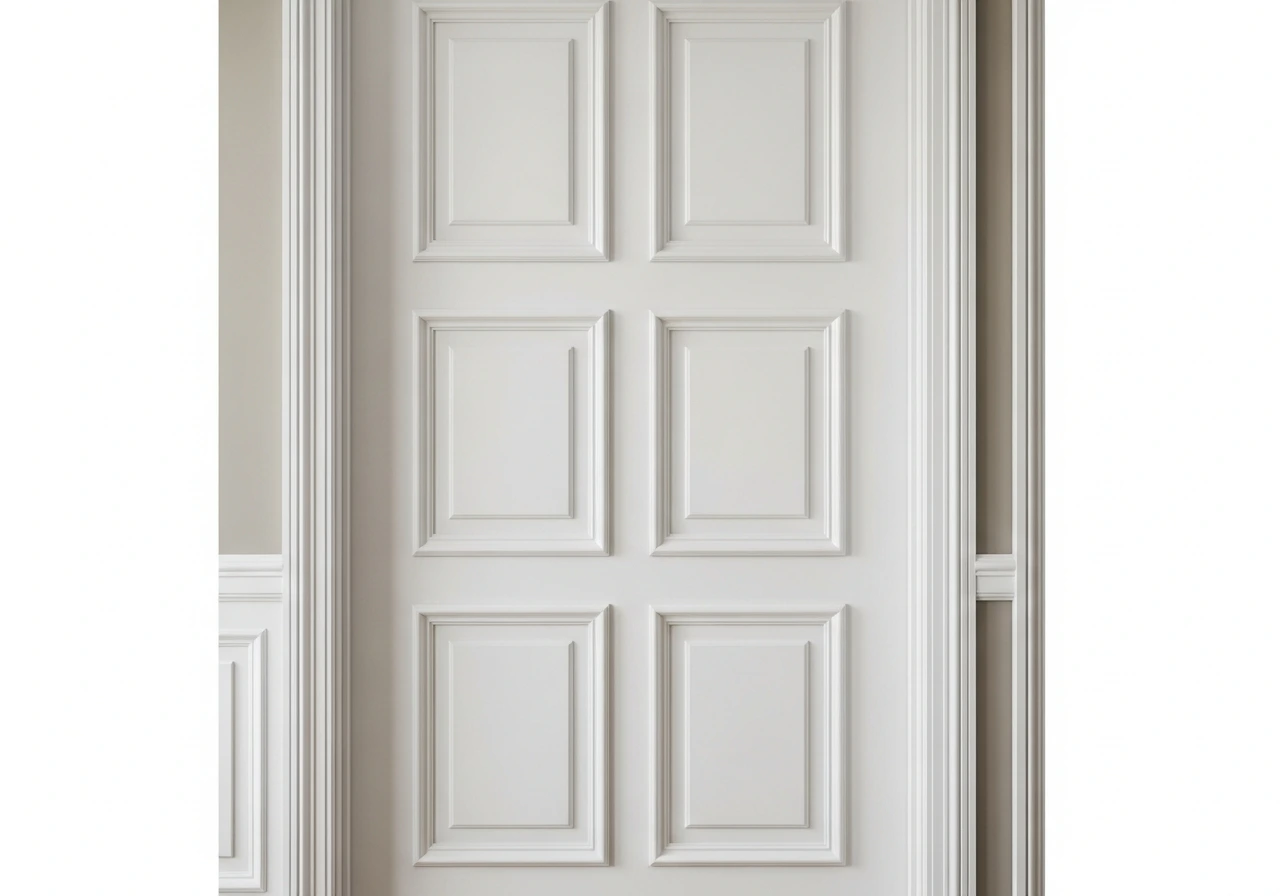
Architectural details transform plain slab doors into distinguished features. Adding trim and molding creates depth, shadow, and visual interest through relatively simple carpentry.
Picture frame molding, applied in rectangular patterns to flat doors, mimics traditional paneled doors at a fraction of the cost. This technique works with any molding profile, from simple cove molding for understated elegance to more ornate chair rail or crown molding for dramatic impact. Measure and cut pieces to create balanced proportions, typically using one large rectangle or multiple smaller panels.
The process requires a miter saw for precise angle cuts, wood glue, finishing nails, and paint or stain to match your desired finish. Fill nail holes with wood putty, sand smooth, then paint for seamless results.
For doors already featuring panels, enhance them with decorative corner blocks, rosettes, or applied medallions. These embellishments, available at home improvement stores, attach with construction adhesive and transform simple doors into custom statement pieces.
Install Pocket Doors for Maximum Space Efficiency

Pocket doors slide completely into wall cavities, disappearing from view when open. This design eliminates door swing requirements entirely, making them superior space-savers for tight quarters.
They excel in specific applications. Small bathrooms gain usable floor space. Connecting living and dining areas can be opened fully for entertaining then closed to define separate zones. Laundry closets in hallways can be accessed without blocking passage.
Installation represents the most involved option in this collection, requiring wall modification to create the pocket cavity. New construction or major renovations provide ideal opportunities. Retrofit kits exist for existing walls, though they require removing drywall, potentially relocating electrical or plumbing, and rebuilding the wall section.
Despite installation complexity, the space and aesthetic benefits often justify the effort. Modern pocket door hardware operates smoothly and quietly, eliminating the sticky, difficult operation that plagued older versions.
Embrace Color Blocking Techniques
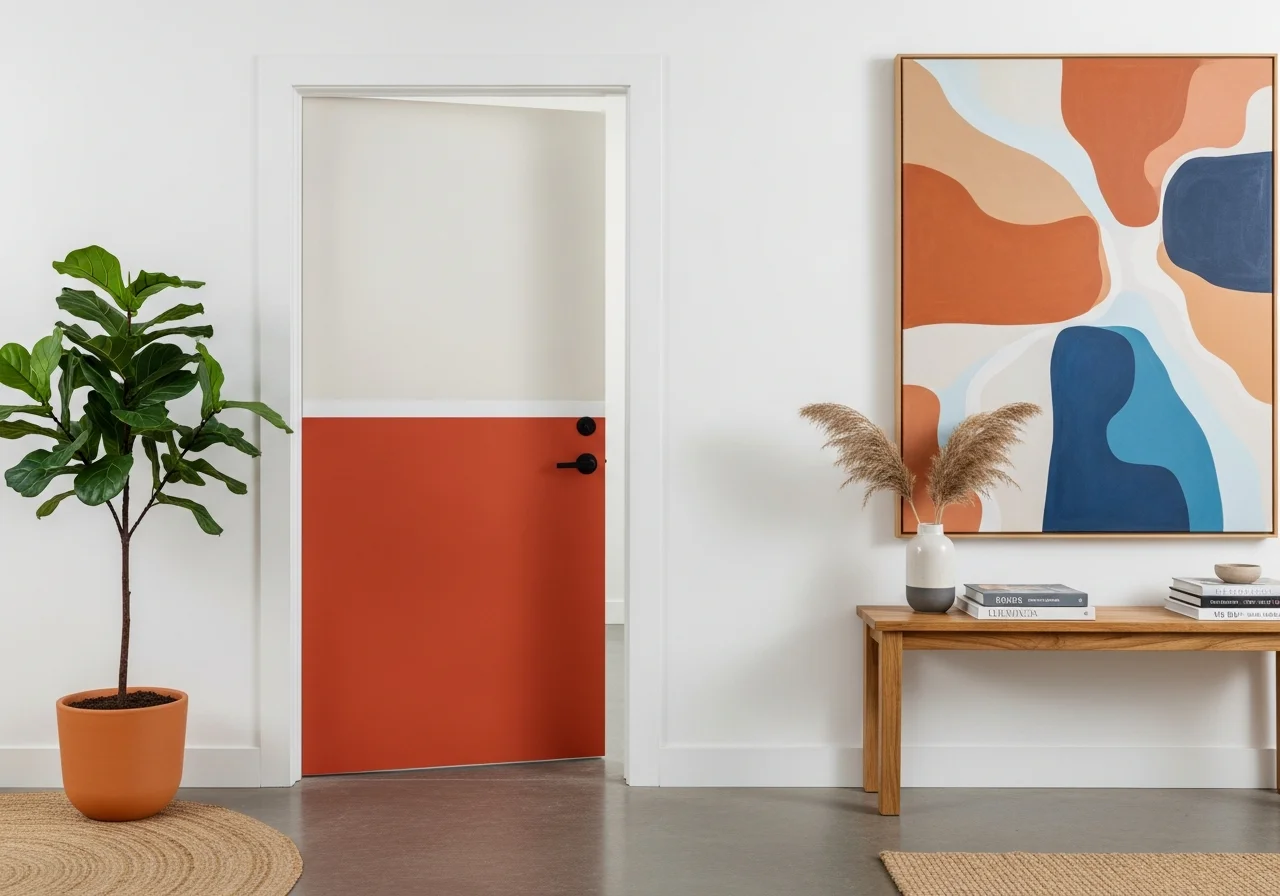
Color blocking brings artistic flair to doors through geometric color divisions. This design approach transforms doors into focal points while allowing creative expression.
Simple implementations divide doors horizontally, painting the bottom third or half in one color and the remainder in another. This grounds the door visually and can make ceilings appear taller. Vertical divisions create different effects, potentially aligning with room proportions or architectural features.
More complex patterns incorporate diagonal divisions, multiple color zones, or geometric shapes. Painter’s tape ensures crisp lines between colors. Choose complementary colors for harmonious blends or contrasting shades for bold statements.
This technique requires only paint, tape, and patience. Plan your design on paper first, ensuring proportions work for your specific door size. Mockups using poster board help visualize the final appearance before committing paint to the actual door.
Install Chalkboard or Magnetic Paint

Functional paint treatments transform doors into interactive surfaces. Chalkboard paint converts any smooth door into a writing surface, perfect for kitchen pantries where you can list grocery needs, children’s rooms for creative expression, or home offices for quick notes.
Application follows standard painting procedures, though chalkboard paint typically requires three coats for optimal writing surface. Allow proper curing time, usually three days, before using with chalk. Seal edges carefully since chalkboard paint can appear flat and dull against standard wall paint.
Magnetic paint contains metallic particles that attract magnets, creating display surfaces for artwork, photos, or important papers. Apply it as a base coat under regular paint, maintaining your desired color while adding magnetic functionality. Note that several coats prove necessary for strong magnetic hold.
Combining both treatments, magnetic base with chalkboard topcoat, creates multi functional surfaces. Use these creative approaches on closet doors, basement doors, or any location where interactive surfaces add value. May you like it
Refinish Wood Doors to Natural Beauty

Beneath layers of old paint, solid wood doors often hide gorgeous grain patterns waiting for rediscovery. Stripping and refinishing reveals this natural beauty while honoring quality craftsmanship.
The process demands patience but requires no specialized skills. Chemical strippers dissolve paint layers, though heat guns or sanding also work. Once bare, inspect the wood for damage, filling gouges or dents with wood filler. Sand progressively finer grits until smooth.
Stain enhances wood grain while adding color warmth. Test colors on inconspicuous areas since wood species accept stain differently. Oak shows prominent grain, walnut offers rich chocolate tones, and pine provides lighter, more casual appearance. Clear polyurethane topcoats protect your work while adding subtle sheen.
This labor-intensive project rewards with timeless results. Natural wood doors suit nearly every decorating style, from rustic farmhouse to mid-century modern, providing lasting value that transcends temporary trends.
Create Faux Finishes for Texture
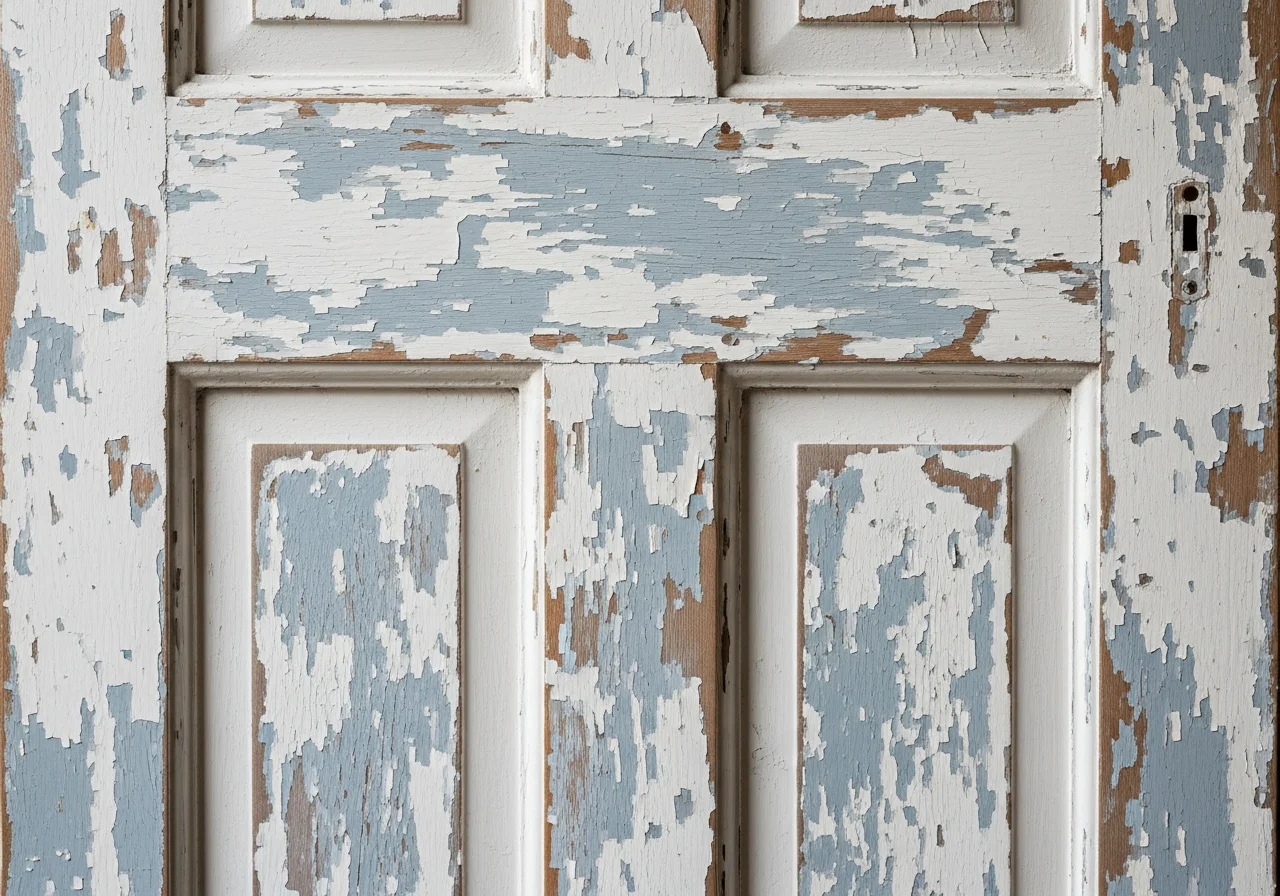
Decorative painting techniques add dimension and character beyond solid color applications. These artistic approaches require minimal additional cost while delivering custom, high-end appearances.
Distressing creates worn, vintage character perfect for farmhouse or shabby chic interiors. Paint your base color, allow it to dry, then apply contrasting topcoat. Once dry, use sandpaper to wear through the top layer at edges, corners, and raised details where natural wear would occur. Seal with clear wax for authentic aged appearance.
Whitewashing lightens wood doors while allowing grain to show through, creating casual, beachy vibes. Thin white paint with water, apply to wood, then wipe away excess before it dries. Multiple applications build opacity gradually.
Ombre effects transition one color into another, creating artistic gradients. This technique works vertically, horizontally, or radiating from door centers. Blend where colors meet while paint remains wet for seamless transitions. for more information.
Add Decorative Door Wreaths and Accessories
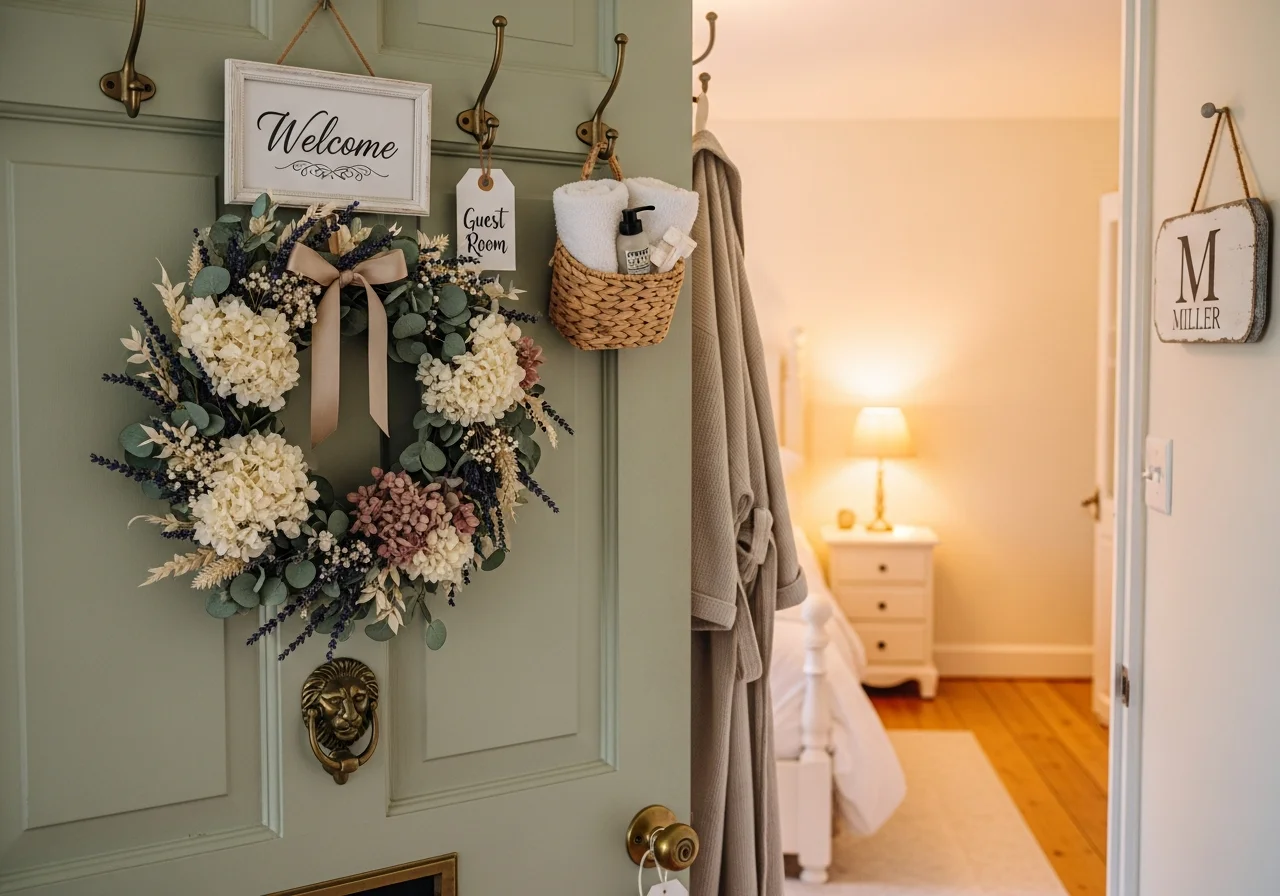
Interior door decorations extend beyond seasonal front door wreaths. Thoughtful accessories personalize spaces while adding visual interest to otherwise plain surfaces.
Wreaths sized appropriately for interior doors bring unexpected charm. Small dried flower wreaths suit bedroom doors, particularly in guest rooms as welcoming touches. Greenery wreaths in kitchens or dining areas connect to natural elements. Seasonal switches keep décor fresh without permanent commitment.
Door knockers, traditionally exterior elements, add whimsical personality to interior doors. Miniature versions create playful touches on children’s bedroom or playroom doors. Antique knockers bring vintage character to home offices or libraries.
Hanging organizers maximize functionality, particularly on closet, pantry, or bathroom doors. Over-door hooks, pocket organizers, and towel bars transform unused vertical space into valuable storage without tools or wall damage.
Install Louvered Doors for Ventilation
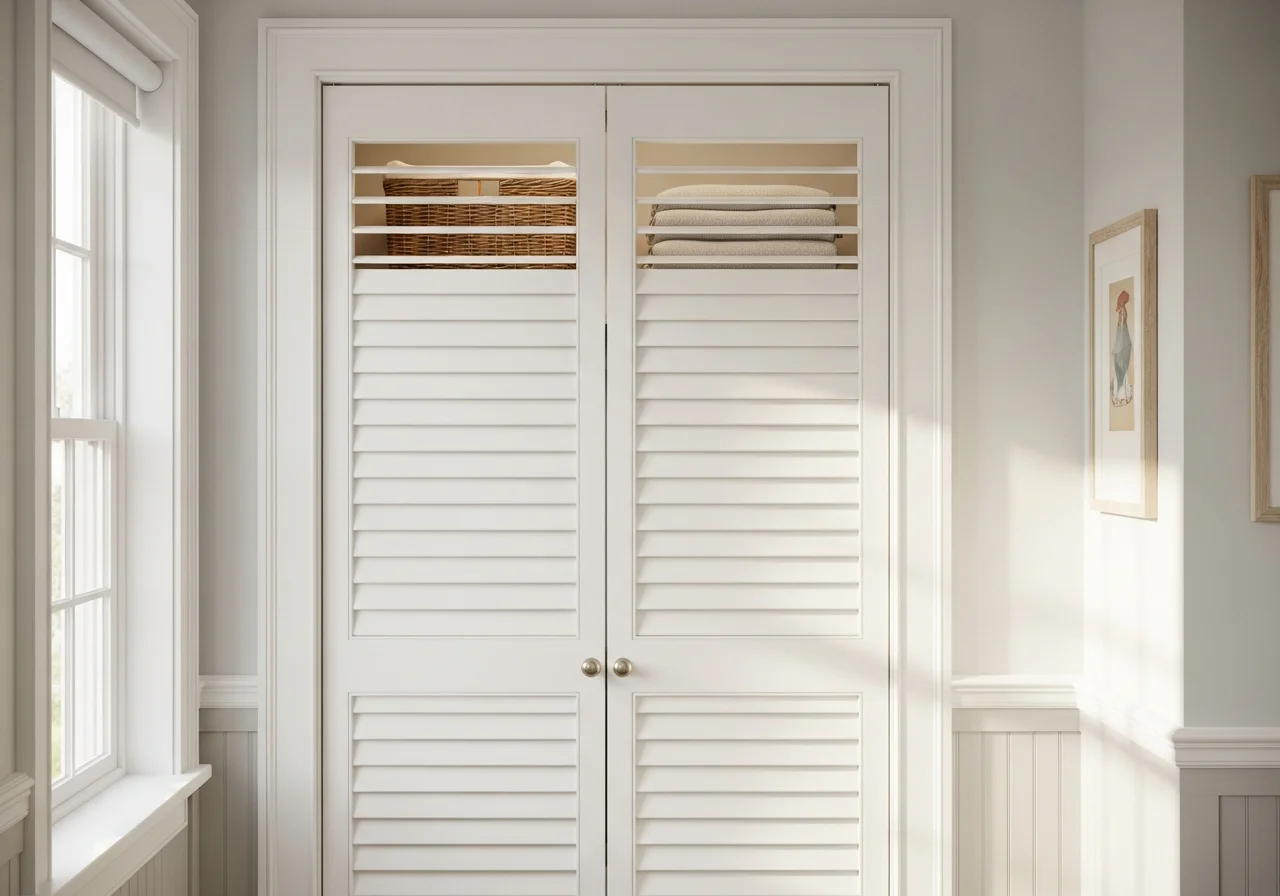
Louvered doors feature horizontal slats allowing air circulation while maintaining privacy. These practical options suit specific applications where ventilation matters.
Closets benefit from louvered doors, preventing musty odors and moisture accumulation. Water heater closets require ventilation for safety and efficiency. Laundry areas appreciate airflow that prevents humidity buildup.
Style options range from traditional full-louver doors to contemporary designs featuring louvers only in upper or lower sections. Paint louvers to match surrounding décor or leave natural wood for casual appeal. Cleaning requires more attention than solid doors since dust accumulates on individual slats, though regular vacuuming with brush attachments maintains appearance.
Modern alternatives include doors with decorative cutout patterns providing ventilation through geometric shapes rather than traditional louvers, offering the same functionality with updated aesthetics.
Incorporate Smart Door Technology

Modern technology upgrades doors beyond purely aesthetic improvements. Smart locks, automatic operators, and integrated sensors add convenience, security, and accessibility.
Smart locks eliminate keys, operating via smartphone apps, keypads, or biometric readers. Grant temporary access to guests, monitor entry and exit times, and lock or unlock remotely. Installation typically replaces existing deadbolts without door modification.
Automatic door operators assist those with mobility challenges and add luxury convenience. Particularly valuable for heavy doors or those opened frequently while carrying items, these systems install on existing doors without major modification.
Door sensors integrate with home automation systems, triggering lights, adjusting thermostats, or sending alerts when specific doors open. These subtle additions enhance functionality without visible impact on door appearance. May you get more ideas click here
Transform Doors into Barn Wood Features

Reclaimed barn wood doors bring rustic authenticity and environmental consciousness together. Each board carries unique weathering, nail holes, and color variation telling stories of previous lives.
Source reclaimed wood from architectural salvage yards, barn demolitions, or specialty suppliers. Alternatively, new wood can be distressed to simulate aged appearance, though authentic patina proves difficult to replicate convincingly.
Construction requires assembling boards into door-sized panels, adding structural backing, and installing appropriate hardware. The natural variations in thickness, width, and color create organic, casual aesthetics perfect for farmhouse, industrial, or eclectic interiors.
These doors work beautifully as sliding barn doors, standard hinged doors, or even decorative wall panels in open floor plans. Their substantial presence and textural richness create instant focal points.
Conclusion
Doors represent one of home improvement’s best-kept secrets, offering substantial visual impact through accessible, budget-conscious projects. Whether you invest a single afternoon applying fresh paint or commit to weekend installations of sliding barn doors, these updates deliver satisfaction far exceeding their required effort and expense.
The ideas presented here span the spectrum from beginner-friendly cosmetic changes to more involved installations, ensuring options exist regardless of your skill level, available time, or budget constraints. Success doesn’t require perfection. Even simple updates like new hardware or a bold color choice shift how you experience your home daily, proving that small changes genuinely transform living spaces.
As you consider which ideas resonate with your home’s needs and your personal style, remember that door improvements offer unique flexibility. Start with one door in a frequently used area, experiencing the transformation firsthand before expanding to additional rooms. This measured approach builds skills, confidence, and clear understanding of what works best for your particular space.
Your doors await their moment to shine, ready to evolve from overlooked necessities into purposeful design elements that reflect your taste, enhance your home’s functionality, and create environments you’ll love living in for years to come.
Frequently Asked Questions
What is the easiest way to update a door on a tight budget?
Paint offers the most affordable and impactful door transformation. A quart of quality interior paint costs between fifteen and thirty dollars and covers multiple doors. Pair this with new hardware for under fifty dollars total, and you achieve dramatic change without significant expense. Remove the door for easiest painting, apply two coats, and reinstall for professional results.
Can I install a barn door myself without professional help?
Yes, most homeowners with basic DIY skills can install barn doors using complete hardware kits. These kits include tracks, rollers, mounting brackets, and instructions. You need a drill, level, stud finder, and ability to locate wall studs for secure mounting. The process typically takes three to five hours for first-time installers. Ensure your wall can support the door weight and verify adequate clearance for the door to slide fully open.
How do I choose the right door style for my home?
Consider your existing architectural style, room function, and space constraints. Traditional homes suit paneled doors, craftsman details, or natural wood finishes. Contemporary spaces benefit from clean-lined slab doors, glass panels, or bold colors. Evaluate how doors open, ensuring adequate clearance, or consider sliding and pocket options for tight spaces. Consistency throughout your home creates cohesion, though strategic variation adds interest.
What type of paint works best for interior doors?
Semi-gloss or satin finish interior paint provides durability and easy cleaning while resisting the flat appearance of matte finishes. Oil-based paints offer extremely durable, smooth results but require longer drying times and more involved cleanup. Water-based latex paints dry quickly, clean up easily, and emit fewer odors while providing excellent durability for interior applications. Choose quality paint from reputable manufacturers for best coverage and longevity.
Are glass doors safe for homes with children?
Tempered glass doors designed for interior use provide safety for homes with children. Tempered glass, if broken, shatters into small granular pieces rather than dangerous shards. Frosted or textured glass options maintain privacy while allowing light transmission. For maximum safety in very active households, consider acrylic or poly carbonate alternatives that offer glass appearance with greater impact resistance. Position glass doors where collision risk remains minimal, such as between rooms rather than at hallway ends.