8+ Creative Camper Door Ideas for Every Style
The entry point to your camper sets the tone for your entire mobile living experience. Whether you’re restoring a vintage trailer, upgrading a modern RV, or building a custom camper from scratch, the door deserves thoughtful consideration. It’s not just a functional necessity but an opportunity to express your personal style while enhancing security, insulation, and overall comfort.
Many camper owners overlook the potential of their doors, settling for standard factory options that lack personality and may not meet their specific needs. However, with some creativity and planning, your camper door can become a standout feature that combines practical benefits with visual appeal. From classic wooden designs that evoke nostalgia to sleek modern installations with advanced security features, the possibilities are virtually endless.
This comprehensive guide explores more than eight creative camper door ideas suitable for various styles, budgets, and skill levels. Whether you’re drawn to rustic charm, contemporary minimalism, or something uniquely your own, you’ll find inspiration and practical advice to transform your camper’s entrance into something truly special.

Classic Wooden Dutch Door Design
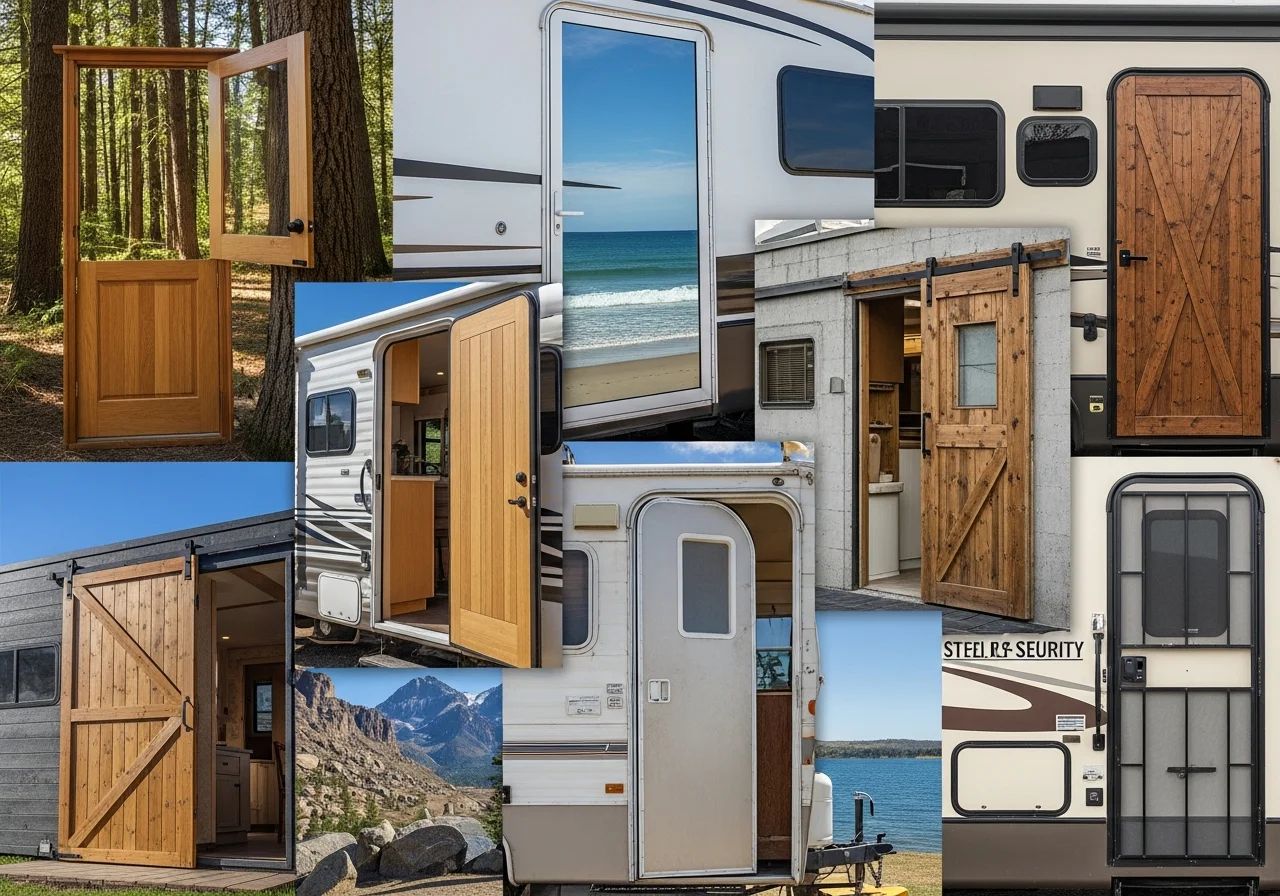
The Dutch door, split horizontally in the middle, brings old-world charm and practical versatility to any camper. This timeless design allows you to open the top half independently for ventilation and communication with the outside world while keeping pets and children safely inside behind the closed bottom portion.
For camper applications, the Dutch door works exceptionally well in vintage trailers and those seeking a cottage or farmhouse aesthetic. The construction typically involves quality hardwoods like oak, cedar, or mahogany, chosen for their durability and natural resistance to moisture. The split design requires careful engineering to ensure both halves align perfectly when closed and that weatherstripping creates an effective seal.
Installation involves reinforcing the door frame to support the additional hardware needed for two separate opening mechanisms. Quality hinges rated for exterior use are essential, along with separate locking mechanisms for each half. Many camper owners add decorative hardware in bronze or black iron finishes to enhance the vintage appeal.
The Dutch door excels at creating flexible living spaces. On pleasant days, open the top half to enjoy fresh air and natural light while maintaining privacy and security. During campground gatherings, it serves as a convenient serving window or conversation point. The design also helps regulate temperature more effectively than opening a full door, making it energy efficient for climate control.
Modern Aluminum Frame Glass Door
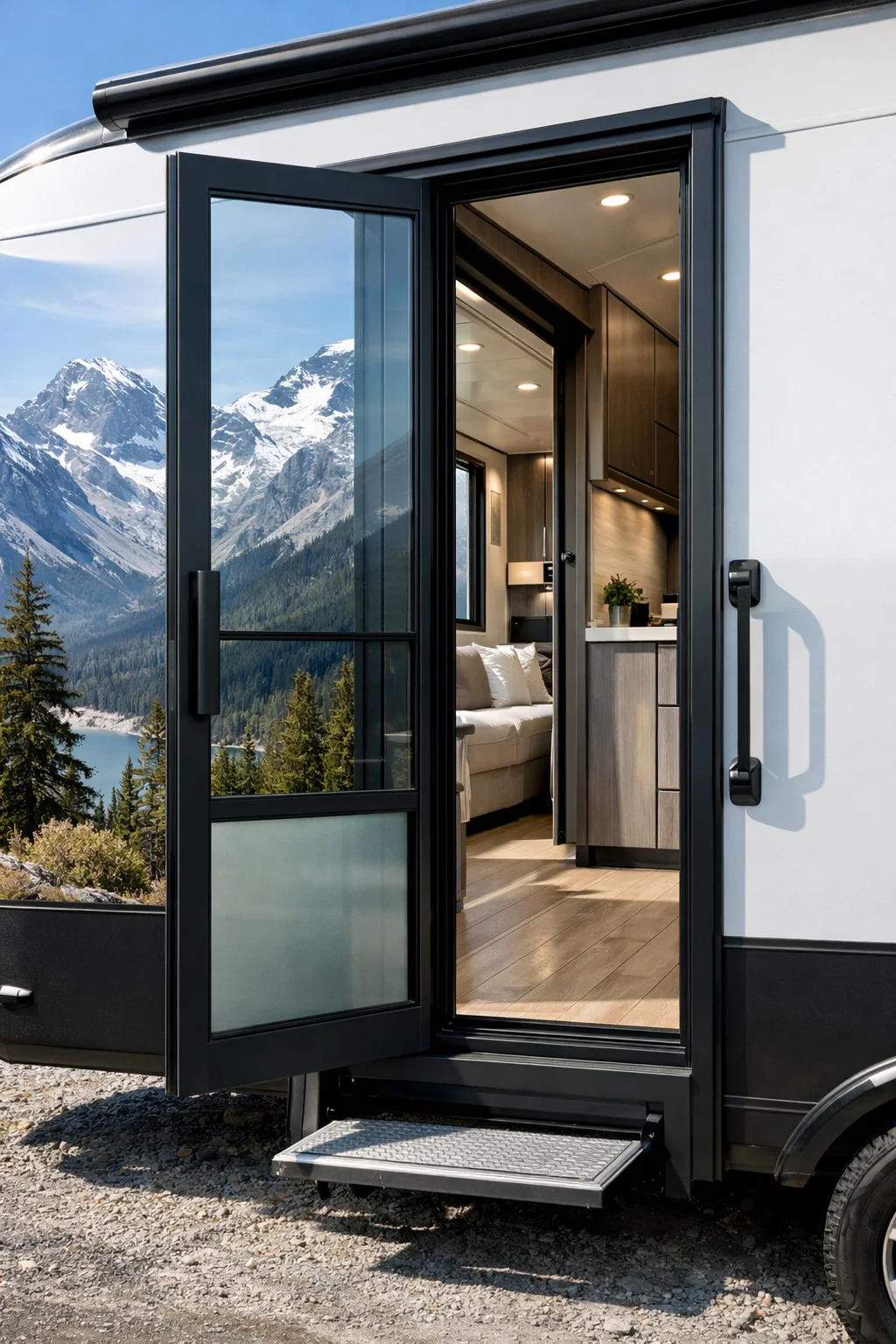
For campers with contemporary design sensibilities, an aluminum frame glass door delivers sleek sophistication and abundant natural light. This style has gained popularity among modern RV manufacturers and custom builders who prioritize open, airy interiors with strong indoor-outdoor connections.
The construction features powder-coated aluminum frames in colors like matte black, bronze, or silver, paired with tempered safety glass panels. Some designs incorporate frosted or tinted glass for privacy without sacrificing light transmission. The slim profile of aluminum frames maximizes the glass area, creating an expansive feel even in compact campers.
One significant advantage is the dramatic increase in natural light, which makes small camper interiors feel more spacious and welcoming. The transparent or translucent panels also allow you to maintain visual connection with your surroundings, important for security and enjoying scenic camping locations.
Modern glass doors typically include advanced features like multi-point locking systems, thermal breaks in the aluminum frames for better insulation, and high-quality weather seals. Some premium options offer low-emissivity glass coatings that reduce heat transfer while maintaining clarity. The contemporary aesthetic pairs beautifully with minimalist interior designs, stainless steel appliances, and clean-lined cabinetry.

Rustic Barnwood Sliding Door
Space constraints in campers make sliding doors an attractive option, and rustic barnwood styling adds character and warmth. This design eliminates the clearance needed for traditional swing doors, making it ideal for campers with limited interior space or tight camping spots where exterior door swing might be problematic.
Reclaimed or distressed wood planks create the authentic barnwood appearance, whether you’re using genuine salvaged lumber or new wood treated to look weathered. The planks are typically arranged vertically and secured to a backing board, then mounted on heavy-duty sliding hardware. The track system can be installed either inside or outside the door frame depending on your design preference and space availability.
The rustic aesthetic works beautifully in campers with farmhouse, industrial, or eclectic interior themes. Natural wood tones complement virtually any color scheme while adding organic texture that softens modern materials like metal and laminate. Many owners enhance the look with decorative hardware like wrought iron handles, antique-style locks, or even vintage hinges mounted as purely decorative elements.
Beyond aesthetics, sliding doors offer practical advantages. They eliminate the possibility of wind catching and damaging a swinging door, remain functional in tight parking situations, and create interesting visual variety in your camper’s design. The space efficiency can be particularly valuable in smaller campers where every square foot matters.
Retro Curved Window Door
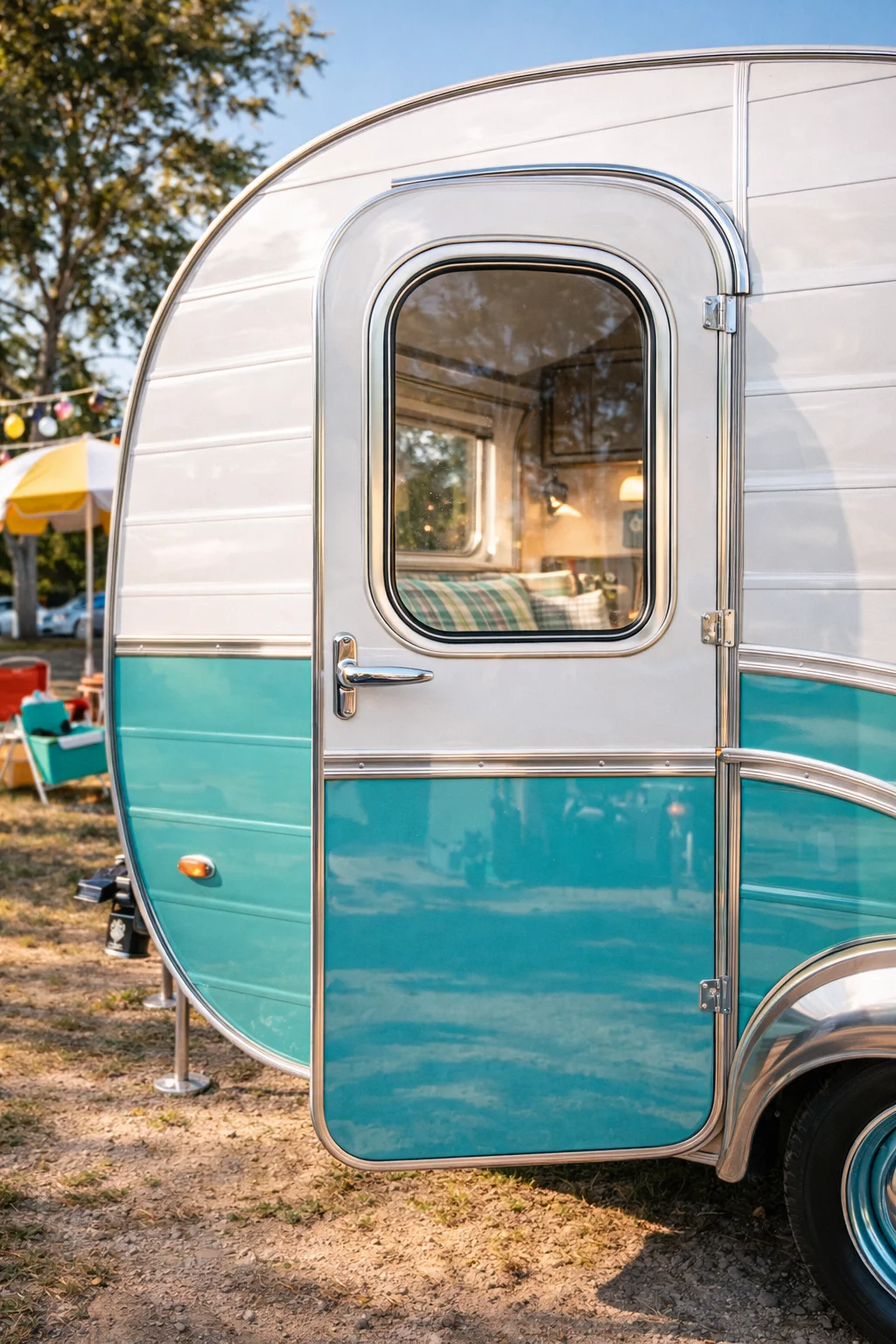
Vintage camper enthusiasts often seek authentic period details, and the curved window door epitomizes mid-century trailer design. These distinctive doors feature rounded corners and large viewing windows that curve to match the trailer’s exterior lines, creating seamless integration with classic teardrop or canned ham camper profiles.
Recreating or restoring these doors requires specialized skills or sourcing from vintage trailer specialists. The curved window presents unique challenges, as standard flat glass cannot be used. Options include custom-cut acrylic shaped to the curve, specially ordered curved glass, or in some cases, finding original parts from salvage yards and vintage trailer suppliers.
The authentic retro look requires attention to period-appropriate details. Aluminum trim in polished or anodized finishes wraps the window and door edges, while push-button or lever handles in chrome complete the vintage aesthetic. Color choices often reflect 1950s and 1960s palettes: turquoise, coral, mint green, or classic white with contrasting trim.
Beyond pure aesthetics, these doors offer surprisingly good functionality. The large windows provide excellent visibility and natural light, important in smaller vintage campers. The curved design often improves aerodynamics compared to flat surfaces, and the aluminum construction proves durable and relatively lightweight. For those committed to authentic vintage restoration, nothing matches the period correctness of an original-style curved door.
Security-Enhanced Steel Door
Safety-conscious travelers prioritize security features, making reinforced steel doors an increasingly popular choice. These doors provide peace of mind in unfamiliar campgrounds, remote boondocking locations, or when leaving your camper unattended for extended periods.
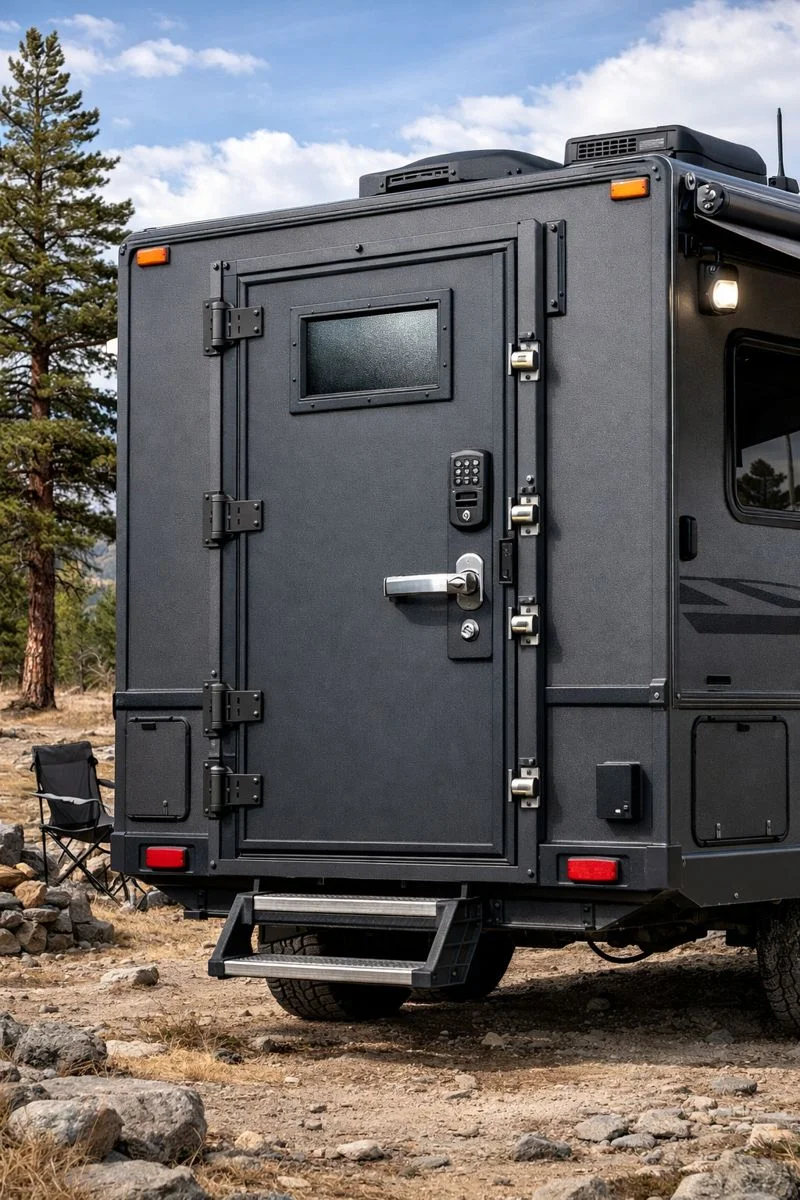
Modern security doors for campers feature heavy-gauge steel construction with reinforced frames, multi-point locking systems, and deadbolts that extend deep into the frame. Unlike residential security doors that can be quite heavy, camper-specific designs balance protection with weight considerations important for towing and weight distribution.
Many security doors incorporate viewing windows with impact-resistant glass or poly carbonate panels, allowing you to see outside while maintaining protection. The windows are typically smaller and positioned strategically, unlike doors where glass dominates the design. Some advanced models include integrated alarm systems that sound if the door is forced or tampered with.
The exterior finish options have evolved beyond industrial appearances. Powder coating in various colors allows these doors to complement different camper styles, from traditional white to modern charcoal or even custom colors. Decorative panels or faux wood grain finishes help security doors blend with aesthetic preferences while maintaining their protective function.
Installation requires careful attention to proper anchoring into the camper frame structure. The additional weight necessitates reinforced hinges and possibly frame modifications to distribute the load. However, for those who frequently camp in varied environments or who carry valuable equipment, the investment in enhanced security provides significant peace of mind.
Custom Screen Door Combinations
Screen doors for campers serve the essential function of ventilation while keeping insects out, but creative designs can make them standout features rather than afterthoughts. Custom screen door projects allow you to personalize this frequently used element while improving functionality.
One popular approach involves removable screen panels that adapt to different seasons and conditions. During bug-free cooler months, replace the screen with clear vinyl or Plexiglas panels that maintain visibility while blocking wind. Some designs feature interchangeable panels in the same frame system, allowing quick seasonal swaps without tools.
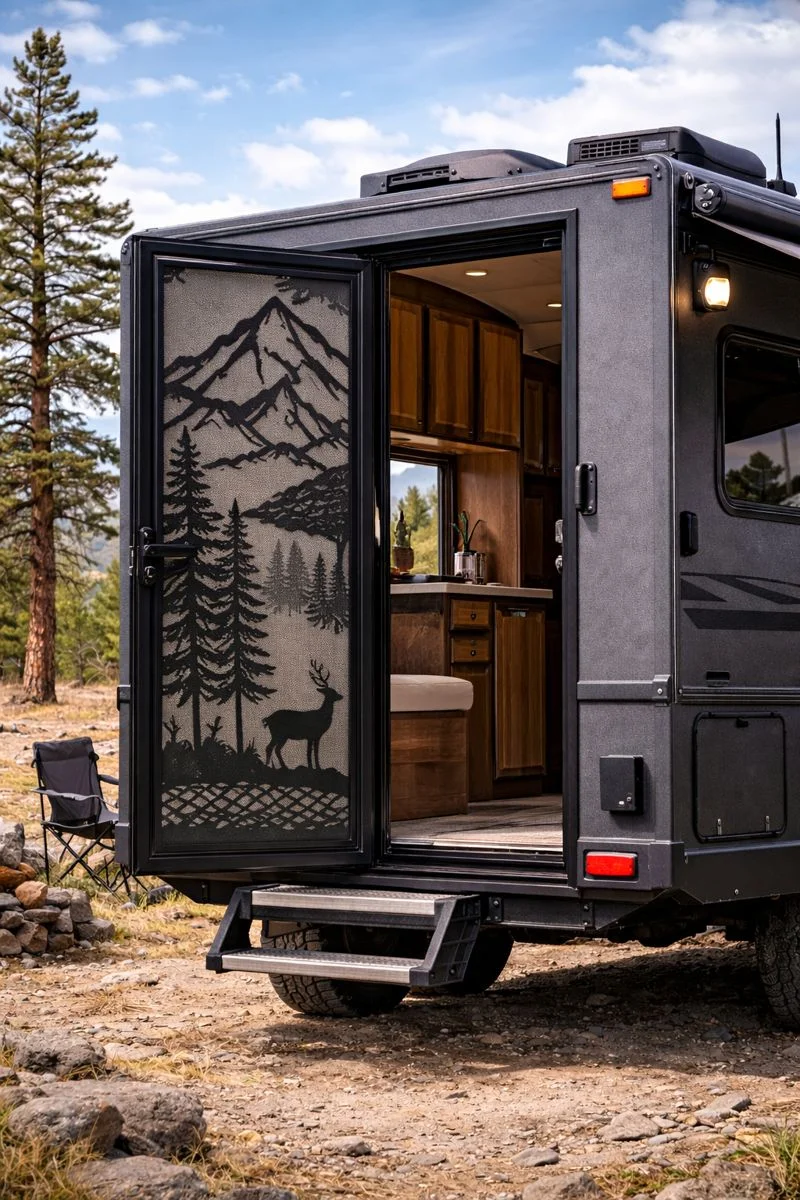
Decorative screen doors incorporate laser-cut metal panels with patterns ranging from geometric designs to nature scenes, mountains, or custom imagery meaningful to the owner. These decorative elements are layered over functional screening, adding visual interest while maintaining insect protection. The cutouts can be powder-coated in contrasting colors to create striking effects visible from both inside and outside the camper.
Heavy-duty pet-proof screening addresses a common challenge for camper owners who travel with dogs or cats. These reinforced screens resist clawing and pushing better than standard fiberglass mesh, though they typically cost more. Some owners install pet doors within their screen doors, allowing furry companions to move freely in and out while the main door remains secured.
Magnetic screen doors offer an easy-entry solution that automatically closes behind you, particularly useful when carrying supplies or equipment. These feature magnetic strips down the center split that seal shut after passing through, preventing insects from entering through a door left ajar. While originally designed for residential use, camper-specific versions account for the curved walls and unique dimensions of RV doors.
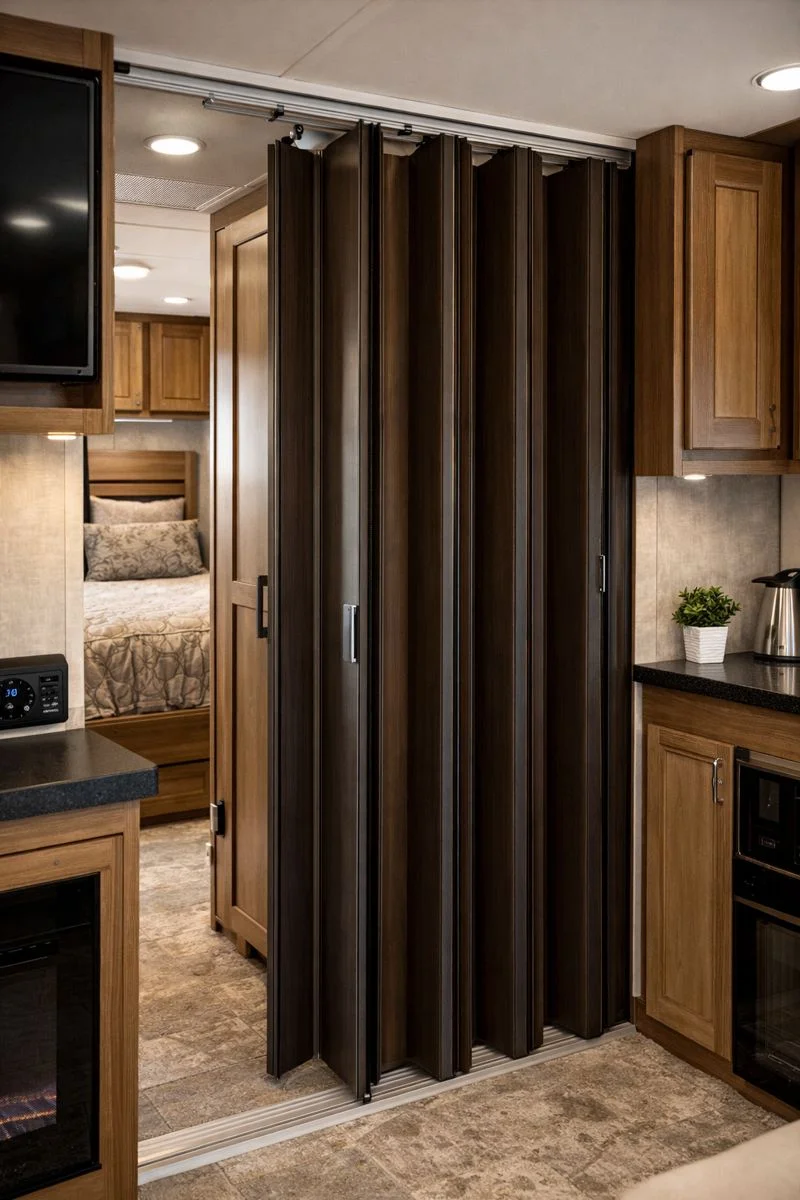
Folding Accordion Door System
Space maximization drives many camper design decisions, and folding accordion doors represent the ultimate space-saving solution. Unlike traditional doors requiring clearance for a full swing arc or sliding doors needing wall space for the panel to slide into, accordion doors fold compactly to one side.
The construction involves multiple narrow panels connected by hinges that fold flat against each other when opened. Track systems guide the panels smoothly, and the entire assembly can be positioned to fold inward or outward depending on your space constraints and preferences. The mechanism requires quality hardware to ensure smooth operation over thousands of opening cycles.
Accordion doors work particularly well in campers with extremely tight quarters or unusual layouts where standard doors prove impractical. They also serve excellently as room dividers within campers, creating privacy for sleeping areas or bathroom spaces without permanently segmenting the interior. When not needed, they fold completely away, restoring the open floor plan.
Material choices for accordion panels range from lightweight vinyl and fabric to rigid materials like wood slats, metal panels, or composite materials. The selection depends on whether the door requires insulation, soundproofing, privacy, or primarily serves as an insect barrier. Some designs combine materials, such as upper panels in clear vinyl for light transmission with lower panels in solid materials for privacy.
The contemporary aesthetic of accordion doors suits modern camper designs, though vintage-inspired finishes can work in retro settings. The visible track hardware and panel segments create distinct visual elements that become design features rather than purely functional components. With proper installation and quality materials, accordion doors provide years of reliable service while maximizing precious camper space.you may also want to know
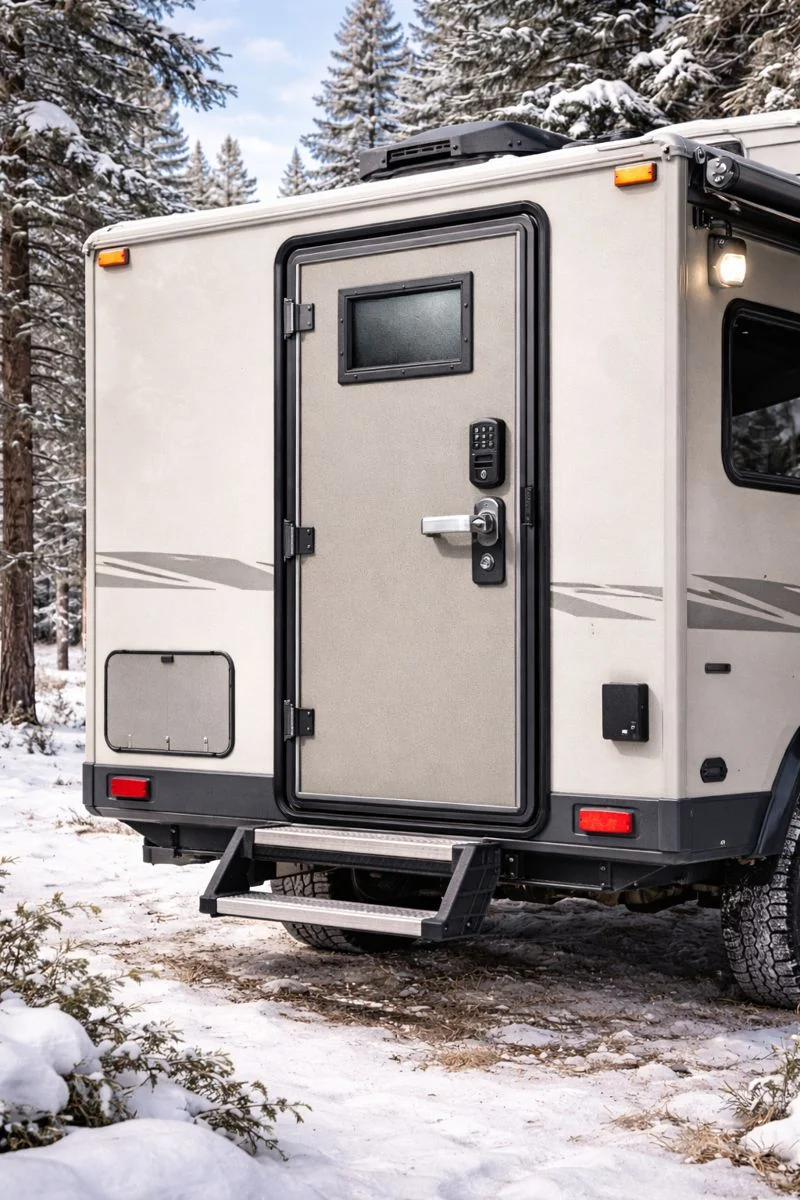
Weatherproofed Insulated Entry Door
Climate control challenges affect camper comfort year-round, making insulated doors valuable upgrades for four-season travelers. These specialized doors combine weatherproofing technologies with insulation materials to minimize heat transfer, reduce drafts, and improve energy efficiency.
The construction typically features foam core insulation sandwiched between interior and exterior panels, similar to residential entry doors but adapted for camper-specific dimensions and weight requirements. The foam provides an R-value rating indicating thermal resistance, with higher numbers meaning better insulation. Quality models achieve R-values between 4 and 8, substantial improvements over standard hollow-core camper doors.
Weatherproofing elements include multiple seals around the entire perimeter, adjustable threshold sweeps that eliminate gaps at the bottom, and compression seals that tighten when the door closes. Thermal breaks in metal frame components prevent cold or heat from conducting through the structure. Some premium doors include triple-seal systems with layers of different materials addressing various weatherproofing needs.
The benefits extend beyond temperature control. Better insulation also provides superior sound dampening, reducing exterior noise from wind, rain, traffic, or neighboring campers. The tighter seals keep out dust, moisture, and insects more effectively than standard doors. For campers with air conditioning or heating systems, the improved insulation reduces runtime and energy consumption, valuable when operating on battery power or generator.
Exterior finishes on insulated doors range from smooth fiberglass that can be painted any color to textured surfaces mimicking wood grain or other materials. The added thickness of insulation does make these doors heavier than standard options, requiring robust hinges and possibly frame reinforcement, but the comfort improvements justify the investment for serious travelers.
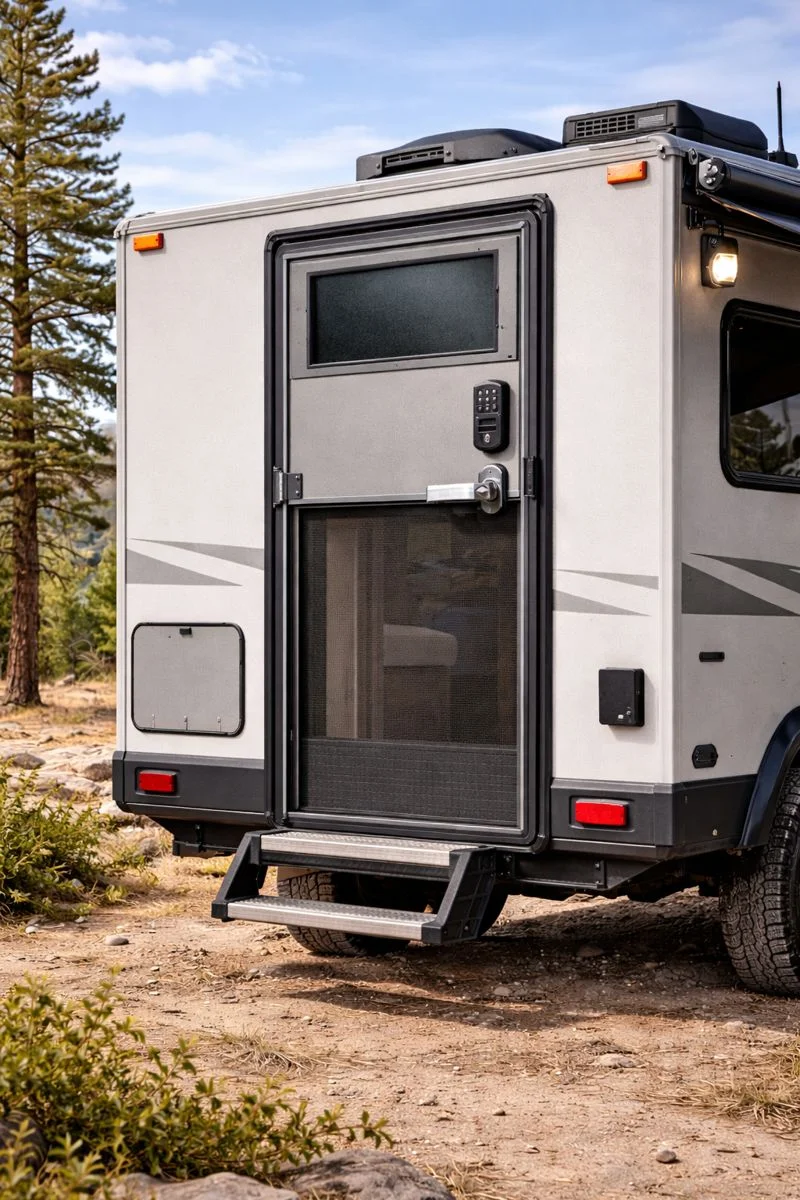
Convertible Screen and Solid Door
The convertible door system offers the ultimate in versatility by combining a solid insulated door with an integrated full-screen panel. This innovative design eliminates the need for a separate screen door while maintaining full functionality for both applications.
The mechanism varies by manufacturer but typically involves either a solid door panel that slides up or down to reveal screening behind it, or a screen panel that rolls up into a housing when the solid door is preferred. Some designs use magnetic attachment systems allowing quick swapping between solid and screen configurations.
During pleasant weather, expose the full-screen panel to maximize ventilation and connection with the outdoors while maintaining insect protection. When weather turns inclement, cold fronts arrive, or privacy is desired, deploy the solid panel. The system essentially provides two doors in the footprint of one, eliminating the added weight and complexity of separate components.
Quality convertible doors include weather sealing for both configurations, ensuring tight closure whether in solid or screen mode. The screen material often features heavy-duty construction that resists tears and pet damage better than standalone screen doors. Frames are typically aluminum for corrosion resistance and lightweight strength.
These doors suit travelers who frequent varied climates and seasons, want maximum flexibility without adding separate components, or simply appreciate elegant engineering solutions. The price point runs higher than standard doors, but the combined functionality and space efficiency deliver strong value for the investment.
Conclusion
Your camper door represents far more than a simple entry point. It functions as a security barrier, climate control element, design statement, and the literal threshold between your mobile sanctuary and the world beyond. The creative options explored here demonstrate that you need not settle for generic factory doors lacking personality or failing to meet your specific needs.
Whether you gravitate toward the nostalgic charm of a Dutch door, the contemporary elegance of aluminum and glass, the space efficiency of sliding or folding systems, or the practical benefits of enhanced security and insulation, options exist for every style and requirement. The key lies in identifying your priorities among aesthetics, functionality, security, climate control, and budget, then selecting or creating a door solution that optimally balances those factors.
Many of these ideas can be implemented as DIY projects for those with basic carpentry and hardware installation skills, while others may require professional fabrication or installation. Regardless of the path you choose, investing thought and resources into your camper door pays dividends every time you arrive at a new destination, enjoy evening breezes through an open screen, or rest securely knowing your home on wheels is properly protected.
The camping lifestyle celebrates both adventure and personalization. Your door can reflect that spirit, serving as a functional necessity that simultaneously expresses your unique style and enhances every aspect of your mobile living experience.
Frequently Asked Questions
What is the best material for a custom camper door?
The best material depends on your priorities. Aluminum offers excellent durability and corrosion resistance with light weight, making it ideal for frequent travelers. Wood provides superior aesthetics and insulation but requires more maintenance. Fiberglass delivers good insulation and can be molded into various shapes. Steel offers maximum security but adds significant weight. Consider your climate, usage patterns, and design preferences when selecting materials.
Can I install a residential door on my camper?
While technically possible, residential doors are not recommended for campers. They are significantly heavier than RV-specific doors, which affects towing weight and balance. Standard residential doors also lack the weatherproofing, flexibility to handle road vibration, and dimensional specifications needed for curved camper walls. RV doors are specifically engineered for mobile applications and will perform much better long-term.
How do I improve the insulation on my existing camper door?
Several approaches can upgrade door insulation. Add weatherstripping around the entire perimeter, focusing on areas where gaps allow air infiltration. Install an adjustable threshold sweep at the bottom. Apply insulation film or rigid foam panels to the interior surface. Consider adding a storm door or screen door that creates an air gap providing additional insulation. For severe climates, replacement with a purpose-built insulated door may prove more effective than incremental upgrades.
What security features should I look for in a camper door?
Essential security features include deadbolt locks that extend at least one inch into the frame, multi-point locking systems that secure the door at several locations simultaneously, reinforced strike plates anchored with long screws, solid core or metal construction that resists forced entry, and impact-resistant viewing windows. Consider adding an alarm system, motion-sensing lights, and ensure the door frame itself is properly anchored to the camper structure.
How much does it typically cost to replace a camper door?
Camper door replacement costs vary widely based on size, materials, features, and installation complexity. Basic replacement doors start around 200 to 400 dollars for simple models. Mid-range doors with better insulation and security features typically cost 500 to 1000 dollars. Premium doors with advanced features, custom sizing, or specialty designs can exceed 1500 dollars. Professional installation adds 200 to 600 dollars depending on complexity. Custom built or specialty vintage restoration doors may cost significantly more depending on materials and craftsmanship required. May you read more