11+ Creative Closet Under Stairs Ideas
The space beneath your staircase represents one of the most underutilized areas in any home. What often becomes a catch-all for miscellaneous items or simply remains empty can be transformed into highly functional storage that serves your family’s specific needs. Whether you live in a compact apartment where every square foot matters or a larger home seeking better organization, the area under your stairs holds tremendous potential for creative solutions that blend practicality with aesthetic appeal.
Understanding how to maximize this unique space requires recognizing its distinctive characteristics. The sloped ceiling creates challenges but also opportunities for customized storage that conventional closets cannot offer. With thoughtful planning and the right approach, you can convert this awkward triangle into a valuable asset that enhances your home’s functionality and adds a touch of personality to your living space.
This comprehensive guide explores eleven creative closet under stairs ideas that address various storage needs and design preferences. From simple organizational systems to elaborate built-in solutions, these concepts will help you discover the perfect way to utilize your under stairs area, transforming wasted space into a practical and attractive feature of your home.
Converting Your Under Stairs Space into a Pantry
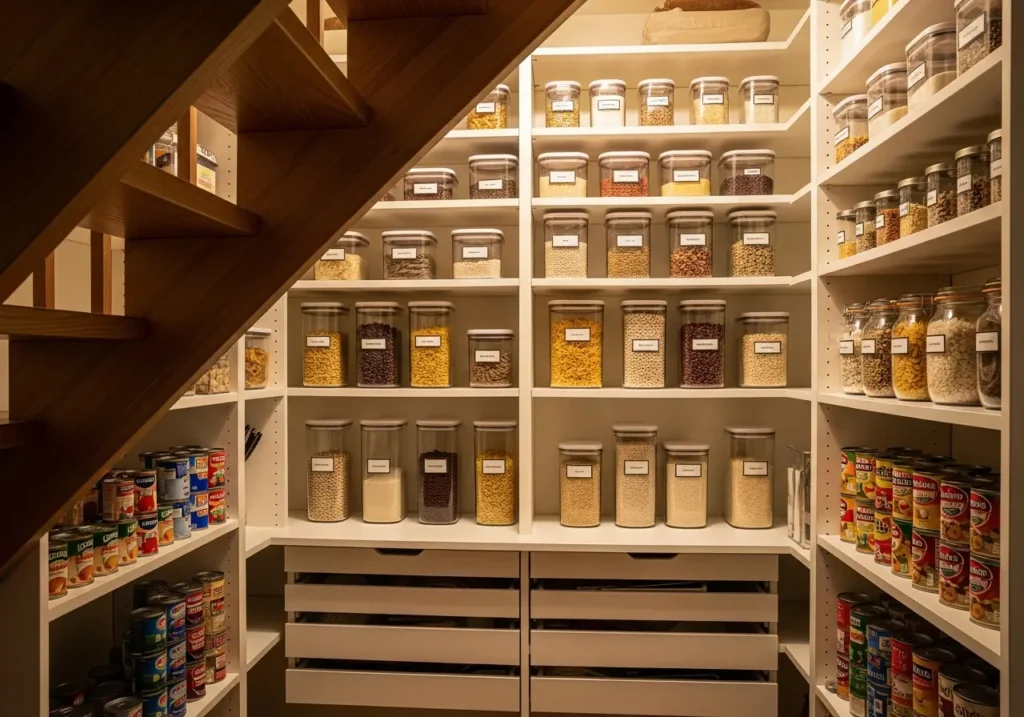
One of the most practical applications for under stairs storage involves creating an extension of your kitchen pantry. Many homeowners struggle with limited kitchen storage, especially in older homes where pantry space was not prioritized during construction. The area beneath your staircase can solve this problem by providing substantial room for dry goods, canned items, small appliances, and bulk purchases.
Installing adjustable shelving along the walls allows you to accommodate items of different heights while making the most of the sloped ceiling. Start with deeper shelves at the tallest section and gradually decrease depth as the ceiling slopes downward. This configuration ensures no space goes to waste while keeping everything accessible. Clear storage containers help you see contents at a glance, while labels maintain organization and make meal planning more efficient.
Consider adding pull-out drawers or rolling storage units for the deepest sections of the space. These solutions bring items stored in the back forward without requiring you to crawl or reach uncomfortably. Installing proper lighting makes a significant difference in pantry functionality, as under stairs spaces tend to be naturally dark. LED strip lights or motion-activated fixtures ensure you can easily identify ingredients and supplies.
The pantry conversion works particularly well for families who buy in bulk or enjoy cooking from scratch. You gain the ability to store larger quantities of staple items, seasonal ingredients, and specialty products that would otherwise clutter your main kitchen cabinets. This dedicated space keeps your cooking area cleaner and more organized while providing easy access to everything you need for meal preparation.
Custom Built-In Shelving Systems
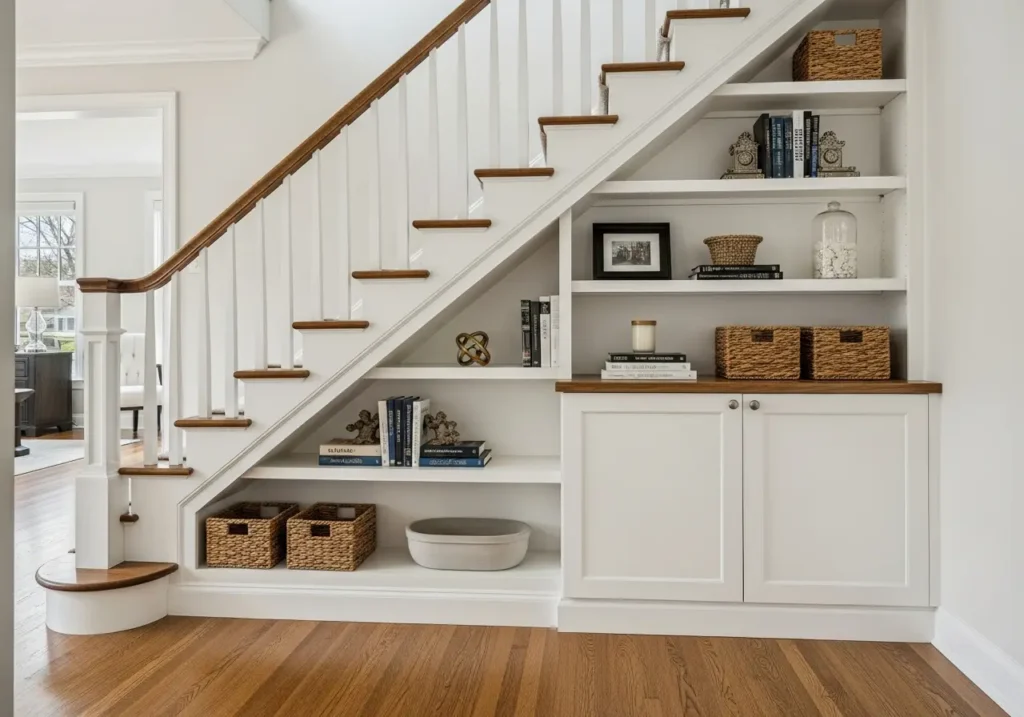
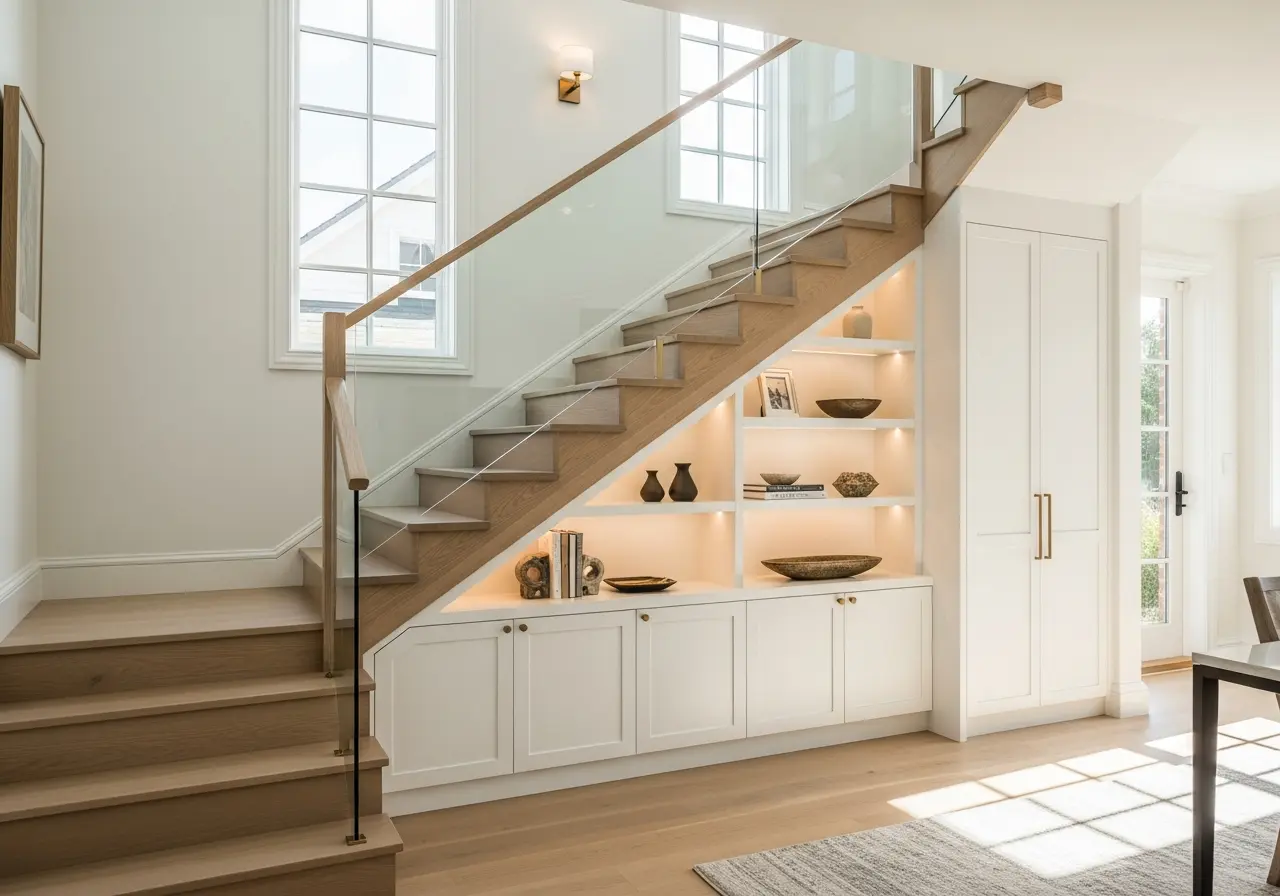
Custom built-in shelving represents an investment that pays dividends in both functionality and home value. Unlike freestanding furniture, built-ins are designed specifically for your under stairs dimensions, ensuring every inch serves a purpose. This approach creates a seamless, professional appearance that looks like it was always part of your home’s original design.
Working with the sloped ceiling requires strategic shelf placement. Tall items like vases, bottles, or books can occupy the highest sections, while shorter decorative objects, folded linens, or boxed items fit perfectly in gradually lowering spaces. Custom carpentry allows you to incorporate features like adjustable shelves that adapt to changing storage needs over time, deep drawers for bulky items, and specialized compartments for specific belongings.
The material choices for built-in systems range from economical to luxurious depending on your budget and style preferences. Painted MDF offers an affordable option that delivers a clean, modern look when finished properly. Solid wood shelving adds warmth and traditional elegance, particularly in homes with classic architectural details. Glass shelves create an airy, contemporary feel while allowing light to penetrate deeper into the space.
Many homeowners choose to mix open shelving with closed cabinets in their built-in designs. Open shelves provide quick access to frequently used items and create opportunities for decorative displays, while cabinets hide less attractive necessities and protect stored items from dust. This combination balances accessibility with aesthetics, creating storage that enhances rather than detracts from your home’s interior design.
Pull-Out Drawer Solutions
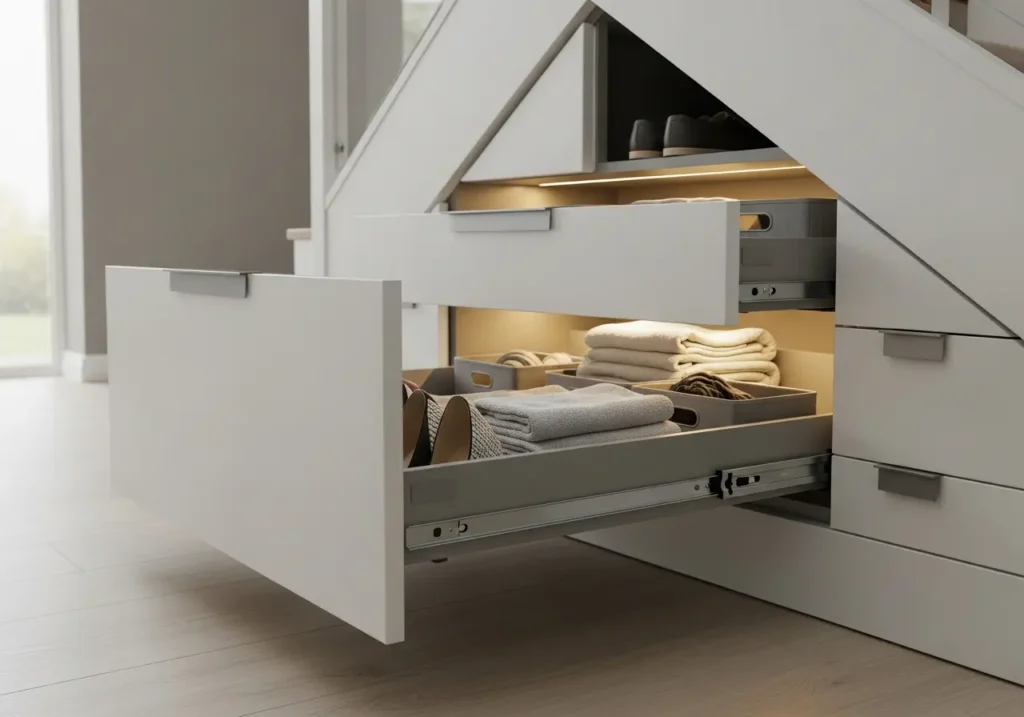
Pull-out drawer systems excel at making deep under stairs spaces fully accessible. The triangular configuration of most staircases creates substantial depth that becomes difficult to utilize with traditional shelving alone. Items pushed to the back become forgotten, creating frustration and wasted space. Pull-out drawers solve this problem by bringing everything forward with a simple motion.
Installing heavy-duty drawer slides rated for substantial weight ensures your storage system remains functional for years. Quality hardware makes a noticeable difference in how smoothly drawers operate, particularly when loaded with heavy items like shoes, sporting equipment, or seasonal decorations. Full-extension slides allow drawers to pull completely out from the cabinet frame, providing unobstructed access to contents.
Drawer configuration should reflect your specific storage needs. Shallow drawers work well for smaller items like accessories, craft supplies, or office materials. Medium-depth drawers accommodate folded clothing, linens, or pantry items. Deep drawers handle bulky possessions such as winter coats, blankets, or large sporting equipment. Creating a variety of drawer sizes within your system provides the flexibility to store diverse items efficiently.
Consider incorporating dividers or organizers within drawers to prevent contents from shifting and becoming disorganized. These simple additions maintain order even in heavily used drawers, making it easy to find specific items quickly. Some homeowners install clear drawer fronts or label systems to identify contents without opening each drawer, streamlining the process of locating stored items.
Mudroom and Coat Storage
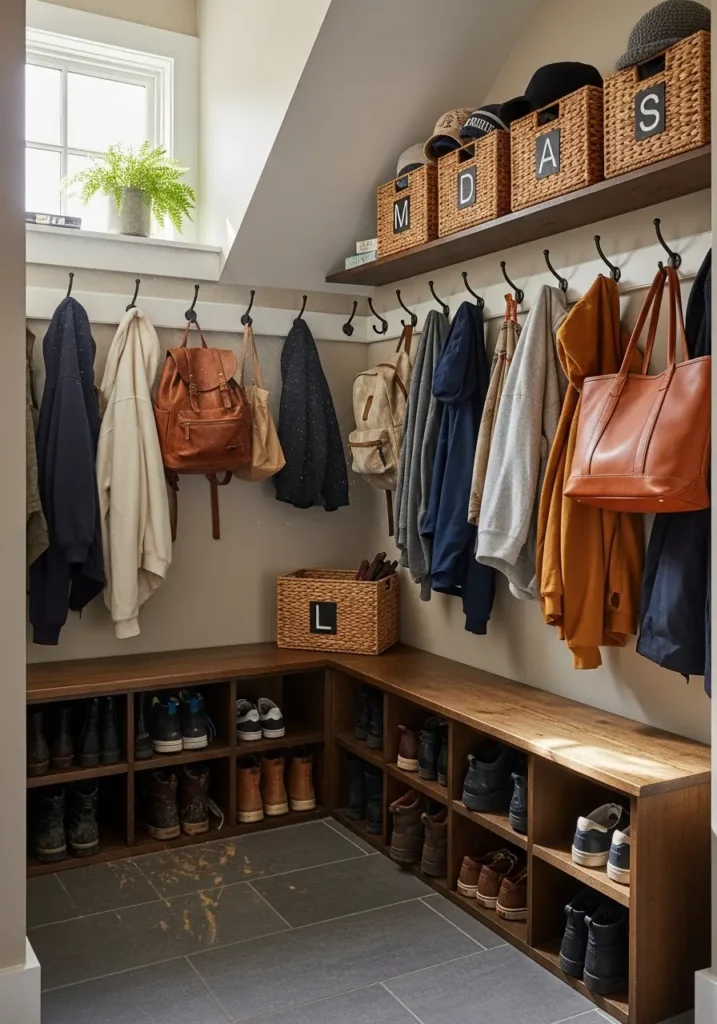
The area near your front or back door often becomes cluttered with shoes, coats, bags, and outdoor gear. Converting your under stairs space into a mudroom addresses this common organizational challenge, particularly in homes without a dedicated entryway closet. This functional approach keeps everyday items accessible while containing mess and clutter away from main living areas.
A well-designed under stairs mudroom includes several key elements. Hooks mounted at various heights accommodate family members of different sizes and allow everyone to hang their own belongings independently. Lower hooks enable young children to develop responsibility for their possessions while reducing the burden on parents. Upper hooks provide space for adult coats and bags without everything piling up.
Shoe storage represents another critical component of mudroom design. Options range from simple open cubbies that allow wet shoes to air dry, to closed cabinets that hide footwear from view. Boot trays catch water and dirt, protecting floors from damage and stains. Some families prefer individual bins or baskets for each person, making it clear where items belong and simplifying cleanup routines.
Adding a bench within or adjacent to your under stairs mudroom creates a comfortable spot for putting on and removing shoes. This thoughtful detail proves especially valuable for elderly family members or anyone with mobility limitations. Storage beneath the bench provides an ideal location for frequently used shoes or seasonal accessories, maximizing functionality in a compact footprint.
Wine Storage and Display
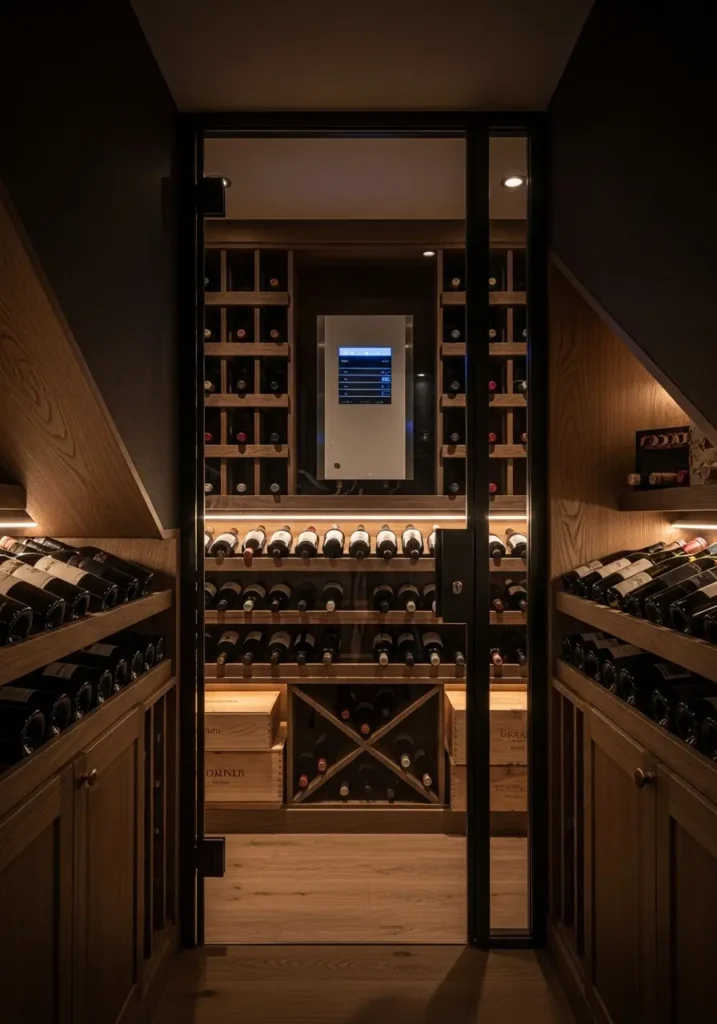
Wine enthusiasts often struggle to find appropriate storage that maintains proper conditions while showcasing their collection. The under stairs area offers natural advantages for wine storage, as it typically remains cooler and darker than other parts of the home. Converting this space into a wine cellar or display adds sophistication to your home while solving practical storage challenges.
Horizontal wine racks ensure bottles rest on their sides, keeping corks moist and preventing oxidation. Custom-built racks can accommodate your current collection size while allowing room for growth. Consider organizing storage by wine type, region, or drinking timeline, making it easy to select the perfect bottle for any occasion. Some homeowners incorporate a small workspace within their wine storage for decanting or preparing wine service.
Climate control becomes important for serious collectors storing valuable vintages. While a full climate-controlled wine cellar requires significant investment, even modest temperature management extends wine life and quality. Insulating the space and adding a small cooling unit maintains stable conditions without the expense of whole-room refrigeration. Monitoring humidity levels prevents corks from drying out or developing mold.
Display elements transform functional wine storage into an architectural feature. Glass doors or windows allow you to showcase your collection while protecting bottles from light damage. Subtle lighting highlights your wine display, creating ambiance and making bottle identification easier. Some designs incorporate a small serving area with glass storage and a preparation surface, creating a complete entertaining station within the under stairs footprint.
Home Office Nook
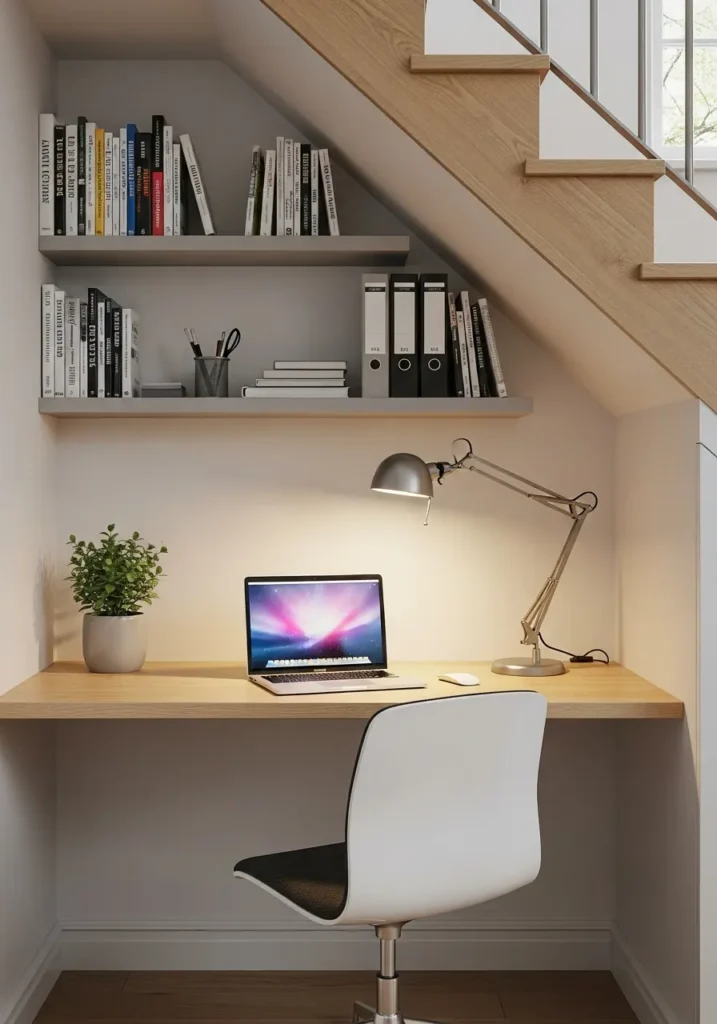
Remote work and flexible schedules make dedicated workspace more valuable than ever. For homes without a spare room to convert into an office, the under stairs area provides a surprisingly effective alternative. This compact workspace offers enough room for essential work functions while maintaining separation from household activity and distractions.
Desk configuration depends on available dimensions and work requirements. A wall-mounted floating desk creates a streamlined appearance and preserves floor space in tight areas. Built-in desk solutions integrate shelving above and storage below, keeping supplies organized and within reach. Some homeowners install a corner desk that wraps around the available space, maximizing work surface while fitting comfortably under the sloped ceiling.
Adequate lighting is essential for any workspace, particularly in naturally dark under stairs locations. Task lighting focused on the work surface reduces eye strain during extended work sessions. Ambient lighting brightens the overall space and prevents the cave-like feeling that can develop in enclosed areas. Natural light, if possible through nearby windows or glass doors, enhances mood and productivity.
Incorporating sufficient storage for office supplies, files, and equipment keeps the workspace functional and organized. Vertical file organizers utilize wall space efficiently. Drawer units slide under the desk for easy access to frequently needed items. Shelving above the work surface displays reference materials or decorative objects that personalize the space. Creating distinct storage zones for different categories of items simplifies finding what you need when focused on work tasks.
Children’s Playroom or Reading Nook
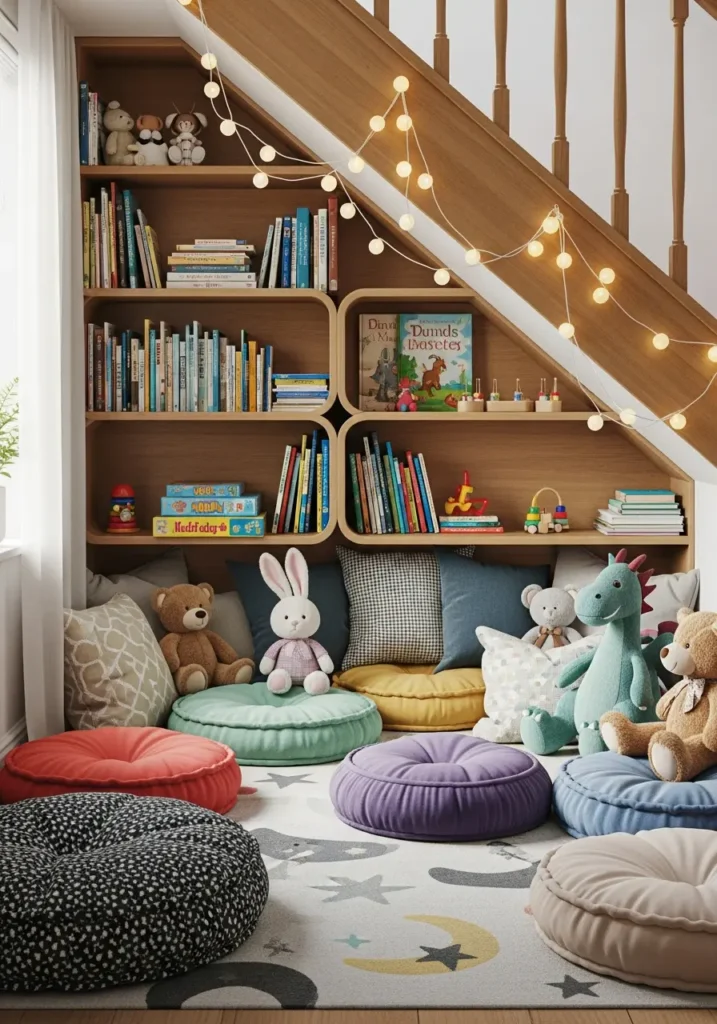
Young children naturally gravitate toward cozy, enclosed spaces that feel like their own special territory. The under stairs area creates a perfect playroom or reading nook that sparks imagination while keeping toys and books contained. This dedicated space encourages independent play and reading habits while preventing playroom mess from spreading throughout the house.
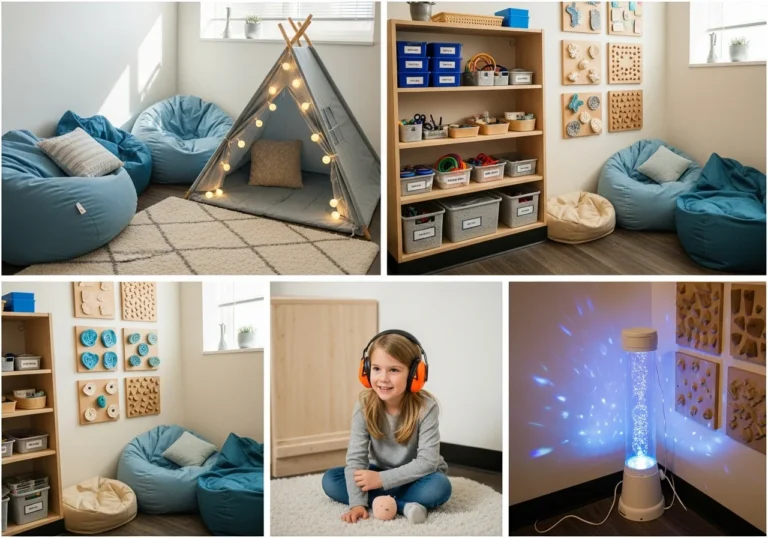
Low shelving mounted at child height allows kids to select and return toys without adult assistance. Open bins or baskets make cleanup straightforward, even for young children still developing organizational skills. Labeling containers with pictures and words helps children identify where items belong, building literacy and responsibility simultaneously. Rotating toys in and out of circulation keeps the space fresh and interesting while preventing overwhelming clutter.
Comfortable seating transforms the space into an inviting retreat for reading and quiet activities. Floor cushions, bean bags, or a small upholstered chair create a cozy atmosphere that encourages children to spend time with books. Adding soft textiles like rugs, curtains, or wall hangings makes the space feel warm and special. Some families install fairy lights or other gentle lighting to create a magical ambiance that makes reading time special.
As children grow, the playroom easily transitions into a homework station or teen hangout space. The enclosed nature provides privacy and quiet that older children appreciate when completing schoolwork or spending time with friends. This adaptability ensures your investment in creating the space continues providing value throughout different life stages.
Organized Coat Closet System
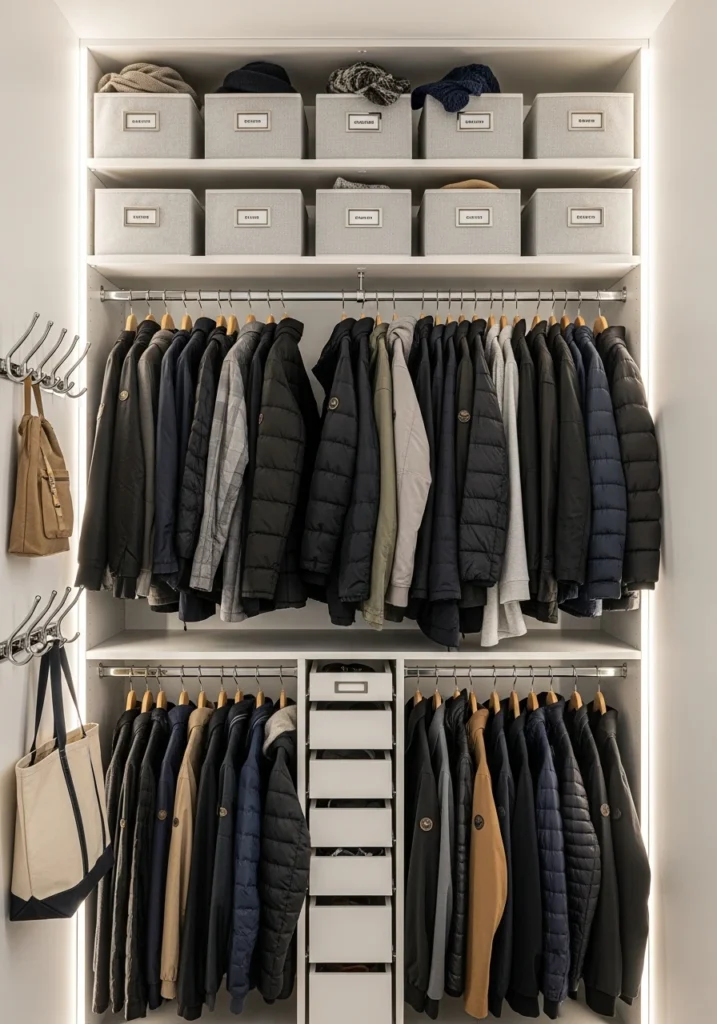
Traditional coat closets often become disorganized jumbles where finding a specific item requires excavating through layers of hanging garments. Converting your under stairs space into a well-planned coat closet eliminates this frustration through strategic organization that accommodates seasonal needs and family size.
Multiple hanging rods at different heights maximize vertical space while separating garment types. Upper rods store out-of-season coats that are accessed infrequently, while lower rods keep current-season items within easy reach. Installing a rod system that adjusts vertically adapts to changing needs as children grow or seasons change. Some homeowners incorporate a mix of rods and hooks, with hooks providing quick access for daily-use items like dog leashes or reusable shopping bags.
Shelf space above hanging areas stores hats, gloves, scarves, and other accessories that complement outerwear. Bins or baskets corral small items that would otherwise become lost or scattered. Clear containers allow you to see contents without removing each bin, streamlining the process of getting ready to head outside. Dedicated spaces for each family member prevent items from becoming mixed up or misplaced.
The sloped ceiling characteristic of under stairs spaces actually benefits coat closet design. The tallest section accommodates full-length coats and jackets, while gradually lower areas work perfectly for children’s garments, folded items, or accessory storage. This natural progression makes organizing intuitive and ensures every dimension serves a practical purpose.
Laundry Center Integration
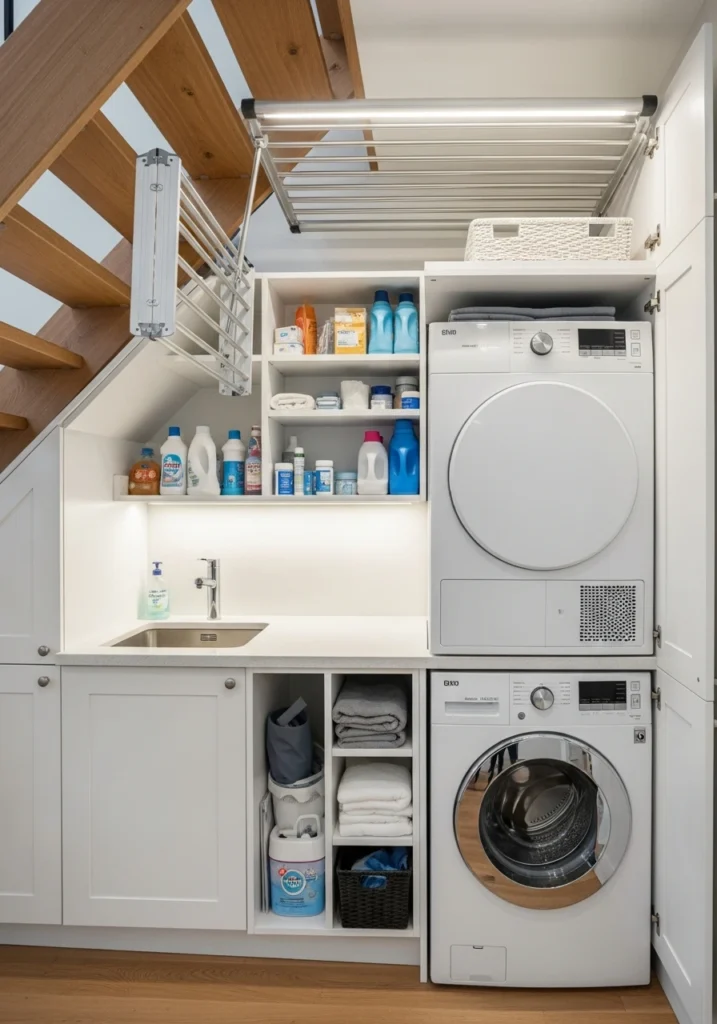
Homes without dedicated laundry rooms benefit tremendously from creative placement solutions that integrate washing facilities into existing space. The under stairs area can house a compact washer and dryer stack along with storage for laundry supplies, creating a functional laundry center that serves household needs without requiring an entire room.
Stackable washer and dryer units or combination machines fit into surprisingly tight spaces while providing full laundry capabilities. Proper ventilation is essential for dryer function and safety, requiring careful planning during installation. Waterproof flooring protects against potential leaks or spills. Sound insulation helps minimize noise disruption when machines operate, particularly important when the laundry area sits near living spaces or bedrooms.
Storage surrounding the appliances keeps detergents, stain removers, and other supplies organized and easily accessible. Upper shelves hold less frequently needed items like specialty cleaning products or seasonal laundry needs. Lower storage accommodates laundry baskets and frequently used supplies. Some homeowners install a hanging rod for air-drying delicate items or a folding surface for sorting and organizing clean laundry.
Creating a complete laundry station within the under stairs footprint eliminates the need to carry supplies throughout the house or make frequent trips to a basement laundry room. This convenience proves especially valuable for families with young children who generate substantial laundry volume or households where mobility challenges make stairs difficult.
Pet Retreat and Storage
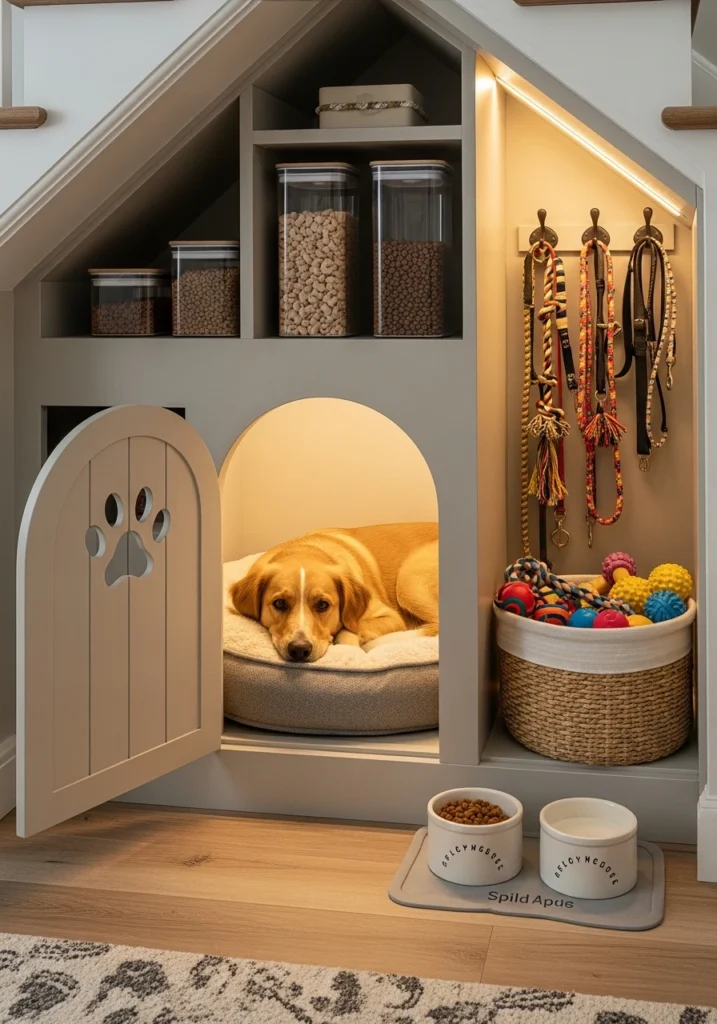
Pets deserve their own comfortable spaces within your home, and the under stairs area creates an ideal retreat that feels secure and cozy. Dogs particularly appreciate den-like spaces that provide privacy and quiet. Converting this area into a pet station combines sleeping quarters with storage for food, toys, leashes, and grooming supplies.
A comfortable pet bed sized appropriately for your animal fits naturally into the enclosed space. Washable bedding simplifies cleaning and maintains freshness. Some pet owners install small doors or gates that allow animals to come and go freely while keeping the area separate when needed. Adequate ventilation ensures the space remains comfortable, and subtle lighting helps pets navigate safely.
Storage integrated into the pet area keeps supplies organized and prevents clutter from spreading through your home. Food containers with secure lids maintain freshness while deterring pests. Hooks hold leashes and harnesses where they are easy to grab for walks. Bins store toys, grooming tools, and seasonal items like winter coats or summer cooling vests. This centralized organization saves time when caring for your pet and ensures you never search for needed items. For more information visit Homeliaa.
The under stairs pet retreat works particularly well in open-concept homes where traditional pet crates or beds occupy valuable floor space in main living areas. This dedicated spot keeps pet belongings contained while providing animals with a comfortable space they recognize as their own. The enclosed nature helps anxious pets feel more secure, potentially reducing stress-related behaviors.
Combination Storage with Adjustable Systems
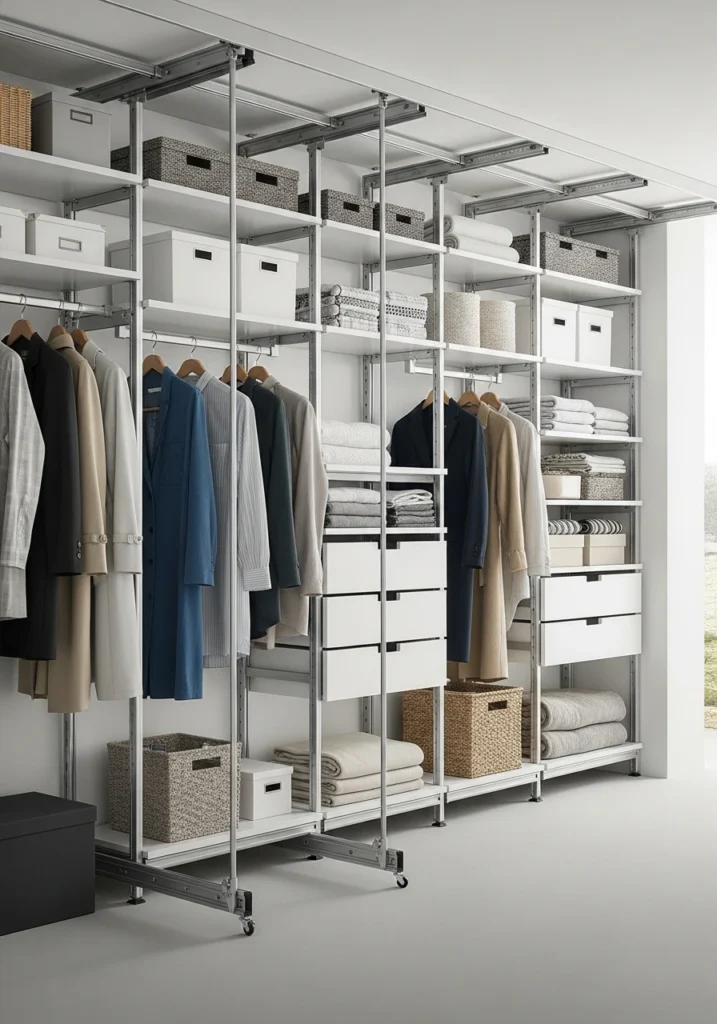
Many households have storage needs that change over time or vary seasonally. Adjustable storage systems provide the flexibility to reconfigure your under stairs closet as requirements evolve, ensuring the space continues meeting your needs throughout different life stages.
Track-based shelving systems allow you to move shelves up or down without tools or permanent modifications. This adaptability proves valuable when storing items of varying heights or when family needs change. Modular components can be added, removed, or rearranged to create the perfect configuration for current requirements. Some systems incorporate interchangeable elements like drawers, shelves, hooks, and hanging rods that swap out easily.
Seasonal storage represents one of the most common uses for adjustable under stairs systems. Winter requires space for heavy coats, boots, and snow gear that occupies substantial volume. Summer shifts focus to lighter clothing, outdoor equipment, and vacation supplies. An adjustable system transforms easily between these seasonal needs without requiring permanent changes or separate storage locations.
Investing in quality adjustable components ensures long-term value and functionality. Look for systems from reputable manufacturers that offer expansion options as needs grow. While initial costs may exceed fixed shelving, the long-term versatility and ability to adapt without reinstallation provide substantial value. This approach works particularly well for growing families, people who move frequently, or anyone who values flexibility in their organizational systems.
Maximizing Your Under Stairs Potential
Transforming the space beneath your staircase from wasted area to functional storage requires thoughtful planning and execution. Begin by carefully measuring the available dimensions, noting ceiling height at various points and identifying any obstacles like structural supports or utility lines. Understanding these parameters helps you select or design storage solutions that fit properly and utilize the space efficiently.
Consider how the under stairs area relates to surrounding rooms and traffic patterns. A closet located near your front door naturally suits mudroom purposes, while one adjacent to the kitchen works well as a pantry. Location influences which organizational approach makes the most sense and ensures your investment enhances rather than disrupts daily household flow.
Budget significantly impacts the scope and complexity of your project. Simple solutions like freestanding storage units or basic shelving cost substantially less than custom built-ins but may not utilize space as efficiently. Evaluate whether professional installation makes sense based on your skills, available time, and the complexity of your chosen system. Many homeowners successfully tackle straightforward projects themselves while hiring professionals for complex installations involving electrical work, plumbing, or extensive carpentry.
The most successful under stairs closets reflect the specific needs and lifestyle of the household they serve. Take time to identify your biggest storage challenges and prioritize solutions that address these issues. Whether you need more pantry space, better coat organization, a home office, or any other function, matching the design to your requirements ensures satisfaction with the finished result.
Regular maintenance keeps your under stairs storage functioning effectively over time. Periodically reassess what you are storing and remove items no longer needed. Clean shelves and drawers to prevent dust accumulation. Check hardware like drawer slides and door hinges, tightening or lubricating as needed. These simple steps preserve your investment and ensure the space continues serving your household well for years to come.
The area beneath your staircase represents valuable square footage that deserves the same consideration as any other room in your home. With creative thinking and proper planning, this often-overlooked space transforms into highly functional storage that simplifies daily life while enhancing your home’s organization and appeal. Whether you choose a simple approach or elaborate custom solution, making use of this space delivers benefits that justify the time and investment required.
Frequently Asked Questions
What is the most cost-effective way to organize a closet under stairs?
The most budget-friendly approach involves using adjustable wire shelving or modular systems from retailers like IKEA. These off-the-shelf solutions require minimal installation while providing substantial storage capacity. Adding inexpensive bins, baskets, and hooks maximizes organization without significant expense. Many homeowners successfully create functional storage for under 300 dollars using this approach.
How do I deal with the awkward sloped ceiling in under stairs storage?
Work with the slope rather than against it by installing shelves that step down progressively or using pull-out drawers that accommodate the changing height. Store tall items in the highest section and gradually transition to shorter items as the ceiling lowers. Custom solutions can be designed to precisely fit these dimensions, eliminating wasted space.
Can I install a closet under stairs myself or should I hire a professional?
Simple shelving installations and freestanding storage units make excellent DIY projects for moderately handy homeowners. However, complex built-ins, electrical work for lighting, or projects requiring structural modifications typically benefit from professional expertise. Assess your skill level honestly and consider hiring professionals for aspects beyond your capabilities while handling simpler tasks yourself.
What type of lighting works best for under stairs closets?
LED strip lights provide excellent illumination while generating minimal heat in enclosed spaces. Motion-activated lights offer convenience by turning on automatically when the closet opens. Battery-operated puck lights work well when electrical wiring is impractical. Adequate lighting makes a substantial difference in usability, particularly for pantries or closets storing many small items.
How can I prevent my under stairs storage from becoming cluttered again?
Establish clear organizational systems with designated spaces for specific items. Use labels to maintain order and make it easy for all household members to return items correctly. Schedule regular decluttering sessions to remove unused items before they accumulate. Choosing storage solutions that fit your actual habits rather than idealized versions ensures systems remain functional long-term.