
6+ Creative Container Ideas for Succulents
Transforming your living space with ideas for succulents has never been more exciting. These resilient plants offer endless possibilities for creative expression, and the containers you choose can turn a simple plant arrangement into a stunning conversation piece. Whether you’re working with traditional pots or reimagining everyday objects, the right container ideas for succulents can elevate your home décor while celebrating these remarkable plants.
Ideas for Succulents have captured the hearts of gardeners and design enthusiasts alike, not just for their striking appearance but for their forgiving nature. Their ability to thrive in various containers, from conventional planters to the most unexpected vessels, makes them the perfect medium for creative experimentation. The beauty of container gardening with succulents lies in the freedom to express your personal style while working with plants that genuinely want to succeed.
This comprehensive guide explores innovative and practical container ideas that will inspire your next succulent project. From repurposed household items to carefully curated arrangements, you’ll discover how to create displays that reflect your aesthetic while providing the ideal growing environment for these water-wise wonders.
Understanding Succulent Container Requirements

Before diving into creative container ideas, understanding what ideas for succulents need from their homes is essential. These desert dwellers evolved in harsh environments where water drains quickly and roots stay relatively dry between watering periods. This fundamental characteristic shapes every container decision you make.
Drainage stands as the most critical factor when selecting containers ideas for succulents. While succulents store water in their fleshy leaves and stems, their roots are surprisingly vulnerable to moisture. Excess water pooling around the root system leads to rot, the primary killer of otherwise healthy ideas for succulents. Containers with drainage holes provide the fastest route for excess water to escape, mimicking the natural conditions these plants prefer.
Depth requirements ideas for succulent containers differ significantly from traditional flowering plants. Most ideas for succulents develop shallow, fibrous root systems that spread horizontally rather than diving deep. Containers ranging from six to eight inches deep provide ample space for root development without leaving excess unused soil that might retain unwanted moisture. This characteristic opens up possibilities for using shallow bowls, trays, and other vessels that might seem unconventional for plant growing.
Material selection influences both aesthetics and plant health. Porous materials like terracotta, concrete, and unglazed ceramics allow soil to breathe and moisture to evaporate through the container walls. This natural evaporation helps prevent the waterlogged conditions that spell disaster for succulents. Non-porous materials like glazed ceramics, metal, or plastic can work successfully but require extra attention to watering practices since moisture escapes only through drainage holes.
Container size should complement your plant selection. Small succulents look overwhelmed in oversized pots, while cramming large specimens into tiny containers creates an unbalanced appearance. Fortunately, succulents tolerate crowding better than most plants. You can pack them closely together for an immediate lush look, knowing they’ll happily coexist while slowly filling the available space.For more succulent container ideas visit Debra Lee Baldwin.
Vintage and Repurposed Kitchen Items
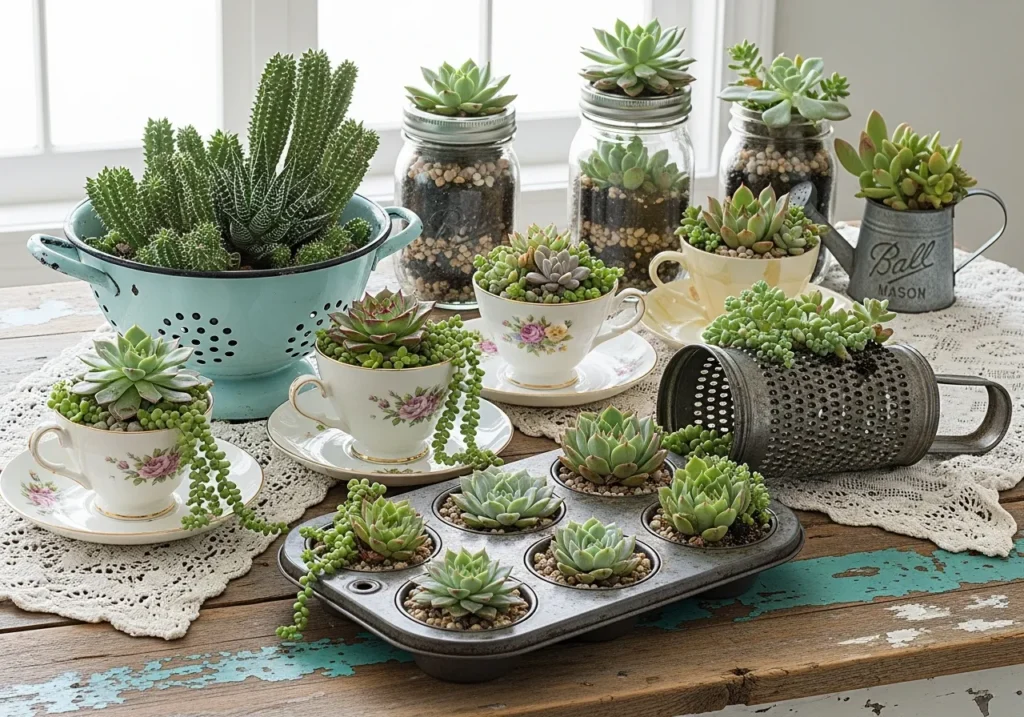
Your kitchen cabinets might hold the next perfect home for your succulent collection. Vintage kitchen items bring character and nostalgia to plant displays while offering practical growing spaces. The worn patina of aged metal and the charm of retro designs create visual interest that complements the sculptural qualities of succulents.
Old colanders make exceptional succulent containers with built-in drainage that gardeners dream about. The perforated metal allows excess water to drain freely while providing adequate soil retention. A vintage enamelware colander in classic white or cheerful colors becomes an instant focal point when planted with a variety of rosette-forming echeverias or trailing sedums.
Teacups and teapots offer delicate, whimsical vessels for miniature succulent arrangements. These pieces work beautifully as individual displays or grouped together for a charming tabletop garden. The key to success with teacups lies in careful watering since most lack drainage holes. Add a thin layer of pebbles at the bottom for water storage away from roots, and water sparingly to keep soil barely moist.
Muffin tins provide multiple planting pockets perfect for creating a variety display. Each cup becomes home to a different succulent species, allowing you to showcase diverse colors, textures, and forms in one cohesive arrangement. Drill a small drainage hole in each cup to ensure proper water management. The industrial look of metal tins contrasts beautifully with the organic shapes of succulents.
Vintage mason jars in various sizes create a cohesive collection with rustic appeal. The clear glass showcases layered growing media, turning the container itself into part of the display. Start with a gravel layer visible through the glass, add activated charcoal to keep things fresh, then fill with cactus potting mix. The transparency requires careful watering attention but rewards you with a complete view of your miniature ecosystem.
Kitchen graters transform from utilitarian tools to sculptural planters with impressive drainage courtesy of all those grating holes. Line the interior with window screen to prevent soil loss while maintaining excellent water flow. Tall varieties like portulacaria or senecio work well with the vertical orientation, creating living towers that celebrate both form and function.
Natural and Organic Container Options
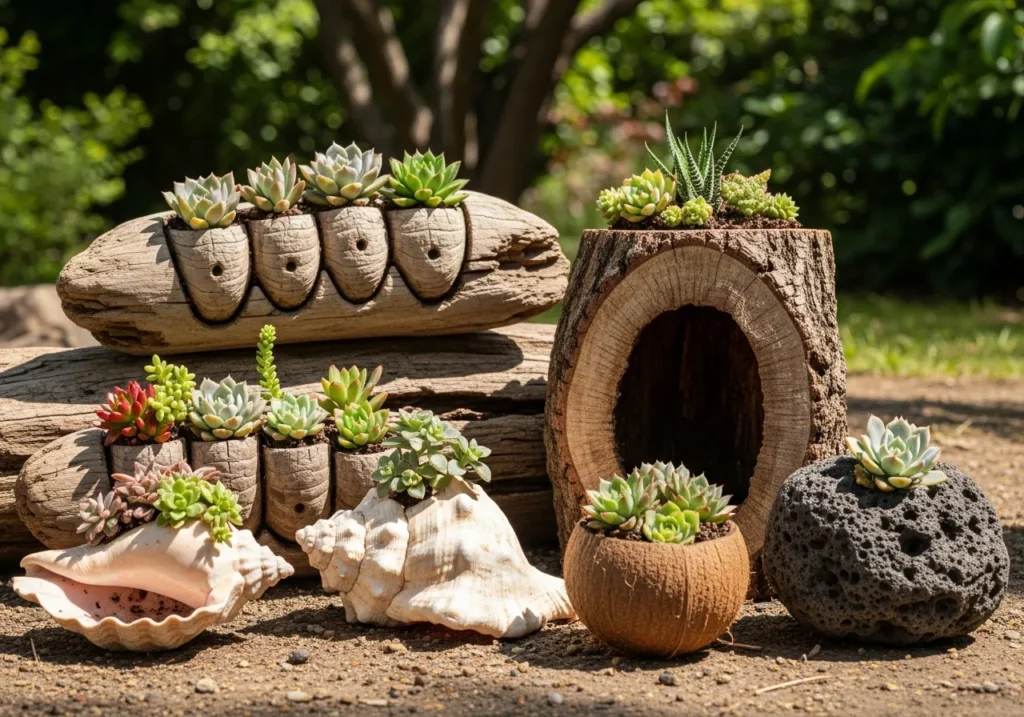
Nature provides some of the most beautiful and appropriate containers for succulents. These organic options create seamless connections between your plants and the natural world while offering excellent growing conditions. The textures and irregular forms of natural materials enhance rather than compete with the architectural beauty of succulents.
Driftwood pieces with natural hollows and crevices become stunning showcases for succulent collections. The weathered wood texture and silvered tones provide neutral backdrops that make succulent colors pop. Look for pieces with natural depressions deep enough to hold soil, or carefully hollow out spaces using a drill and chisel. The horizontal orientation of many driftwood pieces allows you to create landscape-style arrangements that mimic how succulents grow on rocky outcroppings in nature.
Tree logs and stumps offer substantial planting areas for more extensive succulent gardens. Drill multiple planting pockets across the top surface or hollow out a larger central area. The bark texture and organic form ground these displays in nature, making them perfect for outdoor patios or rustic interior spaces. As the wood weathers and ages, it develops character that only improves the overall aesthetic.
Large shells and coral pieces echo the succulent’s natural habitat while adding coastal charm. Clamshells work particularly well for small arrangements, with their natural bowl shape providing ideal depth. The calcium content in shells may even benefit certain succulent species. Position shells at slight angles to ensure water drains rather than pooling.
Coconut shells halved and cleaned create perfect individual succulent homes. The fibrous interior adds textural interest while providing natural drainage through the material itself. Hang coconut planters for a tropical vibe or nestle them among other containers in a grouped display. The dark brown tones complement the green and blue-green hues common in many succulent varieties.
Stone and rock containers carved or naturally formed provide permanent, weather-resistant homes for outdoor succulent displays. Pumice stone and volcanic rock work especially well because their porous nature aids drainage and allows roots to grip the surface. These heavy containers won’t blow over in wind and handle temperature fluctuations without cracking.
Unexpected Household Objects Reimagined
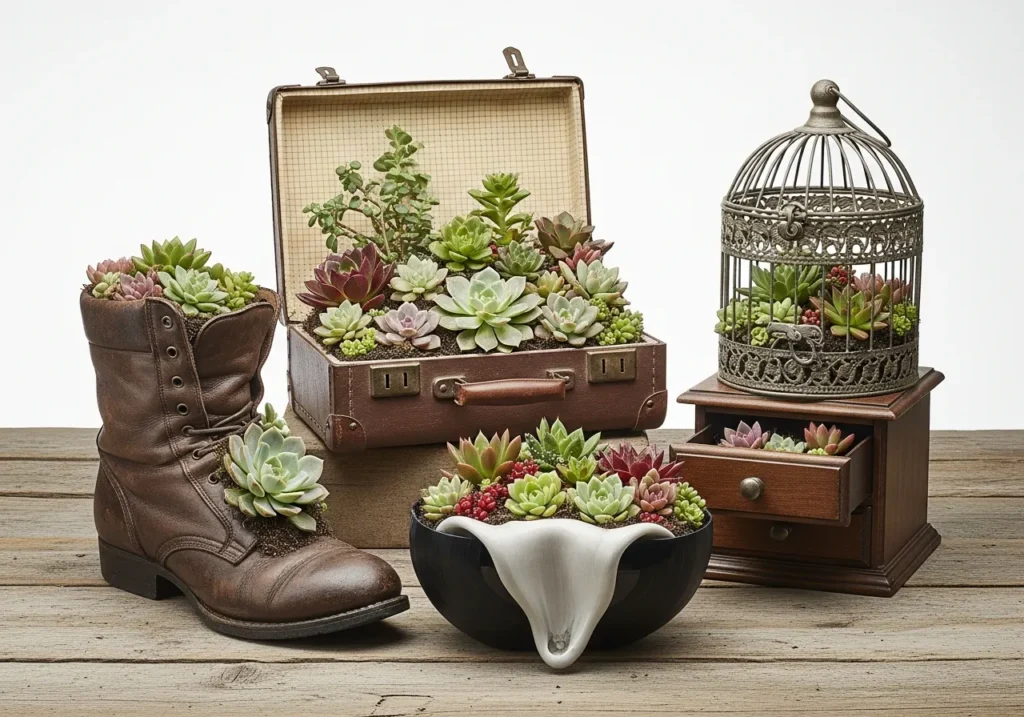
The most creative succulent containers often come from looking at everyday objects with fresh eyes. Items destined for donation bins or trash heaps can become unique planters that tell stories and spark conversations. This approach to container gardening combines sustainability with creativity, giving new life to objects while creating truly one-of-a-kind displays.
Old boots and shoes make surprisingly effective and charming succulent planters. The worn leather or canvas tells a story, while the shape provides ample soil space. Drill drainage holes through the sole, fill with cactus mix, and plant with trailing varieties that cascade over the sides like whimsical laces. Children’s shoes work particularly well for small arrangements that bring smiles.
Vintage suitcases opened and propped at an angle become miniature succulent landscapes. The portable nature of suitcases made them practical for mid-century travelers, and that same portability lets you move your succulent display wherever needed. Line the interior with landscape fabric to protect the case lining, add drainage holes if possible, and create a desert scene complete with various succulent species, decorative rocks, and even miniature accessories.
Birdcages repurposed as planters offer vertical growing space with built-in charm. The bars provide natural drainage and air circulation while creating interesting shadow patterns. Line the bottom with coconut fiber or moss to contain soil, then plant succulents that will eventually grow through the bars for a overgrown cottage garden effect. Hang these living sculptures or place them on pedestals as garden focal points.
Old vinyl records melted into bowl shapes create conversation-starting containers with retro appeal. Carefully heat records in the oven until pliable, then shape them over heat-safe bowls. Once cooled, these record bowls provide shallow planting spaces perfect for succulent arrangements. The grooves add visual texture, and you can choose records with labels that hold personal meaning.
Desk drawers pulled from vintage furniture become wall-mounted or freestanding succulent gardens. The compartmentalized space of divided drawers lets you plant different varieties in separate sections, creating organized displays with personality. Mount drawers horizontally on walls for living art installations, or stack several vertically for a tower of greenery.
Computer keyboards, calculators, and other small electronic devices stripped of components and filled with soil make statement pieces for tech-enthusiast gardeners. These plantings celebrate the intersection of nature and technology while giving obsolete electronics a second purpose. The keys and buttons create interesting geometric patterns around your plants.
Themed and Miniature Garden Concepts
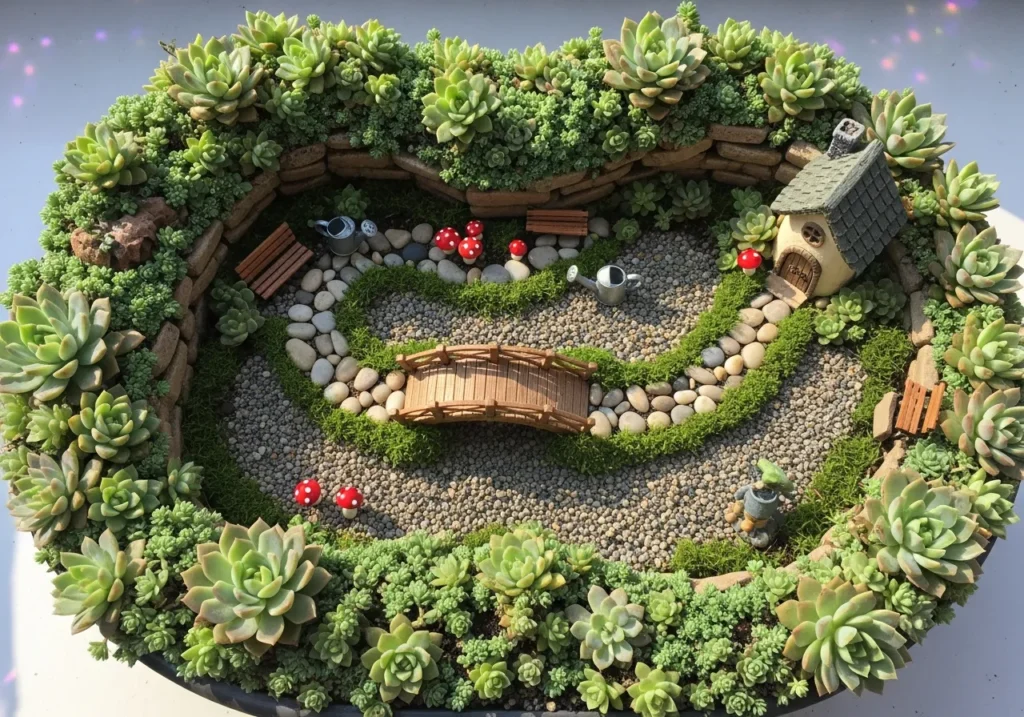
Succulent containers take on new dimensions when organized around themes or designed as miniature landscapes. These conceptual approaches transform simple plantings into storytelling displays that engage viewers and create immersive experiences on a small scale. The compact nature of many succulents makes them ideal candidates for these detailed, imaginative arrangements.
Fairy gardens have surged in popularity, and succulents serve as perfect plant material for these whimsical creations. Their slow growth rate means fairy accessories remain proportionate longer than with fast-growing plants. Start with a shallow, wide container that provides space for both plants and miniature structures. Create paths using fine gravel between succulent groupings, position tiny benches or cottages as focal points, and add miniature garden tools or animals for storytelling details.
Beach and nautical themes pair naturally with succulents, whose blue-green tones and architectural forms suggest seaside environments. Use a weathered wooden box or shallow boat-shaped container as your base. Plant varieties that echo coastal vegetation, then add sand as top dressing and nestle seashells among the plants. Small pieces of driftwood and beach glass complete the seaside story without overwhelming the living elements.
Zen garden concepts bring contemplative minimalism to succulent displays. Choose a rectangular container with clean lines, perhaps in black or natural stone tones. Plant a single specimen succulent as a focal point, representing the traditional stone or tree element in Japanese gardens. Surround it with carefully raked fine sand or small pebbles, creating patterns that suggest water ripples or wind. This restrained approach highlights the sculptural beauty of individual succulent forms.
Wild west and desert themes celebrate the native habitat of many succulents. Transform containers into miniature desert landscapes complete with small cacti companions, decorative rocks suggesting boulders, and sand-colored top dressing. Add tiny tumbleweeds, miniature cowboys, or small ceramic animals for playful details. This theme works particularly well with terracotta containers and rustic wooden boxes.
Vertical gardens and living walls represent another themed approach, turning containers perpendicular to create wall-mounted displays. Frame structures filled with wire mesh and sphagnum moss hold soil and plants in vertical orientation. Picture frames converted to shallow planters become living artwork when mounted on walls. These installations work best with smaller succulent varieties that root shallowly and tolerate the vertical growing position.
Formal Container Arrangements and Design Principles

While creativity often celebrates the unconventional, formal container design follows established principles that create visually balanced, professional-quality displays. Understanding these foundational concepts helps even experimental arrangements succeed by establishing strong composition underneath the innovation. These guidelines originated in traditional container gardening but adapt perfectly to succulent-specific applications.
The thriller, filler, spiller formula provides a reliable framework for mixed succulent containers. Select a taller specimen as your thriller to provide height and draw the eye upward. Aloe, sansevieria, or upright-growing agave varieties work well in this role. Choose medium-height succulents with interesting colors or textures as fillers to occupy the middle zone. Echeveria, haworthia, and compact sedums fill this position beautifully. Finally, include trailing varieties as spillers that cascade over container edges, softening the transition between pot and surroundings. String of pearls, burro’s tail, and trailing sedums excel as spillers.
Color theory application creates cohesive or dramatic effects depending on your goals. Monochromatic schemes using succulents in varying shades of a single color family create sophisticated, calming displays. Try all blue-green tones or warm burgundy and red varieties for this approach. Complementary color schemes pair opposite hues like purple and chartreuse for bold, energetic arrangements that demand attention. Analogous color combinations use neighboring colors on the color wheel for harmonious blends that feel natural and balanced.
Texture contrast adds visual interest even in simple arrangements. Pair smooth, waxy leaves with fuzzy, felted surfaces. Combine spiky, architectural forms with soft, round rosettes. Juxtapose fine, delicate foliage against bold, substantial leaves. These contrasts create dialogue within your container, giving eyes plenty to explore while maintaining cohesion through shared growing requirements.
Container scale and proportion influence the overall success of your design. Large containers can accommodate multiple plant varieties and allow for more complex arrangements, while small containers showcase single specimens or simple groupings. The container should neither dwarf your plants nor appear overfilled to bursting. A useful guideline suggests container height should measure approximately half the mature plant height, though dramatic effects sometimes call for breaking this rule intentionally.
Top dressing choices complete your container design and serve practical purposes. Decorative pebbles, crushed granite, sand, or glass mulch covers soil surfaces, protecting against splashing water that can encourage disease. The color and texture of your top dressing should complement both container and plants without competing for attention. Natural materials like small stones often work best for their neutral presence, though colorful glass can add contemporary flair in modern settings.
Seasonal and Weather-Appropriate Container Selections
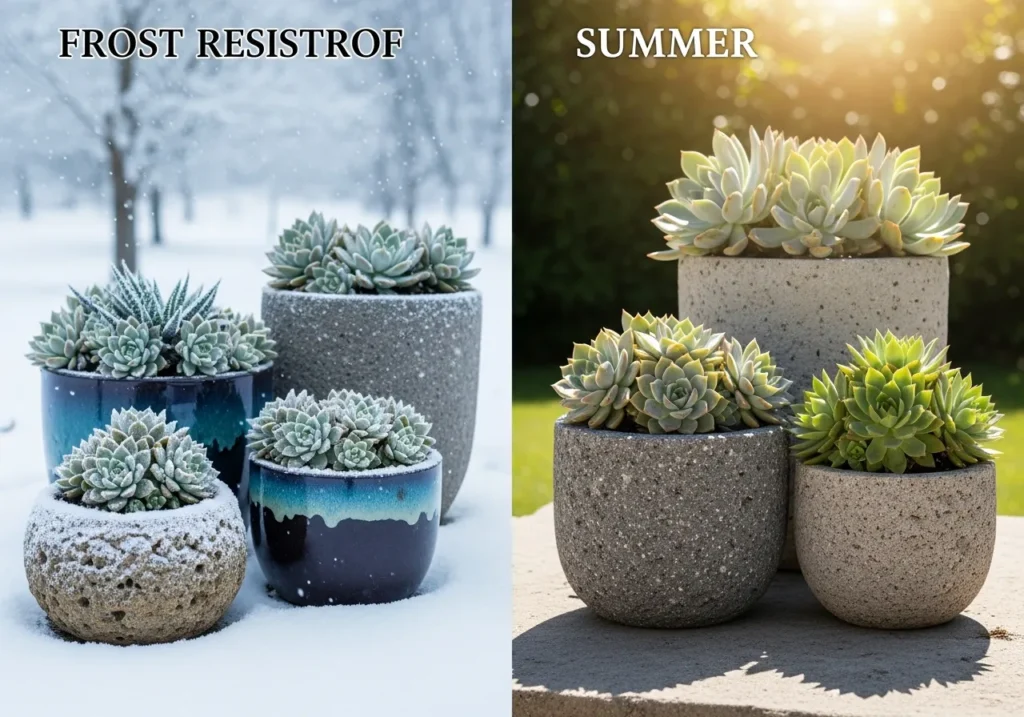
Succulent containers must account for environmental conditions if plants will spend any time outdoors. Understanding how different materials and designs respond to weather patterns helps you select containers that protect your plants while maintaining aesthetic appeal throughout the year. This consideration becomes especially important for gardeners in regions with significant seasonal variation.
Frost-resistant containers prevent cracking and breaking during winter freezes. Terracotta, while beautiful and porous, absorbs water that expands when frozen, causing cracks and eventual failure. Glazed ceramics generally handle cold better but check whether pieces are rated frost-proof before leaving them outdoors through freezing weather. Resin and fiberglass containers mimic natural materials while offering superior weather resistance and light weight for easy repositioning.
Drainage considerations intensify during rainy seasons when containers must evacuate water quickly to prevent root rot. Ensure outdoor containers have adequate drainage holes, and consider elevating them on pot feet or stones to keep drainage holes clear of surfaces that might block water flow. In regions with heavy rainfall, position containers under eaves or other protected areas where they receive shelter from the heaviest downpours.
UV resistance matters for containers exposed to intense sunlight. Plastic planters can become brittle and crack after extended sun exposure unless rated UV-stable. Colors fade on painted containers unless protected with outdoor-rated finishes. Natural materials like stone, concrete, and certain woods weather beautifully in sun, developing patinas that add character rather than detracting from appearance.
Wind protection prevents containers from toppling in exposed locations. Heavier containers made from concrete, stone, or filled with sufficient soil mass stay grounded in breezy conditions. Wide, squat containers have lower centers of gravity than tall, narrow ones, making them more stable. Group containers together or position them against walls and structures for additional wind protection.
Temperature fluctuations affect both containers and plants. Dark-colored containers absorb more heat, which can benefit cold-sensitive succulents in cool climates but may overheat roots in hot regions. Light colors reflect heat, keeping soil cooler in summer but providing less warmth in winter. Metal containers conduct temperature rapidly, making them challenging in extreme climates unless planted with particularly hardy succulent varieties.
Advanced Container Techniques and Innovations

Experienced succulent gardeners often experiment with advanced techniques that push creative boundaries while potentially improving plant health. These innovations range from simple modifications to elaborate systems that transform how succulents grow in containers. While not necessary for basic success, these approaches offer solutions to specific challenges and opportunities for artistic expression.
Hypertufa containers blend concrete, peat moss, and perlite to create lightweight, porous vessels that mimic aged stone. The textured surface and neutral color provide versatile backgrounds for any succulent variety. The material’s porosity supports excellent drainage while allowing air exchange at root level. You can mold hypertufa into any shape, from traditional pots to abstract sculptures, making it ideal for creating custom containers that fit specific design visions.
Self-watering systems built into containers help maintain consistent moisture levels during vacations or busy periods. These systems use reservoir compartments beneath growing media, allowing plants to draw water as needed through capillary action. While succulents tolerate drought well, consistent but moderate moisture promotes better growth. The key with self-watering containers for succulents is keeping reservoir levels low to prevent oversaturation.
Vertical wall systems maximize growing space in small areas while creating dramatic living installations. Modular pocket systems attach to walls or freestanding frames, each pocket holding individual plants or small groupings. Proper installation ensures adequate drainage through layers, with water flowing downward without pooling in any pocket. These systems work best with smaller, slower-growing succulent varieties that won’t quickly outgrow their pockets.
Tiered and stacked container arrangements create multi-level displays from single containers of decreasing sizes. Start with the largest container as your base, plant it fully, then add a smaller container on top. Continue stacking as desired, ensuring each level receives adequate light and can be watered independently. This vertical arrangement provides ample growing space while occupying minimal ground area.
Mixed media containers incorporate diverse materials into single vessels. Embed stones, shells, or tiles into wet concrete for custom surfaces. Wrap plain containers with natural fibers, rope, or fabric to change their appearance. Mosaic tiles arranged around container exteriors transform basic pots into art pieces. These embellished containers become focal points that elevate simple plantings.
Living frames and picture planters turn containers perpendicular for wall display. These shallow boxes packed with succulent cuttings create living paintings that change as plants grow. Wire mesh or hardware cloth holds soil in place while plants root through the surface. Initially lay frames flat for several weeks while succulents establish, then hang vertically for display. The slow growth of succulents means these living pictures maintain their composition for months or years.To know more plants decor ideas visit Orchid Trellis
Essential Care Tips for Container Succulents
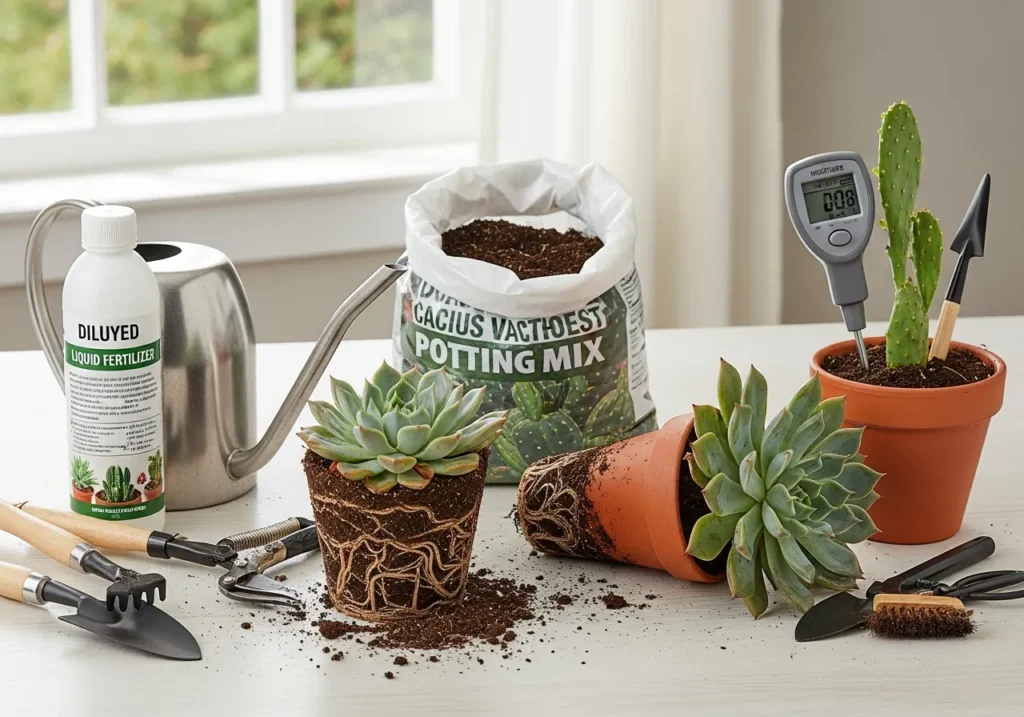
Successful container gardening requires understanding how contained environments differ from ground plantings. While succulents famously tolerate neglect, providing optimal care in containers ensures robust growth and long-term health. The following considerations address the unique challenges of container cultivation.
Soil composition determines success or failure with container succulents. Standard potting soil retains too much moisture, creating conditions where roots rot despite careful watering. Specialized cactus and succulent mixes incorporate sand, perlite, and grit to create fast-draining media that mimics natural desert soils. You can mix your own blend using equal parts potting soil, coarse sand, and perlite or pumice for optimal drainage and aeration.
Watering practices must account for container size, material, and environmental conditions. Small containers dry faster than large ones. Porous containers lose moisture through evaporation faster than non-porous types. Hot weather and low humidity increase water needs while cool temperatures and high humidity decrease them. The universal rule for succulent watering remains: allow soil to dry completely between waterings. Check moisture by inserting your finger into soil or lifting containers to gauge weight.
Light requirements vary by species, but most succulents thrive with bright indirect light or partial sun exposure. South-facing windowsills provide ideal indoor conditions, though you may need to shield plants from intense midday summer sun with sheer curtains. Outdoors, morning sun with afternoon shade prevents sunburn while providing adequate light for compact growth. Watch for etiolation, where plants stretch toward light sources, becoming leggy and weak. This signals insufficient light requiring relocation to brighter spots.
Fertilization supports growth without encouraging the soft, weak tissue that excessive nutrients produce. Container plants deplete soil nutrients faster than ground plantings, benefiting from occasional feeding during active growth periods. Use diluted cactus fertilizer or balanced formula at quarter strength monthly during spring and summer. Avoid fertilizing during winter dormancy when plants rest and growth slows dramatically.
Root maintenance becomes necessary as succulents outgrow containers or soil deteriorates. Most succulents benefit from repotting every two to three years, giving you opportunity to refresh soil, divide overcrowded plants, and move specimens to larger containers. Spring represents ideal timing for this task when plants emerge from dormancy ready to establish in new containers. Remove old soil gently, trim damaged roots, and allow cut surfaces to callus before replanting in fresh, dry mix. Water sparingly for the first week while roots recover.
Conclusion
Container ideas for succulents truly know no bounds. From repurposed kitchen gadgets to formal arrangements following classic design principles, these adaptable plants thrive in creative settings that reflect personal style and imagination. The combination of succulent resilience and container versatility empowers gardeners at every skill level to experiment, innovate, and create displays that transform spaces and spark joy.
The journey from selecting that first container to maintaining a thriving collection opens doors to artistic expression, environmental stewardship through upcycling, and the simple pleasure of nurturing living things. Whether you gravitate toward minimalist single-specimen displays or elaborate themed gardens, succulents offer forgiving companions for your container gardening adventures.
Start with what resonates with your aesthetic and practical needs. Raid your cabinets for forgotten vessels, scour thrift stores for vintage finds, or invest in quality containers that will serve your plants for years. Let your personality guide material choices, color preferences, and arrangement styles. Most importantly, allow room for experimentation and growth, both for your plants and your developing design sensibility.
The beauty of succulent container gardening lies not just in finished displays but in the ongoing process of observation, adjustment, and creative problem-solving. Each season brings new opportunities to refresh arrangements, try different plant combinations, or test innovative container concepts. This dynamic aspect keeps the hobby engaging long after initial enthusiasm might fade with less forgiving plants.
As you develop your succulent container collection, you’ll discover preferences for certain species, containers, and design approaches. This personal garden style emerges naturally through experience and reflection. Trust your instincts, learn from both successes and challenges, and remember that even master gardeners started with a single plant and an idea. Your unique vision, combined with the remarkable adaptability of succulents, will create container gardens that bring beauty and interest to your environment for years to come.
Frequently Asked Questions
What containers work best for succulent beginners?
Start with terracotta pots featuring drainage holes. These classic containers offer excellent breathability, allowing soil to dry between waterings while providing visual cues about moisture levels through color changes. Their affordability and widespread availability make them ideal for learning proper care without significant investment. As confidence grows, branch into more creative options.
Can succulents grow in containers without drainage holes?
Succulents can survive in containers without drainage with extremely careful watering practices. Add a layer of pebbles at the bottom to create water storage away from roots. Use well-draining cactus mix and water sparingly, applying only enough moisture to dampen the top few inches of soil. These arrangements require more attention than containers with proper drainage and carry higher risk of overwatering problems.
How often should I water succulents in containers?
Watering frequency depends on container size, material, season, and environment. Generally, water thoroughly when soil dries completely, which might mean weekly during hot summers or monthly during cool winters. Check soil moisture before watering rather than following fixed schedules. Containers should feel light when lifted, and soil should appear dry and pull away from pot edges when ready for water.
What soil mix is best for container succulents?
The best soil for container succulents drains quickly while providing adequate nutrition. Commercial cactus and succulent mixes work well for most gardeners. For DIY enthusiasts, combine equal parts quality potting soil, coarse sand, and perlite or pumice. Avoid regular potting soil alone as it retains too much moisture. The ideal mix should feel gritty and dry out within days of watering.
How do I prevent containers from getting too crowded with succulents?
Succulents tolerate crowding better than most plants, often looking best when planted densely. However, eventual overcrowding blocks air circulation and creates competition for resources. Monitor growth and divide arrangements every two to three years. Remove individual plants that outgrow their space or divide the entire arrangement into multiple containers. Spring offers ideal timing for division when plants actively grow and recover quickly from disturbance.