17+ Creative Grey Two-Tone Deck Ideas
Your outdoor deck is more than a place to set up patio furniture. It is a direct extension of your home, a reflection of your personal style, and one of the most influential factors in your property’s curb appeal and resale value. Among the design trends that have surged in popularity over the past several years, the grey two-tone deck stands at the top. It strikes a delicate balance between contemporary sophistication and timeless neutrality, making it suitable for virtually every architectural style from mid-century modern to craftsman to colonial.
The appeal of grey two-tone deck ideas lies in their flexibility. Grey is neither a stark white nor a demanding dark hue. It adapts. It coordinates with landscaping, exterior paint, stone, brick, and metal railings with equal ease. When you introduce a second tone, whether a deeper charcoal, a warm wood accent, or a contrasting light silver, you create visual depth and dimension that a single-color deck simply cannot achieve.
This article walks through 17 of the most stylish and practical grey two-tone deck ideas available today. Whether you are starting from scratch or refreshing an existing deck, these designs provide meaningful inspiration and actionable guidance for creating an outdoor space you will love for years.
1. Light Grey and Charcoal Contrast Border
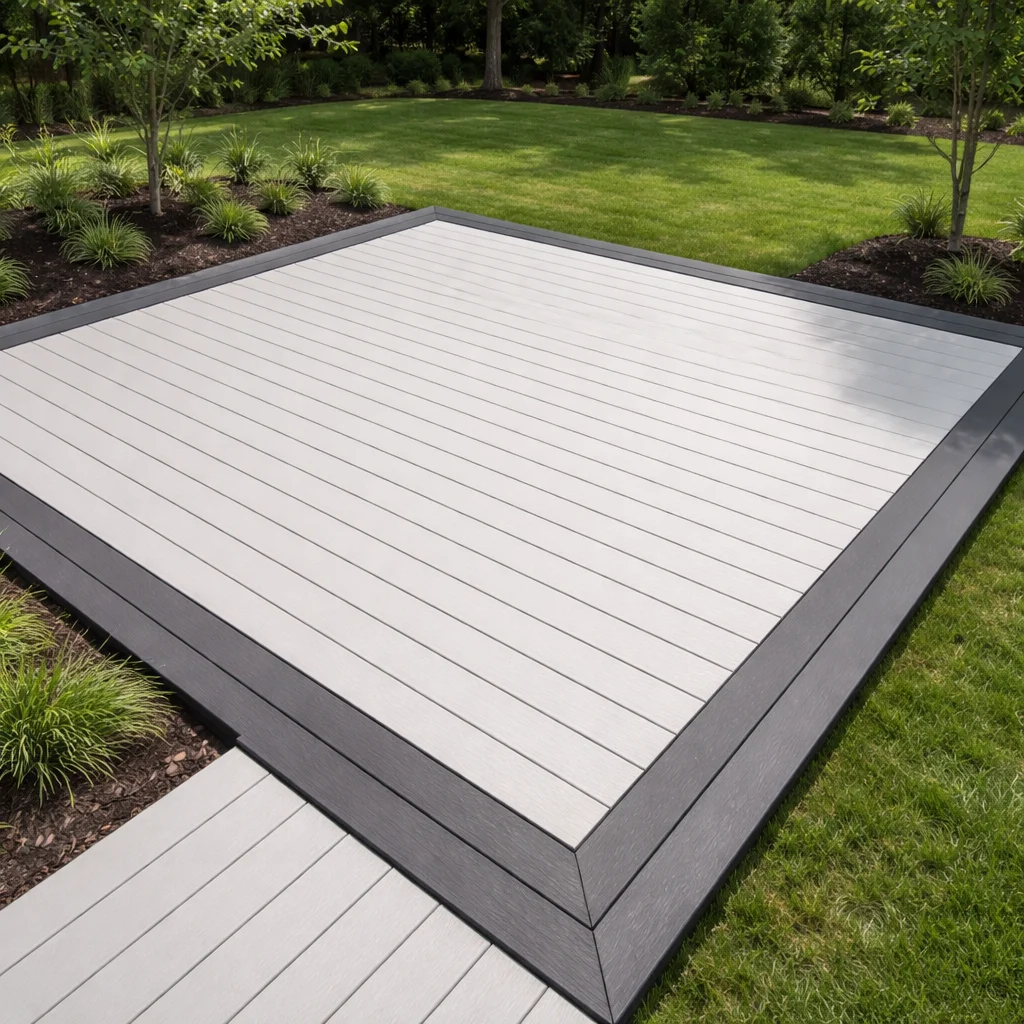
This is the foundational grey two-tone combination that most homeowners gravitate toward first, and for good reason. Light grey boards covering the main deck field paired with a charcoal or dark slate border creates a clean, gallery-like frame around the entire structure. The contrast is immediately visible without being jarring, giving the deck a tailored, intentional look.
This design works particularly well on large decks where the border can be appreciated from above or from a second-floor view. It also gives smaller decks a more defined, finished appearance. When selecting your shade pairing, aim for at least two to three shades of difference on the grey scale to ensure the contrast is genuinely visible in natural daylight.
2. Picture Frame Border with Matching Interior Field
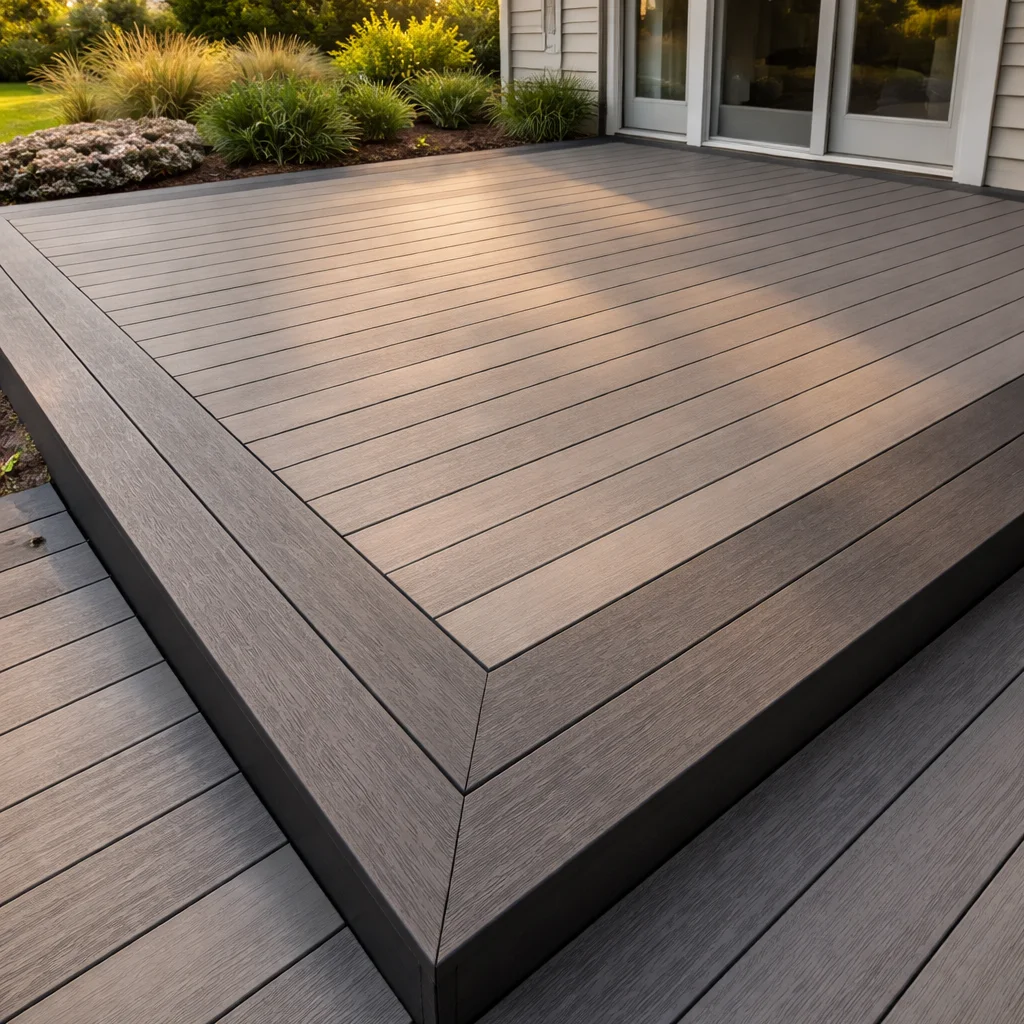
A picture frame deck border is one of the most refined finishing techniques in modern deck design. The concept borrows from interior design, where a room’s baseboards and trim provide definition and a sense of completion. Applied to a grey two-tone deck, the darker grey border runs along the perimeter of the deck while the lighter or medium grey fills the interior field.
What makes this approach particularly effective is the sense of craft it communicates. A well-executed picture frame border signals attention to detail. It elevates a straightforward rectangular deck into something that reads as custom built. The key is ensuring your board ends are cleanly mitered or butted at the corners and that the grain orientation of the inner field runs perpendicular to the border for maximum visual impact.
3. Warm Grey and Cool Grey Tonal Pairing
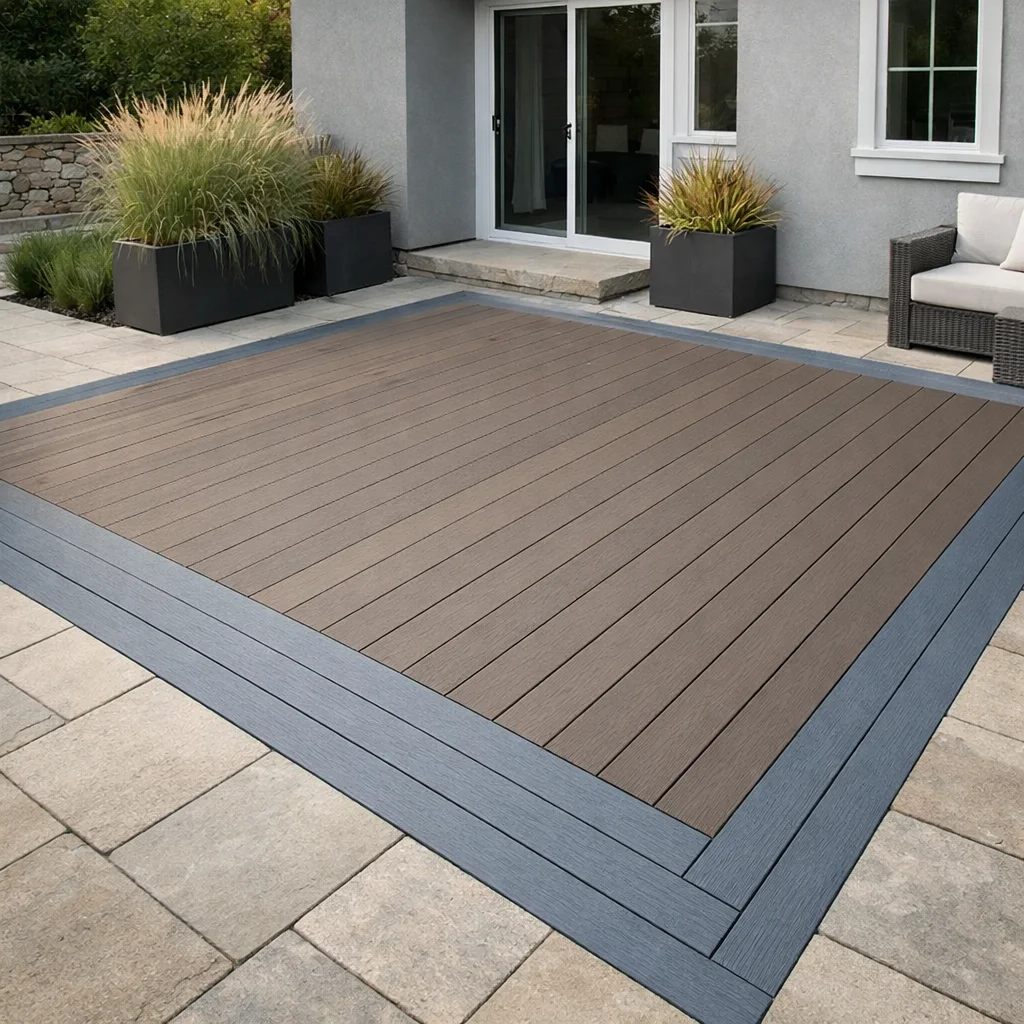
Not all grey is created equal. The distinction between warm grey and cool grey is subtle but deeply important in deck design. Warm grey boards have underlying beige, taupe, or brown undertones. Cool grey boards carry blue, silver, or greenish undertones. Pairing these two families within a single deck creates a tonal two-tone effect that is sophisticated in its restraint.
This approach suits homeowners who want the elegance of a two-tone design without high contrast. The result reads as refined and intentional rather than bold. Warm grey tends to work better on decks surrounded by natural landscaping and wood tones, while cool grey sits seamlessly against stone, concrete, and metal architectural elements. Mixing the two creates a bridge between the natural and the modern.
4. Grey Decking with Black Railing Accents
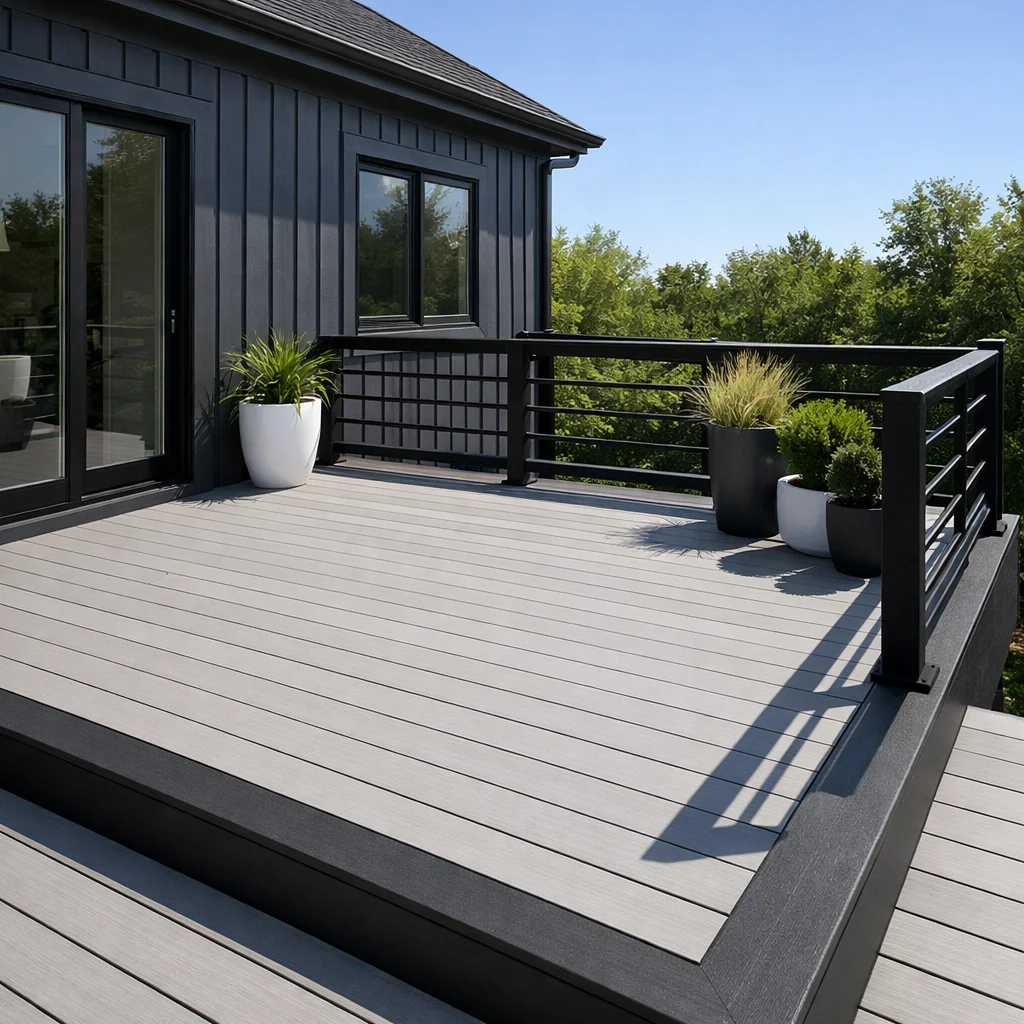
Black railings have become one of the defining aesthetic choices of contemporary outdoor design. When paired with a grey two-tone deck, black metal or powder-coated aluminum railings add structure, definition, and a striking graphic quality to the space. The two-tone element in this scenario comes from the deck boards themselves, typically a lighter grey main field and a darker grey or charcoal step edge or border, while the black railings act as a powerful framing device.
This combination is particularly at home with modern and industrial architecture but translates equally well to farmhouse and transitional style homes when softened with the right furniture and plantings. Black railings also have a practical advantage: they visually recede into the background, keeping attention on the view and the deck itself rather than the perimeter.
5. Diagonal Grey Boards with Straight Border
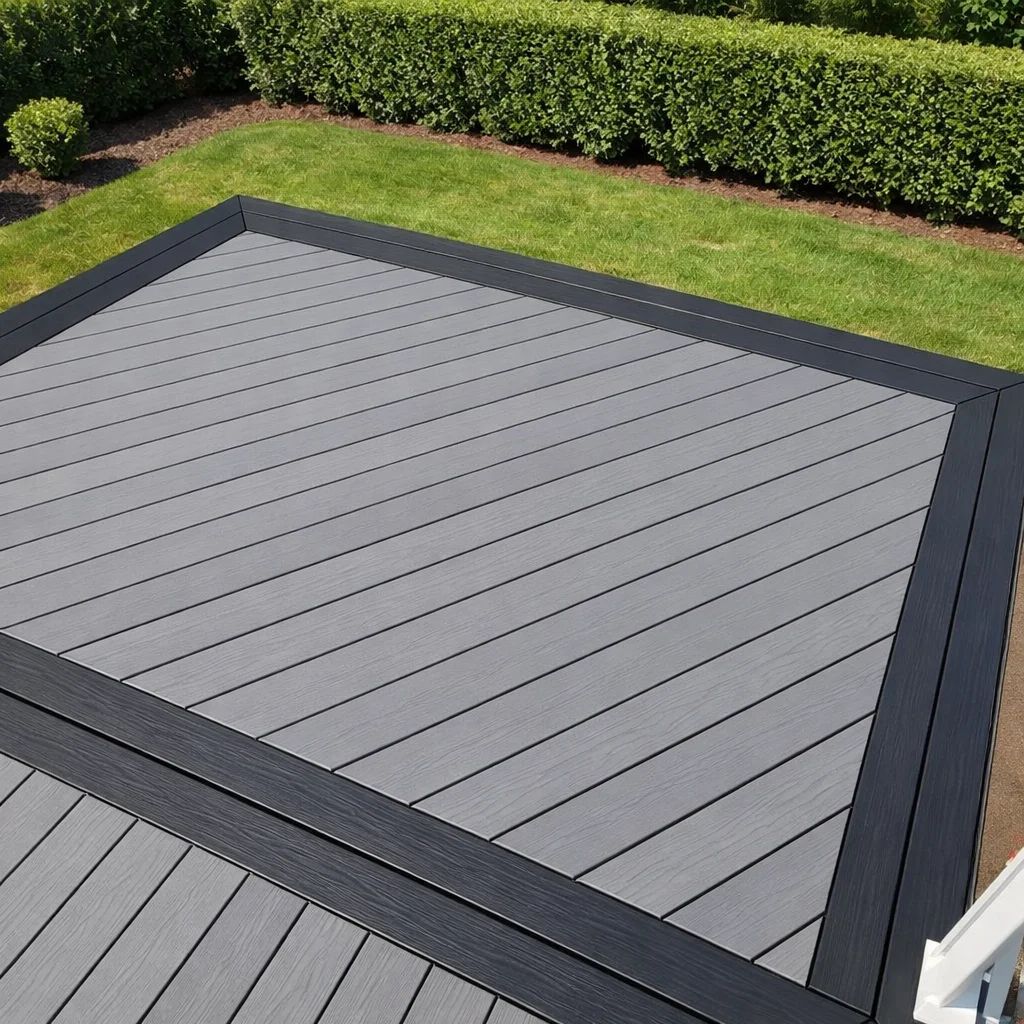
Laying deck boards at a forty-five degree diagonal is a design move that introduces dynamic movement and visual energy. When applied to a grey two-tone deck, the diagonal main field in a lighter grey contrasted with a straight-running darker grey border creates a composition that is genuinely impressive from any angle.
Beyond aesthetics, diagonal board layouts have a practical benefit: they can make smaller outdoor spaces appear larger by drawing the eye outward toward the corners of the deck. This creates the perception of more square footage than actually exists. One consideration with diagonal patterns is the slightly higher material waste involved in cutting boards to fit the angled perimeter, so plan your material order accordingly.
6. Grey Composite Decking with Natural Wood Accents
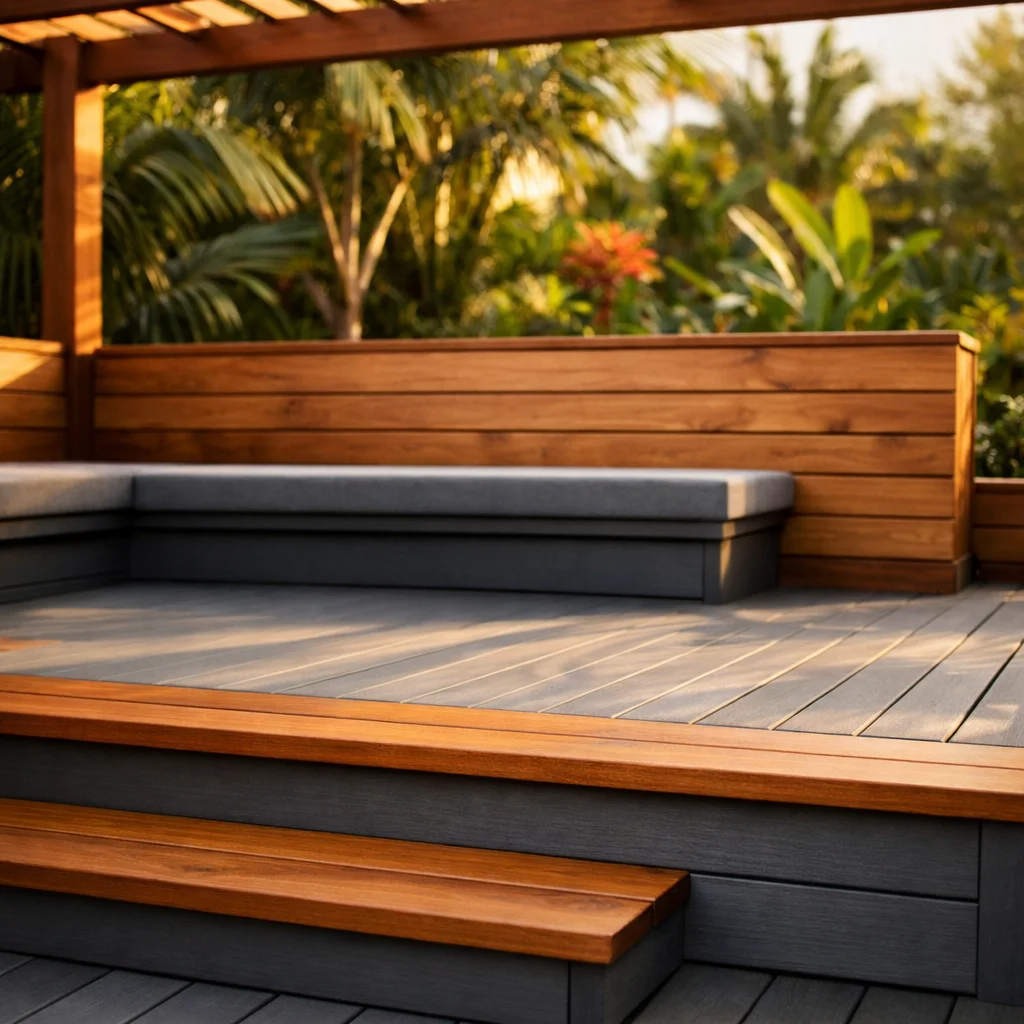
Blending grey composite decking with natural wood accents is one of the most popular approaches among homeowners who want the best of both worlds. Grey composite boards provide durability, low maintenance, and weather resistance. Natural wood elements, used for built-in benches, pergola posts, steps, or accent rails, introduce organic warmth and texture that grey alone cannot deliver.
Cedar, ipe, and teak are among the most commonly used wood species for this type of accent work because they hold up well outdoors and develop beautiful patinas over time. The two-tone effect in this design comes from the interplay between the cool, uniform grey of the composite and the rich, varied grain of natural wood. It is a combination that feels both curated and connected to the natural world.
7. Multi-Level Grey Deck with Zoned Color Tones
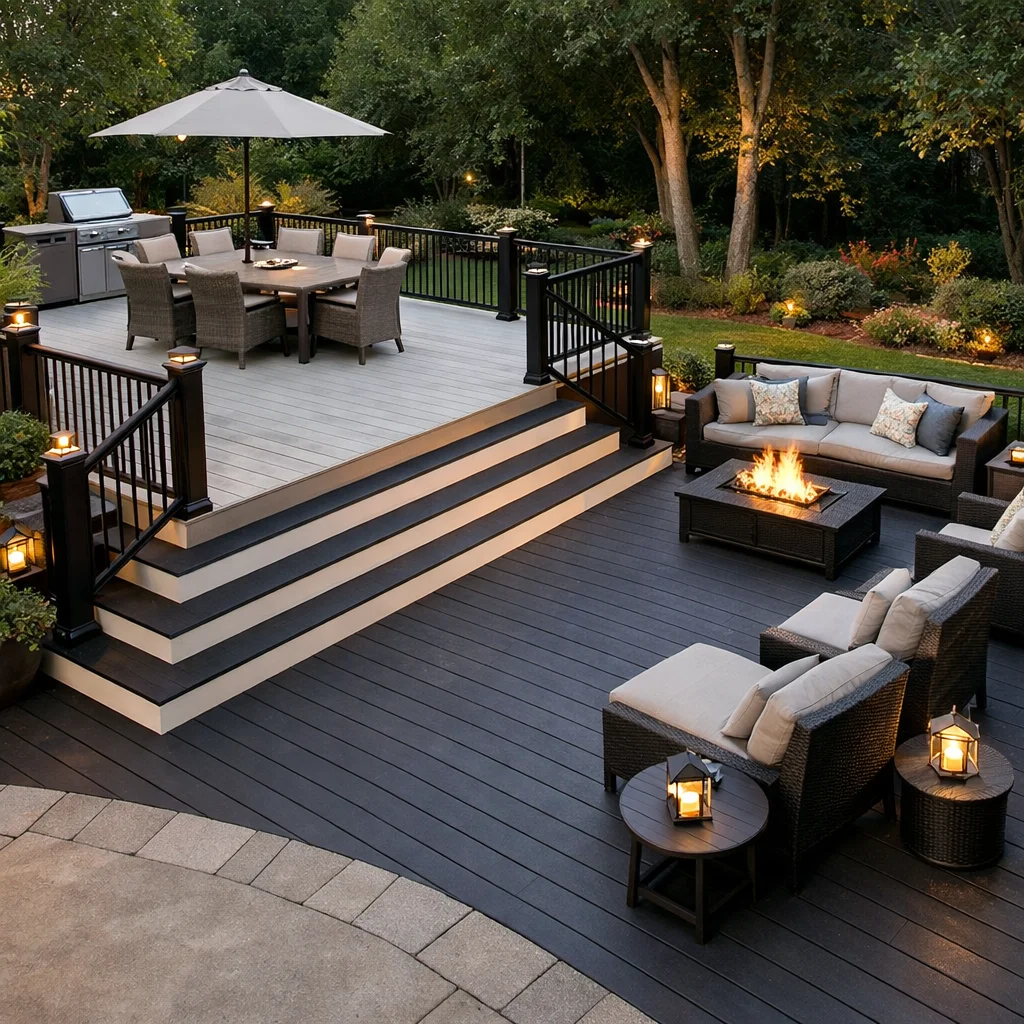
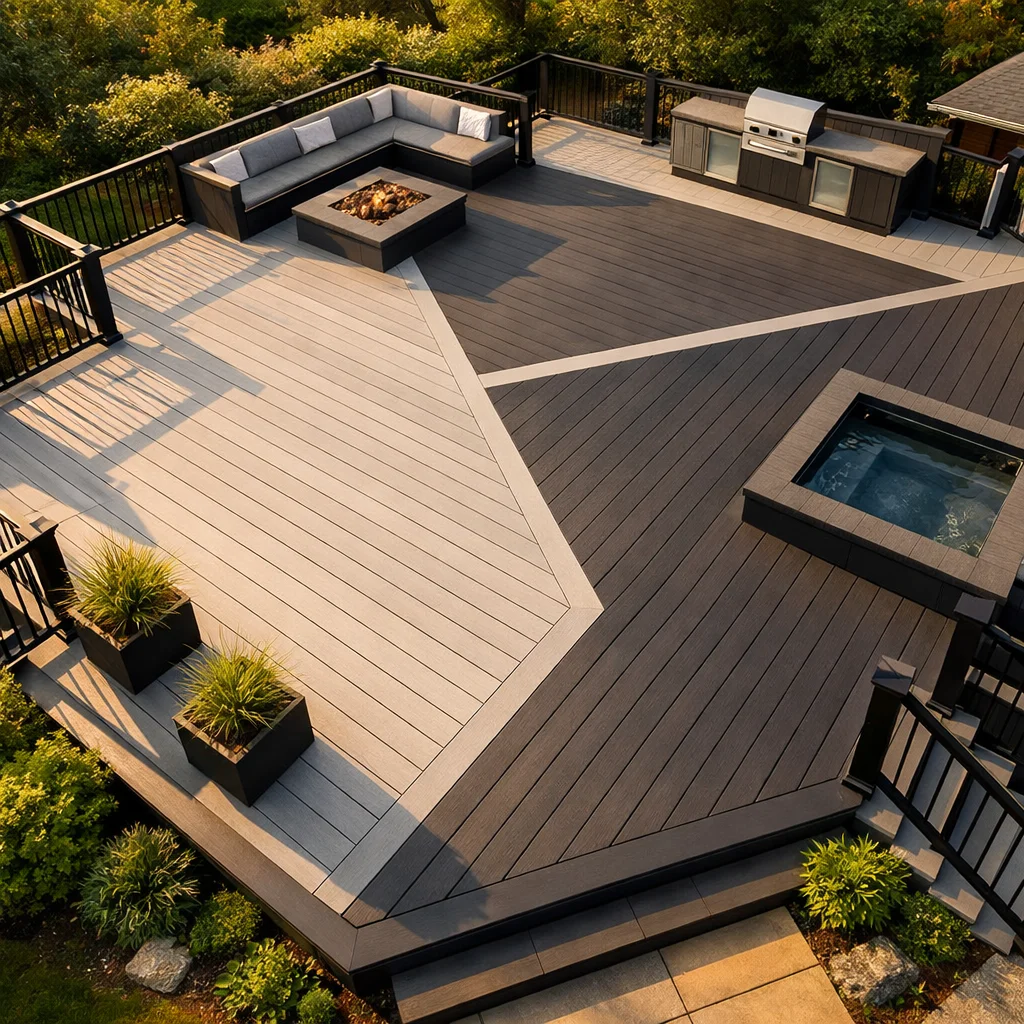
For homes with sloped yards or those where indoor and outdoor living zones need clear delineation, a multi-level grey deck offers a natural opportunity for two-tone design. Using lighter grey boards on the upper level and darker grey on the lower level, or vice versa, creates an intuitive visual hierarchy. The color shift signals that different levels serve different purposes.
In practical terms, this approach is ideal for decks that combine a dining area on one level and a lounge or hot tub area on another. The different grey tones act as a design language that tells guests how to move through the space. When combined with coordinated railings and lighting, a multi-level grey two-tone deck becomes a complete outdoor living environment with genuine architectural presence.
8. Light Grey Deck with Charcoal Step Highlights
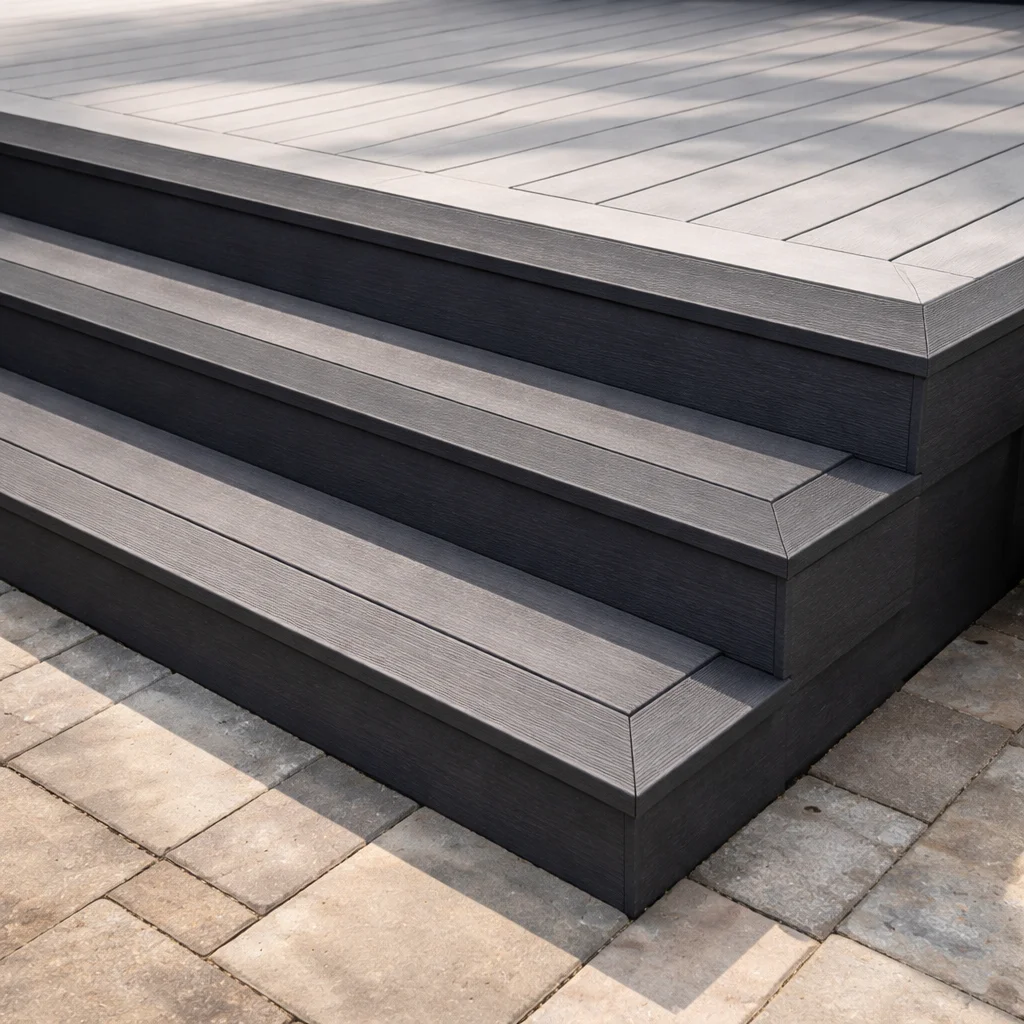
Steps are among the most overlooked design opportunities on any deck. Applying a contrasting charcoal or dark grey tone to deck steps while keeping the main deck surface in a lighter grey does two important things: it creates a visual accent that draws the eye naturally to the transition point, and it improves safety by making steps easier to see in low-light conditions.
This is one of the most understated grey two-tone deck ideas on this list, yet it consistently earns admiration from visitors and guests because it looks considered and purposeful. The effect is amplified when the step risers are finished in a complementary material such as black metal or dark-painted wood, completing the intentional design from every angle.
9. Alternating Grey Board Stripe Pattern
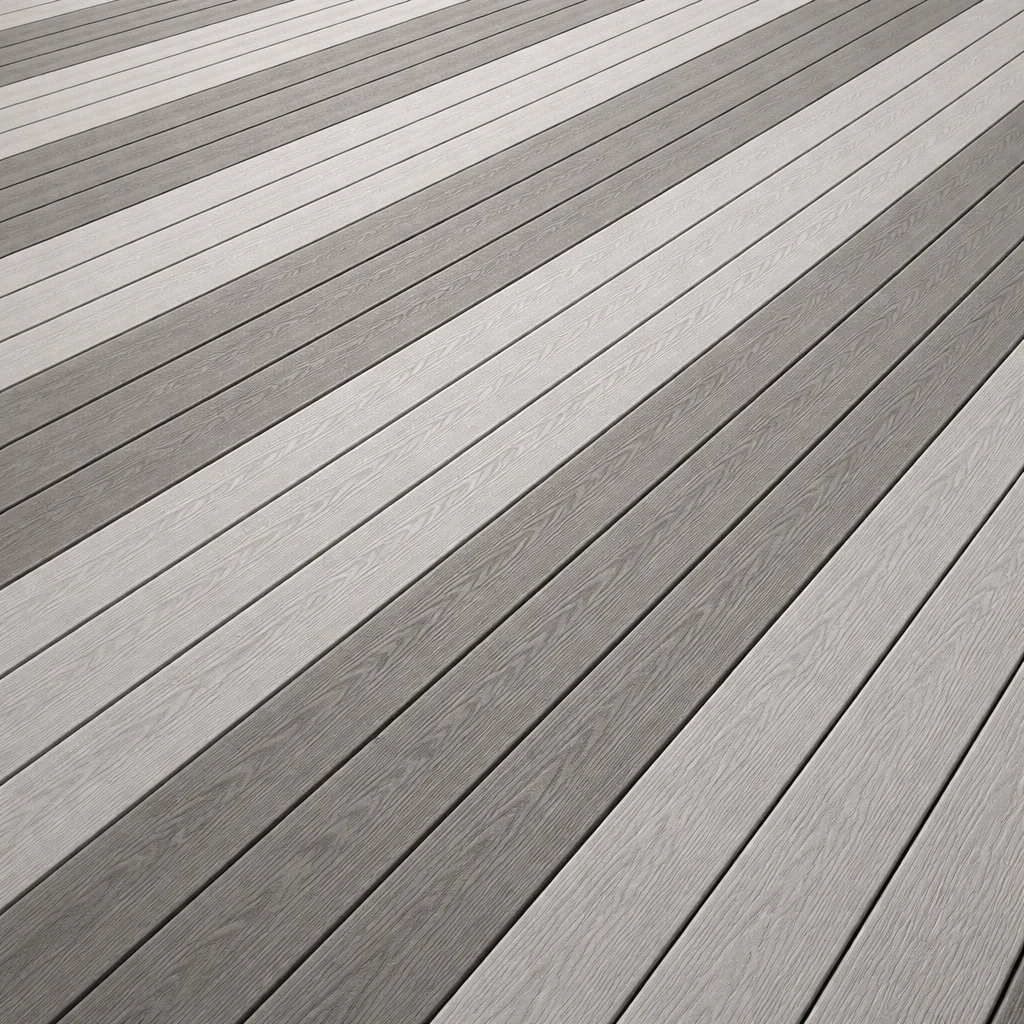
An alternating stripe pattern uses two different shades of grey laid in a repeating sequence across the entire deck surface. Rather than separating the tones by zone or border, this approach integrates both colors into a cohesive, rhythmic pattern that reads almost like a natural material such as quarried stone or aged hardwood.
The success of this design depends on choosing tones that are close enough to feel harmonious but distinct enough to read as intentional rather than inconsistent. A soft alternation between light silver grey and medium warm grey, for instance, creates a sophisticated textural effect. Wider spacing between contrasting boards, such as every third or fourth board in the darker tone, produces a more dramatic striped appearance.
10. Grey Deck with White Railing for a Coastal Look
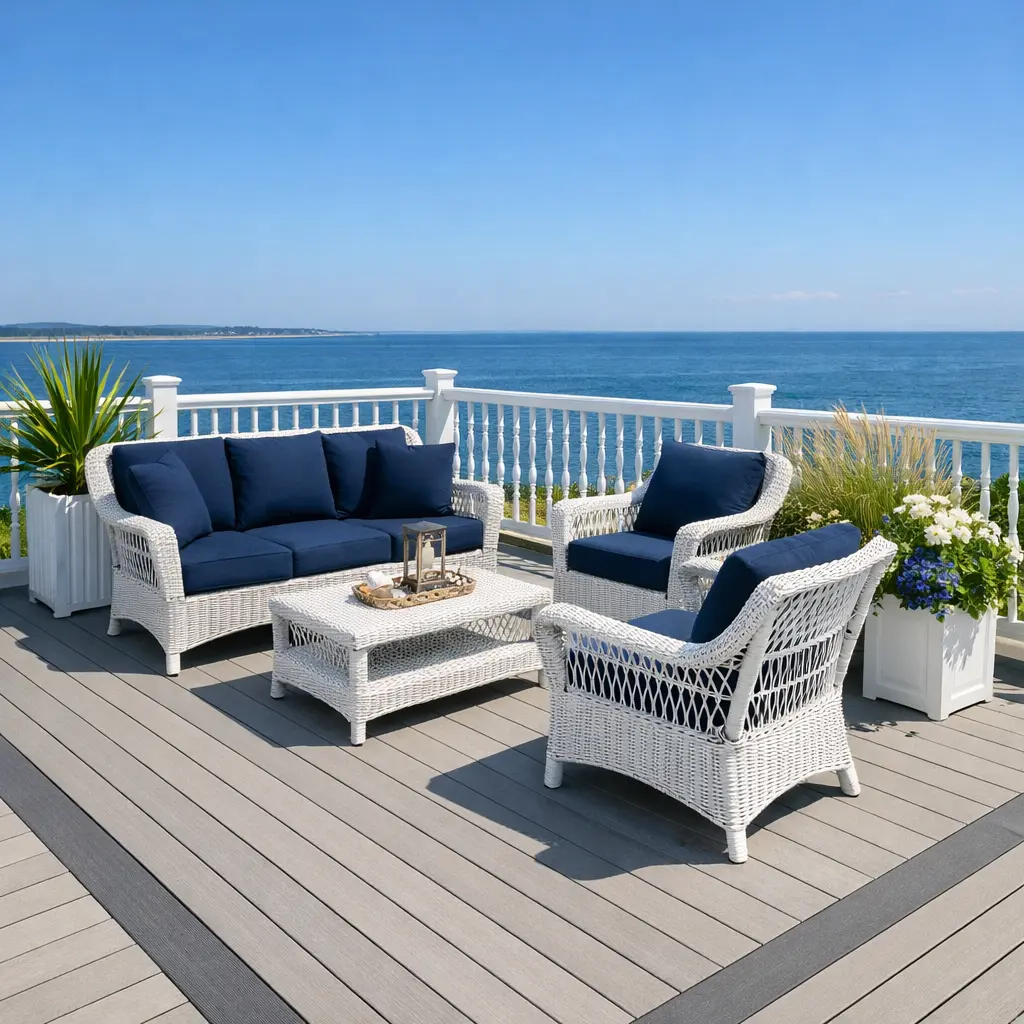
White railings paired with a grey two-tone deck evoke a clean, coastal aesthetic that feels fresh and welcoming in any climate. This combination is particularly popular in New England, the Pacific Northwest, and any region where homes draw visual cues from maritime architecture. The brightness of the white railing lifts the overall palette, preventing the grey tones from feeling heavy or somber.
To reinforce the coastal feel, pair this deck with furniture in navy, white, and natural linen tones. Add potted ornamental grasses or sea lavender in simple grey planters to bridge the gap between the deck and the surrounding landscape. The two-tone deck surface, typically a lighter grey main field with a medium grey border or step highlight, grounds the entire composition without competing with the clean crispness of the white railing above.
11. Grey and Brown Two-Tone Deck for Transitional Homes
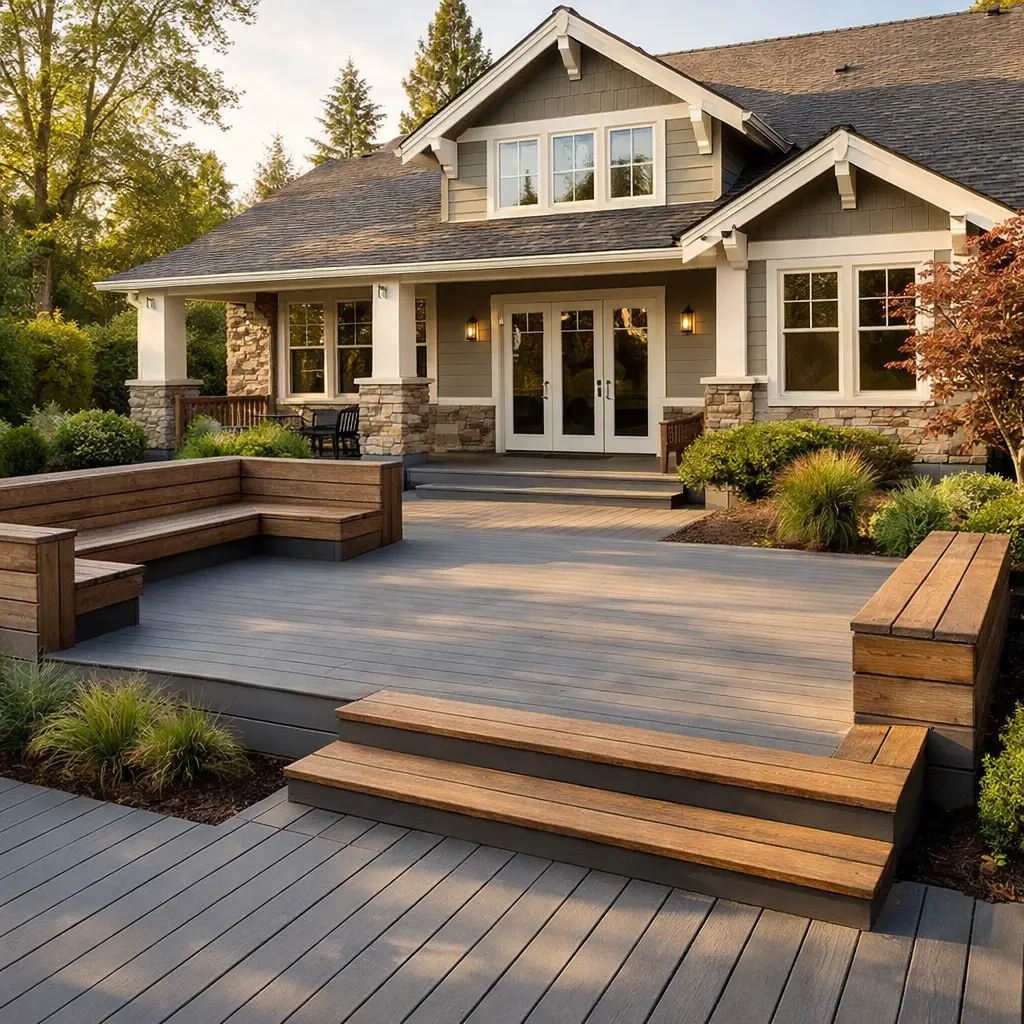
Transitional style homes, which blend traditional and contemporary elements, benefit enormously from a grey and brown two-tone deck. This pairing bridges the gap between the warmth of traditional brown wood decking and the modernity of grey composite. Using brown tones for an accent zone such as a built-in bench, pergola flooring inset, or step treads, while keeping the main deck surface in grey, produces a design that feels grounded and layered.
The key to making grey and brown work together is to choose brown tones with some grey undertones rather than a purely red-orange brown. A weathered cedar or driftwood brown sits naturally alongside cool grey, while a bright reddish-brown can feel disconnected. When in doubt, order samples and view them together outdoors at different times of day before committing.
12. Grey Decking with Concrete and Stone Integration
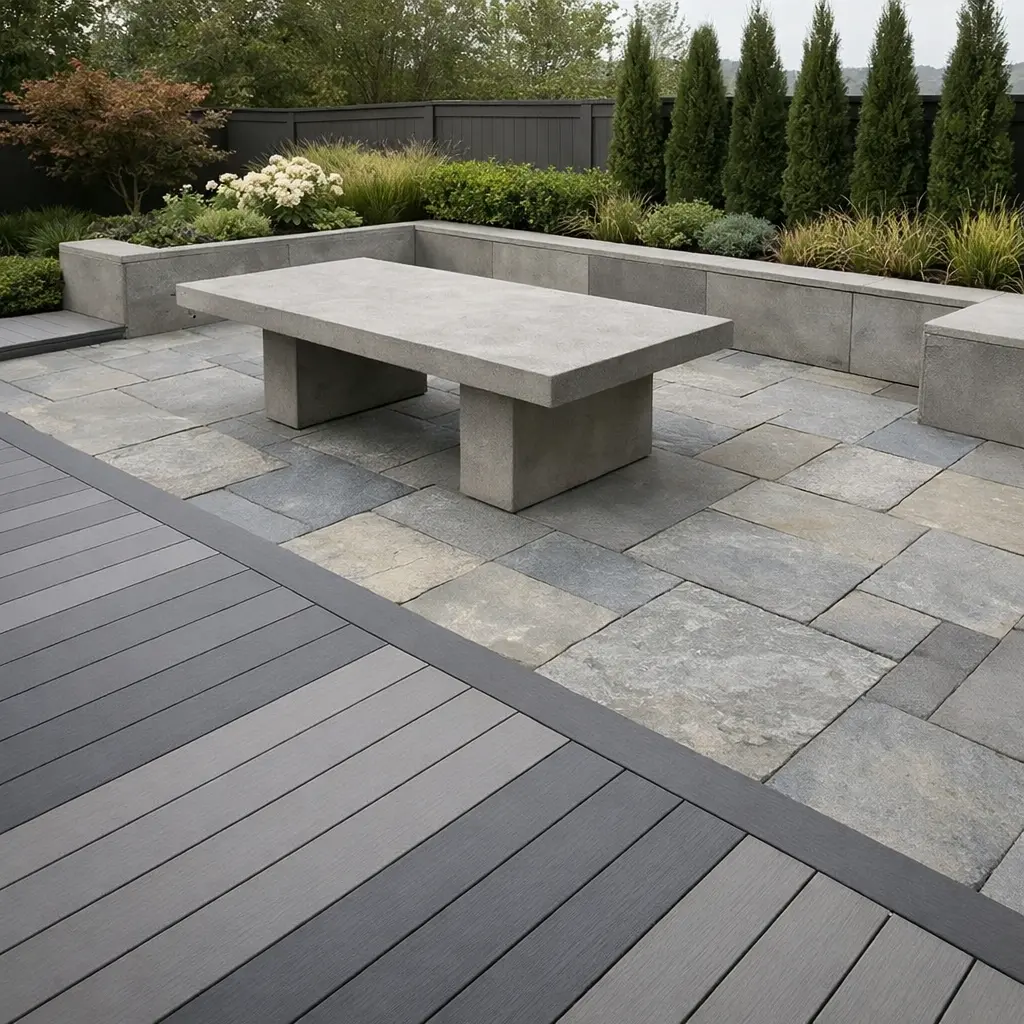
A truly cohesive outdoor space often incorporates materials beyond just the deck boards. Integrating concrete pavers, natural stone, or poured concrete elements into a grey two-tone deck design extends the color palette naturally and seamlessly. The two-tone effect in this case comes from the interplay between the grey decking and the varying textures and tones of the stone or concrete elements.
This approach works particularly well for decks that transition directly to a patio, pool surround, or outdoor kitchen area. Using grey deck boards in one tone next to natural limestone or bluestone pavers in a complementary grey introduces material contrast while maintaining color harmony. Built-in concrete planters or a poured concrete fire table base can further anchor the two-tone material story.
13. Scandinavian-Inspired Grey and White Deck Design
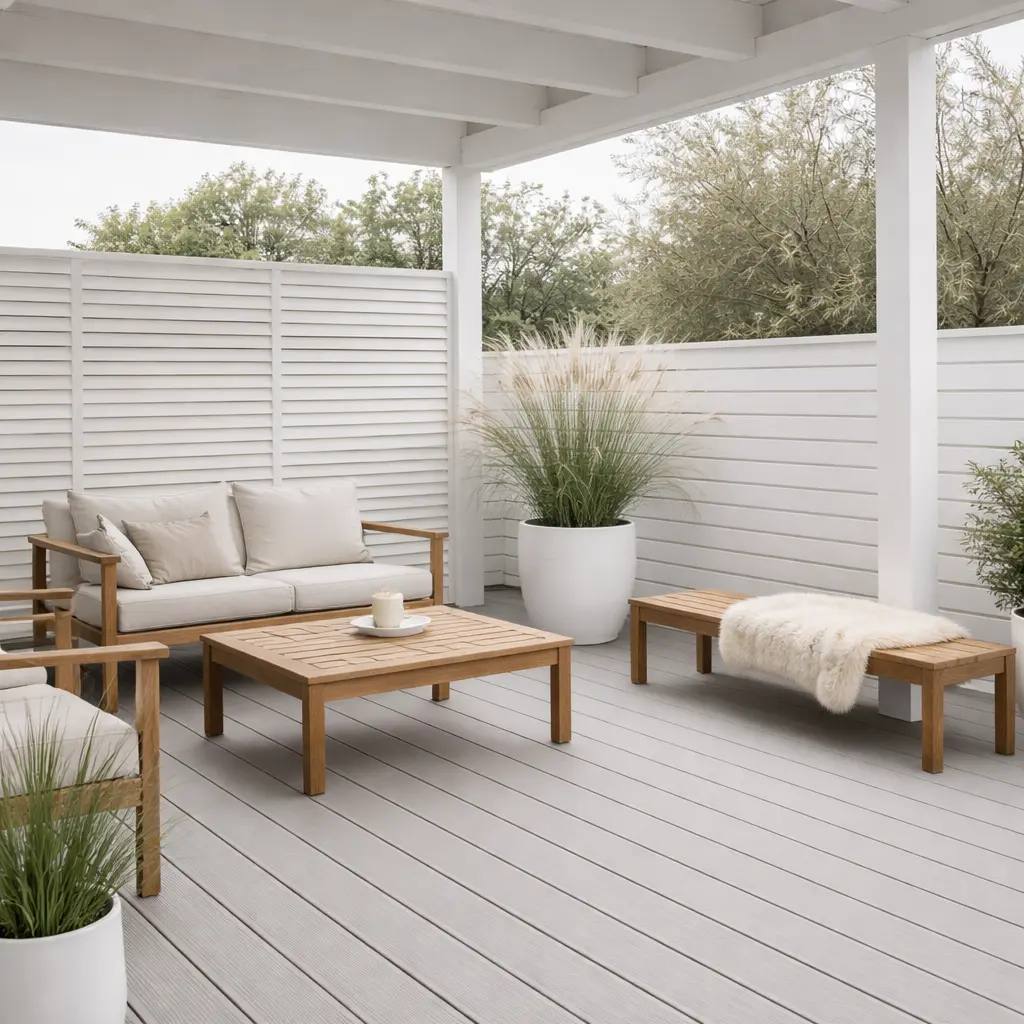
Scandinavian design principles, characterized by simplicity, functionality, and a strong connection to natural materials, translate beautifully to outdoor deck spaces. A grey two-tone deck inspired by this tradition typically uses a light silver or ash grey for the deck surface paired with white painted structural elements such as posts, fascia boards, and railing components. The result is a minimalist, calming outdoor space that prioritizes openness and natural light.
To complete the Scandinavian feel, furnish the deck with simple teak or oiled oak pieces, add a few sheepskin throws for cool evenings, and keep plantings clean and structured. The two-tone palette of grey and white invites simplicity and resists visual clutter by design, making it one of the most livable and relaxing deck aesthetics available.
14. Dark Grey Deck with Light Grey Built-In Seating
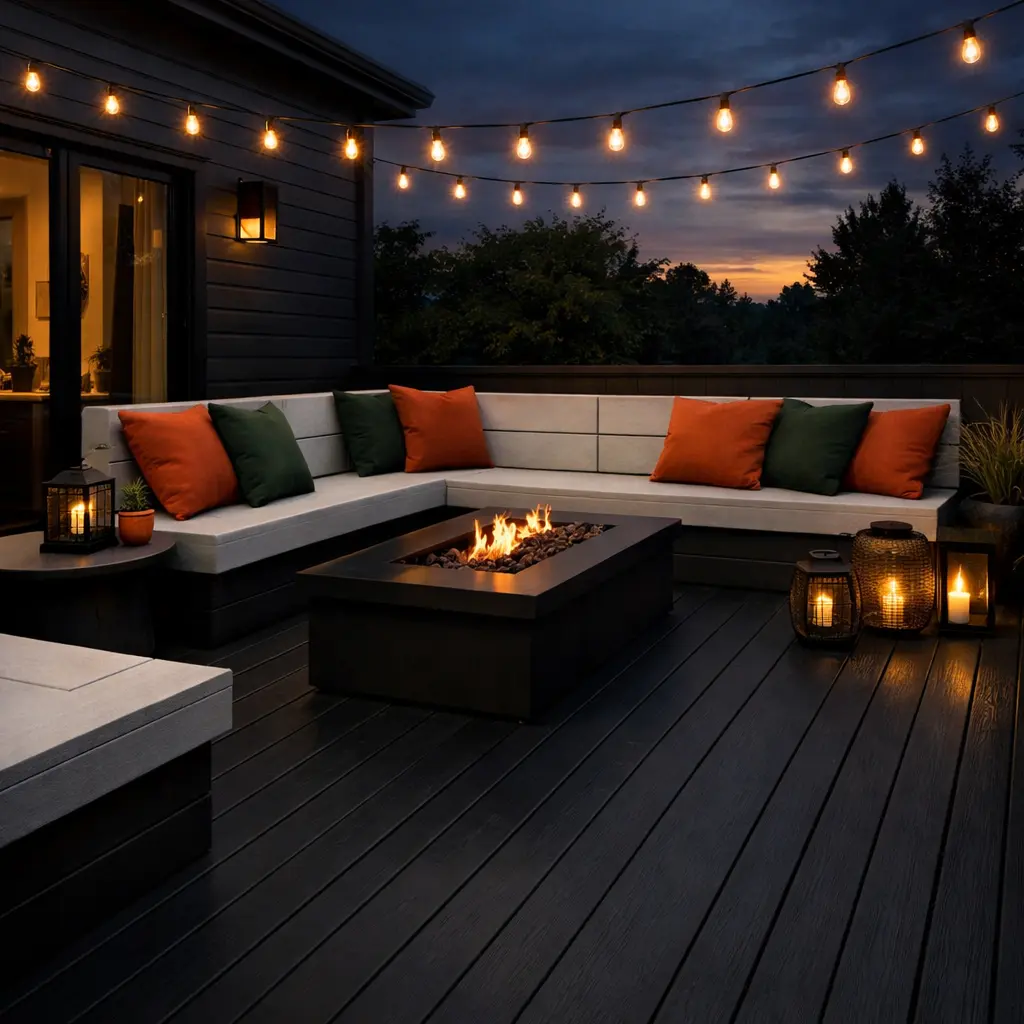
Flipping the conventional approach, this design uses dark grey as the primary deck surface and lighter grey for built-in benches, planters, or low perimeter walls. The darker main surface creates a dramatic, moody foundation for the outdoor space, while the lighter grey built-ins pop visually against it, functioning almost like sculptural elements.
Dark grey deck surfaces have a practical advantage in high-traffic or urban settings: they are significantly better at disguising dirt, footprints, and daily wear than lighter shades. Combined with lighter grey seating accents that catch the eye and invite people to sit, this design creates a deck that is both visually arresting and highly functional. Outdoor cushions in warm terracotta, dusty rose, or deep forest green provide excellent color contrast against this two-tone grey base. For more insights visit Homeliaa.
15. Grey Two-Tone Deck with Inset Geometric Patterns
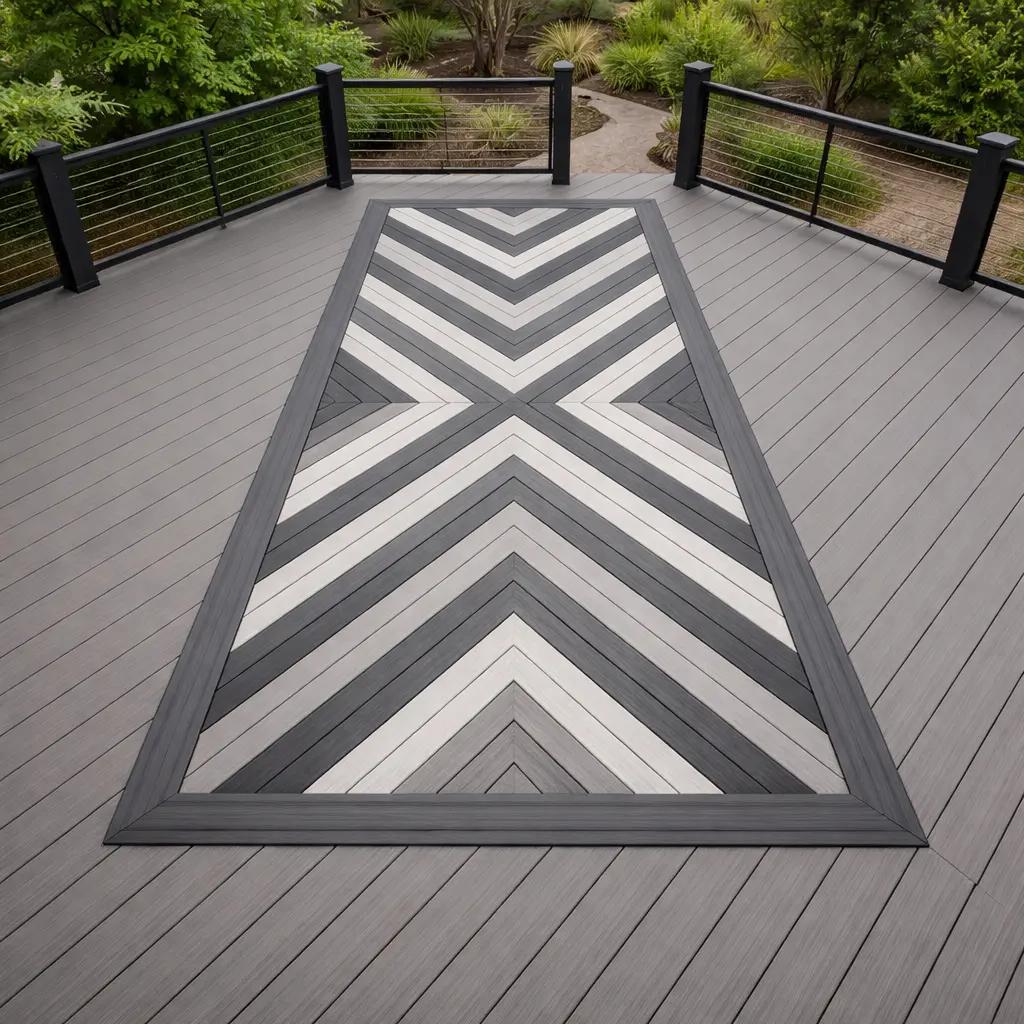
For homeowners who want their deck to function as a genuine design statement, inset geometric patterns using two shades of grey offer unmatched visual impact. Chevron insets, herringbone sections, or diamond shapes created by laying two grey tones against each other transform the deck surface into something closer to architectural art.
This approach requires a higher level of planning and precise installation. Board cuts must be accurate and the framing structure beneath must support the pattern layout. However, the results are extraordinary. Even a small geometric inset in the center of a deck or at the base of the main seating area creates a focal point that immediately distinguishes the outdoor space from anything standard or expected.
16. Greyed Cedar or Ipe with Composite Grey Accents
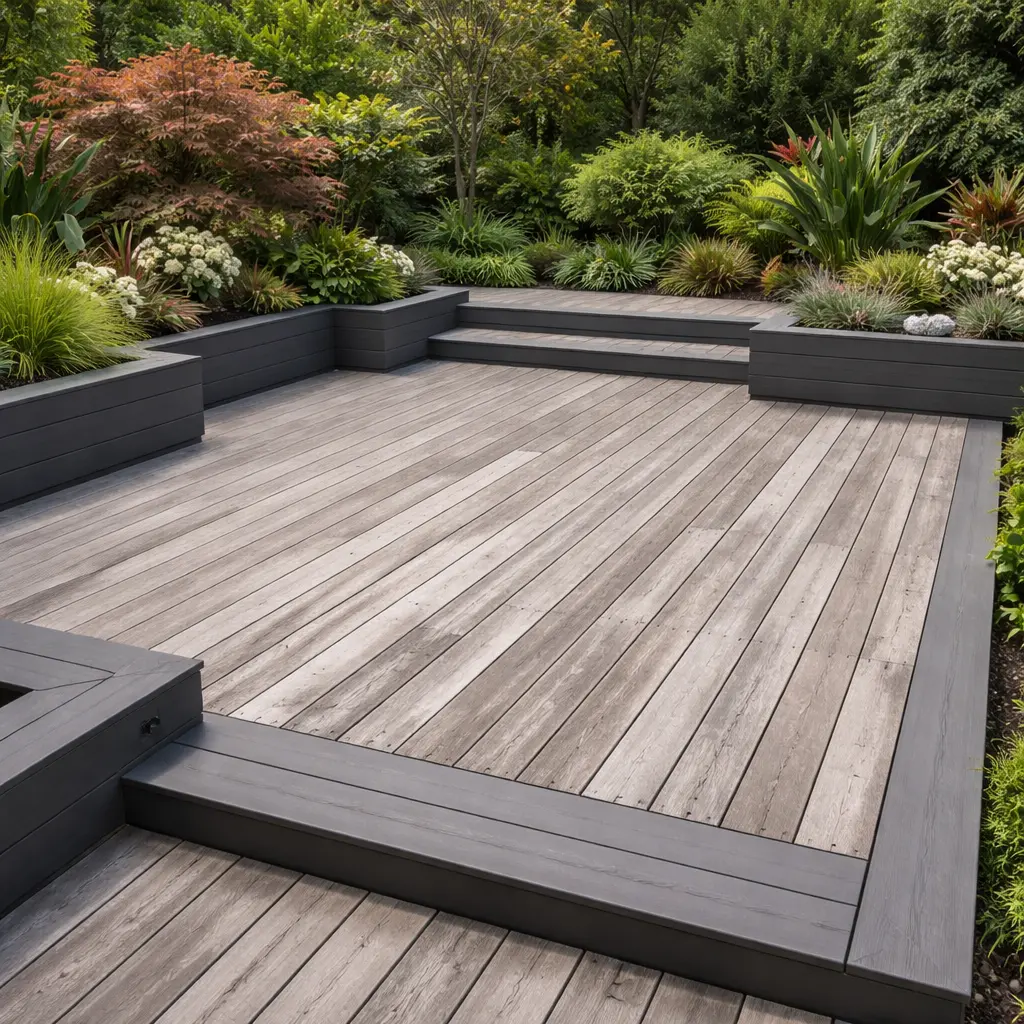
Natural hardwoods like ipe and cedar develop a beautiful silver-grey patina when left to weather naturally outdoors. This naturally occurring grey tone can be paired intentionally with composite decking in a manufactured grey tone to create a two-tone deck that speaks both to authenticity and to modern performance standards.
Using naturally greyed hardwood for the main deck field and grey composite for steps, borders, or built-in elements allows each material to do what it does best. The hardwood brings texture, natural variation, and a sense of age and craft. The composite brings consistency, durability, and resistance to moisture and insect damage. Together they produce a deck that feels genuinely unique and is built to last.
17. Rooftop or Urban Terrace Grey Two-Tone Deck Design
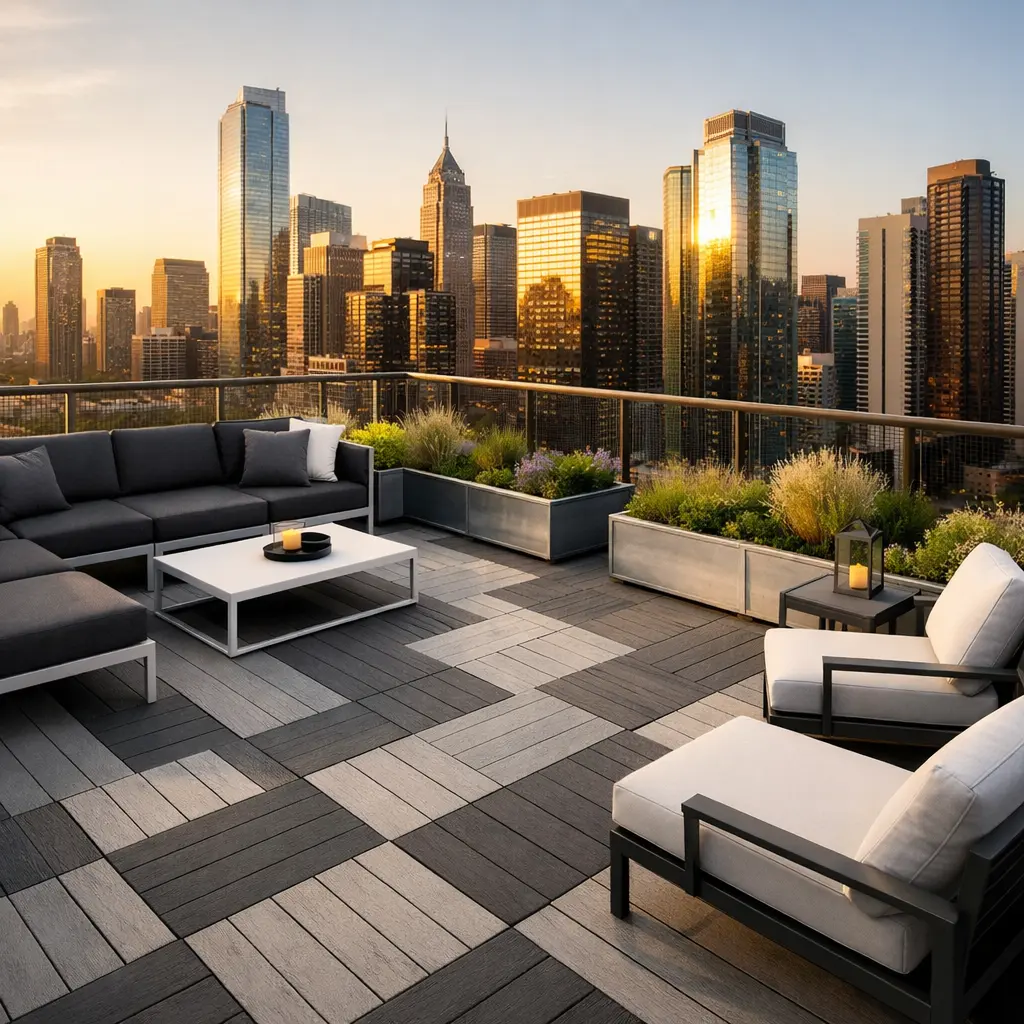
Urban rooftop decks and elevated terraces present a distinct set of design challenges and opportunities. In these settings, grey two-tone deck designs are especially powerful because they complement the natural palette of the urban environment, including concrete, steel, glass, and brick, while creating a defined residential retreat above the city.
For rooftop applications, lightweight composite decking tiles in two coordinated grey tones can be used to create modular two-tone patterns without the structural demands of traditional decking. Darker grey zones can define furniture groupings while lighter grey areas serve as open walkways. The addition of glass railings maintains views while keeping the palette cohesive. Integrated planters in galvanized steel or dark grey powder-coated metal tie the entire rooftop design together seamlessly.
How to Choose the Right Materials for Your Grey Two-Tone Deck
- Composite Decking
Composite decking is the most popular material choice for grey two-tone decks today for good reason. It is available in an enormous range of grey tones, from pale silver to near-black anthracite, and it maintains its color reliably over time without the need for staining or sealing. Leading composite brands offer coordinated color families that make it straightforward to select complementary tones for a two-tone design.
- Pressure-Treated Wood with Grey Stain
Pressure-treated lumber stained in grey tones offers a cost-effective path to a grey two-tone deck. Using two grey stain tones from the same manufacturer ensures the colors are formulated to complement one another. The main consideration with stained wood is the ongoing maintenance commitment: plan on restaining every two to three years to keep the tones looking clean and intentional.
- PVC Decking
PVC decking offers some of the strongest color retention available in the market. For homeowners in climates with intense sun exposure, PVC grey boards resist fading particularly well. Like composite, PVC is available in a range of coordinated grey tones that simplify the two-tone selection process.
Conclusion
Grey two-tone deck design has earned its place as one of the most versatile and enduringly popular outdoor design trends precisely because it respects the natural environment while delivering genuine sophistication. Whether you gravitate toward the quiet elegance of warm and cool grey tonal pairings, the bold clarity of light grey with charcoal borders, or the material richness of natural wood combined with grey composite, there is a two-tone grey deck concept here that can be tailored to your home, your yard, and your personal vision.
The most important step in any deck project is taking the time to gather material samples and observe how they look against your home’s exterior, your landscaping, and your existing outdoor furniture in real daylight conditions. What works in a photograph may not translate perfectly to your specific environment. With the right planning, however, a grey two-tone deck is one of the most rewarding home investments you can make, adding beauty, function, and lasting value to the outdoor life you deserve.
Frequently Asked Questions
1. What is the most popular grey two-tone deck combination?
The most widely chosen combination is light grey boards for the main deck field paired with a charcoal or dark grey border or picture frame. This pairing delivers clear contrast, a polished custom look, and works equally well with a wide range of home exterior colors and railing styles.
2. Does a grey two-tone deck increase home value?
A well-designed and properly constructed deck consistently delivers a strong return on investment. Grey two-tone decks are particularly appealing to buyers because the neutral palette photographs well, appeals to a broad audience, and signals that the home has been maintained and updated with current design sensibilities. Composite or PVC decks in grey tones are especially attractive because of their low maintenance requirements.
3. How do I prevent two-tone grey boards from looking mismatched?
The key is to select both tones from the same manufacturer or color family whenever possible. Manufacturers formulate their grey tones to be complementary, which reduces the risk of clashing undertones. Always order sample boards and view them together outdoors at various times of day before purchasing full quantities. Clear design intent, such as a defined border or pattern, also ensures that the two tones read as deliberate rather than accidental.
4. What railing colors work best with a grey two-tone deck?
Black railings are the most popular choice for grey two-tone decks because they provide strong definition without introducing additional color. White railings offer a clean, coastal aesthetic that works well with lighter grey boards. Cable railings in stainless steel complement cool grey tones perfectly, while natural wood top rails add warmth to the palette without disrupting the grey-dominant color story.
5. Is it more expensive to build a two-tone deck versus a single-color deck?
The cost difference is generally modest. Ordering two different board colors in the required quantities adds some complexity to the material planning, and intricate patterns such as picture frames or geometric insets require more labor time during installation. However, for most standard two-tone layouts such as a border design or multi-level zoning, the additional cost over a single-color deck is minimal relative to the significant visual impact it delivers.