7+ Barefoot-Friendly Outdoor Surfaces: Alternatives to Standard Decking
Walking barefoot on outdoor surfaces connects us to nature, strengthens foot muscles, and offers a simple pleasure that traditional wooden decking often fails to deliver. The challenge with conventional wood decks lies in their tendency to splinter, crack, and absorb excessive heat during summer months. These issues transform what should be a relaxing outdoor experience into a careful navigation exercise requiring protective footwear.
Modern outdoor surface materials have evolved to address these concerns while providing superior performance characteristics. From advanced composite materials to natural alternatives, homeowners now have access to surfaces specifically designed for barefoot comfort. These innovative options maintain comfortable temperatures even in direct sunlight, resist deterioration from weather exposure, and eliminate the painful splinter hazards associated with aging wood.
The selection of an appropriate outdoor surface extends beyond simple aesthetics. Proper material choice influences maintenance requirements, long-term durability, environmental impact, and most importantly, the everyday enjoyment of your outdoor living space. Understanding the unique properties of each alternative enables informed decisions aligned with specific needs, climate conditions, and budget constraints.
Composite Decking Materials
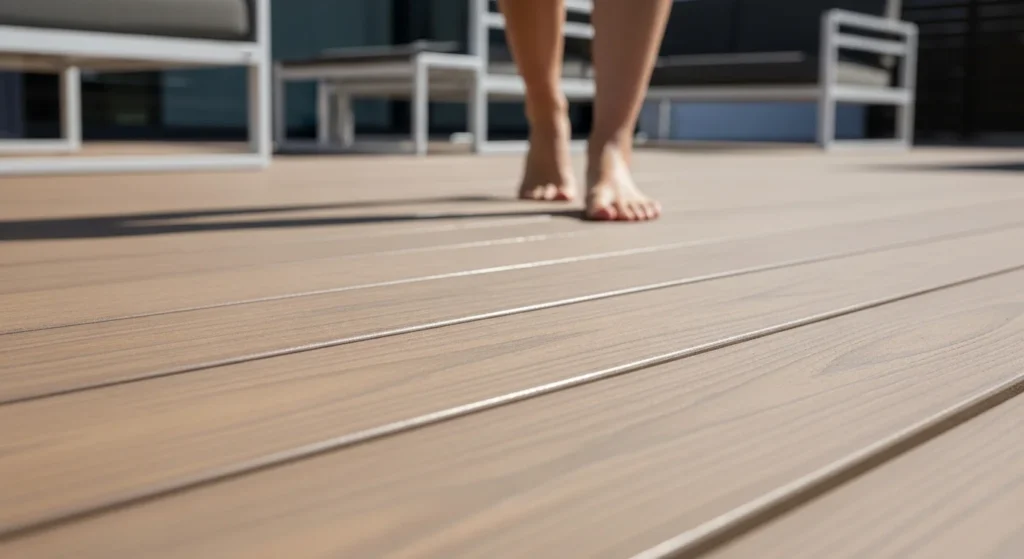
Composite decking represents one of the most significant advancements in outdoor surface technology over the past two decades. Manufactured from a blend of wood fibers and recycled plastics, these engineered boards combine the natural appearance of wood with enhanced durability characteristics. The manufacturing process creates a dense, uniform material that resists the warping, cracking, and splintering common to natural wood products.
The barefoot-friendly nature of composite decking stems from its smooth, consistent surface texture. Unlike wood grain that roughens over time from weathering, composite materials maintain their original finish throughout their service life. This stability means no surprise splinters penetrating bare feet and no rough patches developing in high-traffic areas. The material composition also provides inherent flexibility that creates a slightly softer feel underfoot compared to concrete or stone alternatives.
Temperature management varies considerably among composite products. Standard composite boards in darker colors can become uncomfortably hot in direct summer sunlight, sometimes reaching surface temperatures exceeding 130 degrees Fahrenheit. However, newer composite formulations incorporate heat-reflective technology and specialized capping materials that significantly reduce heat absorption. Products marketed as cool-deck composites typically feature lighter color options and proprietary surface treatments designed specifically for barefoot comfort in warm climates.
Maintenance requirements for composite decking prove minimal compared to traditional wood. These surfaces require no staining, sealing, or regular refinishing. Basic cleaning with soap and water removes dirt and debris, while the material naturally resists mold, mildew, and insect damage. This low-maintenance profile makes composite decking particularly attractive for homeowners seeking to minimize ongoing upkeep while maximizing outdoor enjoyment time.
PVC and Vinyl Decking Systems
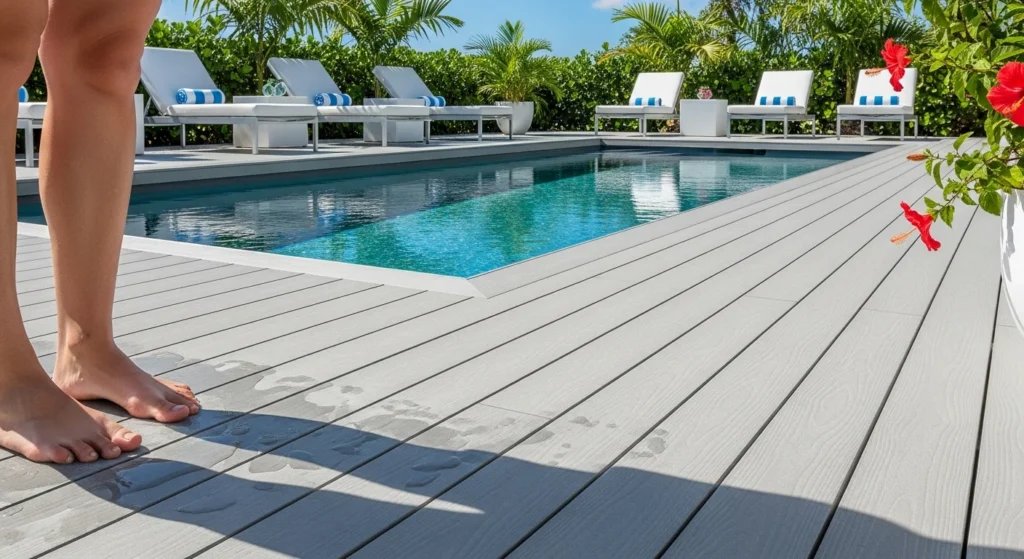
Polyvinyl chloride decking takes the concept of synthetic outdoor surfaces one step further than composite materials by eliminating wood content entirely. These 100 percent plastic products offer superior moisture resistance and dimensional stability compared to wood-plastic composites. The absence of organic materials means zero vulnerability to rot, decay, or insect infestation regardless of climate conditions or exposure to standing water.
The cellular structure of quality PVC decking provides excellent thermal performance for barefoot applications. The hollow core design creates air pockets that act as insulators, preventing rapid heat transfer from surface to substrate. This engineering approach results in surface temperatures typically 10 to 20 degrees cooler than comparable wood-plastic composites in identical conditions. Light-colored PVC options remain comfortable for bare feet even during peak afternoon sun exposure in most climates.
Texture options in PVC decking range from smooth finishes to deeply embossed grain patterns that mimic natural wood species. The embossed varieties offer superior slip resistance when wet while providing visual interest that enhances overall aesthetic appeal. Some manufacturers incorporate mineral particles into surface layers to create non-slip properties without sacrificing the smooth feel desirable for barefoot traffic. These textured surfaces prove especially valuable around pool areas where wet conditions persist.
Installation of PVC decking typically mirrors traditional wood deck construction methods, making it accessible to experienced do-it-yourself builders and professional contractors alike. The lighter weight of PVC boards compared to wood or composite alternatives simplifies handling during construction. Hidden fastening systems available for most PVC products create smooth, uninterrupted surfaces free from protruding screw heads that could catch feet or create discomfort.
Rubber Paver Tiles
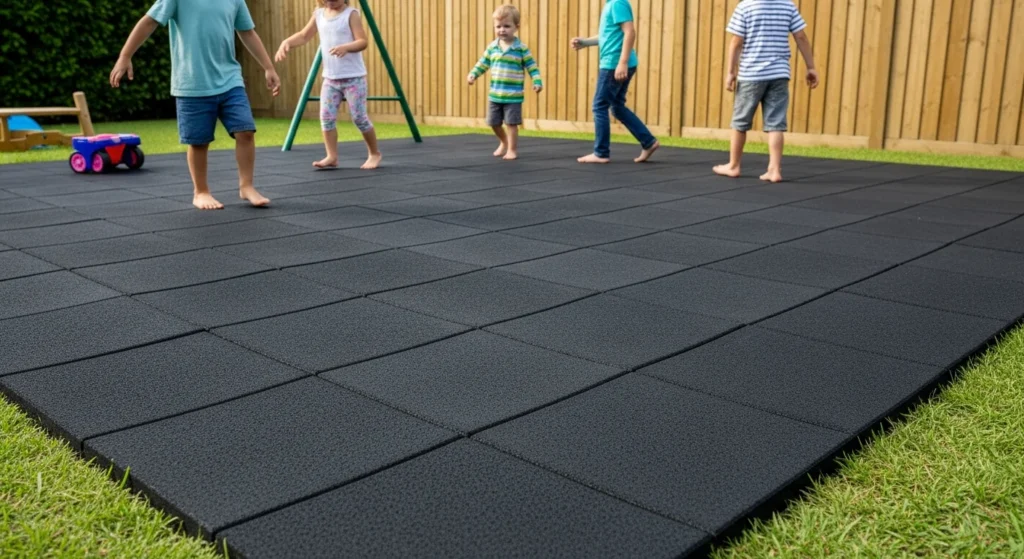
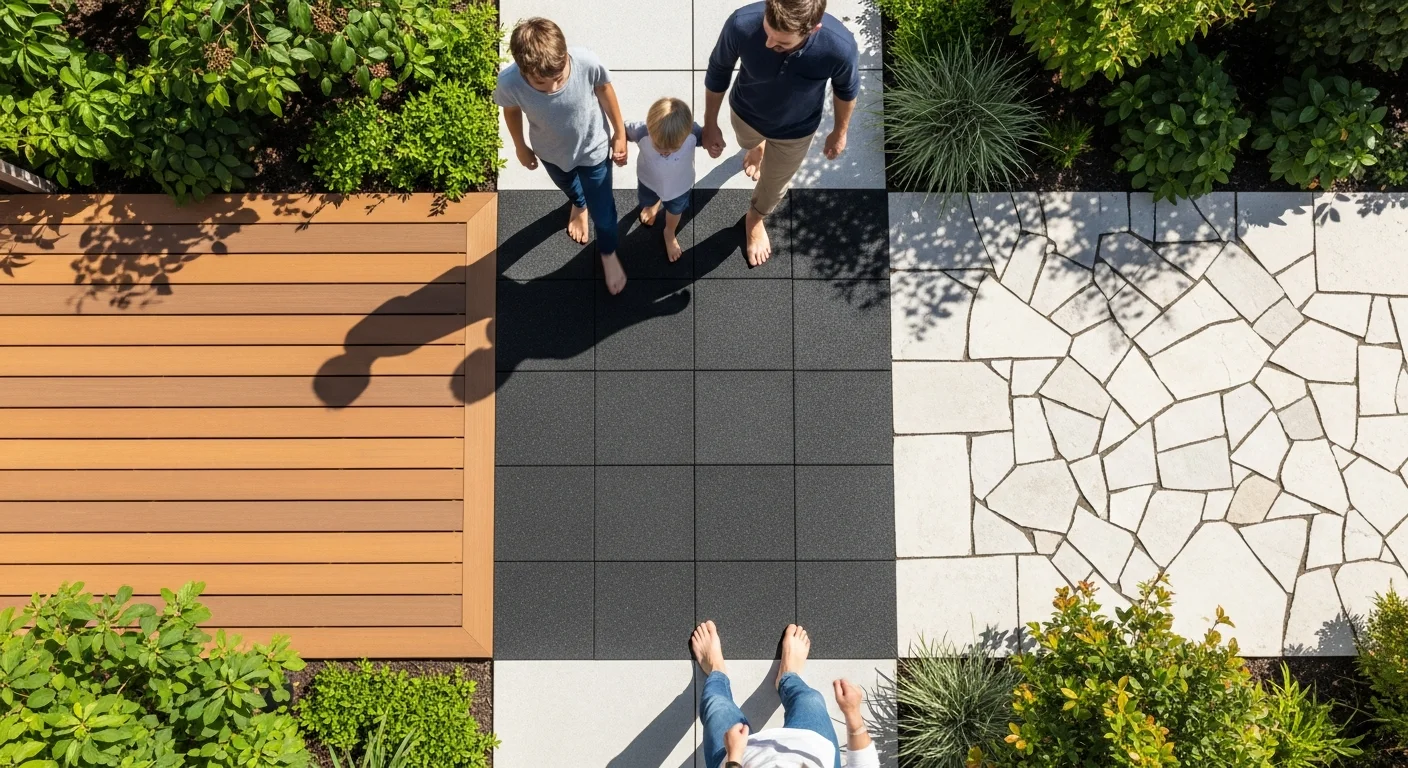
Rubber pavers manufactured from recycled tire materials represent an environmentally conscious choice that delivers exceptional barefoot comfort. The inherent cushioning properties of rubber create a forgiving surface that reduces impact stress on joints and muscles during extended standing or walking. This shock absorption characteristic makes rubber pavers particularly suitable for outdoor entertainment areas, children’s play spaces, and pool surrounds where people spend considerable time on their feet.
The installation versatility of rubber pavers accommodates various applications and existing surface conditions. These tiles install easily over concrete patios, existing wood decking, or properly prepared gravel bases. Individual tiles typically measure 16 by 16 inches or 24 by 24 inches, with interlocking edges or adhesive mounting options depending on the specific product. This modular design allows for creative pattern arrangements and simplified replacement of damaged sections without disturbing surrounding areas.
Slip resistance ranks among the primary advantages of rubber paving materials. The natural texture of rubber combined with surface patterns molded into the tiles creates excellent traction even when wet from rain or pool splashing. This safety feature provides particular value in areas where children run and play or where adults transition from wet to dry surfaces. The material remains flexible in cold weather, maintaining its slip-resistant properties throughout seasonal temperature variations.
Color options and surface patterns available in rubber pavers have expanded significantly from early product offerings. Contemporary products feature realistic stone textures, brick patterns, and solid colors that integrate seamlessly with various landscape designs. The dual-sided design of many rubber pavers provides two distinct appearances from a single tile, allowing homeowners to select their preferred aesthetic without purchasing different products. UV-stable formulations prevent fading and color deterioration from prolonged sun exposure.
Cork Outdoor Surfaces
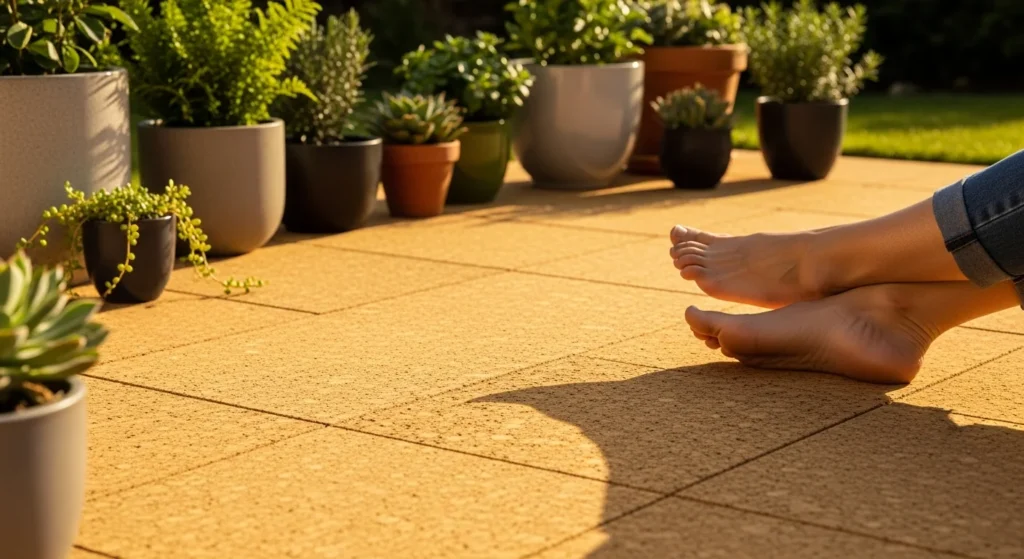
Cork represents a renewable natural material gaining recognition for outdoor applications beyond its traditional role in indoor flooring. Harvested from the bark of cork oak trees without harming the trees themselves, cork offers genuine sustainability credentials. The cellular structure of cork creates millions of tiny air pockets that provide natural cushioning, thermal insulation, and sound absorption properties uncommon in other outdoor surface materials.
The thermal performance of cork surfaces proves exceptional for barefoot comfort across seasonal extremes. Cork naturally maintains moderate temperatures, remaining cool to the touch during summer heat while avoiding the cold shock of stone or concrete in cooler weather. This temperature moderation stems from the insulating air cells within the cork structure that resist rapid heat transfer in either direction. The result is a surface that feels consistently comfortable regardless of ambient temperature conditions.
Modern outdoor cork products incorporate protective treatments that enhance moisture resistance and durability for exterior applications. These treatments seal the cork surface against water penetration while maintaining the material’s natural breathability. Properly treated cork withstands regular exposure to rain, humidity, and temperature fluctuations without deteriorating or losing structural integrity. Installation methods vary from interlocking tiles to glue-down planks depending on specific product designs and substrate conditions.
The natural antimicrobial properties of cork contribute to a healthier outdoor environment by resisting mold and mildew growth even in damp conditions. This biological resistance occurs through suberin, a waxy substance naturally present in cork that repels moisture and inhibits microbial colonization. For families concerned about allergens or seeking chemical-free outdoor surfaces, cork provides an attractive option that maintains cleanliness through inherent material properties rather than applied treatments.
Stone and Porcelain Pavers
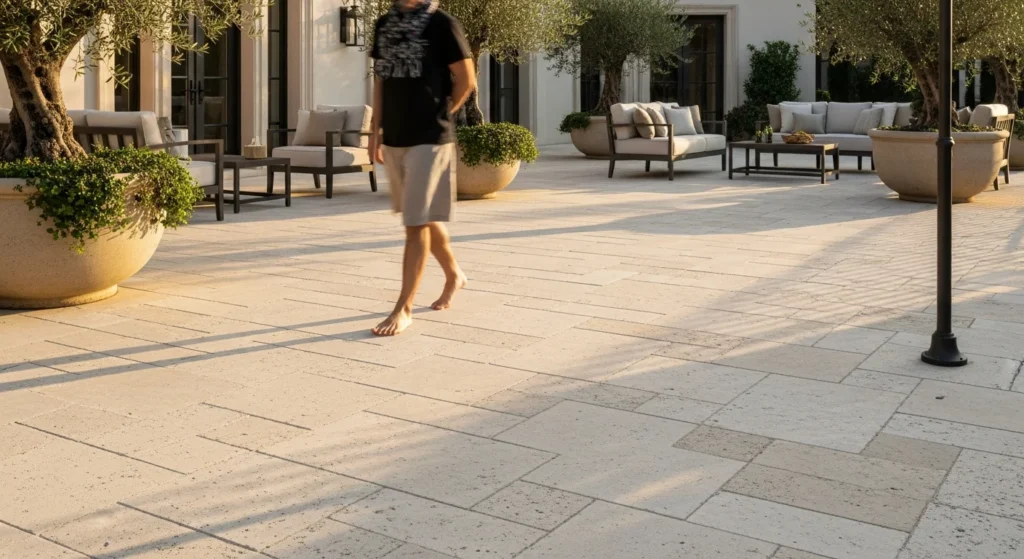
Natural stone and engineered porcelain pavers deliver timeless aesthetic appeal combined with exceptional longevity when properly installed. These materials create sophisticated outdoor living spaces that complement architectural styles from traditional to contemporary. The thermal mass of stone allows it to absorb heat slowly during the day and release it gradually during evening hours, moderating temperature extremes in outdoor entertainment areas.
Light-colored stone varieties such as travertine, limestone, and certain granite types remain relatively cool underfoot even in direct sunlight. The reflective properties of pale stone surfaces deflect solar radiation rather than absorbing it, maintaining surface temperatures closer to ambient air temperature. This characteristic makes light stone pavers suitable for barefoot use in warm climates when proper color selection occurs during the design phase. Darker stone colors absorb significantly more heat and typically require shade structures or limited sun exposure for comfortable barefoot traffic.
Porcelain pavers engineered for outdoor use combine the appearance of natural stone with enhanced performance characteristics. Manufacturing processes create products that resist moisture absorption, prevent staining, and maintain consistent dimensions across temperature variations. The non-porous surface of porcelain simplifies cleaning and prevents organic growth in joints between pavers. Textured finishes available in outdoor-rated porcelain provide slip resistance comparable to natural stone while offering unlimited design possibilities through digital printing technology.
Installation of stone and porcelain pavers demands careful attention to proper base preparation and drainage considerations. Correctly installed paver systems include compacted gravel bases, appropriate bedding materials, and adequate slope for water runoff. Professional installation typically ensures optimal performance and longevity, though experienced homeowners can successfully complete smaller projects with proper preparation and technique. The permanence and stability of well-installed paver surfaces creates outdoor spaces that enhance property value while requiring minimal ongoing maintenance.
Aluminum Decking Panels
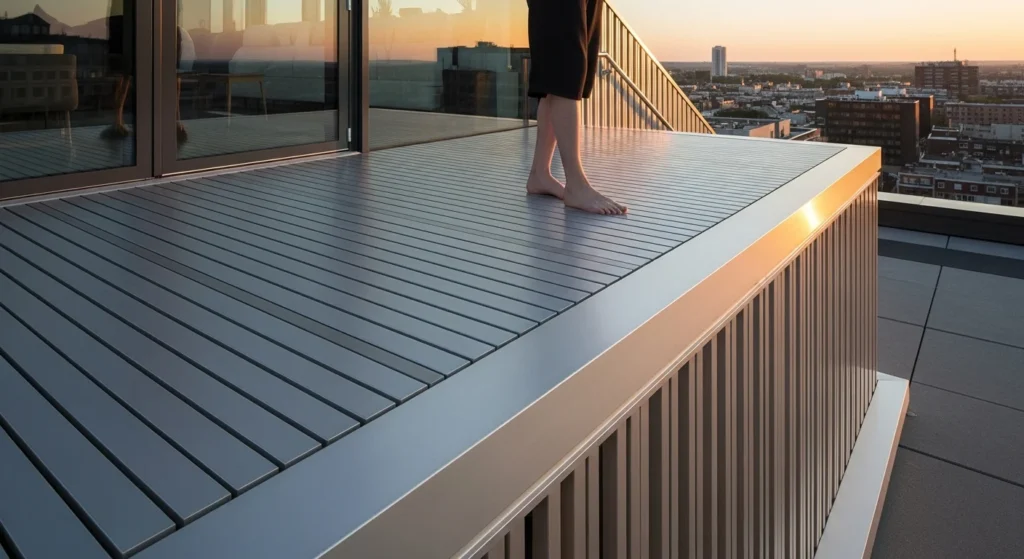
Aluminum decking (pros &cons) introduces metal construction into residential outdoor living spaces, borrowing technology from commercial applications and marine environments. The inherent properties of aluminum deliver advantages difficult to achieve with organic or composite materials. Complete immunity to moisture damage, rot, and insect activity eliminates common failure modes affecting wood-based products. The dimensional stability of aluminum prevents the warping, cupping, or twisting that compromise other decking materials over time.
The thermal characteristics of aluminum merit careful consideration for barefoot applications. While aluminum conducts heat efficiently, its low thermal mass means it reaches equilibrium with ambient temperature rapidly. In shaded areas or during cooler parts of the day, aluminum remains comfortable for bare feet. Under direct intense sunlight, the surface heats quickly but also cools quickly when shade appears or sun intensity decreases. Light-colored aluminum finishes reflect solar radiation effectively, maintaining lower surface temperatures than darker alternatives.
Structural efficiency represents a significant advantage of aluminum decking systems. The strength-to-weight ratio of aluminum allows for longer spans between support members and reduced structural requirements compared to heavier materials. This efficiency can lower overall construction costs despite higher material prices for aluminum products. The lightweight nature also simplifies handling during installation and reduces stress on supporting structures, particularly relevant for elevated decks or rooftop applications.
Surface textures applied to aluminum decking products provide necessary slip resistance and visual interest. Powder-coated finishes offer color variety and weather protection while maintaining smooth enough surfaces for barefoot comfort. Some aluminum products incorporate raised patterns or perforations that enhance grip and facilitate water drainage. The finish durability of quality aluminum decking maintains appearance and performance for decades with minimal maintenance beyond occasional cleaning.
Interlocking Deck Tiles
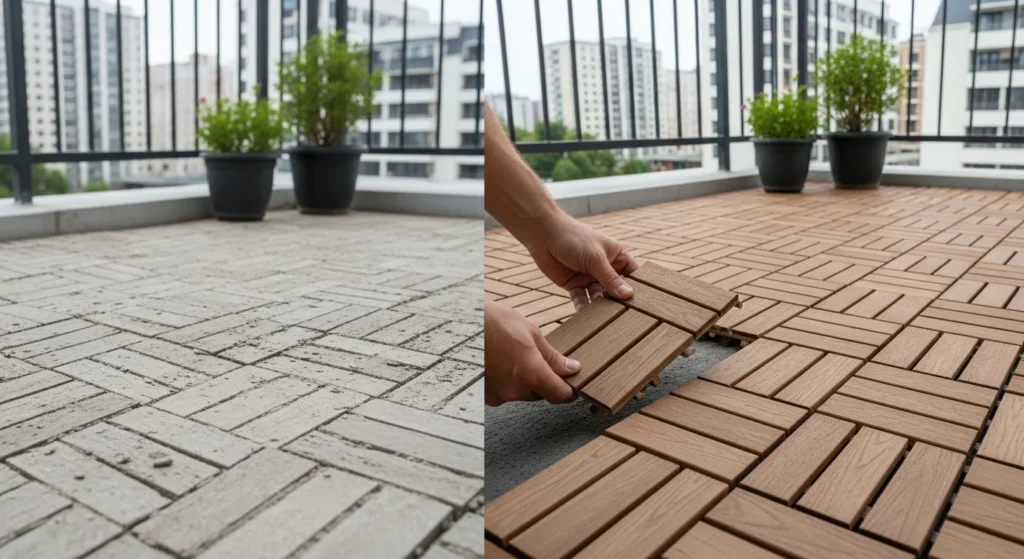
Interlocking deck tiles provide the ultimate flexibility for temporary installations, rental properties, or homeowners seeking simple do-it-yourself solutions. These modular products install without fasteners, adhesives, or specialized tools, resting on existing surfaces through their interlocking edge systems and material weight. The variety of available materials includes wood, composite, stone, rubber, and synthetic grass, allowing customization to specific functional and aesthetic preferences.
The installation simplicity of interlocking tiles makes deck transformation accessible to anyone capable of following basic instructions. Most systems require only a clean, level surface and sufficient tiles to cover the desired area. The tiles connect through edge tabs, grooves, or peg-and-hole systems that lock adjacent pieces together while allowing slight movement for thermal expansion. This forgiving installation approach accommodates minor surface irregularities and permits reconfiguration or removal as needs change over time.
Material choices in interlocking tiles influence barefoot comfort, durability, and maintenance requirements. Wood composite tiles offer natural appearance with moderate heat retention and smooth surfaces free from splinters. Rubber tiles provide superior cushioning and slip resistance ideal for play areas or workout spaces. Artificial turf tiles create grass-like surfaces comfortable for bare feet while eliminating mowing and irrigation needs. Stone-look tiles deliver sophisticated aesthetics with varying thermal properties depending on specific materials and colors selected.
Drainage design in quality interlocking tile systems prevents water accumulation that could promote organic growth or create slipping hazards. Many products incorporate gaps between surface elements or perforations through tile bodies that allow water to reach the substrate below. This drainage capability proves essential for maintaining safe, clean surfaces in climates with regular precipitation or in applications near pools and water features. Proper drainage also extends material lifespan by preventing prolonged moisture exposure.
Making the Right Choice for Your Space
Selecting optimal barefoot-friendly outdoor surfaces requires evaluation of multiple factors beyond initial material appeal. Climate conditions influence appropriate material choices significantly, with hot, sunny regions demanding different solutions than temperate or cool environments. Budget considerations encompass both initial installation costs and long-term maintenance expenses that accumulate over the surface’s service life. Personal preferences regarding aesthetics, texture, and environmental impact guide final decisions toward materials that deliver satisfaction and functionality.
The intended use of outdoor spaces informs suitable surface selection. High-traffic entertainment areas benefit from durable, low-maintenance materials that withstand frequent use and cleaning. Pool surrounds demand slip-resistant surfaces with excellent drainage capabilities. Children’s play spaces call for cushioned materials that reduce injury risk from falls while remaining cleanable and hygienic. Careful matching of material properties to specific applications ensures optimal performance and user satisfaction.
Professional consultation or contractor engagement may prove valuable for complex projects, challenging site conditions, or unfamiliar materials. Experienced professionals provide insights into local climate considerations, proper installation techniques, and realistic maintenance expectations. Many manufacturers offer extensive warranties contingent upon professional installation, protecting homeowners’ investments through guaranteed material performance. The incremental cost of professional services often proves justified through superior results and avoided installation errors.
Conclusion
The era of settling for splinter-prone, maintenance-intensive wooden decks has passed. Modern barefoot-friendly outdoor surfaces provide superior comfort, enhanced durability, and reduced upkeep requirements while delivering aesthetic results that complement any architectural style. From advanced composite materials and specialized PVC products to natural cork surfaces and innovative rubber tiles, homeowners enjoy unprecedented options for creating outdoor living spaces that invite bare feet and extended enjoyment.
The investment in quality outdoor surfaces pays dividends through years of reliable performance and minimal maintenance demands. Materials engineered specifically for barefoot comfort eliminate the painful encounters with splinters and scorching surfaces that plagued earlier decking generations. These surfaces maintain their appearance and functionality across seasonal extremes, resisting the deterioration that necessitates frequent repairs or premature replacement.
Thoughtful selection among available alternatives creates outdoor environments that enhance property value while providing daily pleasure and utility. Whether prioritizing environmental sustainability, temperature control, installation simplicity, or long-term durability, suitable solutions exist within the seven categories explored. The freedom to walk barefoot outdoors without concern for comfort or safety transforms outdoor spaces into true extensions of living areas, ready for spontaneous use throughout favorable weather seasons.
Frequently Asked Questions
What is the coolest decking material for bare feet in summer?
Light-colored PVC or aluminum decking typically stays coolest in direct sunlight due to their heat-reflective properties and low thermal mass. Porcelain pavers in pale colors also perform well. Regardless of material choice, lighter shades reflect more solar radiation and maintain lower surface temperatures than dark alternatives.
How long do composite and PVC decking materials last compared to wood?
Quality composite decking typically lasts 25 to 30 years, while premium PVC products can exceed 50 years with proper installation and minimal maintenance. Traditional wood decking generally requires replacement after 10 to 15 years depending on species, treatment, and maintenance consistency. The extended lifespan of synthetic materials often justifies their higher initial costs.
Are rubber pavers safe for children and pets?
Rubber pavers provide excellent safety for children and pets due to their cushioning properties that reduce impact from falls and their slip-resistant texture that maintains traction when wet. Made from recycled materials, they contain no harmful chemicals when sourced from reputable manufacturers. The soft surface also protects pet paws from heat and abrasion.
Can I install barefoot-friendly outdoor surfaces myself?
Interlocking deck tiles and rubber pavers offer the easiest do-it-yourself installation, requiring no special tools or expertise. Composite and PVC decking installation resembles traditional wood deck construction, making it accessible to experienced DIY builders. Stone pavers and aluminum systems typically benefit from professional installation to ensure proper drainage, support, and longevity.
Do eco-friendly outdoor surface options exist?
Cork represents the most renewable option, harvested without harming trees. Composite decking manufactured from recycled plastics and reclaimed wood fibers diverts waste from landfills. Rubber pavers made from recycled tires provide another sustainable choice. Many bamboo products offer rapid renewability, though moisture resistance varies. Always verify environmental claims through third-party certifications.