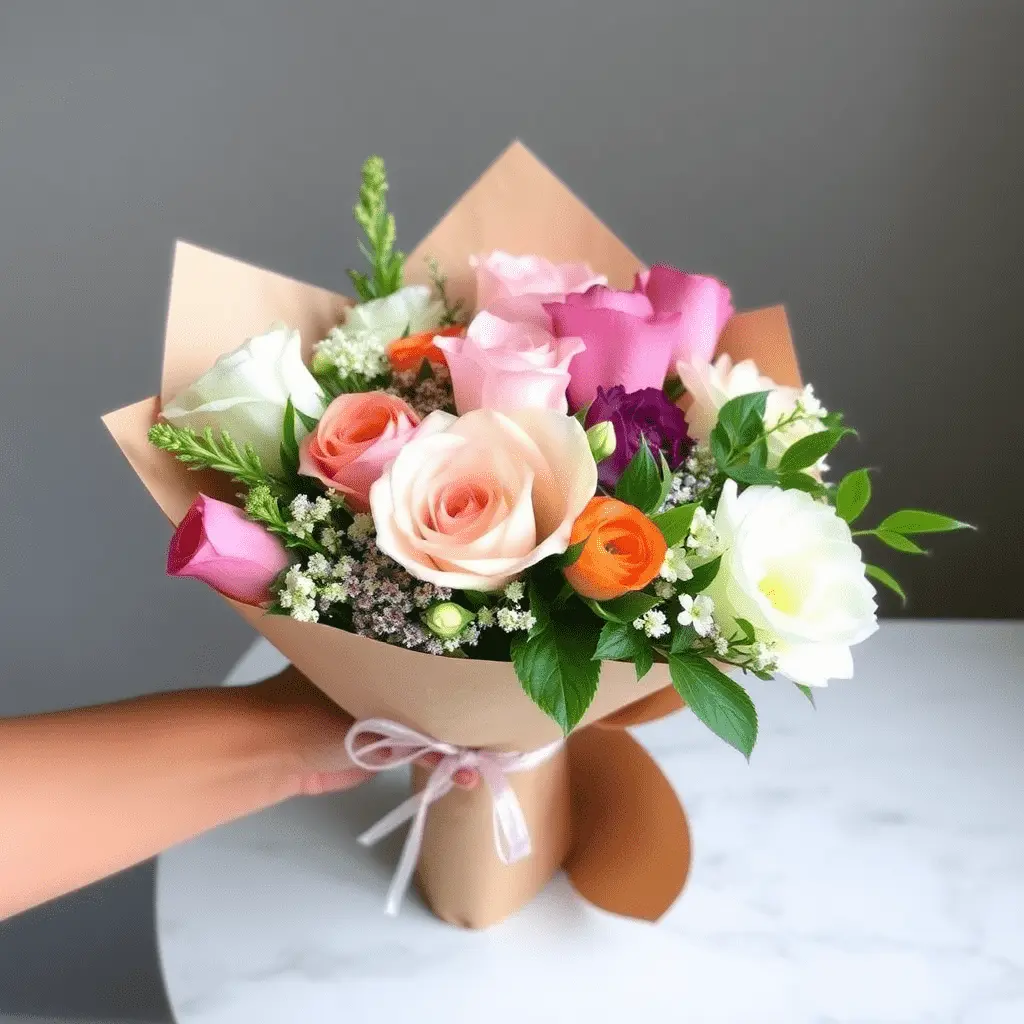
18+ Stunning DIY Flower Wrapping Ideas
Introduction
DIY Flower Wrapping Ideas, There is something deeply personal about handing someone a bouquet of flowers you have wrapped yourself. The presentation speaks before the blooms even do. Whether you are preparing a gift for a birthday, a wedding, an anniversary, or simply surprising a loved one on an ordinary afternoon, the way you wrap your flowers tells a story of thoughtfulness and care. The good news is that you do not need to visit a professional florist or spend a fortune on elaborate packaging. With the right materials and a little creativity, anyone can master the art of DIY flower wrapping and produce results that rival even the most polished floral boutiques.
This guide covers 19 of the most stunning DIY flower wrapping ideas available today. From timeless kraft paper cones to modern Korean-style multi-layer presentations, every technique here has been chosen for its visual impact, ease of execution, and versatility across occasions. Read through, gather your materials, and get ready to transform a simple bunch of blooms into an unforgettable gift.
1. Classic Kraft Paper Cone Wrap
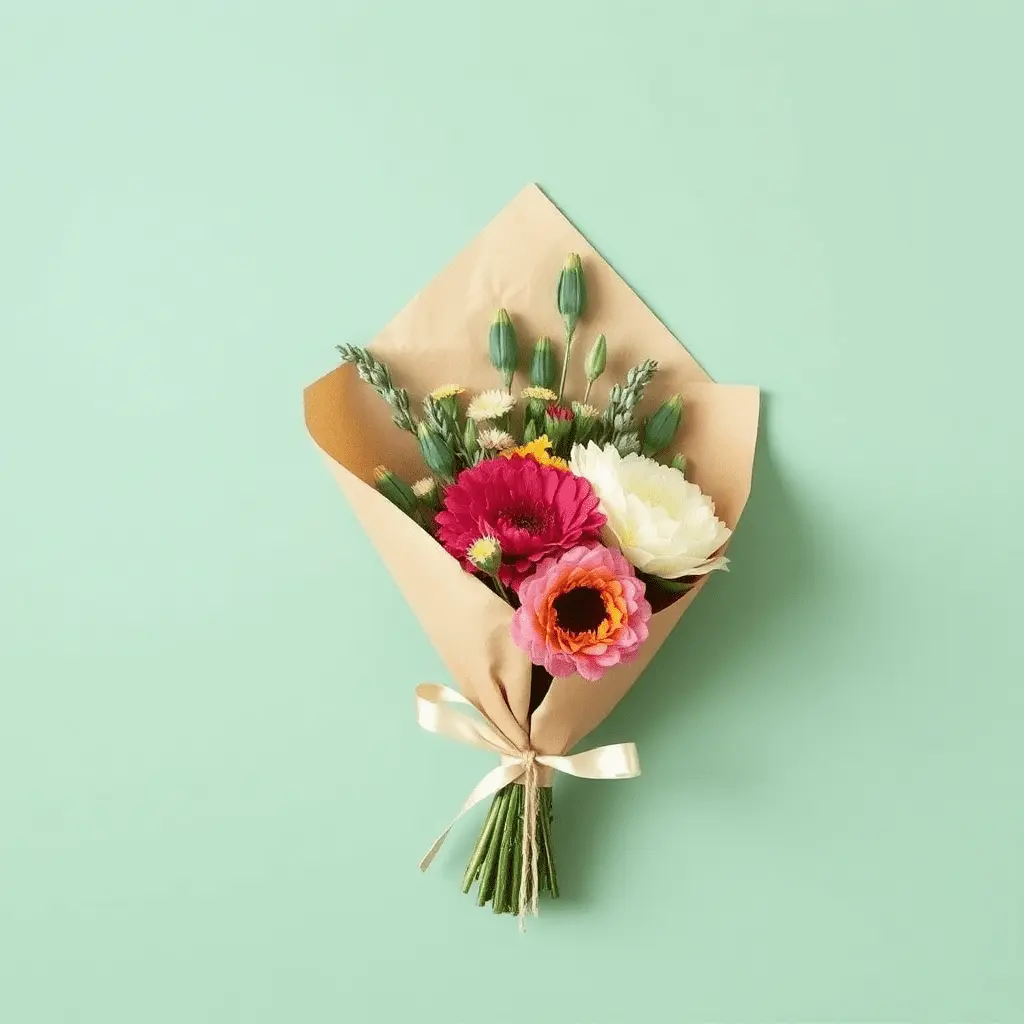
The kraft paper cone is the foundation of all great bouquet wrapping. It is clean, structured, and effortlessly elegant. To create it, lay a large square of brown kraft paper flat on a table, place your bouquet diagonally across one corner, and roll the paper around the stems to form a cone shape. Secure the bottom with a strip of clear tape, then tie a piece of natural twine or a satin ribbon just above the stems. The rustic warmth of brown kraft paper works beautifully with nearly every flower variety, from sunflowers to garden roses, making it one of the most reliable wrapping styles in any DIY toolkit.
2. Japanese Furoshiki Fabric Wrap
Inspired by the traditional Japanese art of furoshiki, this technique uses a square piece of fabric rather than paper. Choose a soft cotton or silk scarf in a color that complements your blooms. Lay the fabric flat, place the bouquet at its center, and bring the four corners up around the stems, tying them together in a knot at the top.
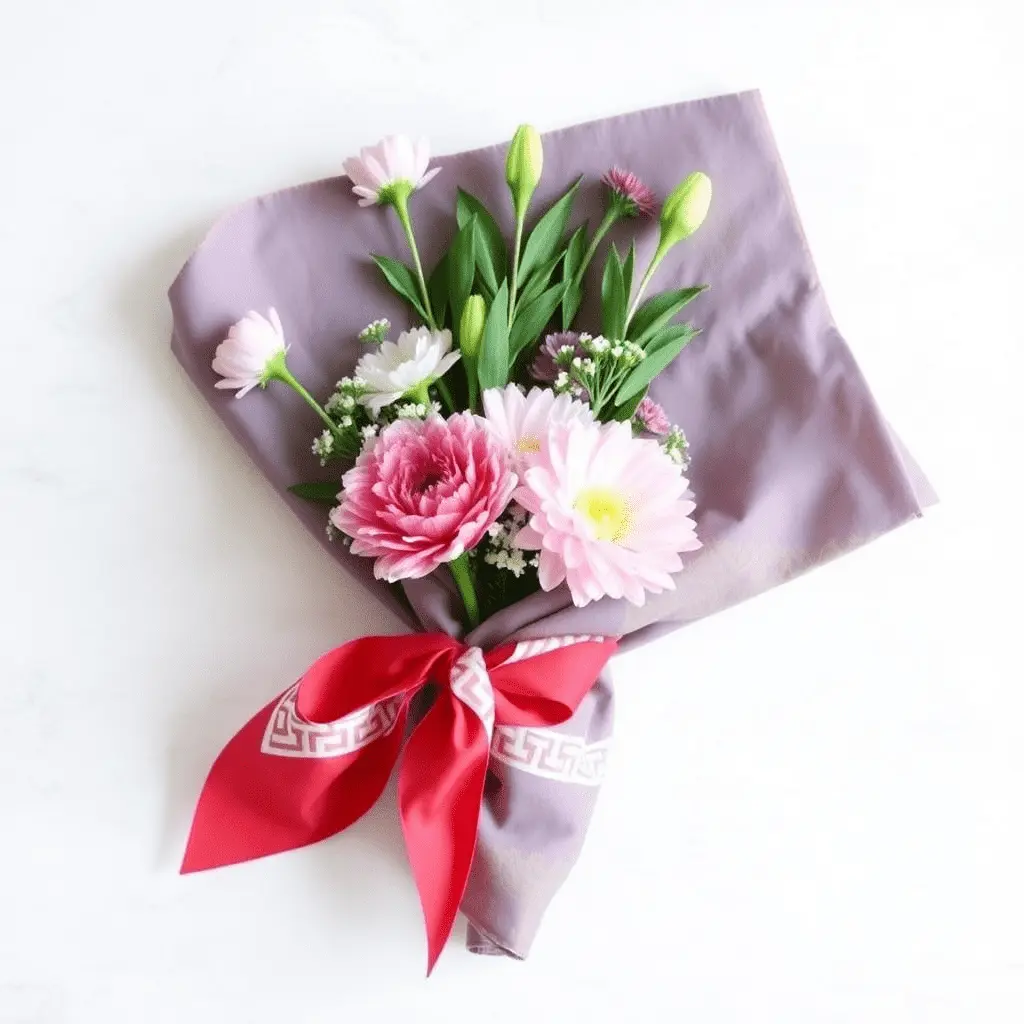
The result is an elegant, reusable wrap that doubles as a gift in itself. Recipients can use the fabric again as a scarf, a table cloth, or a decorative piece, making this one of the most thoughtful and sustainable DIY flower wrapping ideas available.
3. Newspaper Vintage Bouquet Wrap
Old newspapers carry a romantic, nostalgic quality that suits certain bouquet styles perfectly. This wrap works especially well with wildflower arrangements, sunflowers, or bold-colored blooms. Simply fold a few sheets of newspaper into a wide cone, tuck the flowers inside, and secure the base with floral tape or a rubber band.
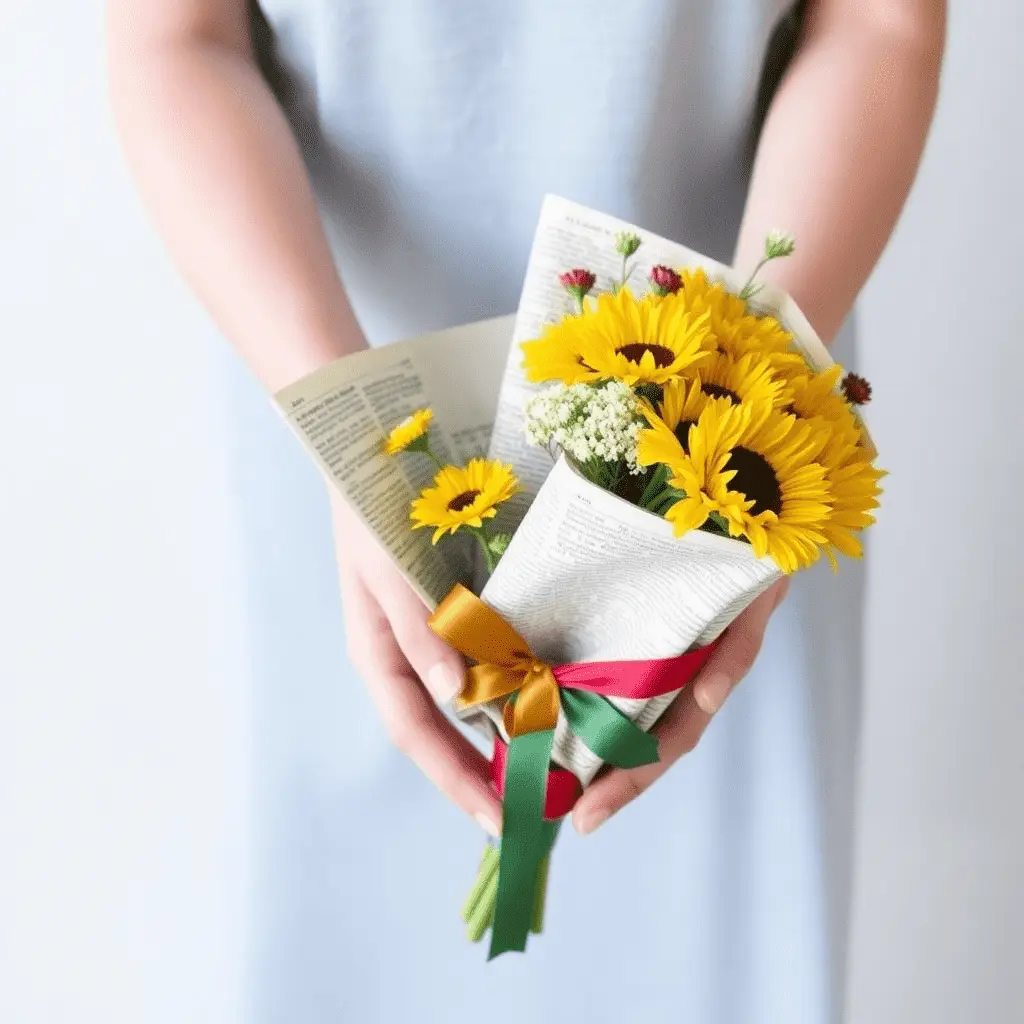
Finish with a bold-colored ribbon in red, mustard, or forest green for contrast. If you want to elevate the look, choose a newspaper page with interesting typography or vintage illustrations. The result feels artistic, story-filled, and completely one of a kind.
4. Burlap Rustic Wrap
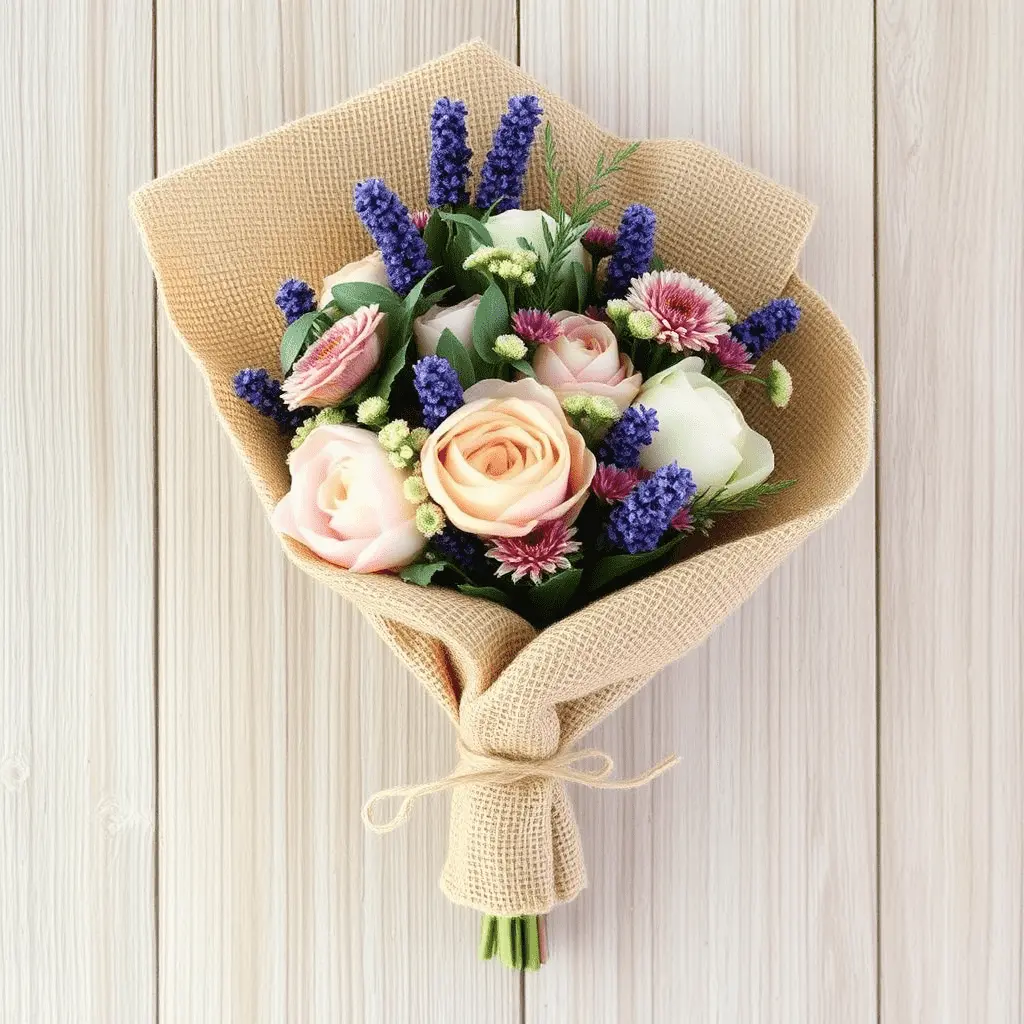
Burlap has earned its place as a staple in the world of rustic and farmhouse-style floral design. Its rough, natural texture creates a wonderful contrast against soft, delicate petals. Cut a generous rectangle of burlap fabric, place your bouquet at one end, and roll it loosely so that the blooms sit comfortably at the top. Fold any excess material at the base and secure it with a piece of jute twine or a thick ribbon. Burlap works especially well for barn weddings, garden parties, and earthy-toned arrangements featuring lavender, eucalyptus, or peony varieties.
5. Cellophane Transparent Wrap
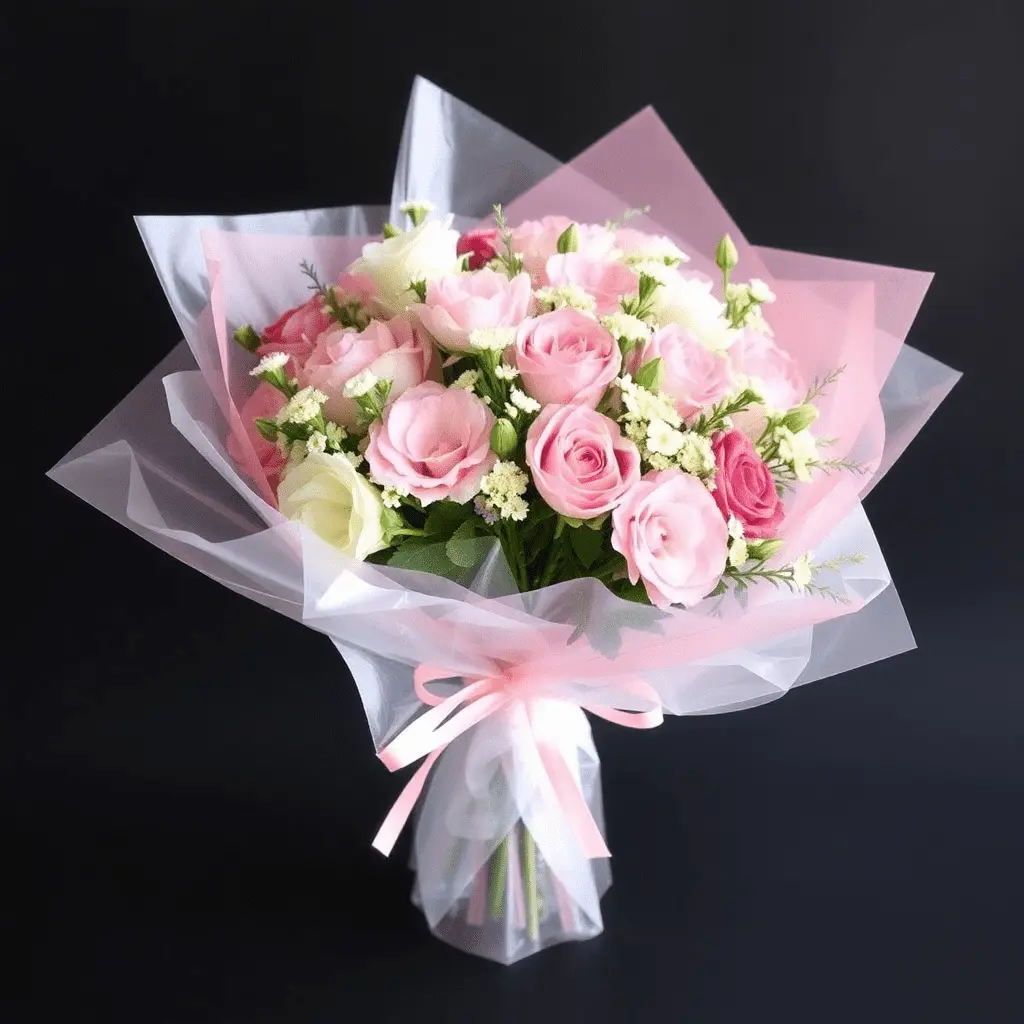
Cellophane remains a classic for a reason. Its transparent nature allows the full beauty of the flowers to remain visible while still providing a polished, professional presentation. Cut a wide sheet of cellophane, gather it around the bouquet, and cinch it tightly at the stem point with a ribbon. For an upgraded version, layer two sheets of cellophane in complementary tinted shades, such as blush pink over white, to add depth and a dreamy quality to the presentation. Cellophane also protects delicate petals during transport, making it especially practical for gifting.
6. Tissue Paper Layered Wrap
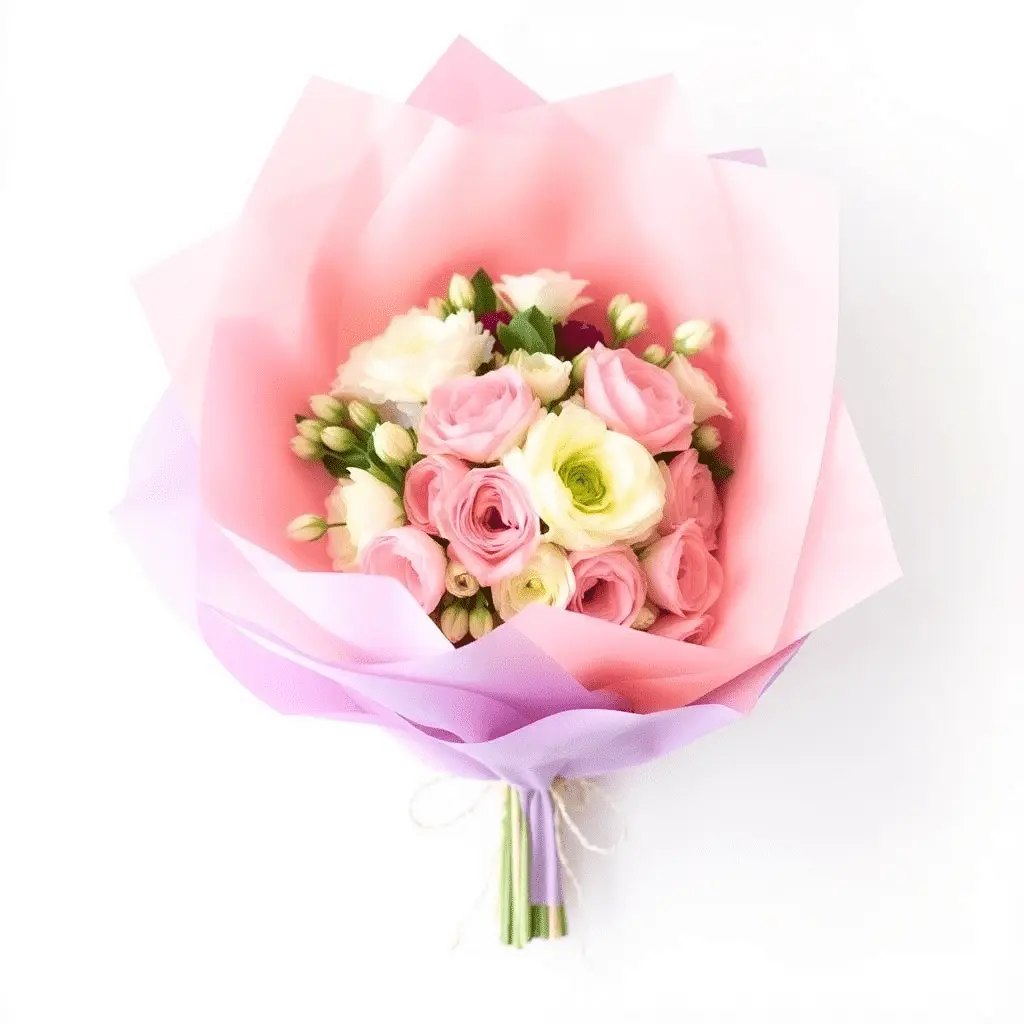
Tissue paper is one of the most affordable and versatile materials available for DIY flower wrapping. Its lightness and translucency make it ideal for layering multiple colors together to create a rich, dimensional effect. Choose two or three complementary shades, stack the sheets at slightly offset angles, and place the bouquet at the center before gathering the paper upward around the stems. Secure with ribbon or twine. Tissue paper pairs beautifully with soft pastel flowers like garden roses, sweet peas, and ranunculus, and gives the overall arrangement a delicate, gift-ready quality.
7. Brown Paper with Twine Wrap
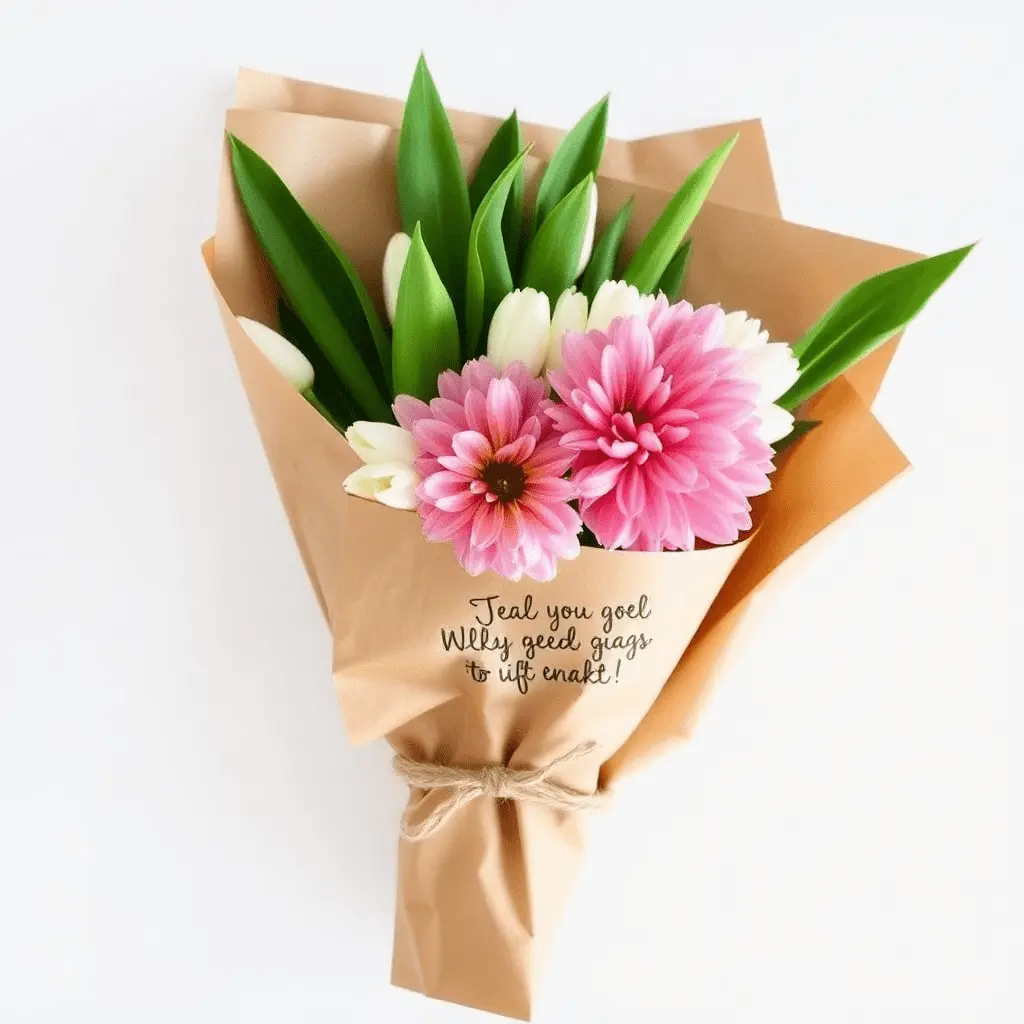
Sometimes the simplest combinations produce the most striking results. A double layer of plain brown paper finished with a piece of natural jute twine creates a minimalist presentation that lets the flowers stand entirely on their own merits. This approach is particularly suited to single-variety bouquets where the goal is to spotlight one bloom, such as a generous handful of white tulips or a cluster of bright dahlias. Write a short personal message directly on the paper using a black marker or stamp to add a personalized touch without the need for an additional gift card.
8. Denim Fabric Wrap
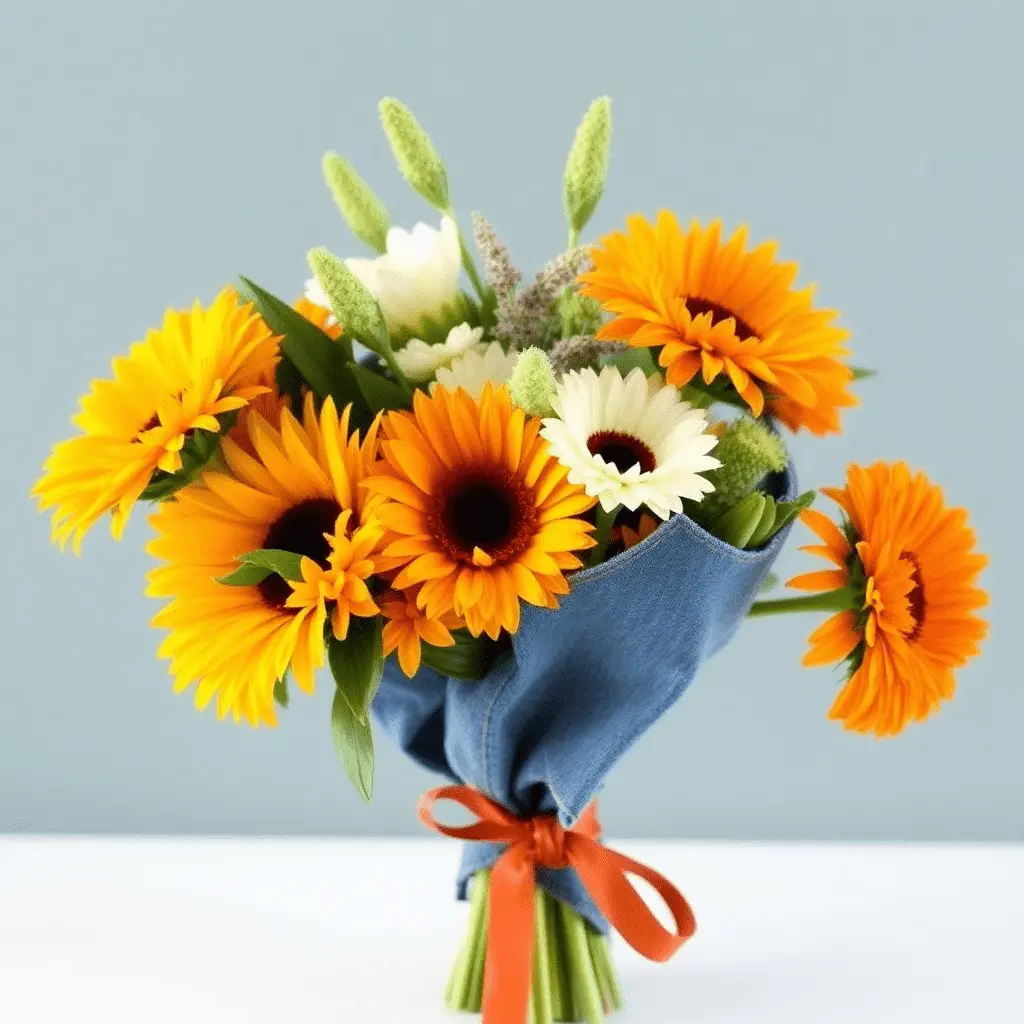
Repurposing denim fabric as a bouquet wrap is a creative, sustainable choice that gives arrangements a cool, casual personality. Cut a piece of denim from an old pair of jeans, wrap it around the lower portion of the stems, and secure it with a leather cord or a bold-colored ribbon. Denim works especially well with bold, striking flowers like sunflowers, gerbera daisies, or orange marigolds. The contrast between the rough, structured fabric and the fresh, vibrant blooms creates a visual tension that is both modern and memorable.
9. Lace and Ribbon Wrap
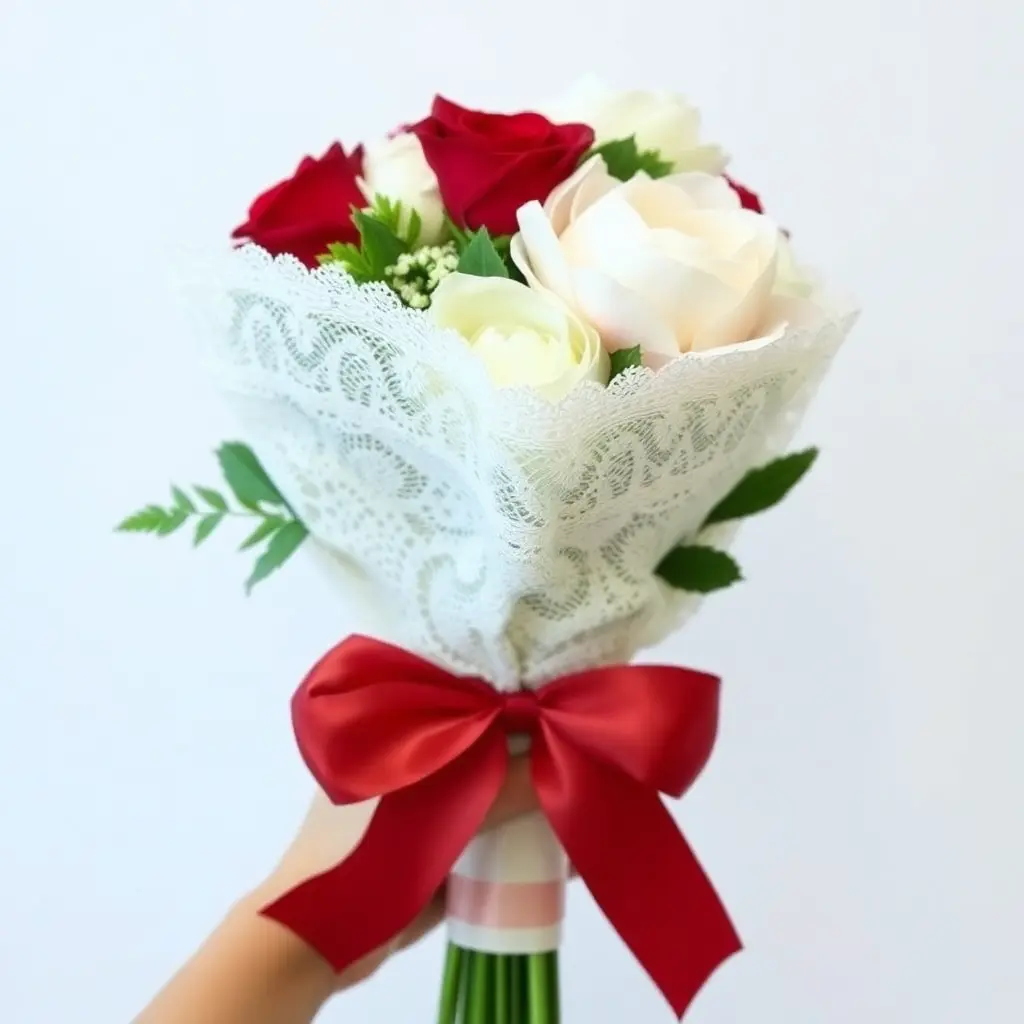
For occasions that call for romance and refinement, lace is an exceptional wrapping material. Wrap a length of lace fabric around the stems of the bouquet, overlapping it slightly as you go, and pin or tape it discreetly at the back. Layer a satin or velvet ribbon over the lace and tie it into a full, flowing bow at the front. This style is a natural match for bridal bouquets, Valentine’s Day arrangements, and anniversary gifts. Ivory lace against deep red roses is a timeless combination, while soft blush lace alongside white peonies feels effortlessly ethereal.
10. Korean Style Multi Layer Paper Wrap
Korean floristry has introduced the world to one of the most visually impressive wrapping techniques in modern floral design. This method involves layering multiple sheets of paper in varying colors and textures around the bouquet, each layer slightly offset from the one beneath it, so that different shades peek out from behind the others.
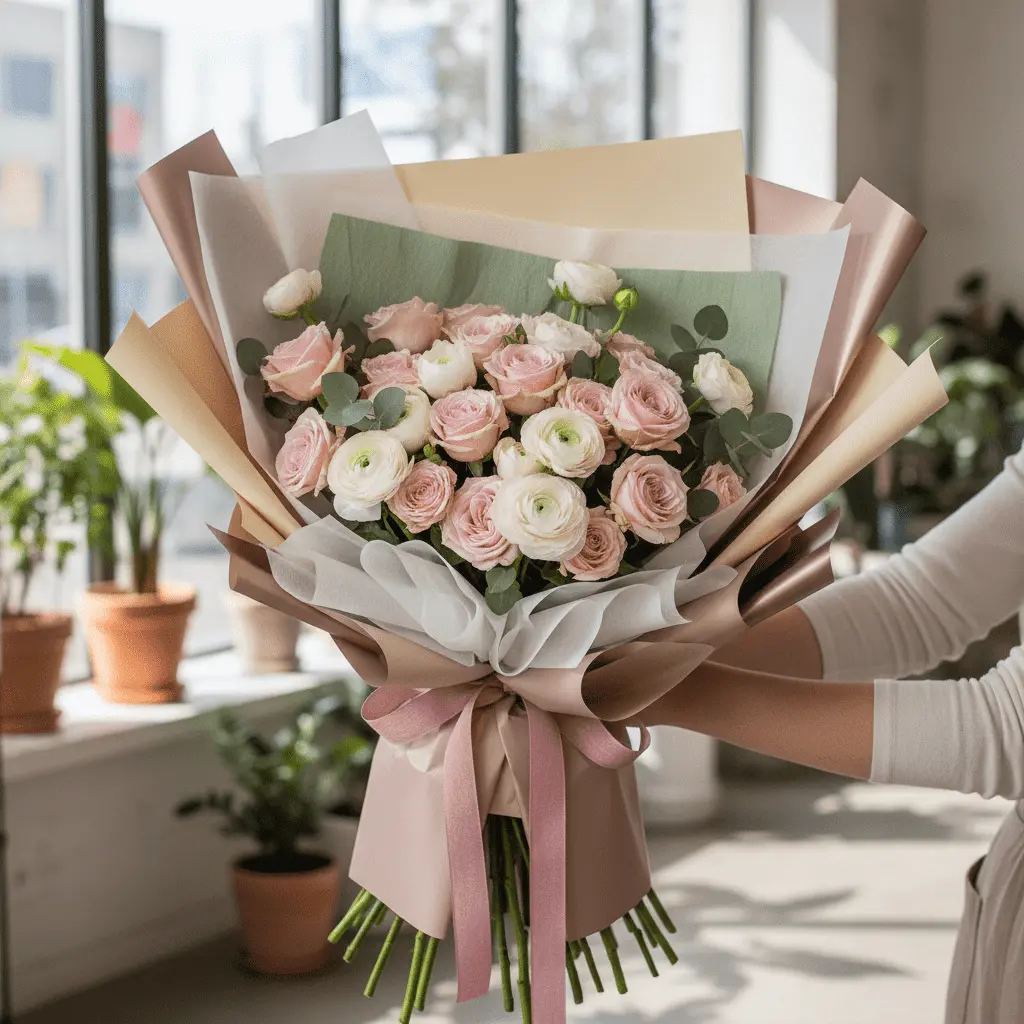 Waterproof floral paper, matte tissue, and transparent cellophane are frequently combined in this style. The finished result has incredible visual depth and a distinctive architectural quality that photographs beautifully and makes an immediate impression.
11. Wax Paper Wrap
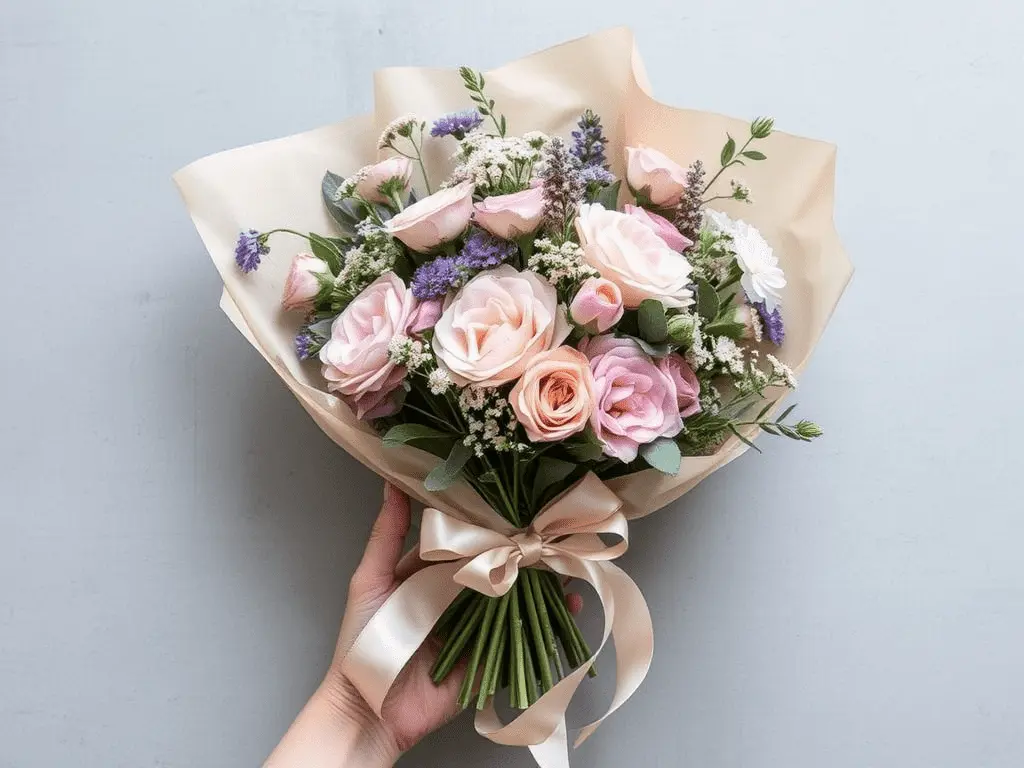
Wax paper is an underused but genuinely beautiful wrapping option. Its subtle sheen and semi-translucent quality lend a soft, almost dreamy quality to floral presentations. Use it in the same way you would standard kraft paper, forming a cone around the bouquet and securing it with tape or ribbon at the base. The advantage of wax paper is that it is moisture resistant, which means it protects the stems effectively during gifting without the need for additional plastic. A simple satin bow in a muted color is all it takes to complete the look.
12.Paper Bag Wrap
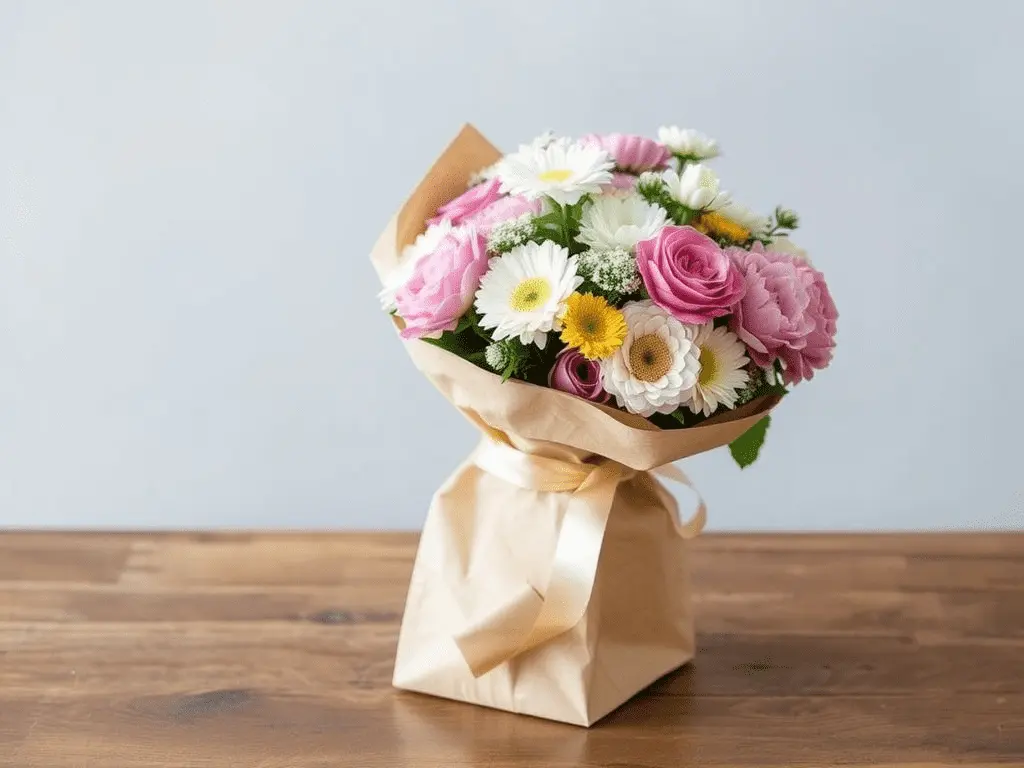
A plain paper bag transforms into a surprisingly charming bouquet wrap with minimal effort. Choose a bag with a sturdy base and a width that comfortably accommodates the bouquet stems. Fold the top edge of the bag down several times to create a neat, structured cuff. Slide the flowers in, adjust their position so the blooms fan out attractively above the bag, and tie a ribbon around the outside. This style is especially well suited to casual occasions or when you need a quick, last-minute presentation that still looks intentional and polished.
13. Watercolor Paper Wrap
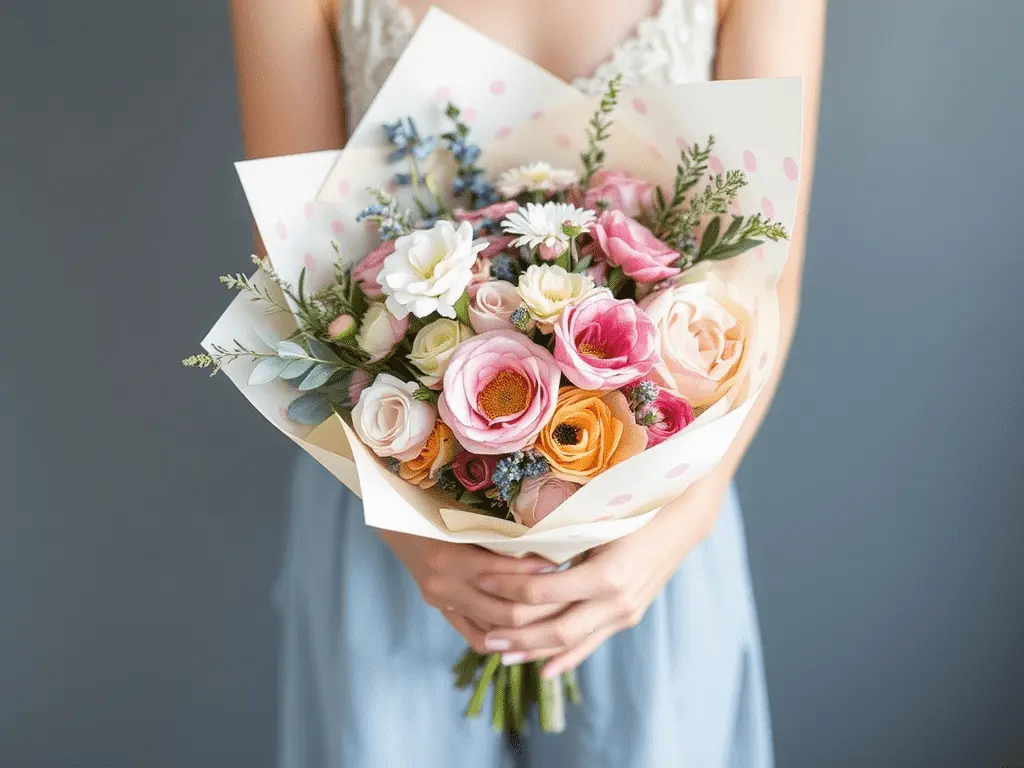
For those who enjoy a hands-on creative process, watercolor paper offers an extraordinary opportunity for personalization. Purchase a sheet of thick watercolor paper and paint it yourself with soft washes of color before allowing it to dry completely. Florals, abstract brushstrokes, or simple watercolor dots all produce beautiful results. Once dry, use it to wrap the bouquet exactly as you would standard kraft paper. The finished presentation feels genuinely artistic and tells a story of creative effort that no store-bought wrapping can replicate.
14. Mesh and Net Wrap
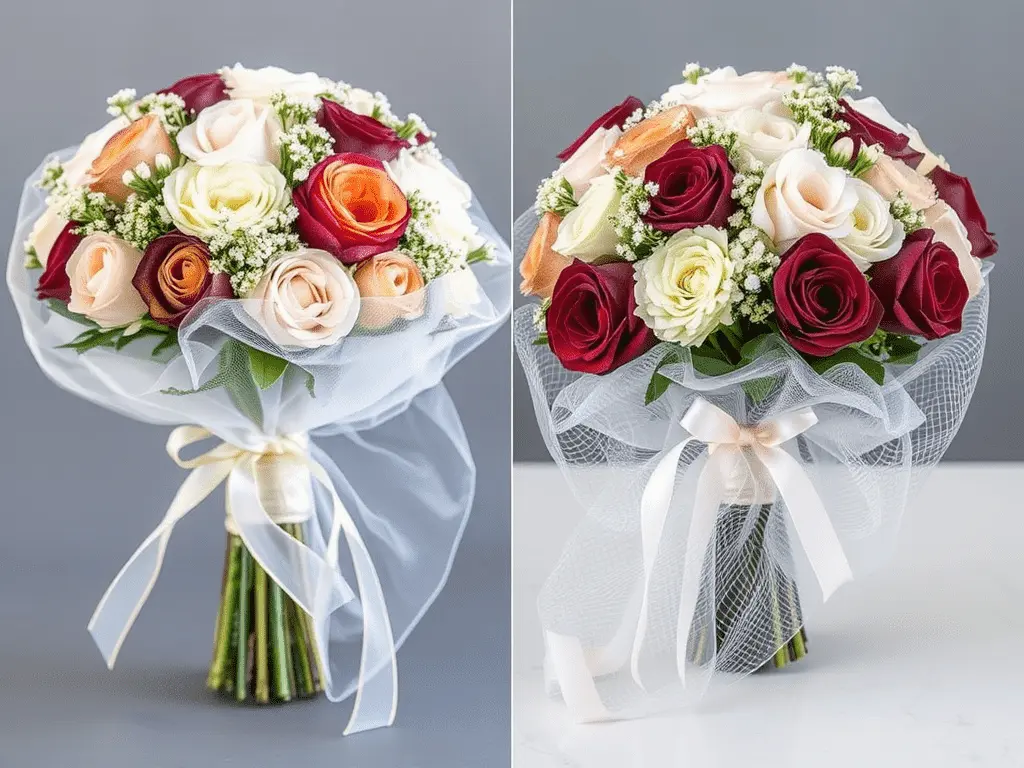
Floral mesh or netting adds a light, textured quality to bouquet presentations that feels both contemporary and elegant. Available in white, gold, silver, and various pastel shades, mesh can be gathered loosely around the stems of a bouquet and cinched with a ribbon to create a soft, cloud-like wrap. This technique works particularly well for elaborate multi-flower arrangements at weddings or formal events, where a bit of added sparkle is appropriate. Gold or silver mesh against deep burgundy roses is especially effective for autumn and winter occasions.
15. Dried Flower and Greenery Accent Wrap
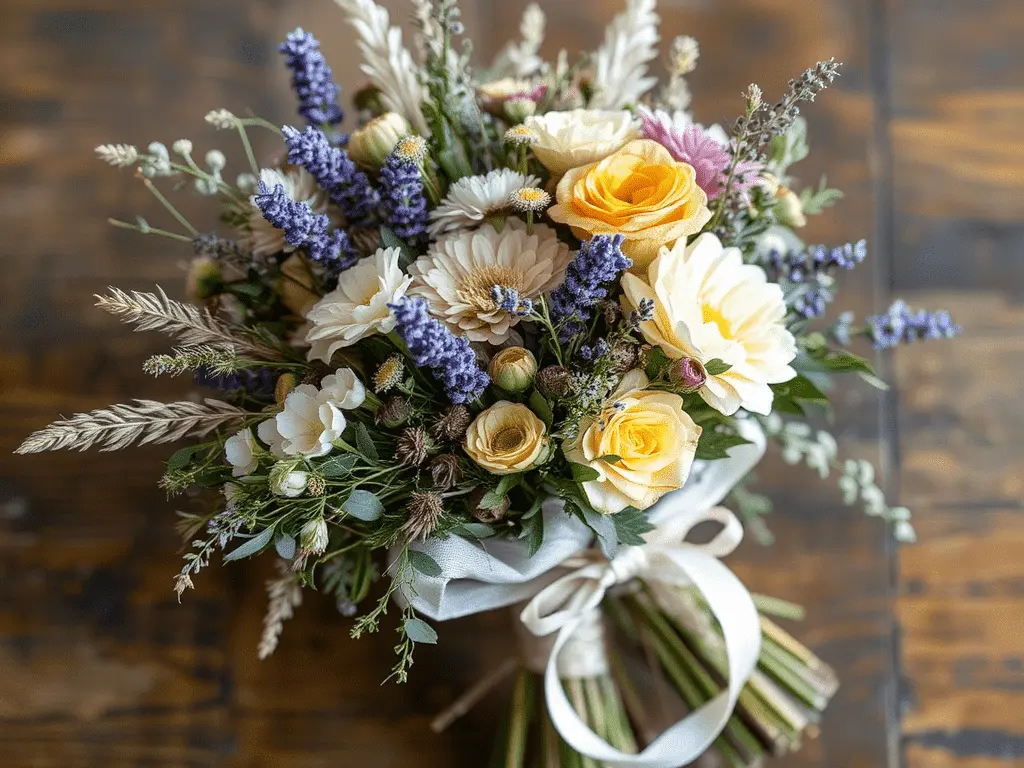
Rather than using fabric or paper as the primary wrapping material, this approach incorporates natural elements such as dried grasses, sprigs of eucalyptus, dried lavender, or feathery ferns around the exterior of the bouquet. Bind these natural accents to the outside of the stems using floral wire, then cover the wire with a length of ribbon or decorative twine. The result is a highly organic, textured presentation that blurs the line between the bouquet and its wrapping, creating something that feels more like a hand-gathered garden posy than a conventional gift arrangement.
16. Plaid Fabric Wrap
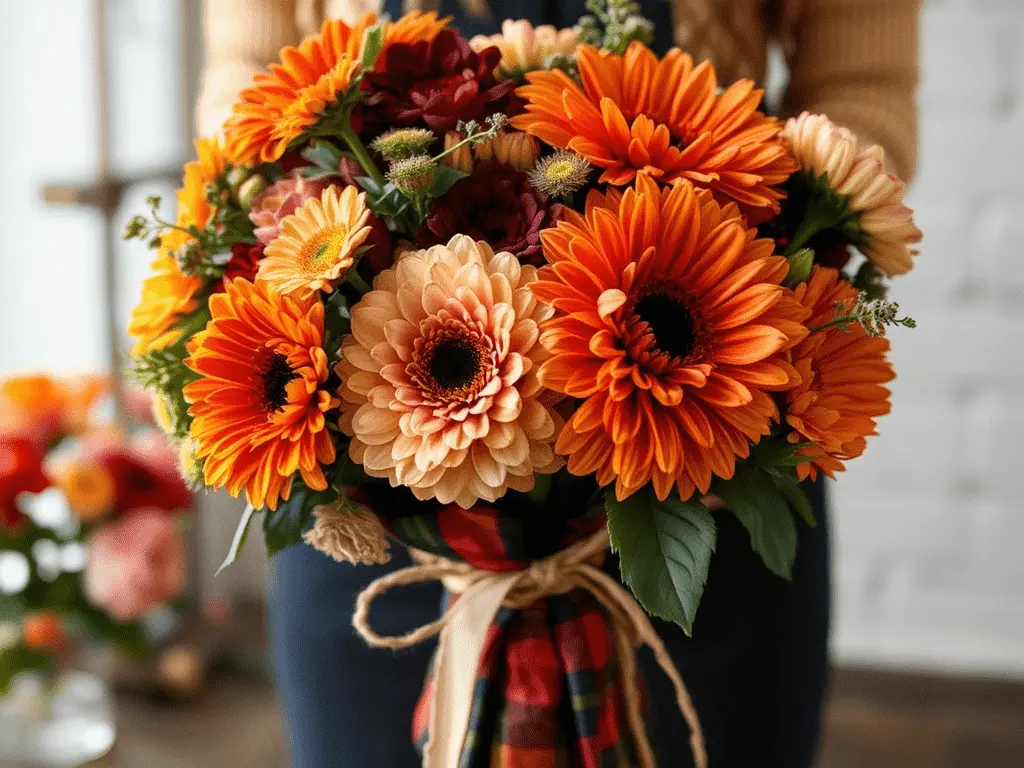
Plaid fabric brings warmth, pattern, and seasonal character to any bouquet. This wrap is especially popular during autumn and winter months, when cozy, comforting aesthetics feel most appropriate. Use a piece of plaid flannel or cotton fabric, wrap it around the lower two thirds of the bouquet, and secure it with a thick velvet ribbon or a natural raffia tie. Plaid pairs particularly well with autumn-toned flowers such as rust chrysanthemums, orange marigolds, burgundy dahlias, and deep golden sunflowers. The overall effect feels festive, inviting, and immediately personal. https://www.craftysphere.com/diy-bouquet-wrap-ideas/
17. Tea Towel Wrap
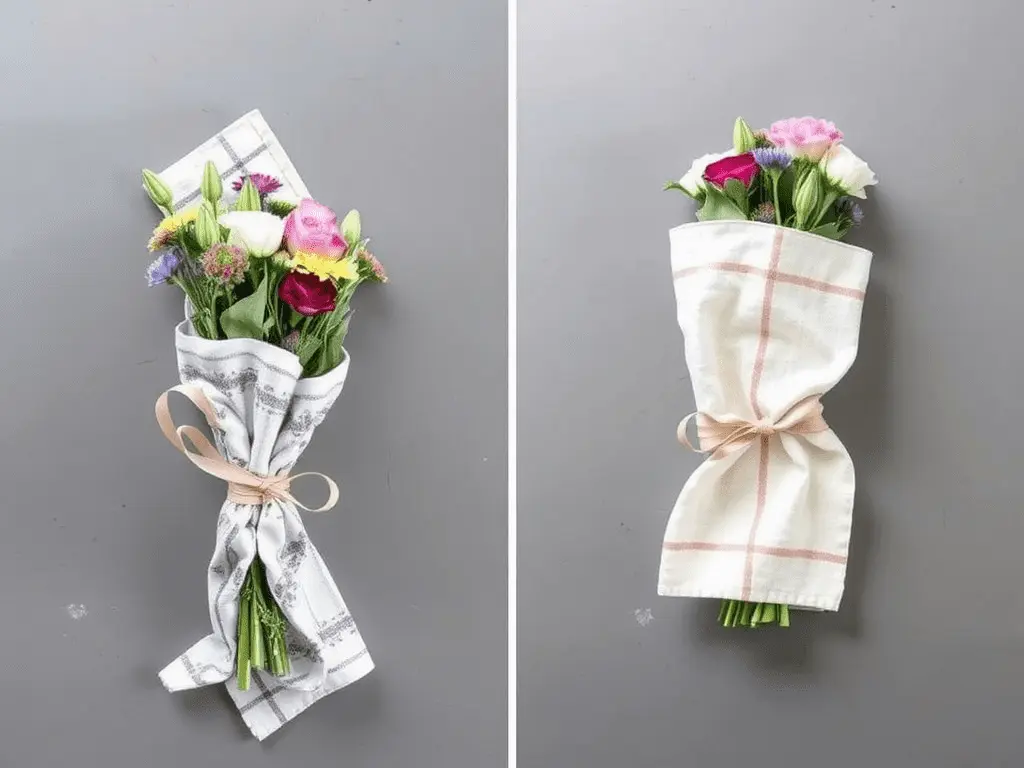
Wrapping flowers in a decorative tea towel is a creative approach to gifting that gives the recipient two presents in one. Choose a tea towel with an interesting print or a classic linen design, fold it lengthwise to create a long rectangular strip, and wrap it around the stems of the bouquet. Tie it off with a length of ribbon or secure it with a pin at the back. This wrap is thoughtful, reusable, and highly practical, making it particularly popular as a hostess gift or a present for friends who appreciate functional, beautifully designed home items.
18. Individual Stem Wrapping
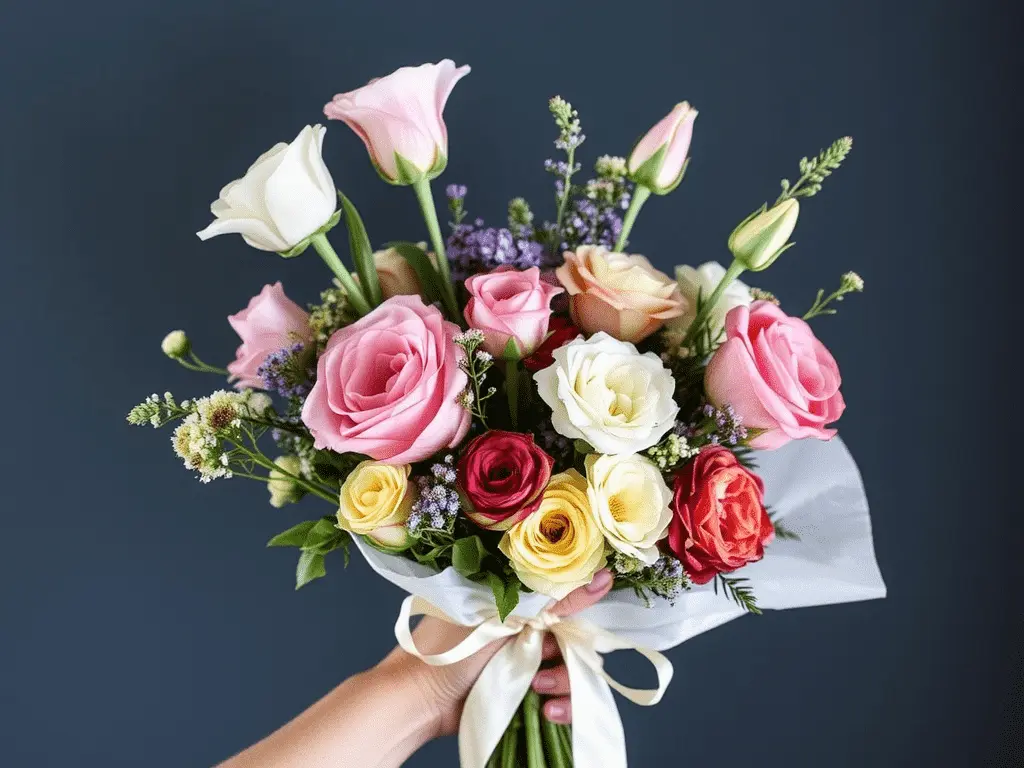
Rather than wrapping the entire bouquet as a single unit, individual stem wrapping gives each flower its own moment. Cut small squares of tissue paper, craft paper, or fabric just large enough to wrap around a single stem from the base of the bloom down to the cut end. Roll each piece tightly from one corner, twist it closed at the bottom, and secure it with a small piece of tape or twine. Once all stems are individually wrapped, gather them together and bind them as a collective bouquet with a ribbon. This technique is particularly striking with single-variety arrangements and creates a presentation that feels both modern and luxurious.
19. Scalloped Edge Paper Wrap
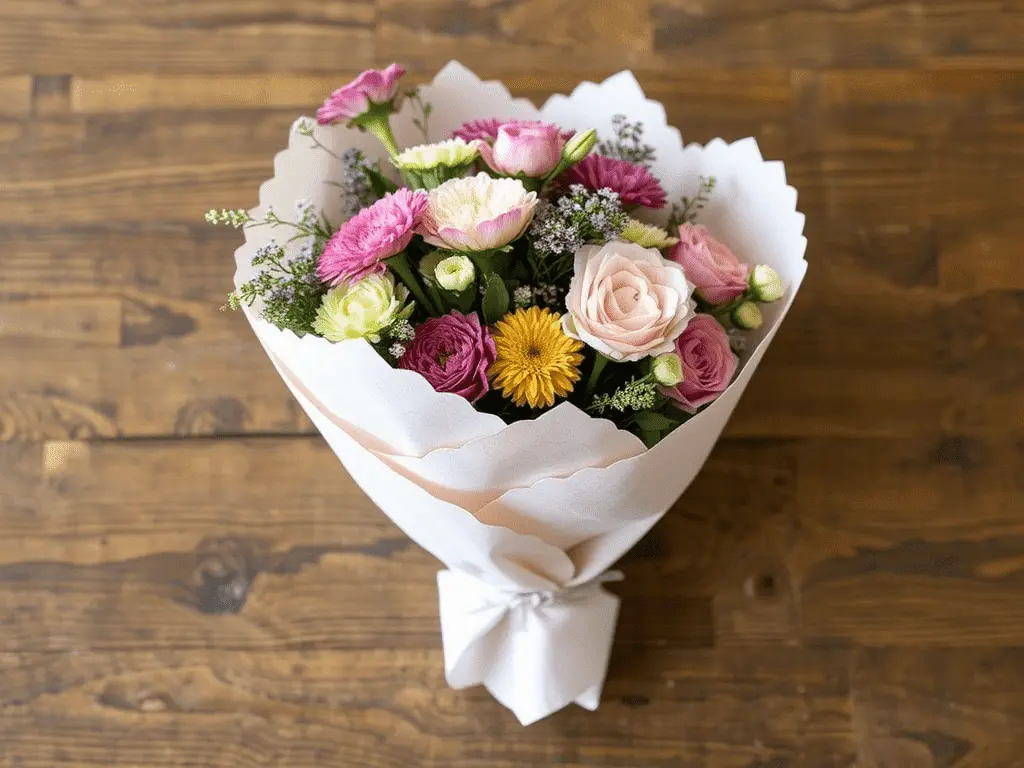
A scalloped edge wrapping adds an unexpected decorative flourish to an otherwise straightforward bouquet wrap. To create the scalloped edge, fold your chosen paper into a series of triangles, much like folding a paper snowflake, and cut along the lower folded edge in a curved, scallop pattern. When opened out, the paper will have a decorative frilled edge along one or more sides. Wrap the bouquet in this paper with the scalloped edge visible at the top of the arrangement so that it frames the flowers from beneath. This small detail elevates the entire presentation and gives it the appearance of something crafted with professional care.
Conclusion
Wrapping flowers is not merely a practical task. It is an act of creative expression that adds meaning and intention to any floral gift. The ideas presented here range from the beautifully simple to the more elaborate, but each one is achievable at home with materials that are either readily available or easy to source. The key to great flower wrapping lies in choosing materials that complement both the flowers and the occasion, taking care with your folds and fastenings, and adding a personal finishing touch such as a handwritten tag or a carefully chosen ribbon. Once you begin experimenting with these DIY flower wrapping ideas, it becomes genuinely difficult to stop. The creative possibilities are endless, and the satisfaction of handing someone a bouquet you have wrapped entirely by hand is one that never grows old.
Frequently Asked Questions
1. What is the best material for DIY flower wrapping?
Kraft paper and tissue paper are two of the most versatile and widely available options. Both work well for a range of flower types and occasions, and they are easy to handle even for beginners.
2. How do I keep flowers fresh inside the wrap?
Mist the stems lightly with water before wrapping and use moisture-resistant materials such as wax paper or cellophane around the base of the stems. Avoid wrapping too tightly, as flowers need some airflow to stay fresh.
3. Can I use fabric instead of paper to wrap flowers?
Absolutely. Fabric wraps such as burlap, denim, lace, tea towels, and cotton scarves all make beautiful alternatives to paper and have the added benefit of being reusable after the flowers have been enjoyed.
4. How much paper do I need to wrap a standard bouquet?
A square sheet measuring approximately 18 by 18 inches works well for most standard-sized bouquets. For larger arrangements, use a sheet closer to 24 by 24 inches to ensure full coverage of the stems.
5. Are there eco-friendly flower wrapping options?
Yes. Kraft paper, newspaper, fabric, tea towels, and dried natural materials such as eucalyptus and lavender are all sustainable choices that avoid single-use plastics and can be composted or repurposed after use.