18+ Creative Drift Planting Ideas for Your Garden
Transforming your garden into a captivating landscape requires more than simply placing individual plants in the ground. The art of drift planting offers a sophisticated approach to garden design that creates visual impact through repetition, rhythm, and natural flow. This technique, favored by landscape designers and experienced gardeners alike, involves planting groups of the same species in sweeping, irregular patterns that mimic how plants grow in nature.
Drift planting moves beyond the traditional approach of single specimens or rigid rows, instead embracing organic shapes and purposeful repetition. When executed thoughtfully, this method produces gardens that feel both intentional and effortlessly beautiful, with waves of color and texture that guide the eye through the landscape. Whether you’re working with a small urban plot or expansive country gardens, drift planting principles can elevate your outdoor space from ordinary to extraordinary.
The following ideas will help you master this design technique, offering specific plant combinations and strategies that create stunning results throughout the seasons.
Understanding the Drift Planting Method
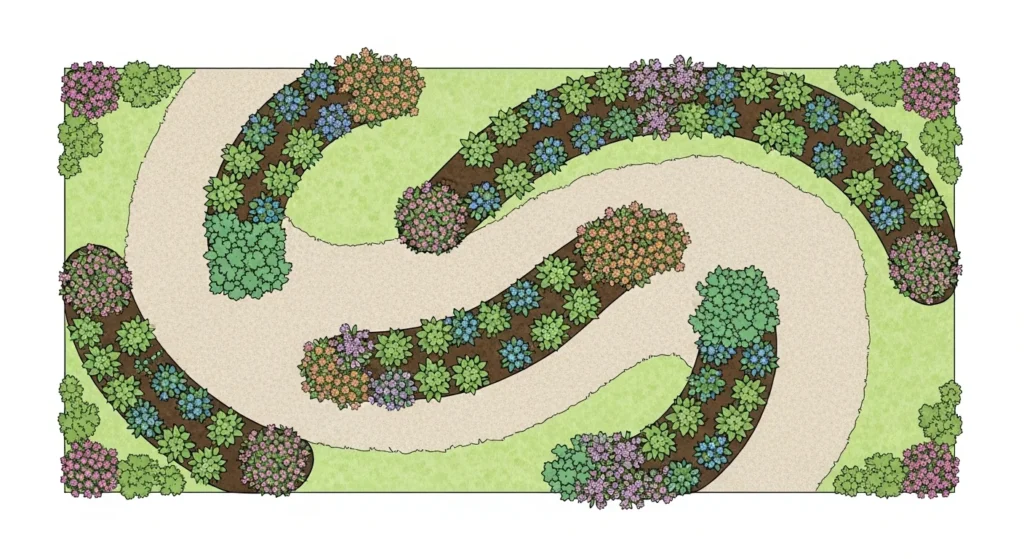
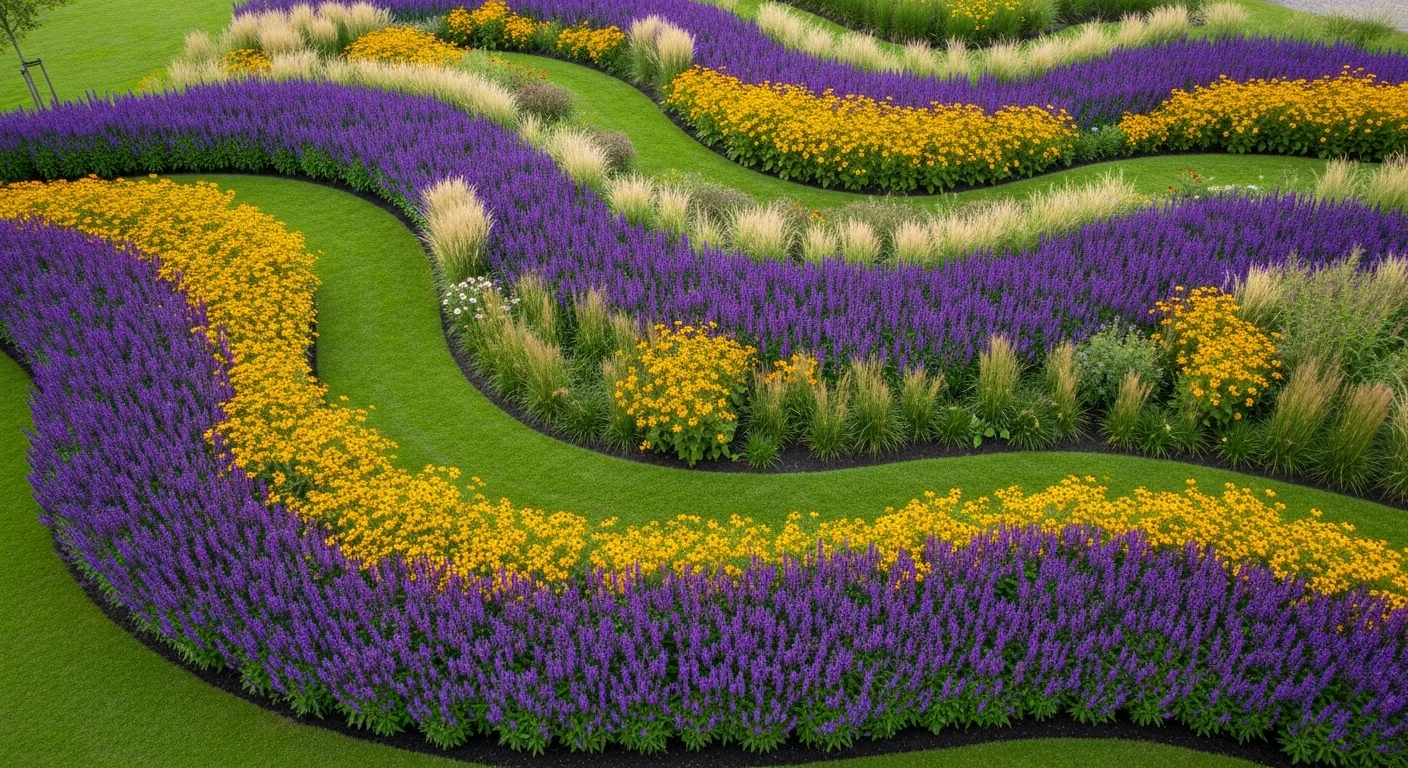
Drift planting involves grouping odd numbers of the same plant species together in elongated, flowing shapes rather than circular clumps or straight lines. These groups, or drifts, typically contain five, seven, nine, or more plants, depending on the mature size of the species and the scale of your garden. The key is creating irregular, naturalistic shapes that weave through the landscape, often intermingling with other plant drifts to create layered interest.
This approach works because repetition creates visual coherence while the flowing shapes maintain organic movement. Your eye travels along these plant ribbons, experiencing the garden as a unified composition rather than a collection of individual specimens. The technique particularly shines in perennial borders, meadow gardens, and naturalistic landscapes where the goal is creating harmony between cultivated spaces and the surrounding environment.
Purple Salvia Drifts planting for Summer Drama
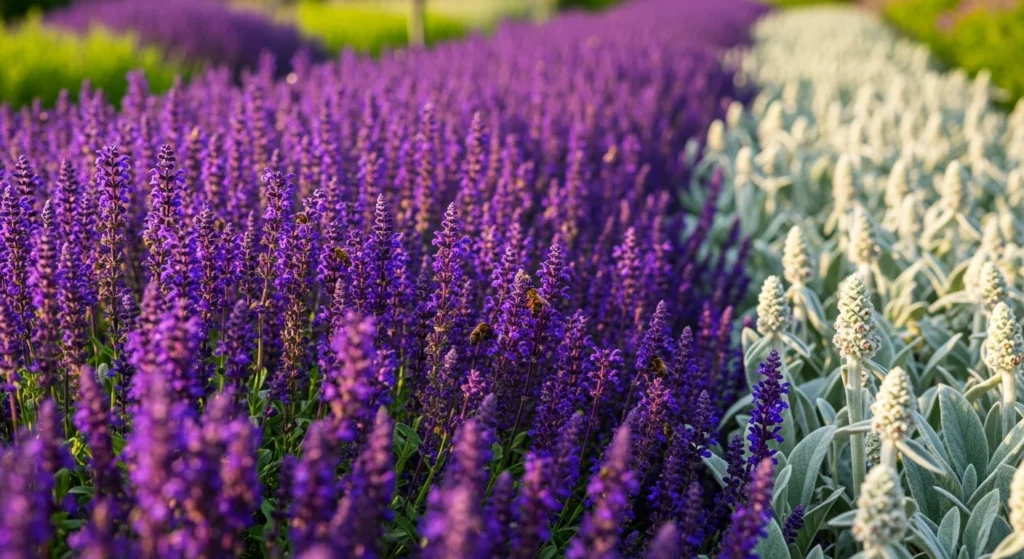
Purple salvia varieties create some of the most striking drifts in summer gardens. Plant long-blooming selections like Salvia nemorosa in sweeping bands of seven to eleven plants, spacing them approximately eighteen inches apart. These perennials produce vertical flower spikes that create a hazy purple effect when massed together.
The beauty of salvia drifts lies in their extended blooming period and their magnetic appeal to pollinators. Position these purple rivers along pathways or at the front of borders where you can appreciate the constant activity of bees and butterflies. Pair with silver-leaved plants like artemisia or lamb’s ear to amplify the cool color palette, or contrast with warm yellows from coreopsis or rudbeckia for vibrant energy.
Ornamental Grass Waves for Movement and Texture
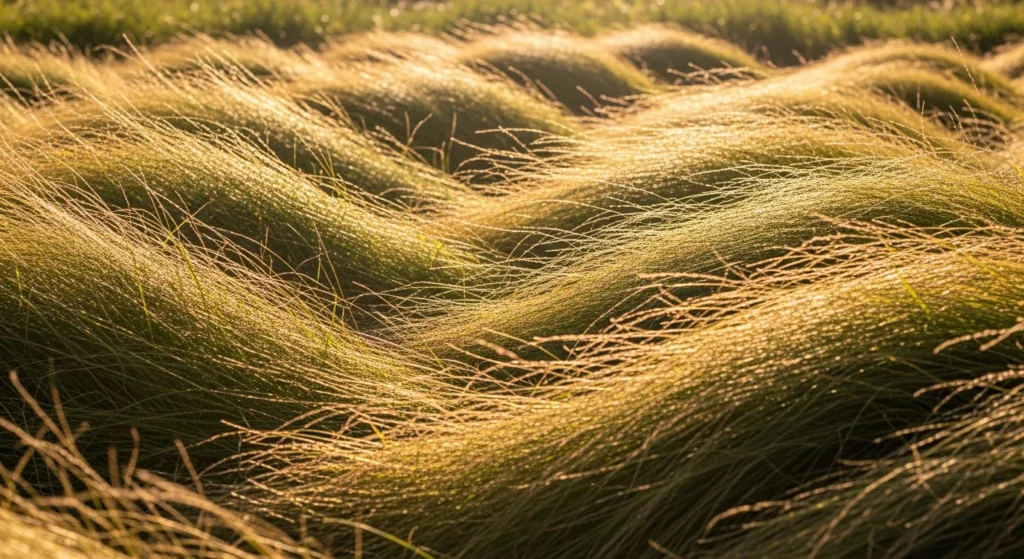
Ornamental grasses bring unmatched texture and movement to drift plantings. Species like Mexican feather grass, little bluestem, or fountain grass create flowing ribbons that sway with every breeze, adding a dynamic quality that perennials alone cannot achieve. Plant grasses in odd-numbered groups with wider spacing to account for their mature spread.
These grass drifts work exceptionally well as transitional elements between different garden areas or as a naturalistic foreground to woody plantings. Their fine texture contrasts beautifully with broad-leaved perennials, while their neutral tones serve as visual rest points between more colorful plant groups. In autumn and winter, many ornamental grasses develop stunning buff or golden tones and maintain their structure, providing year-round interest.
White Echinacea Ribbons for Elegant Simplicity
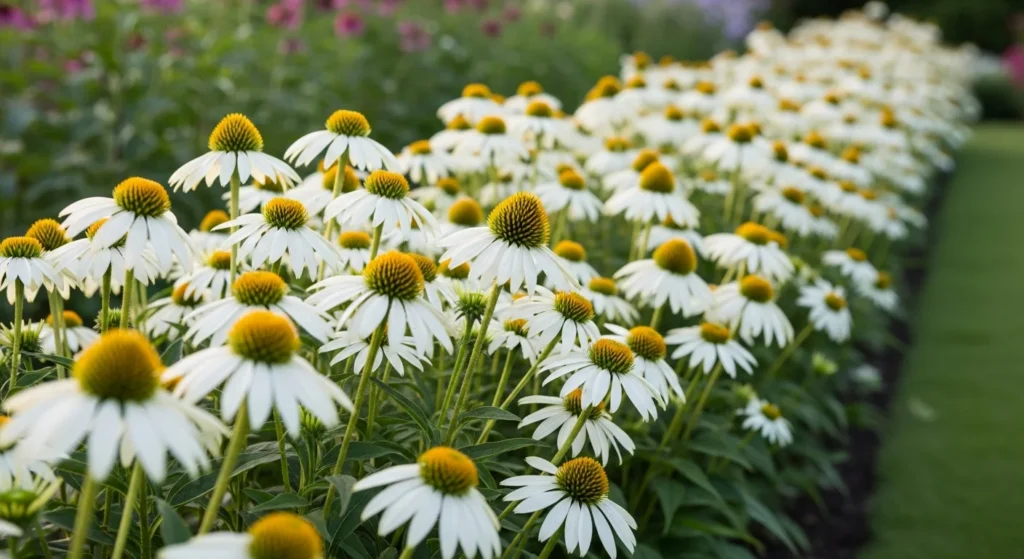
White coneflowers planted in drifts create sophisticated swaths of pure color that illuminate shaded areas and provide a cooling effect in hot summer borders. Varieties like Echinacea purpurea ‘White Swan’ or the newer hybrids produce large daisy-like flowers on sturdy stems that hold up well to weather.
Plant these in groups of nine to fifteen, spacing them about two feet apart to allow for their substantial mature size. White coneflower drifts work beautifully as anchor plantings that tie together more complex color schemes, or as standalone features in monochromatic white gardens. Their prominent seed heads also attract goldfinches in late summer and fall, adding wildlife value to their aesthetic appeal.
Lavender Pathways for Sensory Experience
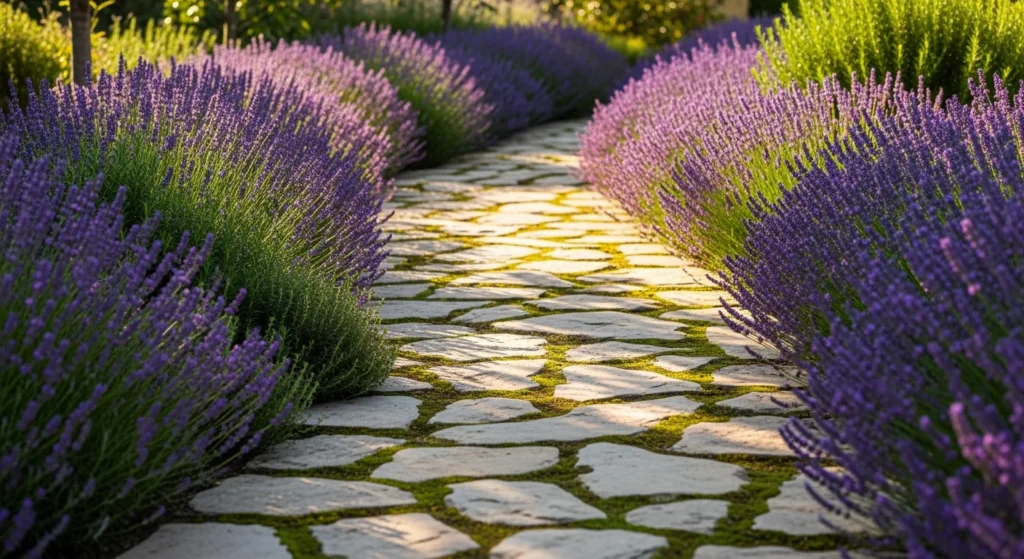
Few plants rival lavender for creating aromatic drifts that engage multiple senses. Plant English lavender or more heat-tolerant varieties like Lavandula x intermedia in long, narrow drifts flanking pathways or edging patios. Space plants closer than typical recommendations to create a fuller, more cohesive appearance more quickly.
These fragrant drifts release their essential oils when brushed against, creating an immersive sensory experience. The silvery foliage provides year-round structure, while the purple flower spikes appear in waves throughout summer. Lavender drifts also serve practical purposes, deterring deer and rabbits while attracting beneficial pollinators. Shear plants after flowering to maintain compact, tidy shapes that reinforce the ribbon effect.
Yellow Rudbeckia Sweeps for Late Summer Brilliance
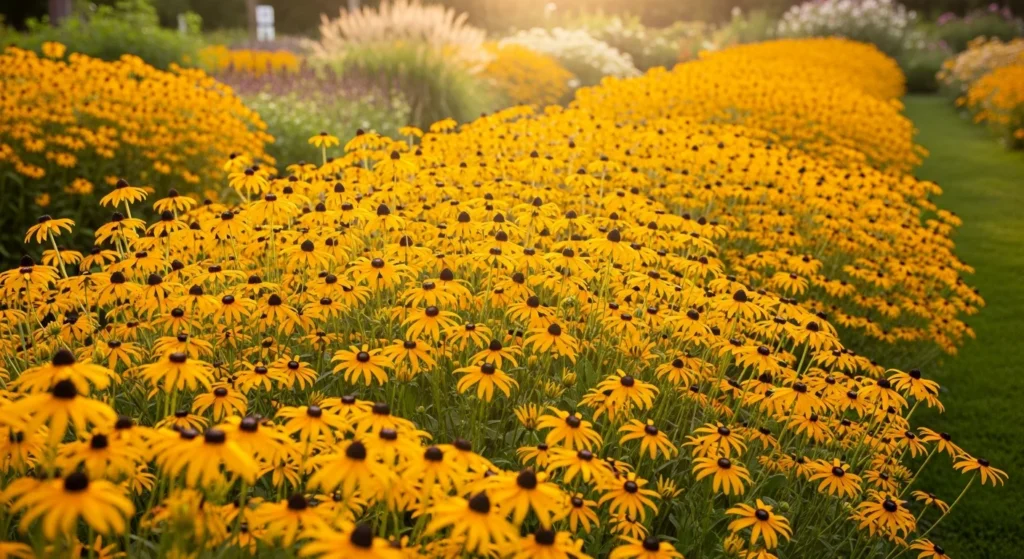
Black-eyed Susans create cheerful golden drifts that reach their peak in late summer when many other perennials fade. Plant these vigorous growers in substantial groups of eleven to fifteen plants, as their bold flowers and substantial size require mass to create proper impact. Space them approximately two feet apart and prepare for a spectacular show.
These sunny drifts work particularly well in cottage garden settings or prairie-style landscapes. Their warm golden tones harmonize beautifully with purple coneflowers, ornamental grasses, and late-blooming sedums. Rudbeckia drifts also provide important late-season food sources for pollinators preparing for winter, while their dark seed heads offer winter interest and food for birds.
Blue Catmint Clouds for Extended Bloom
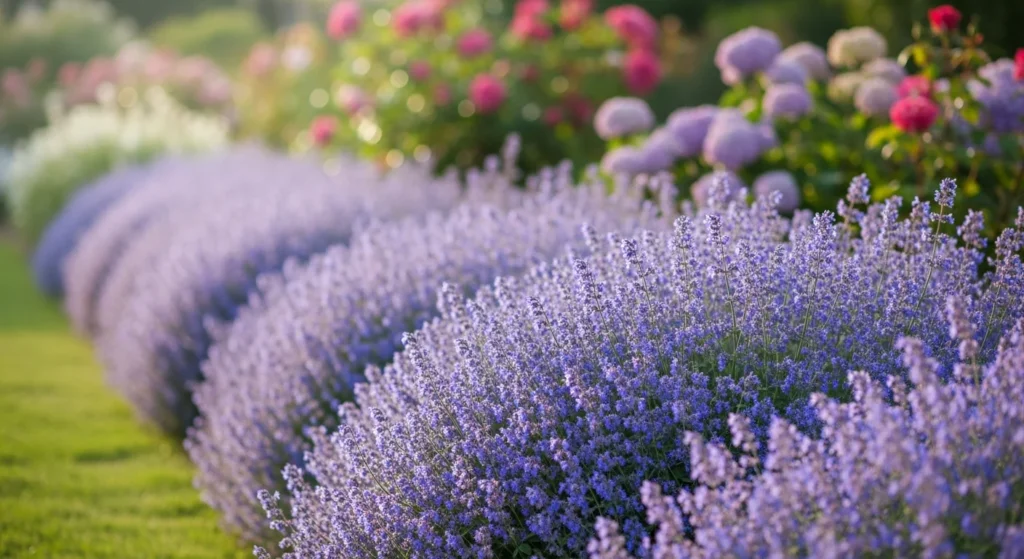
Catmint creates some of the longest-blooming drifts available to gardeners, producing hazy clouds of blue-purple flowers from late spring through fall with proper deadheading. Plant varieties like Nepeta ‘Walker’s Low’ or ‘Six Hills Giant’ in flowing ribbons of seven to thirteen plants, spacing them about eighteen inches apart.
These forgiving perennials tolerate a wide range of conditions and require minimal maintenance once established. Their mounded habit and profuse flowering create soft, billowing effects that contrast well with more architectural plants. Catmint drifts excel as edging plants along borders or pathways, where their tendency to flop slightly creates a casual, cottage-garden effect rather than a liability.
Red Hot Poker Spikes for Vertical Drama
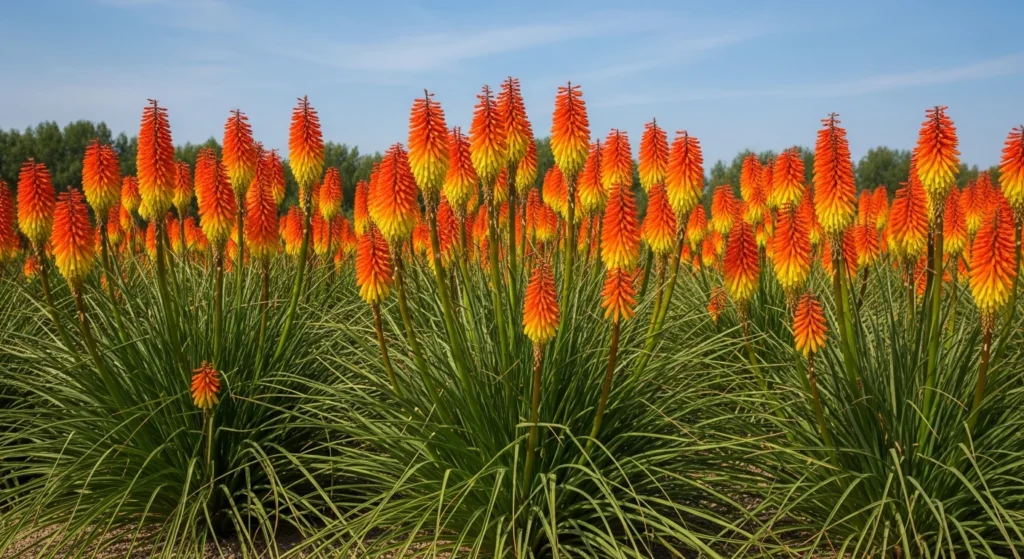
Kniphofia, commonly known as red hot poker or torch lily, creates dramatic vertical accents when planted in drifts. These striking perennials produce orange, yellow, or red flower spikes that rise above grass-like foliage, creating punctuation marks in the garden composition. Plant them in groups of five to nine, spacing about two feet apart.
Position these bold drifts where their vertical form contrasts with lower, mounding plants or horizontal grass layers. The exotic appearance of red hot pokers makes them conversation starters while their nectar-rich flowers attract hummingbirds. These drifts work particularly well in contemporary garden designs where strong architectural statements enhance the overall aesthetic.
Silver Artemisia Rivers for Foliage Contrast
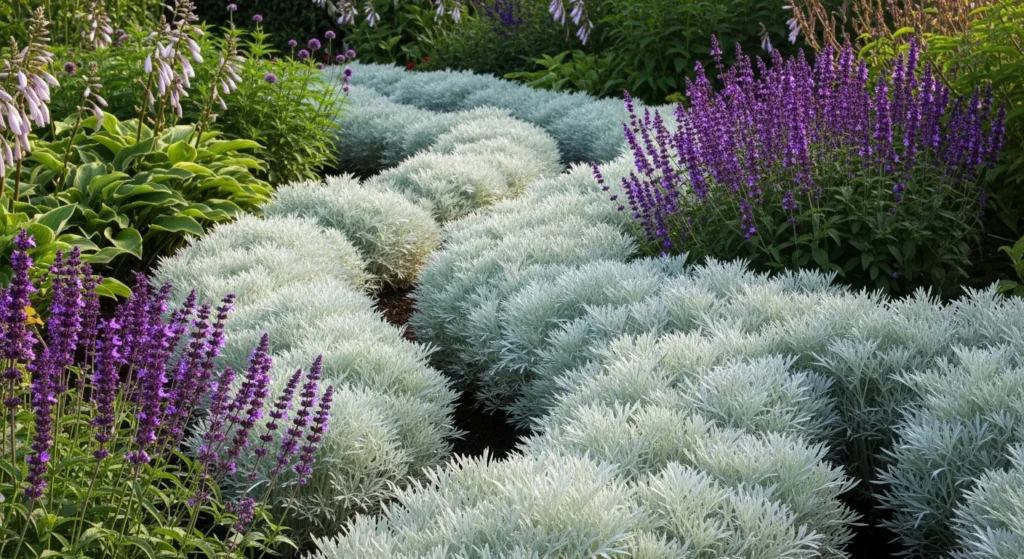
Foliage plants create some of the most effective drifts because they provide interest throughout the growing season rather than just during bloom periods. Silver artemisia varieties like ‘Powis Castle’ planted in long, flowing bands create luminous ribbons that brighten shaded areas and provide contrast for darker foliage or bright flowers.
These drought-tolerant perennials thrive in challenging conditions where other plants struggle, making them practical choices for low-maintenance gardens. Their fine-textured, aromatic foliage adds another dimension to sensory gardens. Artemisia drifts pair exceptionally well with roses, purple salvias, or deep burgundy sedums, creating sophisticated color combinations that feel both planned and natural.
Coral Bells Tapestry for Shade Gardens
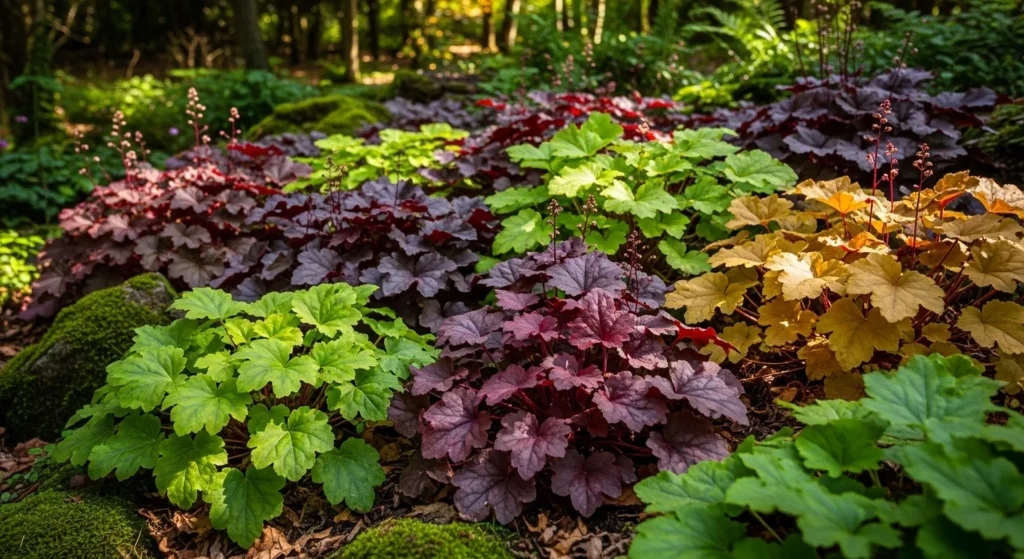
Heuchera varieties offer an incredible range of foliage colors perfect for creating rich tapestries in shaded areas. Plant single varieties in drifts for cohesive impact, or carefully combine complementary colors in adjacent drifts. Space these compact perennials about twelve inches apart in groups of seven to eleven plants.
The mounding habit of coral bells creates gentle, flowing shapes that weave through shade gardens. Their diverse foliage colors from chartreuse to deep purple, burgundy, and silver provide year-round interest. In late spring and early summer, delicate flower spikes add vertical interest while attracting hummingbirds. These versatile plants work equally well in formal and naturalistic settings.
Sedum Mats for Drought-Tolerant Beauty
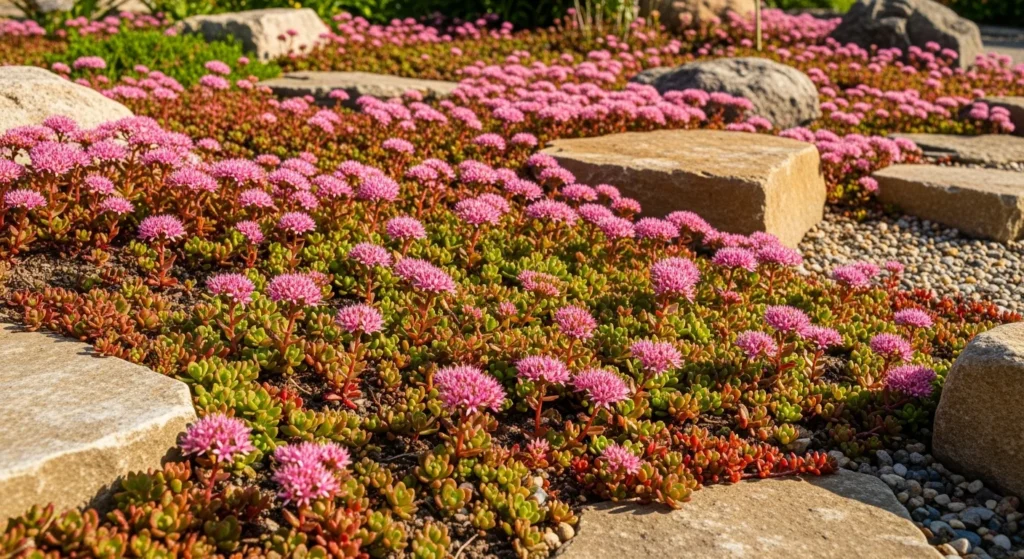
Low-growing sedums create living carpets when planted in broad drifts across sunny, well-drained areas. Species like Sedum spurium or Sedum kamtschaticum spread to form dense mats that suppress weeds while requiring virtually no maintenance. Plant these in irregular patches that flow across rock gardens or between stepping stones.
Upright sedum varieties like ‘Autumn Joy’ create different but equally effective drifts with their substantial clumps and flat-topped flower clusters. Plant these in groups of five to nine, spacing about eighteen inches apart. Their succulent foliage provides texture from spring through fall, while their flowers transition from green to pink to rust-red, offering multiple seasons of interest in a single plant.
Russian Sage Veils for Airy Elegance
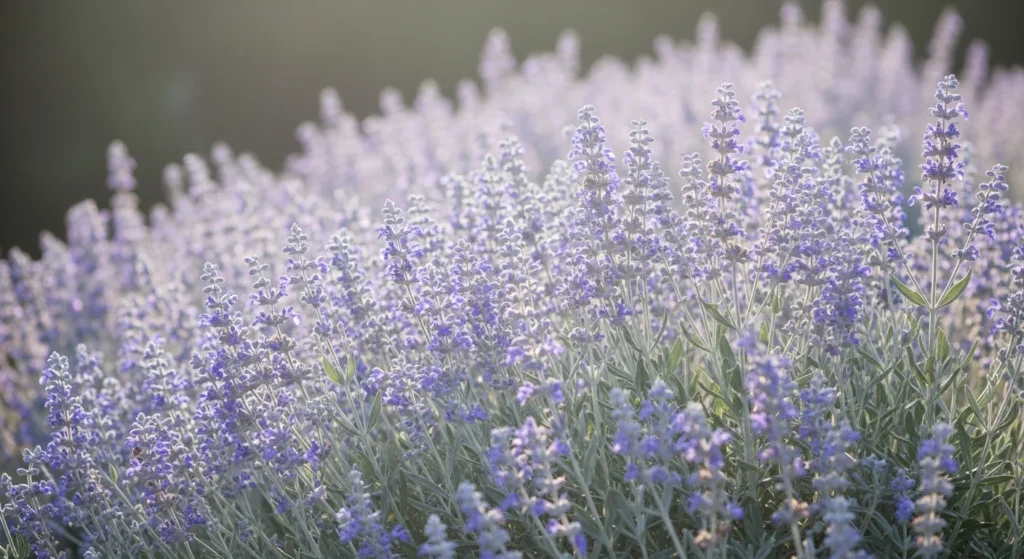
Russian sage creates misty veils of silver-blue when planted in substantial drifts. This tall perennial produces clouds of tiny lavender-blue flowers on silver stems, creating an almost ethereal effect in the landscape. Plant in groups of five to seven, spacing generously at three feet apart to accommodate their substantial mature size.
These drought-tolerant plants work beautifully in hot, sunny locations where other perennials struggle. Their airy texture and neutral color palette make them excellent companion plants that soften bolder neighbors. Russian sage drifts maintain interest into winter when their silvery stems and persistent seed heads catch frost and snow, creating beautiful structural elements in the dormant garden.
Daylily Bands for Reliable Color
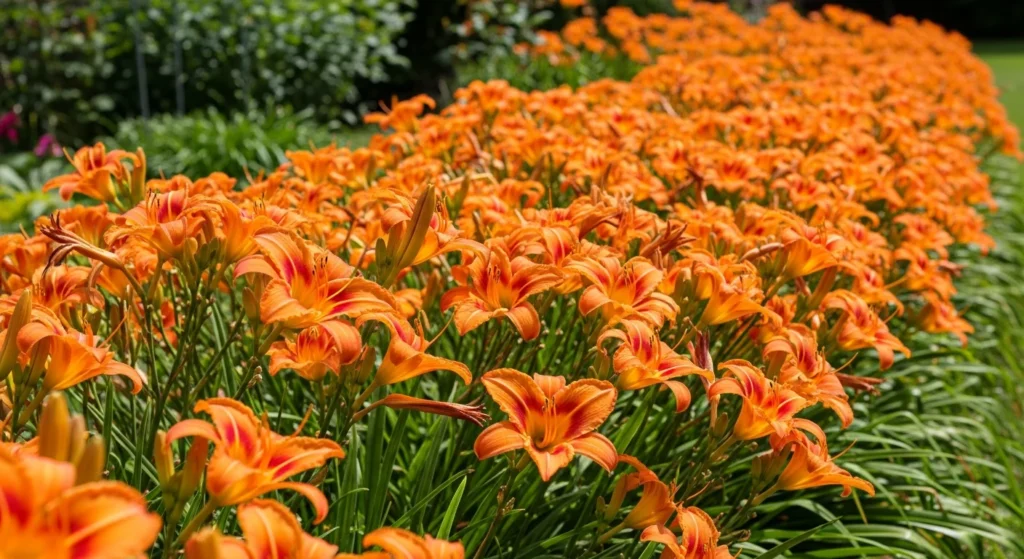
Daylilies planted in single-variety drifts create bold bands of color with exceptional reliability. Choose modern reblooming varieties to extend the display from early summer into fall. Plant these tough perennials in groups of seven to thirteen, spacing about two feet apart to allow for their substantial clumps.
The key to effective daylily drifts is resisting the temptation to mix too many varieties. Select one or two complementary colors and plant each in substantial groups for maximum impact. Their strappy foliage provides textural interest before and after bloom periods, while their adaptability to various conditions makes them practical choices for challenging sites.
Verbena Groundcover Ribbons for Sunny Edges
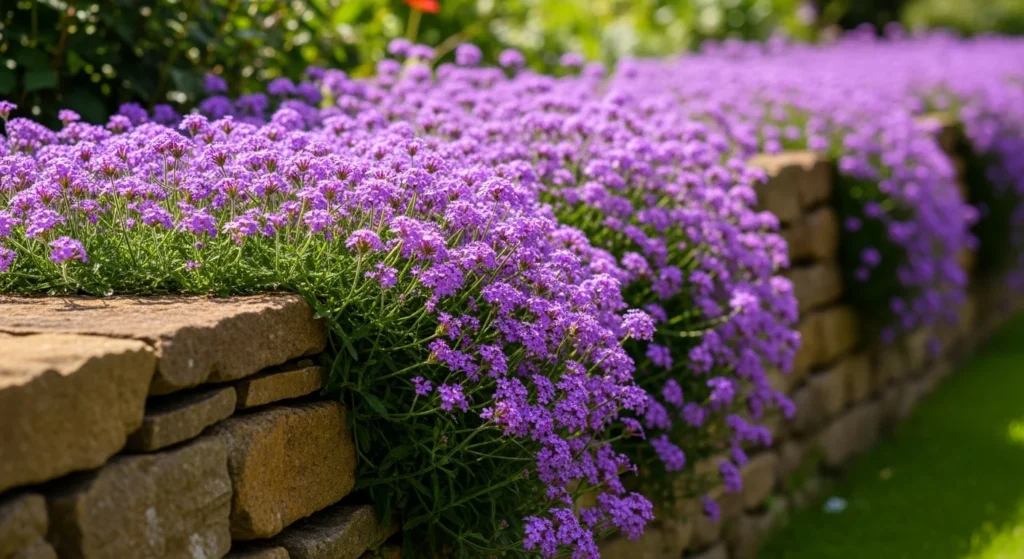
Low-growing verbena varieties create colorful ribbons perfect for edging borders or weaving between taller perennials. These spreading plants produce continuous flowers in purple, pink, red, or white throughout summer and fall. Plant in groups of seven to eleven, spacing about fifteen inches apart.
Verbena drifts work particularly well cascading over wall edges or softening the transition between hard surfaces and planted areas. Their low, spreading habit fills spaces quickly while their constant bloom provides reliable color. These tough plants tolerate heat and drought once established, making them excellent choices for water-wise gardens.
Aster Drifts for Fall Finale
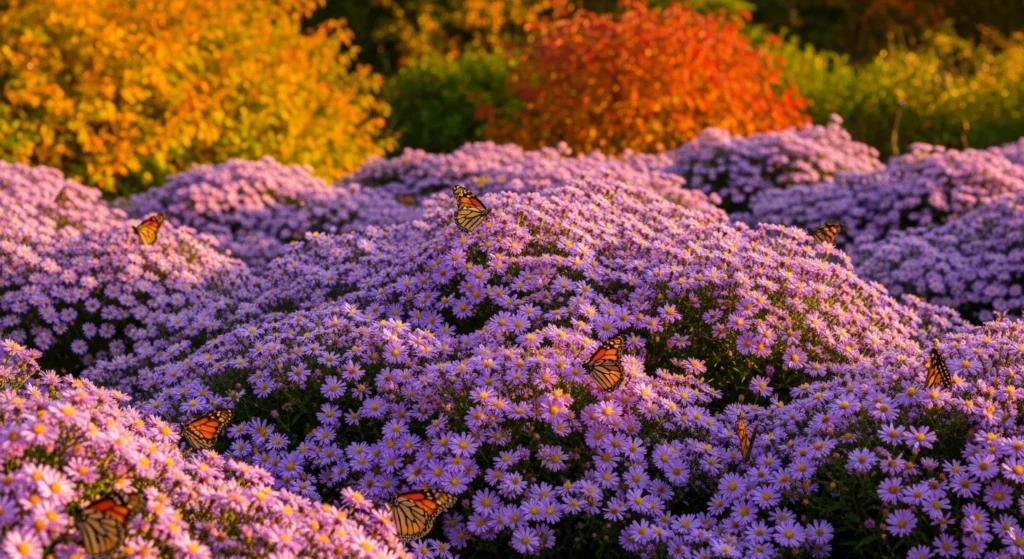
Native asters create spectacular drifts of purple, blue, pink, or white flowers that reach their peak in autumn when most gardens fade. Plant compact varieties like Symphyotrichum novae-angliae or Symphyotrichum oblongifolium in groups of nine to fifteen, spacing about two feet apart.
These late-season performers provide critical food sources for migrating butterflies and other pollinators. Aster drifts combine beautifully with ornamental grasses and late-blooming sedums to create rich autumn tapestries. Their profuse blooms create clouds of color that soften the garden as it transitions toward dormancy.
Yarrow Plateaus for Flat-Topped Interest
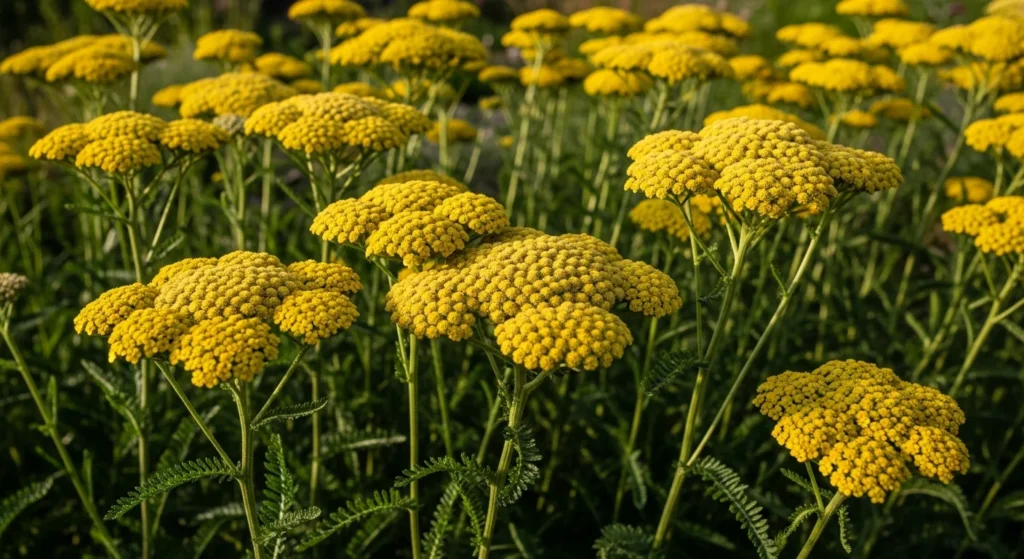
Yarrow produces distinctive flat-topped flower clusters that create horizontal planes when planted in drifts. Modern hybrids offer colors ranging from soft pastels to vibrant reds and golds. Plant in groups of seven to eleven, spacing about eighteen inches apart for these spreading perennials.
The architectural flower heads contrast beautifully with spiky or rounded flower forms, creating visual variety through shape rather than just color. Yarrow’s ferny foliage adds fine texture throughout the growing season, while the flowers dry beautifully on the plant, extending interest into winter. These drifts work well in prairie-style plantings or contemporary designs where bold form matters as much as color.
Coral and Peach Roses in Flowing Arrangements
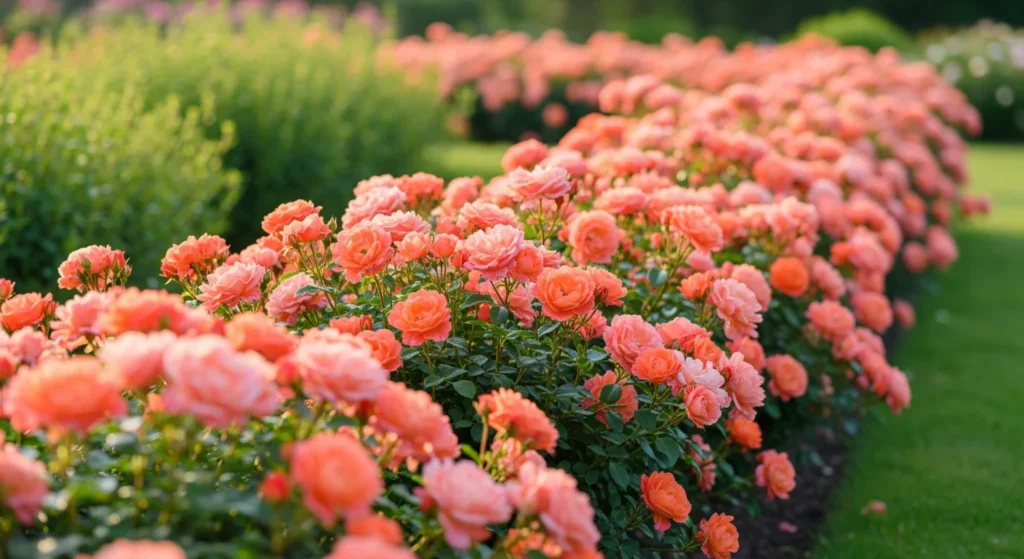
While often planted as individual specimens, landscape roses create stunning drifts when planted in groups. Select single varieties of compact, disease-resistant cultivars and plant in sweeping groups of five to seven. Space according to variety recommendations, typically two to three feet apart.
These rose drifts provide months of continuous color in the garden while their massed planting creates greater visual impact than scattered specimens. Choose varieties with excellent disease resistance to minimize maintenance. Underplant with complementary perennials like catmint or hardy geraniums to create layered interest and hide the roses’ less attractive lower stems.
Alpine Plant Mosaics for Rock Gardens
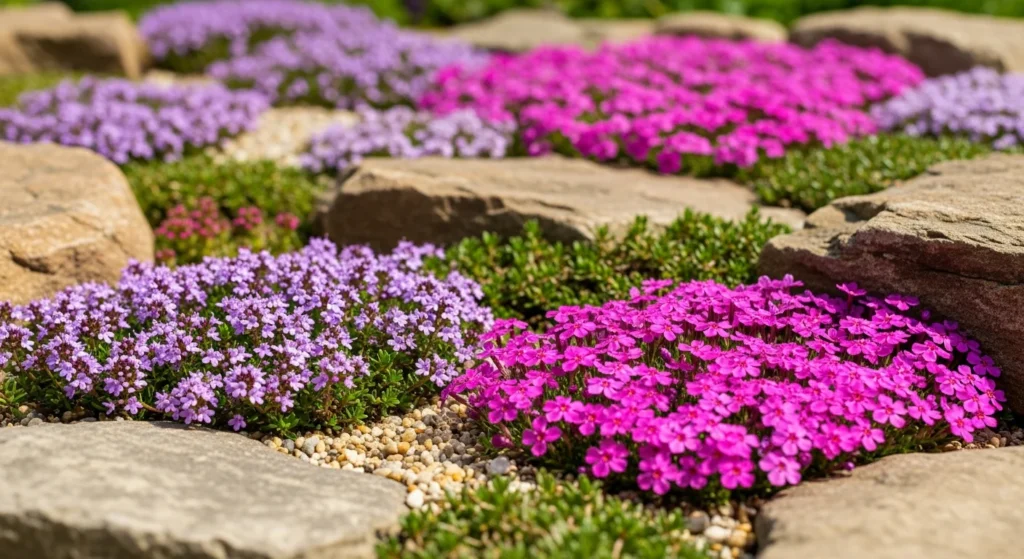
In rock gardens or alpine settings, create miniature drifts using compact alpine plants. Species like creeping thyme, alpine phlox, or saxifrages planted in irregular patches create tapestries of color and texture that weave between stones. Plant these tiny treasures in groups of five to nine, spacing according to their modest size.
These diminutive drifts require careful placement and initial attention but reward with intricate beauty. The key is creating flowing shapes even at a small scale, allowing different plant groups to intermingle naturally. This approach transforms rock gardens from collections of individual curiosities into cohesive compositions.
Native Wildflower Meadows for Ecological Impact
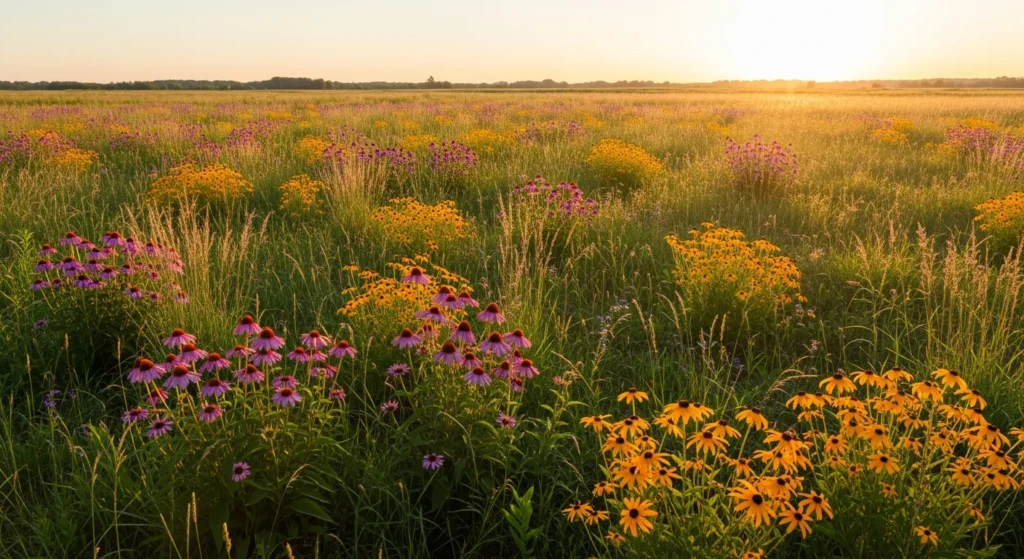
The ultimate expression of drift planting is creating naturalistic meadows using native wildflowers and grasses. Rather than planting in obvious groups, scatter seed or plugs of individual species in irregular, flowing patterns that overlap and intermingle. This approach requires understanding each species’ competitive ability and habitat preferences.
Successful meadow drifts include spring ephemerals, summer bloomers, and fall asters in complementary waves. Ornamental grasses woven throughout provide structure and movement. This approach creates dynamic plant communities that evolve over seasons and years, supporting complex food webs while providing unmatched beauty. The naturalistic effect requires patience as the meadow matures, but the result is a self-sustaining landscape that exemplifies the highest expression of drift planting principles.
Bringing It All Together
Mastering drift planting transforms your approach to garden design. Rather than thinking in terms of individual plants, you begin seeing the garden as a composition of flowing colors, textures, and forms. Success comes from thoughtful plant selection, proper spacing, and patience as your drifts mature into cohesive ribbons.
Start small with a single drift of a reliable perennial you love. Observe how it performs, how it looks from different angles, and how it interacts with neighboring plants. Expand gradually, adding complementary drifts that weave through your existing plantings. Over time, these flowing bands will transform your garden into a sophisticated landscape that feels both intentional and naturally evolved.
The beauty of drift planting lies in its flexibility. Whether you prefer cottage garden exuberance, prairie naturalism, or contemporary minimalism, this technique adapts to your vision while providing a professional framework for plant arrangement. Your garden becomes a canvas where plants are brushstrokes, creating pictures that change with the seasons while maintaining year-round structure and beauty.
Frequently Asked Questions
How many plants do I need to create an effective drift?
A minimum of five plants creates a recognizable drift, though seven to eleven plants produces better impact. Larger gardens can accommodate drifts of fifteen or more plants. The key is using odd numbers and creating elongated, irregular shapes rather than circular clumps.
Can I mix different plant varieties in one drift?
While possible, mixing varieties within a single drift dilutes the visual impact. The power of drift planting comes from repetition of identical plants. Instead, create separate drifts of different varieties that flow into each other, allowing some intermingling at the edges for a natural effect.
What spacing should I use between plants in a drift?
Space plants according to their mature width, typically following the spacing recommendations on plant tags. Closer spacing creates faster impact but may require division sooner, while wider spacing is more economical but takes longer to fill in. Most perennials need twelve to twenty-four inches between plants.
How do I maintain the drift shape as plants grow?
Edge the drift annually in early spring, removing any plants that have spread beyond the desired boundary. Divide and replant sections that become thin or woody, maintaining the original flowing shape. Regular maintenance keeps drifts looking intentional rather than overgrown.
Do drift plantings work in small gardens?
Absolutely. Scale the size and number of plants to match your space. Even a small border can accommodate mini-drifts of five plants. Choose compact varieties and create narrower, shorter ribbons that still provide the flowing effect without overwhelming limited space.