12+ Creative Flat Porch Roof Ideas to Inspire You
The architectural elegance of a flat porch roof brings contemporary sophistication to any home while offering practical benefits that traditional pitched roofs cannot match. Whether you’re building a new porch or renovating an existing structure, flat roof designs present exciting opportunities to transform your outdoor living space into something truly remarkable. This comprehensive guide explores creative flat porch roof concepts that combine aesthetic appeal with functional excellence, helping you make informed decisions for your home improvement project.
Flat porch roofs have experienced a remarkable resurgence in residential architecture, moving beyond their commercial building origins to become a preferred choice for homeowners seeking clean lines and modern appeal. The versatility of flat roof construction allows for innovative design solutions that complement various architectural styles, from mid-century modern homes to contemporary new builds. Understanding the diverse possibilities available empowers you to select a design that enhances your property’s curb appeal while providing lasting protection and comfort.
Modern Minimalist Flat Roof Design
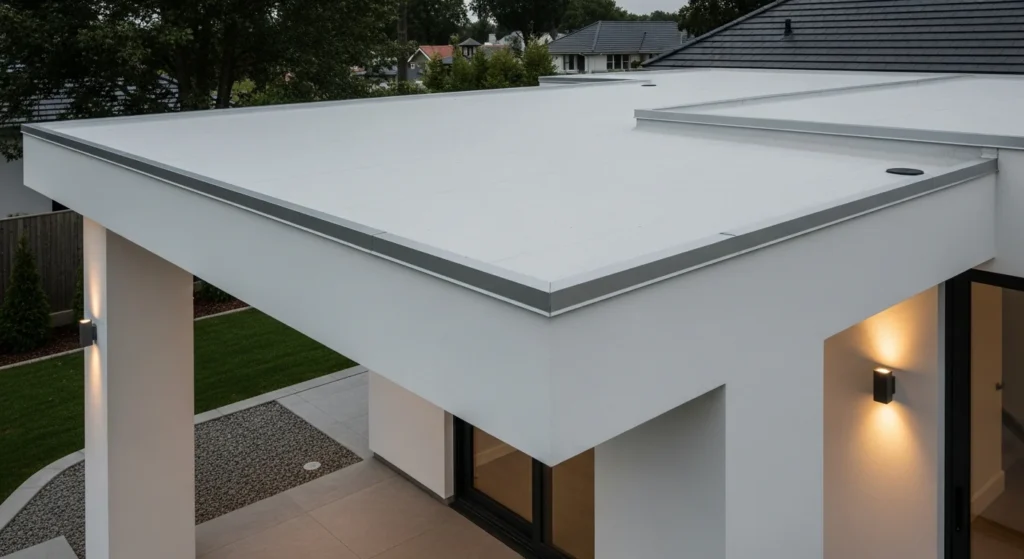
The minimalist approach to flat porch roof design emphasizes clean geometric lines and uncluttered surfaces that create a striking visual statement. This design philosophy removes unnecessary ornamentation, allowing the roof’s form and materials to speak for themselves. A minimalist flat roof typically features smooth, continuous surfaces with concealed drainage systems and integrated lighting that maintains the sleek appearance.
The beauty of minimalist design lies in its ability to make bold architectural statements through restraint. Consider using large format materials that minimize seams and joints, creating an expansive, uninterrupted surface. This approach works exceptionally well with modern homes featuring angular facades and large windows, where the flat porch roof becomes an extension of the home’s overall geometric vocabulary.
Green Living Roof System

Transform your flat porch roof into a thriving ecological space with a green roof system that provides environmental benefits alongside aesthetic appeal. Living roofs incorporate vegetation layers that insulate your porch, absorb rainwater, and create habitat for local wildlife. The installation requires proper waterproofing membranes, root barriers, drainage layers, and growing medium specifically designed for rooftop applications.
Green roofs offer remarkable temperature regulation properties, keeping your porch cooler during summer months and providing additional insulation during winter. The plant selection can range from low-maintenance sedums requiring minimal care to more elaborate garden designs with grasses, herbs, or native flowering plants. Beyond environmental advantages, a living roof adds unique visual interest and increases your property value through its innovative approach to outdoor space utilization.
Contemporary Skylight Integration
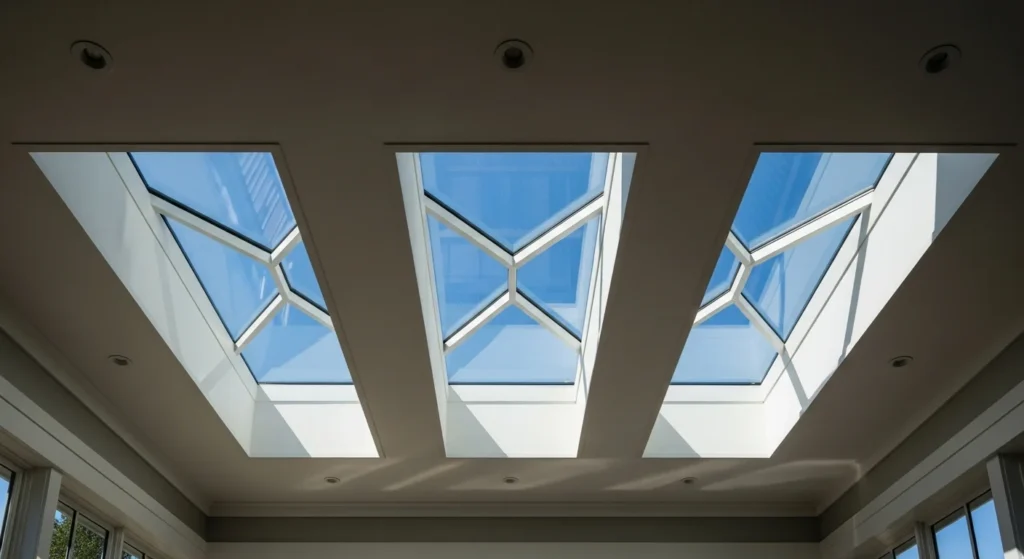
Incorporating skylights into your flat porch roof design floods the space with natural light while maintaining the clean roofline exterior. This approach transforms traditional porch areas into bright, inviting spaces that blur the boundaries between indoor and outdoor living. Fixed skylights provide consistent natural illumination, while operable versions offer ventilation control and fresh air circulation.
Strategic skylight placement creates dramatic lighting effects throughout the day as sunlight angles change. Consider positioning skylights to highlight specific architectural features or functional areas within your porch space. Modern skylight designs include energy-efficient glazing options that prevent heat gain during summer while maximizing light transmission, ensuring your porch remains comfortable year-round.
Cantilevered Flat Roof Extension
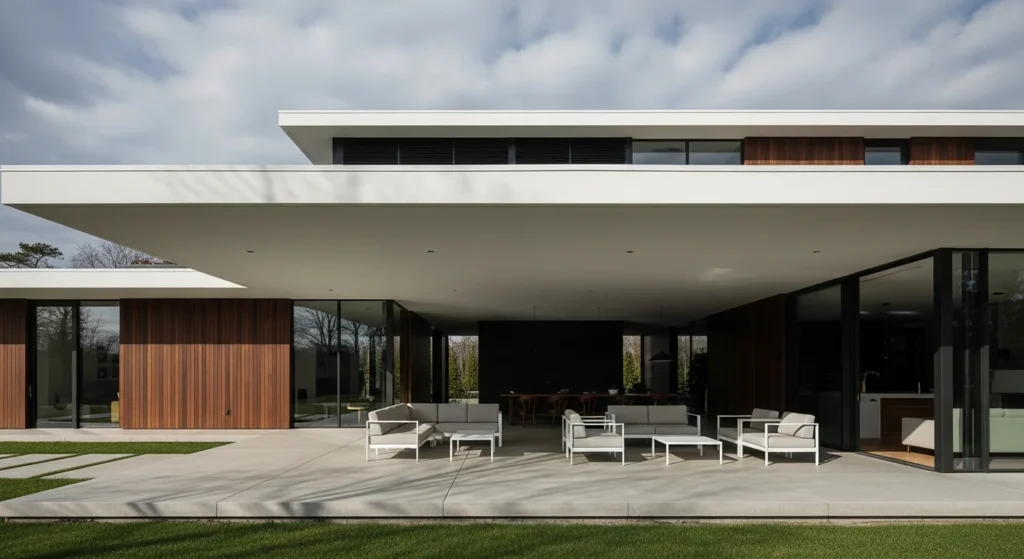
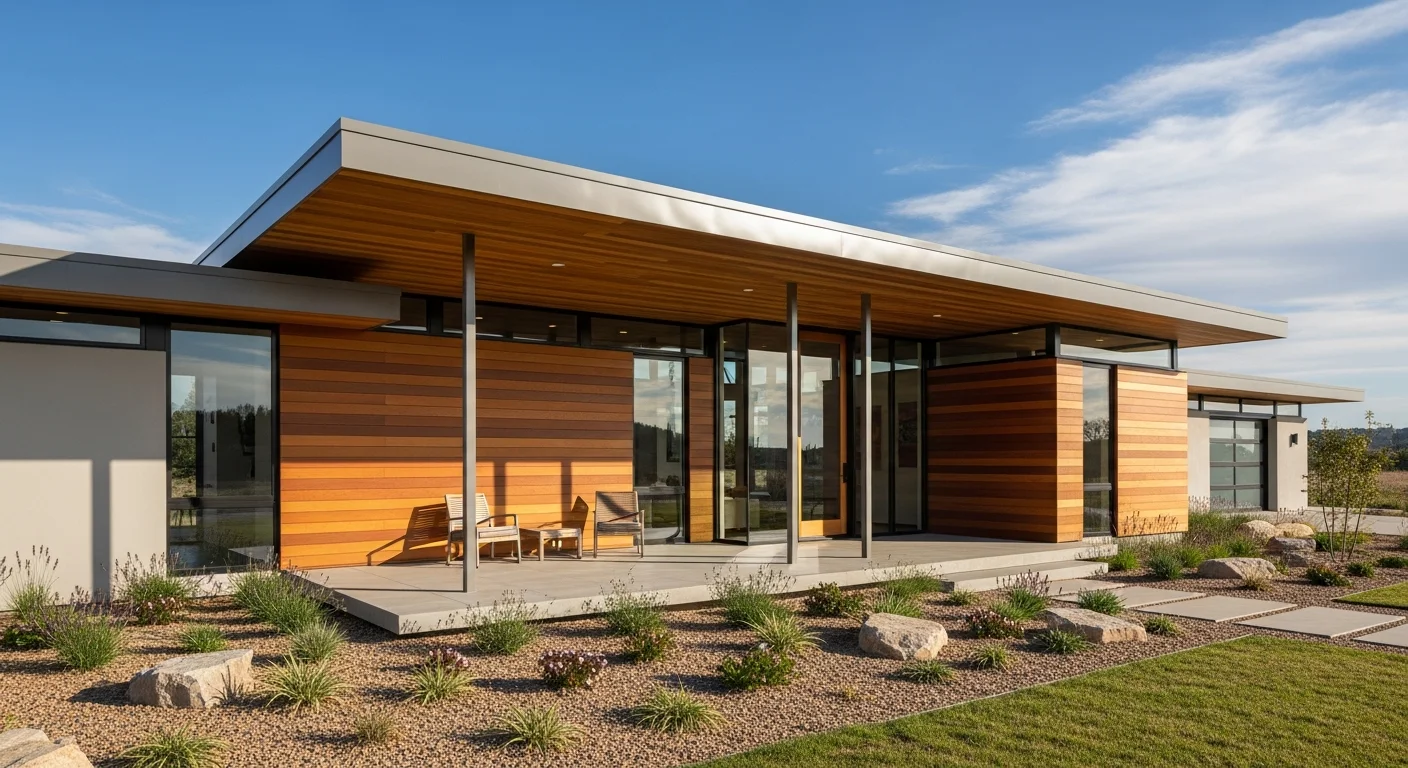
The cantilevered flat roof design creates a dramatic floating appearance by extending beyond the supporting walls without visible support columns. This architectural technique produces clean sightlines and maximizes usable porch space while delivering contemporary visual impact. The structural engineering behind cantilevered designs requires careful calculation to ensure proper load distribution and stability.
This design approach proves particularly effective for creating covered walkways or providing shade over outdoor seating areas without obstructing views. The extended overhang can incorporate integrated gutters and downspouts that maintain the sleek appearance while managing water runoff effectively. Cantilevered designs work beautifully with modern and mid-century architectural styles, emphasizing horizontal lines and spatial flow.
Multi-Level Stepped Flat Roof
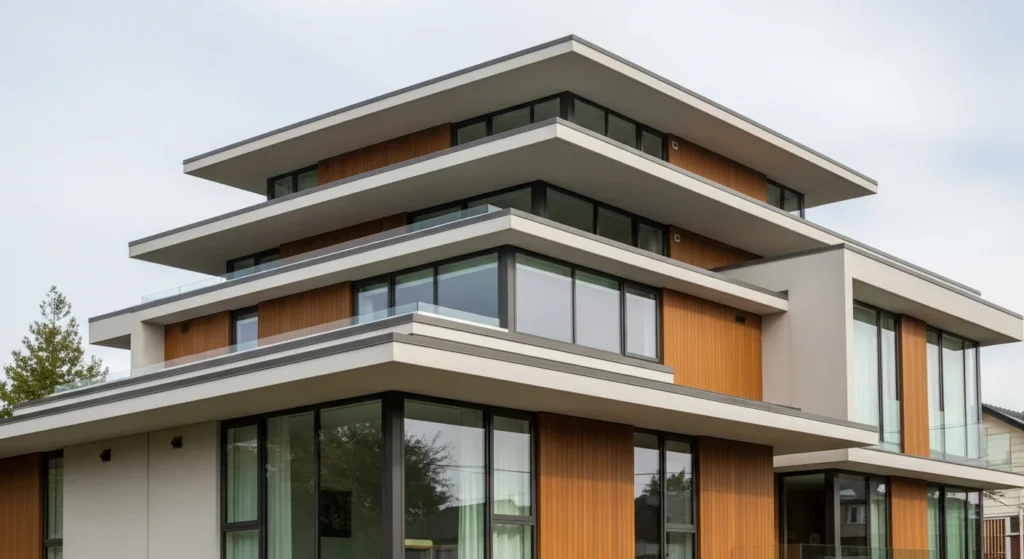
Creating visual interest through elevation changes, the multi-level stepped flat roof design adds architectural depth and dimension to your porch area. This approach incorporates two or more flat roof sections at different heights, creating opportunities for clerestory windows, varied ceiling heights, and enhanced natural ventilation. The stepped design naturally directs water flow while creating distinct zones within your porch space.
The height variations allow for creative lighting solutions, including uplighting between levels that creates ambient illumination after dark. This design strategy works exceptionally well for larger porch areas where defining separate functional zones enhances usability. The stepped configuration also provides opportunities to integrate planters or decorative elements at different elevations, adding textural variety to the overall design.
Pergola-Topped Flat Roof Design
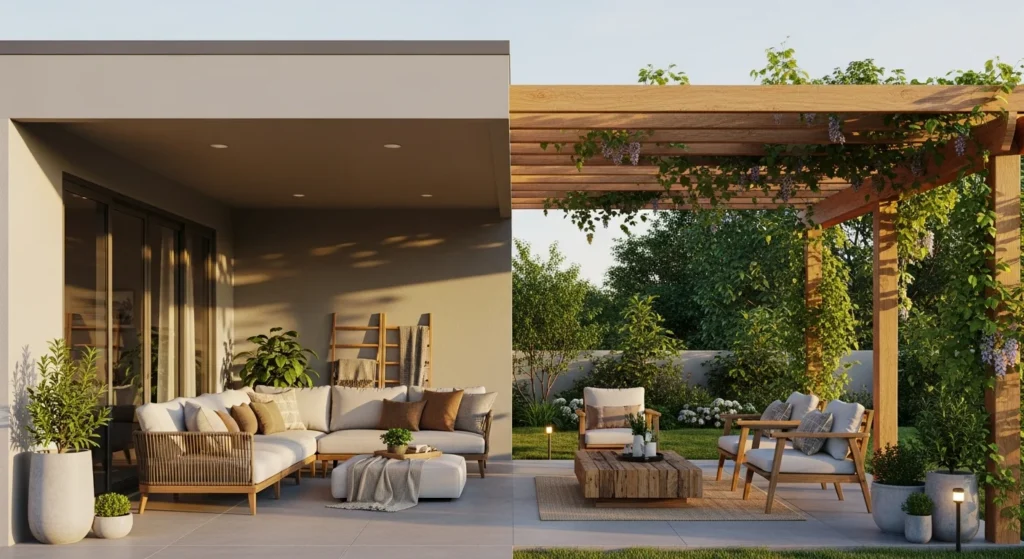
Combining the solid protection of a flat roof with the airy aesthetic of a pergola creates an appealing hybrid design that offers both shade and visual lightness. This approach typically features a solid flat roof section providing weather protection over primary seating areas, transitioning to an open pergola structure that extends the covered space while maintaining openness. The pergola elements can support climbing plants that soften the architectural lines and provide natural cooling.
This design allows you to balance protection and openness according to your preferences and climate considerations. The pergola section creates dappled shade patterns that add visual interest while reducing the perceived weight of a completely solid roof structure. Consider using consistent materials and finishes across both elements to create cohesive design flow between the protected and semi-protected areas.
Glass Paneled Flat Roof Structure

For those seeking maximum natural light without sacrificing weather protection, glass paneled flat roof designs offer an elegant solution. Structural glass panels supported by minimal frameworks create transparent or translucent roofing that maintains overhead protection while preserving sky views and natural illumination. Modern glass technology provides excellent insulation properties and UV protection while remaining virtually invisible.
The glass panel approach works particularly well in temperate climates and for porches surrounded by attractive landscaping or featuring noteworthy views. Consider incorporating frosted or tinted glass sections for areas requiring more privacy or sun control. The combination of transparent and opaque glass panels allows for customized lighting control and visual privacy while maintaining the open feel that makes this design approach so appealing.
Metal Panel Flat Roof with Standing Seam

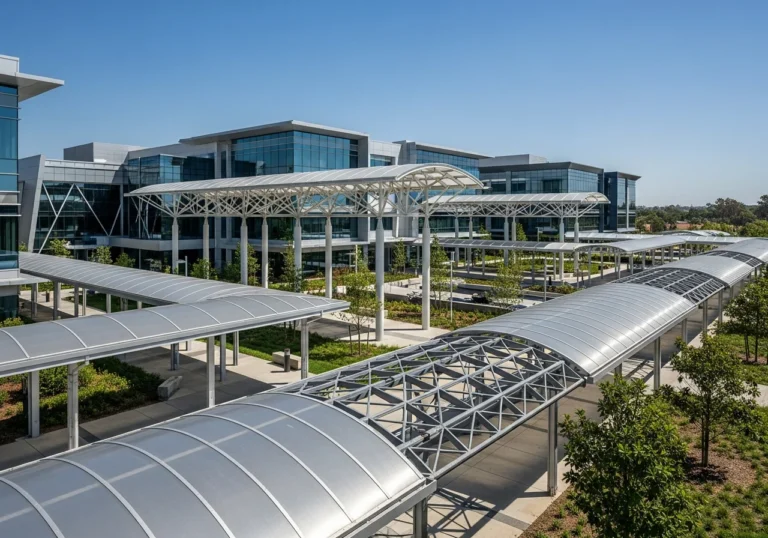
Standing seam metal roofing brings industrial sophistication to flat porch roof designs while providing exceptional durability and weather resistance. The raised seams create distinctive linear patterns that emphasize the roof’s geometric qualities while serving the practical function of channeling water away from the surface. Metal roofing materials resist fire, insects, and rot while requiring minimal maintenance over their extended lifespan.
The material’s ability to span longer distances without intermediate support makes metal panels ideal for creating unobstructed porch spaces with clean ceiling lines. Available in numerous colors and finishes, metal roofing can complement virtually any architectural style from rustic farmhouse to sleek contemporary. The reflective properties of metal surfaces help reduce cooling costs by deflecting solar heat rather than absorbing it.
Timber Soffit Flat Roof Design
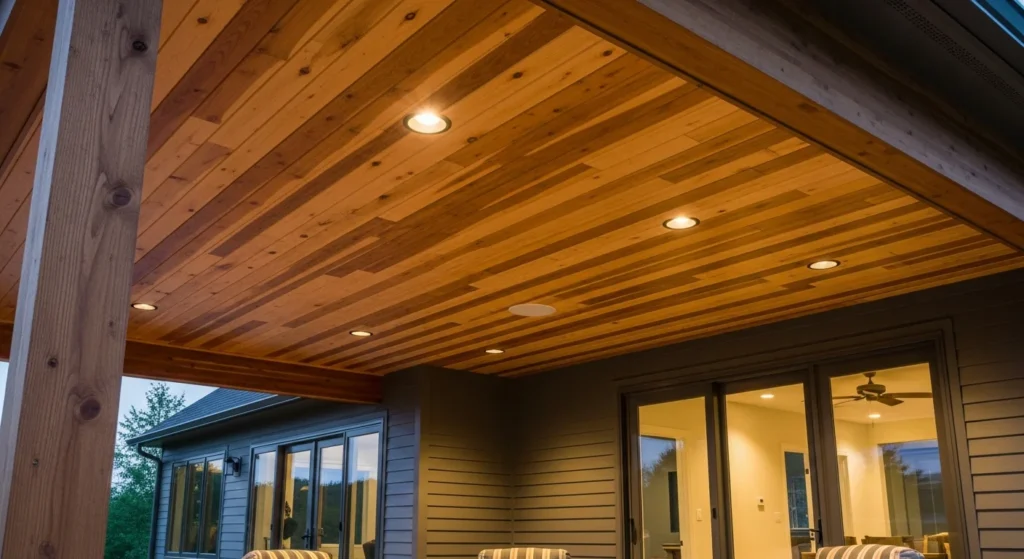
While the exterior roof surface may utilize modern waterproofing materials, the underside ceiling treatment significantly impacts the porch’s character and ambiance. Timber soffit designs introduce warmth and natural texture to flat roof porches, creating inviting spaces that feel comfortable and welcoming. Wood species selection allows for customization ranging from light blonde tones to rich dark finishes that complement your home’s aesthetic.
The installation of timber soffits provides opportunities to integrate recessed lighting, speakers, or ceiling fans within the wood framework. Consider using sustainably sourced materials or reclaimed wood for an environmentally conscious approach that adds character through unique grain patterns and natural variations. Proper sealing and maintenance ensure timber soffits maintain their beauty despite exposure to temperature fluctuations and humidity.
Concrete Slab Flat Roof with Exposed Aggregate
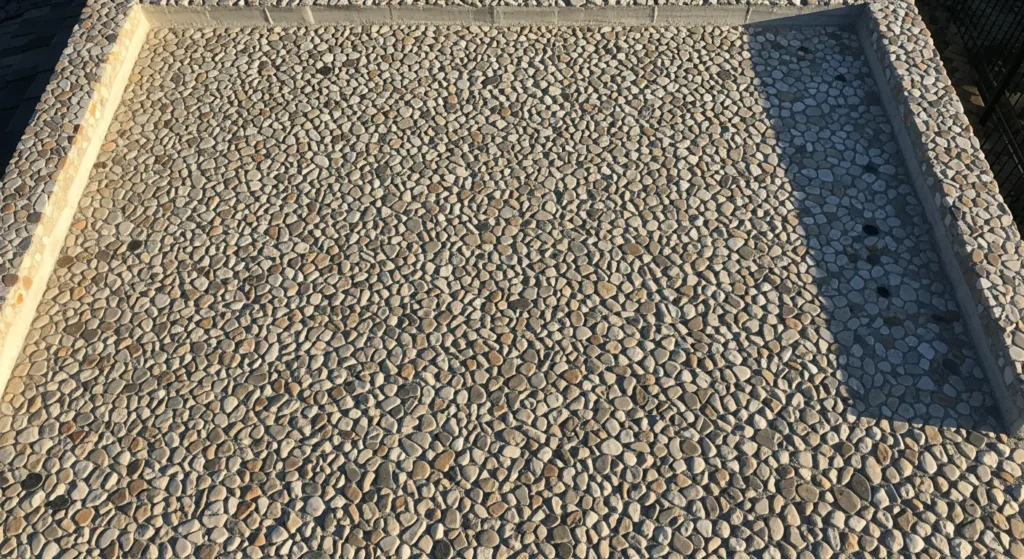
Exposed aggregate concrete offers a distinctive textural finish for flat porch roofs that combines durability with visual interest. This technique reveals decorative stones embedded within the concrete surface, creating patterns and color variations that add character to overhead surfaces. The material’s thermal mass properties help moderate temperature swings, keeping porch areas more comfortable throughout changing weather conditions.
The monolithic nature of concrete construction creates inherently watertight surfaces when properly installed and sealed. Consider incorporating integral coloring or decorative aggregate selections that complement your home’s exterior palette. The industrial aesthetic of exposed concrete appeals to contemporary design sensibilities while providing a maintenance-free surface that improves with age as it develops a natural patina.
Retractable Canopy Flat Roof System
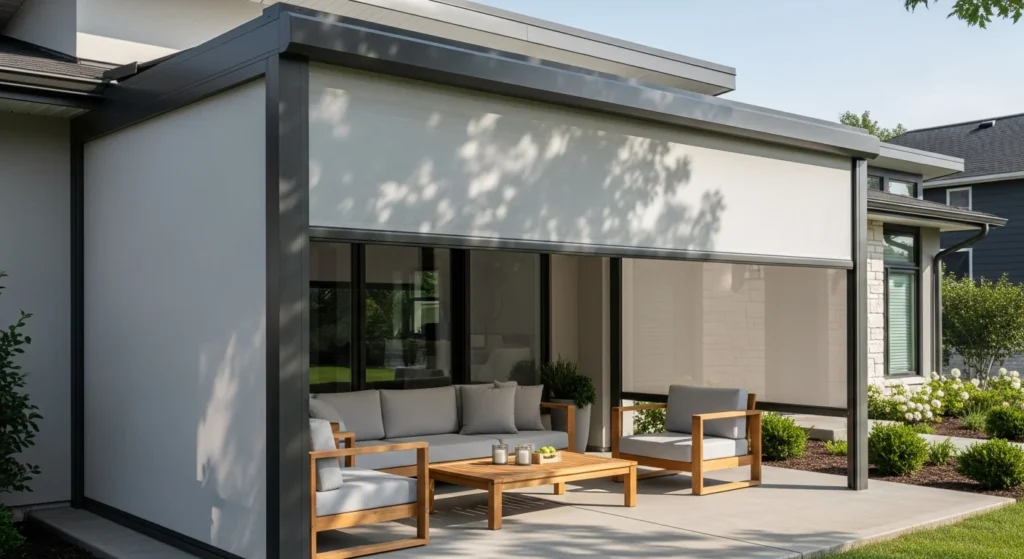
Maximizing flexibility, retractable canopy systems installed over a structural flat roof framework allow you to adjust coverage according to weather conditions and personal preferences. These systems combine the protection of a solid roof structure with the openness of an uncovered space, giving you control over sunlight exposure and weather protection. Modern motorized systems operate with simple controls, making coverage adjustments effortless.
This approach proves ideal for regions with variable weather patterns where you want protection during storms while maximizing sun exposure during pleasant conditions. The retractable fabric elements come in various colors, patterns, and opacity levels, allowing customization of the ambiance beneath. When retracted, the structural framework maintains architectural presence while opening the space to sky views and natural ventilation.
Solar Panel Integrated Flat Roof

The flat surface area of porch roofs provides excellent opportunities for solar panel installation that generates renewable energy while providing overhead protection. Modern solar technology offers sleek panel designs that integrate seamlessly with contemporary architecture, moving beyond the bulky appearance of earlier systems. This dual-purpose approach maximizes the functionality of your porch roof while reducing energy costs and environmental impact.
Solar installations on porch roofs typically prove more accessible for maintenance than those on main house roofs while still capturing excellent sun exposure. Consider working with solar designers to create layouts that balance energy production with aesthetic considerations. Some innovative systems incorporate semi-transparent solar panels that generate electricity while allowing filtered natural light to reach the porch space below.
Hybrid Flat and Angled Roof Design

Combining flat and subtly angled sections creates dynamic roof designs that enhance drainage while maintaining the overall flat roof aesthetic. This approach incorporates gentle slopes invisible from ground level that direct water toward drainage points without creating the visual bulk of traditional pitched roofs. The slight angles prevent water pooling while preserving the clean horizontal lines that define flat roof architecture.
This hybrid approach addresses one of the primary concerns with flat roof construction while expanding design possibilities. The angled sections can highlight specific architectural features or create visual rhythm across longer roof spans. Proper execution requires skilled installation to ensure waterproofing integrity at transitions between flat and angled sections while maintaining the cohesive appearance that makes the design successful.
Conclusion
Selecting the right flat porch roof design involves balancing aesthetic preferences with practical considerations including climate, budget, and maintenance requirements. The creative possibilities explored in this guide demonstrate that flat roofs offer far more than simple horizontal surfaces. They present opportunities for architectural innovation that enhances your home’s character while providing comfortable, protected outdoor living spaces.
Whether you gravitate toward minimalist modern designs, environmentally conscious green roofs, or technology-integrated solar installations, flat porch roofs deliver contemporary sophistication that increases property value and improves daily living experiences. Working with experienced architects and contractors ensures your chosen design receives proper engineering and installation for lasting performance. The investment in a well-designed flat porch roof pays dividends through enhanced curb appeal, expanded usable space, and the satisfaction of owning a truly distinctive architectural feature.
As you move forward with your porch project, consider how each design element contributes to both immediate visual impact and long-term functionality. The best flat roof designs seamlessly integrate with existing architecture while introducing fresh perspectives that make your home stand out. With proper planning, quality materials, and skilled execution, your flat porch roof will provide decades of beauty and protection while remaining a source of pride and enjoyment.
Frequently Asked Questions
What is the average cost of installing a flat porch roof?
The cost typically ranges from $4,000 to $15,000 depending on size, materials, and design complexity. Basic installations with standard membrane roofing fall on the lower end, while designs incorporating skylights, green roof systems, or premium materials increase costs. Always obtain multiple quotes from licensed contractors to ensure competitive pricing.
How long do flat porch roofs typically last?
With proper installation and maintenance, flat porch roofs last 15 to 30 years depending on materials used. EPDM rubber roofing averages 15 to 25 years, TPO membranes last 20 to 30 years, and metal roofing can exceed 40 years. Regular inspections and prompt repairs significantly extend roof lifespan regardless of material choice.
Do flat roofs have drainage problems?
Properly designed flat roofs incorporate subtle slopes and effective drainage systems that prevent water accumulation. Modern installations include internal drains, scuppers, or perimeter gutters that efficiently manage water runoff. Problems arise only when installation lacks proper pitch or when drainage systems become clogged with debris requiring routine maintenance.
Can I walk on my flat porch roof?
Most flat porch roofs can support foot traffic for maintenance purposes, though they are not typically designed as recreational rooftop spaces without specific structural reinforcement. If you plan regular roof access, inform your contractor during the design phase to ensure adequate structural support and specify durable roofing materials that withstand foot traffic.
What maintenance does a flat porch roof require?
Flat roofs need biannual inspections to check for membrane damage, debris accumulation, and drainage system functionality. Clean gutters and drains regularly, remove leaves and branches promptly, and address any punctures or seam separations immediately to prevent water infiltration. Professional inspections every few years help identify potential issues before they become expensive repairs.