
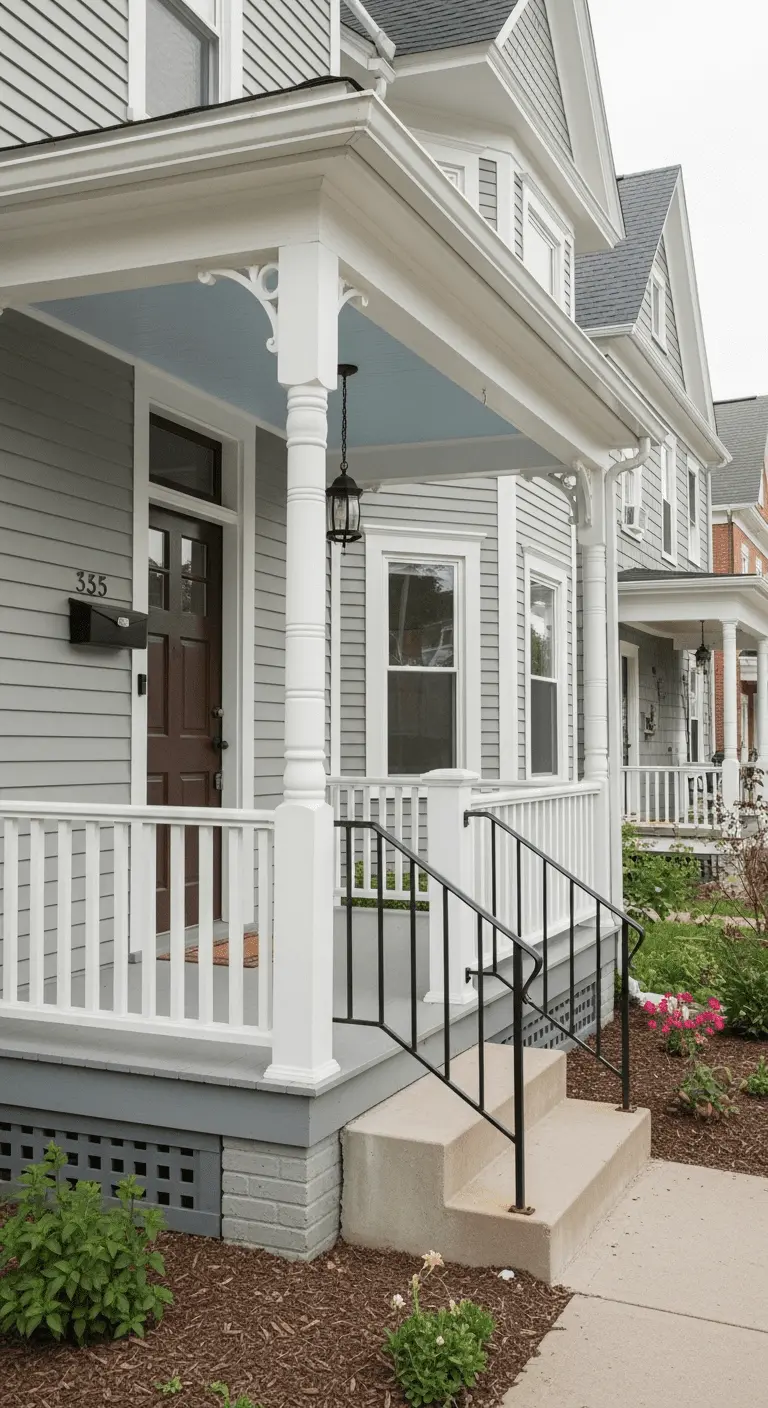
13+ Creative Front Porch Side Step Entrance Ideas
Introduction
Front Porch side Step Entrance Ideas, the side entrance of a front porch is one of the most underappreciated spaces in residential design. While most homeowners pour their attention and budget into the main facade, the side step entrance quietly shapes the way guests arrive, the way the home presents itself to the street, and even how functional daily life feels. A poorly planned side entrance feels like an afterthought. A well-executed one feels like it was always meant to be there.
Whether you are working with a Victorian wraparound porch, a simple craftsman-style home, a modern farmhouse, or a tight urban row house, the side entrance offers tremendous creative opportunity. This article walks through more than 18 distinct ideas to help you plan, redesign, or simply refresh your front porch side step entrance with purpose, style, and long-term functionality in mind.
Why the Side Entrance Deserves Serious Attention
Before diving into the ideas themselves, it is worth understanding why the side entrance matters as much as it does. For many households, the side entrance sees more daily foot traffic than the front door. Family members returning from school or work, guests arriving from a parking area, delivery carriers dropping off packages, all of these interactions happen through the side. When this area lacks cohesion or proper planning, it creates visual friction and practical inconvenience.
A thoughtfully designed sidestep entrance adds curb appeal from multiple angles, improves safety and accessibility, and ties together the architectural language of the entire porch. It also adds measurable value to the property.
1. Classic Brick Steps with Wrought Iron Railings
Few combinations have stood the test of time as well as brick steps paired with wrought iron railings. Brick offers durability and a warm, natural texture that complements nearly every architectural style. When laid in a running bond or herringbone pattern on the step surfaces, it adds visual interest without overwhelming the space. Wrought iron railings, whether straight or with decorative scrollwork, provide safety while adding an elegant vertical element that draws the eye upward toward the porch.
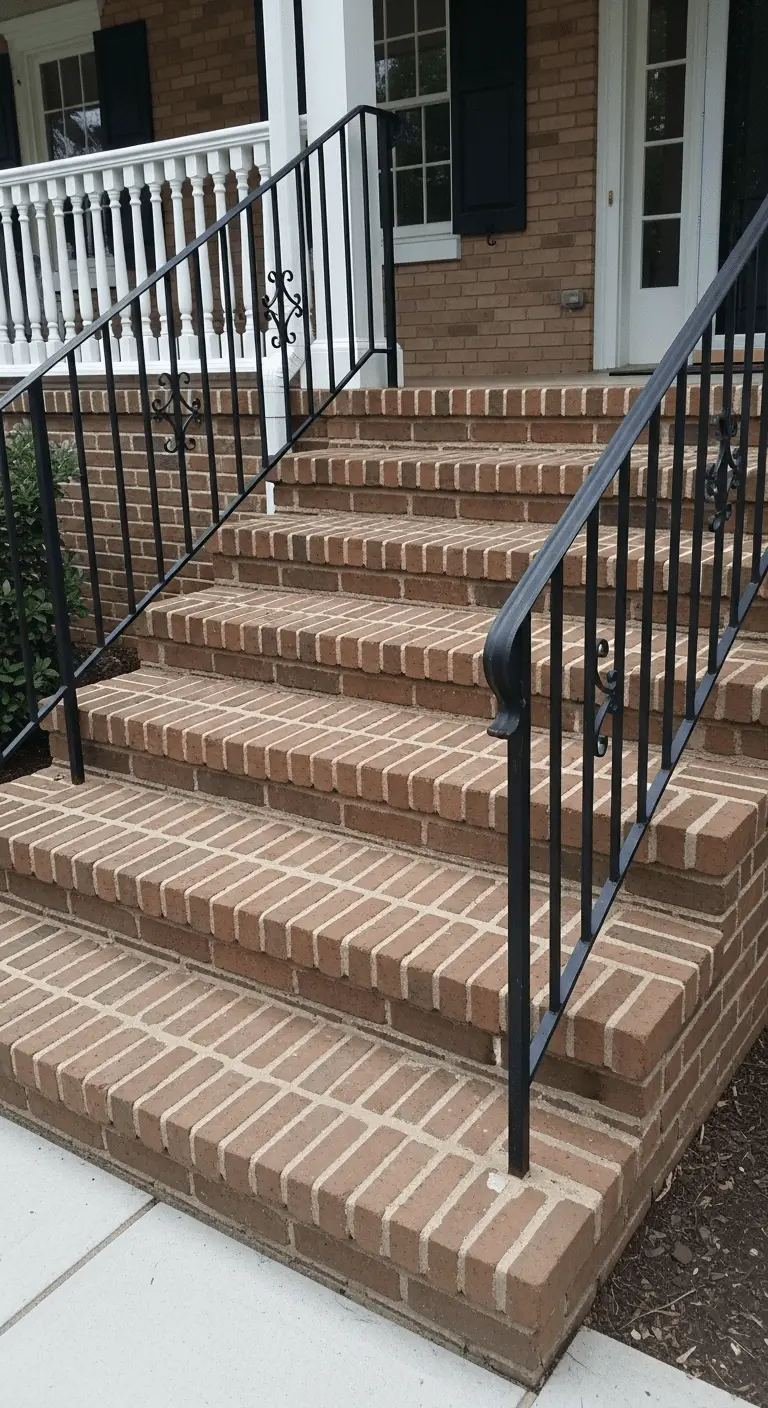
This combination works especially well on Colonial, Federal, and traditional craftsman homes. The key is to match the brick tone to existing masonry on the home for a unified look.
2. Bluestone or Flagstone Steps with Cedar Railings
Natural stone steps carved from bluestone or irregular flagstone create a grounded, organic feel that works beautifully on homes surrounded by mature landscaping. The irregular edges of flagstone give the entrance a handcrafted quality that newer synthetic materials rarely replicate convincingly.
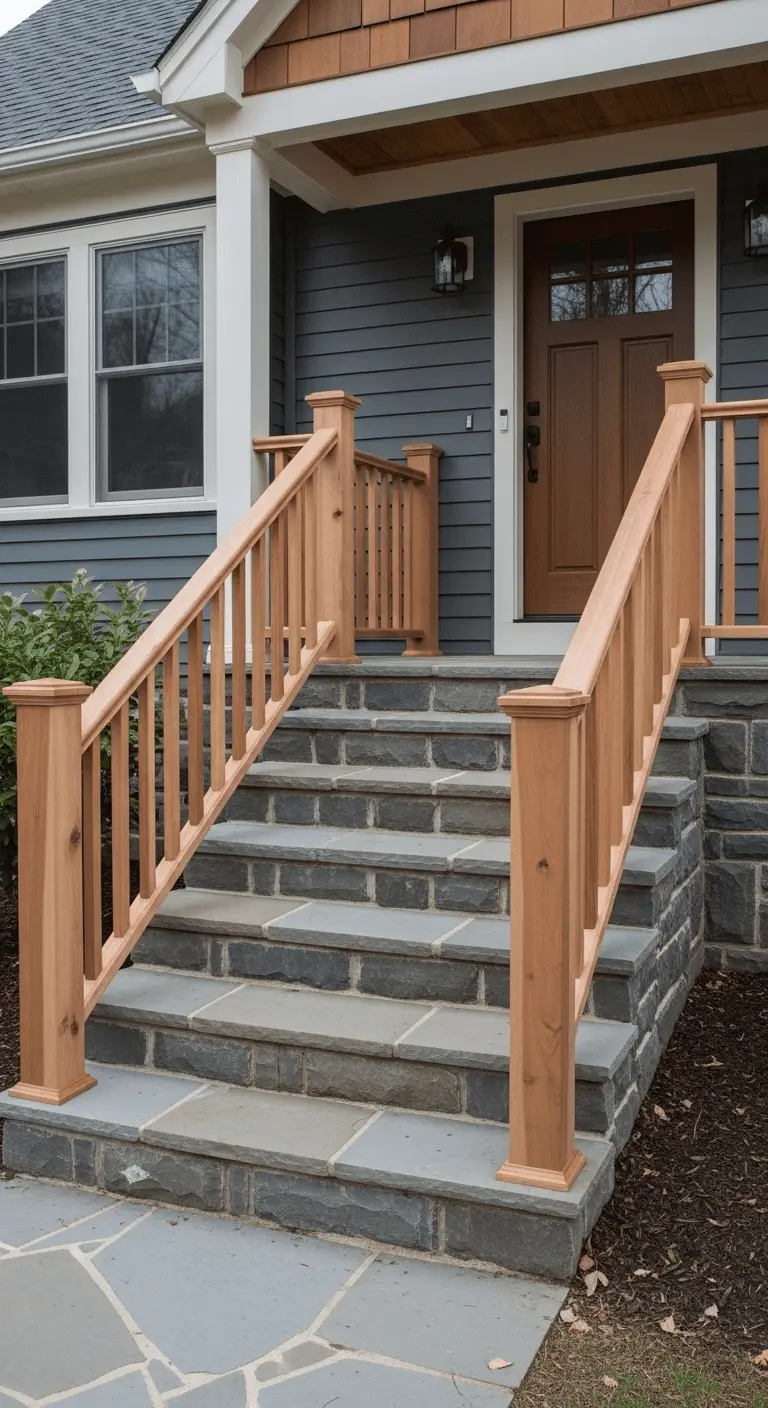
Pairing these steps with cedar railings introduces warmth and a natural contrast. Cedar weathers gracefully to a silver-gray patina over time, or it can be sealed to maintain its honey-brown tone. This pairing suits Craftsman bungalows, cottage-style homes, and rustic farmhouses exceptionally well.
3. Concrete Steps with Stamped Geometric Patterns
Poured concrete is often dismissed as purely utilitarian, but stamped concrete technology has transformed what is possible at a mid-range budget. Geometric patterns pressed into freshly poured concrete can simulate the look of stone, brick, or tile at a fraction of the cost. Adding integral color during the mix creates a tone that holds longer than a surface stain.
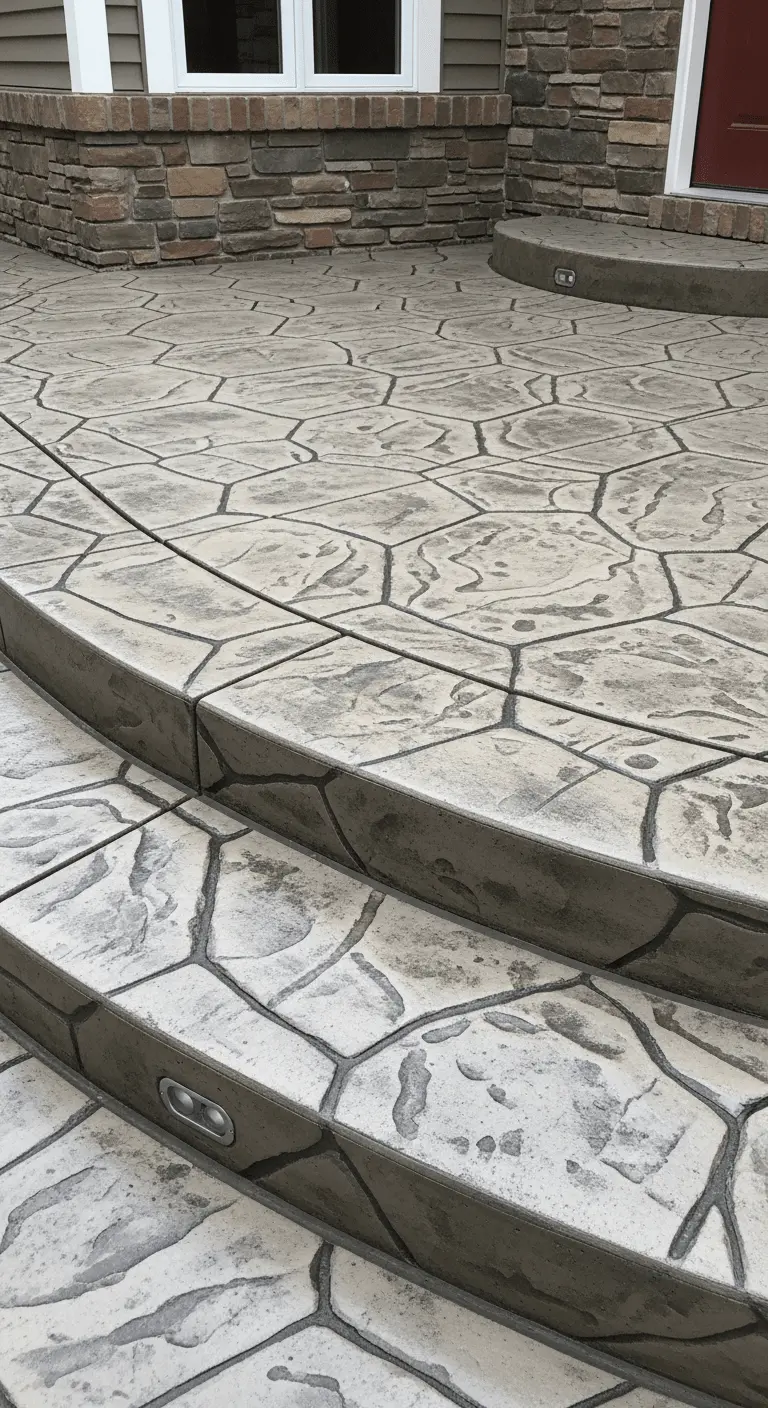
For a side entrance, stamped concrete offers design flexibility that cut stone does not. Curves, custom widths, and integrated lighting channels are all achievable. Sealing the surface every two to three years keeps it protected and looking fresh.
4. Floating Wooden Deck Steps
For porches with a modern or transitional design language, floating wooden deck steps create a striking visual effect. The steps appear to project outward from the porch structure without visible support brackets, giving a clean, architectural look. Composite decking materials in warm gray or weathered wood tones are popular here because they resist moisture and do not require the same maintenance schedule as natural wood.
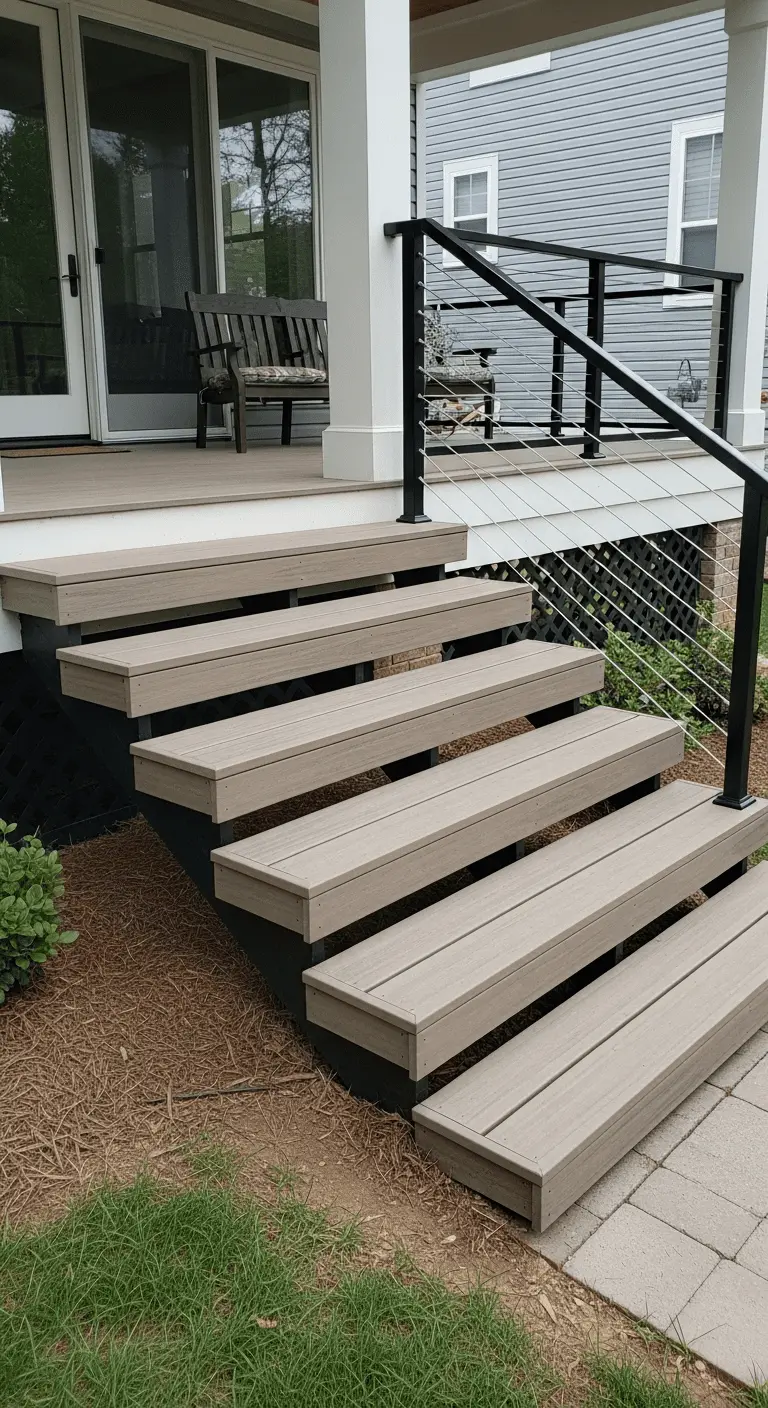
This design works particularly well when the porch deck itself is elevated, creating a dramatic descent to grade. The floating aesthetic pairs naturally with cable railings or horizontal bar railings in black powder-coated steel.
5. Curved Stone Steps with Flanking Planters
Curved steps are a classic way to soften the geometry of a side entrance and create a welcoming sense of arrival. When the steps sweep gently outward in an arc, they encourage a natural, relaxed approach rather than a straight march toward the door. Flanking each side of the lowest step with built-in stone planters or large terra-cotta urns filled with seasonal plantings ties the hardscape to the landscape in a way that feels intentional.
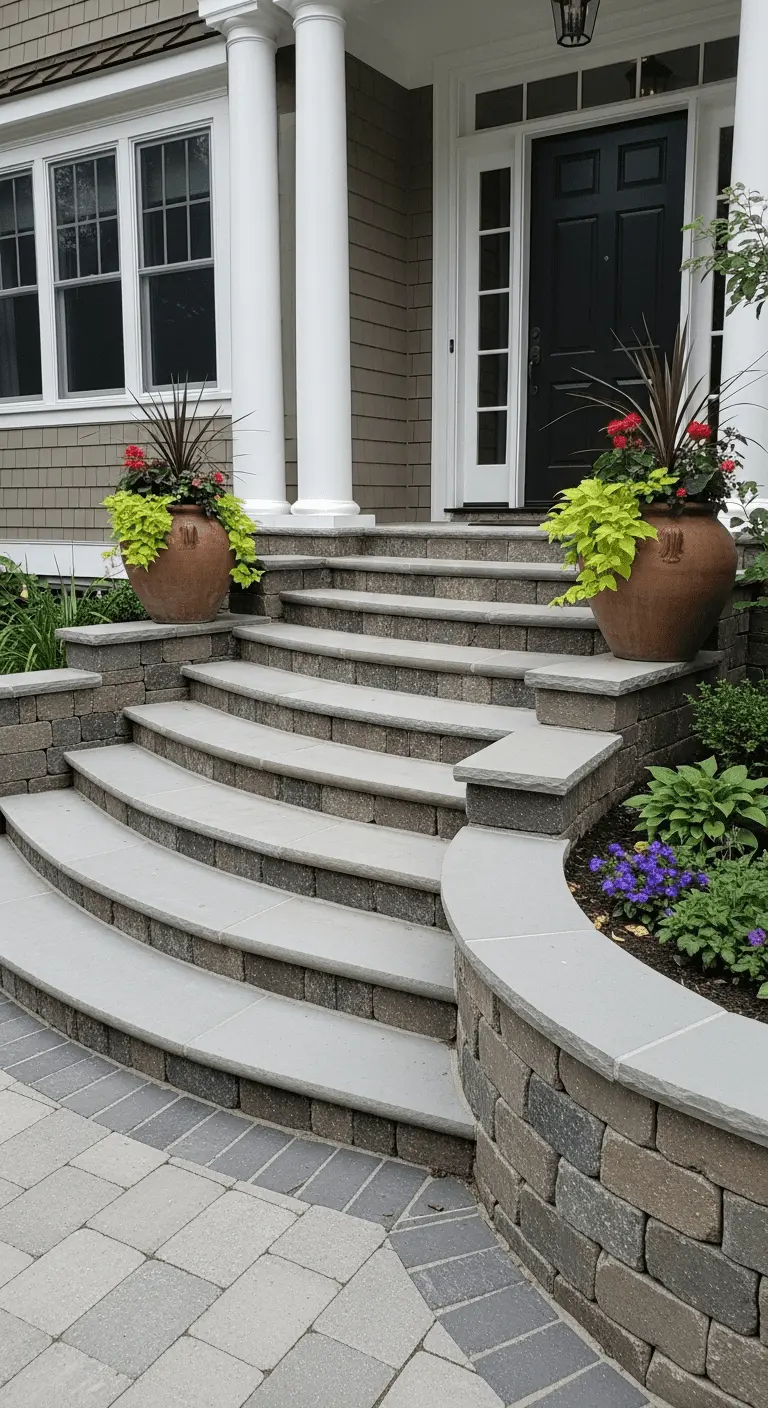
This design is a strong choice for Colonial Revival, Greek Revival, and Mediterranean-influenced homes. The curve can be subtly executed or pronounced depending on the available width.
6. Side Entrance with a Pergola or Overhead Trellis
Adding a pergola or simple overhead trellis above the side steps elevates the entrance from functional to truly architectural. The overhead structure creates a defined arrival moment, framing the transition from the yard or driveway to the porch. When planted with climbing roses, jasmine, wisteria, or clematis, the trellis becomes a living feature that changes with the seasons.
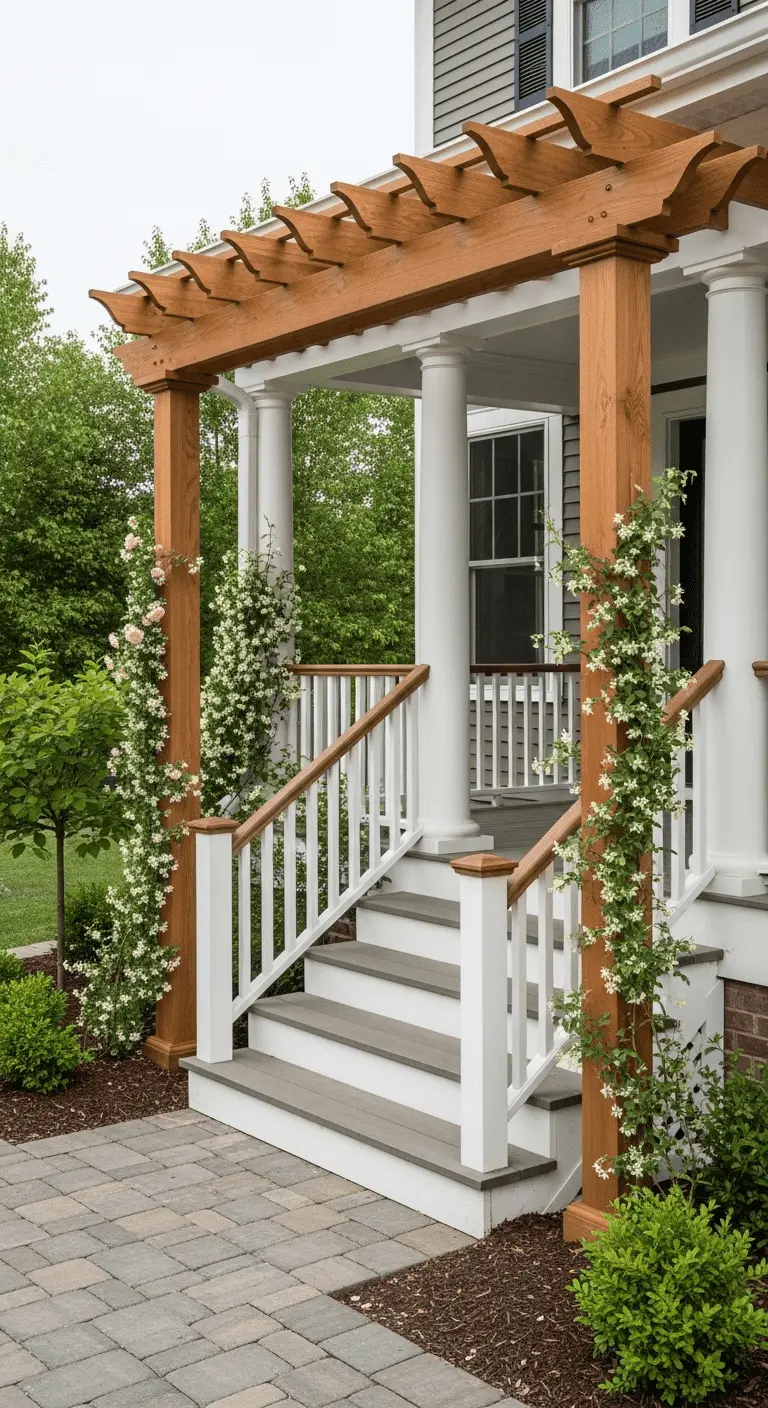
The pergola posts can be positioned at either side of the bottom step, creating a gateway effect. For a cohesive look, match the wood species and finish to the porch columns or trim work of the main structure.
7. Steppingstone Path Leading to Side Steps
Rather than beginning the entrance design at the bottom step, extend the design concept outward with a steppingstone path that leads the visitor from the driveway or yard toward the steps. Irregular Pennsylvania bluestone, Tennessee crab orchard stone, or cast concrete stepping pads set into the lawn create a deliberate journey to the entrance.
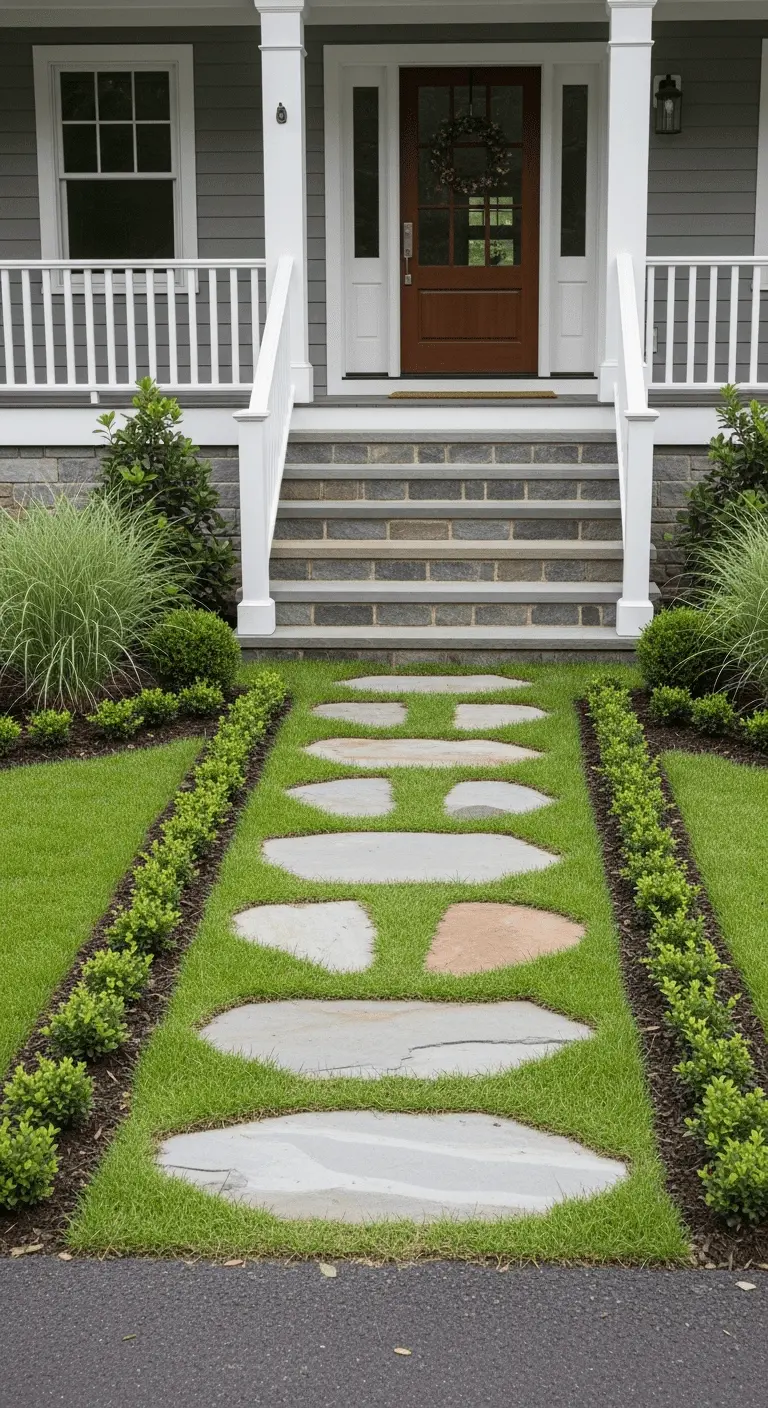
Edging this path with low ornamental grasses, boxwood hedges, or a ribbon of ground cover plants reinforces the sense of a designed sequence. The side steps become the culmination of this approach rather than a disconnected structure bolted to the porch.
8. Wood and Metal Hybrid Steps with Integrated Lighting
Contemporary homes call for materials that reflect modern sensibilities. A hybrid step design using steel-framed risers with hardwood or composite treads strikes a balance between industrial precision and natural warmth. The steel components can be powder-coated in matte black or weathered graphite, while the treads introduce wood grain texture.
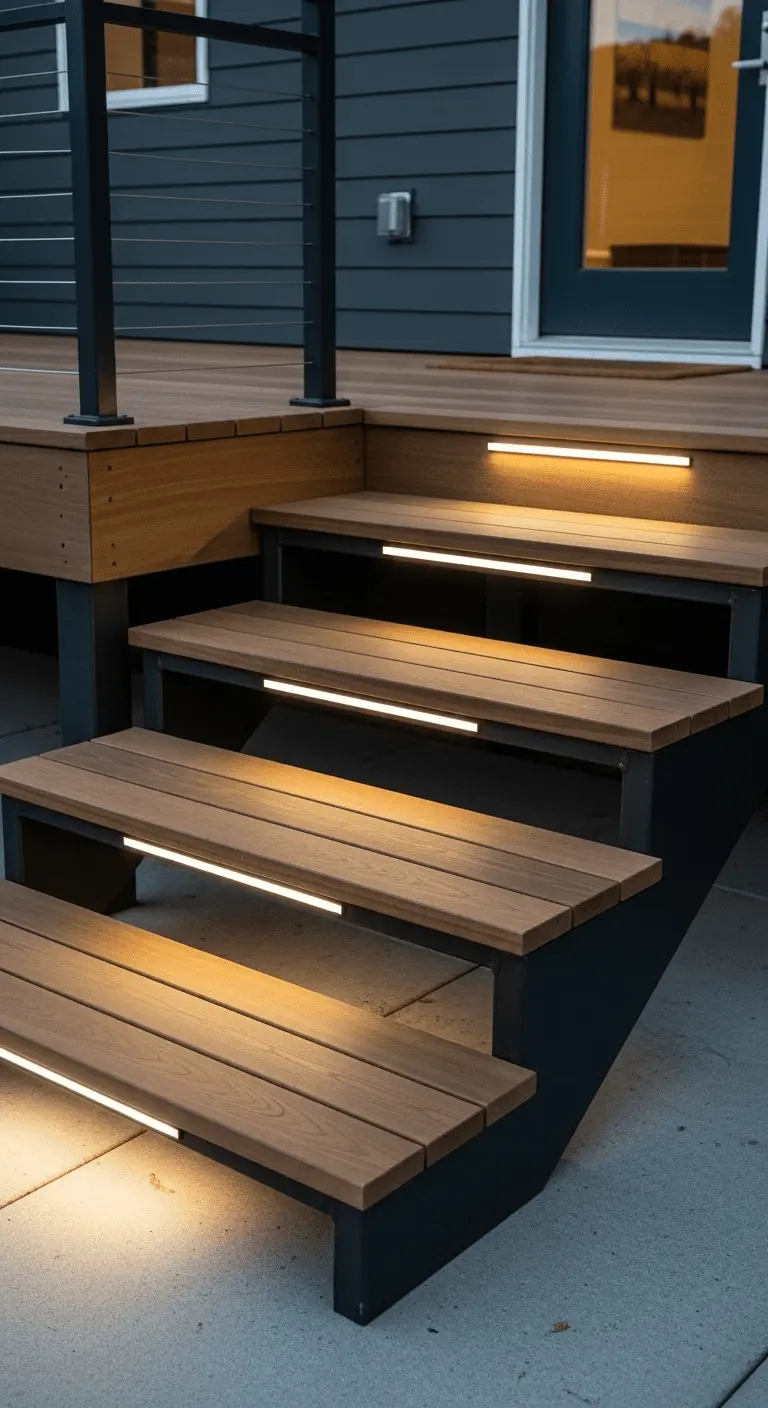
Integrated lighting beneath each tread riser is both practical and atmospheric. Small LED strip lights or individual step lights cast a downward wash of illumination that makes nighttime navigation safe without requiring overhead fixtures that might conflict with the porch’s lighting plan.
9. Side Entrance Steps with Built-In Bench Seating
In households where the side entrance sees heavy daily use, incorporating a built-in bench on one side of the landing creates a surprisingly useful feature. A bench at the top landing or on the side of the lower step gives family members a place to remove muddy shoes, set down bags, or simply sit and enjoy the yard for a few minutes.
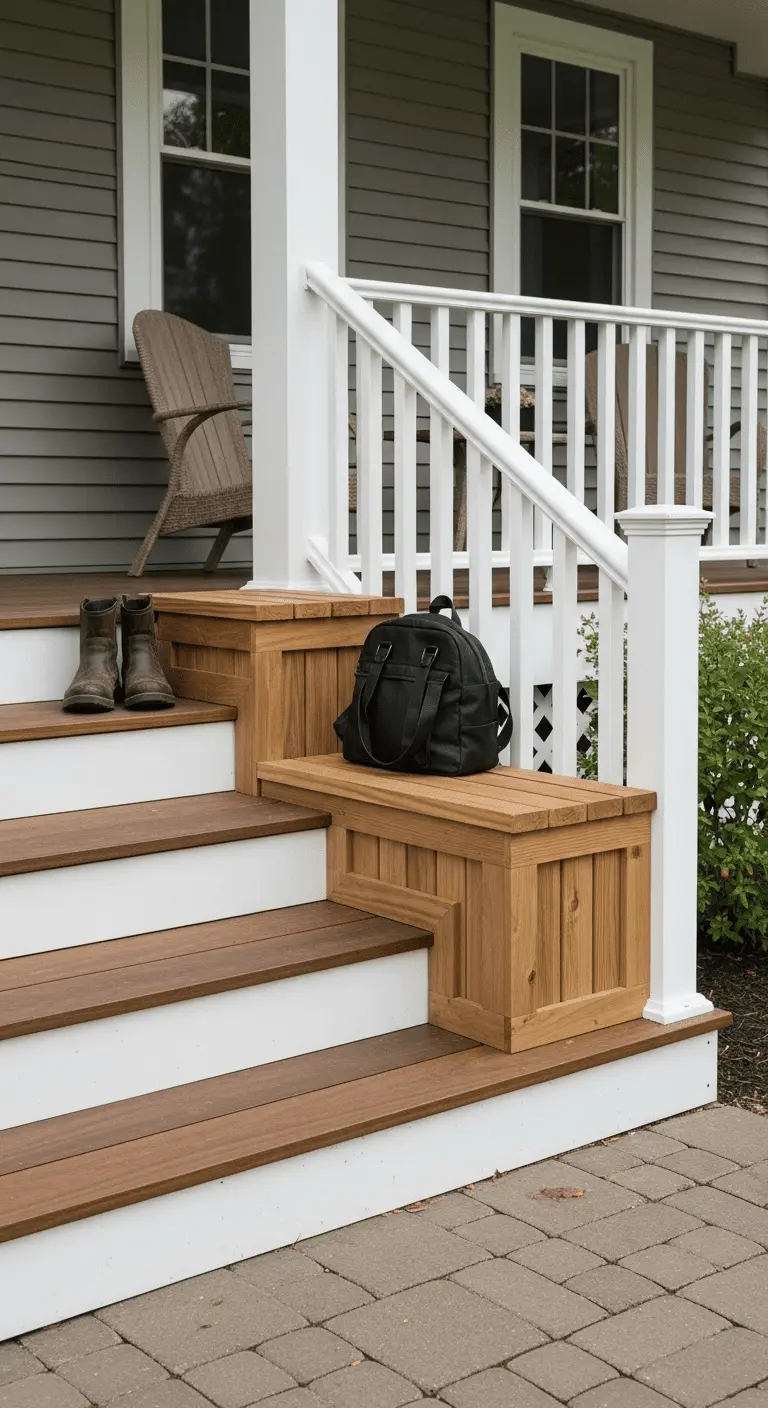
Building the bench with a hinged seat that conceals a storage compartment underneath multiplies its utility. Painted to match the porch trim, this feature looks intentional and adds charm without consuming much square footage.
10. Reclaimed Wood Steps for Rustic Appeal
Sustainability-minded homeowners and those with a love of history often gravitate toward reclaimed wood for porch step construction. Old-growth timber salvaged from barns, industrial buildings, or demolished structures carries a density and patina that new-growth lumber simply cannot replicate. The weathering, nail holes, and grain variation tell a visual story.
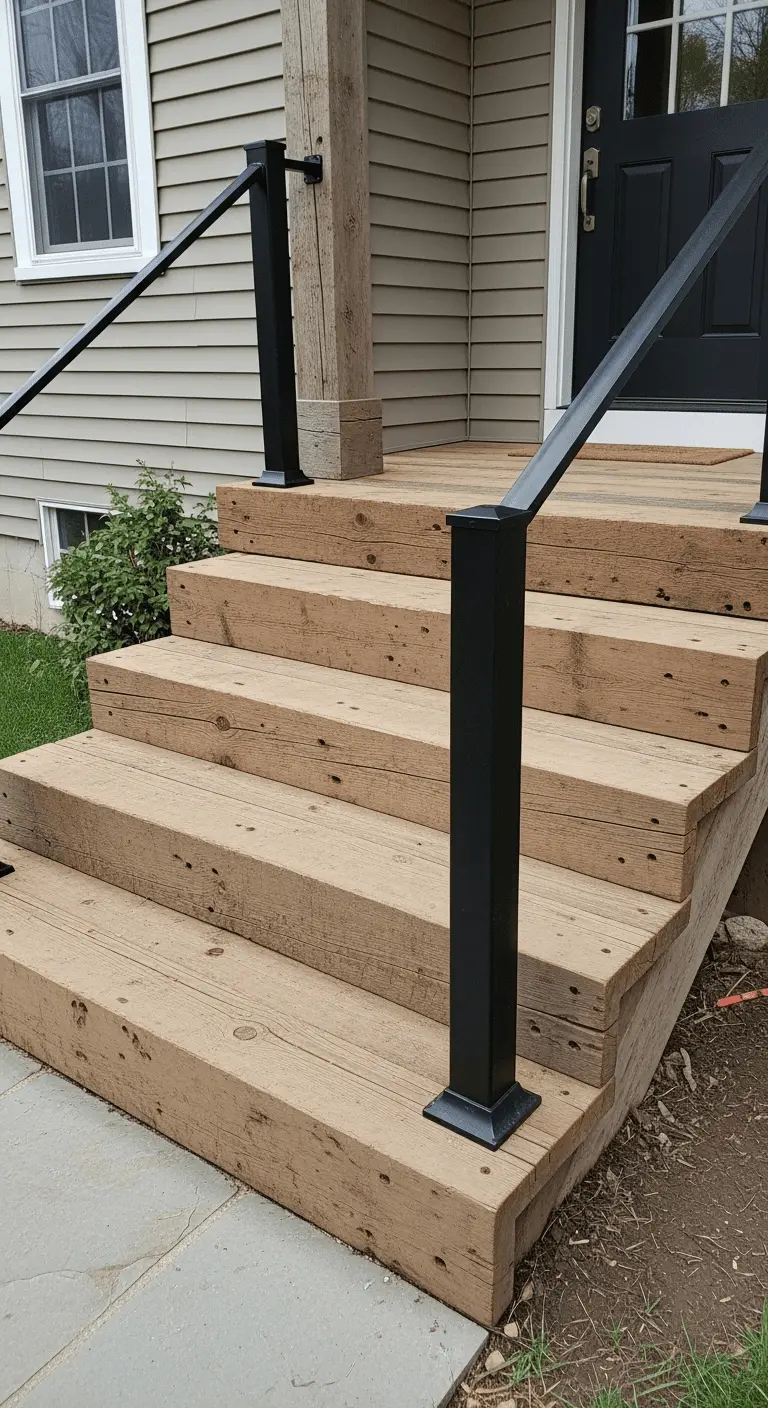
Reclaimed oak, pine, and chestnut are common choices. Paired with simple black steel post railings and a stone landing pad, reclaimed wood steps create a side entrance that is rustic without being rough.
11. Precast Concrete Steps with Stone Veneer Cladding
Precast concrete steps offer speed and predictability during installation, and they form an excellent substrate for stone veneer cladding. Thin-cut panels of natural limestone, fieldstone, or manufactured stone adhered to the riser faces transform the appearance entirely. What reads as industrial concrete becomes a rich masonry surface at a budget that falls well below solid cut stone.
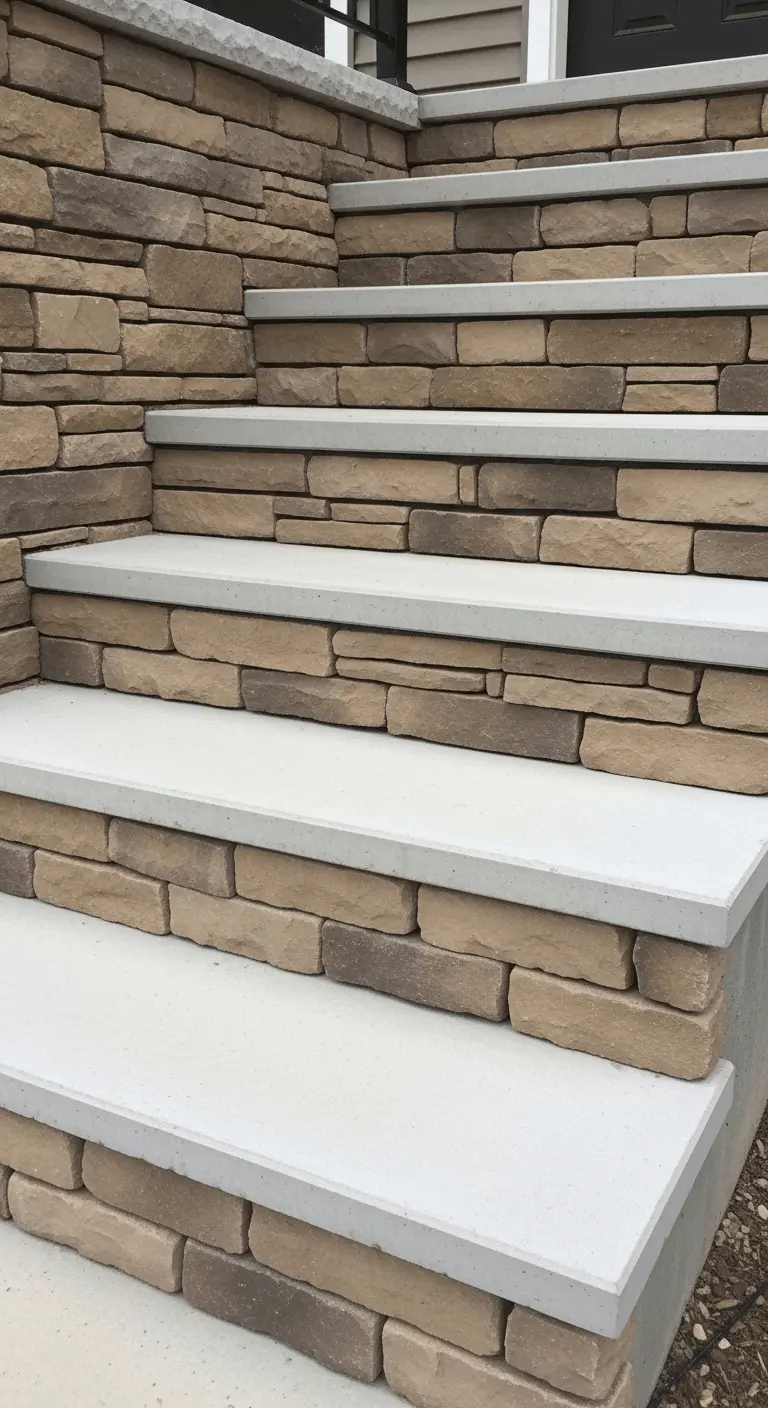
Choosing a veneer that references stone used elsewhere on the home’s foundation or chimney creates a sense of material continuity that elevates the overall design.
12. Side Entrance Defined by Boxwood Hedges
Sometimes the design work happens not in the steps themselves but in the planting that frames them. A pair of tightly clipped boxwood hedges running along each side of the approach to the side steps creates a formal, structured corridor that makes even modest steps feel significant. When the hedges reach step height, they function visually as a living railing.
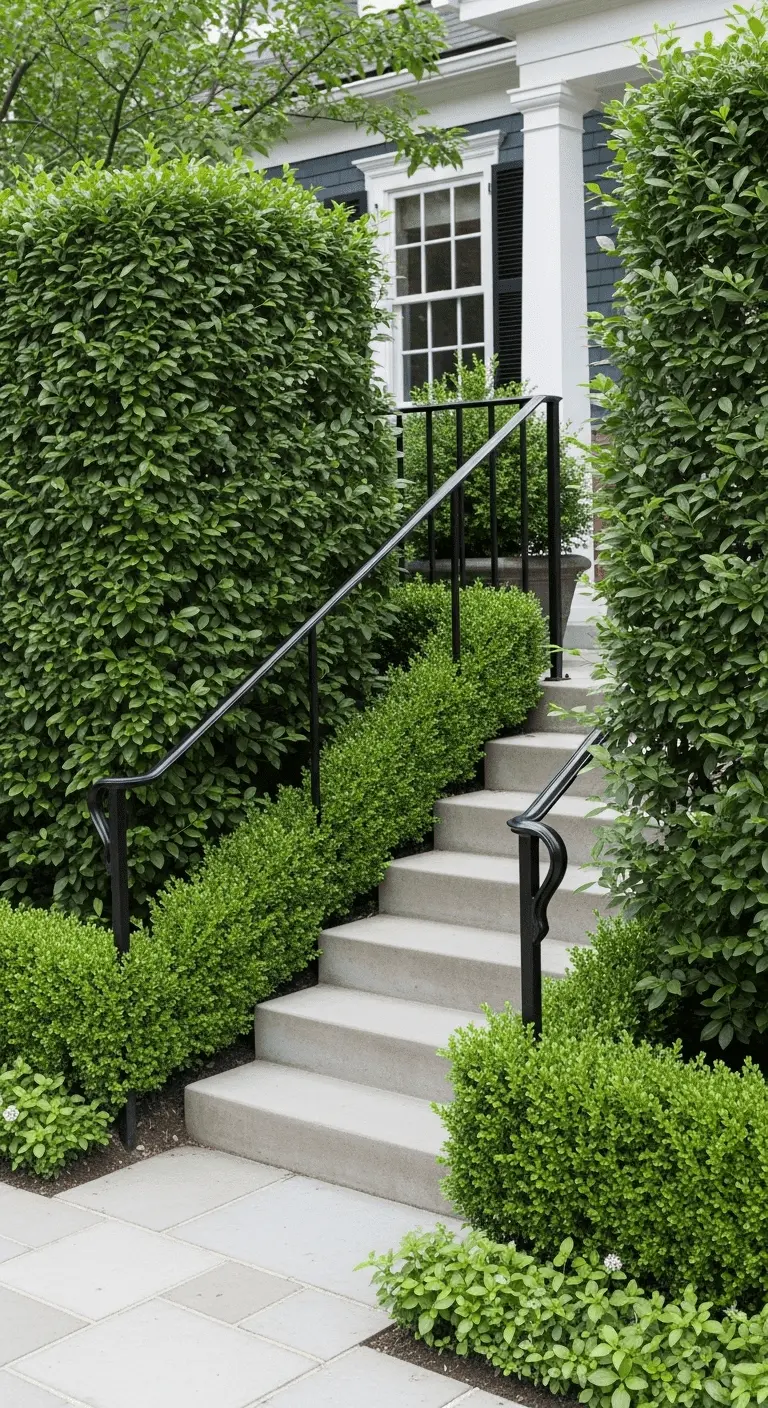
This approach suits Federal-style homes, Georgian architecture, and any property with a formal garden sensibility. The steps themselves can remain simple poured concrete or brick, letting the hedges carry the decorative weight. https://www.bhg.com/home-improvement/porch/porch/front-porch-steps/
13. Tile-Clad Steps for Mediterranean or Spanish Colonial Homes
Hand-painted ceramic or encaustic cement tile applied to the step risers is a centuries-old design tradition in Mediterranean and Spanish Colonial architecture. Each riser becomes a canvas for geometric, floral, or abstract patterns in cobalt blue, terracotta, and ivory. The treads typically remain in a plain stone or sealed concrete to provide safe footing.
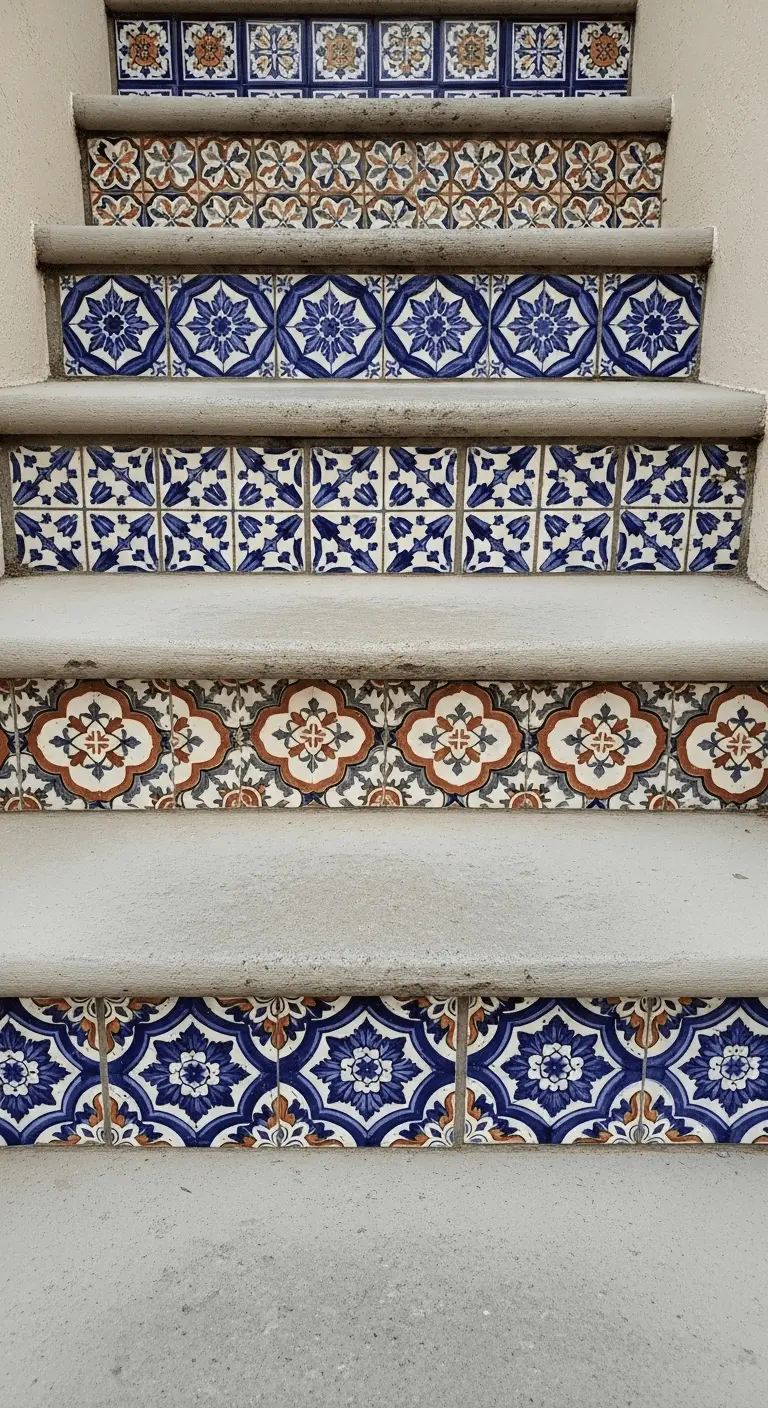
In climates that experience freezing temperatures, it is important to use frost-resistant tile and ensure proper drainage behind the tile installation. In milder climates, tile-clad steps create a side entrance that functions as a genuine piece of decorative art.
14. Side Steps with Black Aluminum Picket Railings
Aluminum has largely replaced wrought iron in the railing market for practical reasons. It does not rust, requires virtually no maintenance, and is available in profiles that convincingly mimic the look of traditional wrought iron picket railings. For side entrance steps, black powder-coated aluminum picket railings deliver a classic, tailored look that works across a broad range of architectural styles.
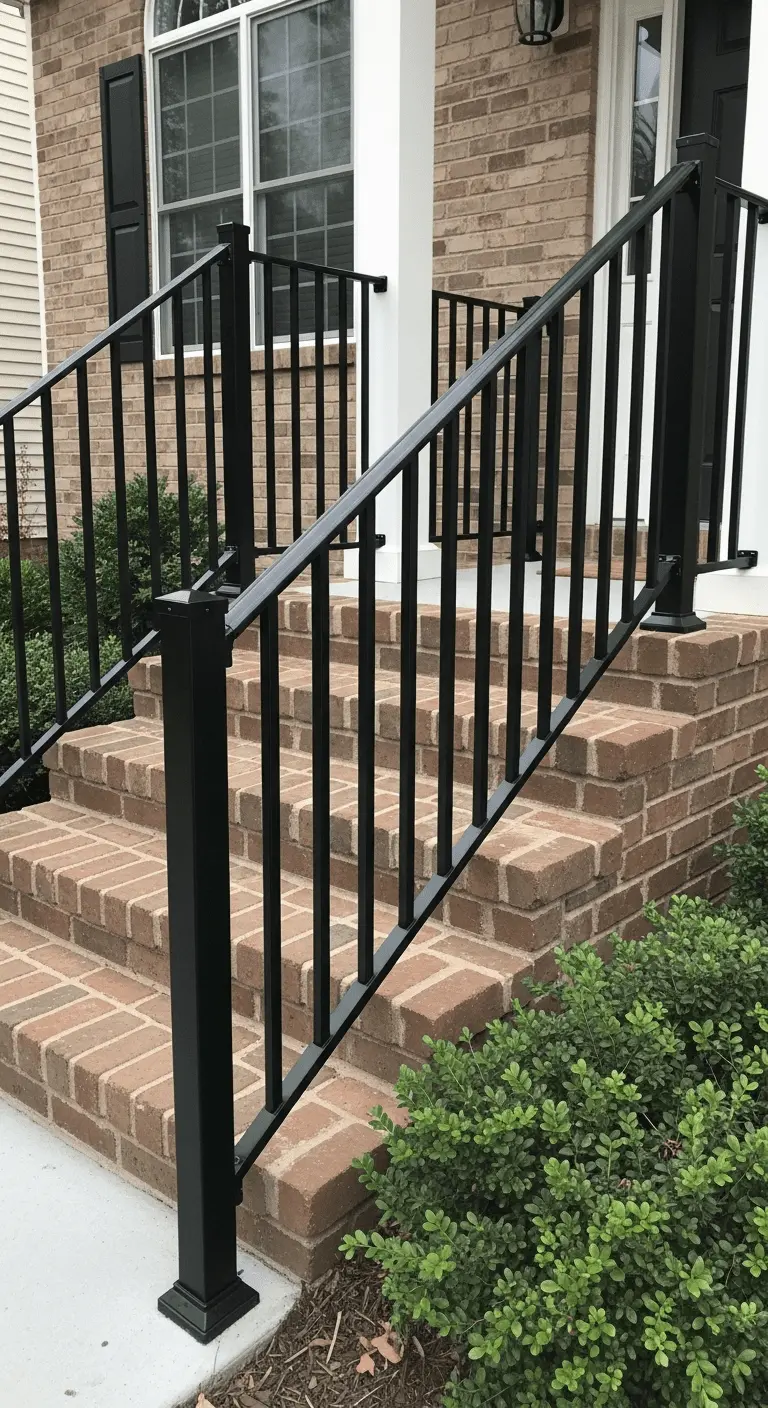
This is a particularly cost-effective choice that does not sacrifice appearance. The clean vertical lines of the pickets complement brick steps, natural stone, wood, and concrete equally well.
Bonus Idea: Seasonal Container Planting at the Base of Side Steps
Beyond permanent structure, one of the easiest and most impactful ways to elevate a side entrance is through large container plantings at the base of the steps. Oversize planters in concrete, fiberglass, or cast iron filled with seasonal arrangements create color and life without any permanent commitment. Swapping plantings from spring bulbs to summer annuals to fall mums to winter evergreen arrangements keeps the entrance looking fresh year-round.
Key Design Principles to Keep in Mind
Regardless of which specific ideas appeal to you, several design principles consistently separate successful side entrance projects from forgettable ones.
Scale matters more than style. Steps that are too narrow, railings that are too thin, or planters that are too small relative to the porch height will feel tentative even if the materials are beautiful. Err toward generosity in dimension wherever the site allows.
Lighting is non-negotiable. A side entrance without adequate lighting is a safety and security liability. Whether built into the steps, mounted on the porch structure, or installed on pillar-mounted lanterns, consistent illumination at every level of the entrance is essential.
Material continuity creates coherence. The side entrance does not need to be identical to the main facade, but it should share at least one material or finish with the primary entrance. Repeating the brick color, the railing profile, or the porch column trim throughout the side entrance unifies the home’s exterior vocabulary.
Code compliance protects everyone. Railing heights, baluster spacing, step rise-to-run ratios, and handrail grasp ability are all governed by building codes. These requirements vary by municipality. Before undertaking any structural changes to a porch entrance, check with your local building department to confirm what permits are required.
Conclusion
The front porch side entrance is far more than a practical path from point A to point B. When designed with intention, it becomes a signature element of the home’s exterior identity, a welcoming gesture to arriving guests, and a daily pleasure for everyone who lives there. The ideas presented in this article span a wide range of budgets, architectural styles, and material preferences. Whether you pursue the timeless appeal of brick and wrought iron, the contemporary confidence of floating composite steps and cable railings, or the relaxed charm of flagstone and cedar, the goal is the same: to create an entrance that feels as though it genuinely belongs to your home and your landscape. Start with the ideas that resonate most, consult a landscape architect or contractor for site-specific guidance, and invest in the details that will endure for decades.
Frequently Asked Questions
1. What is the best material for front porch side steps in a wet climate?
In consistently wet climates, natural stone such as bluestone or granite, brick with a brushed surface texture, and high-quality composite decking materials all perform well. These materials offer traction even when wet and resist freeze-thaw damage. Avoid smooth polished surfaces and untreated wood in high-rainfall areas.
2. How wide should side porch steps be?
A minimum width of 36 inches is required by most residential building codes, but 48 inches is widely considered the comfortable standard for everyday use. Generous widths of 60 inches or more create a welcoming, proportionate entrance and allow two people to pass comfortably side by side.
3. Do I need a permit to replace or add side porch steps?
In most jurisdictions, any structural modification to a porch entrance, including replacing steps, adding railings, or changing the landing configuration, requires a building permit. Requirements vary significantly by municipality. Always contact your local building department before beginning work to confirm what is required in your area.
4. What type of railing is the lowest maintenance for a side entrance?
Aluminum railings, particularly powder-coated aluminum in a dark color, require the least ongoing maintenance among common railing materials. Unlike wrought iron, aluminum does not rust. Unlike wood, it does not warp, split, or require periodic painting or staining. A simple wash with soap and water once or twice a year is generally sufficient.
5. How can I improve the curb appeal of a side entrance on a limited budget?
Some of the most cost-effective improvements include repainting existing railings and porch trim in a fresh coordinated color, adding large container planters with seasonal arrangements at the base of the steps, installing step lighting using low-voltage LED kits, and pressure-washing all masonry surfaces to remove years of grime. These steps together can dramatically improve the appearance of a side entrance for a few hundred dollars or less.

One Comment