Hardscaping 101: Paths, Patios, and Retaining Walls
Transforming your outdoor space from ordinary to extraordinary requires more than just beautiful plants and manicured lawns. The foundation of any exceptional landscape lies in hardscaping, the structural backbone that defines how your yard functions and flows. Whether you envision a welcoming pathway leading guests to your front door, a spacious patio for weekend gatherings, or sturdy retaining walls that turn a challenging slope into usable space, understanding hardscaping fundamentals will empower you to create an outdoor environment that truly enhances your home.
Hardscaping encompasses the non-living elements in your landscape design. While softscaping refers to grass, flowers, trees, and shrubs, hardscaping includes all the permanent structures built from materials like stone, concrete, brick, and wood. These elements work together to create visual interest, establish clear zones within your property, and provide practical solutions to common landscaping challenges. The beauty of hardscaping is that it combines form and function seamlessly, turning your yard into an extension of your living space while solving problems like poor drainage, soil erosion, and awkward terrain.
The three cornerstone elements of hardscaping are paths, patios, and retaining walls. Each serves distinct purposes, yet when thoughtfully integrated, they create cohesive outdoor spaces that increase property value, reduce maintenance demands, and provide years of enjoyment. This comprehensive guide will walk you through everything you need to know about these essential hardscaping features, from material selection to design principles, helping you make informed decisions for your landscape transformation.
Understanding the Benefits of Hardscaping
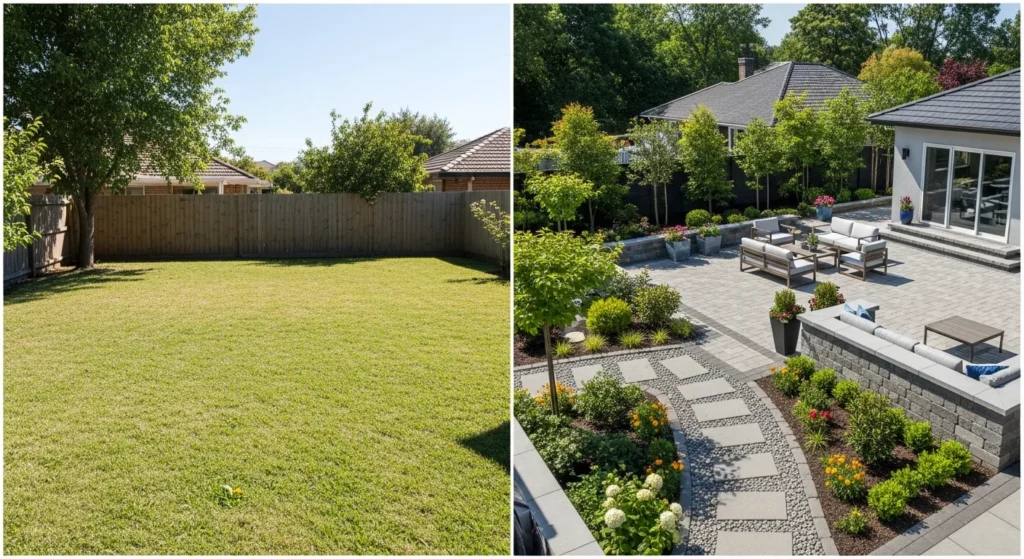
Before diving into specific projects, it helps to understand why hardscaping deserves a prominent place in your landscape planning. First and foremost, hardscaping adds functionality to your outdoor space. A well-designed patio extends your living area beyond your home’s walls, providing a dedicated space for dining, relaxation, and entertainment. Pathways create safe, accessible routes through your property, protecting your lawn from foot traffic damage while guiding visitors exactly where you want them to go.
Hardscaping also addresses practical challenges that many homeowners face. Properties with slopes or uneven terrain benefit tremendously from retaining walls, which prevent soil erosion while creating level areas for gardens, seating, or play spaces. Proper hardscaping improves drainage patterns, directing water away from your foundation and preventing pooling that damages both structures and plantings.
From an aesthetic standpoint, hardscaping provides structure and visual interest throughout the year. Unlike plants that change with seasons or require ongoing care, hardscape elements maintain their appearance and appeal regardless of weather. They create contrast with softer landscape features, adding depth and dimension to your overall design. The right hardscaping can complement your home’s architectural style, whether that means rustic stone pathways for a cottage aesthetic or sleek concrete pavers for modern minimalism.
Finally, quality hardscaping represents a smart financial investment. Studies consistently show that professionally designed outdoor living spaces increase property values significantly. Potential buyers appreciate functional outdoor areas with defined spaces for various activities. Additionally, hardscaping reduces maintenance costs over time, as these durable features require far less upkeep than traditional lawn areas.
Designing Beautiful and Functional Pathways
Pathways serve as the circulatory system of your landscape, connecting different areas while influencing how people move through and experience your outdoor space. A thoughtfully designed pathway does more than provide a walking surface; it creates anticipation, guides discovery, and enhances the overall aesthetic of your property.
When planning pathways, start by identifying natural traffic patterns. Observe where people currently walk through your yard, as these worn paths often indicate the most intuitive routes. Primary pathways, such as those leading to your front door or connecting your driveway to key outdoor areas, should measure four to five feet wide to accommodate comfortable two-way traffic. Secondary paths that lead to gardens, side yards, or less frequently accessed areas can be narrower, typically two to three feet wide.
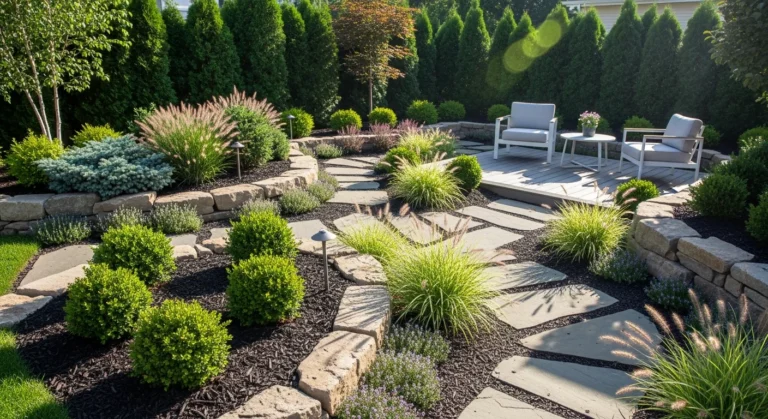
Material selection dramatically impacts both the appearance and functionality of your pathways. Natural stone, including flagstone and slate, offers timeless beauty with unique color variations and textures. These materials work especially well for curved, organic-looking paths that blend seamlessly with surrounding plantings. Stone requires skilled installation and represents a higher initial investment, but its durability and classic appeal often justify the expense.
Concrete pavers provide versatility and come in countless shapes, sizes, and colors. They allow for creative patterns like herringbone, running bond, or basketweave designs. Pavers are relatively easy to install and offer the advantage of individual replacement if one becomes damaged. For more casual or budget-conscious projects, gravel pathways deliver excellent drainage and a satisfying crunch underfoot. They work particularly well for meandering garden paths and can be installed quickly with proper edging to contain the material.
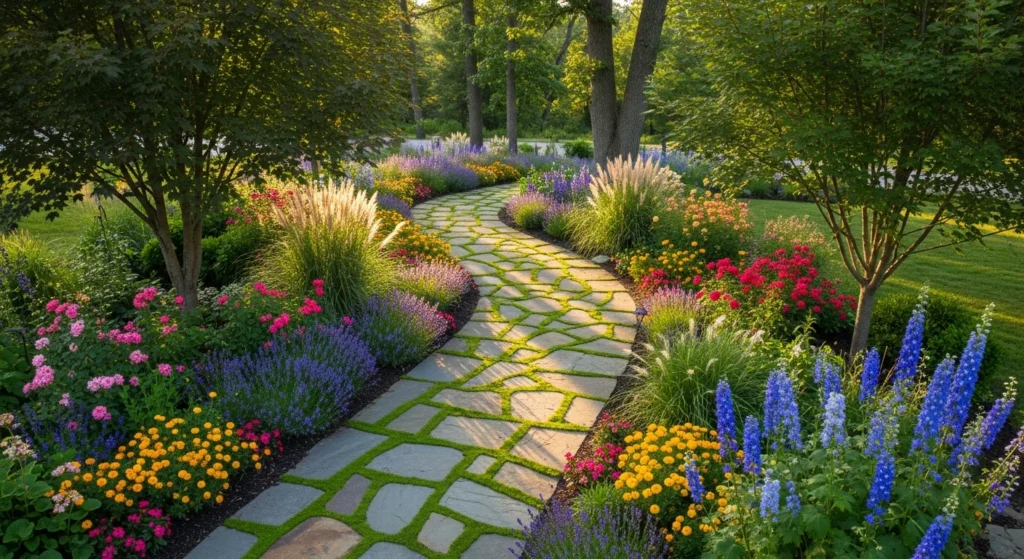
Consider incorporating curves rather than straight lines whenever possible. Curved pathways create visual interest and encourage people to slow down and appreciate their surroundings. The gentle turn of a path can reveal garden vistas gradually, building anticipation and making even modest yards feel more expansive. However, ensure curves follow natural contours and serve a purpose rather than appearing arbitrary.
Proper pathway construction requires attention to foundational details. Excavate the path area to a depth of approximately four inches, then install landscape fabric to prevent weed growth. Add a base layer of crushed stone or sand, compacting it thoroughly to create a stable foundation. This preparation prevents settling and shifting over time, ensuring your pathway remains level and attractive for years.
Edges define your pathway and prevent materials from spreading into adjacent areas. Options include metal or plastic edging, brick borders, or natural stone. Choose edging that complements your pathway material and overall landscape style. Integrate low-growing plants along pathway edges to soften hard lines and create a more natural transition between hardscape and softscape elements.
Creating Inviting Outdoor Patios
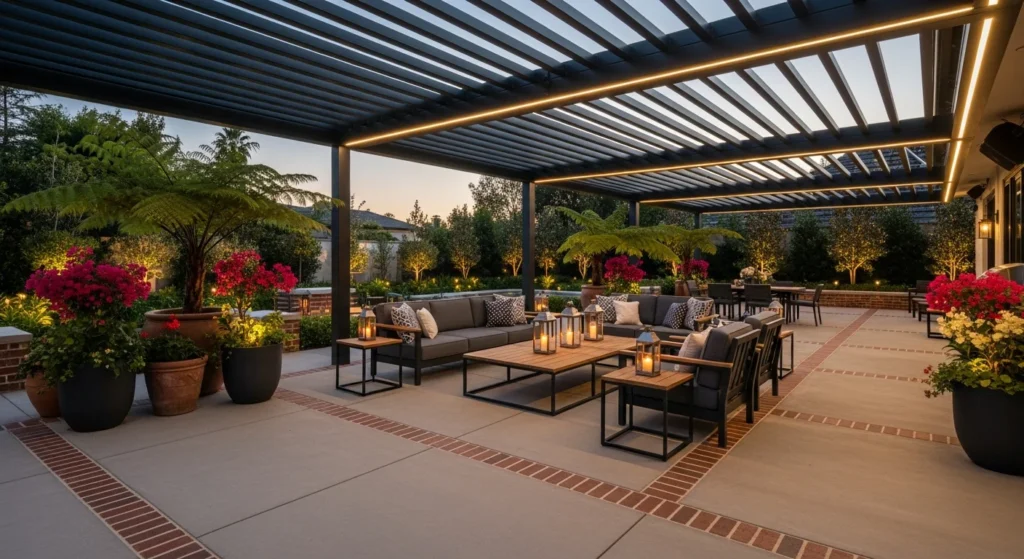
Patios transform underutilized yard space into functional outdoor rooms perfect for dining, entertaining, or quiet relaxation. Unlike decks that sit elevated above ground, patios are constructed at grade level, creating a more integrated connection with the surrounding landscape.
Begin patio planning by determining how you intend to use the space. Will it primarily serve as an outdoor dining area, requiring enough room for a table and chairs plus circulation space? Do you envision it as a lounge area with comfortable seating arranged around a fire feature? Understanding your needs helps establish appropriate dimensions. As a general guideline, allocate at least 25 square feet per person for comfortable use, though many successful patios range from 200 to 400 square feet.
Location significantly impacts patio functionality and enjoyment. Consider sun exposure throughout the day and across seasons. A south-facing patio receives abundant sunlight, wonderful for cool mornings but potentially uncomfortable during summer afternoons without shade structures. East-facing patios enjoy morning sun and afternoon shade, while north-facing spaces remain cooler and shadier. Evaluate views from the proposed patio location, ensuring sight lines toward attractive landscape features rather than utility areas or neighbors’ properties.
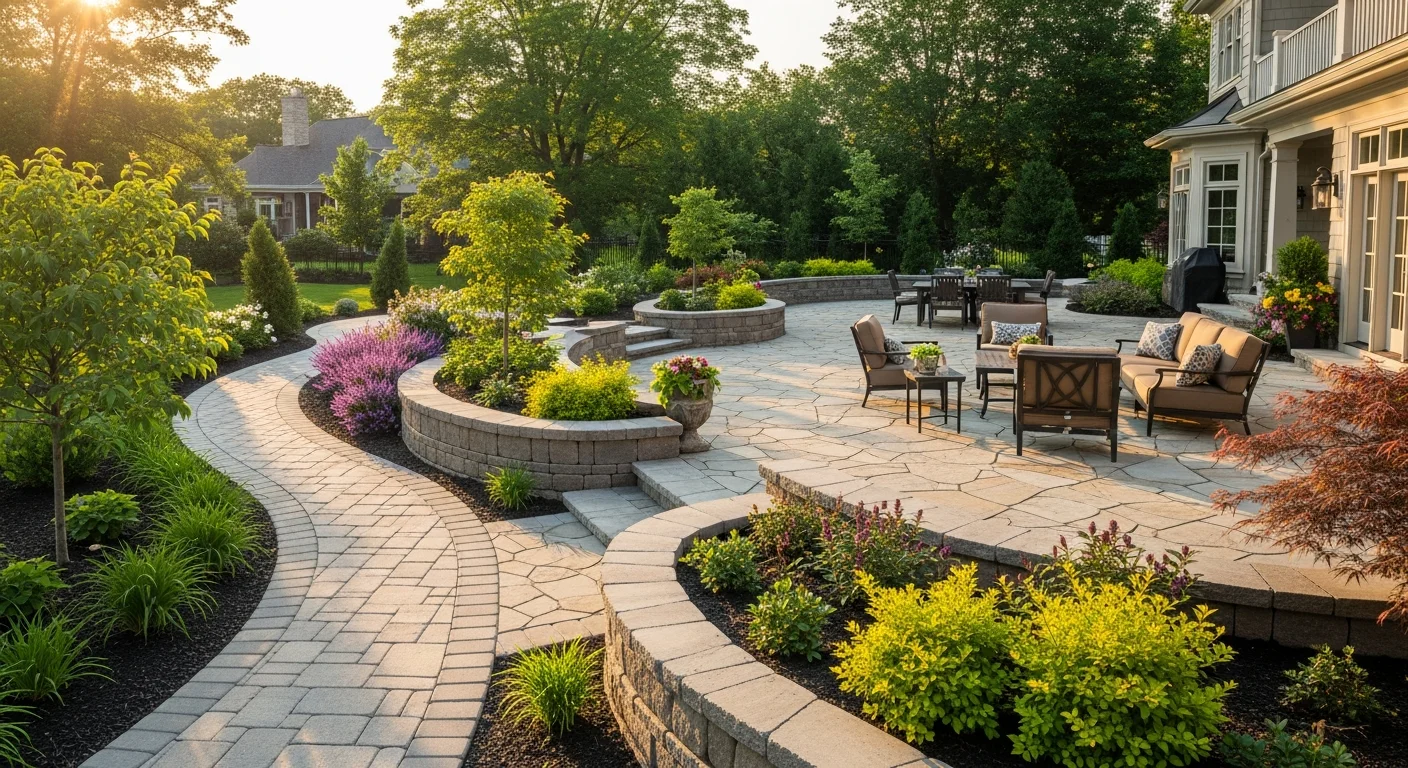
Material choices for patios parallel pathway options but operate on a larger scale. Flagstone creates stunning, irregular patterns with a natural appearance. Each stone is unique, resulting in one-of-a-kind installations. Flagstone works well for both formal and informal designs, depending on how it is laid and finished. Brick patios offer classic charm and come in various colors from traditional red to subtle grays and tans. Brick can be laid in numerous patterns and ages beautifully, developing character over time.
Concrete pavers combine affordability with design flexibility. Modern manufacturing techniques produce pavers that convincingly mimic natural stone at a fraction of the cost. They install more uniformly than natural stone, making them popular for DIY projects. Stamped or stained concrete provides another option, allowing for customized colors and textures that coordinate with your home’s exterior.
For contemporary designs, large-format pavers create clean, minimalist aesthetics. These oversized units reduce joint lines and lend a sense of spaciousness to the area. Consider mixing materials to add visual interest. For example, combine brick borders with flagstone fields, or incorporate geometric concrete pavers within a natural stone patio for modern contrast.
Proper patio construction begins with excavation and base preparation. Remove soil to a depth that accommodates your base material plus the thickness of your chosen paving material. Install landscape fabric, then add four to six inches of crushed stone base, compacting it thoroughly in layers. This base provides drainage and prevents settling. Add a layer of sand, screeding it level to create a smooth surface for paver installation.
As you lay paving materials, maintain consistent spacing and check frequently for level. A slight slope away from your home, approximately one to two percent grade, ensures water drains properly rather than pooling on the patio surface or flowing toward your foundation. Once all pavers are in place, sweep polymeric sand into joints. This specialized sand hardens when moistened, locking pavers in place while allowing water permeability.
Building Durable Retaining Walls
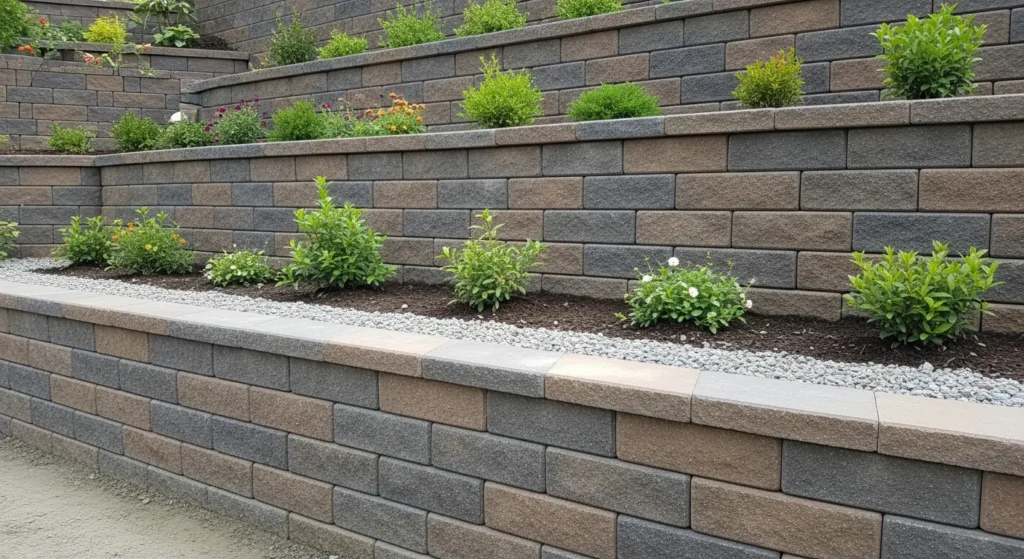
Retaining walls rank among the most valuable hardscaping features for properties with elevation changes. These structures hold back soil, preventing erosion while creating level areas that expand usable outdoor space. Beyond their functional role, retaining walls add significant architectural interest to landscapes.
Understanding when you need a retaining wall helps prevent costly mistakes. Properties with natural slopes benefit from retaining walls that terrace the land into manageable levels. Even modest elevation changes of two to three feet warrant consideration, as retaining walls can prevent gradual soil movement that damages plantings and structures. Areas experiencing erosion, where soil washes away during heavy rain, need the stabilizing influence of properly constructed retaining walls.
Multiple retaining wall types suit different situations and budgets. Gravity walls rely on their mass to resist soil pressure. Constructed from heavy materials like large stones or thick concrete blocks, gravity walls work well for shorter installations, typically under three feet in height. They require no reinforcement beyond their own weight, making them relatively straightforward to build.
Segmental retaining walls use interlocking concrete blocks specifically designed for retaining applications. These modular units fit together without mortar, incorporating setback features that lean the wall into the retained soil for added stability. Segmental walls accommodate curves and corners easily, offering design flexibility along with structural integrity. They come in various colors and textures, allowing customization to match your landscape aesthetic.
For taller installations or areas with significant soil pressure, engineered retaining walls incorporate reinforcement like steel bars or geogrid fabric that extends back into the retained soil. These systems require professional design to ensure adequate strength and stability. When retaining walls exceed four feet in height, most building codes mandate engineering involvement and permits.
Material selection for retaining walls affects both appearance and performance. Natural stone creates beautiful, rustic walls with timeless appeal. Dry-stacked stone walls, built without mortar, allow water to drain between stones naturally. However, stone walls require skilled craftsmanship and significant labor, increasing project costs. Concrete blocks offer more economical alternatives with easier installation. Modern block systems feature textured faces that mimic natural stone while providing the structural benefits of engineered concrete.
Timber retaining walls use pressure-treated lumber or naturally rot-resistant wood species like cedar or redwood. Wood creates warm, natural-looking structures at lower material costs. However, timber walls have shorter lifespans than masonry options, particularly in damp climates. They work best for walls under four feet tall and in situations where budget constraints limit other options.
Regardless of material choice, proper drainage is absolutely critical for retaining wall success. Water building up behind retaining walls creates pressure that can cause failure. Install perforated drain pipe behind the wall base, surrounded by clean gravel. This drainage layer collects water and channels it to designated outlet points. Include weep holes in the wall face to allow water escape, preventing hydrostatic pressure buildup.
Foundation preparation ensures long-term stability. Excavate below the finished grade, creating a level trench for the first course of materials. This buried base anchors the wall and prevents frost heaving in cold climates. Compact the trench bottom, then add crushed stone base material, leveling and compacting it thoroughly. The first course of blocks or stones should sit partially below grade, with subsequent courses building upward with proper setback for stability.
As you construct the wall, backfill behind it with gravel or crushed stone rather than native soil. This free-draining material prevents water accumulation while providing structural support. Compact backfill in layers as you build upward, ensuring solid contact between retained soil and wall structure. For segmental block walls, follow manufacturer specifications regarding setback and any pinning or adhesive requirements.
Planning Your Hardscaping Project
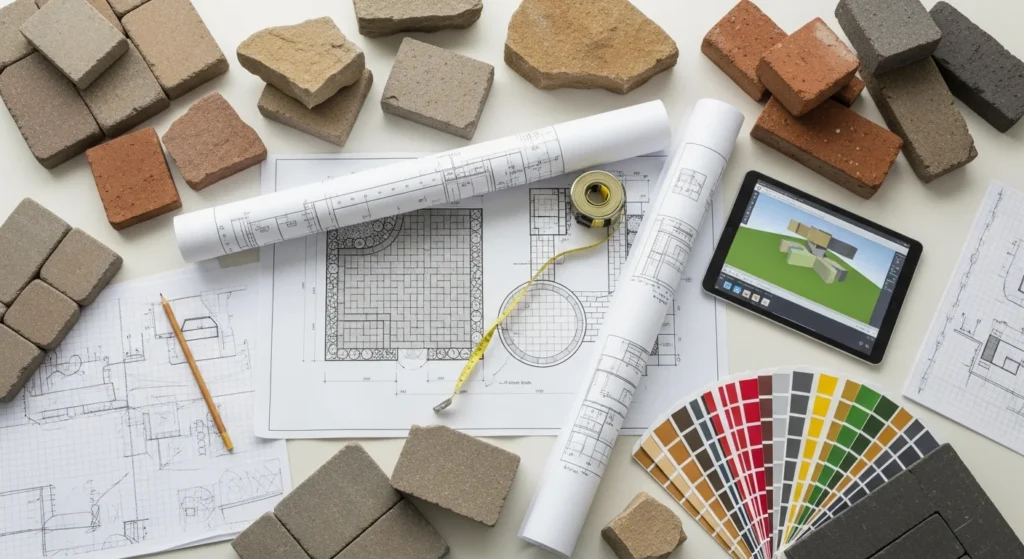
Successful hardscaping requires thoughtful planning before any excavation begins. Start by creating a detailed site assessment. Measure your property accurately, noting existing features like trees, utility locations, and drainage patterns. Photograph your space from multiple angles to reference during design development.
Sketch preliminary designs, even rough ones, to visualize how different elements will relate to each other. Consider how pathways will connect to patios, and where retaining walls might create opportunities for terraced gardens or seating areas. Think about focal points that draw the eye and create interest. These might include water features, specimen plantings, or architectural elements like pergolas.
Budget realistically for your project. Quality hardscaping represents a significant investment, but costs vary dramatically based on material choices and project complexity. Natural stone typically costs more than concrete alternatives, while simple gravity walls cost less than engineered retaining systems. Obtain multiple quotes from reputable contractors if hiring professionals, or price materials carefully if tackling installation yourself.
Understand local regulations before breaking ground. Many municipalities require permits for retaining walls exceeding certain heights or for projects that alter drainage patterns. Building codes often specify engineering requirements for structural elements. Homeowners associations may have aesthetic guidelines regarding materials and designs. Addressing these requirements during planning prevents costly corrections later.
Consider phasing complex projects over time. Rather than attempting to complete all hardscaping simultaneously, prioritize elements based on need and budget. You might install essential pathways first, add a patio the following season, and incorporate retaining walls as budget allows. This approach makes large-scale transformations more manageable financially while allowing you to refine your vision between phases.
Maintenance and Long-Term Care
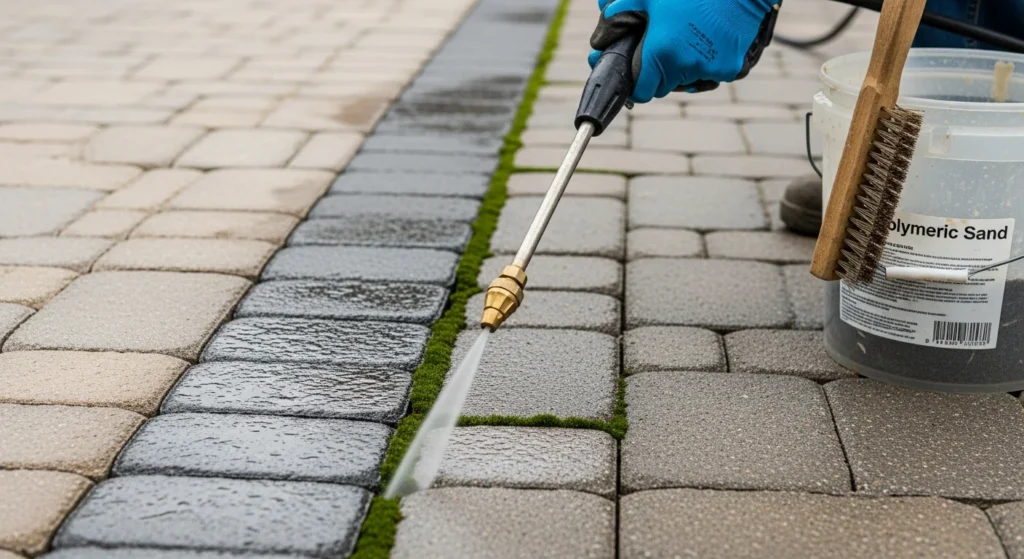
One of hardscaping’s primary advantages is relatively low maintenance compared to traditional landscaping. However, some care ensures these features remain attractive and functional for decades.
For pathways and patios, regular sweeping removes debris that can stain or promote weed growth in joints. Power washing annually refreshes appearance and removes algae or moss that might create slippery surfaces. Reapply joint sand as needed when erosion or weather washes it away. Some materials benefit from periodic sealing, which protects against stains and weather damage while enhancing color. Follow manufacturer recommendations for sealing frequency and appropriate products.
Inspect retaining walls annually for signs of movement, bulging, or cracking. These symptoms may indicate drainage problems or structural issues requiring attention. Clear weep holes and drainage outlets to maintain proper water flow. Address any settling or shifting promptly, as small problems can escalate if neglected.
Control vegetation near hardscape features. While allowing low-growing plants to soften edges creates attractive transitions, aggressive root systems can displace pavers or damage retaining wall bases. Remove weeds from joints promptly before they establish deep roots. Consider using polymeric sand in joints, as it resists weed growth better than traditional sand.
Conclusion
Hardscaping transforms outdoor spaces from simple yards into functional, beautiful environments that extend your home’s living area and reflect your personal style. Paths create intuitive movement patterns while adding visual interest to your landscape. Patios provide dedicated spaces for the activities you love, from quiet morning coffee to lively evening gatherings. Retaining walls solve practical challenges while adding architectural drama to your property.
Success with hardscaping comes from thoughtful planning that considers both immediate needs and long-term goals. Choose materials that complement your home’s architecture and suit your local climate. Pay attention to foundational details like drainage and base preparation, as these invisible elements determine whether your hardscaping thrives or fails over time.
Whether you tackle installation yourself or work with professional landscapers, understanding hardscaping fundamentals empowers you to make informed decisions that result in outdoor spaces you will enjoy for years to come. Start with a clear vision, plan carefully, and build with quality materials and proper techniques. Your investment in hardscaping pays dividends through increased property value, reduced maintenance, and most importantly, an outdoor environment that enhances your daily life and creates lasting memories.
Frequently Asked Questions
What is the difference between hardscaping and softscaping?
Hardscaping refers to non-living landscape elements like paths, patios, retaining walls, and structures made from stone, concrete, brick, or wood. Softscaping includes all living components such as plants, trees, grass, and flowers. Both work together to create balanced, functional landscapes.
How much does hardscaping typically cost?
Hardscaping costs vary widely based on materials and project scope. Basic gravel pathways might cost a few dollars per square foot, while natural stone patios can reach fifty to seventy-five dollars per square foot installed. Retaining walls typically start around five thousand dollars for simple installations. Get multiple quotes for accurate pricing.
Do I need permits for hardscaping projects?
Permit requirements depend on local building codes and project specifics. Retaining walls over four feet tall usually require permits and engineering. Patios and pathways may need permits if they alter drainage or exceed certain sizes. Always check with your local building department before starting work.
Can I install hardscaping myself or should I hire professionals?
Simple projects like gravel pathways or small stepping stone installations work well as DIY projects. Complex undertakings including large patios, engineered retaining walls, or projects requiring drainage solutions benefit from professional expertise. Consider your skill level, available time, and project complexity when deciding.
How do I maintain my hardscaping features?
Regular maintenance includes sweeping debris, power washing annually, refilling joint sand as needed, and inspecting for damage or movement. Clear drainage systems to ensure proper water flow. Some materials require periodic sealing. Address problems promptly to prevent minor issues from becoming major repairs