20+ Creative Ideas for a Spacious Bedroom
Introduction
Ideas for a Spacious Bedroom ,The bedroom is the one room in a home where comfort, personality, and design all converge. Whether you are working with a generously sized master suite or trying to create the illusion of greater square footage in a modest room, designing a spacious bedroom is both an art and a science. The decisions you make about furniture, color, lighting, and layout ripple outward to define how the entire space feels every single morning and night.
A truly spacious bedroom does not happen by accident. It is the result of deliberate choices that honor proportion, encourage open flow, and transform every corner into something purposeful. This guide walks you through more than twenty creative ideas for a spacious bedroom, drawn from real design principles and practical wisdom that any homeowner can apply, regardless of budget or room size.
1. Define Functional Zones Within the Room
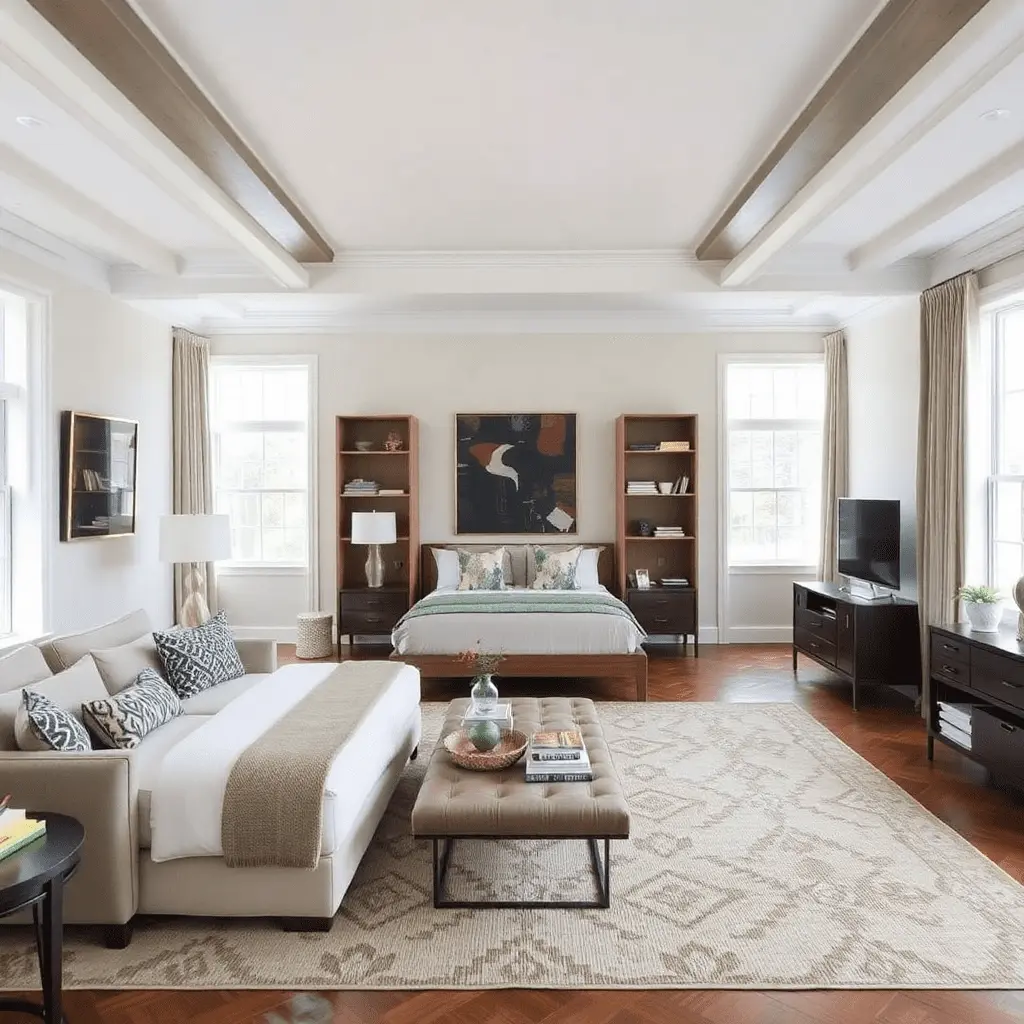
One of the most powerful ideas for a spacious bedroom is to divide the space into distinct zones. Rather than treating the entire room as one undifferentiated area, designate a sleeping zone, a reading corner, a dressing area, and perhaps a small workspace. This approach creates visual order and makes the room feel intentional. Use area rugs, low bookshelves, or furniture placement to mark these zones without erecting walls. When each area has a clear purpose, the room feels organized, expansive, and deliberately designed rather than simply large and empty.
2. Choose a Statement Bed That Commands Attention
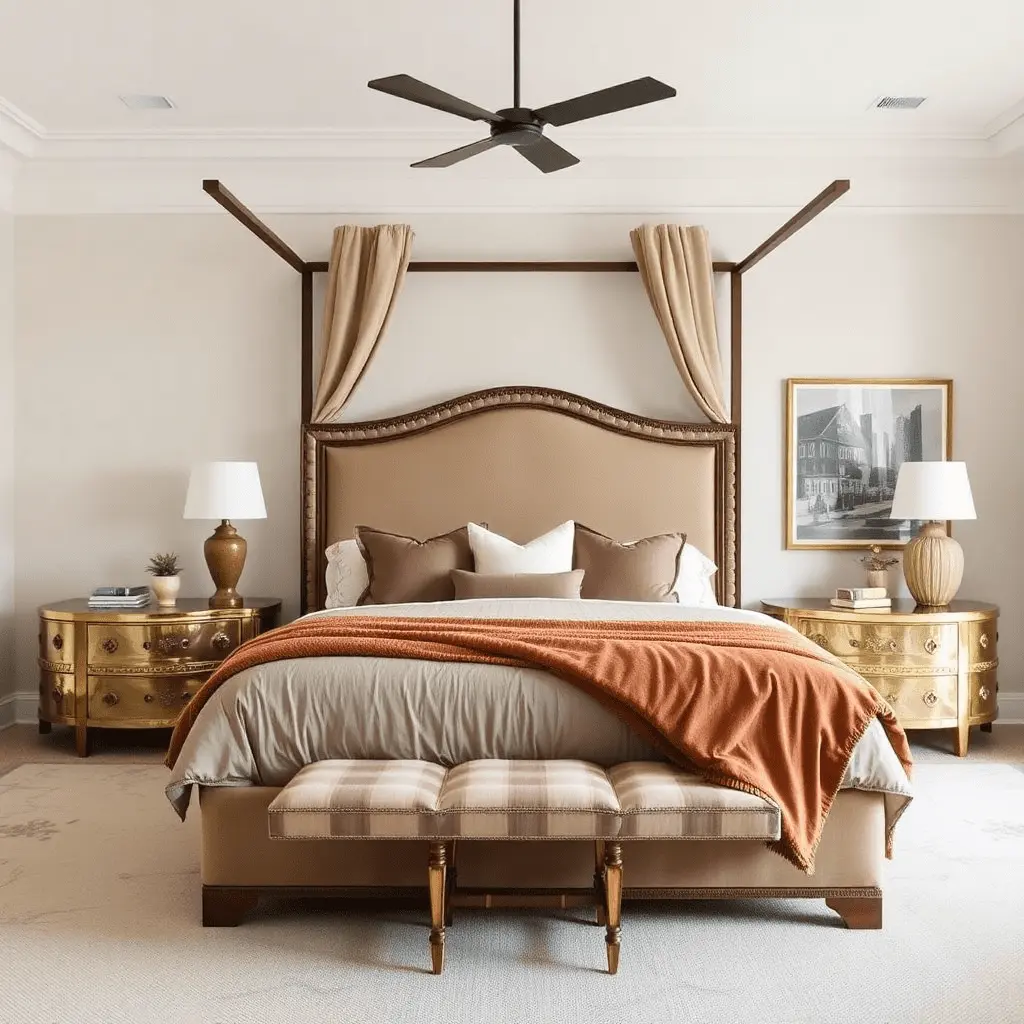
The bed is the undisputed focal point of any bedroom, and in a spacious room it must be chosen with care. A canopy bed, an upholstered platform frame with a tall headboard, or a carved wooden structure all bring a sense of scale and gravitas that smaller beds simply cannot match. When the bed commands attention and feels proportionate to the room, the entire design finds its anchor. Pair it with oversized nightstands and layered bedding in rich textures like velvet, linen, or cotton to complete the look.
3. Layer Your Lighting Strategically
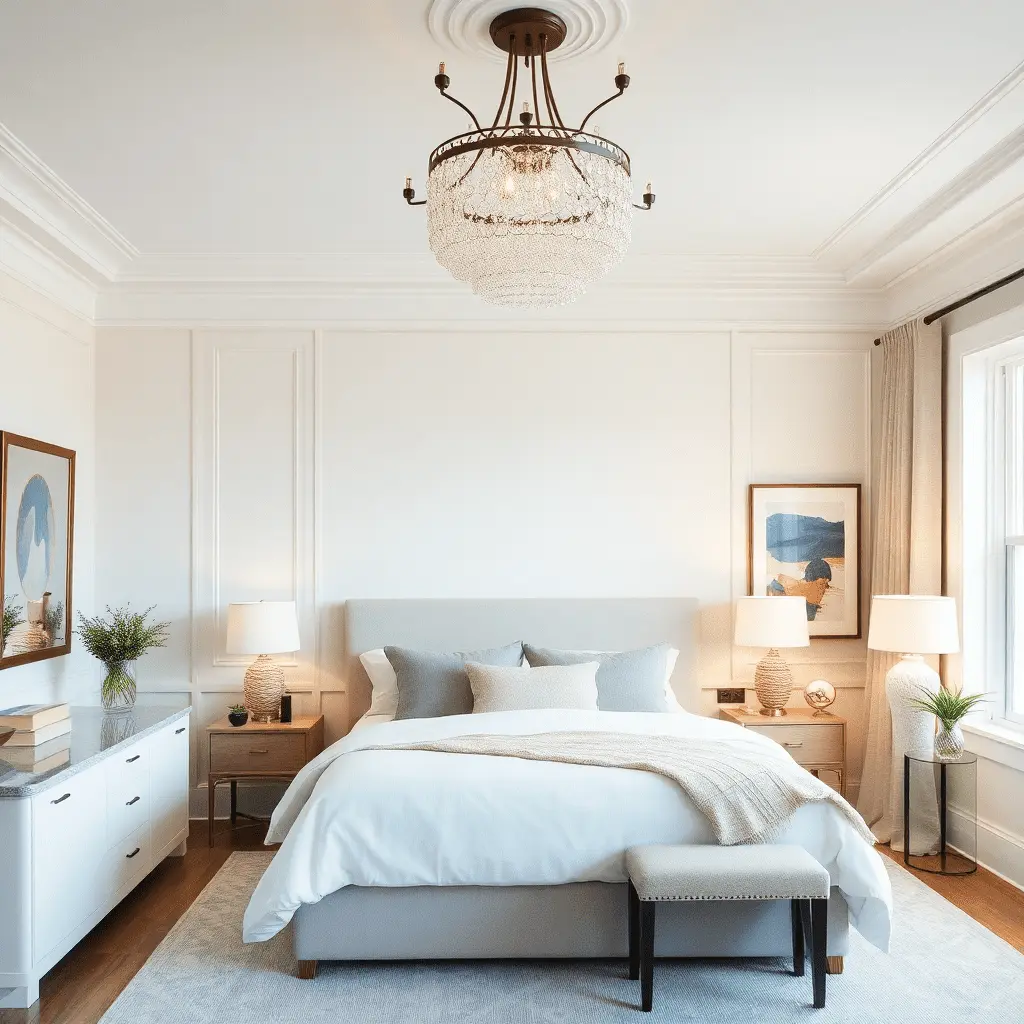
Lighting transforms how spacious a bedroom feels. Relying on a single overhead fixture flattens the space and reduces its perceived depth. Instead, layer three types of light: ambient lighting from a ceiling fixture or recessed lights, task lighting from bedside sconces or reading lamps, and accent lighting from floor lamps or LED strips behind furniture. Dimmer switches are an excellent addition because they allow you to shift the mood from energizing brightness in the morning to a calm, warm glow at night. A dramatic chandelier or a sculptural pendant light also draws the eye upward, which makes the ceiling feel higher.
4. Use Large Area Rugs to Anchor the Space
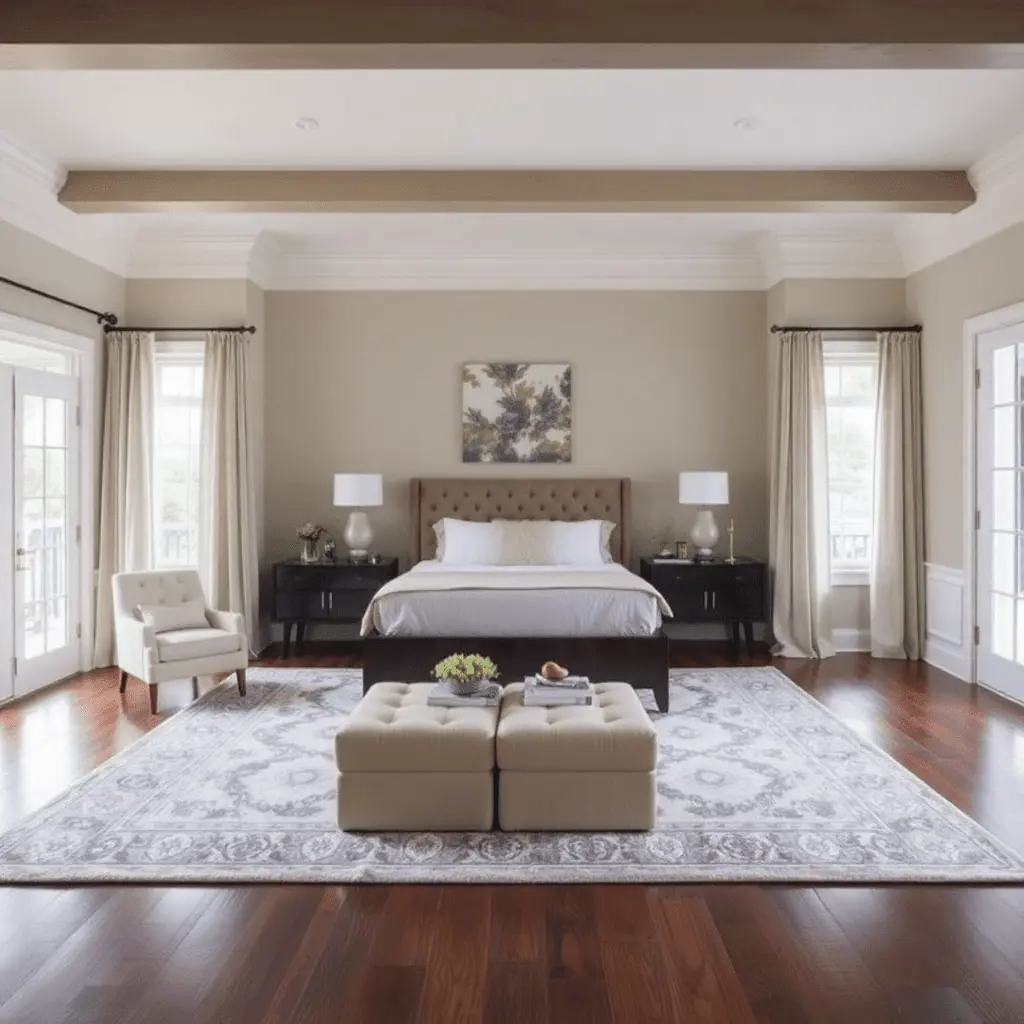
A well-chosen area rug does more than add softness underfoot. In a spacious bedroom, a rug anchors the bed and surrounding furniture, creating a cohesive island of comfort within a larger floor plan. The rug should extend at least eighteen inches beyond all sides of the bed so that when you step out in the morning, your feet land on something warm and plush. Choose a pattern or texture that harmonizes with the overall color palette but adds a subtle layer of visual interest. In rooms with multiple zones, separate rugs can define each area clearly.
5. Incorporate a Dedicated Seating Area
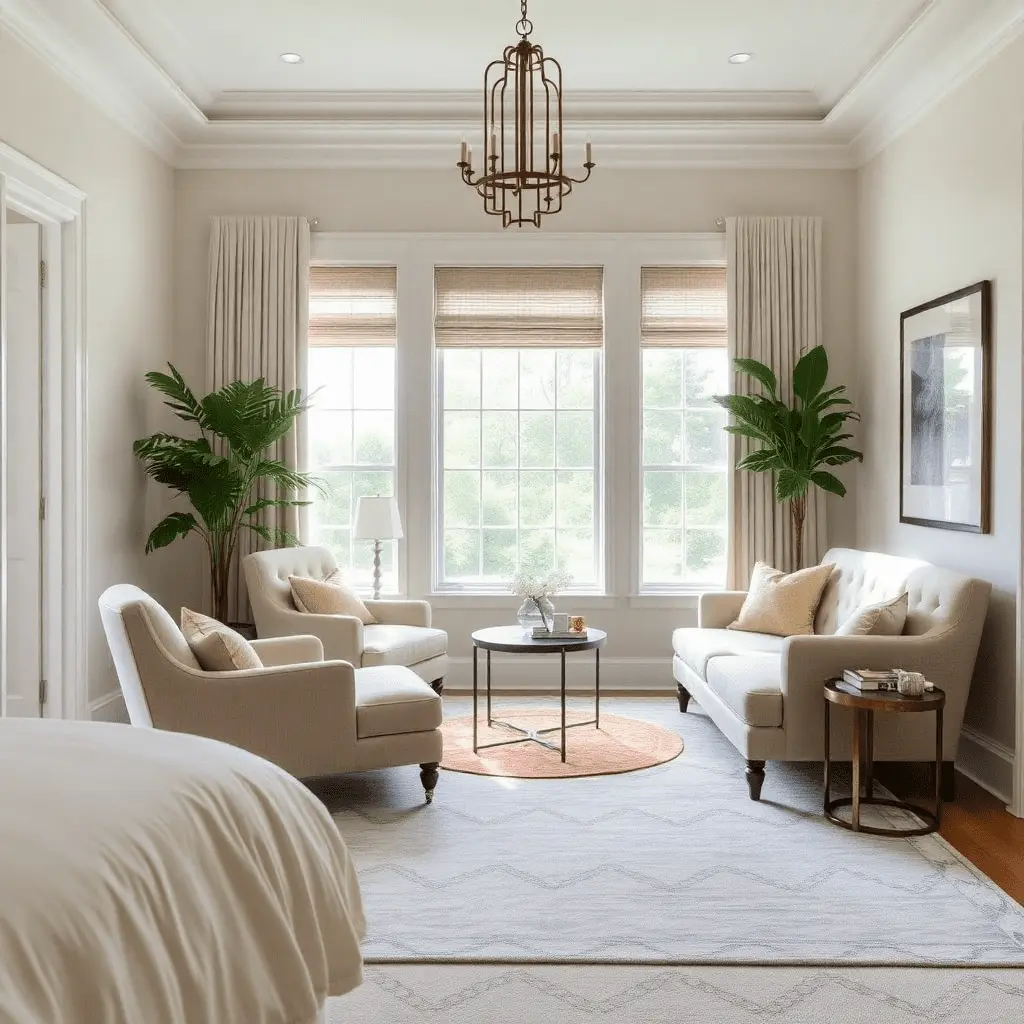
One of the most luxurious ideas for a spacious bedroom is the addition of a proper seating area. A pair of upholstered armchairs, a small sofa, or a chaise lounge positioned near a window creates a private retreat within the retreat. This corner becomes the place where you read, journal, or simply sit in quiet reflection at the start or end of the day. Ground the seating arrangement with its own area rug and a small side table or coffee table to make it feel like a complete, purposeful vignette rather than stray furniture waiting to be used.
6. Embrace Tall Headboards for Visual Height
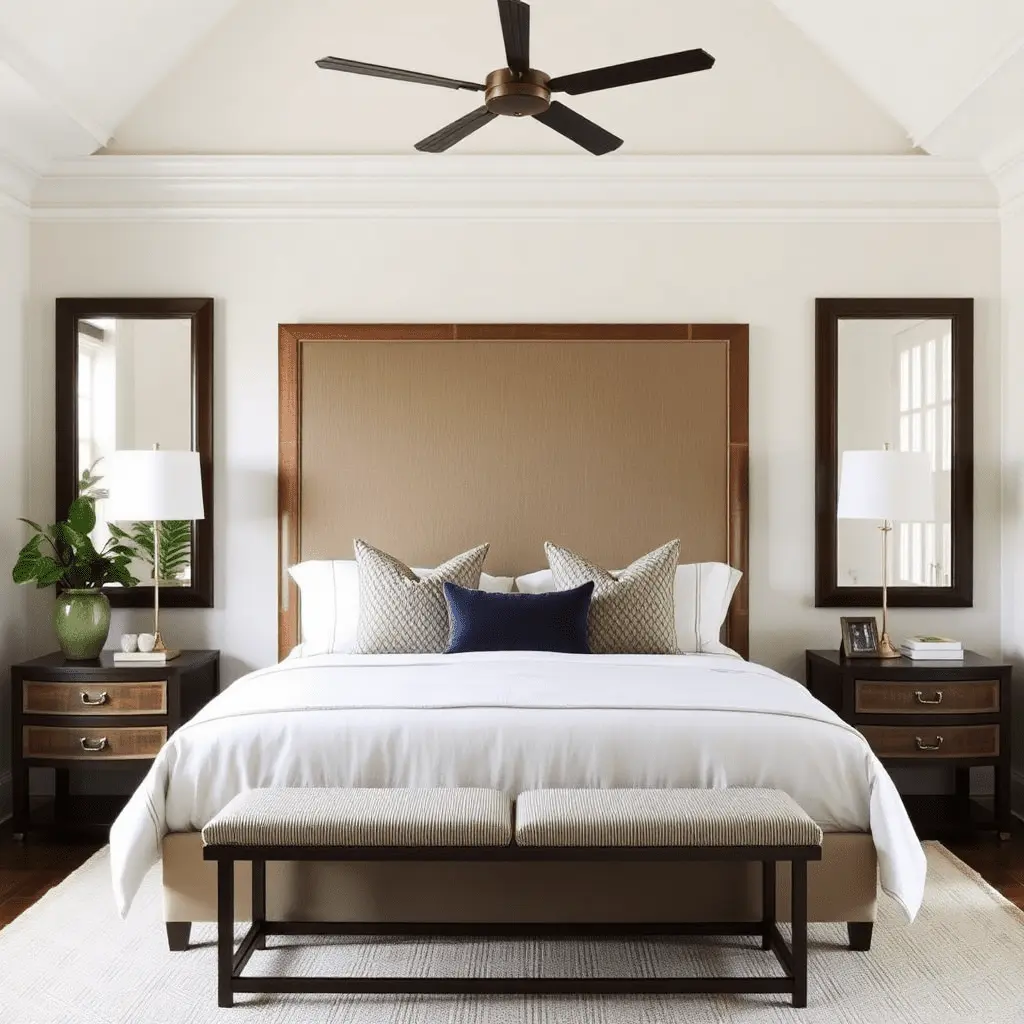
A tall headboard, particularly one that reaches toward the ceiling, is a design move that instantly makes a bedroom feel grander and more spacious in the vertical dimension. Whether upholstered in velvet, crafted from cane, or carved from solid wood, a commanding headboard becomes the visual heart of the sleeping zone. It eliminates the awkward emptiness above the bed and gives the eye a satisfying place to rest. In rooms with high ceilings, a floor-to-ceiling headboard panel or a built-in alcove behind the bed creates an effect that is both dramatic and deeply personal.
7. Maximize Natural Light With the Right Window Treatments
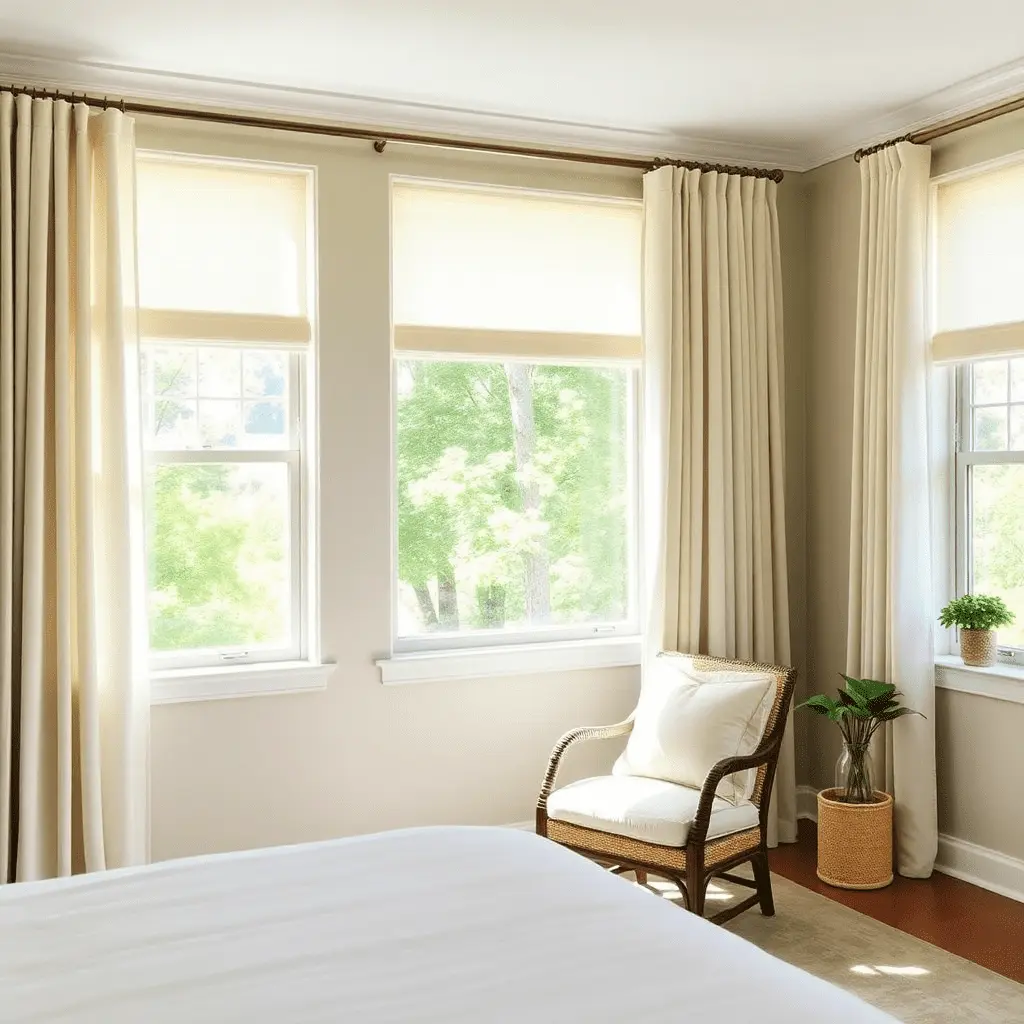
Natural light is the most effective tool for making any bedroom feel open and airy. To maximize it, hang curtains close to the ceiling and extend the rod several inches beyond the window frame on each side. This makes the window appear larger and allows more light to flood the room when the curtains are drawn back. Sheer panels layered behind heavier drapes give you flexibility throughout the day. If privacy is not a concern, leaving windows bare or fitting them with simple roller shades keeps the look clean and lets sunlight do all the design work.
8. Install Floor-to-Ceiling Curtains for Drama and Scale
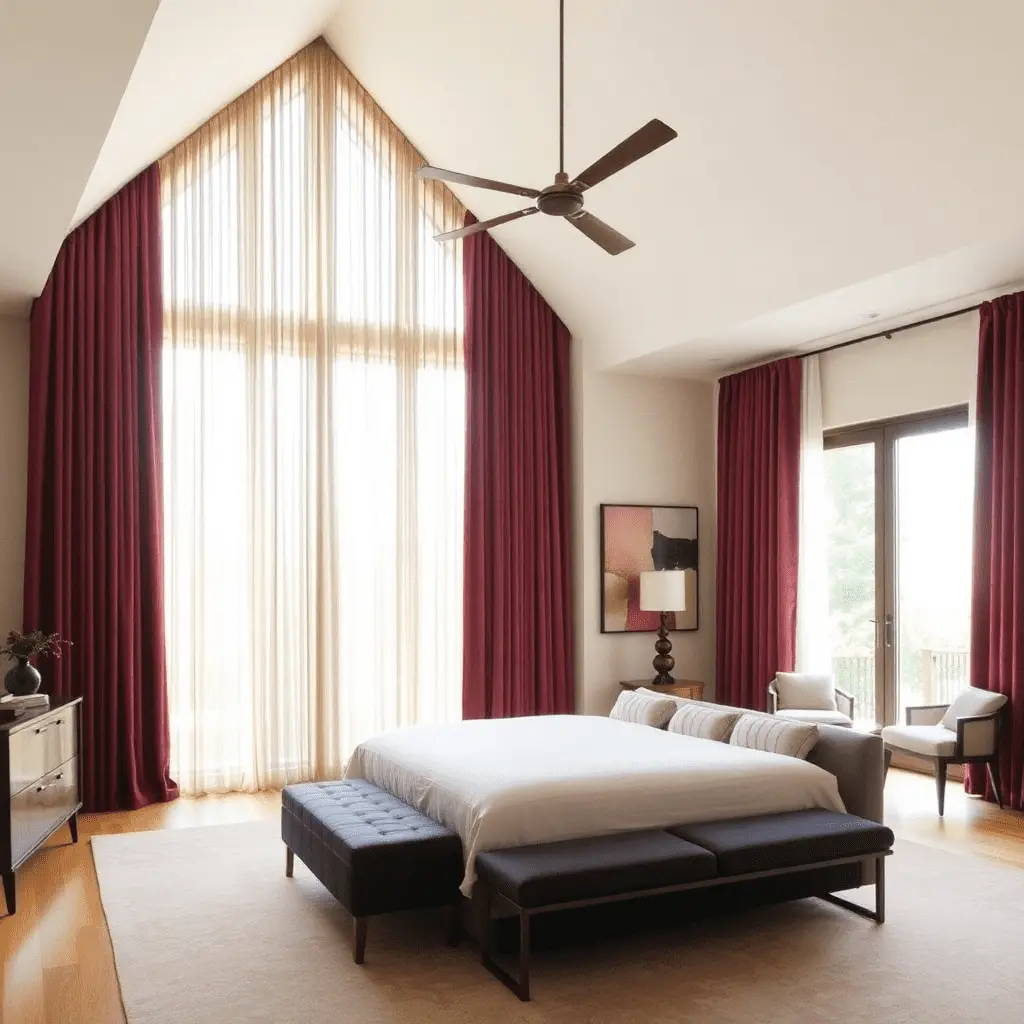
Floor-to-ceiling curtains serve two purposes simultaneously. They add a strong vertical line that draws the gaze upward, making the room feel taller, and they create a sense of softness and warmth that grounds even the most cavernous space. In a spacious bedroom, curtains in deep jewel tones, warm neutrals, or rich textures work particularly well because they introduce intimacy without sacrificing the open feel. When light passes through sheer versions of these long panels, the entire room glows.
9. Select Furniture That Is Properly Scaled
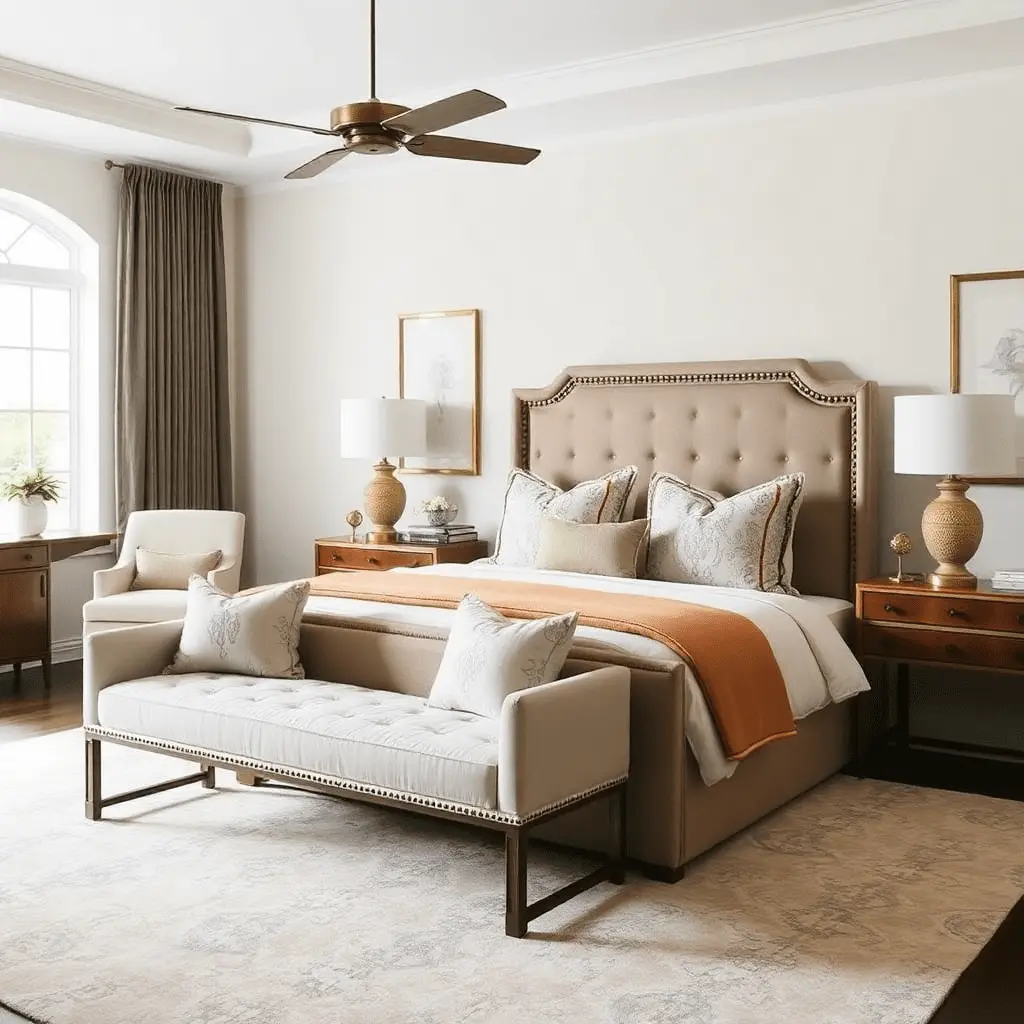
One of the most common mistakes in large bedroom design is choosing furniture that is too small for the space. Delicate side tables, slim dressers, and undersized chairs get lost in a room with generous dimensions. Instead, opt for pieces with substantial proportions: a wide dresser with bold hardware, an oversized bench at the foot of the bed, a console table that complements the full width of the wall. When furniture is correctly scaled, the room feels balanced and complete rather than sparse or under decorated.
10. Use Mirrors to Multiply Light and Depth
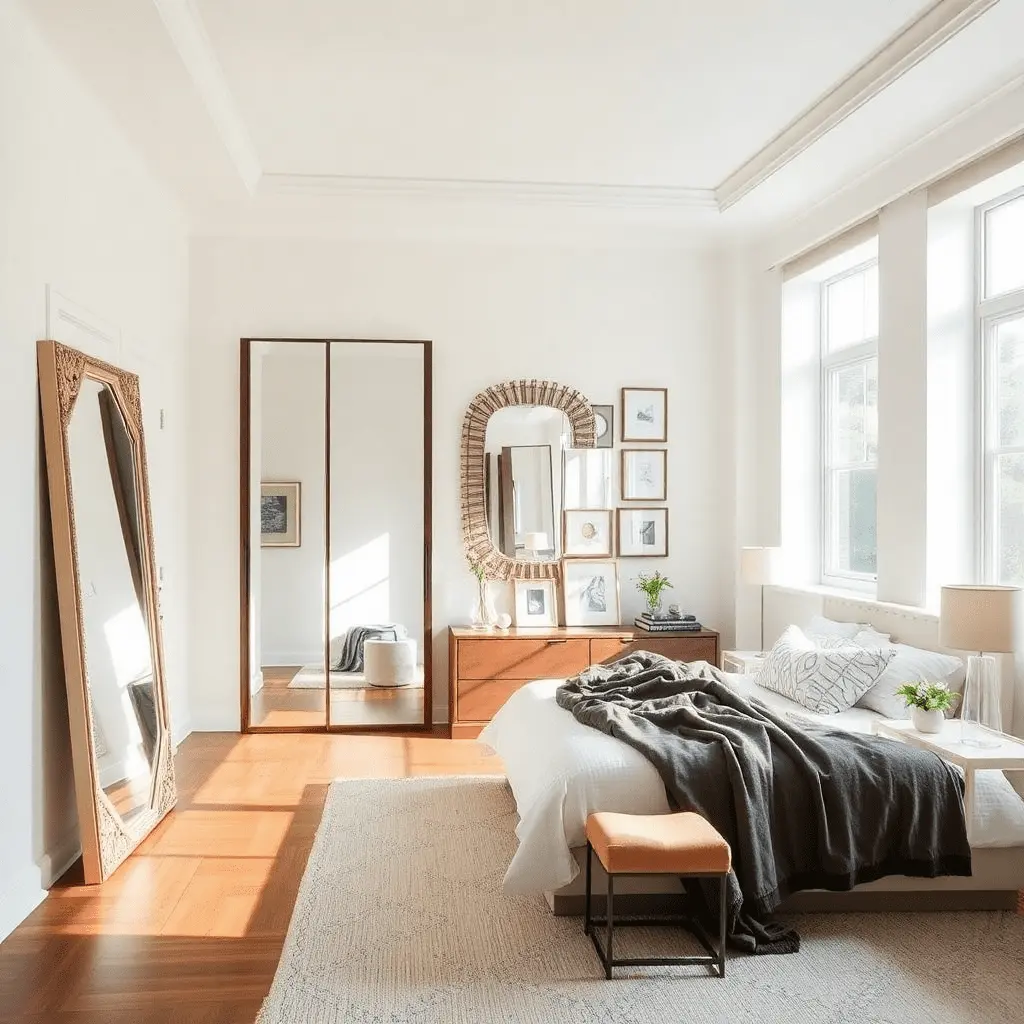
Mirrors are among the most versatile tools in bedroom design. A large floor mirror propped against a wall, a full-length mirror integrated into a wardrobe door, or a collection of smaller mirrors arranged as a gallery all serve to reflect light and visually double the perceived depth of the room. In a spacious bedroom, an abstract mirror with an interesting frame becomes a sculptural element in its own right. Placing a mirror opposite a window ensures that natural light bounces through the room all day, keeping it bright and visually expansive at every hour.
11. Experiment With Bold and Dark Color Palettes
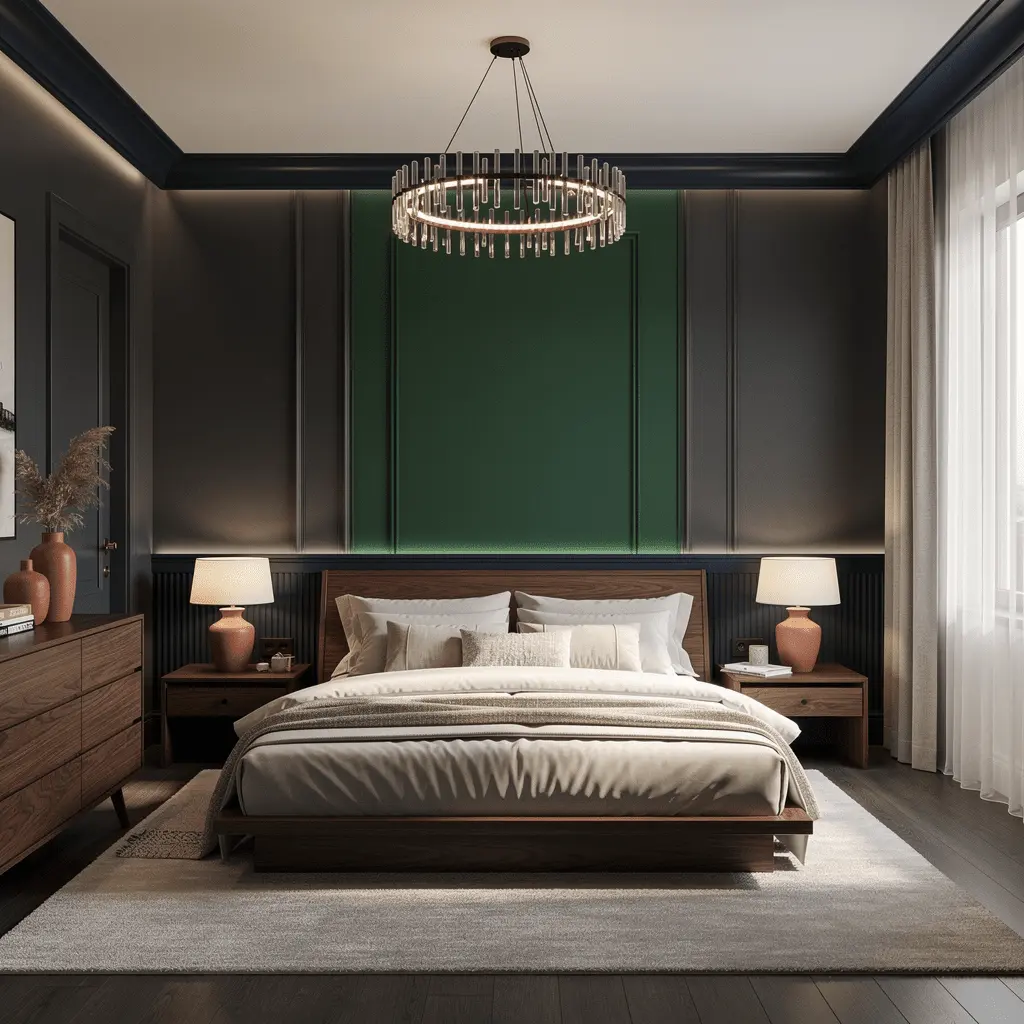
Smaller rooms benefit from light colors, but a spacious bedroom has the freedom to explore richer, deeper palettes. Charcoal walls, forest green panels, deep navy accents, or even a moody terracotta can make a large room feel intimate, enveloping, and sophisticated. The key is to balance a darker wall color with lighter bedding, natural wood tones, and ample lighting so the room glows rather than broods. A well-executed dark palette in a spacious bedroom is one of the most striking statements in contemporary interior design.
12. Add an Accent Wall With Wallpaper or Paneling
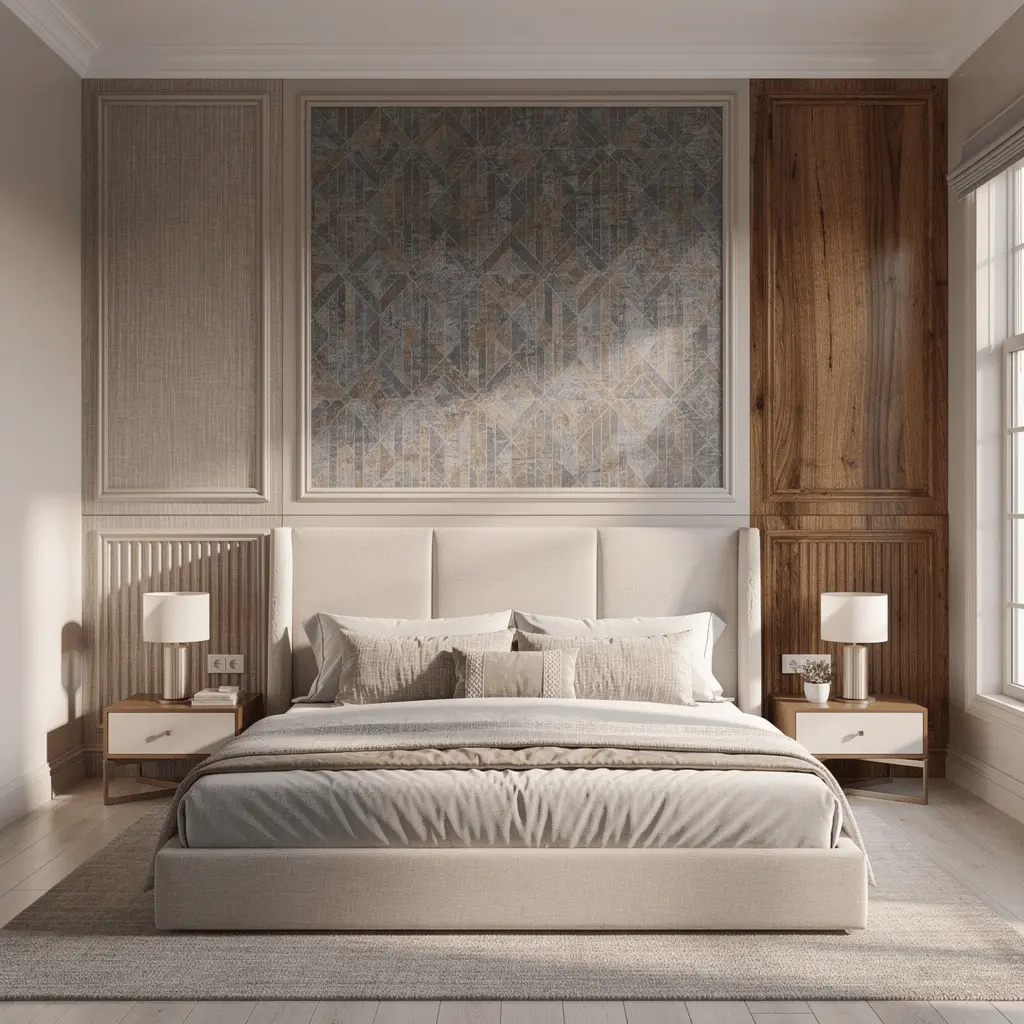
An accent wall is a focused way to introduce pattern, texture, or color without overwhelming the entire room. In a spacious bedroom, the wall behind the bed is the natural candidate. Consider grasscloth wallpaper with its organic texture, a geometric printed design that reflects your personal style, or wood paneling in a warm tone that introduces the feeling of a cozy cabin. Reeded plasterwork, shiplap, or decorative molding frames the bed beautifully and transforms what would otherwise be a plain surface into a genuine design feature.
13. Create a Private Dressing and Vanity Zone
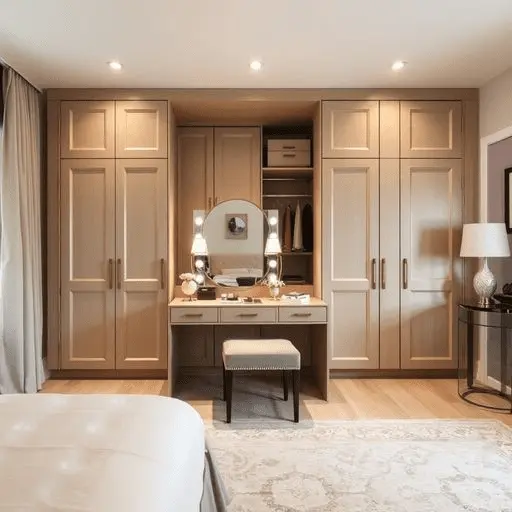
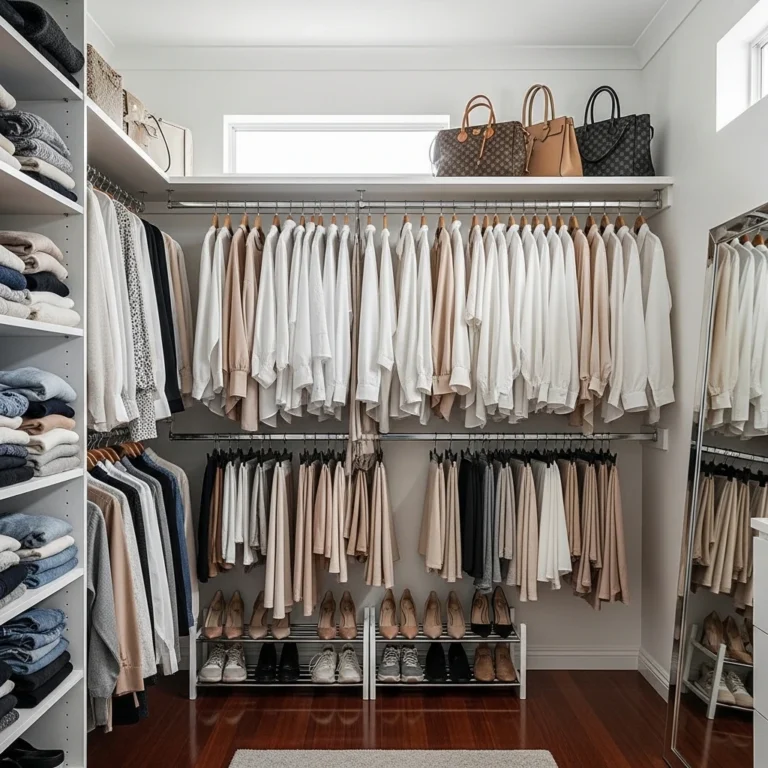
A spacious bedroom offers the rare opportunity to incorporate a full dressing and vanity area within the room itself. A dedicated dressing table with a well-lit mirror, organized storage for jewelry and cosmetics, and a comfortable stool becomes a functional ritual space. Surrounding it with floor-to-ceiling wardrobes or a walk-in closet alcove separates the dressing zone from the sleeping area in a way that feels luxurious and practical. This thoughtful separation makes the bedroom feel more like a curated personal suite than a simple sleeping room.
14. Incorporate Indoor Plants for Life and Texture
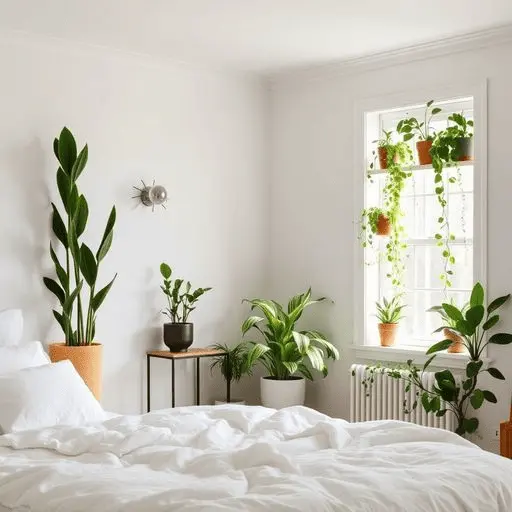
Plants bring a quality to a bedroom that no piece of furniture or paint color can fully replicate. They introduce organic shape, soft texture, and a sense of calm vitality. In a spacious bedroom, a tall potted plant in a corner draws the eye upward and fills a vertical gap that would otherwise feel empty. Smaller trailing plants on floating shelves or a curated collection on a windowsill add layers of greenery without cluttering surfaces. Beyond their visual contribution, plants improve air quality and create a subtle connection to the natural world that supports genuine rest.
15. Consider a Tray or Coffered Ceiling for Architectural Interest
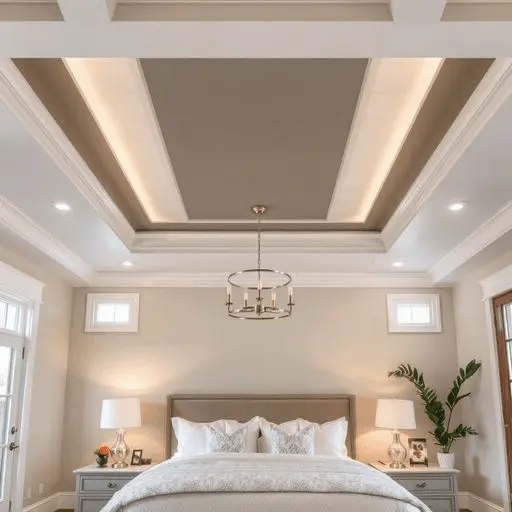
The ceiling in a spacious bedroom is a canvas that most homeowners leave completely blank. A tray ceiling, coffered design, or the addition of decorative molding dramatically changes how the room feels by adding architectural depth and visual interest overhead. Paint the recessed portion of a tray ceiling in a deeper tone than the walls to create a layered, dimensional effect. Add recessed lighting or an LED strip within the tray to illuminate the detail softly at night. This single investment transforms the room from a simple box into a considered, finished interior.
16. Introduce a Reading Nook or Window Seat
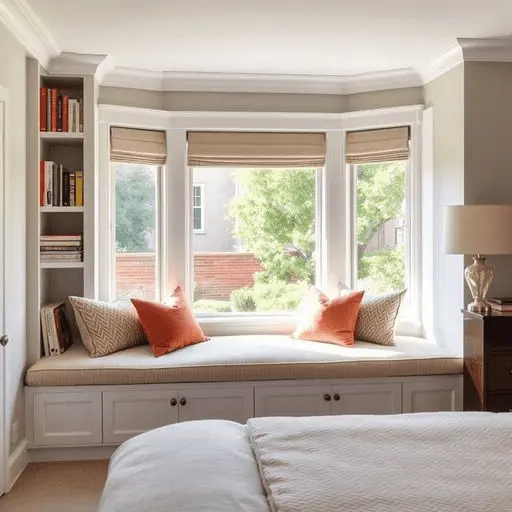
A built-in window seat or a cozy reading nook tucked into an alcove is one of the most charming and practical ideas for a spacious bedroom. Line the seat with thick cushioning, add pillows in complementary colors, and install shelves above or below for books and personal items. This small gesture creates a self-contained world within the bedroom where relaxation is the only agenda. If the window faces a garden, a courtyard, or an interesting streetscape, the nook becomes even more valuable as a quiet observation point at any time of day.
17.Use Built-In Storage to Eliminate Visual Clutter
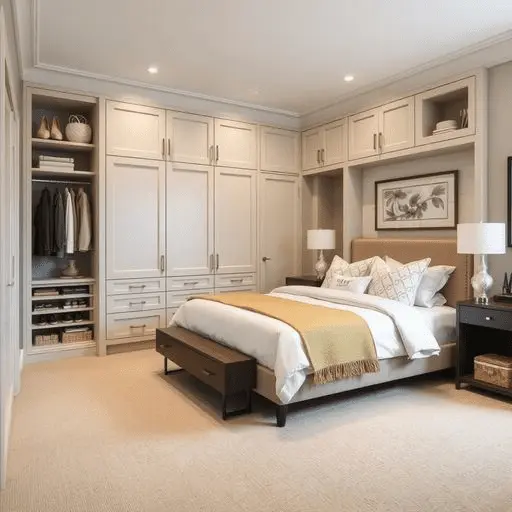
Clutter is the fastest way to destroy the feeling of spaciousness in any bedroom, no matter how generous its dimensions. Built-in wardrobes, under-bed storage drawers, and recessed shelving keep possessions organized and out of sight. When storage is built directly into the architecture of the room, it disappears into the walls and allows the rest of the design to breathe. Custom cabinetry can be painted to match the walls for a seamless effect, or finished in a contrasting tone to serve as a design element in its own right.
18. Place a Bench or Ottoman at the Foot of the Bed
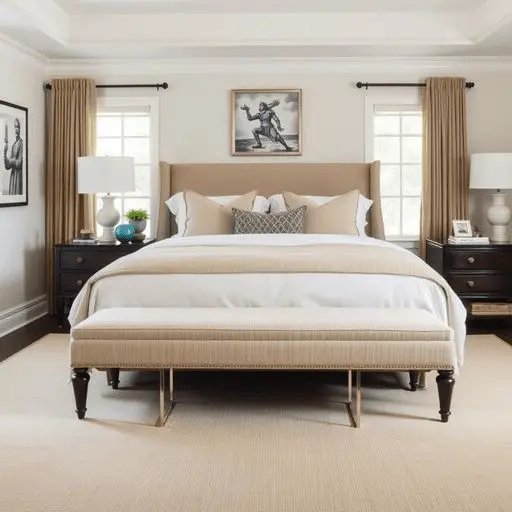
A bench or upholstered ottoman positioned at the foot of the bed is a small detail that carries enormous design weight. It creates a visual anchor below the bed, adds a practical surface for laying out clothes or pulling on shoes, and contributes a second layer of texture and color to the sleeping area. In a spacious bedroom, choose a bench with generous proportions, perhaps one with a storage compartment inside, and upholster it in a fabric that either echoes or complements the bedding. This piece completes the bed arrangement and signals that every part of the room has been considered.
19. Lay Flooring on a Diagonal for Visual Expansion
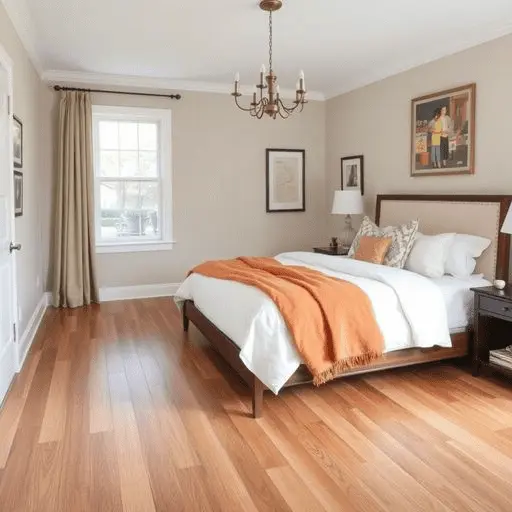
The direction in which flooring is installed has a measurable effect on how large a room feels. Hardwood planks, tiles, or laminate laid on a forty-five-degree diagonal rather than parallel to the walls confuse the eye in the best possible way. The angled lines do not align with the room’s boundaries, which makes the floor area appear larger than it truly is. This technique is particularly effective in rooms that are square or modestly proportioned, but it adds a dynamic, unexpected quality to genuinely spacious bedrooms as well.
20. Style the Walls With Oversized Art
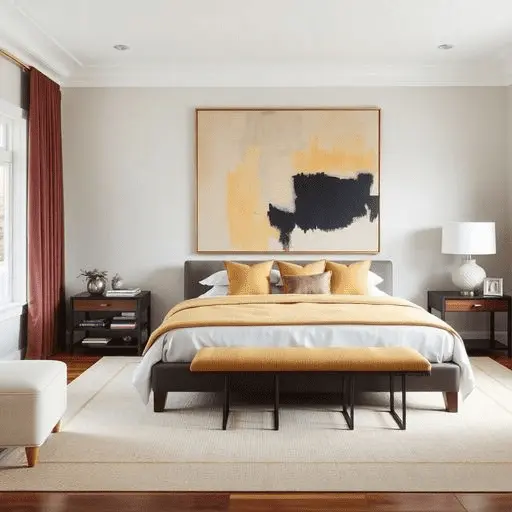
In a room with generous wall space, small art pieces look timid and out of place. A single large-scale painting, an oversized photograph, or a bold textile hung as a statement piece fills the wall confidently and gives the room a clear sense of personality. One dramatic piece requires no supporting work if it is strong enough. Position it on the wall opposite the bed, where it will be the first thing seen upon waking, and choose a work that genuinely reflects your taste. Large art signals that the room has been curated rather than merely furnished.https://symboleo.com/big-bedroom-design-ideas/
21. Design a Mini Home Office or Creative Corner
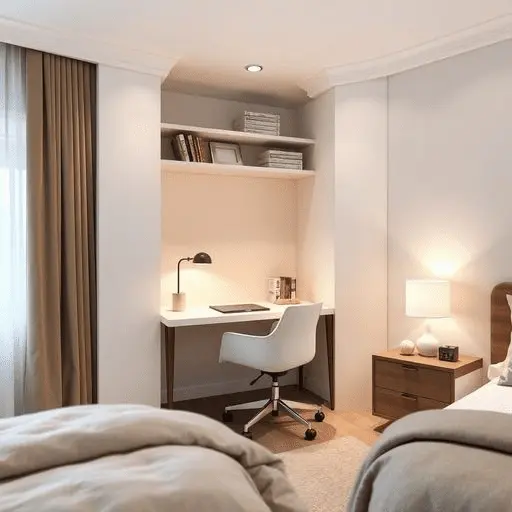
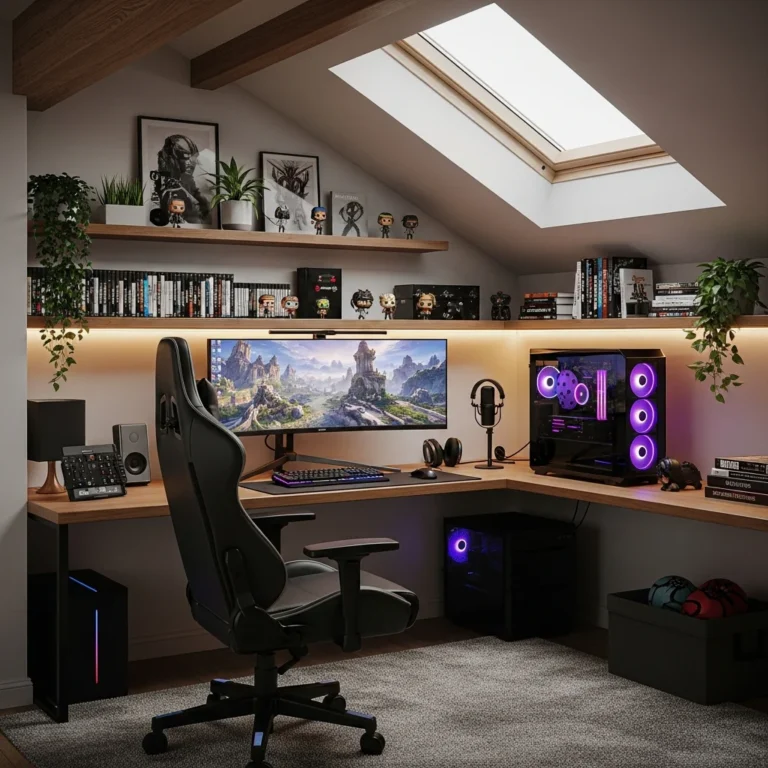
For those who work from home or simply need a quiet space for focused thought, a small home office corner within the bedroom is a genuinely useful addition. A sleek writing desk, a well-designed task chair, and a set of shelves above it create a self-contained workspace that does not intrude on the restful quality of the room. Use a bookcase, a room divider, or even a curtain to gently separate the desk area from the sleeping zone, reinforcing the idea that the bedroom contains multitudes. When the workday ends, close the curtain or fold away the chair, and the bedroom reclaims its identity as a sanctuary.
Conclusion
Designing a spacious bedroom is ultimately about making every element work in harmony. It means choosing furniture that fits the scale of the room, lighting that layers warmth and function, storage that erases clutter, and details that reflect genuine personality. Whether you implement one of these ideas or weave together several, the result is a bedroom that feels deliberate, welcoming, and deeply personal. A bedroom that has been thought through with care is not just a place to sleep. It becomes one of the most restorative rooms in the entire home.
Frequently Asked Questions
Q1. What is the most important design principle for a spacious bedroom? Proportion is the single most important principle. Every element, from furniture to art to rugs, must be scaled correctly to the room’s dimensions. Undersized pieces make a large room feel awkward, while properly scaled furniture creates balance and cohesion.
Q2. How can I make a large bedroom feel cozy instead of cold and empty? Layer textures through bedding, rugs, and curtains, use warm lighting, add a dedicated seating area, and introduce deeper accent colors on one or two walls. Breaking the room into functional zones also makes it feel purposeful and warm rather than vast and undefined.
Q3. What colors work best in a spacious bedroom? Spacious bedrooms can handle both light and dark palettes. Light neutrals maximize airiness, while deep tones like charcoal, navy, and forest green create intimacy and sophistication. The key is balancing darker walls with good lighting and lighter furnishings.
Q4. How do mirrors help in bedroom design? Mirrors reflect natural and artificial light, visually double the depth of the room, and add a sculptural element to the decor. A large floor mirror or mirrored wardrobe doors are the most impactful choices for creating a sense of openness and brightness.
Q5. Is it a good idea to include a workspace in the bedroom? Yes, provided it is visually separated from the sleeping area. A dedicated desk corner with its own storage and lighting adds practical value without undermining the restful atmosphere. Using a curtain, bookshelf, or room divider to partition the workspace helps maintain the bedroom’s identity as a place of rest.