21+ Modern Ideas for Outdoor Step Lights
Outdoor step lighting transforms the safety and aesthetics of your home’s exterior spaces. Whether you’re navigating a garden pathway at dusk or welcoming guests to your front entrance, properly illuminated steps prevent accidents while creating an inviting atmosphere. The right lighting solution combines functionality with design, enhancing your property’s curb appeal and extending the usability of outdoor areas well into the evening hours.
Modern outdoor step lights have evolved far beyond basic safety features. Today’s options incorporate advanced technology, energy-efficient systems, and sophisticated designs that complement any architectural style. From minimalist recessed fixtures that disappear into the structure to bold statement pieces that serve as focal points, the possibilities are extensive. This comprehensive guide explores over twenty innovative ideas for outdoor step lighting, helping you select solutions that meet your specific needs while elevating your home’s exterior design.
Understanding the Basics of Outdoor Step Lighting
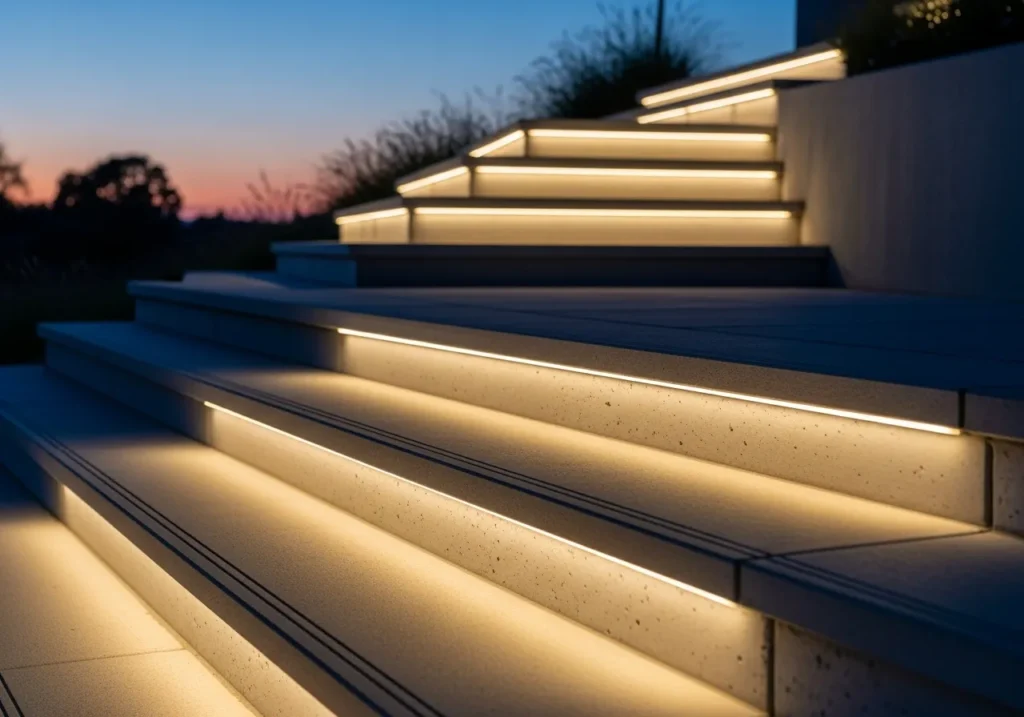
Before exploring specific design ideas, it’s essential to understand the fundamental principles that make outdoor step lighting effective. The primary purpose remains safety, ensuring that each step edge is clearly visible in low-light conditions. Proper illumination reduces the risk of trips and falls, which become significantly more likely when steps are poorly lit or completely dark.
Beyond safety, outdoor step lights contribute to the overall ambiance of your property. They create visual interest, highlight architectural features, and guide visitors through your outdoor spaces. The strategic placement of lights can make narrow pathways feel more welcoming and transform ordinary concrete steps into an attractive design element.
When planning your outdoor step lighting, consider the balance between adequate illumination and avoiding excessive brightness that causes glare. The goal is to provide enough light to see each step clearly without overwhelming the natural evening atmosphere or creating harsh shadows that can actually reduce visibility.
Recessed LED Step Lights for Seamless Integration
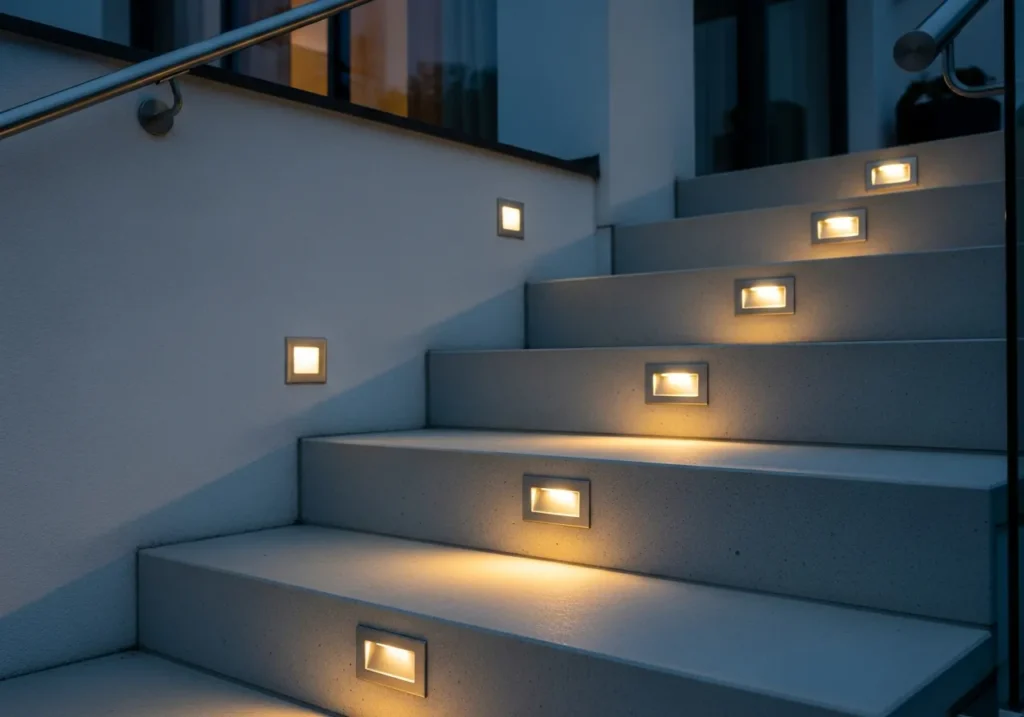
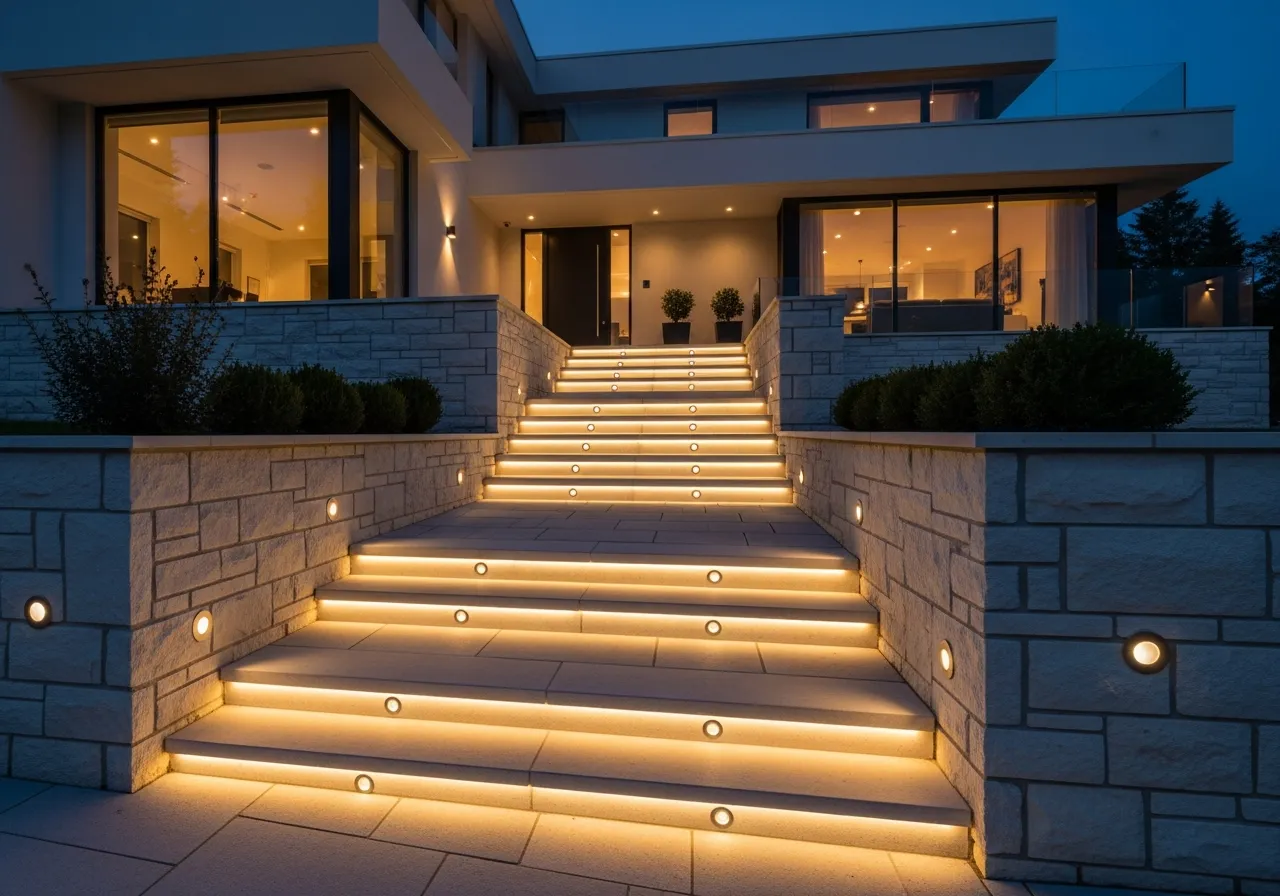
Recessed LED fixtures offer one of the most popular solutions for outdoor step lighting. These lights mount flush with the vertical riser or horizontal tread of each step, creating a clean, modern appearance that doesn’t protrude or interfere with foot traffic. The seamless integration makes them ideal for contemporary homes where minimalist design is preferred.
The installation process for recessed lights requires cutting into the step material, which works best during new construction or major renovations. However, the effort yields long-lasting results with minimal maintenance needs. LED technology ensures these fixtures consume minimal energy while providing years of reliable illumination.
Many recessed step lights feature directional beams that cast light downward onto the next step, creating a cascading effect that’s both functional and visually appealing. This approach prevents light from shining directly into people’s eyes while ensuring each step surface receives adequate illumination. The fixtures come in various finishes, including brushed nickel, bronze, and black, allowing you to match existing hardware and design elements.
Solar-Powered Solutions for Eco-Friendly Illumination
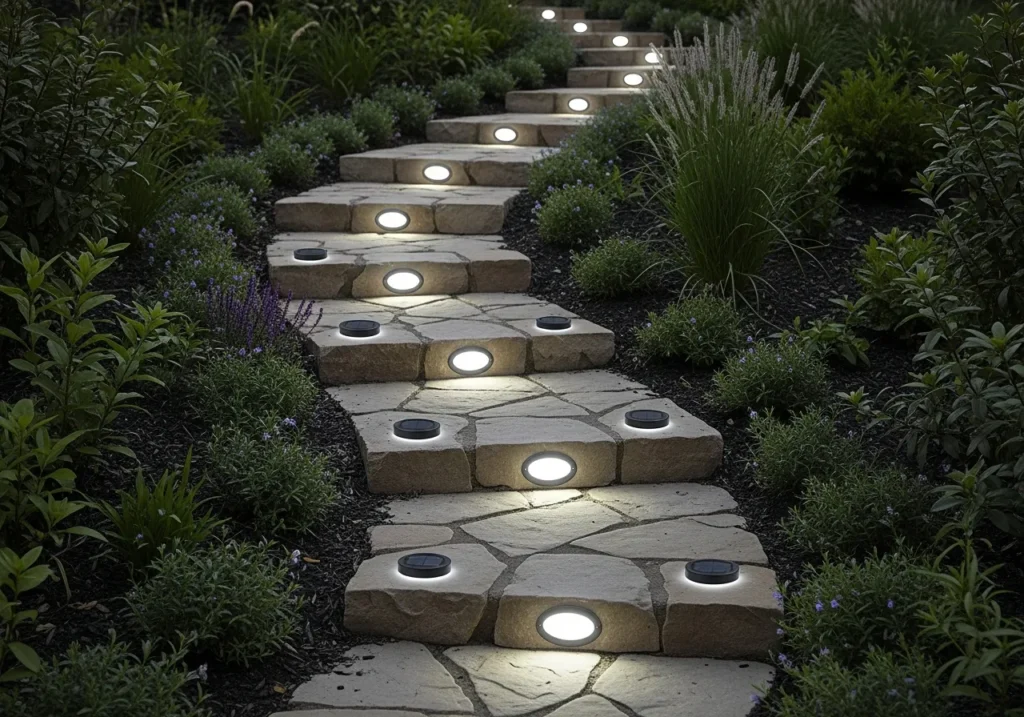
Solar-powered outdoor step lights represent an environmentally conscious choice that eliminates the need for electrical wiring. These self-contained units feature small photovoltaic panels that charge internal batteries during daylight hours, then automatically illuminate at dusk. The technology has improved dramatically in recent years, with modern solar lights providing surprisingly bright and consistent illumination.
The primary advantage of solar step lights is installation simplicity. Without requiring electrical connections, you can position them anywhere that receives adequate sunlight during the day. This flexibility makes them perfect for garden stairs, remote pathways, or rental properties where permanent electrical installations aren’t feasible. Too see some more lighting ideas on stairs visit Lightopia.
When selecting solar step lights, pay attention to battery capacity and panel efficiency. Higher-quality models maintain illumination throughout the night even after cloudy days, while budget options may dim significantly or shut off prematurely. Position the solar panels where they’ll receive maximum sun exposure, even if this means using fixtures with separated panels connected by weatherproof cables.
Strip Lighting for Continuous Illumination
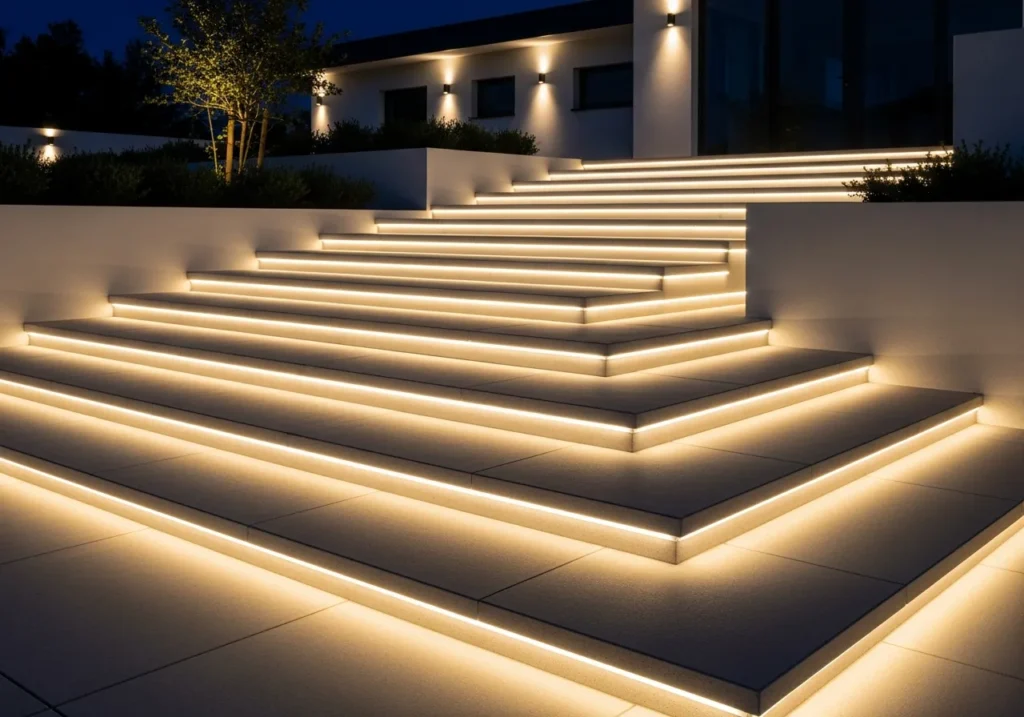
LED strip lighting provides continuous illumination along the entire length of steps rather than individual point sources. This approach creates a modern, sophisticated look while ensuring consistent visibility across every tread and riser. The flexible strips can follow curved staircases, wrap around corners, and adapt to irregular step configurations.
Installation typically involves mounting an aluminum channel that holds the LED strip, protecting it from weather and physical damage while providing heat dissipation. The channels come in various profiles, including recessed, surface-mounted, and corner designs that fit different step geometries. Frosted covers diffuse the individual LED points into a smooth, uniform glow.
Strip lighting systems often include dimming capabilities and color-changing options, allowing you to adjust the ambiance for different occasions. White light ensures optimal visibility for everyday use, while warmer tones or accent colors can create dramatic effects for entertaining. Smart controllers enable scheduling, remote adjustments, and integration with broader home automation systems.
Motion-Activated Step Lights for Energy Efficiency
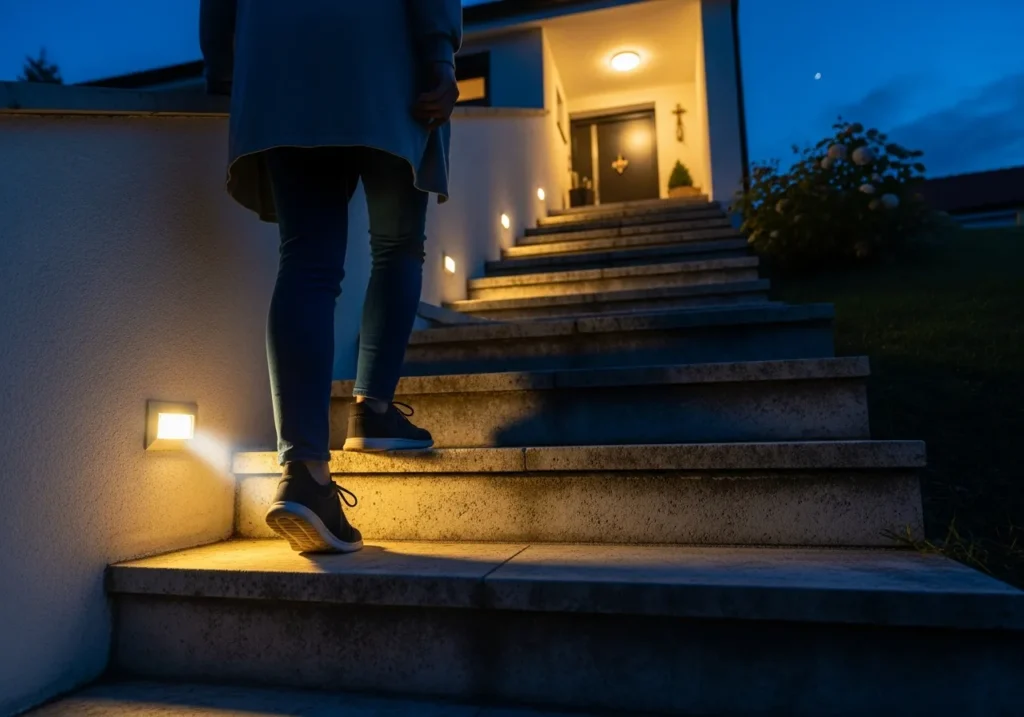
Motion-activated outdoor step lights combine safety with energy conservation by illuminating only when someone approaches. Advanced sensors detect movement within a specified range, triggering the lights to turn on and remain active for a preset duration before automatically shutting off. This functionality dramatically reduces energy consumption compared to lights that run continuously through the night.
Modern motion sensors have become highly sophisticated, distinguishing between human movement and small animals or windblown debris that might cause false triggers. Adjustable sensitivity settings and detection zones allow you to fine-tune the system’s responsiveness to match your specific environment and preferences.
The psychological benefit of motion-activated lighting extends beyond energy savings. When lights suddenly illuminate your approach, they create an impression of intelligent responsiveness that feels welcoming to residents and guests while potentially deterring unwanted visitors. This security aspect makes motion-activated step lights particularly valuable for front entrance stairs and side yard pathways.
Bollard-Style Lights Flanking Outdoor Steps
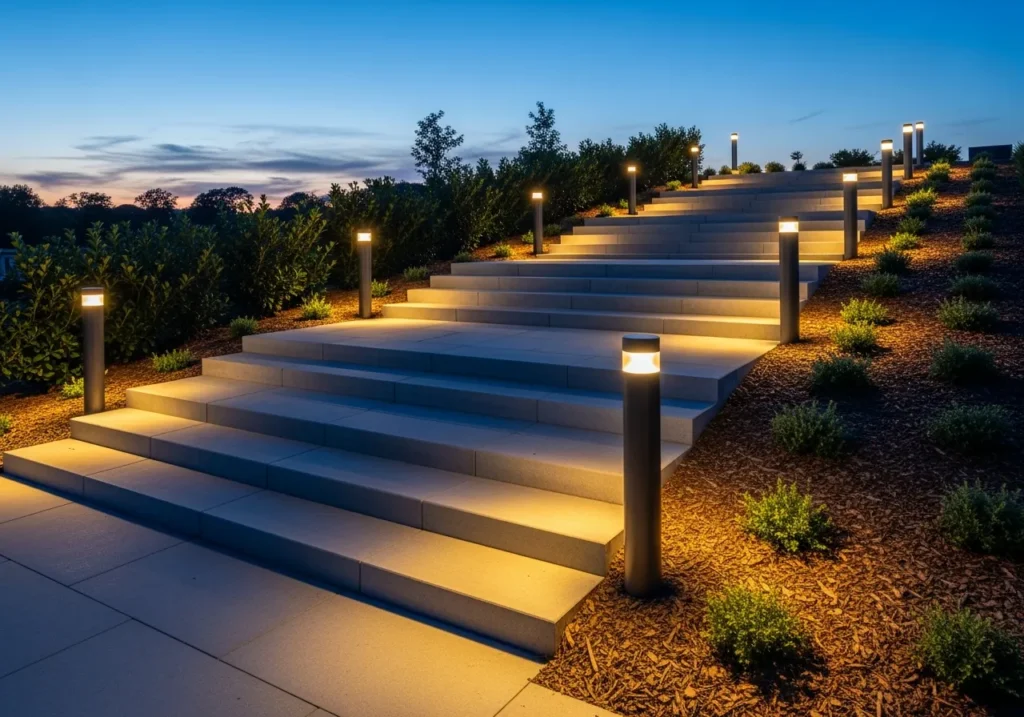
Bollard lights positioned alongside steps provide indirect illumination that’s less harsh than fixtures mounted directly on the steps themselves. These vertical posts typically stand between two and four feet tall, casting pools of light that overlap to create consistent visibility without creating glare. The approach works especially well for wider staircases where side-mounted fixtures can adequately illuminate the entire step width.
The design variety in bollard lighting is extensive, ranging from traditional lantern styles that complement classic architecture to sleek contemporary cylinders perfect for modern homes. Materials include powder-coated aluminum, stainless steel, and composite materials designed to withstand harsh weather conditions without corroding or fading.
Bollard lights offer the advantage of easier installation since they don’t require cutting into existing steps or dealing with the structural complications of embedding fixtures. They simply anchor into the ground or mounting surface beside the stairs. This accessibility also simplifies future maintenance, as damaged fixtures can be replaced without affecting the step structure itself.
Under-Rail Lighting for Elevated Elegance
Installing lights beneath handrails creates a floating illumination effect that’s both practical and visually striking. The fixtures mount to the underside of the railing, directing light downward onto the steps while remaining hidden from direct view. This technique works beautifully on deck stairs, porch steps, and any staircase with substantial railings.
The hidden nature of under-rail lighting creates a clean aesthetic where the light source remains mysterious, allowing the illumination itself to become the design feature. The approach is particularly effective when combined with other lighting techniques, such as recessed step lights, to create layered illumination with depth and visual interest.
Installation considerations include ensuring the railing structure can support the additional fixtures and routing wiring through posts or along the underside of rails. Some systems use low-voltage connections that simplify electrical work, while others integrate directly into smart railing systems designed with built-in lighting capabilities. The key is weatherproofing all connections and using fixtures rated for outdoor exposure.
Vintage Lantern-Style Step Lighting
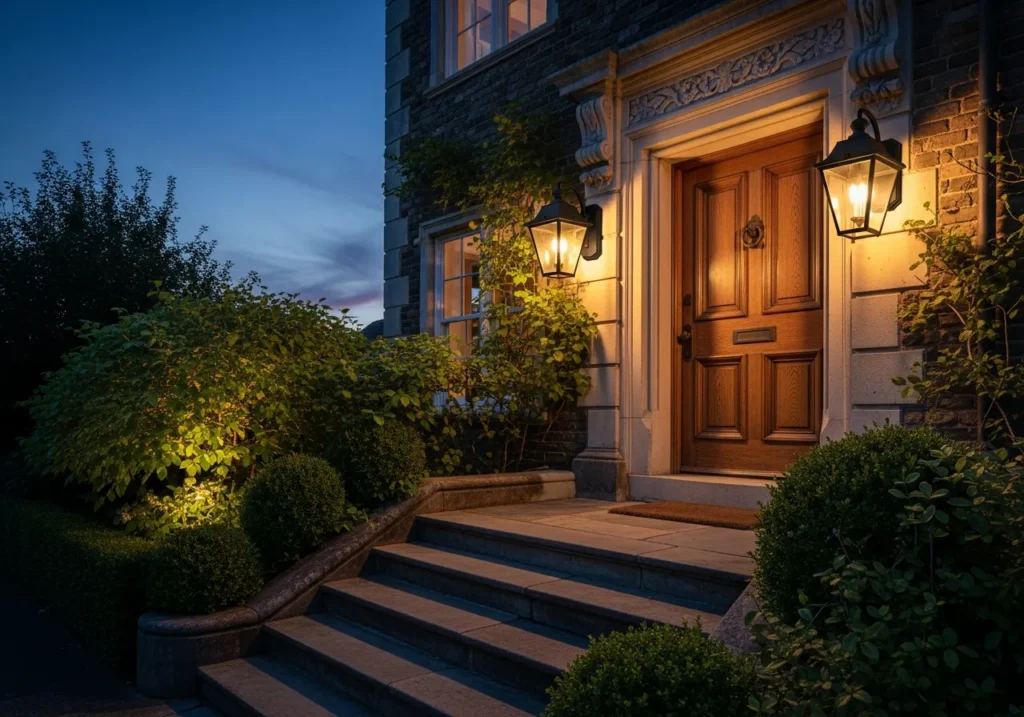
For homes with traditional or historic architectural styles, vintage lantern-style step lights provide period-appropriate illumination that enhances rather than detracts from the building’s character. These fixtures evoke gas lamp aesthetics while incorporating modern LED technology for efficiency and reliability. The warm glow from lantern-style lights creates an inviting atmosphere perfect for welcoming entrances.
Mounting options include wall-mounted fixtures positioned beside step landings, post-mounted lanterns flanking the stairway, or hanging lanterns suspended from overhead structures. The variety allows you to match the specific architectural details of your home while maintaining consistent style throughout the property. Finishes like oil-rubbed bronze, aged copper, and black iron complement traditional color palettes.
Despite their vintage appearance, modern lantern-style lights incorporate contemporary features like LED bulbs, photocell sensors for automatic operation, and weatherproof construction that surpasses historical counterparts. This combination of classic aesthetics and modern functionality makes them ideal for homeowners who value timeless design without sacrificing convenience or efficiency.
Color-Changing RGB Lights for Versatility
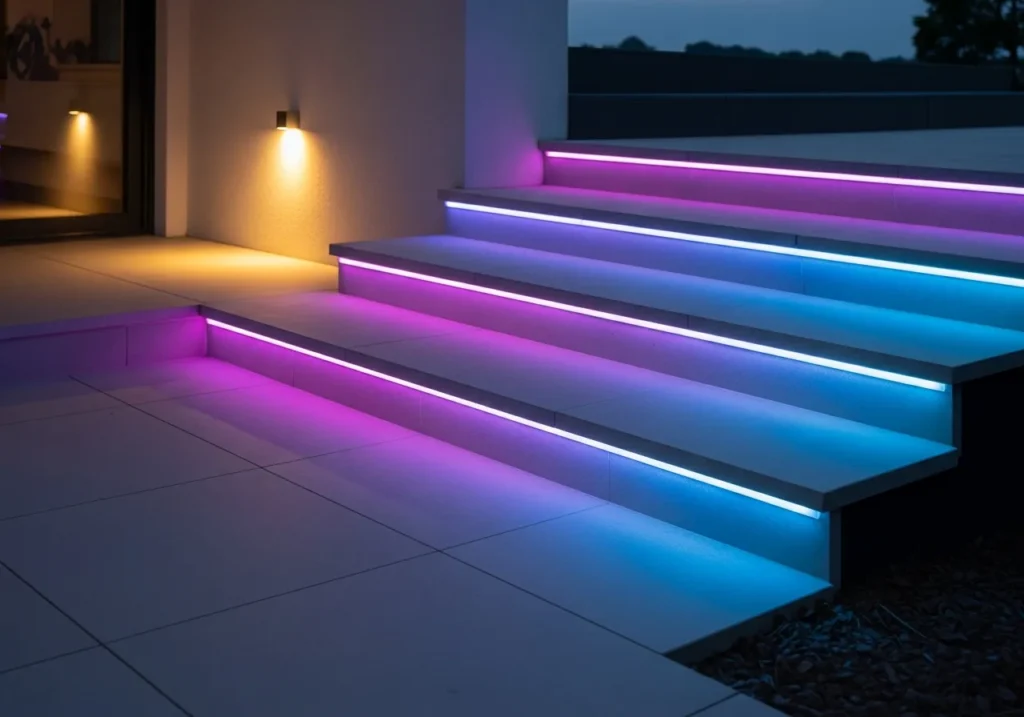
RGB LED step lights offer the ultimate flexibility by allowing you to change colors to match different moods, seasons, or special occasions. These fixtures contain red, green, and blue LED elements that can mix to create millions of color combinations, controlled through smartphone apps, remote controls, or integrated smart home systems. The technology enables everything from subtle warm whites for everyday use to vibrant colors for celebrations.
Beyond entertainment value, color-changing capabilities serve practical purposes. Different colors can demarcate various outdoor zones, with warm whites for primary pathways and cooler tones for secondary routes. Seasonal color adjustments help maintain appropriate ambiance throughout the year, with warmer tones during winter months and cooler hues for summer evenings.
When implementing RGB step lighting, consider investing in quality controllers that allow programming of complex lighting scenes and schedules. Advanced systems enable smooth color transitions, dimming curves, and synchronization with music or other environmental triggers. The initial investment in sophisticated controls pays dividends in long-term versatility and user satisfaction.
Fiber Optic Step Lighting for Unique Effects
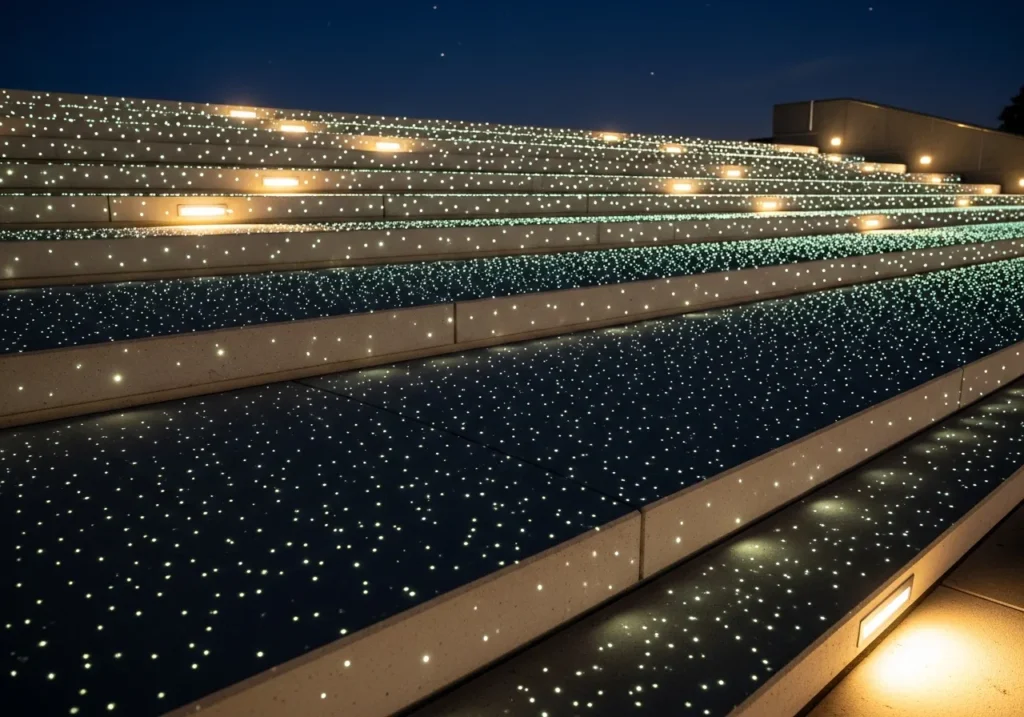
Fiber optic technology offers a unique approach to outdoor step lighting that’s virtually maintenance-free and incredibly durable. The system uses a central illuminator that generates light, which travels through thin fiber optic cables to create illuminated points along the steps. Since the fibers carry light without electricity, they’re inherently safe even in wet conditions and won’t corrode over time.
The visual effect of fiber optic step lights resembles tiny stars embedded in the step surfaces, creating a magical ambiance that’s particularly striking in contemporary and artistic installations. The fibers can be arranged in various patterns, from simple linear rows marking step edges to elaborate designs that transform the stairway into an artistic statement.
Installation complexity is moderate, requiring routing of fiber bundles from the central illuminator to each step location. However, once installed, the system requires minimal maintenance since only the central light source needs occasional bulb replacement. The absence of electrical components in the actual step locations eliminates concerns about water damage, corrosion, or electrical hazards that affect traditional lighting systems.
Low-Voltage Copper Path Lights Along Steps
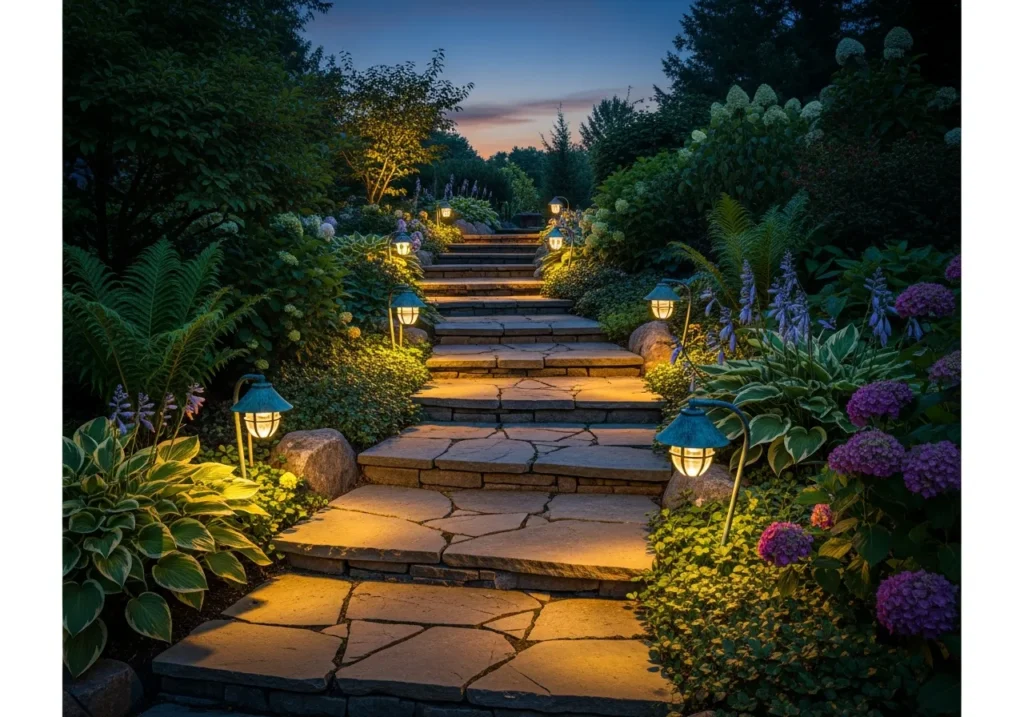
Low-voltage copper path lights positioned along outdoor steps develop a beautiful patina over time, creating a living finish that becomes more attractive as it ages. These fixtures typically operate on twelve-volt systems that are safer and easier to install than standard line-voltage lighting. The combination of low voltage operation and durable copper construction makes them ideal for garden stairs and natural landscape settings.
The warm glow from copper fixtures complements stone, brick, and wood step materials particularly well, creating cohesive designs that feel organic rather than imposed. As the copper patinas from bright metallic tones to rich verdigris, the lights develop individual character that reflects their specific environment and exposure conditions. This natural aging process appeals to homeowners who appreciate materials that improve with time.
Installation of low-voltage systems involves running cables from a transformer to each fixture location. While this requires more planning than solar options, the consistent performance and brighter illumination justify the additional effort. Modern low-voltage transformers include timers, photocells, and dimming controls that automate operation and reduce energy consumption during late-night hours when full brightness isn’t necessary.
Smart Step Lights with Voice Control Integration
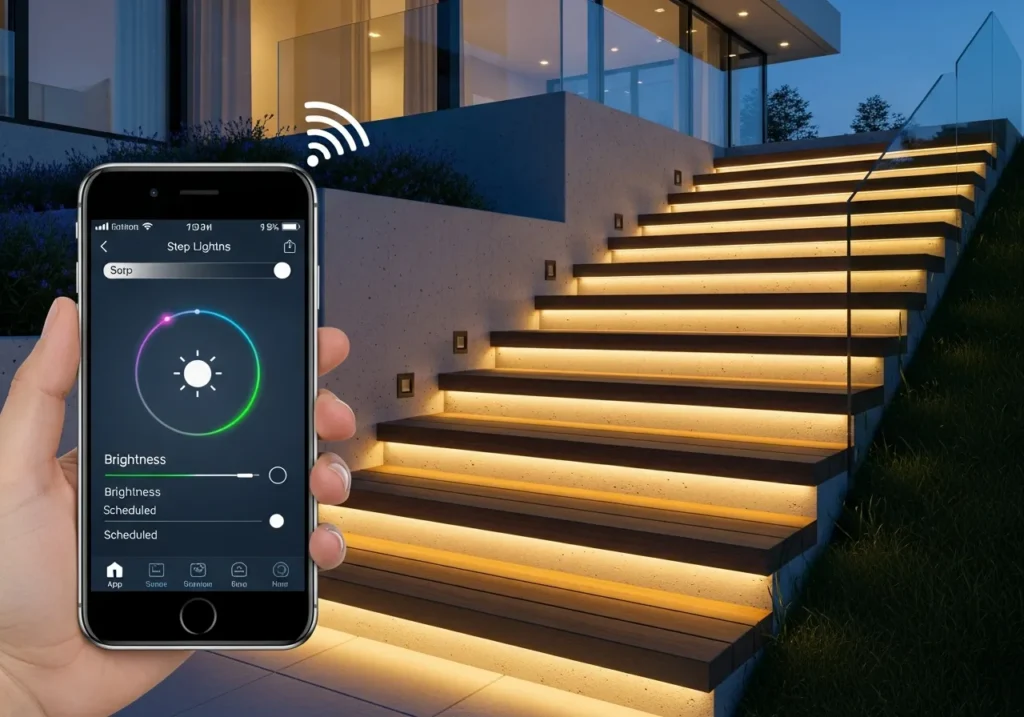
Smart outdoor step lights integrate with popular home automation platforms, enabling voice control through systems like Amazon Alexa, Google Assistant, and Apple HomeKit. This connectivity allows you to adjust brightness, change colors, set schedules, and create automation routines using simple voice commands or smartphone apps. The convenience extends beyond novelty, providing practical benefits for daily use and enhanced security features.
Integration with broader smart home systems enables sophisticated automation scenarios. Your step lights can automatically illuminate when your smart door lock disengages, adjust brightness based on ambient light sensors, or coordinate with security cameras to provide optimal lighting for video recording. Geofencing capabilities can trigger lights as you approach home, ensuring safe navigation before you reach the door.
When selecting smart step lights, verify compatibility with your existing smart home ecosystem and consider the reliability of the manufacturer’s cloud services. Local control options that don’t depend on internet connectivity provide backup functionality during network outages. Look for systems that support firmware updates to ensure long-term compatibility as smart home standards evolve.
Ground-Level Uplighting for Dramatic Effect
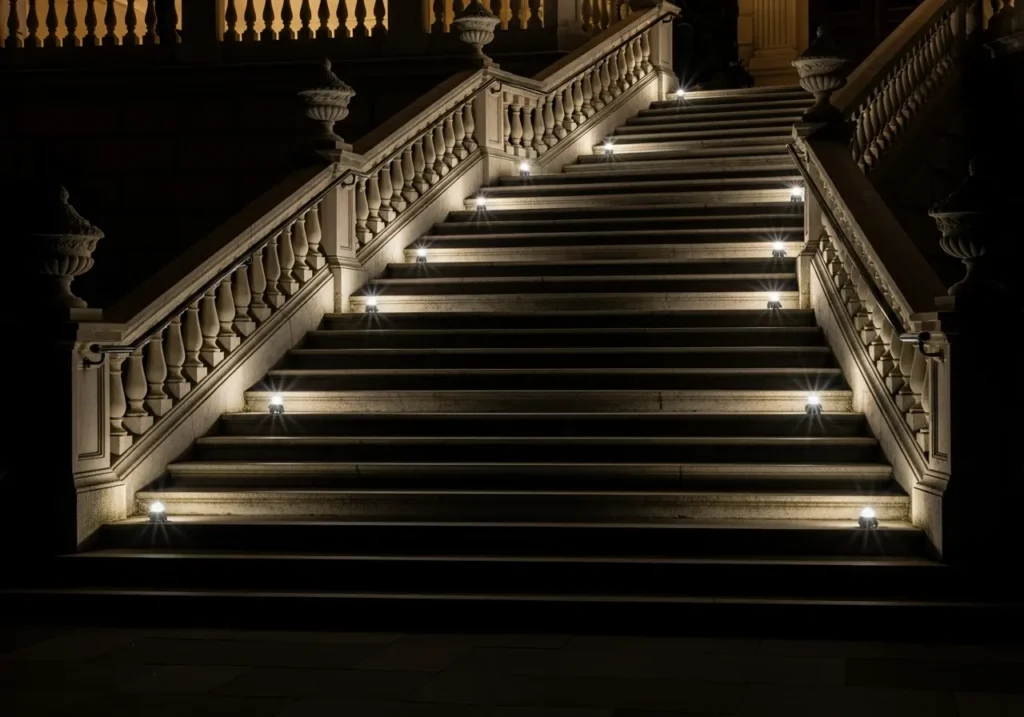
Positioning lights at ground level to cast illumination upward creates dramatic shadows and highlights the architectural details of steps and surrounding structures. This theatrical approach works particularly well for grand entrances, showcase staircases, and outdoor entertaining areas where ambiance is as important as safety. The uplighting technique draws eyes upward, making spaces feel larger and more impressive.
The key to successful uplighting is fixture placement that avoids creating blinding glare for people ascending or descending the steps. Lights should angle away from primary sight lines while still providing adequate illumination for safe passage. Strategic positioning may involve placing fixtures slightly to the sides of steps rather than directly in the center, allowing light to wash across surfaces at beneficial angles.
Uplighting fixtures require robust weatherproofing since they sit directly on the ground where water accumulation and debris collection are inevitable. Look for designs with sealed housings, tempered glass lenses, and drainage features that prevent water from compromising electrical components. Stainless steel or heavy-duty composite materials ensure longevity in harsh outdoor environments.
Minimalist Horizontal Strip Lights on Risers
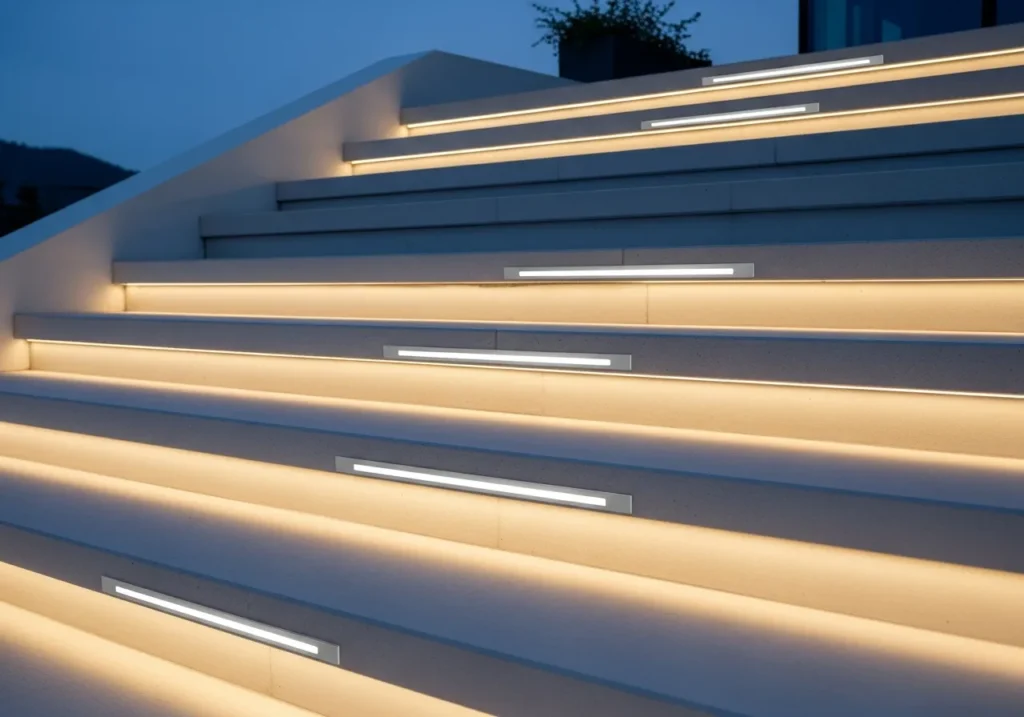
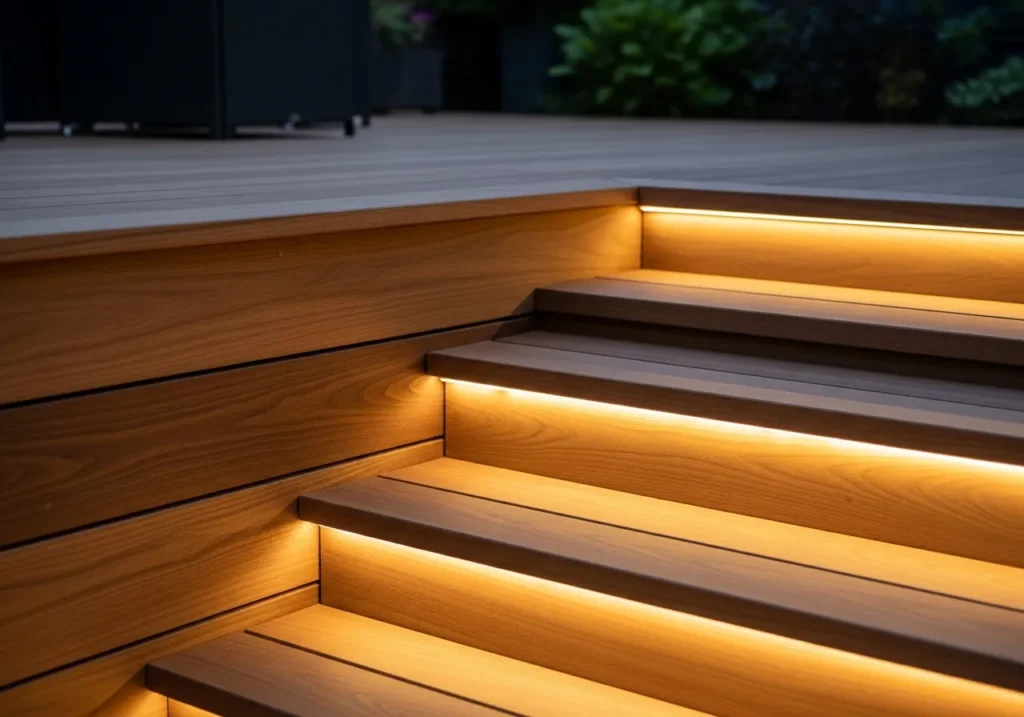
Installing thin horizontal LED strips directly on step risers creates a minimalist aesthetic that’s increasingly popular in modern architecture. These low-profile fixtures provide just enough illumination to define each step edge without dominating the visual space. The result is lighting that serves its purpose efficiently while maintaining clean lines and uncluttered appearances.
The slim profile of riser-mounted strips makes them ideal for retrofitting existing stairs without major structural modifications. Adhesive-backed strips simplify installation, though supplementing with mechanical fasteners ensures long-term stability as adhesives age and weather exposure takes its toll. Aluminum extrusions designed specifically for outdoor applications provide structure and protection while maintaining the minimal visual impact.
Color temperature selection significantly impacts the overall effect of riser-mounted strip lights. Cool white temperatures create a modern, crisp appearance that suits contemporary designs, while warm whites feel more inviting and work better with traditional architecture. Neutral whites around 4000K offer a balanced option that looks clean without feeling sterile, appropriate for a wide range of design styles.
Mason Jar and DIY Rustic Step Lighting
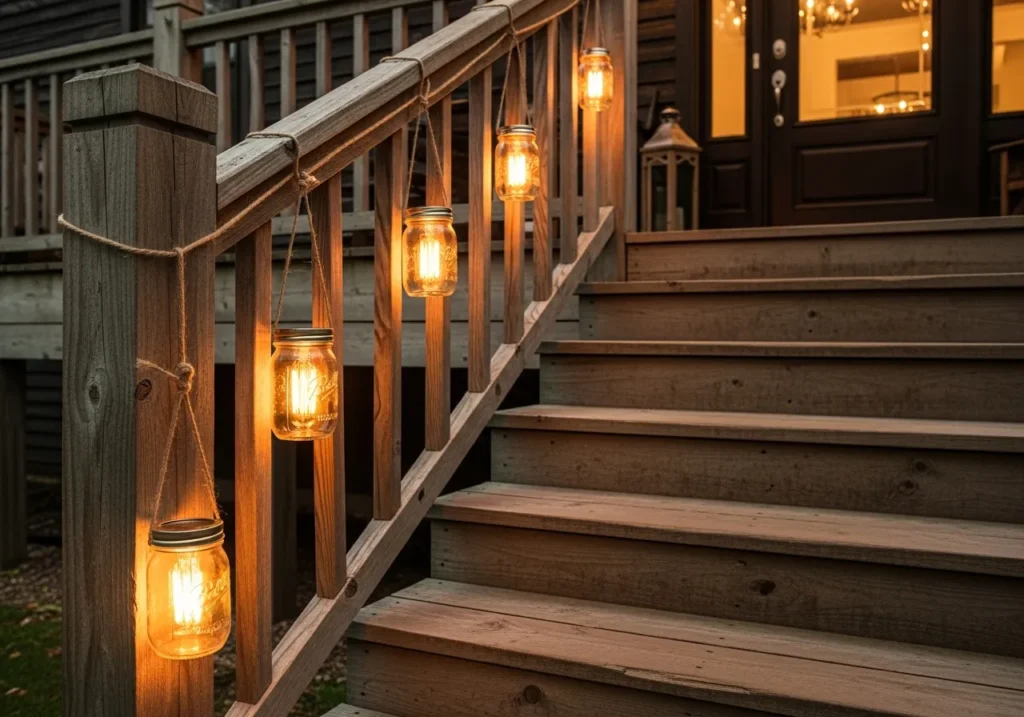
For homeowners embracing rustic or farmhouse aesthetics, DIY step lighting using mason jars, repurposed materials, and vintage components creates personalized touches that reflect individual style. While requiring more hands-on effort than purchasing ready-made fixtures, custom creations offer unique character impossible to achieve with mass-produced products. The approach works especially well for casual outdoor spaces like garden paths and cottage-style entries. To see some garden lighting ideas do visit Homeliaa.
Creating safe and functional DIY step lights requires attention to electrical codes and weatherproofing requirements. Use only outdoor-rated components, ensure all electrical connections are properly sealed, and consider consulting with a licensed electrician for the electrical rough-in work even if you handle the decorative assembly yourself. Safety must never be compromised for aesthetic preferences.
Popular DIY approaches include solar-powered lights inserted into mason jars hung along step railings, LED candles inside lanterns positioned beside steps, and low-voltage fixtures customized with handcrafted shades or housings. The creative possibilities are endless, allowing you to incorporate personal collections, family heirlooms, or handmade elements that tell your unique story while providing necessary illumination.
Indirect Lighting Behind Translucent Step Materials
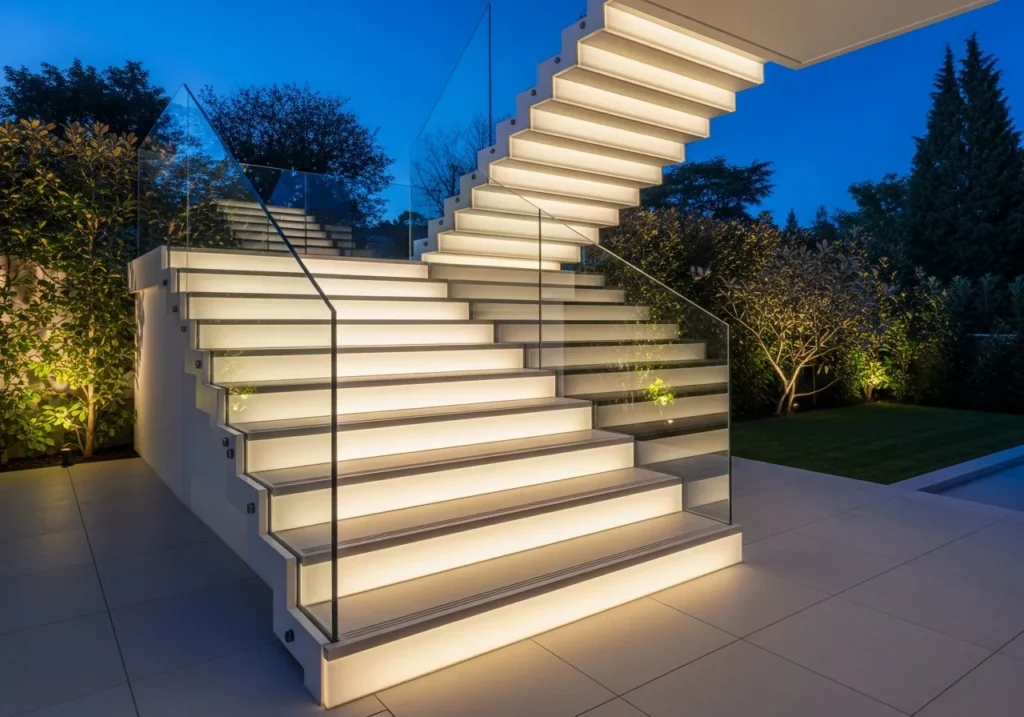
Using translucent materials like frosted glass, resin panels, or specialty concrete with embedded lighting creates steps that glow from within. This sophisticated approach requires planning during the construction phase but results in truly distinctive staircases that serve as architectural features. The diffused illumination eliminates harsh shadows and provides even lighting across entire step surfaces.
The technical execution involves creating hollow step structures or channels where LED strips can be installed behind the translucent material. The light source remains hidden, with only the glowing effect visible to observers. This technique works particularly well for contemporary designs where innovative materials and unexpected lighting effects align with the overall architectural vision.
Material selection is critical for achieving the desired effect. Translucent concrete allows light to pass through while maintaining structural integrity, though it requires specialized mixing and pouring techniques. Resin panels offer more flexibility in color and opacity but need robust support structures. Frosted or etched glass provides elegant aesthetics but demands careful installation to prevent breakage and ensure safety.
Solar Disk Lights Embedded in Step Treads
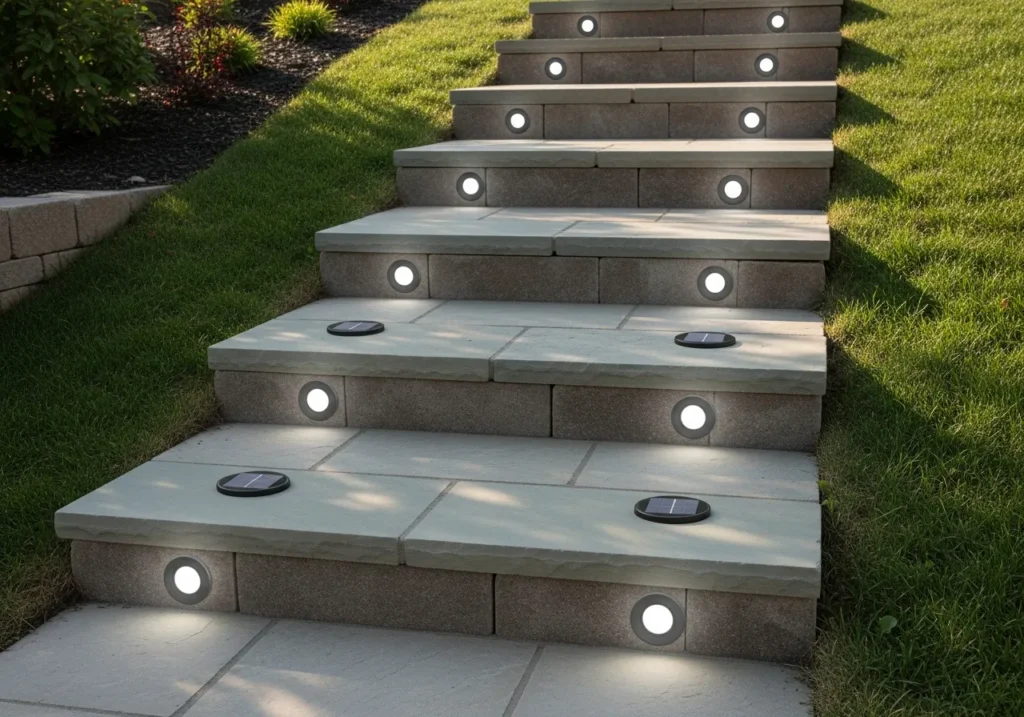
Embedded solar disk lights sit flush with step treads, charging during daylight hours and automatically illuminating at night. These compact fixtures typically measure three to four inches in diameter, making them unobtrusive during daytime while providing effective guidance after dark. The self-contained nature eliminates wiring concerns and simplifies installation to simply creating appropriate mounting holes.
The durability of embedded solar disks has improved significantly, with modern units featuring tempered glass lenses that withstand foot traffic and impact from snow removal equipment. Heavy-duty construction ensures they remain functional through multiple seasons of exposure to temperature extremes, moisture, and UV radiation. Look for units with high IP ratings indicating superior water and dust resistance.
Placement strategy affects both functionality and aesthetics. Installing disks near the outer edges of each tread provides clear step definition, while center placement creates a guiding path effect. Some installations use multiple disks per step for enhanced illumination, particularly on wider staircases where single fixtures might leave dark zones. Consistent spacing across all steps creates visual rhythm that’s pleasing and intuitive to follow.
Wall-Mounted Step Lighting with Decorative Shields
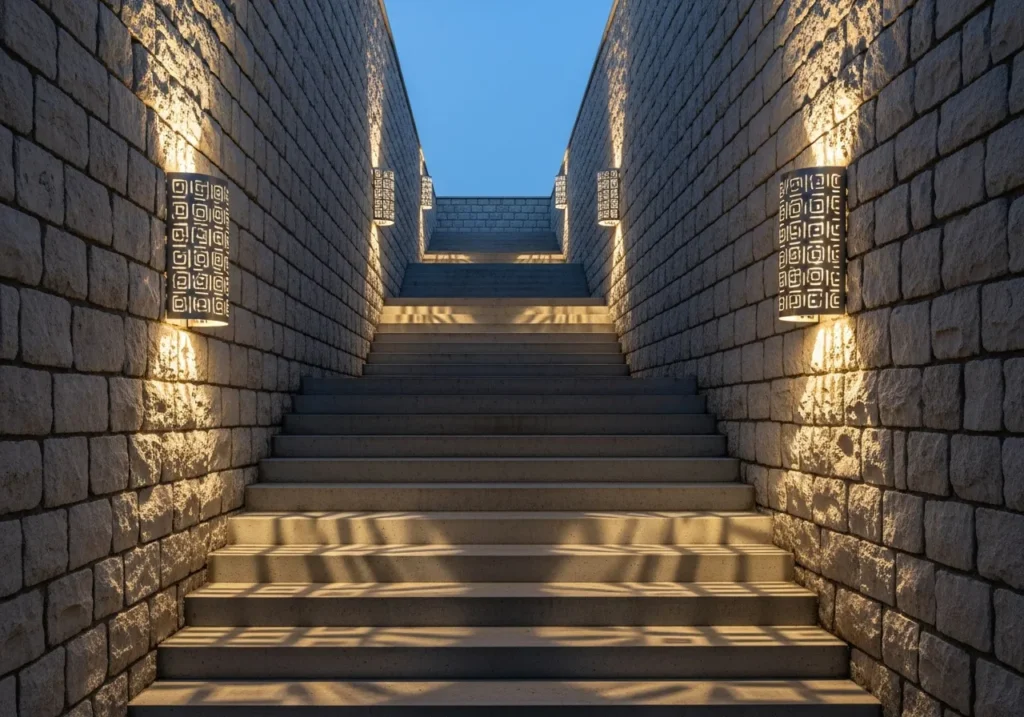
Wall-mounted fixtures positioned beside outdoor steps offer opportunities for decorative expression while providing effective illumination. Fixtures with shields, louvers, or decorative faceplates direct light downward onto steps while preventing glare and adding architectural interest to adjacent walls. This approach works well for steps between buildings, along garden walls, or anywhere vertical surfaces flank the stairway.
The variety of decorative shields available allows precise matching to architectural styles. Geometric patterns suit modern designs, while flowing organic shapes complement nature-inspired landscapes. Some fixtures incorporate interchangeable shields, enabling seasonal updates or style evolution without replacing entire units. The decorative element transforms functional lighting into artistic statements.
Spacing between wall-mounted fixtures depends on their brightness and beam spread characteristics. More closely spaced fixtures create even illumination with minimal dark spots, while greater spacing produces dramatic pools of light with shadowy transitions between. Consider the primary use case when planning spacing: frequently trafficked main entrances benefit from even coverage, while decorative garden stairs can embrace more dramatic lighting patterns.
Wireless Battery-Operated Step Lights
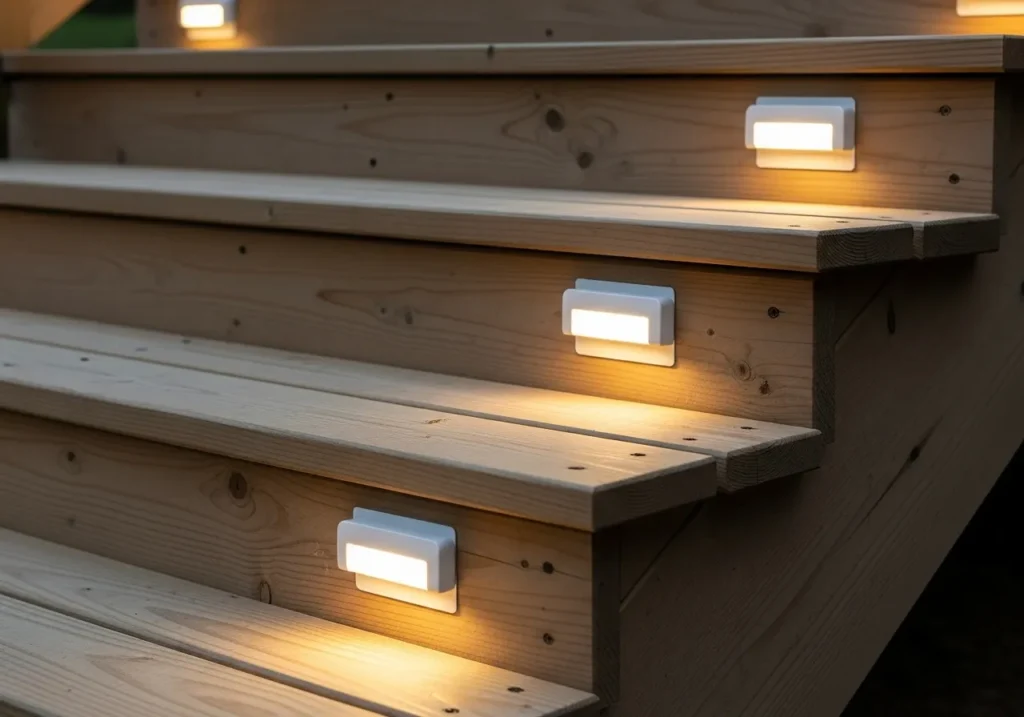
Battery-operated LED step lights eliminate installation complexity entirely, requiring no wiring or solar charging considerations. Modern lithium batteries provide months of operation between changes, making maintenance demands minimal. These fixtures attach using adhesive strips, magnetic mounts, or simple screw installations, allowing positioning flexibility that hardwired options can’t match.
The technology particularly benefits rental properties where permanent modifications aren’t permitted, temporary event lighting needs, or situations where electrical access is impractical. Battery-operated lights also serve as excellent supplements to primary lighting systems, filling gaps or providing backup illumination during power outages. Many models include motion sensors that extend battery life by activating only when needed.
Quality varies significantly among battery-operated step lights, with premium models featuring efficient LEDs, intelligent power management, and robust weatherproof construction. Budget options may provide adequate short-term solutions but often disappoint with dim output, frequent battery changes, and weather-related failures. Investing in reputable brands with proven outdoor performance records ensures satisfactory long-term results.
Integrated Deck Board Step Lighting
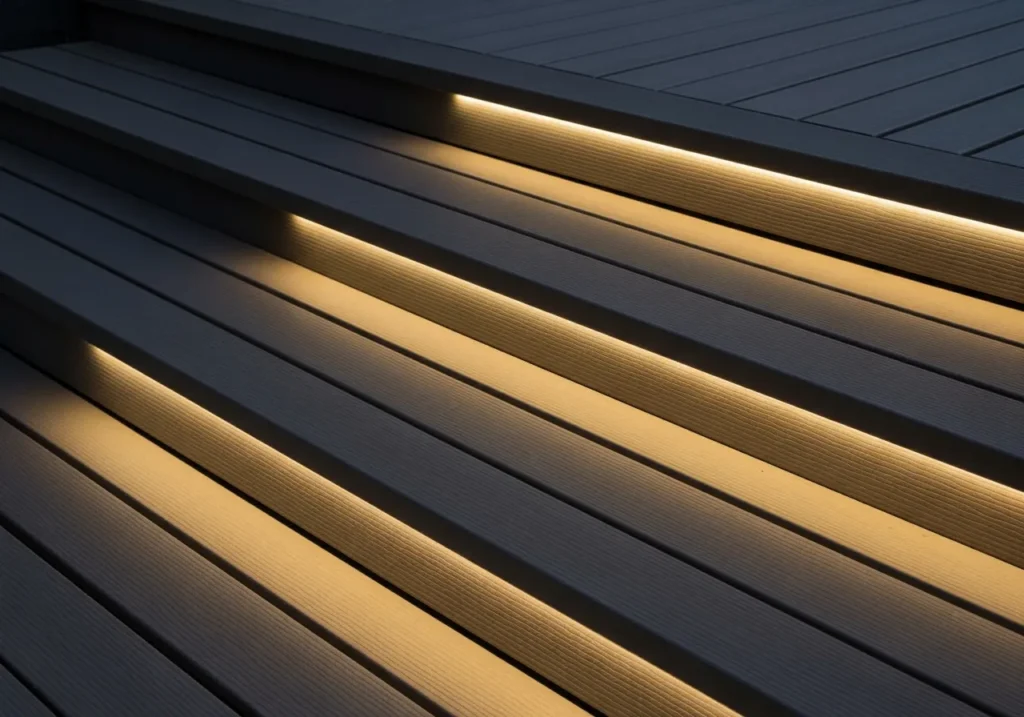
Composite decking manufacturers now offer products with integrated lighting channels or boards specifically designed to accept low-profile LED strips. This integration creates seamless lighting solutions where fixtures become virtually invisible components of the deck structure itself. The approach eliminates the need to retrofit lighting into existing materials, reducing installation time and improving long-term reliability.
The lighting channels typically run along the edges of deck boards or within the risers of built-in steps, concealing wiring and protecting fixtures from direct exposure. The system’s elegance lies in its disappearing act during daylight hours, with evening illumination seemingly emanating from the deck material itself. This level of integration represents the pinnacle of lighting design where function and form achieve perfect unity.
When planning new deck construction, discuss integrated lighting options with your builder early in the design process. The structural considerations and electrical planning require incorporation before framing begins. While adding to initial construction costs, integrated systems often prove more economical than retrofitting lighting after completion and certainly provide superior aesthetic results.
Stepped Garden Wall Lighting for Terraced Landscapes
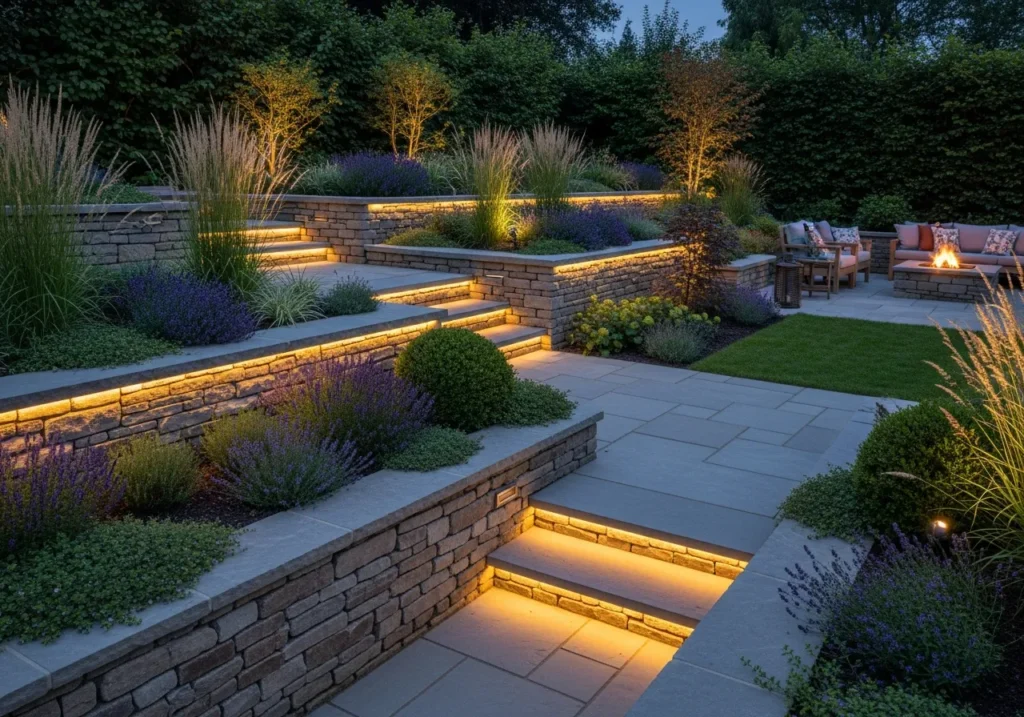
Terraced gardens with multiple elevation changes benefit from lighting solutions that work with the landscape rather than imposing artificial elements. Fixtures integrated into retaining walls, tucked into planted areas beside steps, or incorporated into stone work create natural-feeling illumination that enhances rather than dominates the outdoor environment. The goal is lighting that feels discovered rather than installed.
Natural materials like copper, bronze, and weathered metals blend beautifully with garden settings, developing patinas that help fixtures recede visually while their illumination remains functional. Stone-textured housings and earth-tone finishes further support the integration of lighting into natural landscapes. The fixtures become part of the garden’s evolution rather than static technological additions.
Plant selection around garden step lighting requires consideration of growth habits and mature sizes to prevent vegetation from blocking light output as the landscape matures. Low groundcovers, carefully pruned shrubs, and ornamental grasses can enhance lighting effects while maintaining the necessary clearance for effective illumination. The interplay between living plants and carefully positioned lights creates dynamic scenes that change with seasonal growth patterns.
Professional Installation Considerations
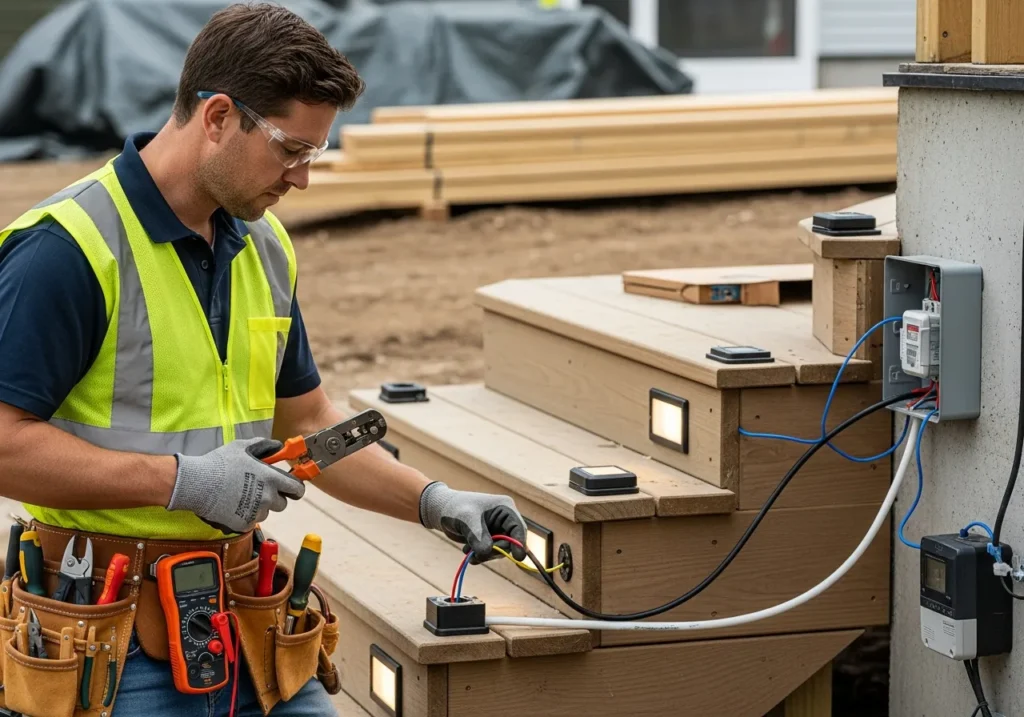
While many outdoor step lighting projects suit DIY installation, complex systems benefit from professional expertise. Licensed electricians ensure code compliance, proper load calculations, and safe wiring practices that prevent hazards and ensure reliable operation. The investment in professional installation often pays for itself through avoiding costly mistakes, reducing future maintenance needs, and maximizing system performance.
Professional installers bring experience with weatherproofing techniques, fixture selection for specific applications, and troubleshooting skills that prevent common problems before they occur. They understand local building codes, permit requirements, and inspection processes that DIY installers might overlook. For systems involving line-voltage electricity, smart home integration, or sophisticated controls, professional expertise becomes increasingly valuable.
Even when handling installation yourself, consulting with a lighting designer or experienced installer during the planning phase can prevent expensive errors and suboptimal results. Professional input on fixture spacing, photometric calculations, and technical specifications helps ensure your investment achieves intended goals. Many lighting professionals offer consultation services separately from installation, providing expert guidance while allowing you to handle the physical work yourself.
Conclusion
Outdoor step lighting represents one of the most valuable investments you can make in your property’s safety, functionality, and aesthetic appeal. The diverse options available today ensure solutions exist for every architectural style, budget level, and technical skill set. From simple solar-powered disks that require no wiring to sophisticated smart systems integrated with home automation platforms, the technology has evolved to make professional-quality results accessible to homeowners at all experience levels.
The key to successful outdoor step lighting lies in balancing practical requirements with aesthetic goals. Adequate illumination for safe navigation remains paramount, but modern systems achieve this functional necessity while contributing to your property’s visual character and ambiance. Thoughtful fixture selection, strategic placement, and attention to installation details transform ordinary steps into welcoming passages that enhance your outdoor living experience.
As you implement your outdoor step lighting project, remember that lighting design is both art and science. Take time to observe how light interacts with your specific architecture and landscape throughout different seasons and times of evening. The most successful installations result from careful planning, quality components, and attention to the unique characteristics of your property. Your investment in proper outdoor step lighting will provide years of safe passage, enhanced beauty, and increased property value.
Frequently Asked Questions
What is the best type of outdoor step light for energy efficiency?
LED step lights offer the best energy efficiency, consuming up to eighty percent less power than traditional incandescent bulbs while lasting twenty-five times longer. Solar-powered LED fixtures eliminate energy costs entirely by charging through sunlight, though they require adequate sun exposure to function optimally. Motion-activated LED lights provide additional savings by illuminating only when needed rather than running continuously through the night.
How many lumens do I need for outdoor step lighting?
Outdoor step lights typically require between fifty and one hundred lumens per fixture for adequate visibility. The exact requirement depends on ambient light conditions, step width, and fixture spacing. For primary entrances with frequent traffic, aim toward the higher end of this range. Secondary garden paths or decorative installations can use dimmer outputs around thirty to fifty lumens per fixture while still providing safe navigation.
Can I install outdoor step lights myself or do I need an electrician?
Simple installations like solar-powered fixtures, battery-operated lights, or low-voltage systems generally suit DIY installation with basic tools and careful attention to manufacturer instructions. However, hardwired line-voltage installations legally require licensed electricians in most jurisdictions and involve safety risks that make professional installation advisable. Even for DIY-friendly systems, consulting an electrician during planning ensures proper electrical load calculations and code compliance.
How do I weatherproof outdoor step lights for long-term durability?
Select fixtures with IP65 or higher weatherproof ratings, indicating protection against water jets and dust intrusion. Use marine-grade silicone sealant around all mounting points and ensure drainage paths prevent water accumulation inside fixtures. Protect electrical connections with weatherproof junction boxes and use outdoor-rated cables with proper burial depth for underground runs. Regular inspection and maintenance of seals and gaskets extends fixture lifespan significantly.
What color temperature works best for outdoor step lighting?
Warm white light between 2700K and 3000K creates inviting atmospheres suitable for residential entrances and entertaining areas while providing adequate visibility. Neutral white around 4000K offers crisp illumination that suits modern architecture and provides excellent color rendering for safety purposes. Cool white above 5000K appears too harsh for most residential applications but works well for commercial or security-focused installations where maximum visibility outweighs ambiance considerations.